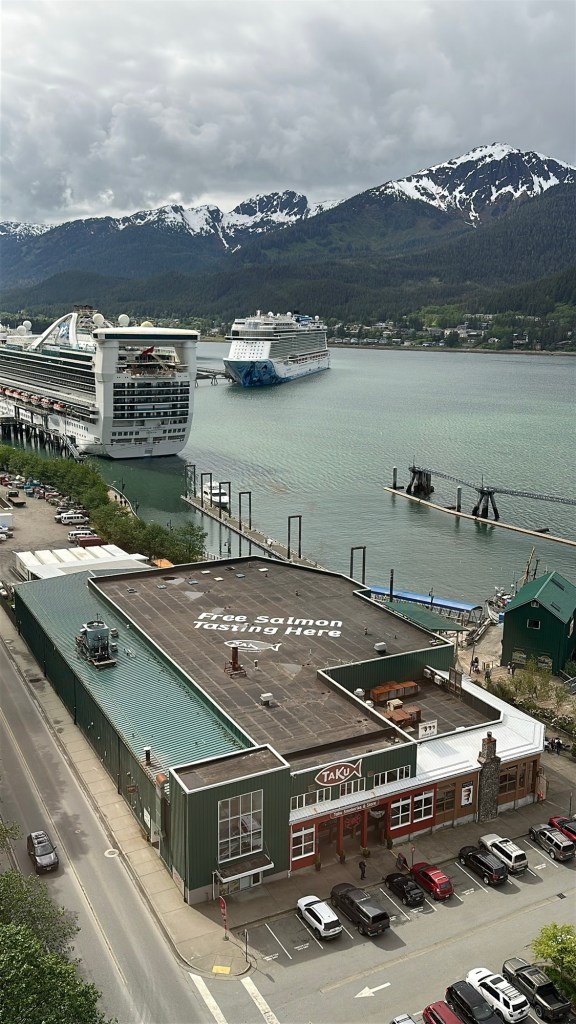
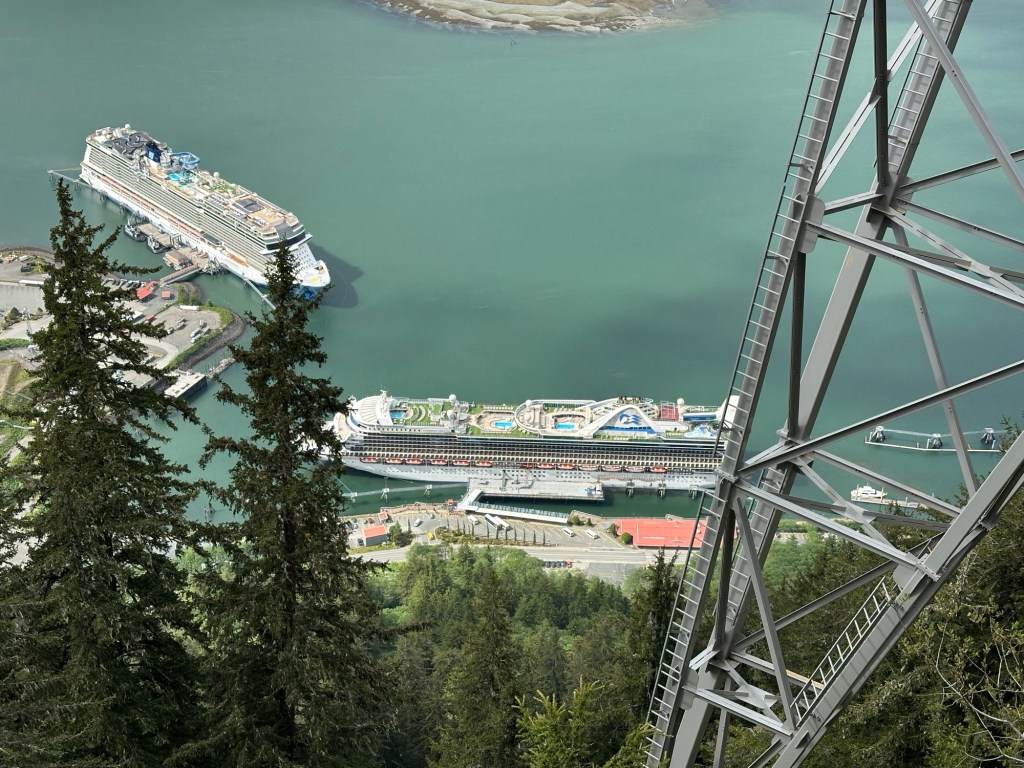
Today we are docking in Juneau, Alaska. I have another excursion booked but it doesn’t leave until the afternoon so there is no rush to get off the ship. My cousin and I are going on this excursion today so we coordinate our day. We’ll disembark this morning to explore Juneau, eat some king crabs then meet up with our tour group.
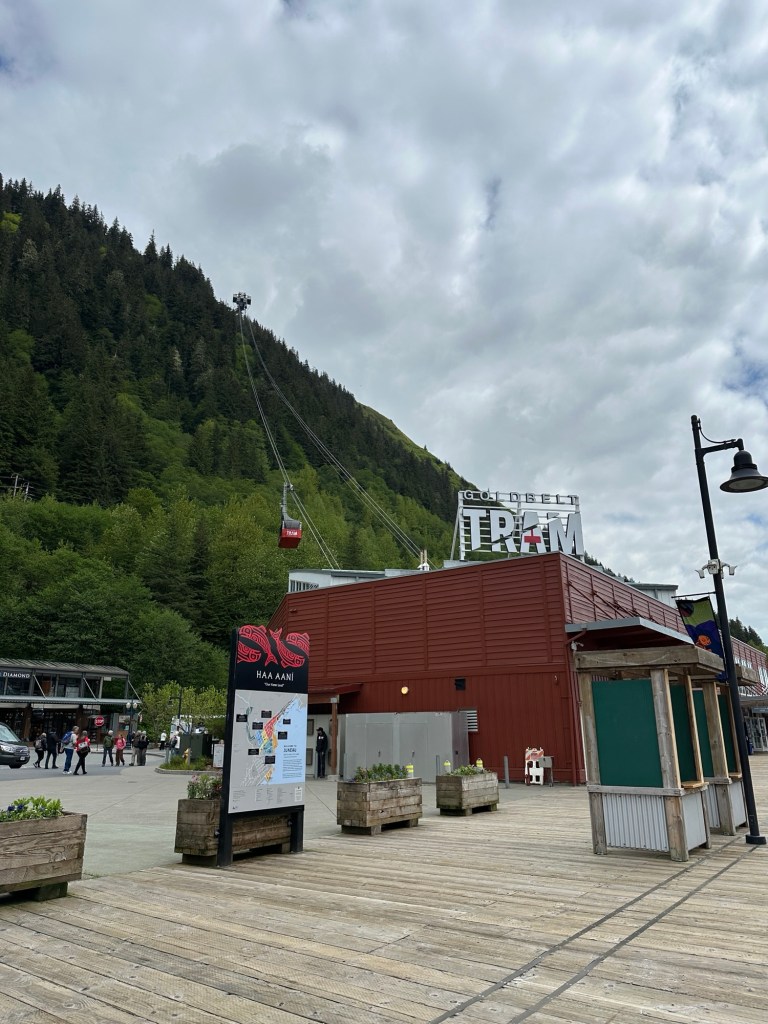
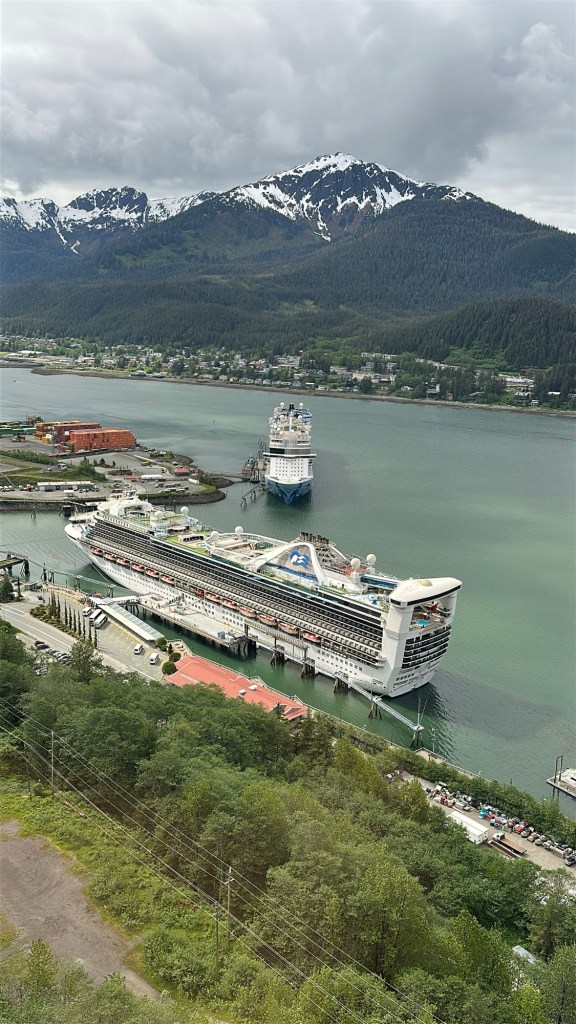
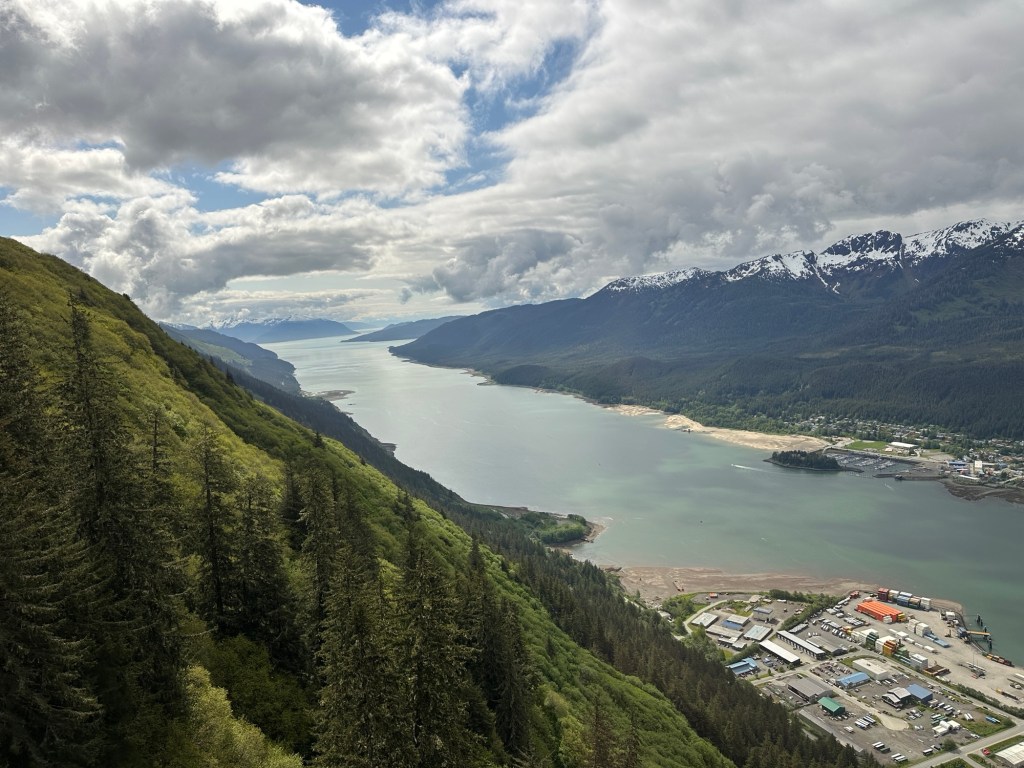
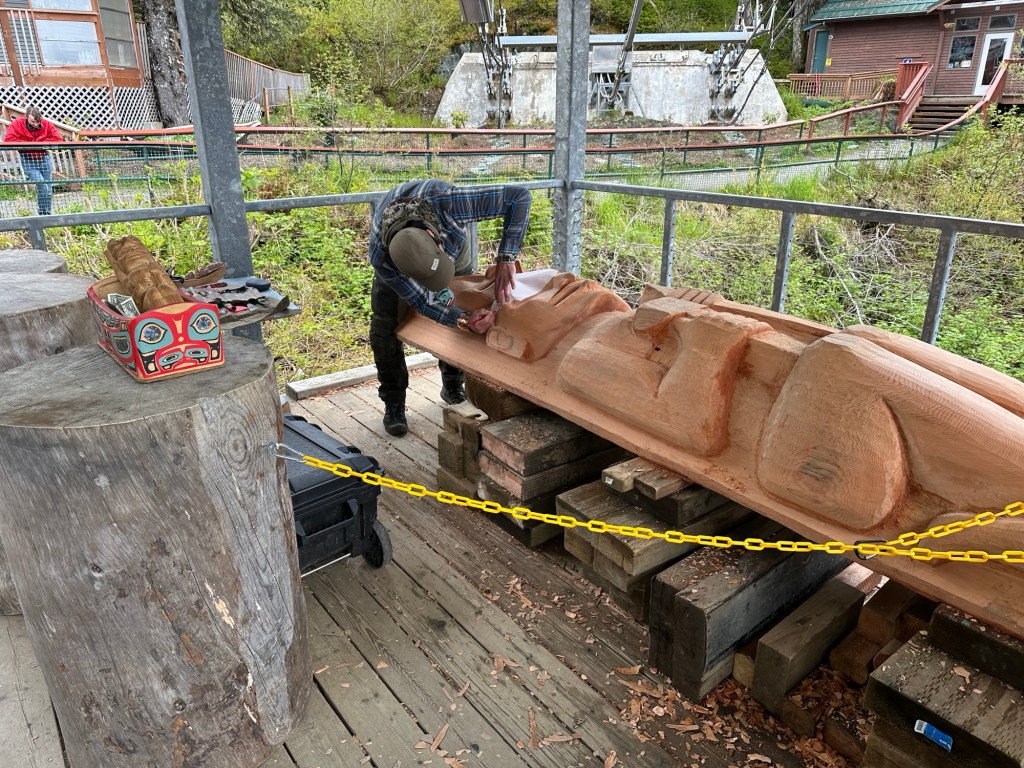
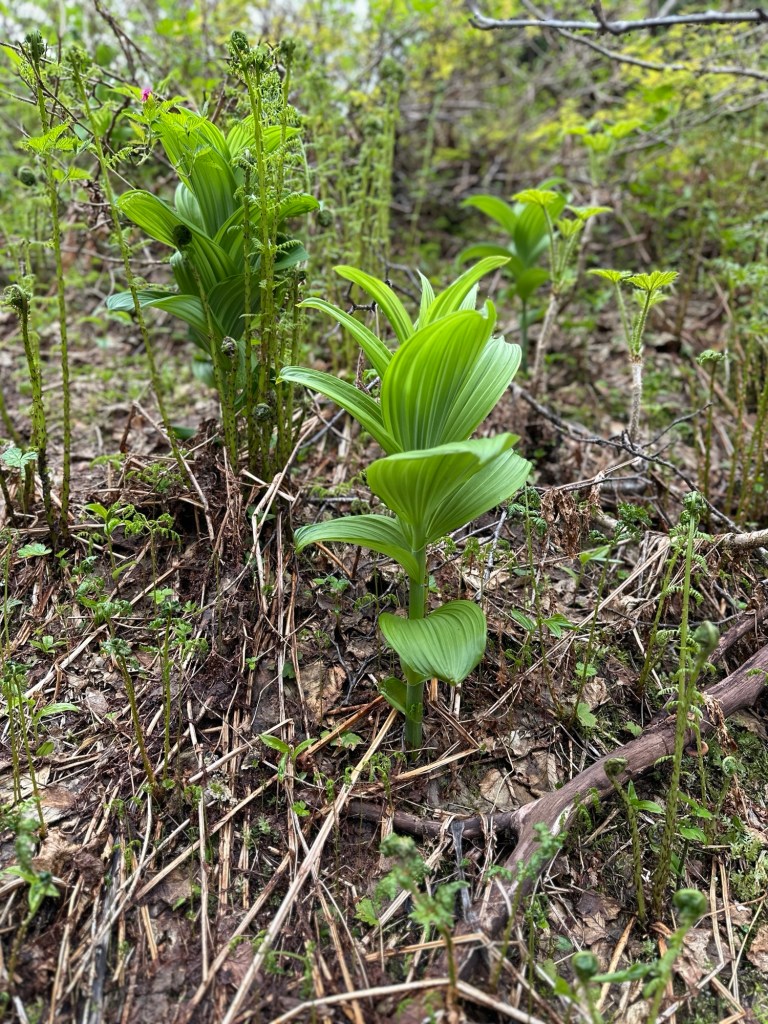
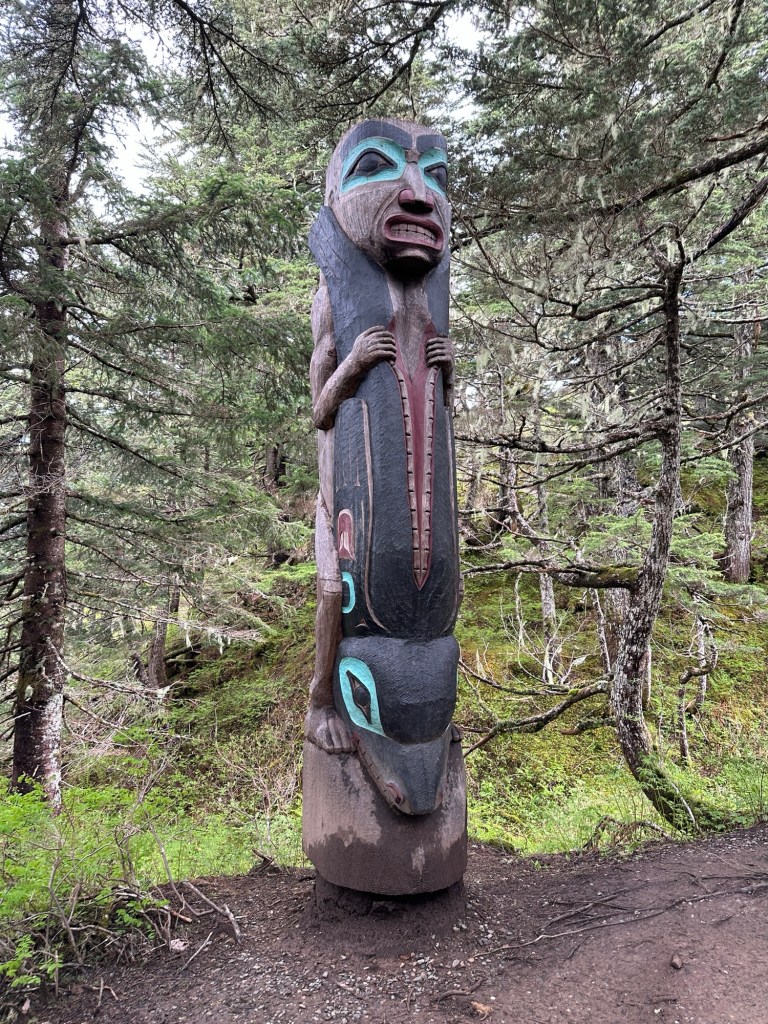
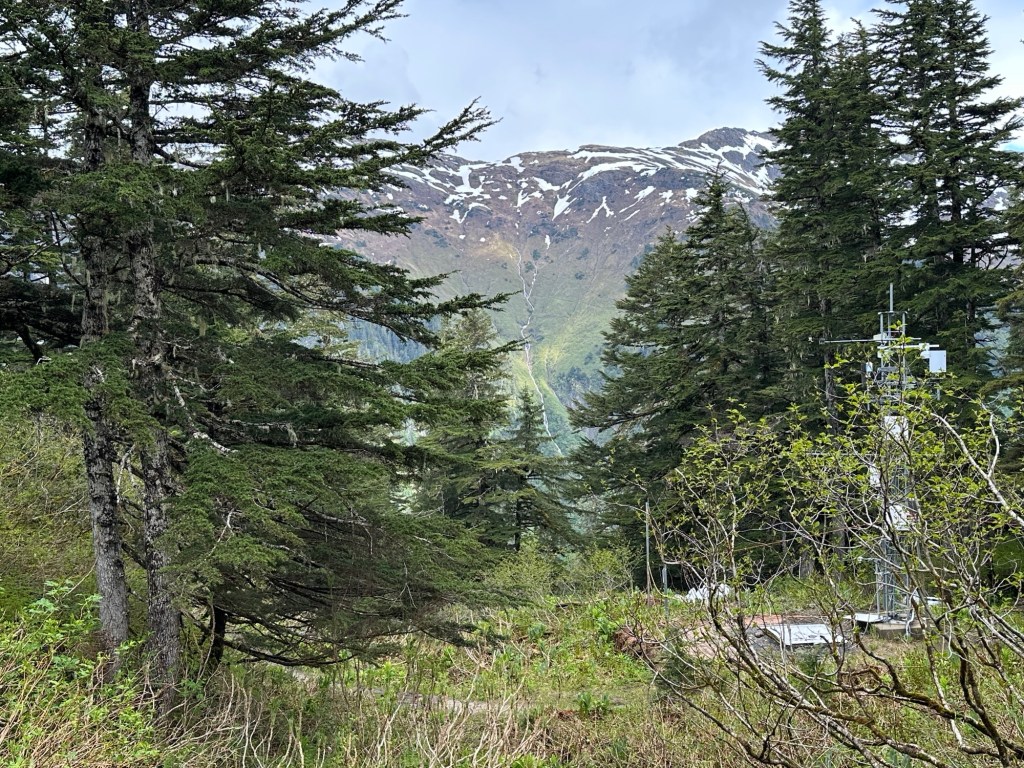
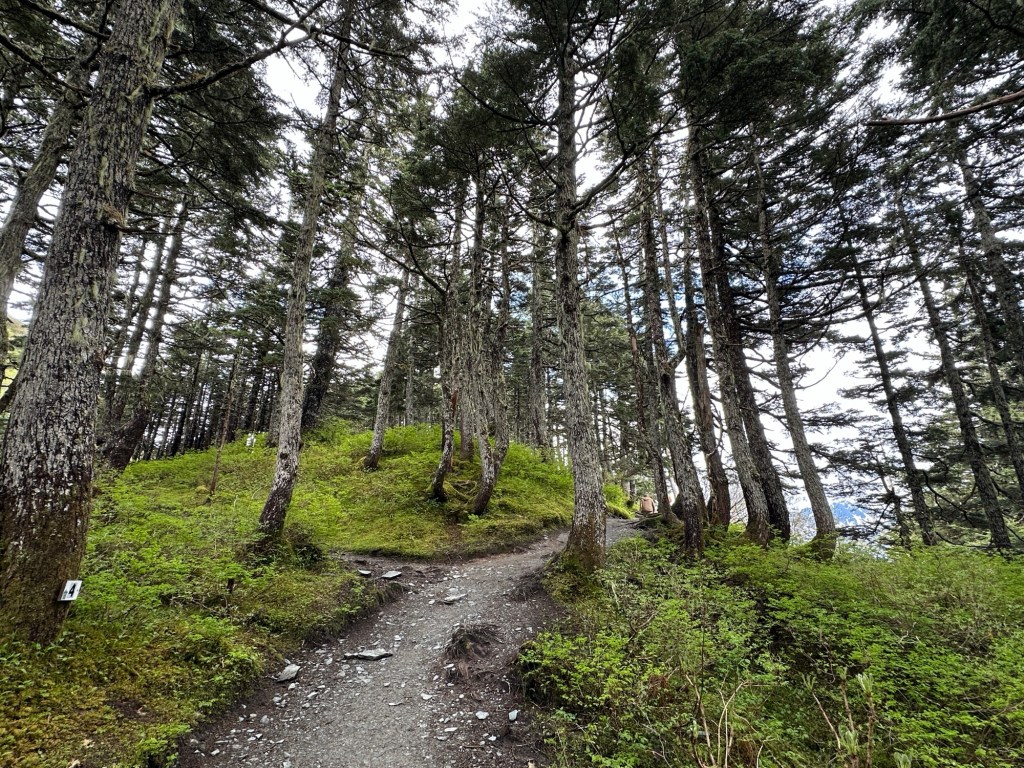
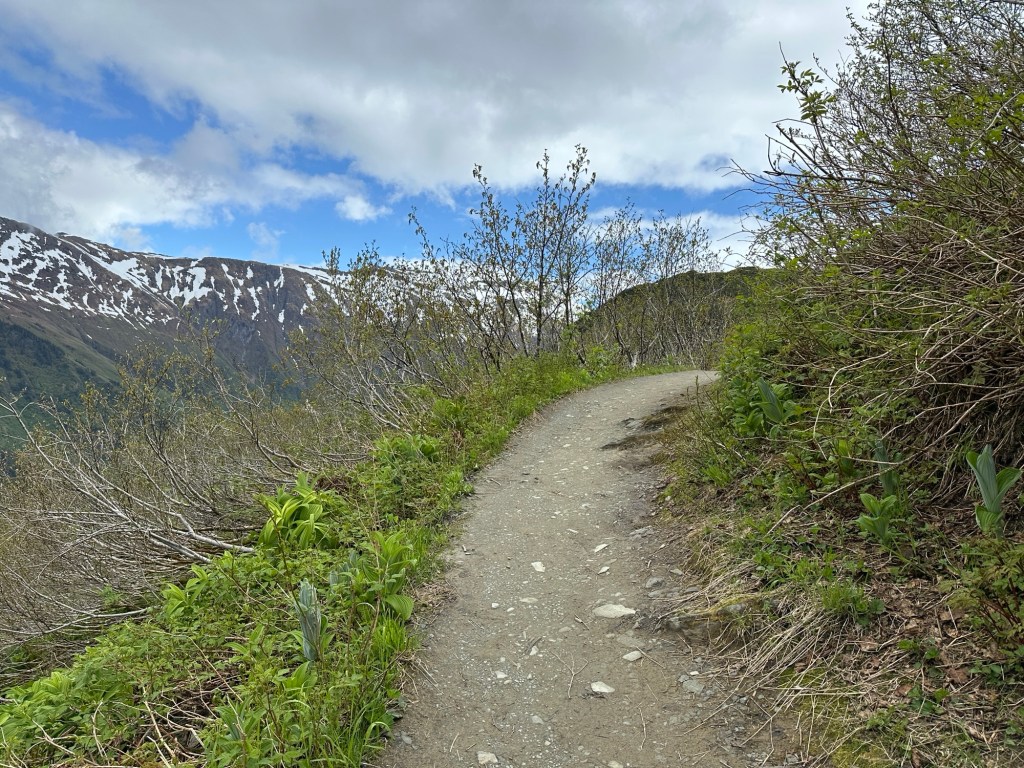
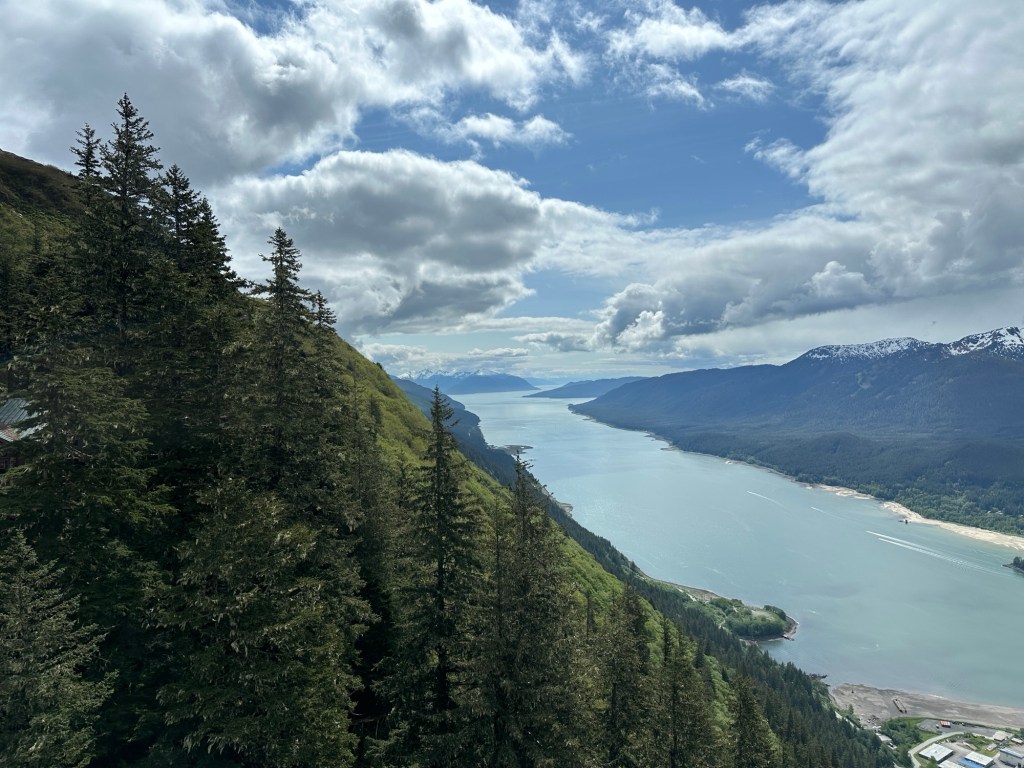
Even though the line is long we pay the expensive fee to take the tram up to the Roberts Peak. There is some First Nation’s exhibits, hiking trails and some gorgeous views of below. We hike one of the trails.
Roberts Peak
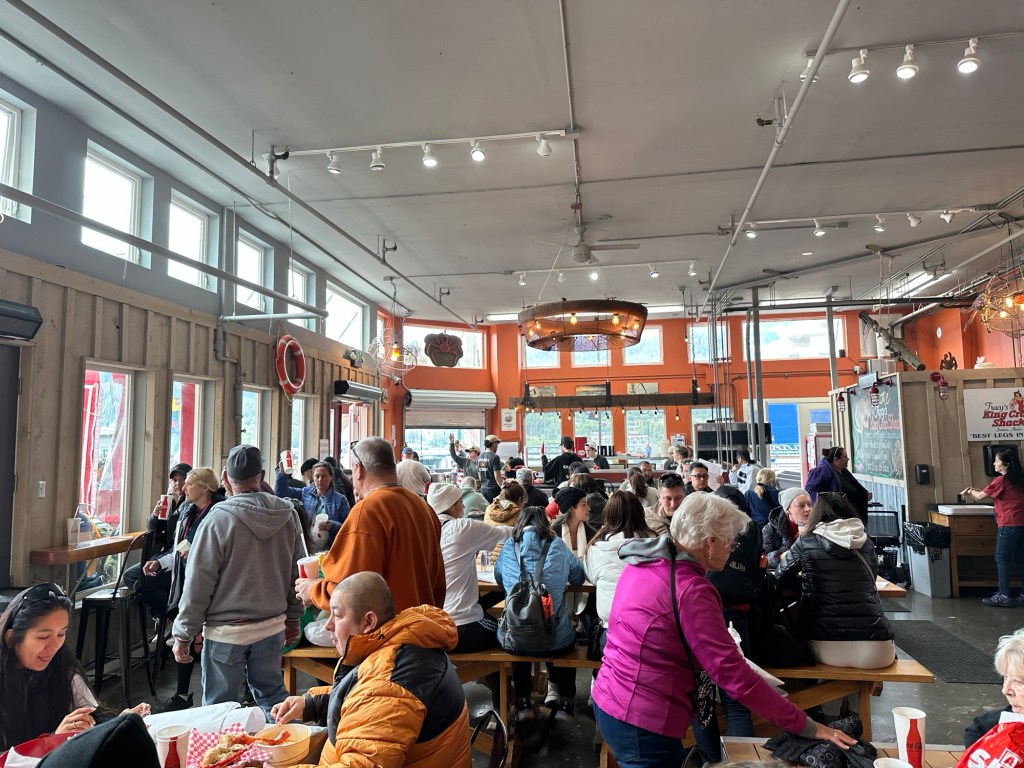
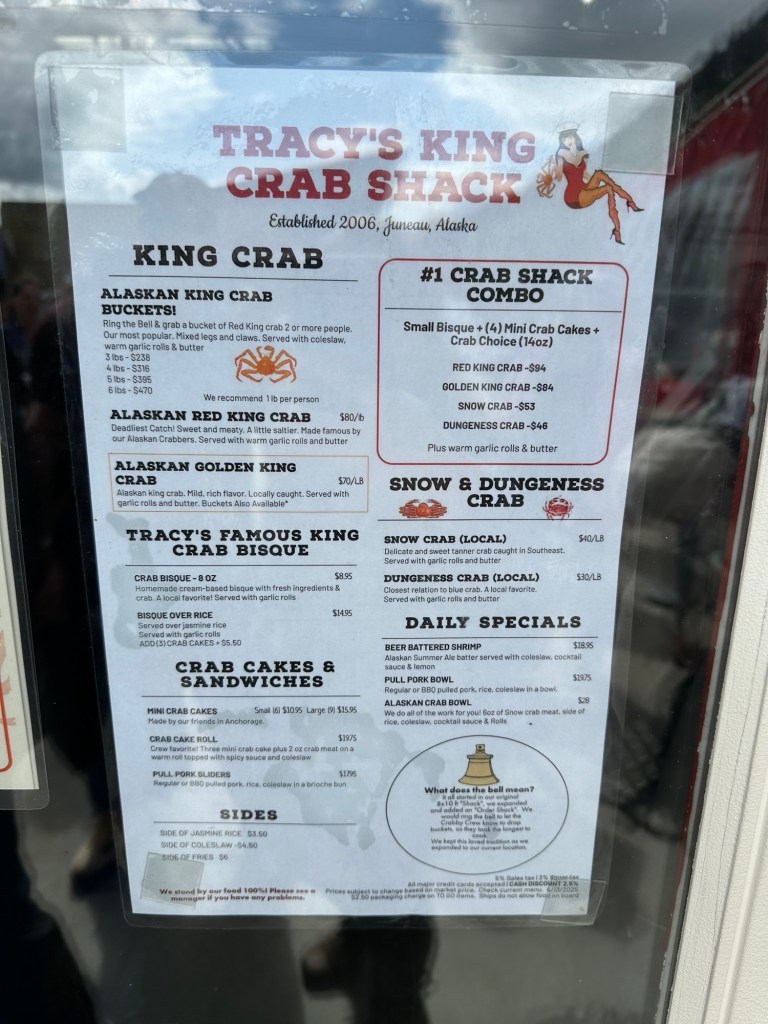
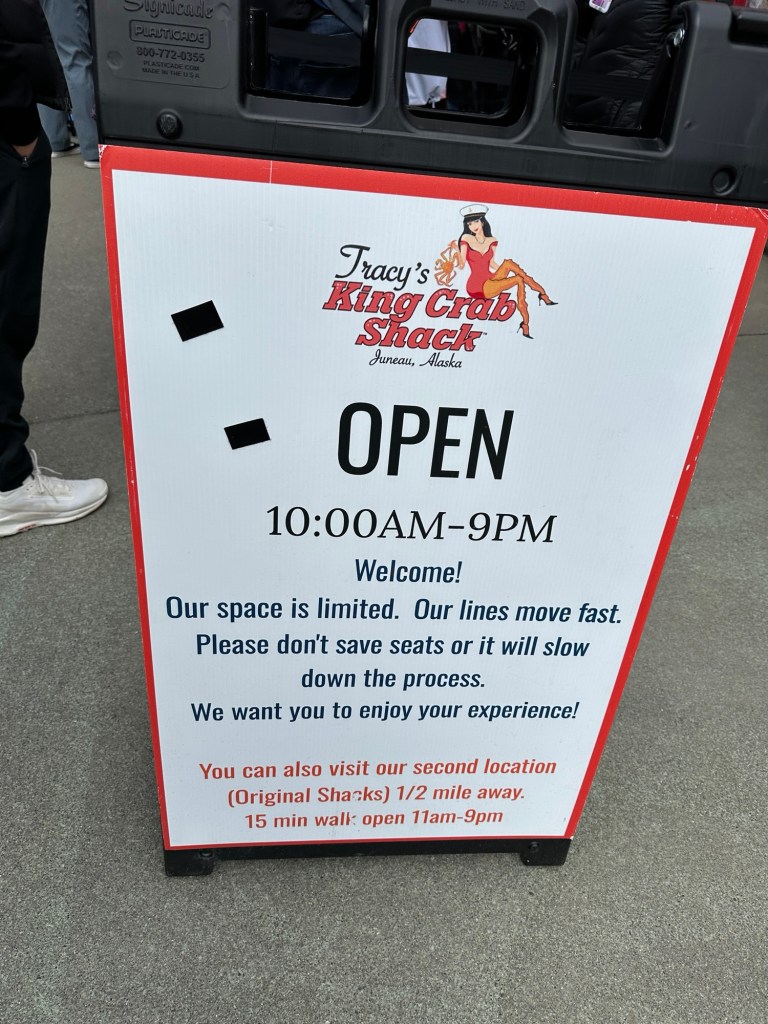
There is an option to hike down but I am unsuccessful in talking my cousin into it, plus we don’t know how long it would take us and our priority is to get some king crabs legs at Tracy’s King Crab Shack. We wait in the line for Tracy’s. It isn’t the longest but we do wait a bit – however it is worth it. Seeing the hefty price tag we decide on a 1lb per person instead of the bucket and it is the perfect size. I walk out still very full and very satisfied. The only thing we ask for more of is some butter and my cholesterol will hate me later for it.
We still have time to spare before we meet our tour so we walk as far as we have time for towards the other end of town.
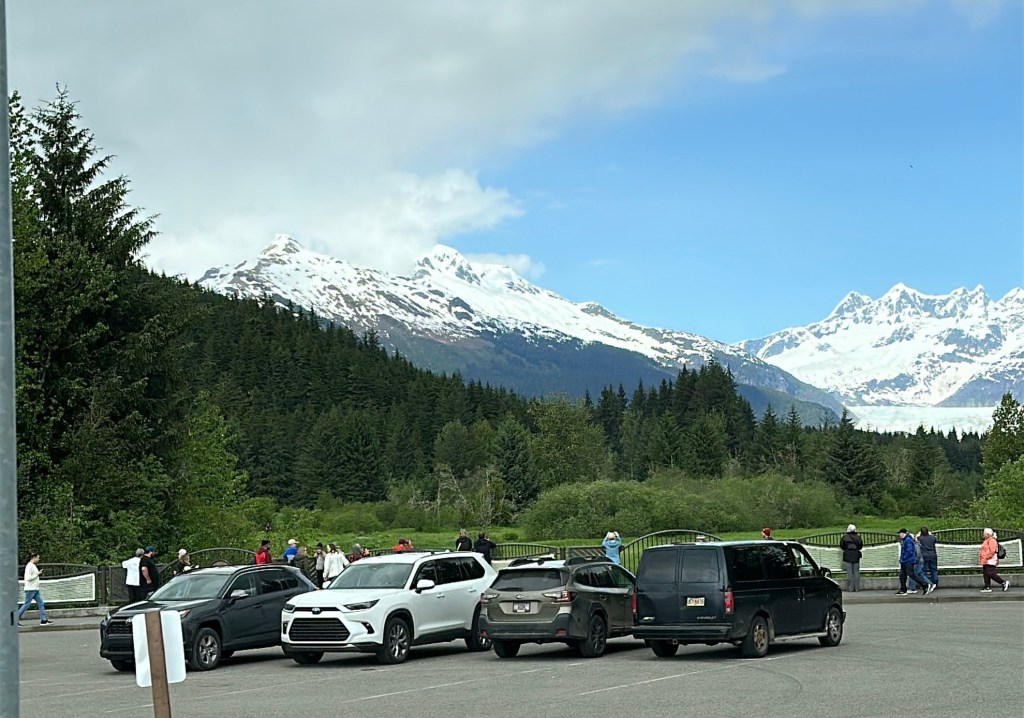
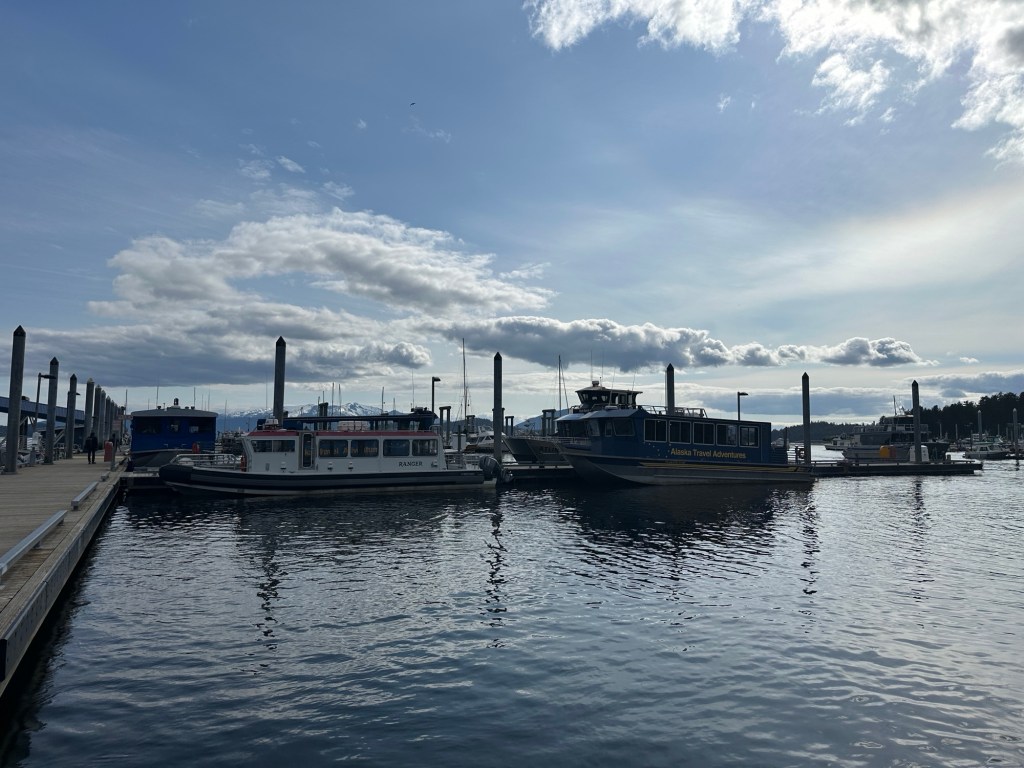
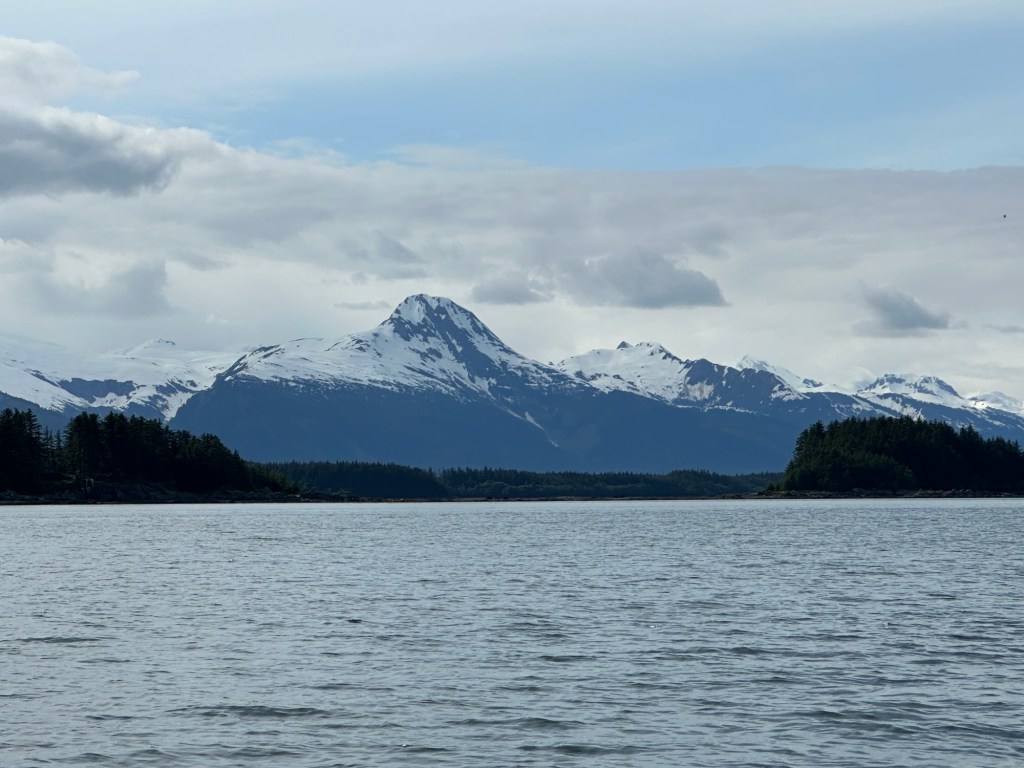
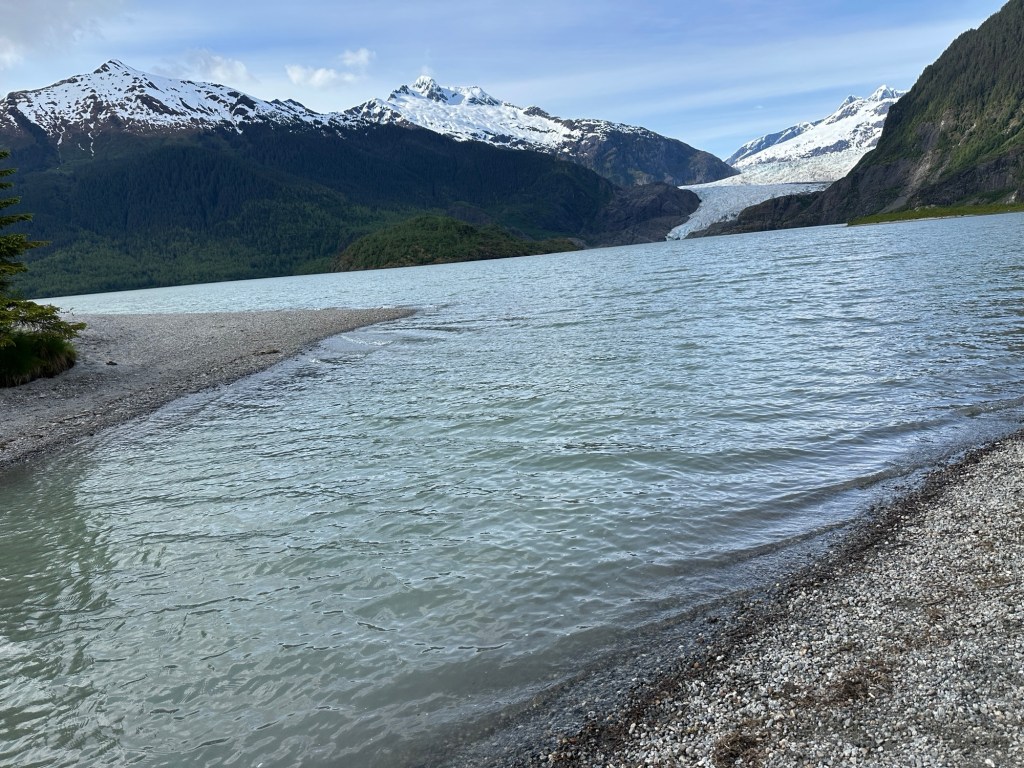
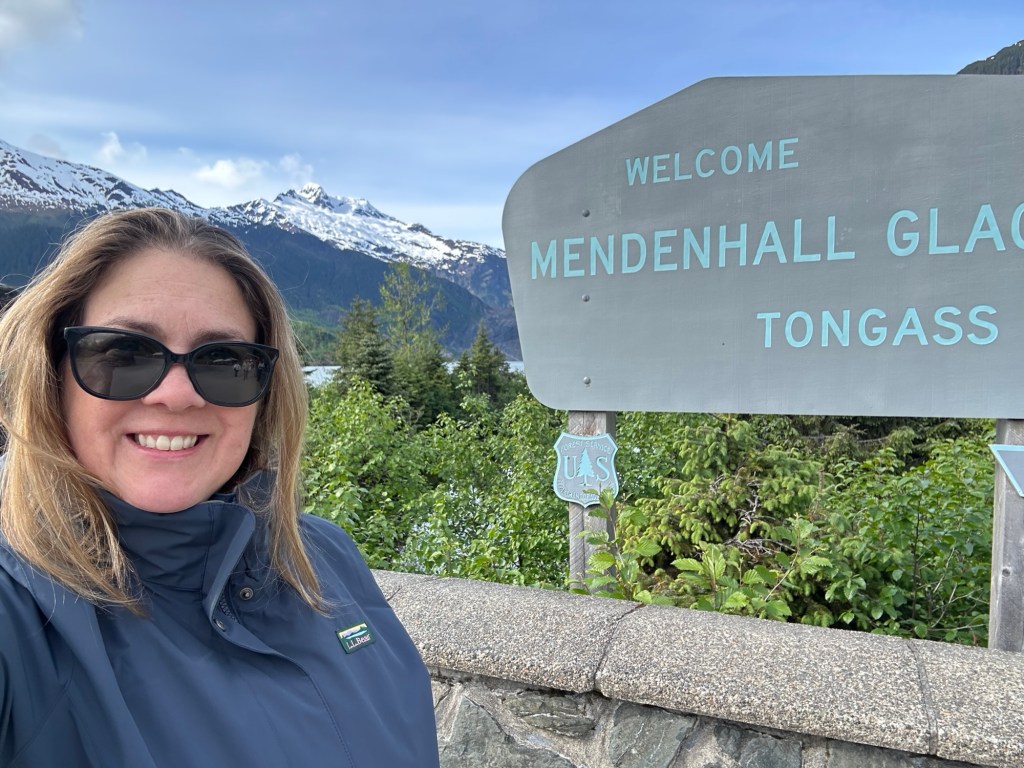
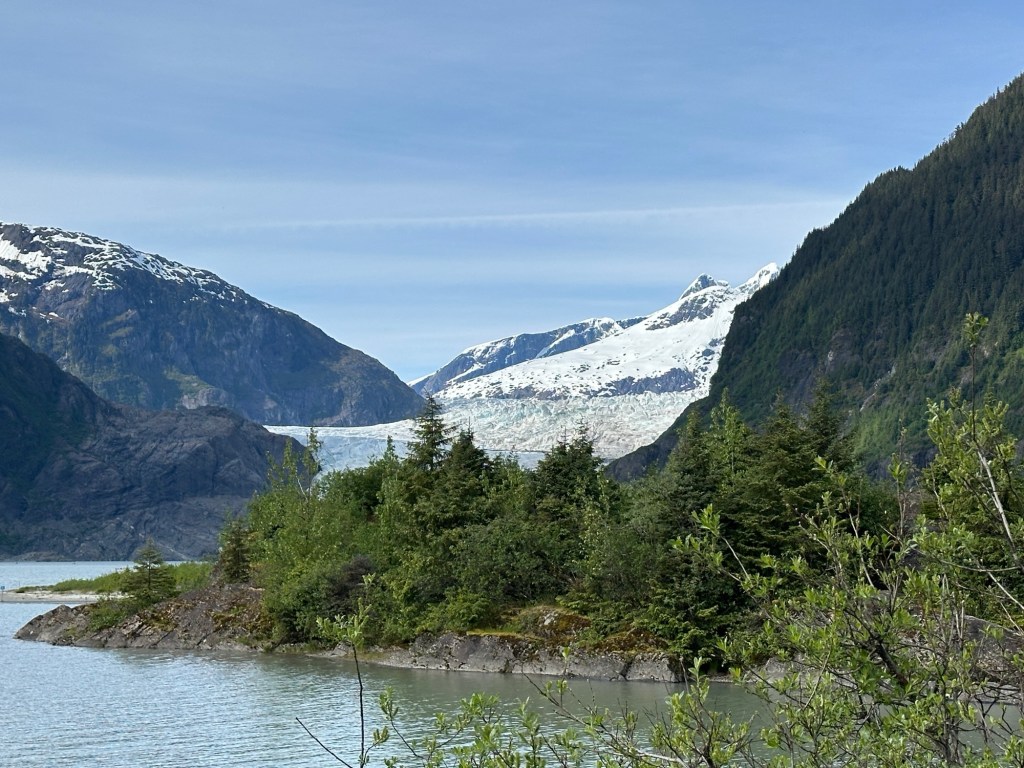
Our tour is whale watching and a visit to Mendenhall Glacier afterwards. Each of these things can be coordinated on your own for probably cheaper but it seemed safer to book through the cruise to save the planning hassle and there is a better odds they would get you back in time to board the ship before it leaves; there is always that risk when you go off on your own. If I did it again I’d probably do a choose your own adventure day because I would have liked a little more time to hike the longer trail at Mendenhall Glacier and we did not have enough time on our visit for it.
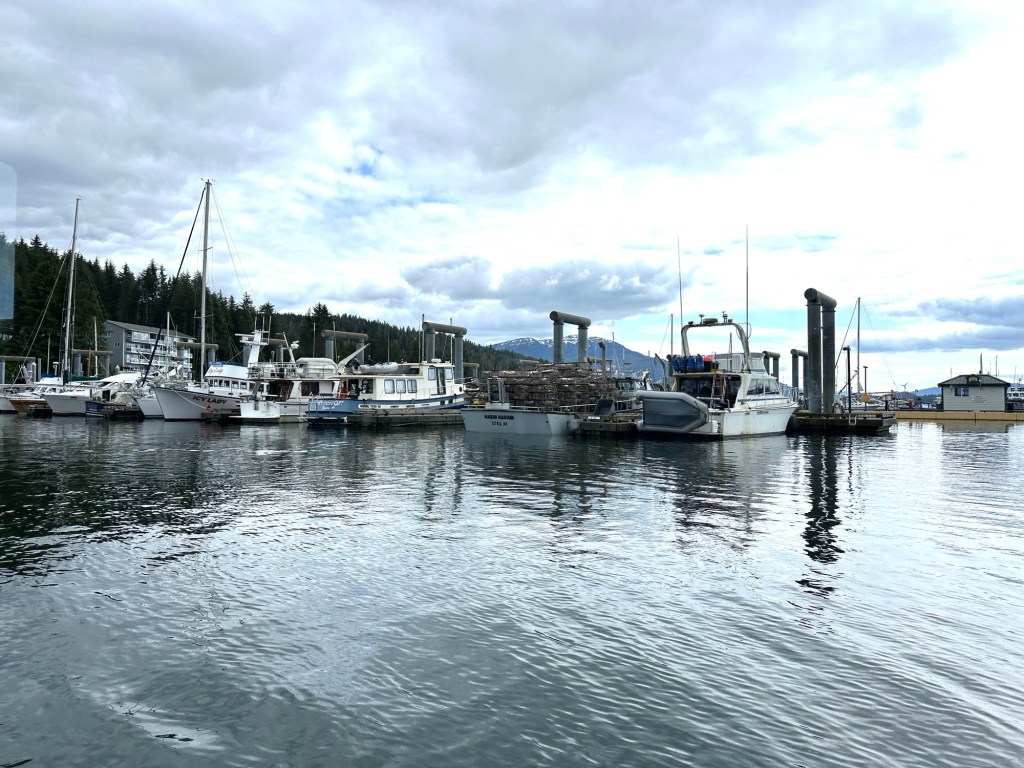
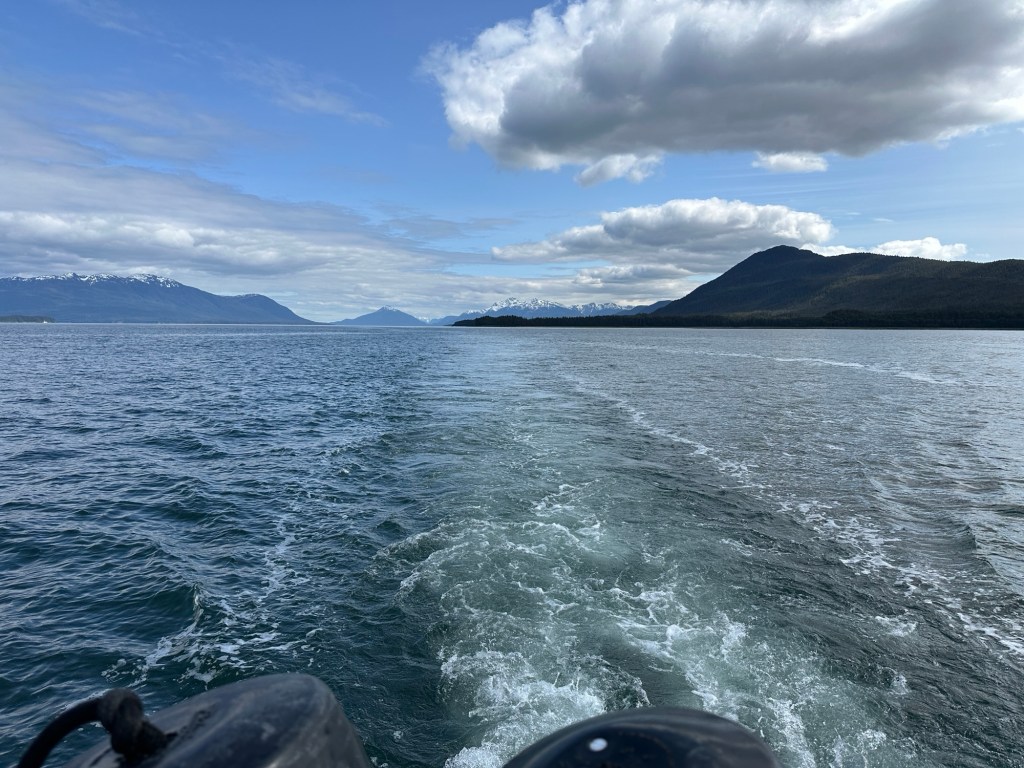
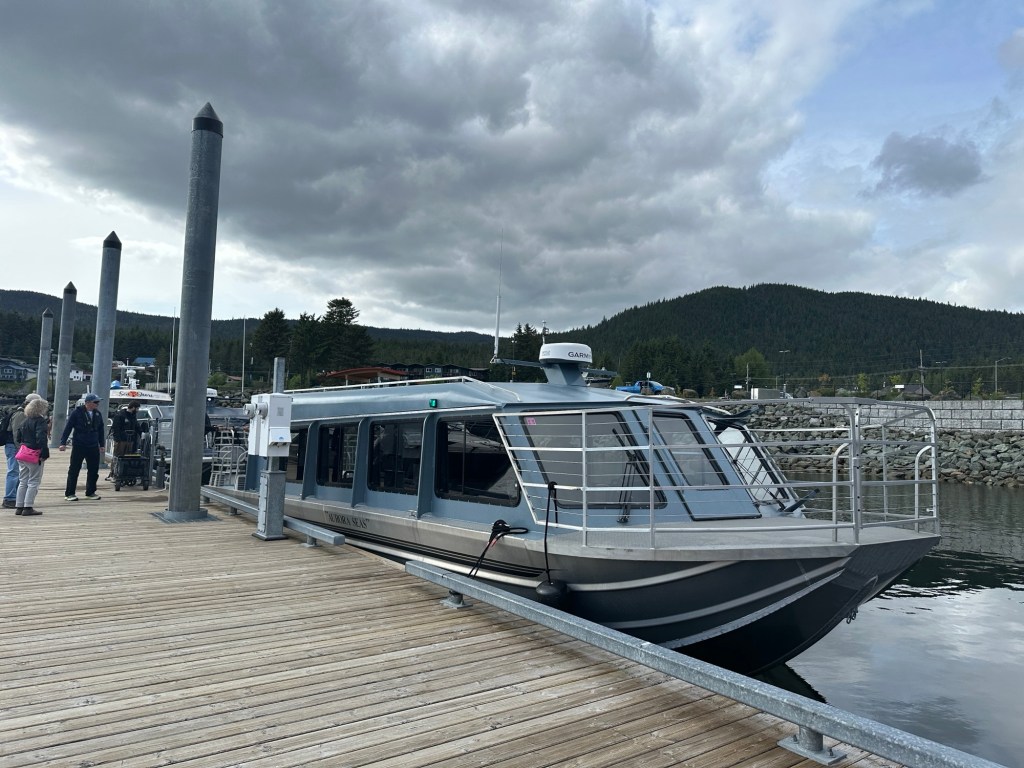
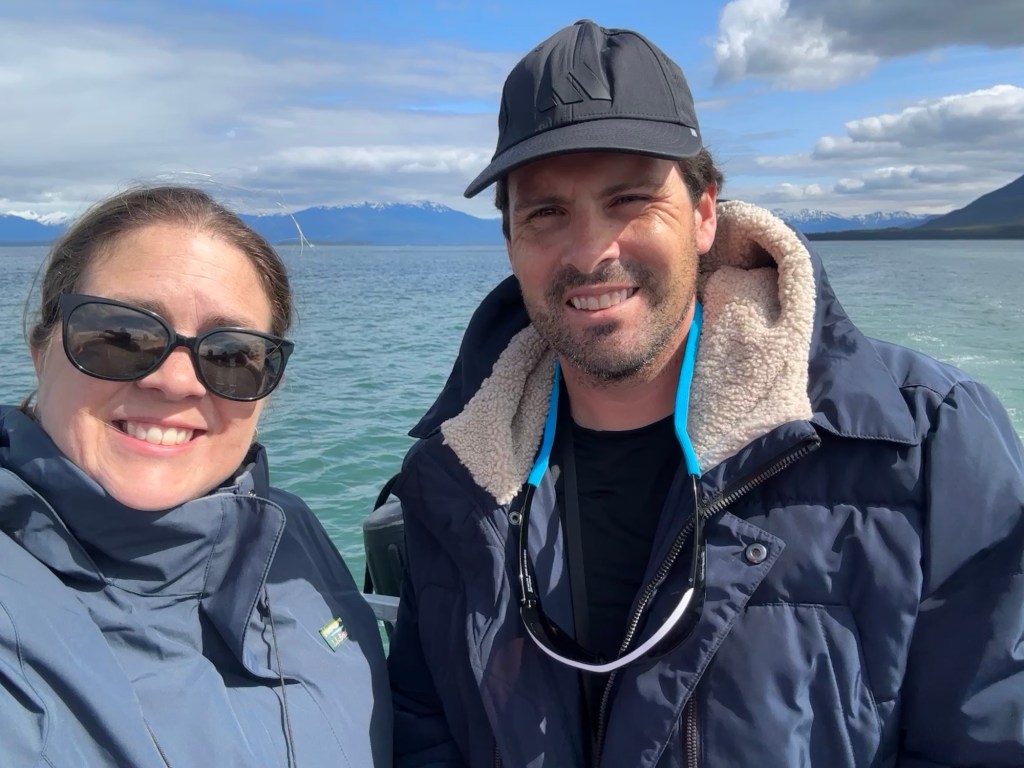
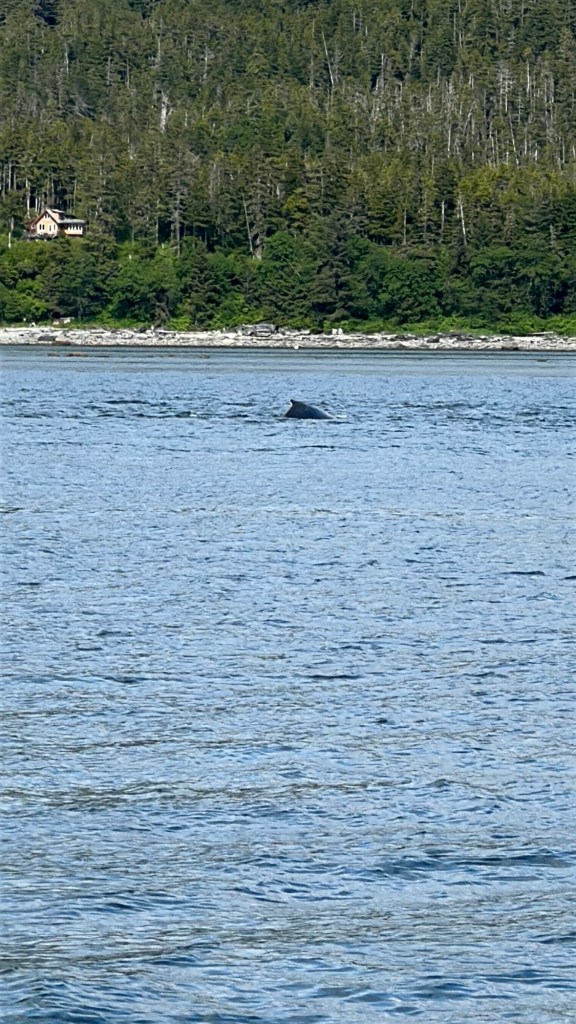
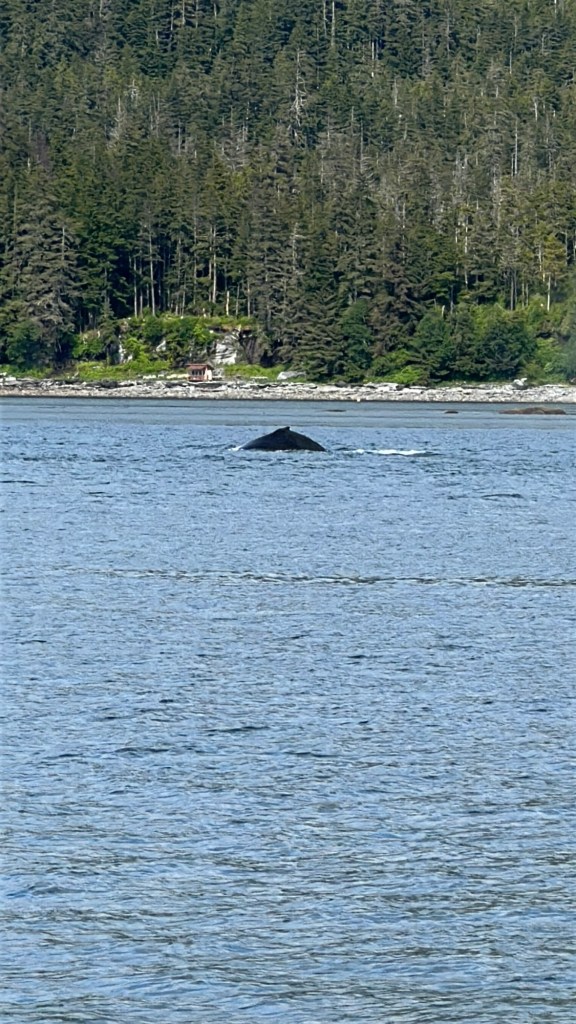
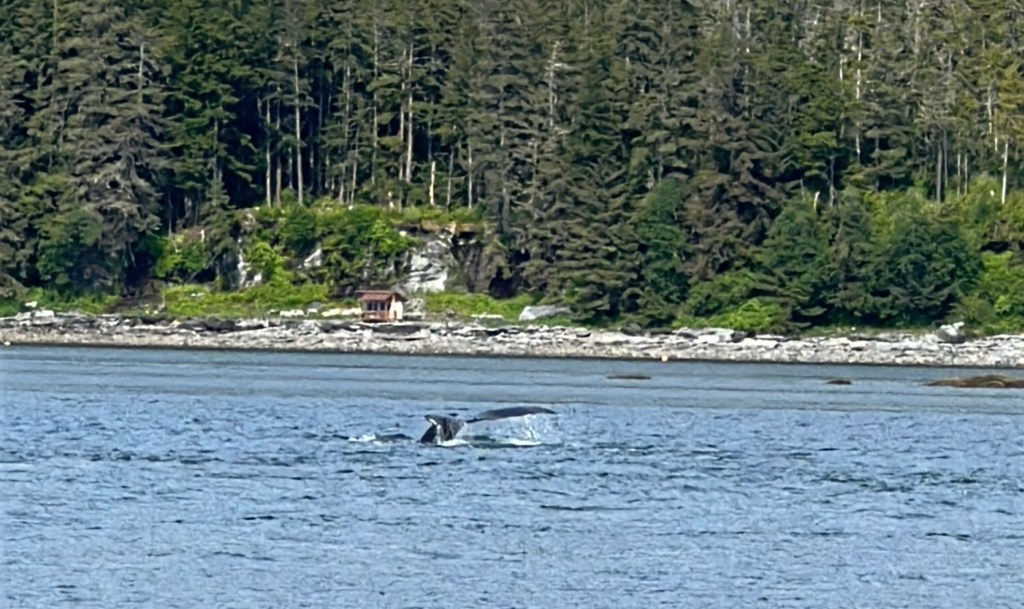
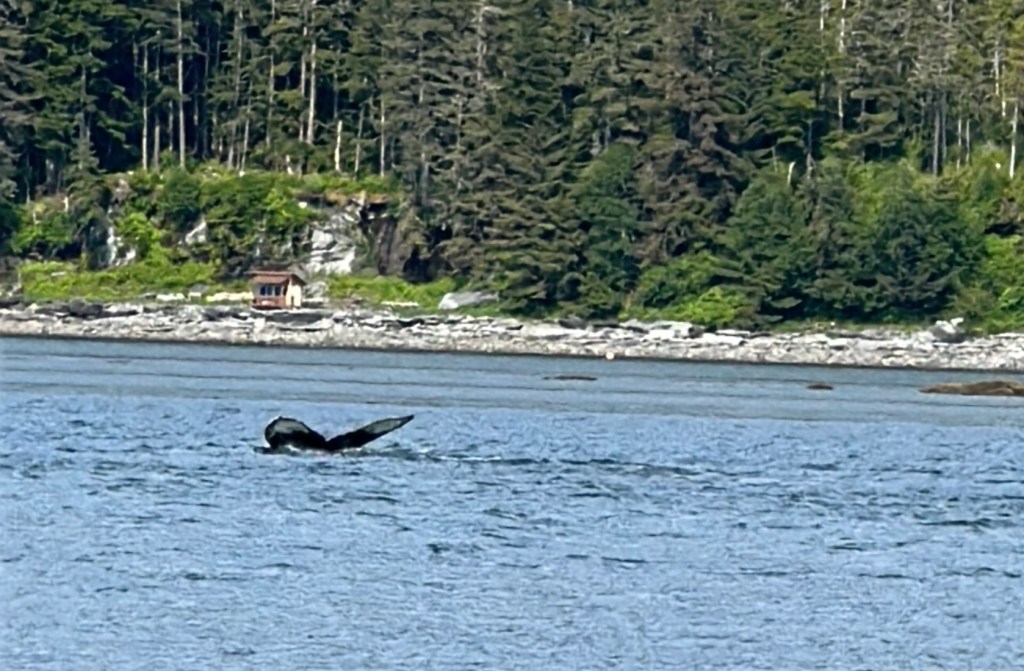
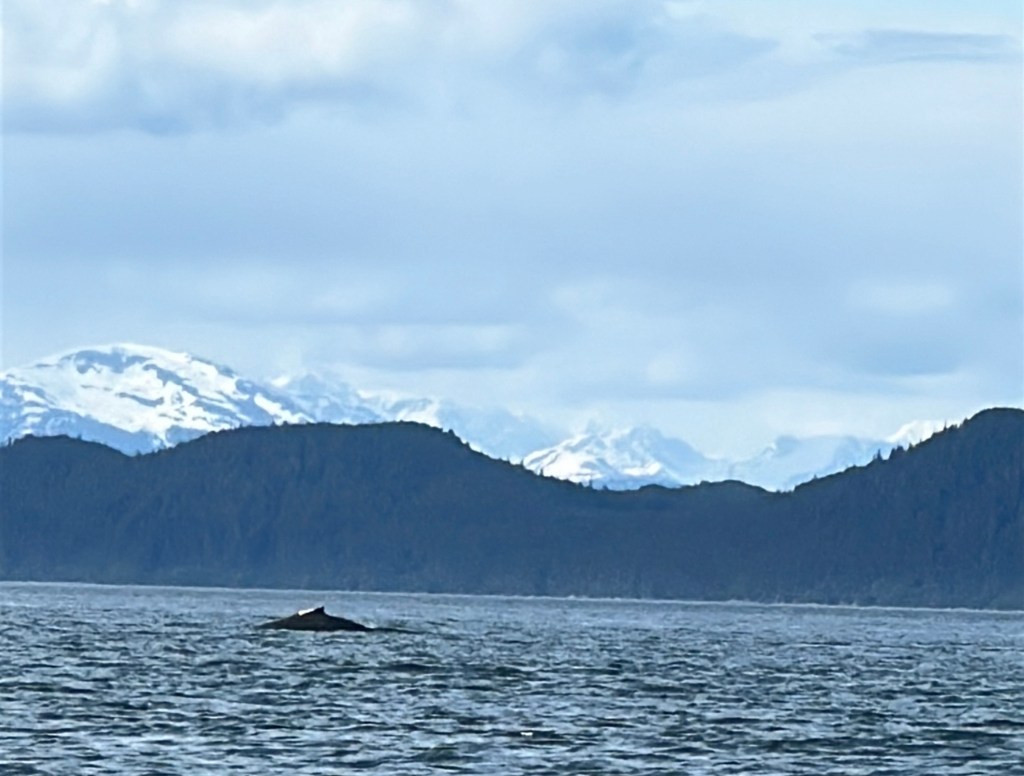
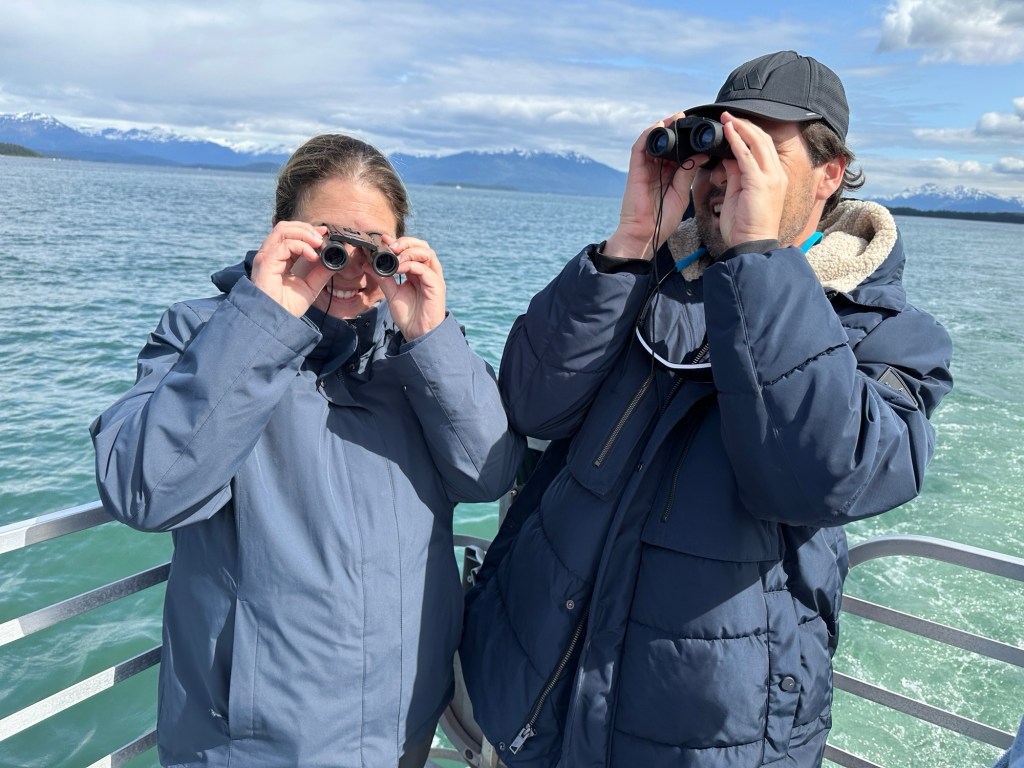
This is the third whale watching tour I have attempted – the first was cancelled in New Zealand due to weather and the second in the Azores was only filled with dolphins – so I am hopeful at another chance to see whales. We do see some breaching briefly from the window of a cruise ship bar but that doesn’t count. Fortunately we are successful on this boat. At first I am slow to see them because I am always on the opposite end or side of the boat when it happens and it isn’t easy as a shortie to get a peak from behind other people, but I eventually get my views since it appears there is enough whale action to go around.
We catch our bus and head back to the ship for another afternoon cocktail, man we are living a tough life this week.
This summer I went on my first Alaska cruise. More on that cruise later but first I want talk about the day or so I had exploring Vancouver, Canada (British Columbia) – the starting point of the cruise. I have only been to Canada once before and that visit was to Montreal, so I am excited to see another part of this incredibly large country that I have put off visiting for way too long. Although Vancouver has much to offer in the form of natural resources I decided to keep this visit a city exploration since I plan of spending a week observing wildlife in Alaska.
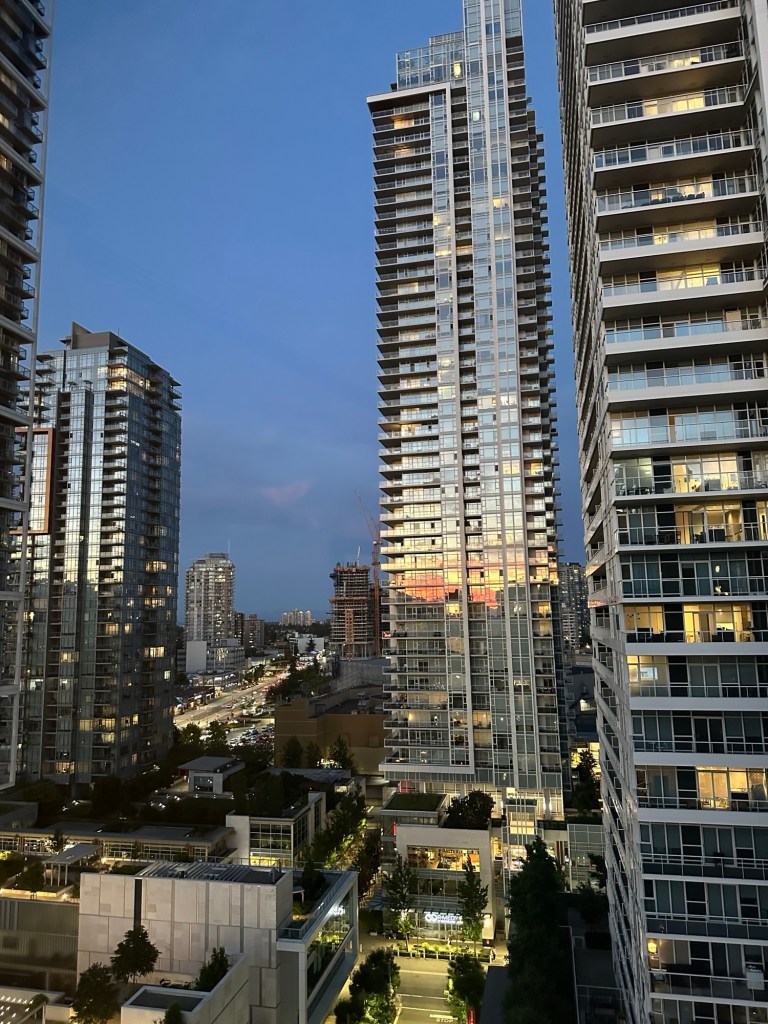
The hotel we chose is further away from the action than I want in Metrotown but I soon see that it is very convenient to get to downtown Vancouver by the elevated train. I take it a few times during my stay. I am in Vancouver with some family members but they arrive later in the evening so my first evening is exploring on my own.
Elevated Train
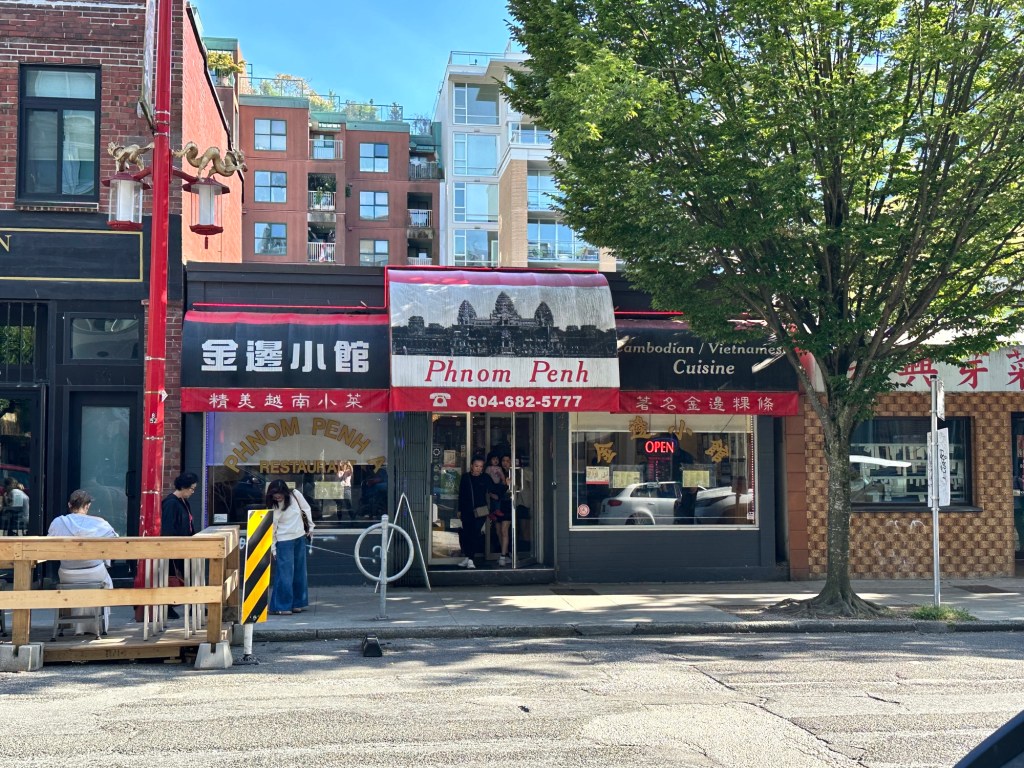
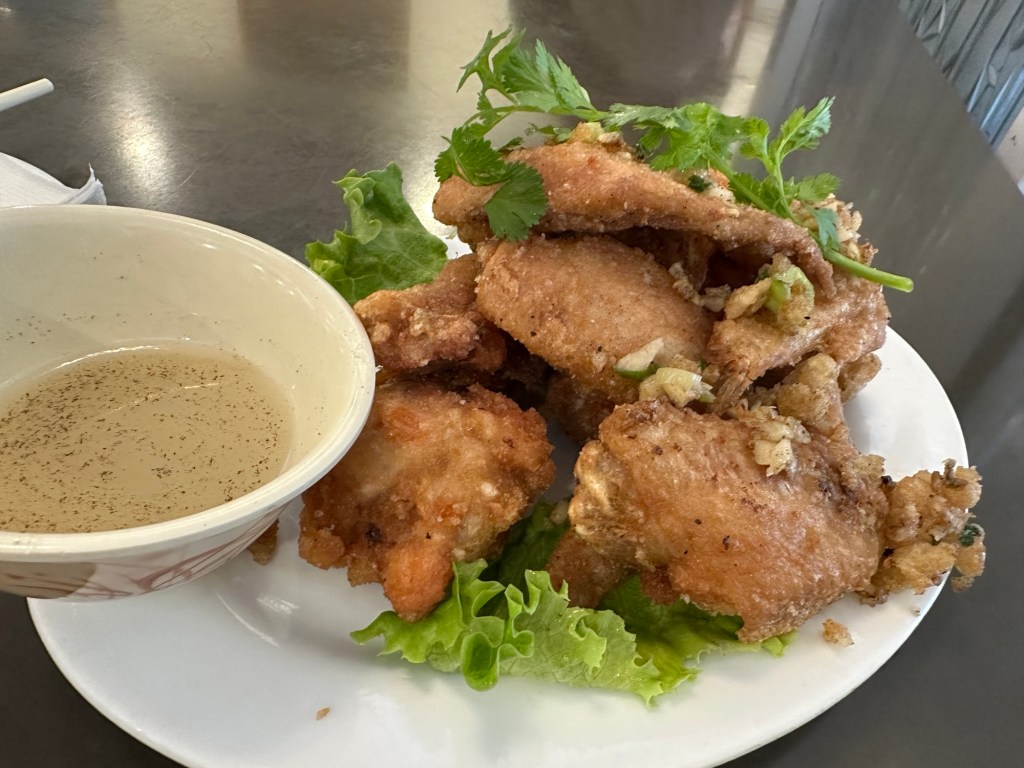
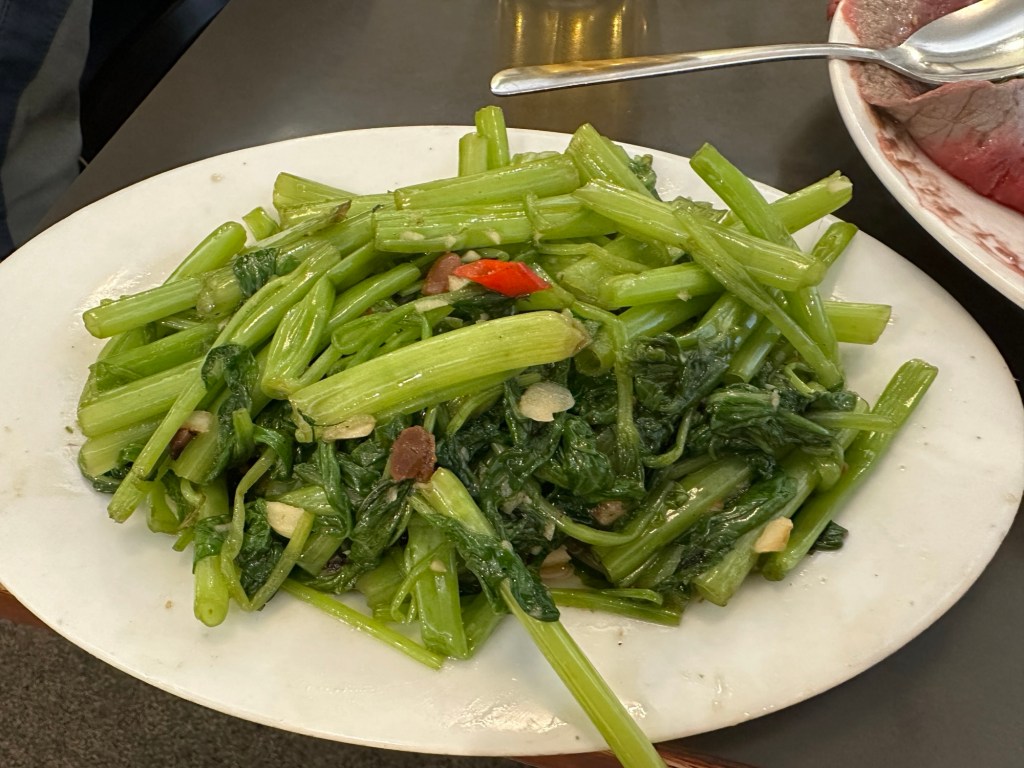
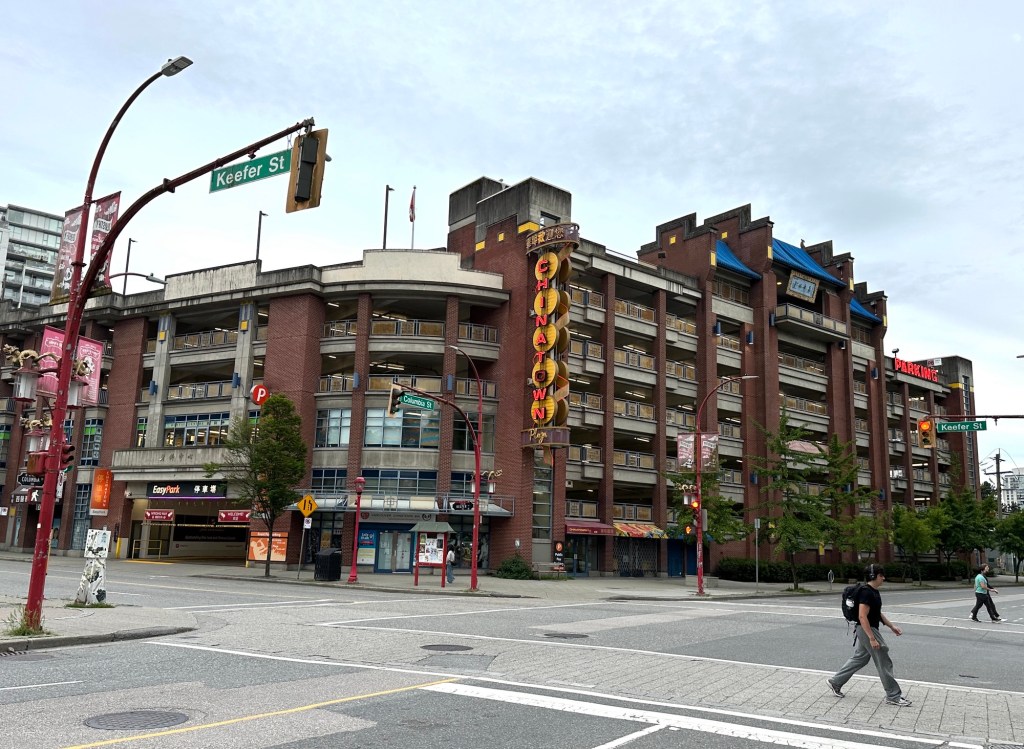
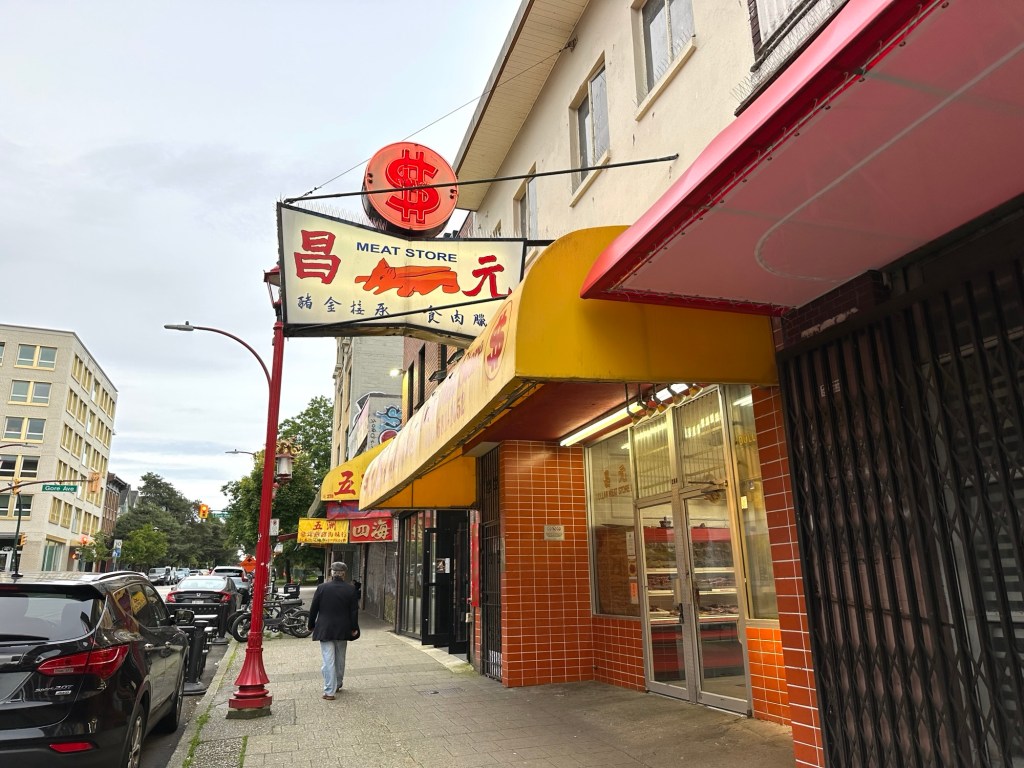
For my first evening I spend most of my time in Chinatown. It is a little rougher in this part of town but I generally feel safe. This is also the location of some good eateries and cute cafes. My first stop is the recommended Phnom Penh Restaurant, a Cambodian and Vietnamese restaurant. I knew arriving that there would probably be a wait since they don’t take reservations. I am told the wait is thirty to forty minutes and they take my phone number for when my table is ready. I wander around the neighborhood while I wait – it actually ends up being closer to sixty minutes and I would have stopped somewhere for a cocktail if I knew the wait would be that long.
I order too much food for one person because there are many things I want to try. Everything I ordered (butter beef, water spinach, chicken wings, moo moo shake) was good and I vow to come back to try more. What I really like is that even though it is awkward to dine alone, especially at a family style Asian restaurant, they seemed to be accommodating by letting me order smaller portions of some of the dishes. A little politeness goes a long way – I am used to being treated as second class in some countries as a solo diner but they did not (although I am certain I would have gotten a table faster if I had a bigger party since there weren’t many smaller tables).
Next stop is at Laowai for a cocktail. They have an interesting food menu that I would be taking advantage of if I hadn’t just eaten a large meal.
I have a reservation at a speakeasy nearby. I walk the neighborhood while I wait for my reservation time.
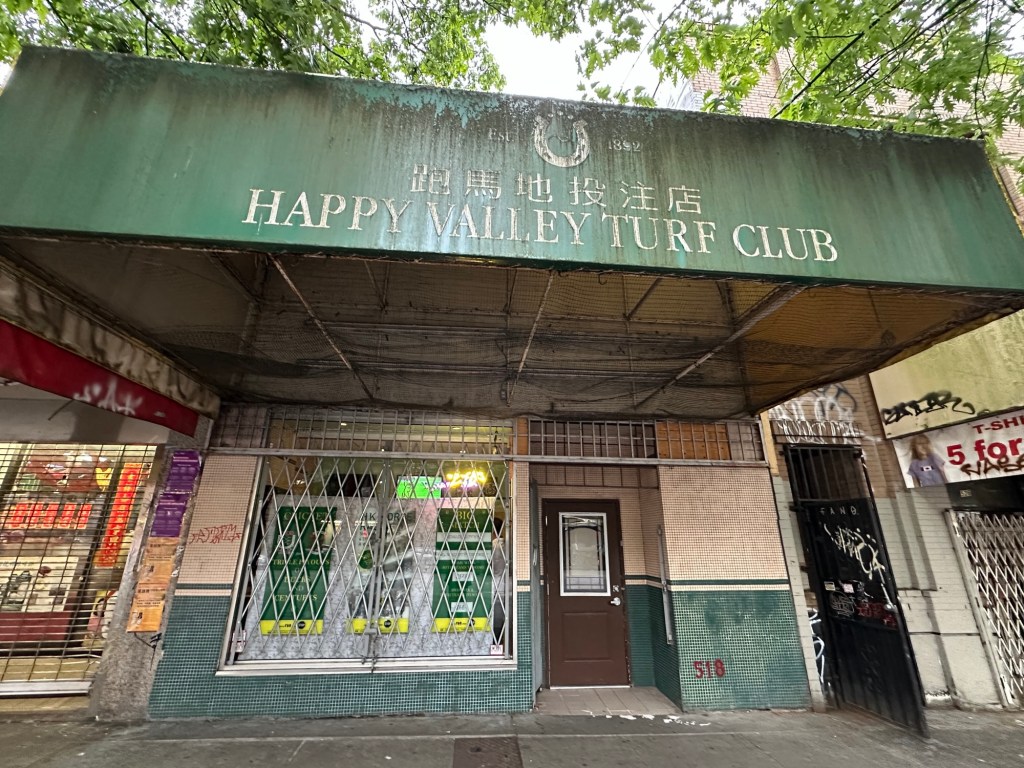
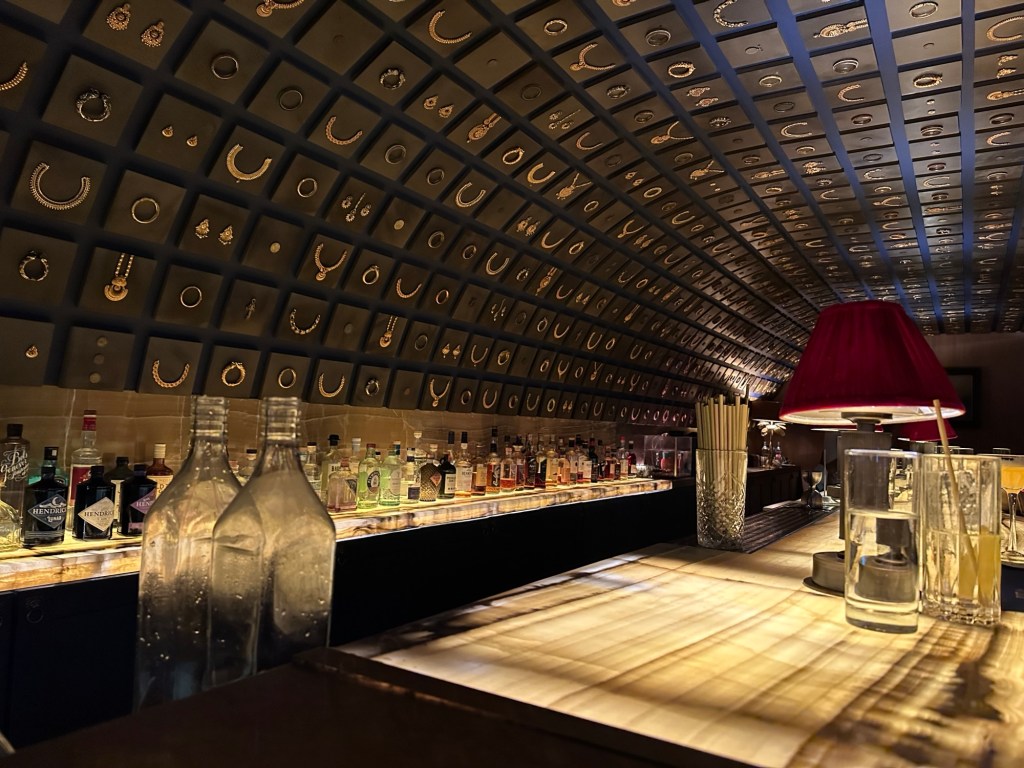
My last stop is at Bagheera, a speakeasy with an entrance themed like a horse betting window. This is once again another place with an interesting food menu, many of them Indian themed. I want to come back when I am hungry and try some of the menu items.
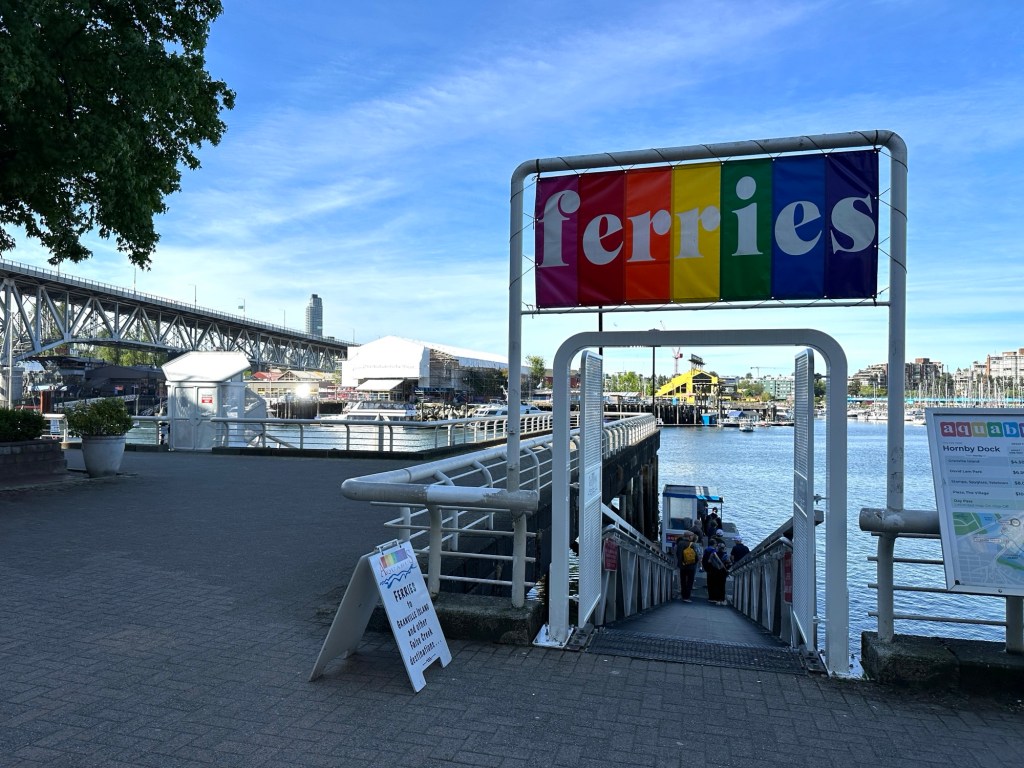
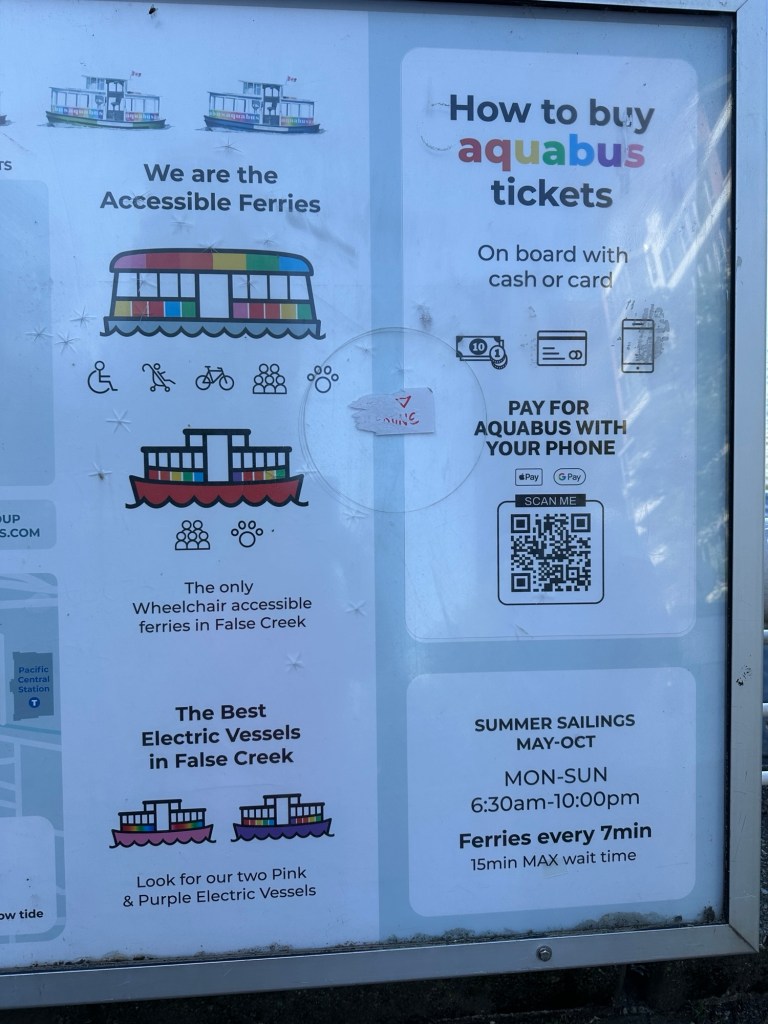
The next morning my cousin and I take the train into downtown Vancouver and then walk down to the ferries.
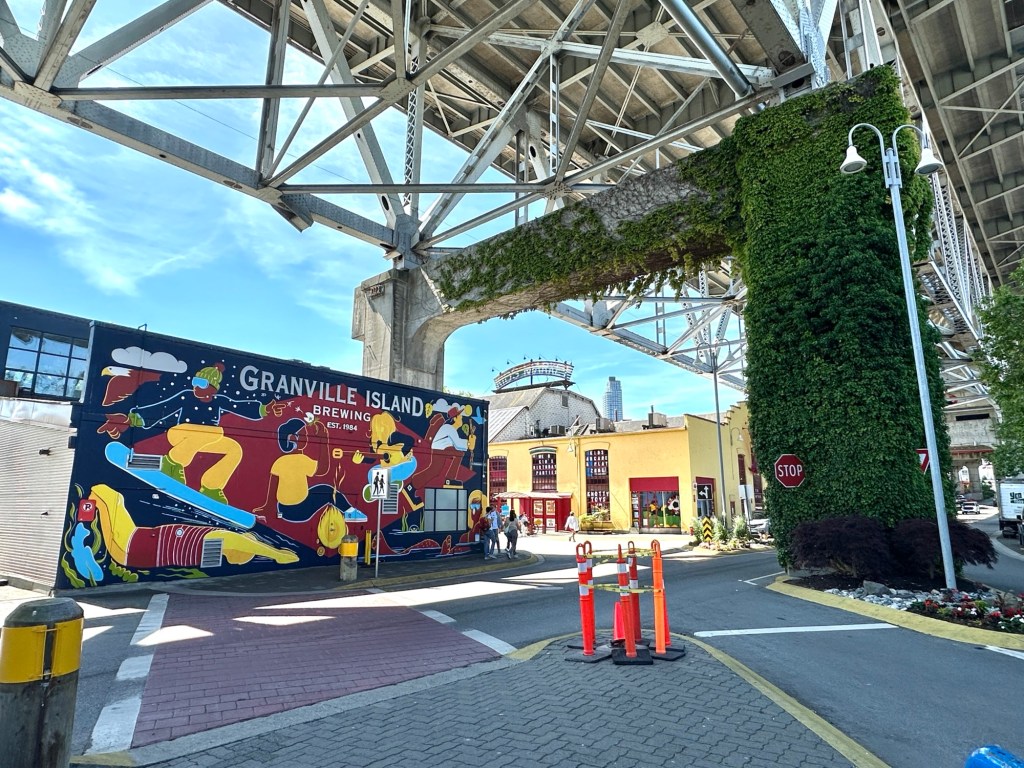
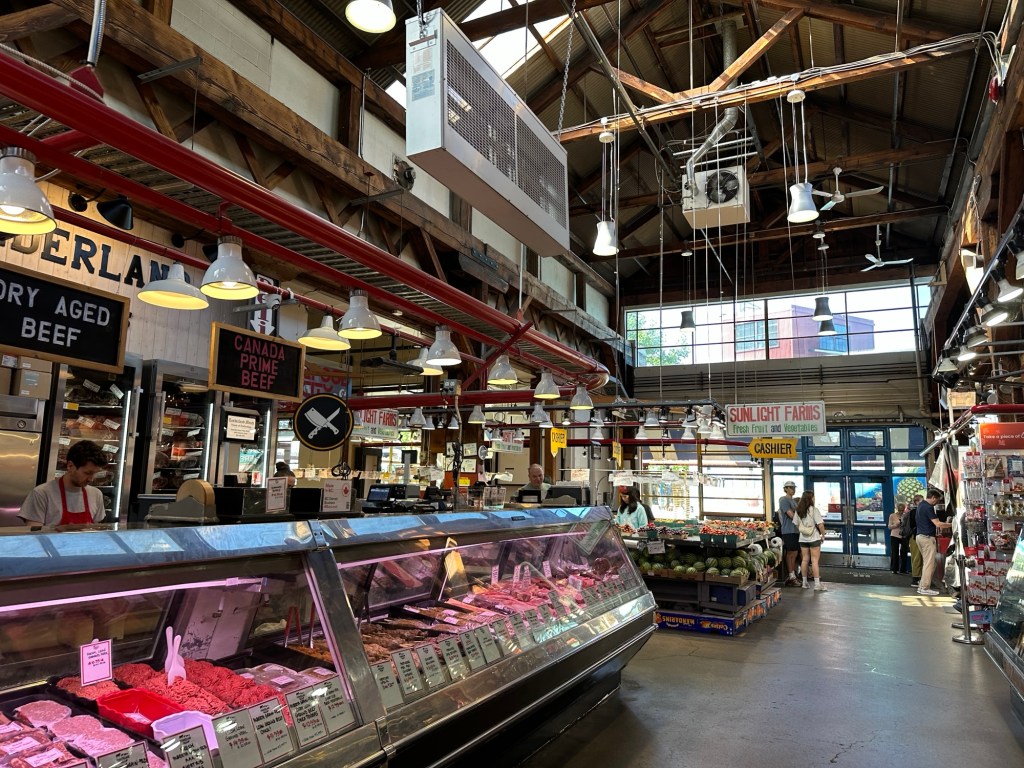
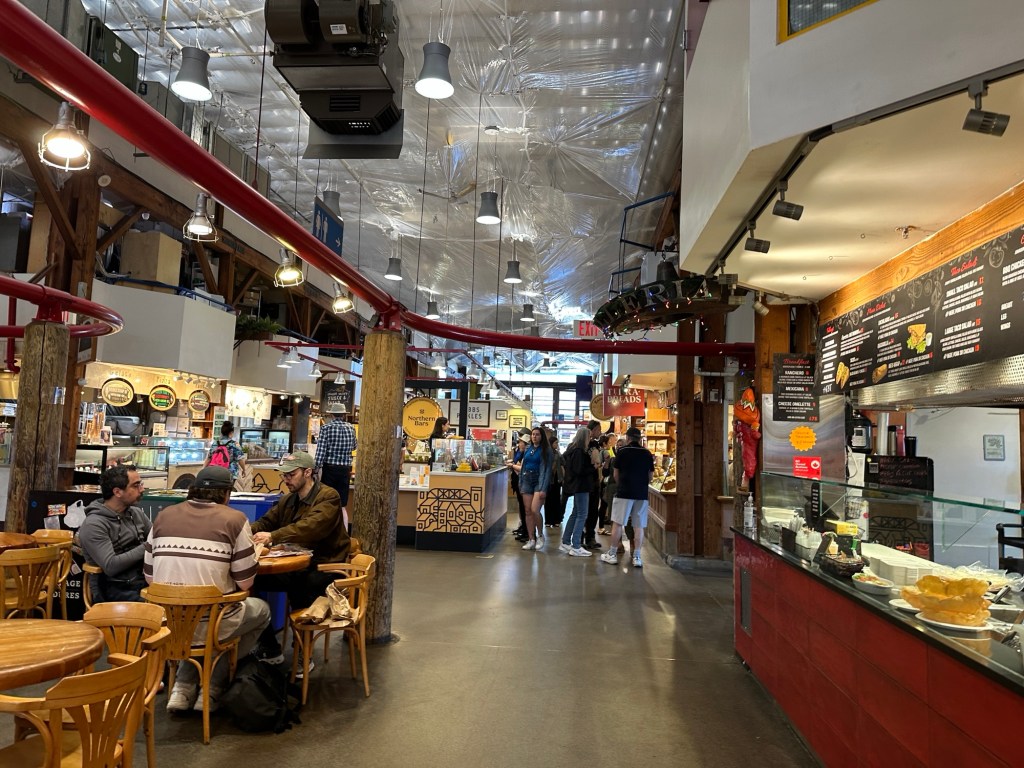
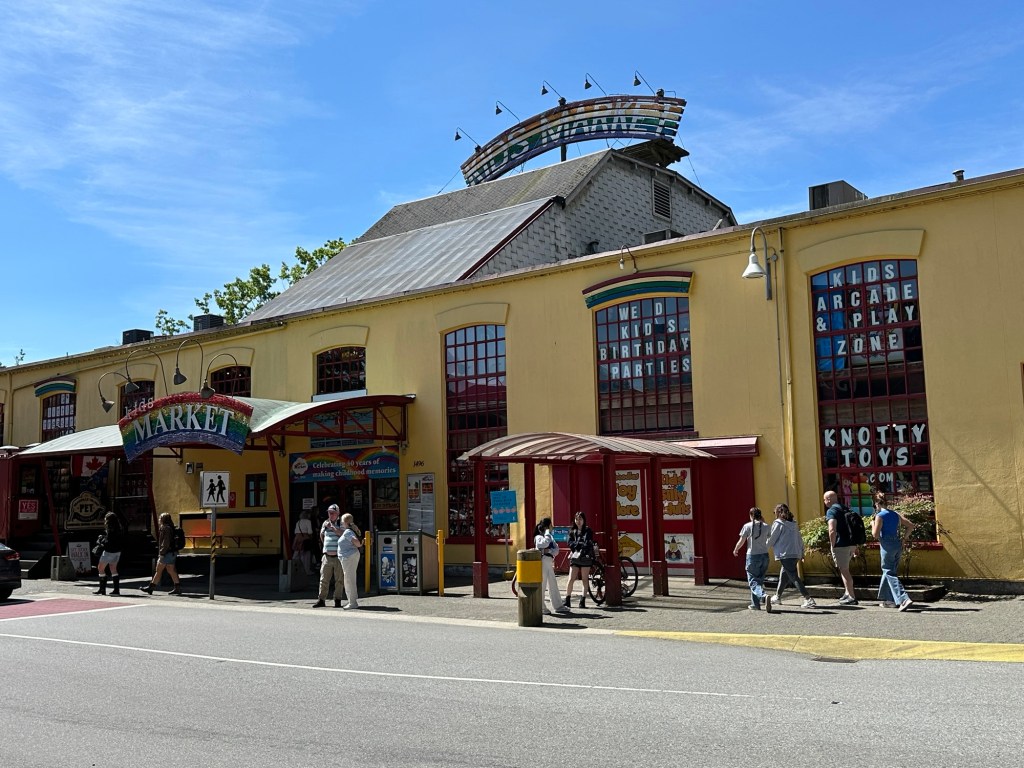
We take a ferry out to Granville Island for some snacks and to walk around. There are so many food choices here that I wish I scheduled more time in Vancouver to hang out here. In the summer there is live music and other events happening on Granville Island. Definitely visit their market if you are ever in town.
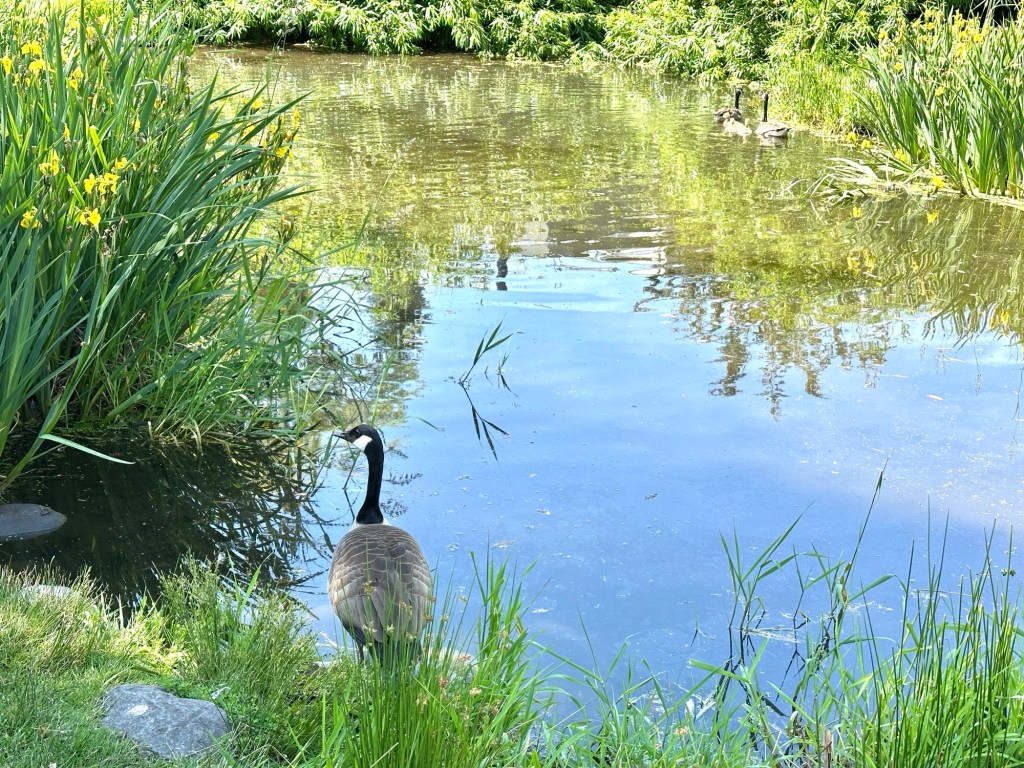
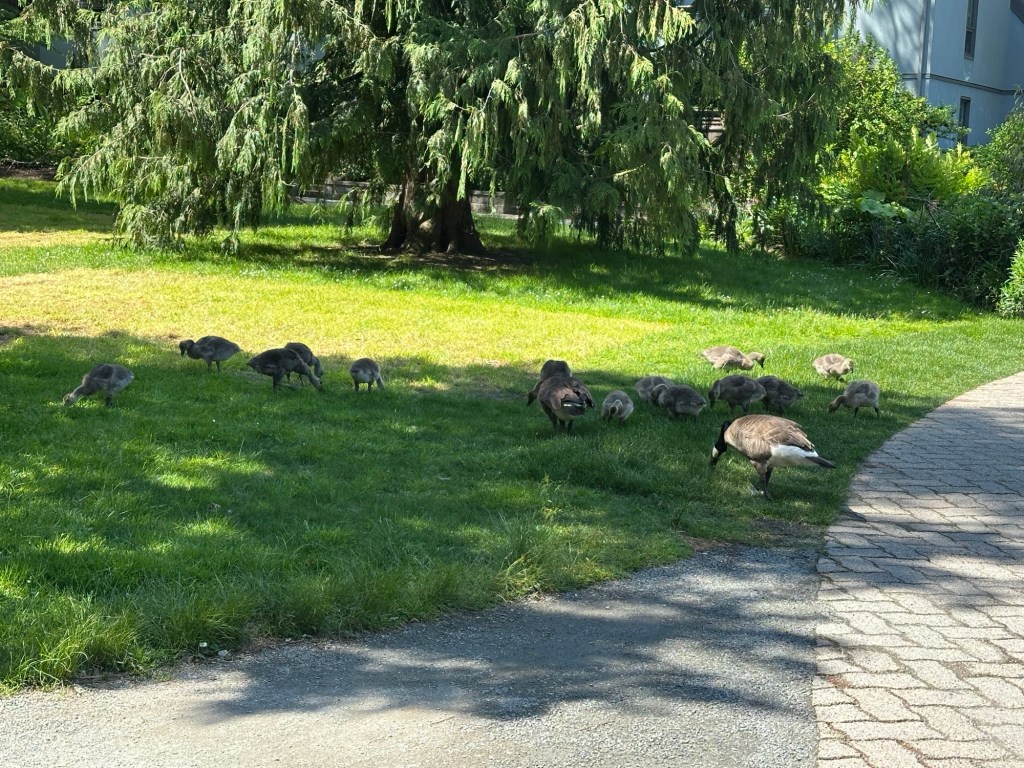
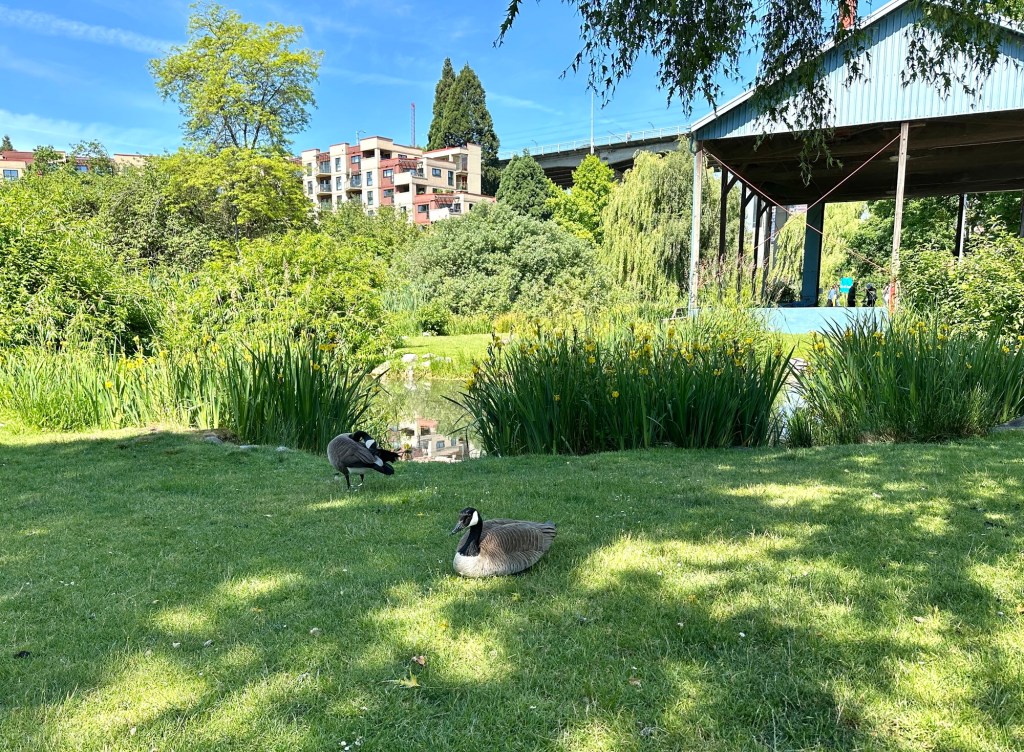
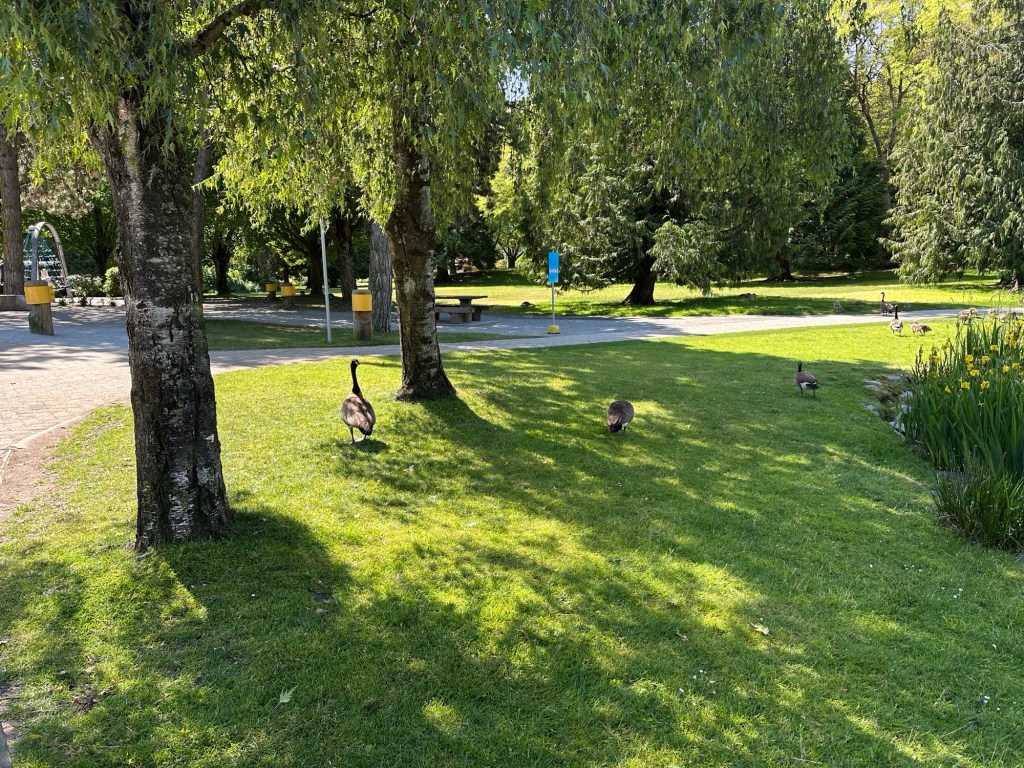
We also linger a bit to watch some geese and ducks.
We have a food tour scheduled this afternoon so we head to the Waterfront Station to meet up with our group.
We automatically have a connection to the tour guide who has the same name as my cousin’s sister who passed away many years go (I also was very close to this cousin who was six months younger than I). The guide is an actress but also holds many different roles, one of which is as a tour guide. We try a number of dishes around the downtown area and she tells us a little history of each location. While I didn’t love all the food choices (this tour might have been better in Chinatown) she did a good job overall. The tour at least was a good introduction to the city.
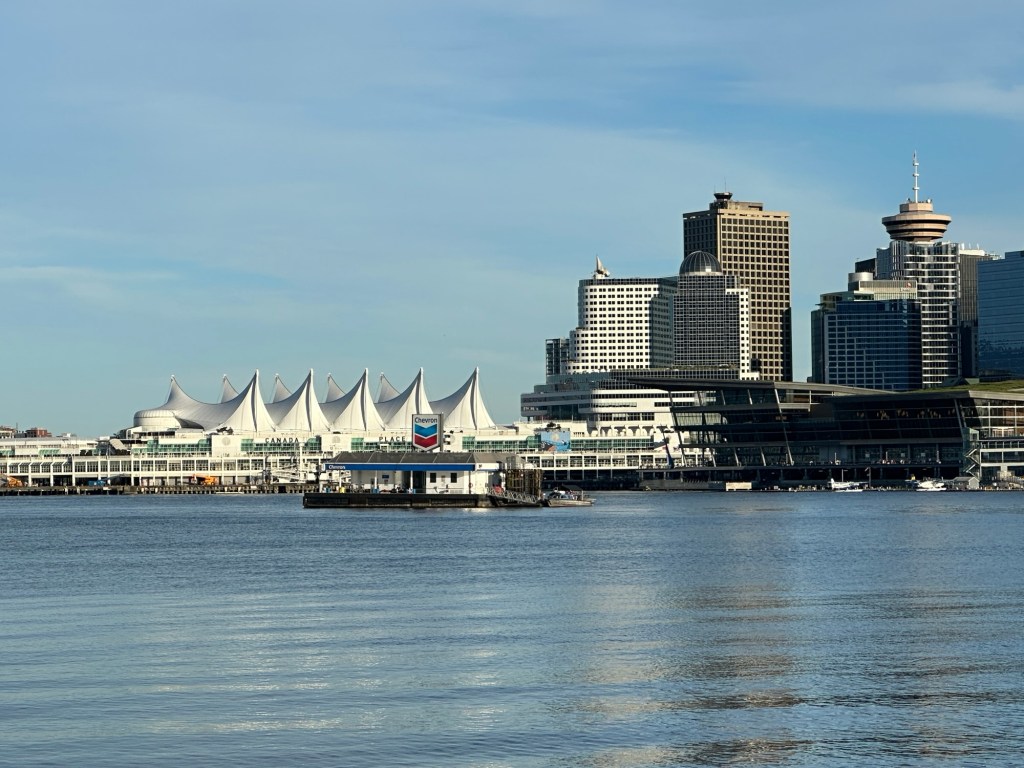
After our tour we take a break to have a drink and a view.
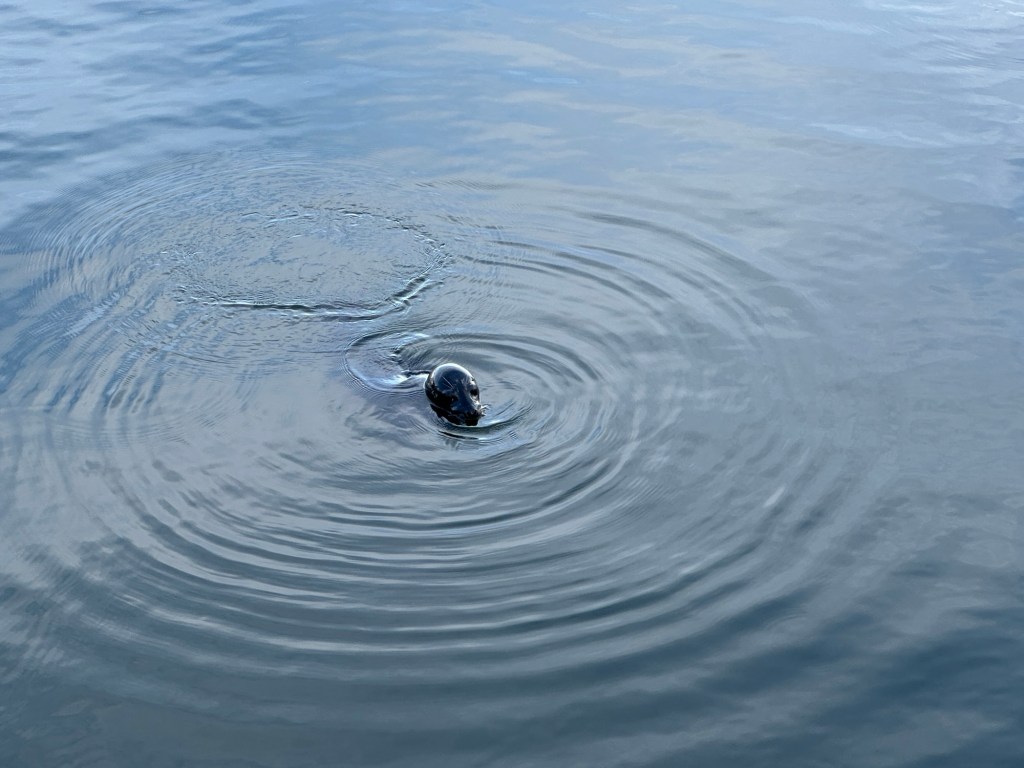
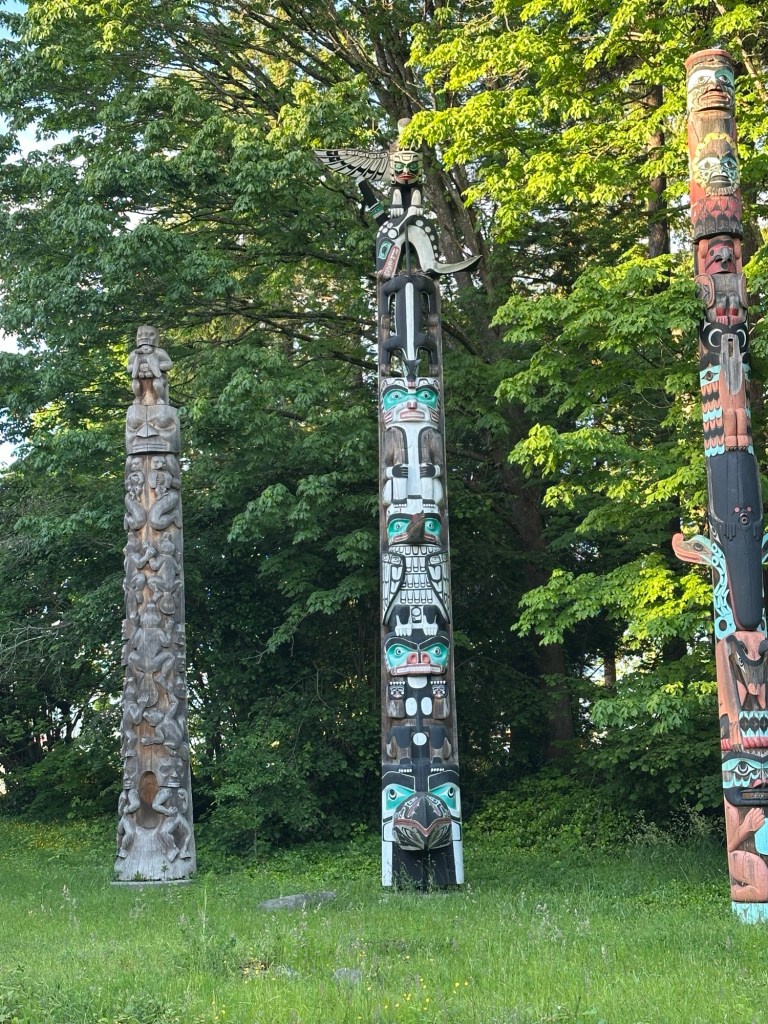
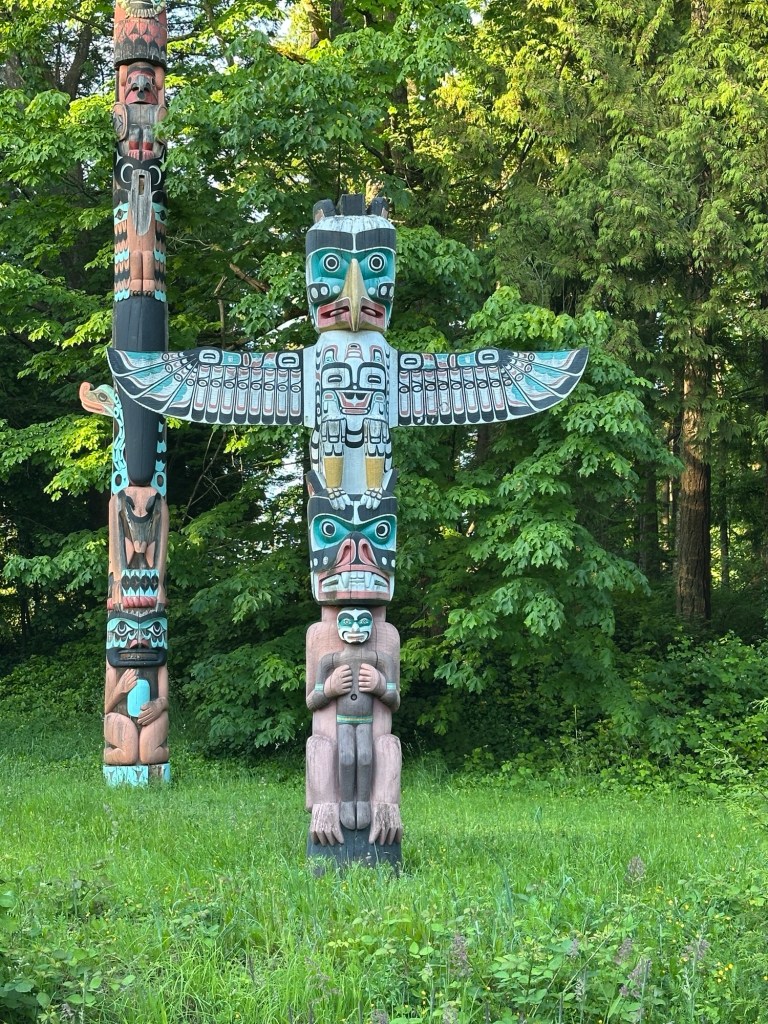
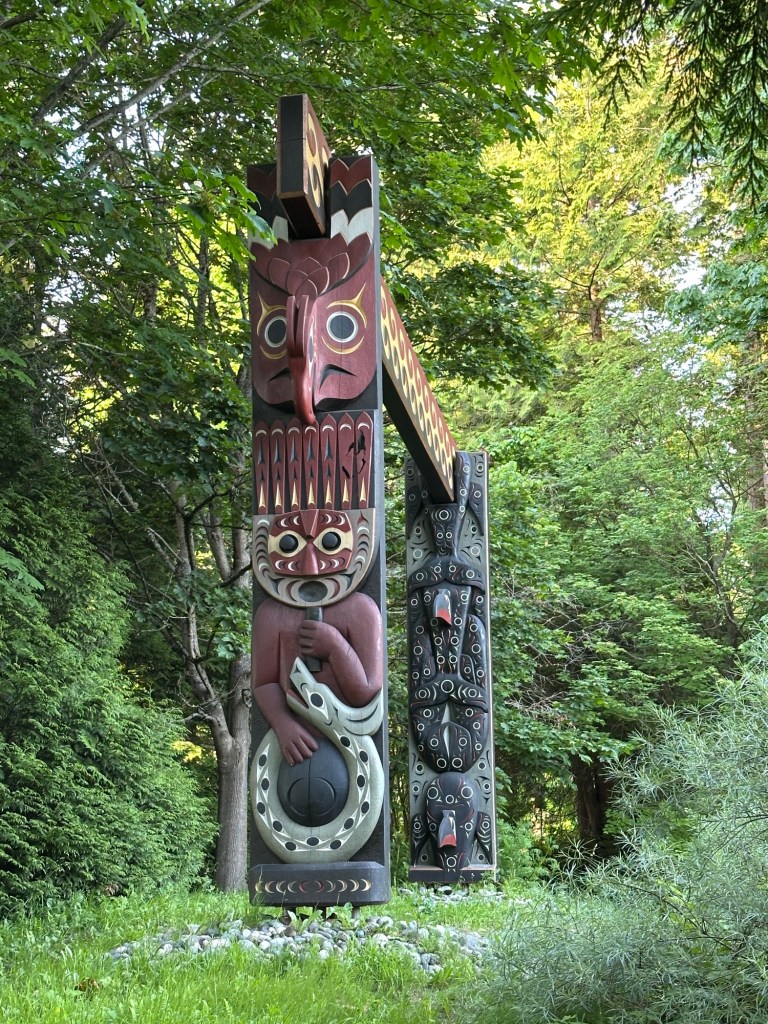
Our next adventure is to walk the sea wall down to Stanley Park. We enjoy nice views along the way as well as a seal but our legs and feet are tired. We pledge that we will at least continue on until the Totem poles but then allow ourselves to uber back to the hotel.
Stanley Park
There is so much more to see but we are exhausted and we have a cruise to catch tomorrow so early to bed!
This morning I’m walking to the Museum of World War II. This must do for Gdańsk is the most thorough war museum I have ever visited and takes about three hours for the audio tour.
I also schedule a walking tour for this afternoon of the main town.
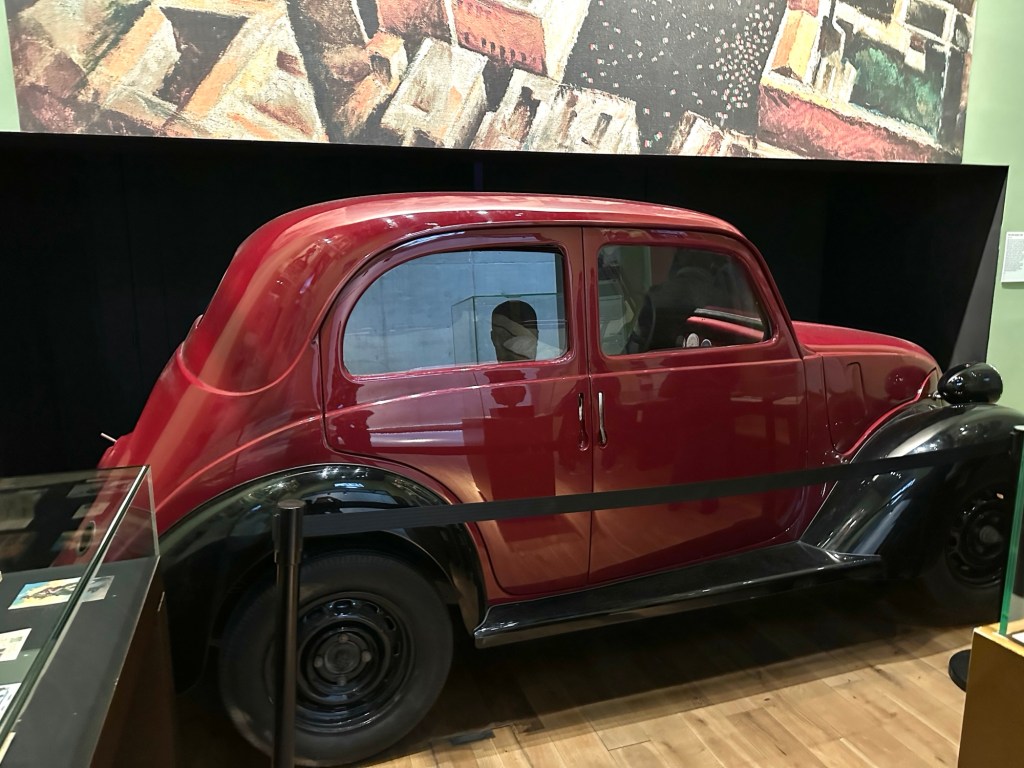
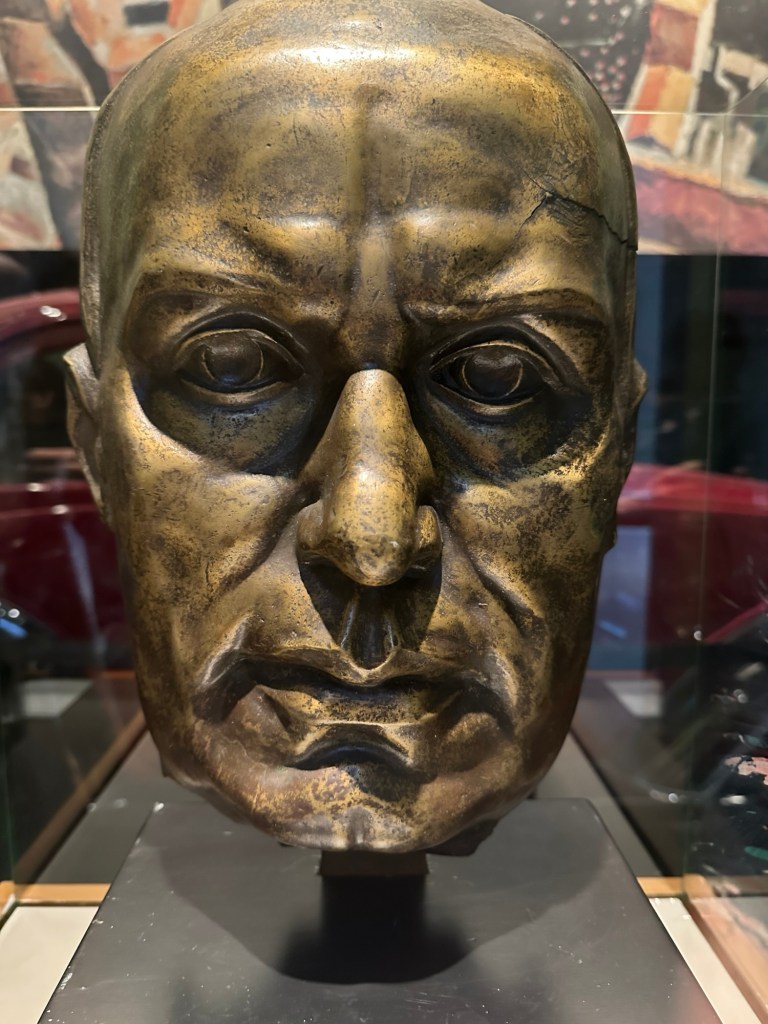
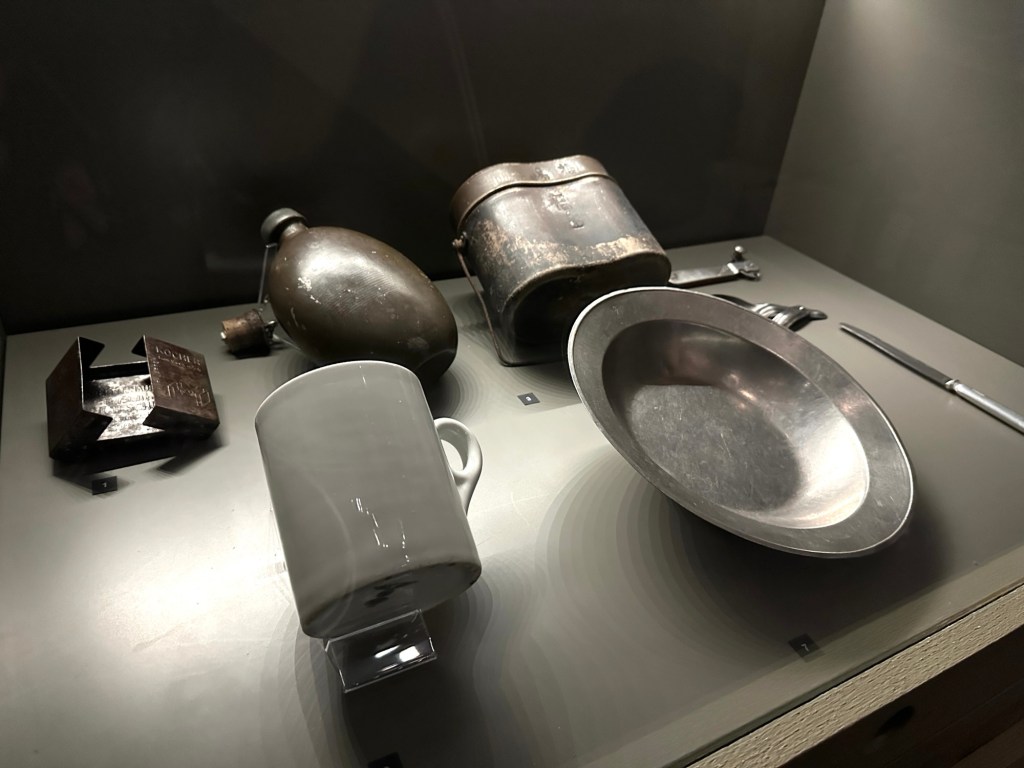
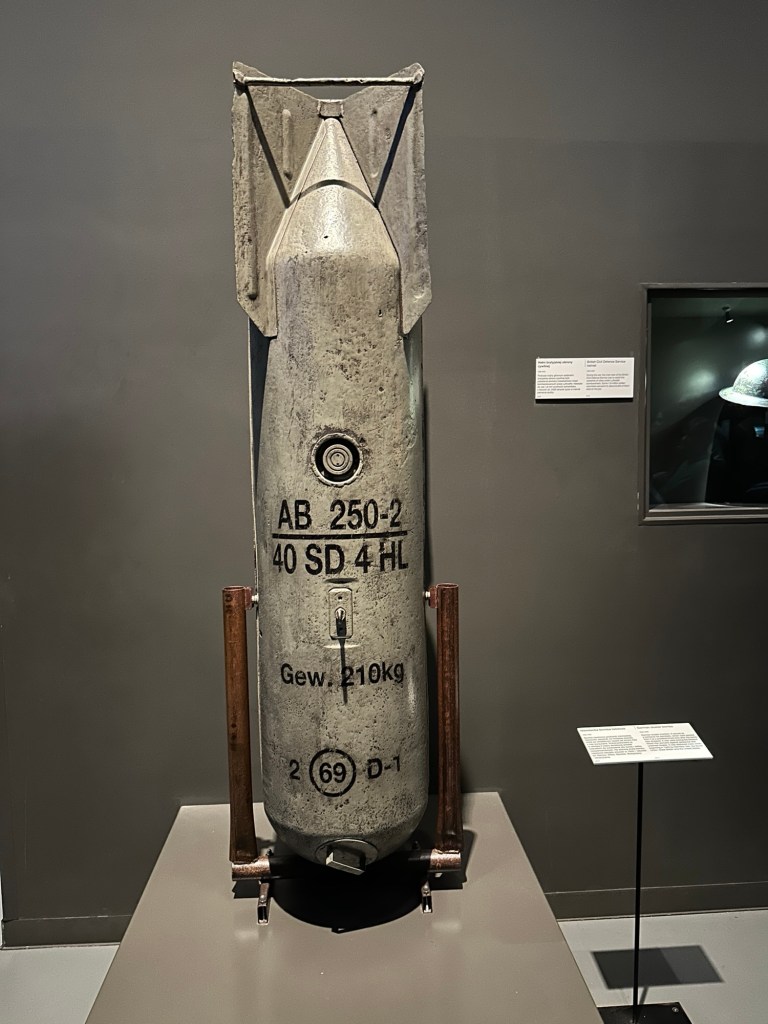
I arrive the Museum of the Second World War right at opening and have purchased my ticket and audio guide in advance. Arriving at opening is advisable because this museum is huge and covers lots of information. It gets very busy as the morning passes. The museum gives all the reasons for the war, all the players, and the aftermath. Sure you might see a little more information on how the war affected Poland than other similar museums but it also goes into how the way it affected other territories like the Balkans, Baltic countries, and even those effected by Japanese invasions.
Museum of World War II
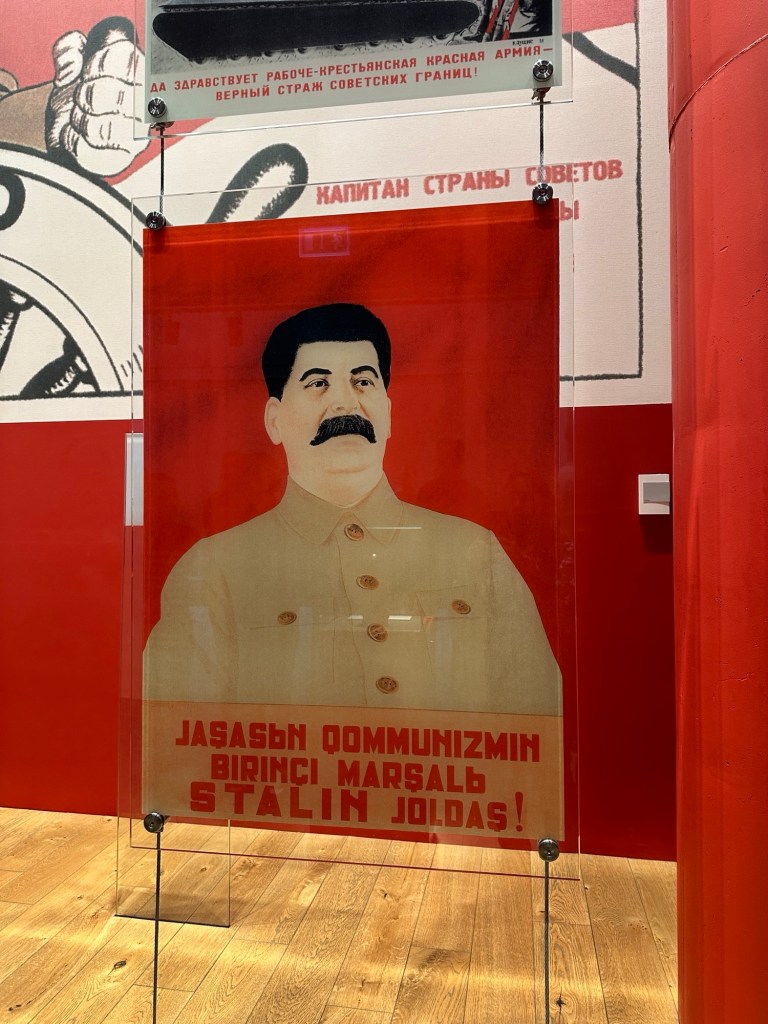
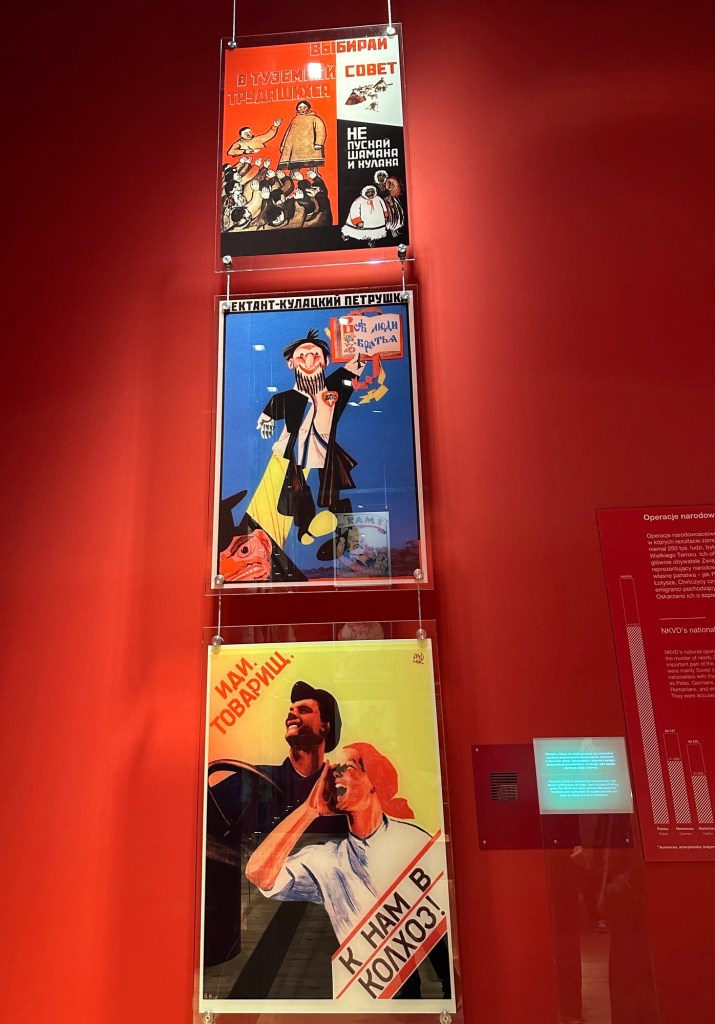
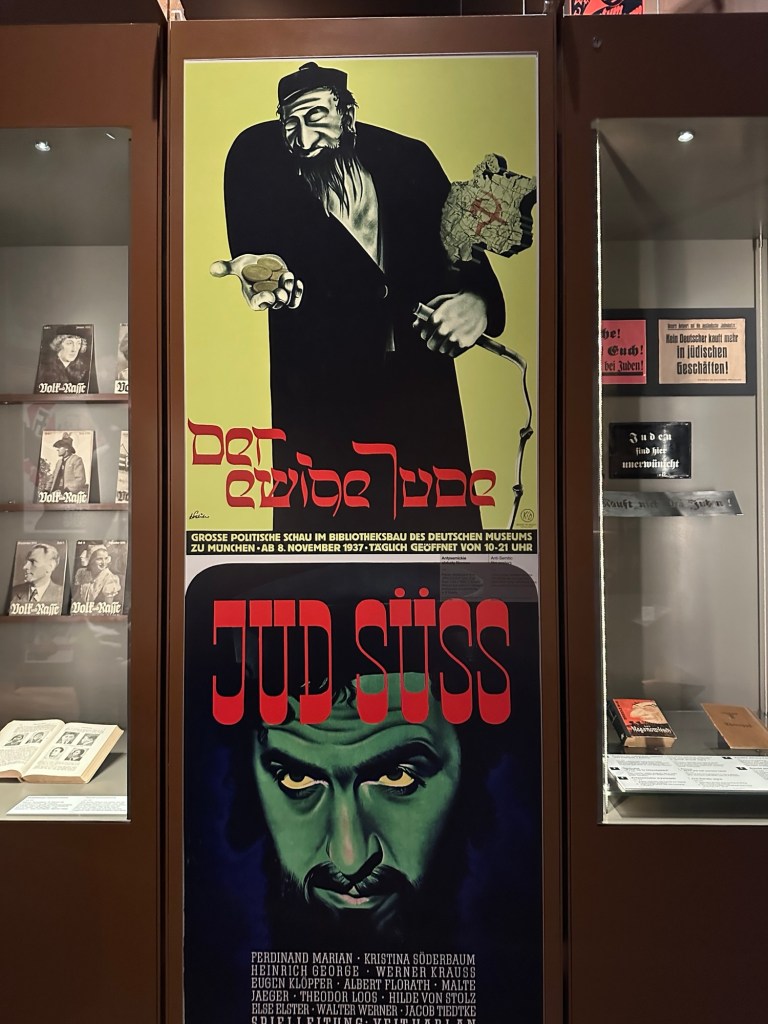
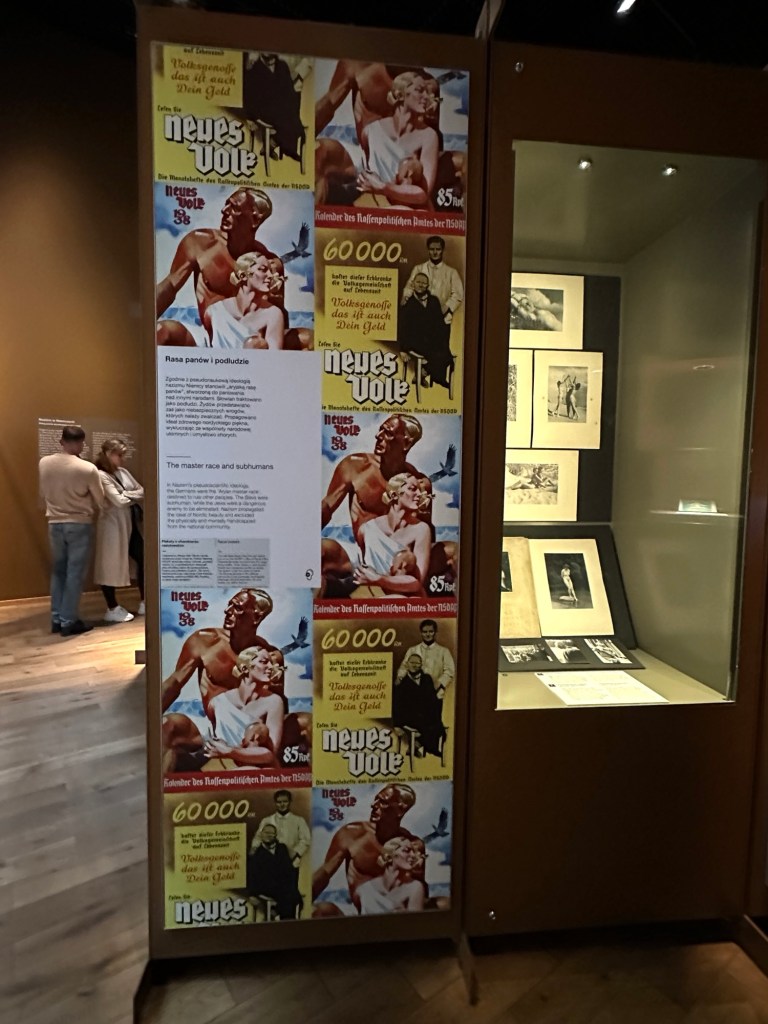
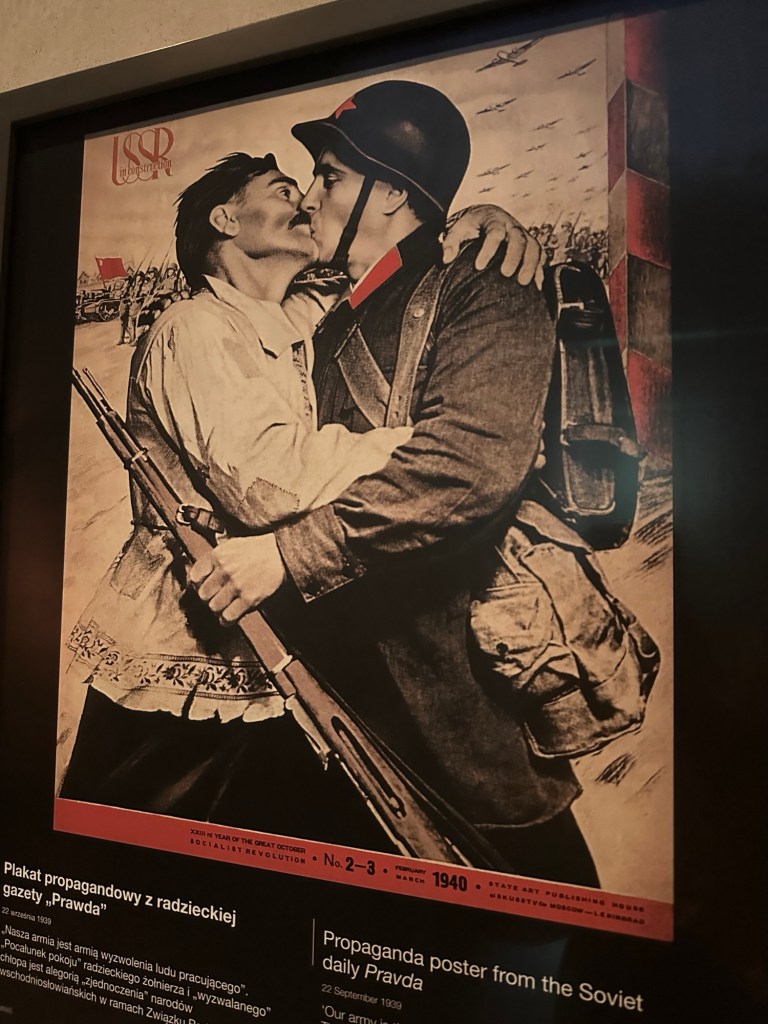
I always enjoy propaganda posters.
I learn the ways the Finnish people tried to stop the Soviet Union from invading.
Soldiers on skis
More exhibits
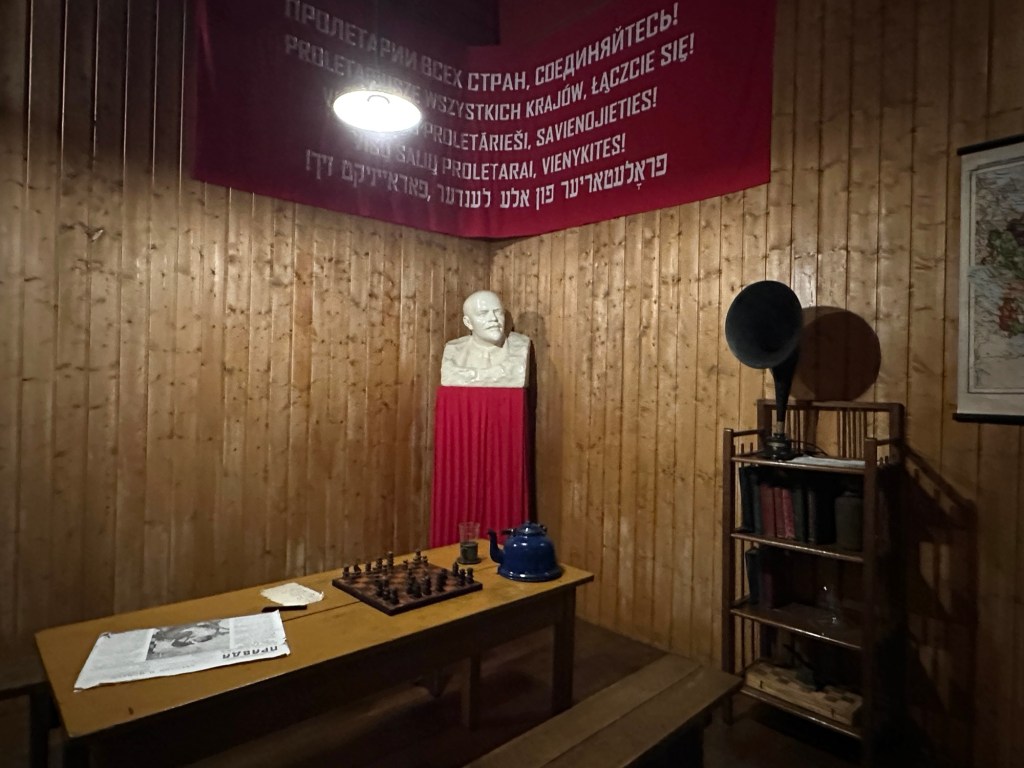
I learn how every Soviet territory has a little red corner for Soviet materials.
The museum also talks about Japan’s role in the war. There is a particularly disturbing exhibit on Japanese brothels during the war.
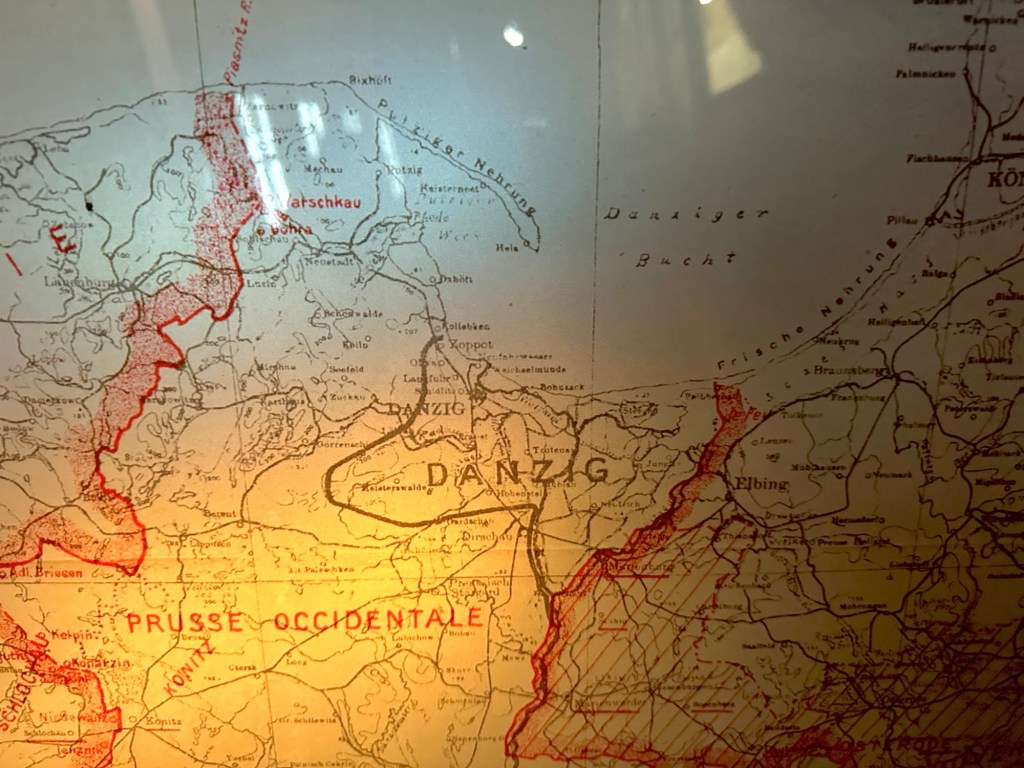
Gdansk is talked about as well as Poland. After WWI the treaty of Versailles took Gdansk, which was predominately German at the time and made it the Free city of Gdansk (but tied to Poland). All of this makes more sense when I learn about the efforts to defeat communism that has origins in Gdansk later on. During WWII since most in Gdansk were German speaking and Gdansk is also called Danzig in German.
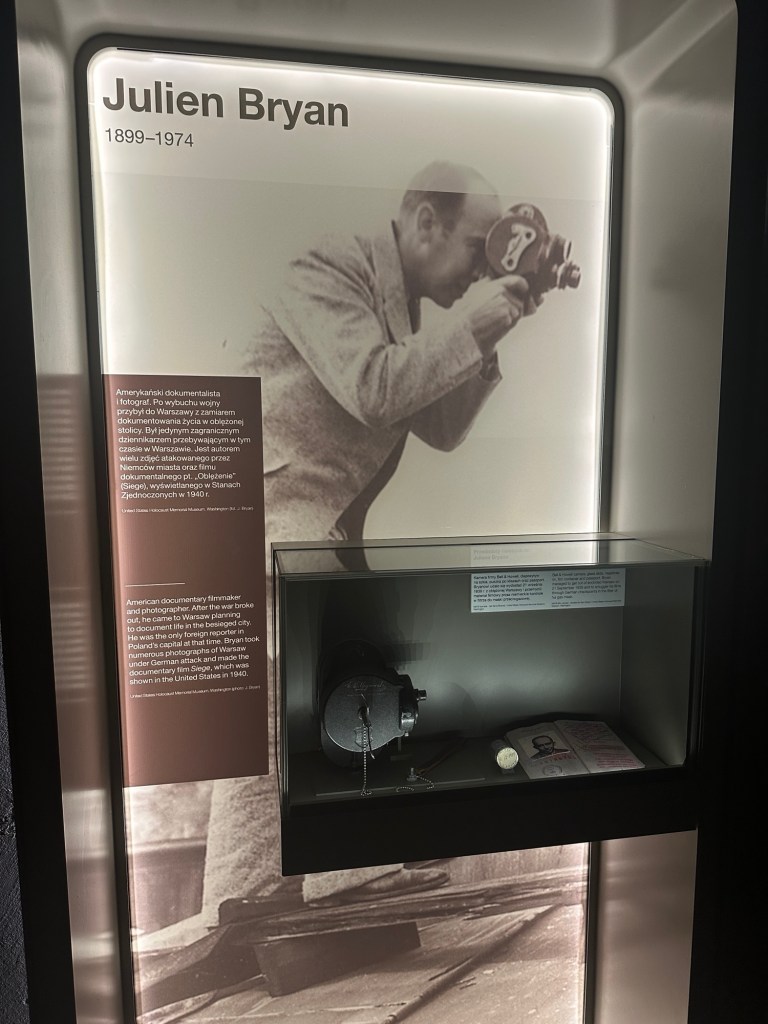
US photographer
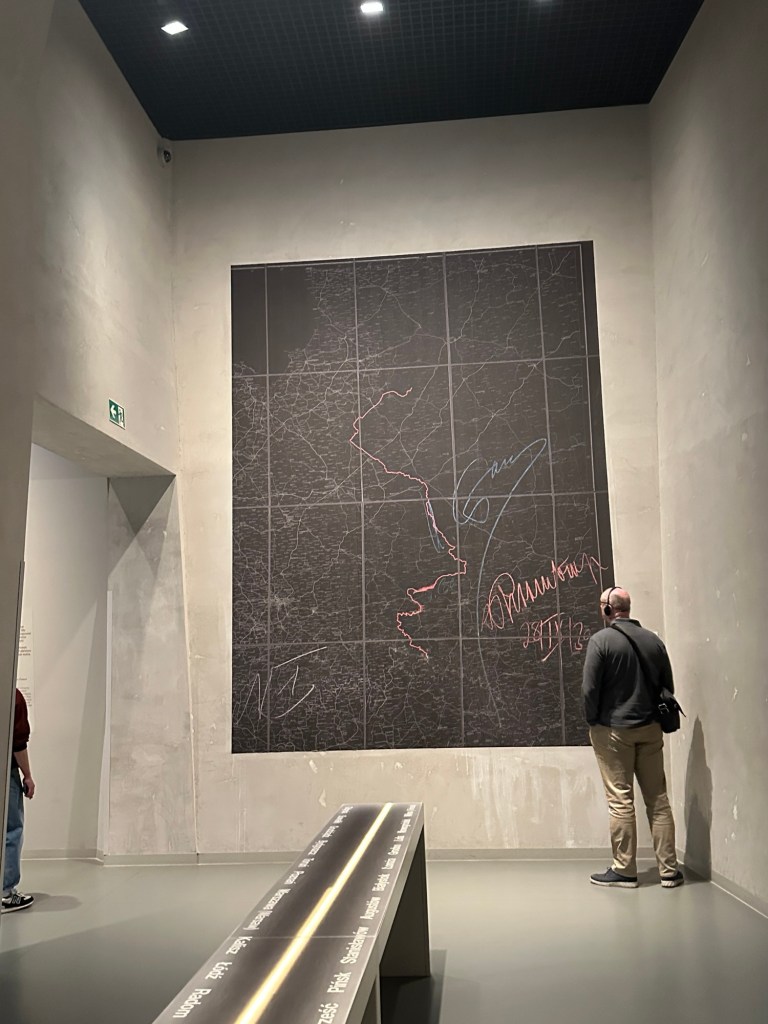
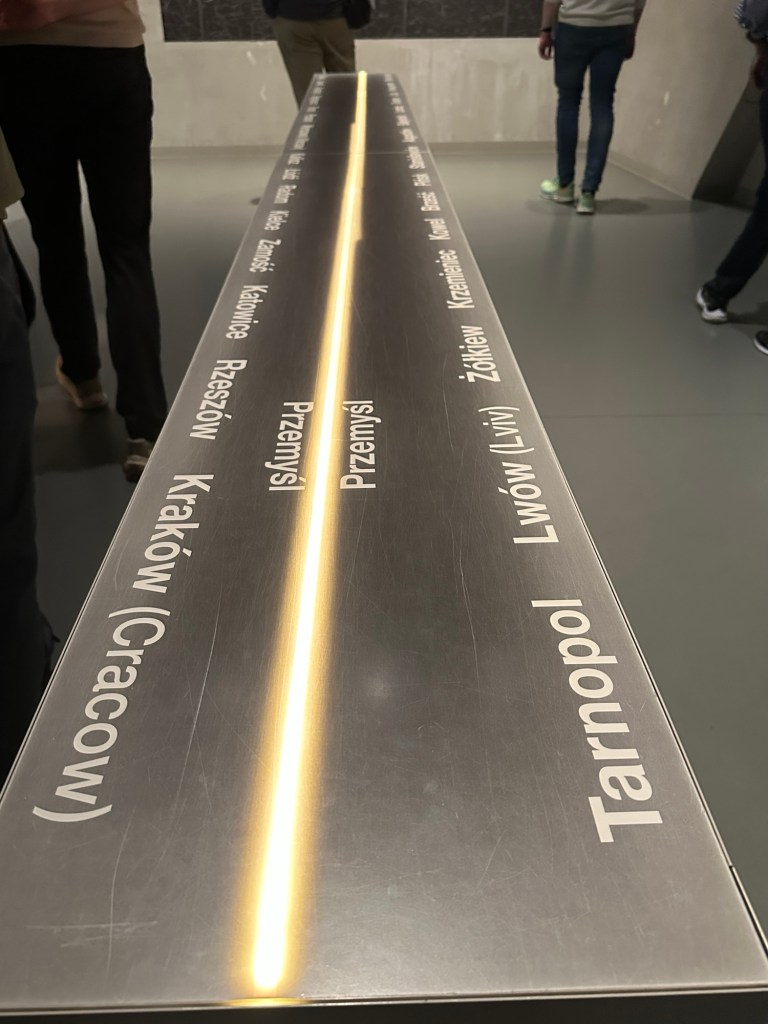
An agreement was made to partition Poland by the Soviet Union and Germany. There is an exhibit to show the divide.
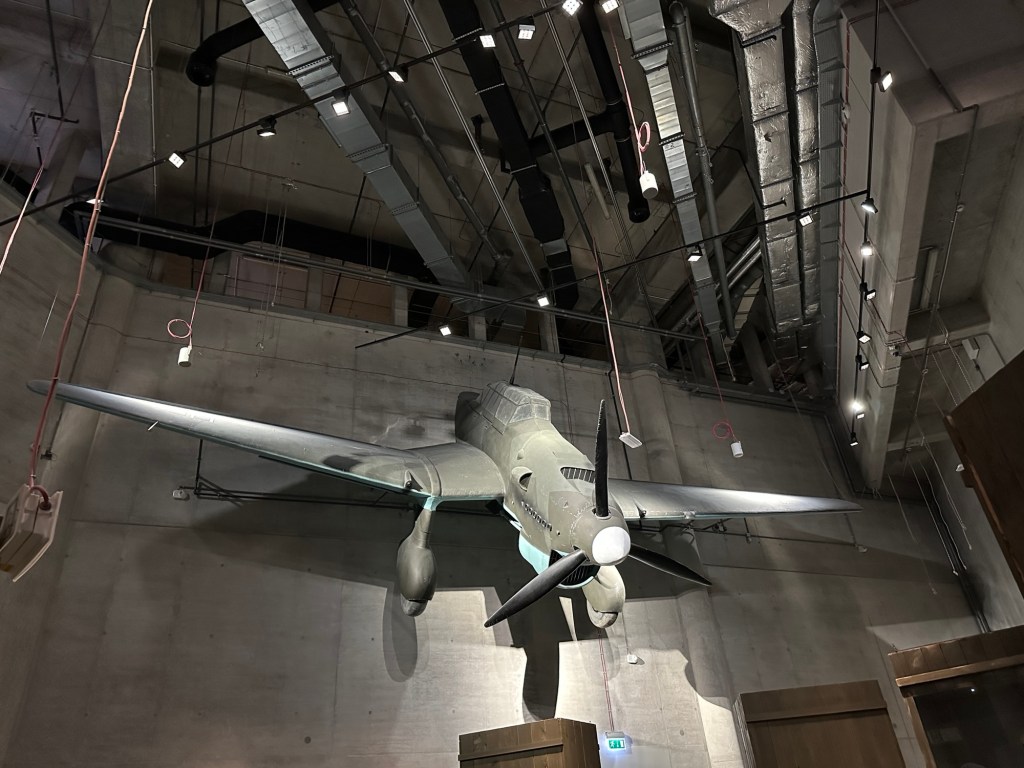
More war related exhibits
Hiding from bombs
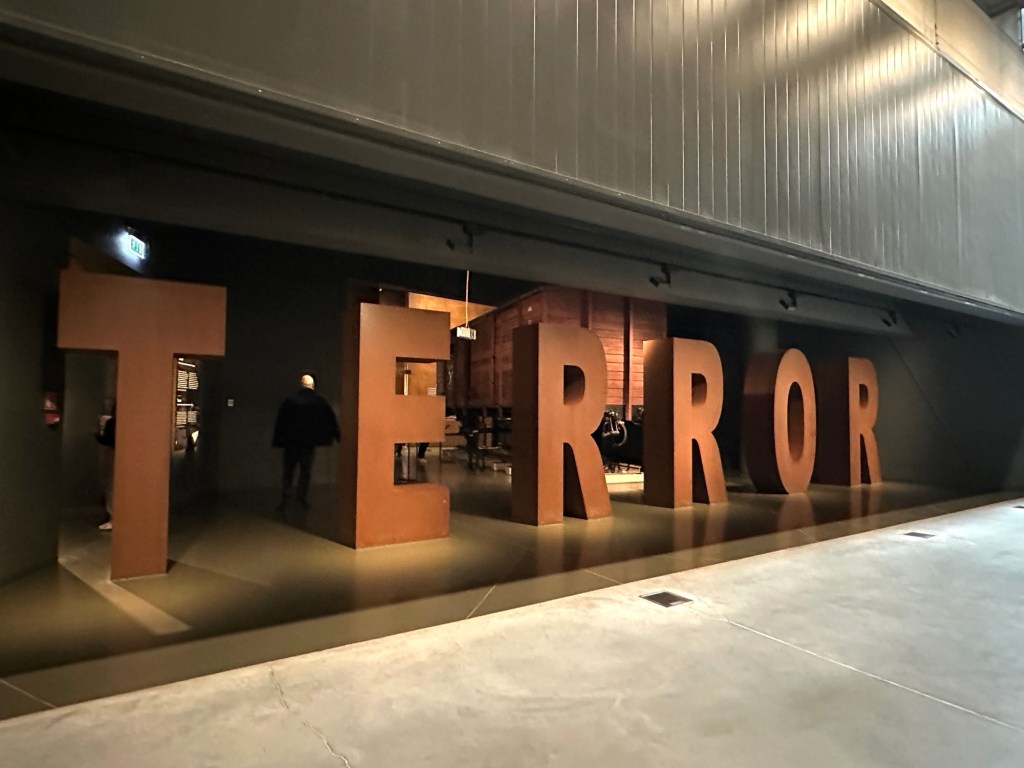
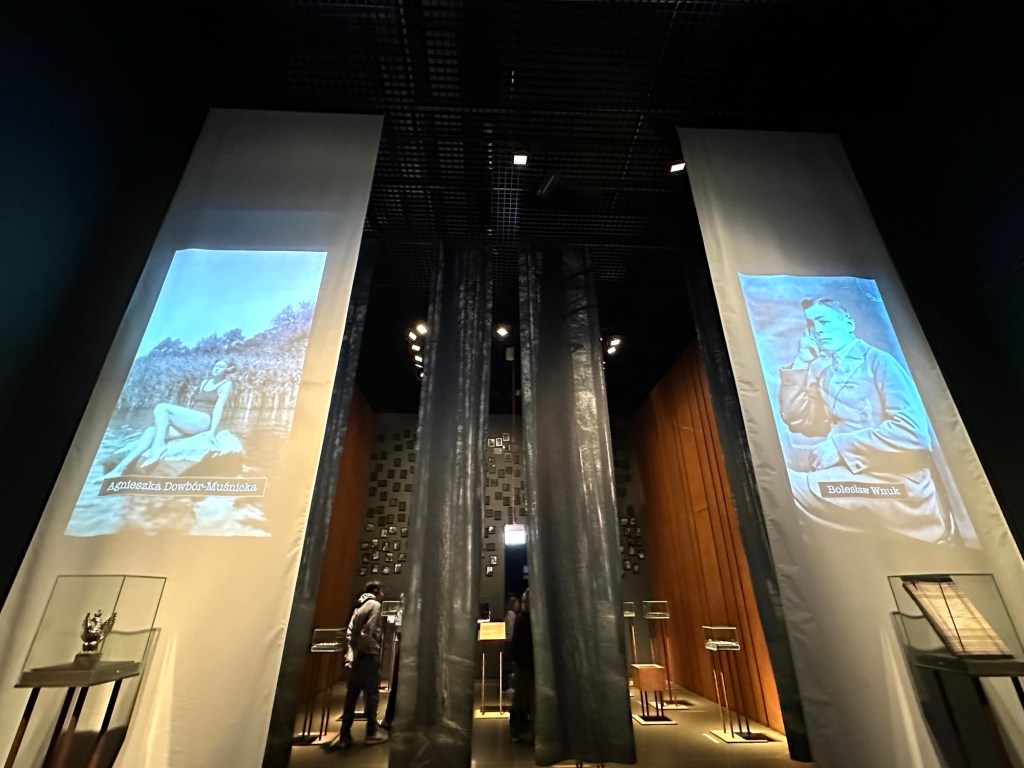
There is a whole section on terror, specifically terror by the hands of the German, Soviet, and Japanese.
I learn about how Germans stole polish children during the war. I learn more about Croatian concentration camps. Also am introduced to the Katyn Massacre where there was a mass execution of Polish military officers by the Soviet Union.
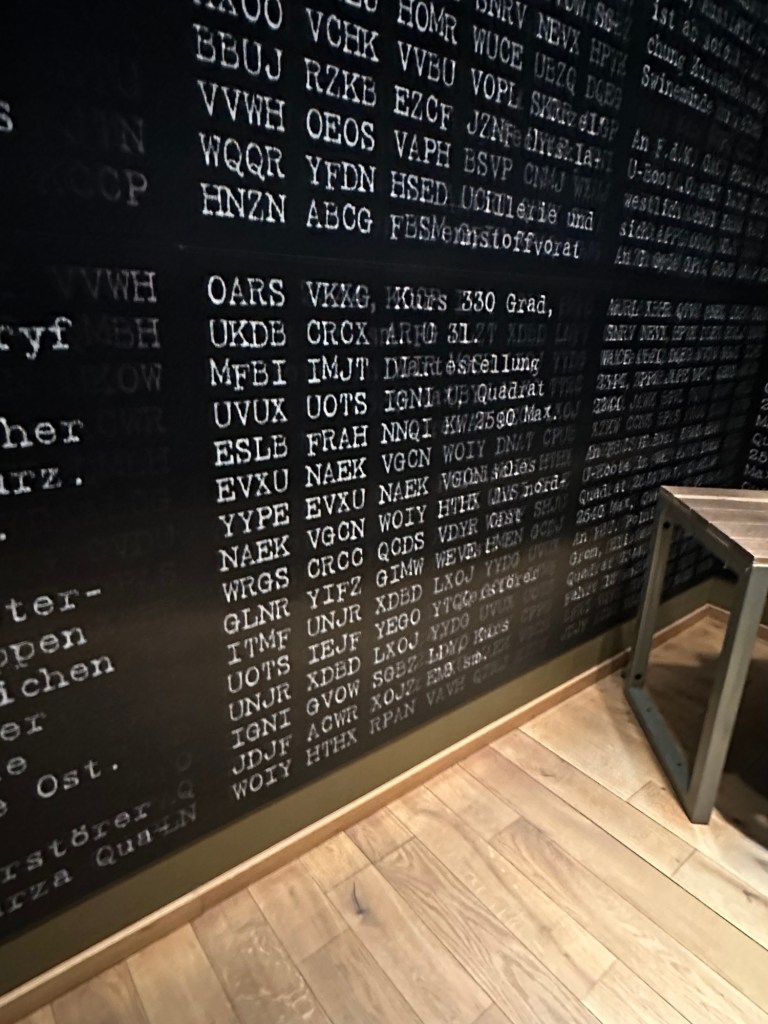
I see an example of an Enigma machine. Enigma is the machine used during WWII to break the German codes. There is a whole movie about it called “The Imitation Game”.
There are walls that show how messages can be hidden in plane sight just by looking at them differently.
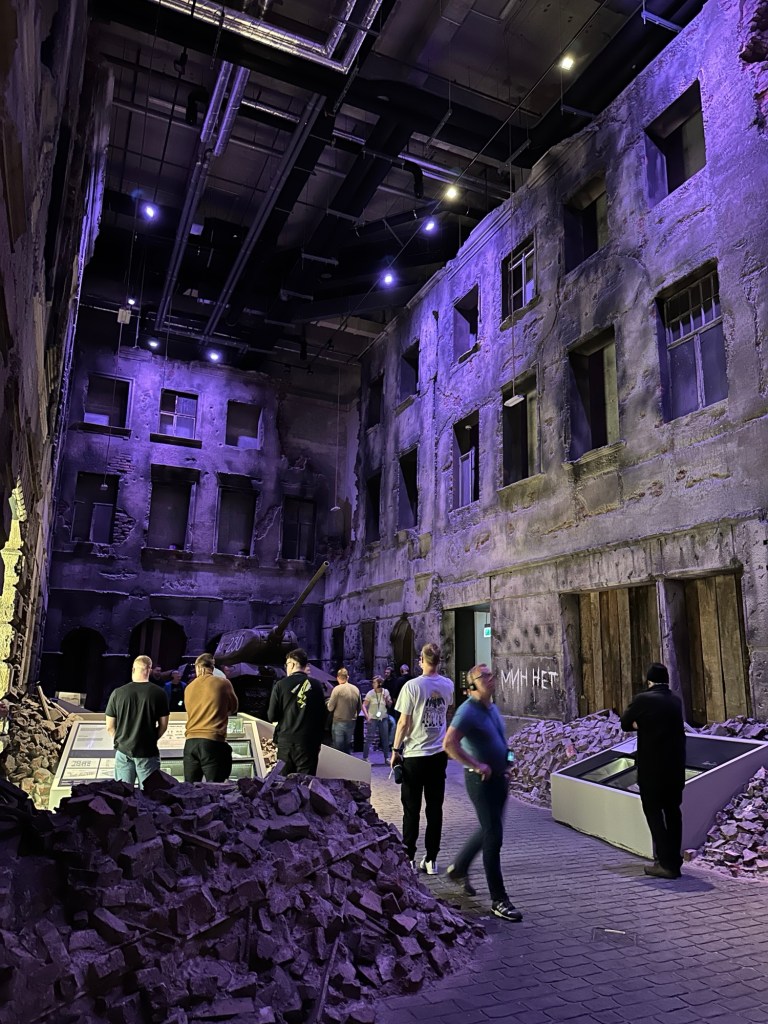
Exhibit of a bombed out town
One of my favorite little exhibits was about the nazi hunters. So many people were killed during WWII but very few people were punished for those crimes (Nuremberg Trials were the ones actually caught and punished). Most guilty officials assumed a different identity and fled to other countries, many in South America. The nazi hunters were really good at tracking these war criminals down.
Files of war crimes
I thoroughly enjoyed the museum but it requires a good deal of time to fully experience the whole thing. The audio guide is a must to get you more efficiently through, otherwise you could spend an entire day here.
I am very hungry when I leave the museum. I don’t have a ton of time but I should have enough for a lunch. I mistakenly think I could eat at a pierogi place. I wait for thirty minutes to get a table for them to tell me it’s at least an hour wait for any ordered pierogi. I don’t have enough time before my tour starts so I walk out to find another place to get lunch. I am getting hangry and I cannot find any quick service restaurants in the area. Time is running out.
I finally find a place to get a quick pastry and then briskly walk to meet my tour guide for the city tour. I didn’t eat a full lunch but at least I won’t be hangry. No one wants to meet hangry me. I usually carry snacks but today I did not; I will not make this mistake again.
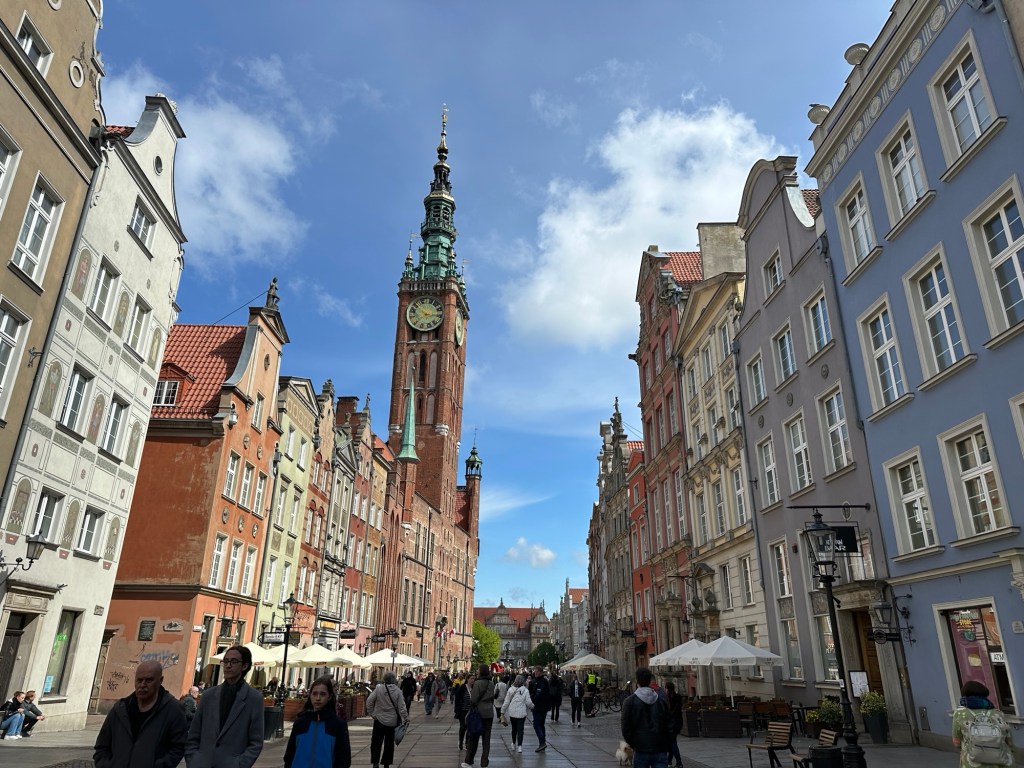
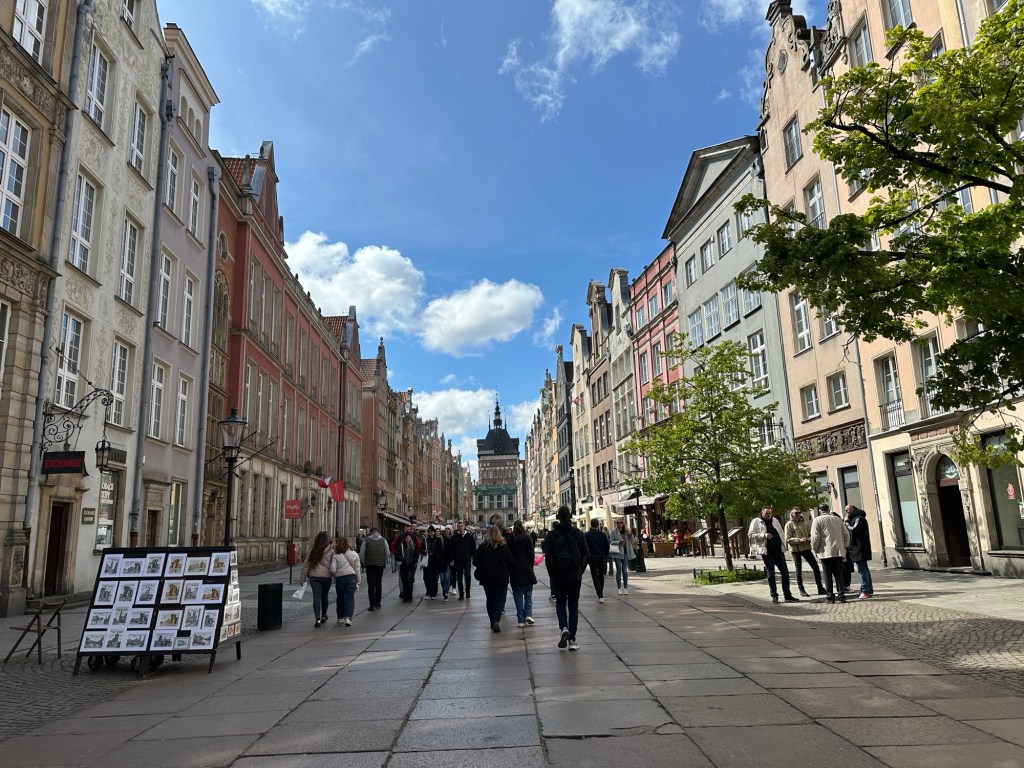
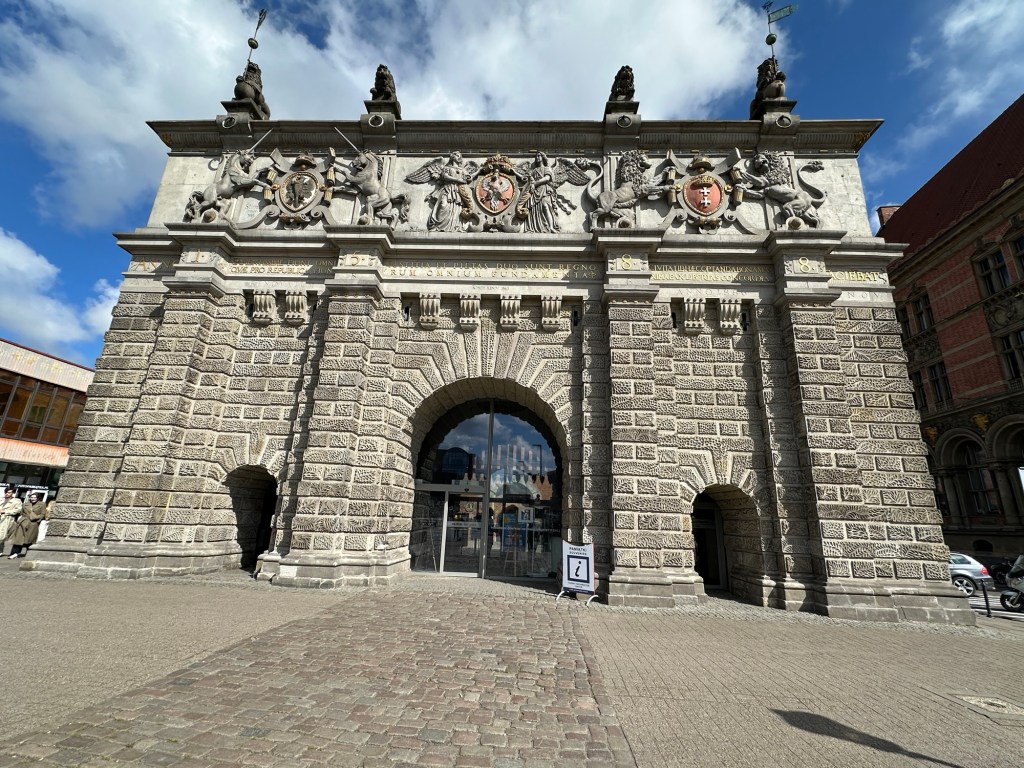
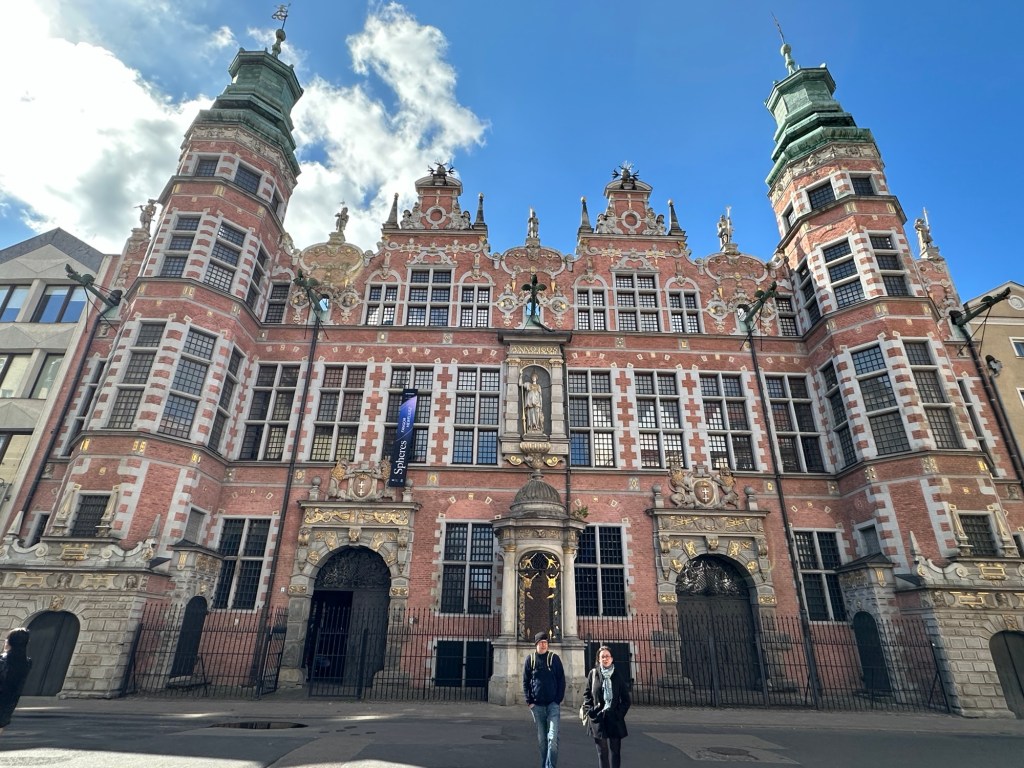
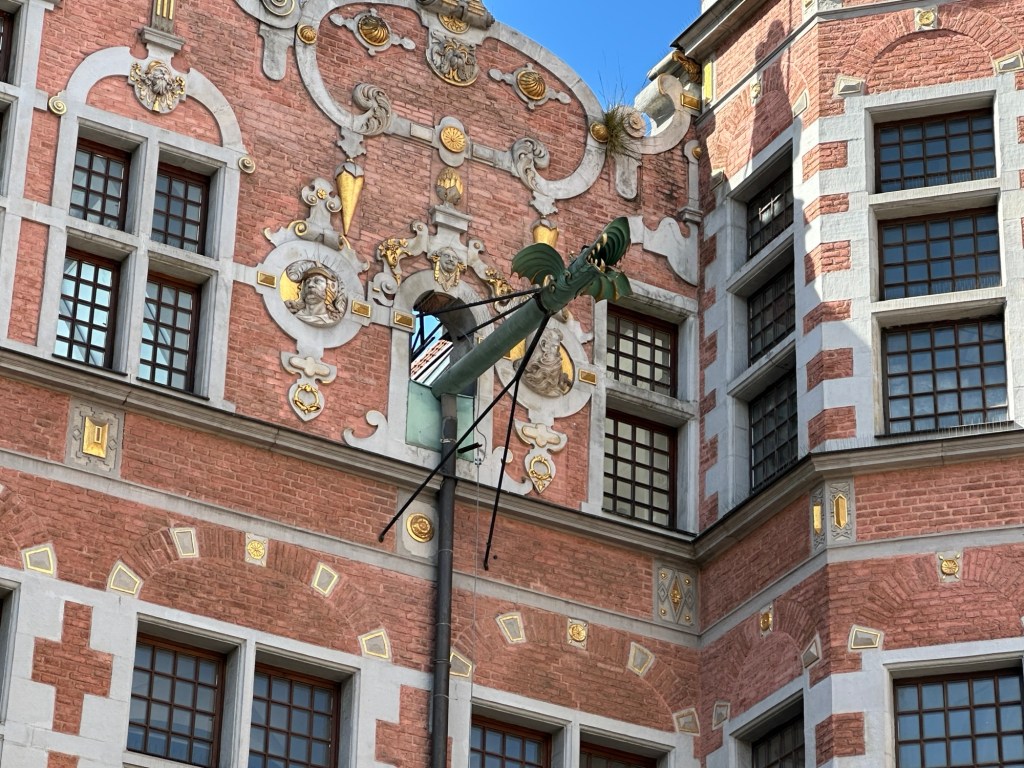
The tour is mostly of main town Gdańsk which actually looks more like old town Gdańsk and old town Gdańsk looks more like modern Gdańsk. Long story short Gdańsk was also bombed pretty bad in World War II. They didn’t completely rebuild it in its original form like they did in Warsaw but instead they built modern interior buildings. In the main town they built facades that make it look like the original Gdańsk. However in old town they have more modern facade with the architecture more modern day or communist style.
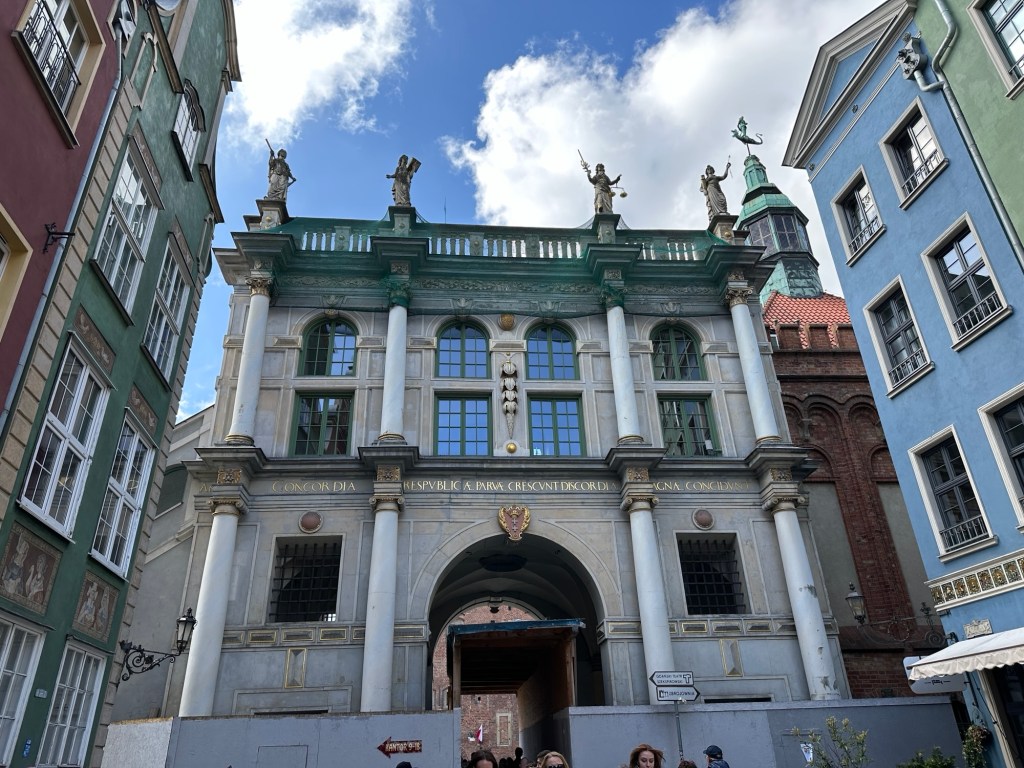
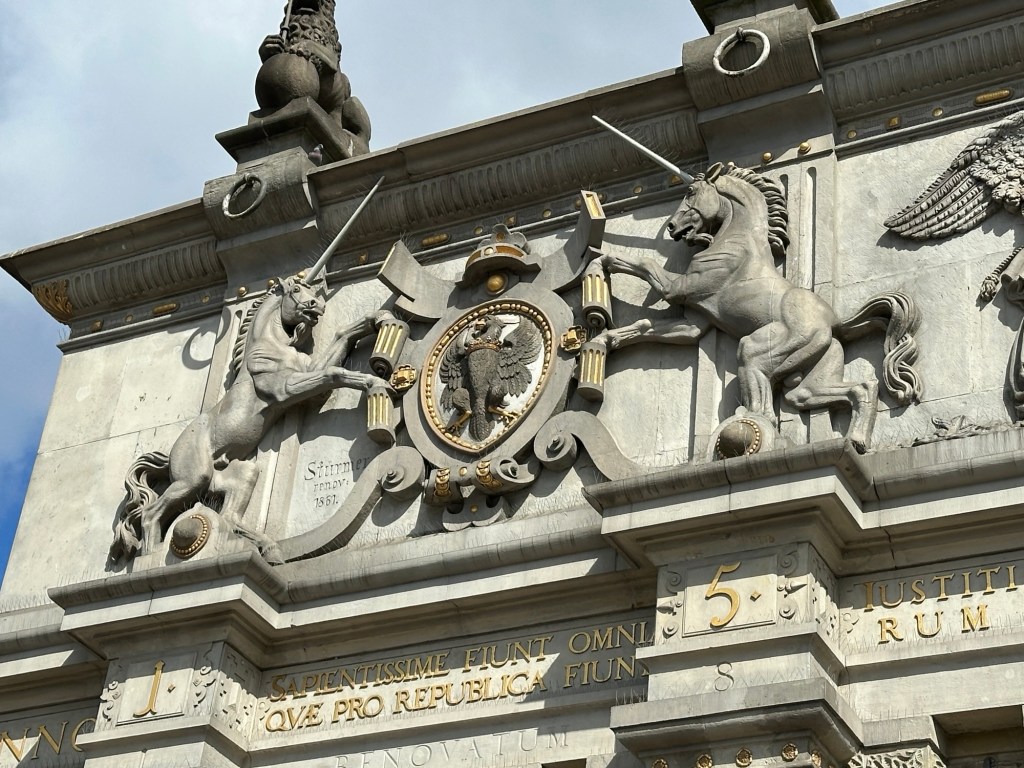
Brama Złota or main gate. Lots of town symbolism.
I learn again from the tour guide how Gdańsk has a very different history from the rest of Poland. They were German speakers in 14th-16th century but loyal to Poland.
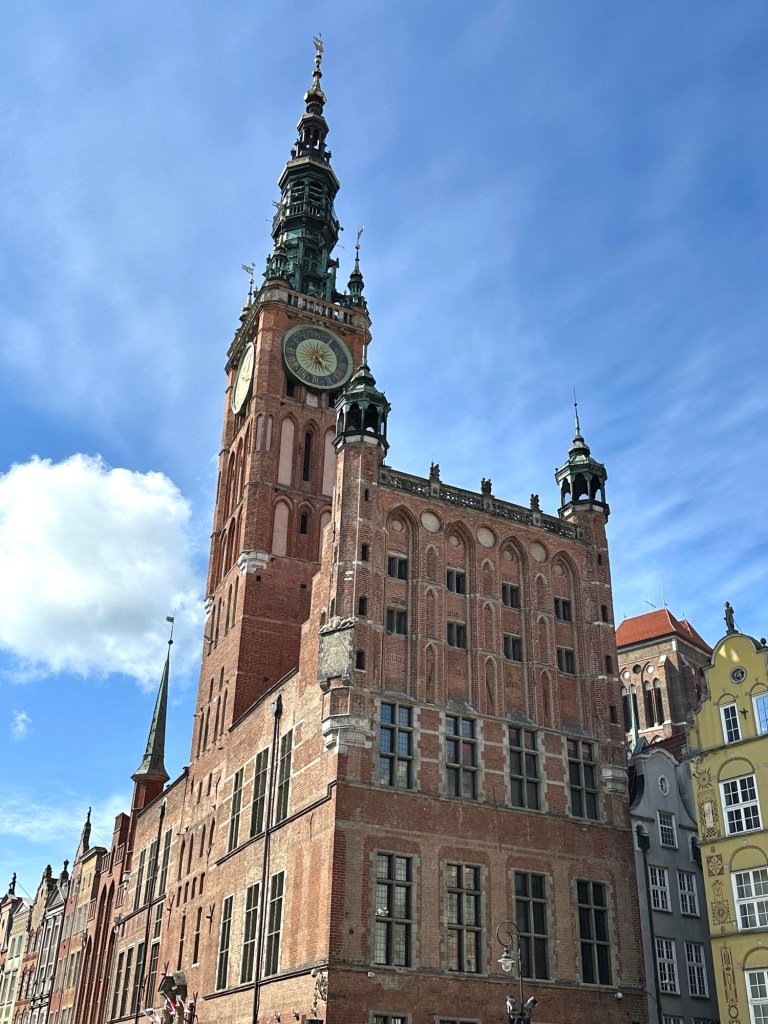
Academy of Fine ArtsMuseum of Gdańsk – Main Town Hall
The tour guide asks if there are any Americans in the group and I seem to be the only one (there is one other American that lives in Ireland but she doesn’t speak up). Apparently the guy who invited the Fahrenheit thermometer is from here (Gabriel Fahrenheit). There is a monument to him. Although not sure how much we can praise him since only a couple countries use his scale, mine one of the few. Fahrenheit makes things so confusing with the large amount of international travel I tend to do since I am forced to do math to communicate to people about the weather.
Fahrenheit monument
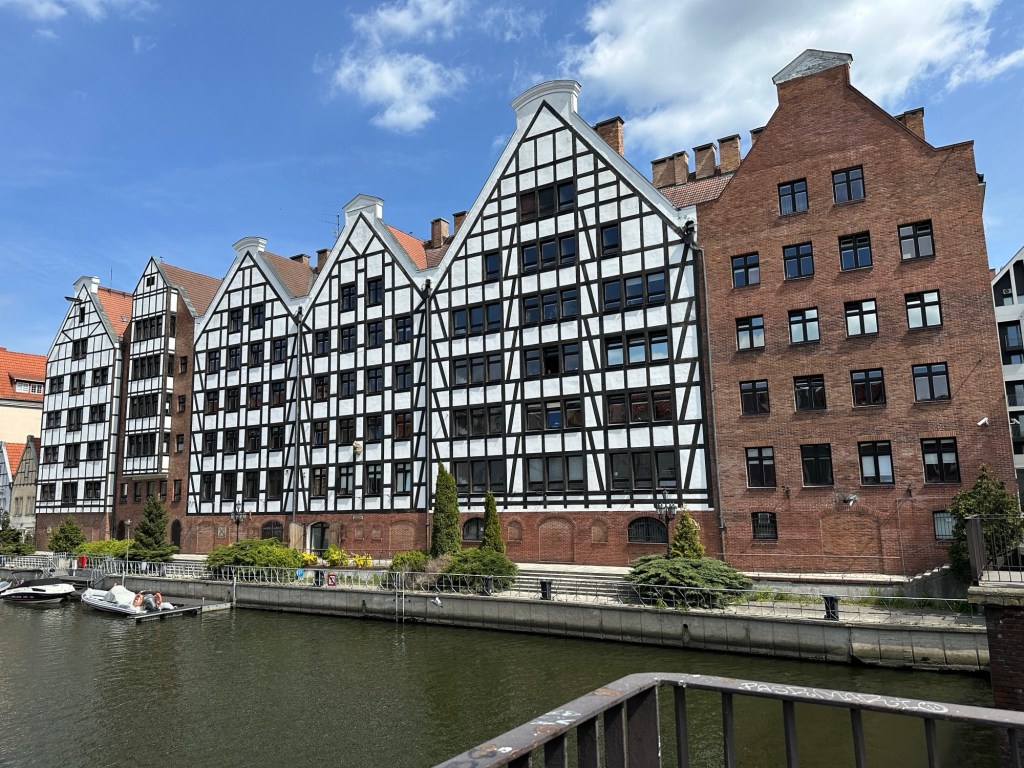
At one point the Poland was part of largest country in Europe, the Polish-Lithuanian Commonweath. Gdańsk was a large player in this and became wealthy. Merchants were middlemen in Gdańsk. The island was purposed to hold Polish grain and secured day and night. The 16th-17th century was the golden age in Gdańsk. It all came to an end when a Swedish king began to rule Poland.
Example of a Granary
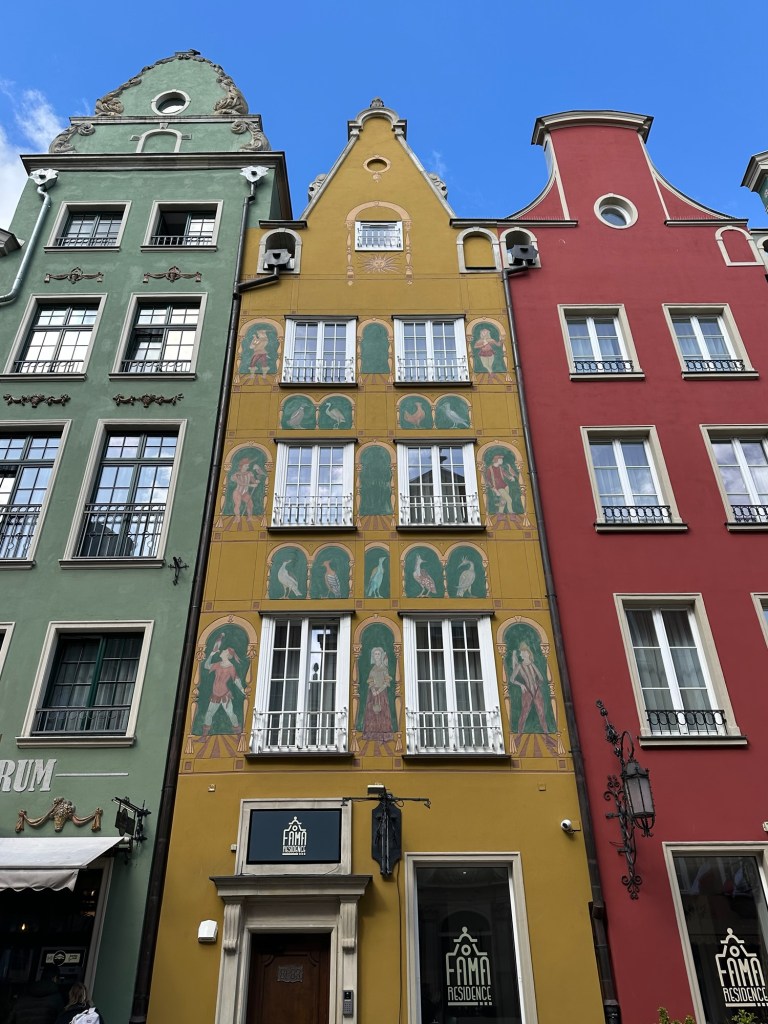
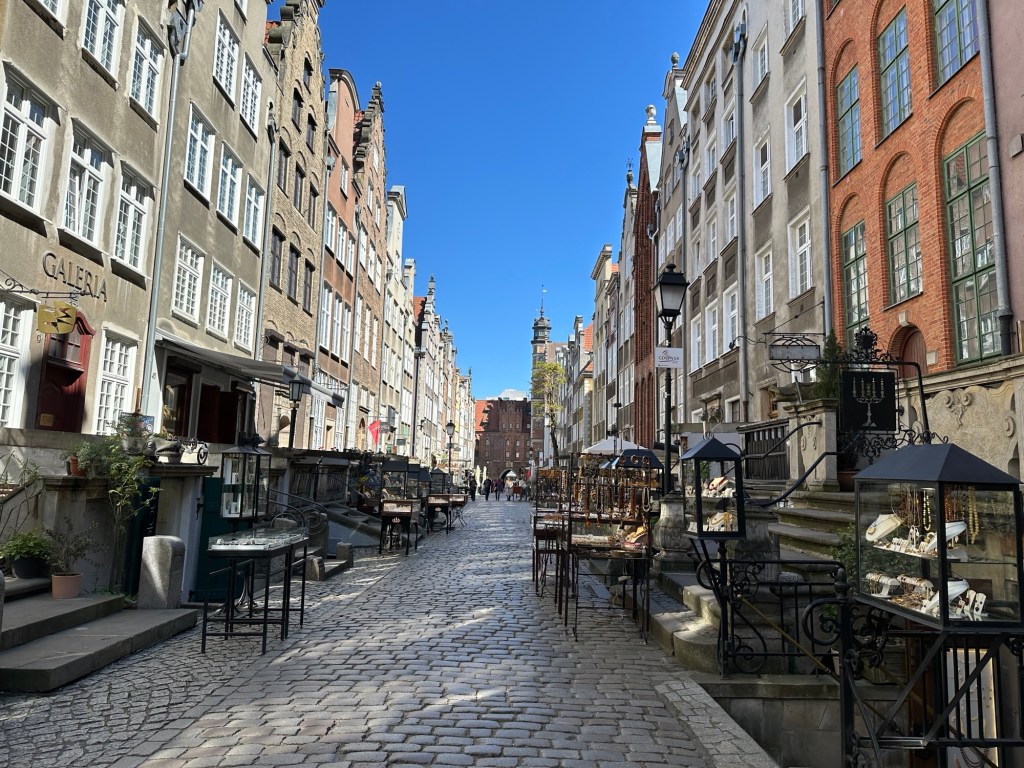
We stop at the beautiful Mariacka street and see the fun drain pipes. This is the place to buy amber since there are amber sellers up and down the street.
Ulica Mariacka
House under turtle. Look above the house and see a turtle.
By the 18th century Poland no longer exists. It is partitioned and is no longer prosperous again until the 19th century.
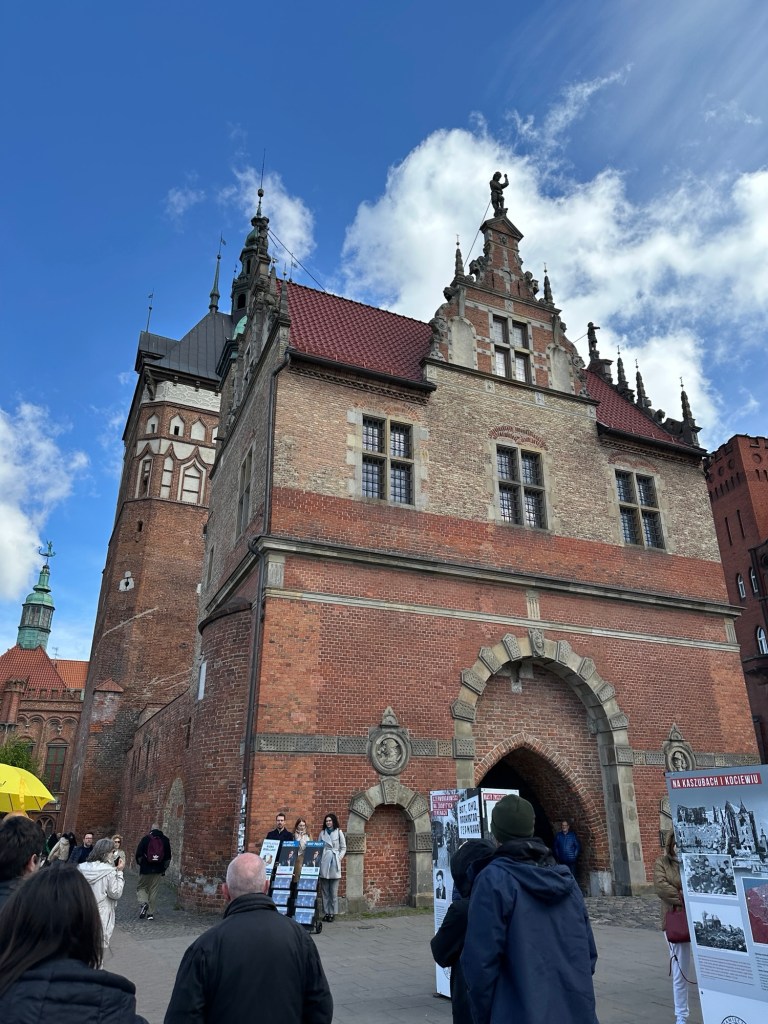
We end up in old town (which is new town) at the post office that was home to a spectacular attempt of postal workers attempting to stop a fascist invasion, one of the first spots World War II broke out.
Post office and a piece of the original city wall.
After my tour I am determined to eat at one of the restaurants that turned me away the night before. It wasn’t worth the anticipation. Even though pasta carbonara is one of my favorite dishes, this one is too salty for me to enjoy.
I have a nice evening walk around town and tomorrow I am taking the train out to Malbork Castle.
Today I booked a day tour to take me out to Wieliczka Salt Mine. I am sure I could have gotten out there myself but it’s one less thing I have to figure out.
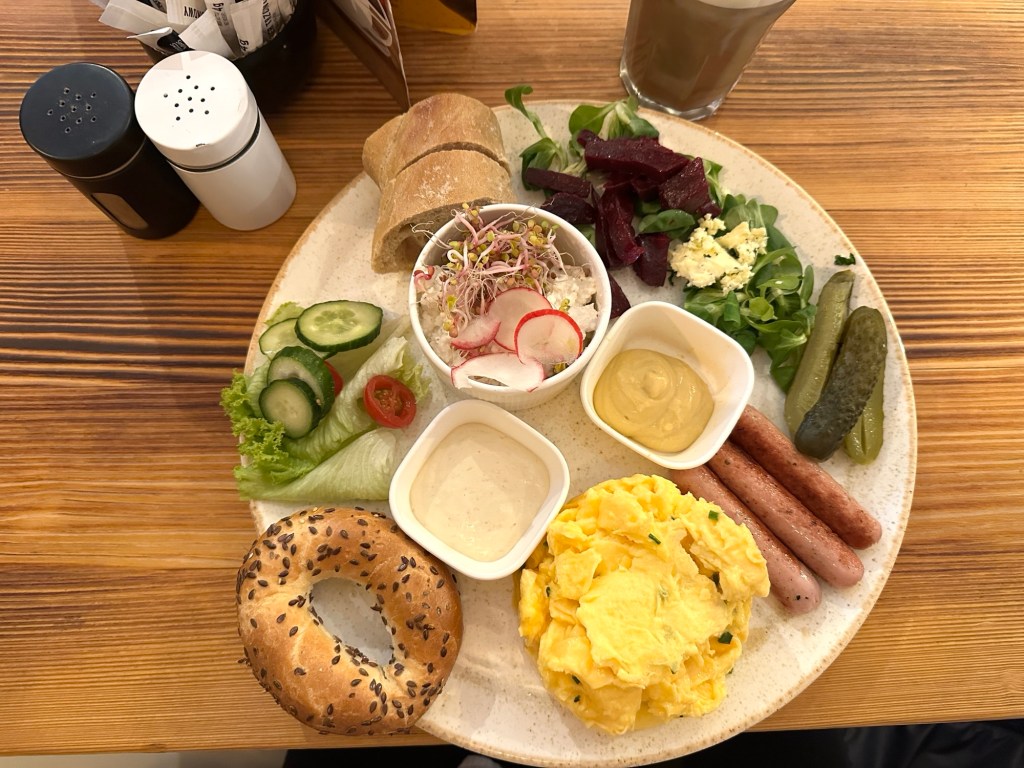
My tour doesn’t start until ten o’clock so first it’s breakfast. I chose an interesting place a couple blocks away open early enough. I did not realize that I would end up getting the best breakfast I’d have in a long time (Gossip Cafe). I love the selection on my plate. To top it off they have coffee with plant based milk so my tummy will be less mad at me.
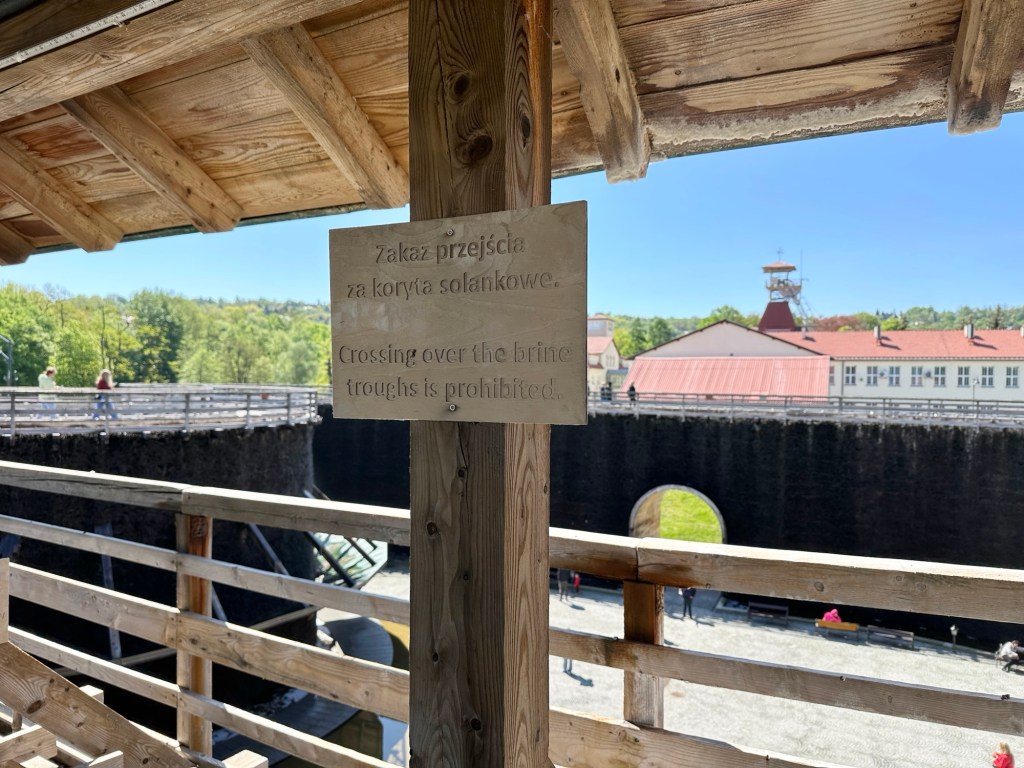
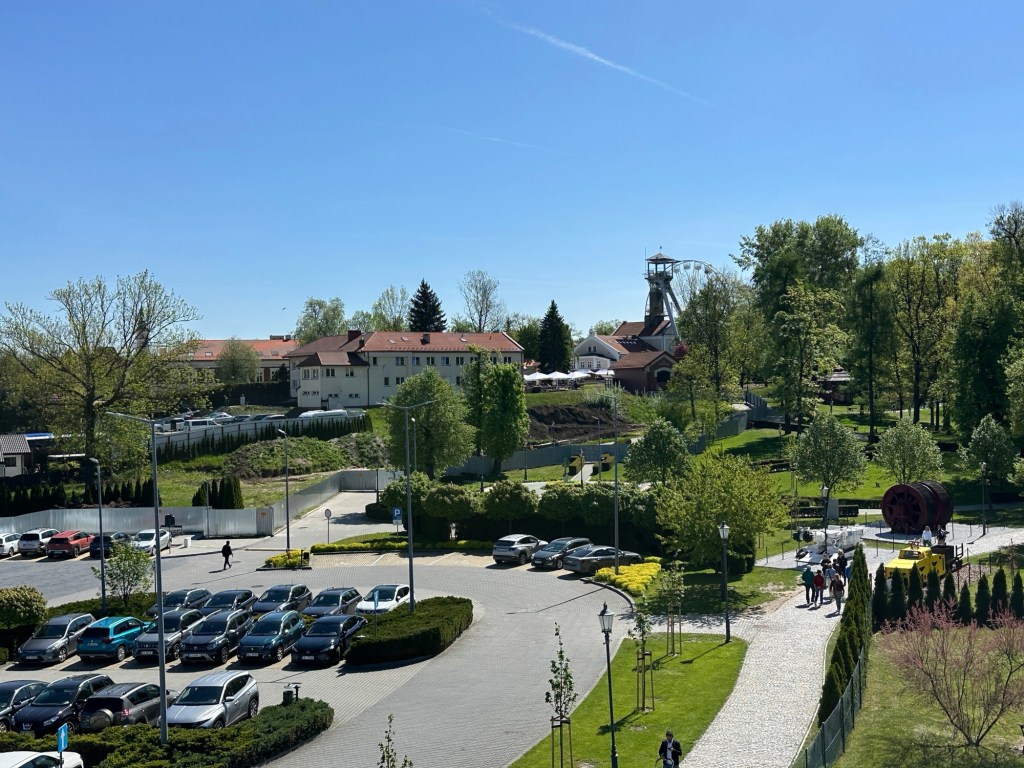
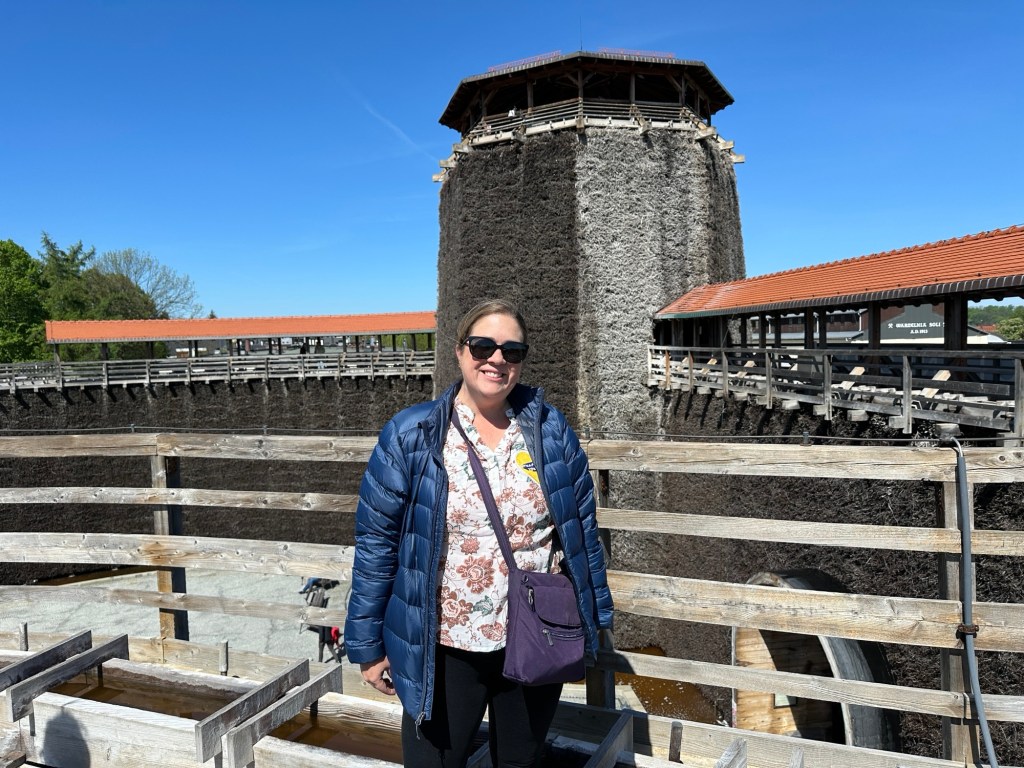
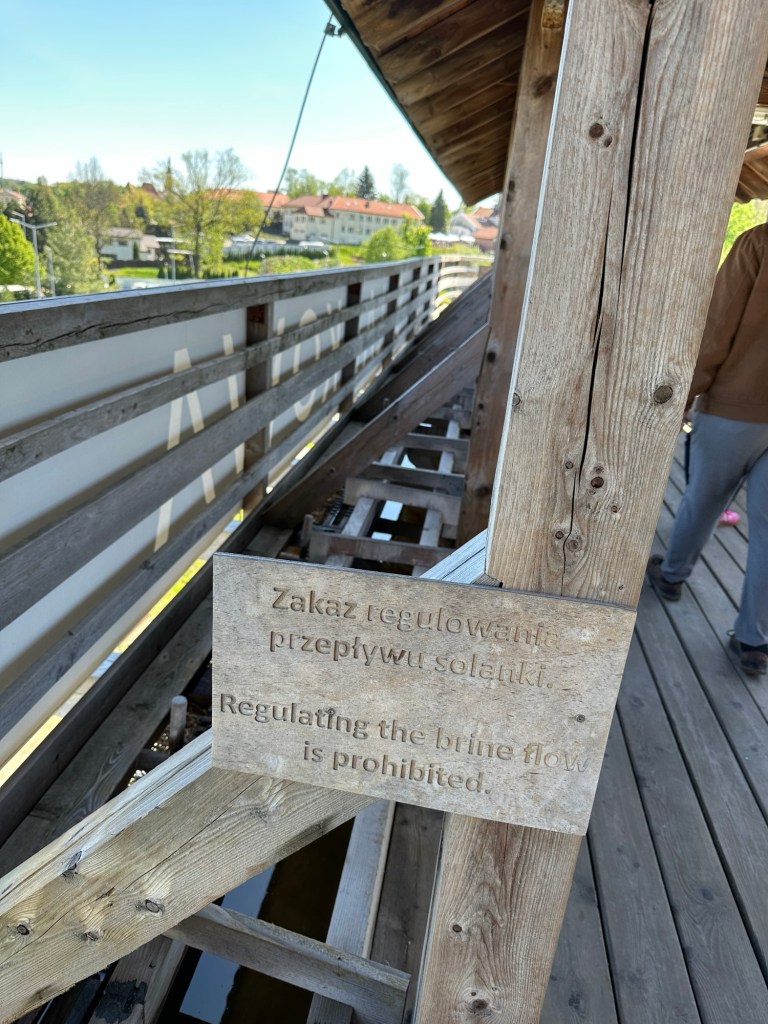
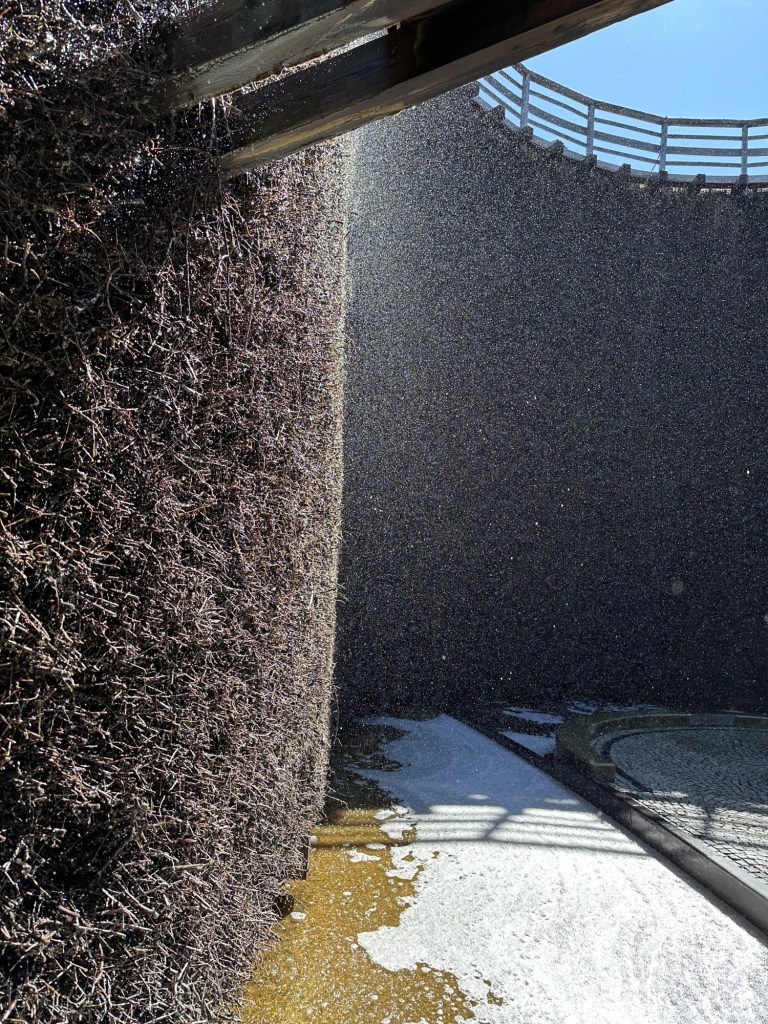
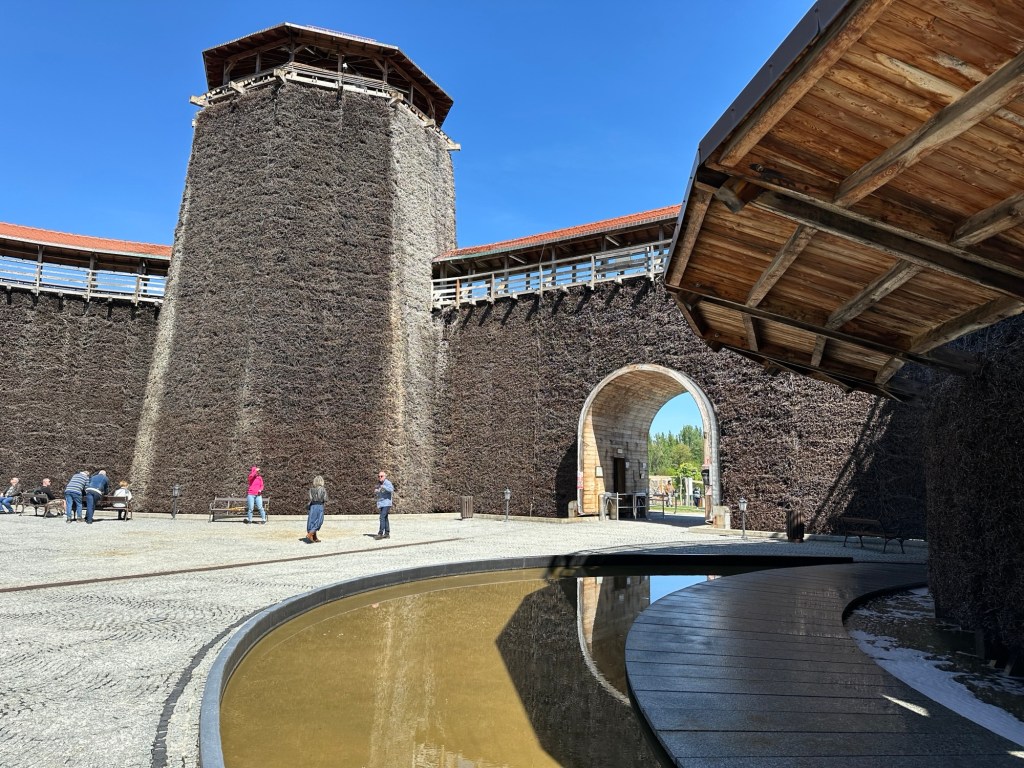
I meet up with my tour for a short 30 minute ride. The tour guide tells us that our tour of the mine won’t start for another 1.5 hours. It sounds like they were unable to get a start time right away. They made up for it by paying for entry to the nearby salt “spa” where we get to walk around and breathe therapeutic salt air.
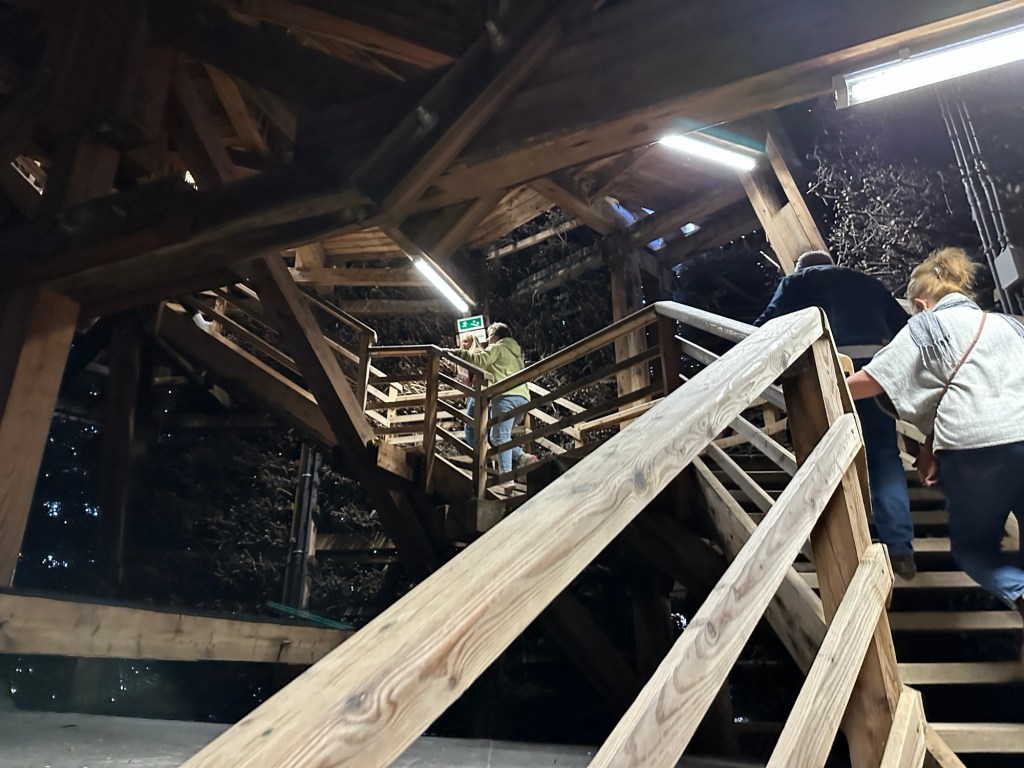
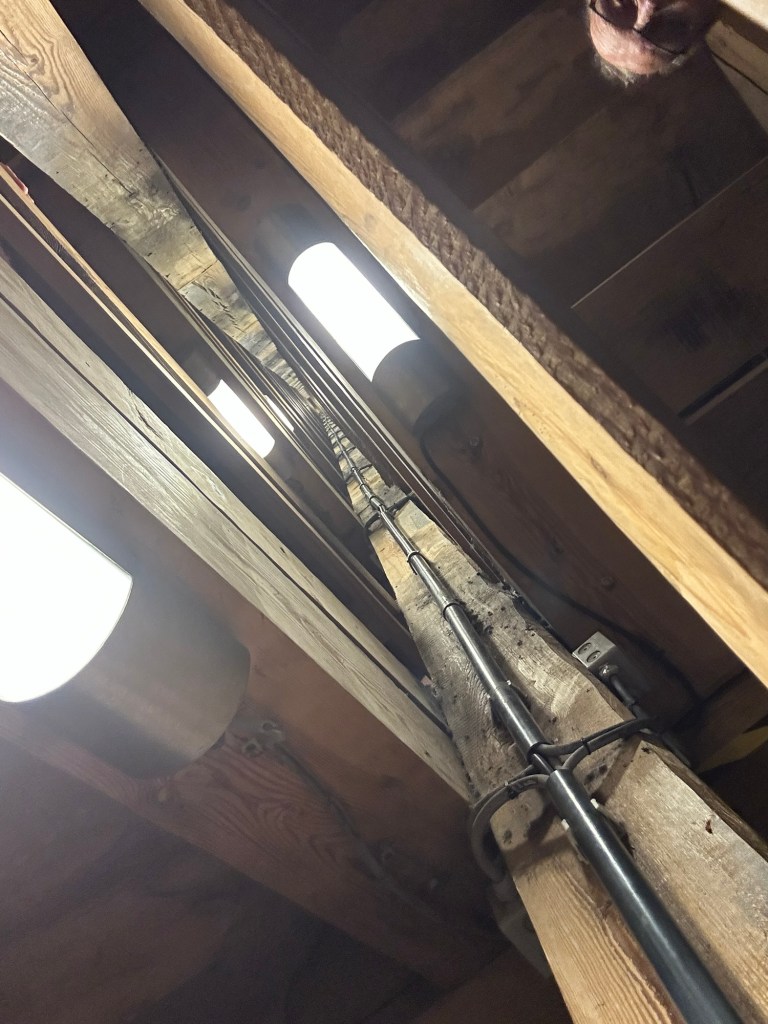
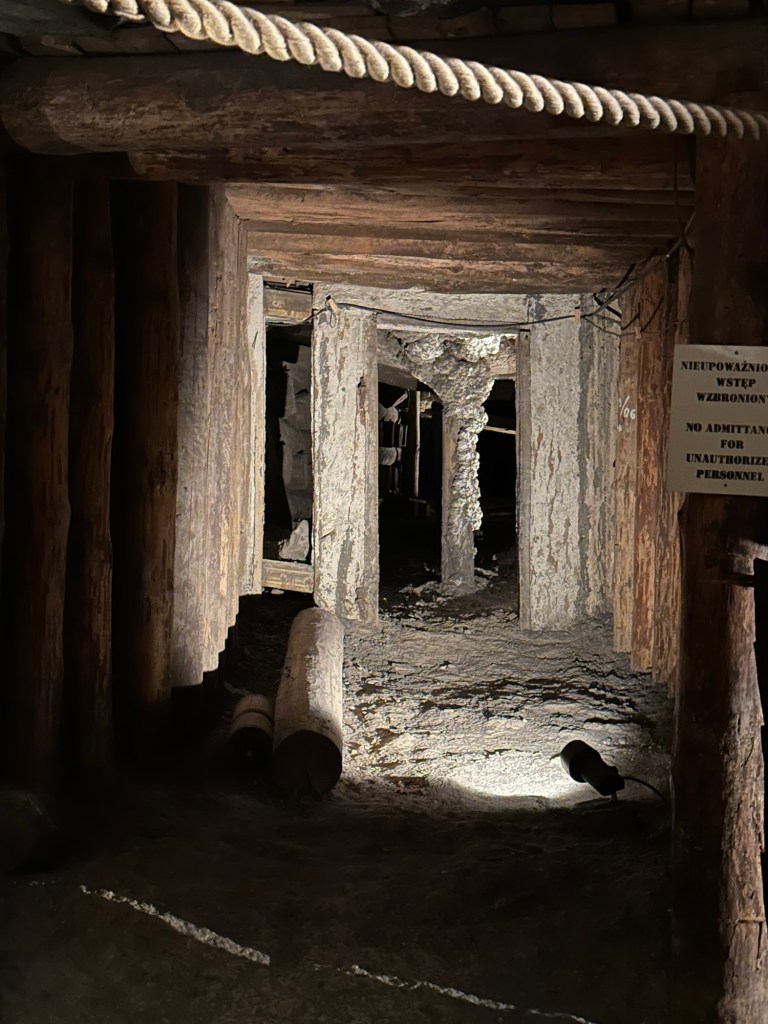
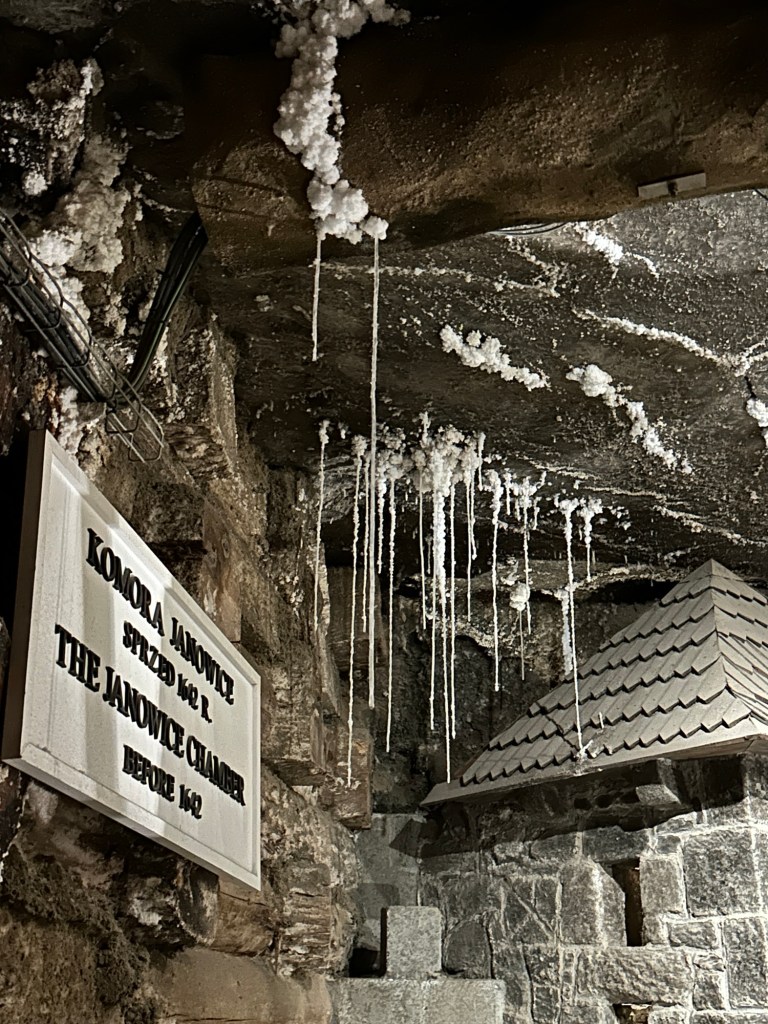
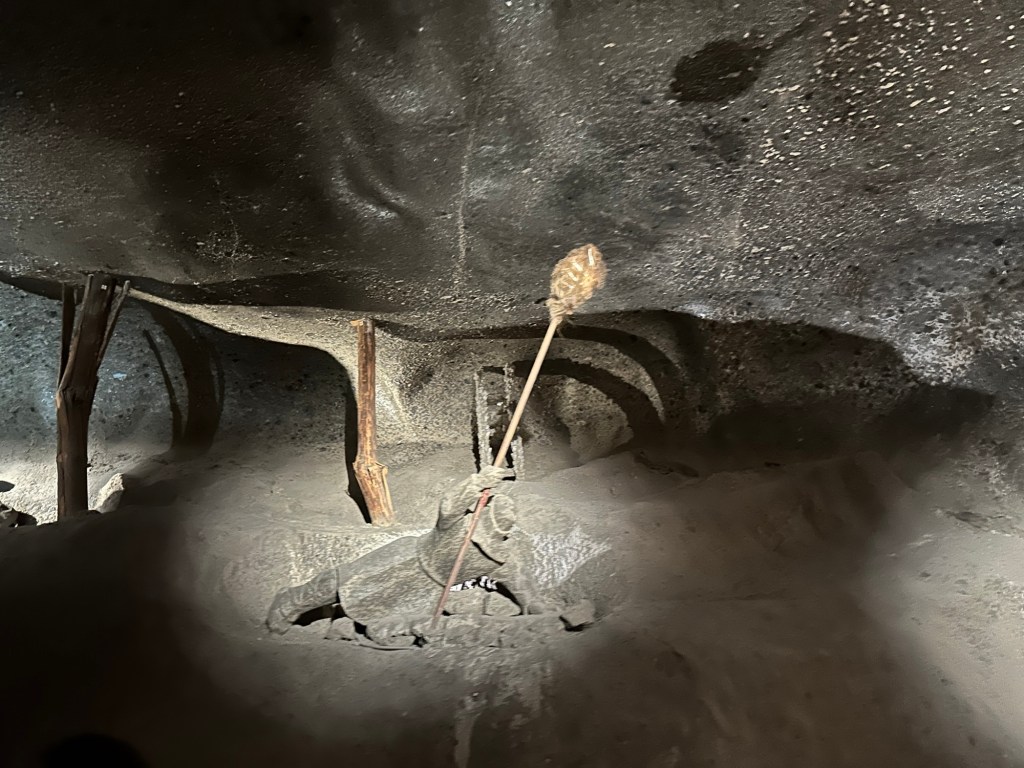
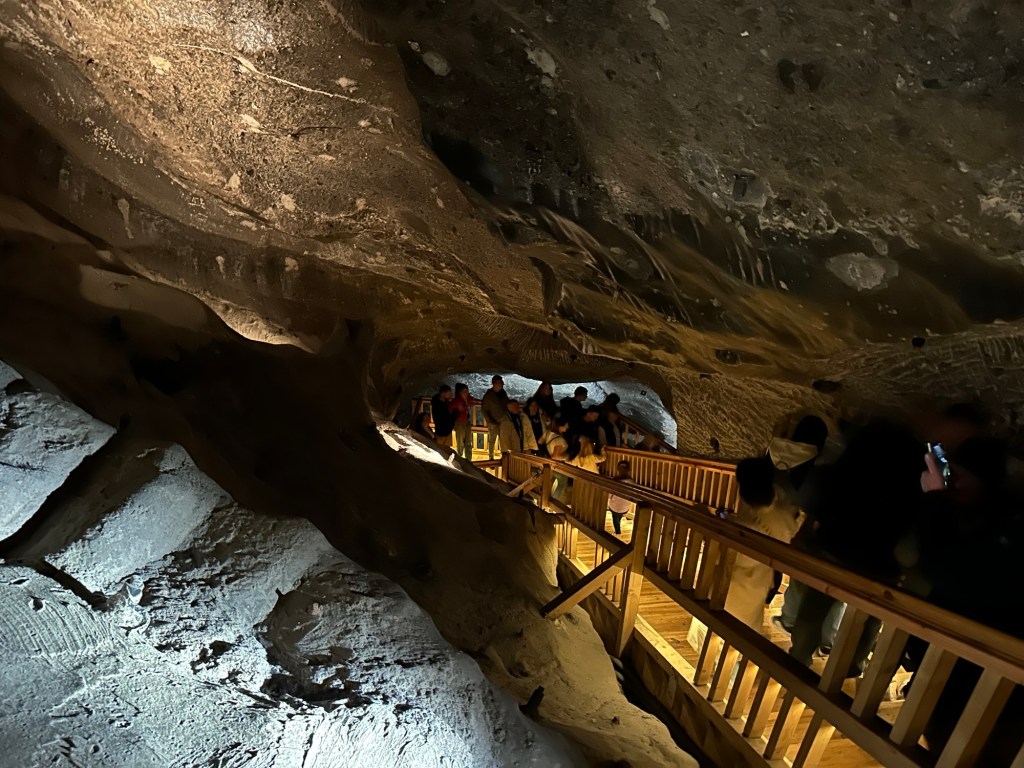
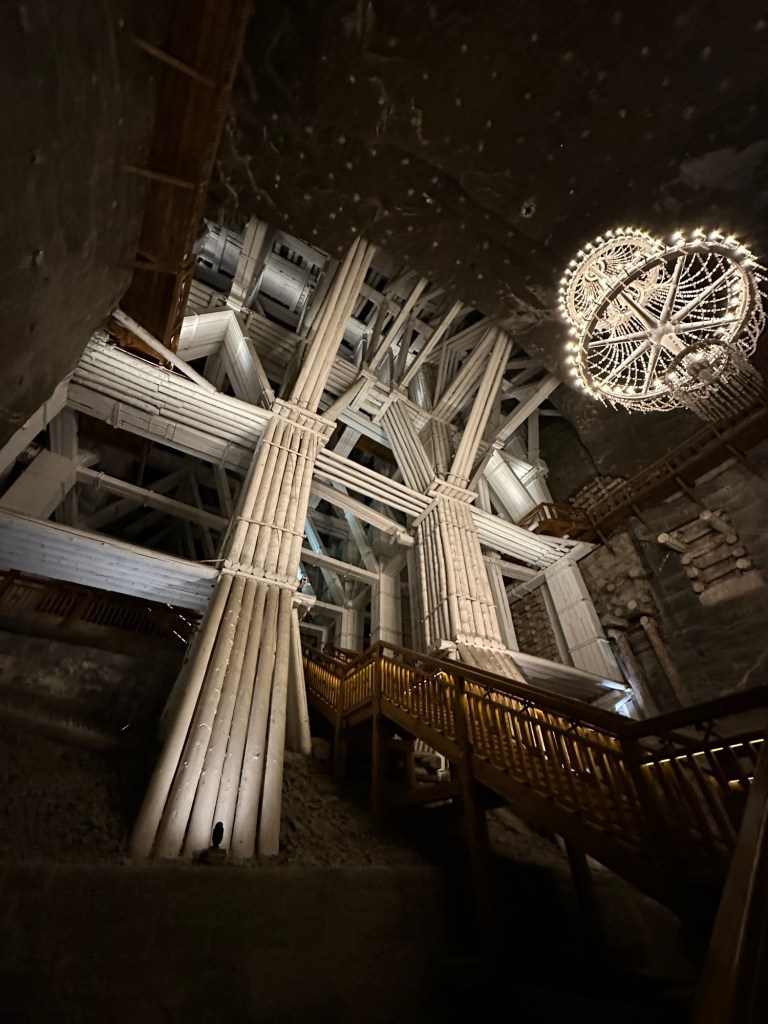
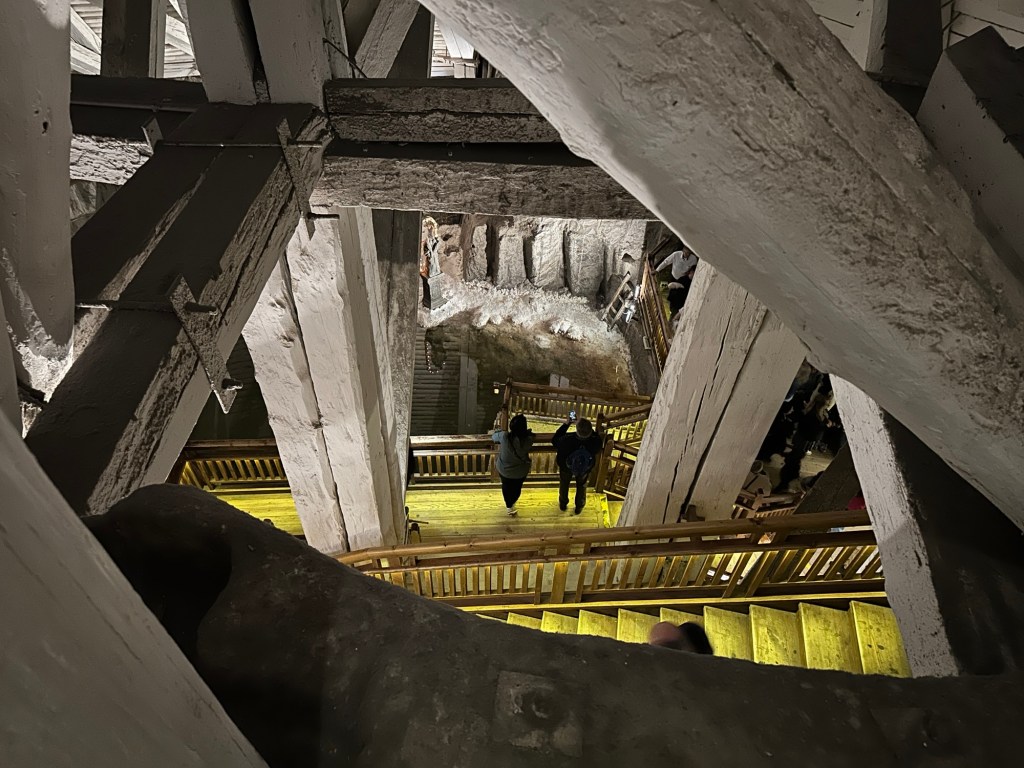
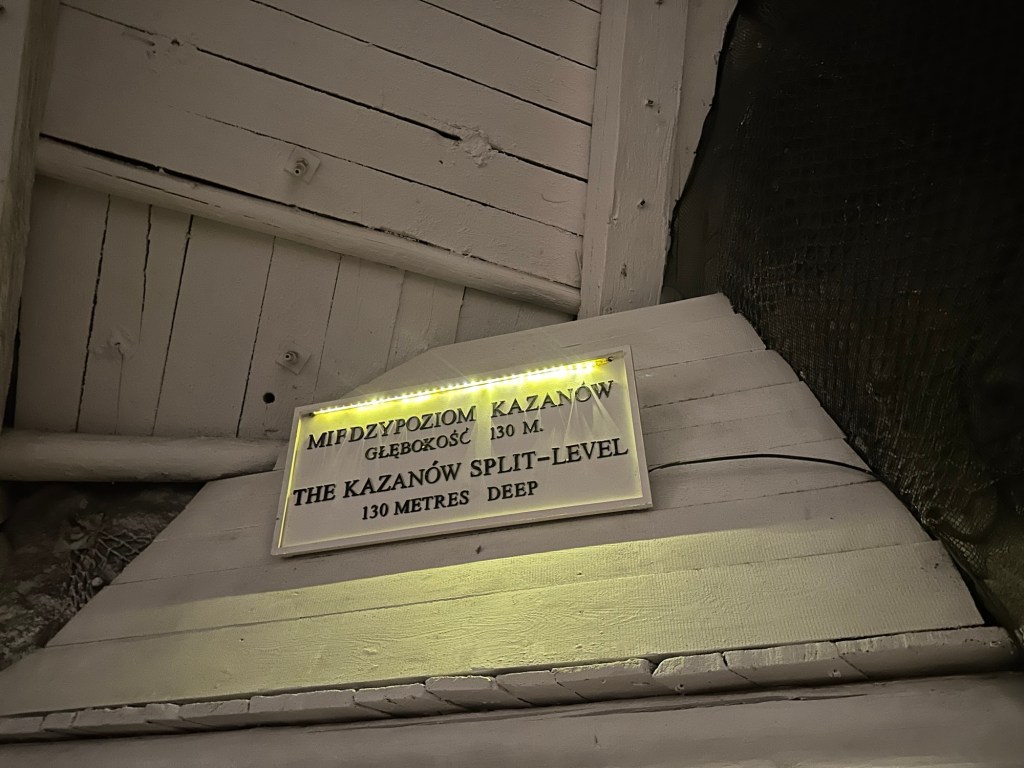
When it is time for our tour of the mine we walk down 380 steps to get to the first level of which I believe there are 9 but we only tour 3 of them. We are 64 meters deep. We learn about the mine, gray salt, and how the salt is mined. We learn the requirements to be a miner.
Walking down the 380 steps
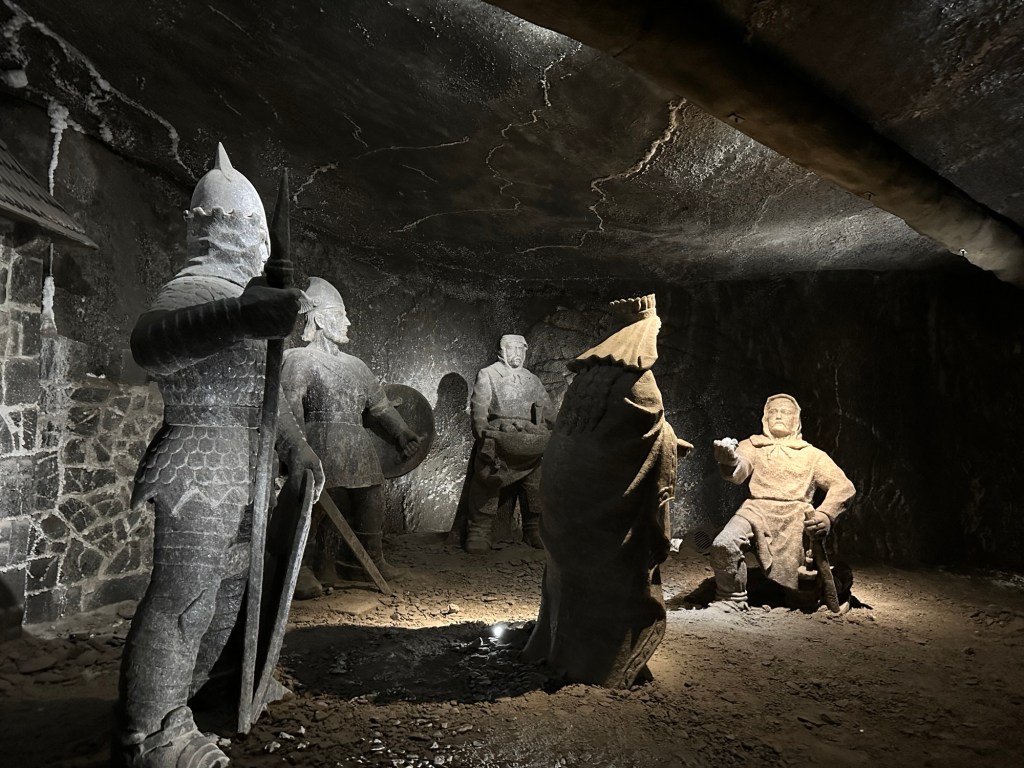
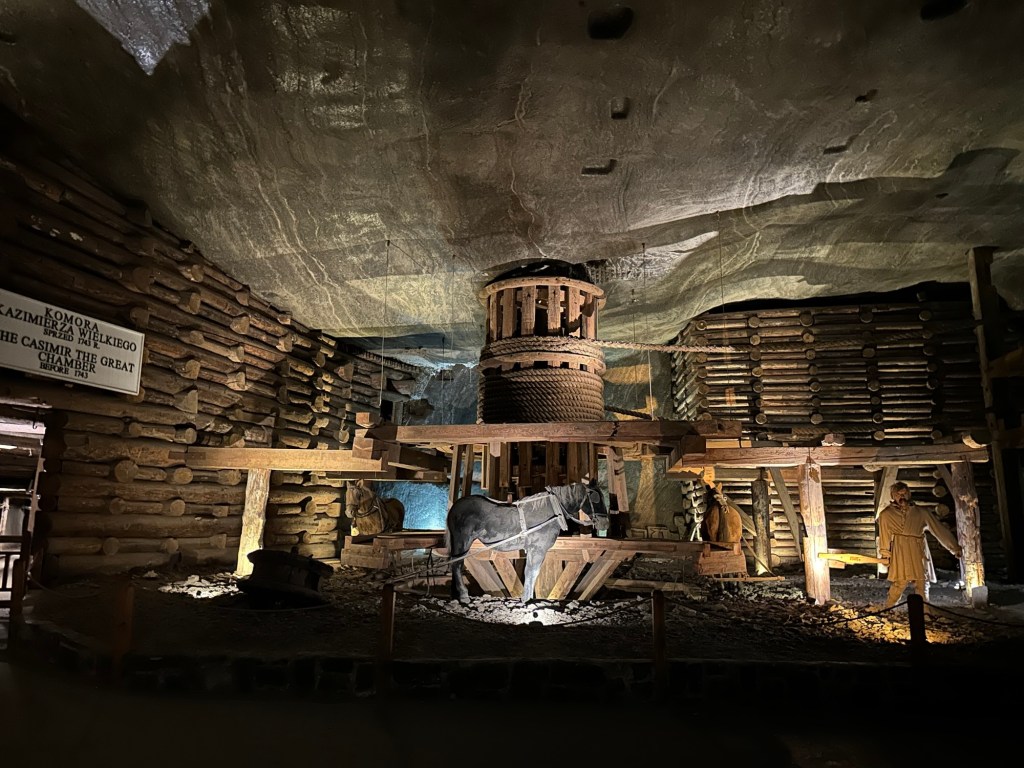
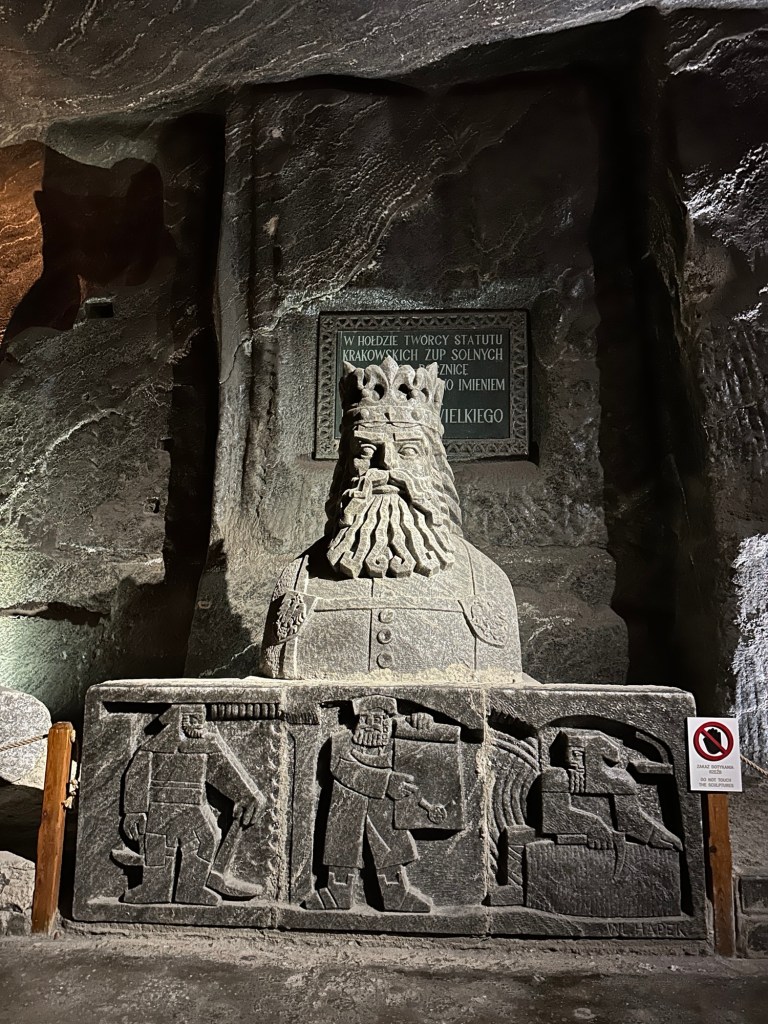
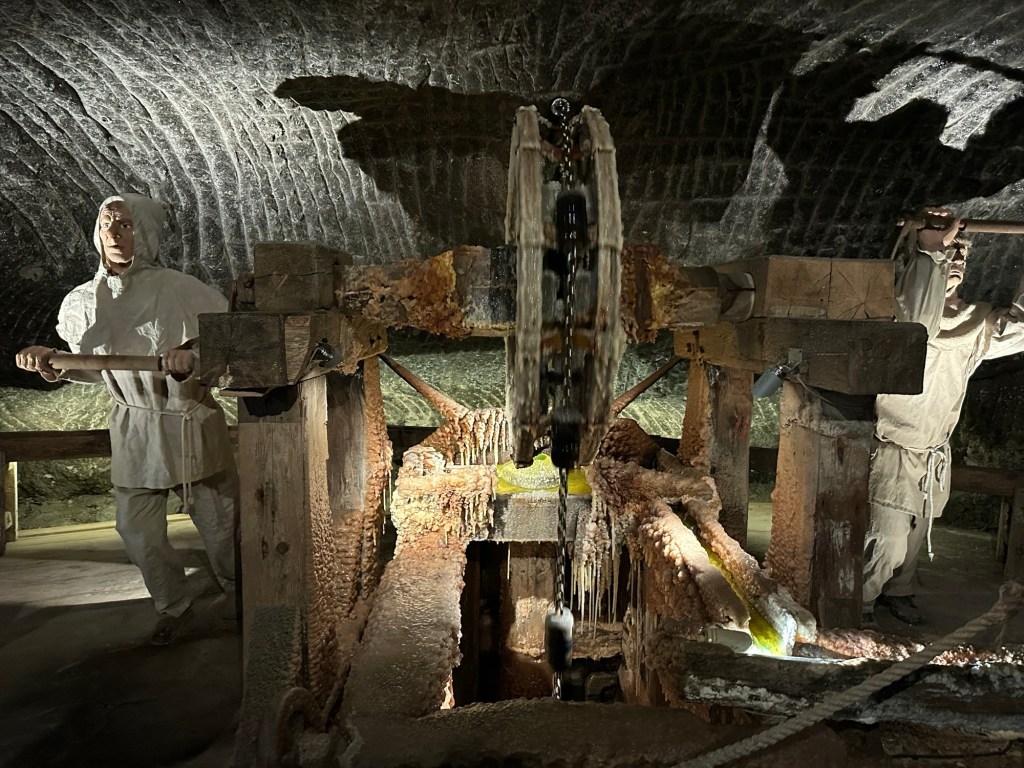
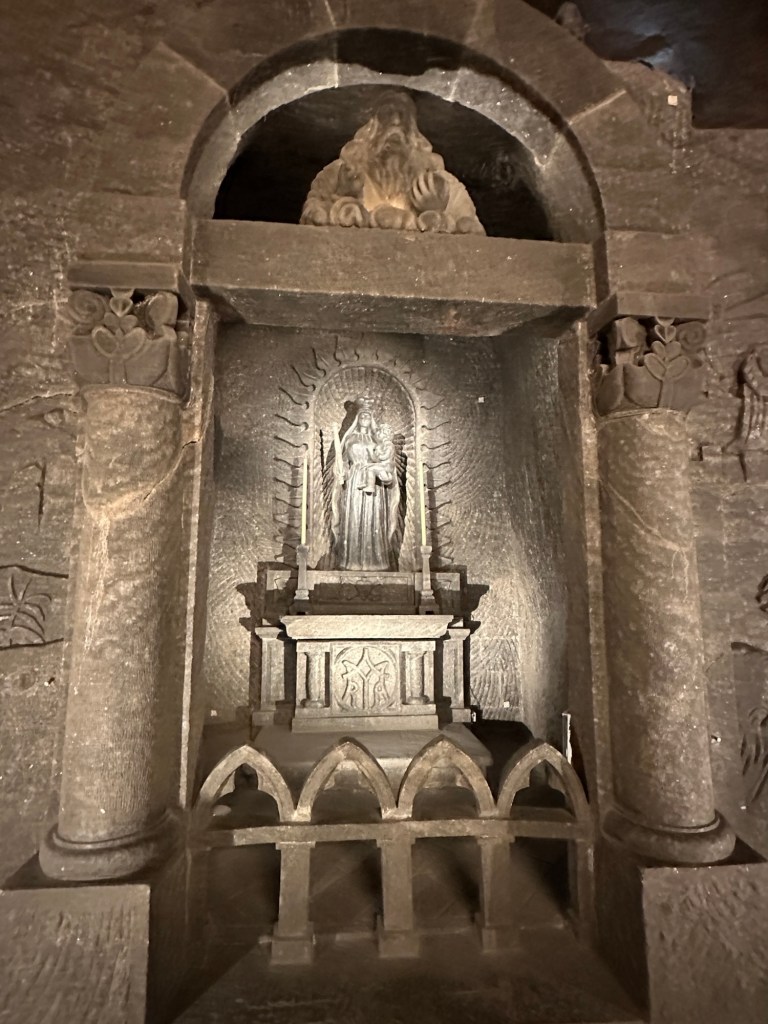
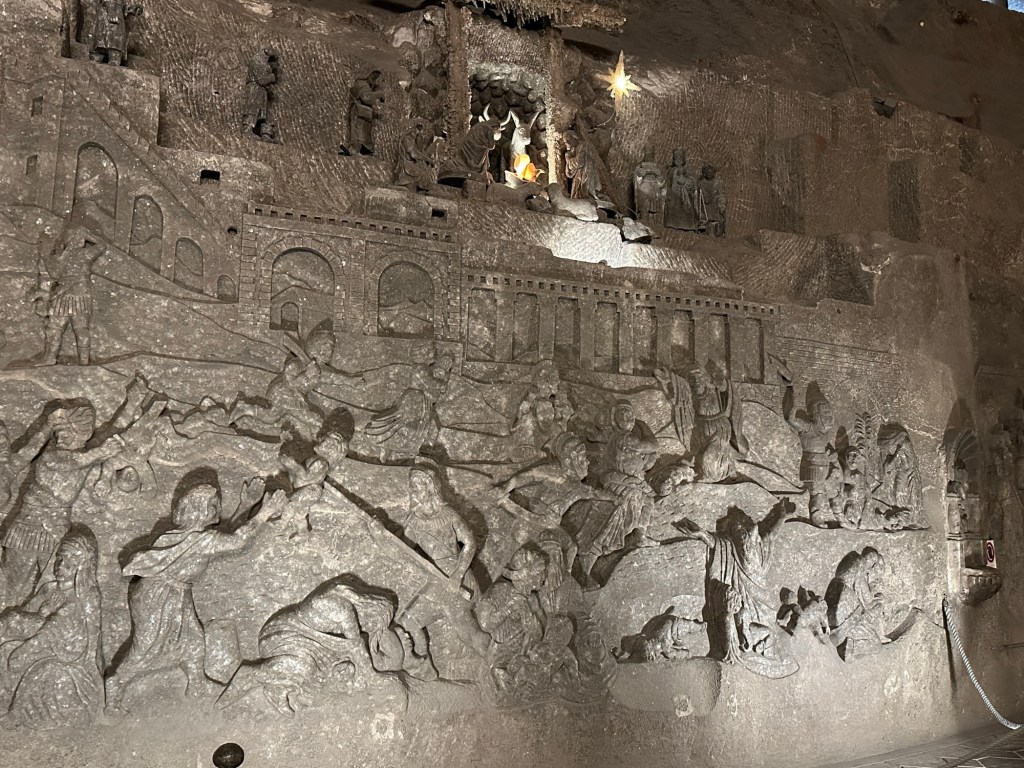
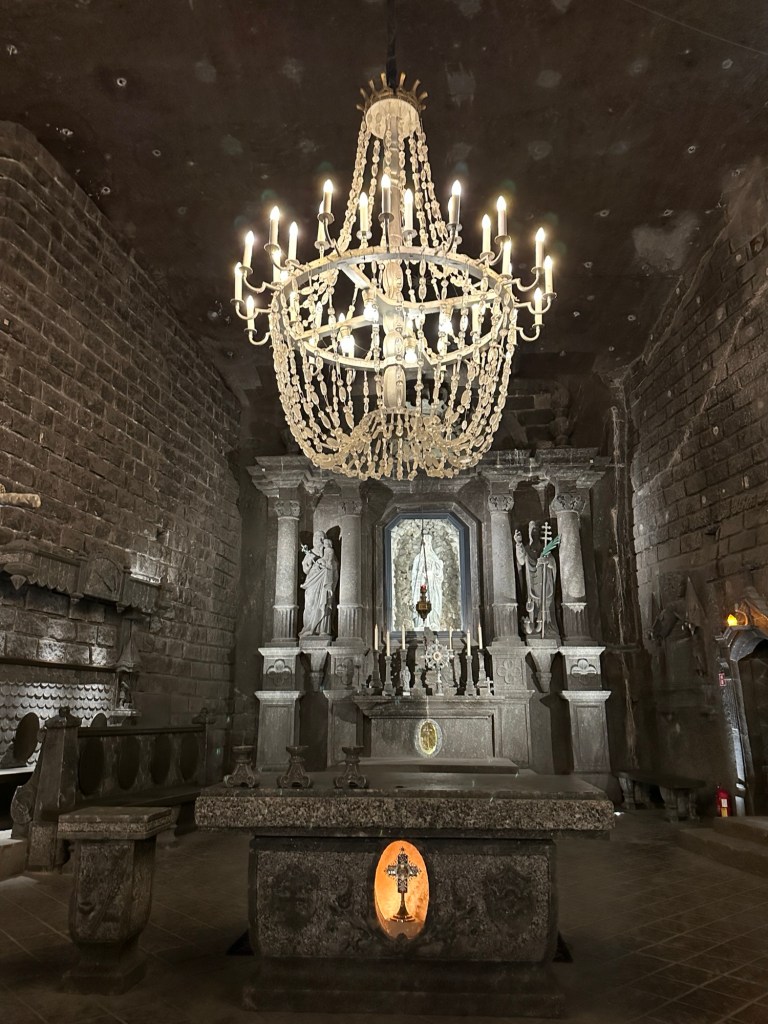
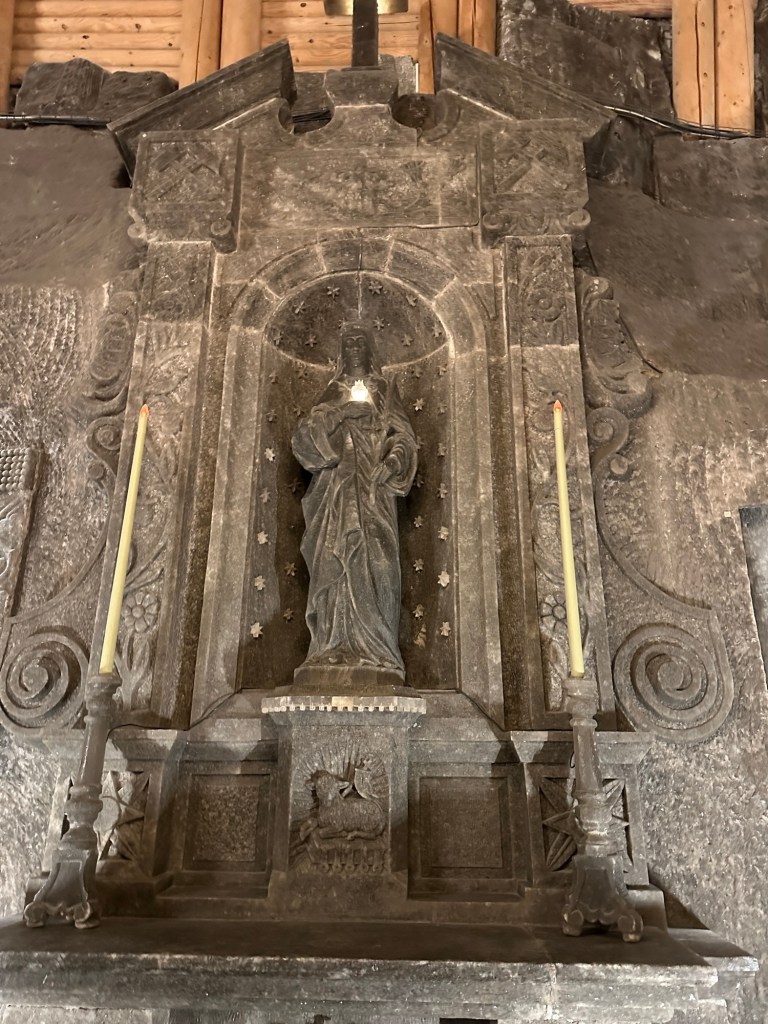
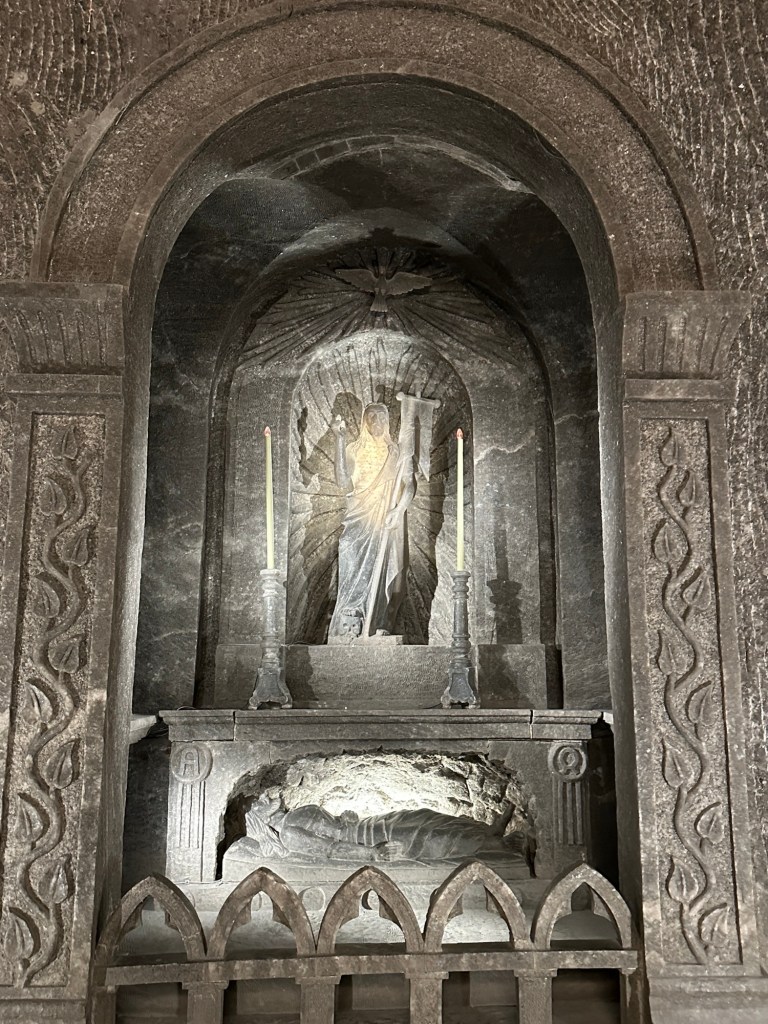
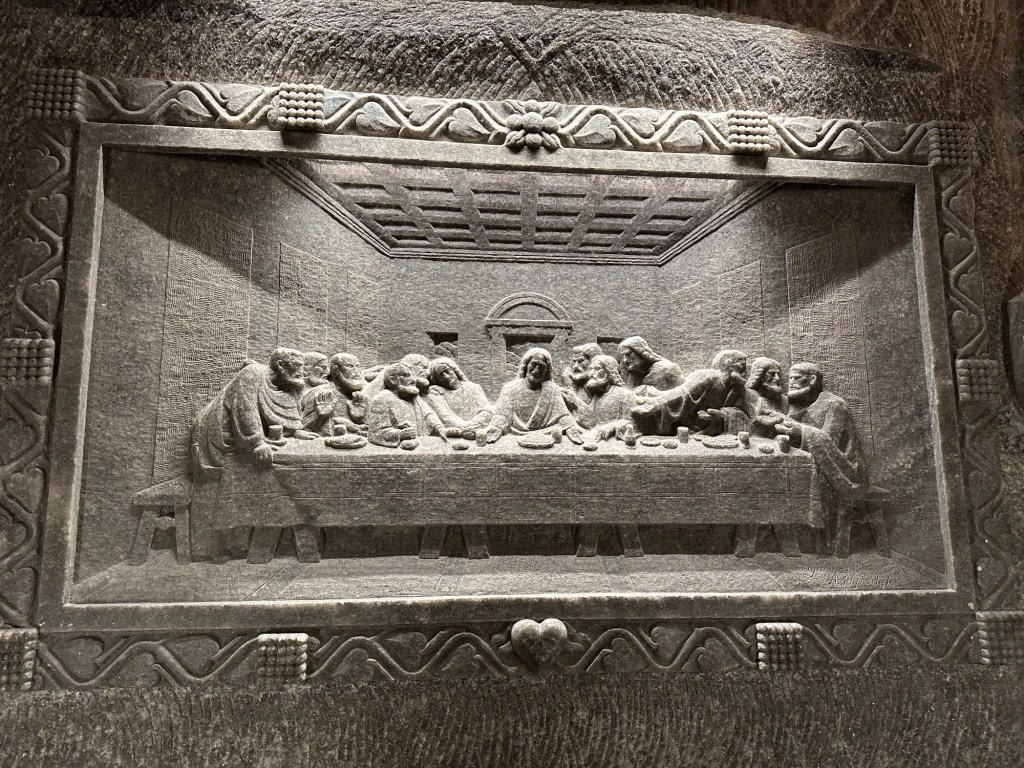
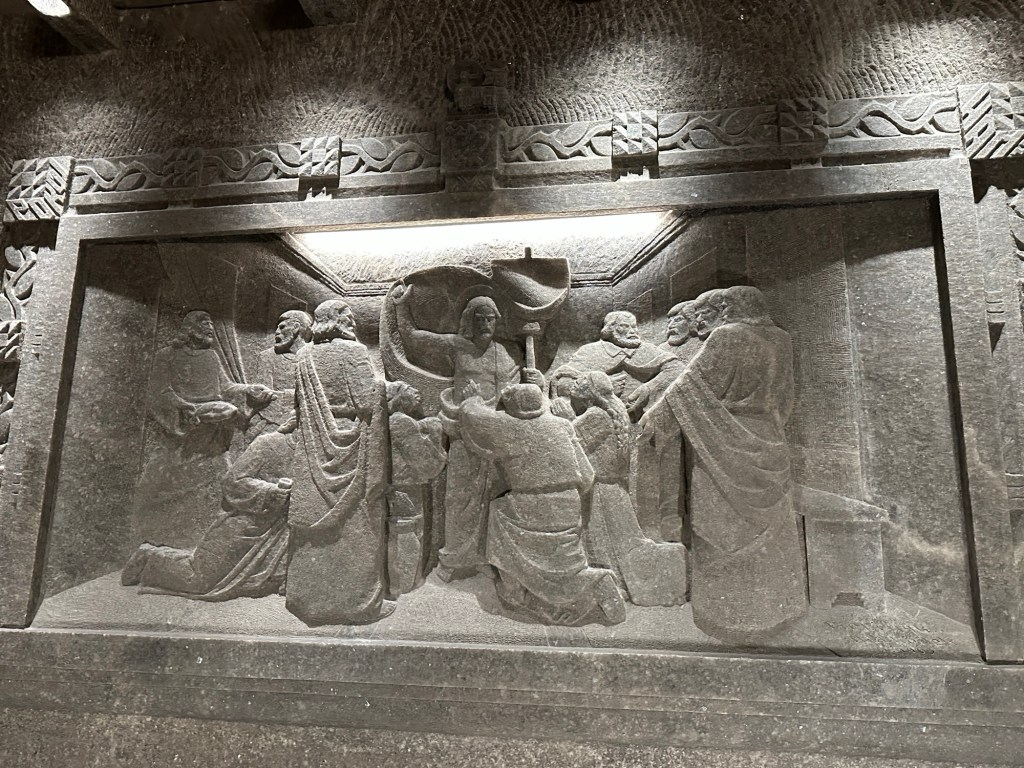
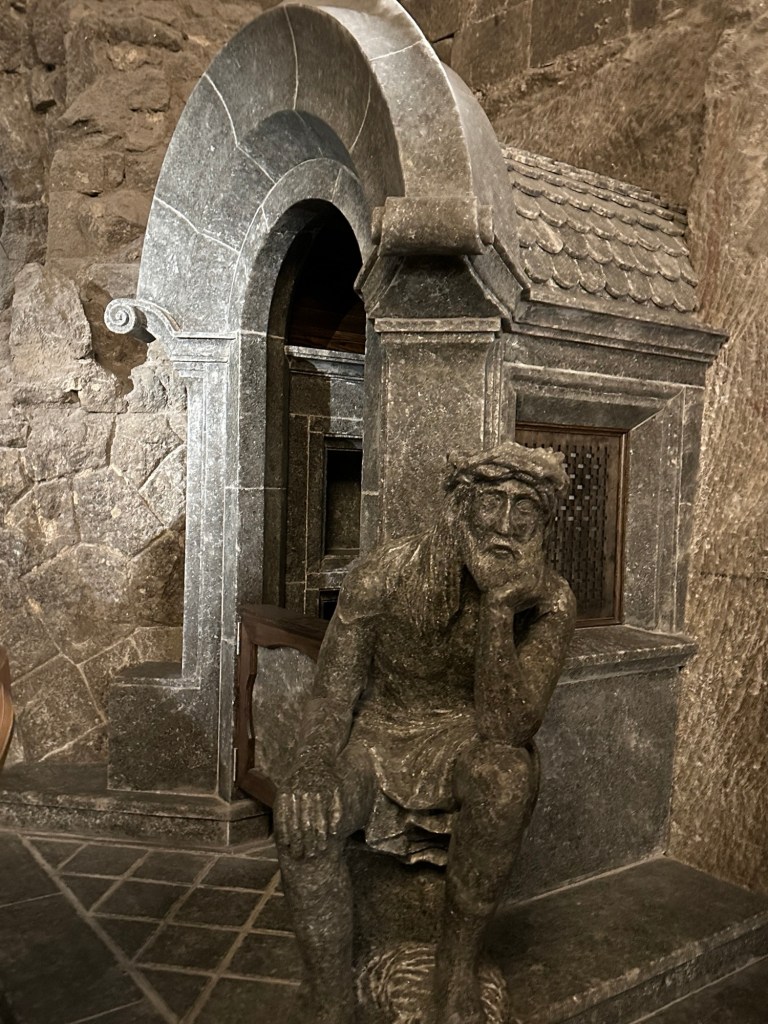
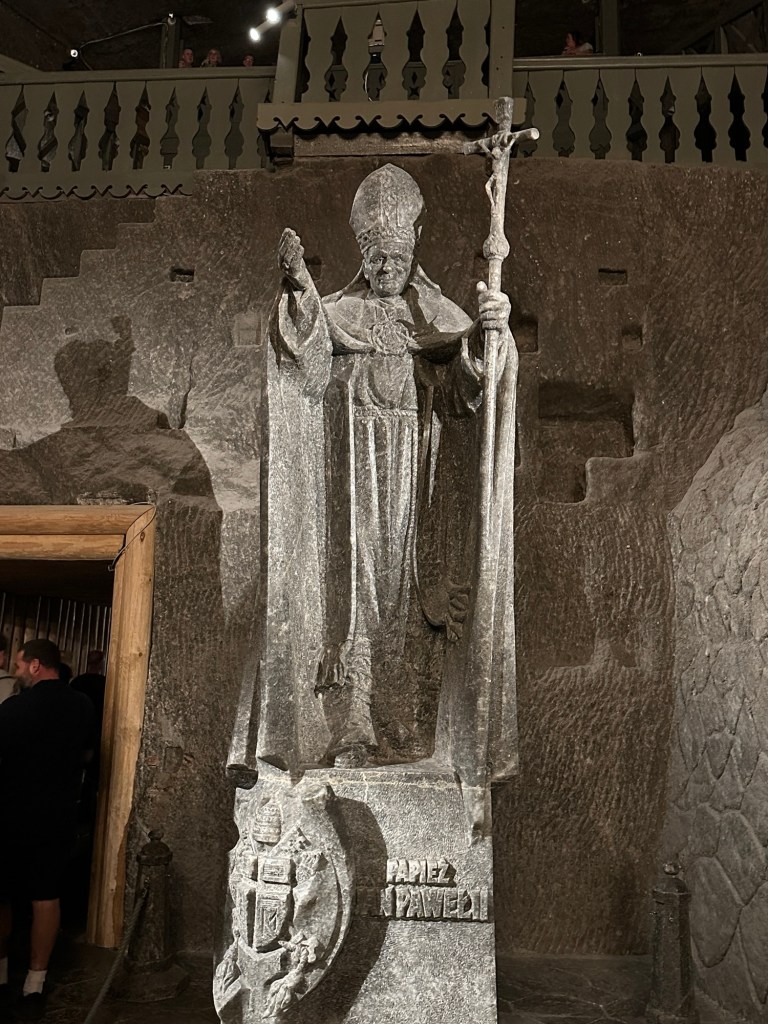
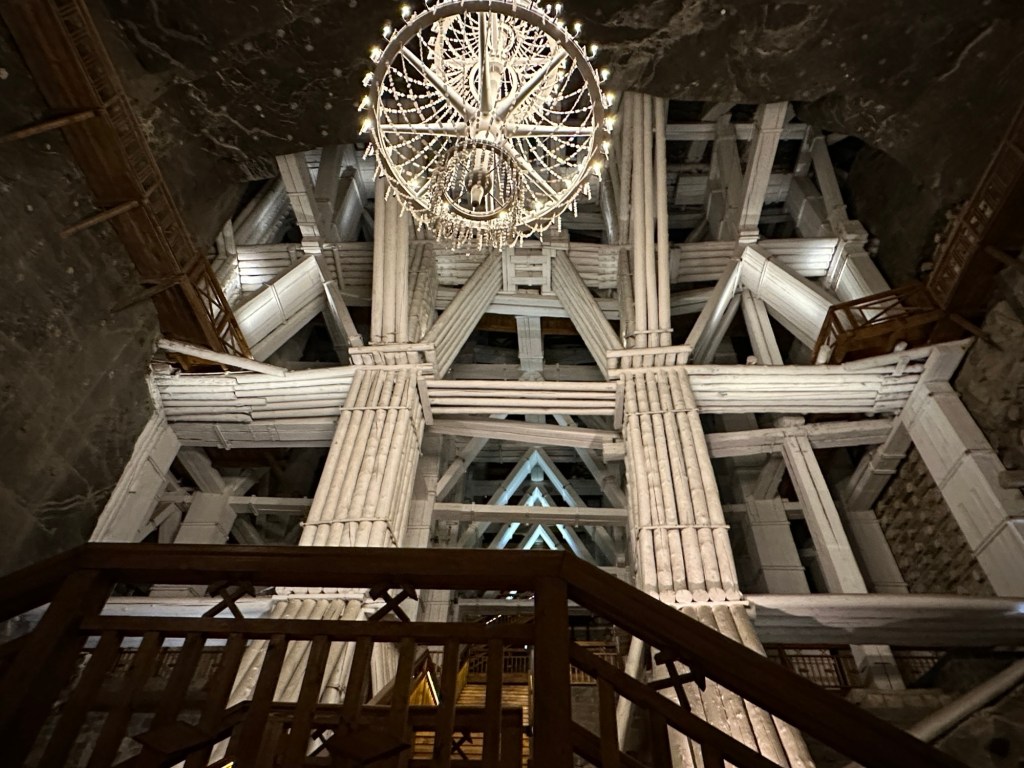
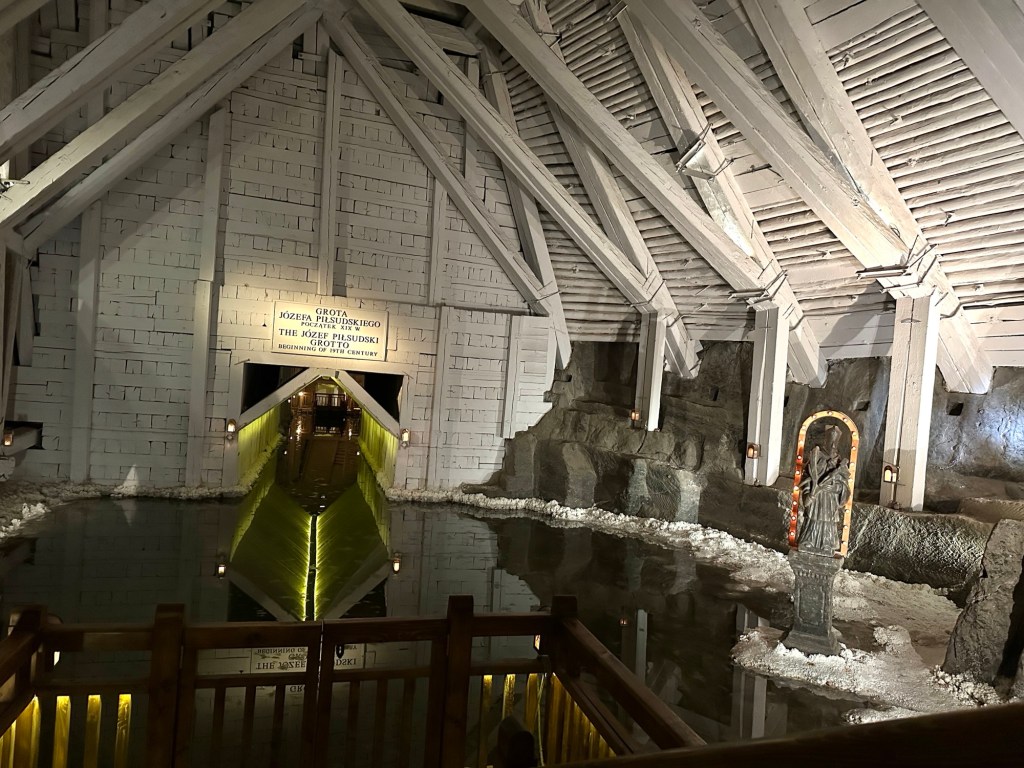
They have many impressive salt sculptures as well as a pretty nice salt church. This isn’t my first salt church (first in the Colombia) but this probably has the most detailed sculptures in it.
Copernicus, and early visitorStory about a ruler being returned her wedding ride by minerSalt formation Salt formation
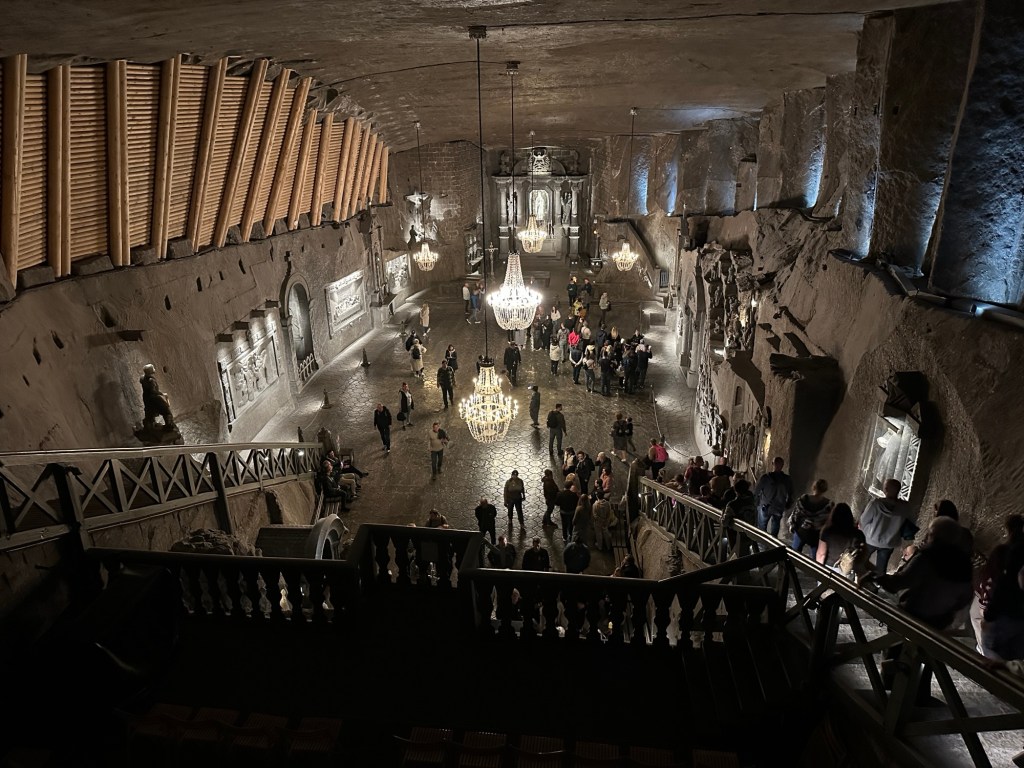
Finally we make it to the salt church with its impressive carvings.
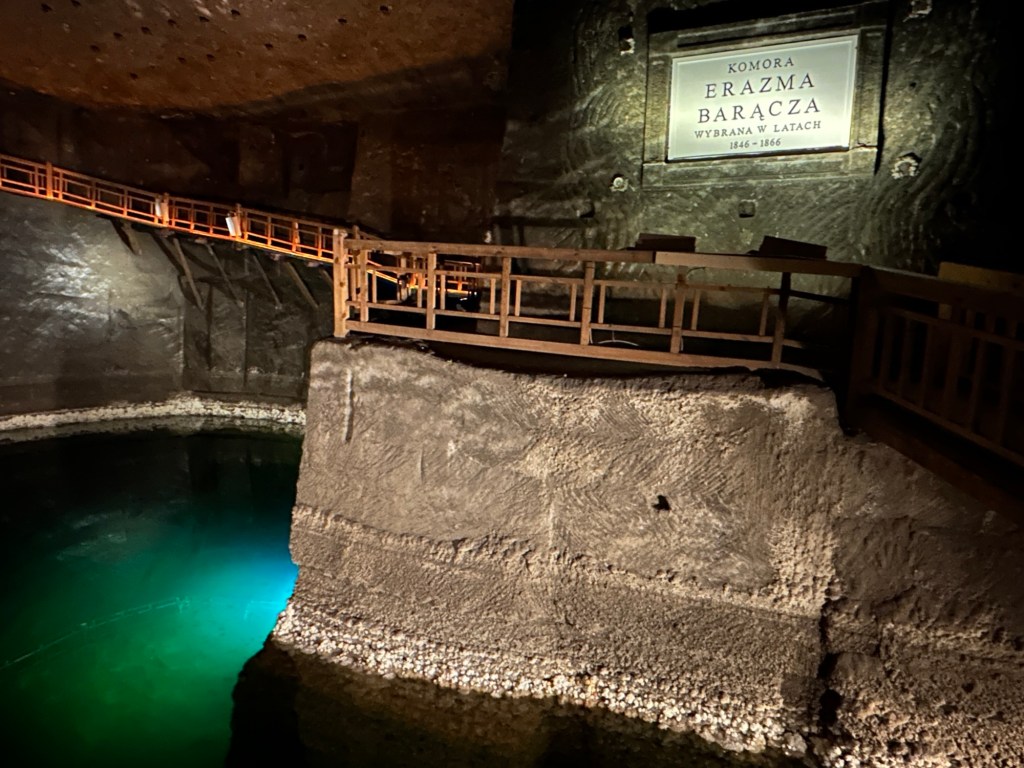
Underground lakePine used for support and salt makes it strong
Finally we go into a cavern where Chopin is played using lights to light up a statue.
We go further down to finally about 135 meters at the end.
It is a very long walk back to the elevators which we do get to take on the way up. However they shove us in there like sardines though.
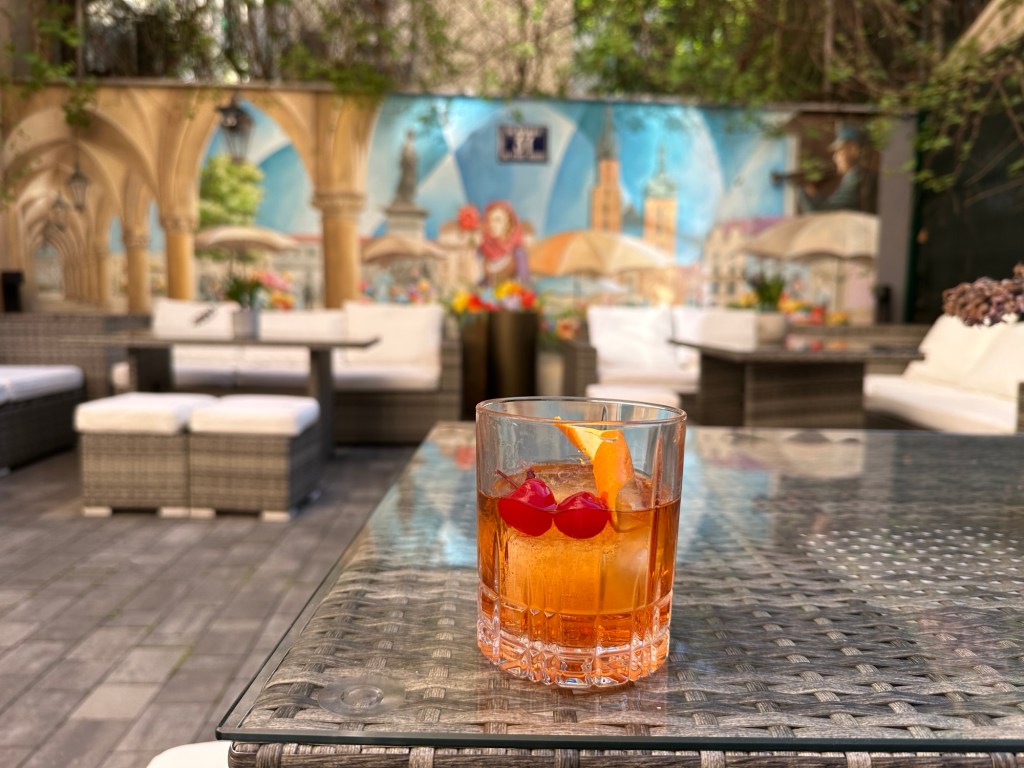
After my tour I finally give myself some downtime and a happy hour on the patio of my hotel.
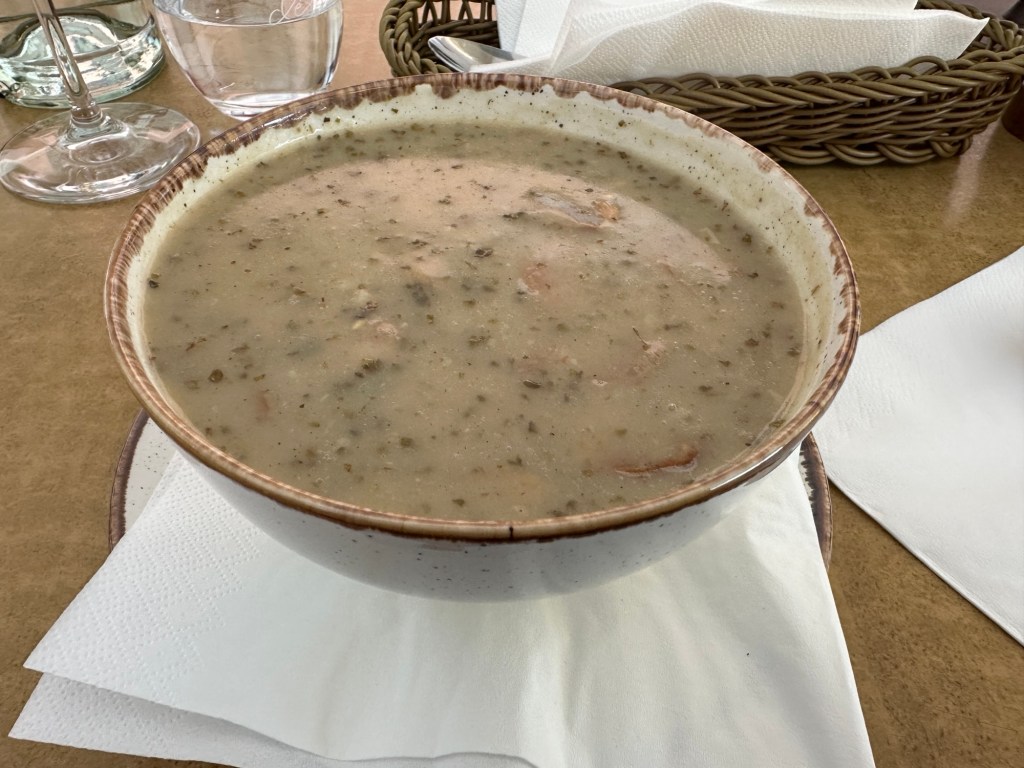
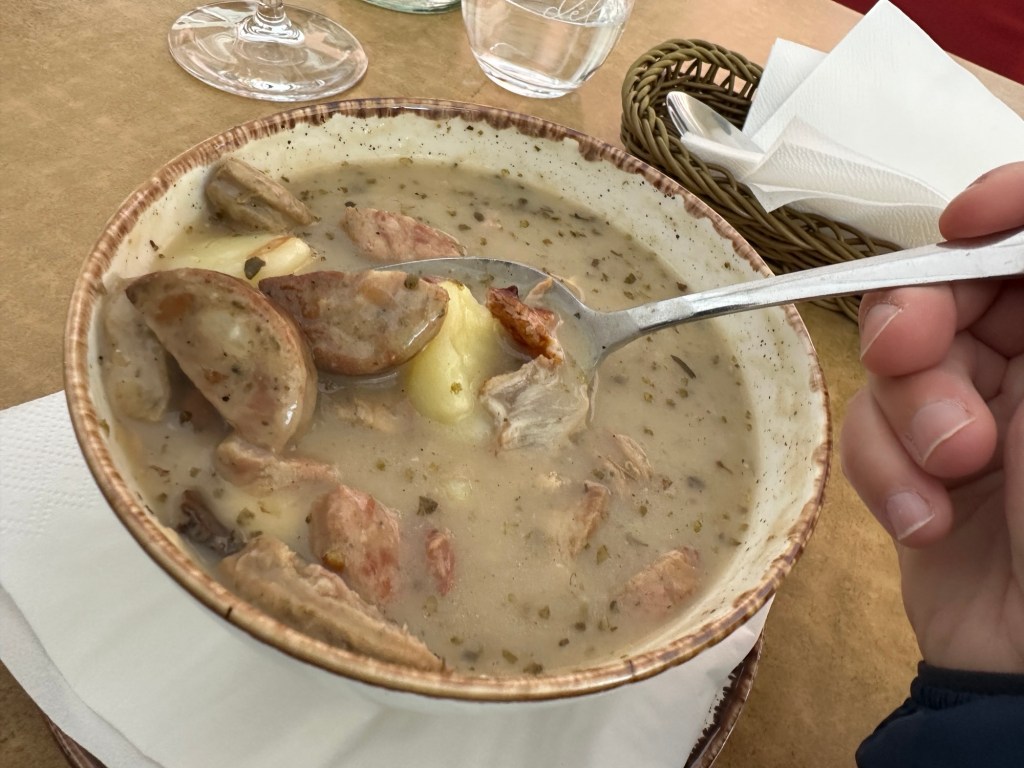
Dinner plans were to watch Klezmer music. (Authentic Jewish folk music). Despite an online recommendation I did end up at a bit of a tourist trap. The food and music were just ok but the music sounded so much better at the place next door. I did really enjoy my Zurek soup though.
Back to the hotel to rest since I have a long day at Auschwitz tomorrow.
I have questions I ask and answer whenever I get to new place:
Is water safe to drink from tap?
Where is the closest grocery store
How do you catch and pay for train/bus/etc?
Where to get cash and how much is appropriate?
These are all questions I wished I had compiled in a checklist to be used before I arrived in each new location or country during these last seven months instead of doing the mental gymnastics every time I arrive in a new place. But it is the last country now and I finally have my list.
My flight is early in the morning from Vienna to Belgrade, Serbia. I need to get out of the Euro zone since my visa is close to expiring (90 day Schengen). It seems the next stop nearby is Serbia since I visited many other Balkan countries but not this one yet.
After arriving by plane I go to the city shuttle that is 20 minutes late and the crowd is starting to gather around. I’ve already been waiting about 30 minutes prior so I am proactive and push myself towards the front of the group when the shuttle arrives since I’ve been waiting much longer than most of these people and there is no formal line. The shuttle is a smaller bus and not everybody is getting on. My last stop during my travels and I finally learn to be pushy to my advantage. Most of the time I am overly considerate even when it hurts me. After the shuttle I have to switch to another bus and the heat is starting to kick in; my entire backside is drenched in sweat. I am on a crowded bus standing and trying to balance with my large backpack containing my life for several months and the guy next to me is real annoyed with my backpack. I am too sir. I am too. My hotel is right next to the bus stop and my room is ready. I’ve been so lucky with my room being available as soon as I arrive lately. I relax in the AC for a couple hours before I go back out to sweat again with a walking tour of town.
I meet with the tour and a tour guide takes us many sites in town and explaining their meaning. I learn places to hang out and restaurants to try. He of course tells us to try rakia but I’ve been to the Balkans before and I’m a pro at rakia now. The tour is great but he says nothing about anything related to conflicts in the last fifty years; the commentary stops at World War II. From what I’ve read the most museums around here do not address it either. I am really curious to get their perspective on recent conflicts since I’ve already heard some commentary from other Balkan countries. Maybe another day or so I’ll hit a museum or have a guide that will talk about that period of time. I do learn Serbia goes way back and has a long history. I definitely need to learn more.
After the tour, some of the more outgoing people of the tour arrange a meet up at a beer place around the corner. The six of us go and have a beer. We have two Aussies, two Americans, an Italian and a Colombian. We have a delightful conversation getting to know each other. We take the conversation to dinner afterwards. I try another one of those Balkan meat patty things that seem to be so popular in the region. This particular one is a combination of ground beef, chicken, and cheese. It comes with a side of fries, so yeah, very healthy.
pljeskavica as a type of Serbian hamburger made with ground beef, pork, or lamb. I ordered mine beef and chicken and cheese.
Google takes me through these buildings on my walk back to the hotel. I feel like I’m trespassing but I think others travel the same way.
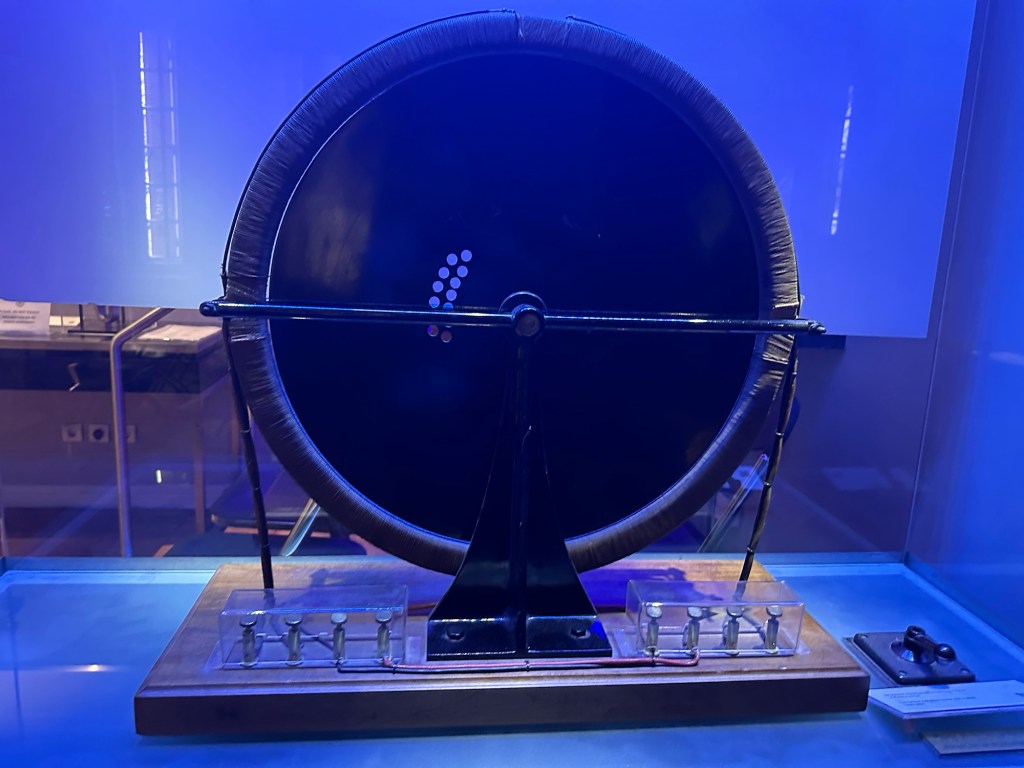
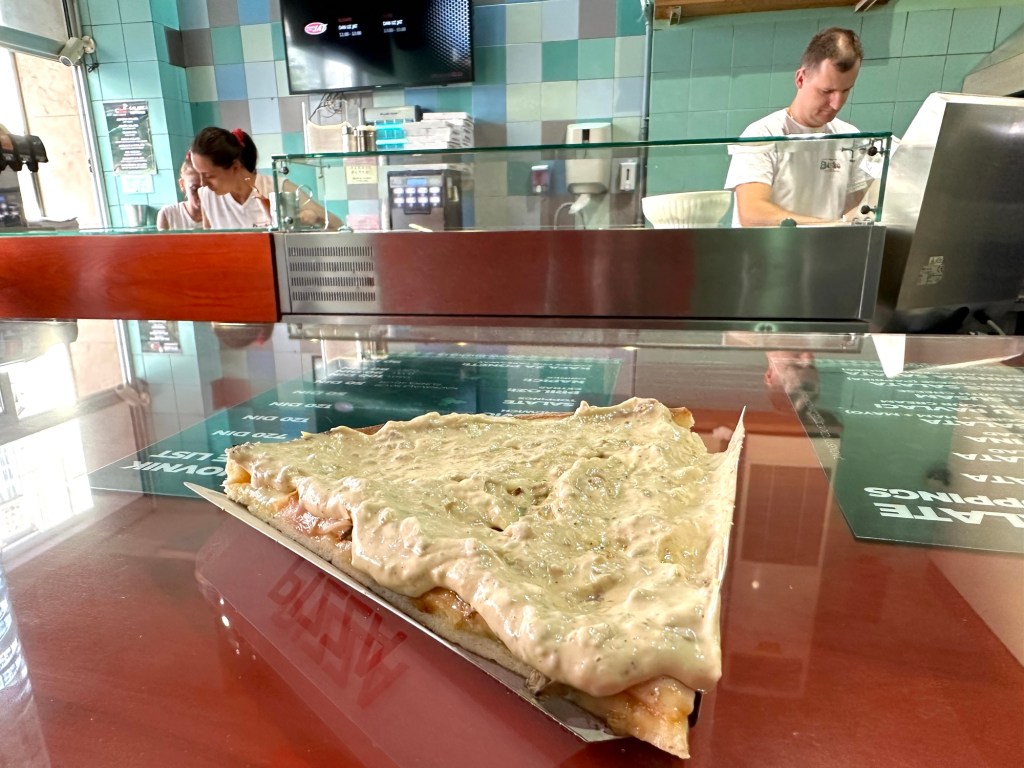
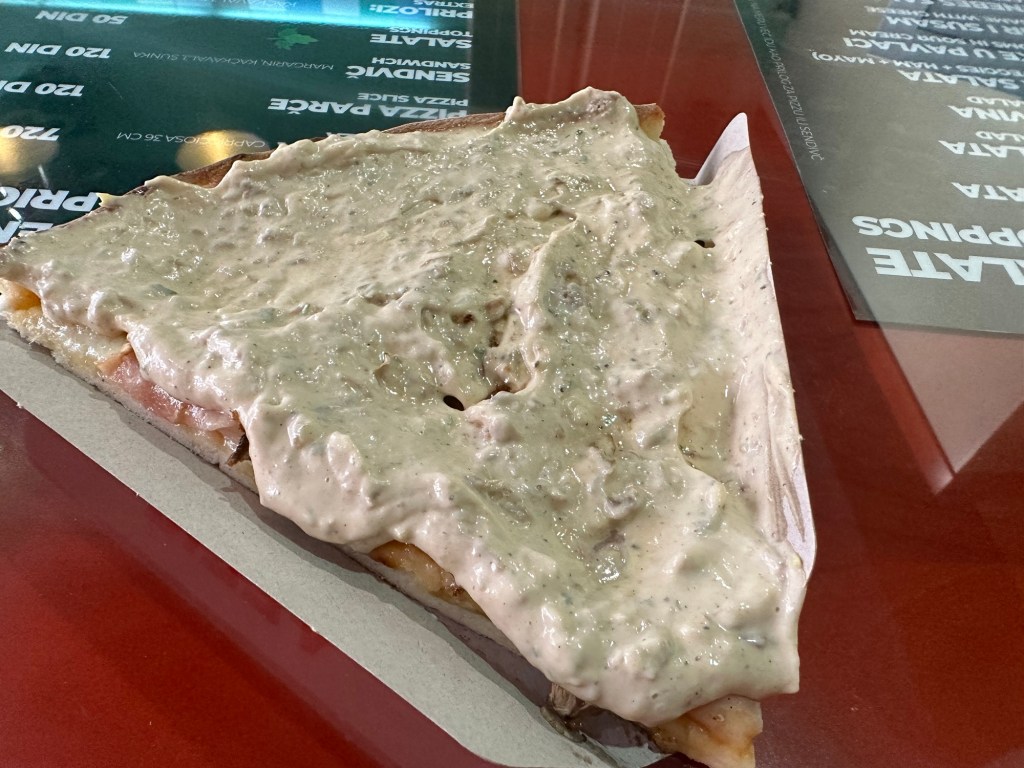
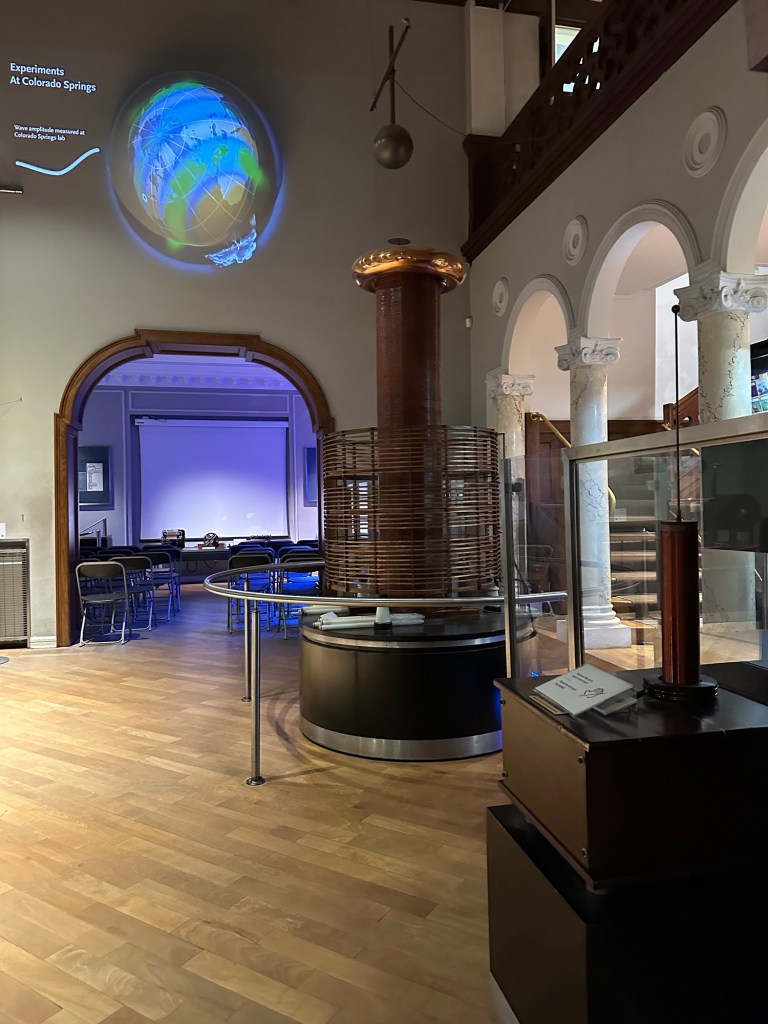
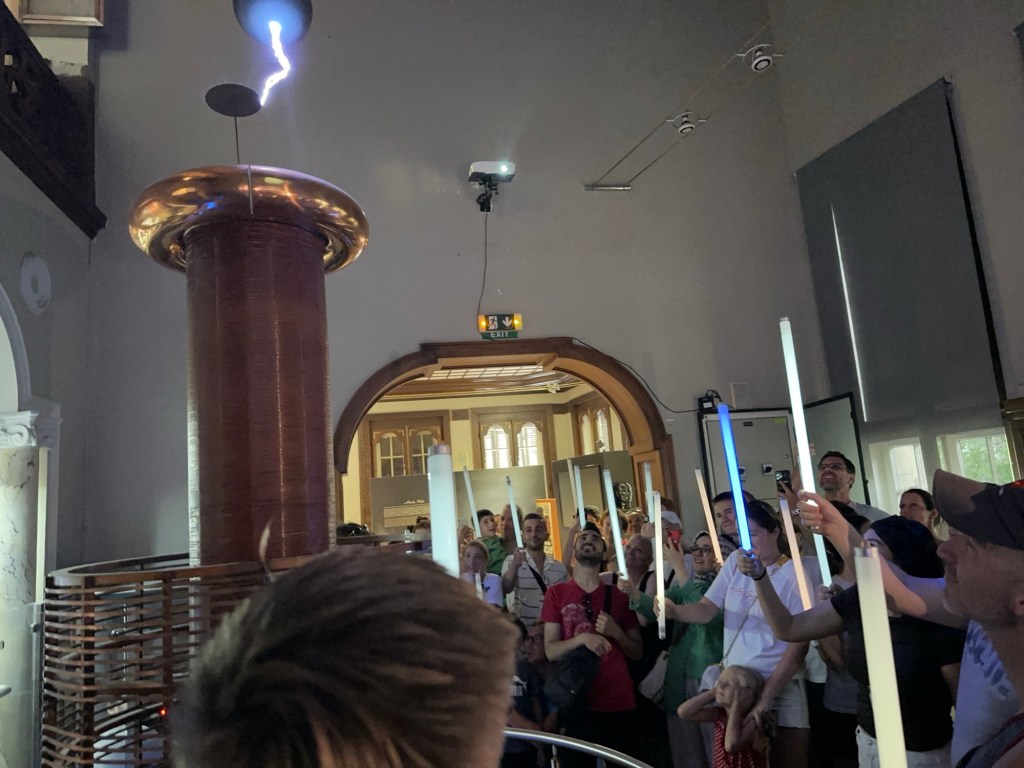
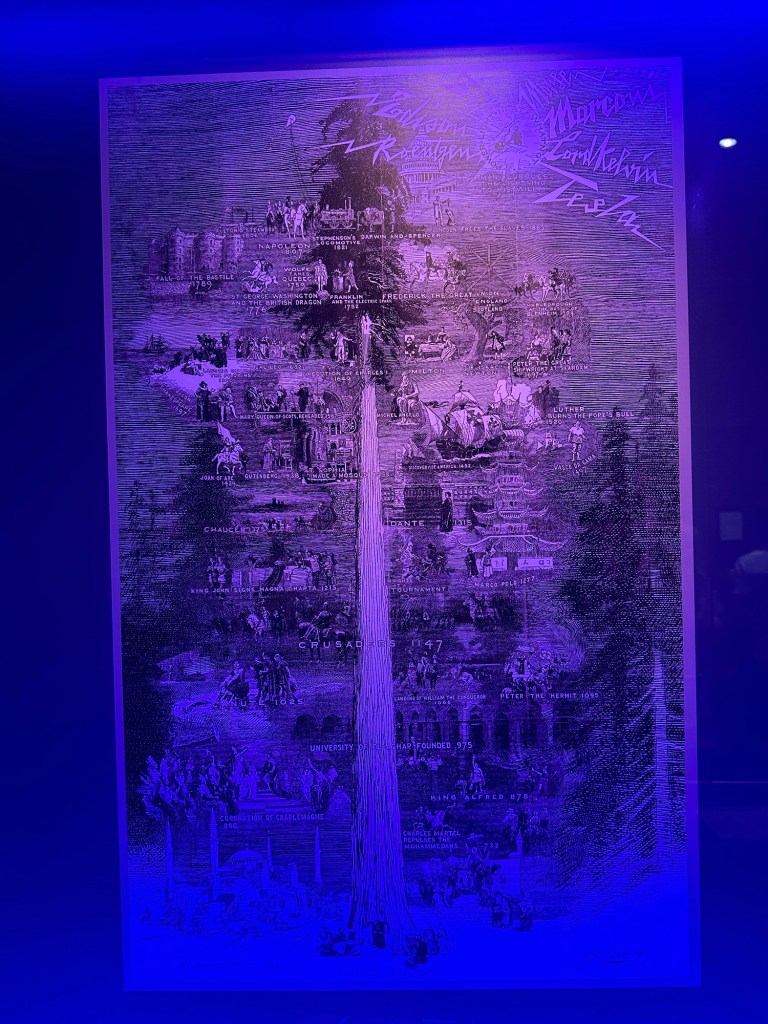
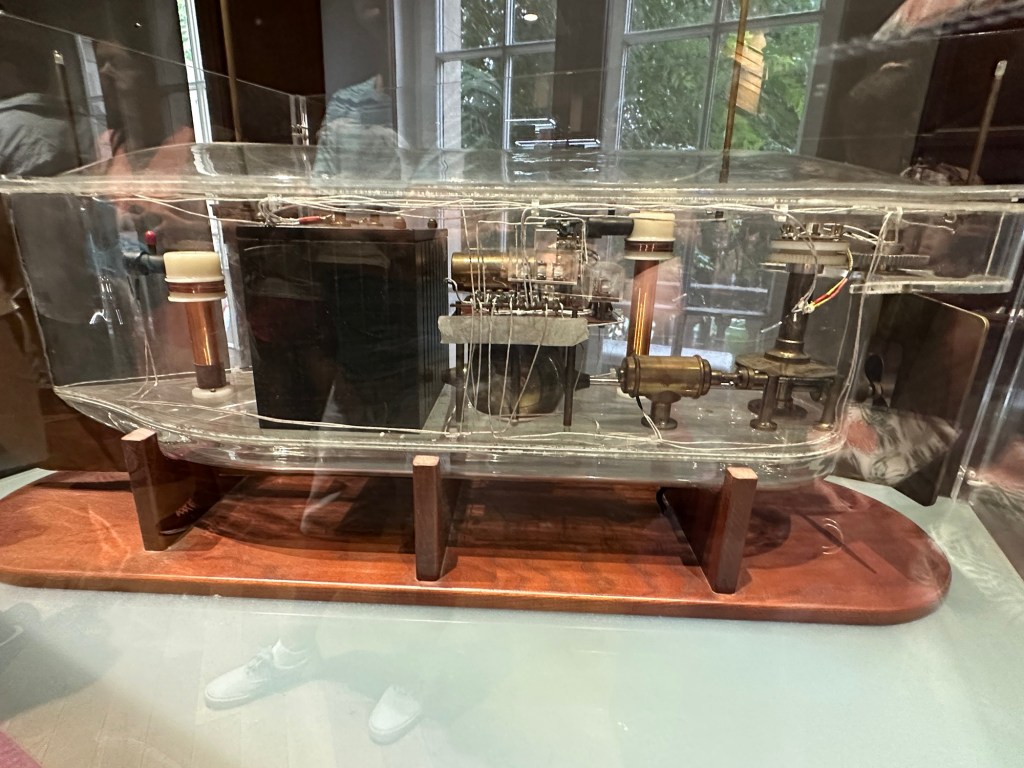
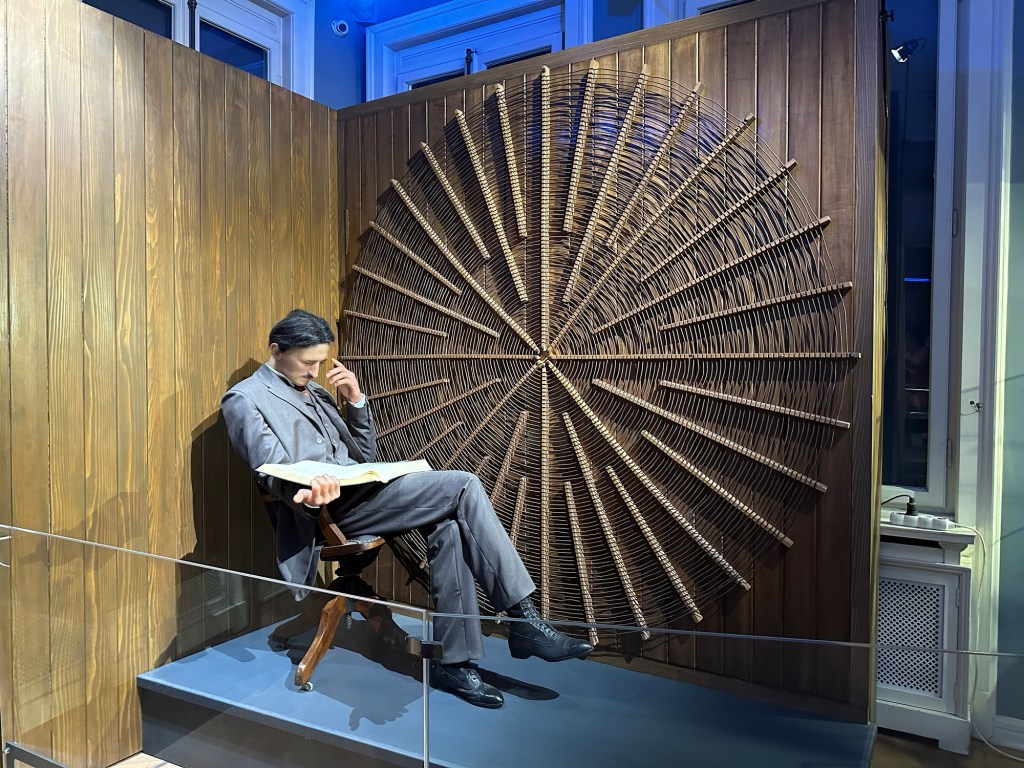
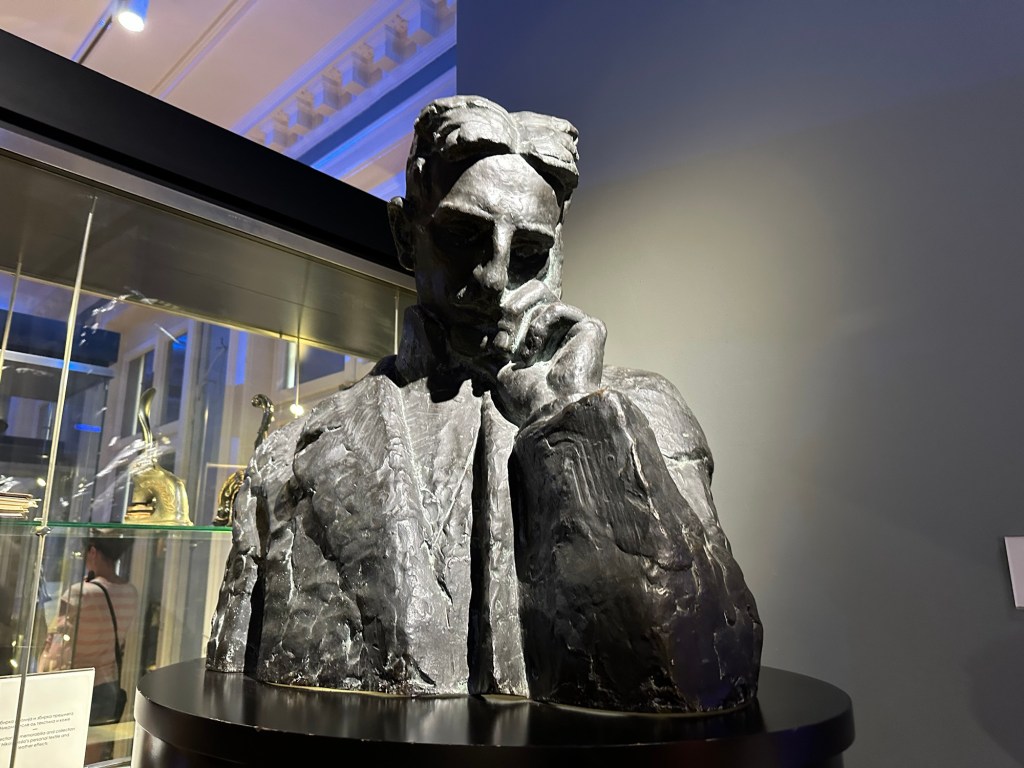
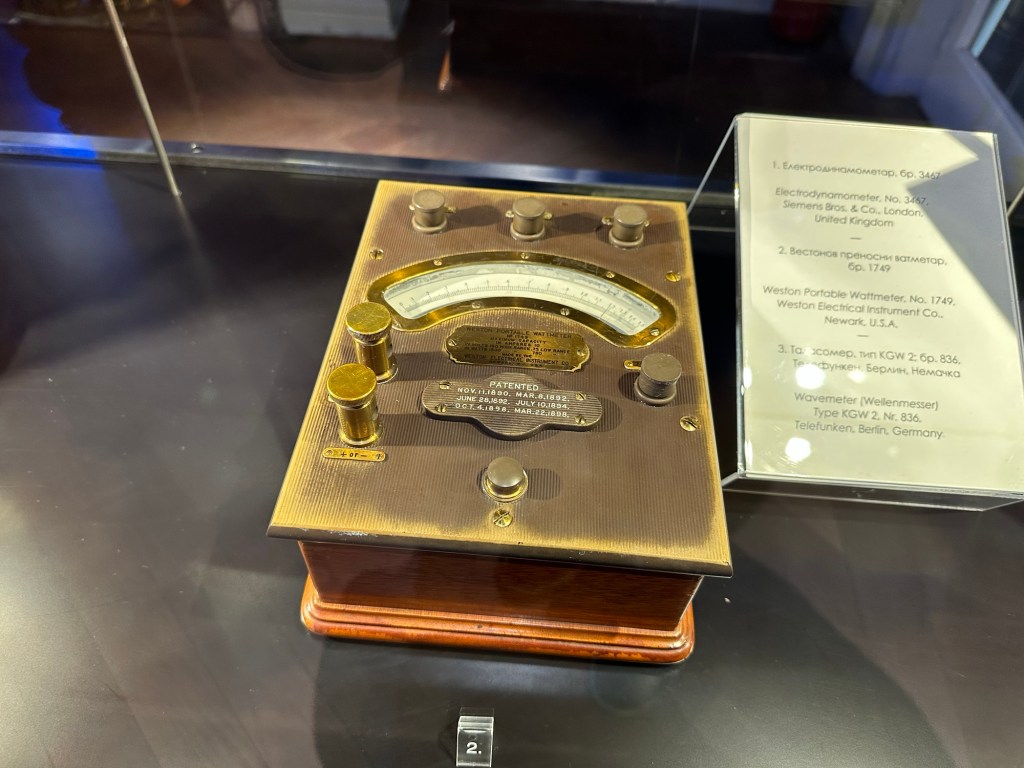
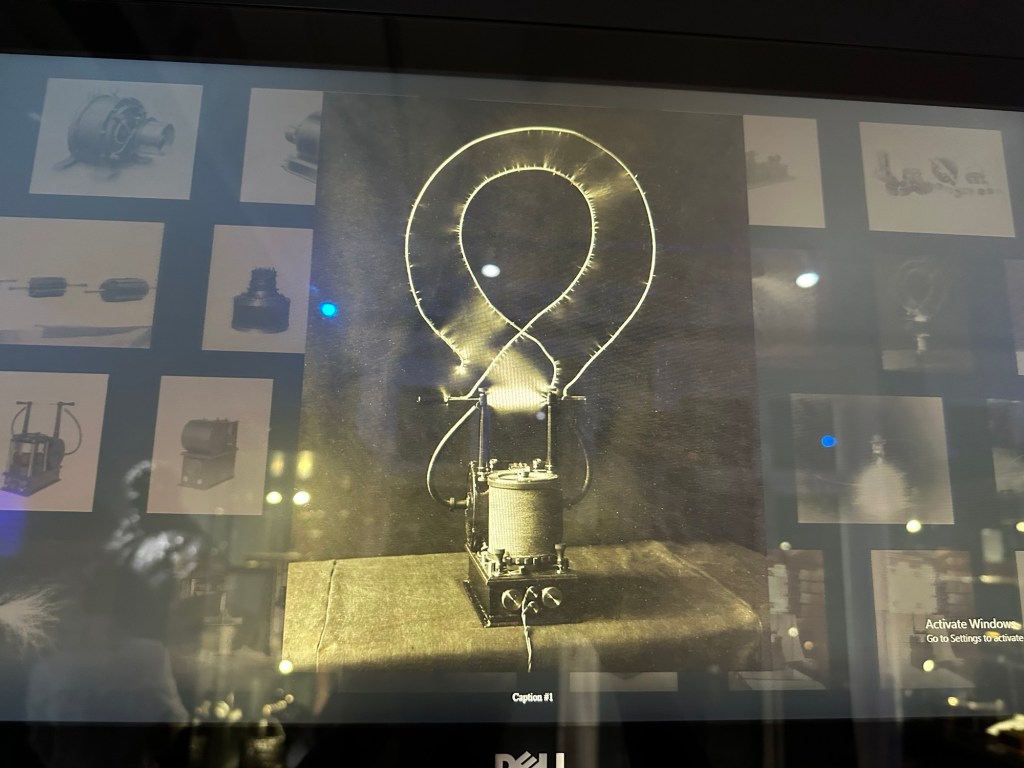
The next morning I head out to visit the Nikola Tesla museum. Tesla was born in technically Austrian Empire in a region that is now Croatia but was born to Serbian parents. He spent the much of his life outside of Serbia buthis inventions were brought to the country after he died, even though he spent most of his professional life outside the country. The museum can only be visited by tour once an hour. The two early tours the morning I visited were already reserved by large groups – although individuals cannot reserve in advance and have to pay in cash. I check in and notice I can’t buy my ticket yet. I am told to come back in about 30 minutes so I go around the block to try the pizza the tour guide yesterday raved about called Bucko. I rarely pass up a good pizza so it is an easy sell for me. The pizza is known for the sauce that is spread on top (called a salad). So basically it is a normal pizza slice with a spread of your choice. I got the beef salad which seemed to be the most popular. It is good but messy and something I am not sure I’d order again. Maybe I’ll go back and try another salad but there are a few more foods in Belgrade I still need to try.
I return back to the Tesla museum for the tour and demonstration of some of his inventions.
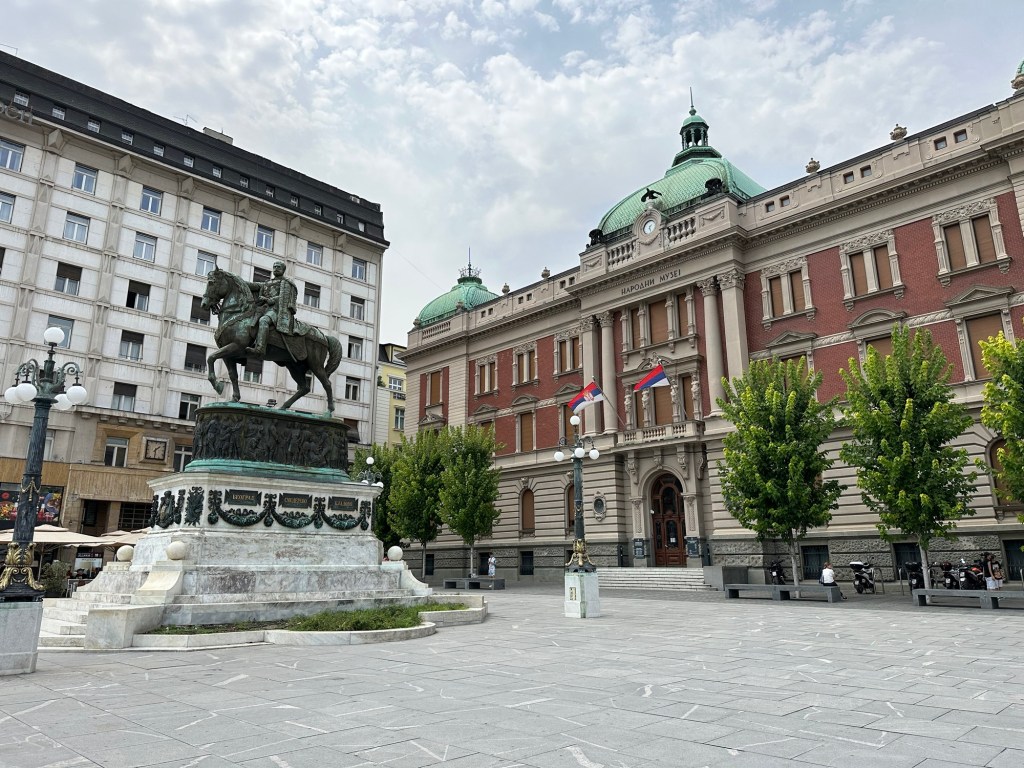
I walk around town a bit afterwards.
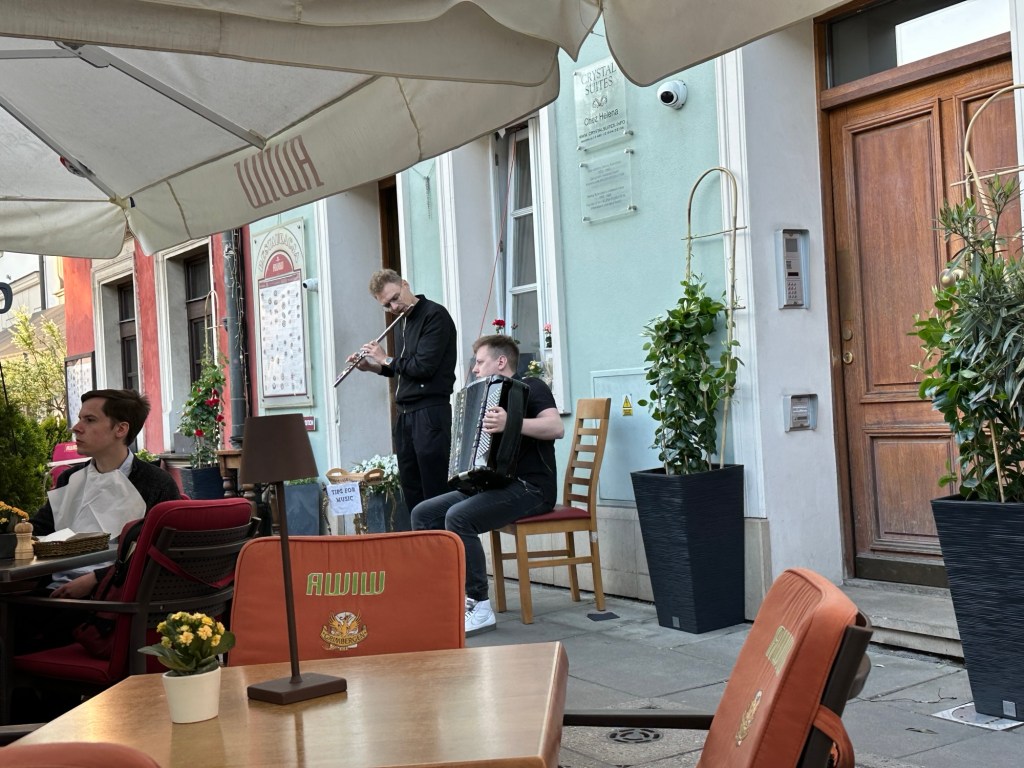
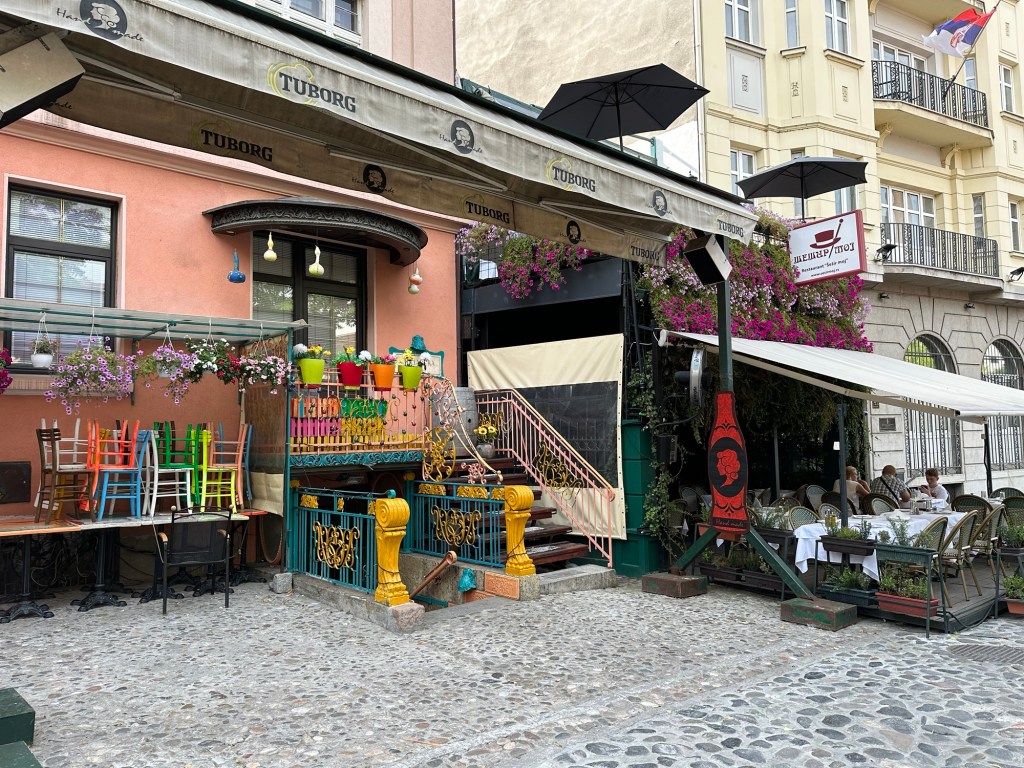
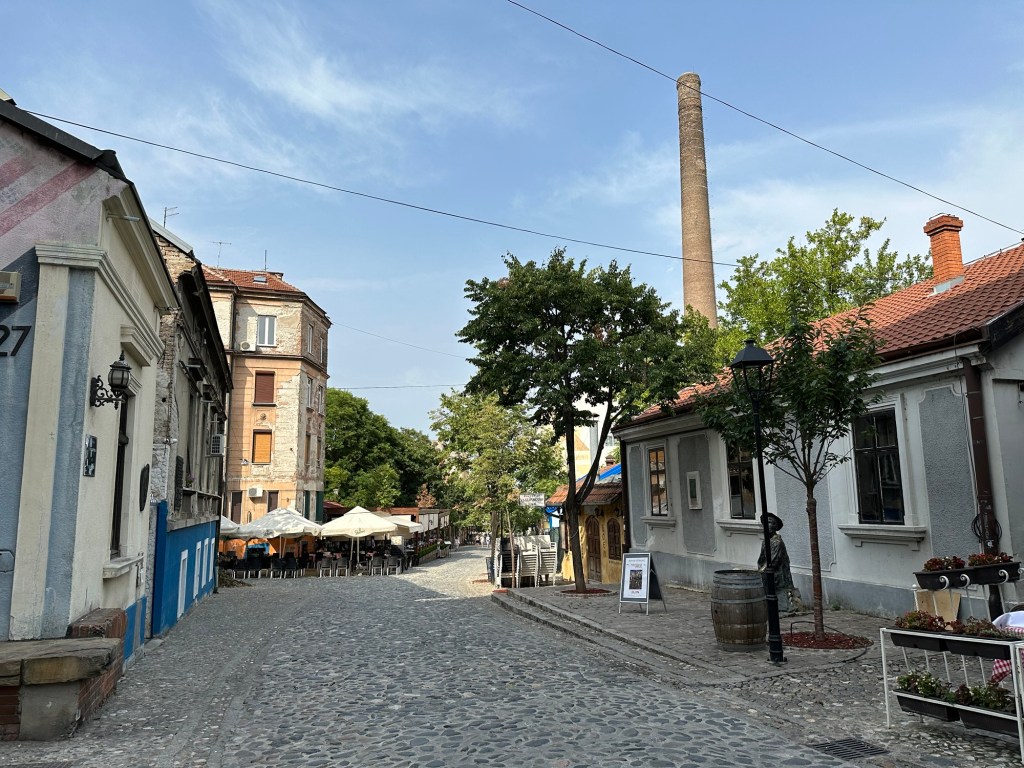
I head down to the funky Skadarlija district to have dinner at one of the two restaurants I have on my radar in that neighborhood. It’s a very short walk from my hotel so that’s nice since its still hot out. There is a Serbian band playing for dining guests. The music is traditional and sounds like something you’d hear in in many European tourist restaurants.
Karađorđeva Šnicla
Karađorđeva šnicla is a Serbian dish consisting of a breaded and rolled veal or pork cutlet stuffed with kajmak. It was named after Karađorđe, a Serbian revolutionary who led the First Serbian Uprising against the Ottoman Empire from 1804-1813.
I had it with chicken since eating lots of beef and pork lately. It is good but very rich. Probably would never order it again but glad I got to try it. Also tried the Krempita again, this time with berries inside. I have had the dessert before and but I missed enjoying it from my Balkan days a couple months ago. I also discover that I am in love with the cheese topped Sopska Salata (Serbian salad). The salad is fresh chopped vegetables and cheese, so good.
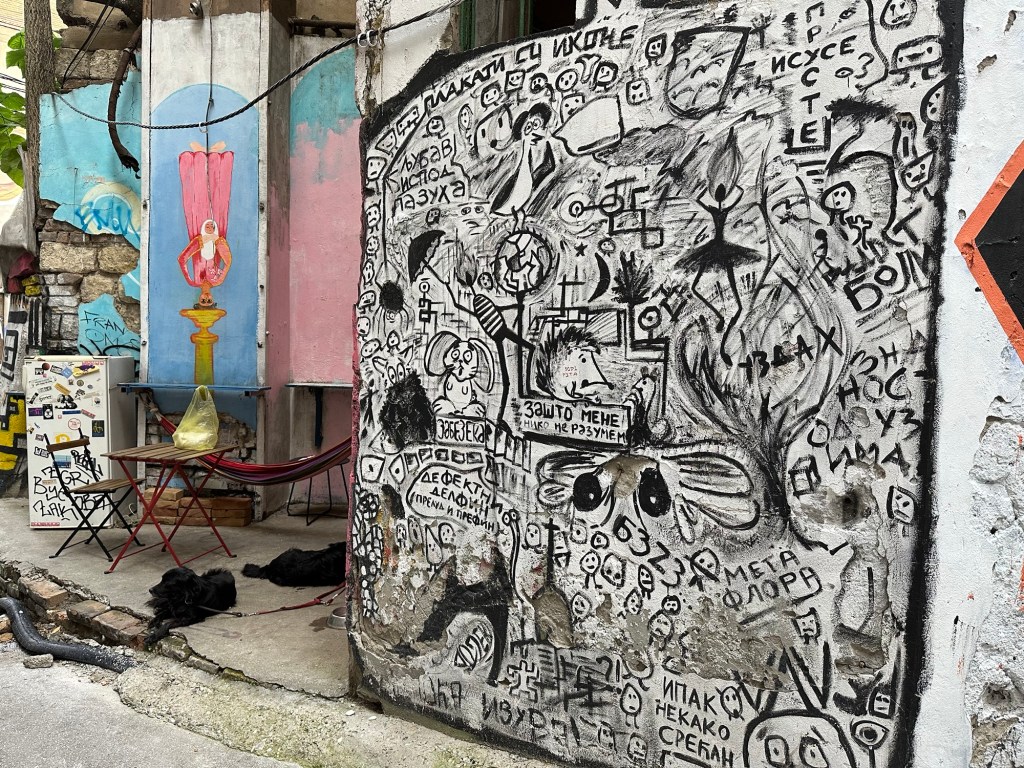
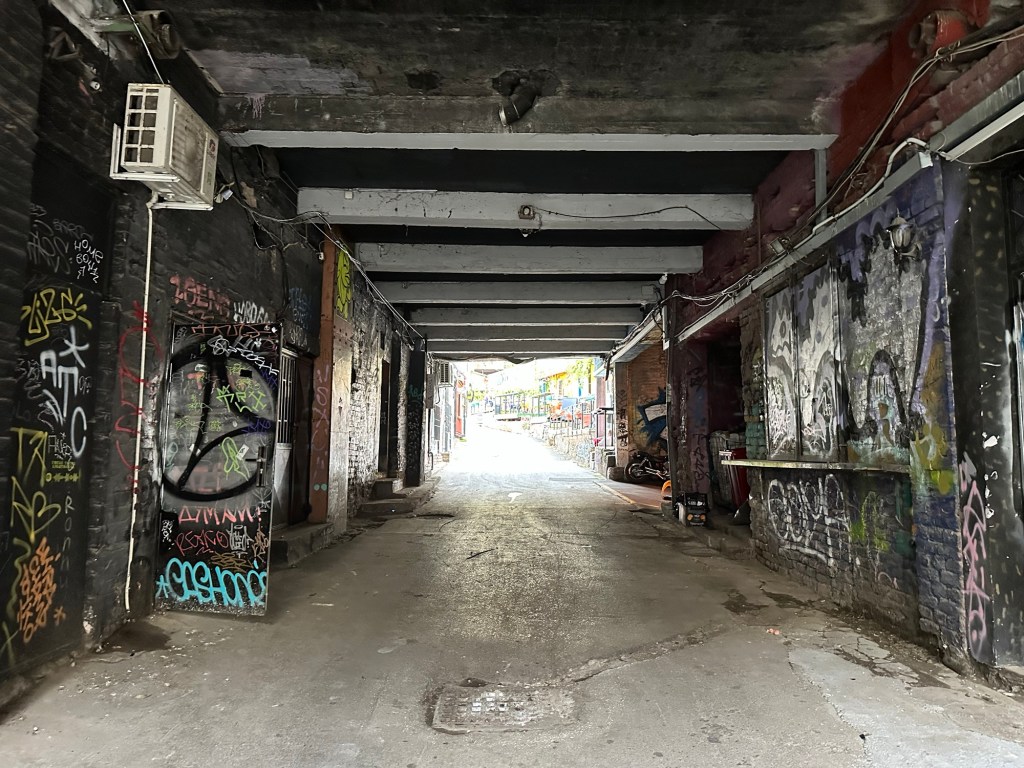
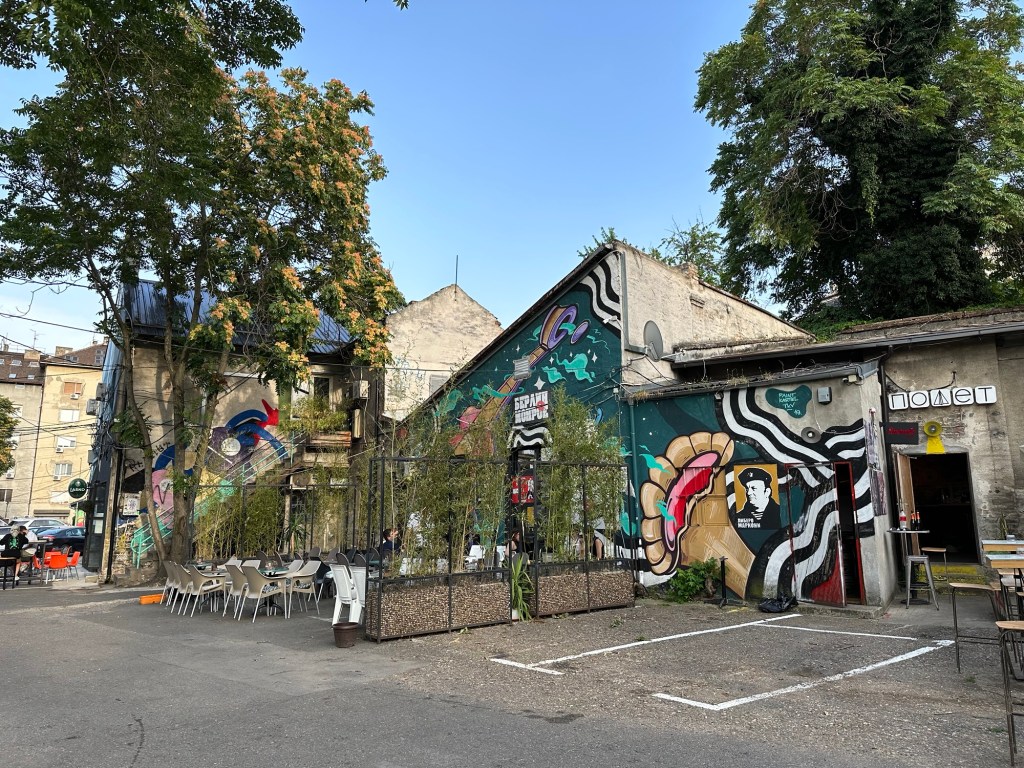
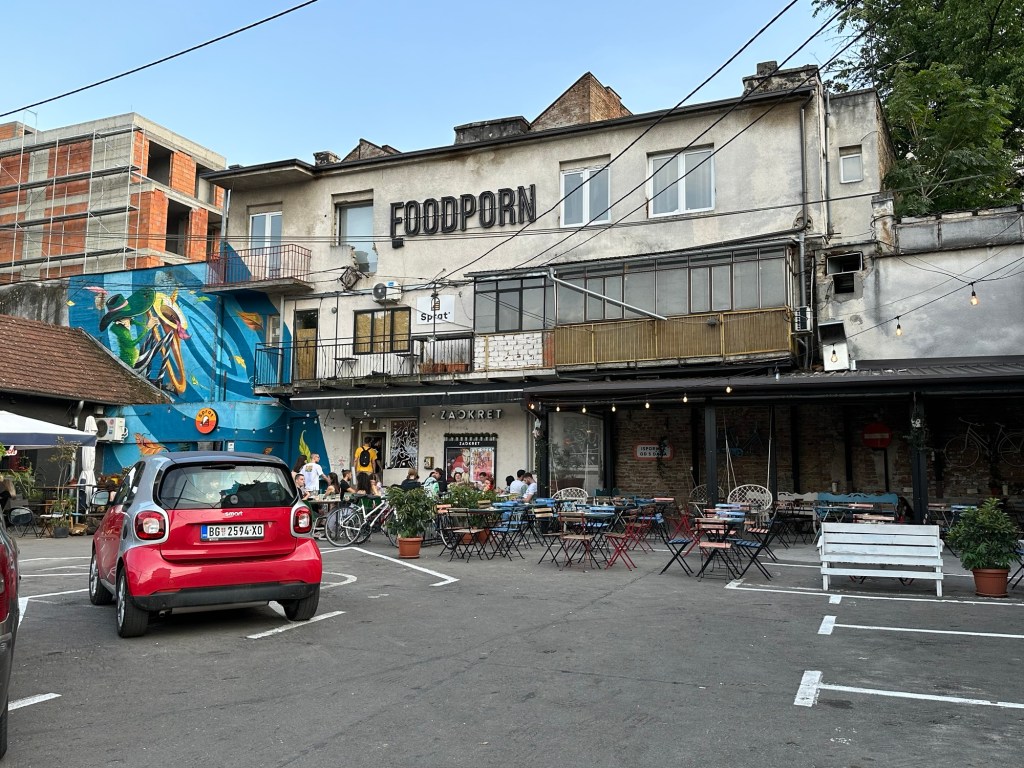
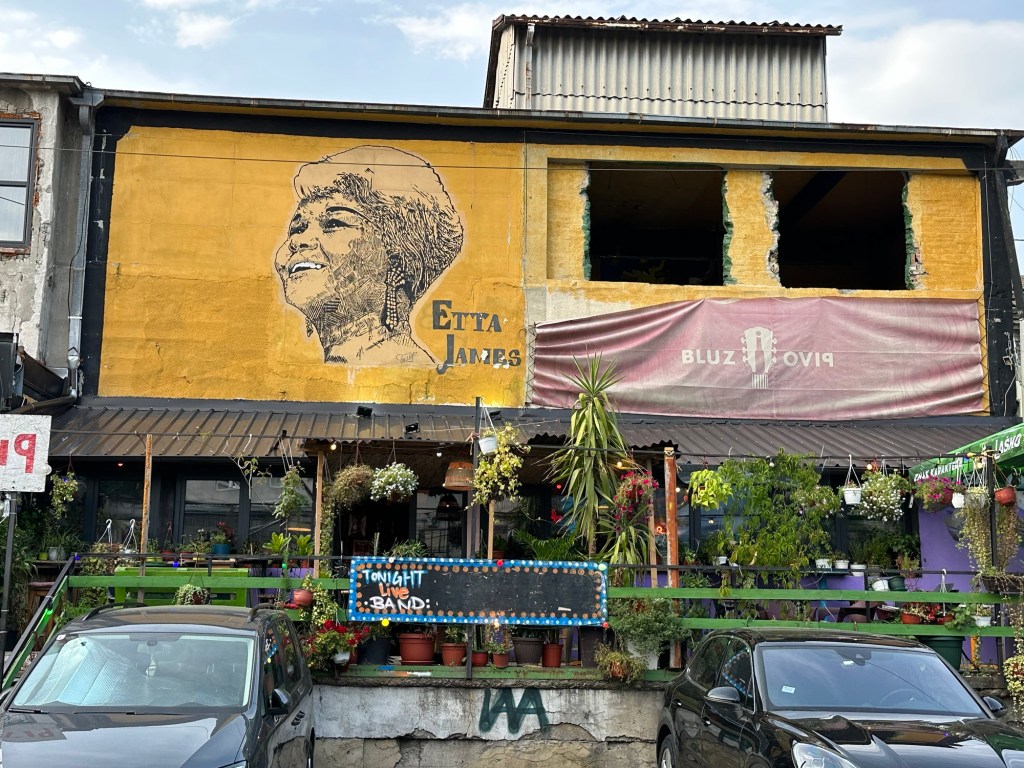
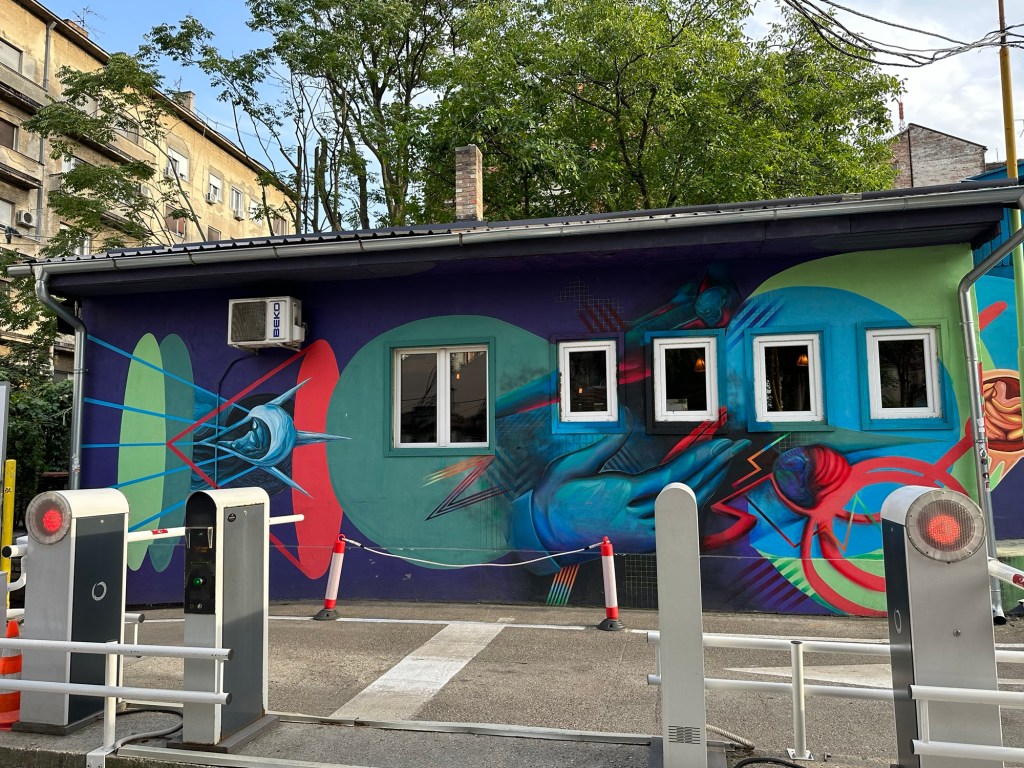
After dinner I explore Skadarlija and end up down a funky alley with bars and more restaurants. I hope to come back here another night.
























































































































 Growing With Leala