Gdansk all day

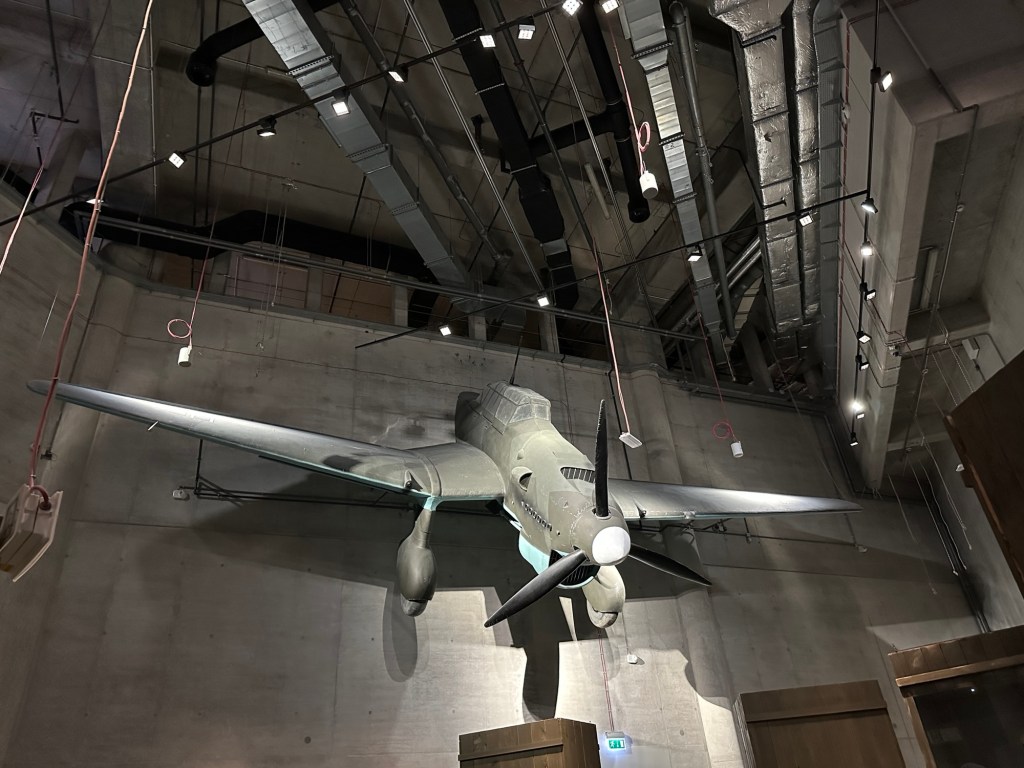
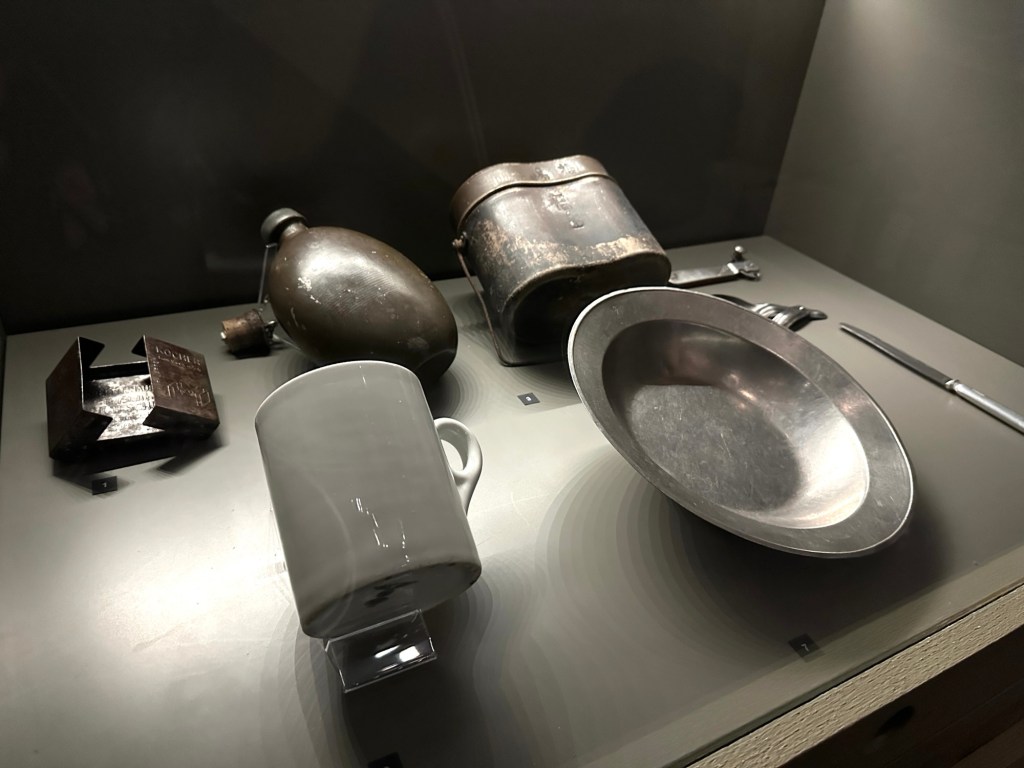
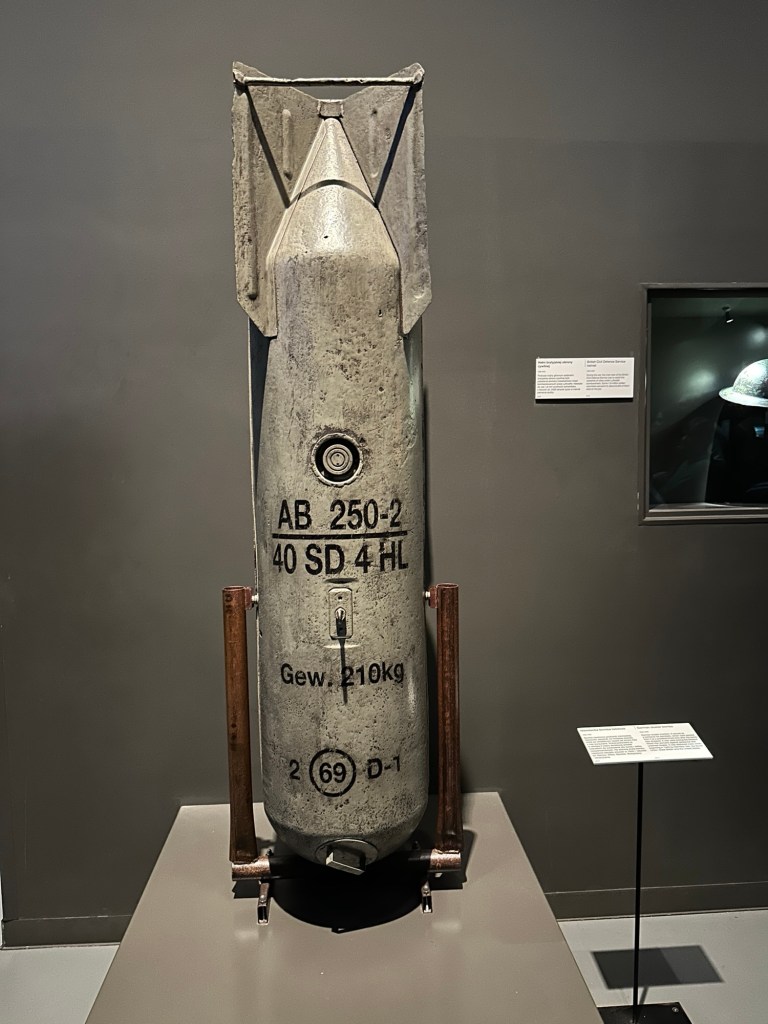
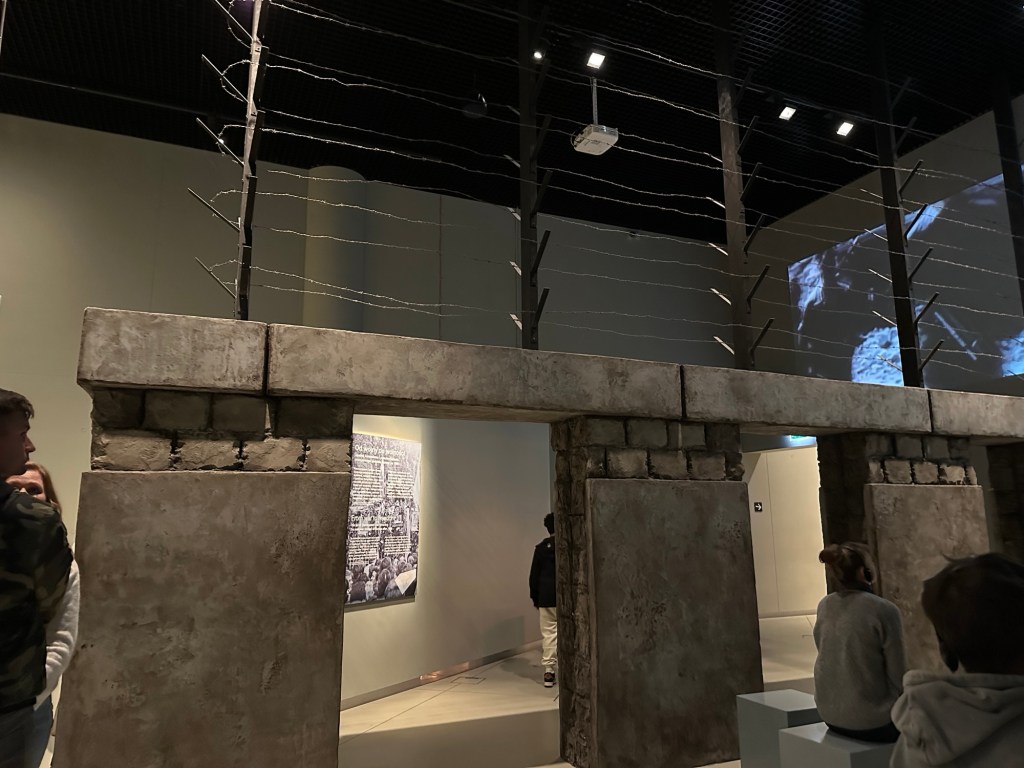
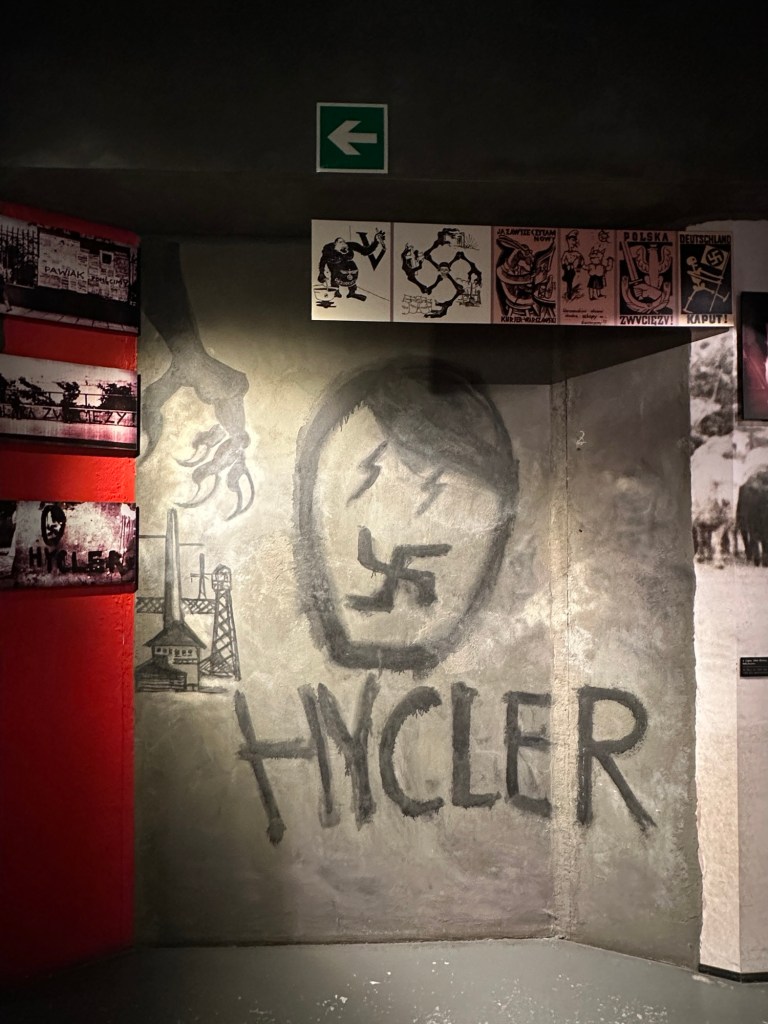
This morning I’m walking to the Museum of World War II. This must do for Gdańsk is the most thorough war museum I have ever visited and takes about three hours for the audio tour.

I also schedule a walking tour for this afternoon of the main town.

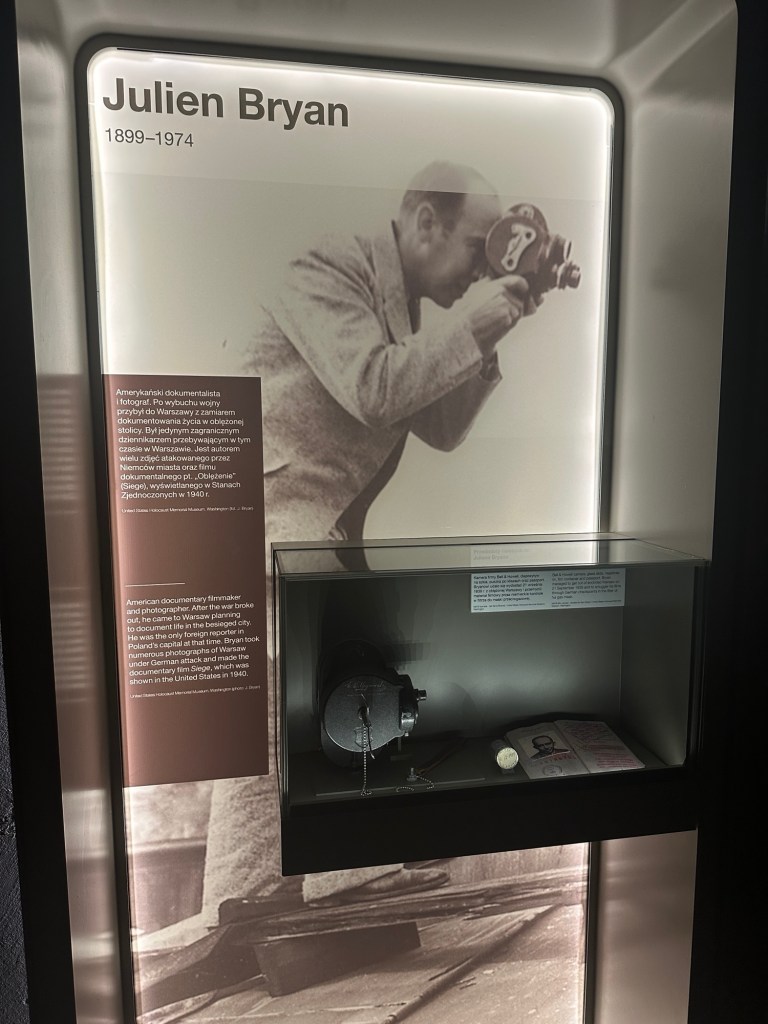
I arrive the Museum of the Second World War right at opening and have purchased my ticket and audio guide in advance. Arriving at opening is advisable because this museum is huge and covers lots of information. It gets very busy as the morning passes. The museum gives all the reasons for the war, all the players, and the aftermath. Sure you might see a little more information on how the war affected Poland than other similar museums but it also goes into how the way it affected other territories like the Balkans, Baltic countries, and even those effected by Japanese invasions.

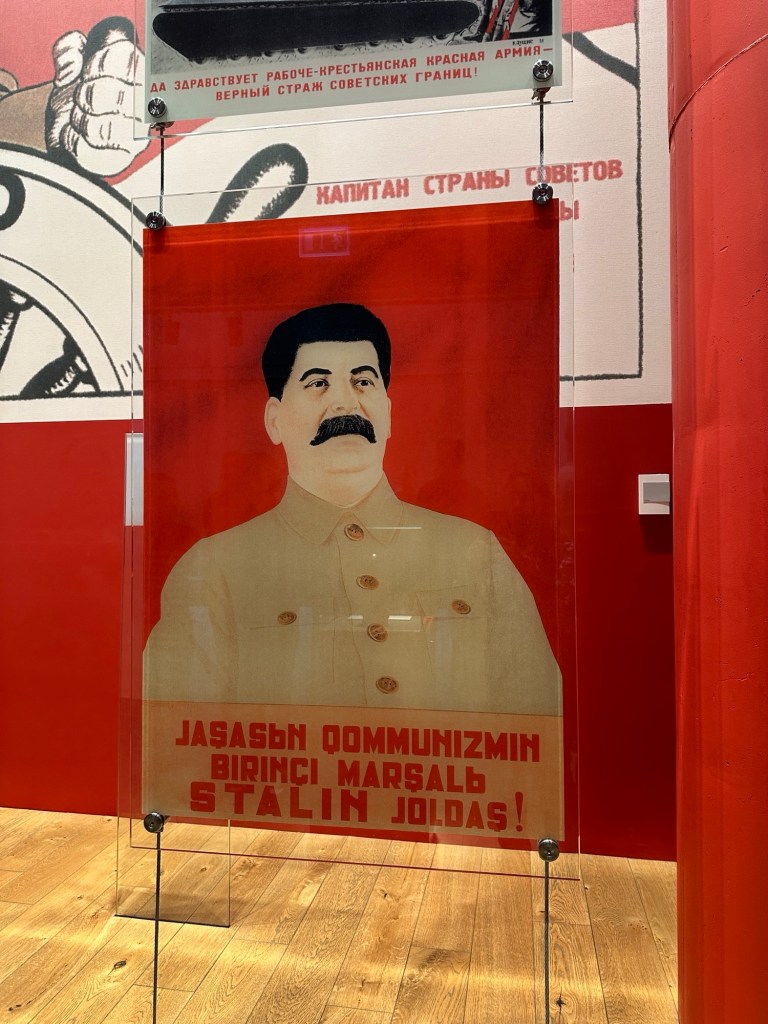
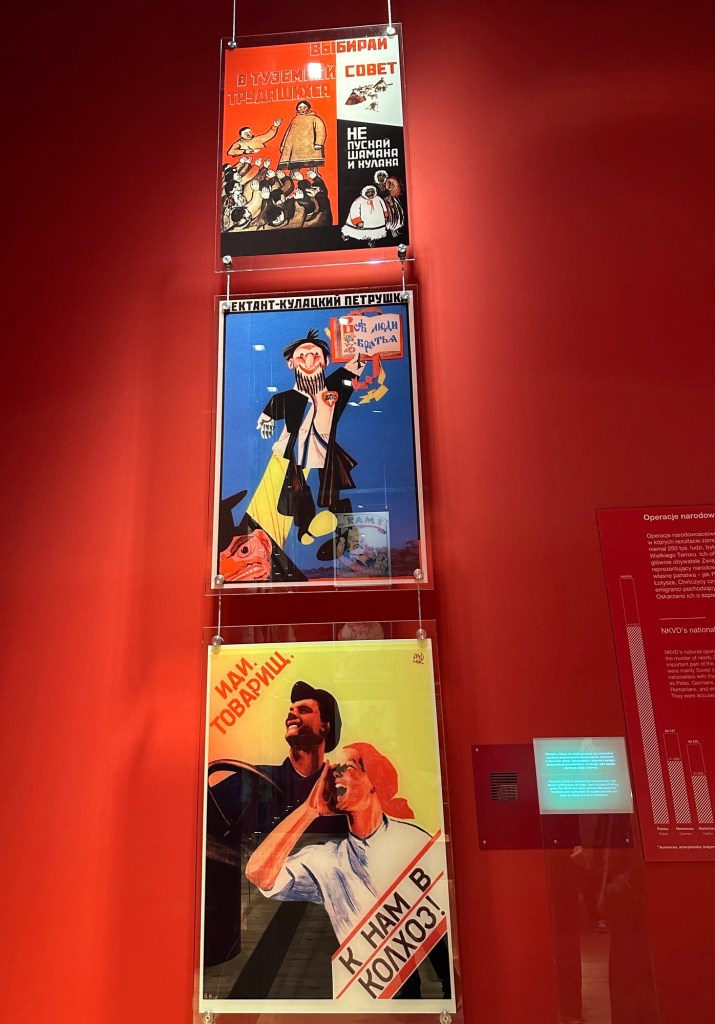
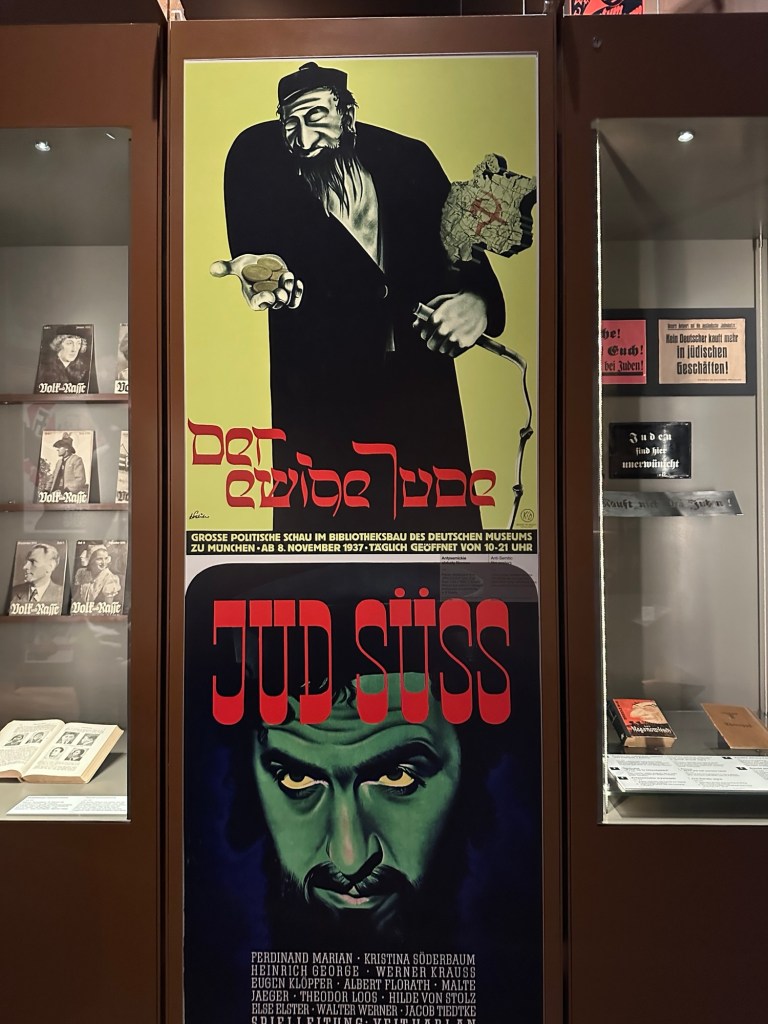
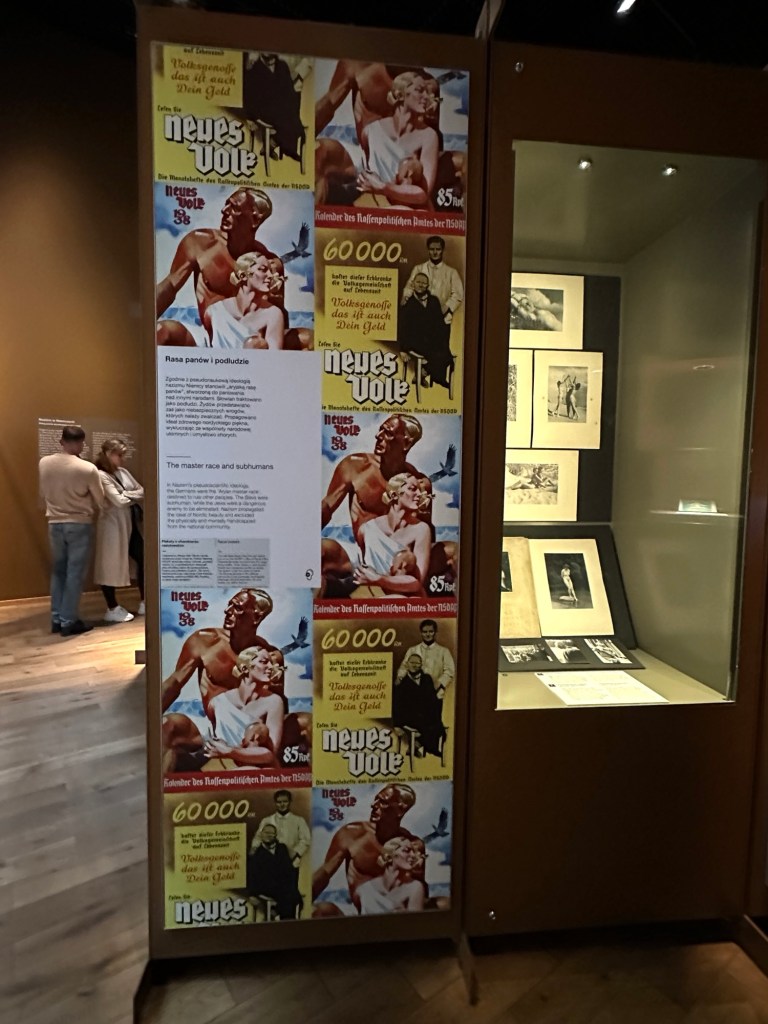
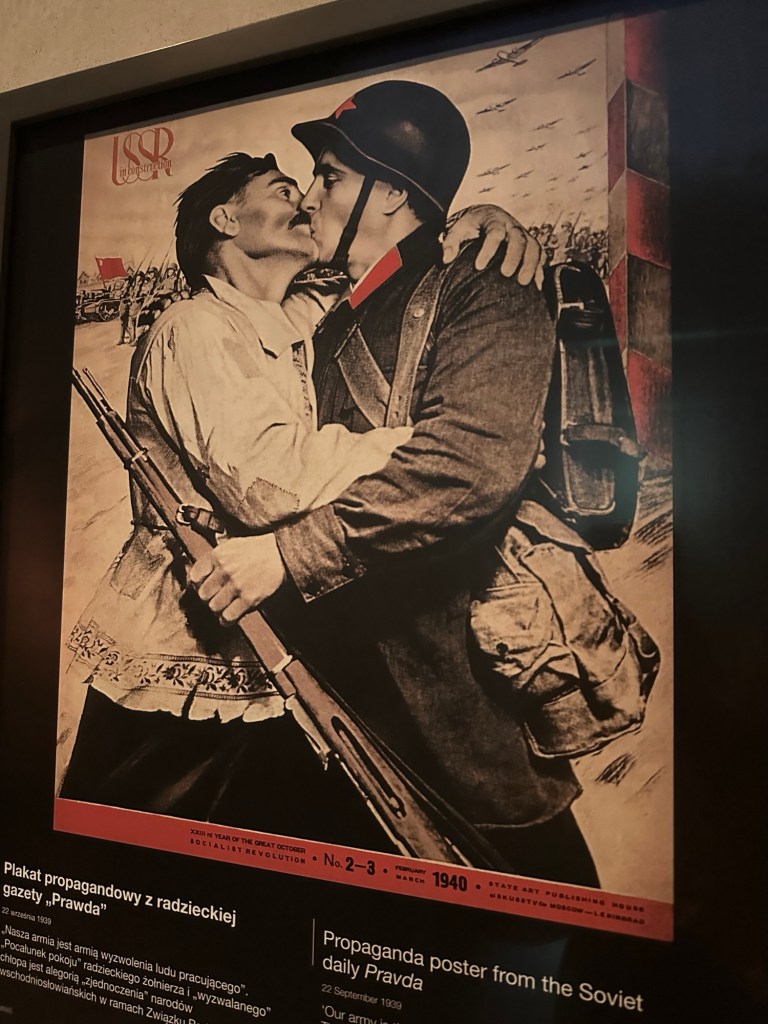
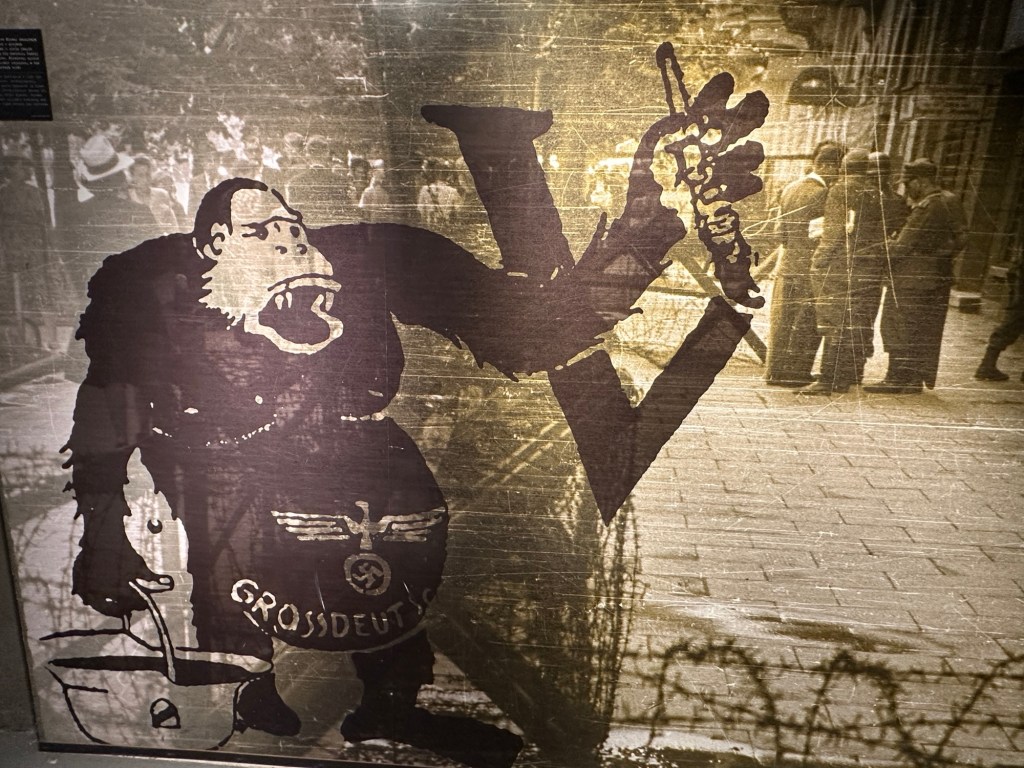
I always enjoy propaganda posters.

I learn the ways the Finnish people tried to stop the Soviet Union from invading.

Soldiers on skis

More exhibits

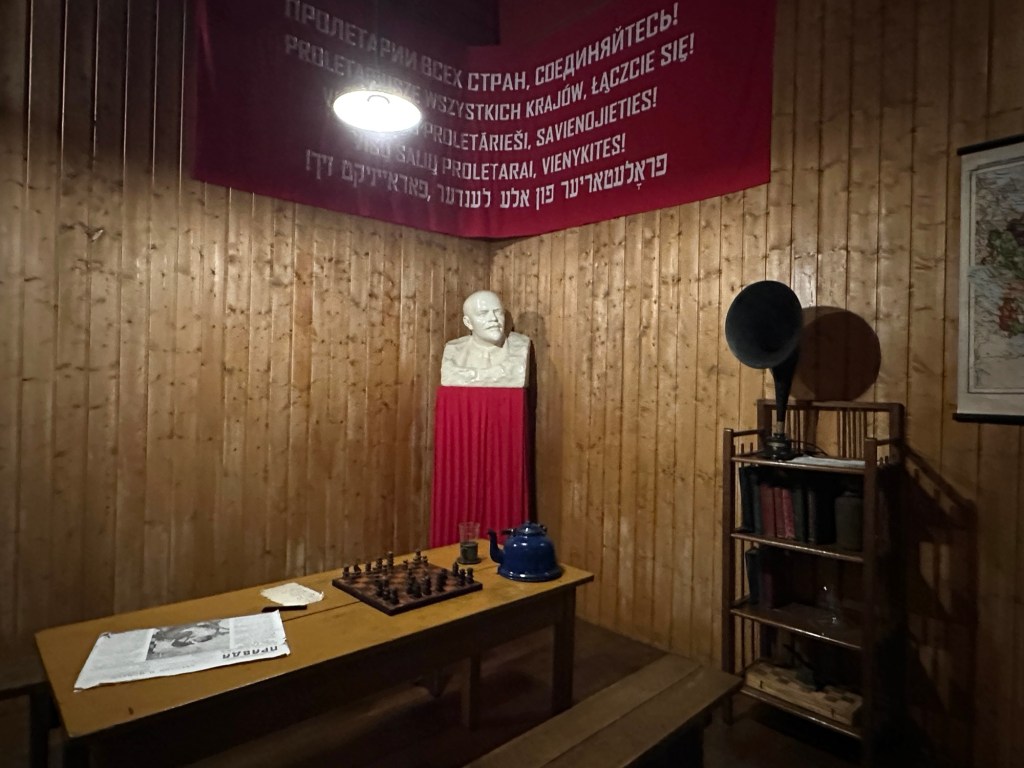
I learn how every Soviet territory has a little red corner for Soviet materials.
The museum also talks about Japan’s role in the war. There is a particularly disturbing exhibit on Japanese brothels during the war.

Gdansk is talked about as well as Poland. After WWI the treaty of Versailles took Gdansk, which was predominately German at the time and made it the Free city of Gdansk (but tied to Poland). All of this makes more sense when I learn about the efforts to defeat communism that has origins in Gdansk later on. During WWII since most in Gdansk were German speaking and Gdansk is also called Danzig in German.
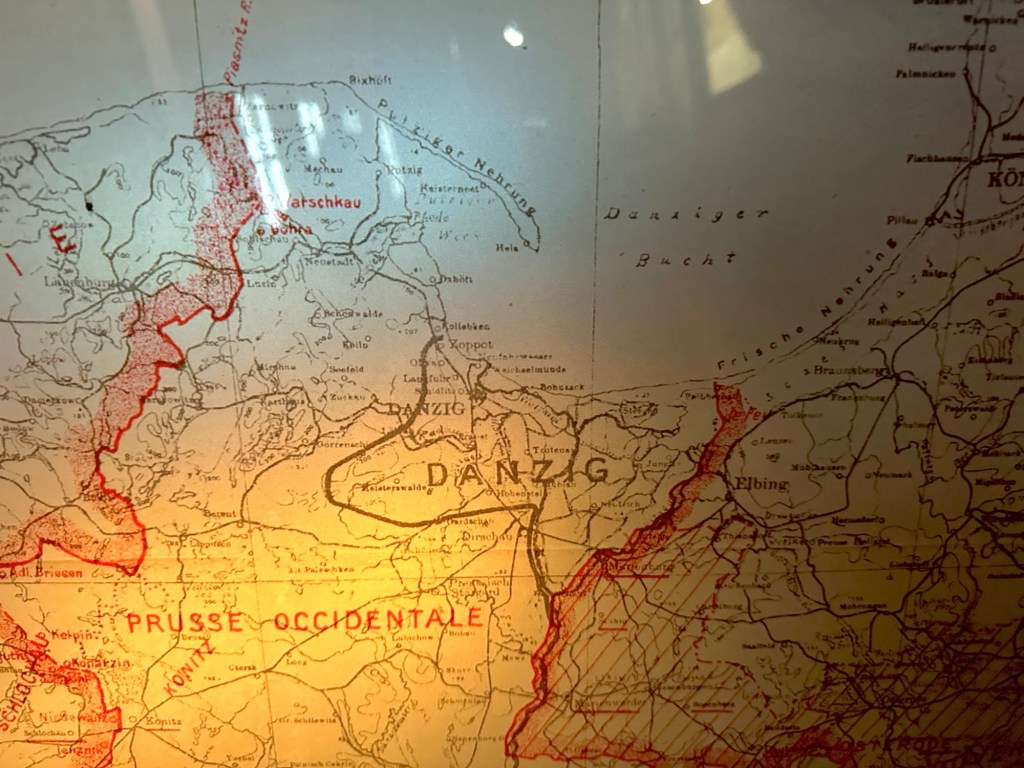
An agreement was made to partition Poland by the Soviet Union and Germany. There is an exhibit to show the divide.
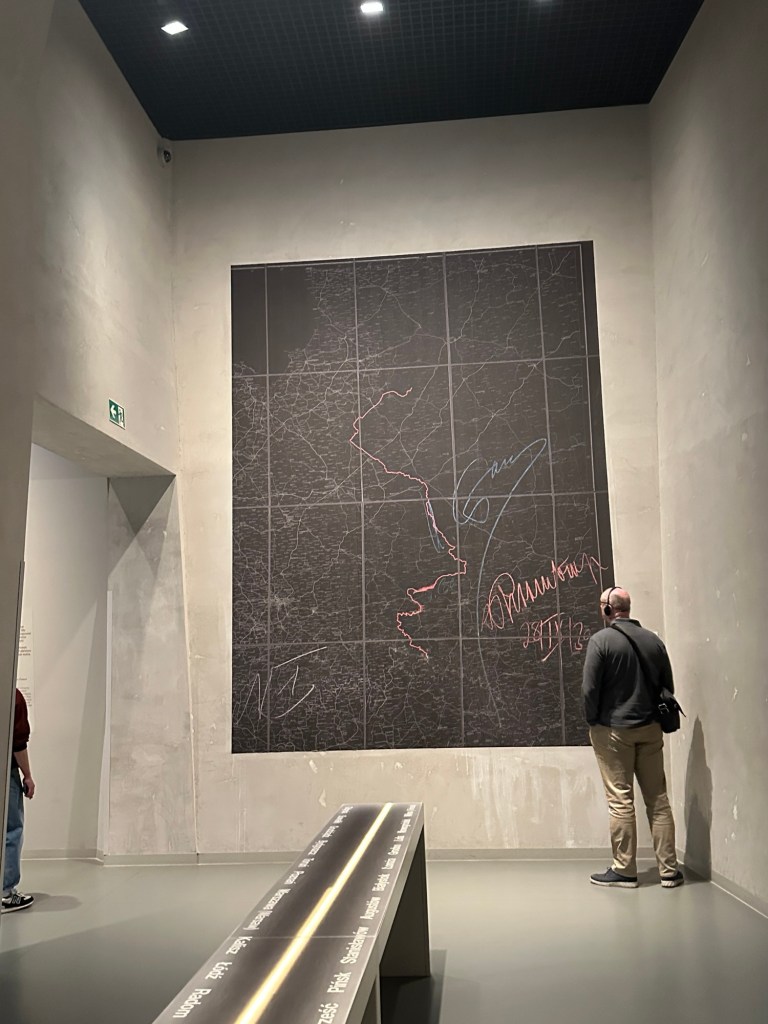
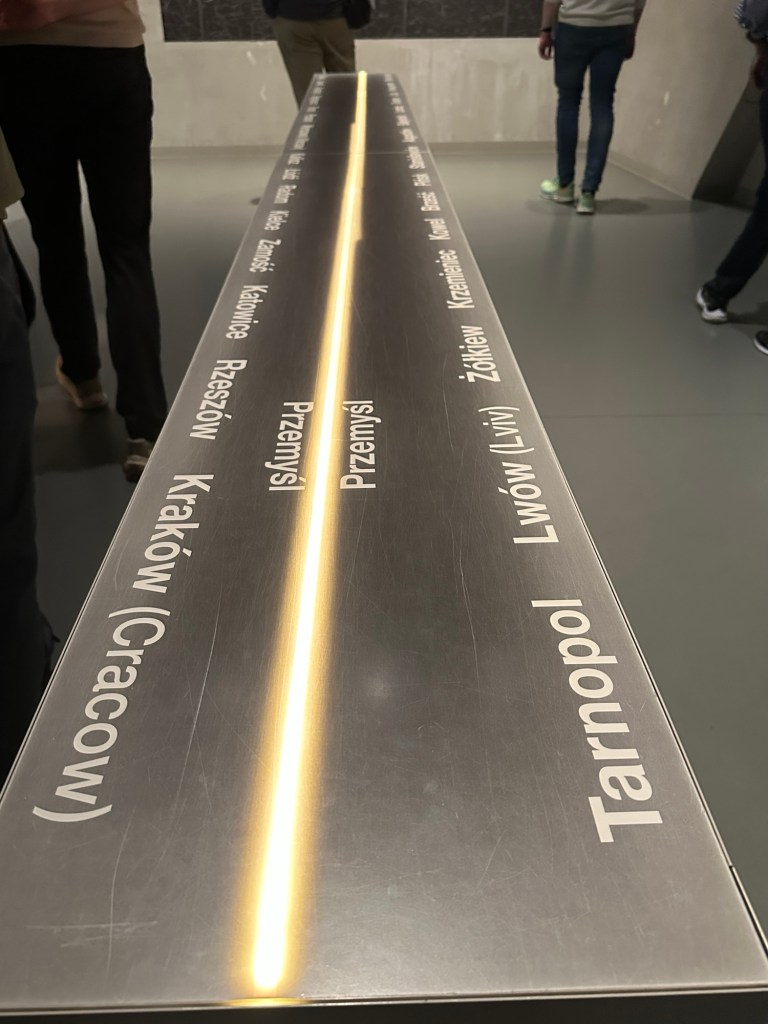
More war related exhibits

There is a whole section on terror, specifically terror by the hands of the German, Soviet, and Japanese.
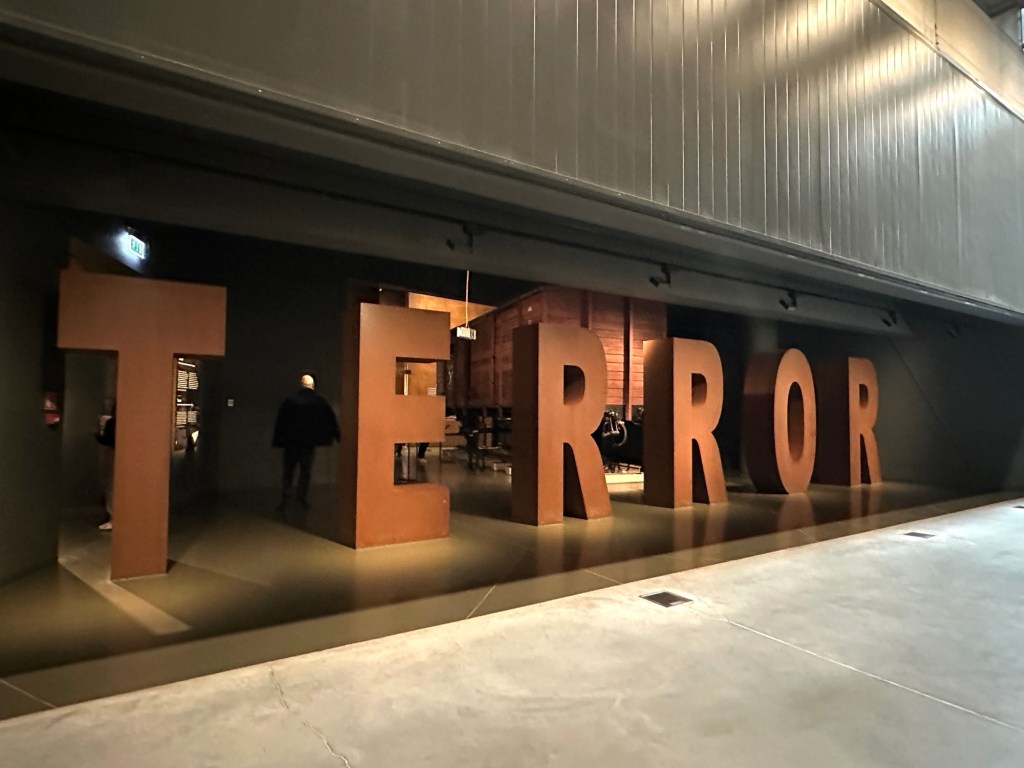
I learn about how Germans stole polish children during the war. I learn more about Croatian concentration camps. Also am introduced to the Katyn Massacre where there was a mass execution of Polish military officers by the Soviet Union.
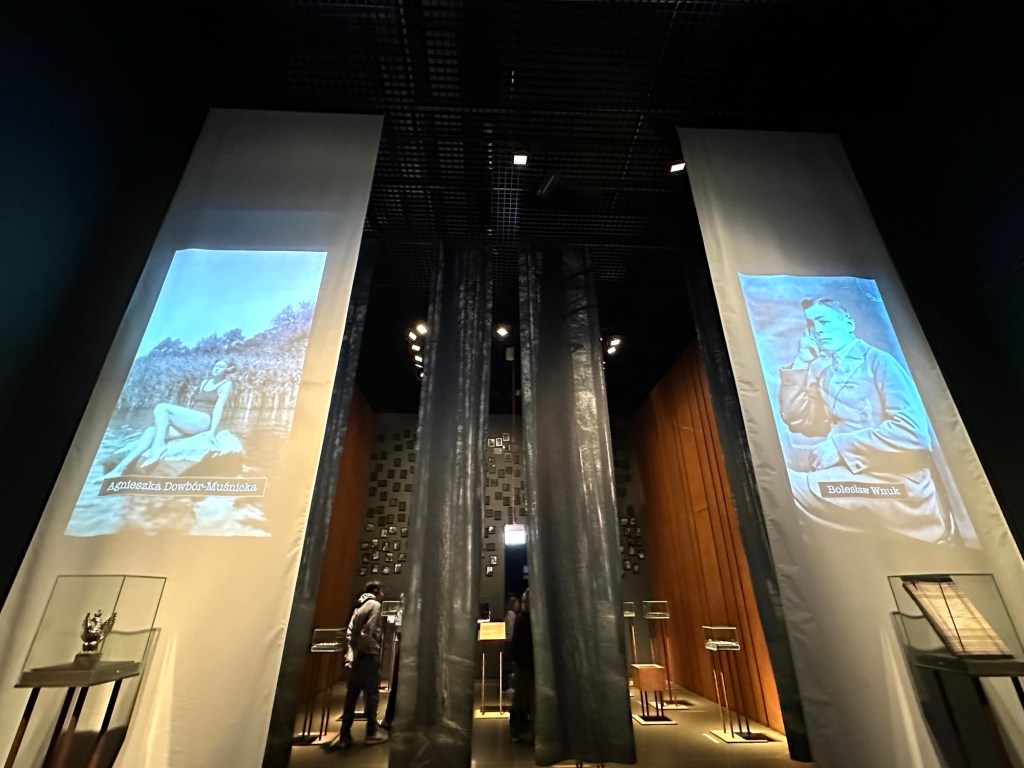
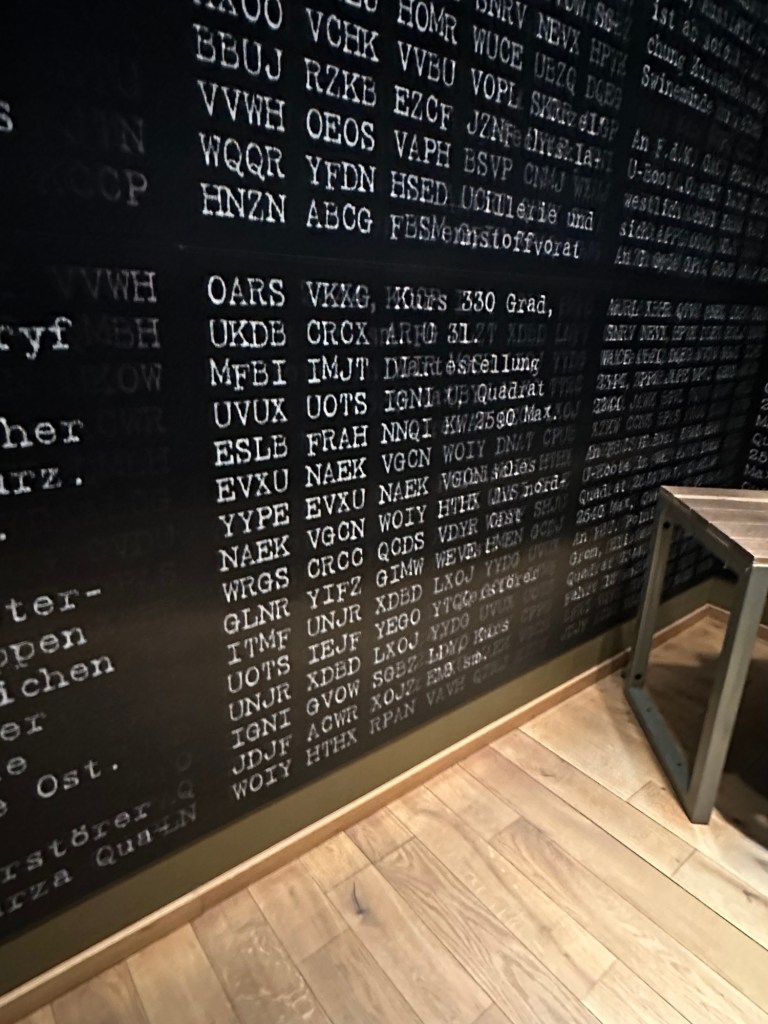
I see an example of an Enigma machine. Enigma is the machine used during WWII to break the German codes. There is a whole movie about it called “The Imitation Game”.

There are walls that show how messages can be hidden in plane sight just by looking at them differently.
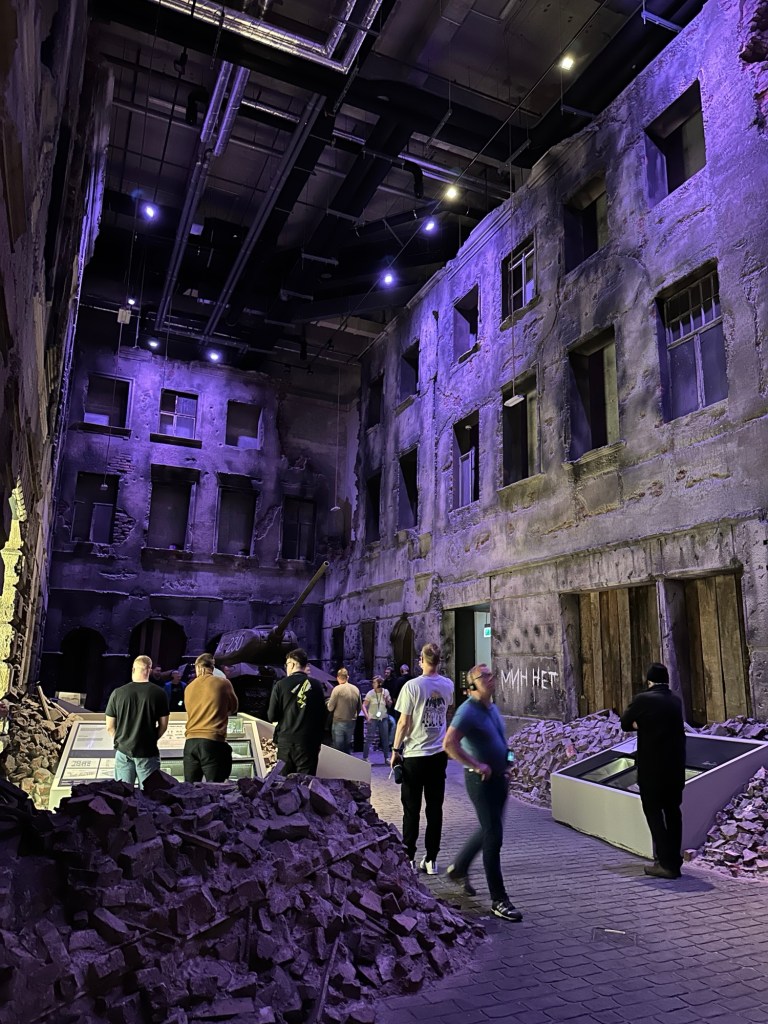
One of my favorite little exhibits was about the nazi hunters. So many people were killed during WWII but very few people were punished for those crimes (Nuremberg Trials were the ones actually caught and punished). Most guilty officials assumed a different identity and fled to other countries, many in South America. The nazi hunters were really good at tracking these war criminals down.

I thoroughly enjoyed the museum but it requires a good deal of time to fully experience the whole thing. The audio guide is a must to get you more efficiently through, otherwise you could spend an entire day here.

I am very hungry when I leave the museum. I don’t have a ton of time but I should have enough for a lunch. I mistakenly think I could eat at a pierogi place. I wait for thirty minutes to get a table for them to tell me it’s at least an hour wait for any ordered pierogi. I don’t have enough time before my tour starts so I walk out to find another place to get lunch. I am getting hangry and I cannot find any quick service restaurants in the area. Time is running out.

I finally find a place to get a quick pastry and then briskly walk to meet my tour guide for the city tour. I didn’t eat a full lunch but at least I won’t be hangry. No one wants to meet hangry me. I usually carry snacks but today I did not; I will not make this mistake again.

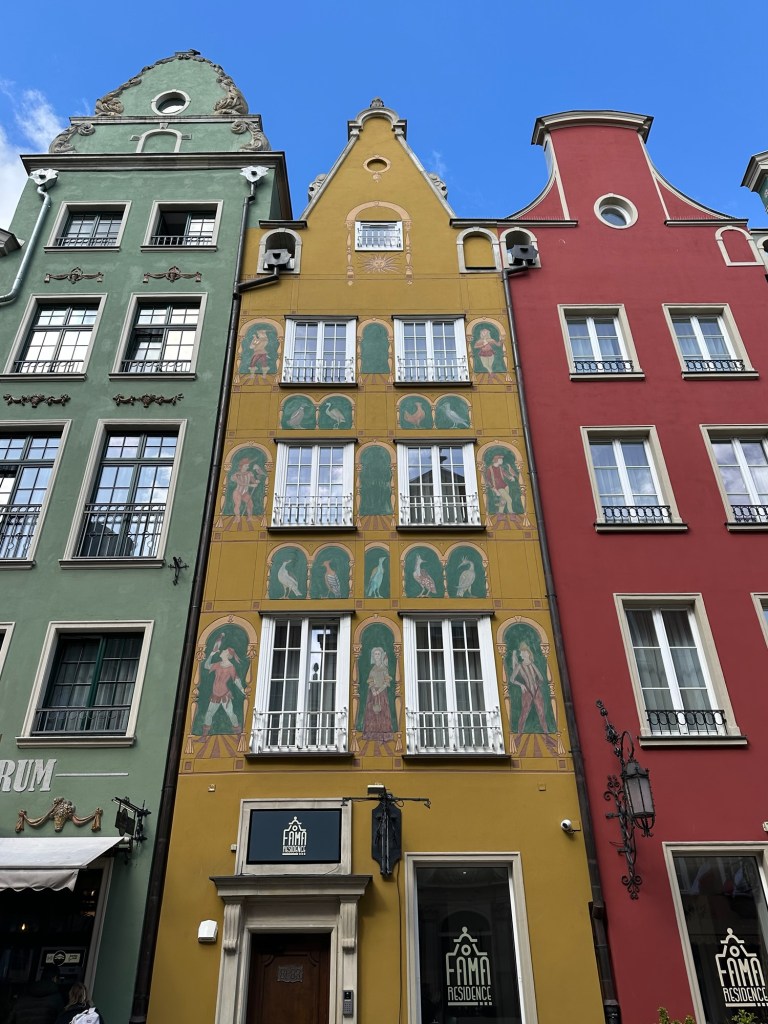
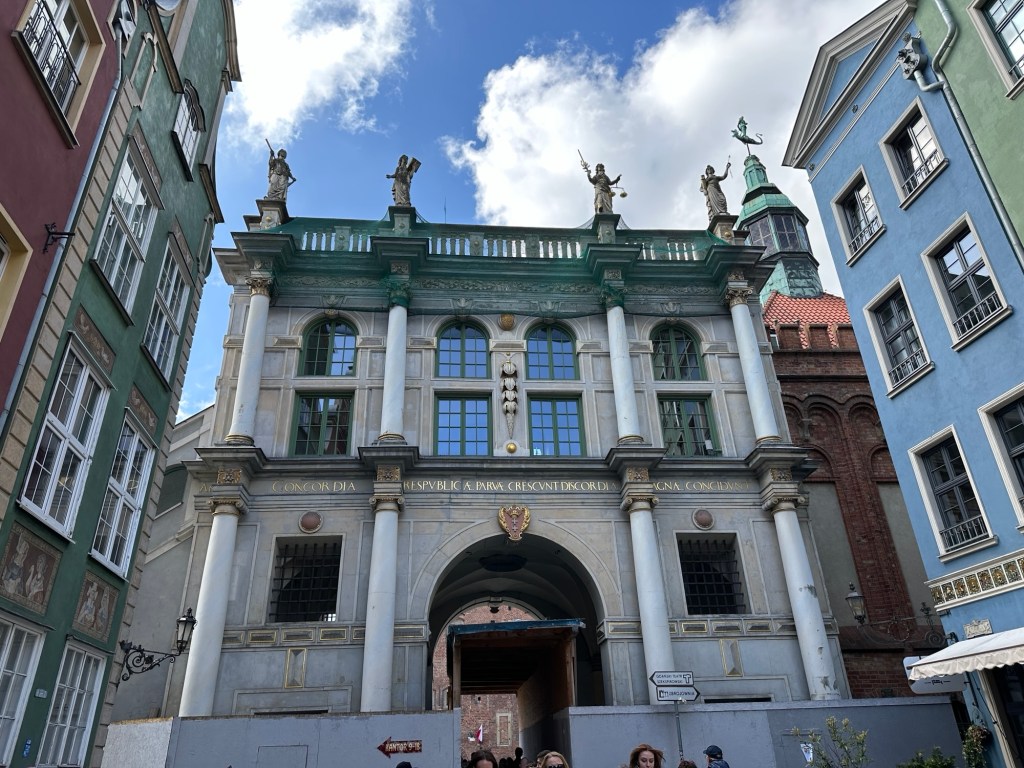
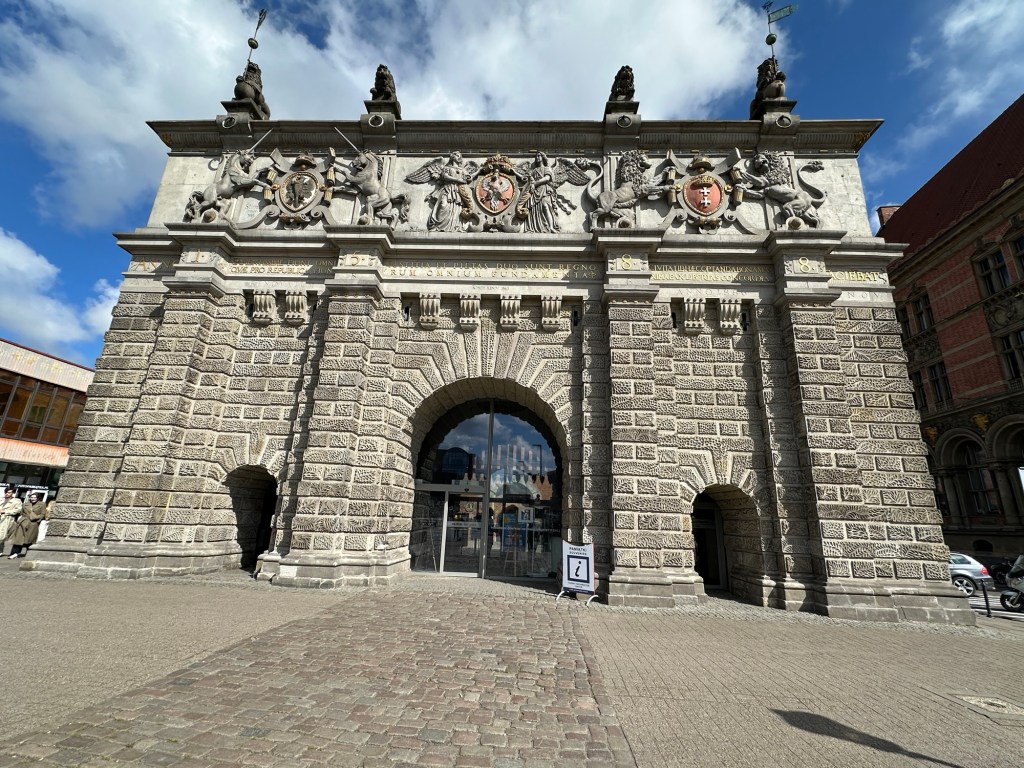
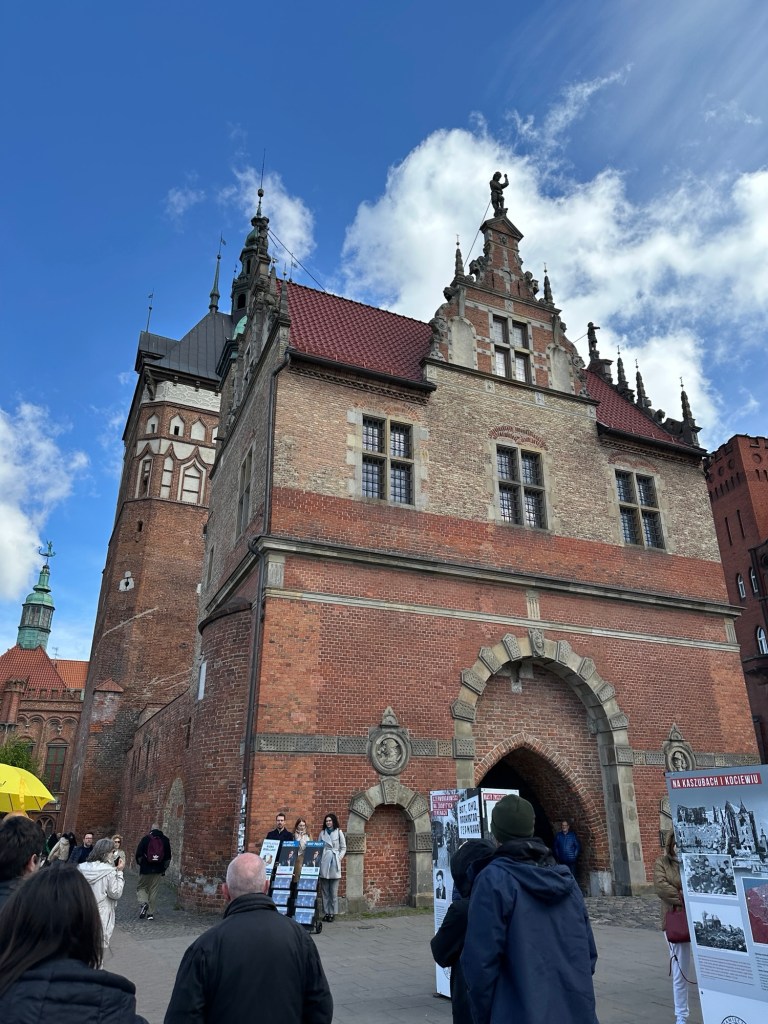
The tour is mostly of main town Gdańsk which actually looks more like old town Gdańsk and old town Gdańsk looks more like modern Gdańsk. Long story short Gdańsk was also bombed pretty bad in World War II. They didn’t completely rebuild it in its original form like they did in Warsaw but instead they built modern interior buildings. In the main town they built facades that make it look like the original Gdańsk. However in old town they have more modern facade with the architecture more modern day or communist style.
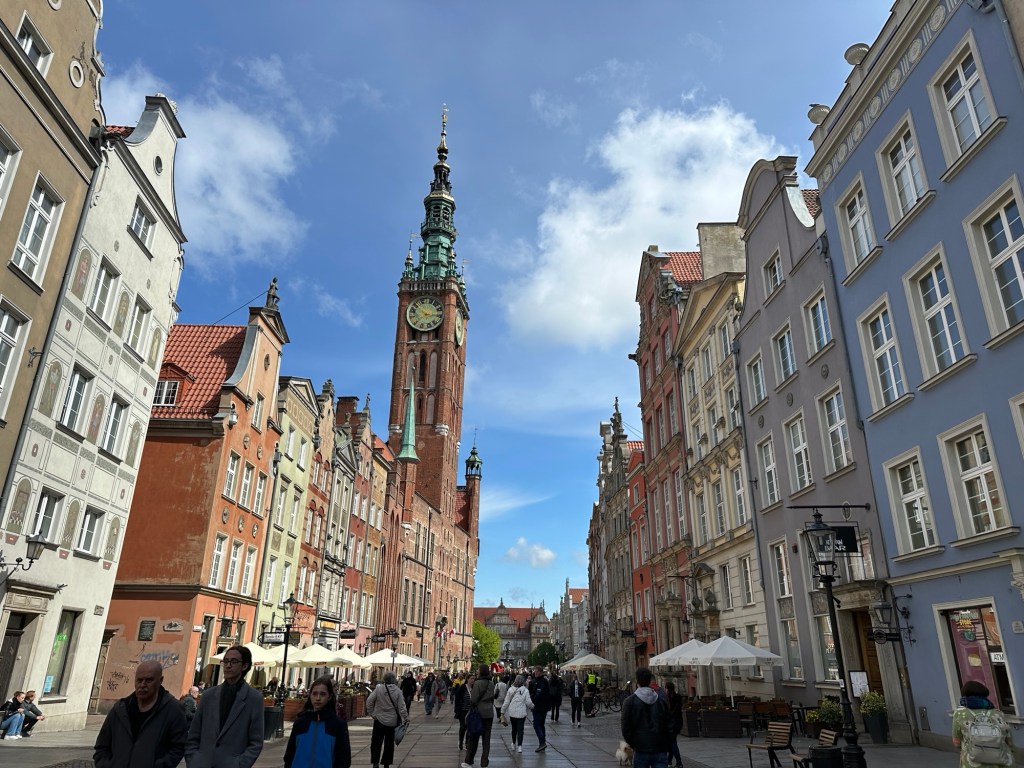
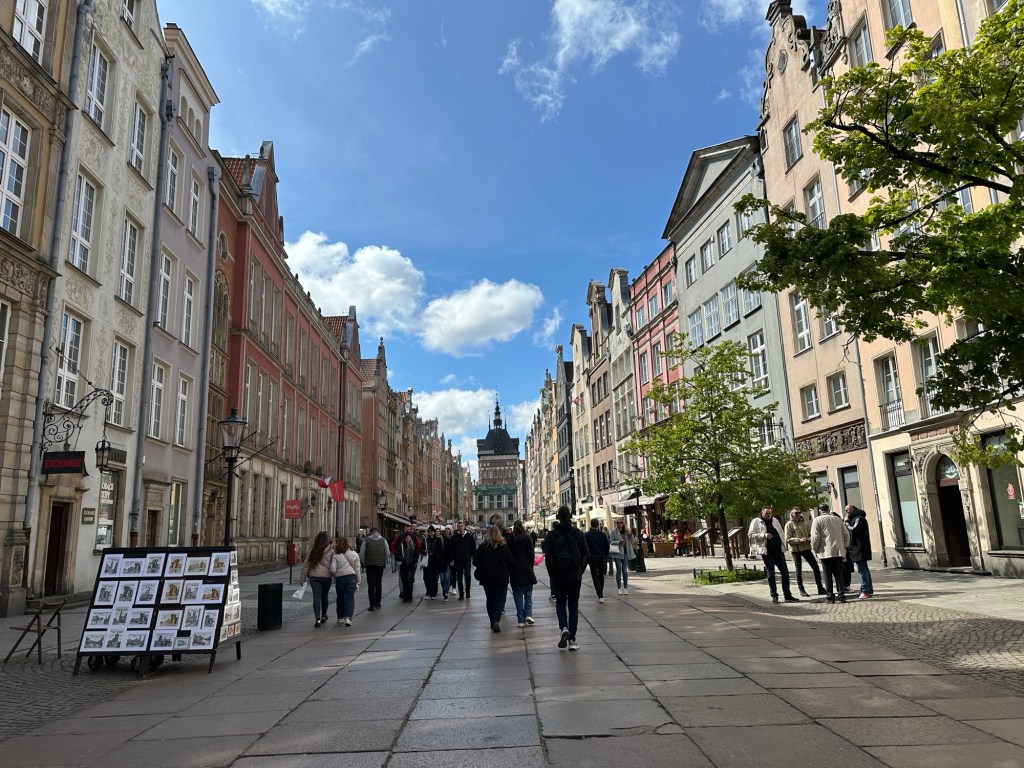
I learn again from the tour guide how Gdańsk has a very different history from the rest of Poland. They were German speakers in 14th-16th century but loyal to Poland. 
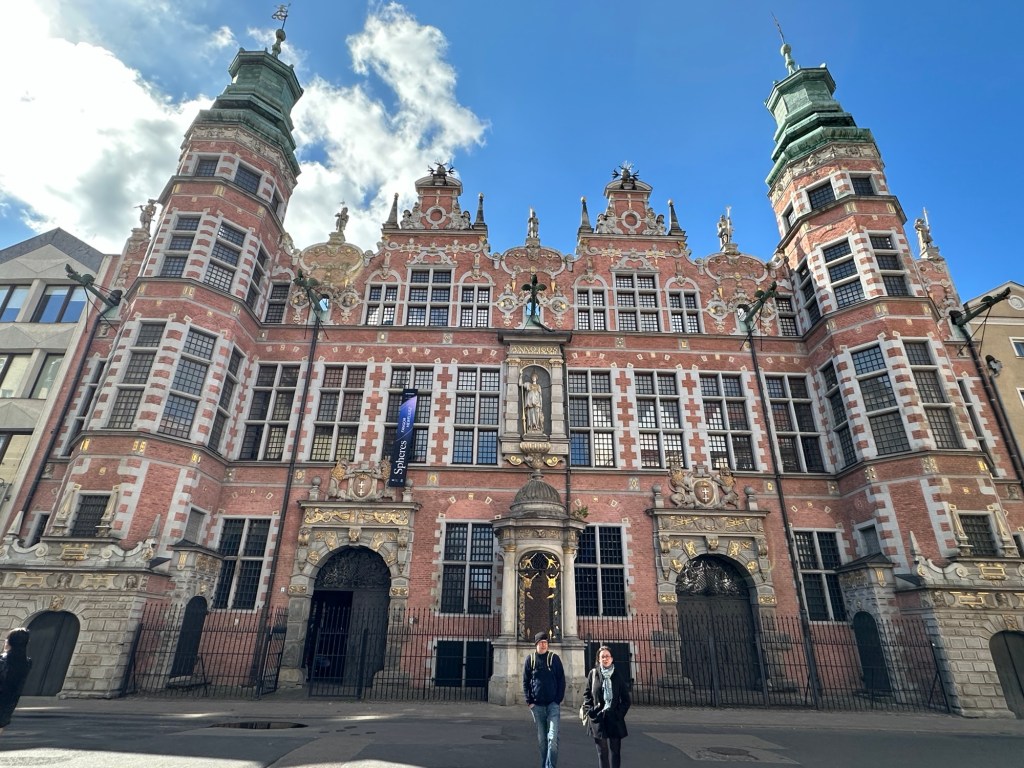
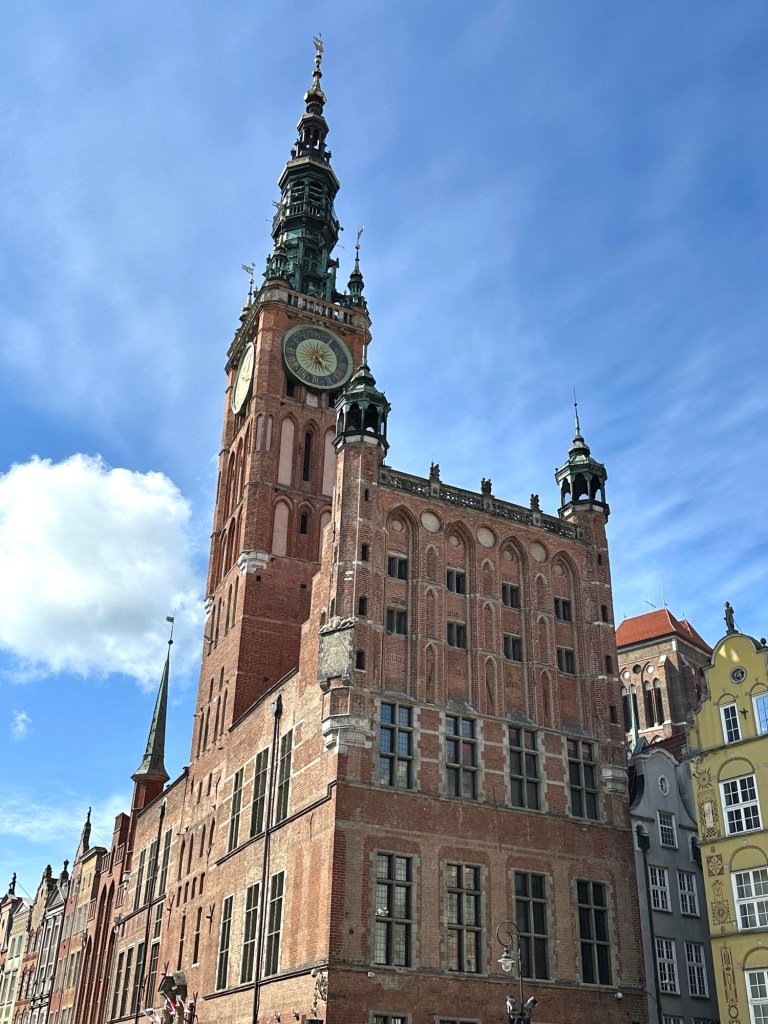
Museum of Gdańsk – Main Town Hall

The tour guide asks if there are any Americans in the group and I seem to be the only one (there is one other American that lives in Ireland but she doesn’t speak up). Apparently the guy who invited the Fahrenheit thermometer is from here (Gabriel Fahrenheit). There is a monument to him. Although not sure how much we can praise him since only a couple countries use his scale, mine one of the few. Fahrenheit makes things so confusing with the large amount of international travel I tend to do since I am forced to do math to communicate to people about the weather.

Fahrenheit monument


At one point the Poland was part of largest country in Europe, the Polish-Lithuanian Commonweath. Gdańsk was a large player in this and became wealthy. Merchants were middlemen in Gdańsk. The island was purposed to hold Polish grain and secured day and night. The 16th-17th century was the golden age in Gdańsk. It all came to an end when a Swedish king began to rule Poland.
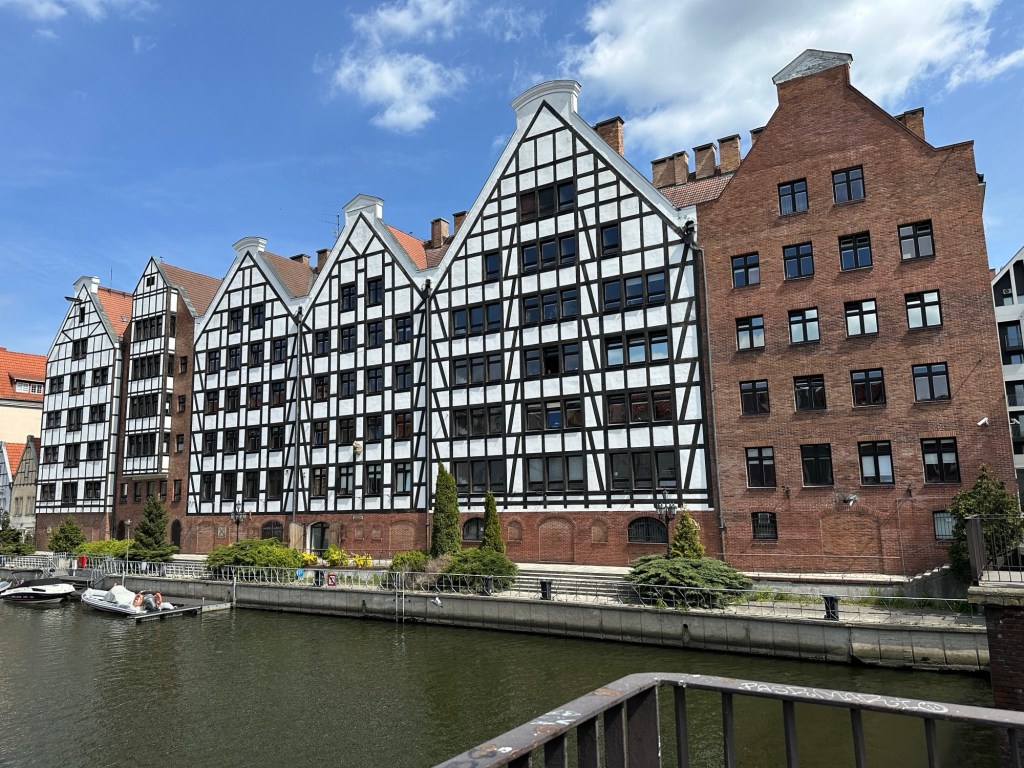
Example of a Granary

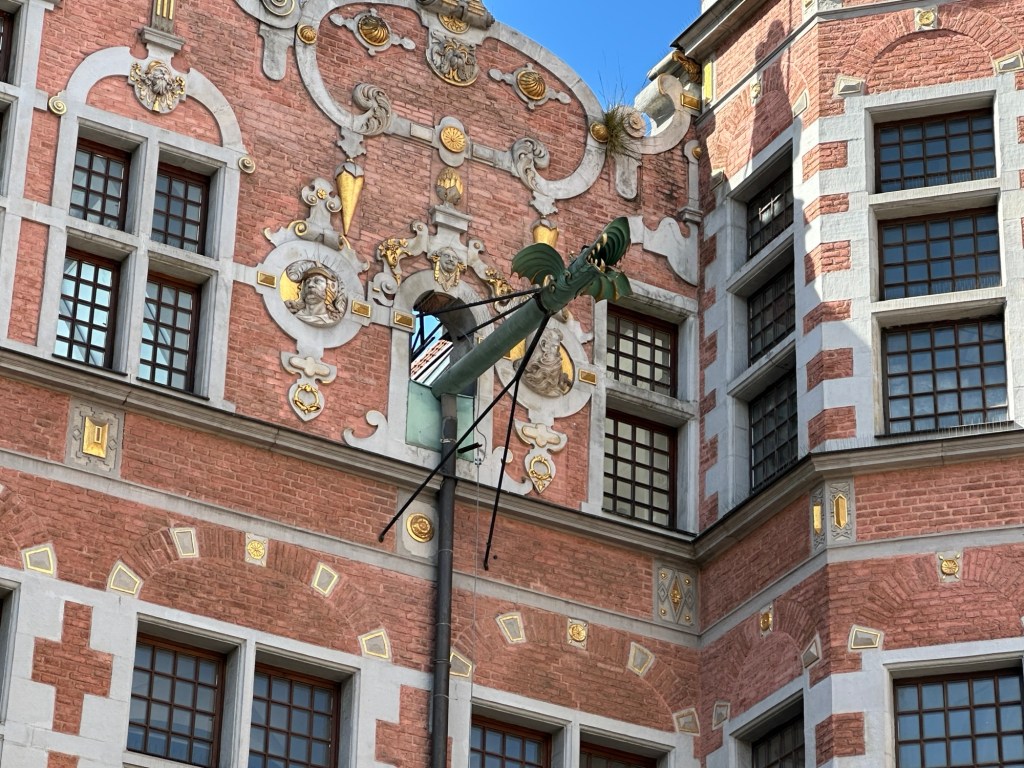
We stop at the beautiful Mariacka street and see the fun drain pipes. This is the place to buy amber since there are amber sellers up and down the street.
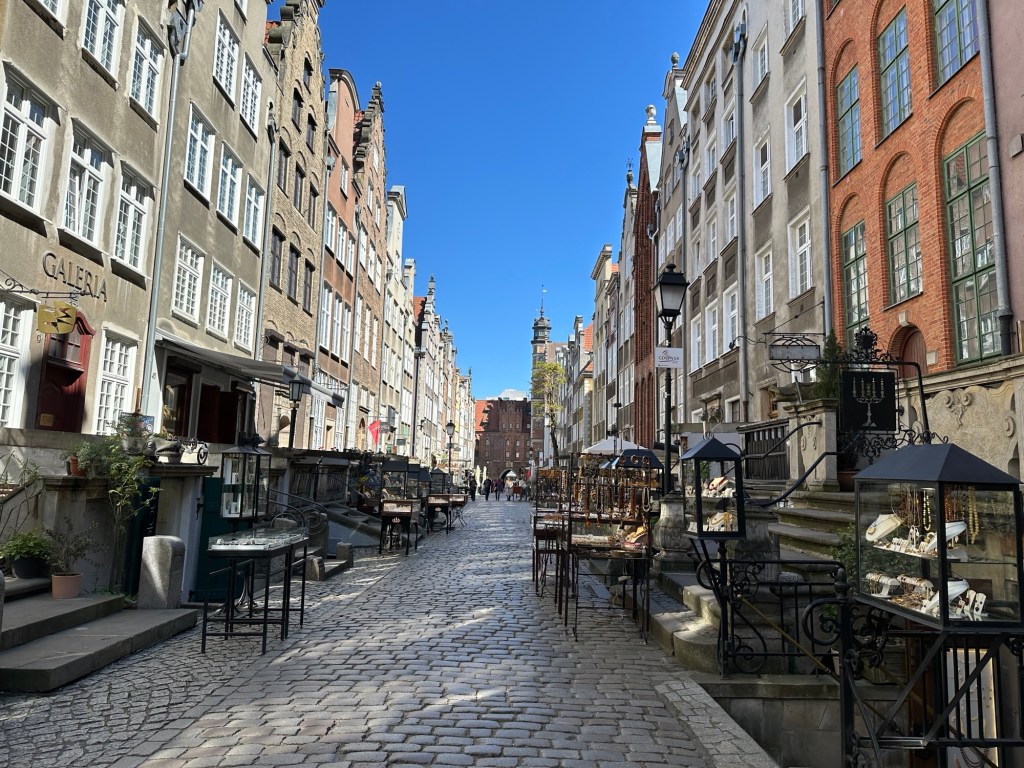
Ulica Mariacka

House under turtle. Look above the house and see a turtle.

By the 18th century Poland no longer exists. It is partitioned and is no longer prosperous again until the 19th century.

We end up in old town (which is new town) at the post office that was home to a spectacular attempt of postal workers attempting to stop a fascist invasion, one of the first spots World War II broke out.

After my tour I am determined to eat at one of the restaurants that turned me away the night before. It wasn’t worth the anticipation. Even though pasta carbonara is one of my favorite dishes, this one is too salty for me to enjoy.

I have a nice evening walk around town and tomorrow I am taking the train out to Malbork Castle.

Warsaw: Warsaw Uprising Museum and City Tour

Poland at the start of WWII

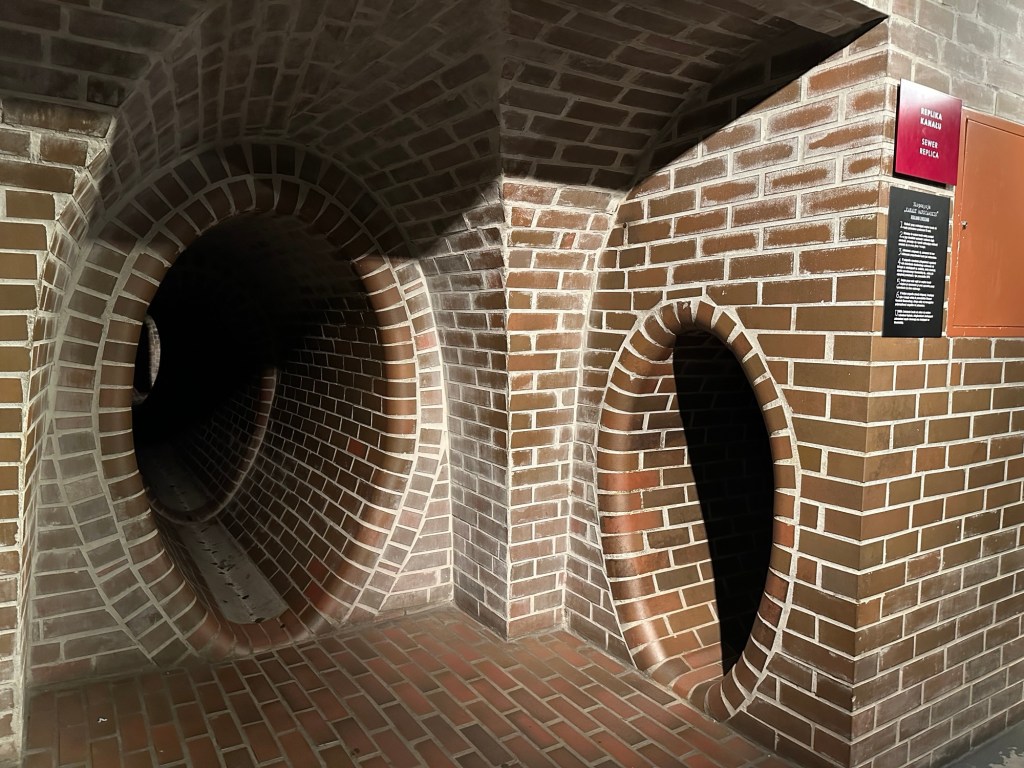
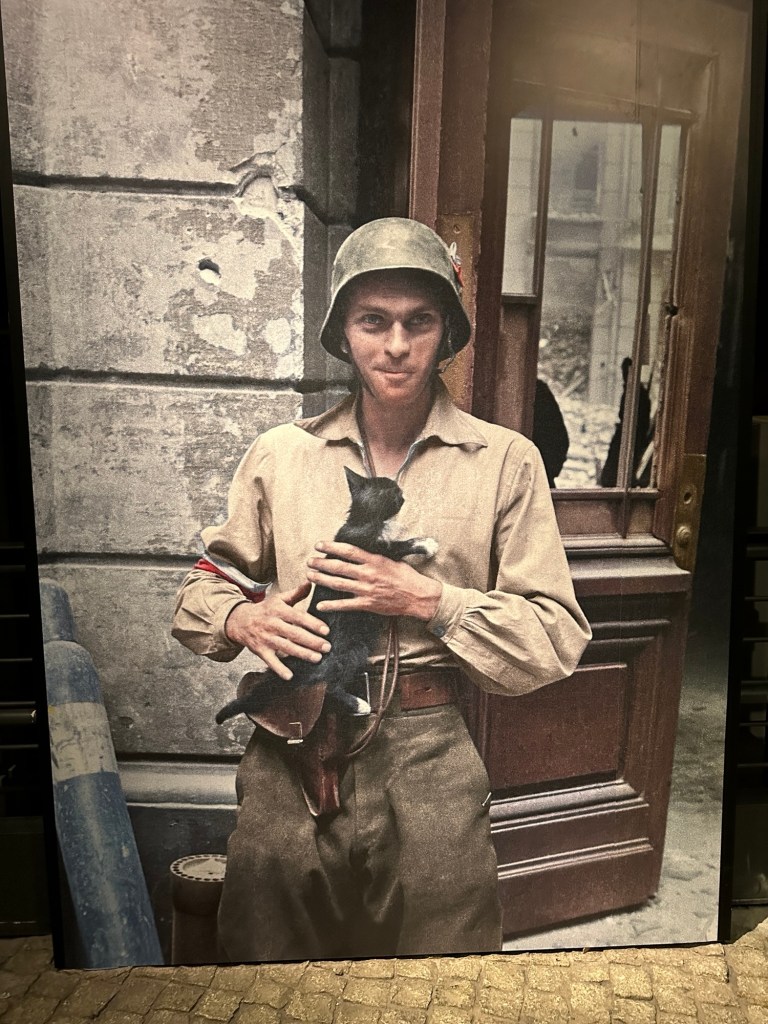
This morning I visit the Warsaw Uprising Museum. The uprising museum is about the uprising of the people of Poland against the Germans at the end of WWII. The beginning of the exhibit talks about the start of WWII and German occupation but the museum is mostly about how the Polish resistance organized and fought the Germans.

We learn in history that Germany invades Poland at the start of WWII. When they invade Warsaw the Polish do a pretty good job initially at holding them off. However the excessive bombing of residential areas by Germans lead the Polish to capitulate to the Germans pretty quickly to lessen the amount of death to civilians. I am not sure they had any idea how bad it could get after that.

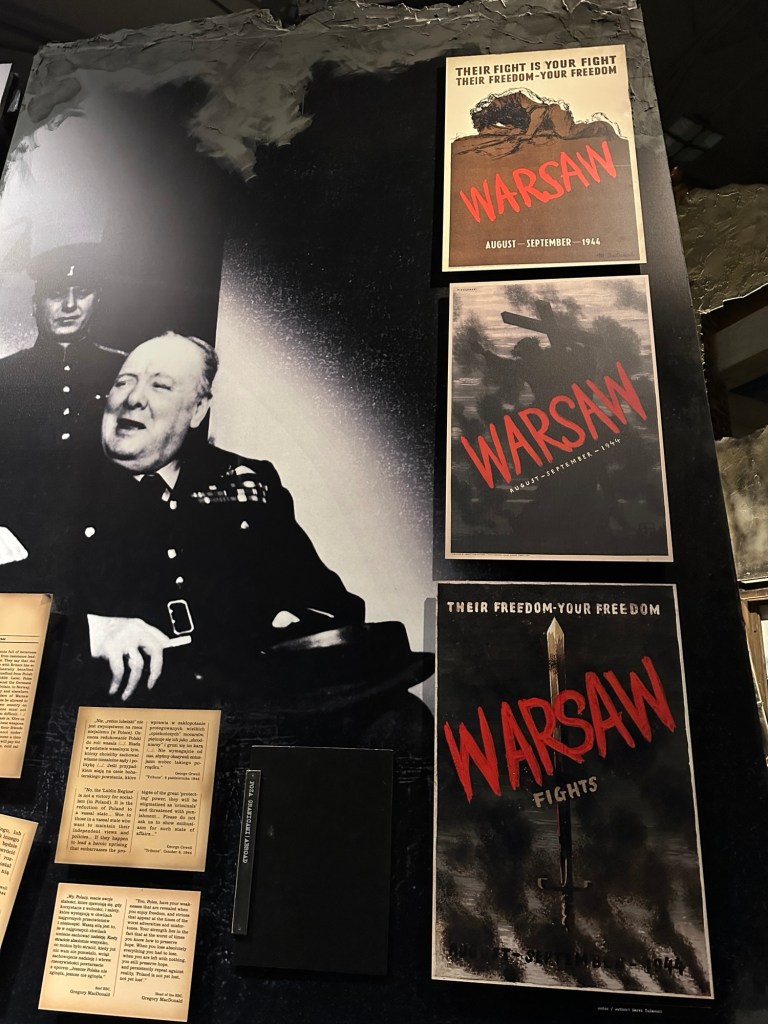
I learn how the uprising comes to form and how they get in bed with the enemy, the red army (Soviet Union), in order to fight off the Germans. The red army had promised to help them remove the nazis from Warsaw but instead they leave them hanging until the last minute and then finally join the fight.

The people of Warsaw believed the red army was going to help them and continue on through to fight the Germans. But instead of letting Poland have its independence they disarm the polish underground soldiers, installed a puppet government and started communist rule of Poland for 40 years. They replaced one form of occupation with another.

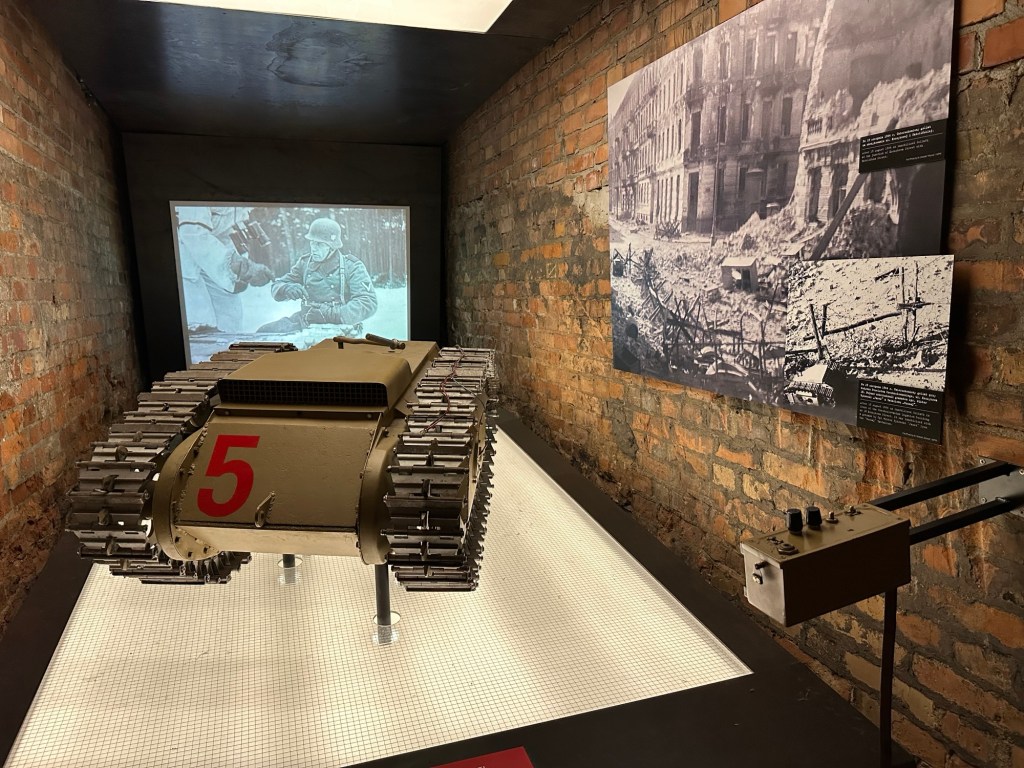
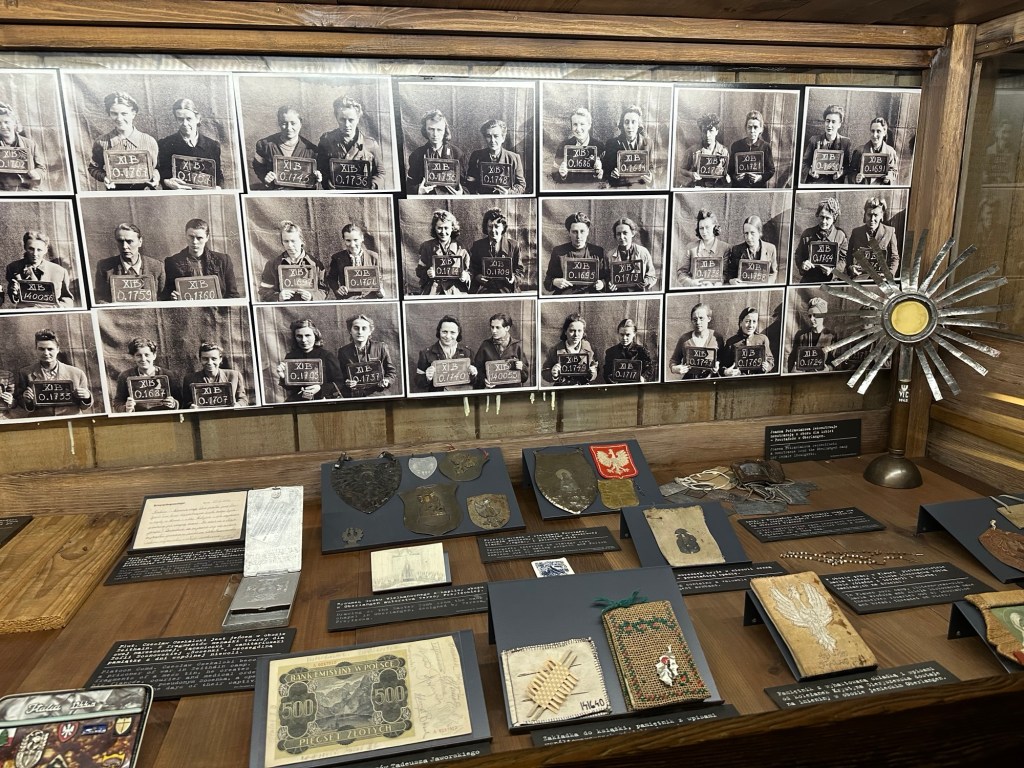
In the museum there are historical artifacts with explanations, documented footage of the time, and a powerful 3D movie to show an aerial view of how Warsaw was bombed to hell during this war. What wasn’t destroyed at the beginning of WW2 was completely decimated during the end of WW2. It is said that before WW2 Warsaw had 1.3 million people but after the last uprising they were left with less than 300,000. Many were moved, killed, or sent to camps during the occupation. There was some information on the Warsaw Ghetto and how Germany made propaganda videos to show back home about how great life was in the ghetto so every day Germans would have no idea how bad like was for the Jewish people in Poland.

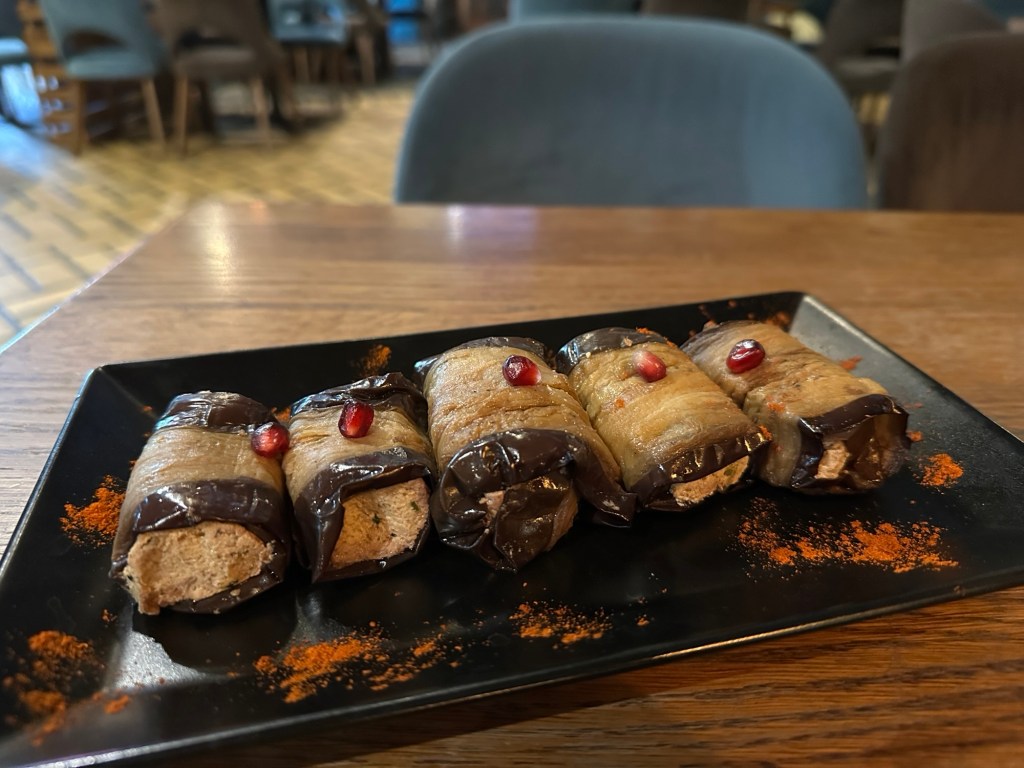
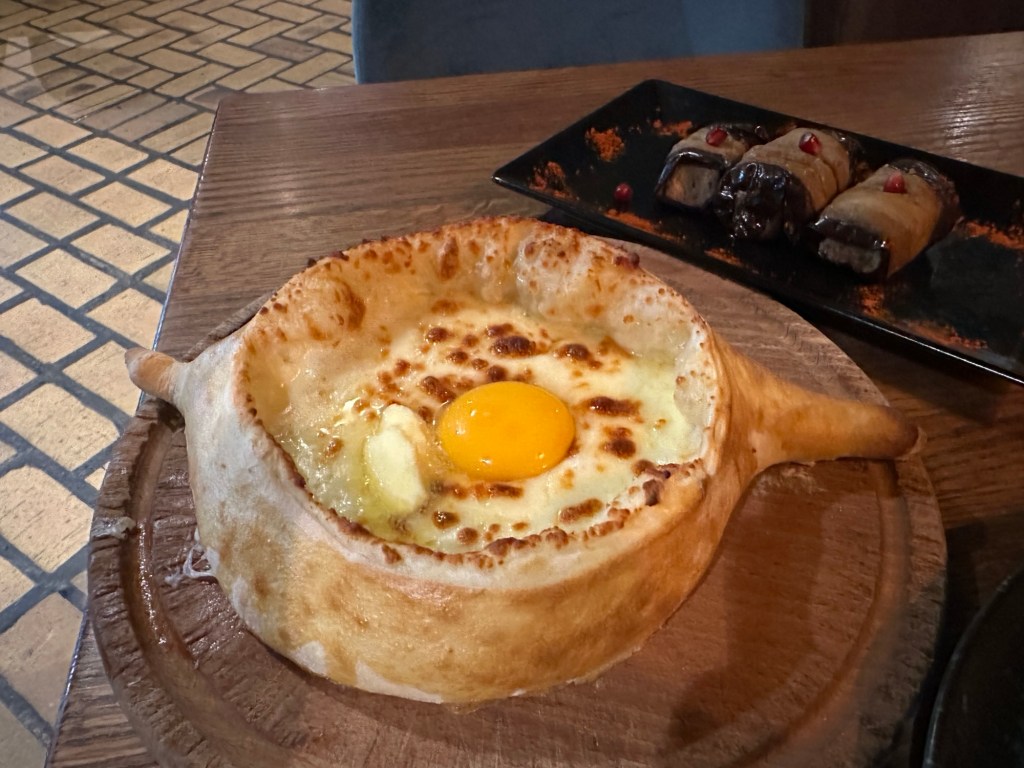
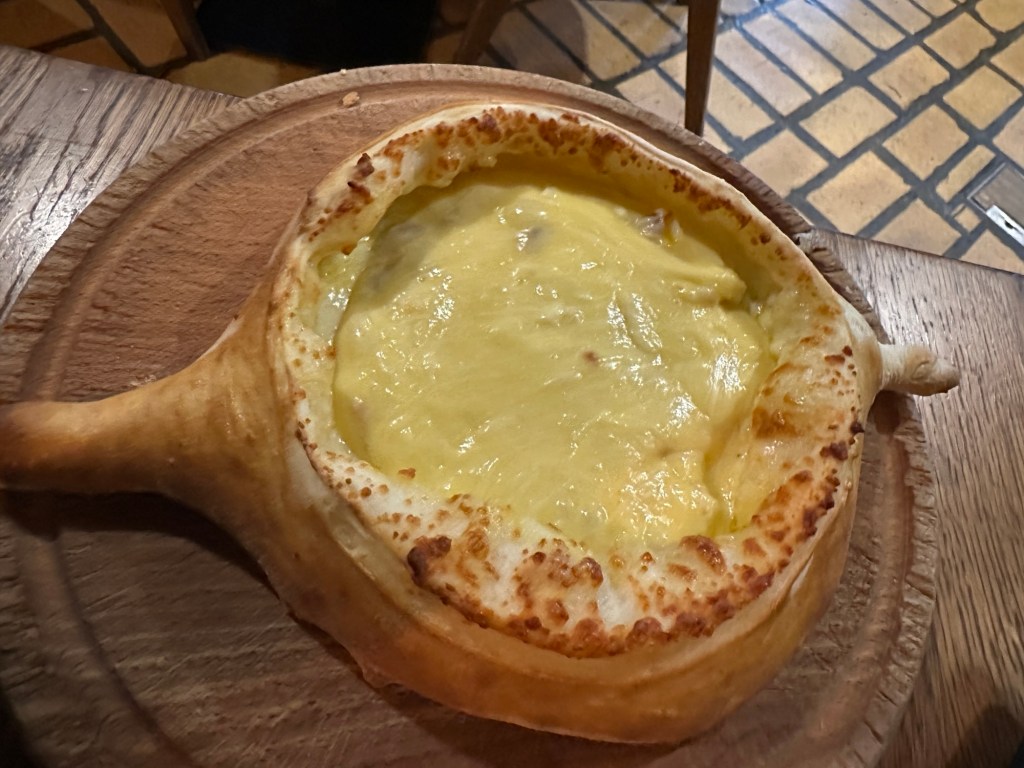
After the museum I want to grab a quick lunch before the old town tour I have scheduled this afternoon. While on the bus to Old town I pass a Georgian restaurant I’ve been thinking about trying. I hop off at the next stop and get a delicious Georgian meal. There are so many good things to order but I am only one person and this is already too much food. I order an appetizer of cold eggplant rolled over some sort of nut stuffing (I think cashews) and khachapuri with egg. Khachapuri is what we call in US a cheese boat. It is boat shaped bread filled with delicious cheese. There can be different toppings like a pizza but I order the traditional way with a raw egg on top. The egg is mixed in table-side where the egg “cooks” with the hot melty cheese. I think the egg gives it a more rich flavor, plus it adds protein (gotta get in my protein even if I am eating garbage). I am sure the cheese is going to mess up my stomach for the afternoon but I don’t care. (Luckily it doesn’t). It’s good I am walking for most of the afternoon because I am eating a days worth of calories here, or more.
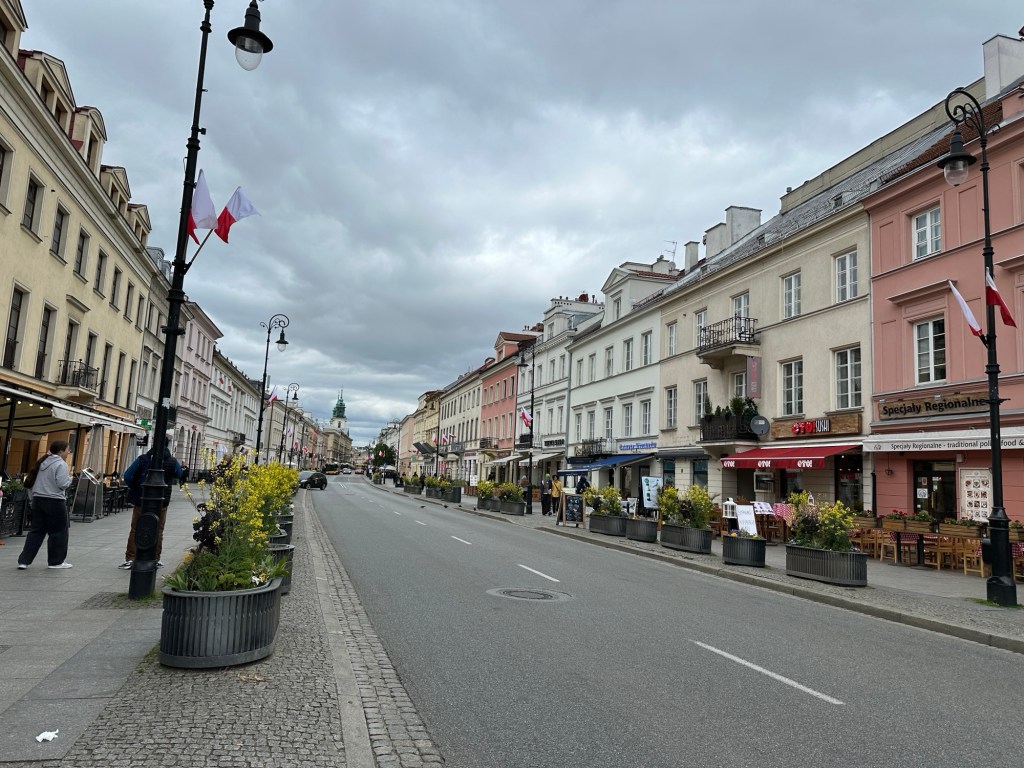
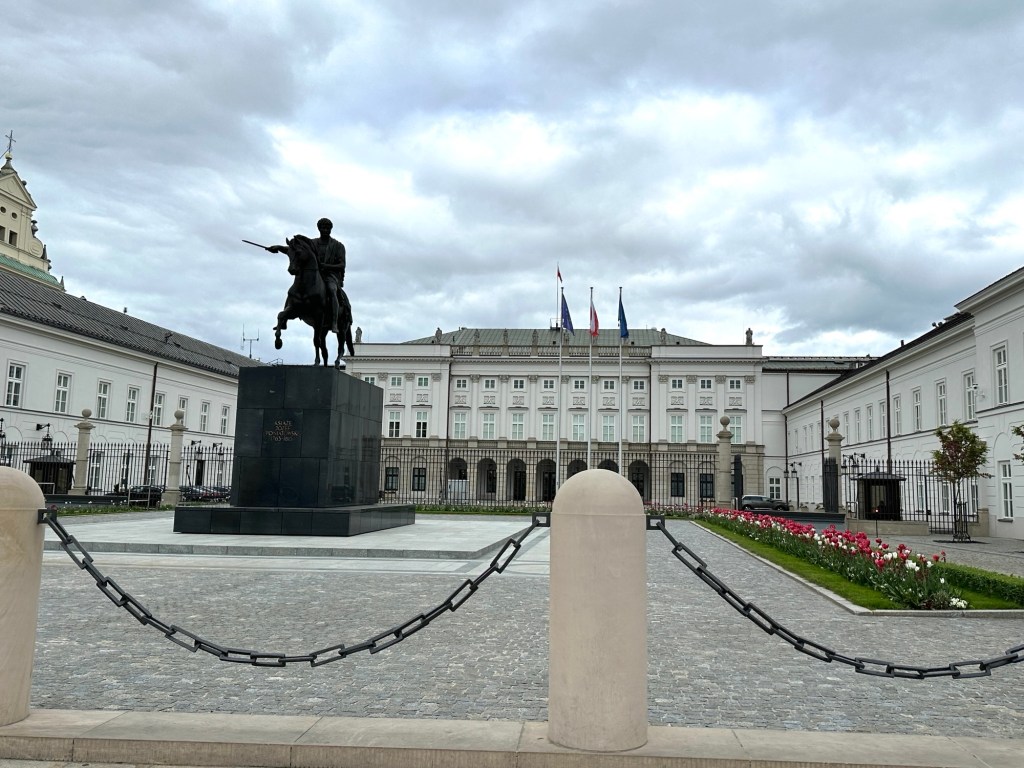
I arrive to the royal route early and explore. The royal route is the long road lined with restaurants and stores that leads down to the presidential palace and old town.

The Royal Route

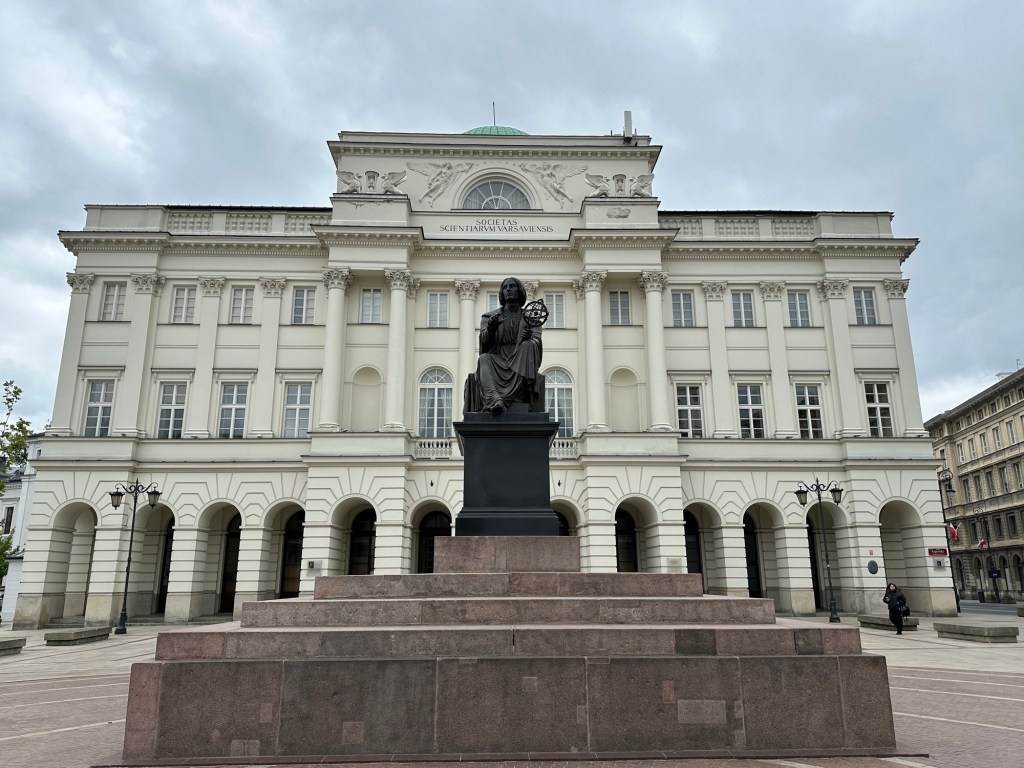
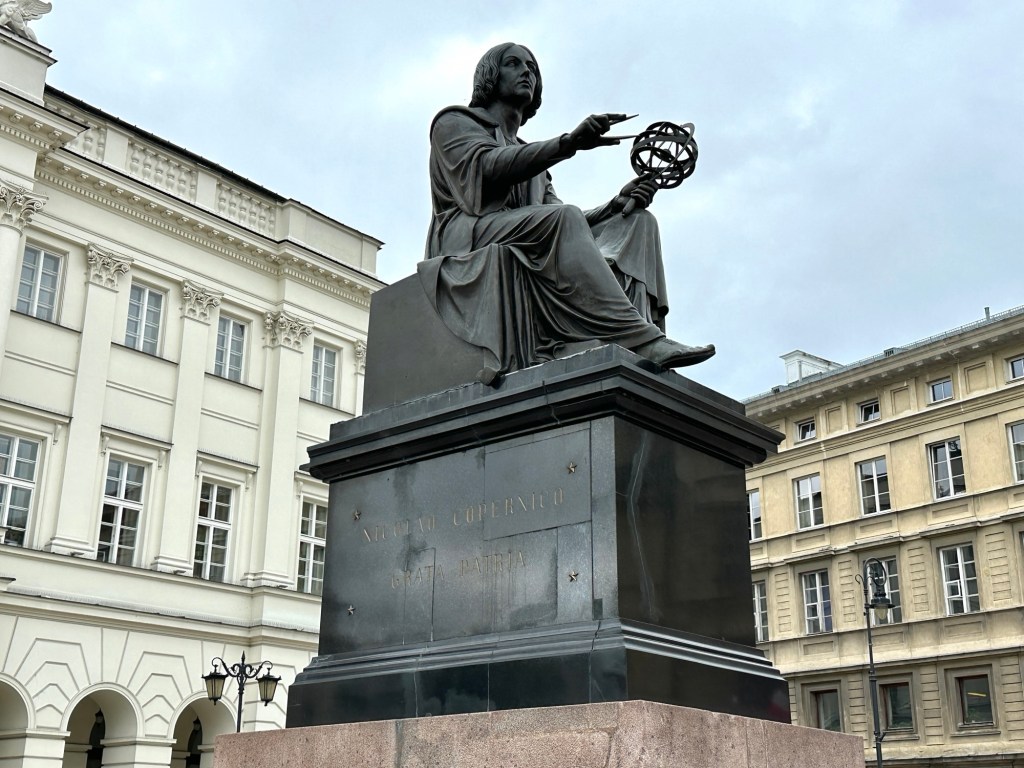
We meet at the Copernicus monument in front of the Polish Academy of Sciences. Copernicus is a famous Polish scientist who first modeled the Sun as being stationary and the planets orbiting it, among other things. He is commemorated all over the country.

Our guide, a spunky polish native, uses facts, humor and sarcasm to tell us all about old town. I love a good sarcasm banter.

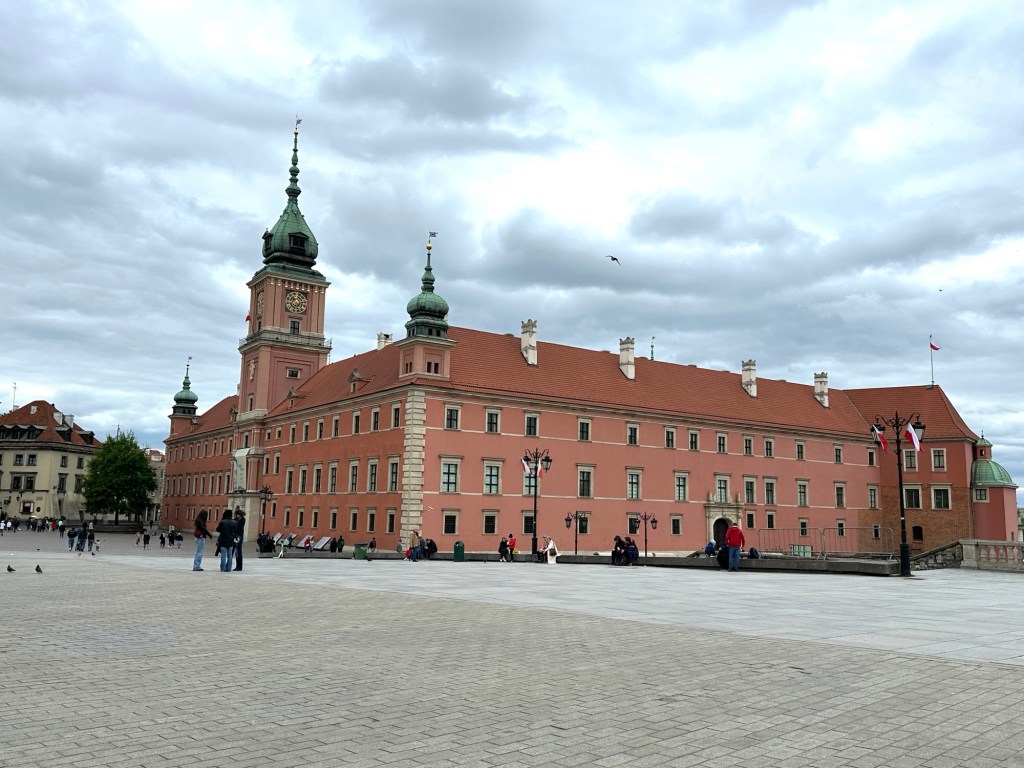
The most important thing to know that most of the old town has been completely rebuilt since WWII. It was bombed during the start of WW2 and bombed to hell when Poland tried to claim their independence during the Warsaw Uprising.

As terrible as the Soviets were to Poland, much of the old town was able to be rebuilt during the reign. Our guide tells is that many of the buildings are built from the original rubble of the original construction. And if they did not have enough material they tried to source the original.

We spend a large amount of time talking about the buildings all over the start of old town.

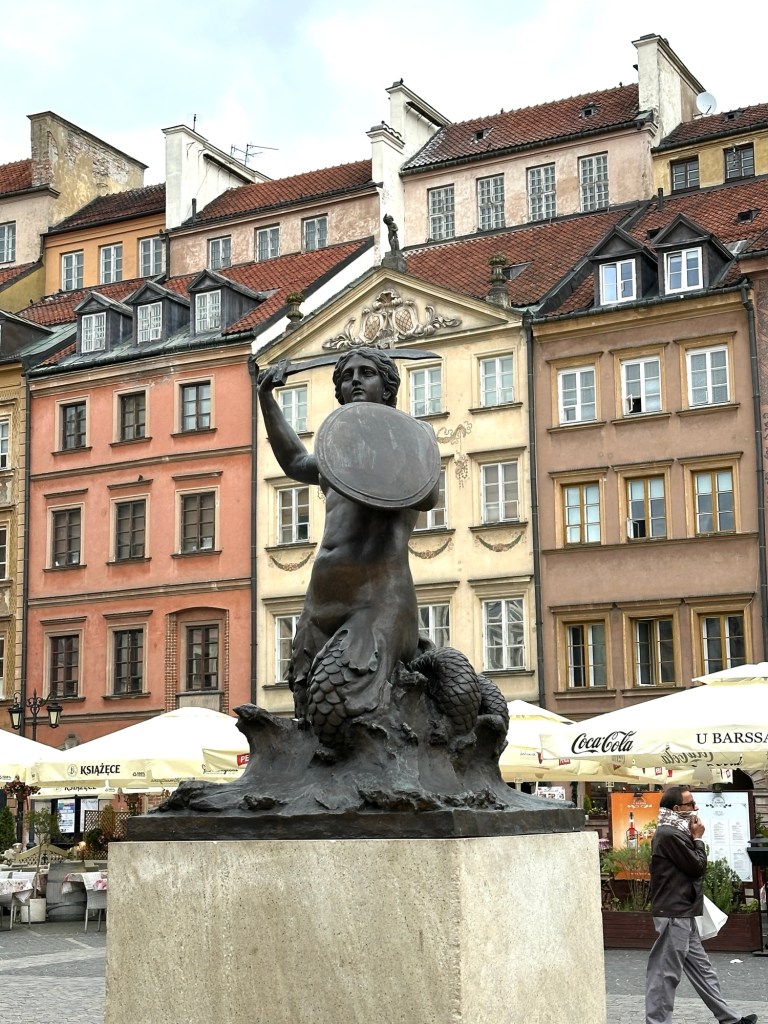
We visit the town square and learn all the lore behind the courtyard mermaid.

Our guide shows us important churches and notes places to visit around town. She points out parks on the must see list.

After the tour I go backwards and visit all the churches she mentions during the tour.

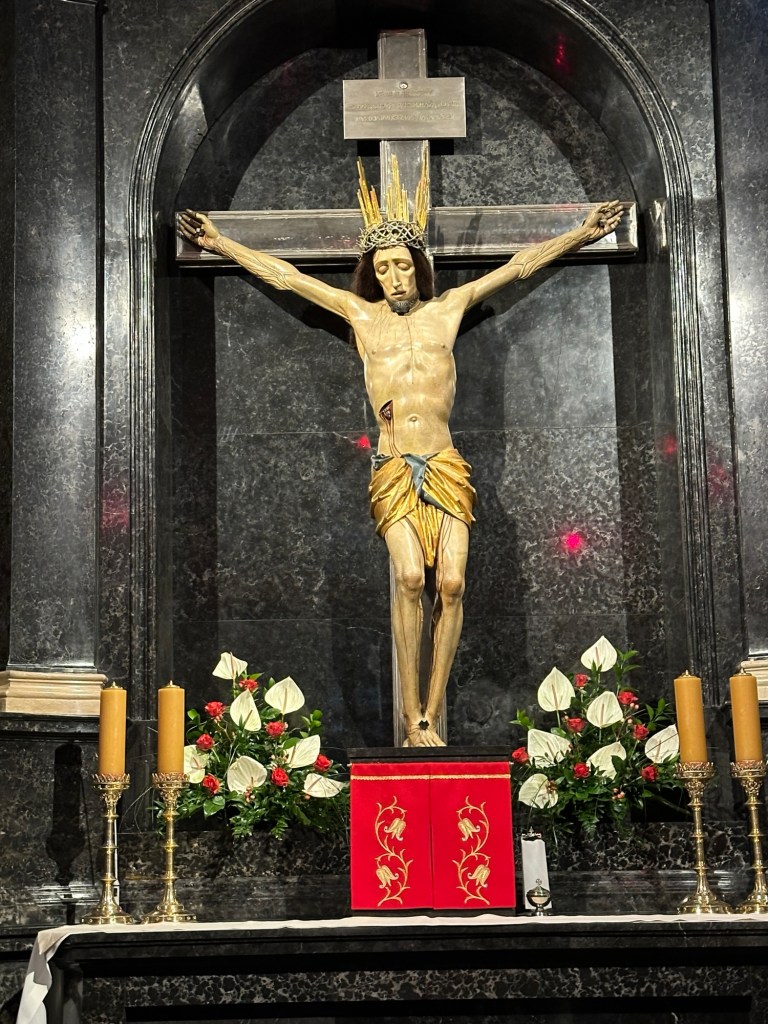
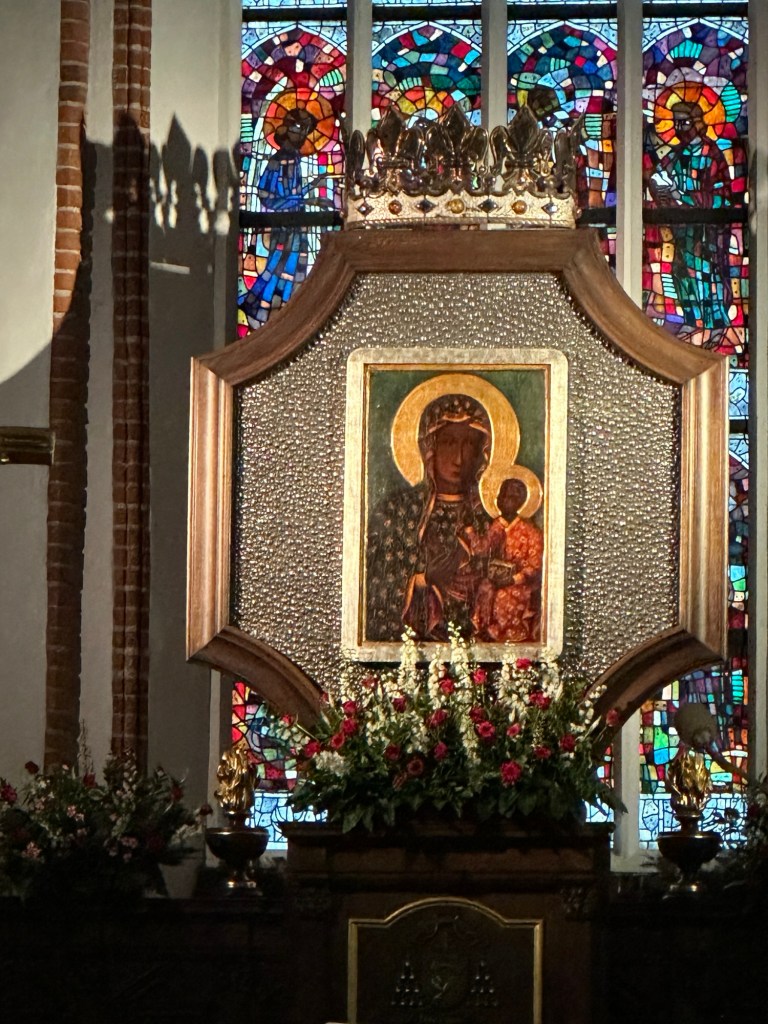
In Archcathedral Basilica of St. John the Baptist there is a reproduction of the famous Black Madonna painting like the famous one that exists in the Jasna Gora, a polish pilgrimage site. The church also has a Jesus statue that uses human hair as Jesus’ hair. There is a story that it used to grow and required haircuts on a regular basis. There is a story to explain why it no longer grows, of course.

Jesus statue with human hair

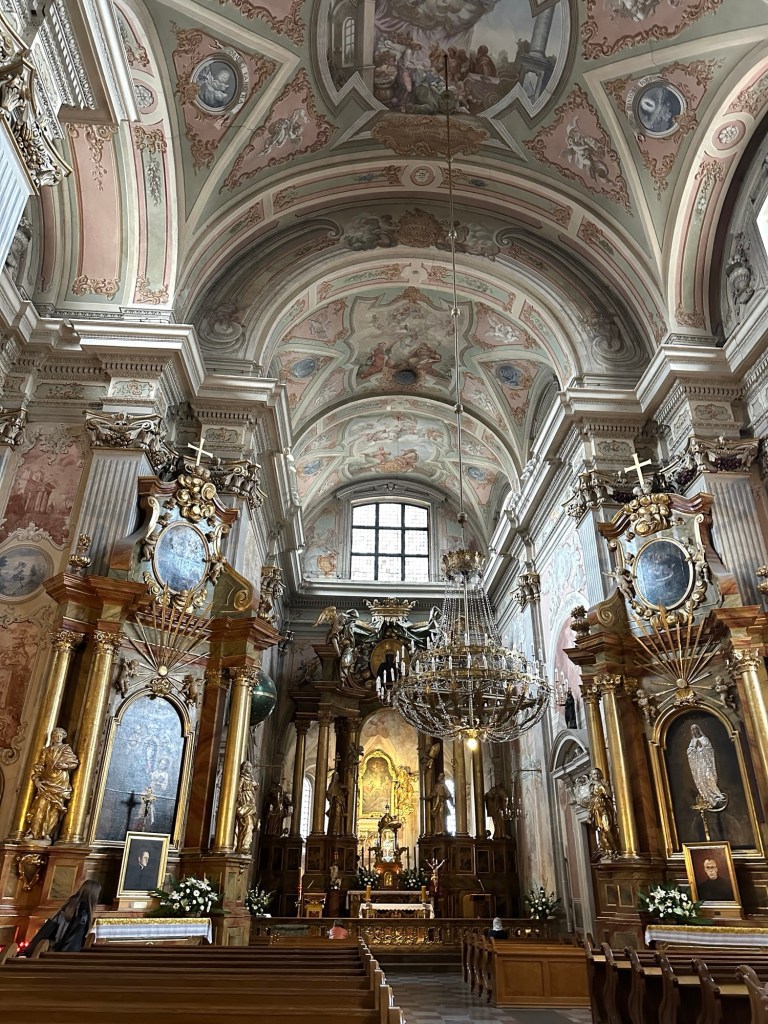
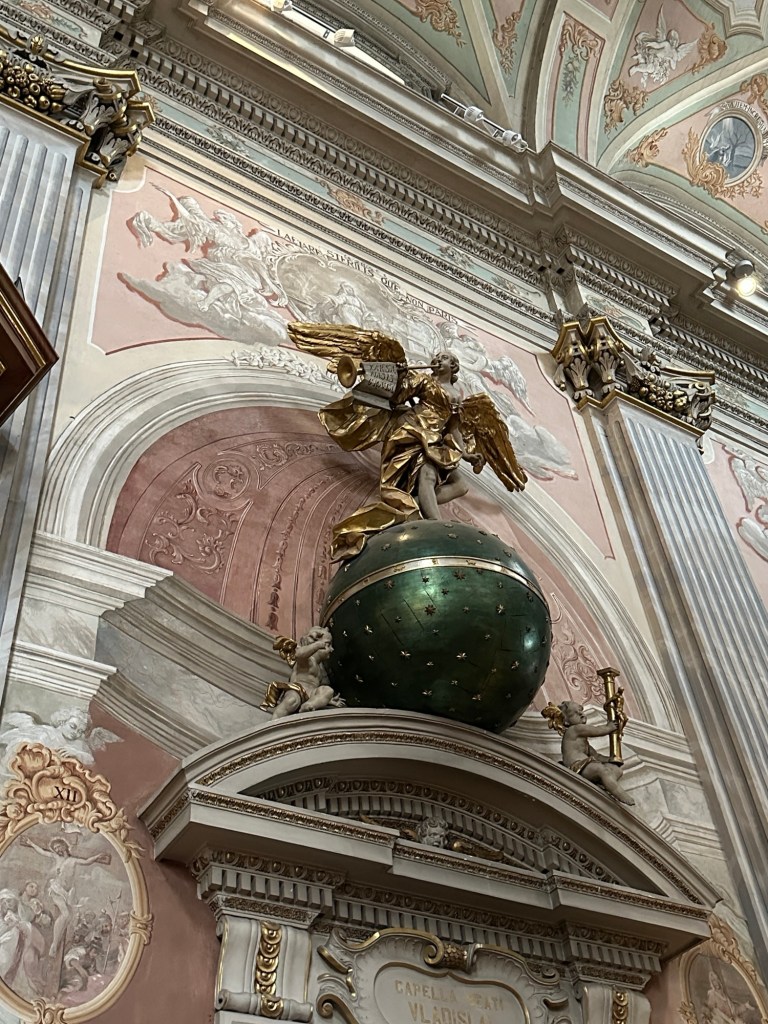
I visit St Anna’s church which is a must see inside. 

She also fills us in with more detail of the history like how a king ends up on a big column in the beginning of old town.

In the Church of the Holy Cross you can visit a memorial to Chopin. Frédéric Chopin’s sister put his heart in brandy after his death to preserve it. There is a fantastic story about how she smuggles it under her dress to cross the border so his heart could be buried in Warsaw, in his home country.

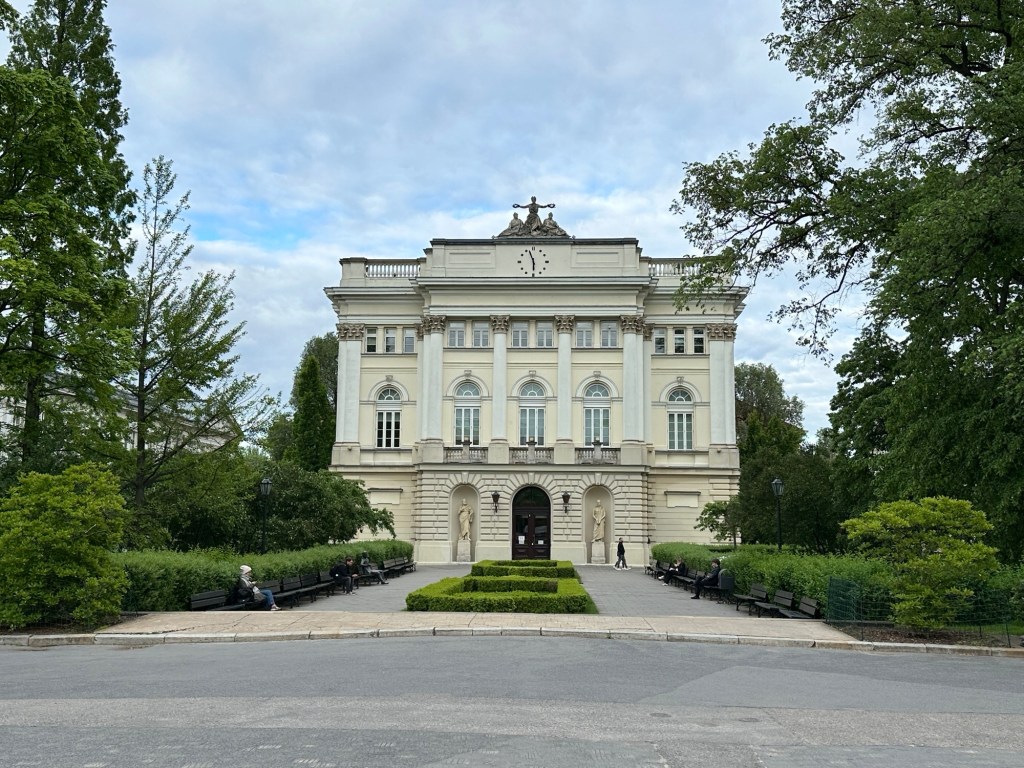
We stop by the University of Warsaw. We learn that all the public universities in Poland are free if you have the grades to be admitted. We see one building that made it through the war. It is supposed to be a beautiful campus, especially at night. I plan to return later.

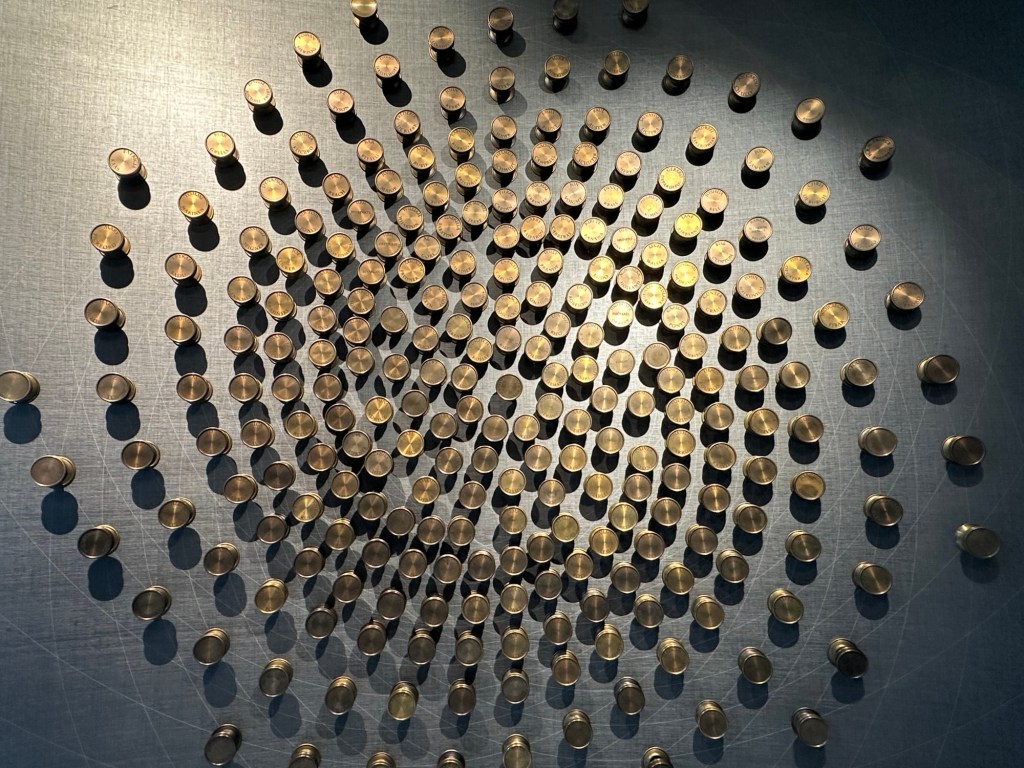
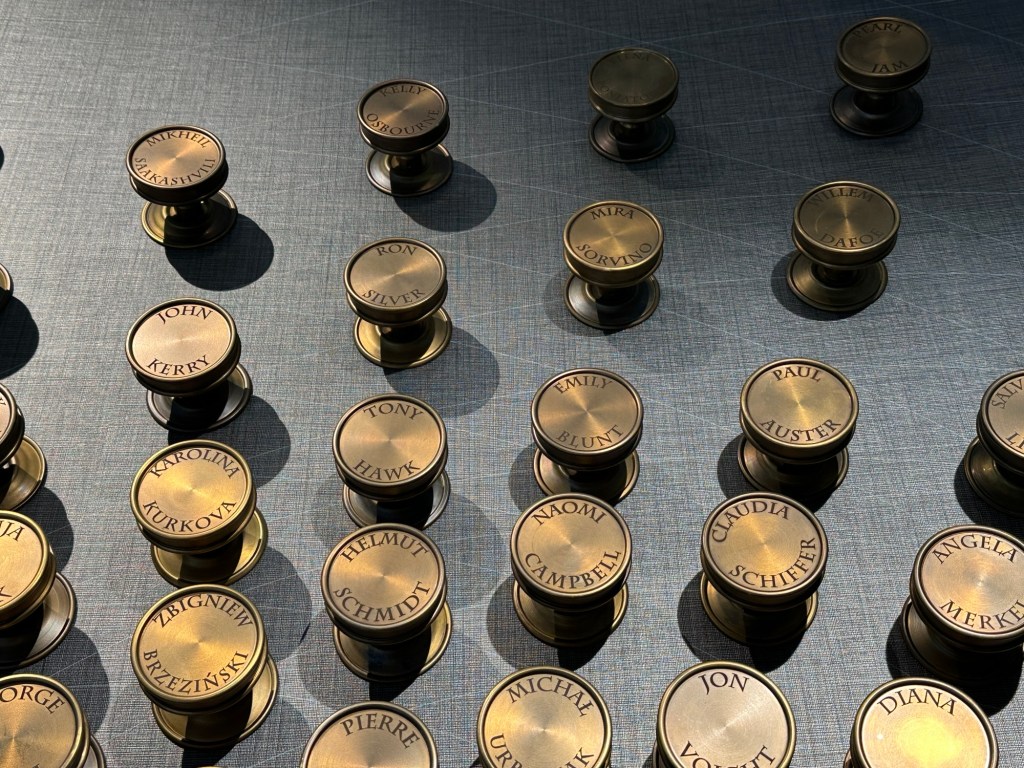
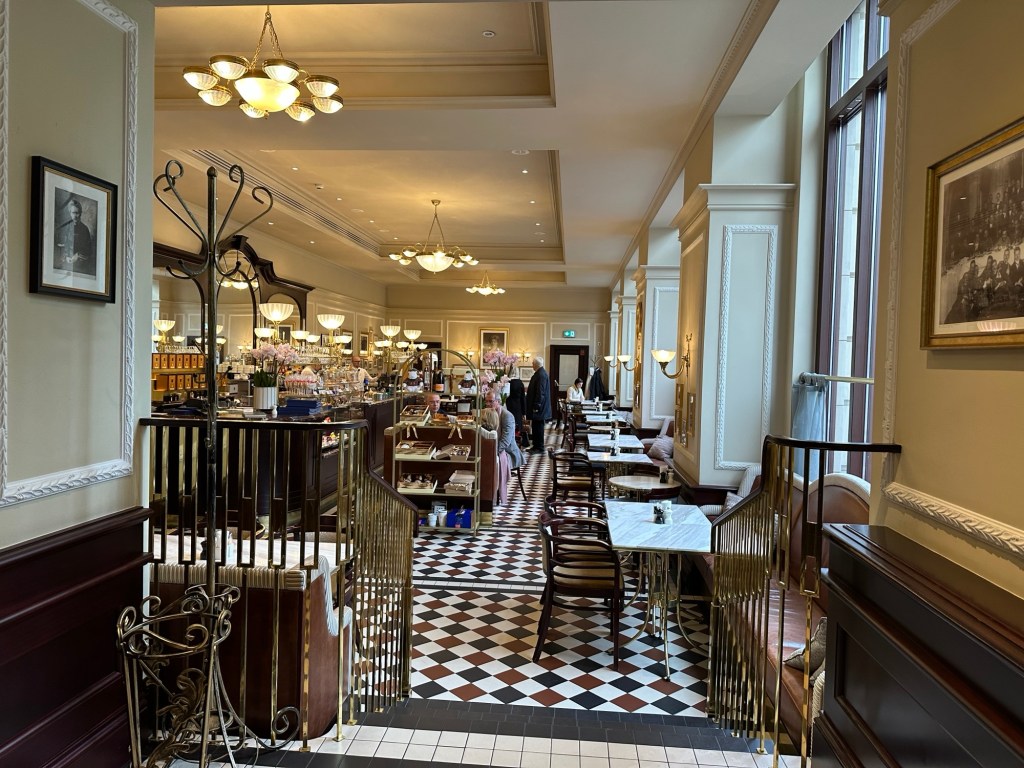
We stop by the beautiful Bristol hotel, a luxury hotel built in 1901. The Cafe Bristol is visited by many famous people over the years. There are little knobs on the wall that commemorate each famous visitor to the hotel.

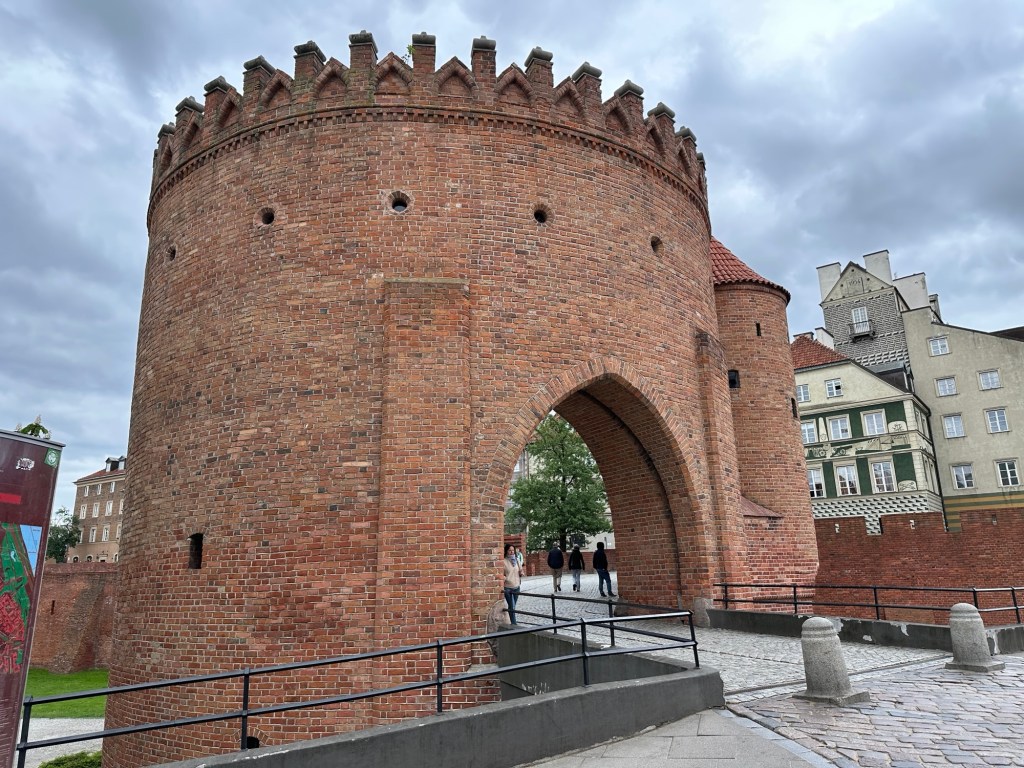
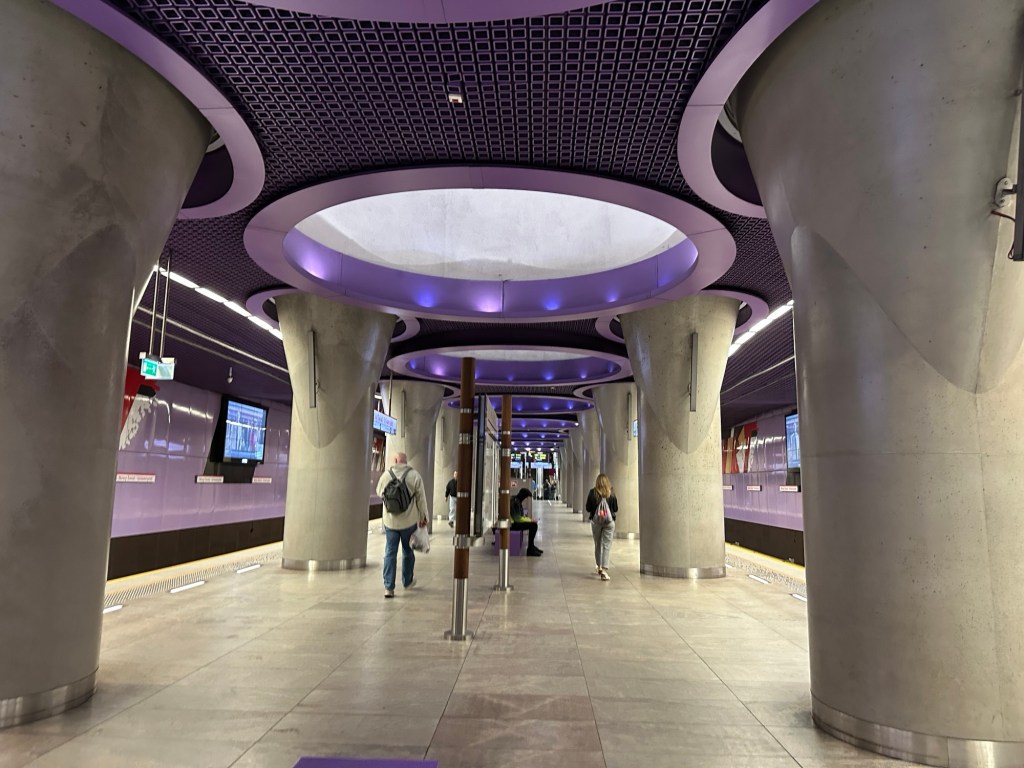
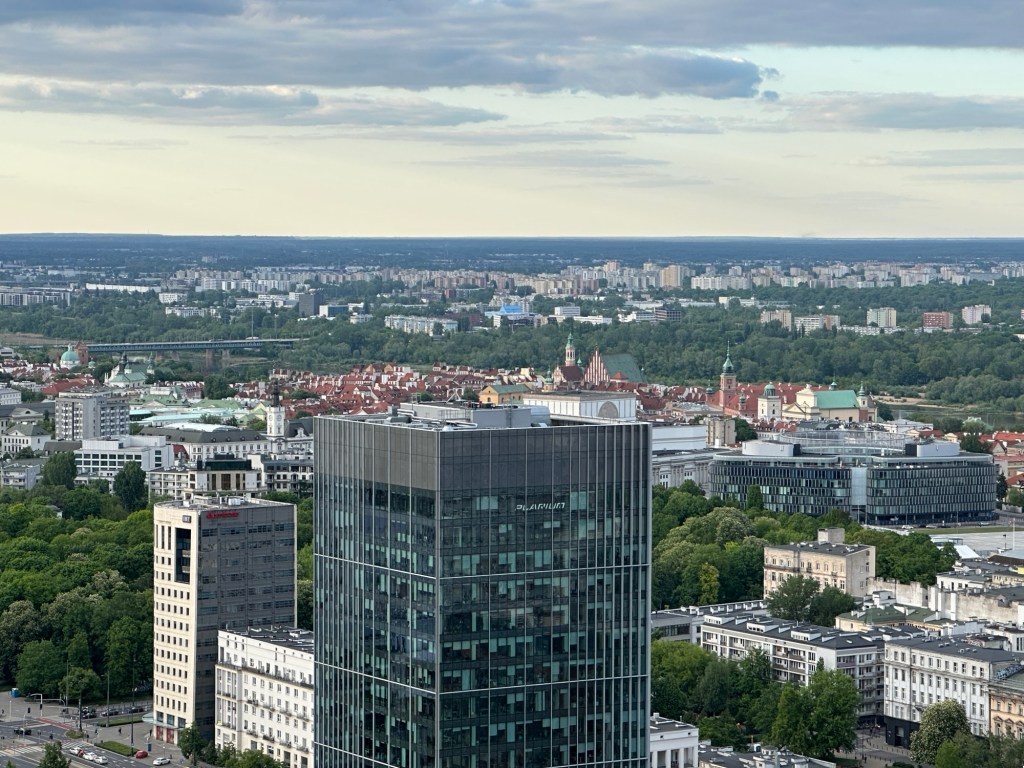
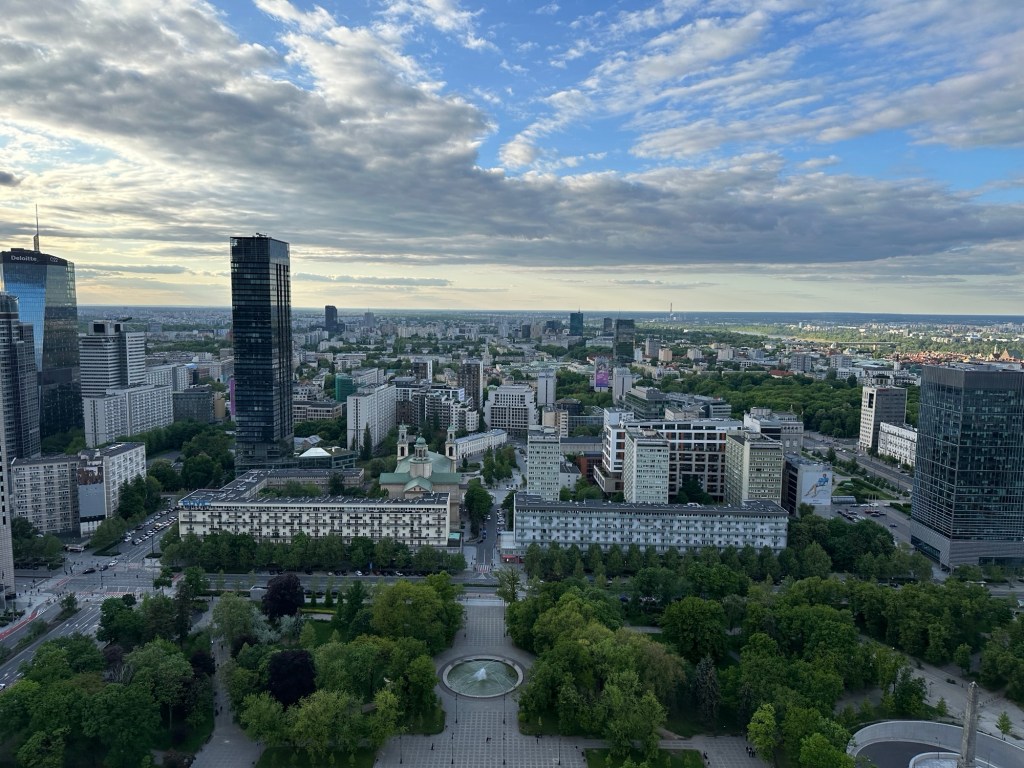
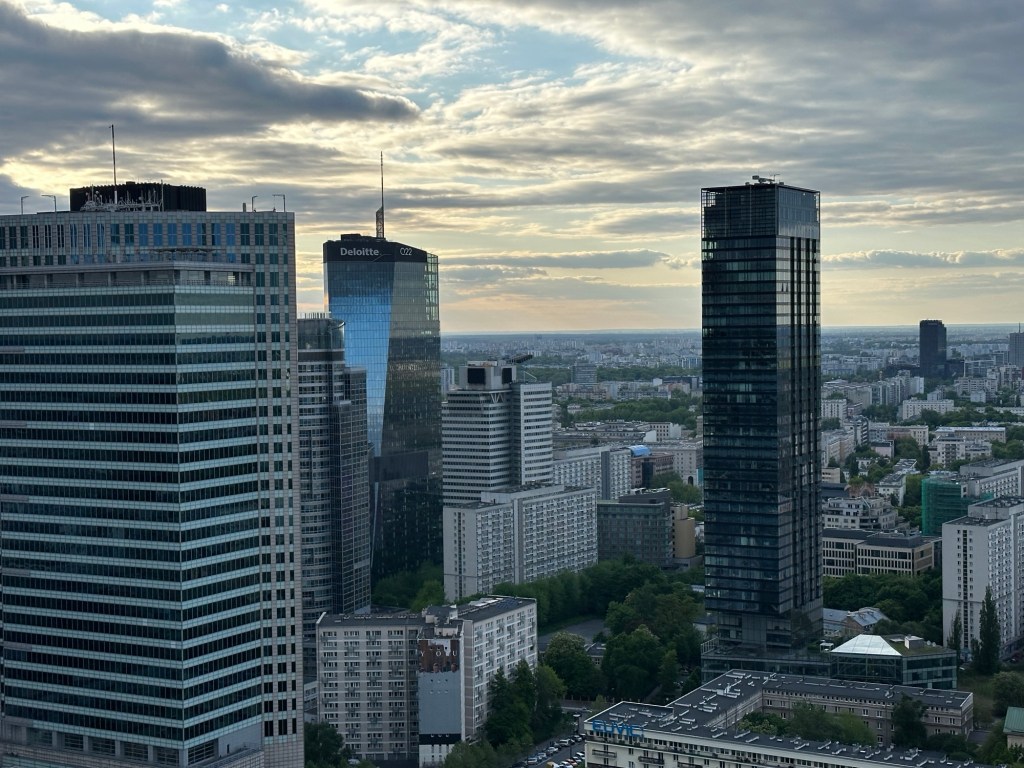
We finish the tour at the other side of old town at the Warsaw Barbican. After stopping by all the churches I missed I take the metro to down to the Palace of Culture and Science to have spectacular views of the city.

View from the Palace of Culture and Science

More museums tomorrow……