
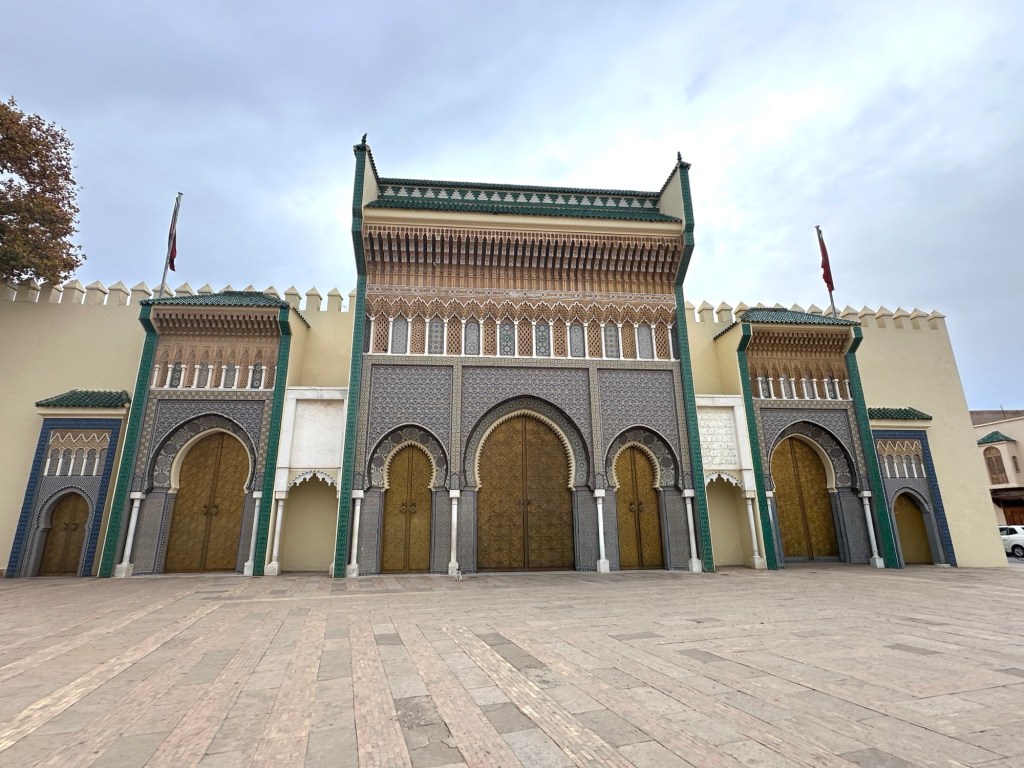
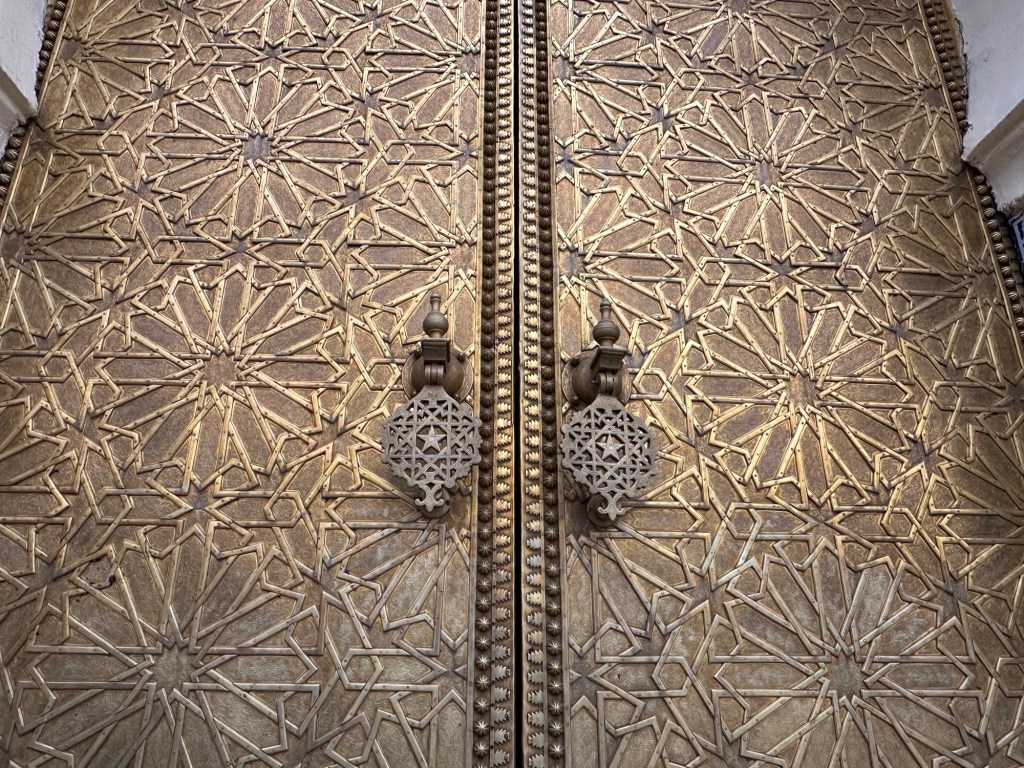
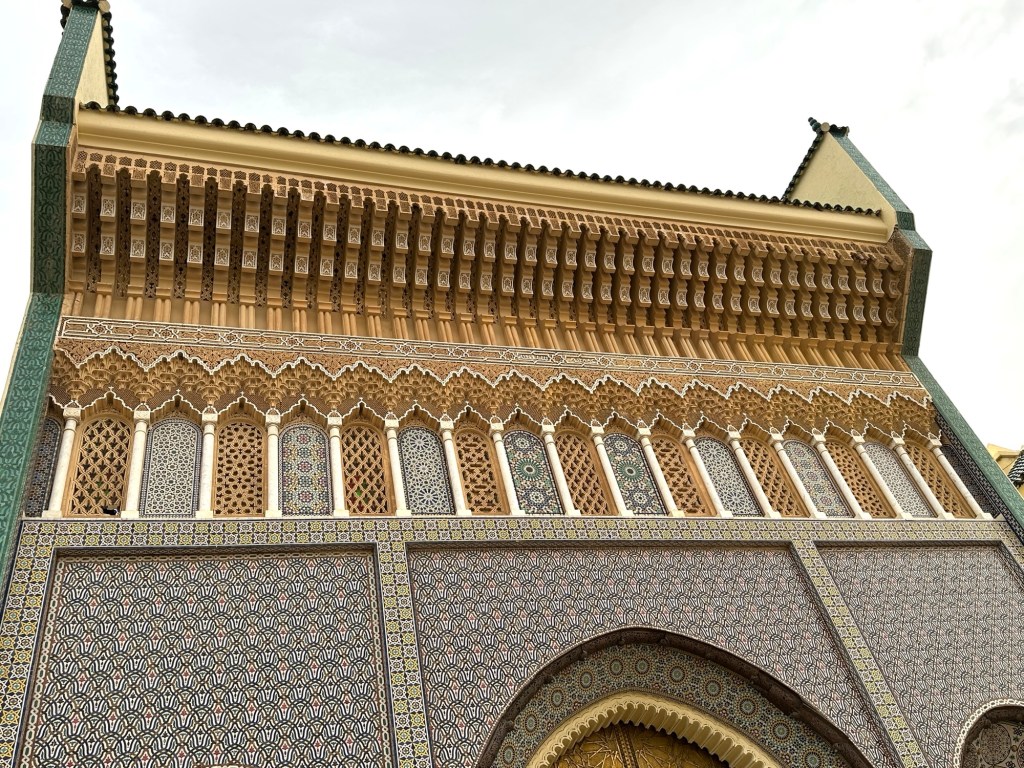
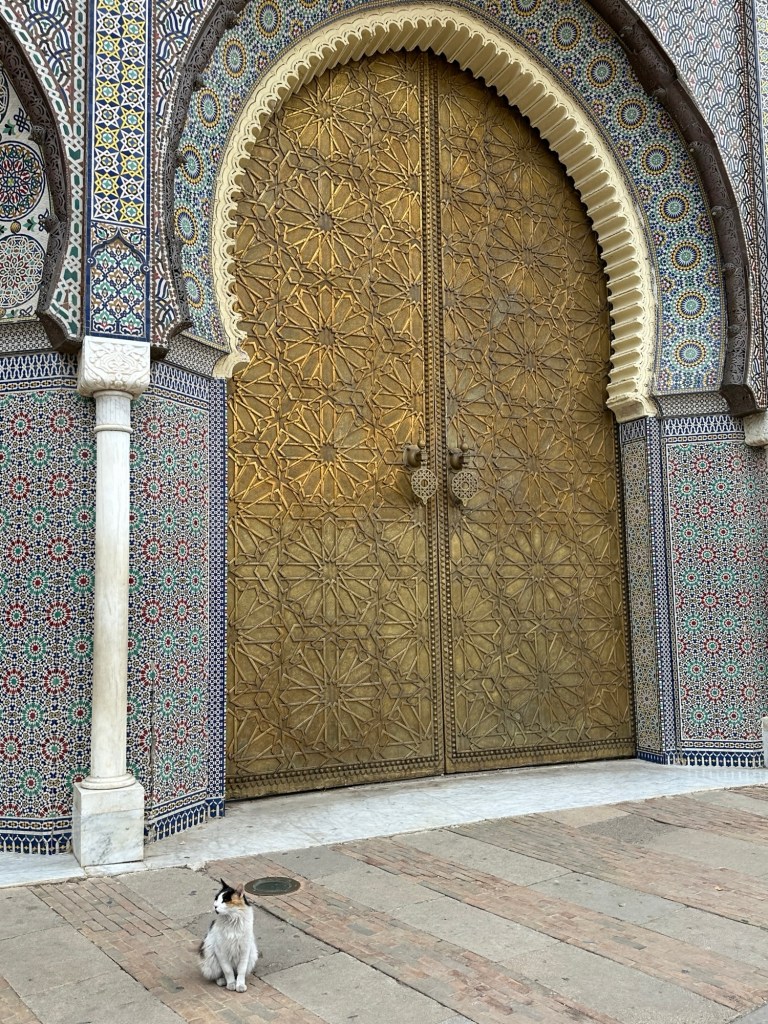
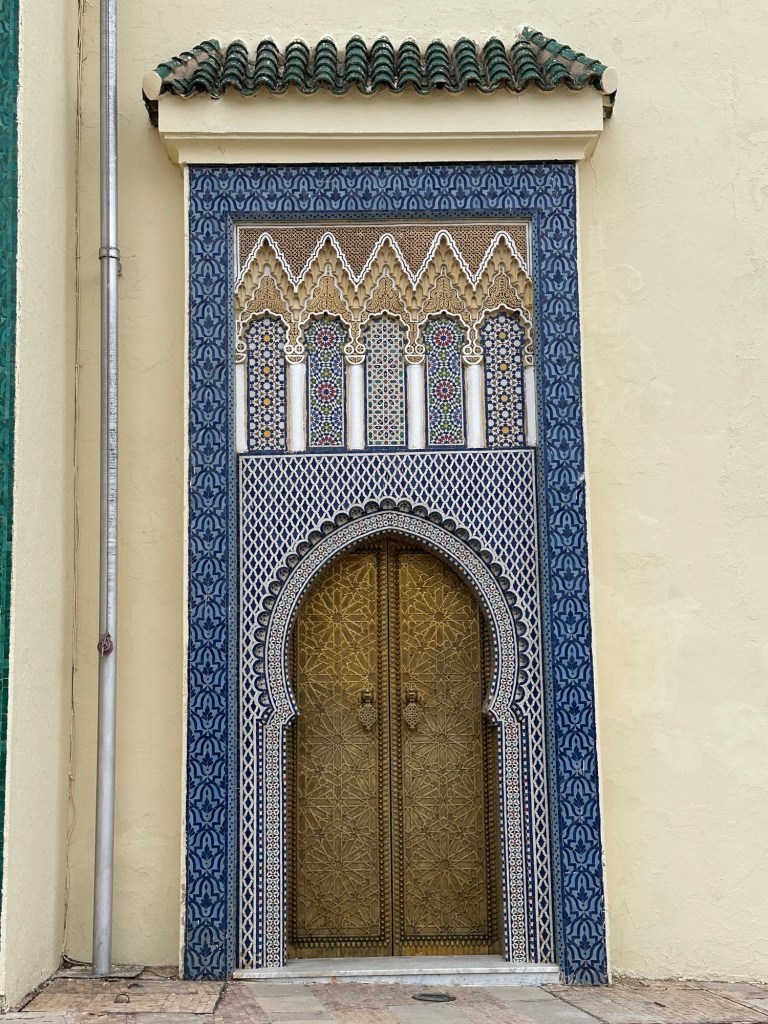
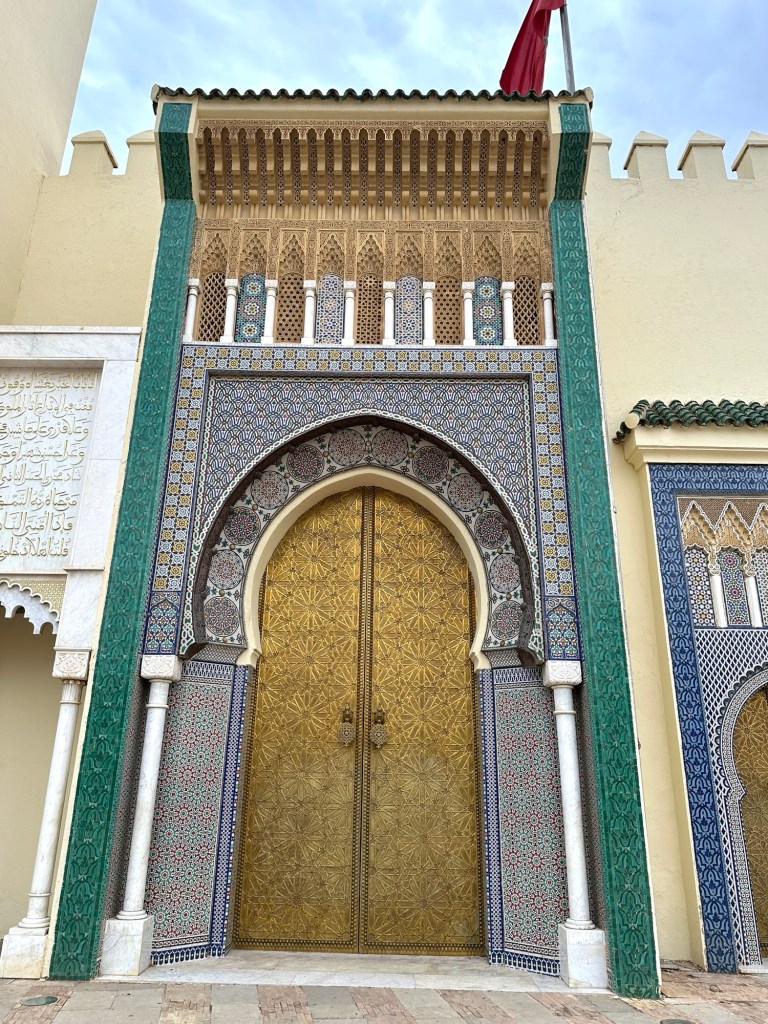
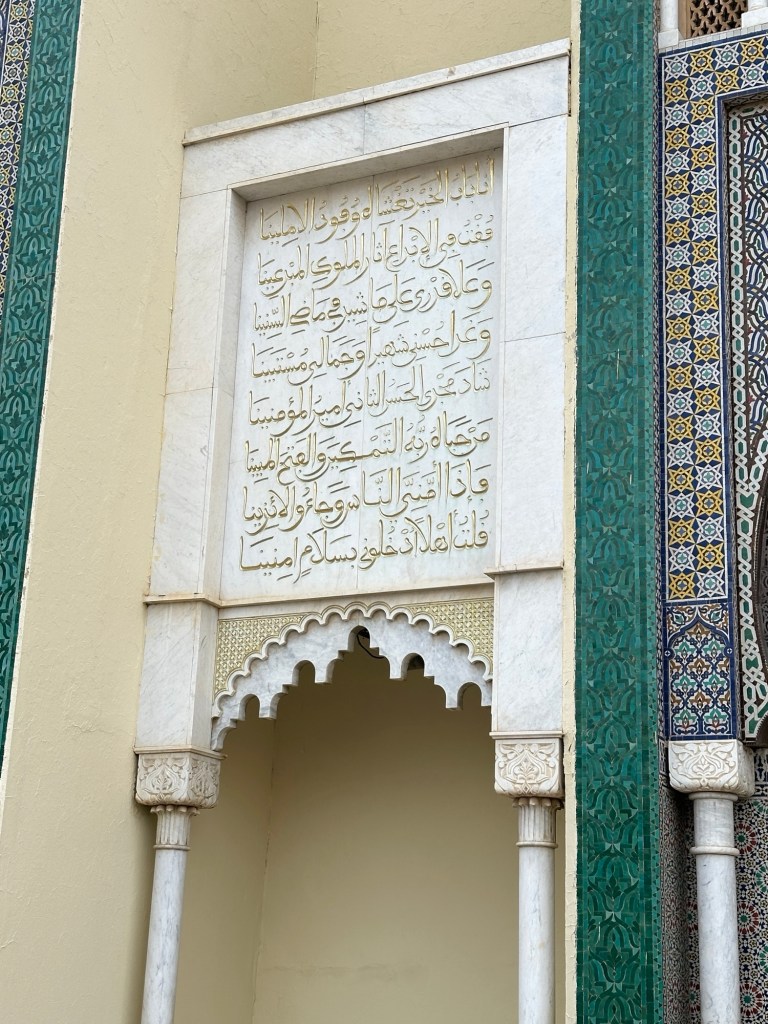
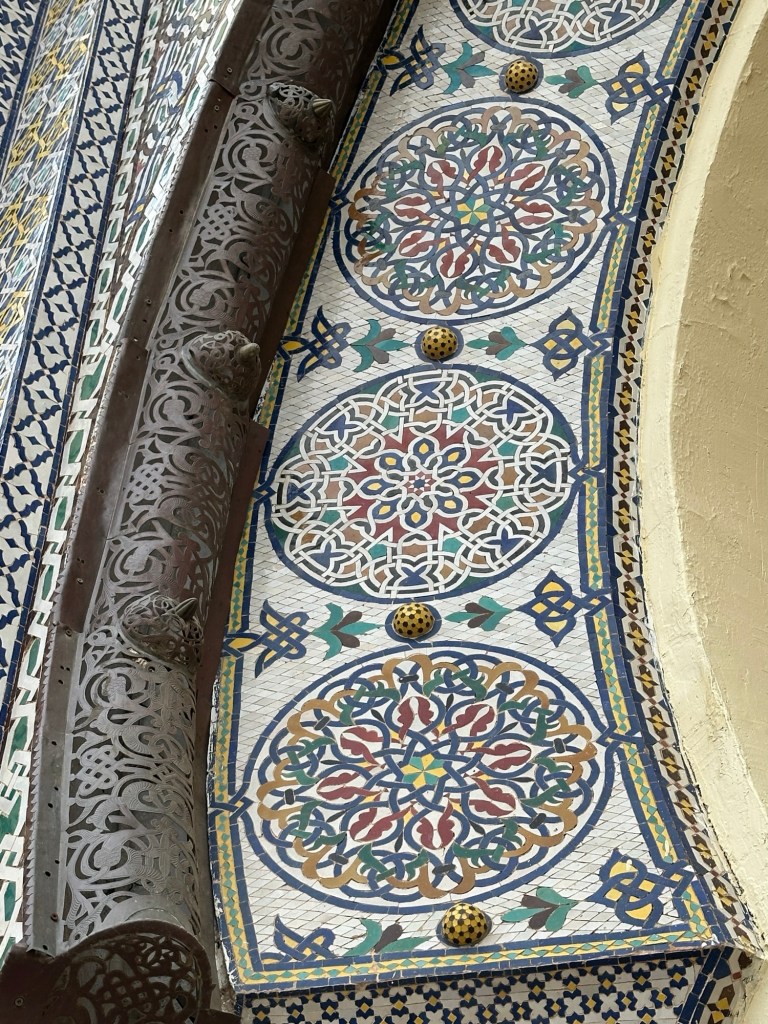
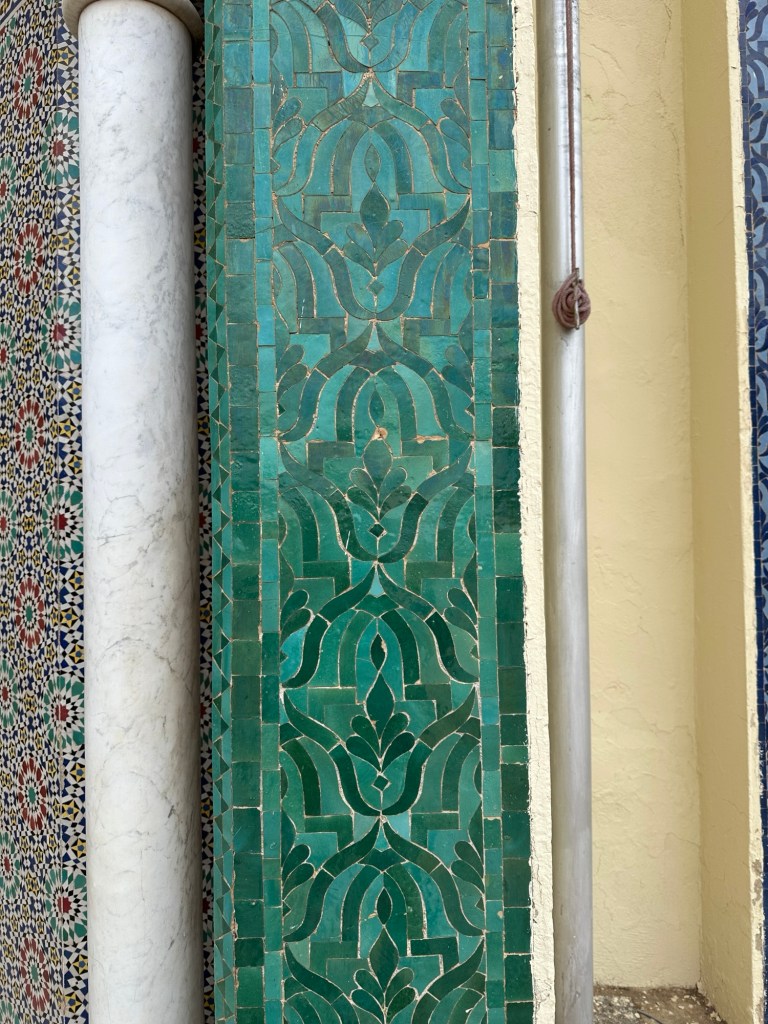
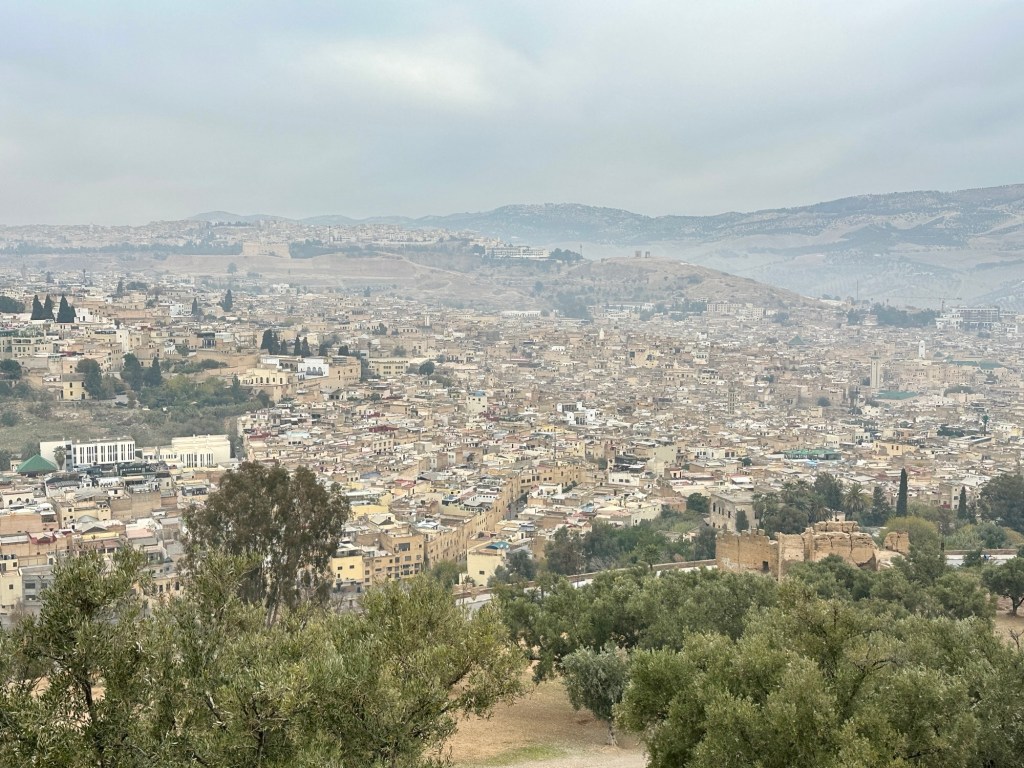
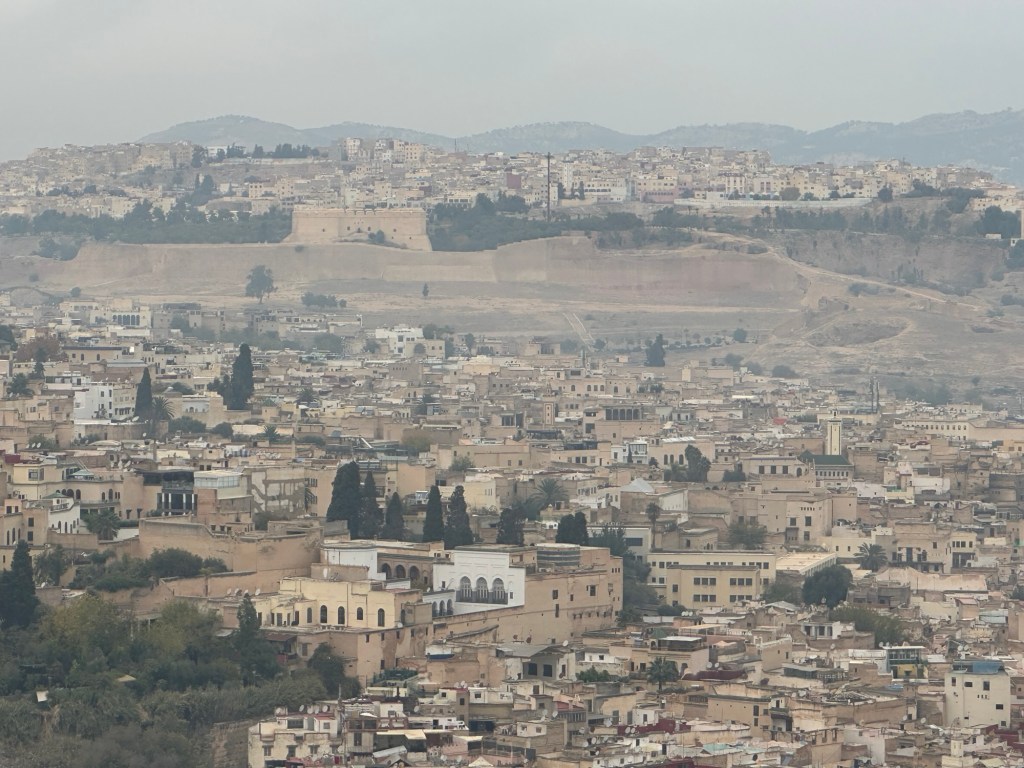
We will leave for the Fes city tour at 9:00 AM. The first part of the tour is by van where we stop at the royal gates, decorated only in the 20th century to make the royal palace more visually appealing and we learn about the history of the area. We learn how the architecture changes over time due to the Berbers (original name Amazigh), the arabs and the Jewish settlers. We drive uphill to get amazing view of the Medina below. It is vast. The Medina is a combination of shops and residential in narrow streets that bustle with energy daily. There are tourists but this is a place where locals do their shopping.
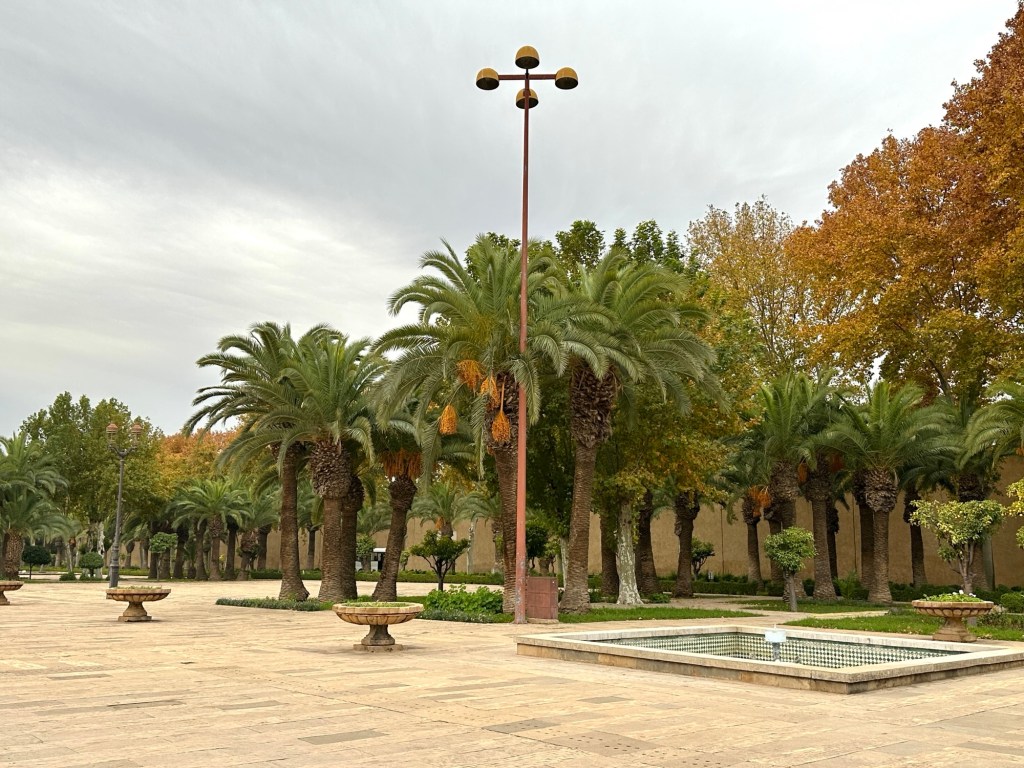
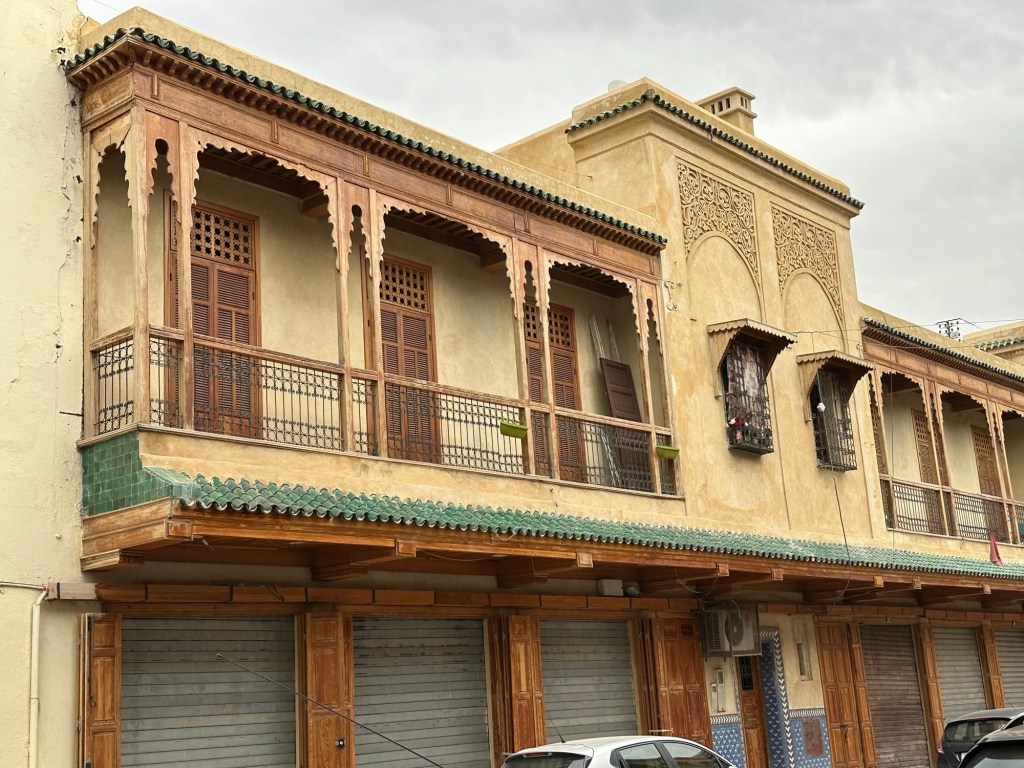
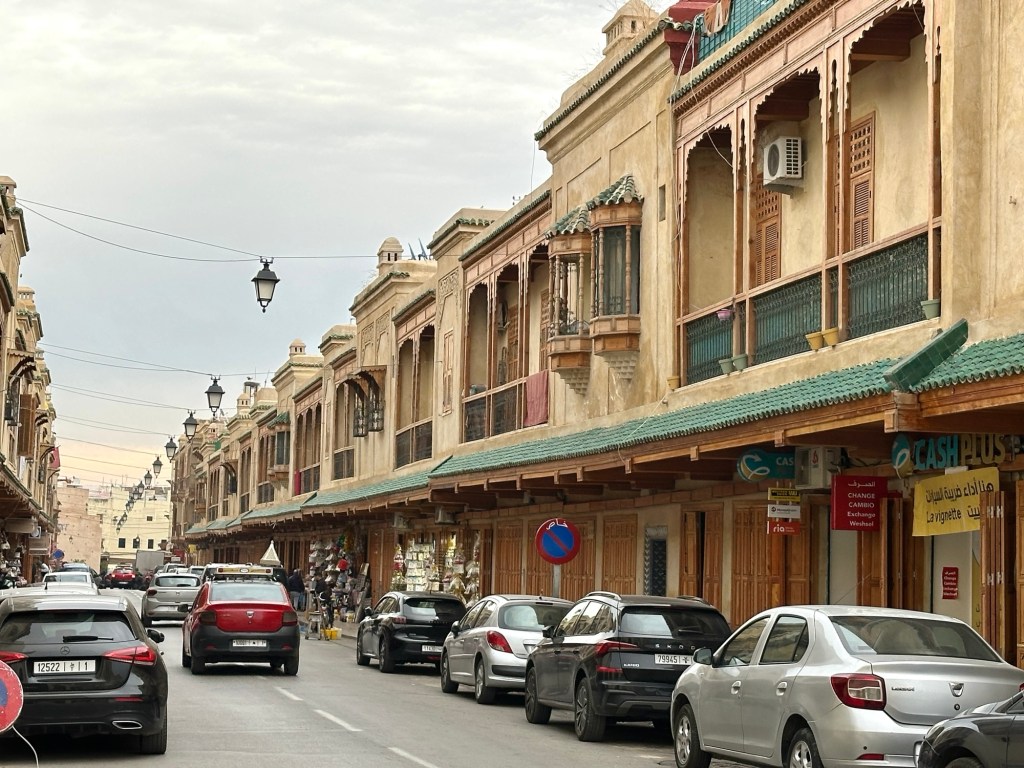
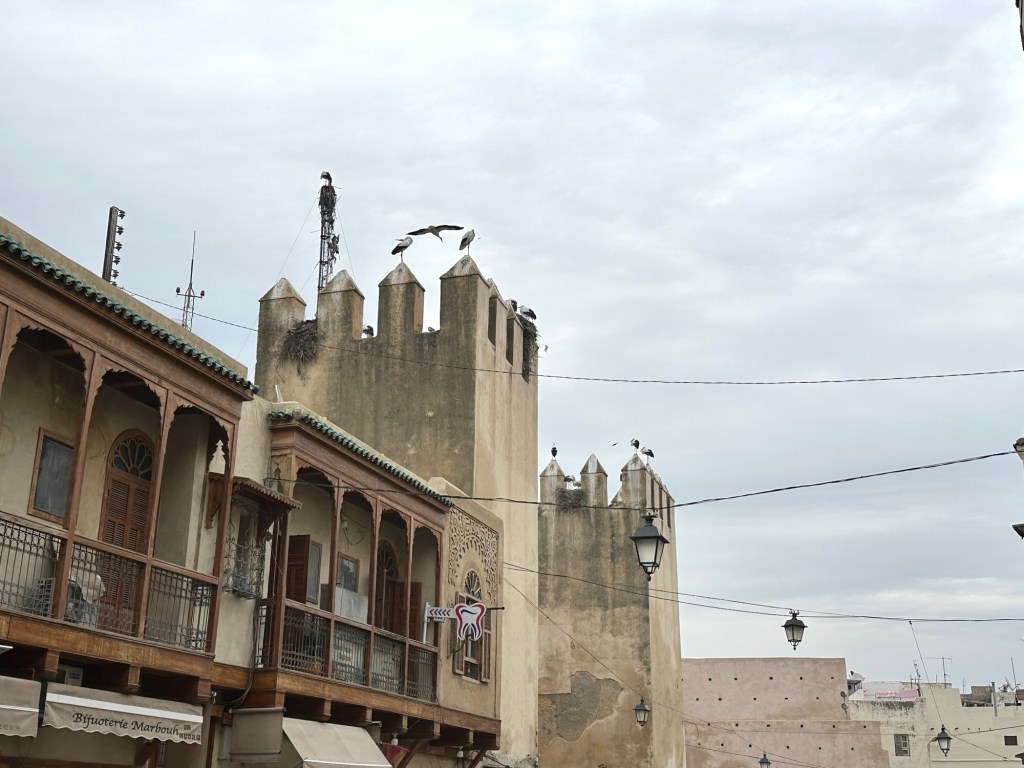
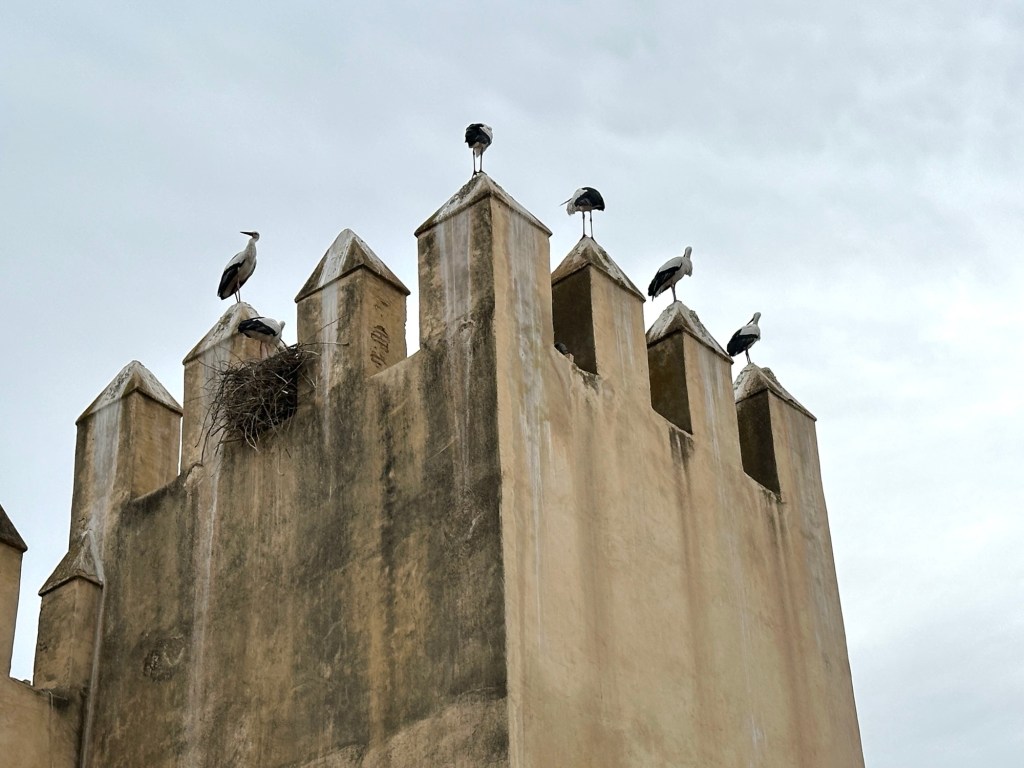
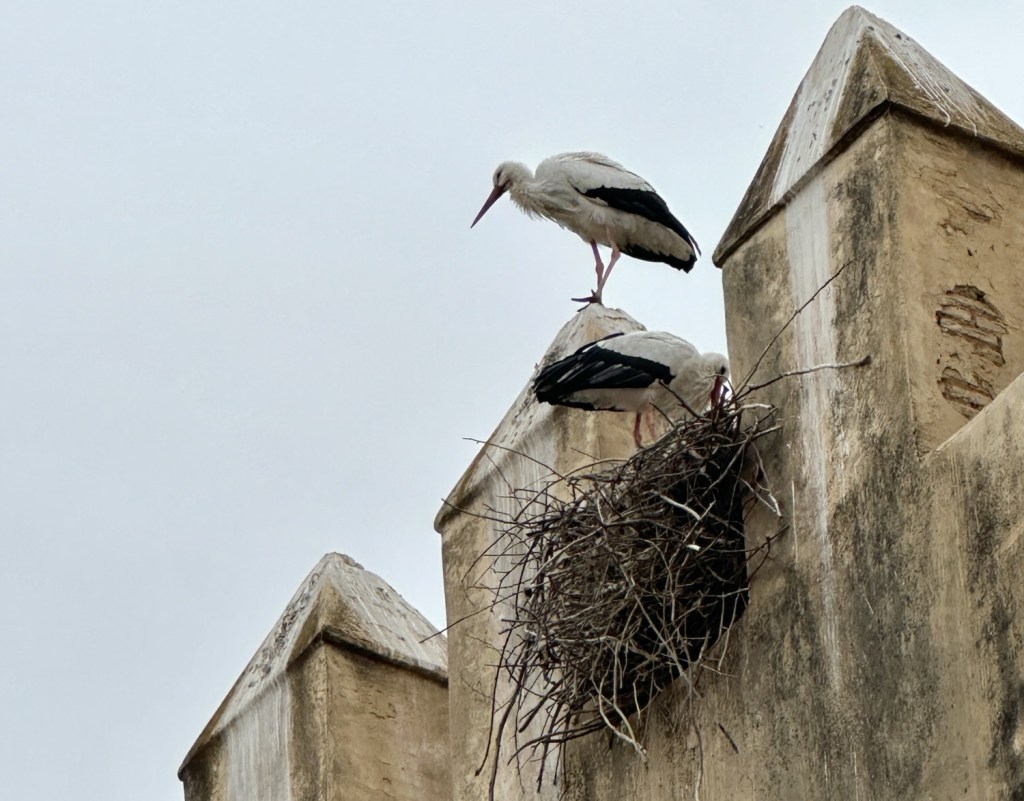
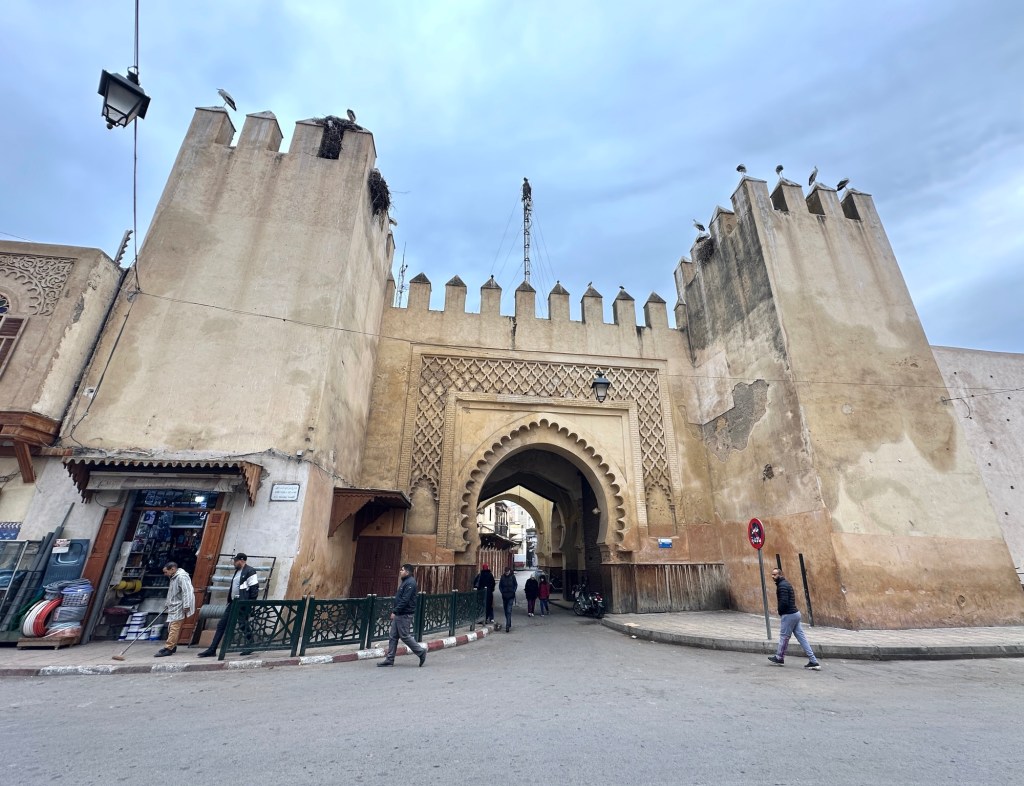
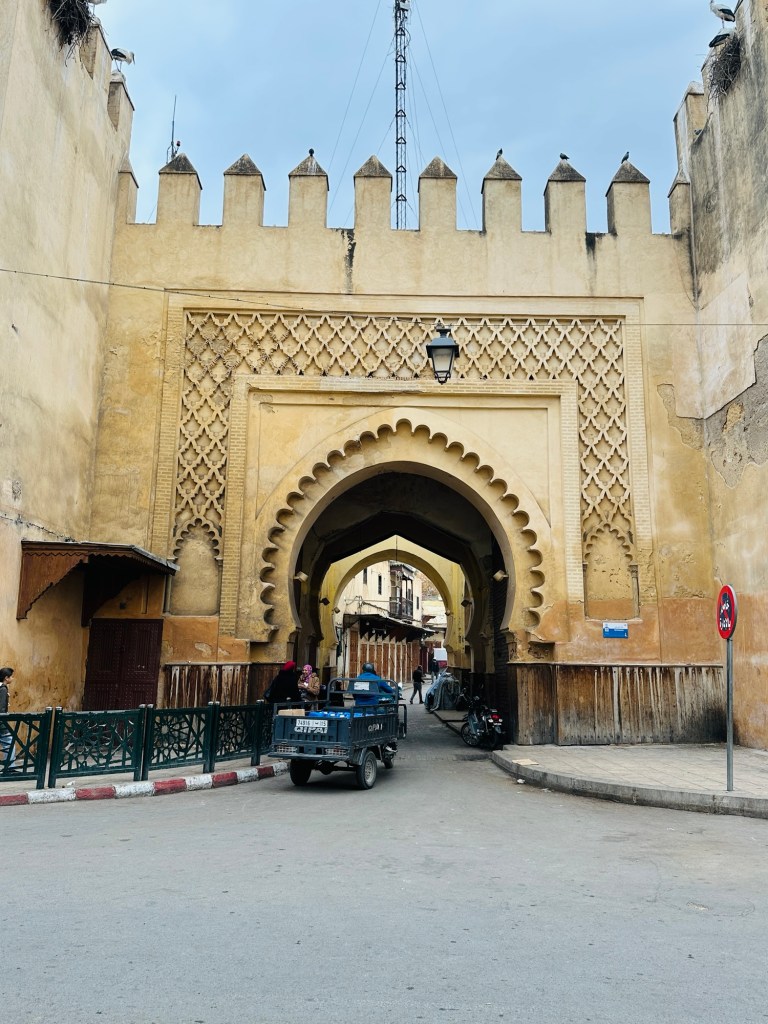
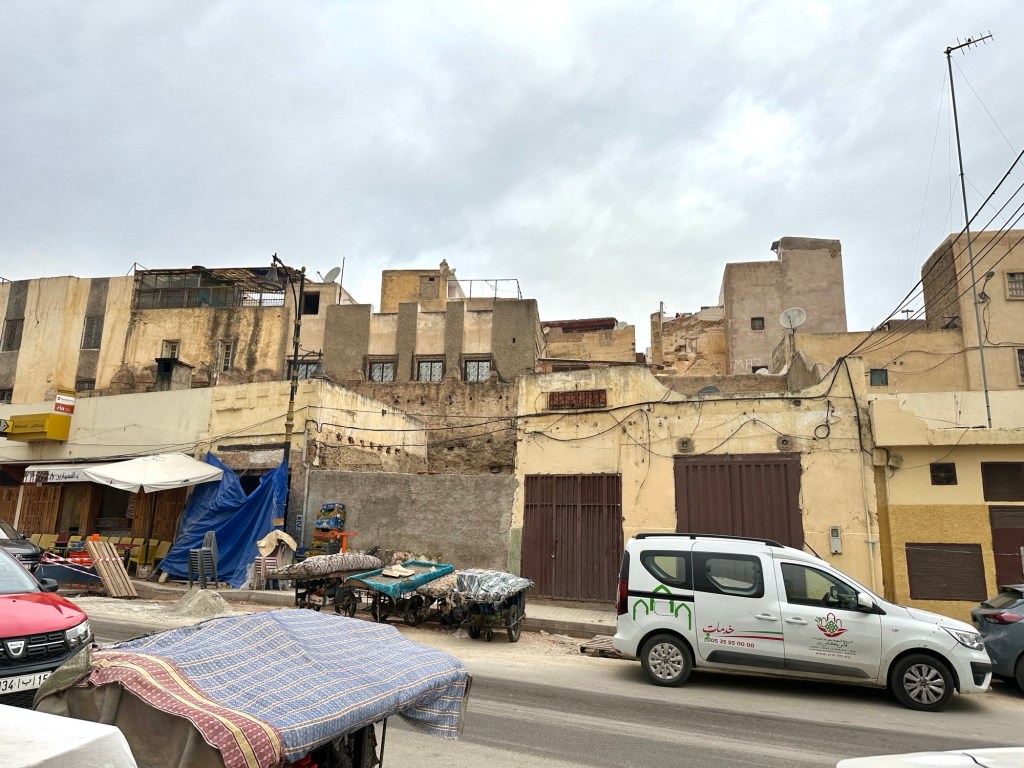
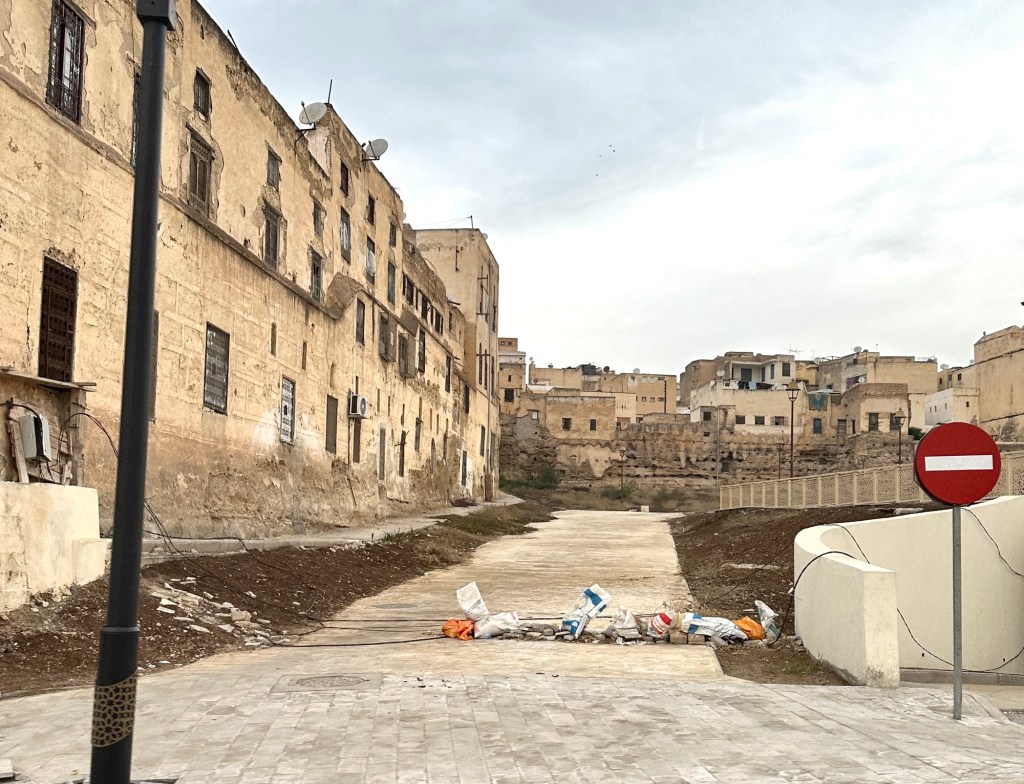
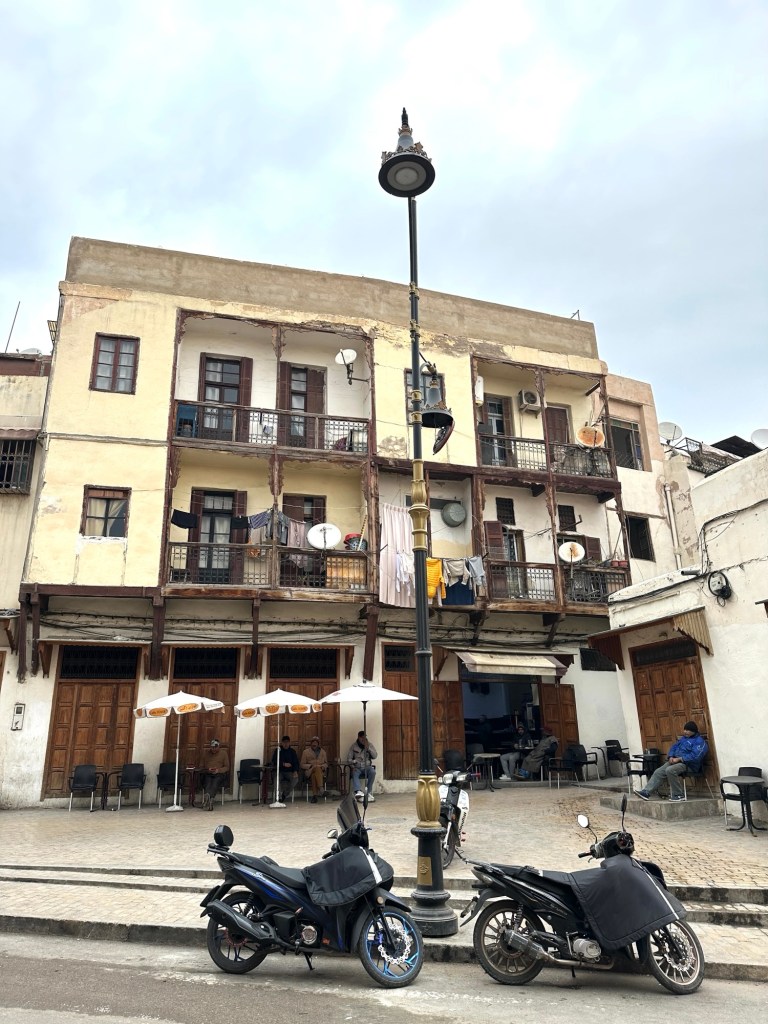
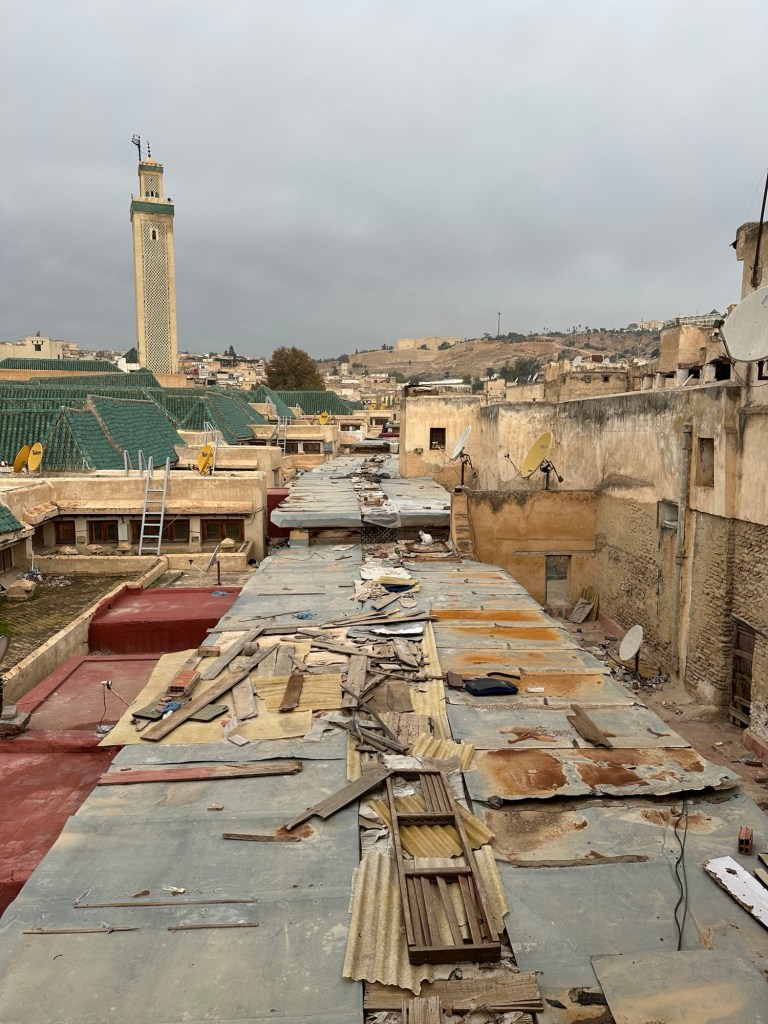
We stop at an overlook the see the city from above. You can tell it is a densely populated city with centuries and centuries of growth built on the top of old development.
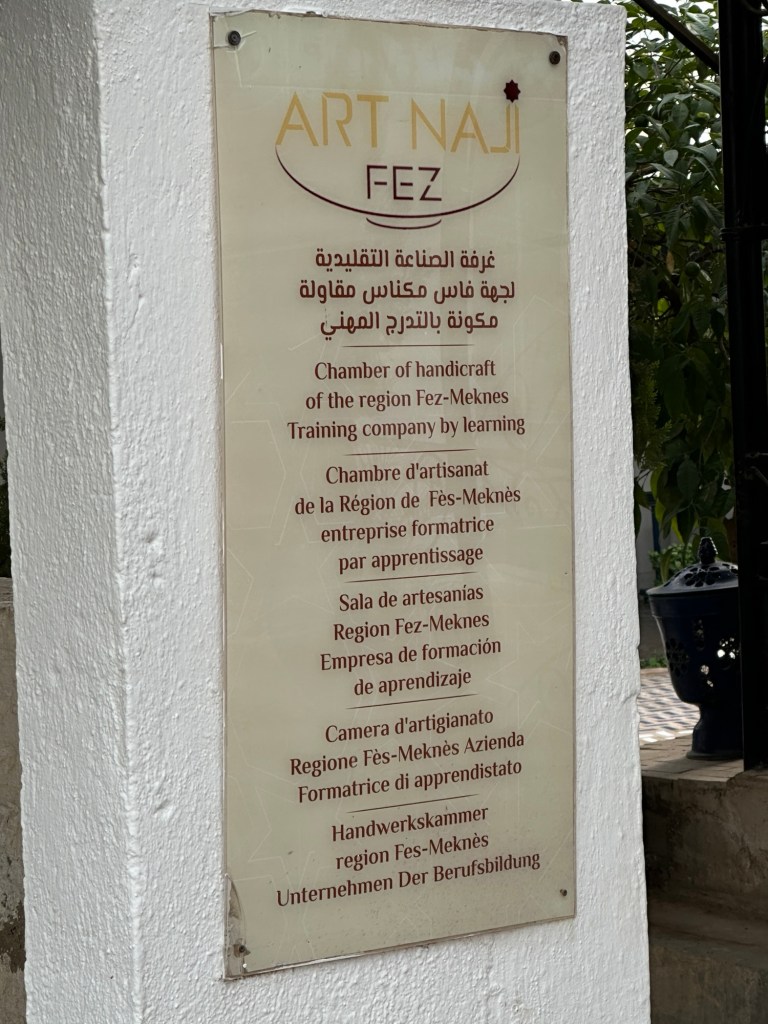
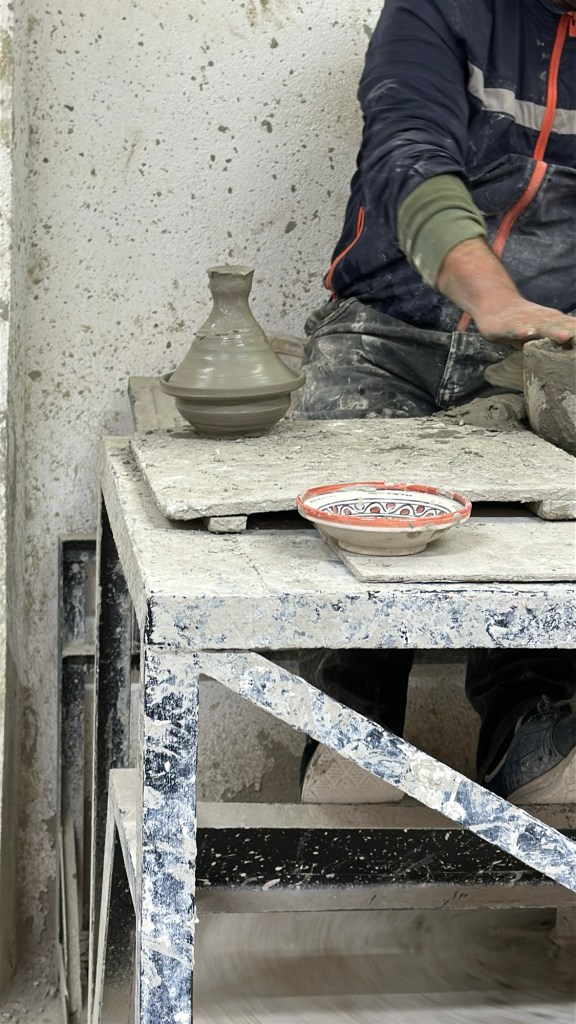
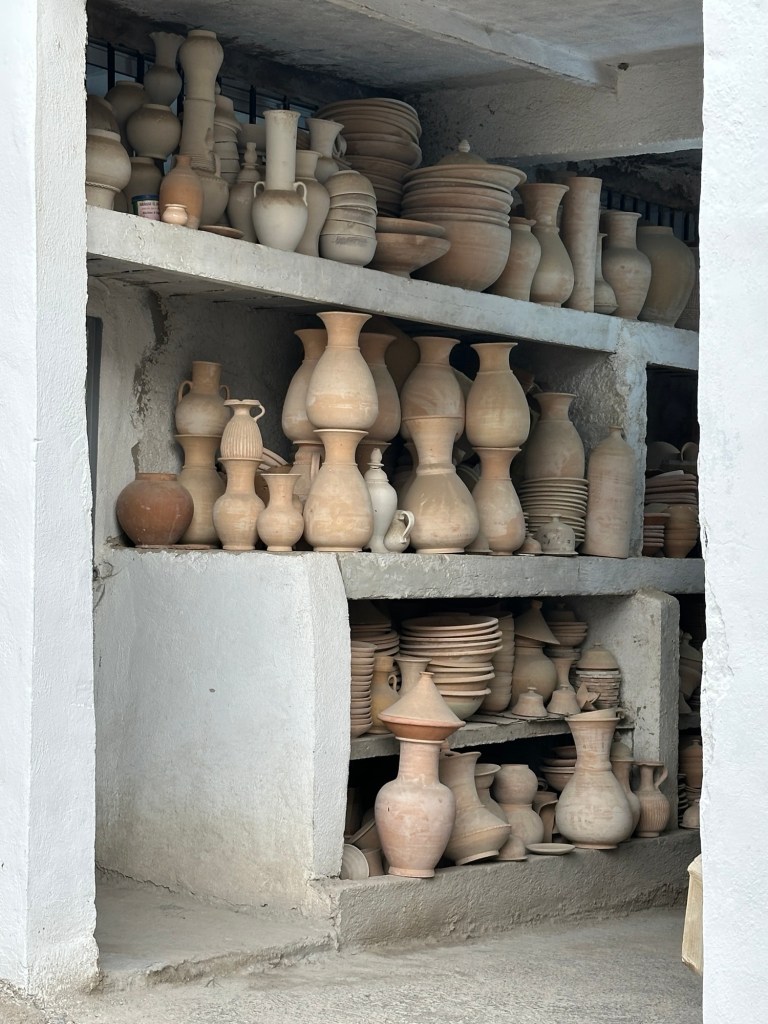
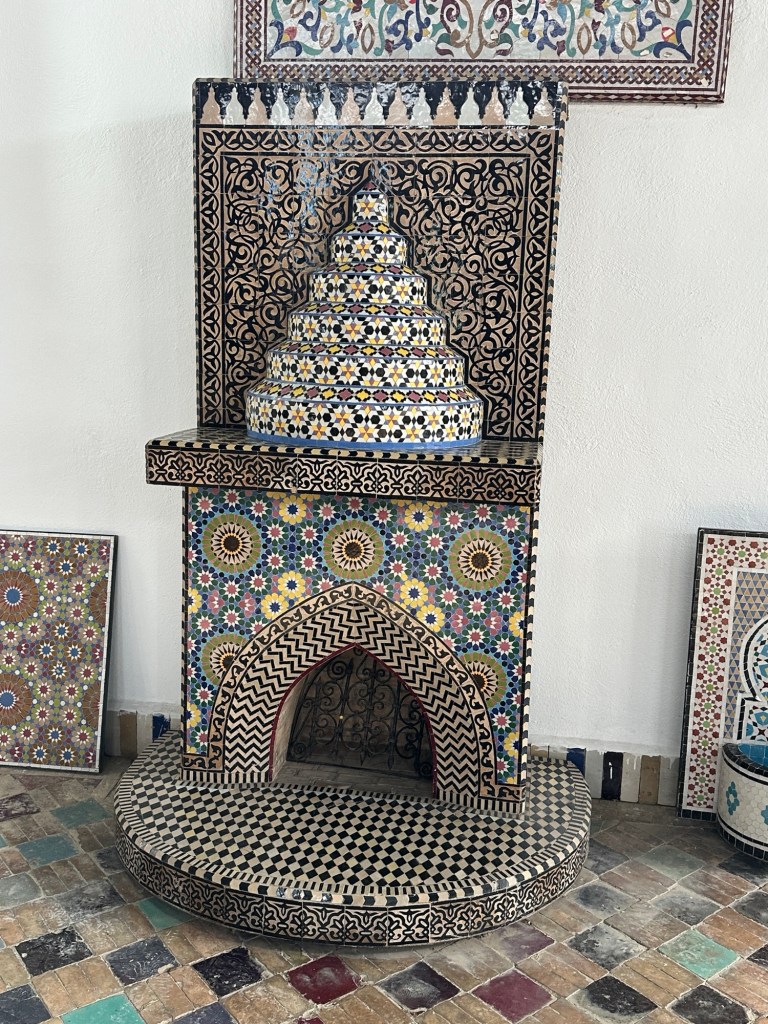
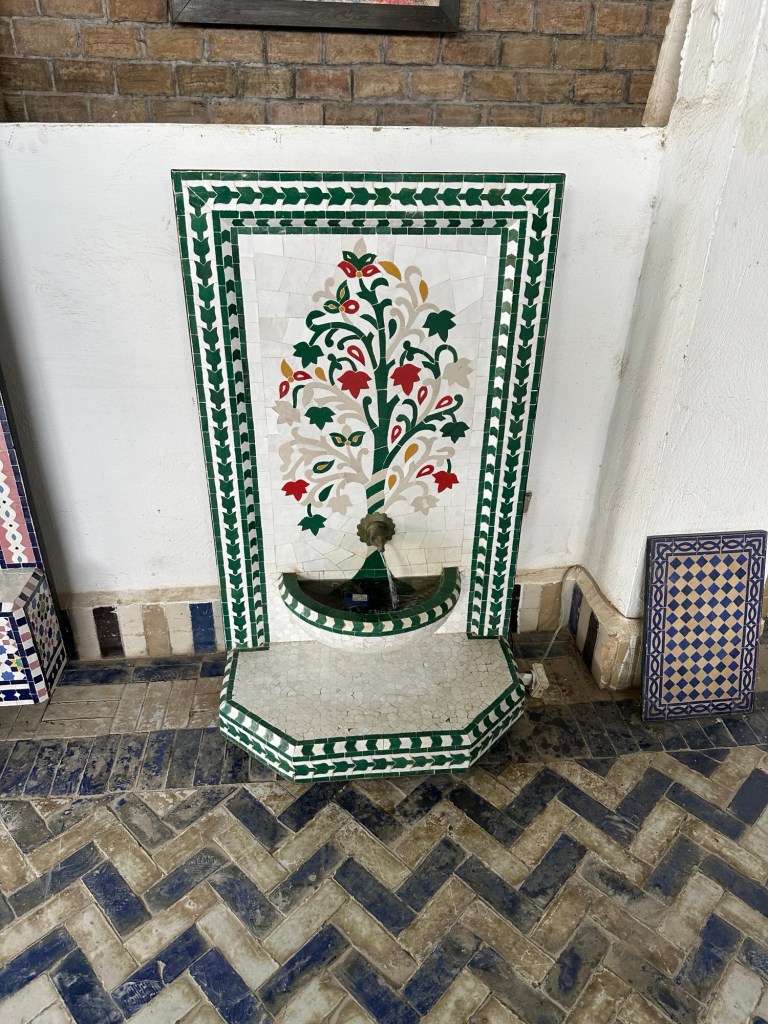
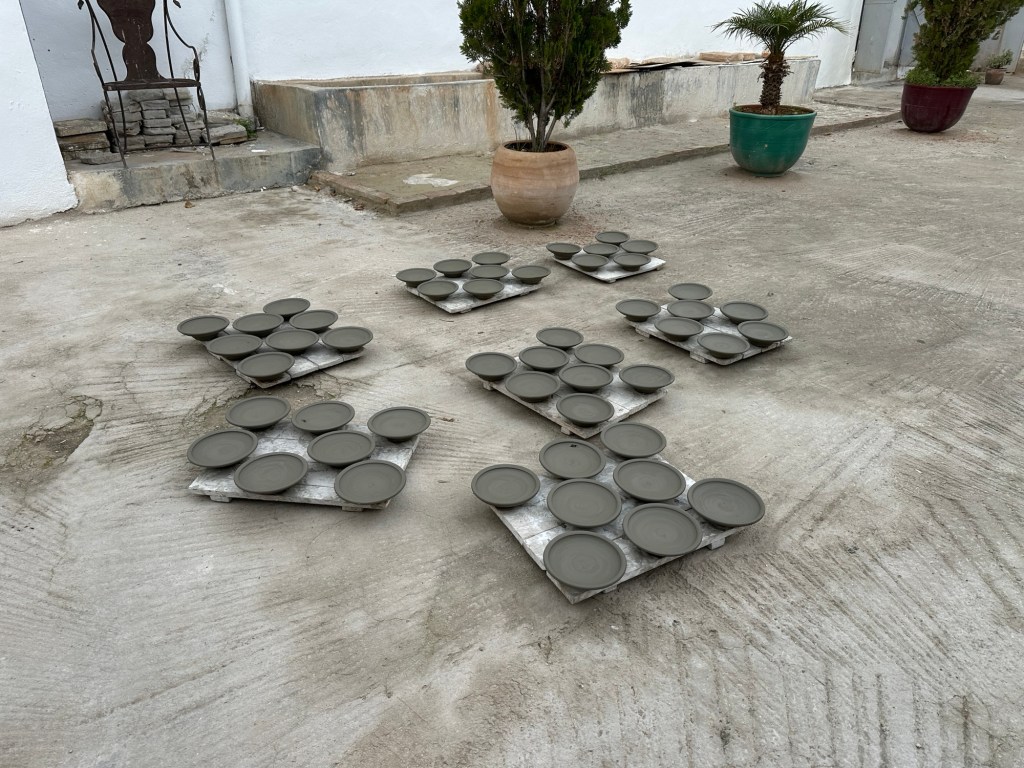
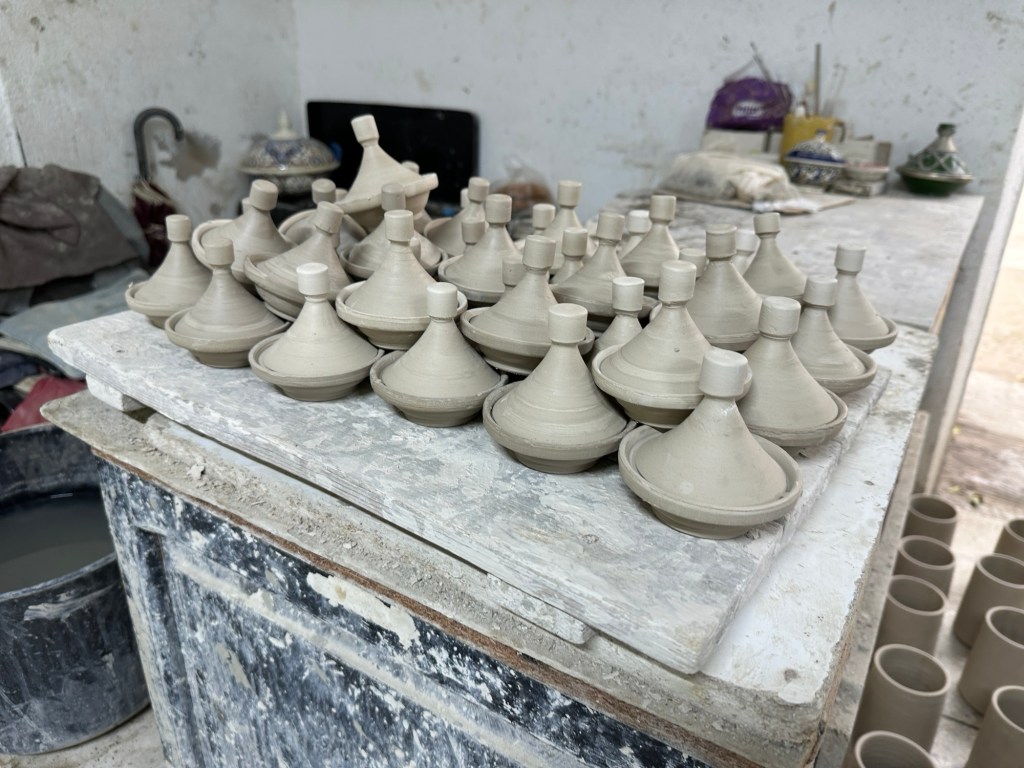
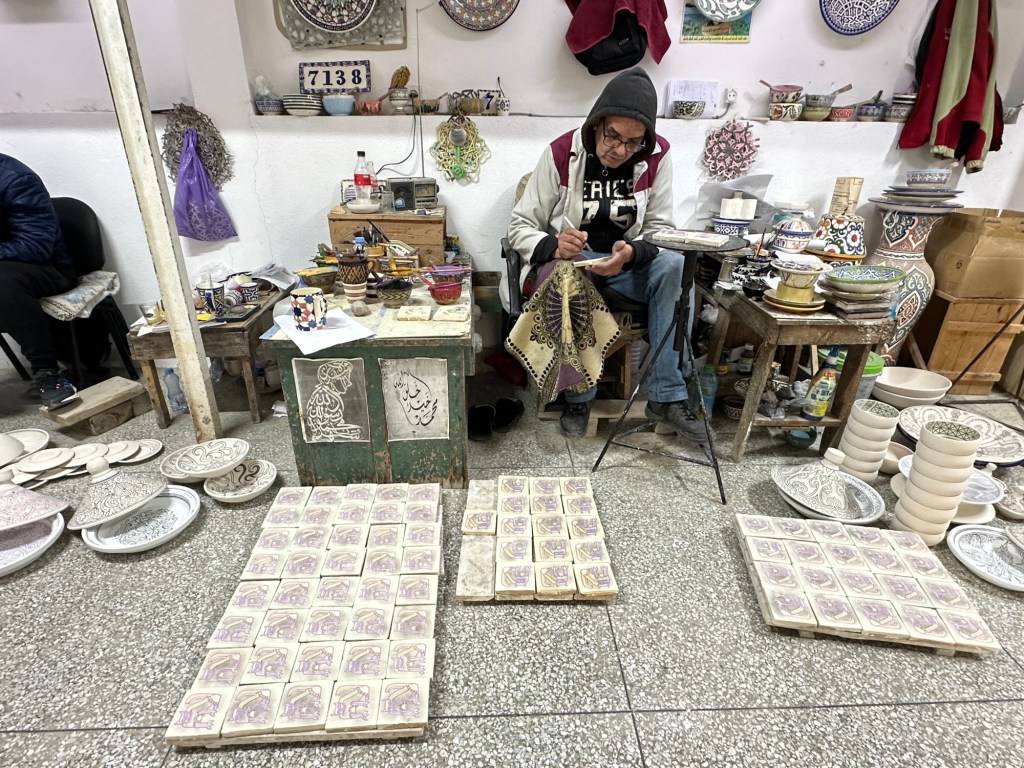
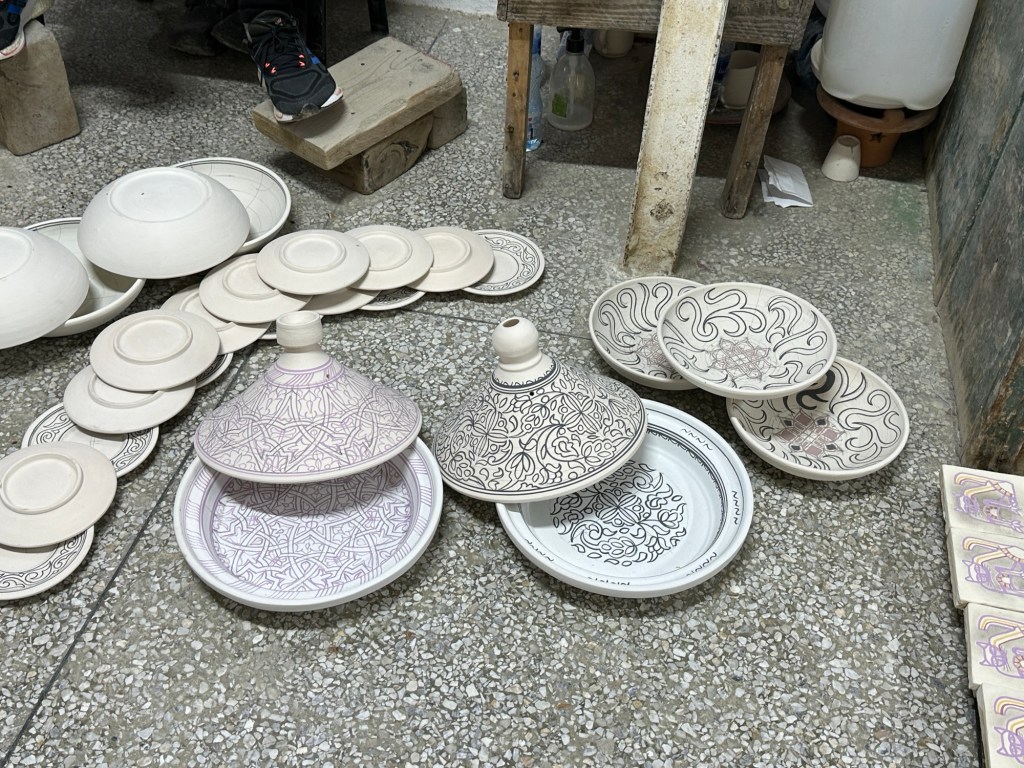
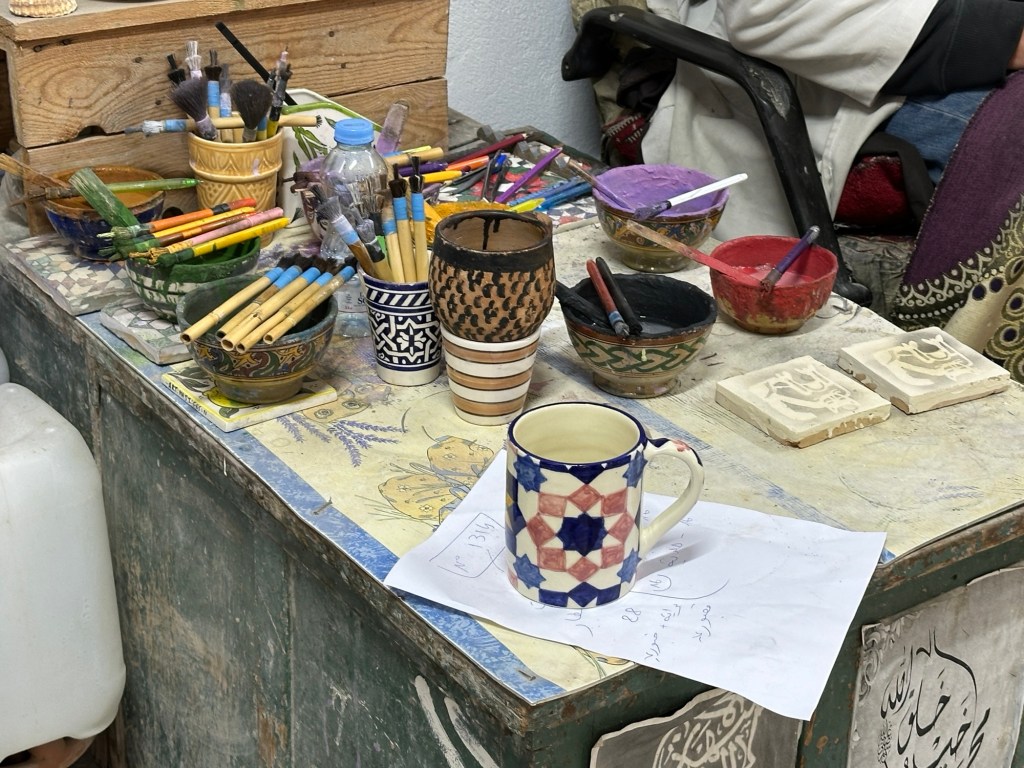
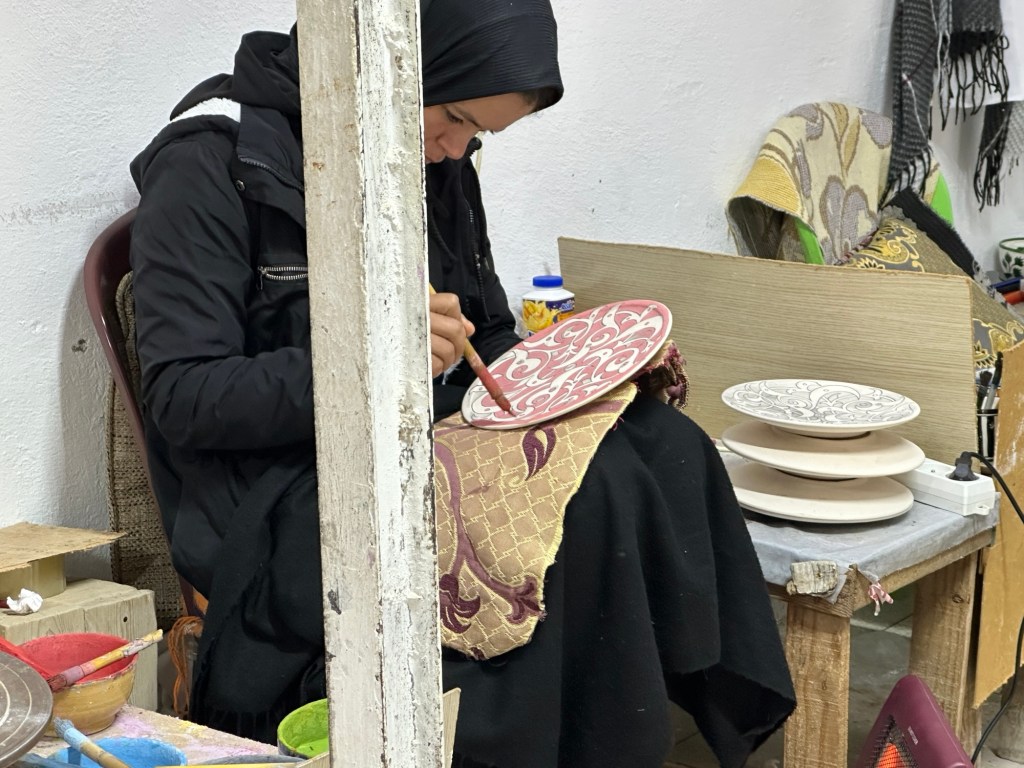
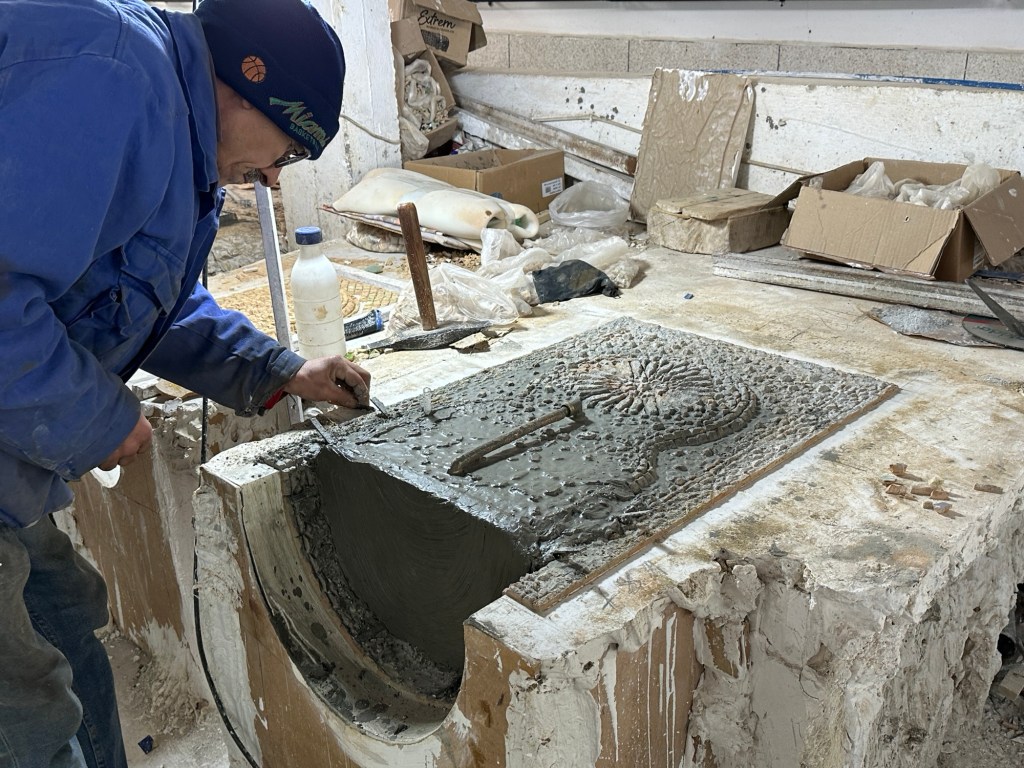
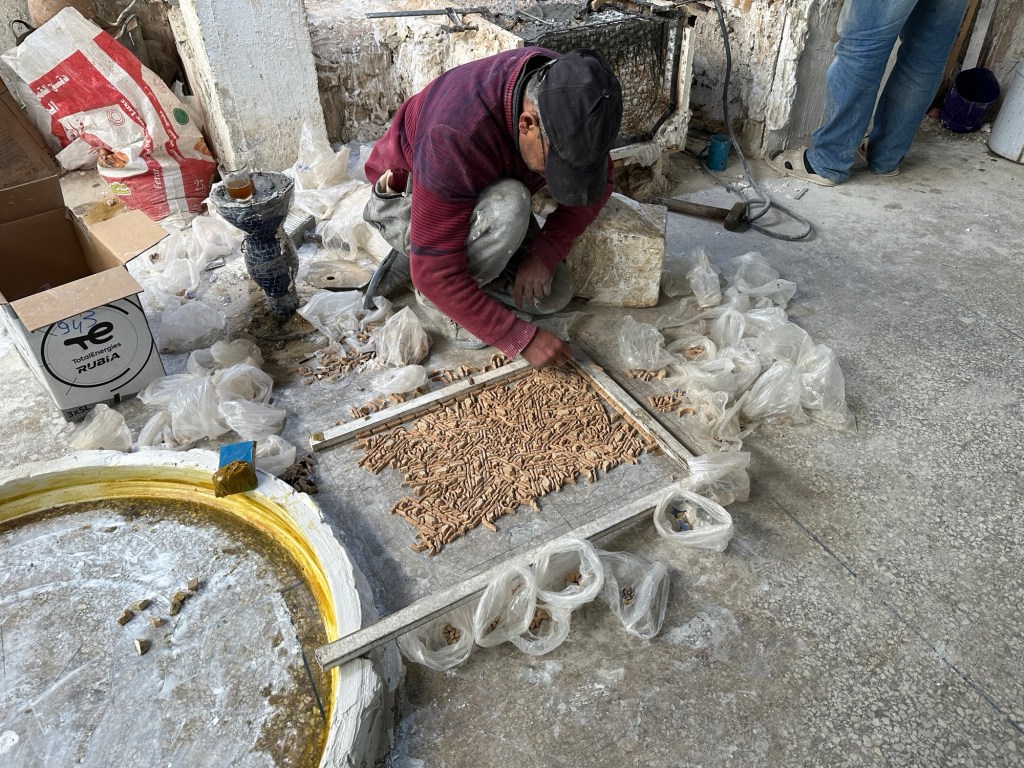
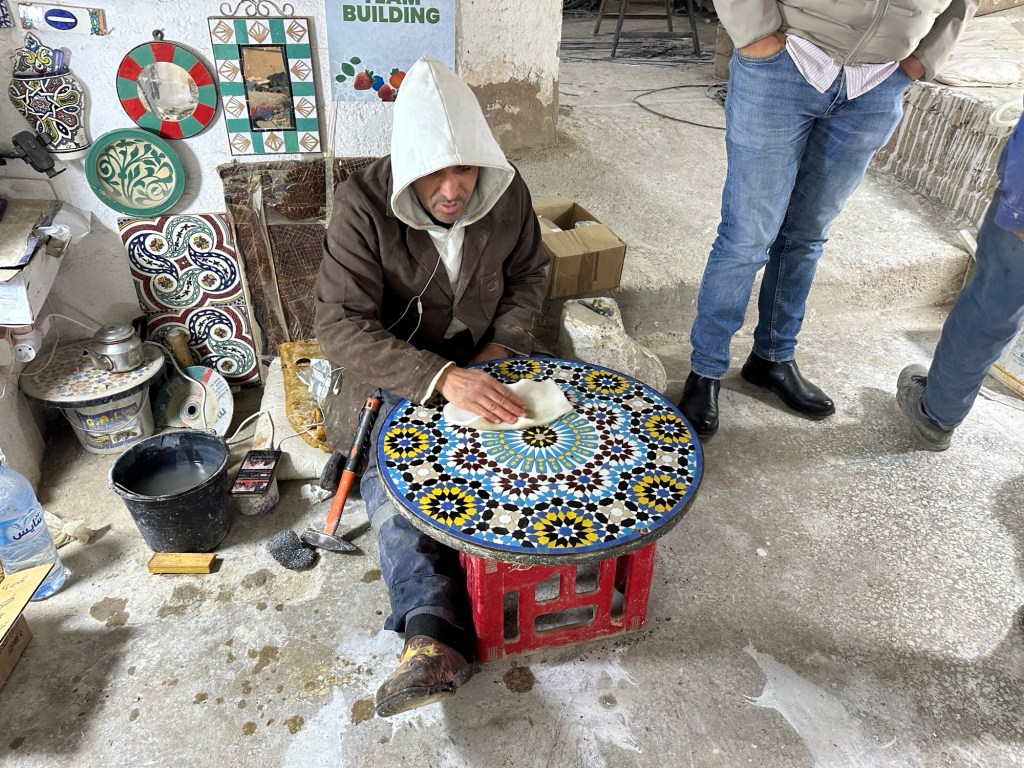
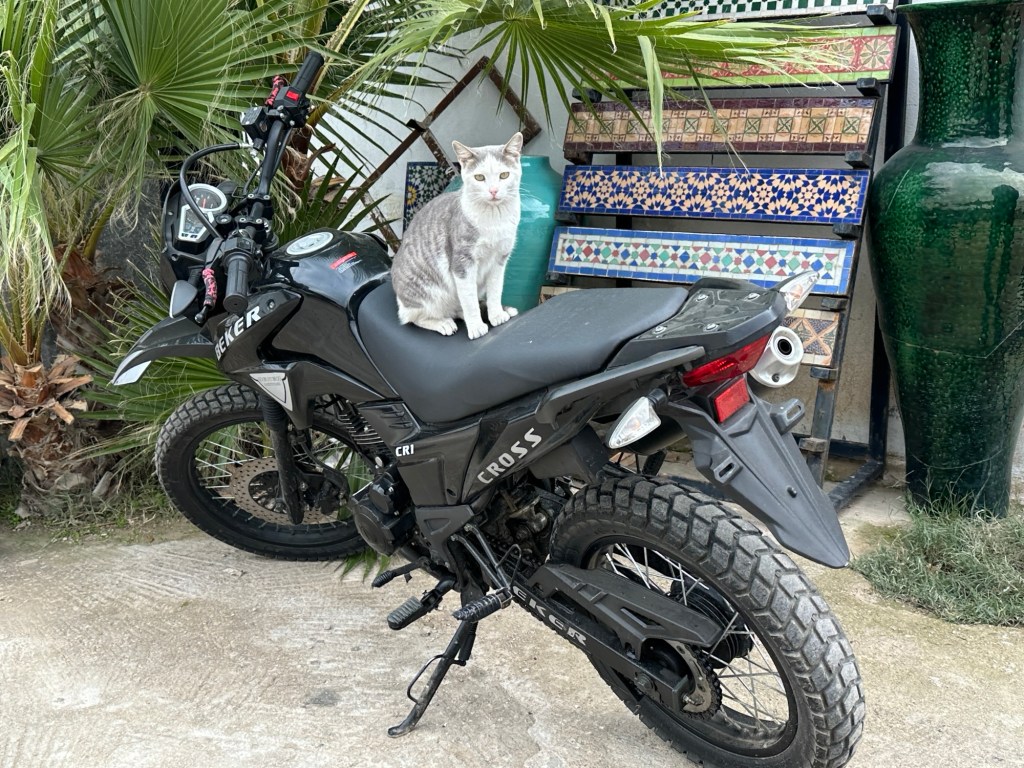
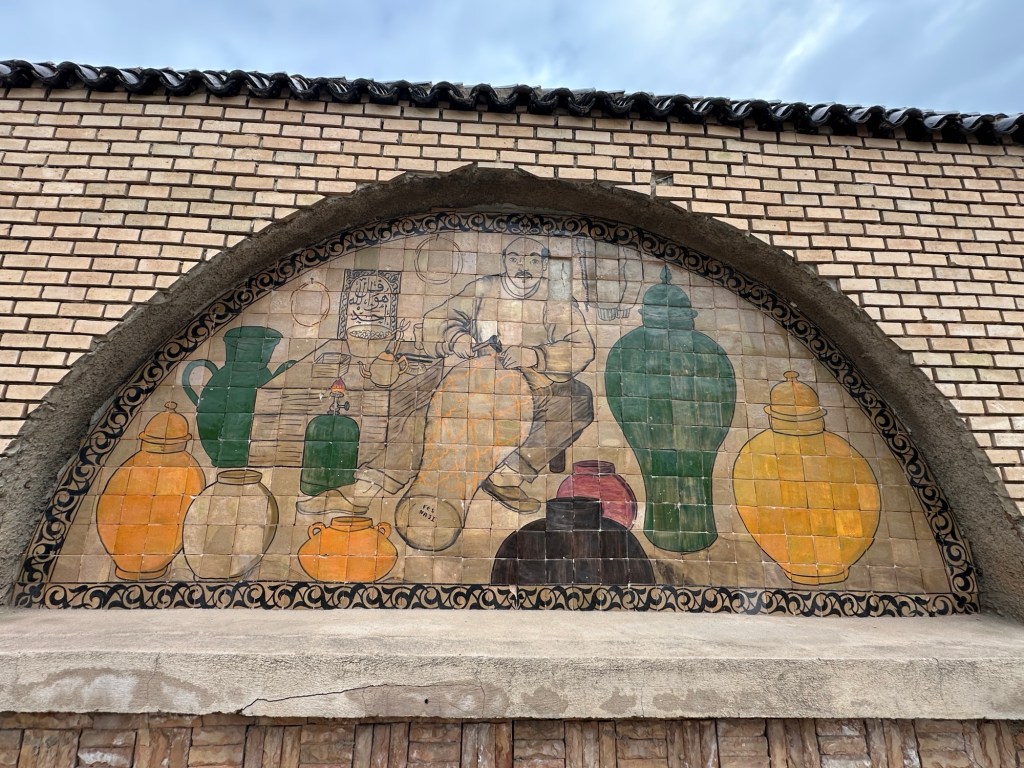
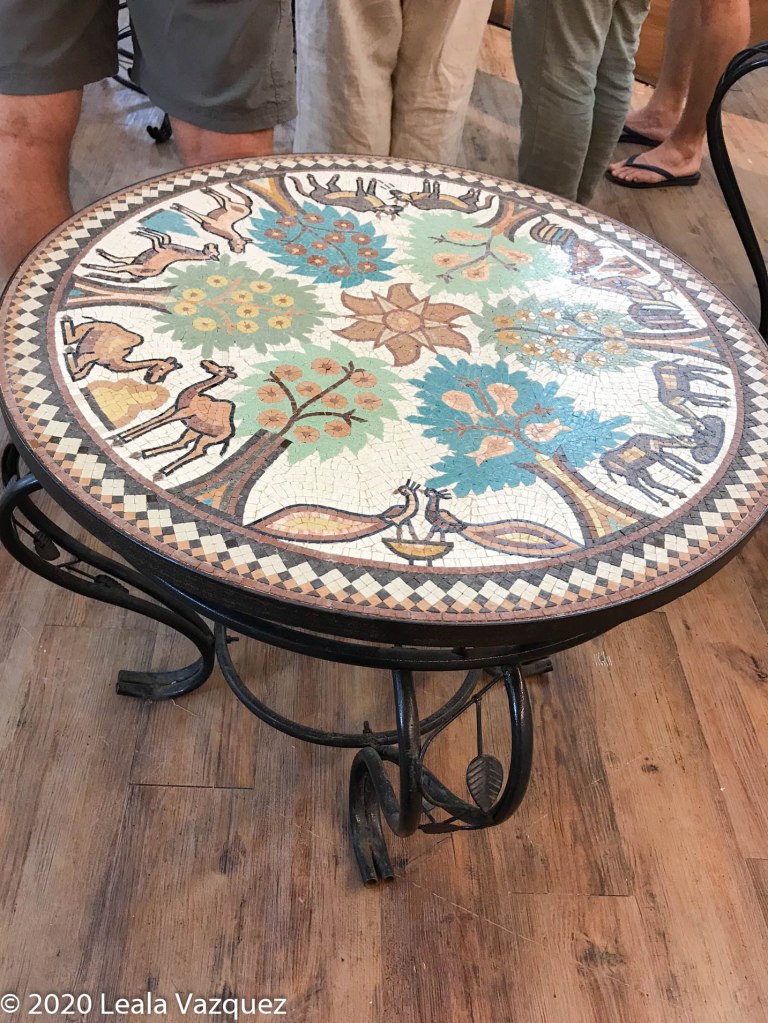
Before we visit the Medina we stop at an art collective called Art Naji to view potters and mosaic artisans at work. We watch a tagine pot being made on a pottery wheel. Another room has artisans that paint on designs by hand.
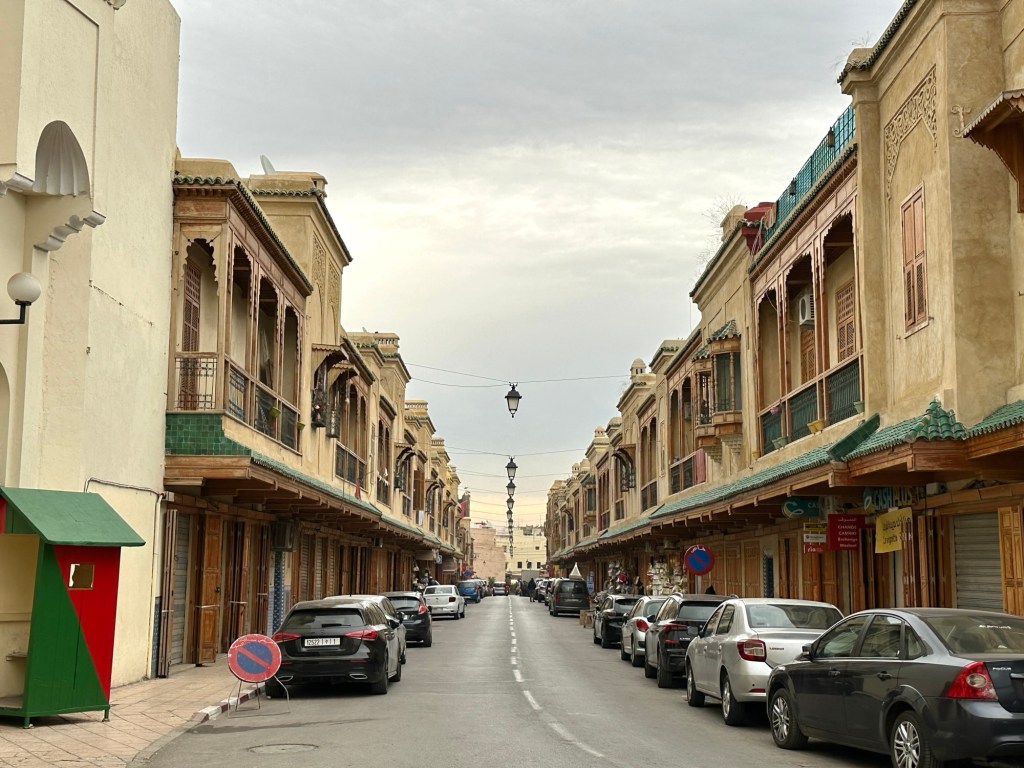
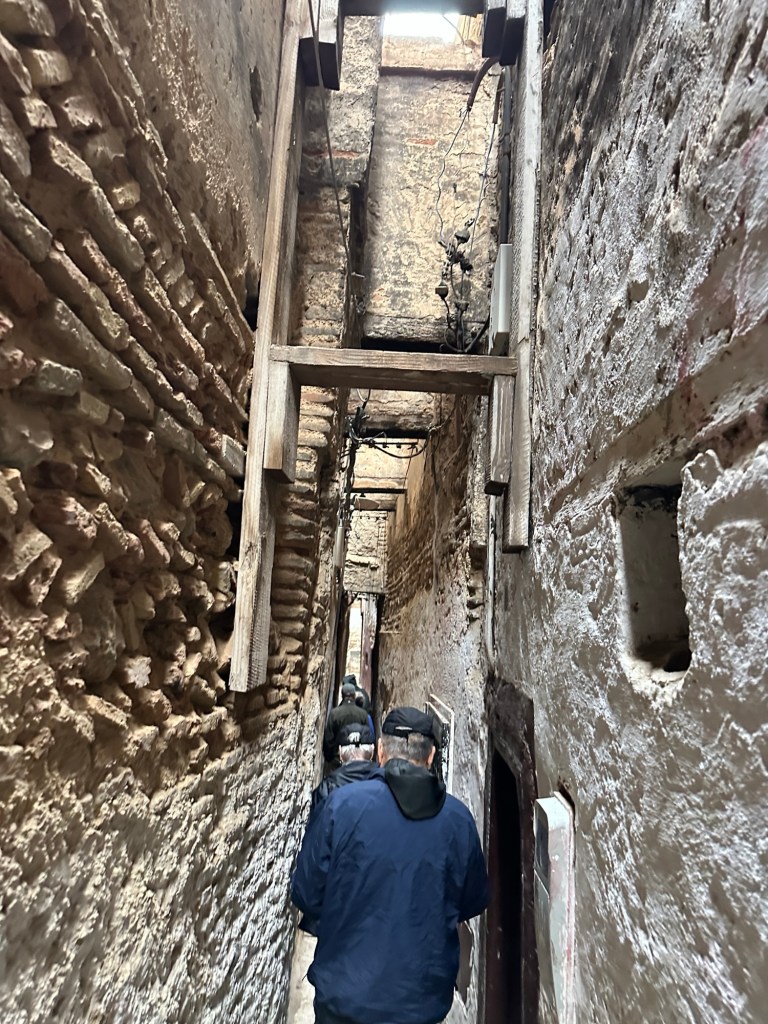
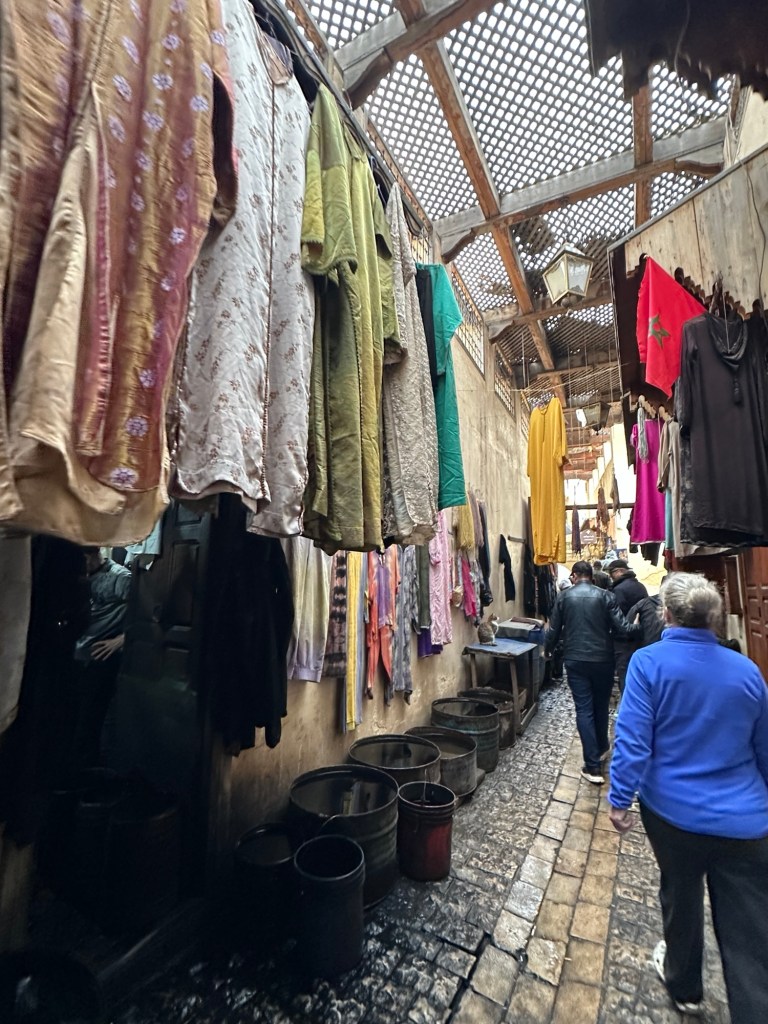
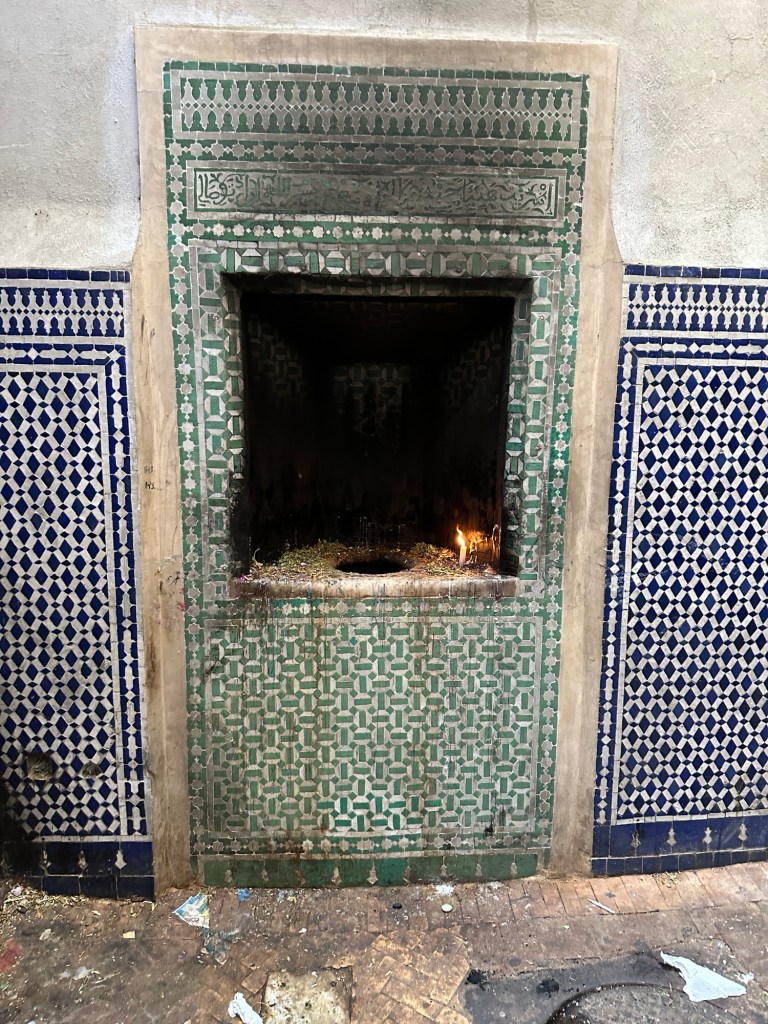
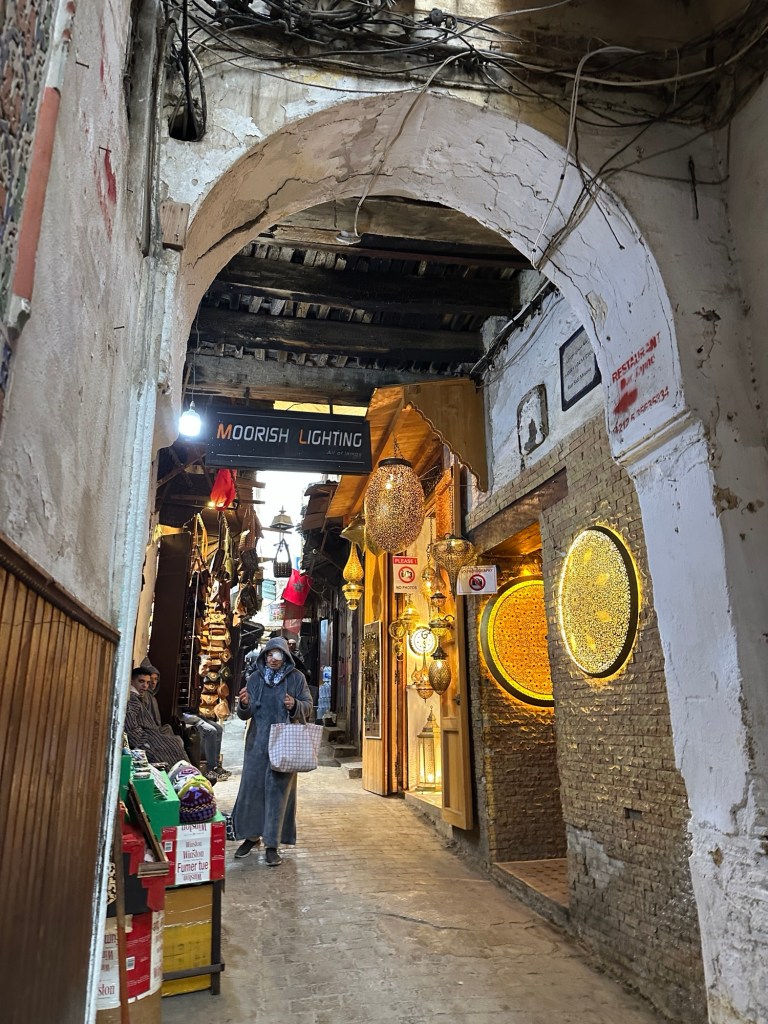
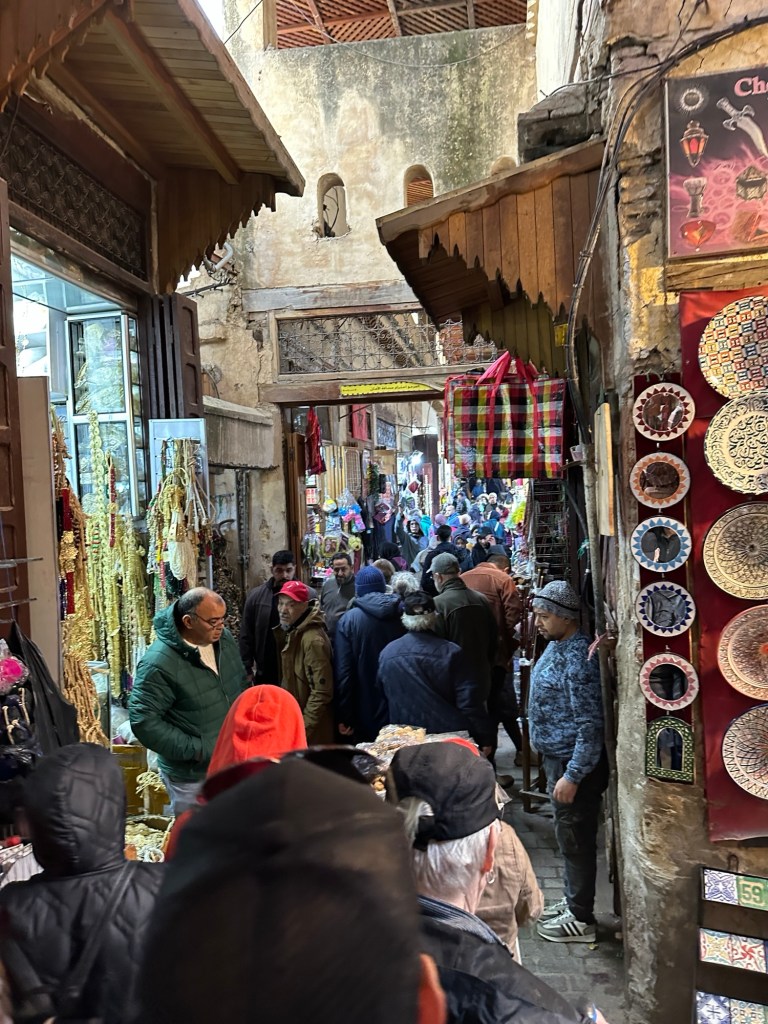
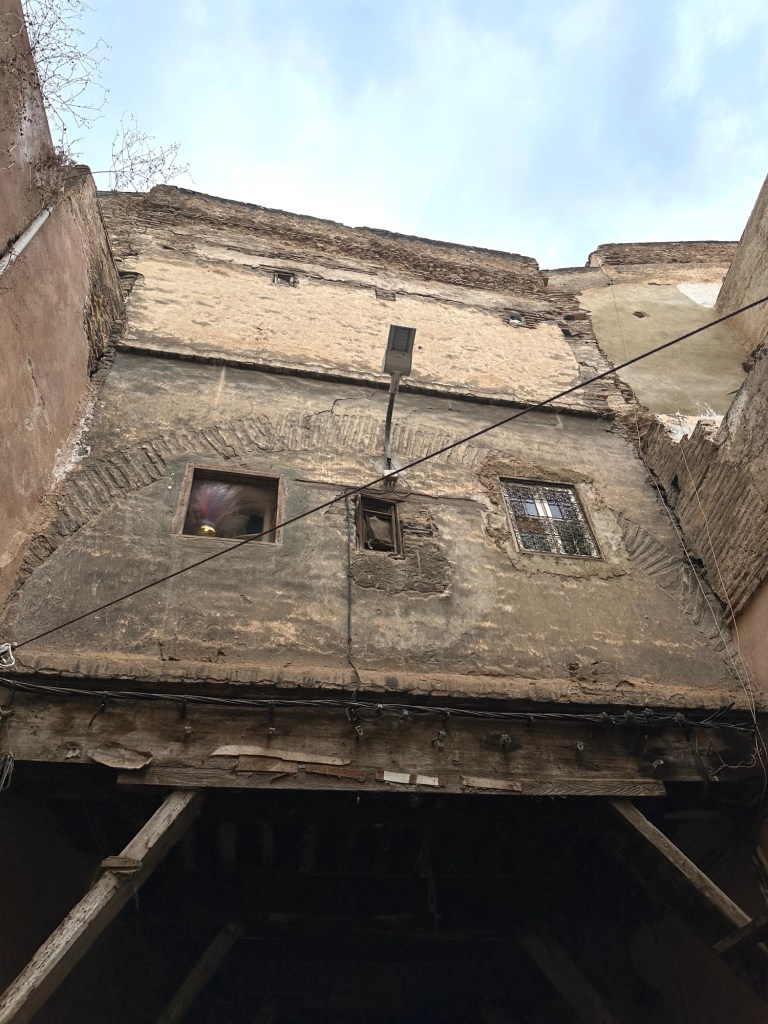
Next we visit the old Medina where a guide is recommended since there are over 9,000 streets and alleyways, many narrow and dead end. Luckily we have a local guide named Aziz.
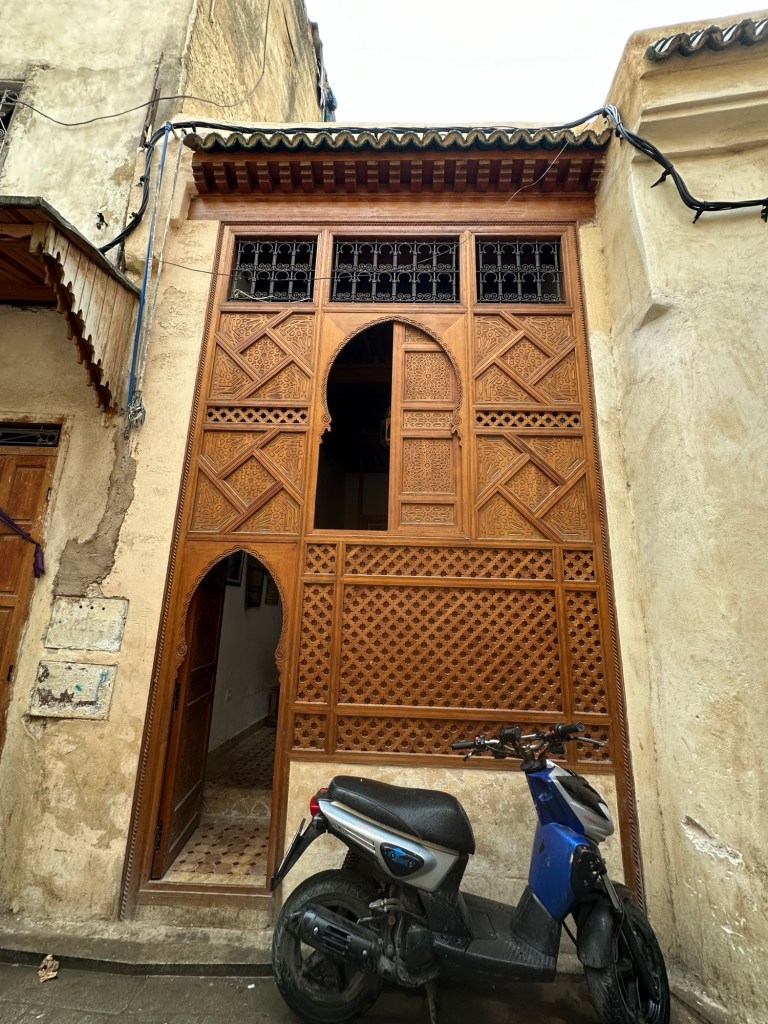
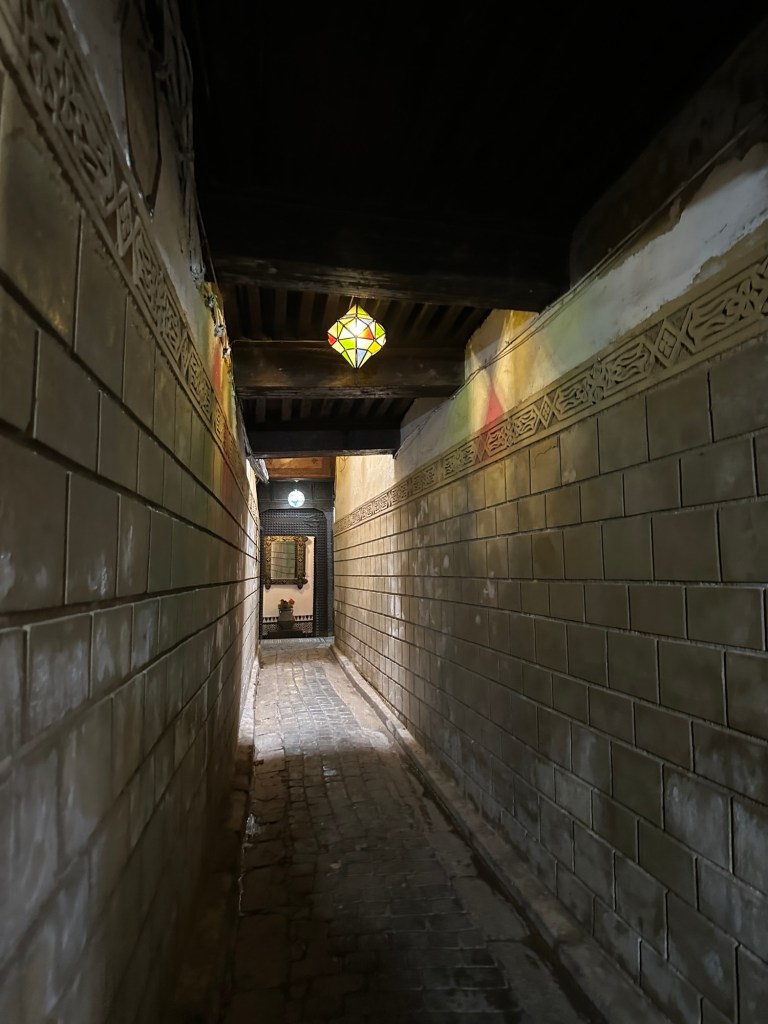
We travel down increasingly narrow alleyways. It’s almost like we are going on a special adventure but this is the everyday life for people who live here and down some of these narrow alleys are their homes.
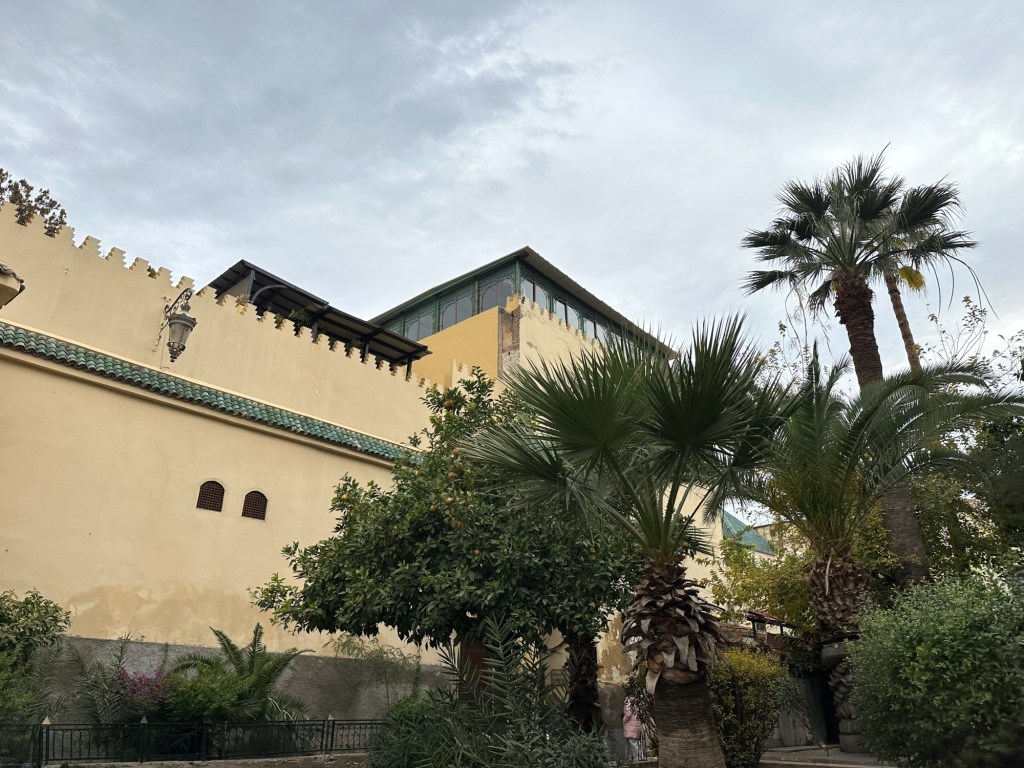
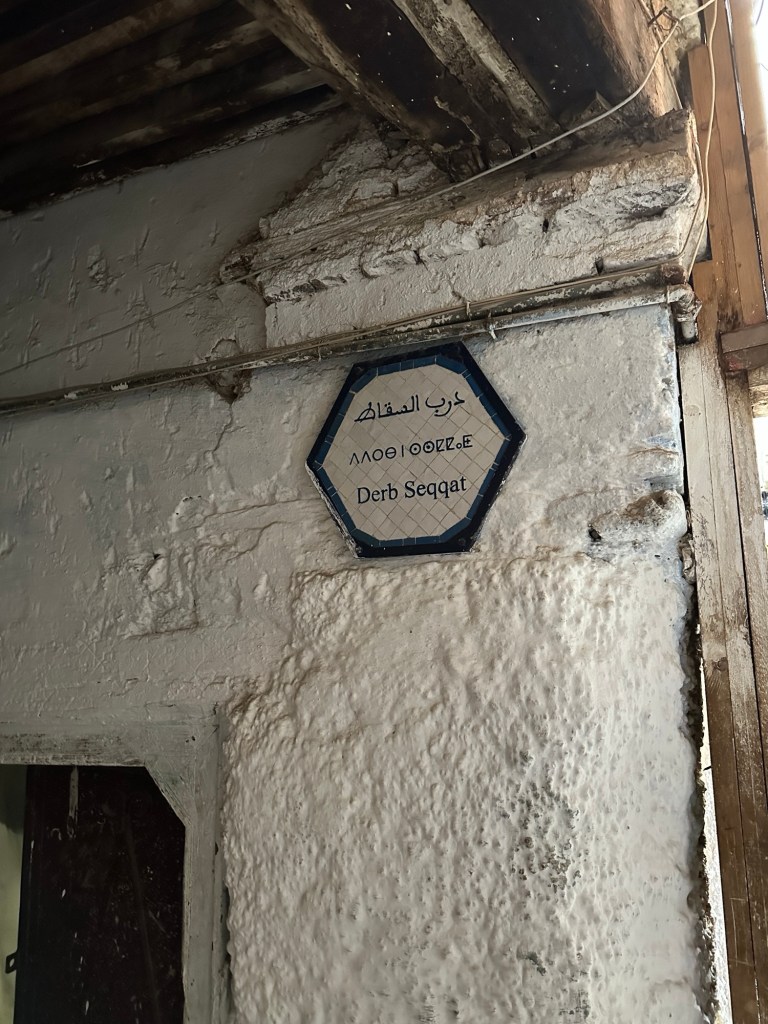
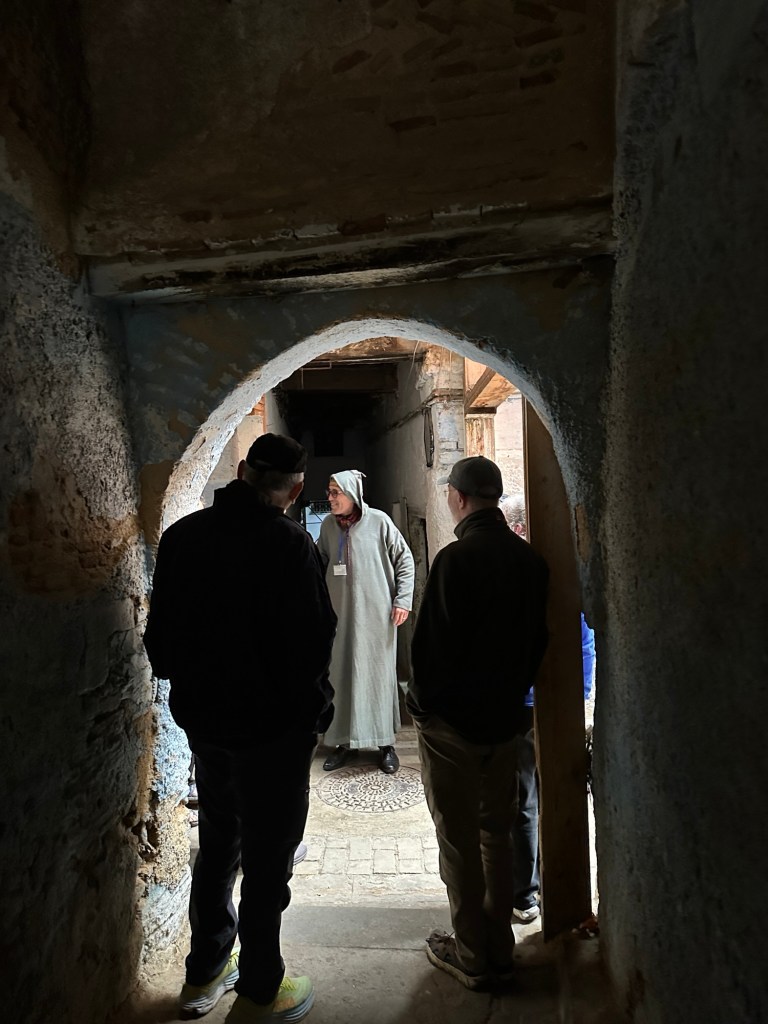
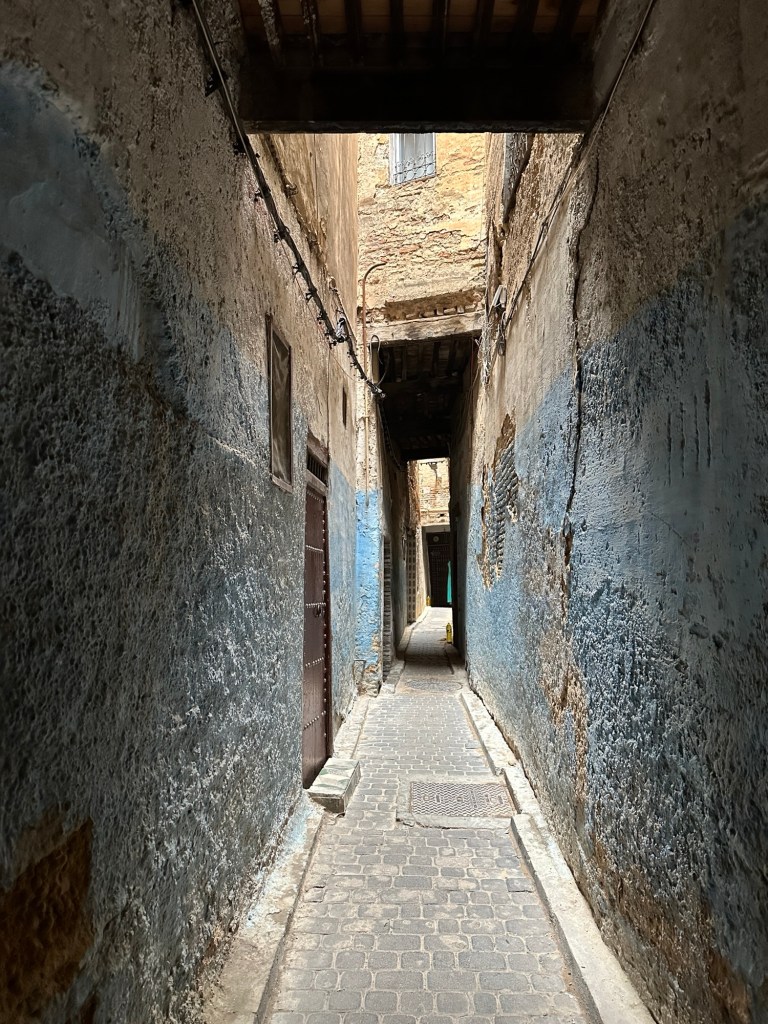
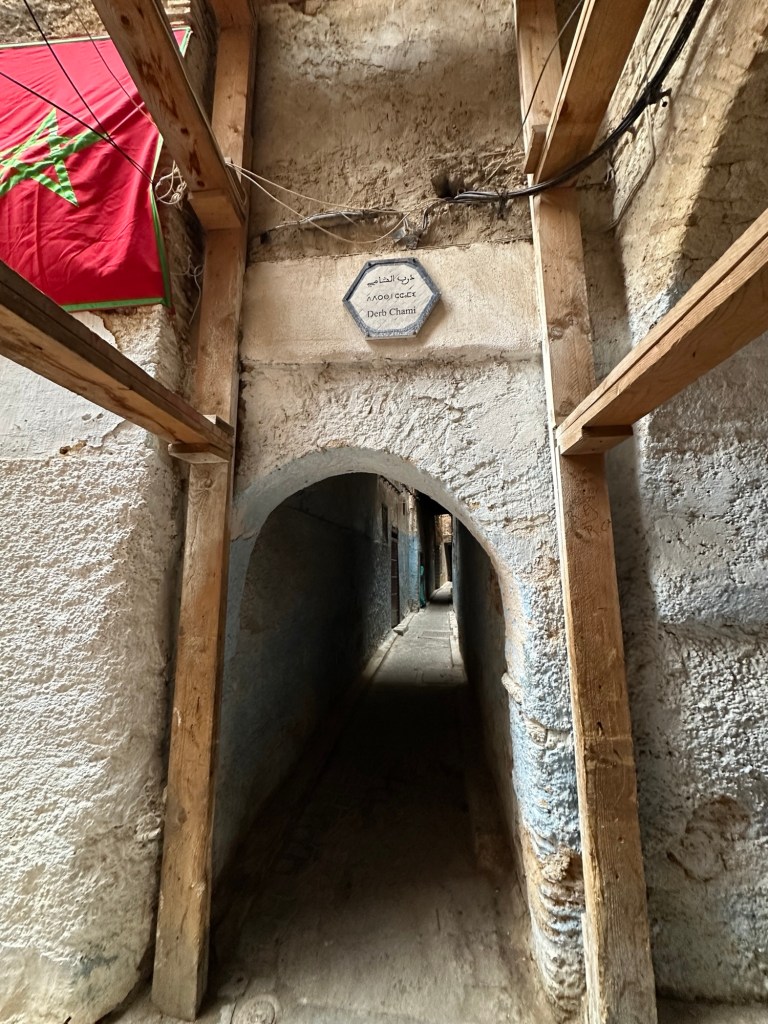
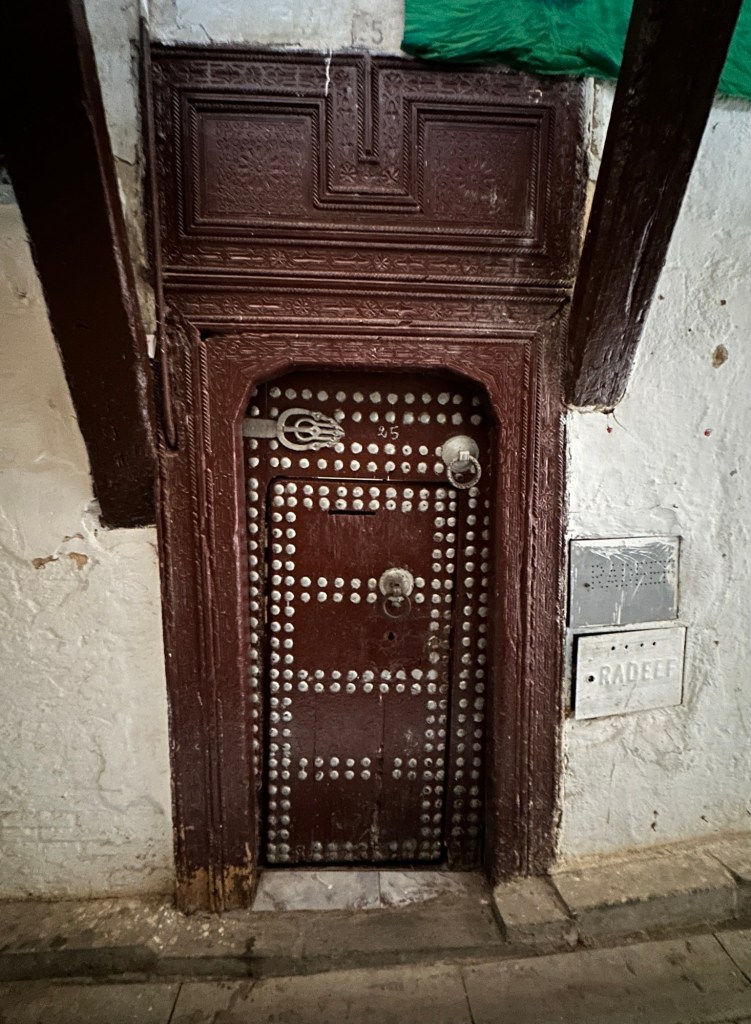
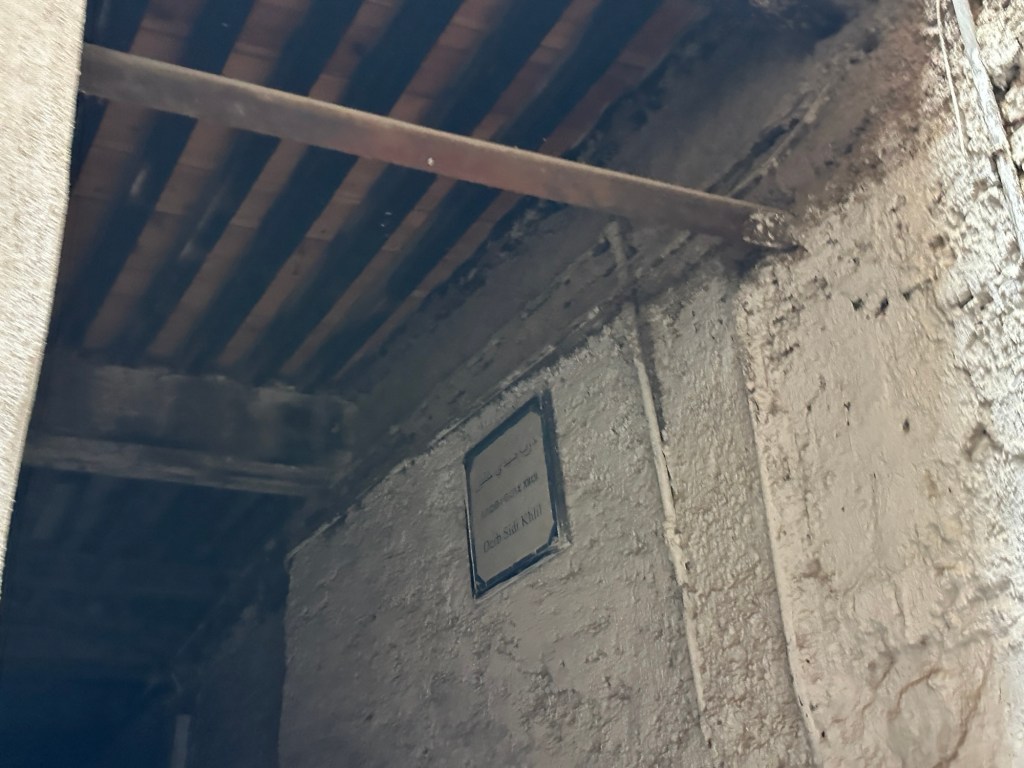
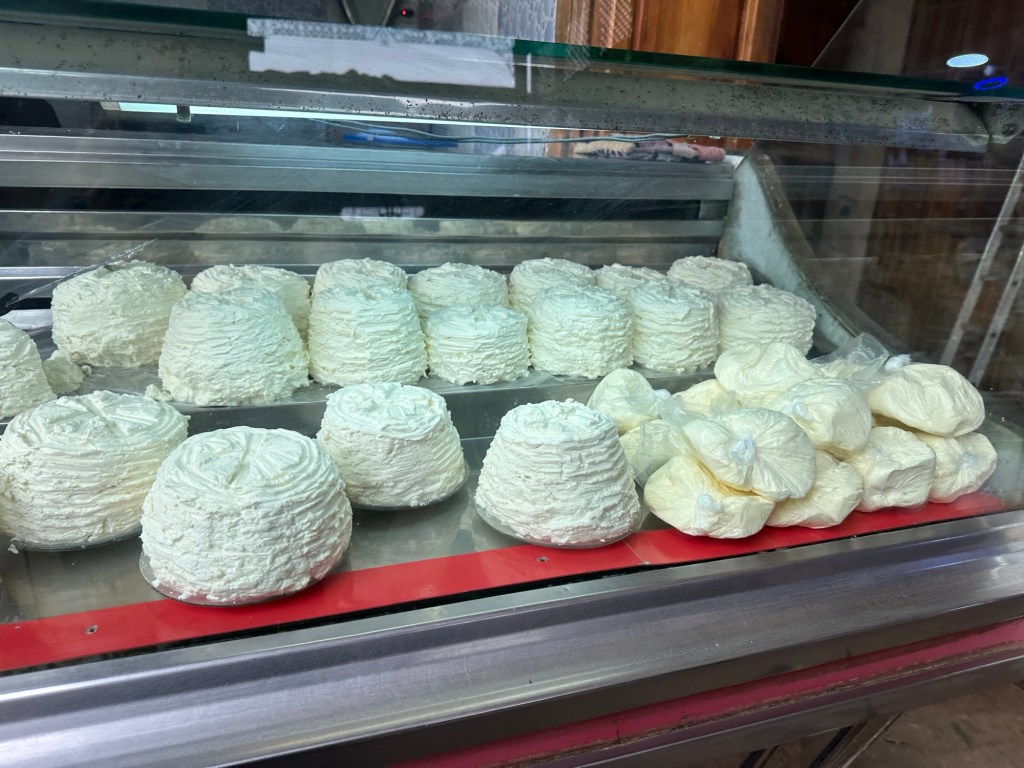
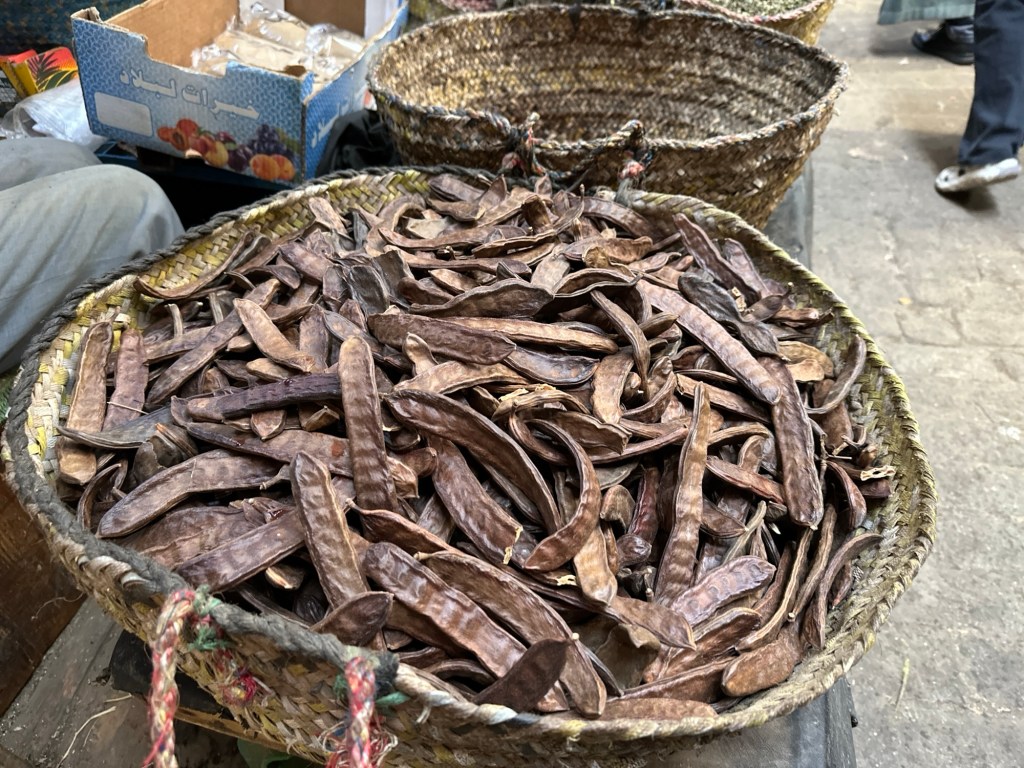
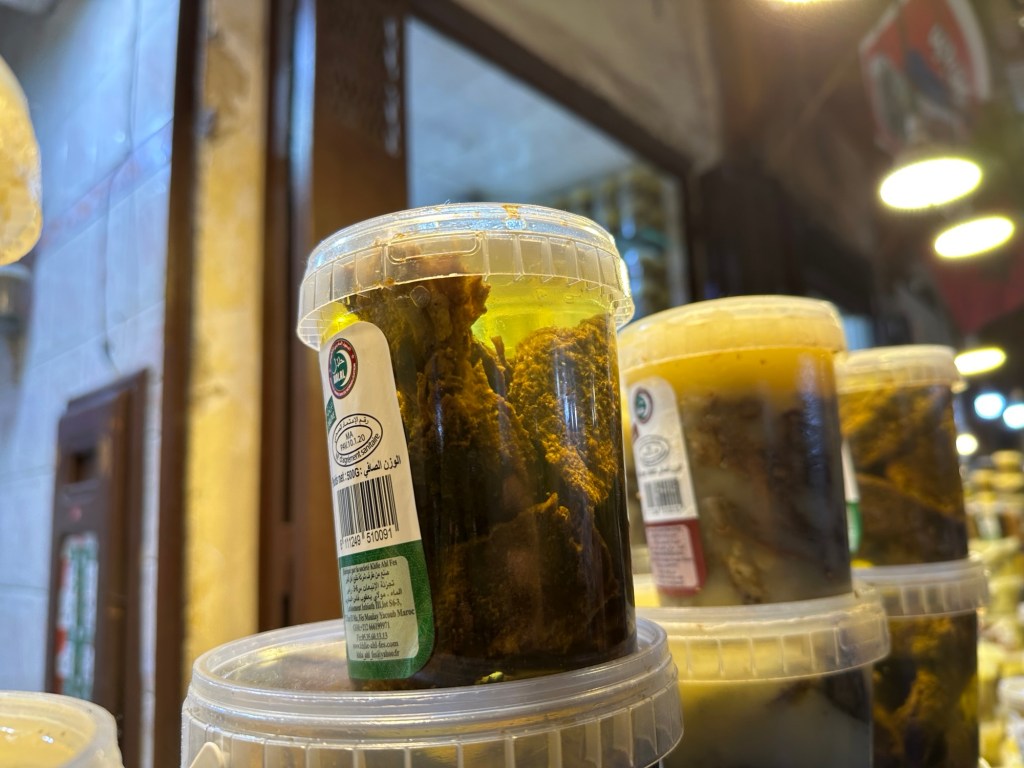
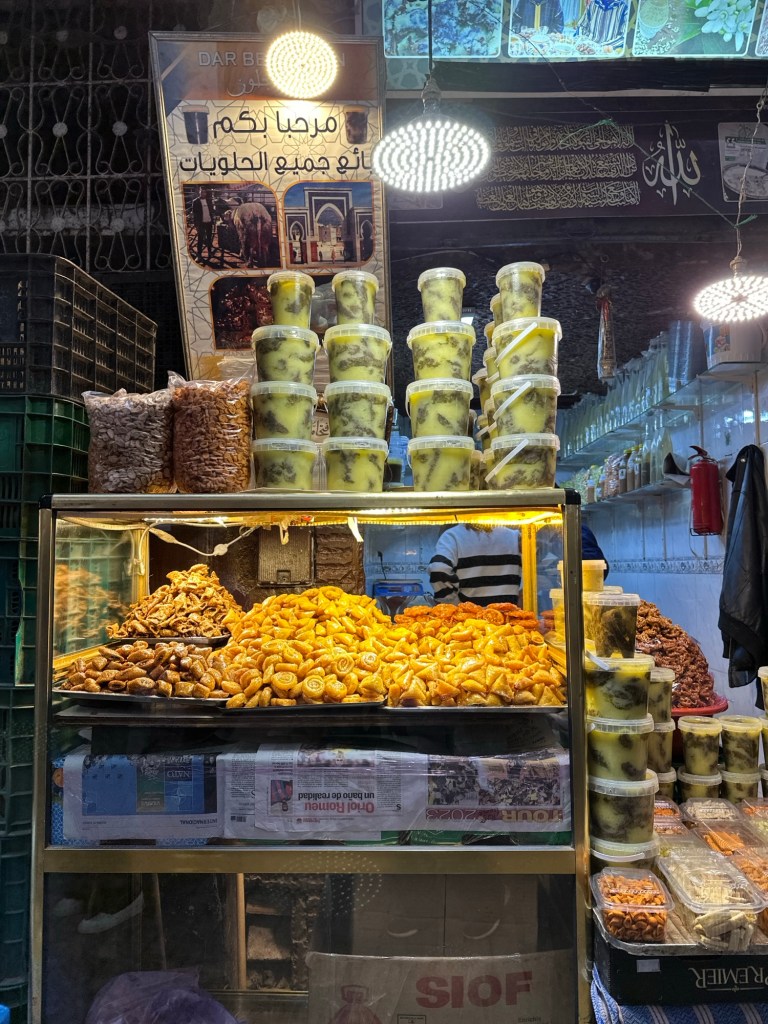
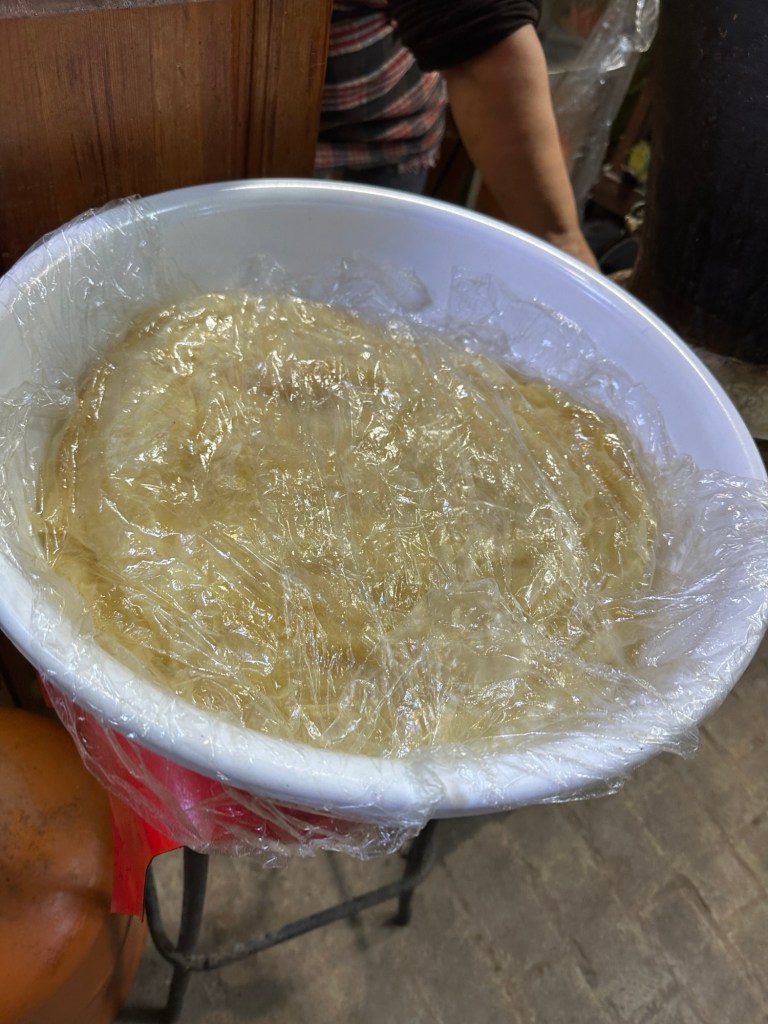
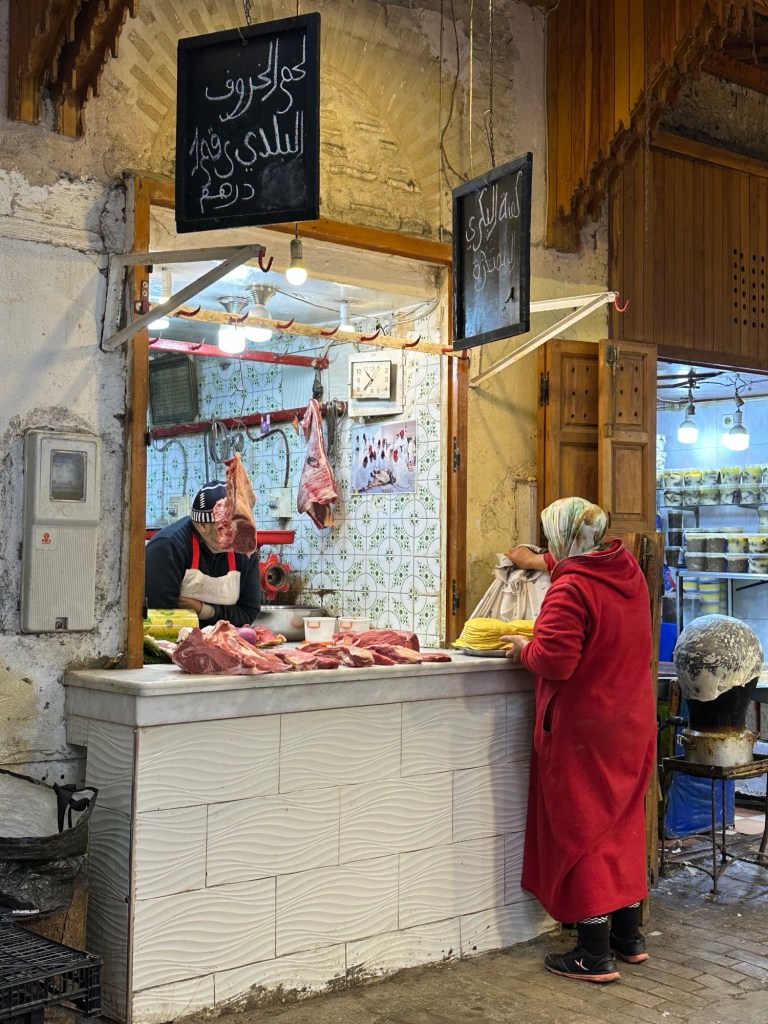
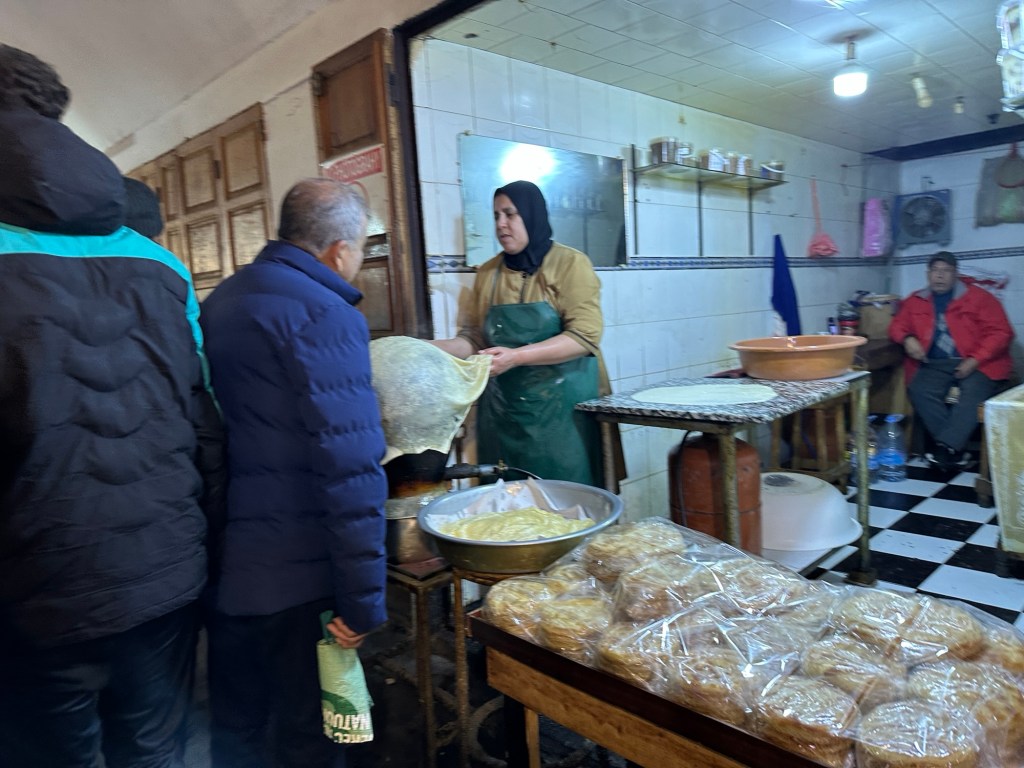
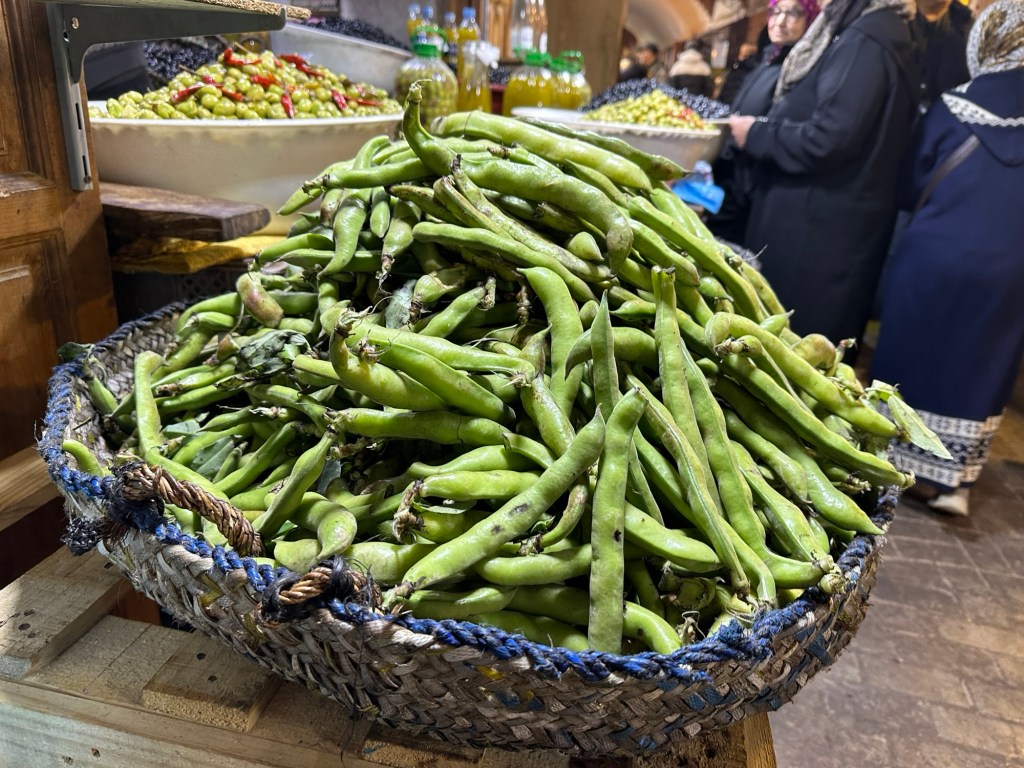
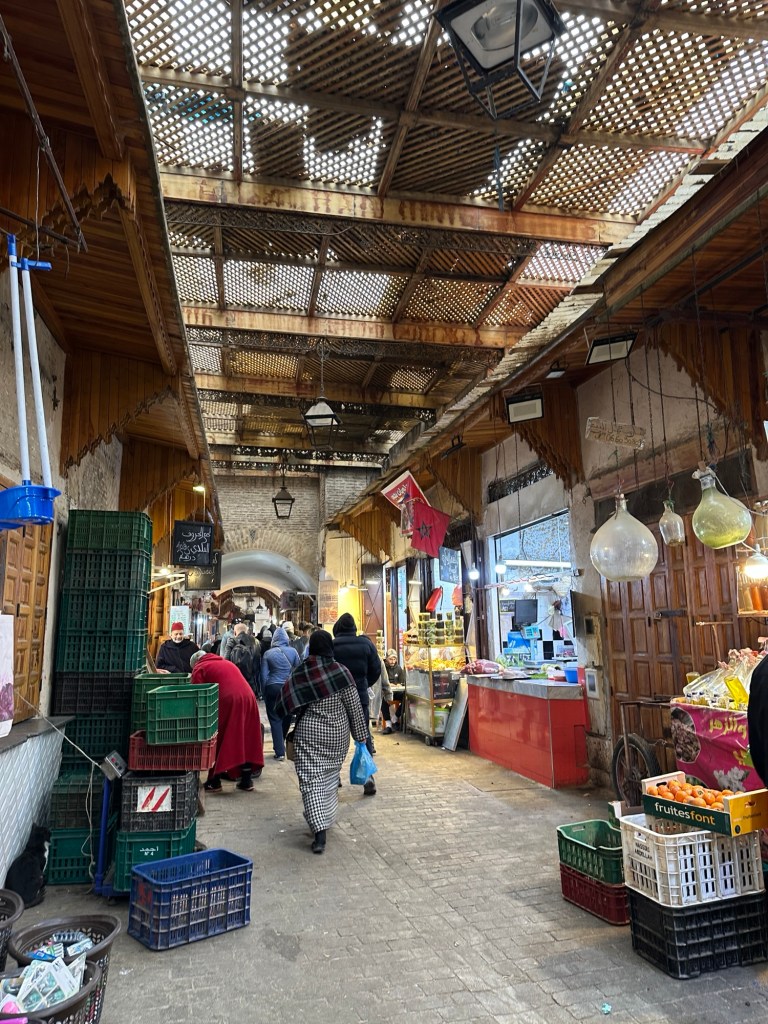
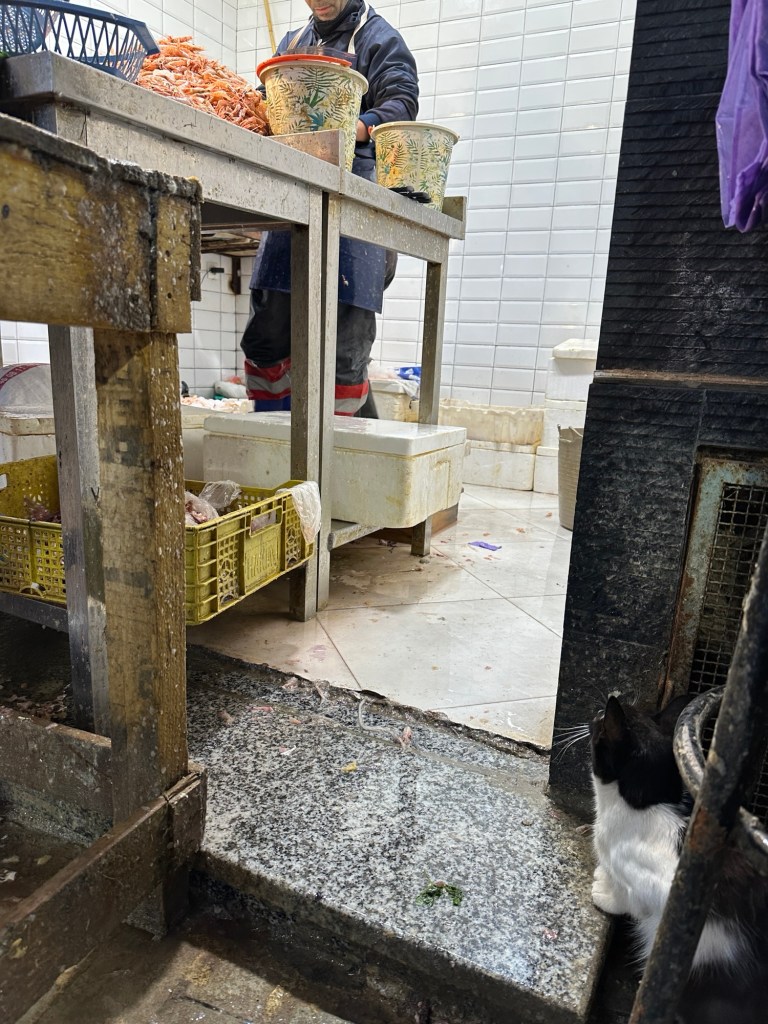
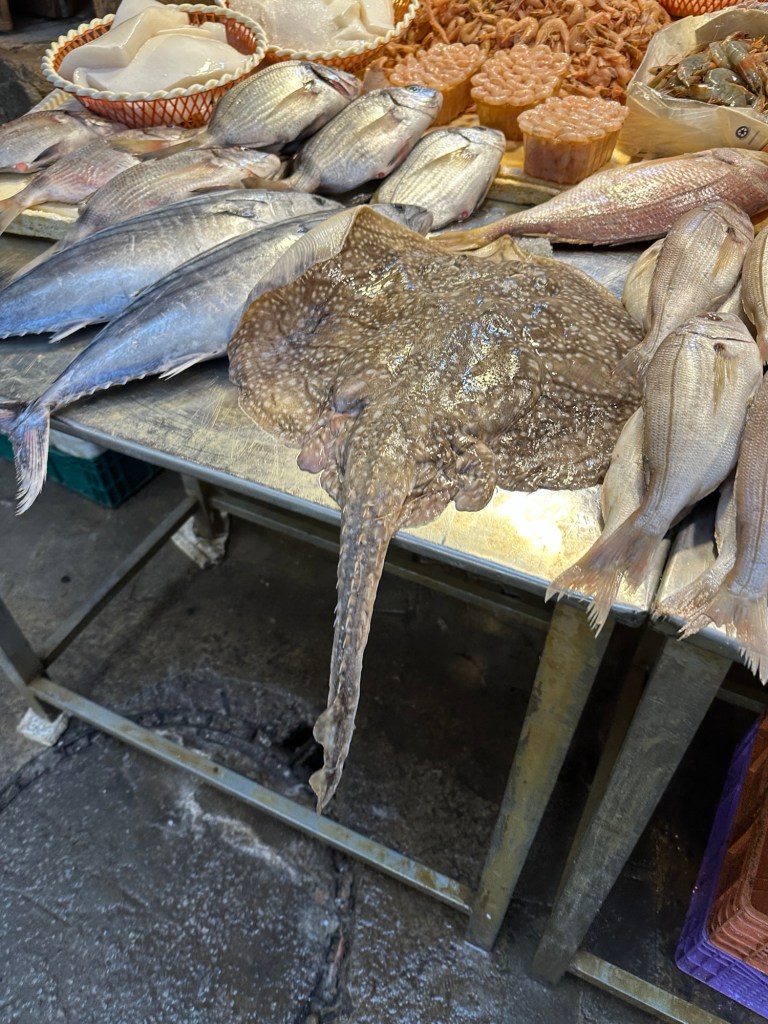
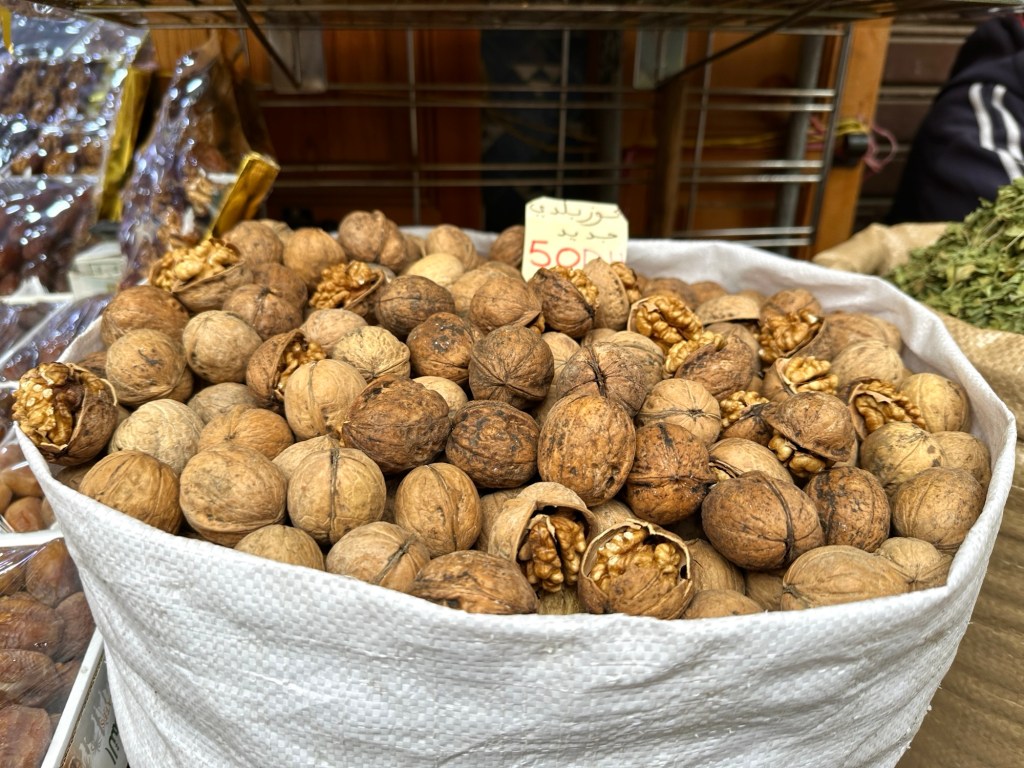
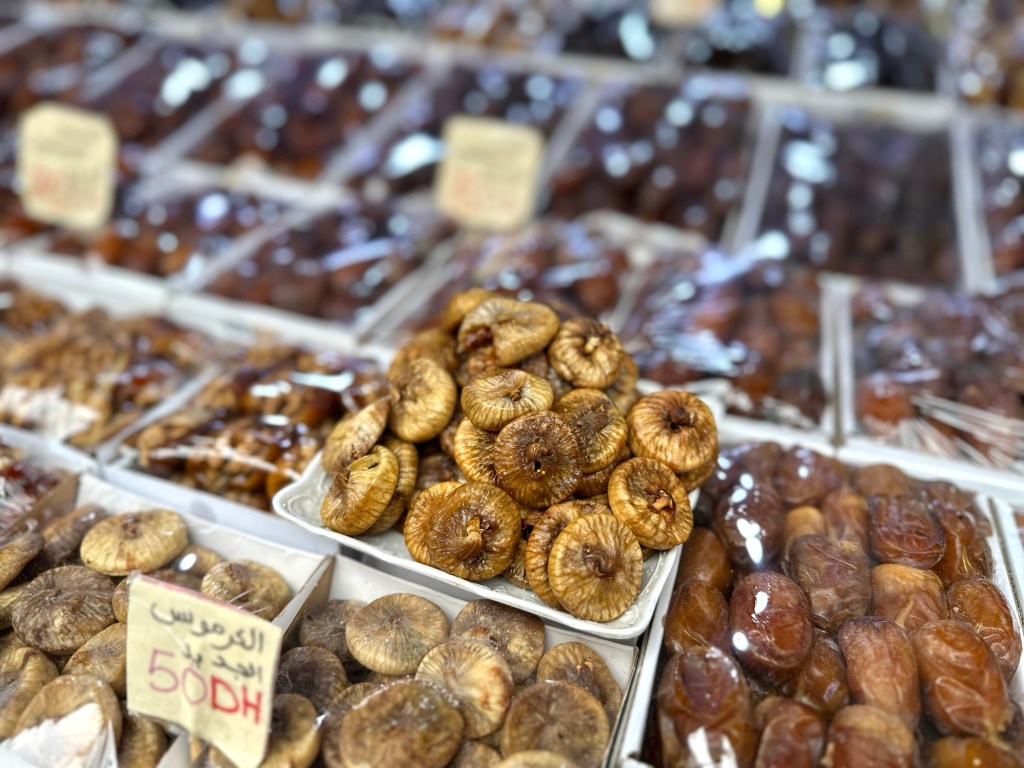
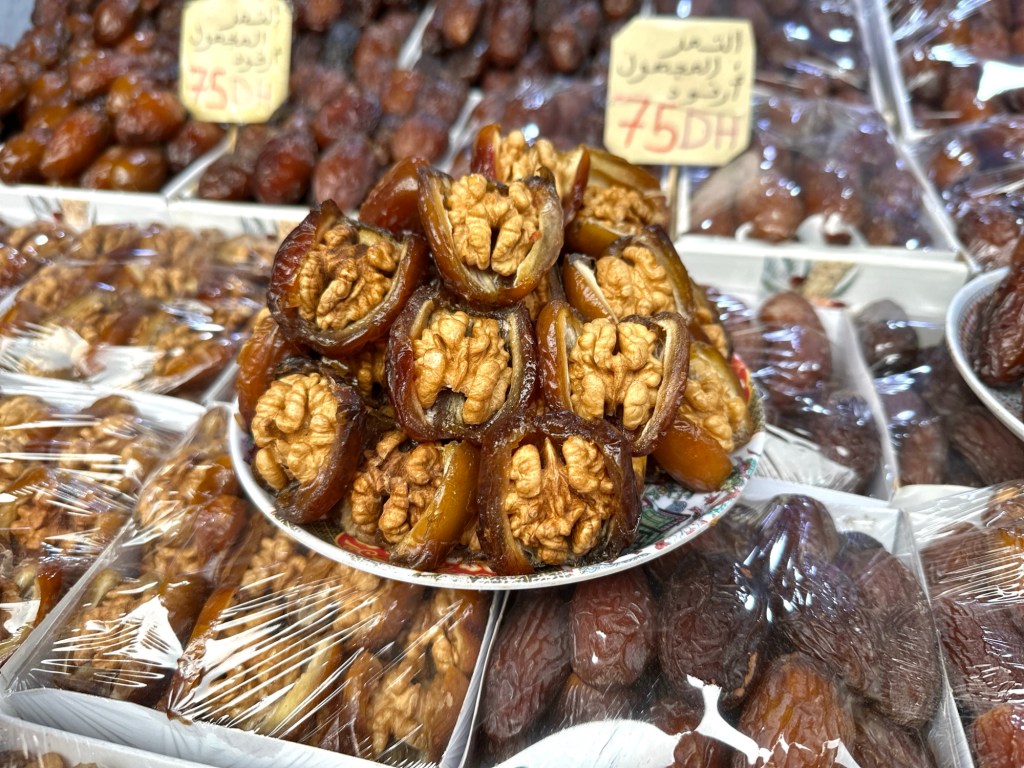
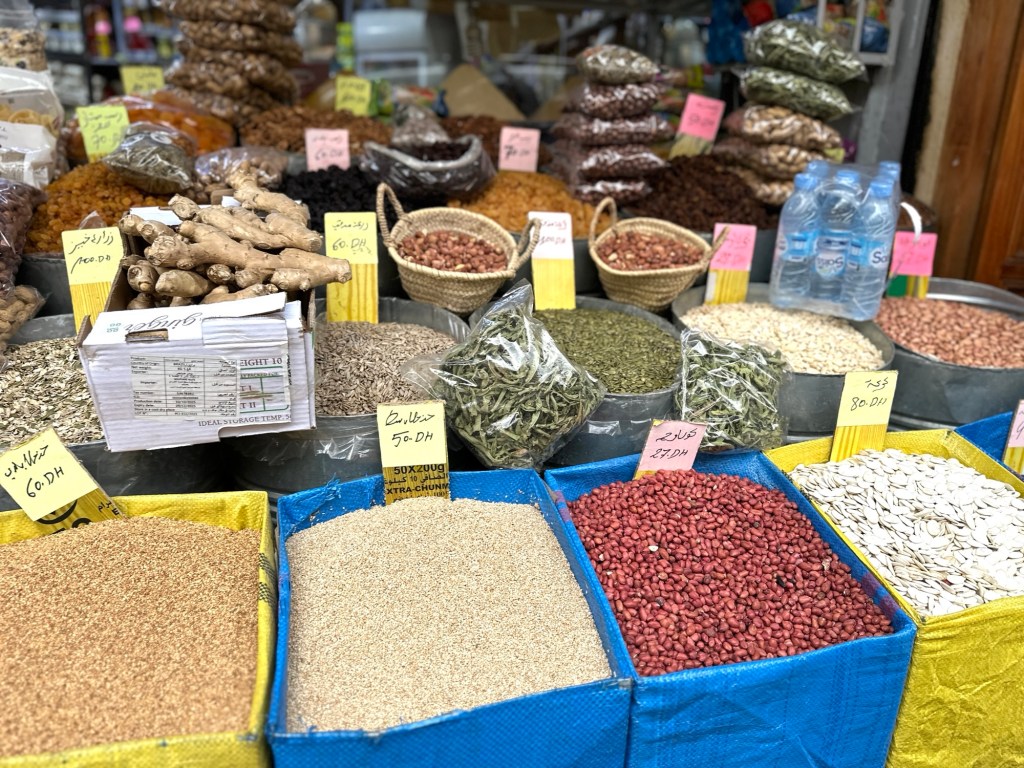
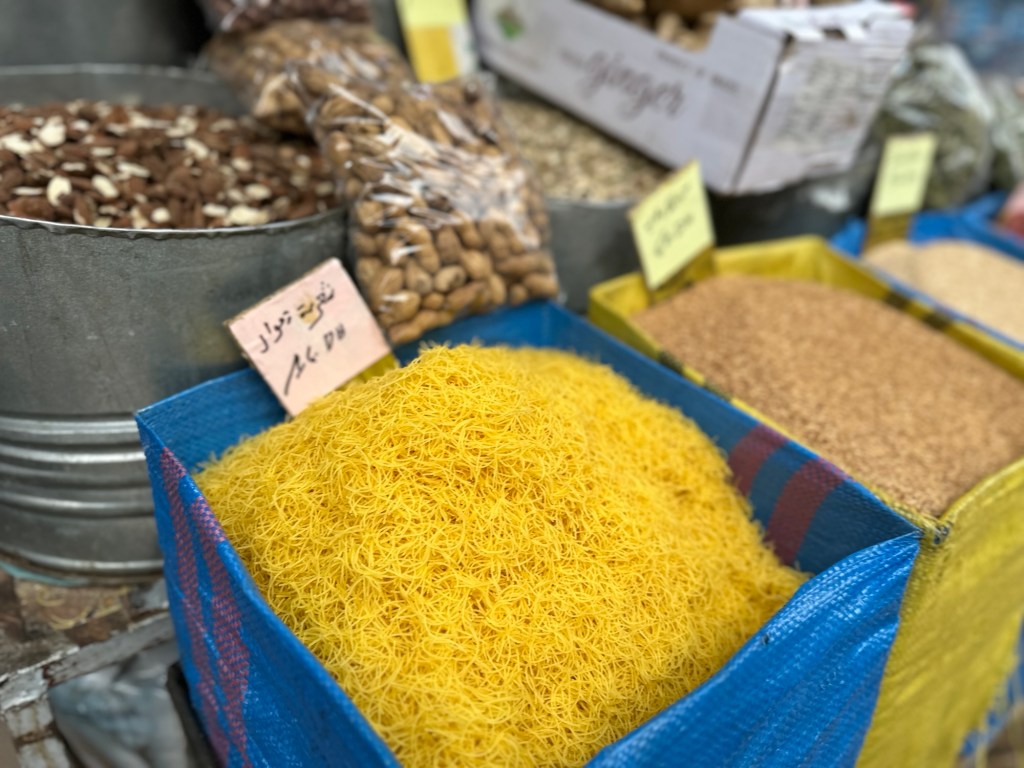
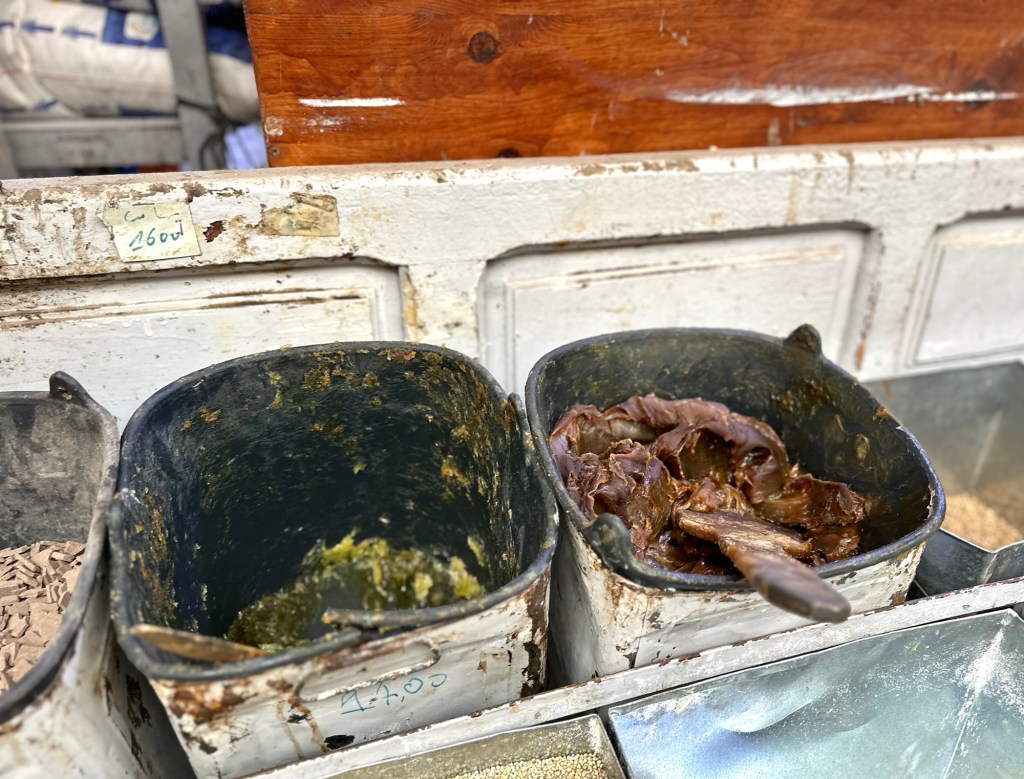
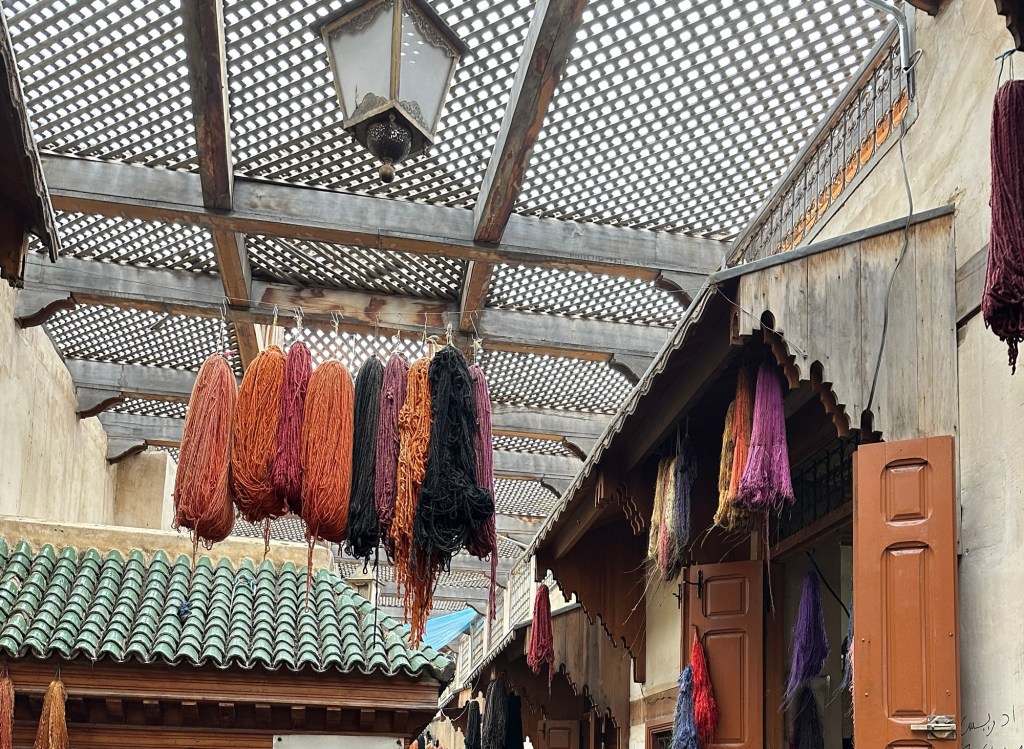
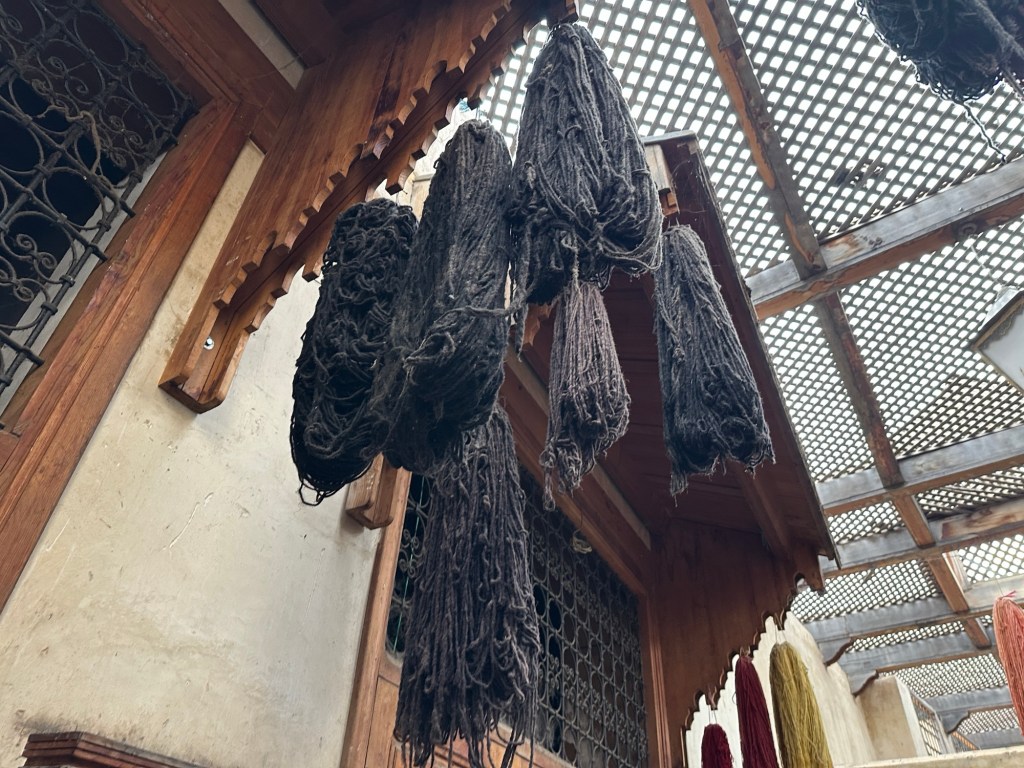
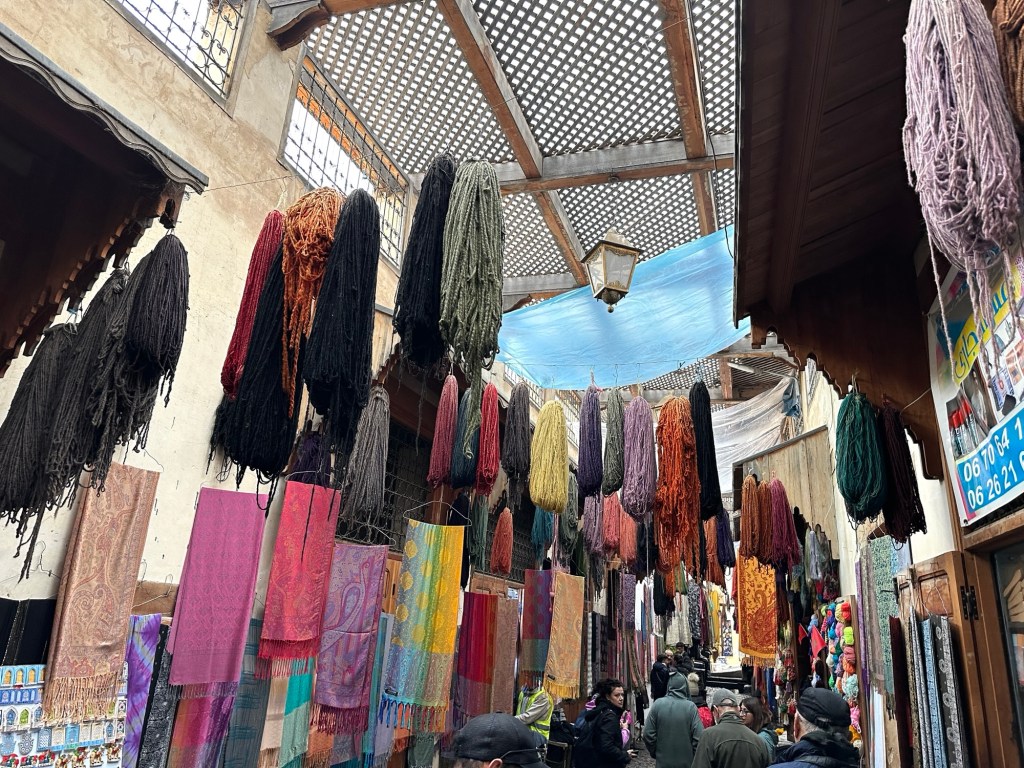
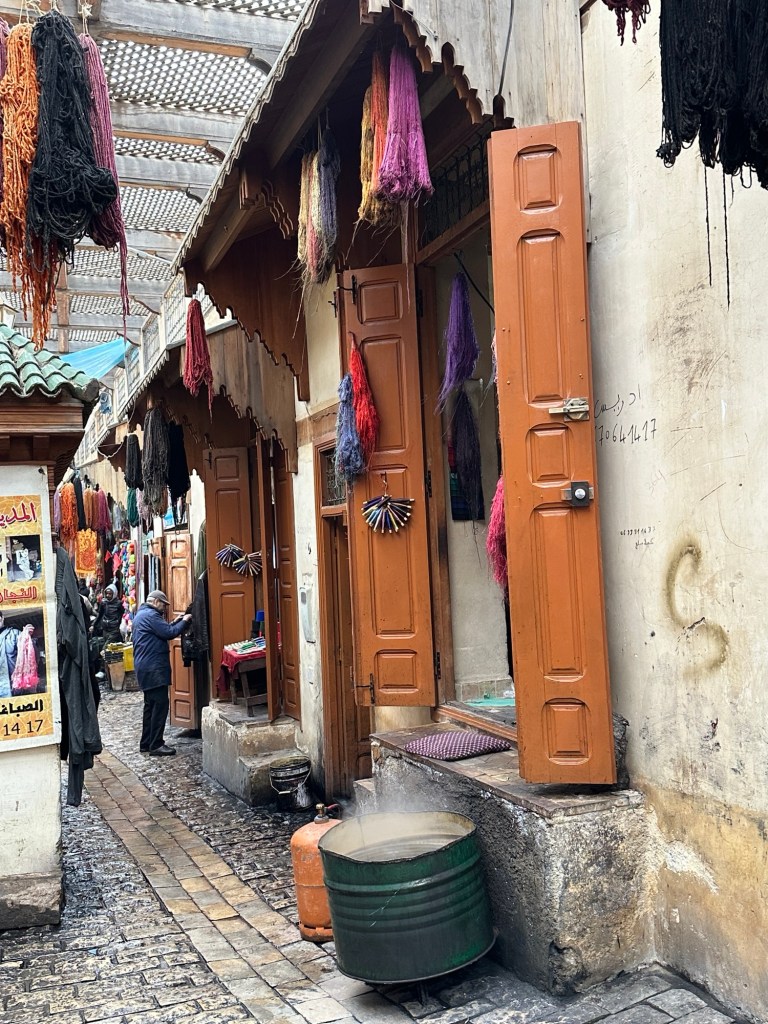
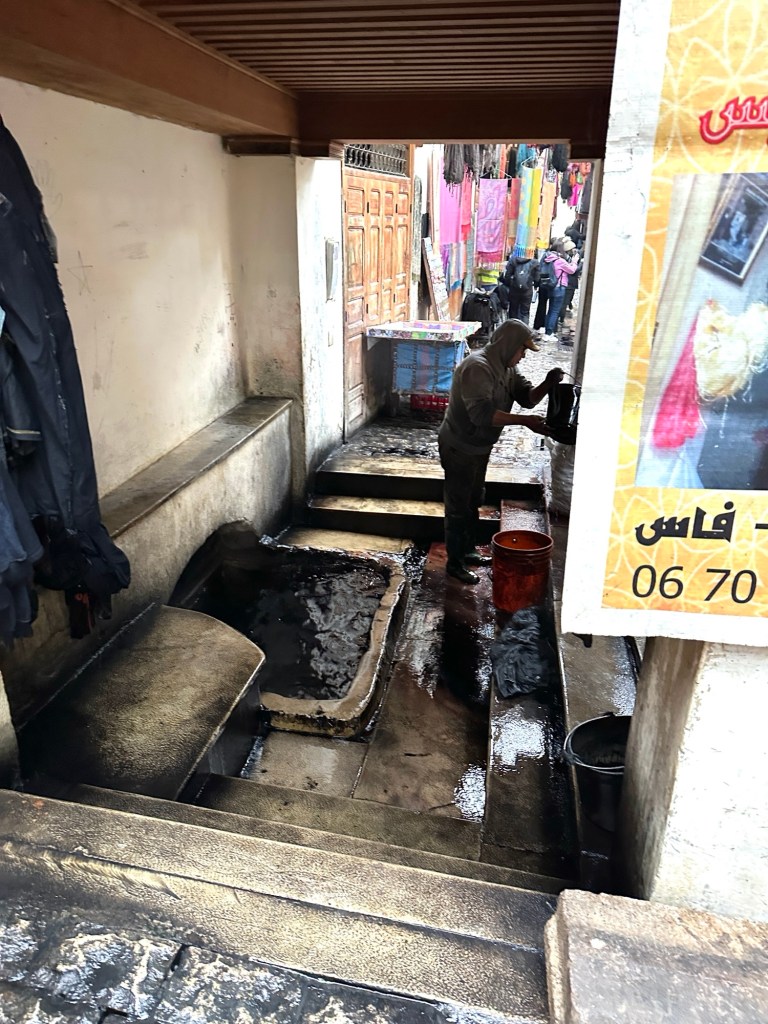
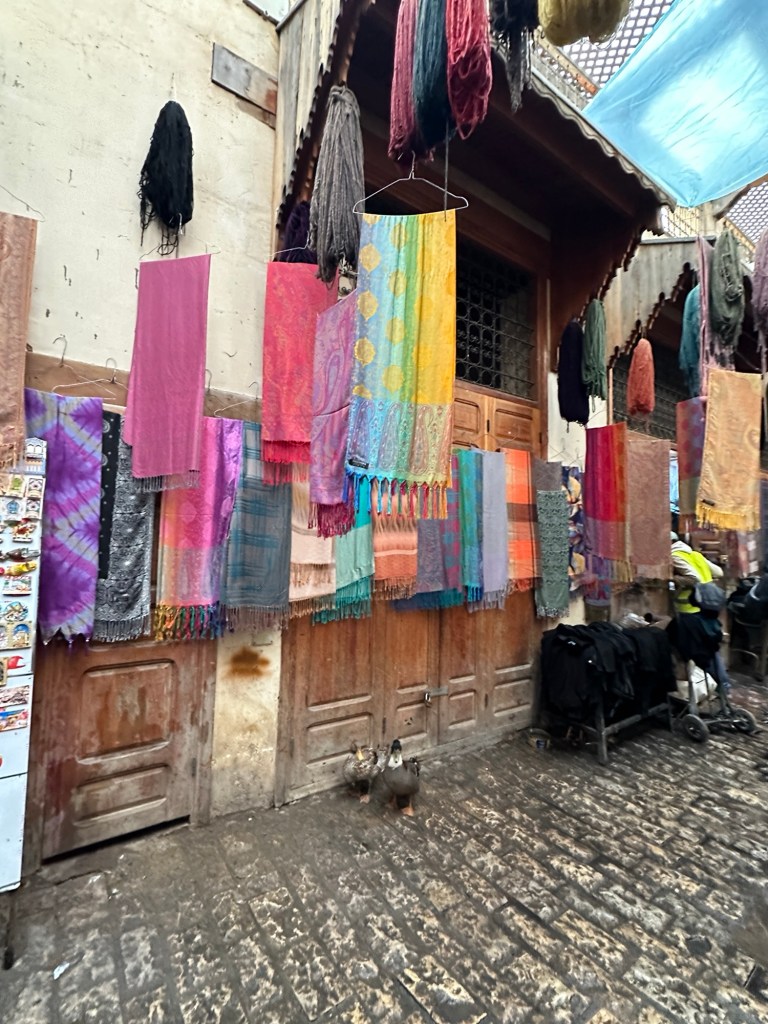
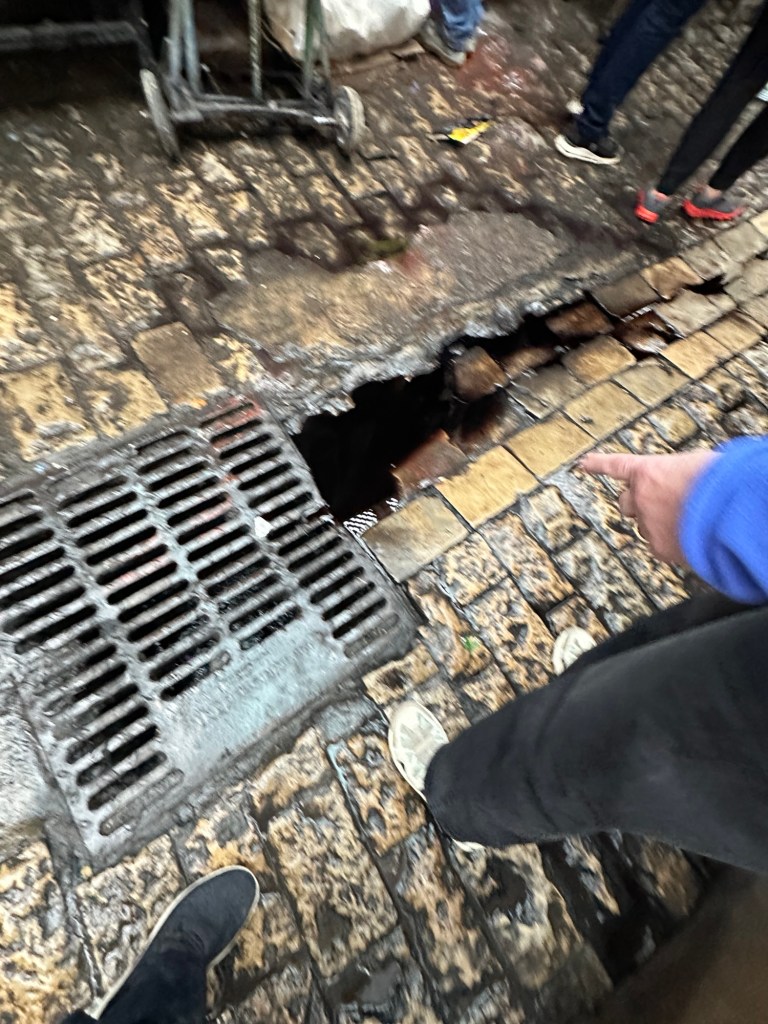
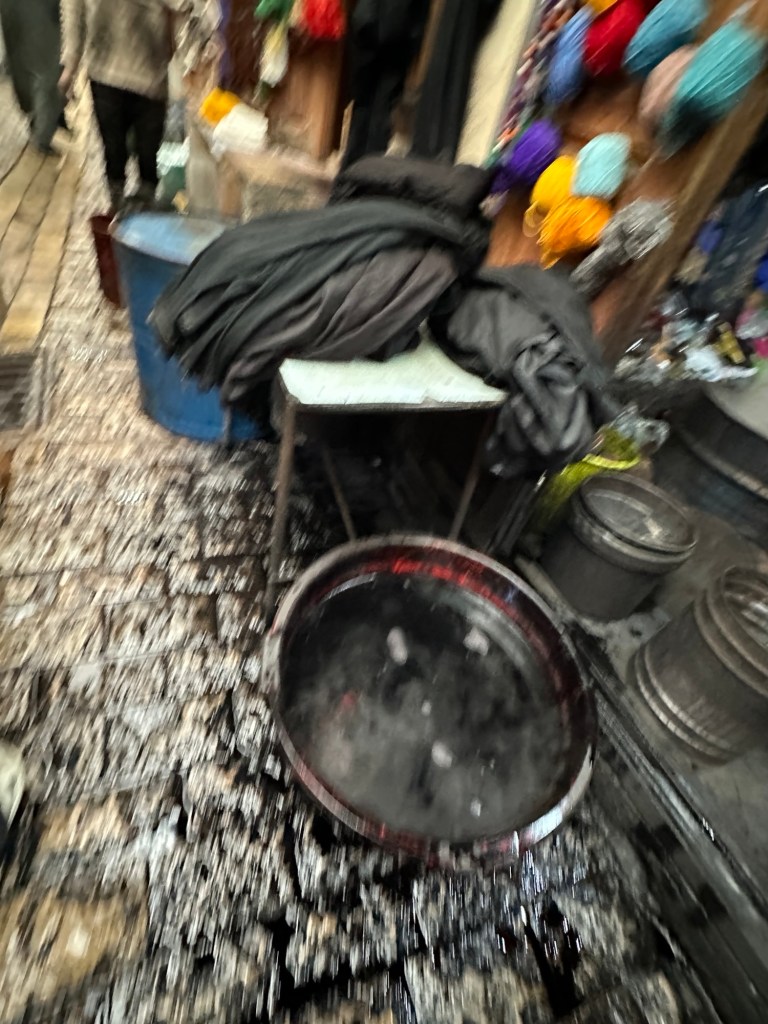
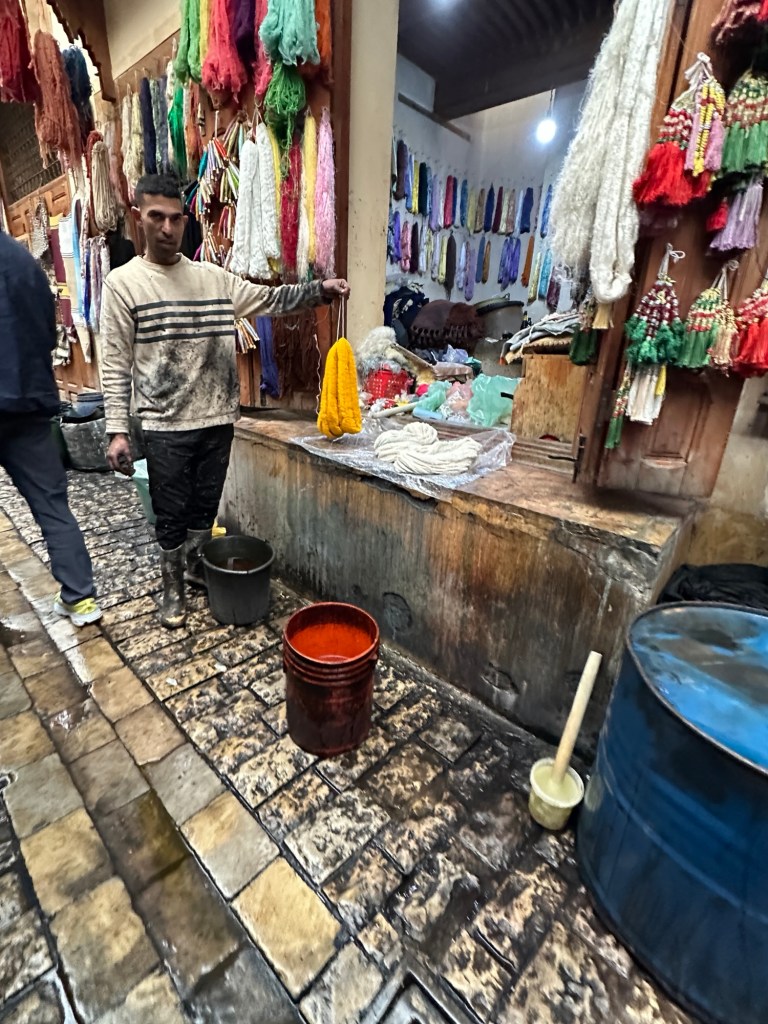
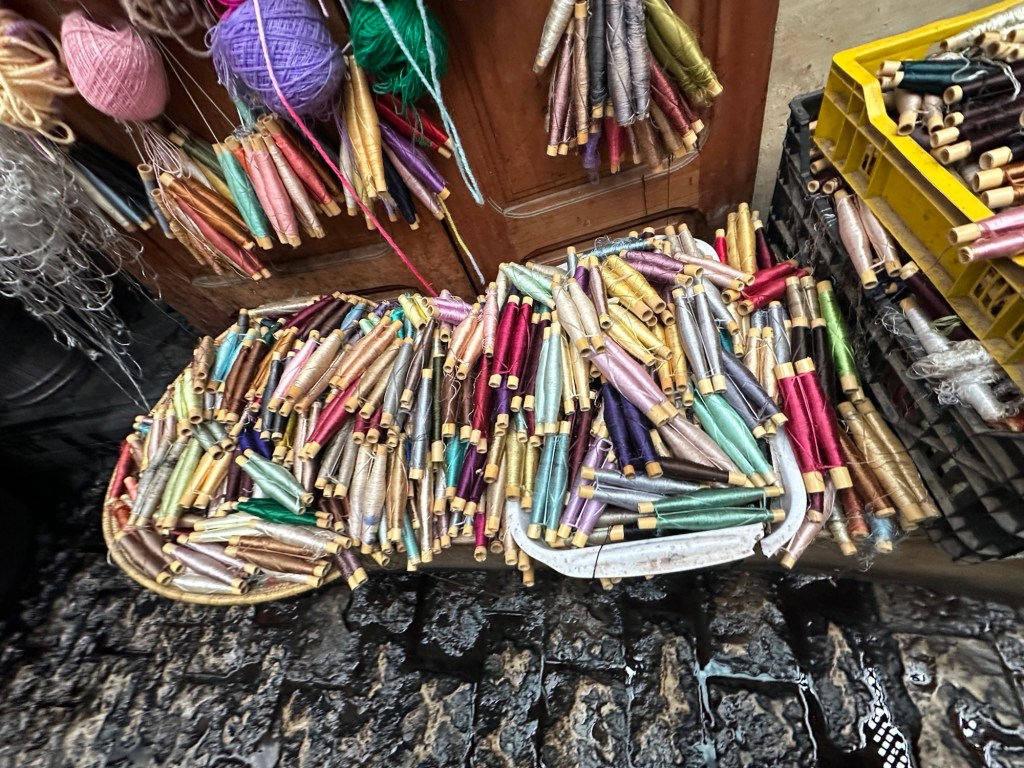
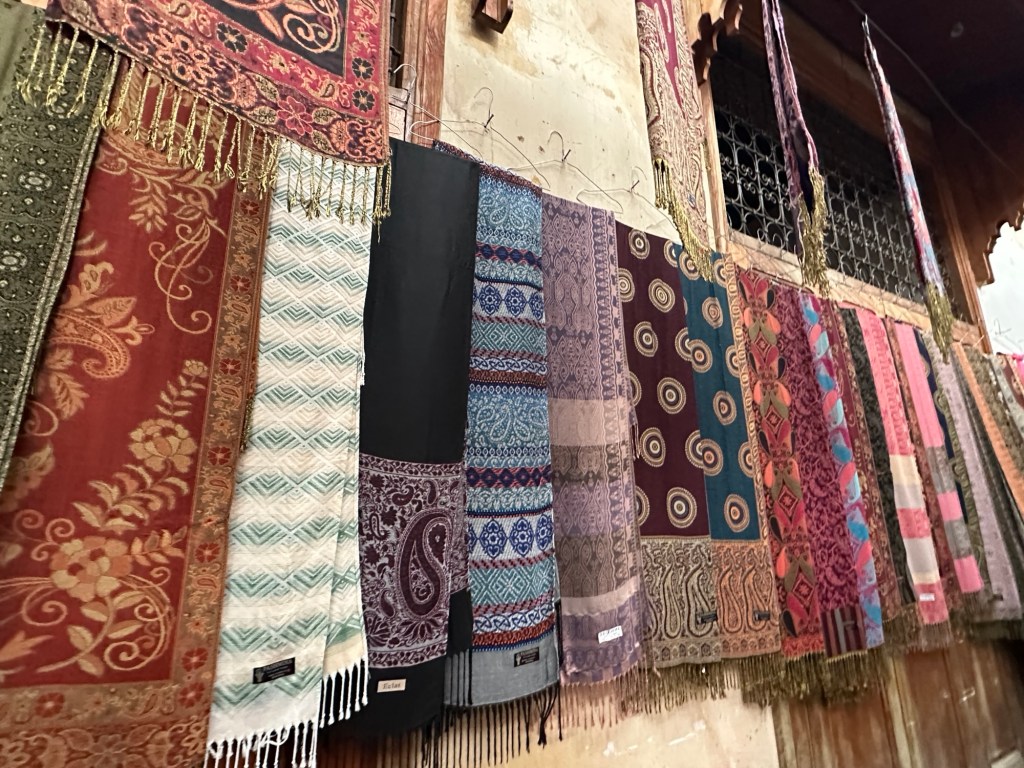
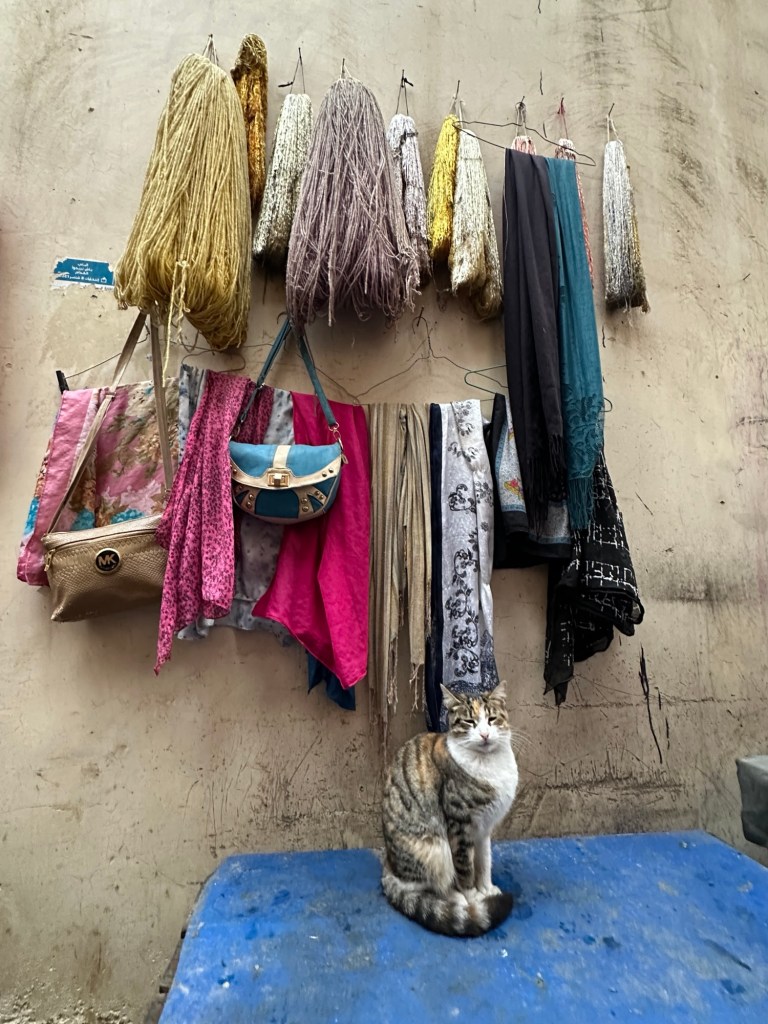
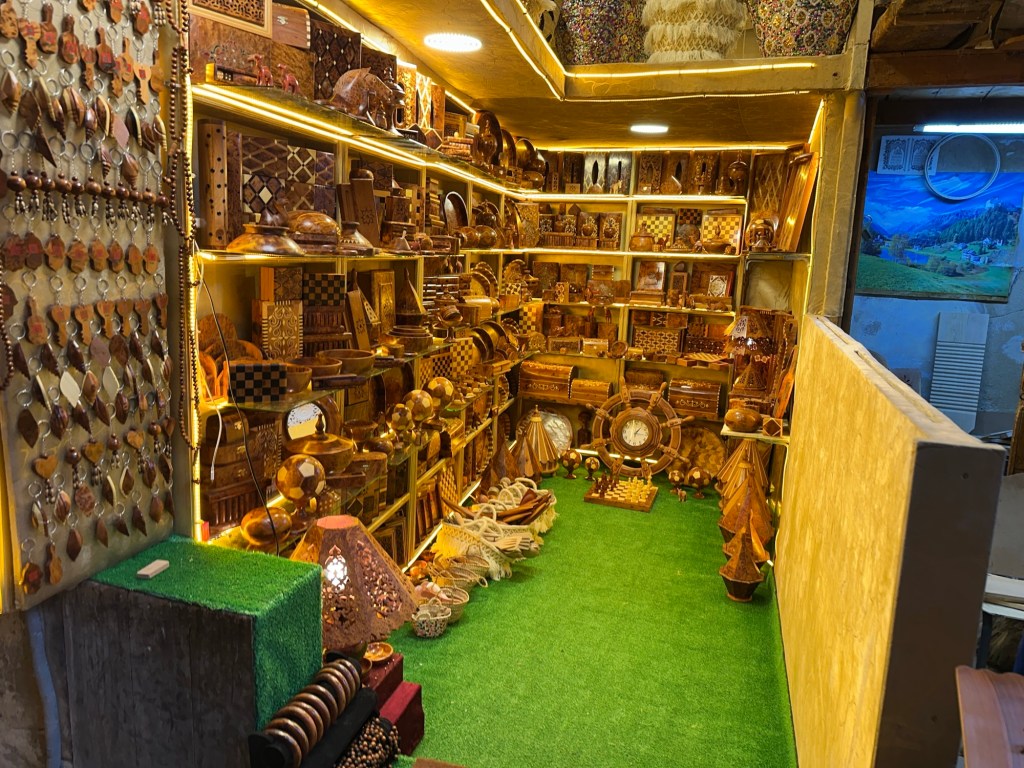
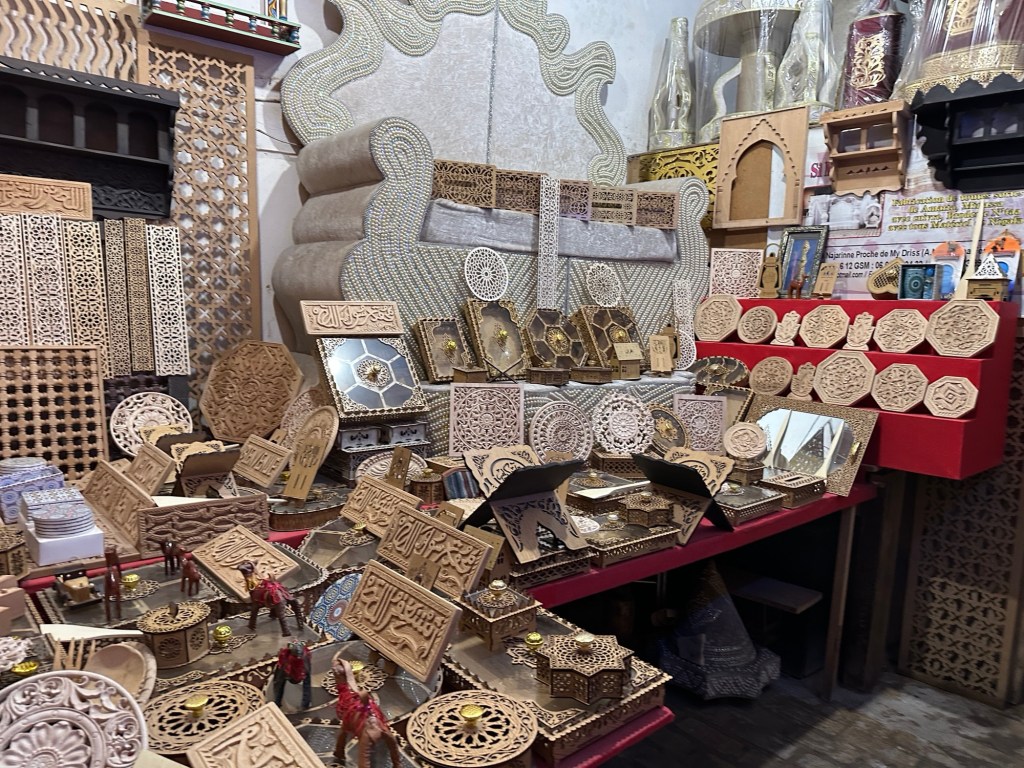
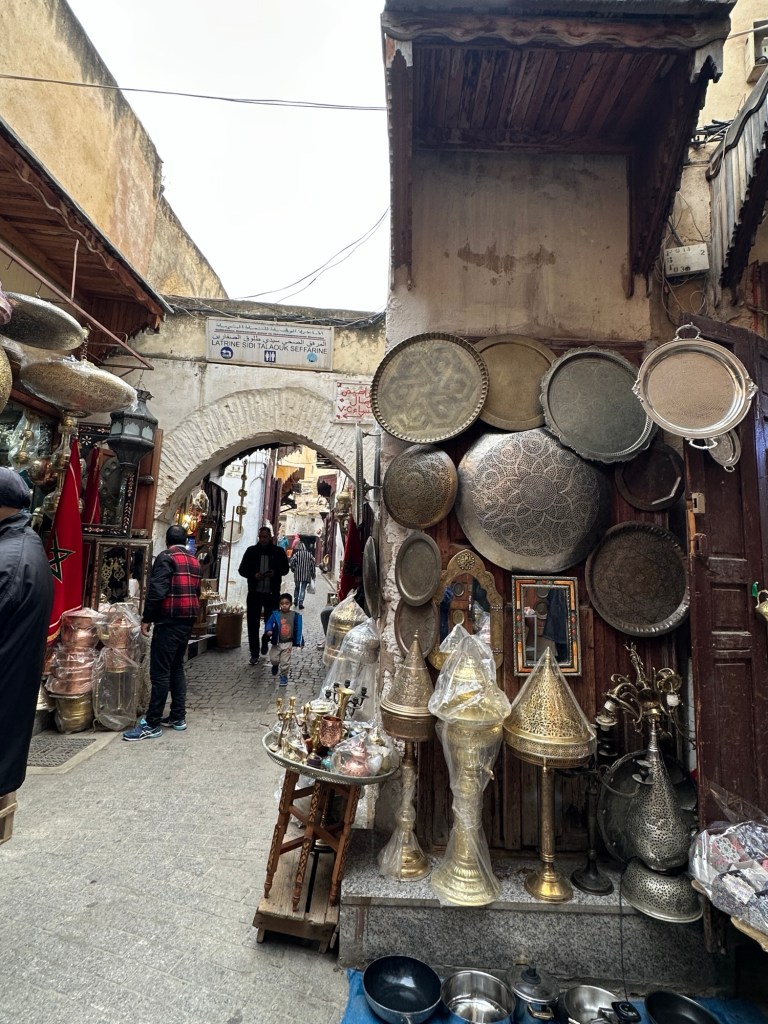
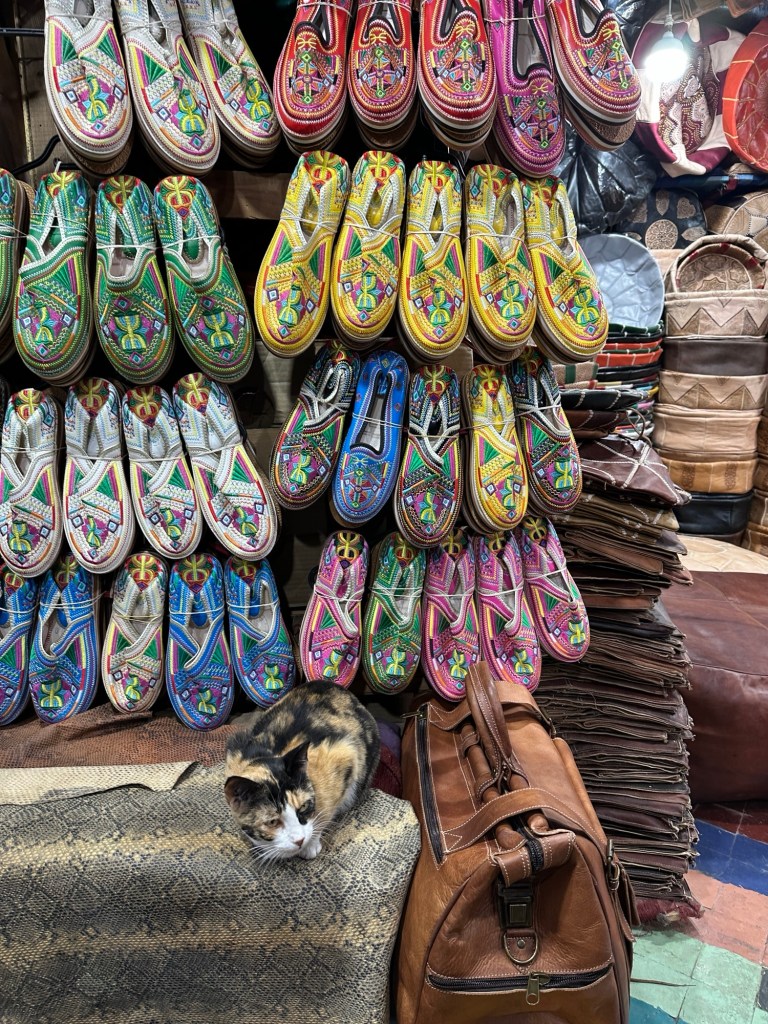
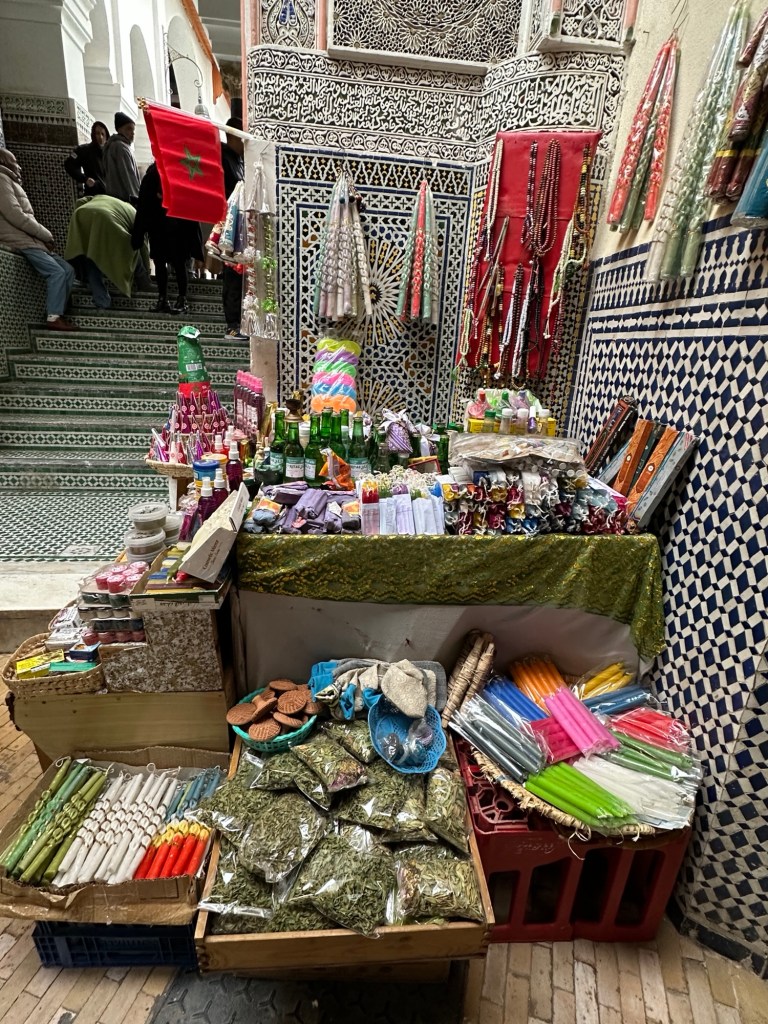
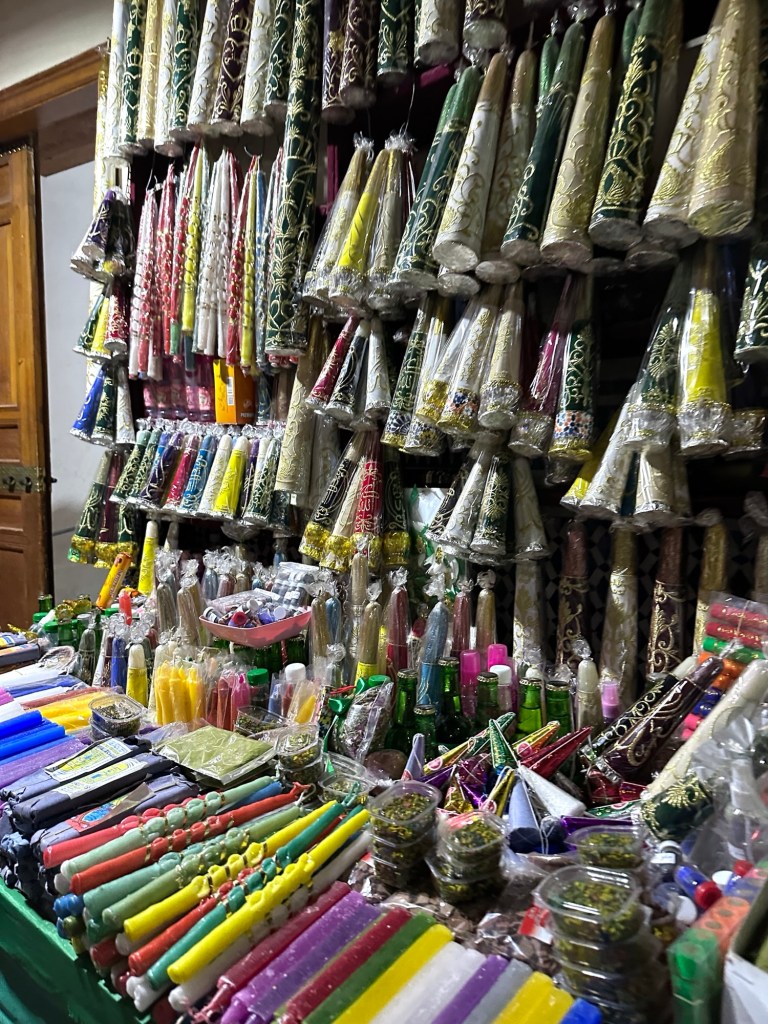
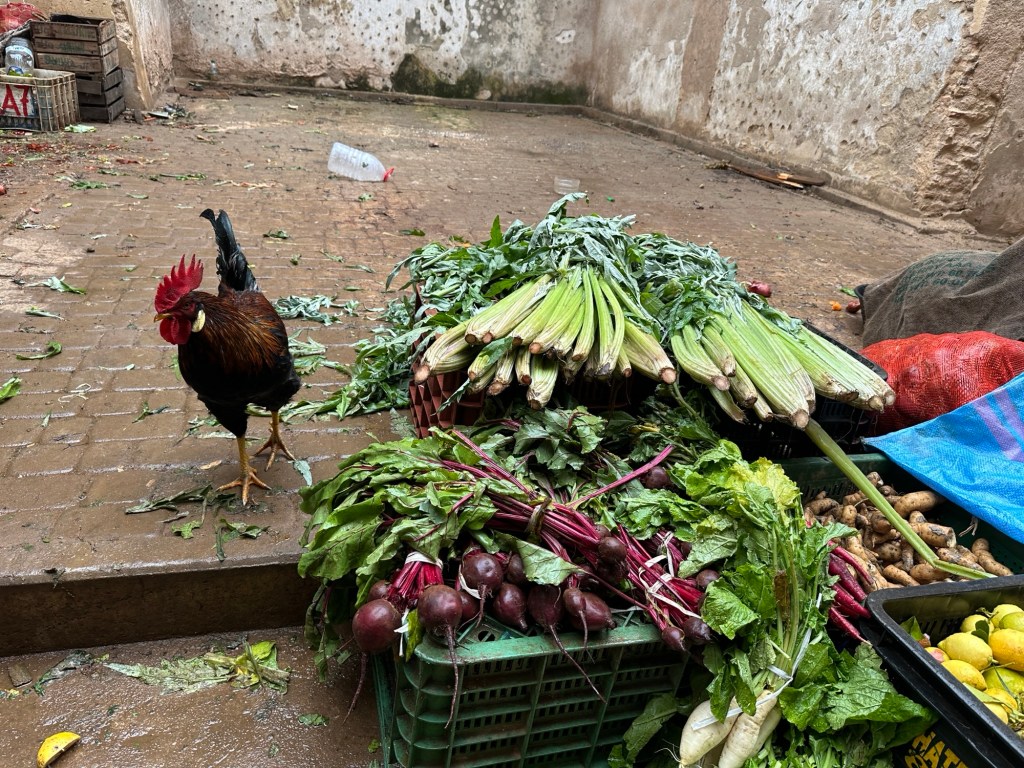
There are so many different food and spice booths. We learn about traditional weavers and other artisans like wood carvers. We walk through the section where they are dyeing yarn and fabric in jugs but you can see the dyed water that had been dumped on the alley. We walk through the puddles hoping we don’t dye our shoes in the process. I know my long hanging pants to get muddy at some point so it’s probably good to not wear your best clothes here.
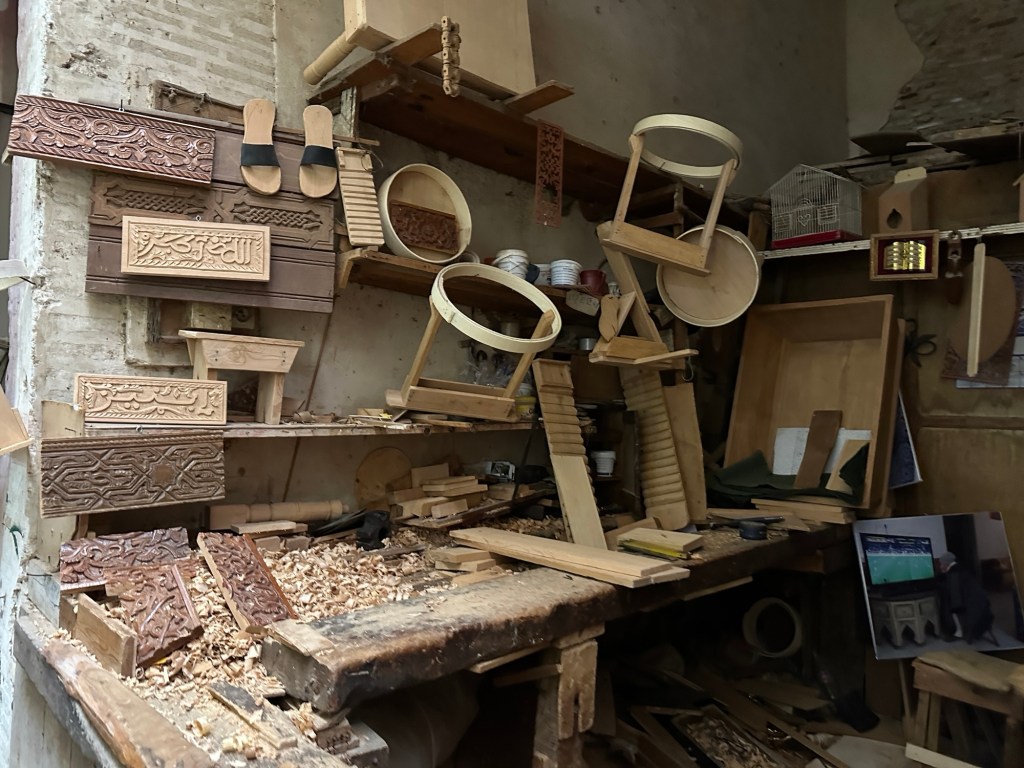
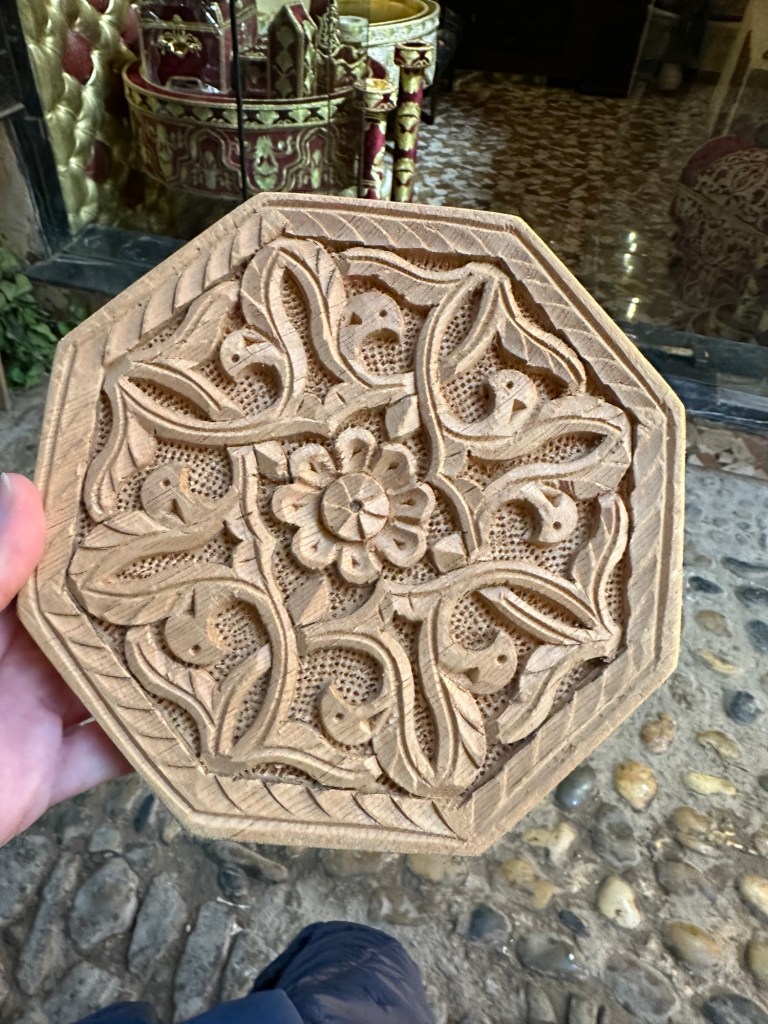
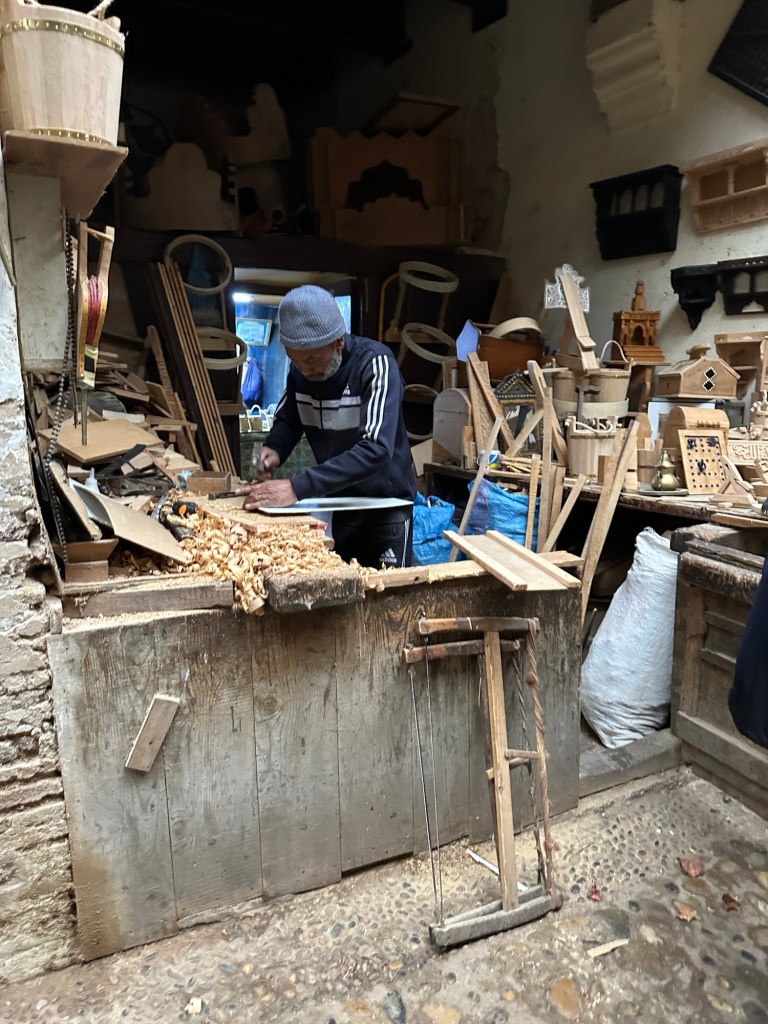
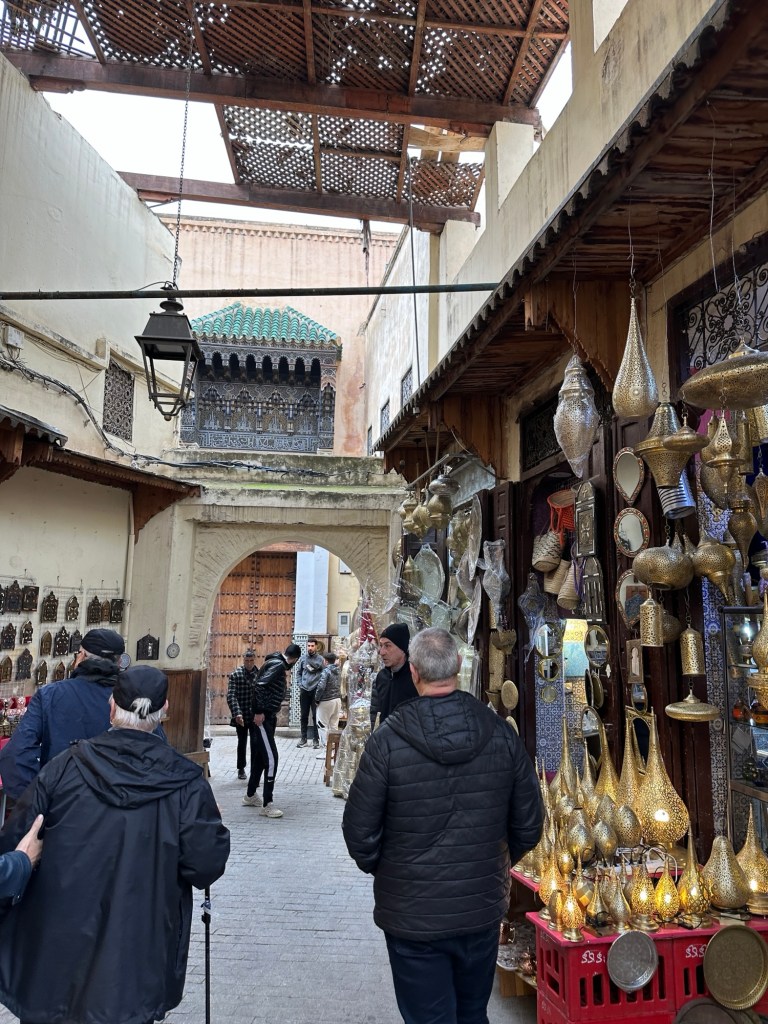
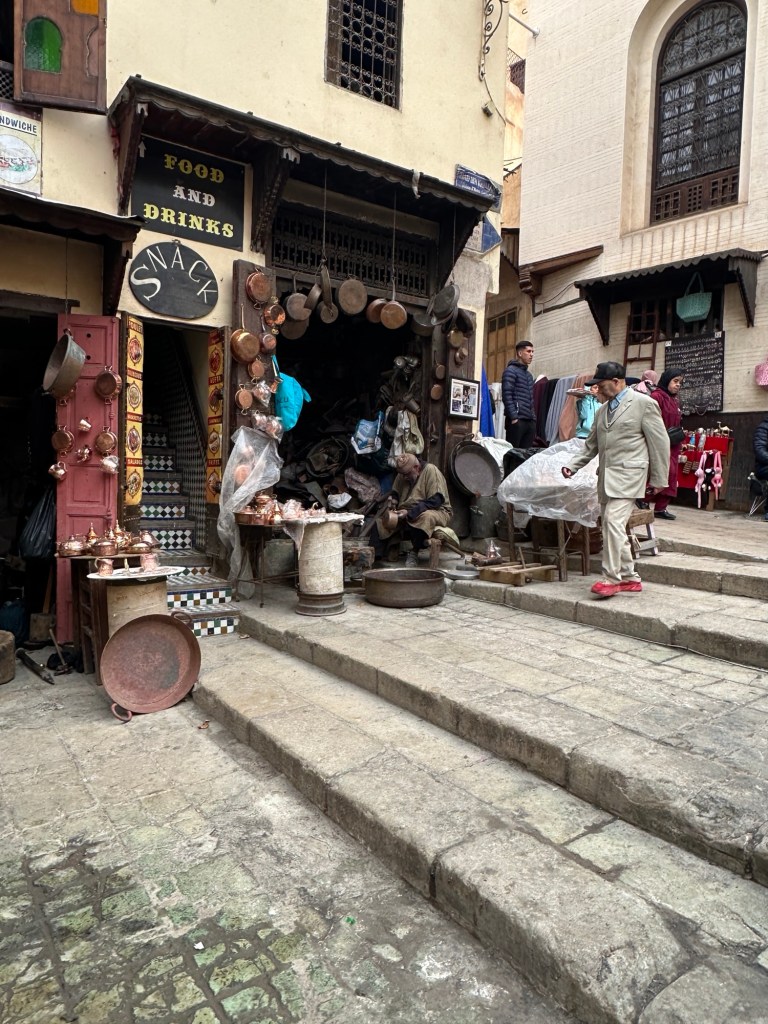
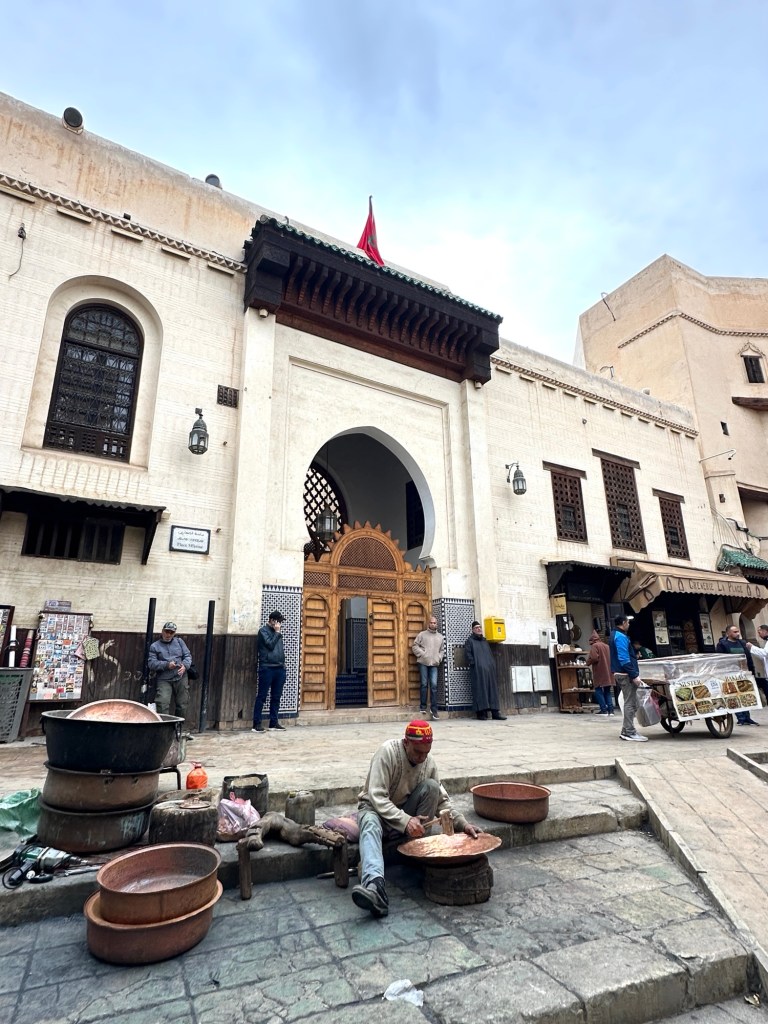
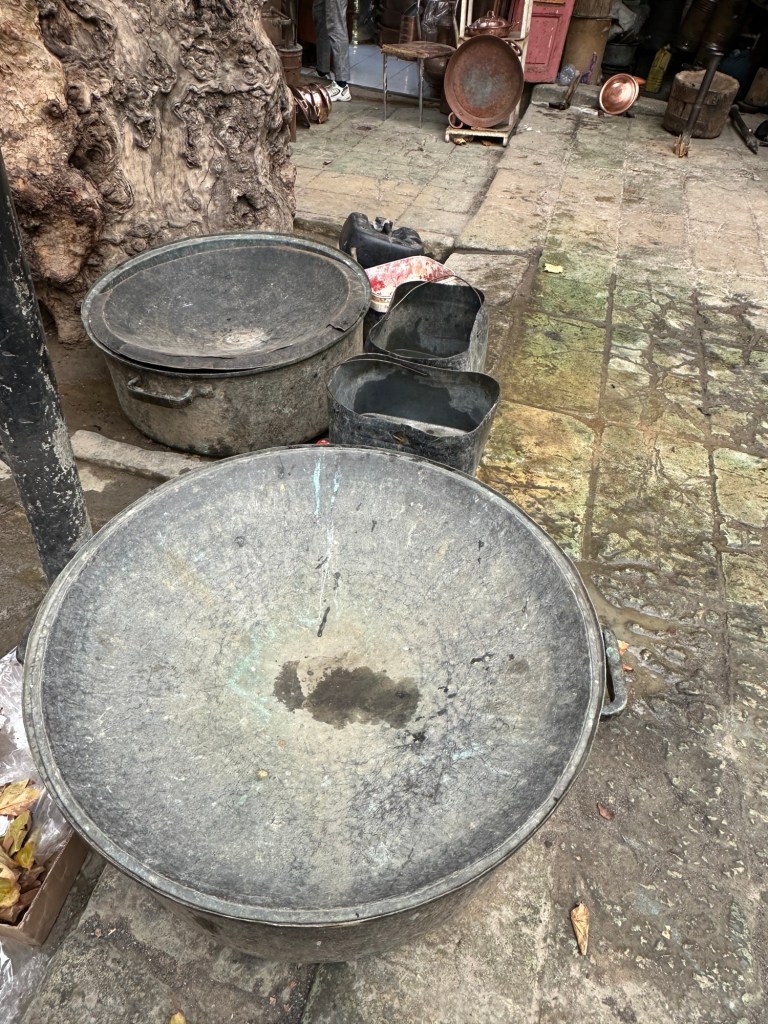
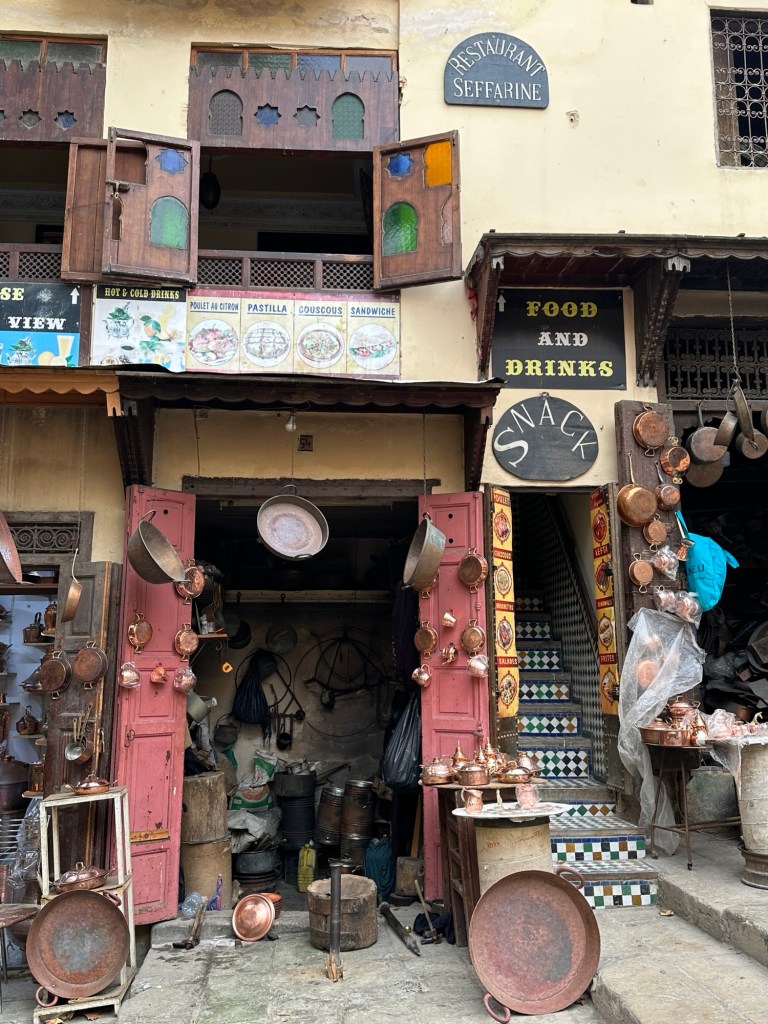
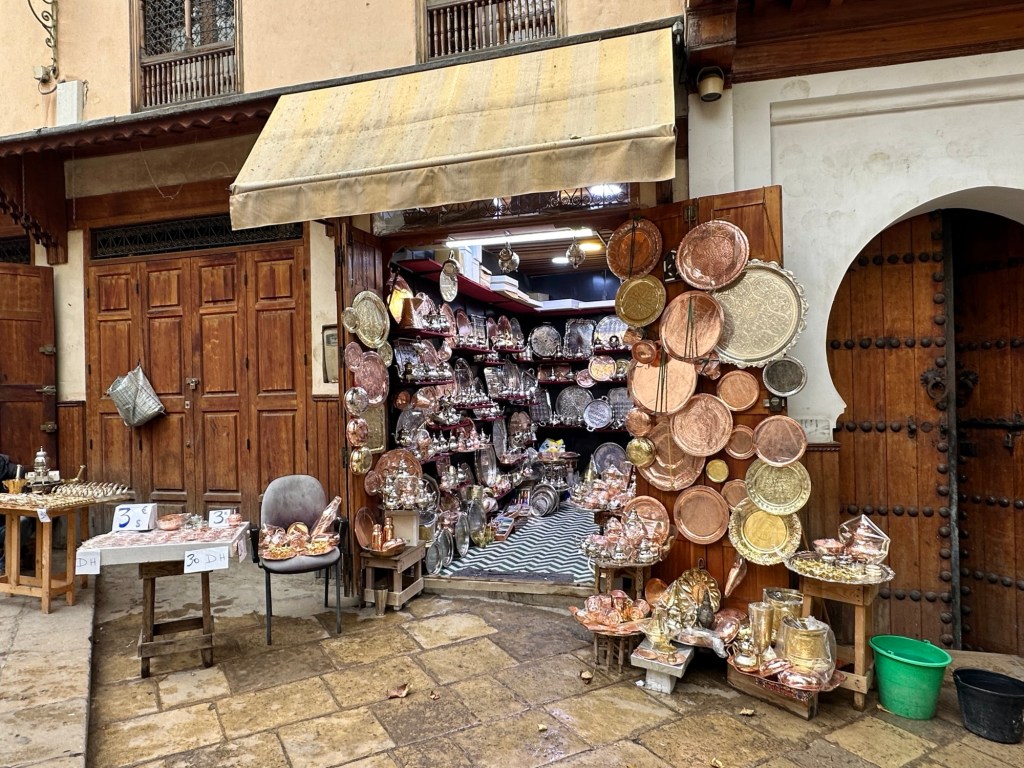
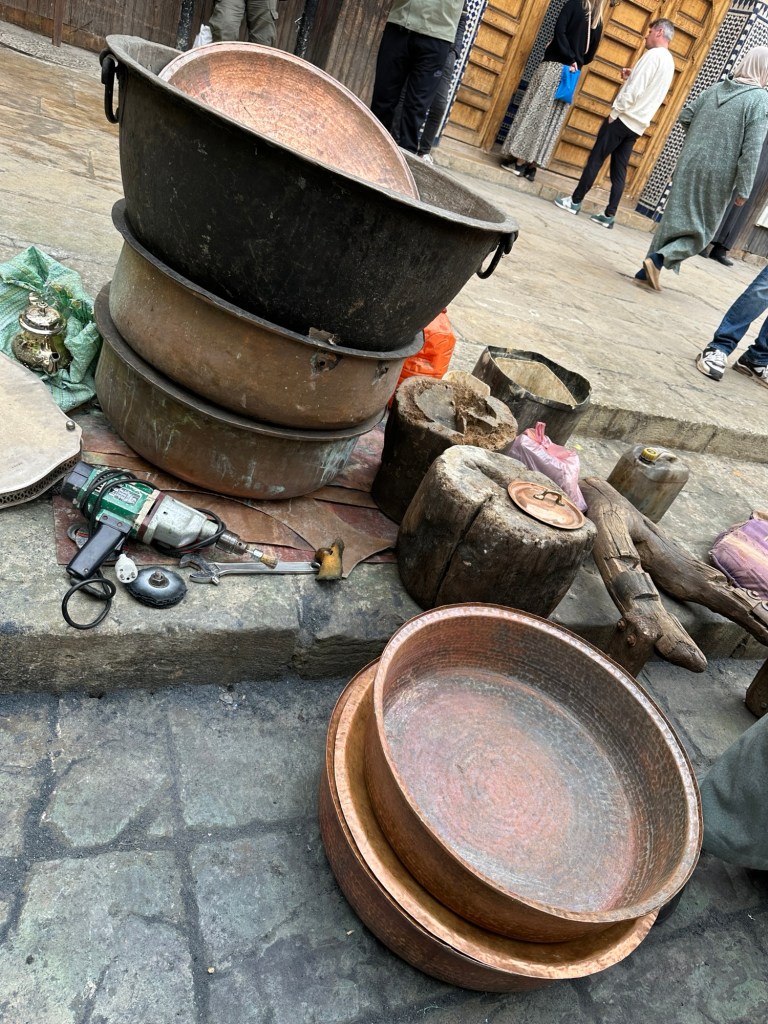
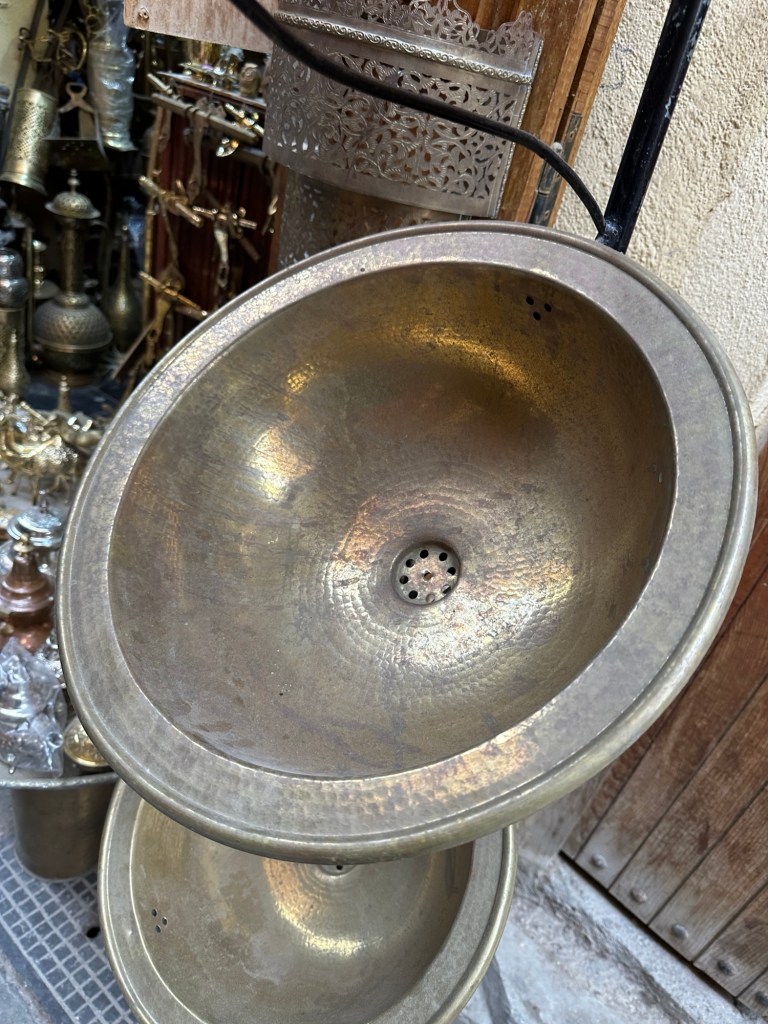
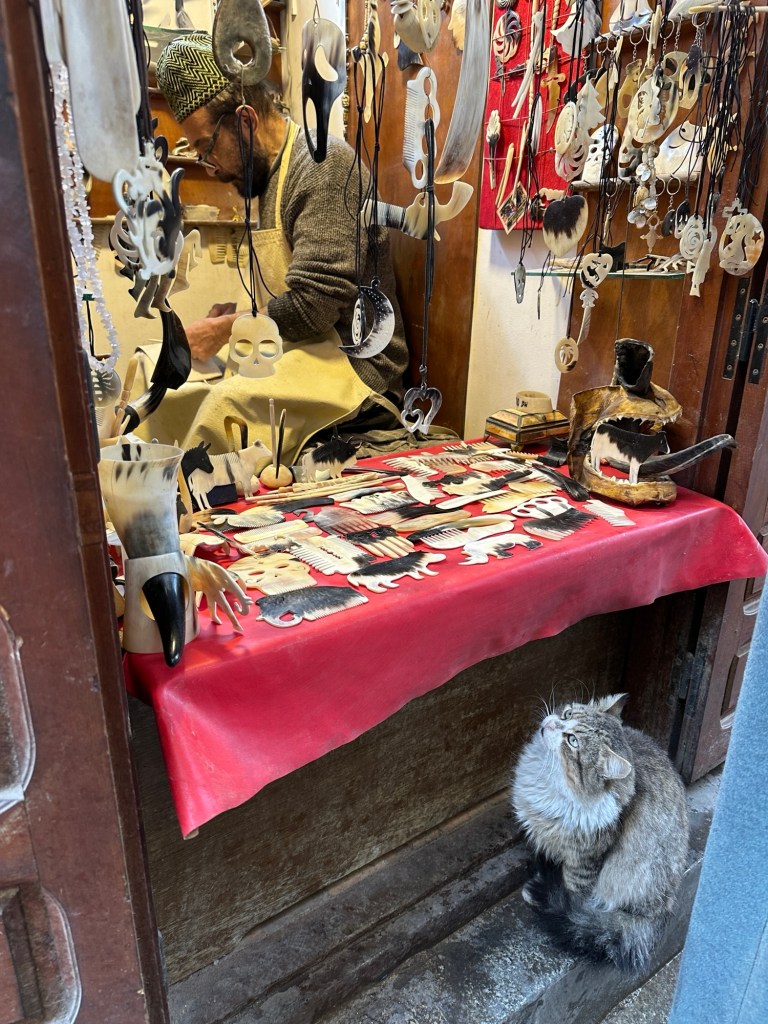
We pass by Al Karaouine University – the oldest university in the world. Outside the university are metalworkers banging on items they are constructing.
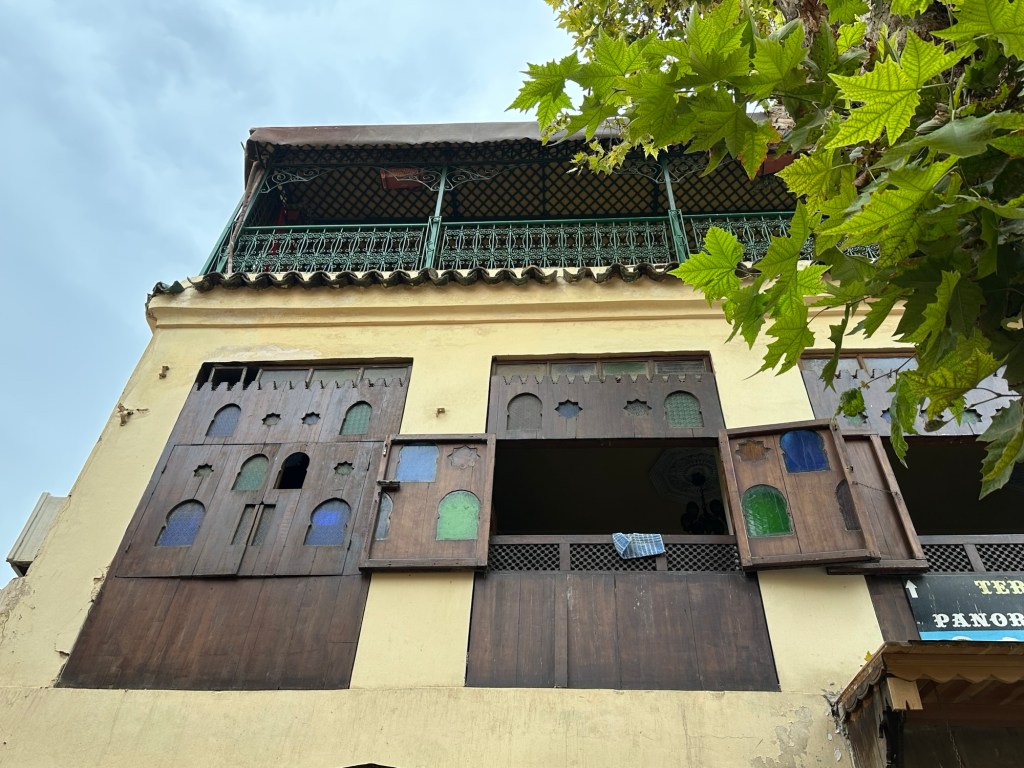

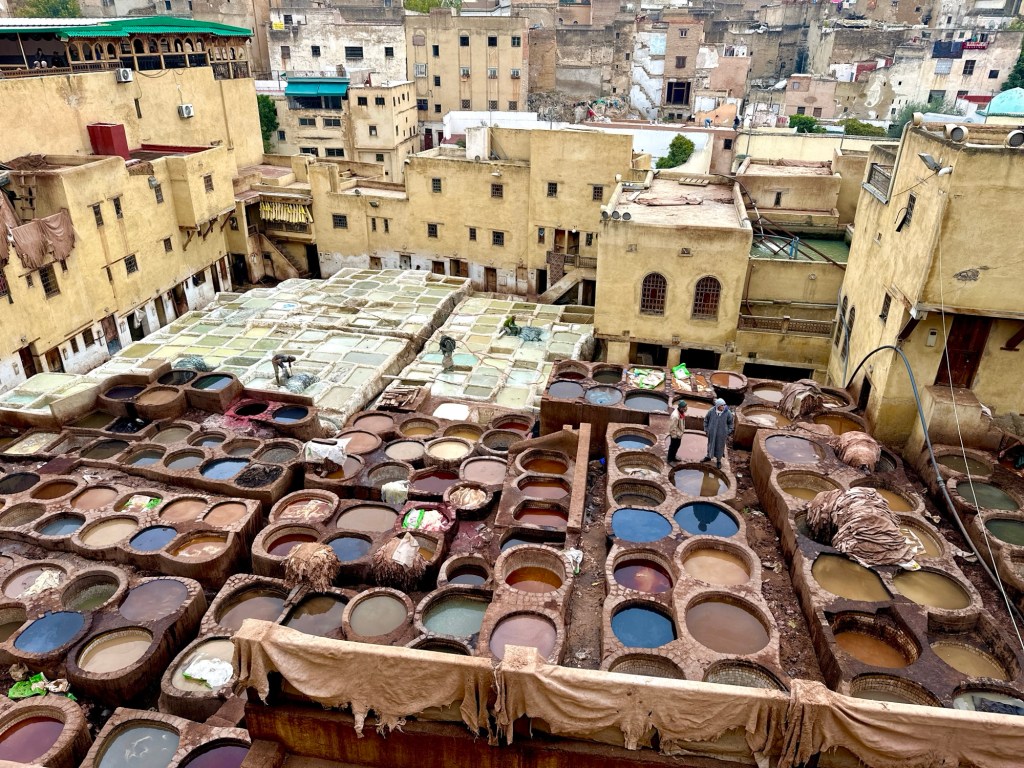
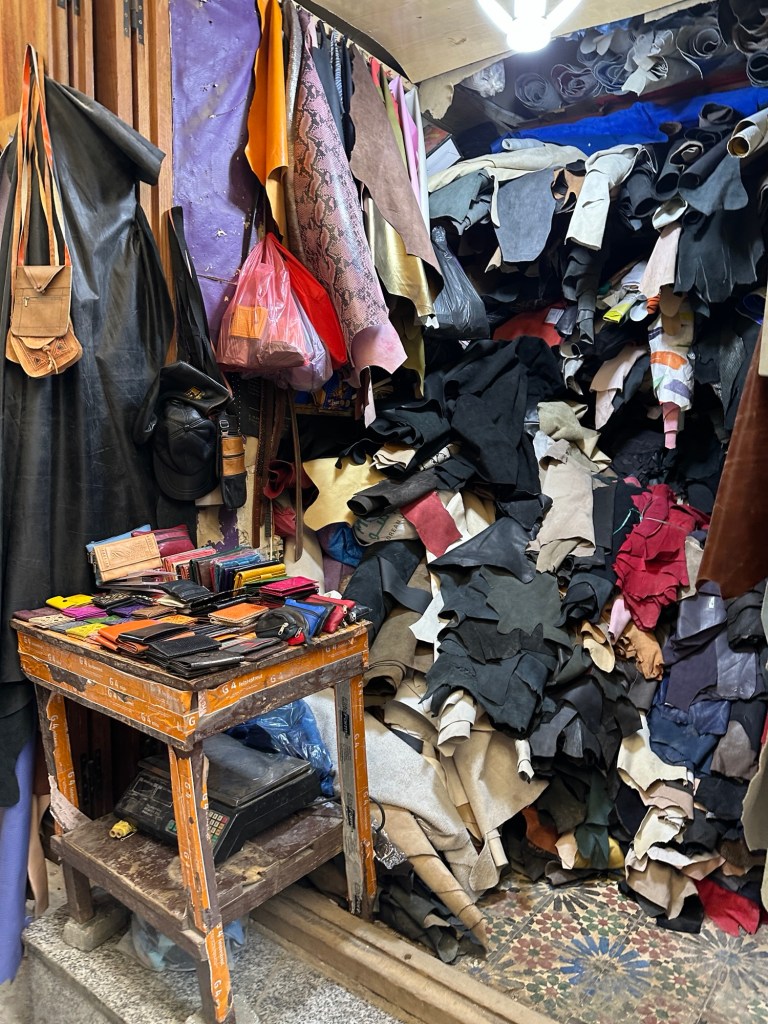
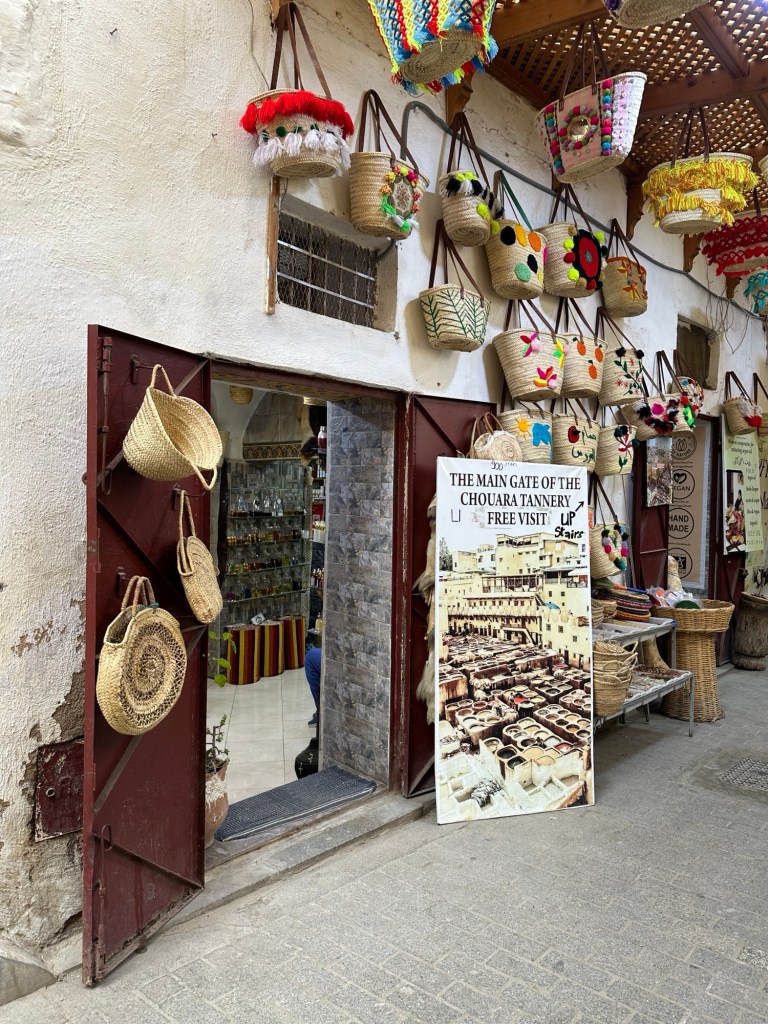
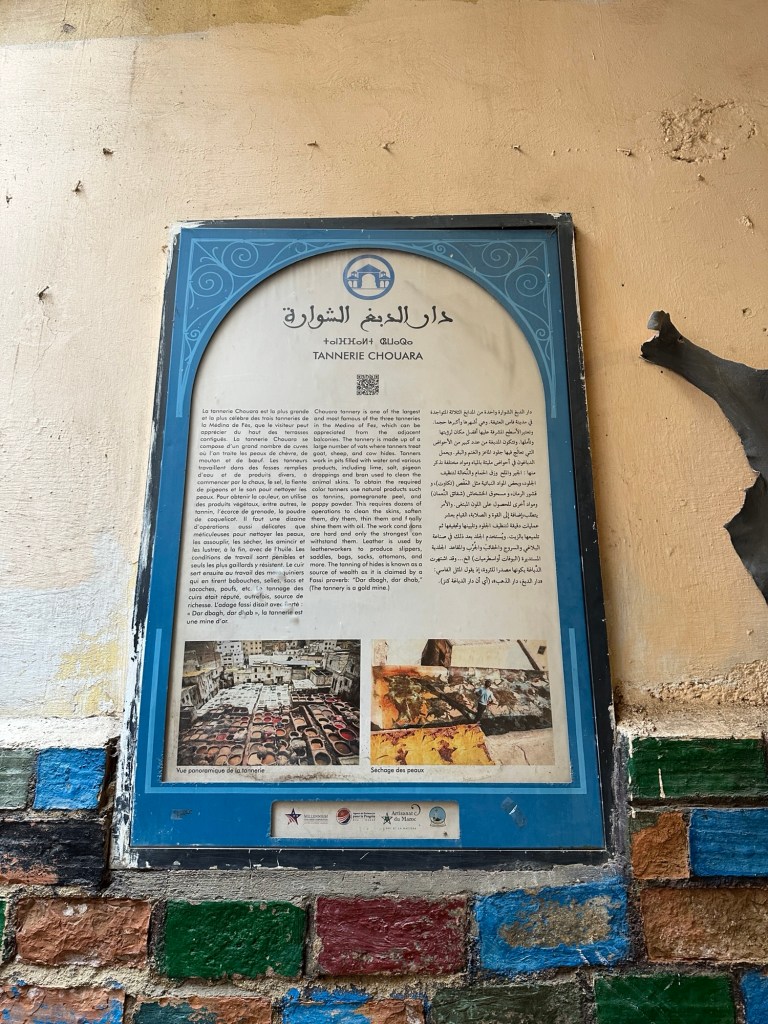
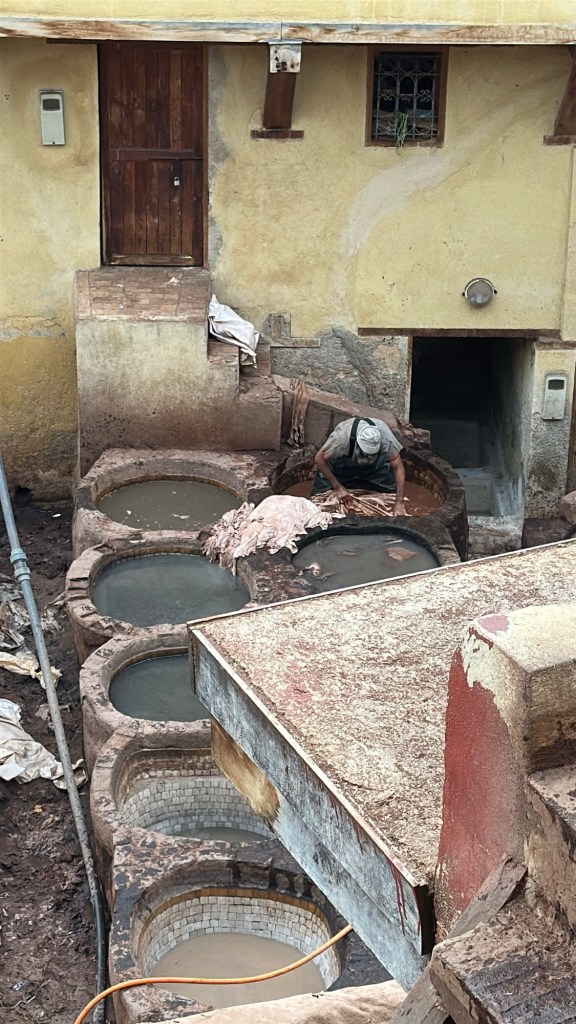
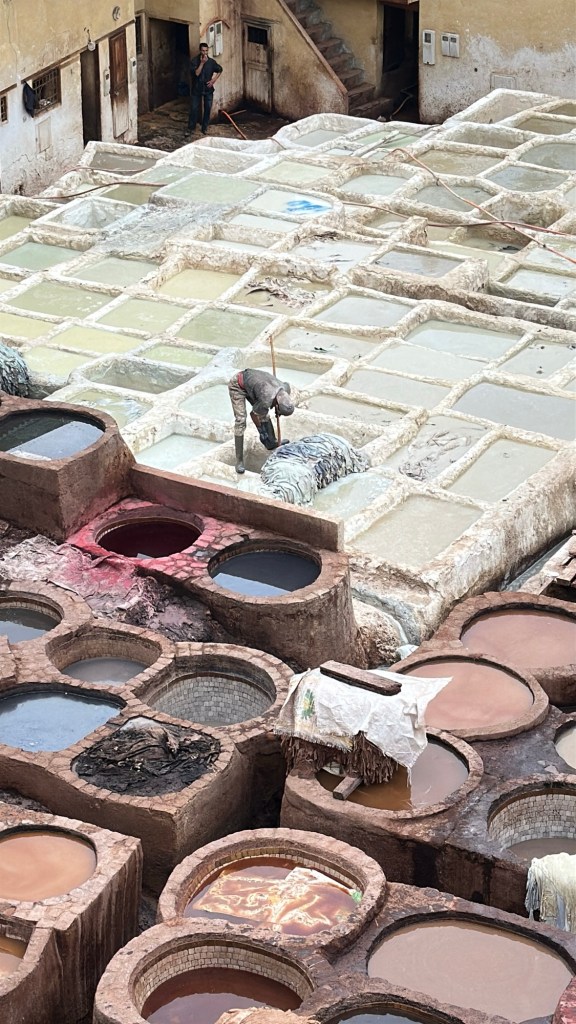
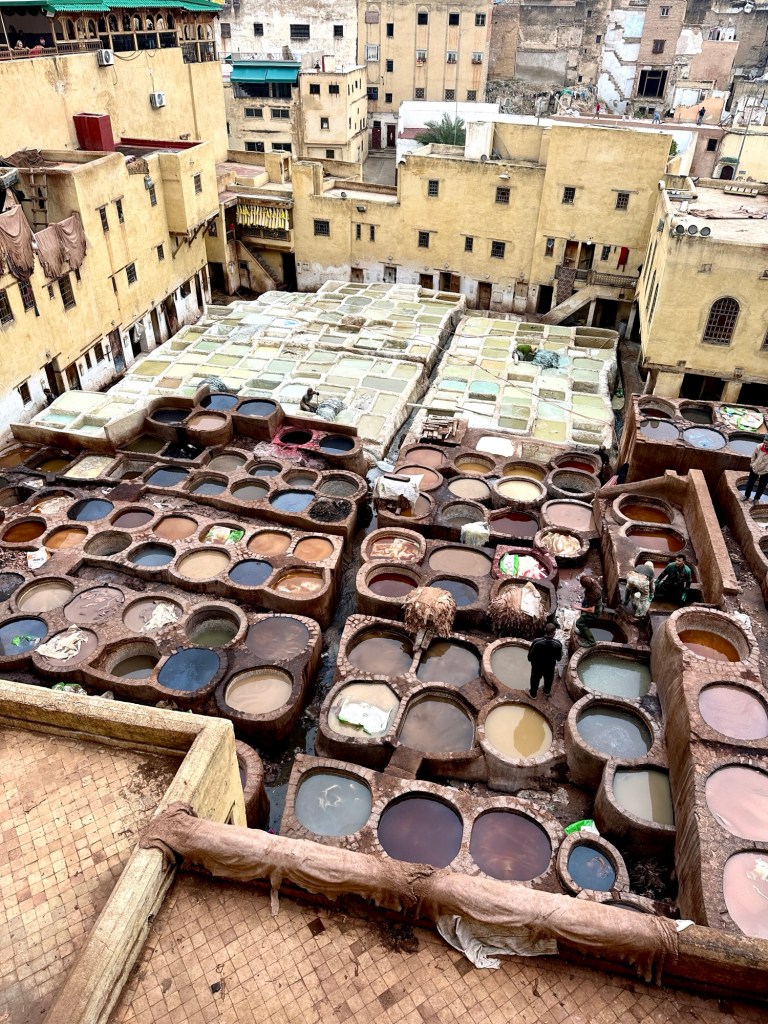
We view and learn about the famous Fes tannery. We learn how all the leather is dyed to make the high quality products they sell.
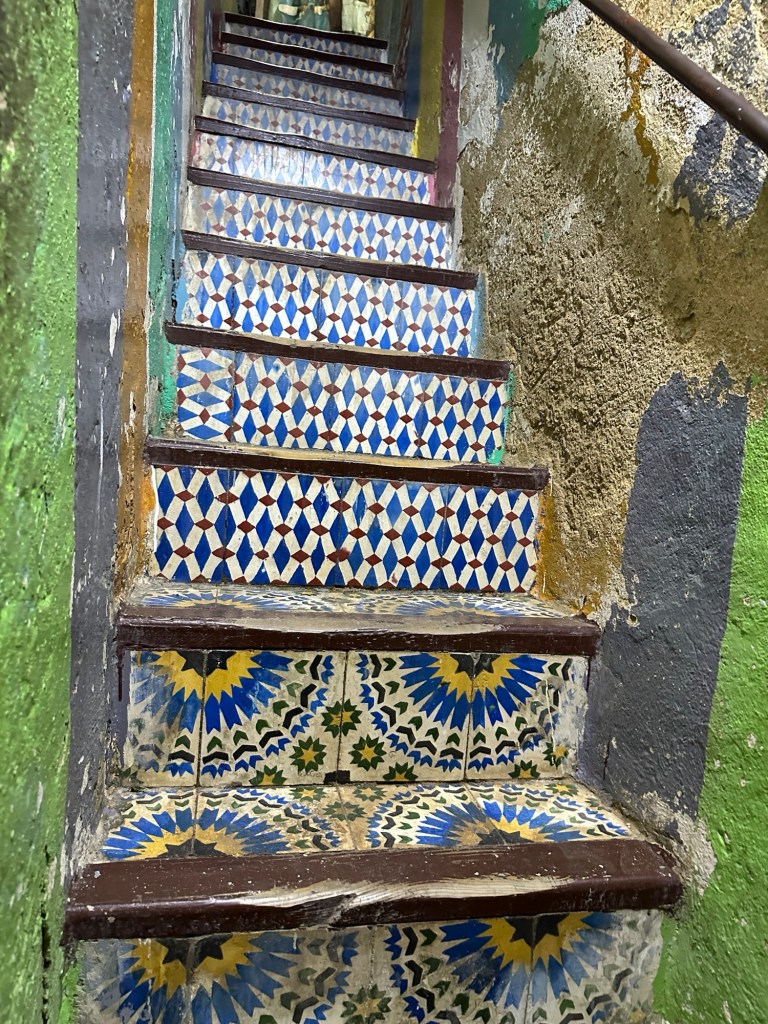
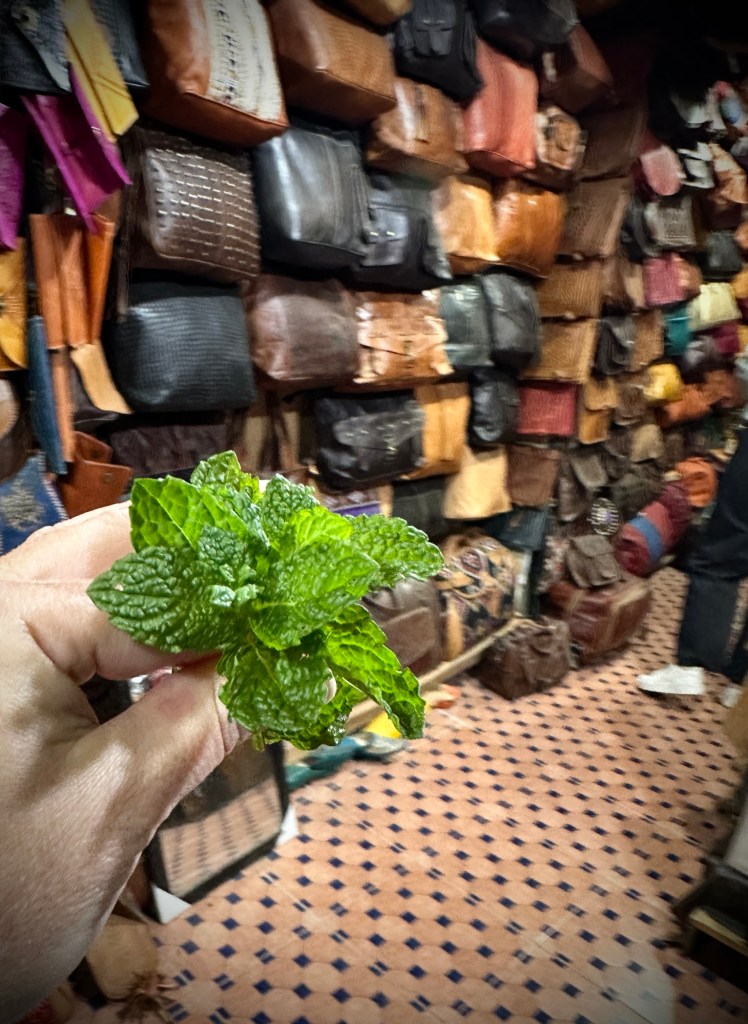
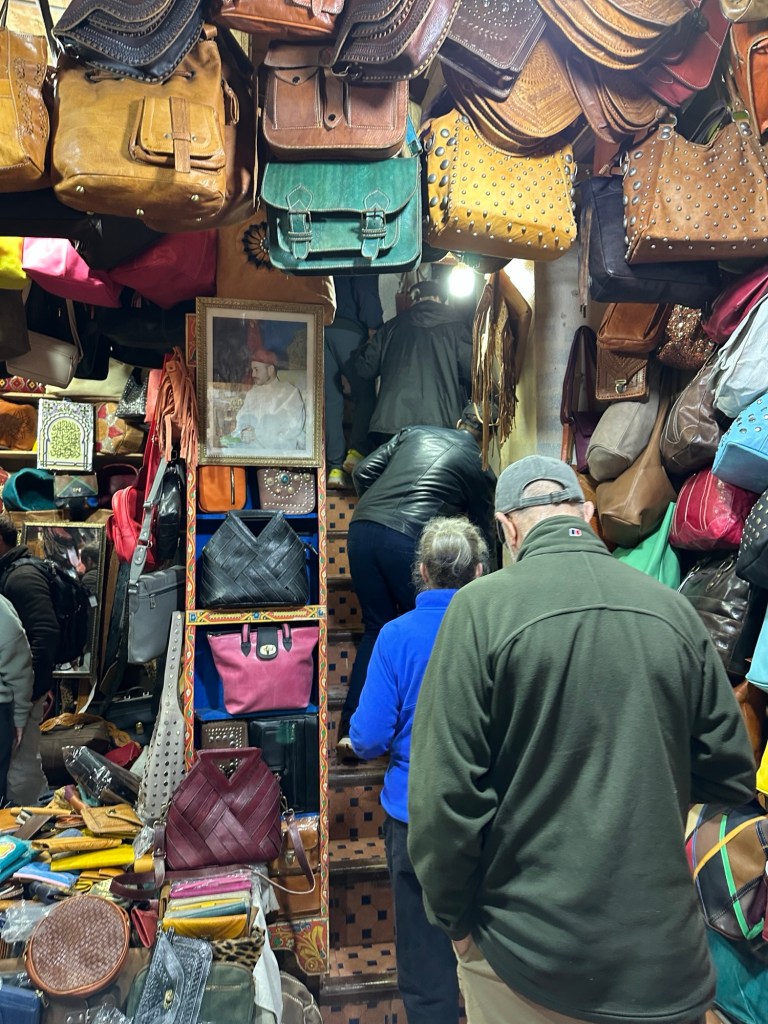
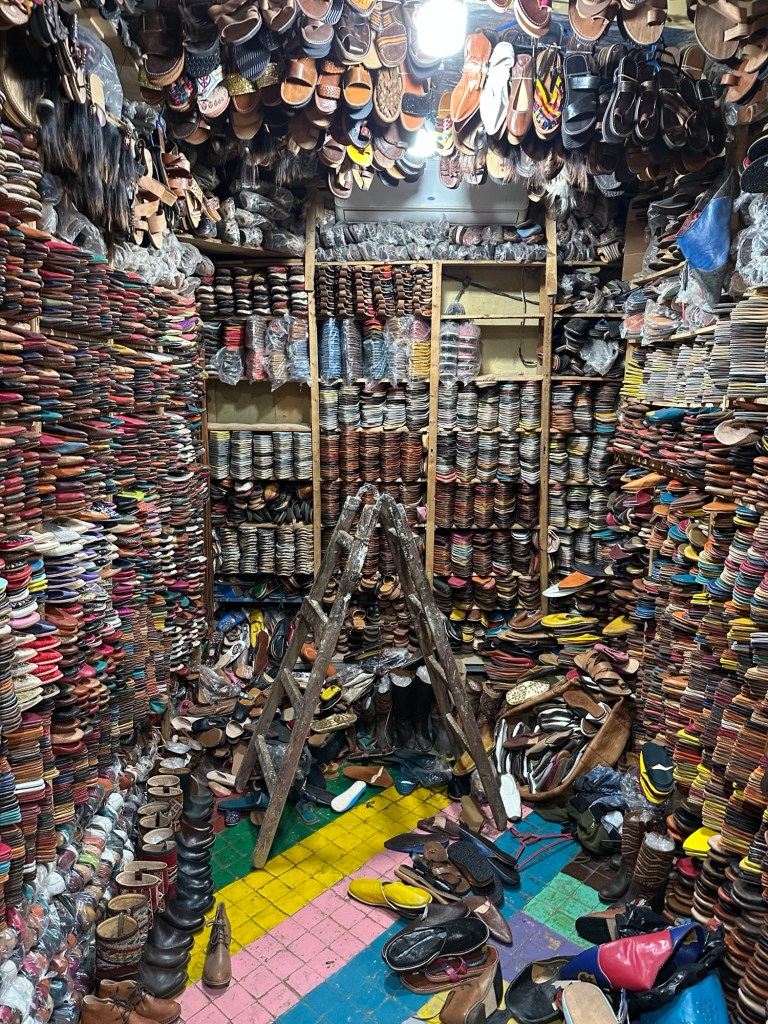
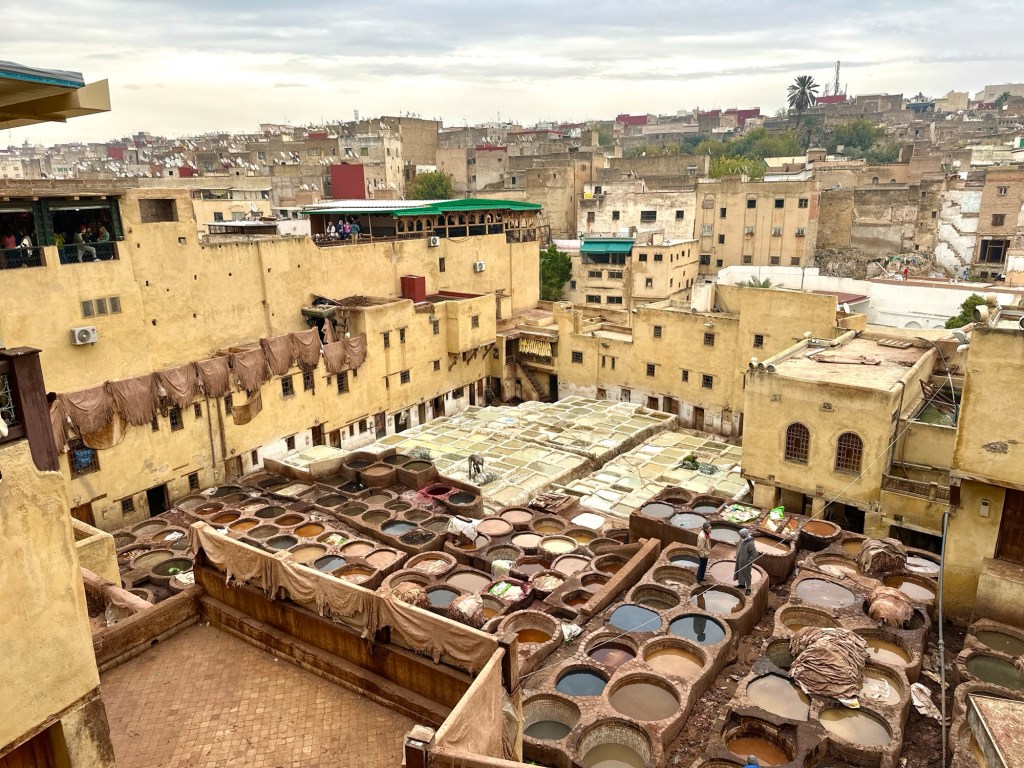
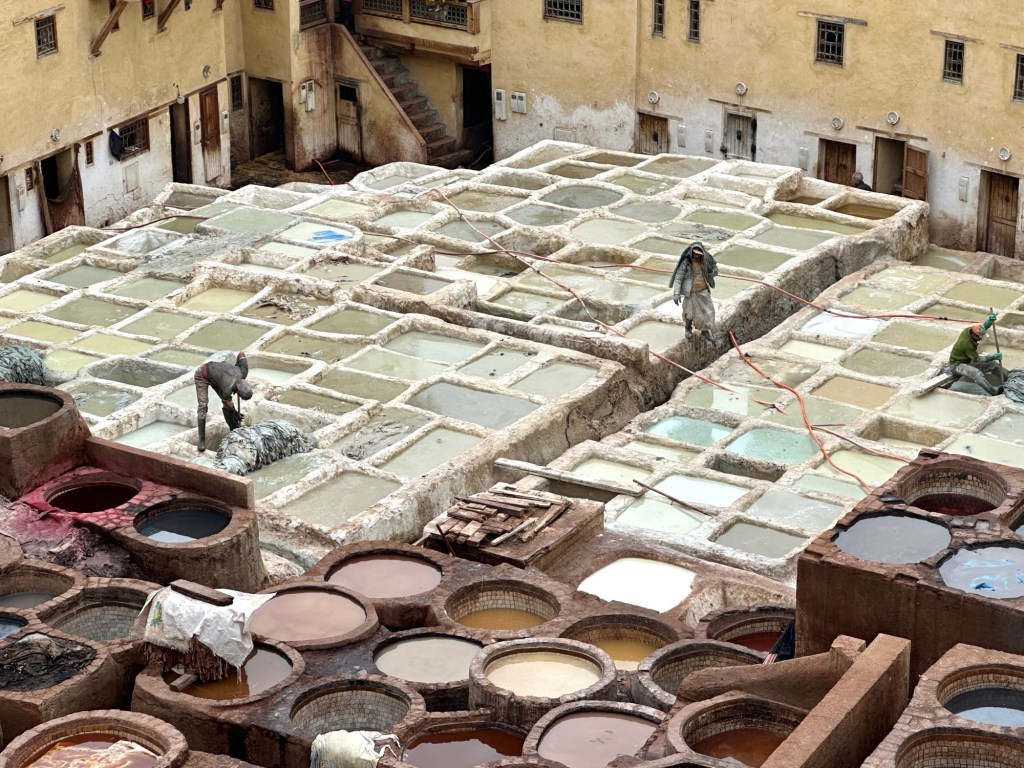
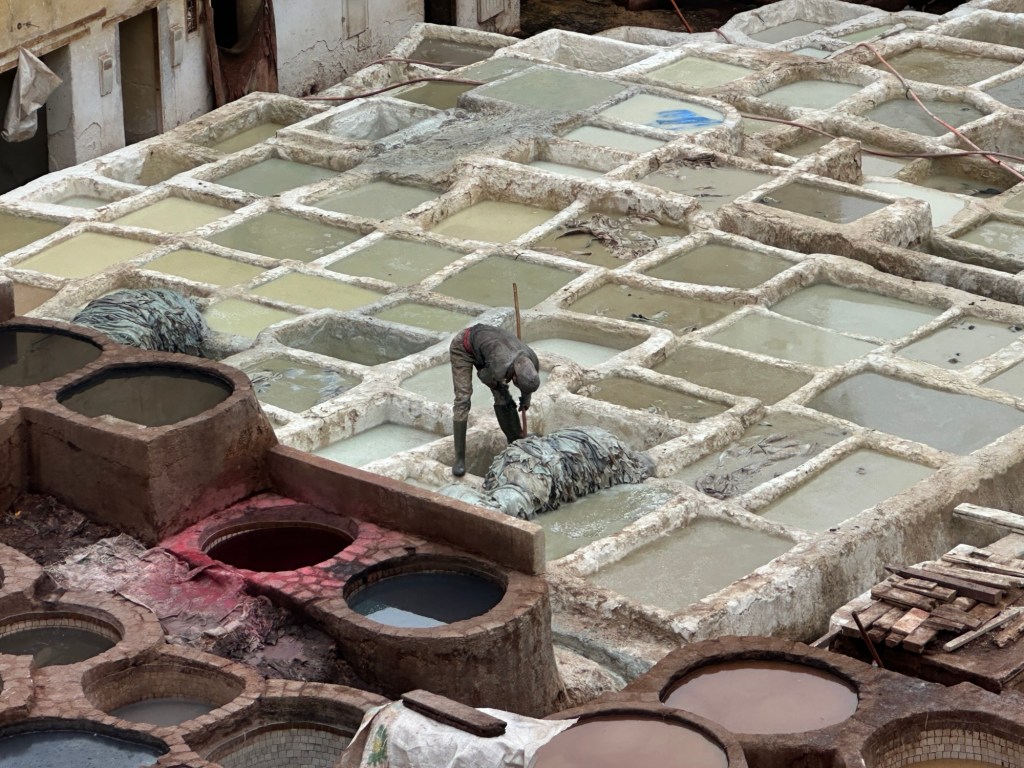
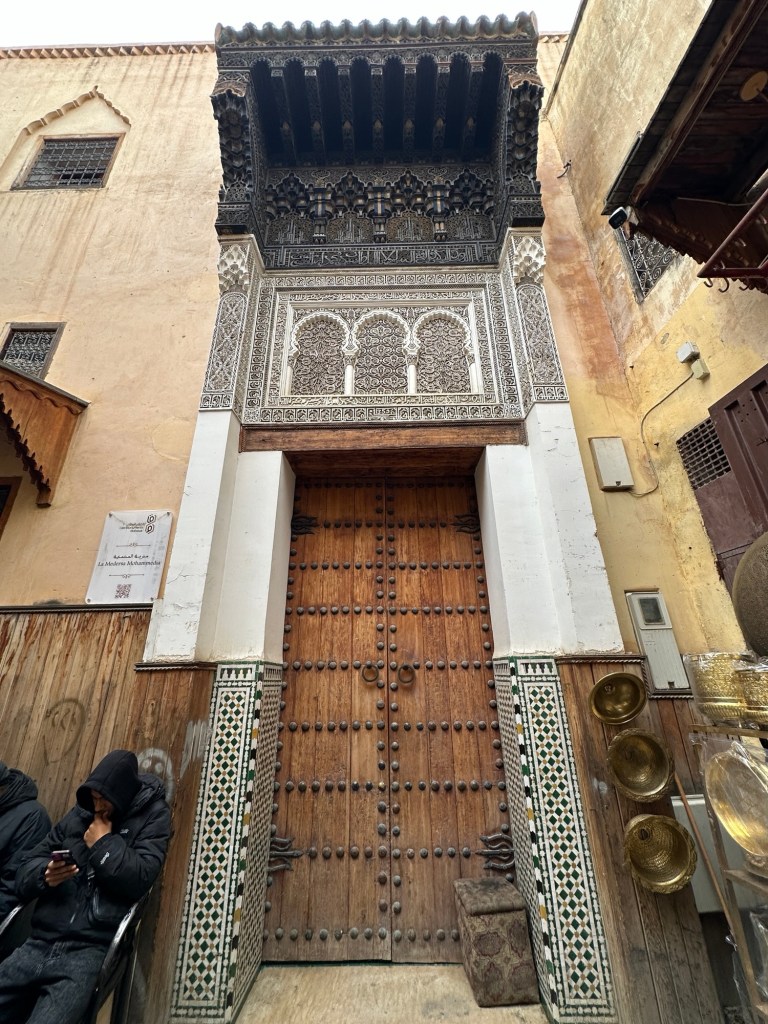
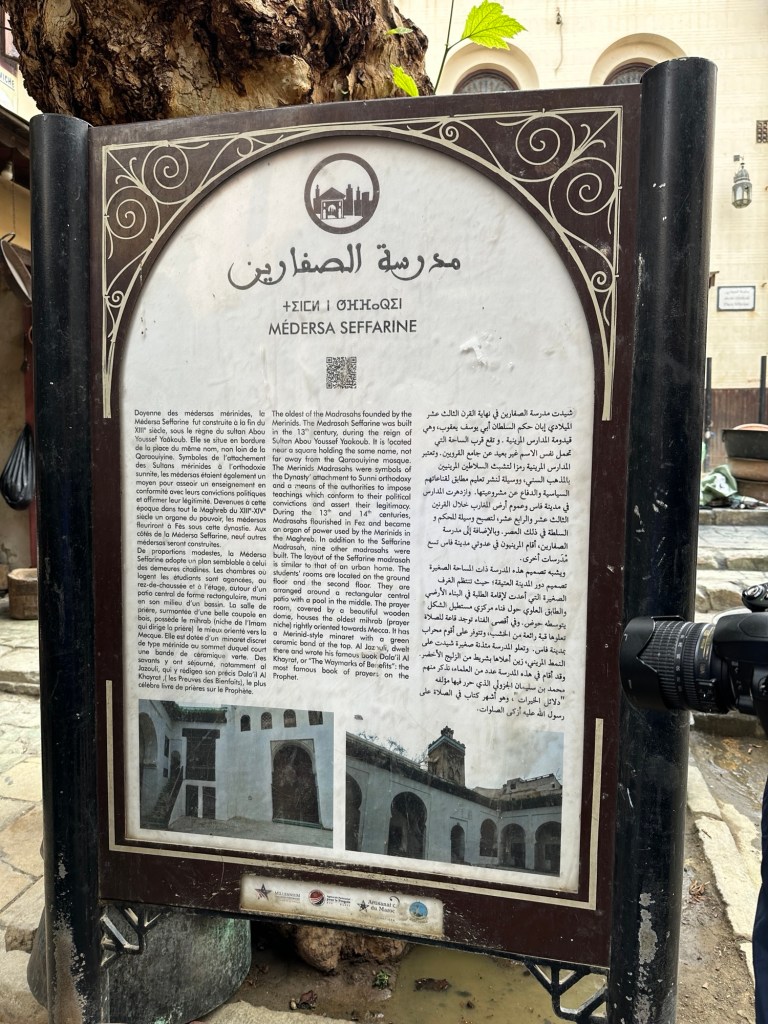
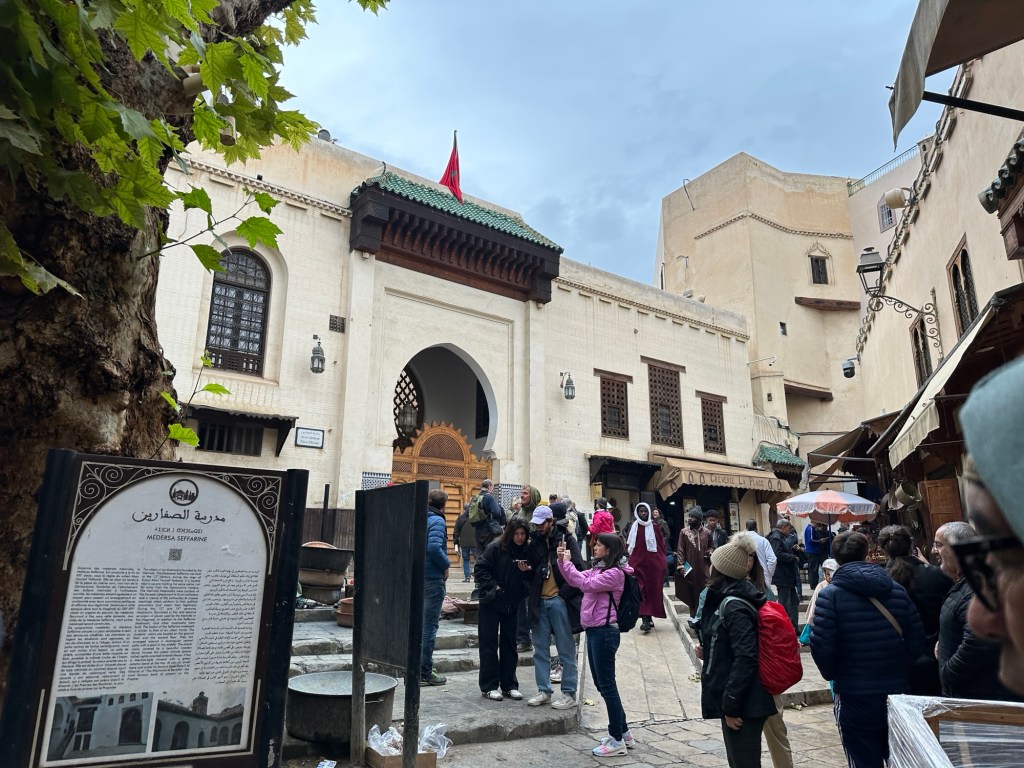
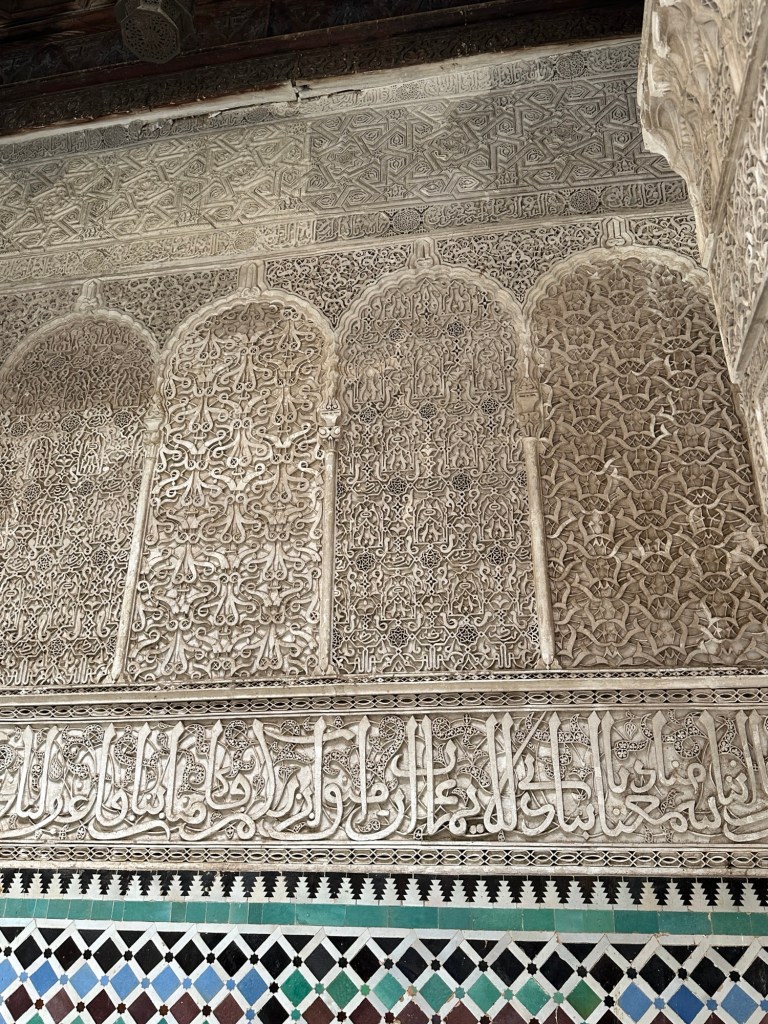
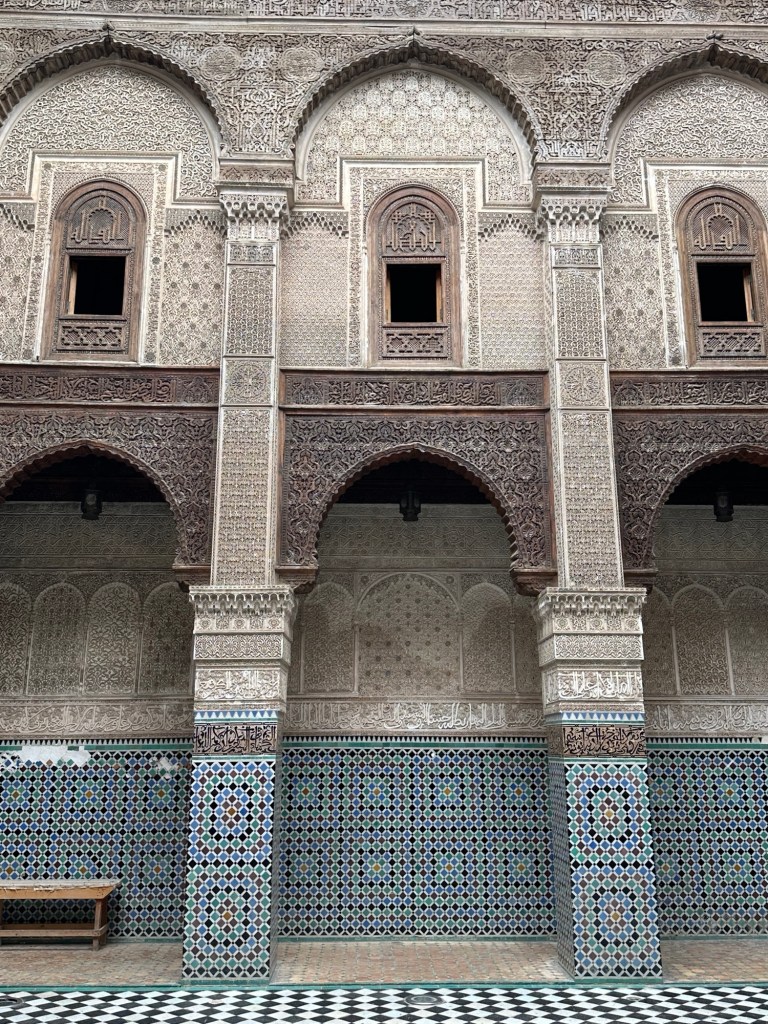
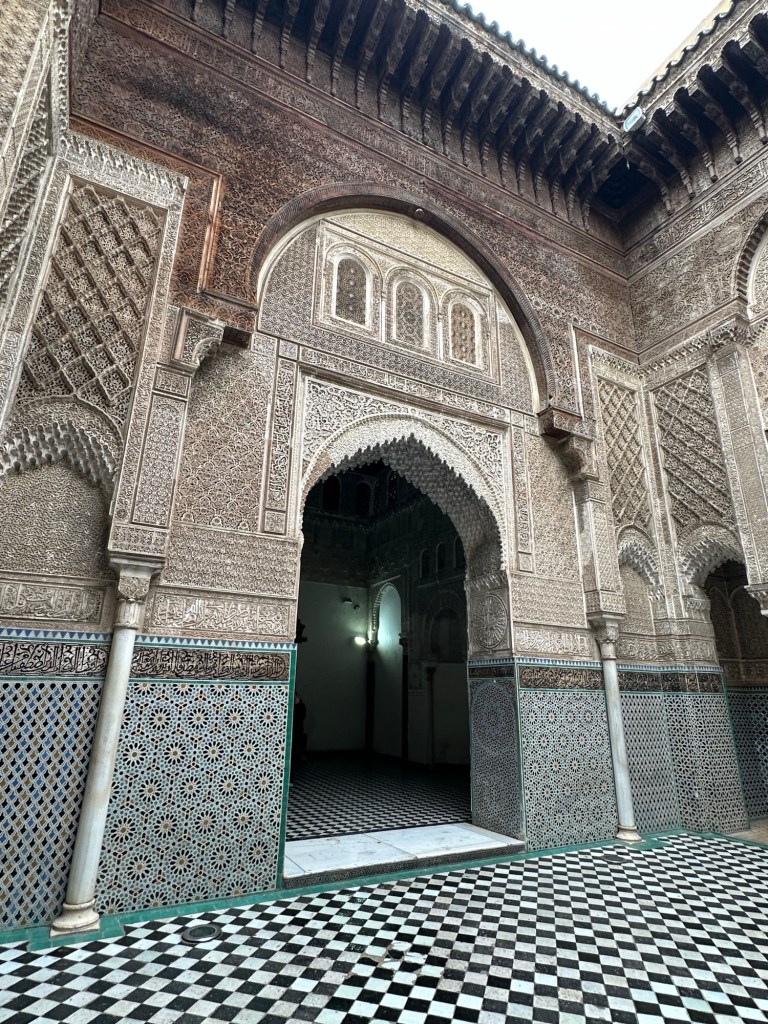
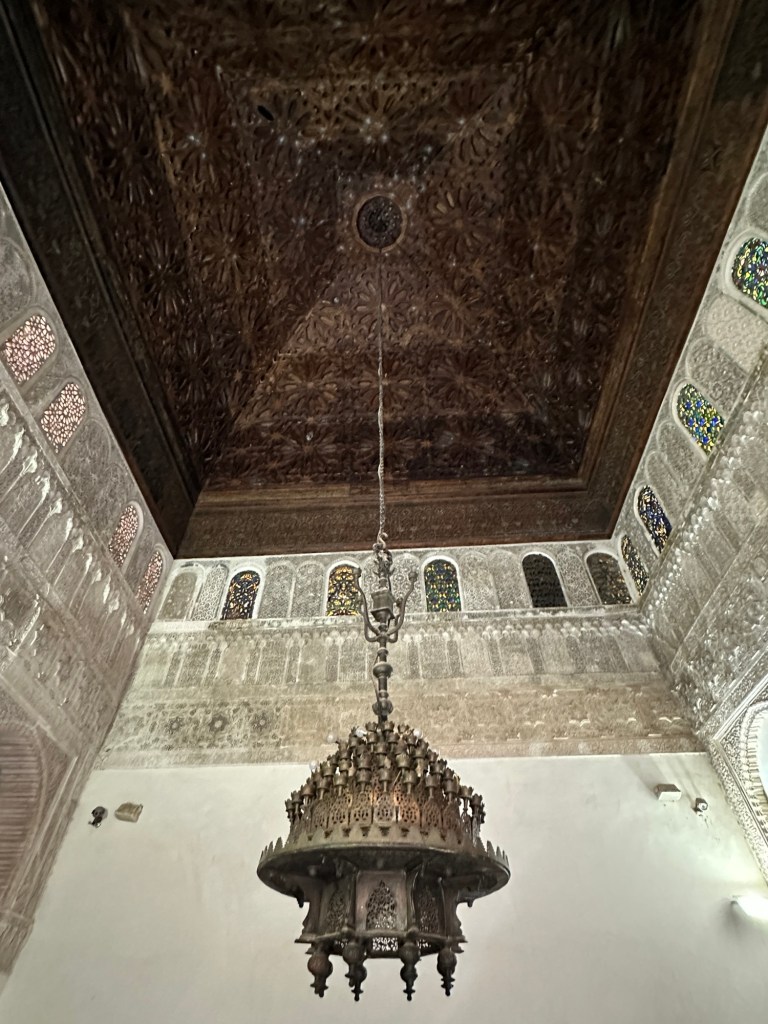
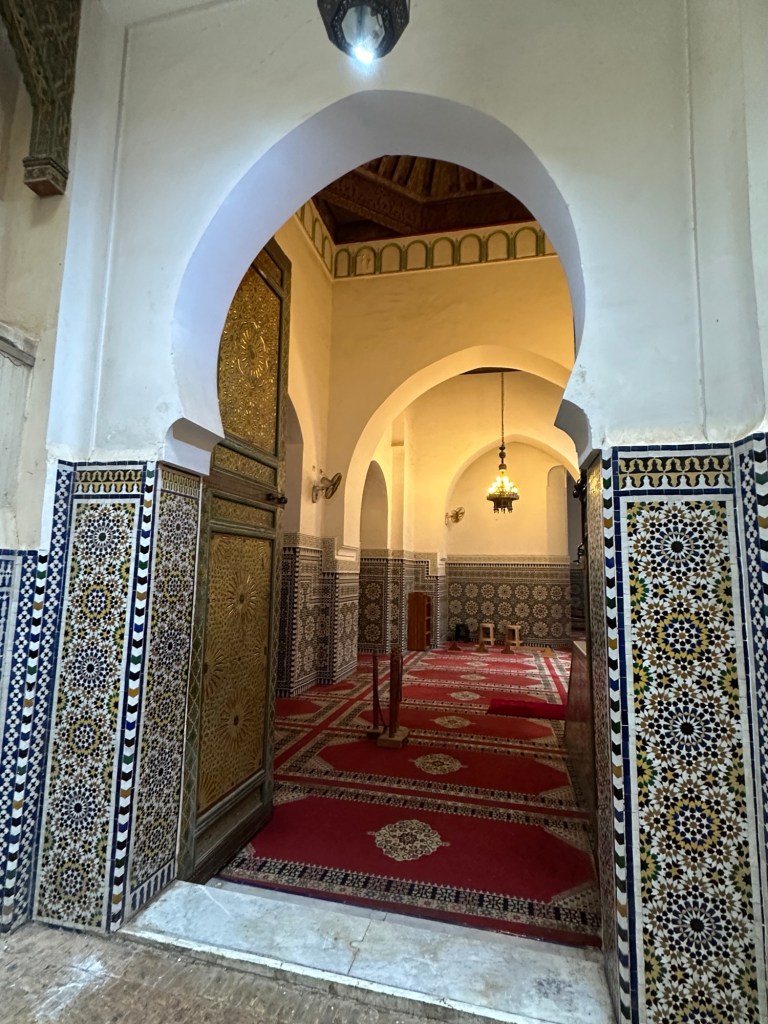
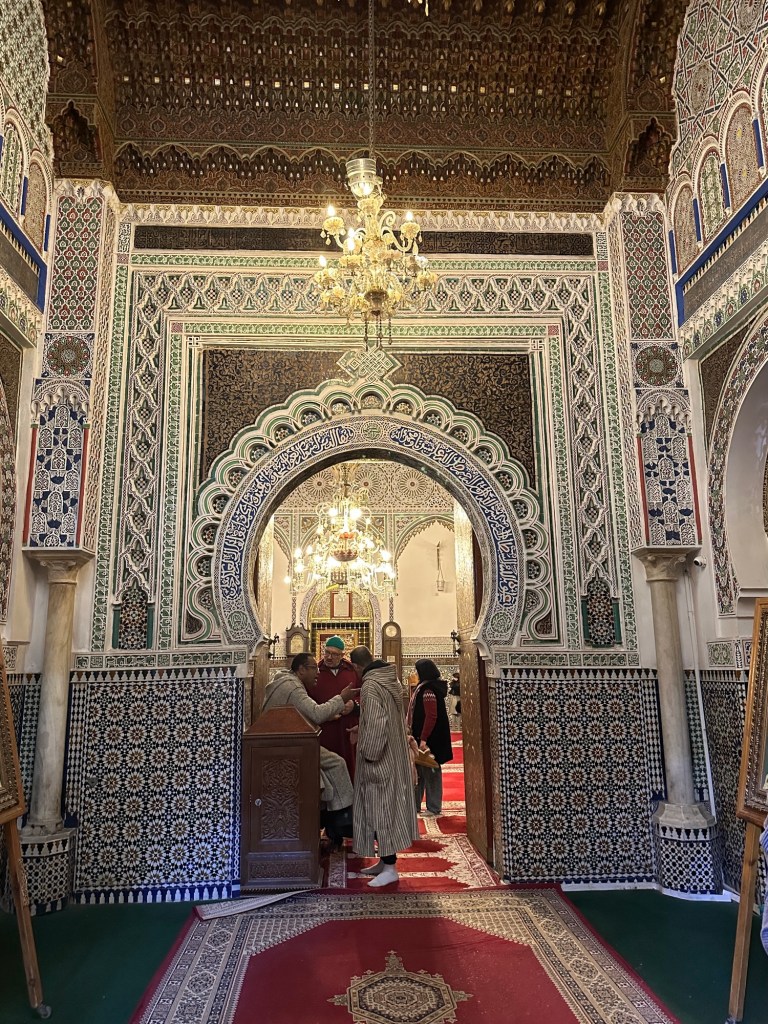
During our tour we visit a Quranic school (Madrasa) and we also visit outside the Tomb of the founder of Fes.
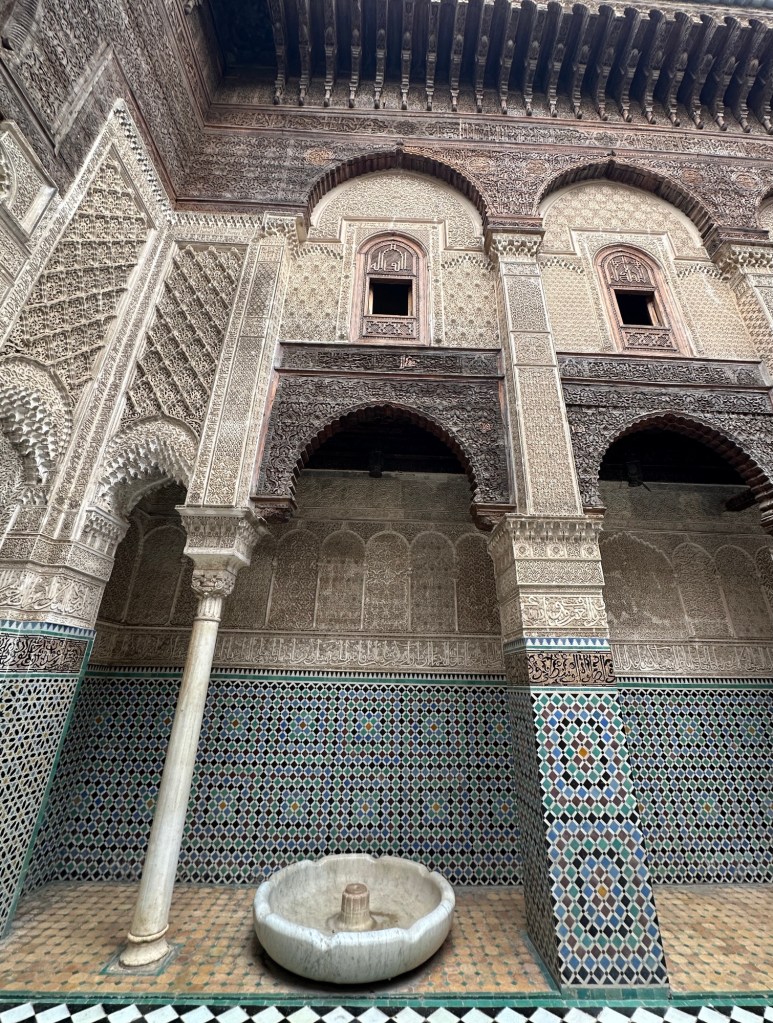
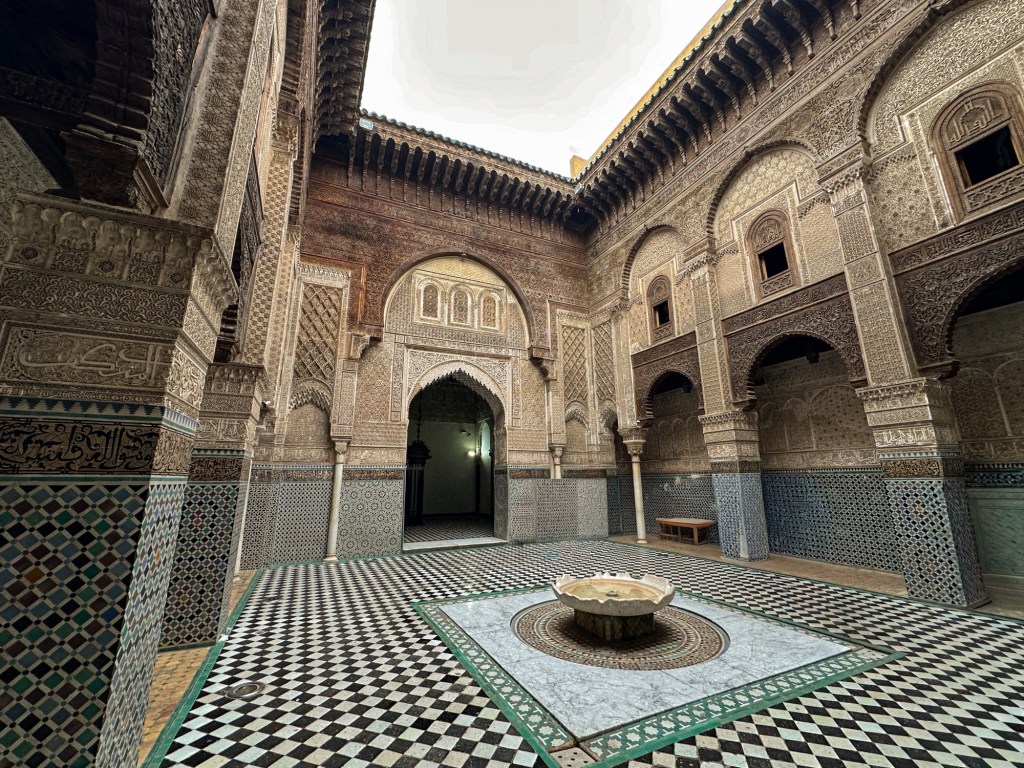
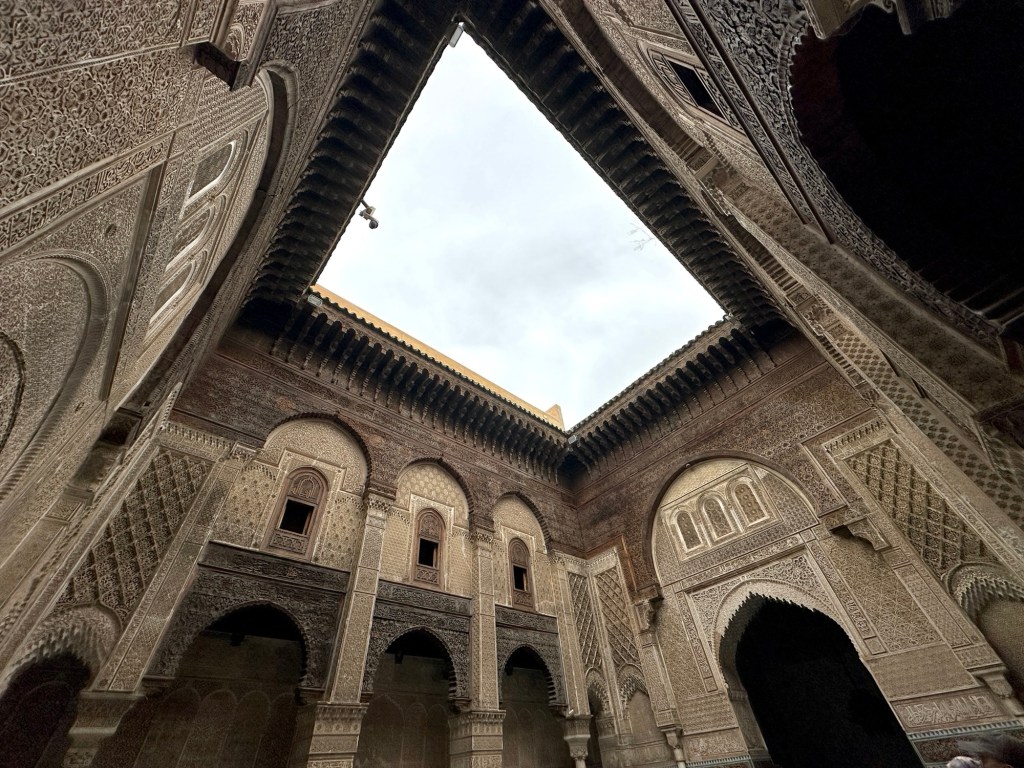
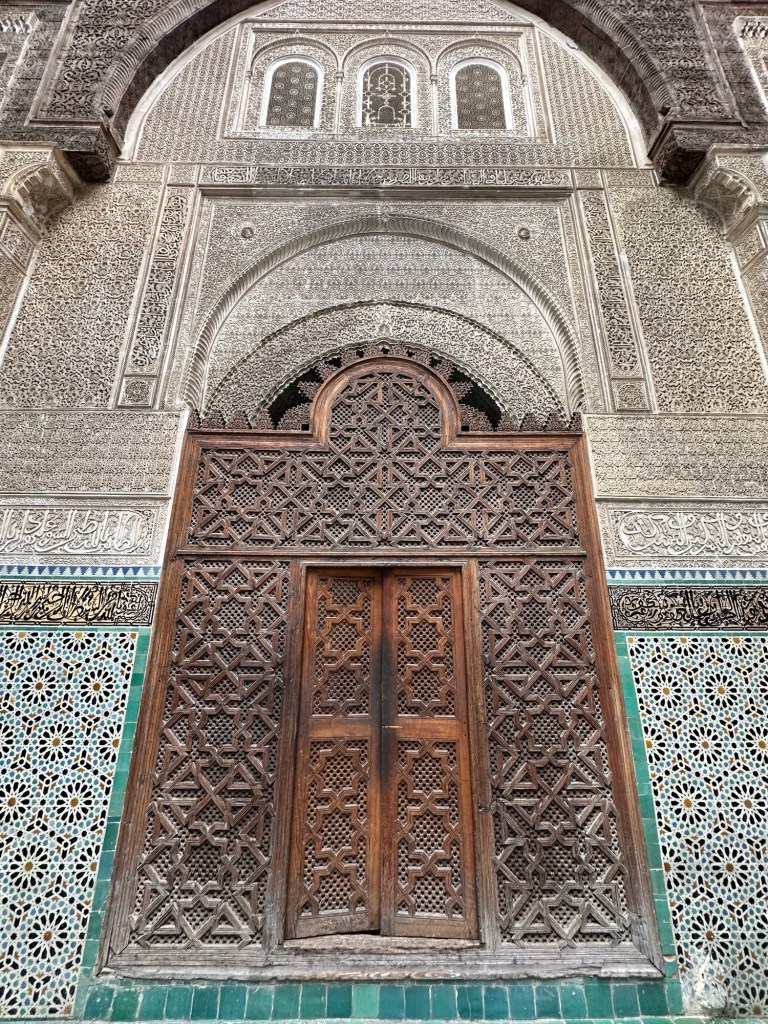
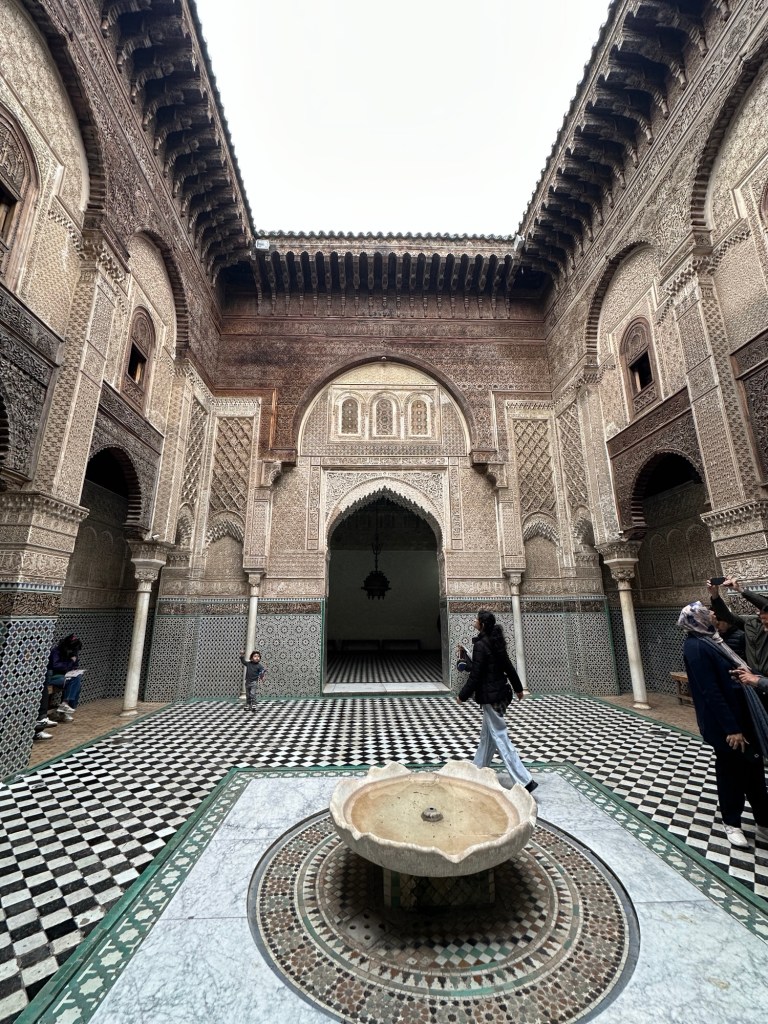
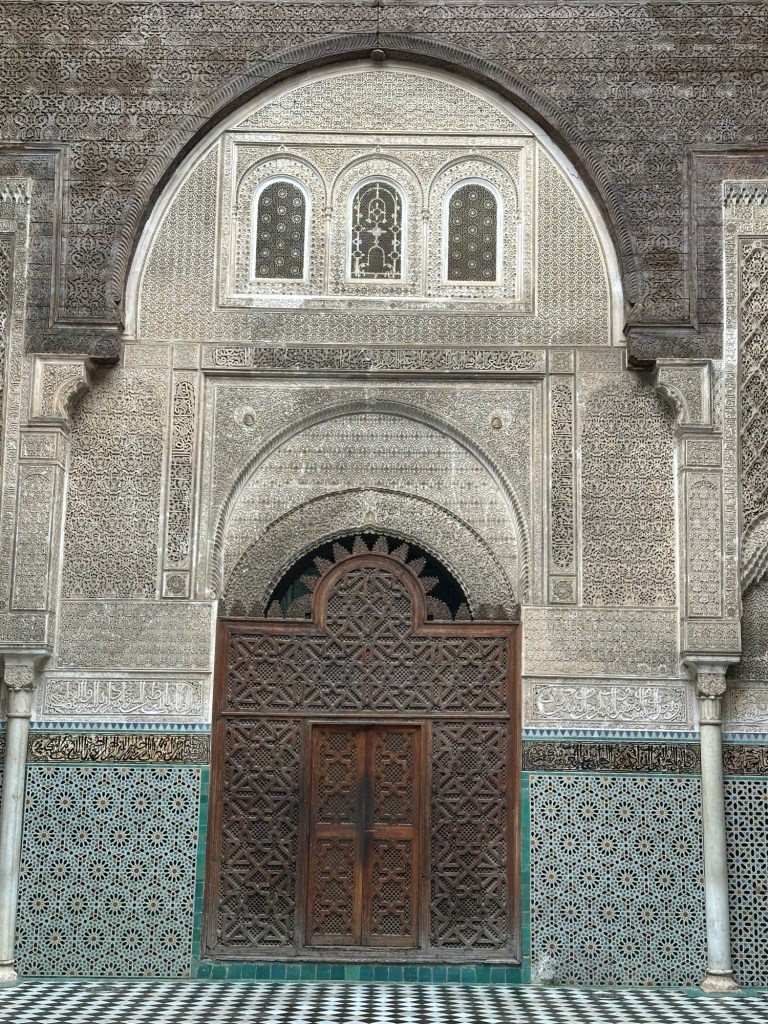
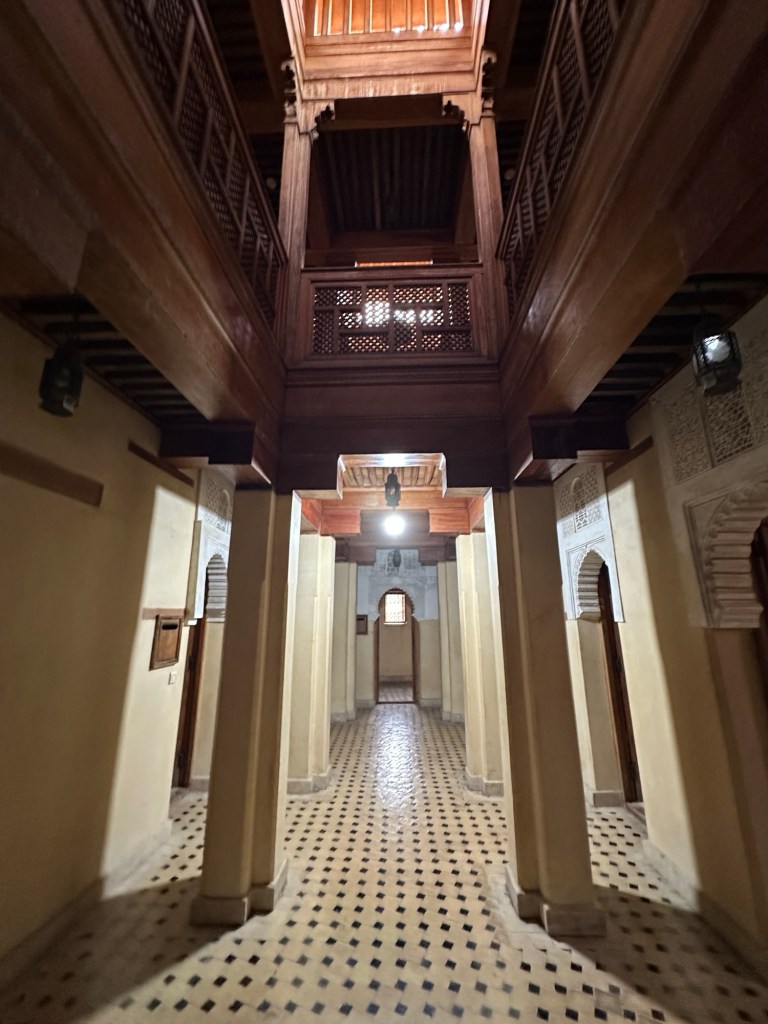
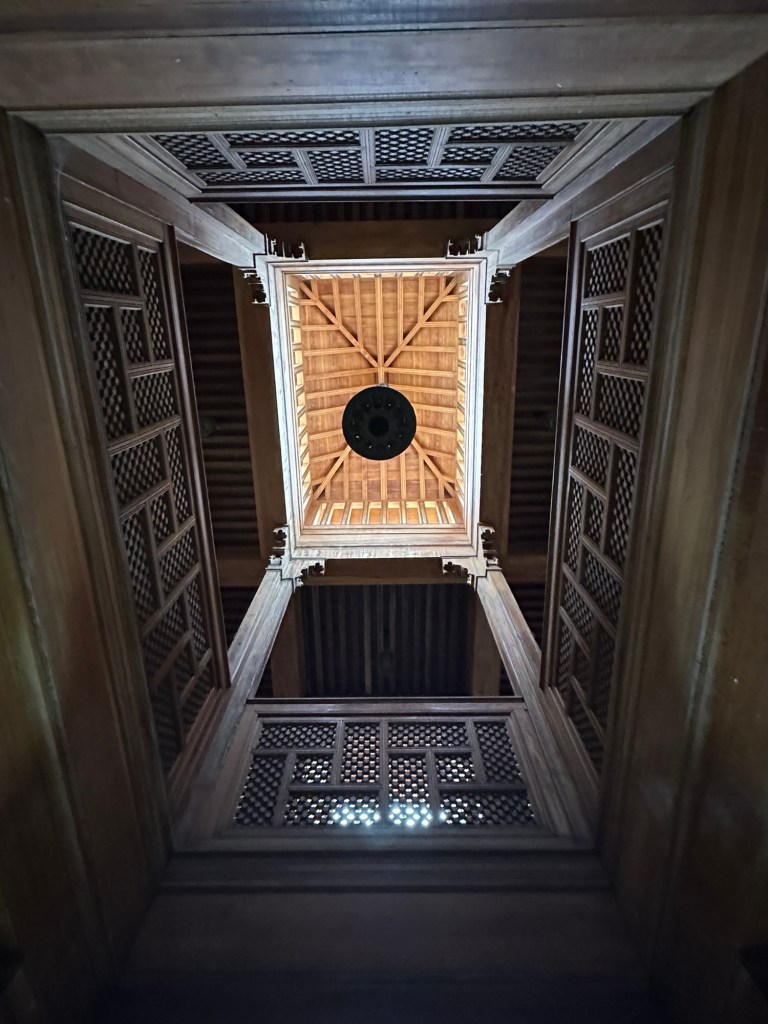
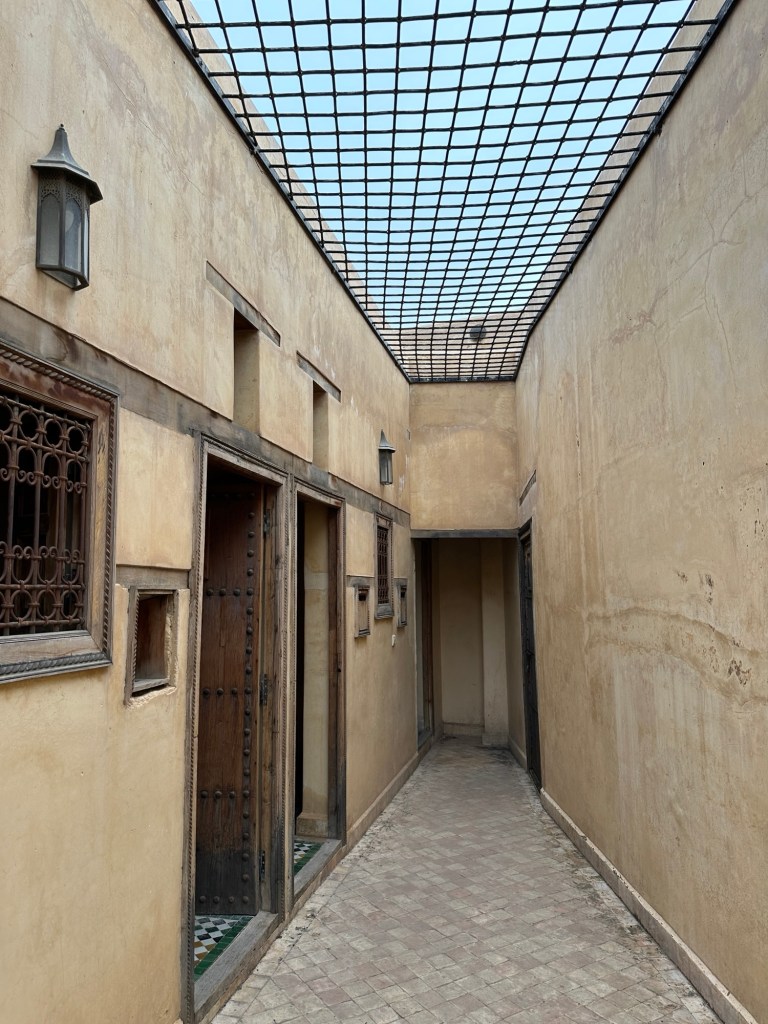
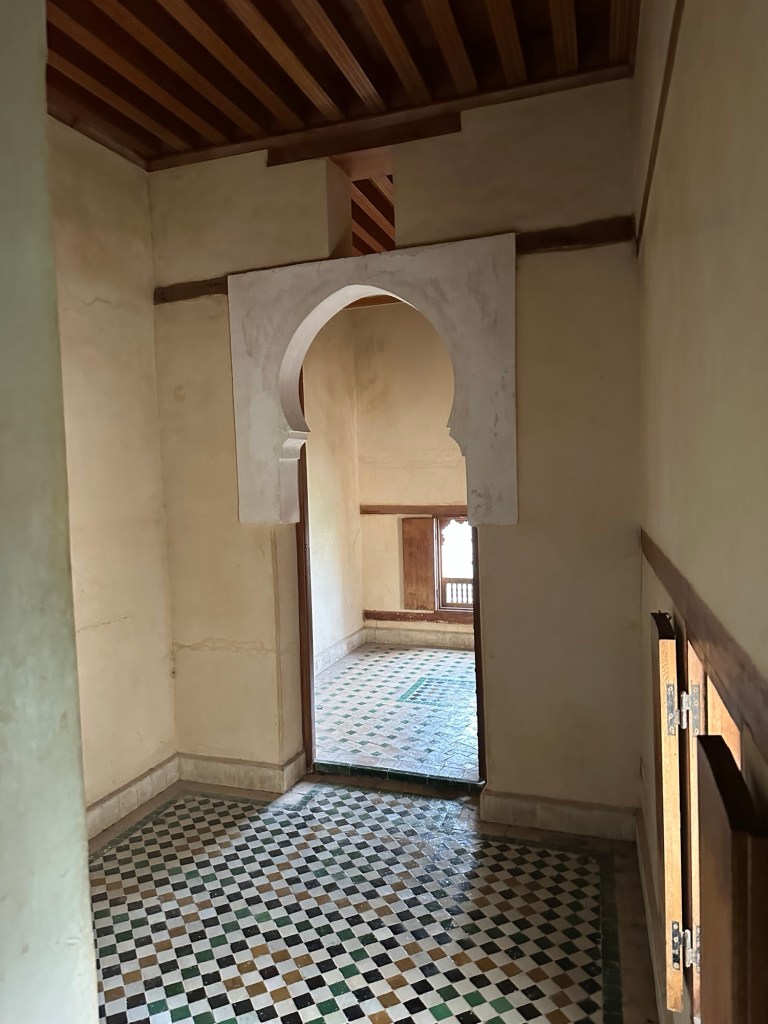
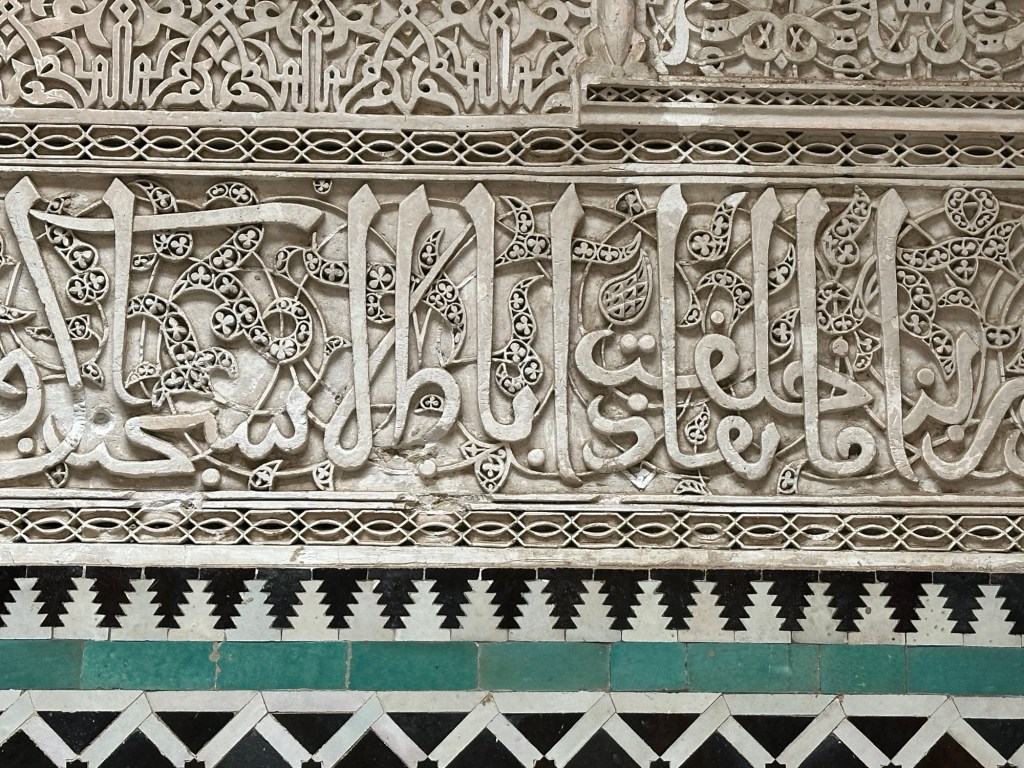

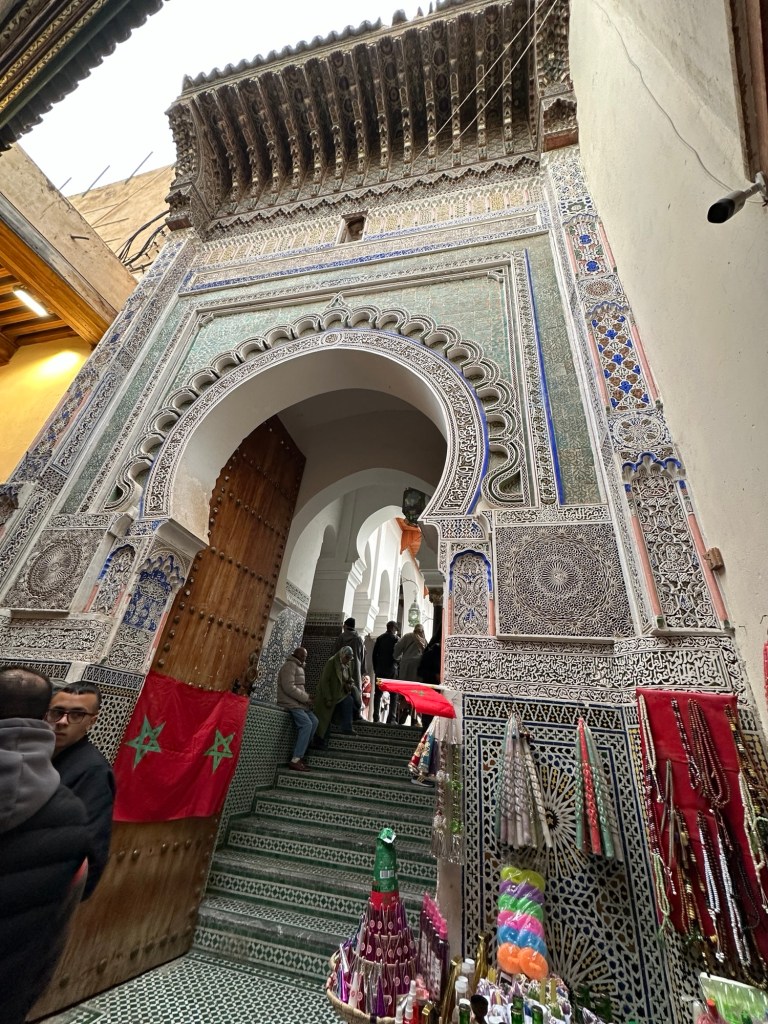
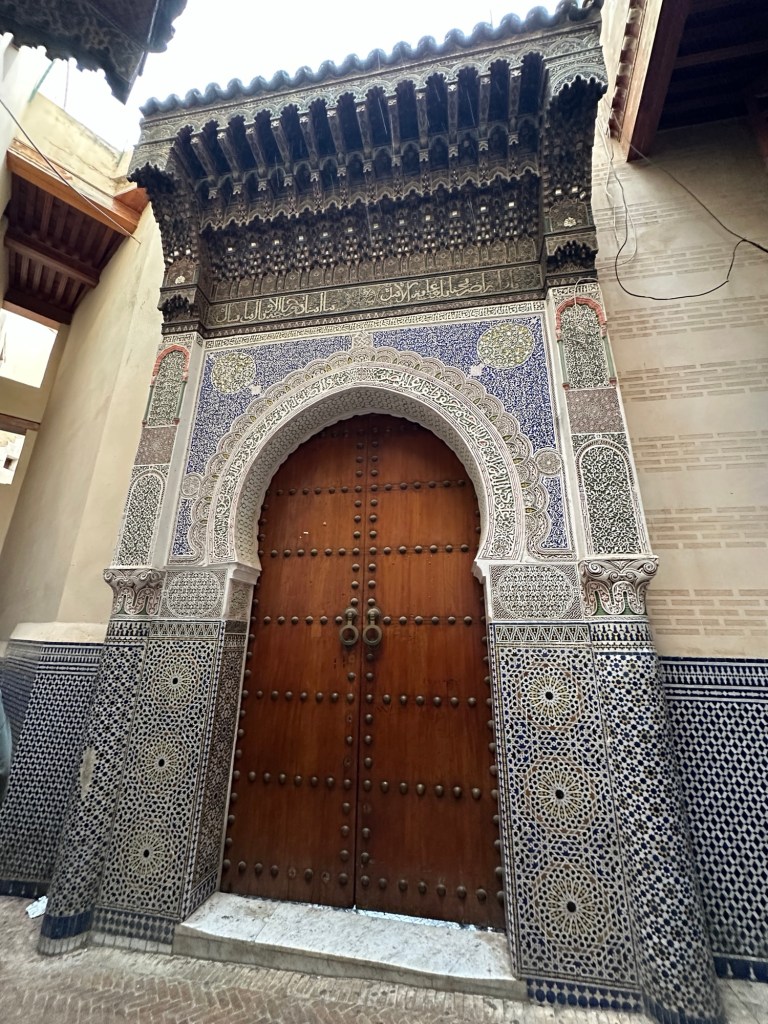
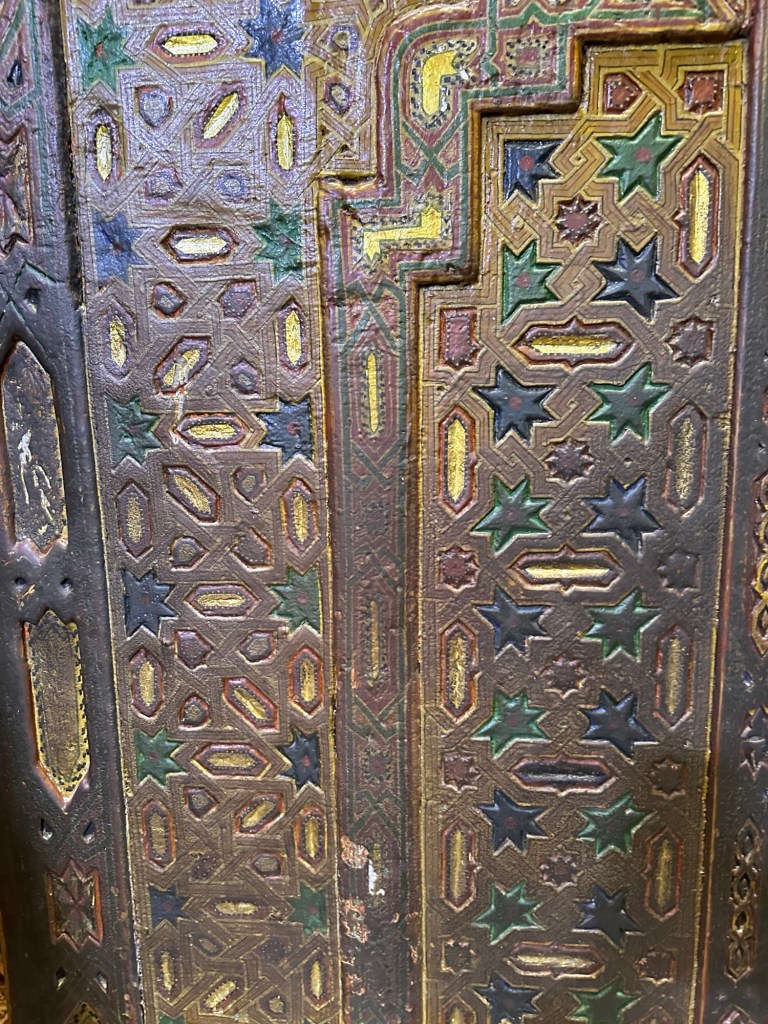

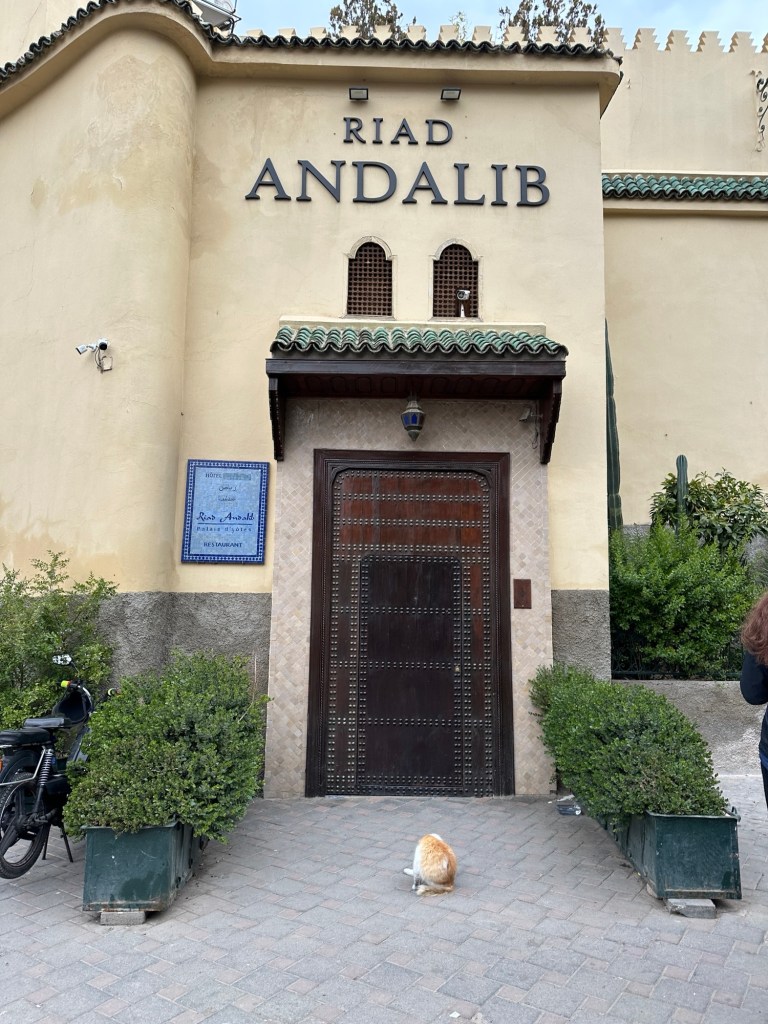
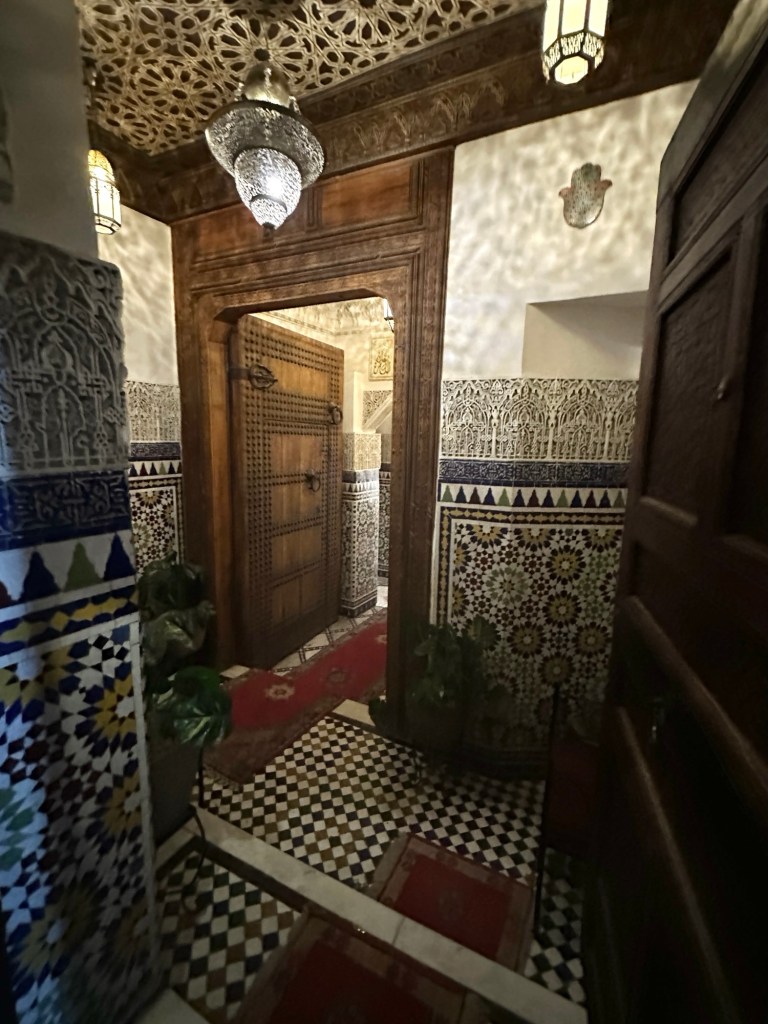
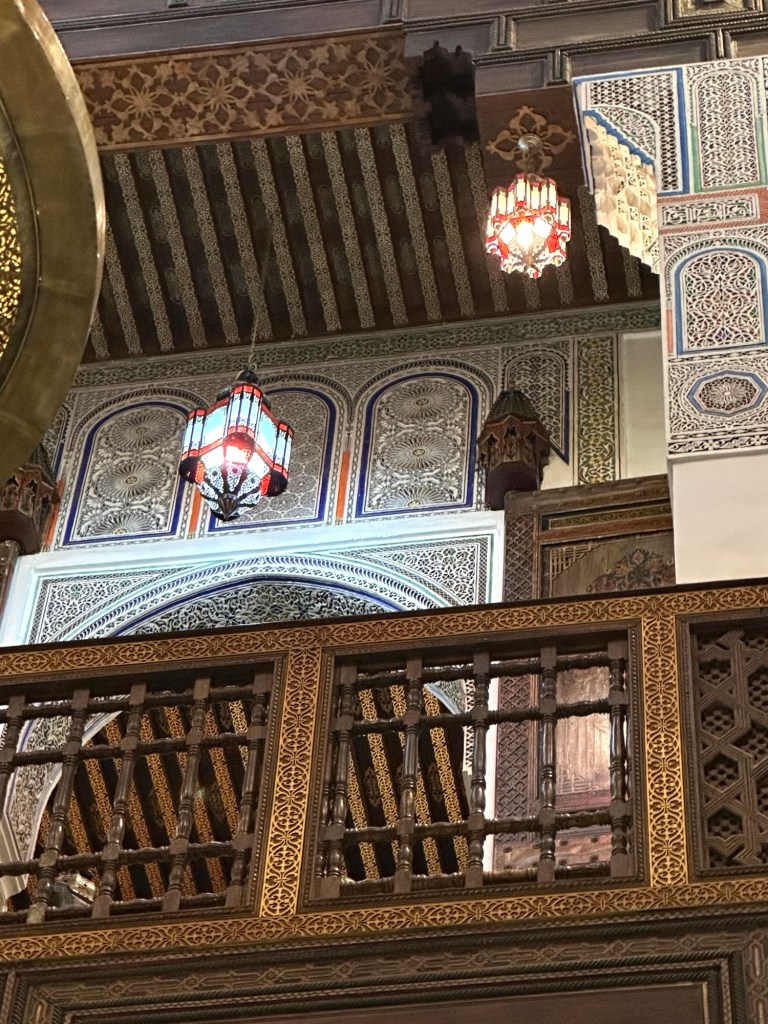
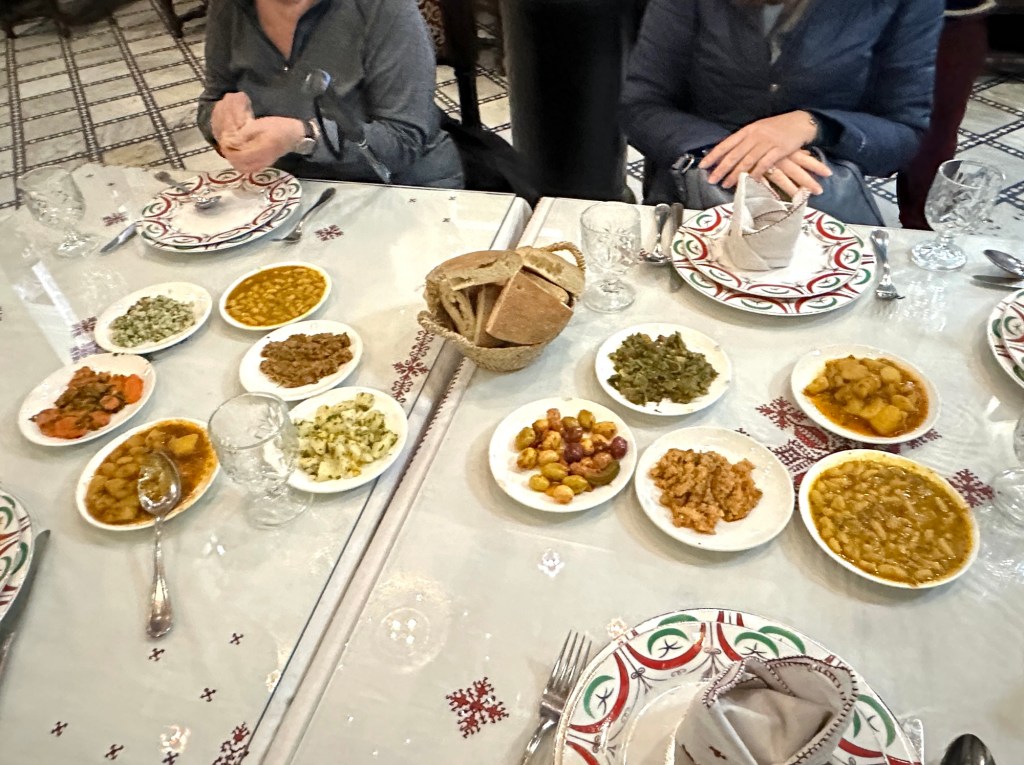
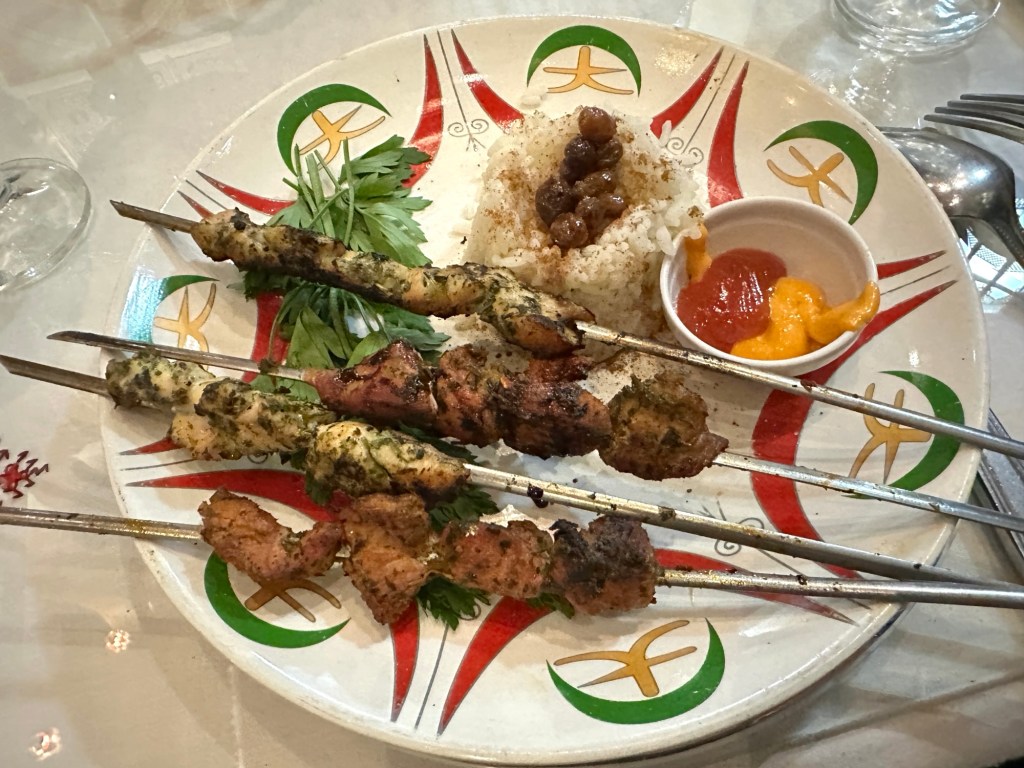
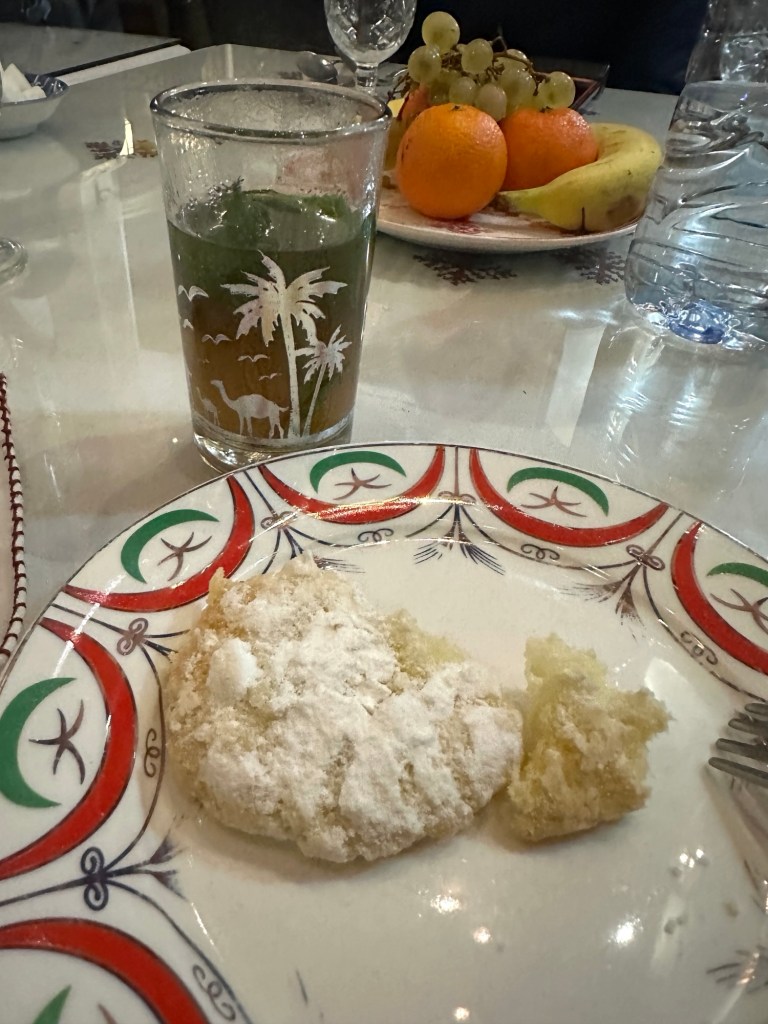
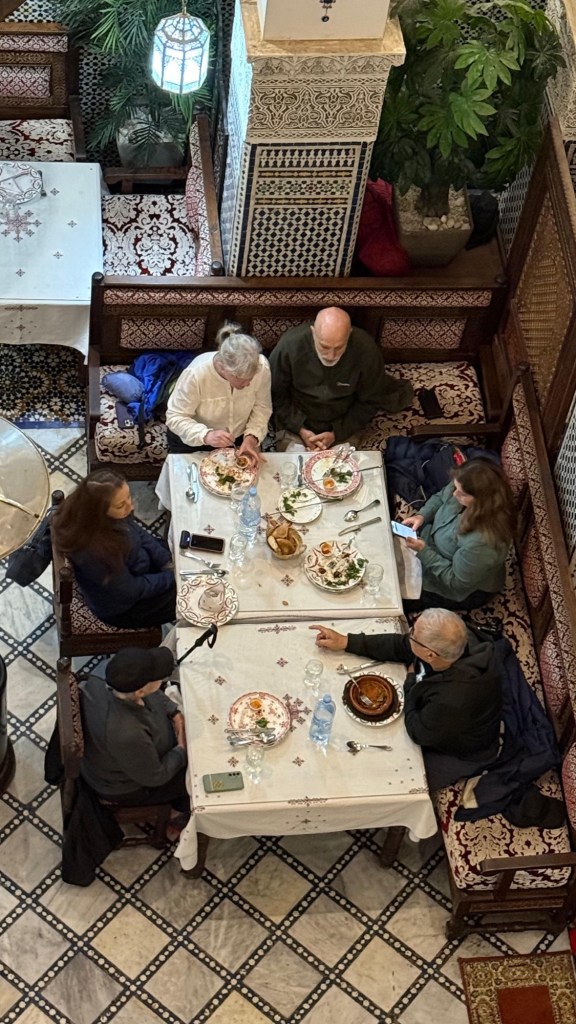
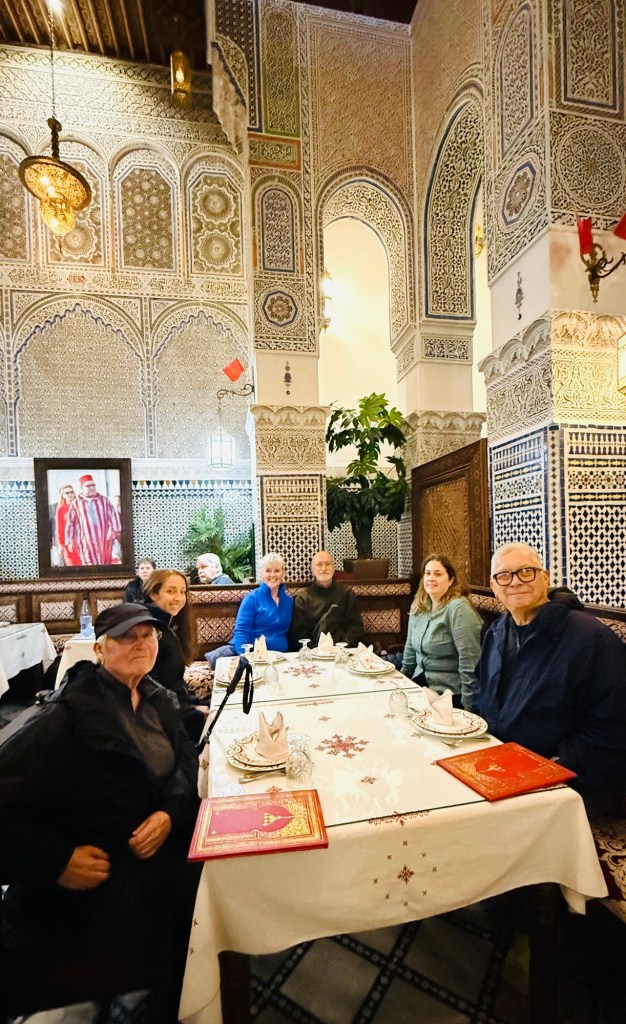
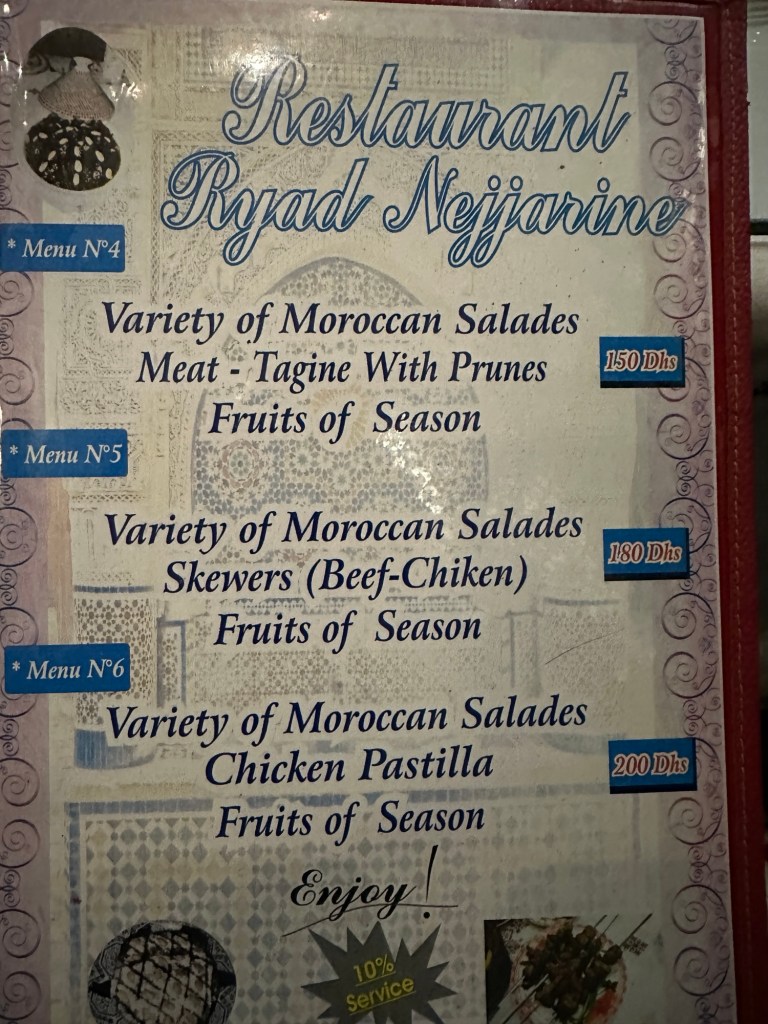
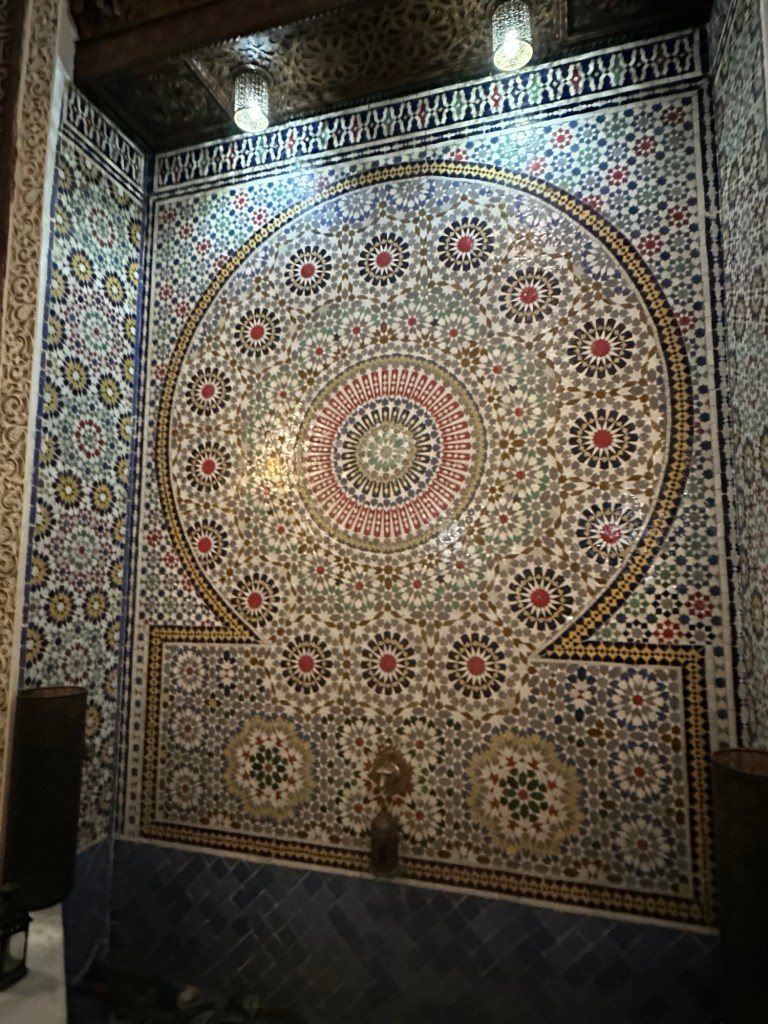
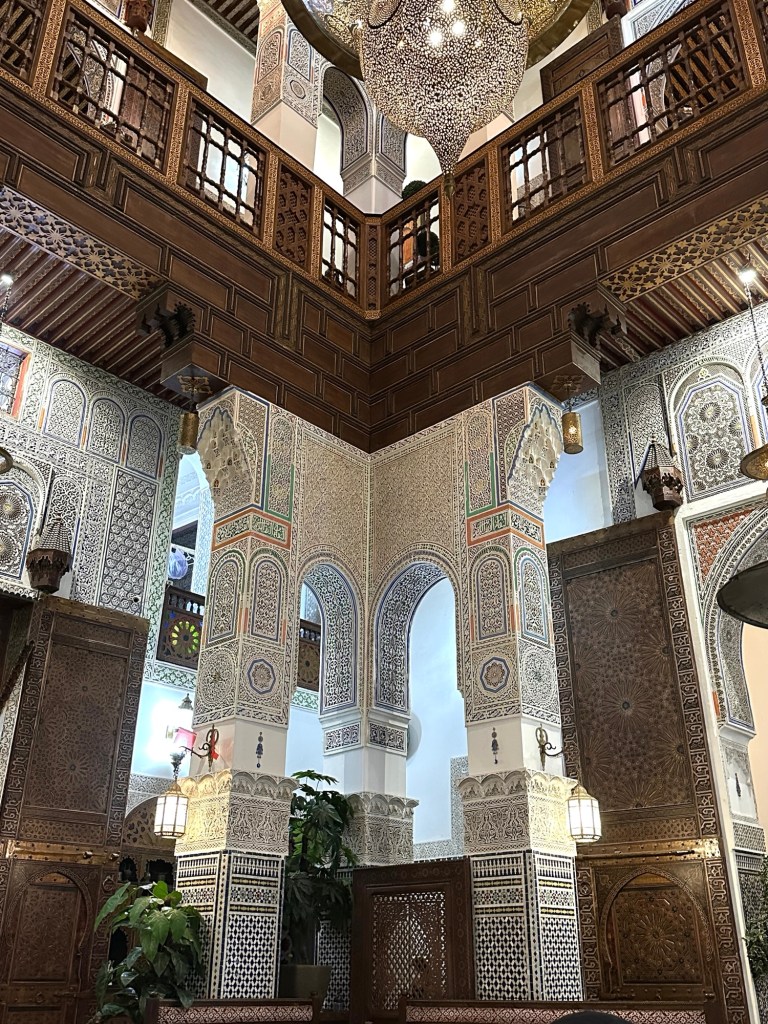
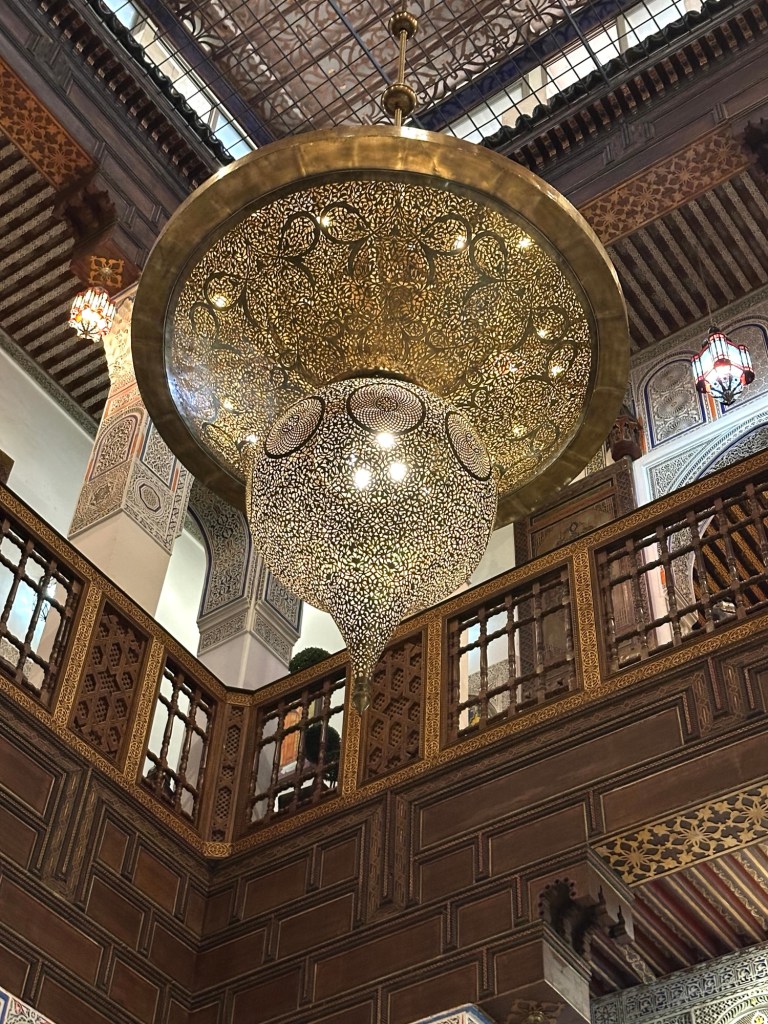
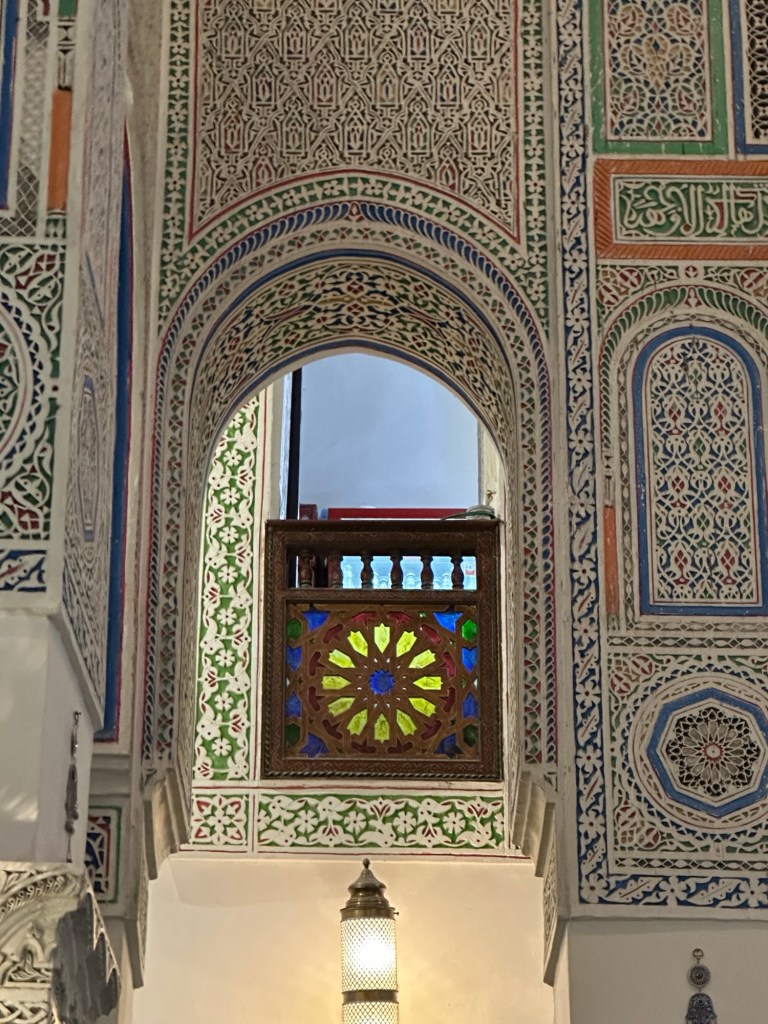
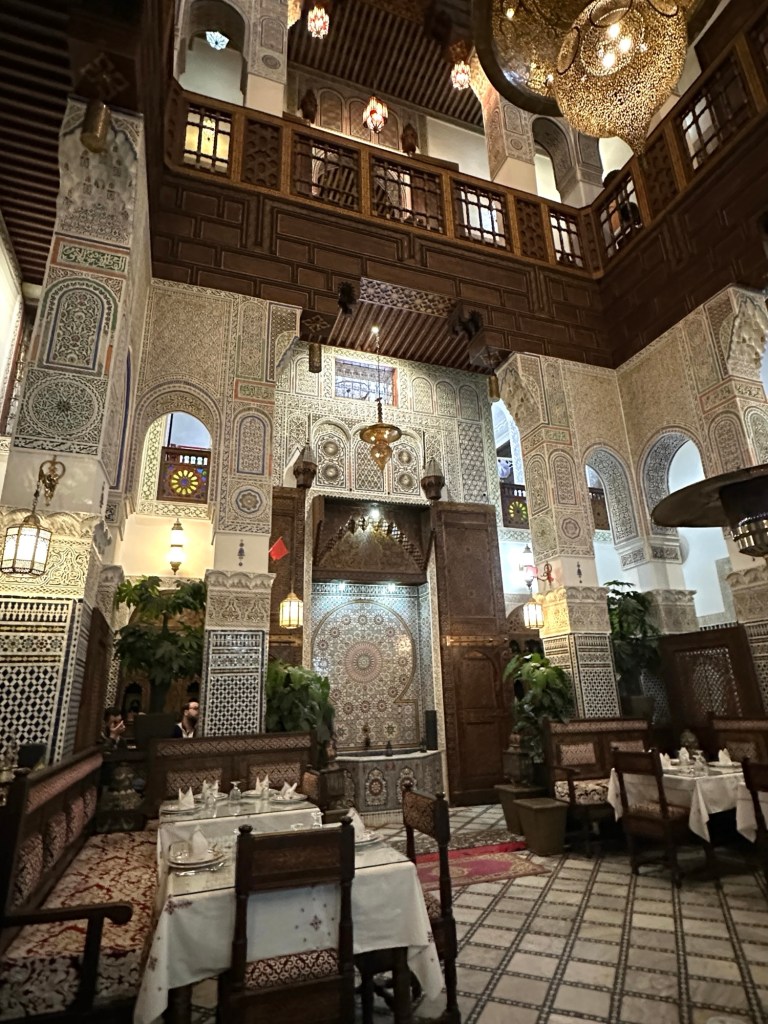
We have lunch at an old riad converted to a restaurant. Raids are large family houses interior of the medina that would house very large families traditionally. Some riads are normal homes but some are elaborately decorated and you’d never know from the outside. Today many of them are converted to hotels or restaurants.
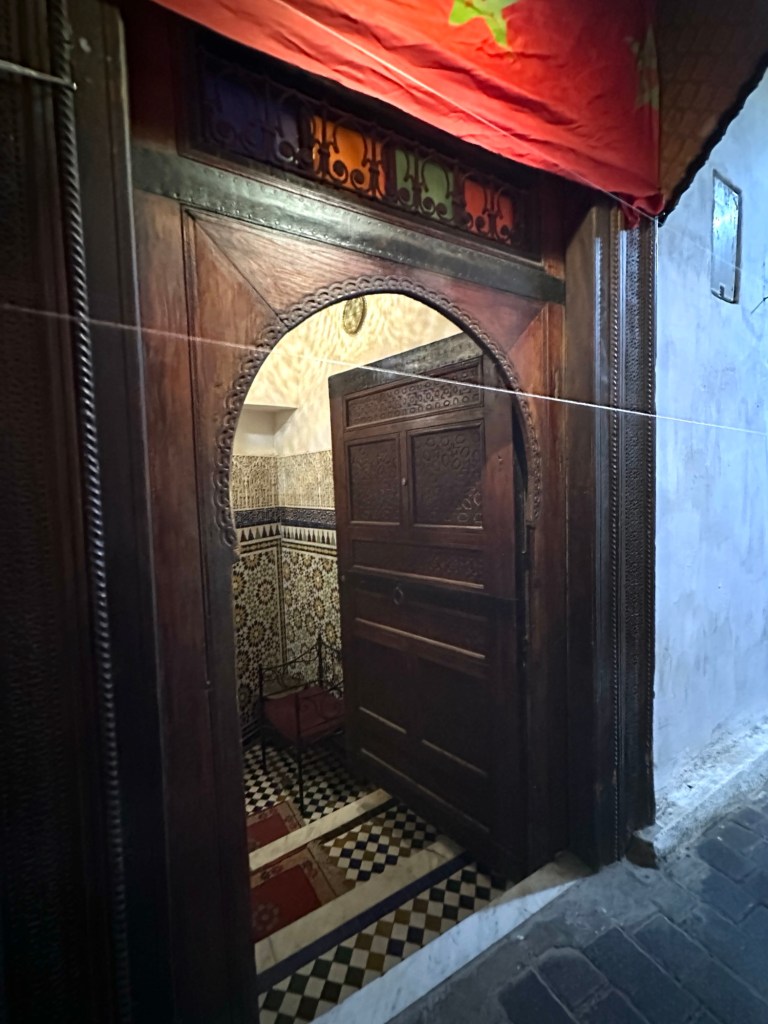
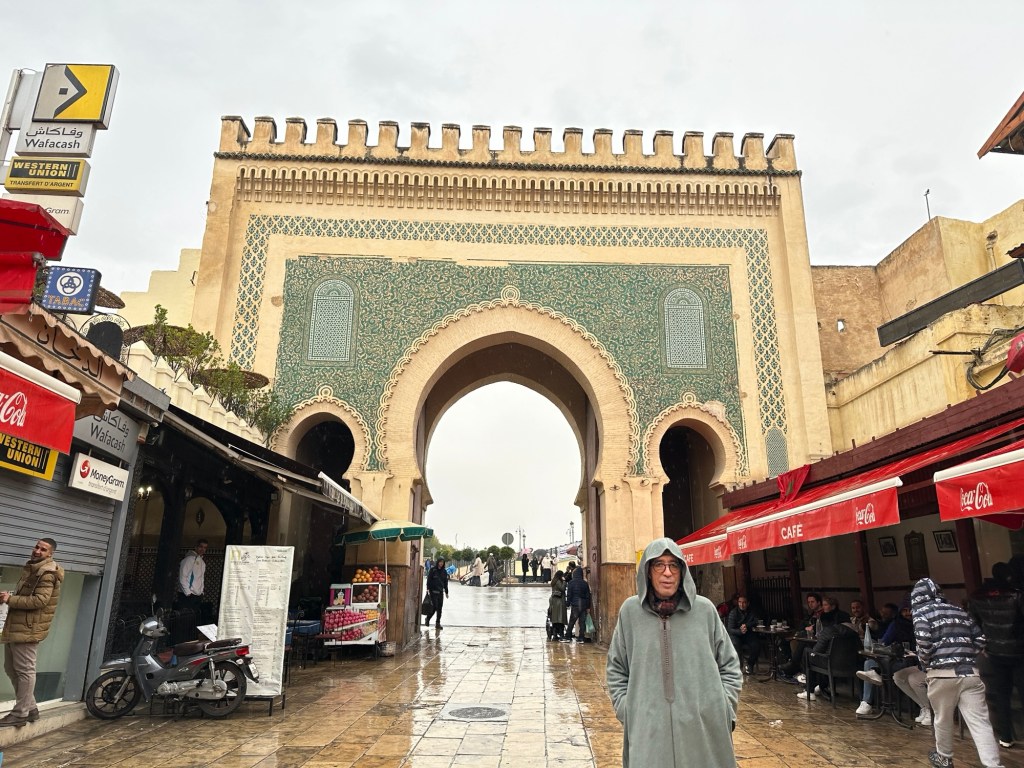
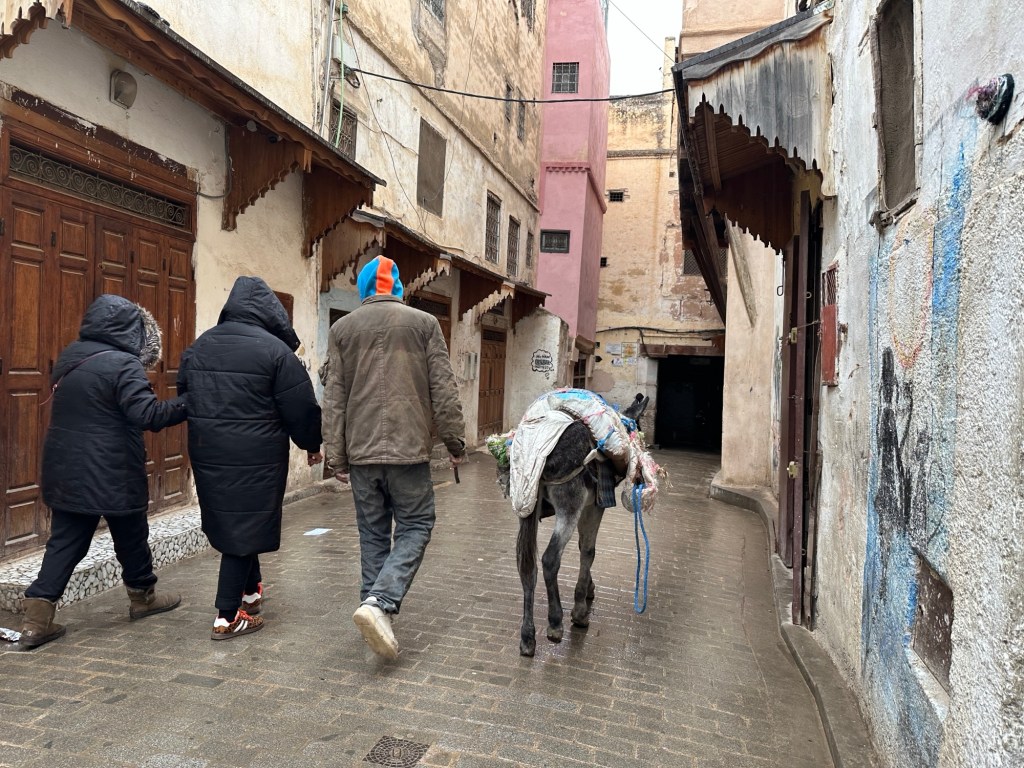
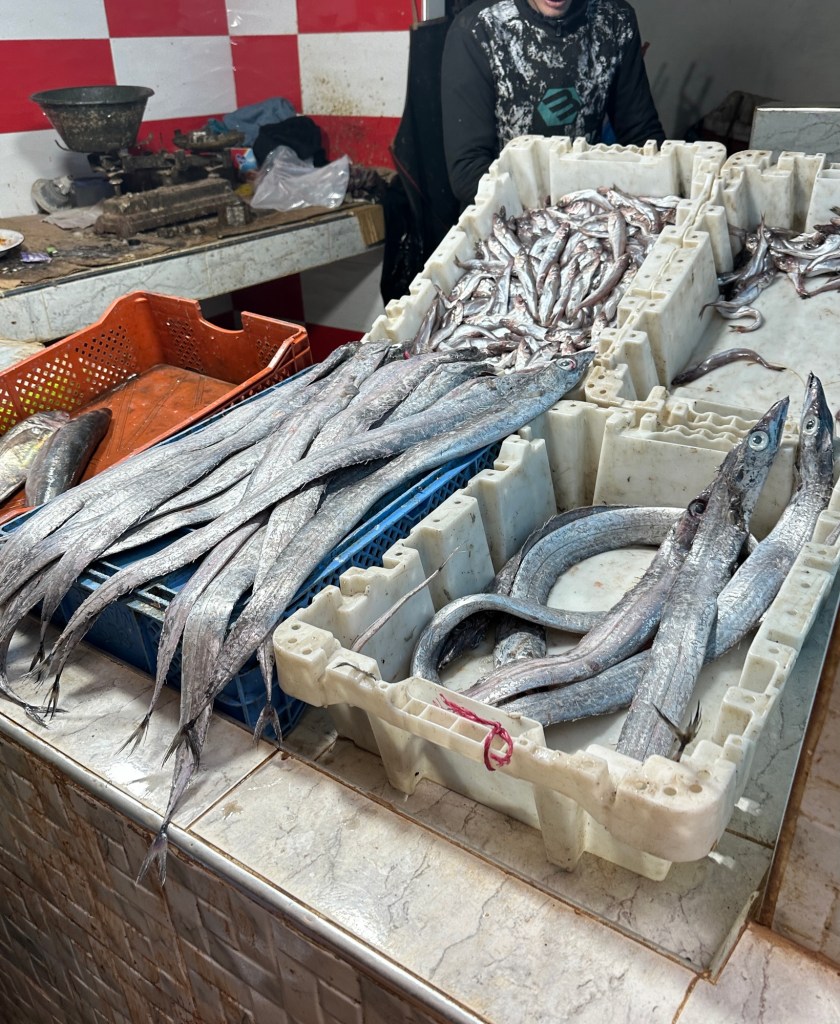
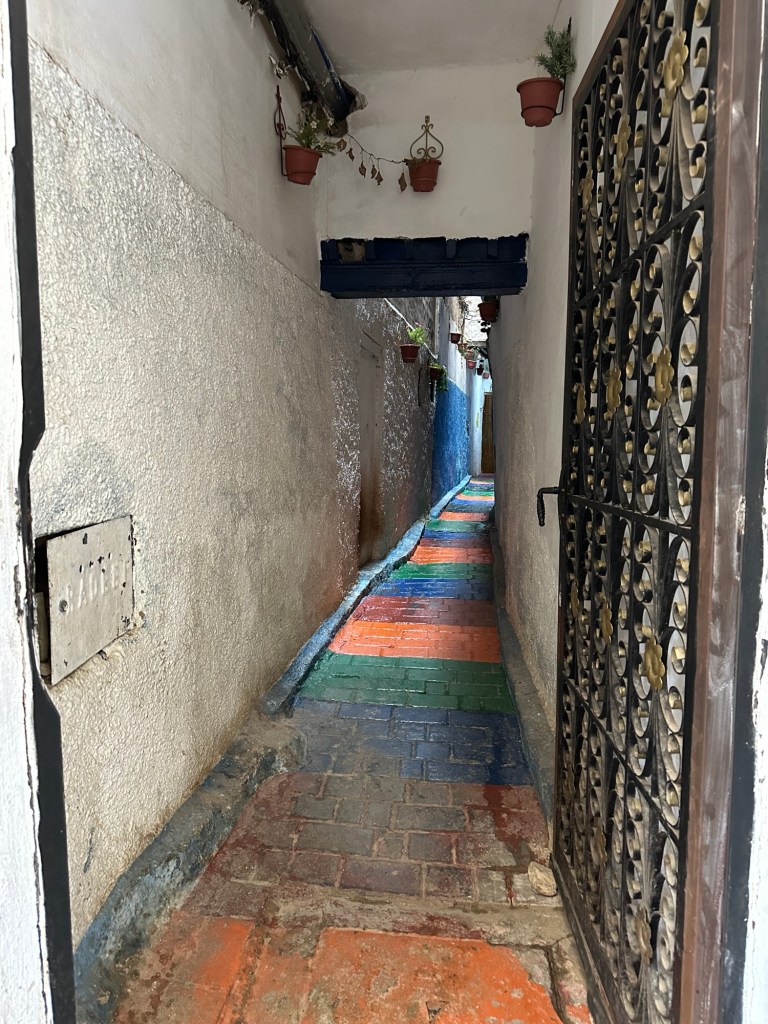
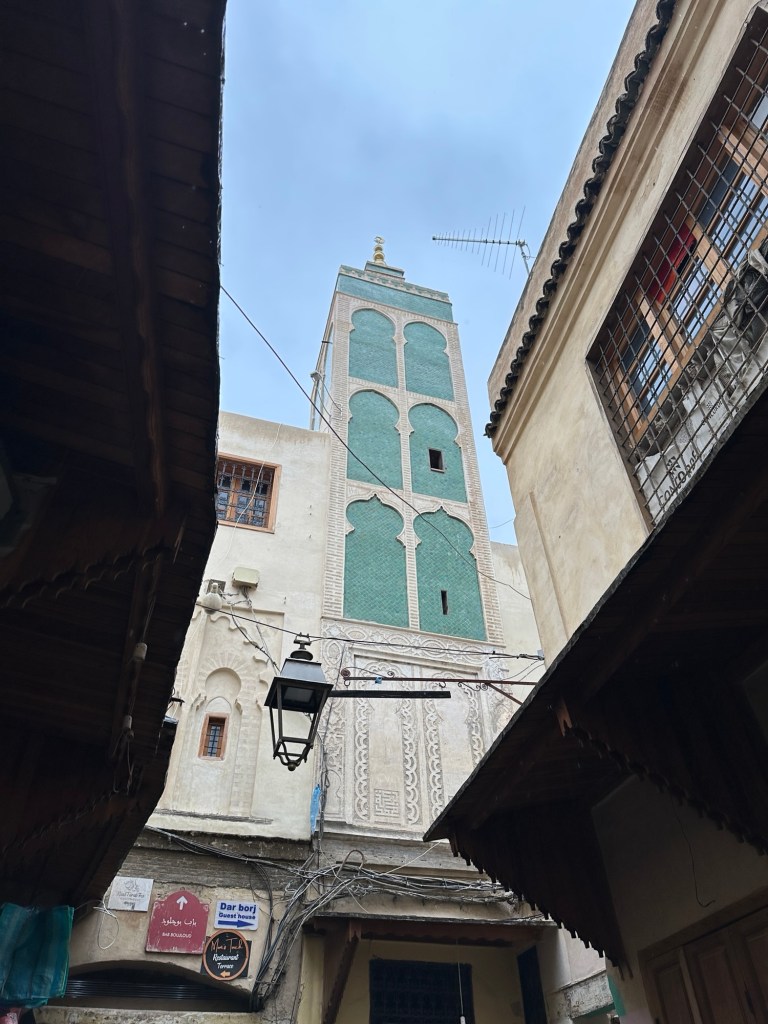
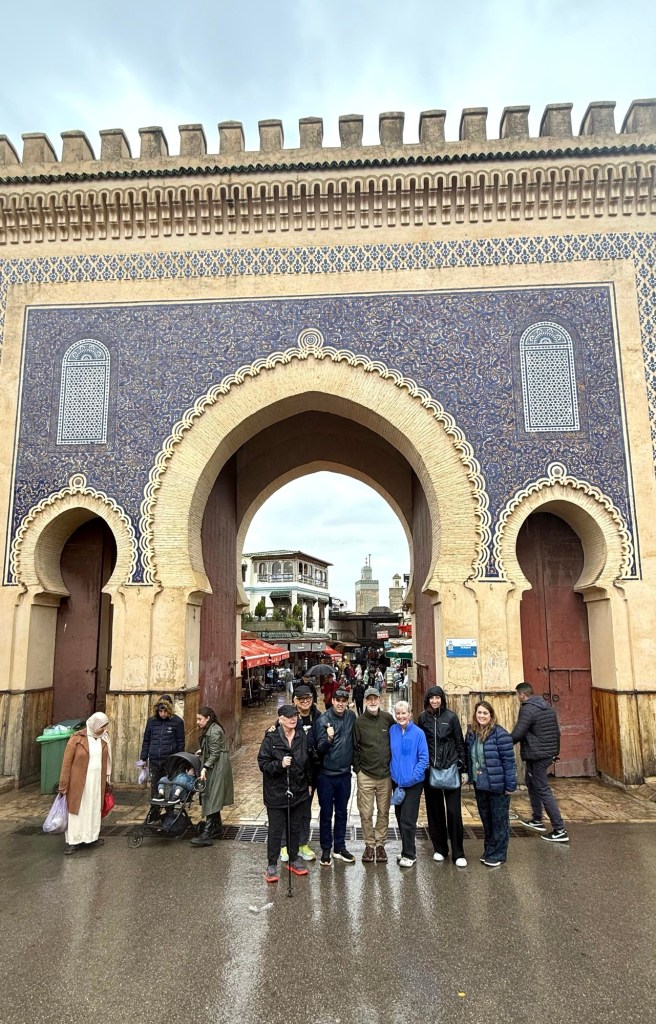
We want to stay on our own after the tour but our guide strongly advises against it due to the confusing nature of the medina. We probably would have tried to stay anyway but it is rainy and I uncomfortably wet – I decide it would be best to return with the group.
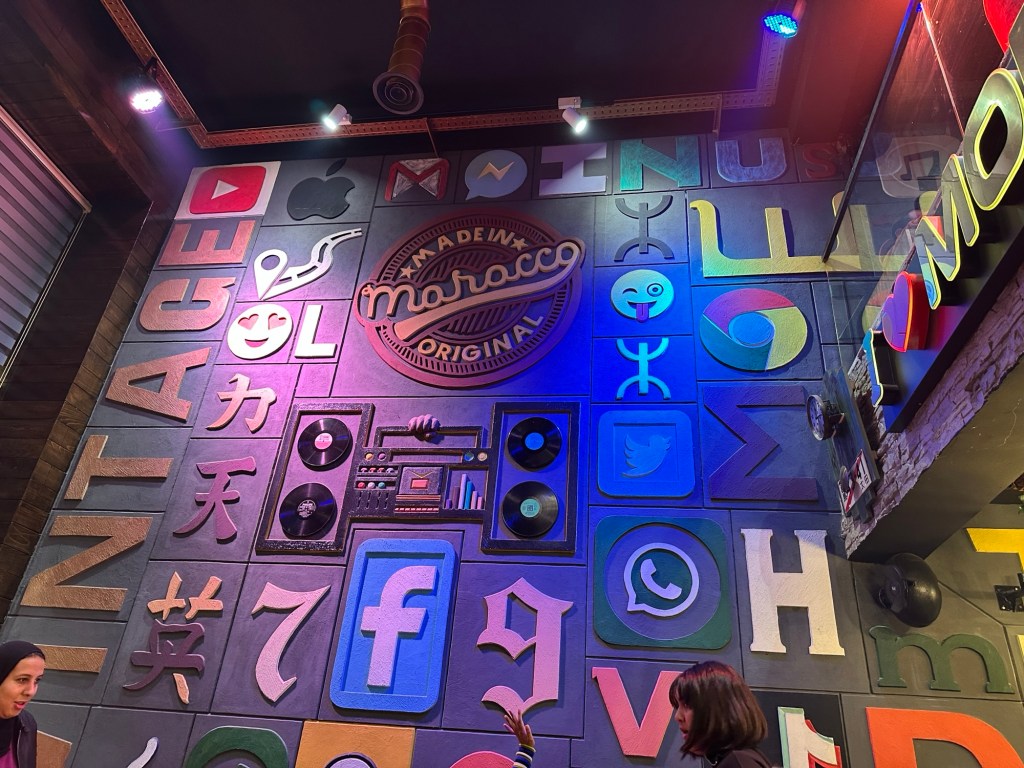
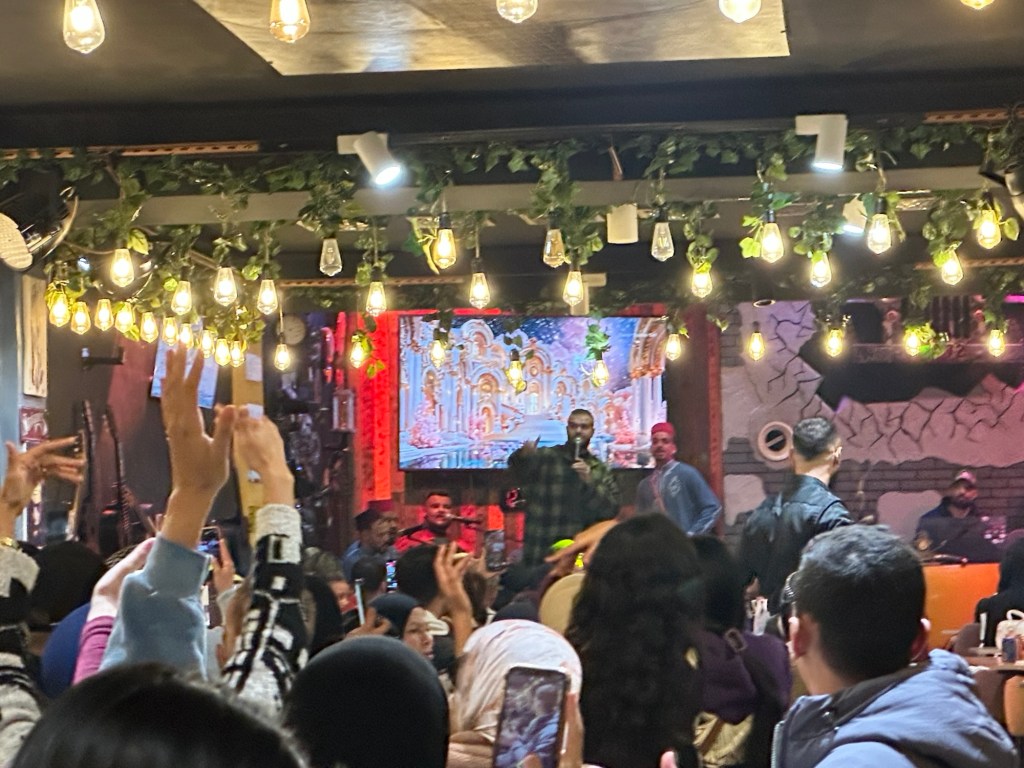
Later in the evening after resting at the hotel we go next door for dinner at what appears to be a restaurant with a lively band playing. Entire families, including toddlers, are enjoying the fun late into the evening. Others from our tour join us. It is a fun impromptu night out.
Tomorrow we head toward the mountains and then to the desert.













 Growing With Leala