

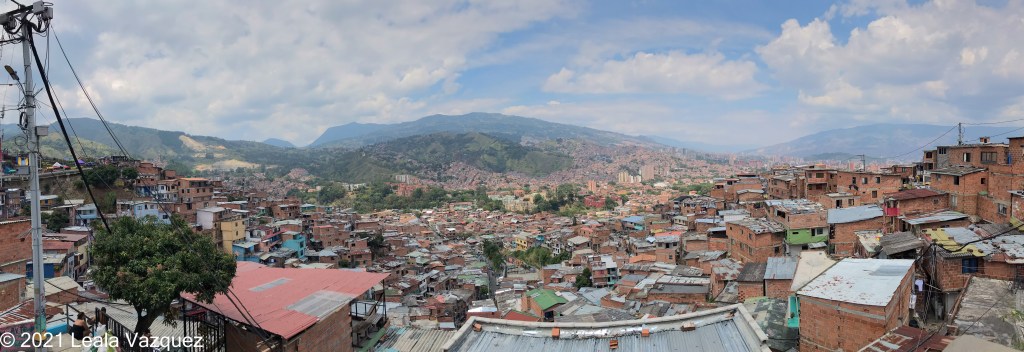
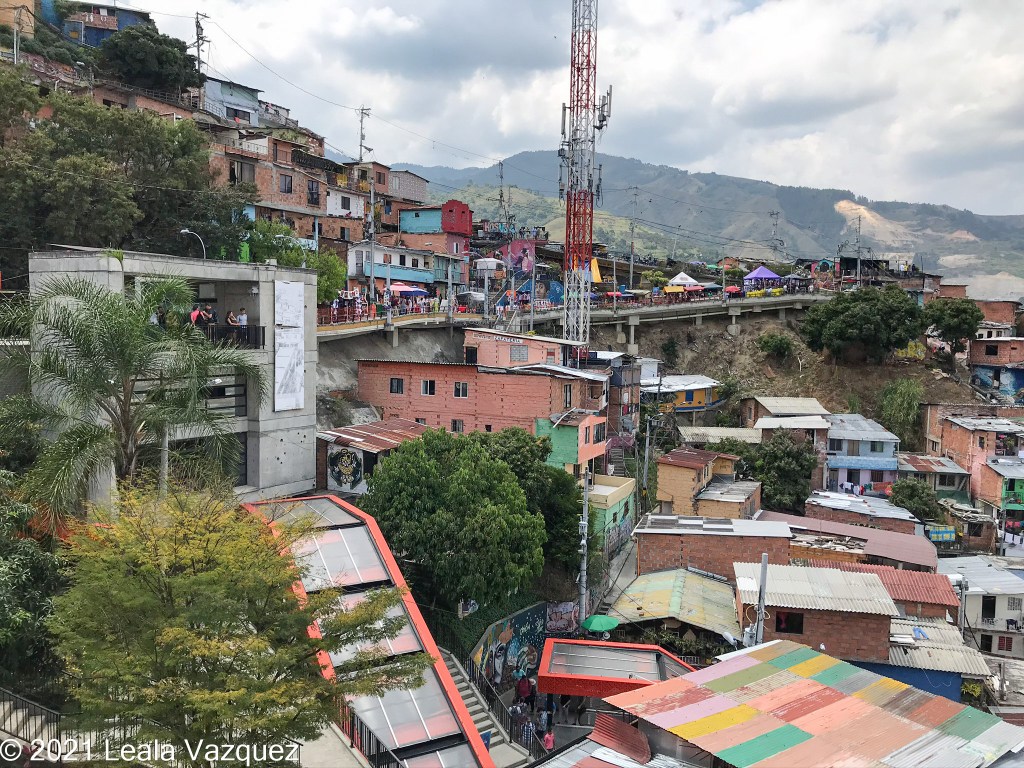
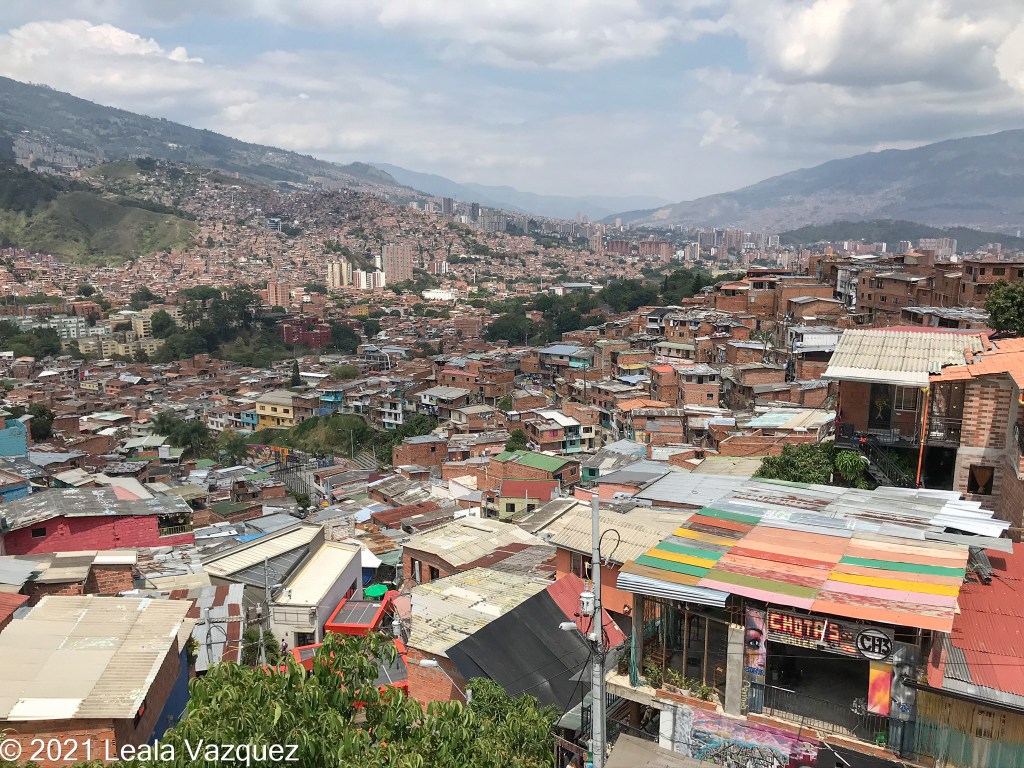
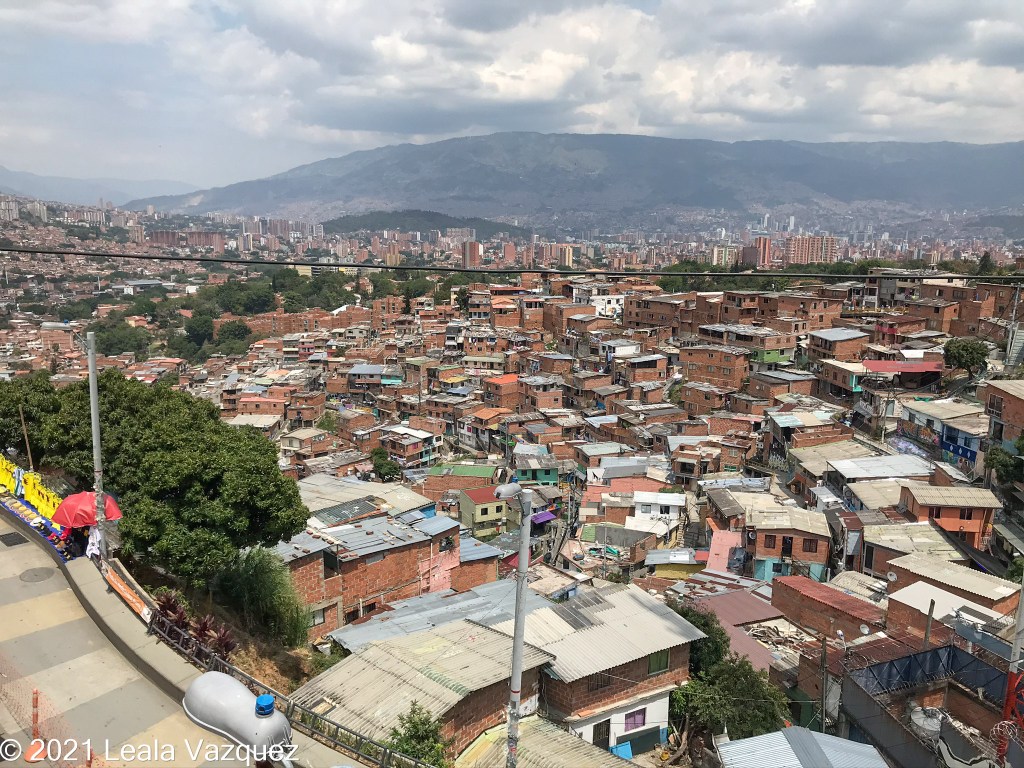
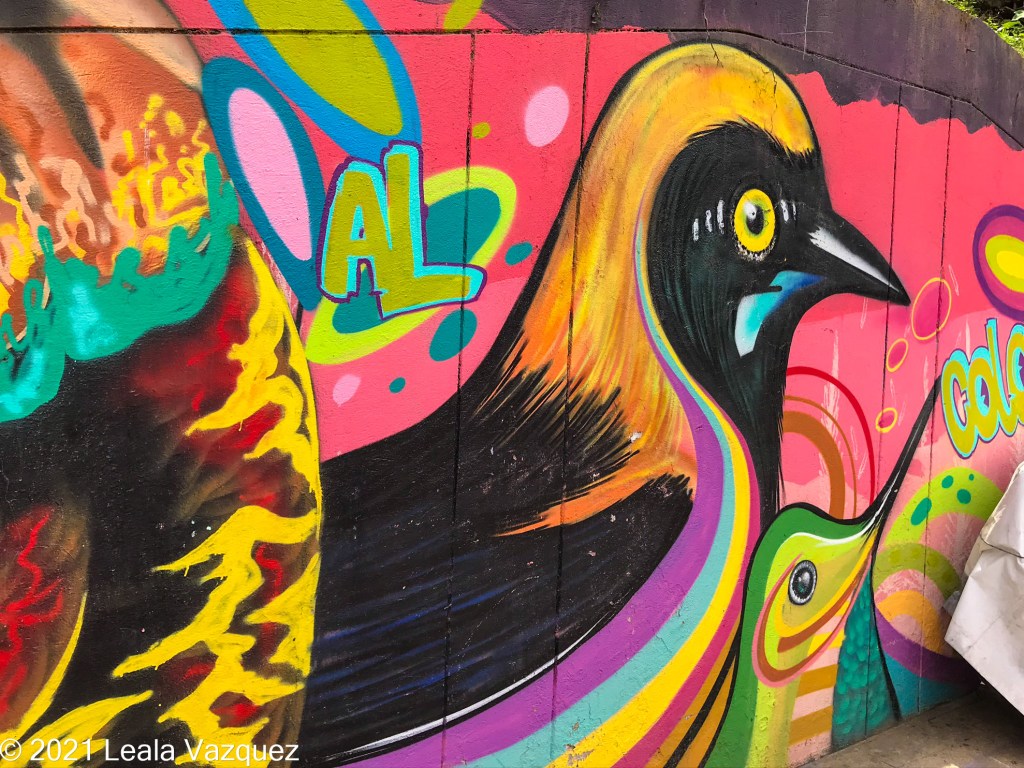
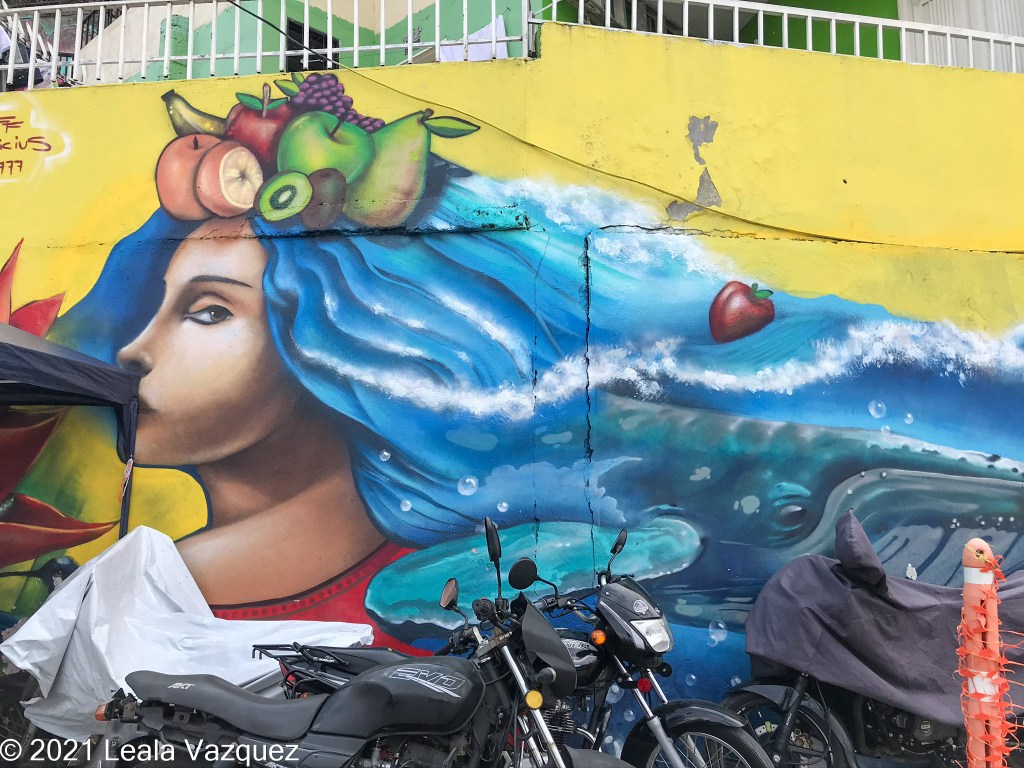
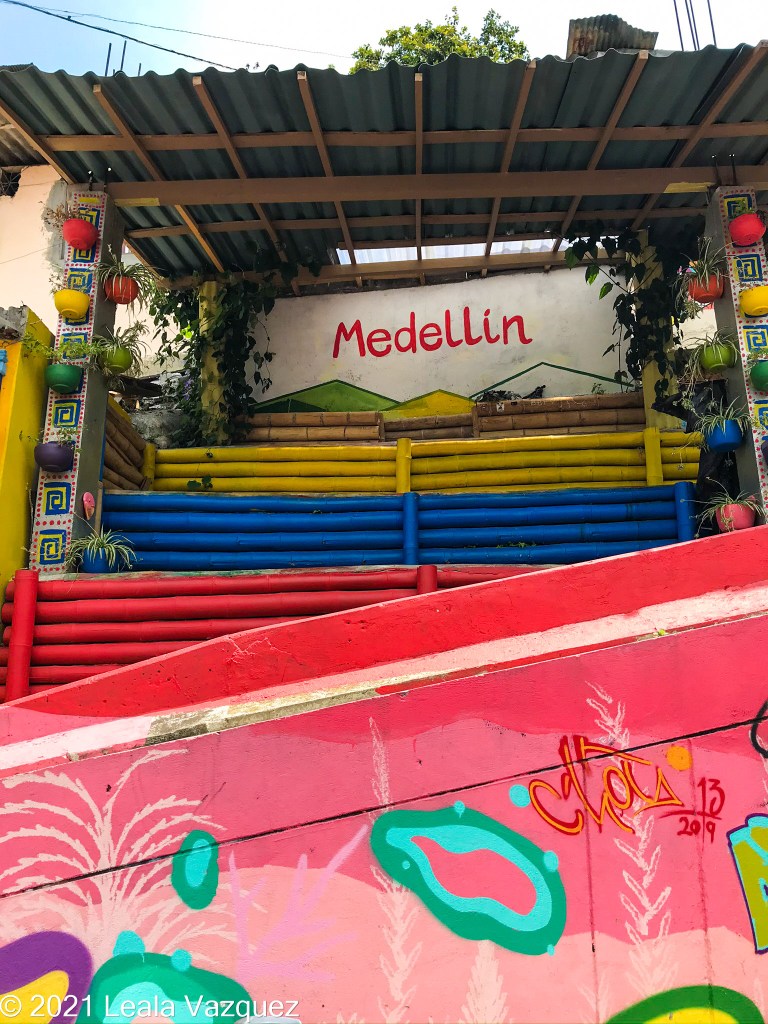
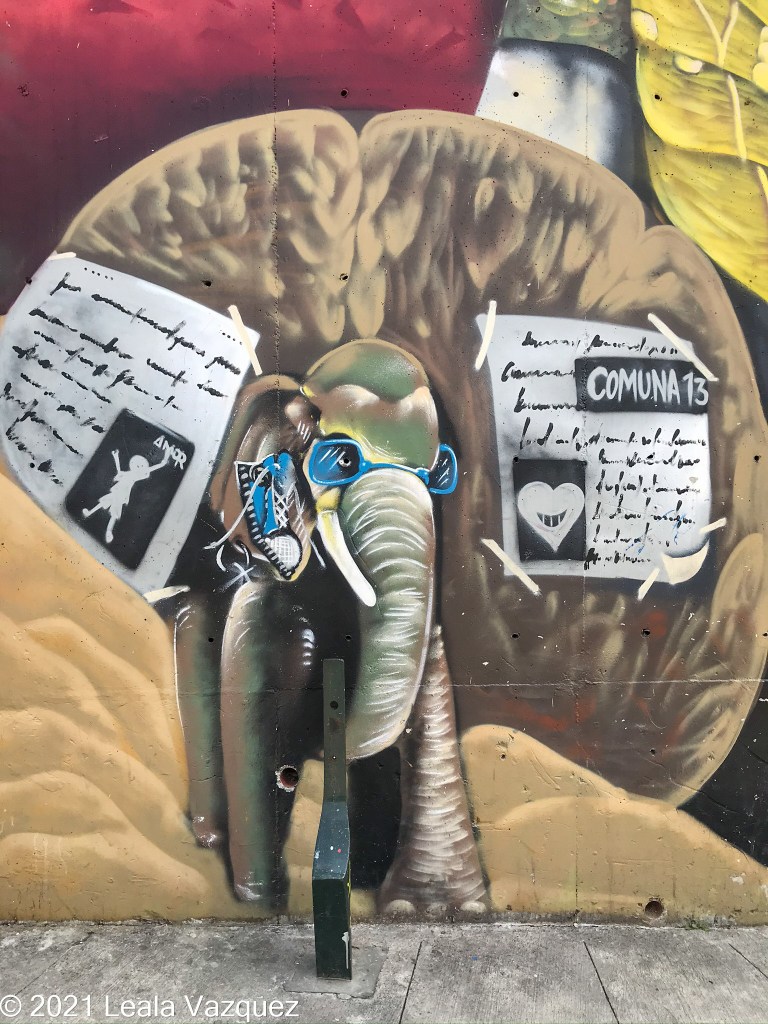
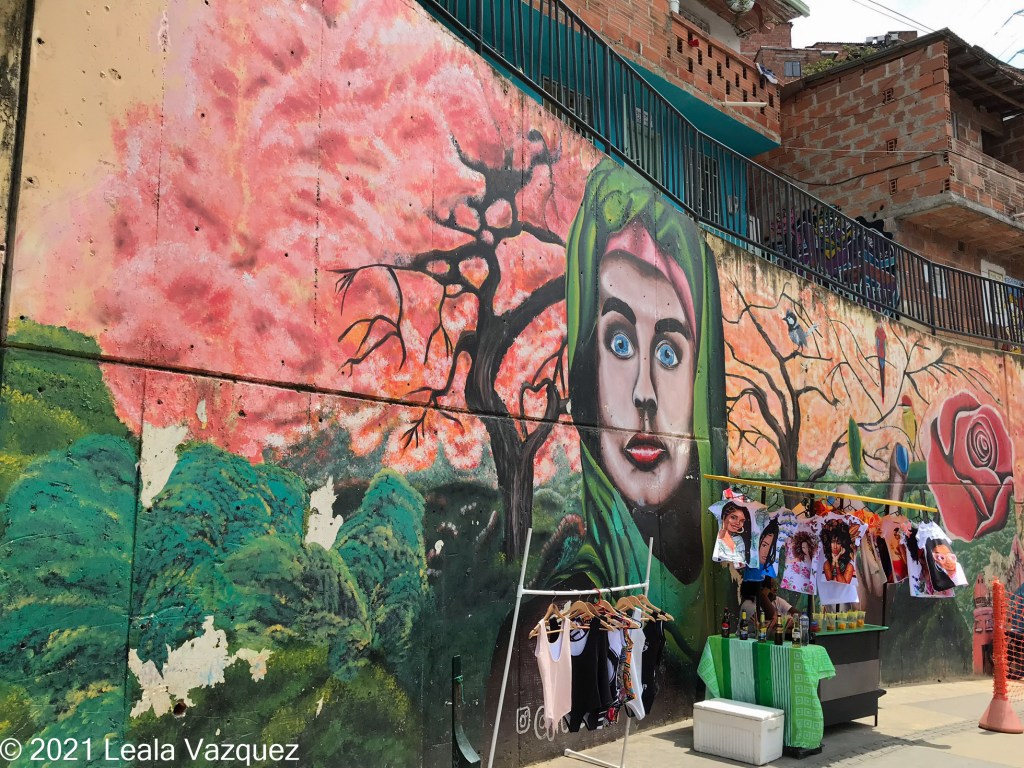
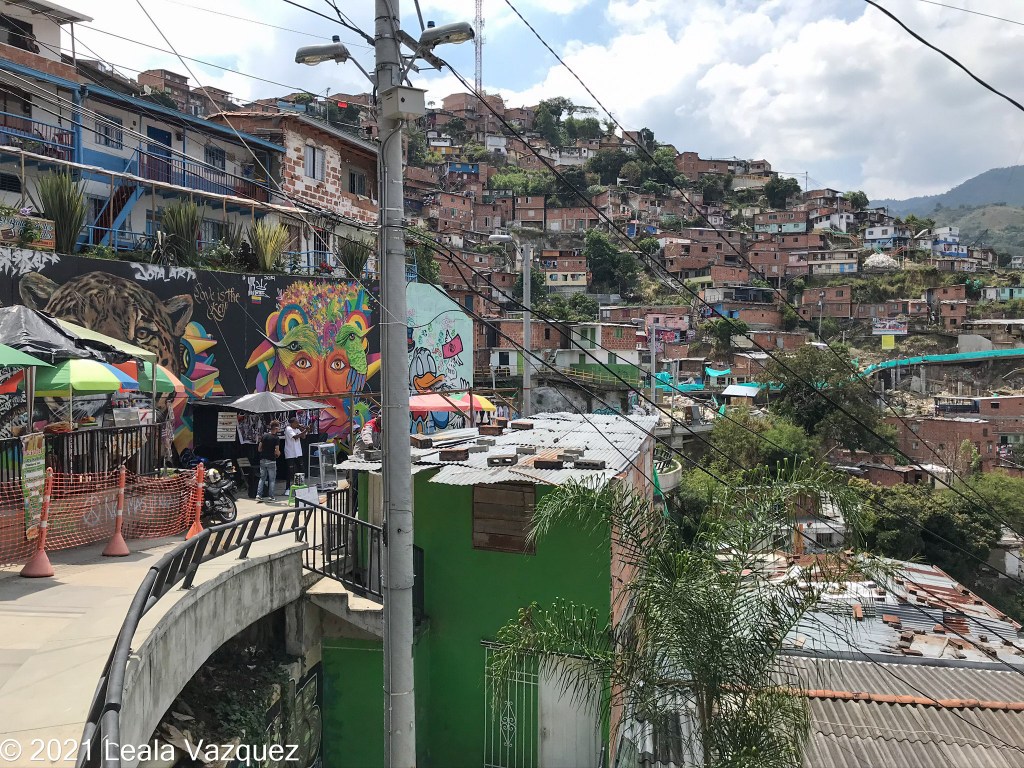
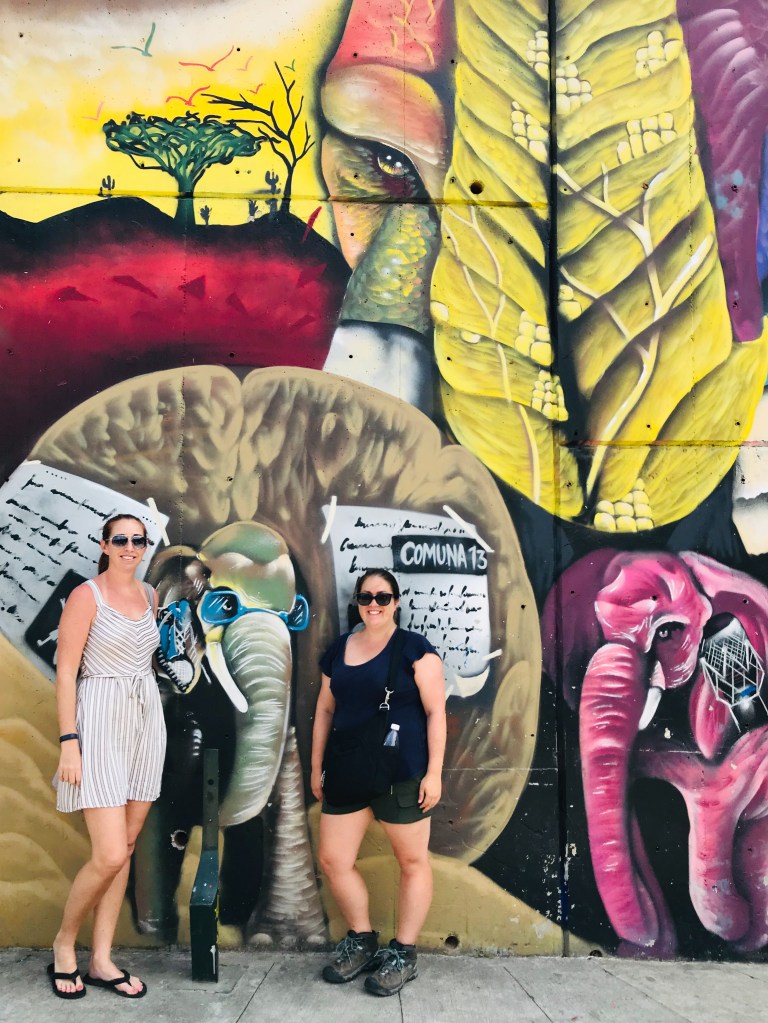
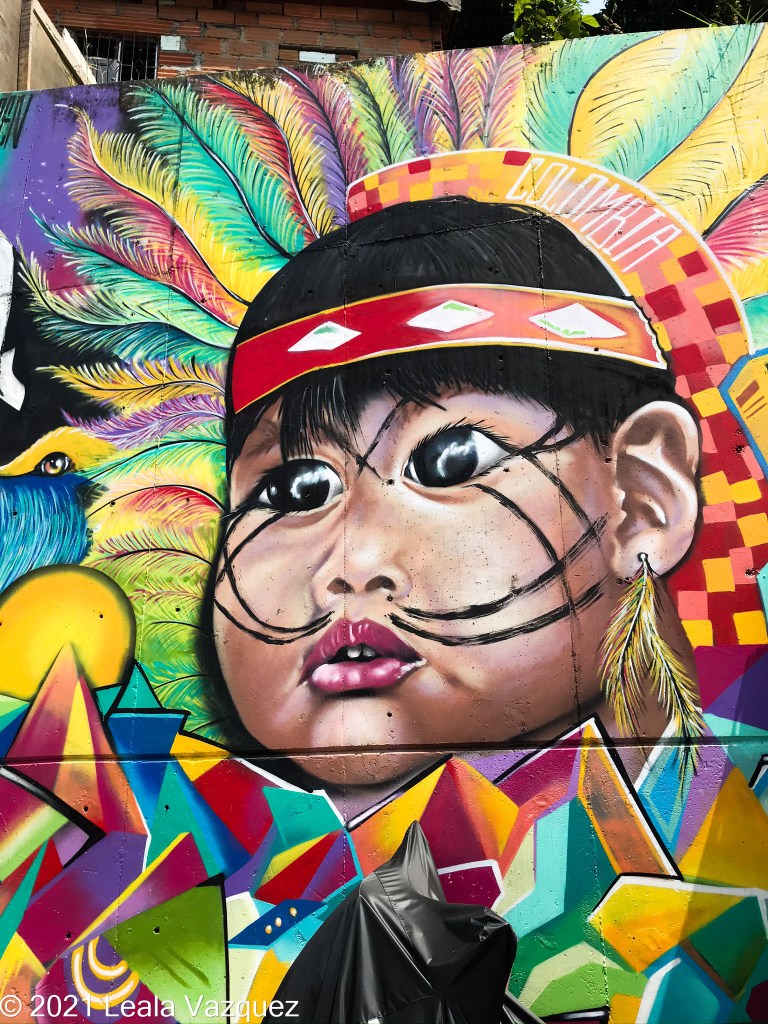
Today we are taking a walking tour of Comuna 13, a place once considered one of the most dangerous neighborhoods in the world (80s and 90s). In the past it was run by violent drug traffickers but now is a very colorful and popular neighborhood for tourism. Tourists visit Medellín and take a tour of its great graffiti art.
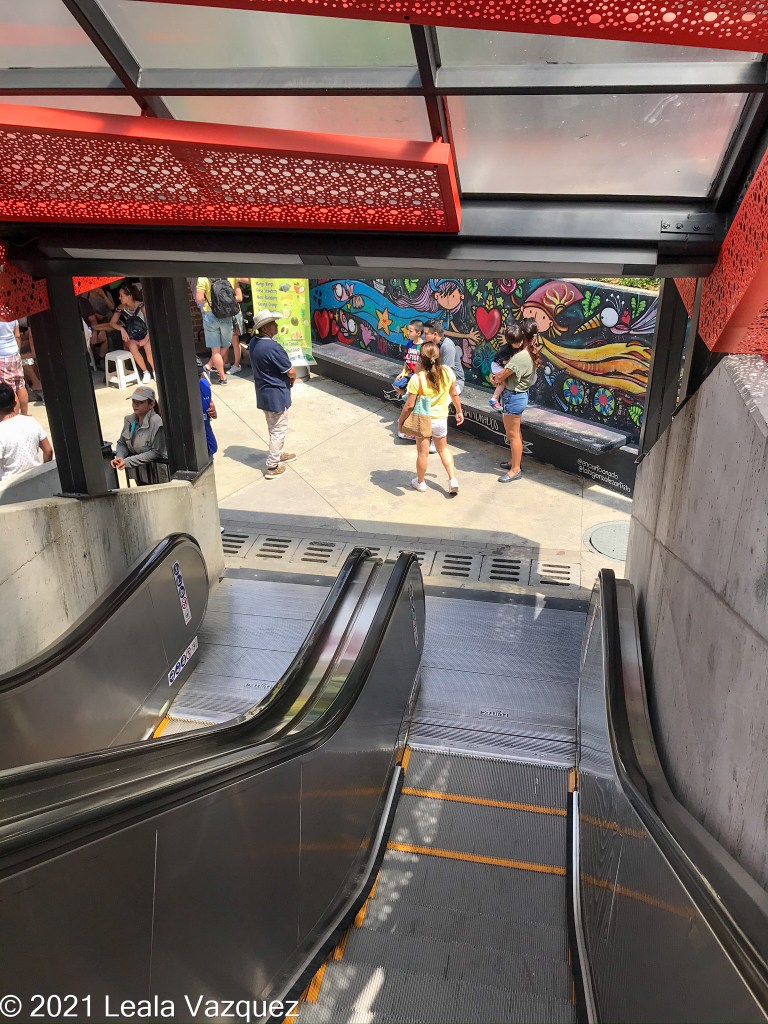
We meet our tour guide at our metro station, El Poblado. Once the group has all arrived we ride the metro together down to where we ride the cable cars uphill. At the end of the cable line we take a bus. Alternatively you can take the metro to San Javier metro and walk to the escalators. We took the escalators down later at the end of our tour.
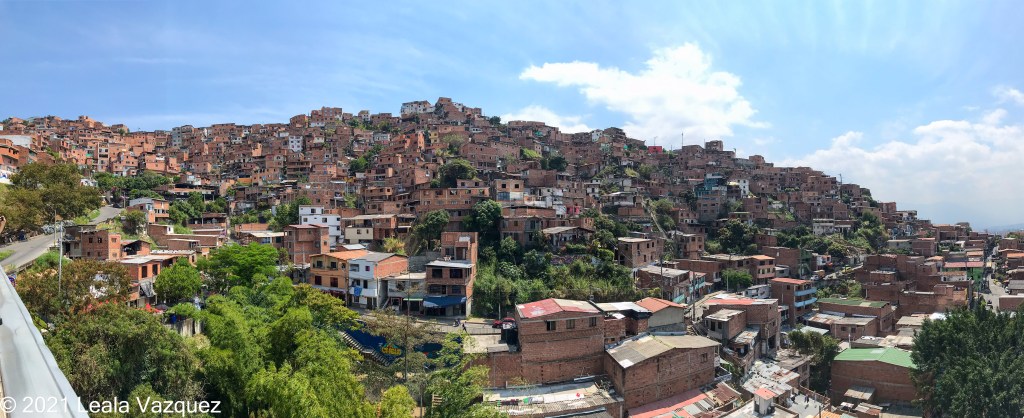
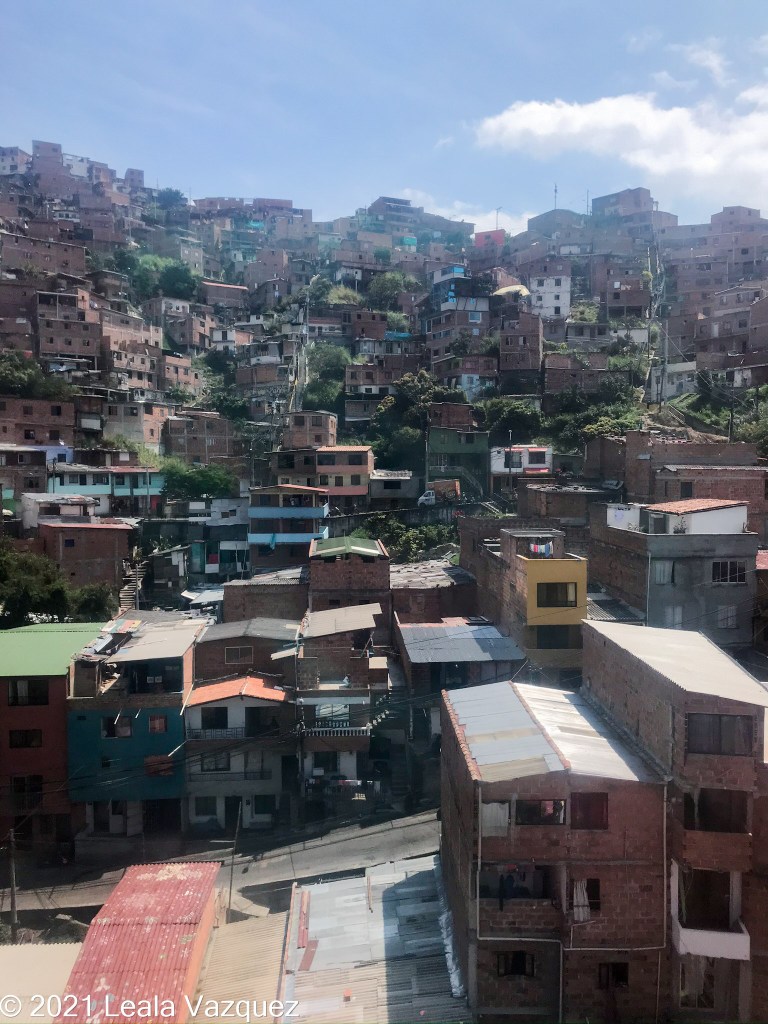

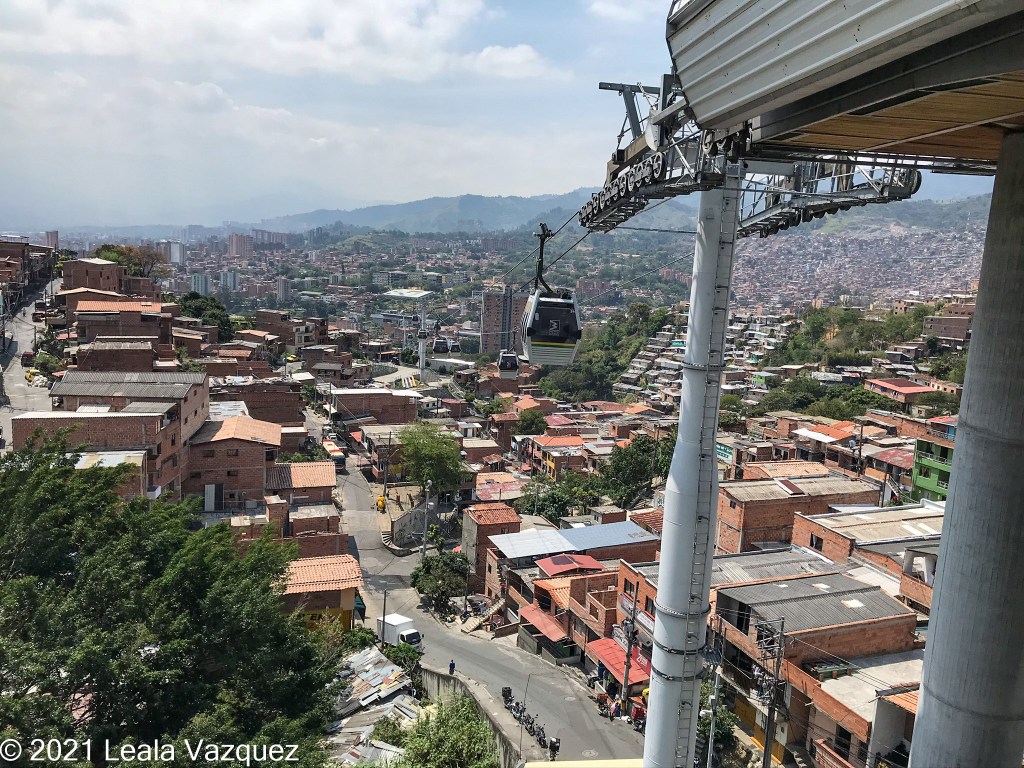

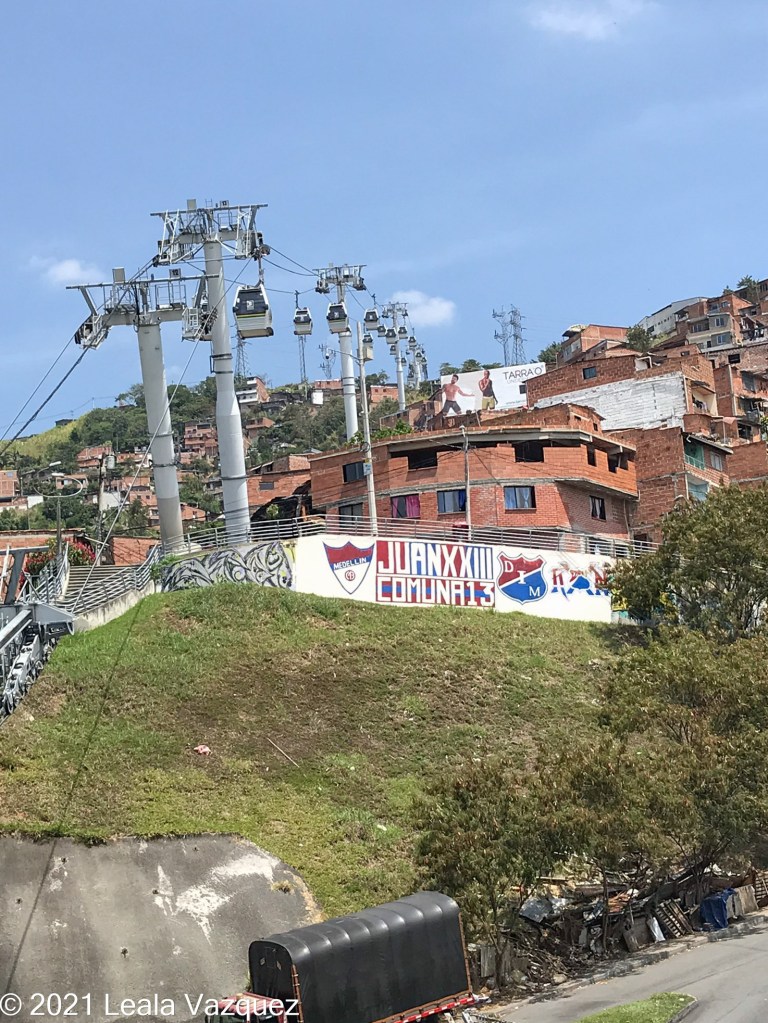
Once off the cable railway we stop for an arepa and fruit juice.


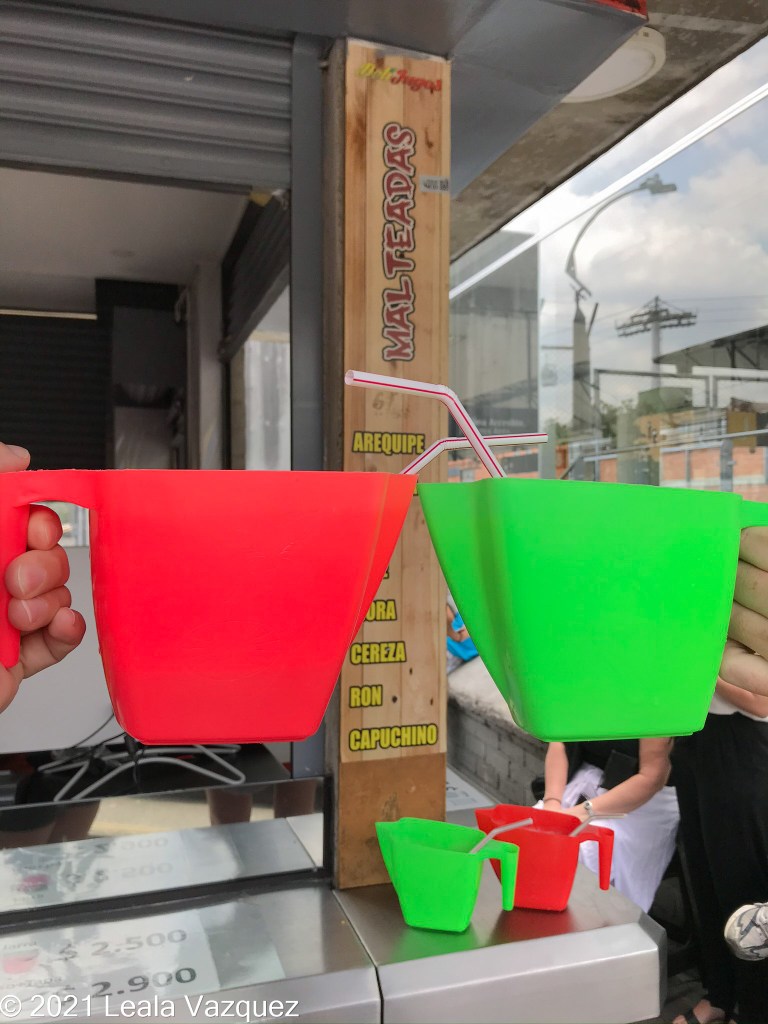
We hop on a bus and head further uphill to start our walk.
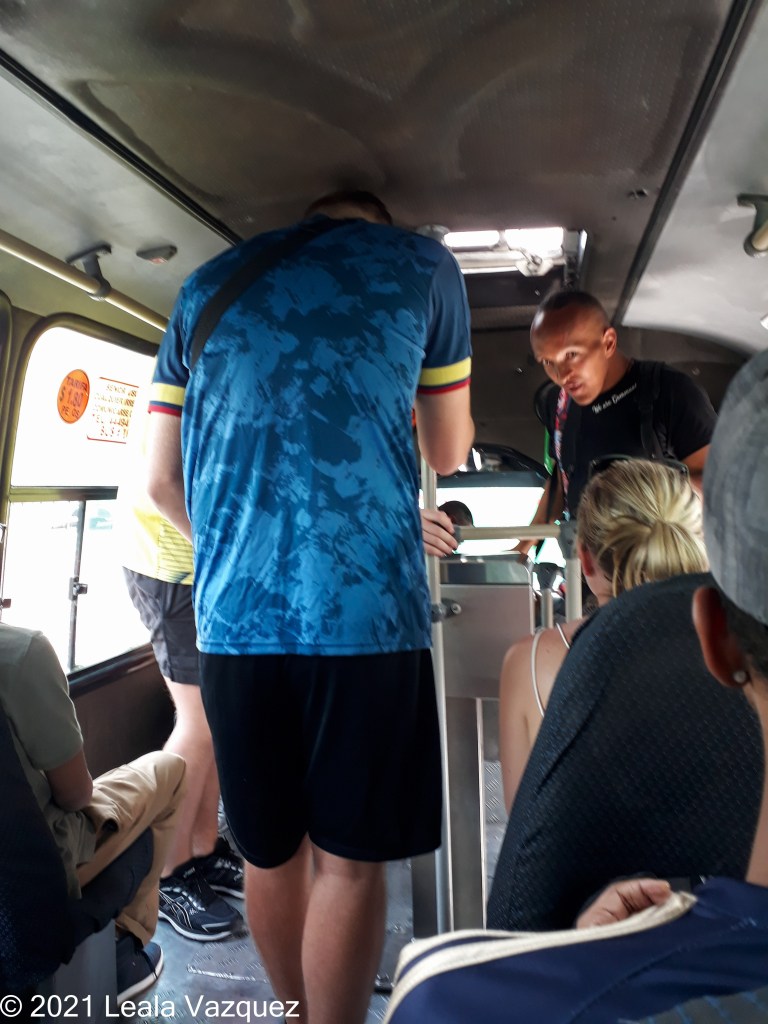
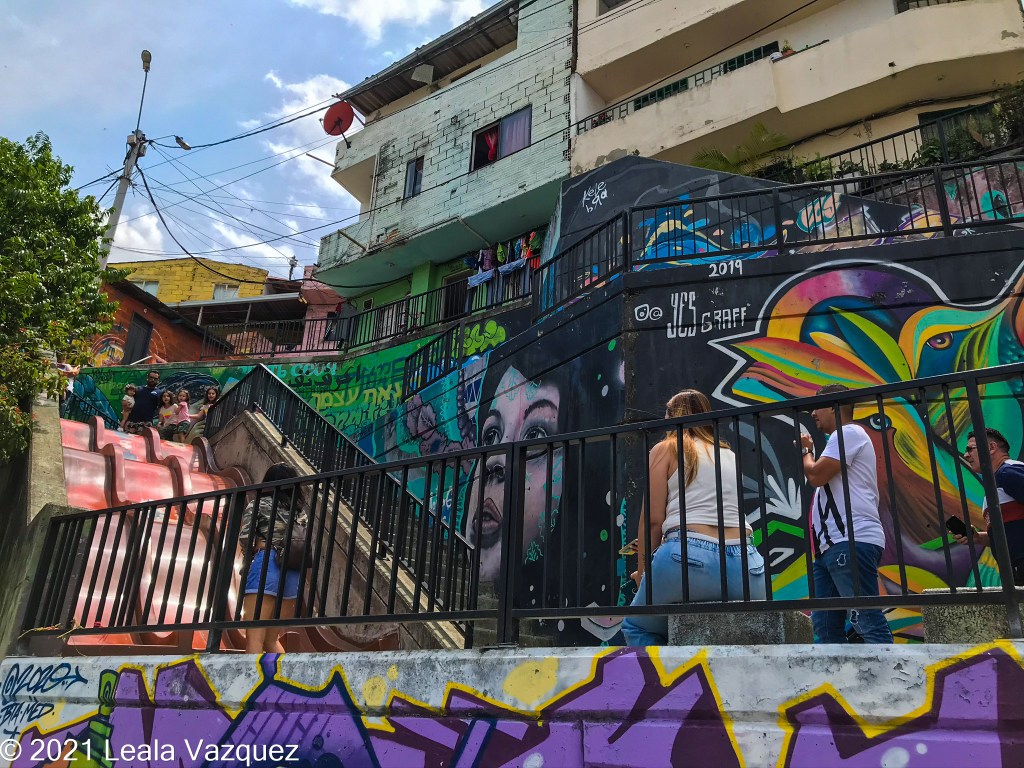
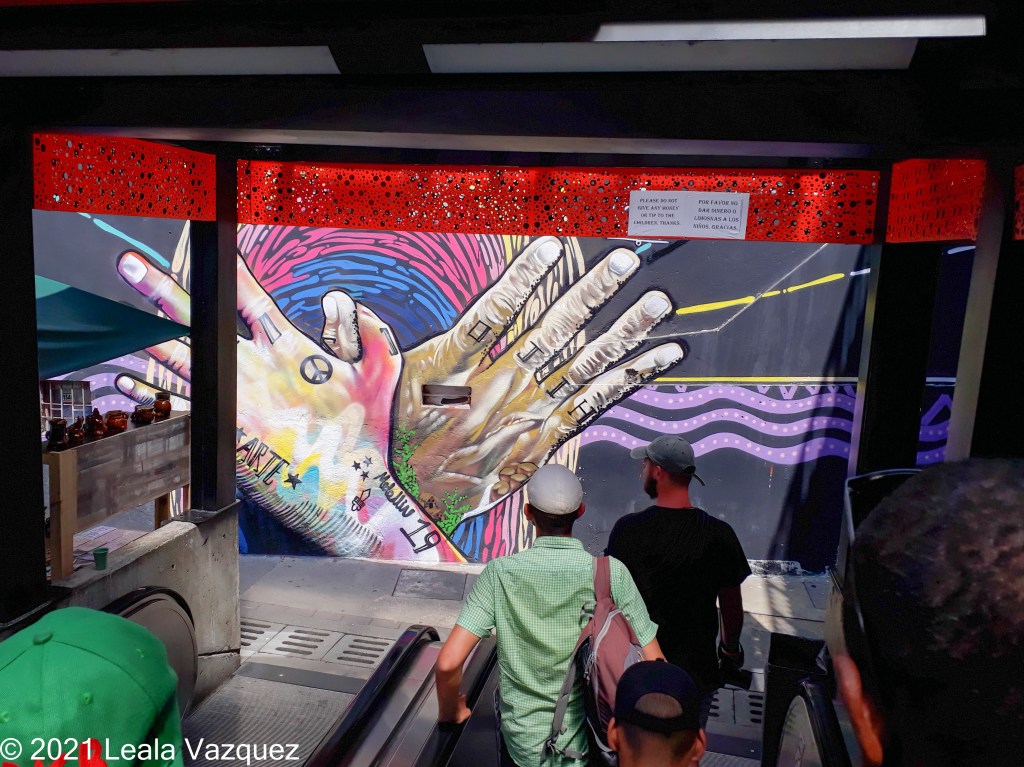
Once off the bus we walk a little further uphill. He tells us the history of the area. We learn stories, even personal stories of his own, about how the residents lived in fear for many years. In 2011 the government started a series of improvements to the community, including an escalator. The area gradually evolved into a safer and visited area by tourists (to the dismay of some locals). These tours try to bring dollars into the community and minimize the disruption to the locals. Hopefully our tour did not cause too much distress.

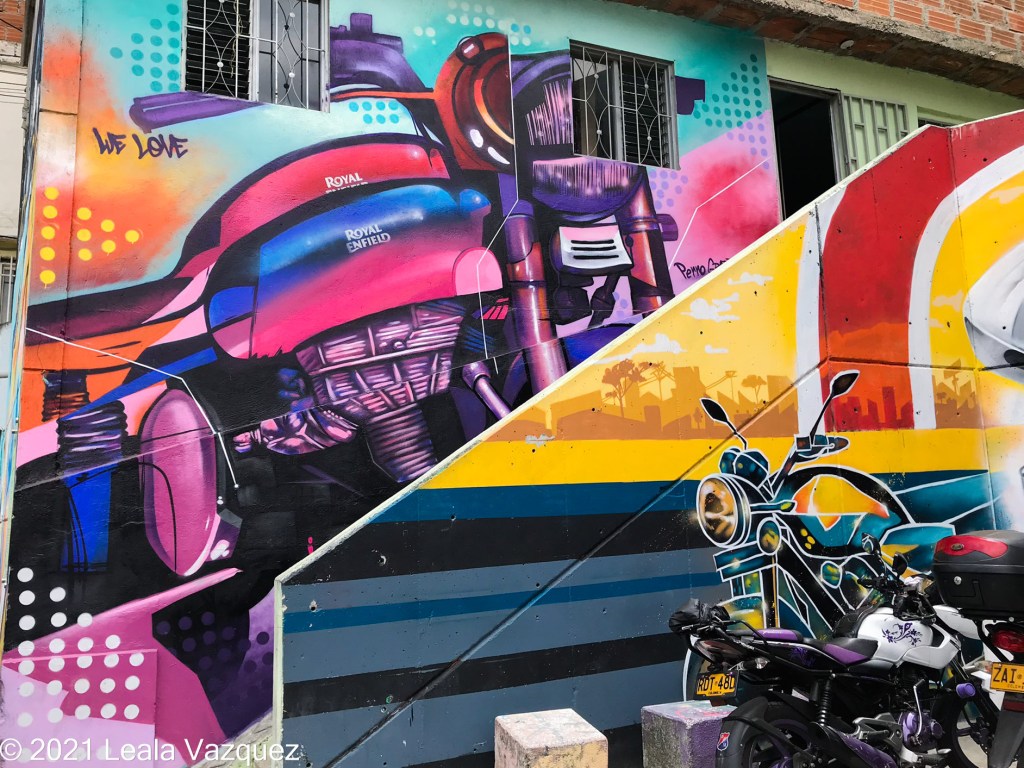


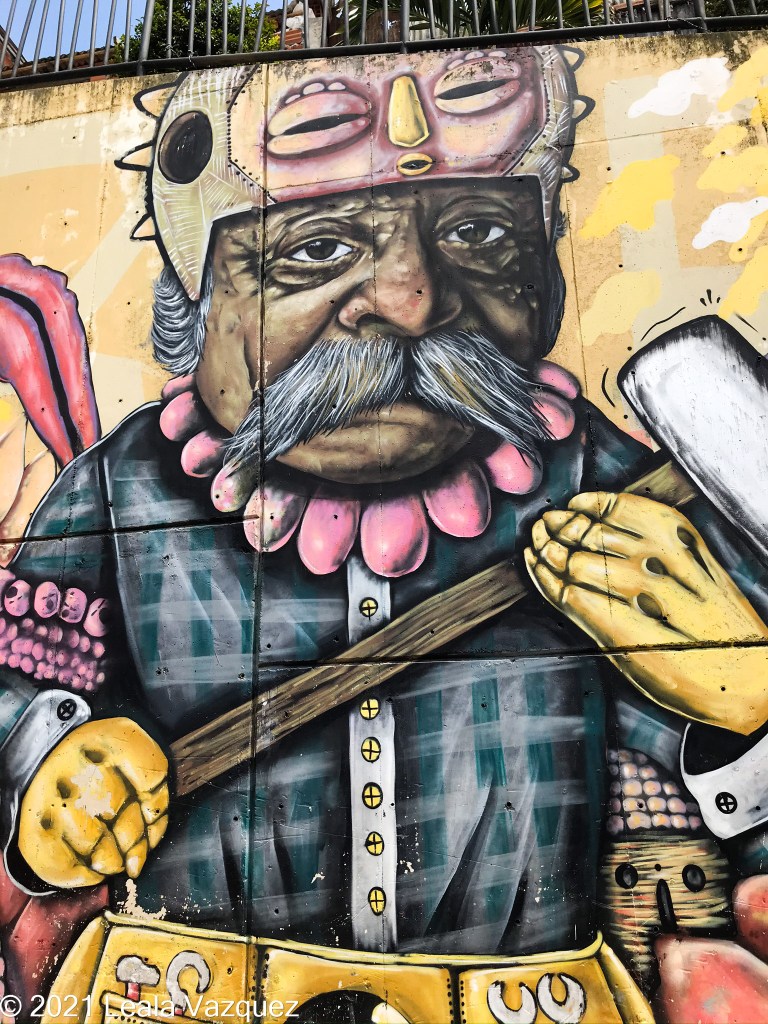
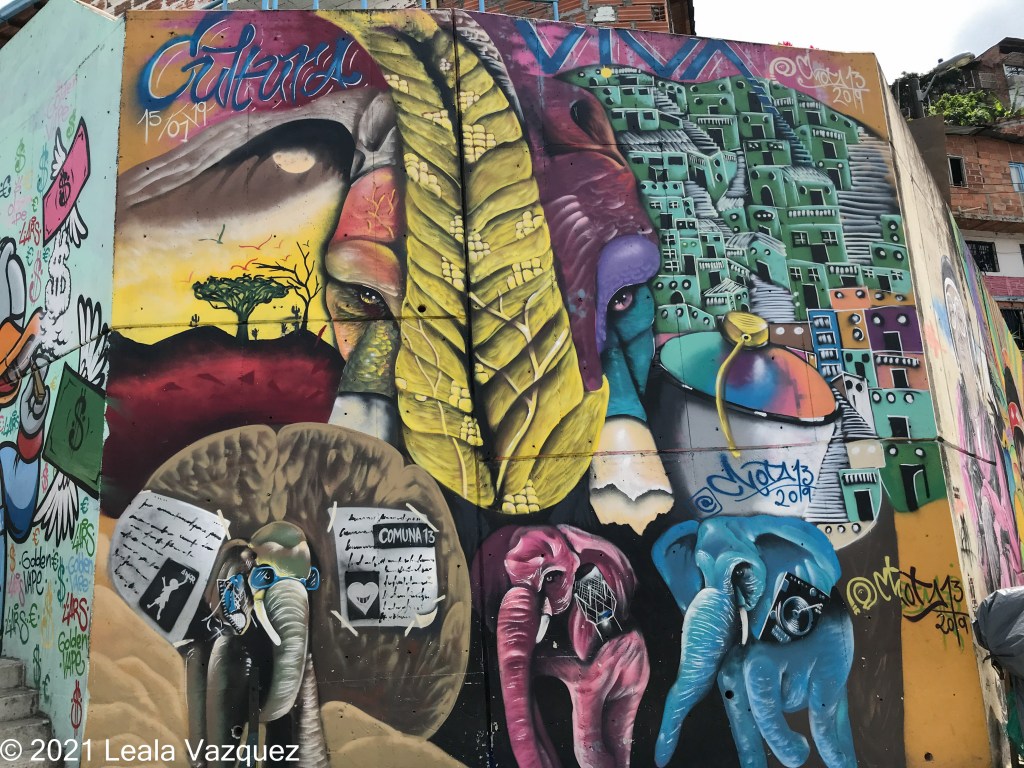
We learn about one of the most famous graffiti artists of the area Chota 13 (@chota_13). We learn that he started a school in the barrio. The school is dedicated to teaching the children art and hip hop dance to keep them out of violence.














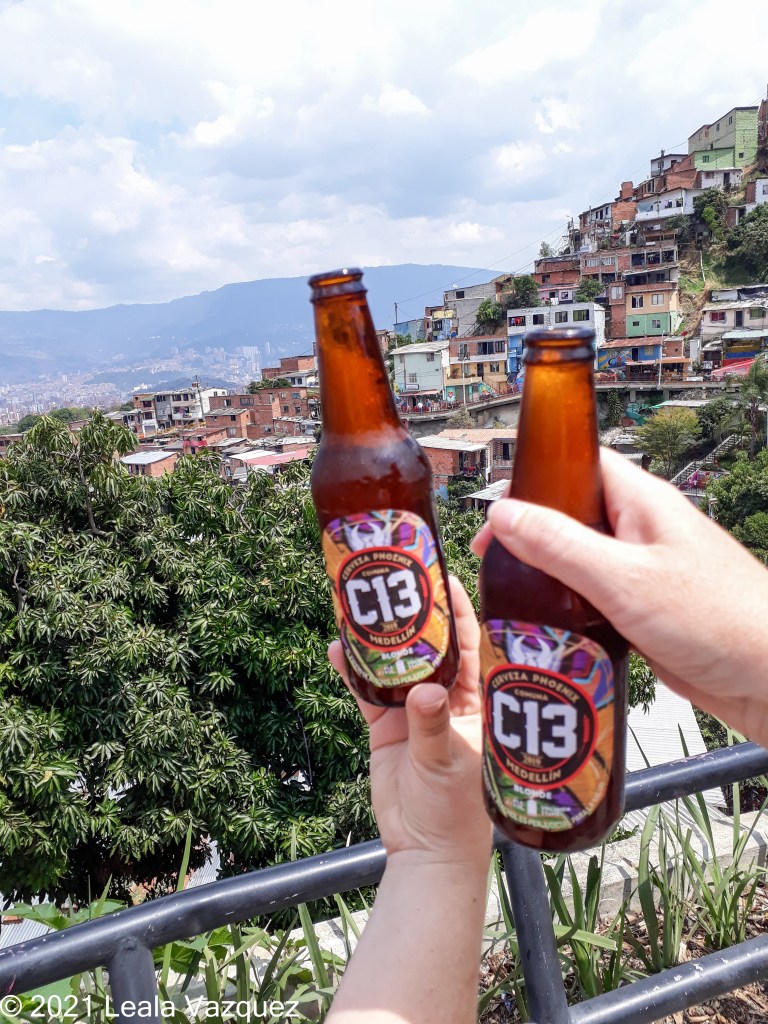


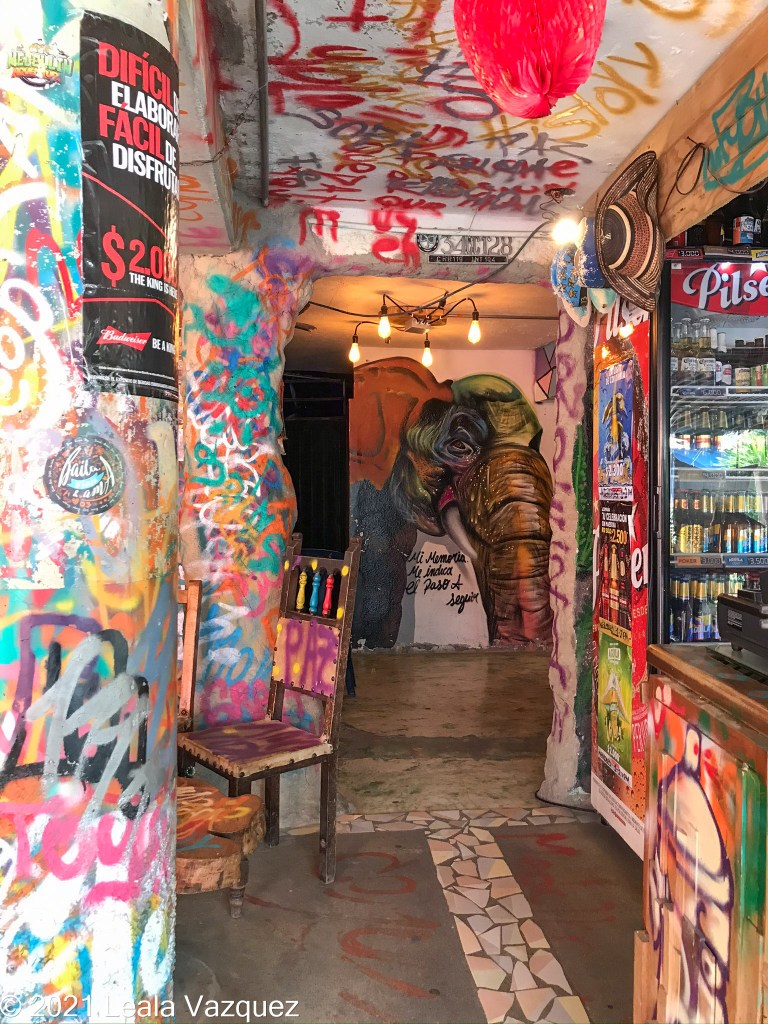
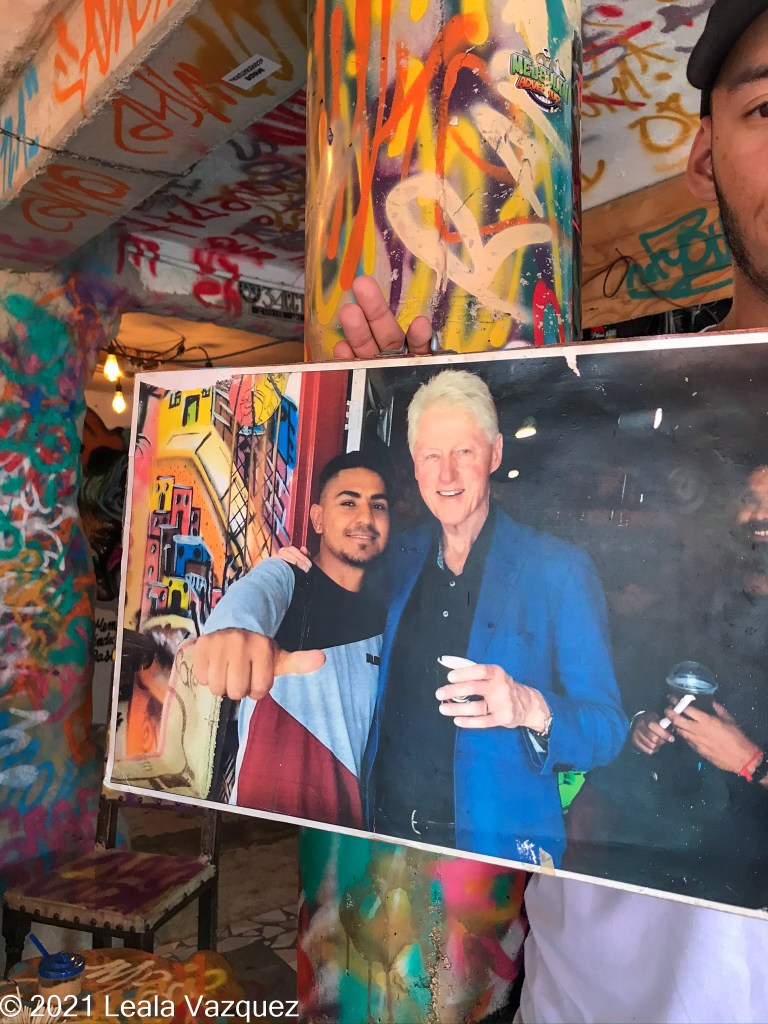
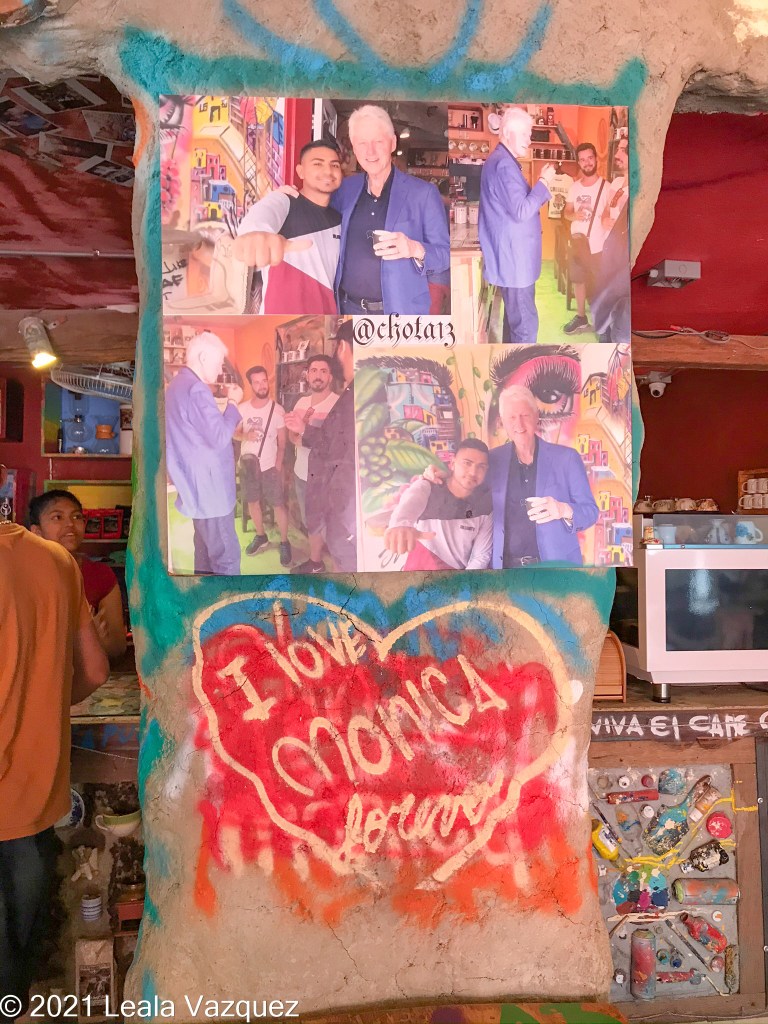
We stopped at a bar for a pit stop. The bar displays pictures of celebrity visitors. They were especially proud of the visit by former president of the USA Bill Clinton.




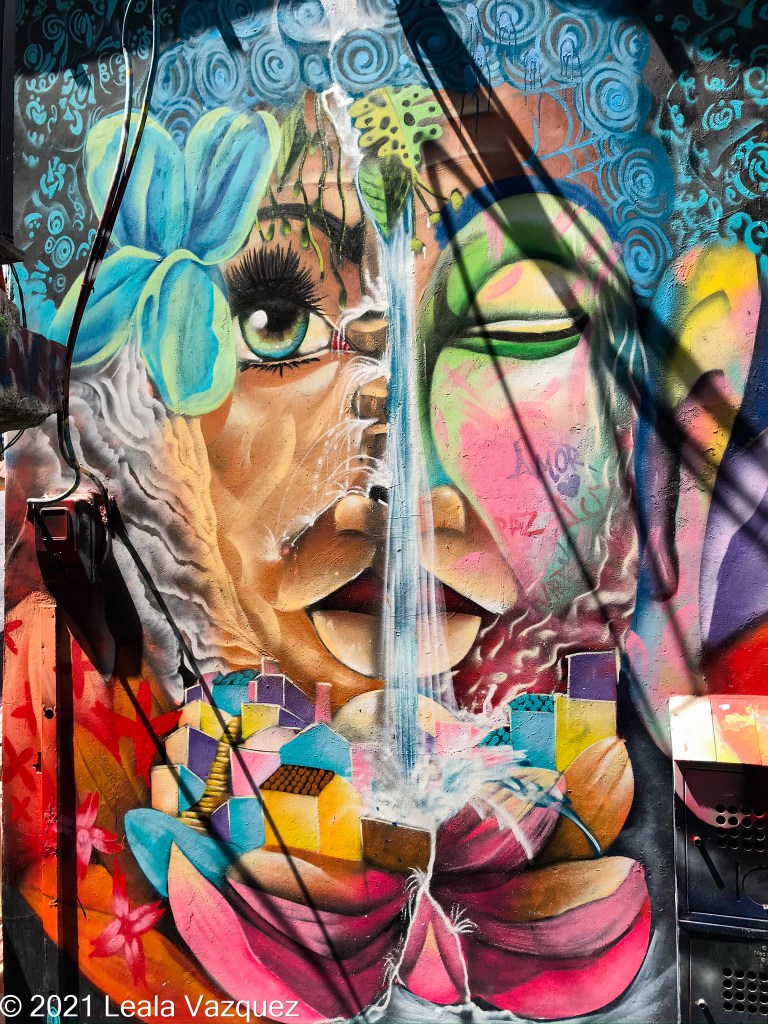
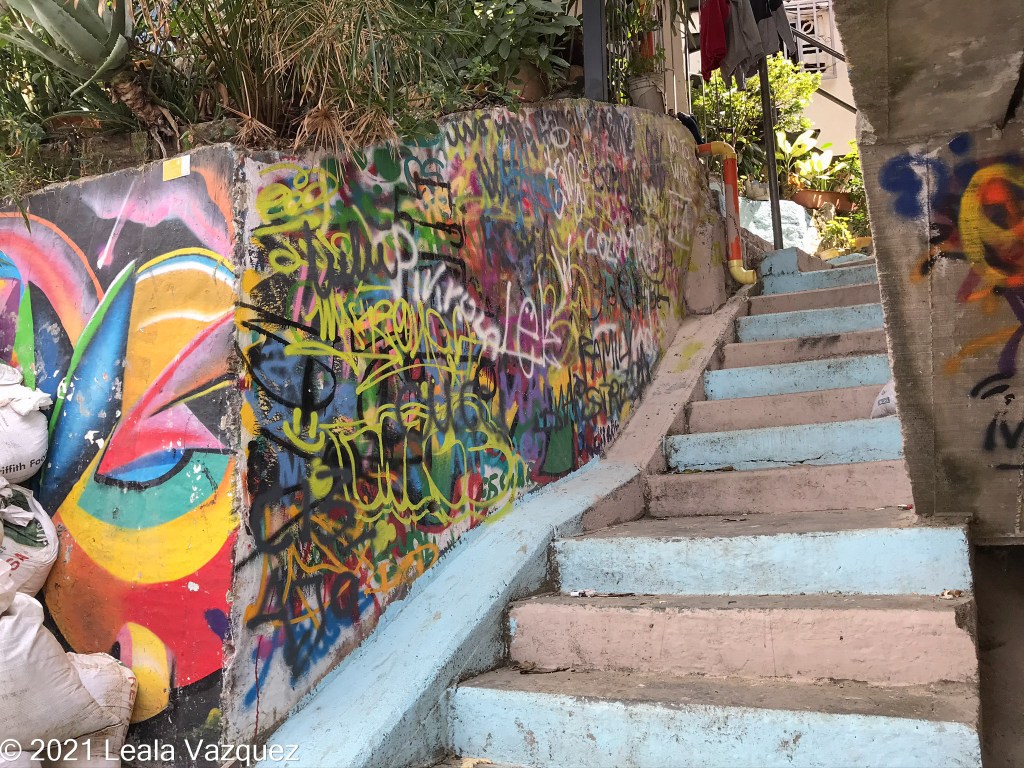

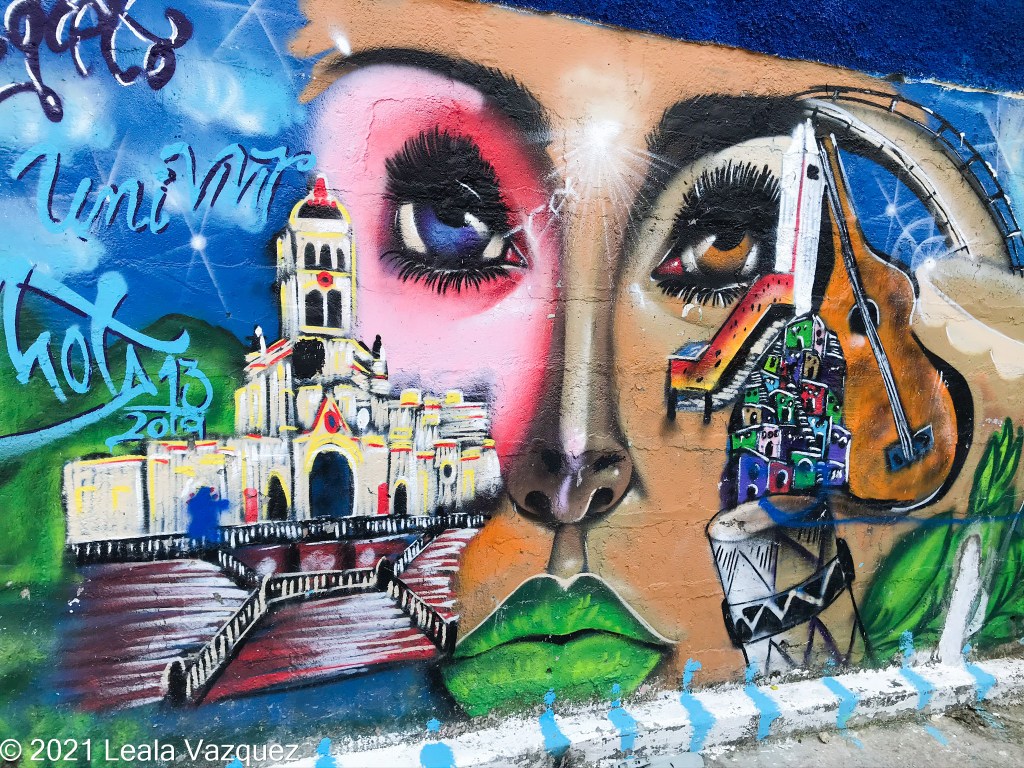
We stopped for some frozen mango.

Around the corner from the mango place there is a fun black light gallery. Some of the art is best seen with 3D glasses.
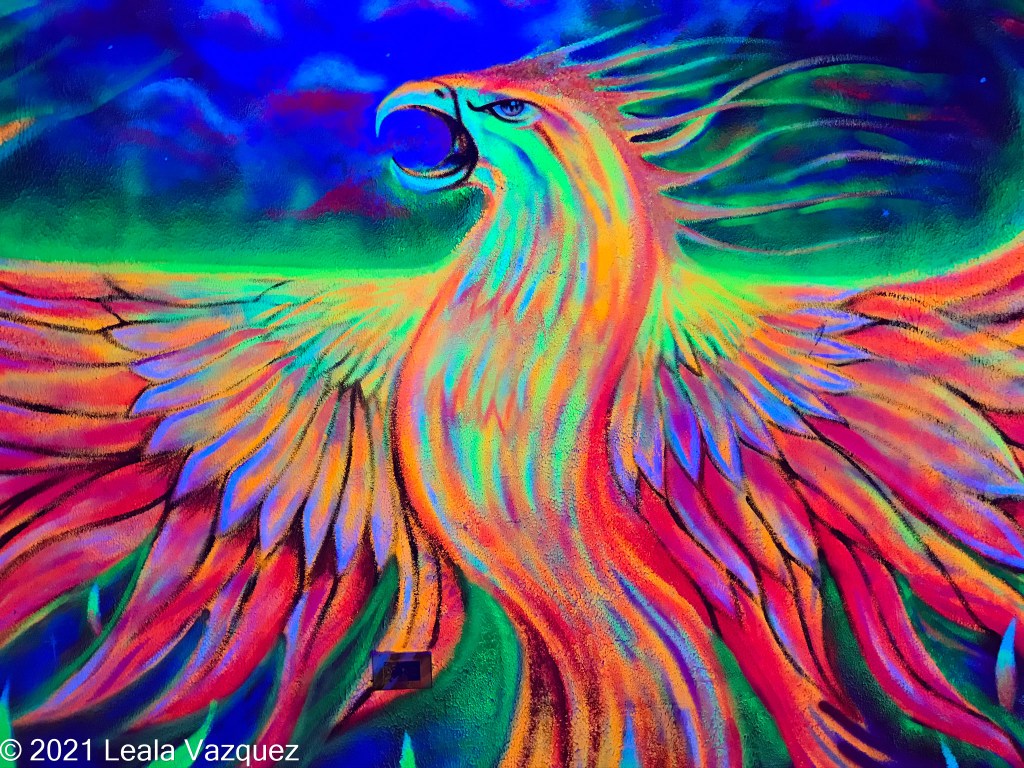

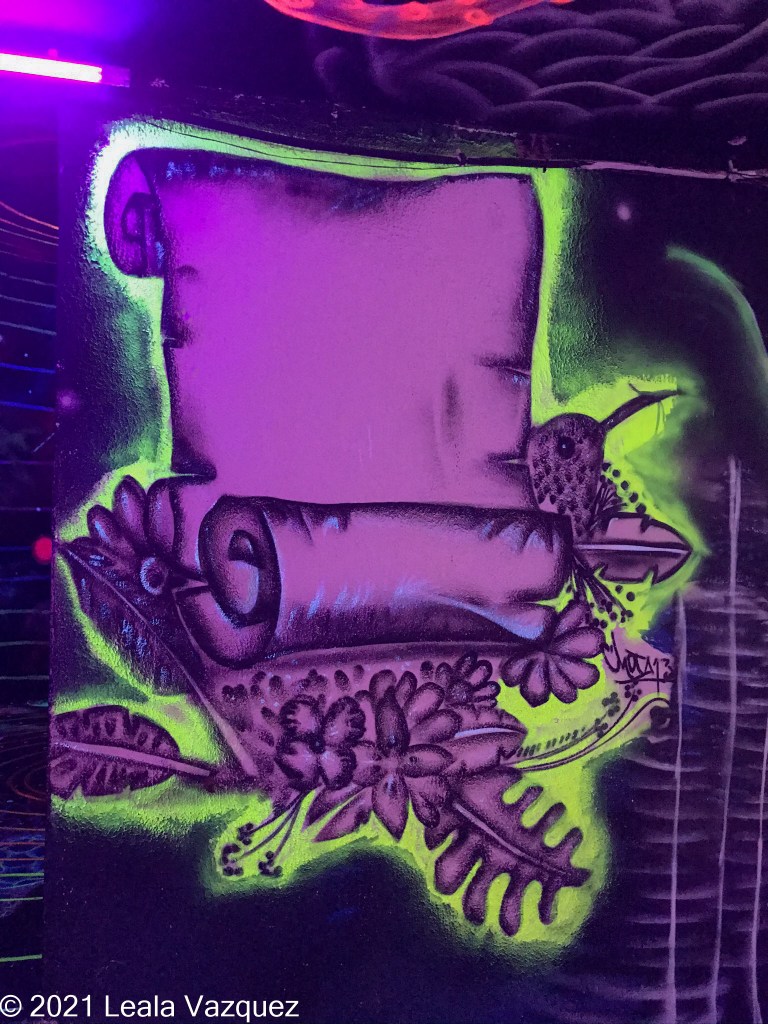
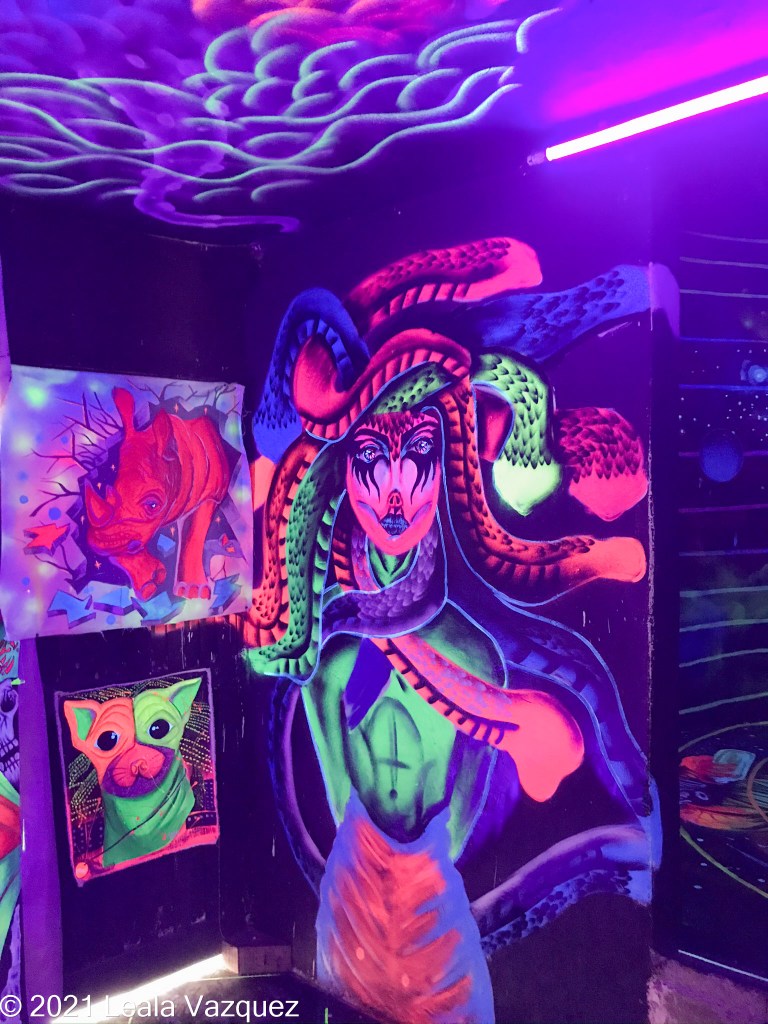
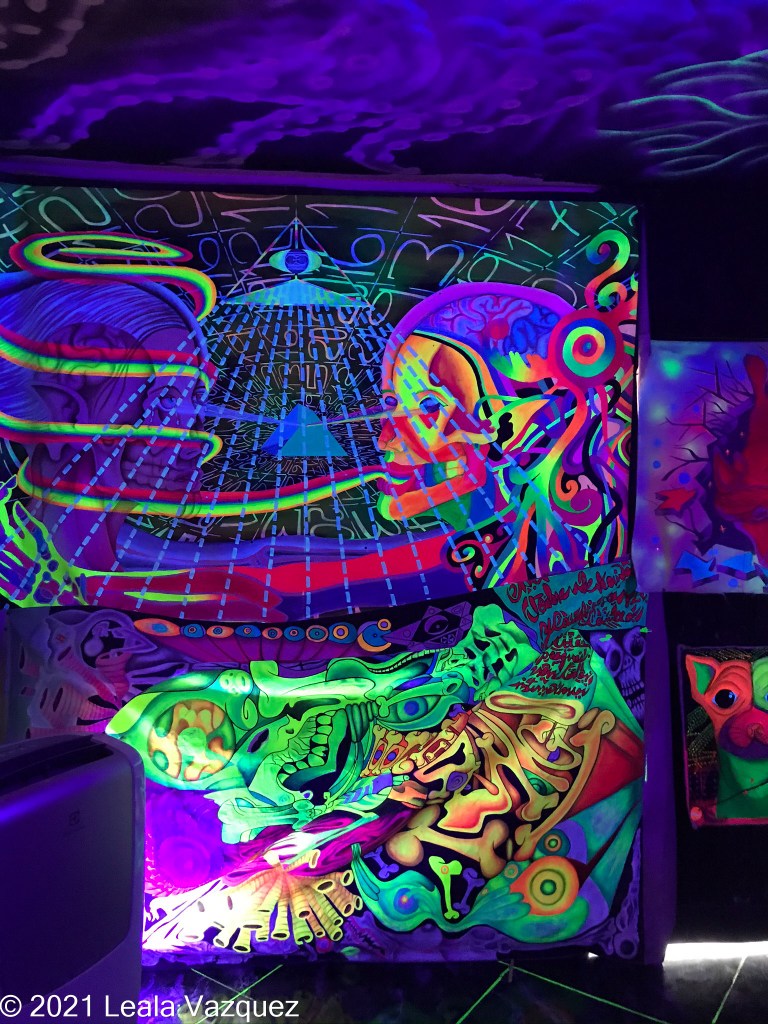

Eventually we start heading downhill back toward the train station
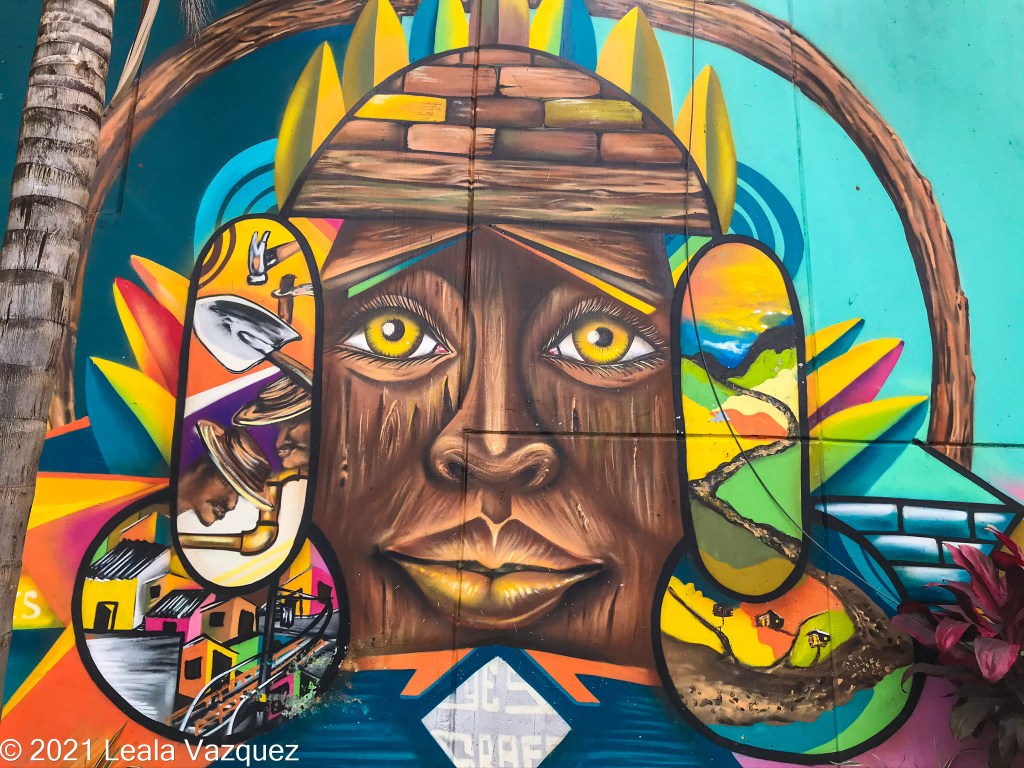
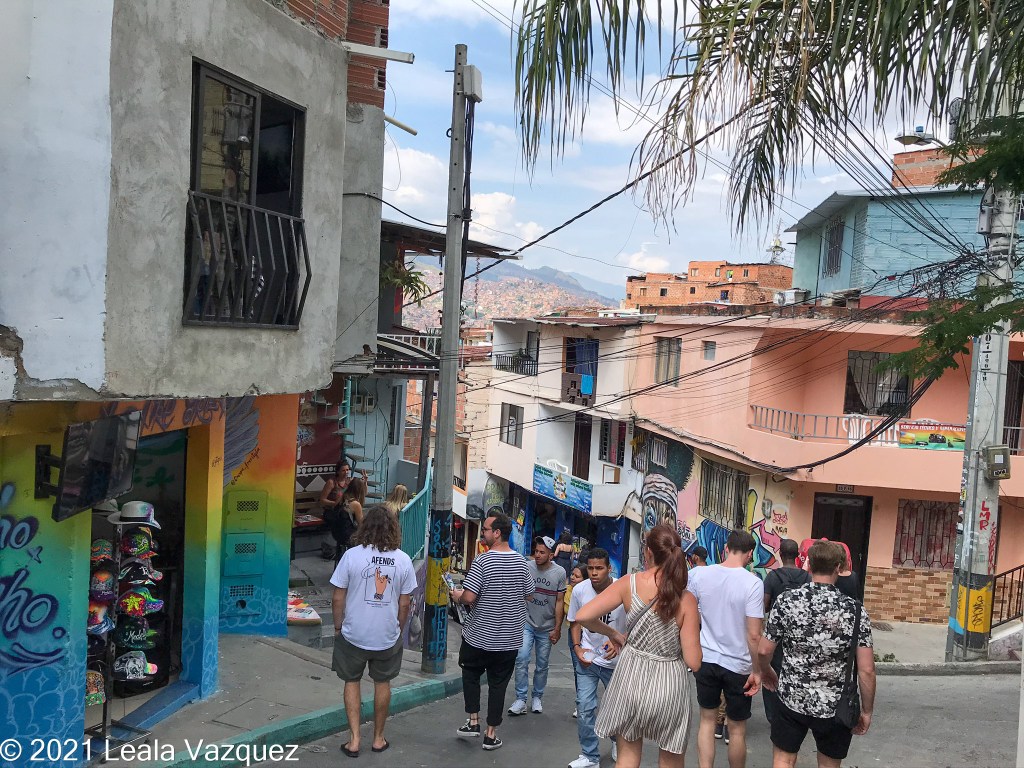
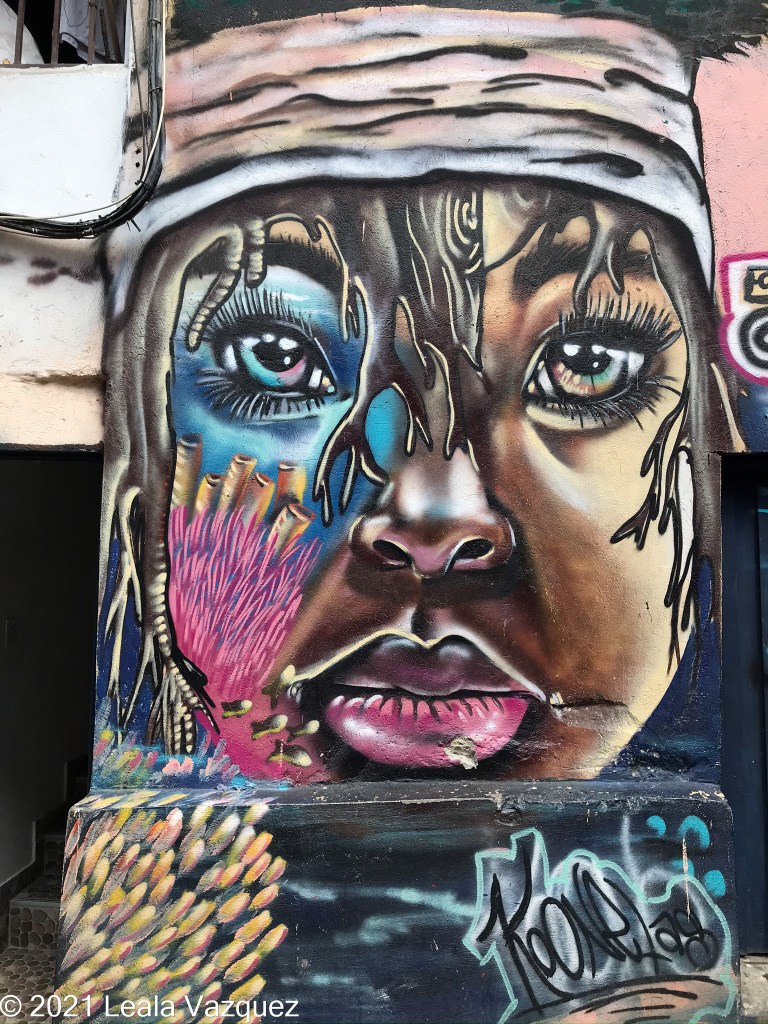

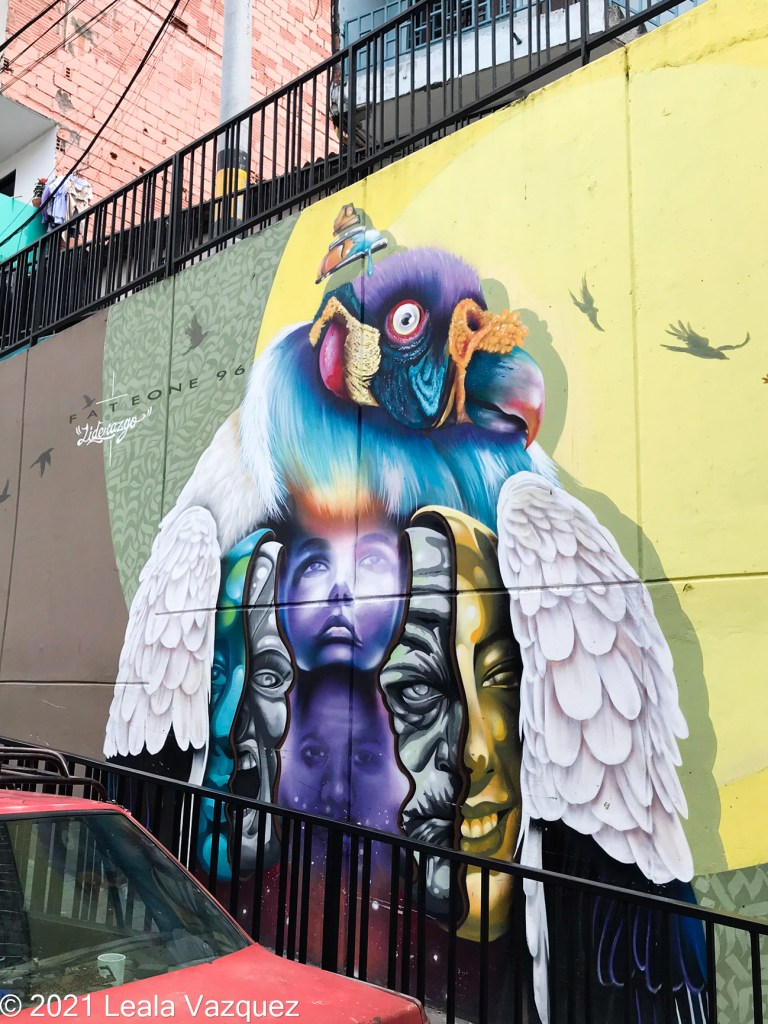


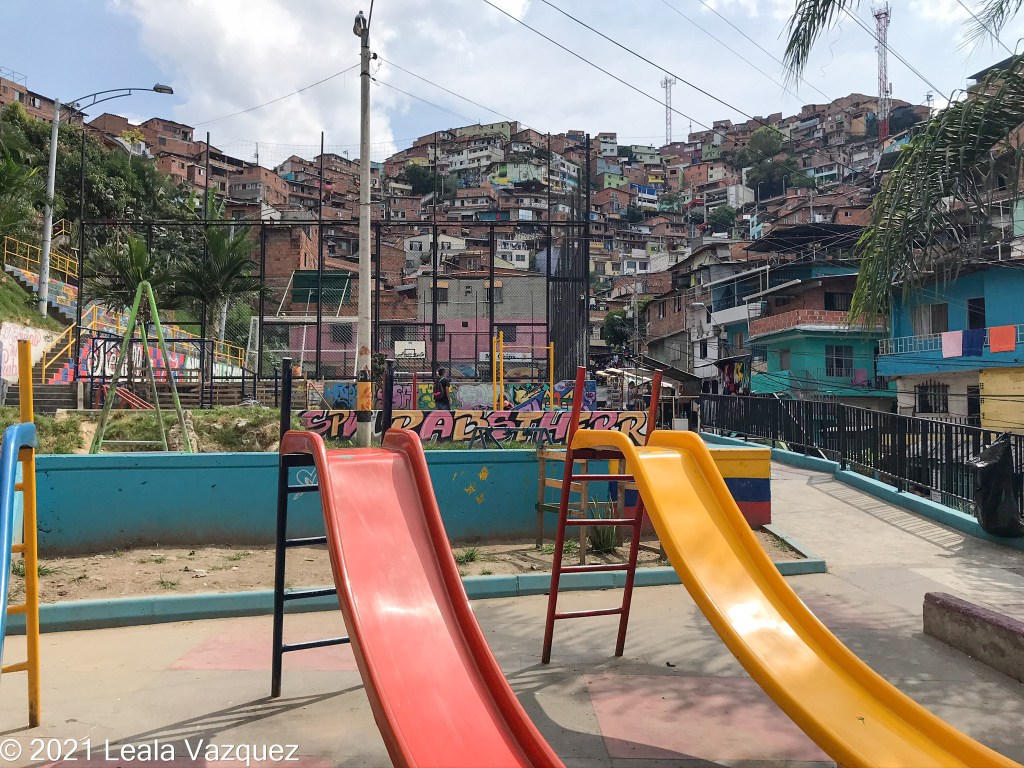
We say goodbye to our tour. The tour from Comuna 13 Medellin Graffiti was money well spent.
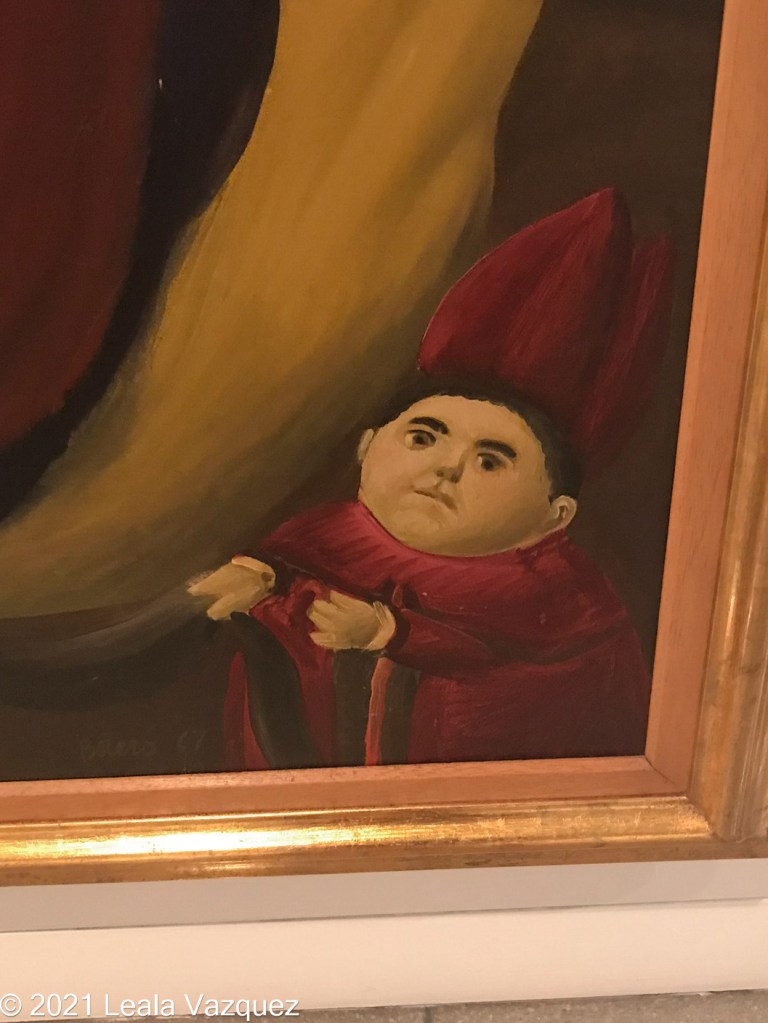
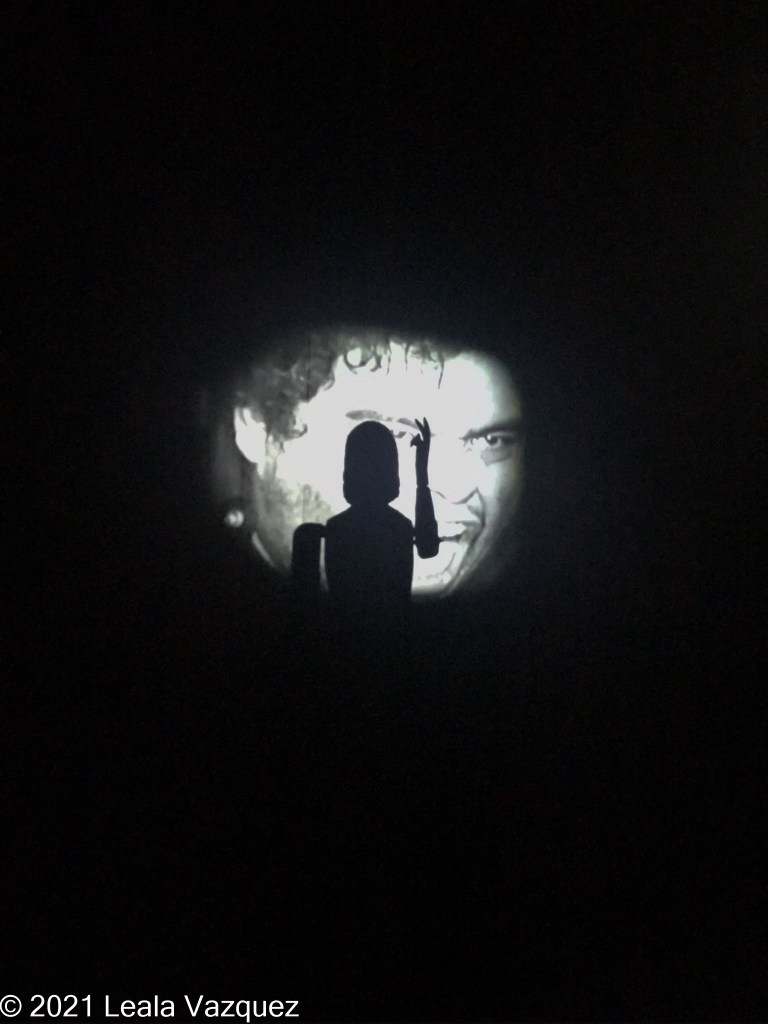
Before we head back to El Poblado we stop at the Museo de Antioquia so M can see all the Botero artwork. I am able to save her some time by showing her the interesting exhibits like the religious art wing.

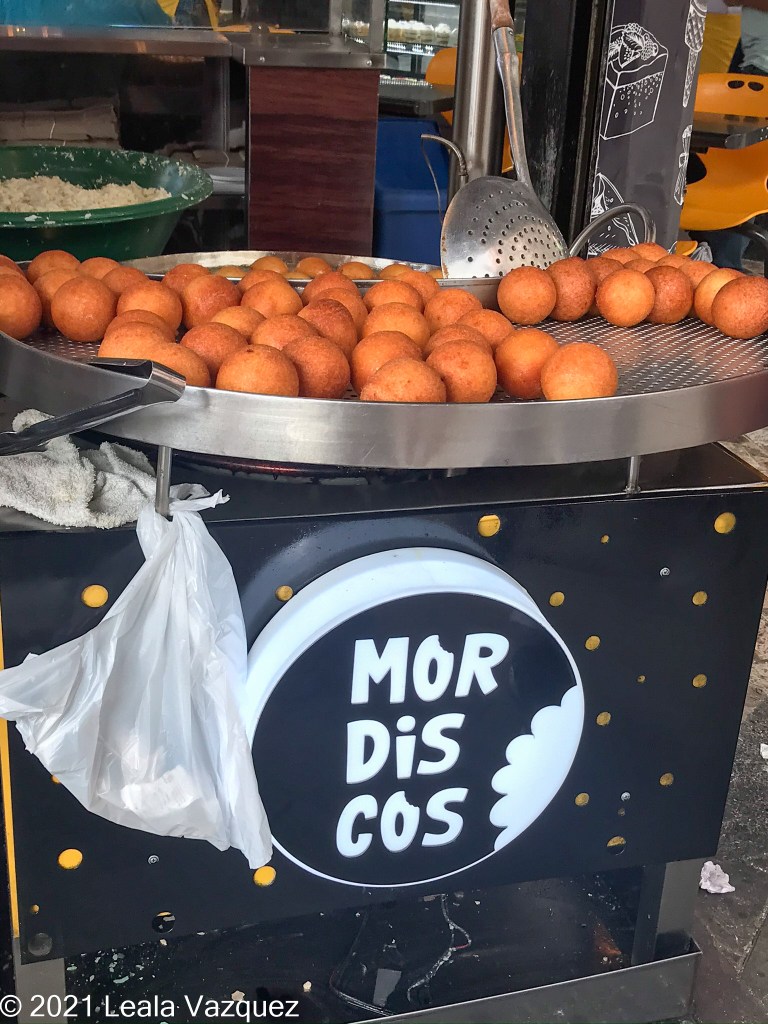
We stop to try some cheese balls.
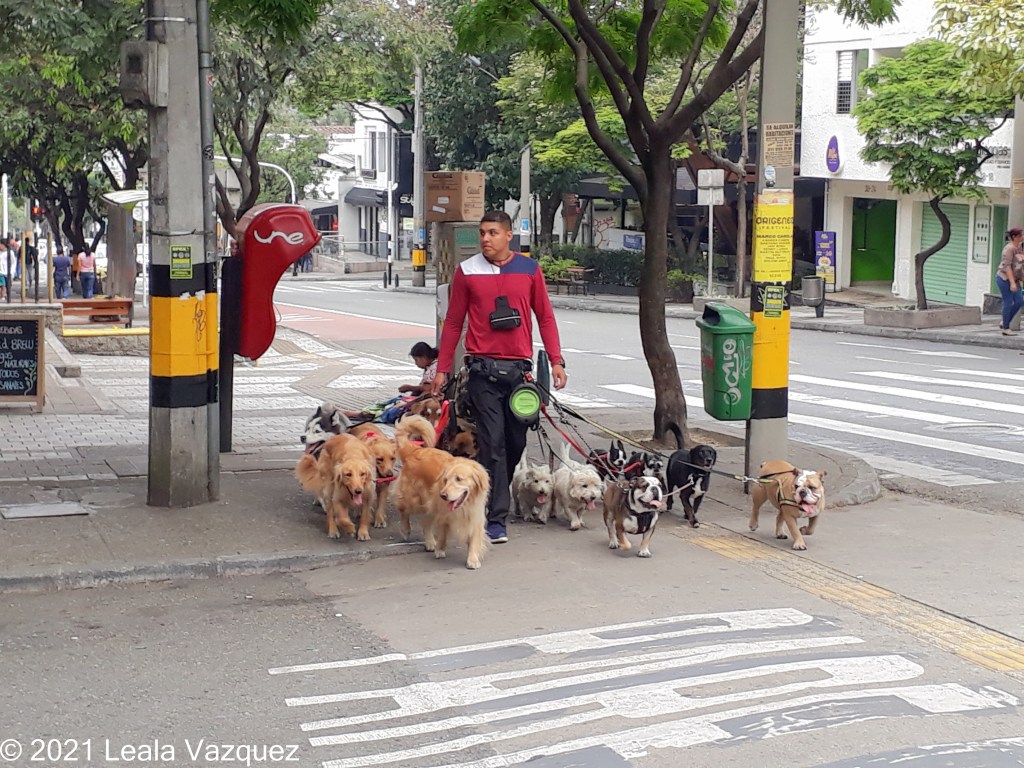
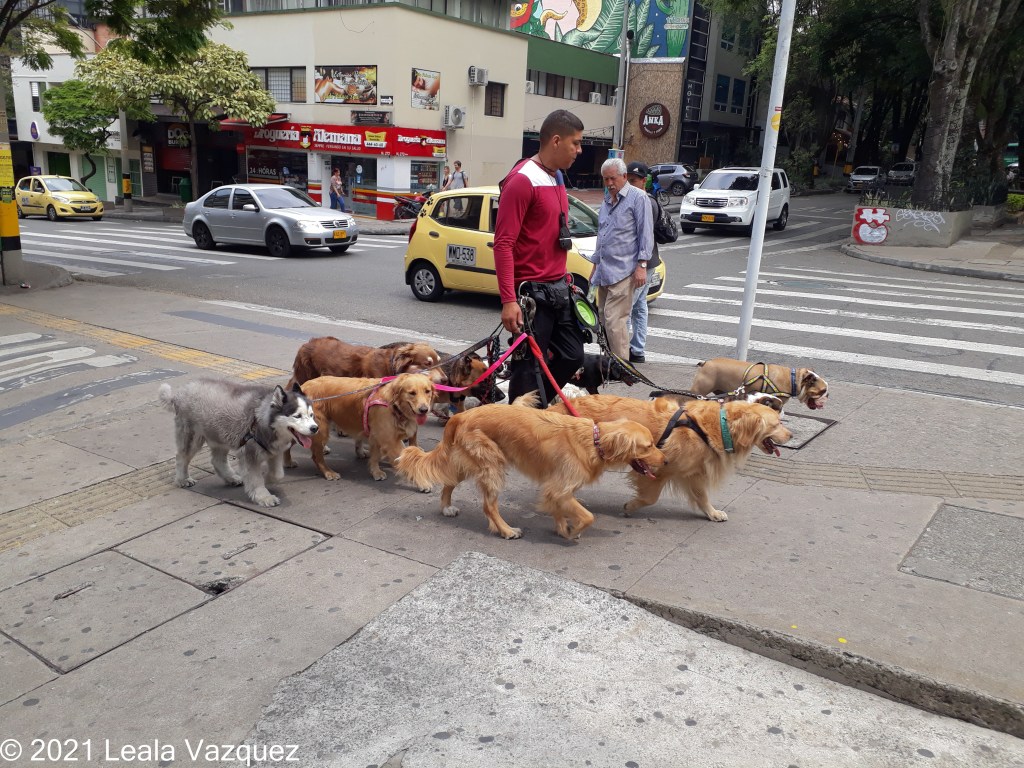
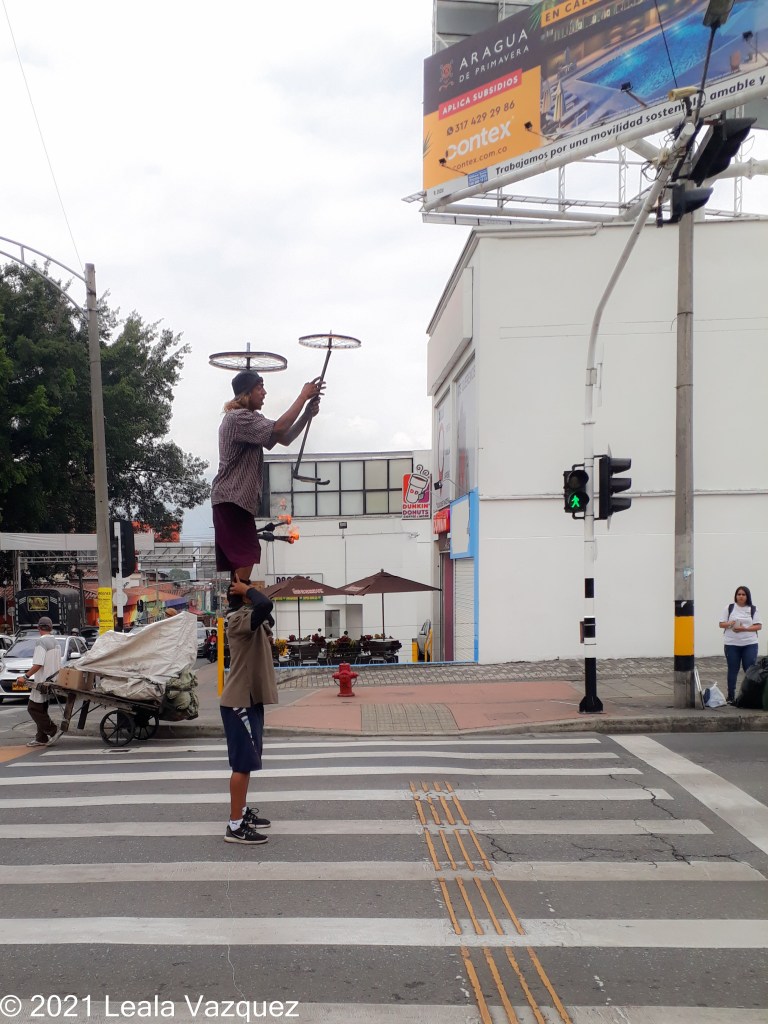
We head back to El Poblado. We find a very busy dog walker and some more street performers.
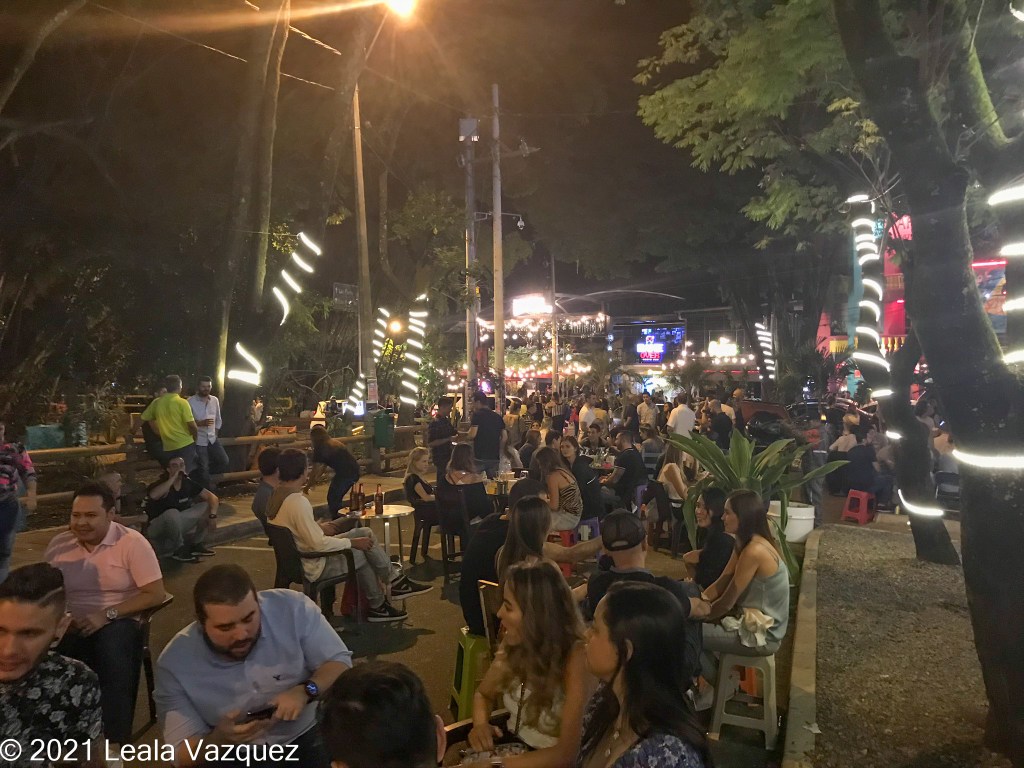
I try tonight to meet up with another friend I knew in college who happens to be in town. We try to stay out late to meet up with her but our schedules don’t align. They don’t even head out until late and we do our partying early. We did stay out late enough to witness just a little bit of fun of the neighborhood.
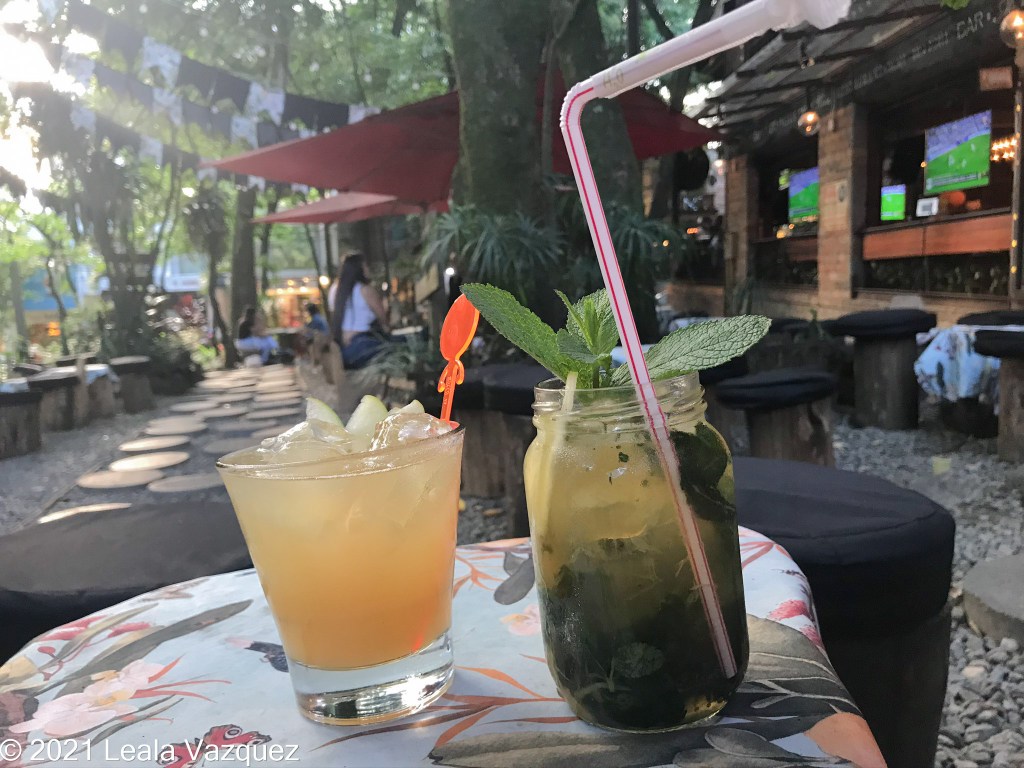

Zona Rosa area of El Poblado

We shared a good amount of Sangria.


We stopped at one last bar where we had lots of street entertainment.
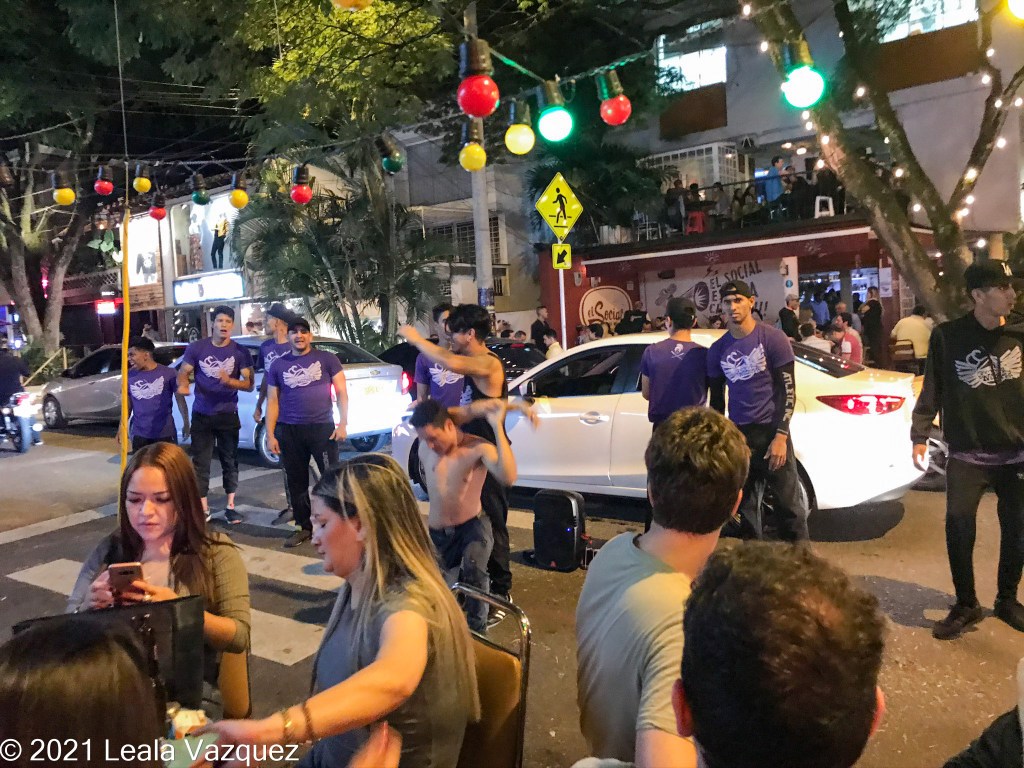
Dance groups in El Poblado
At least we had one night of fun in our vibrant neighborhood.
Tomorrow is our last day in Colombia and we plan to attend a soccer match. Wish us luck.






 Growing With Leala