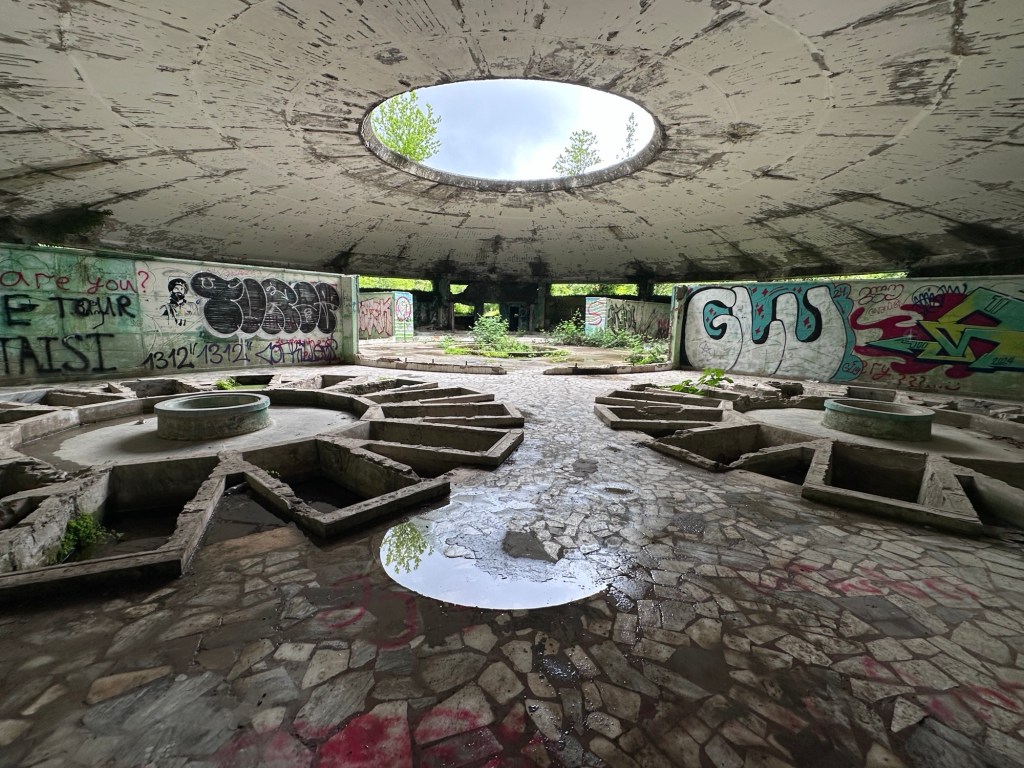
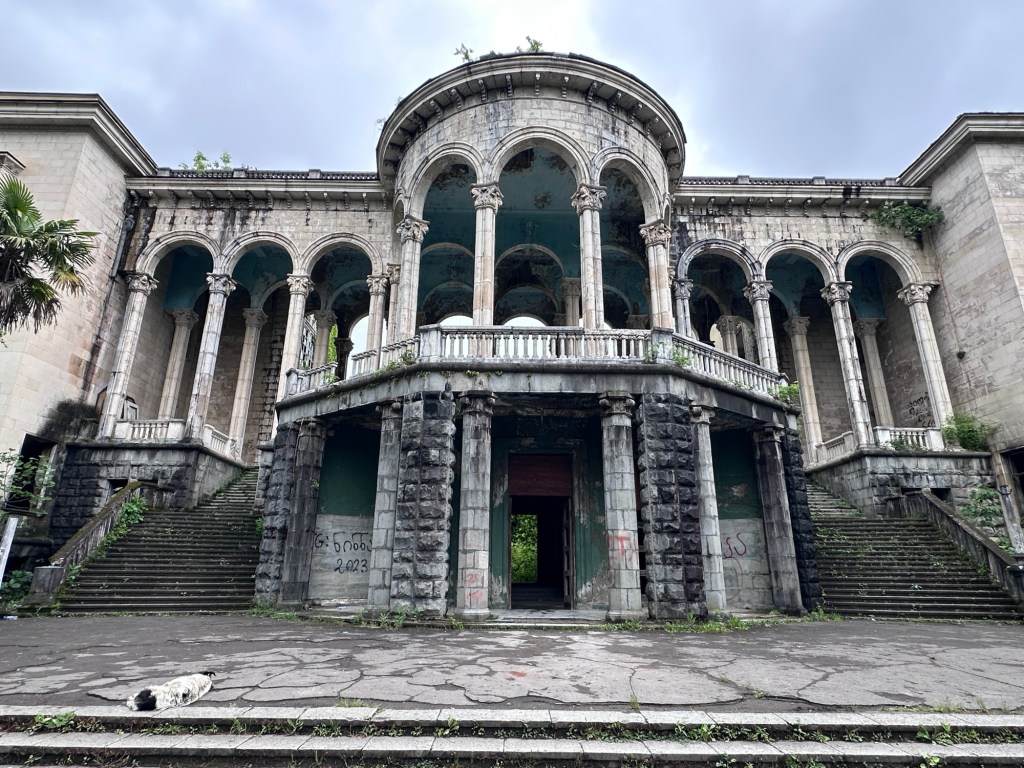
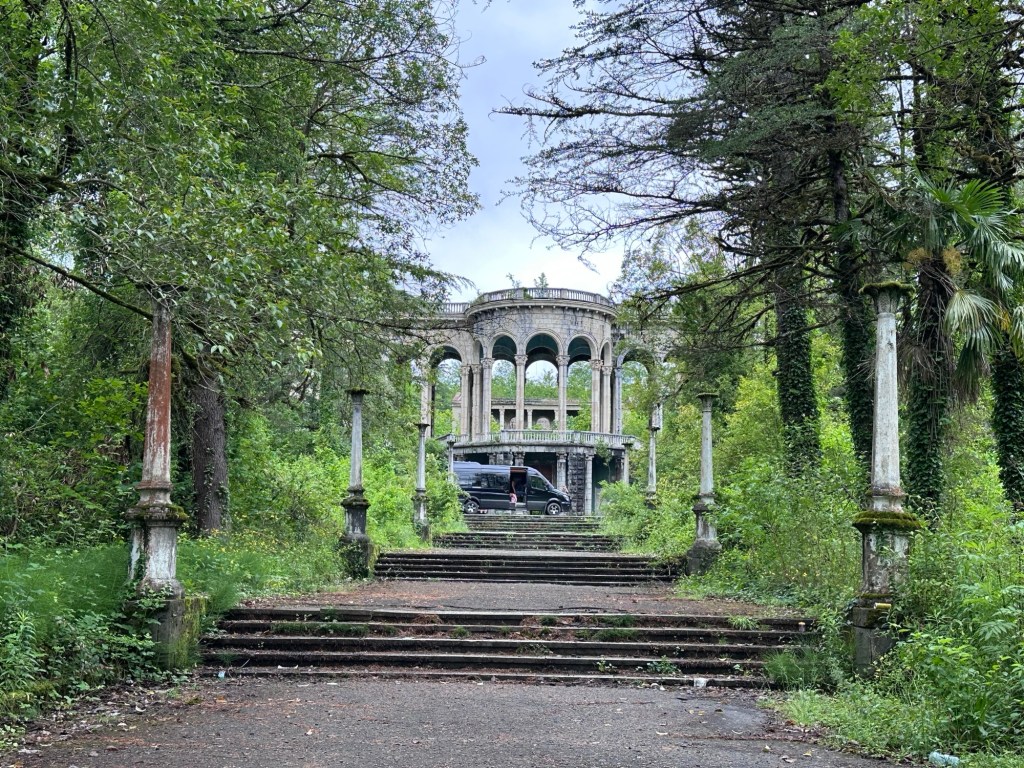
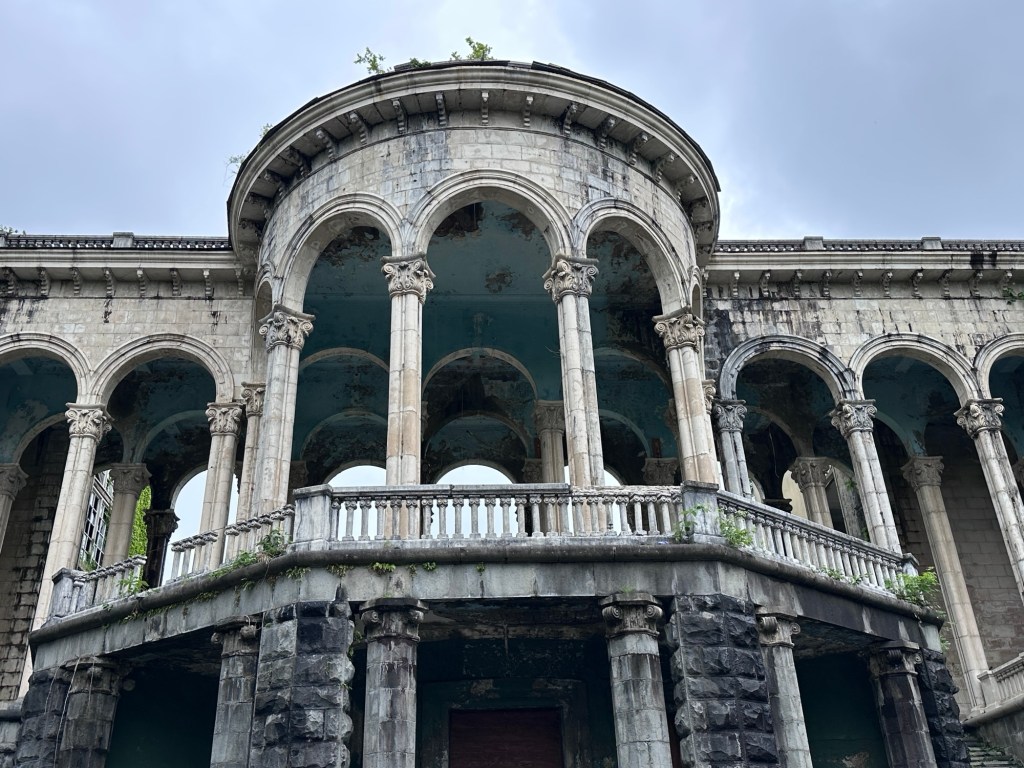
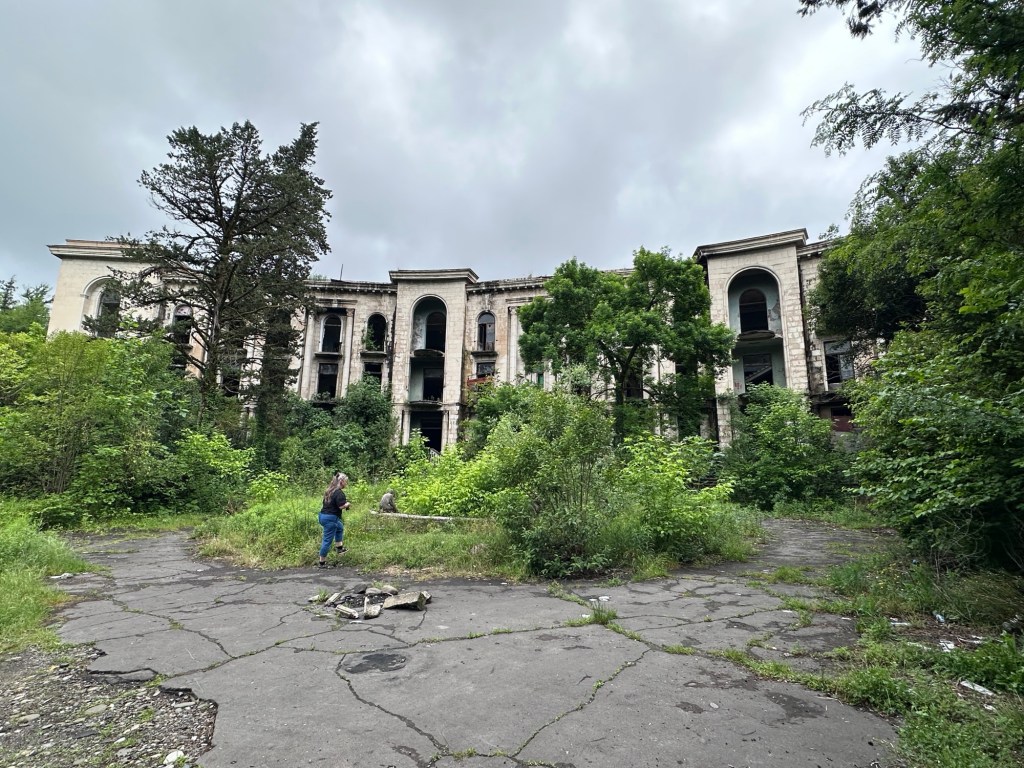
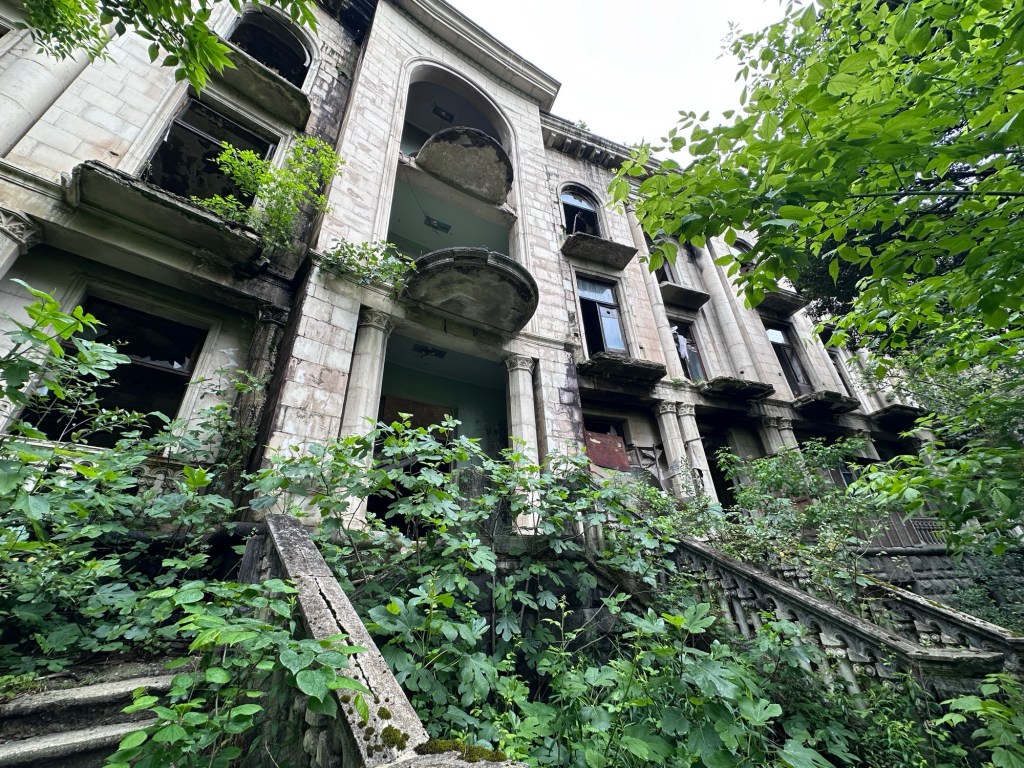
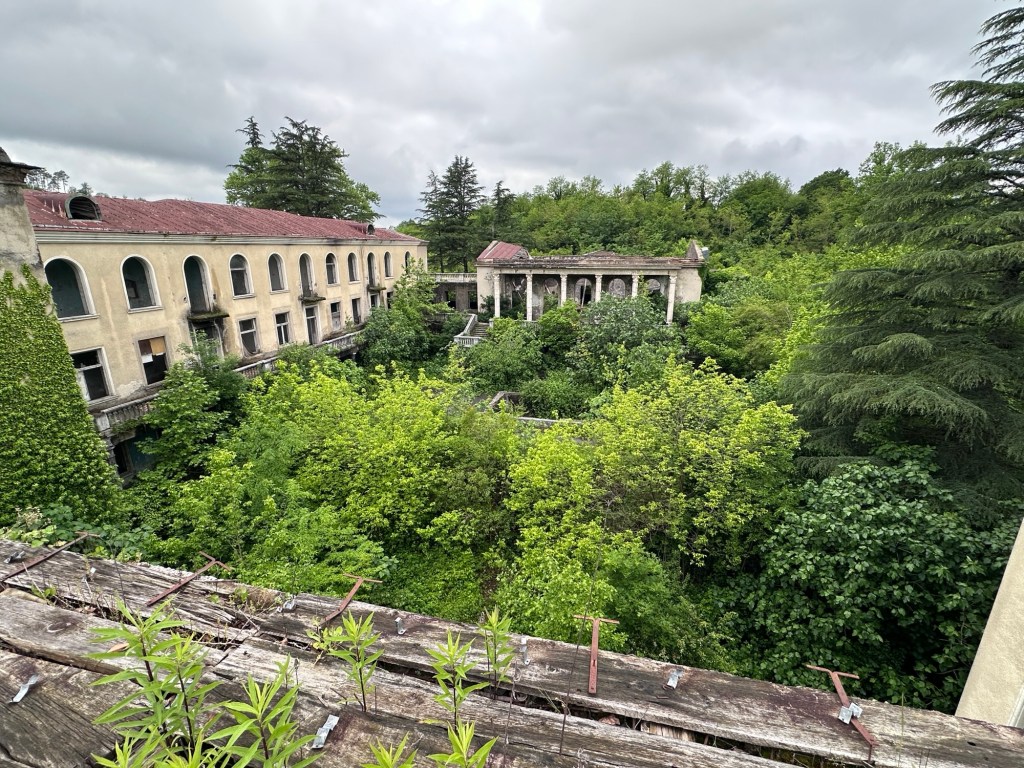
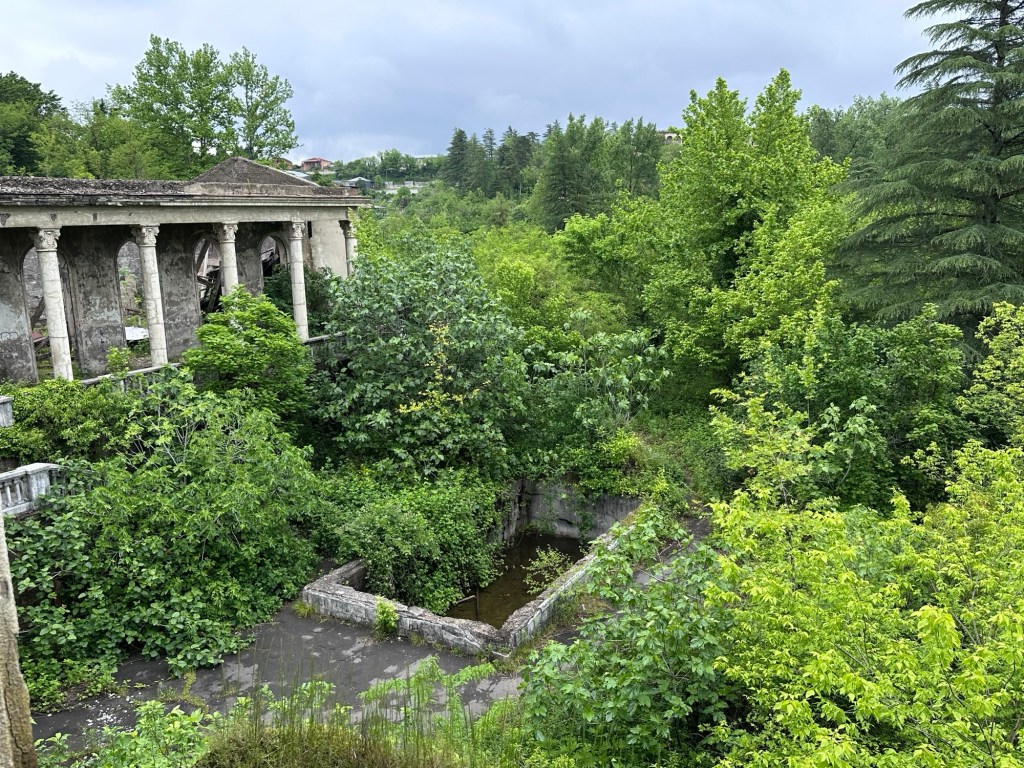
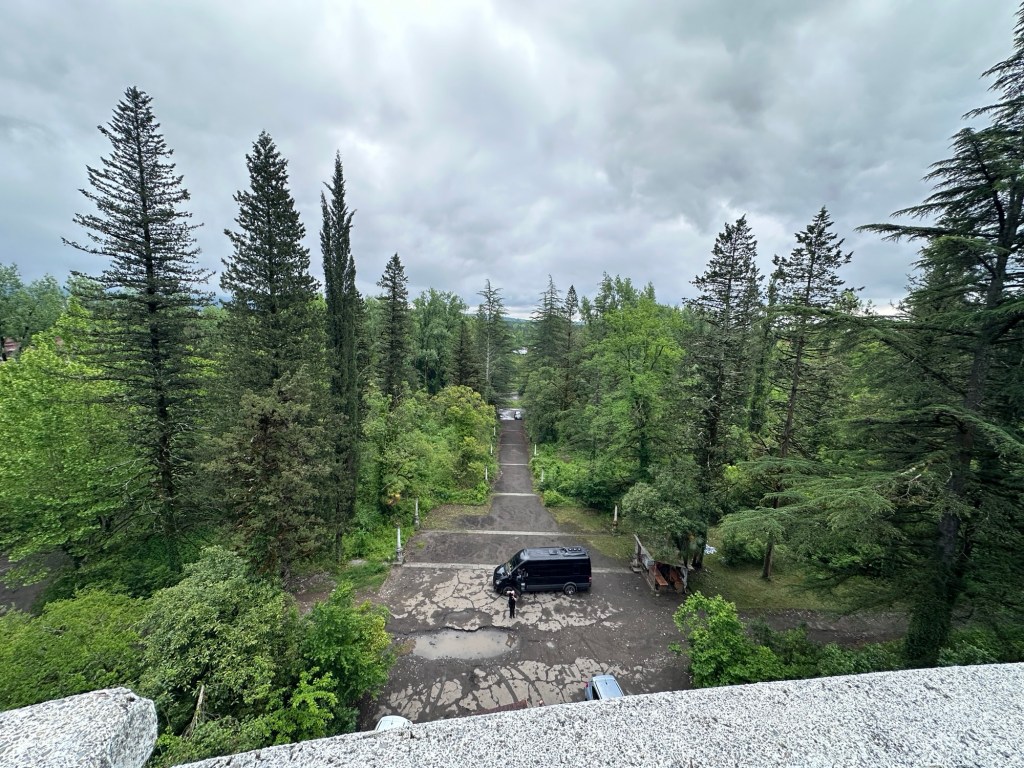
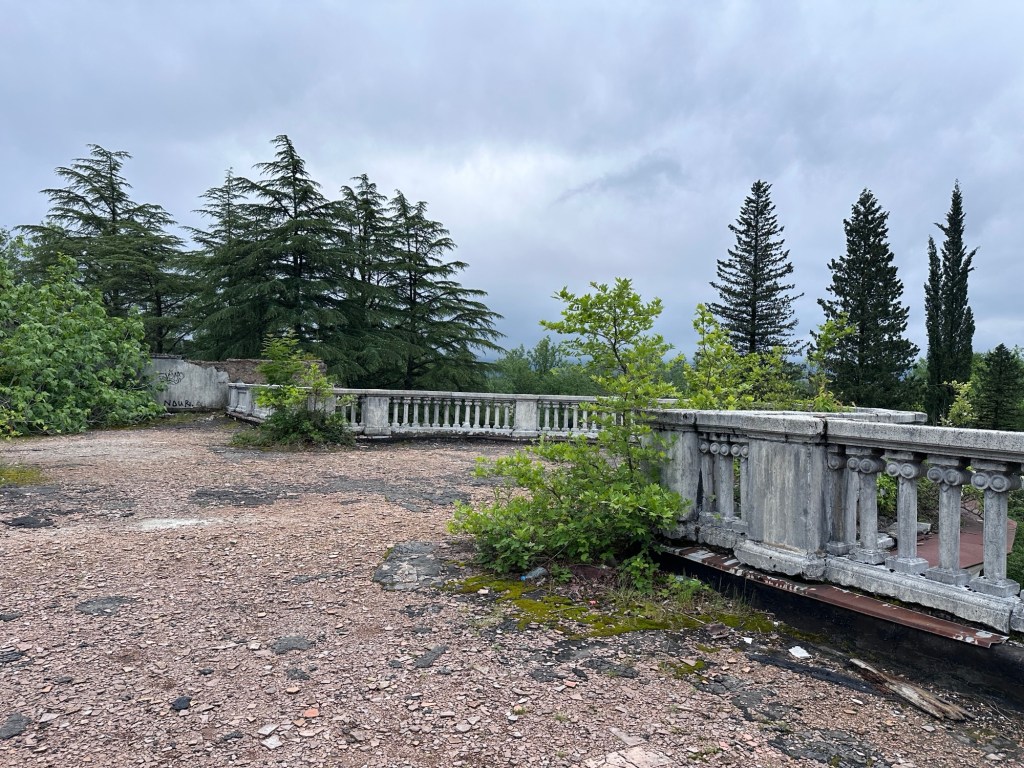
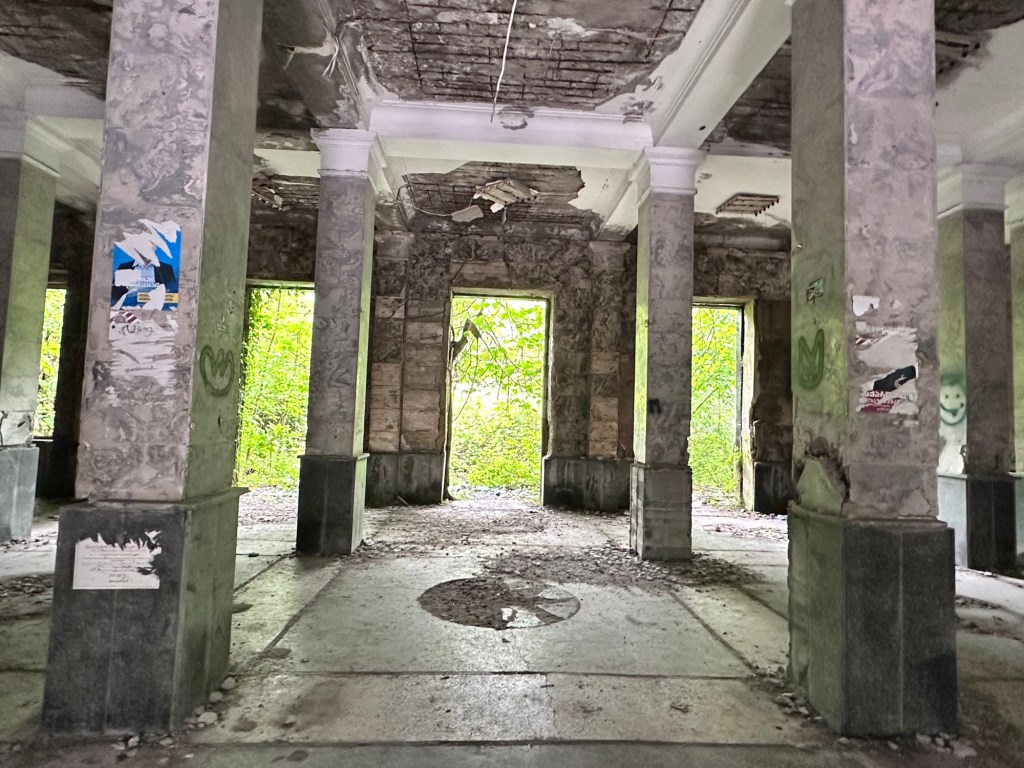
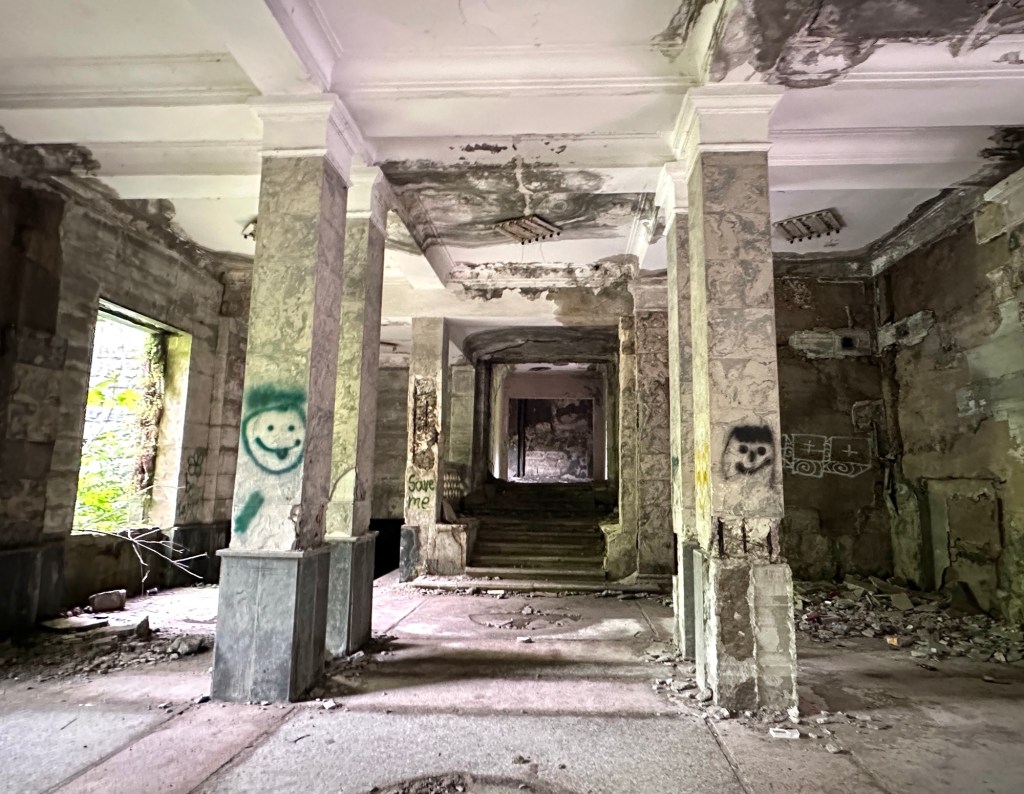
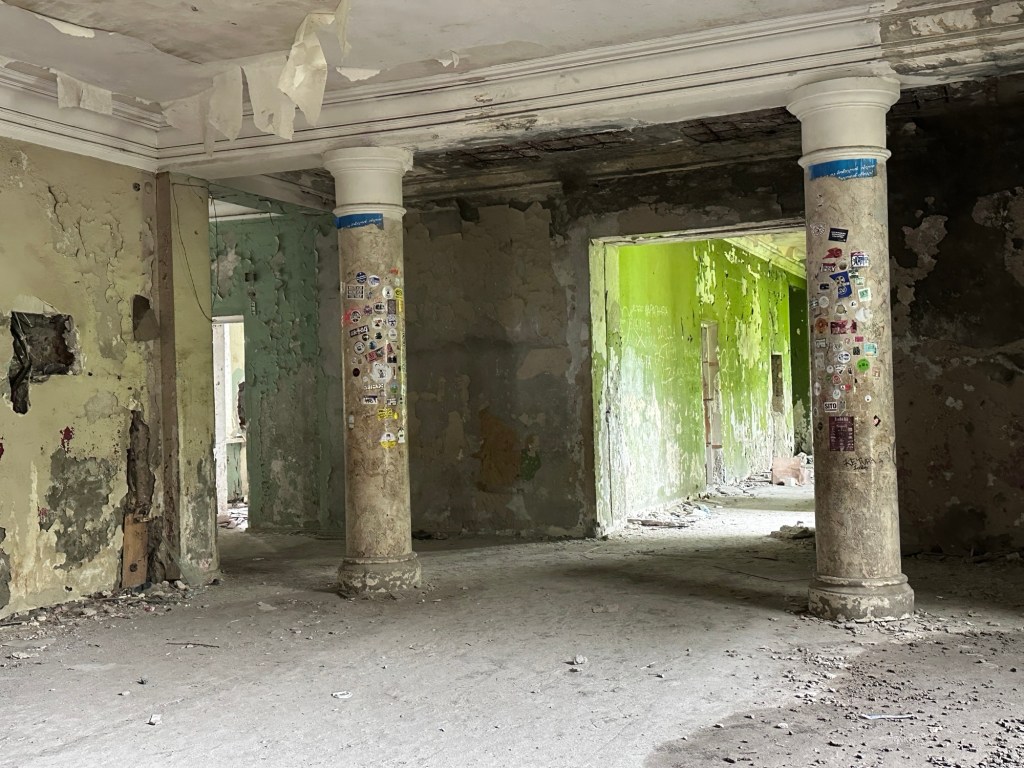
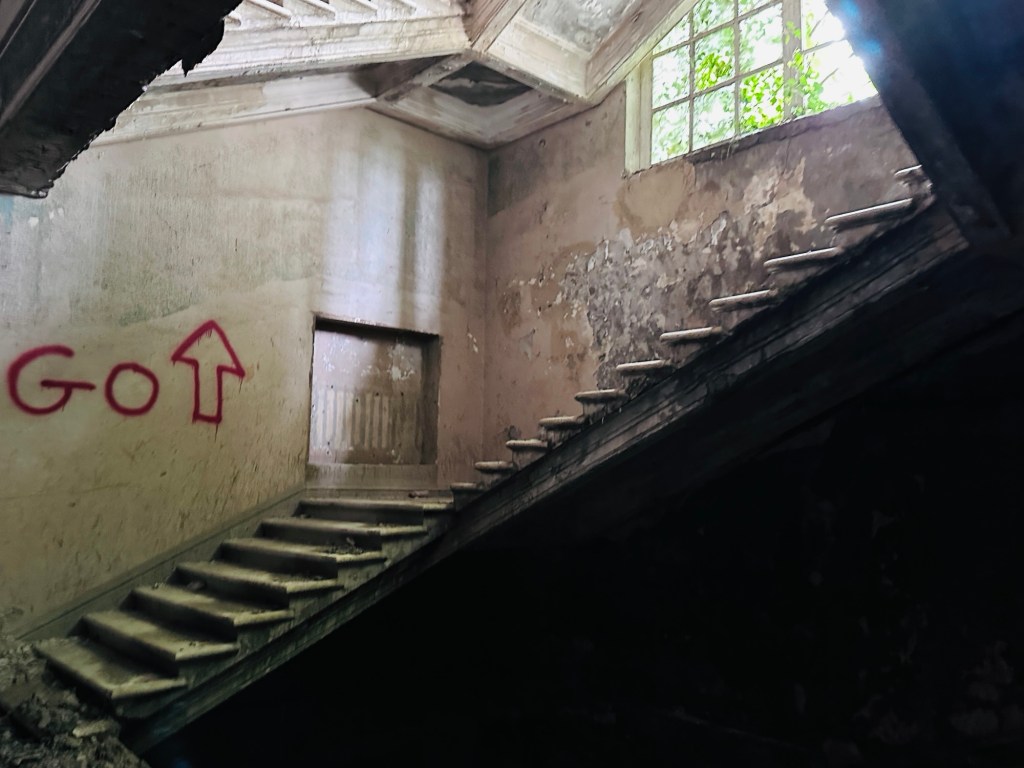
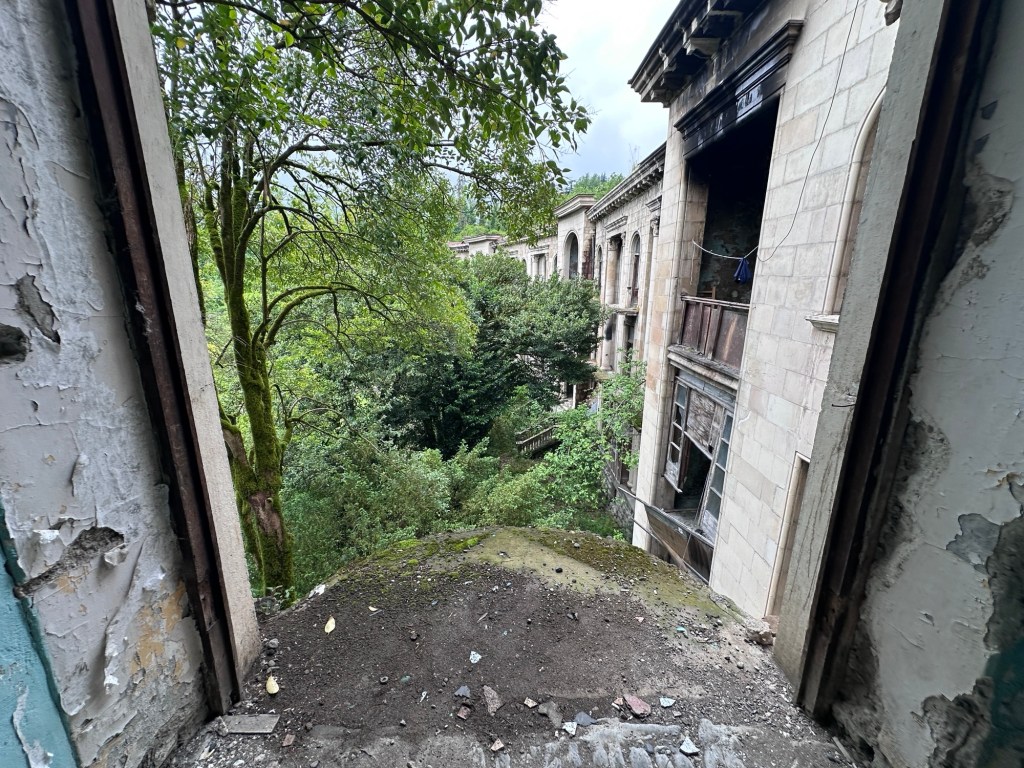
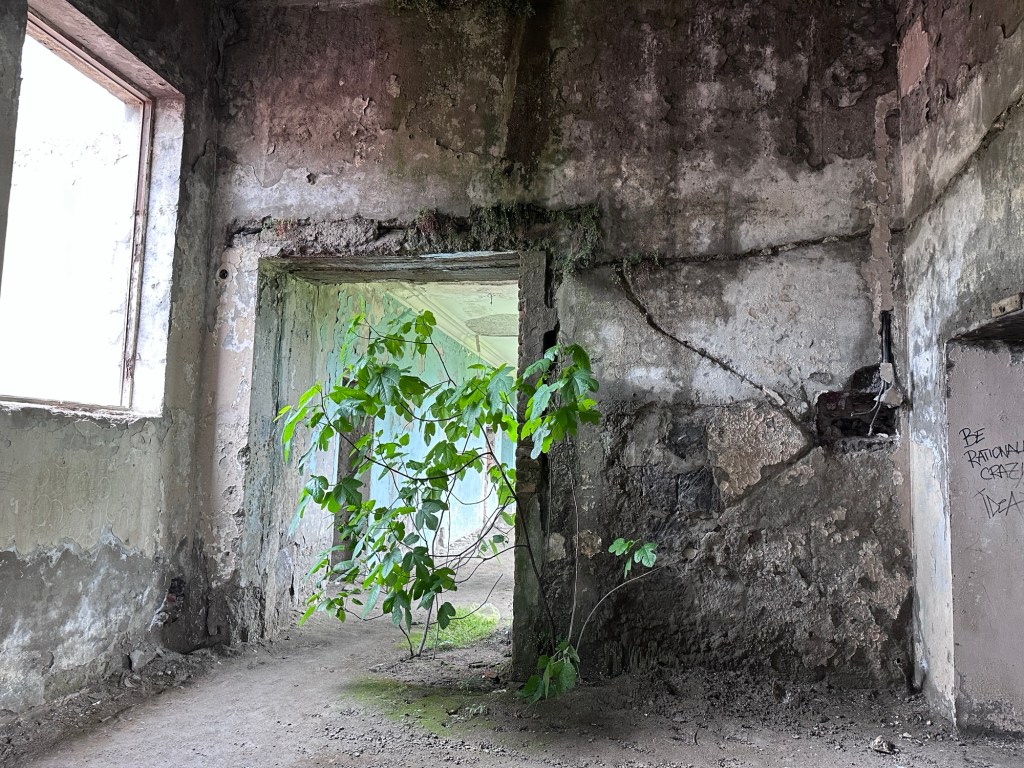
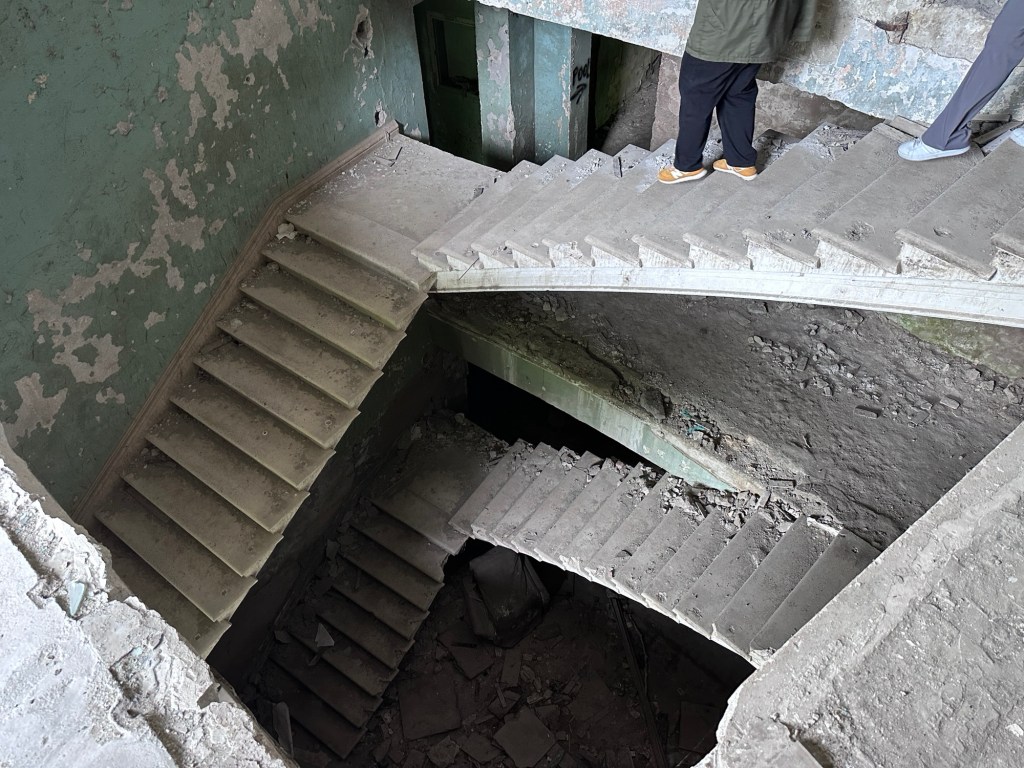
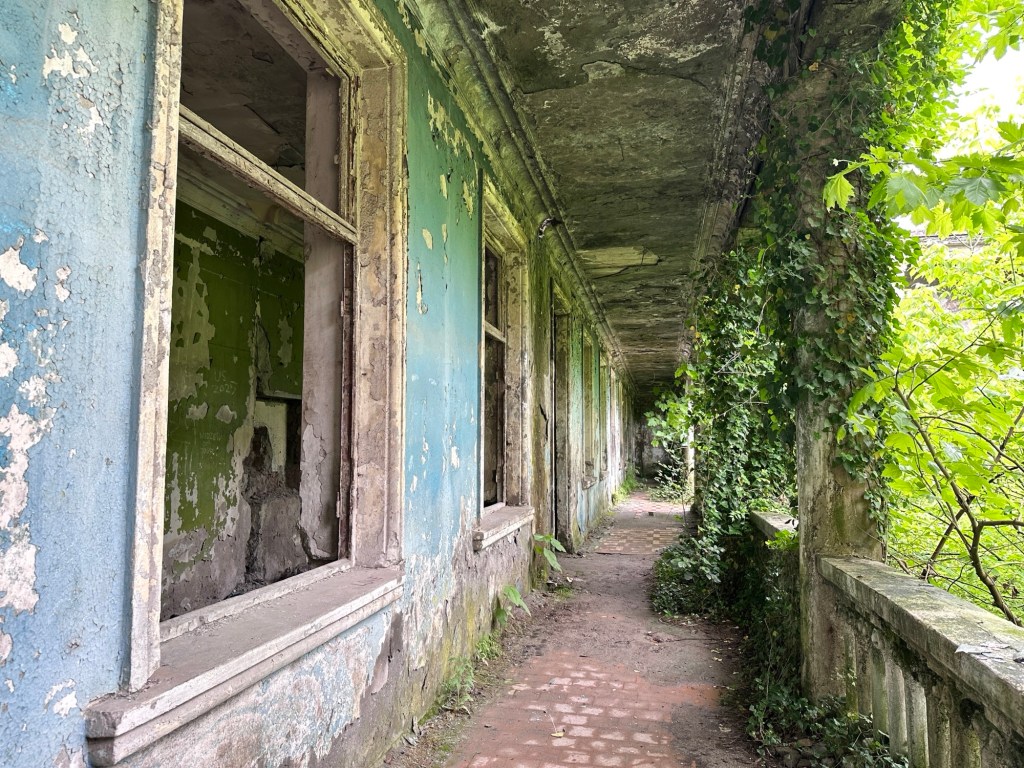
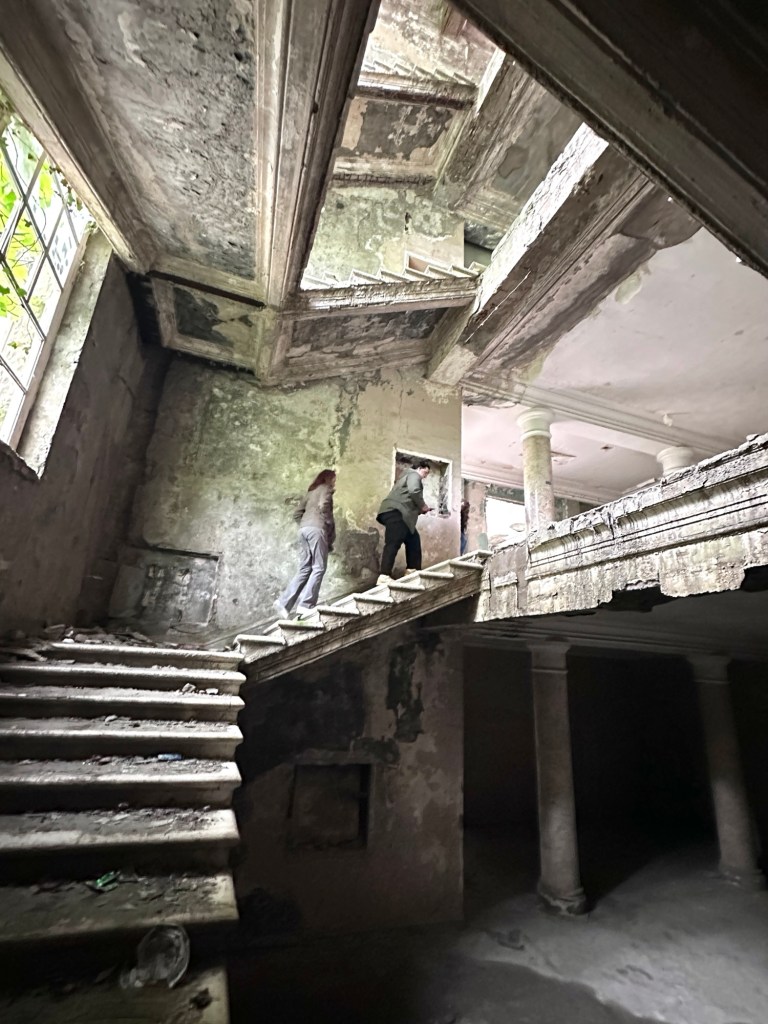
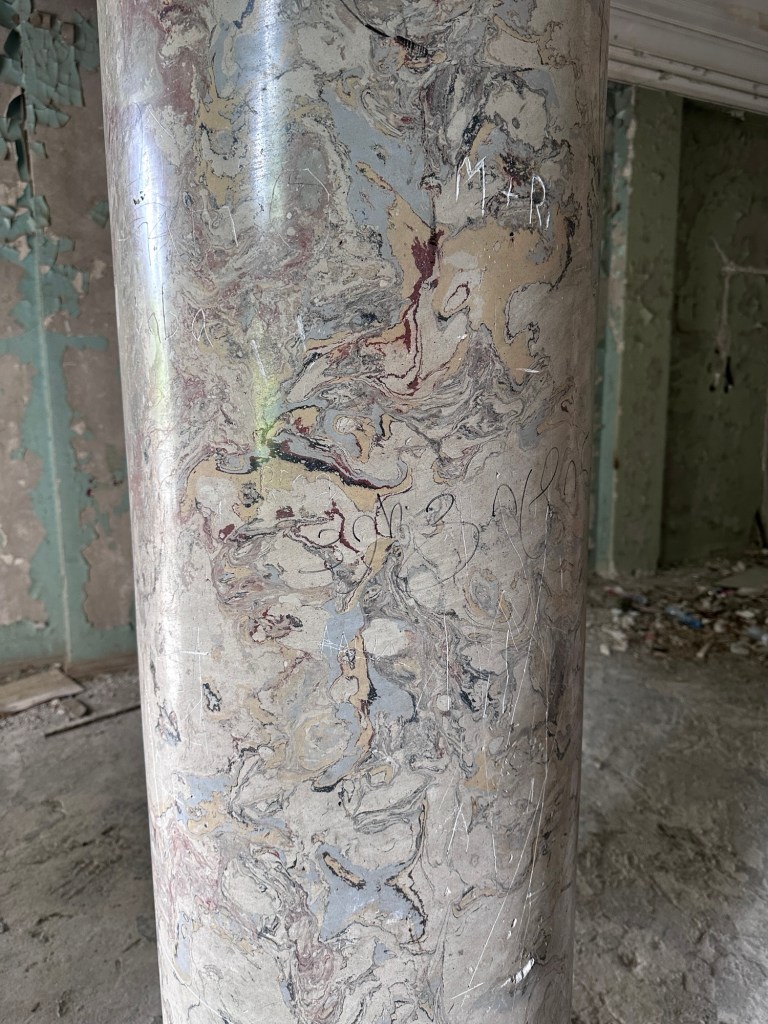
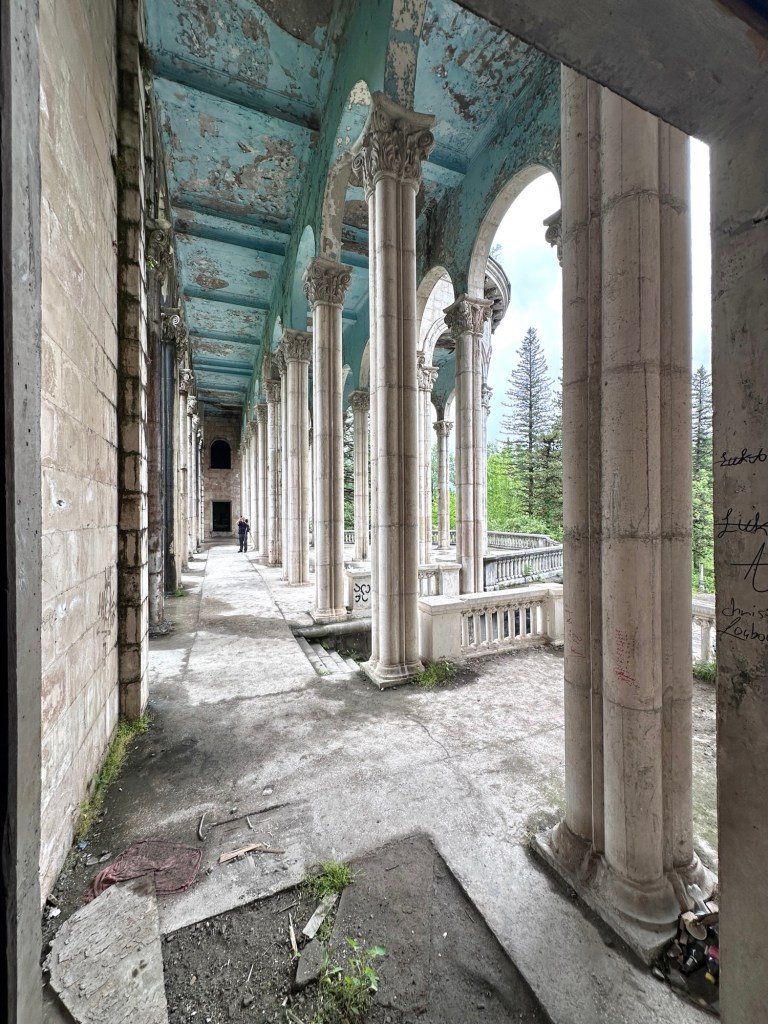
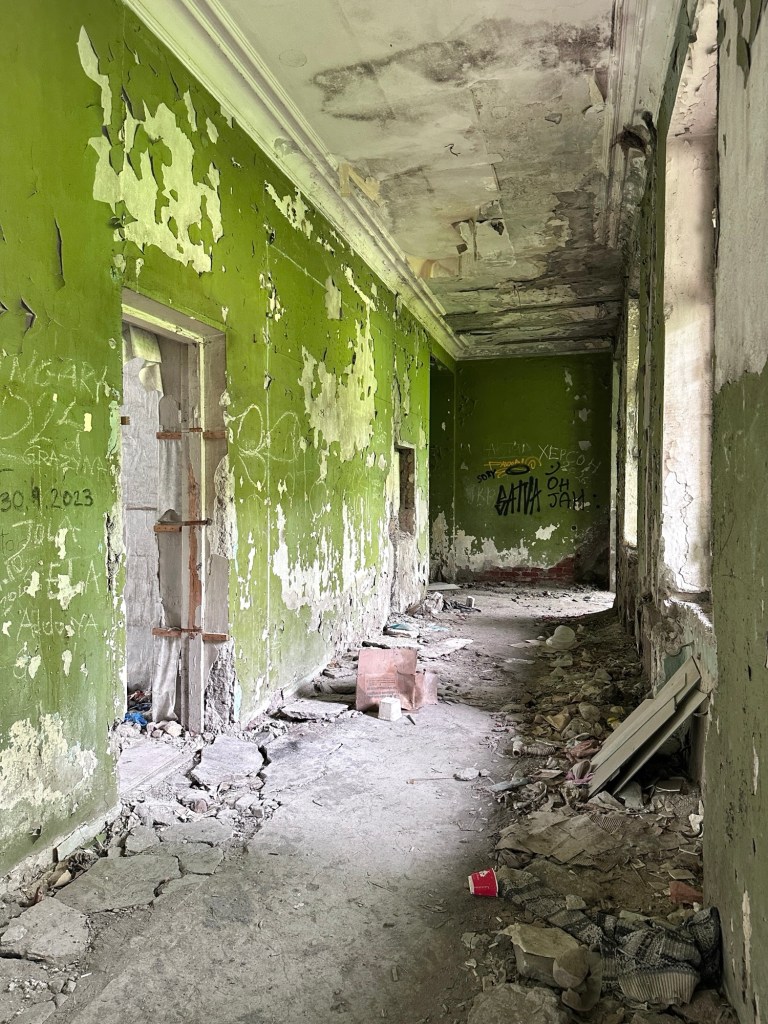
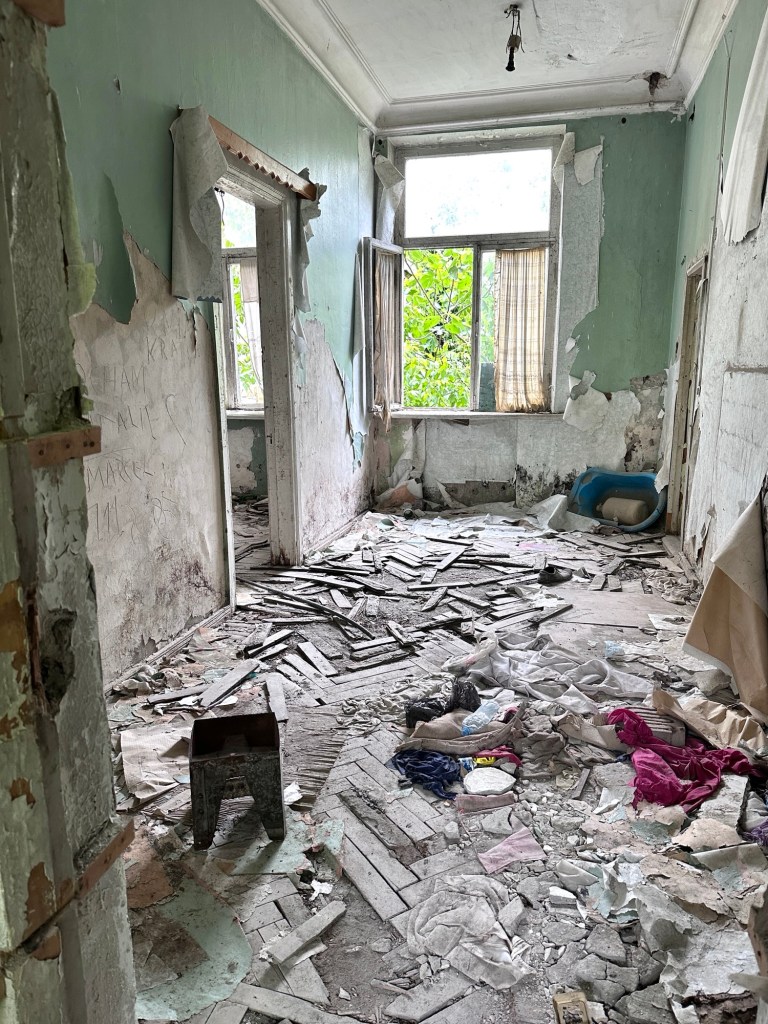
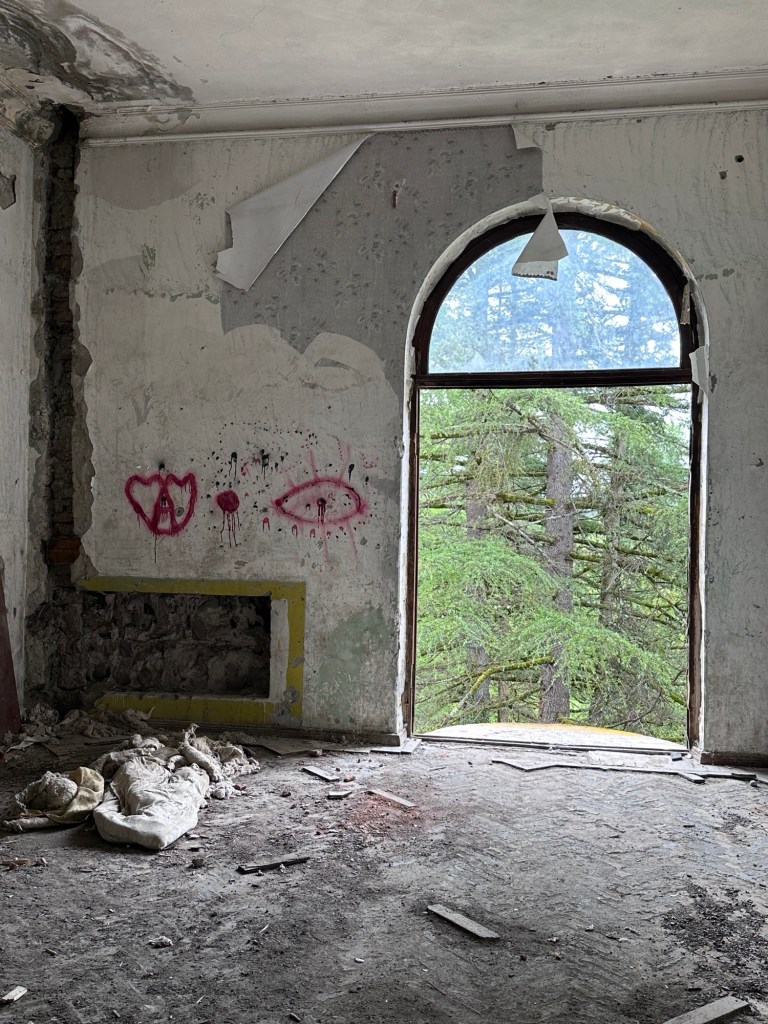
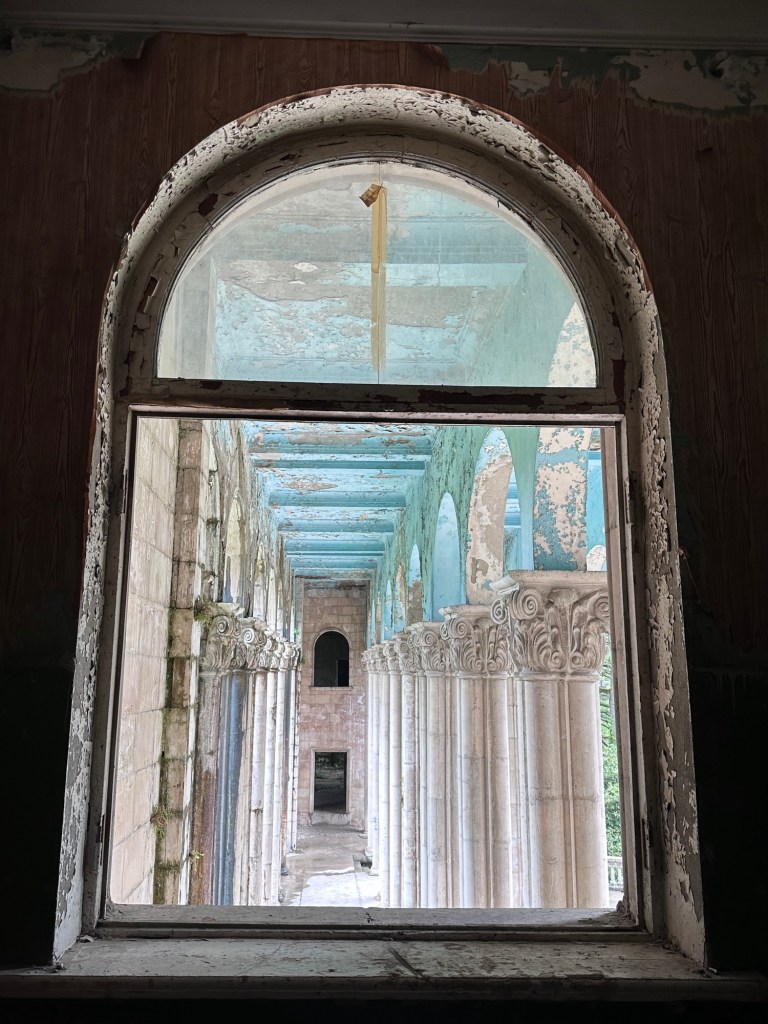
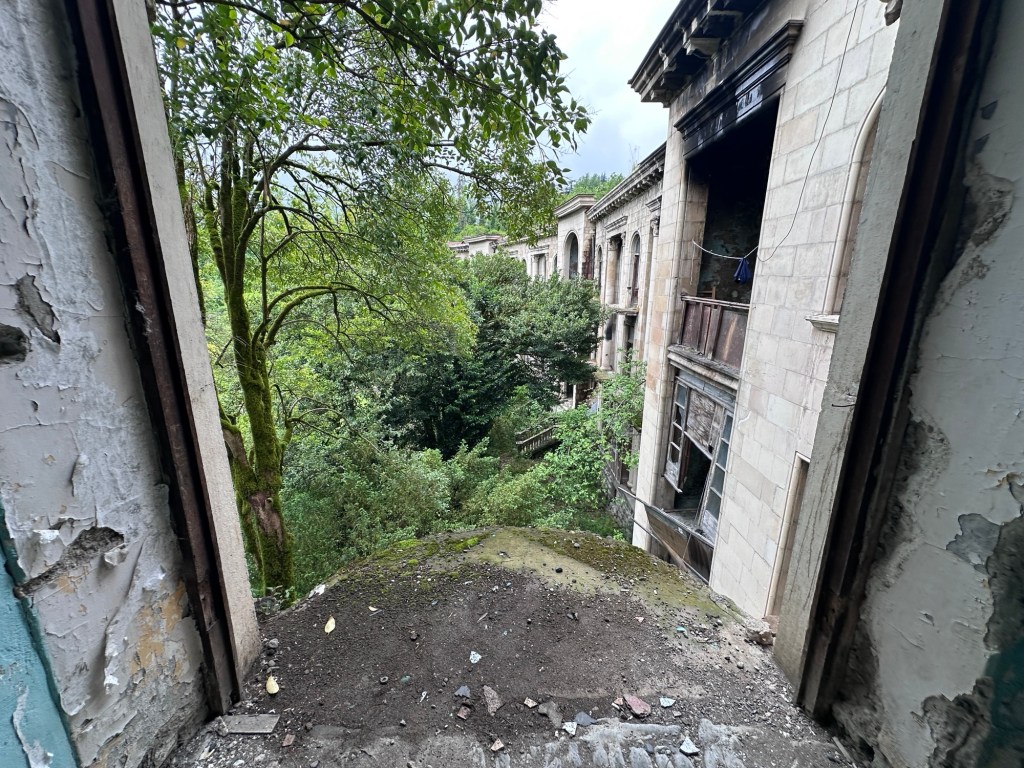
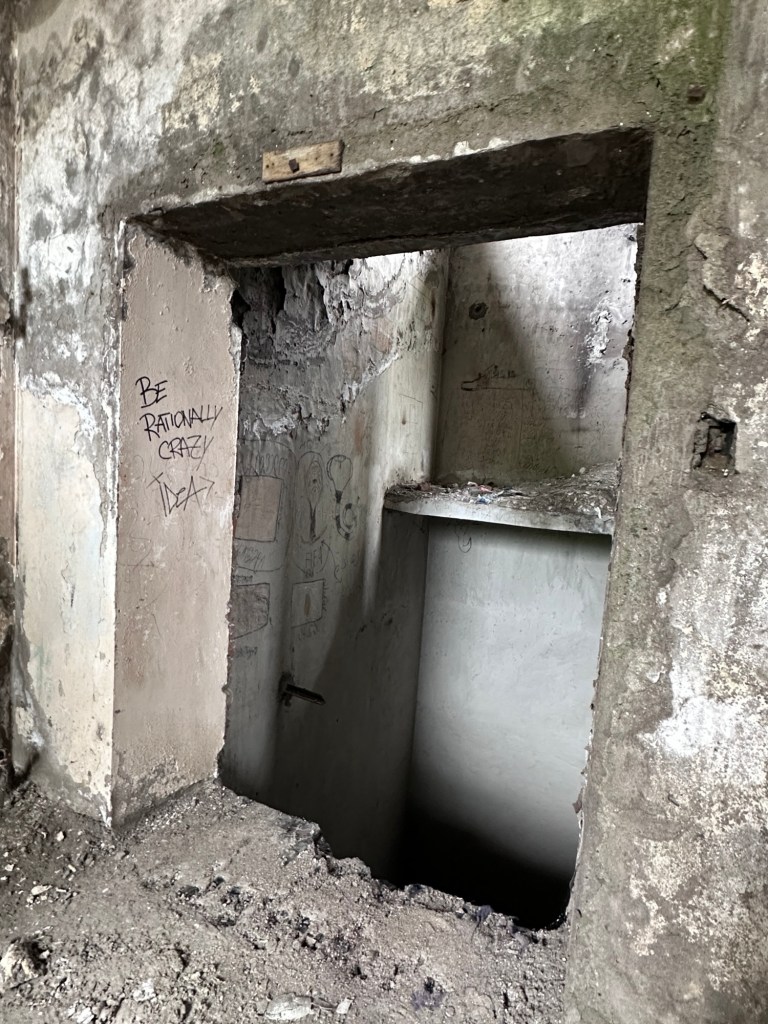
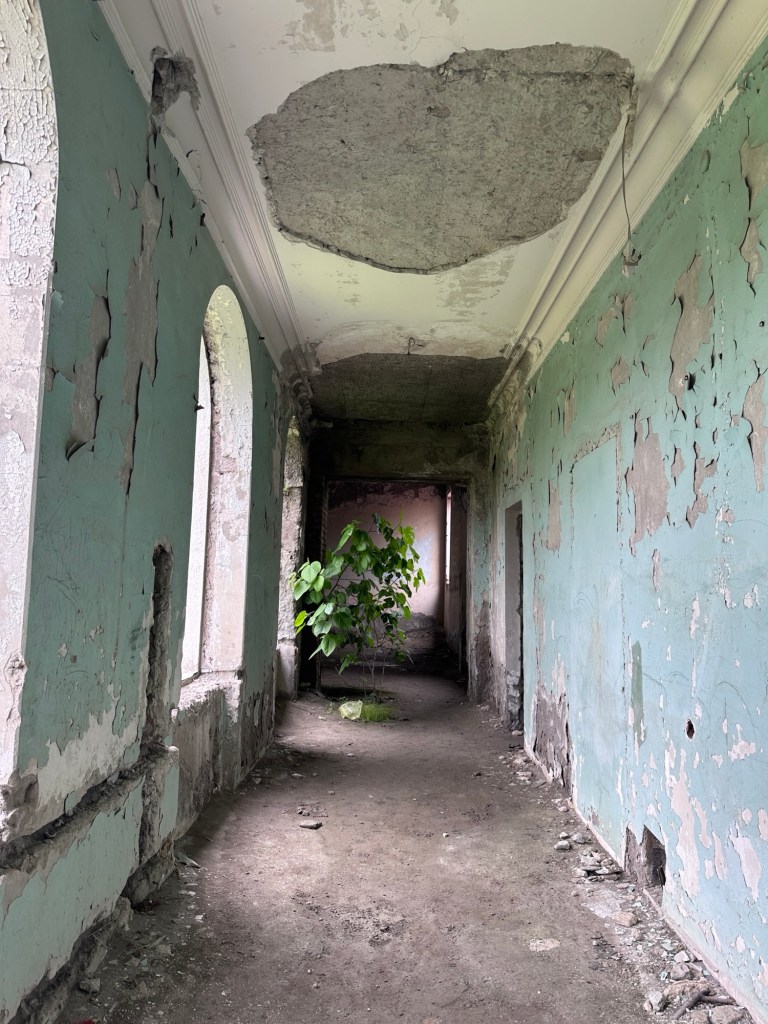
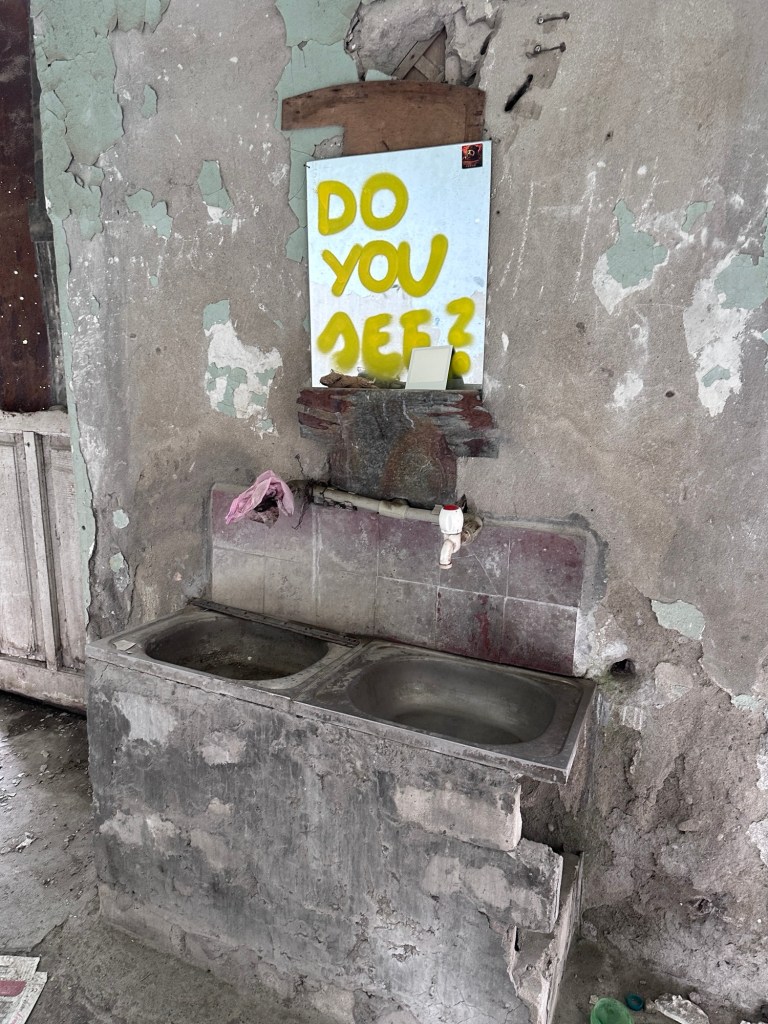
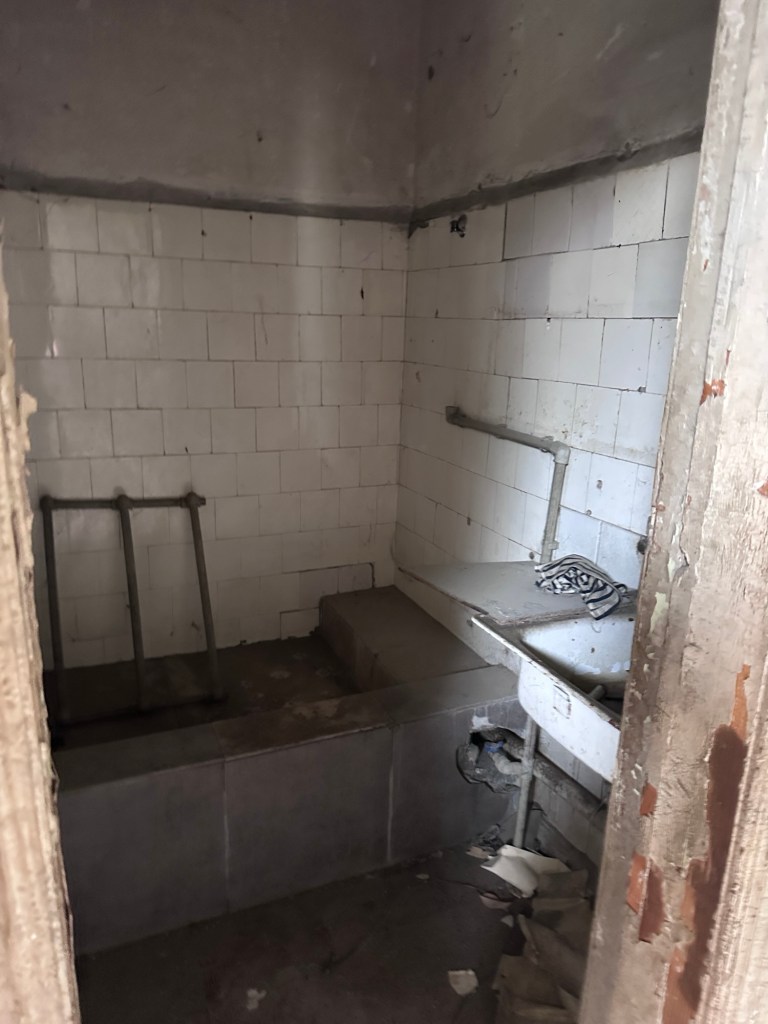
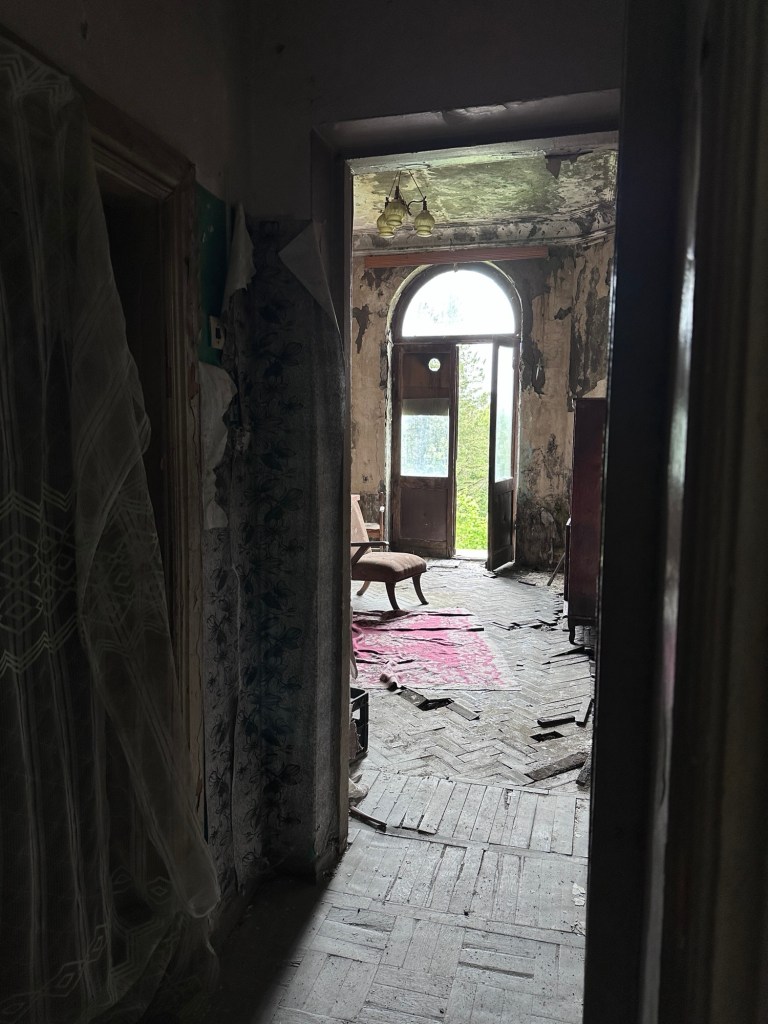
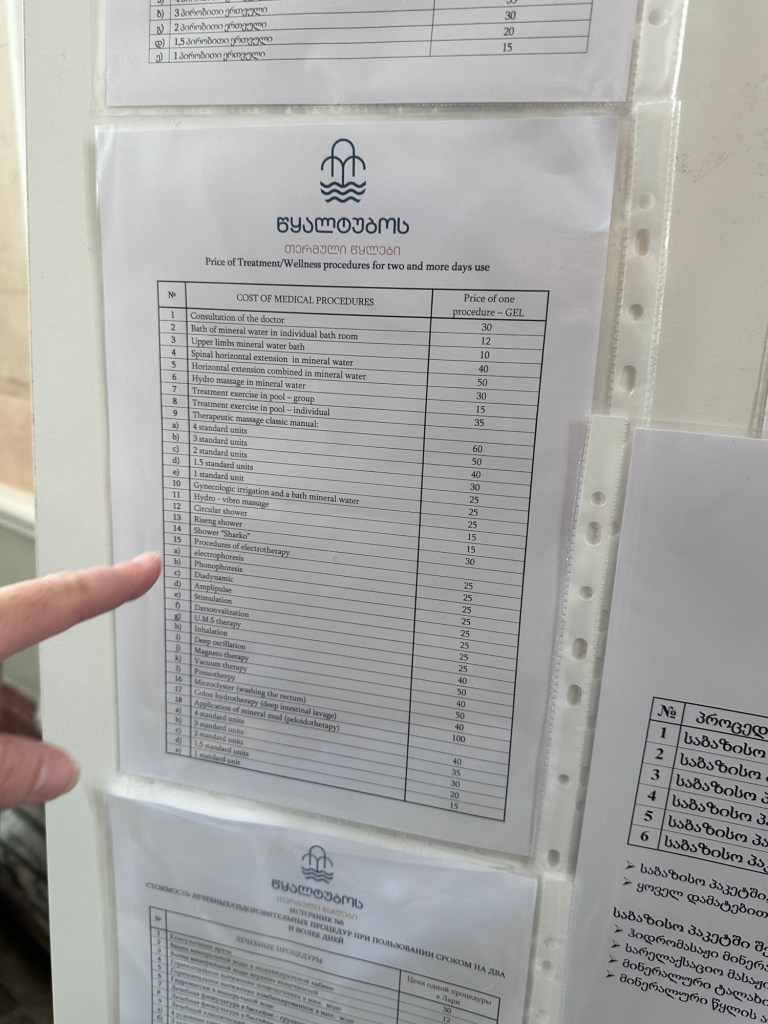
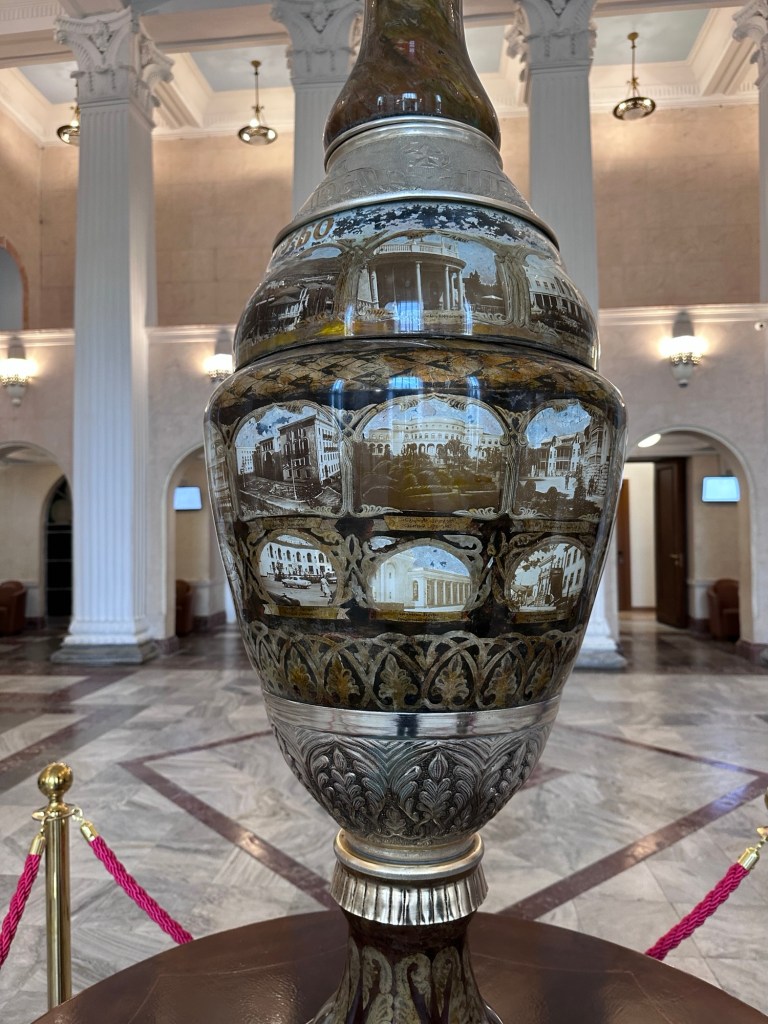
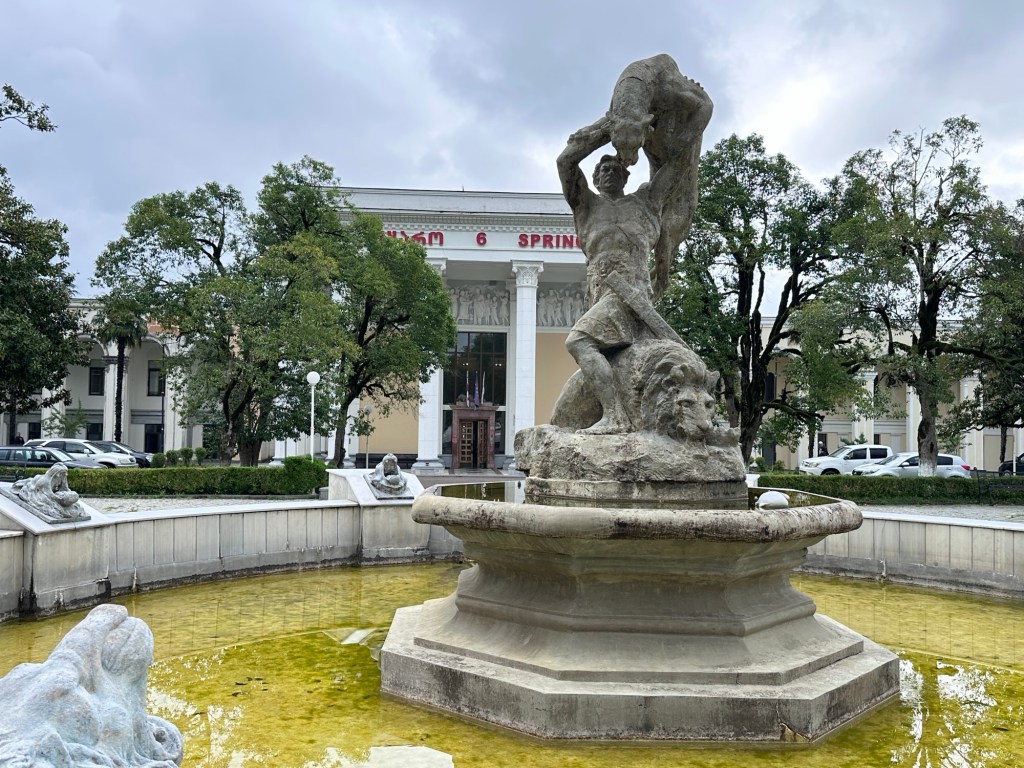
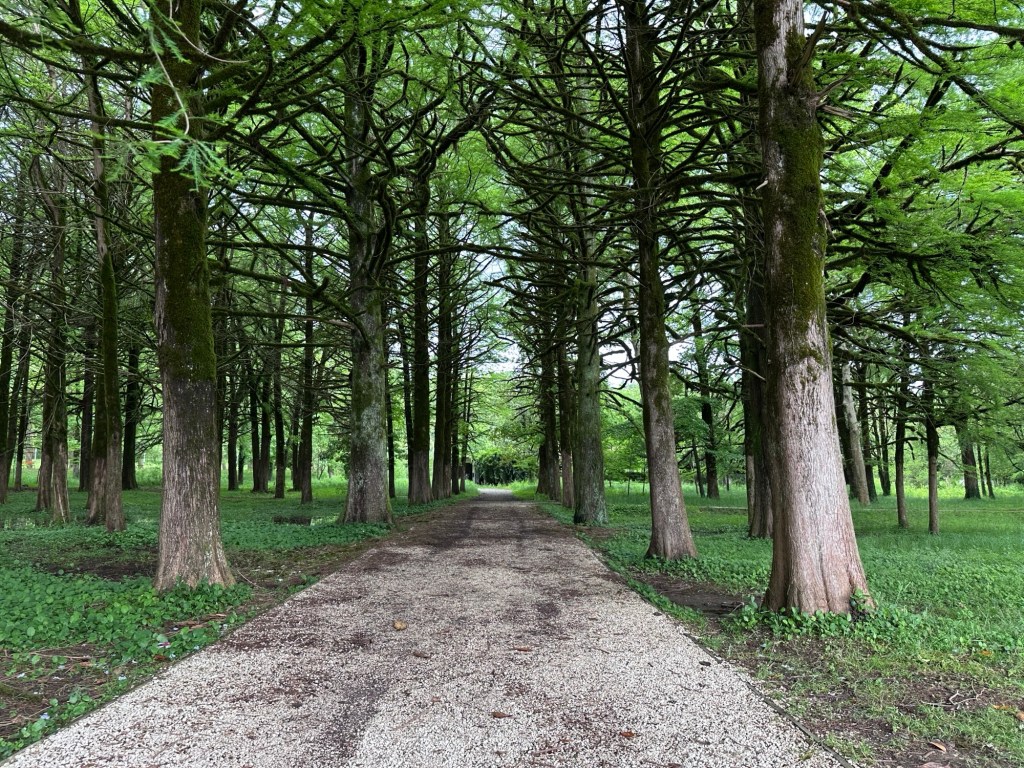
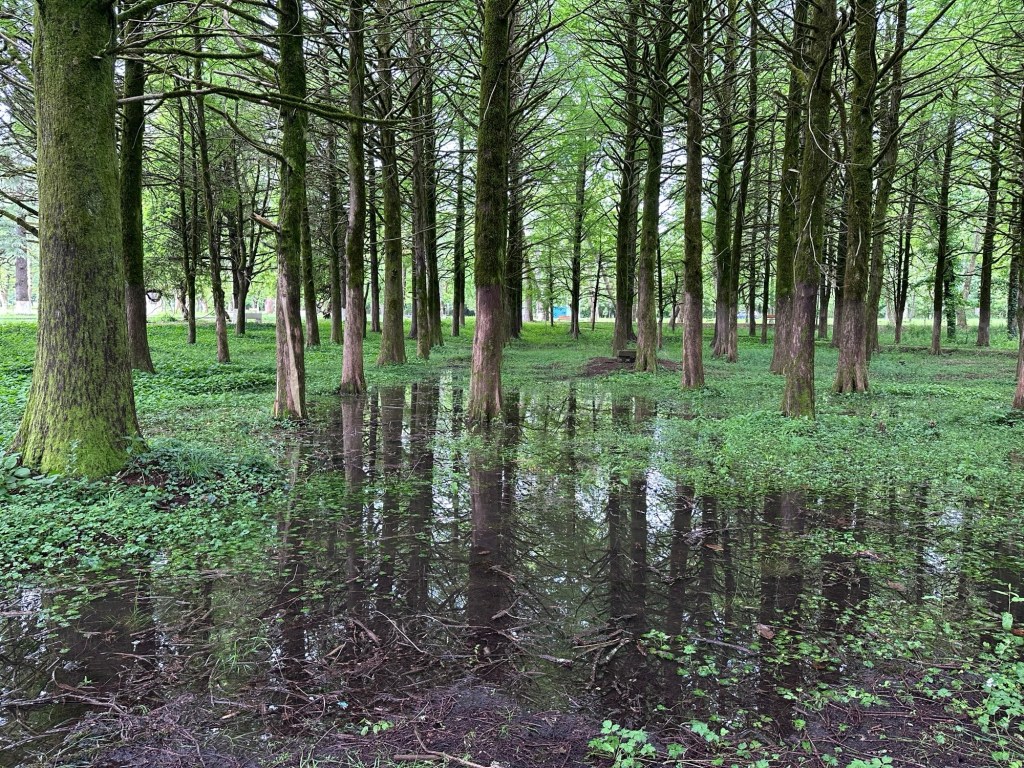
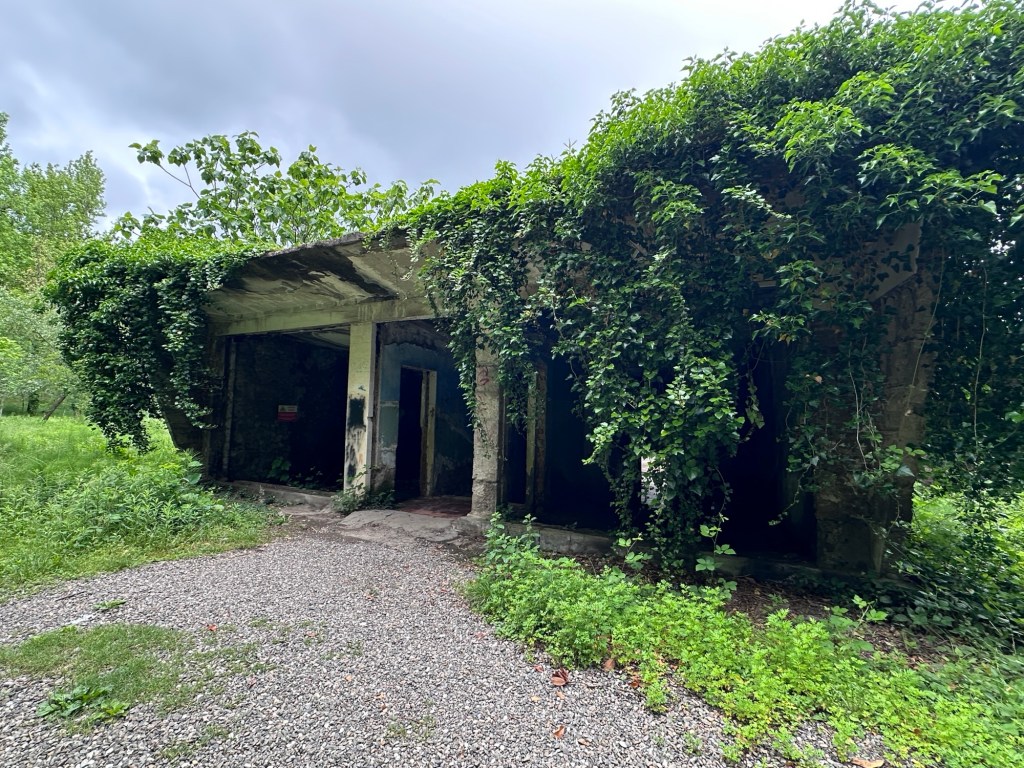
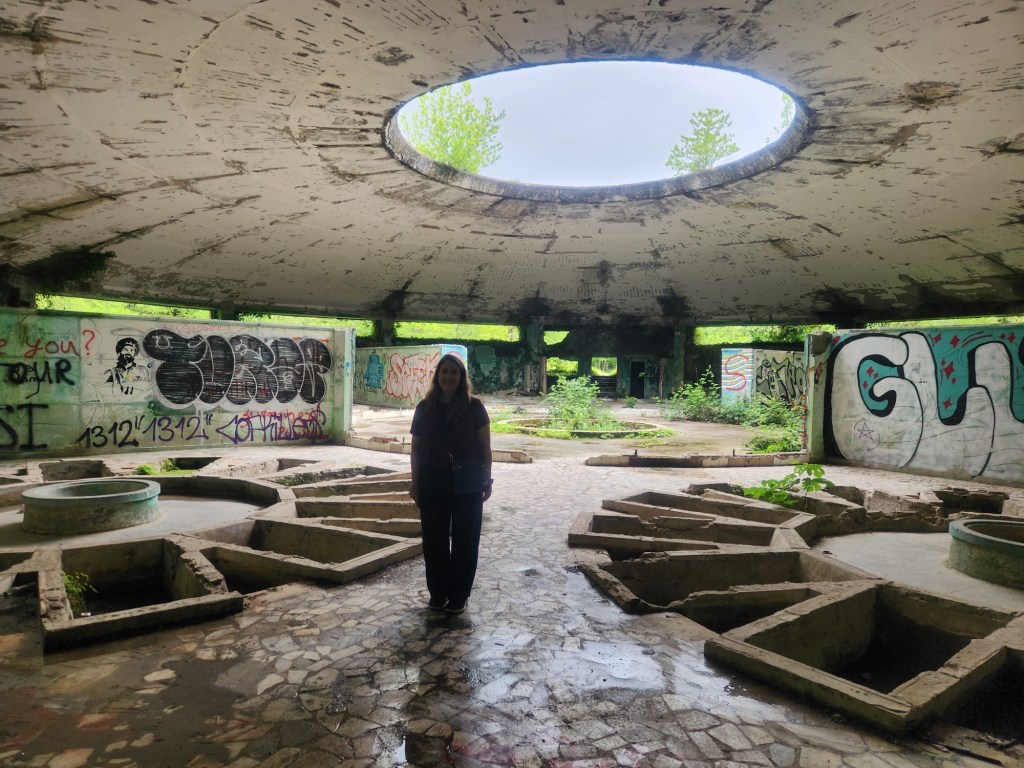
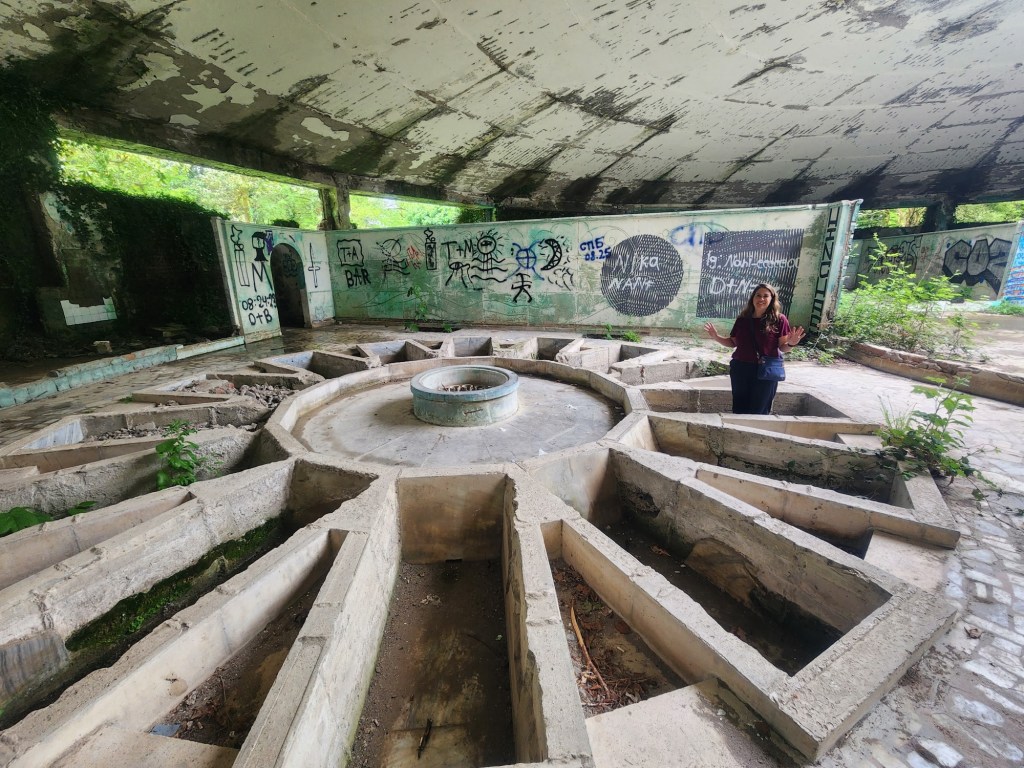
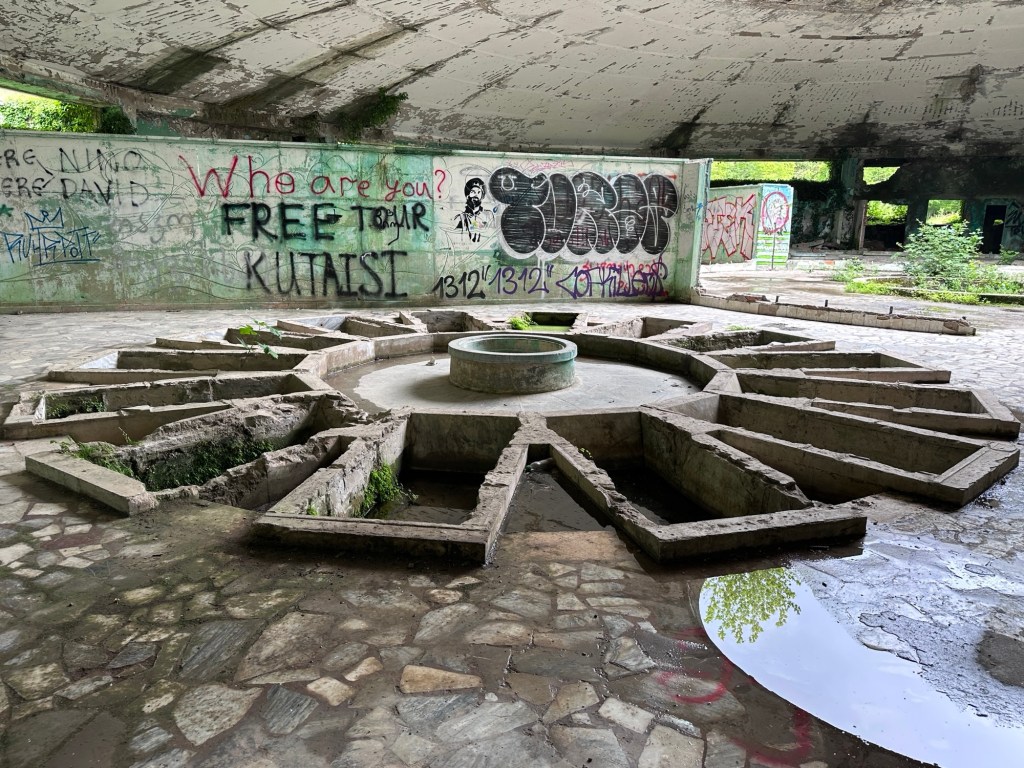
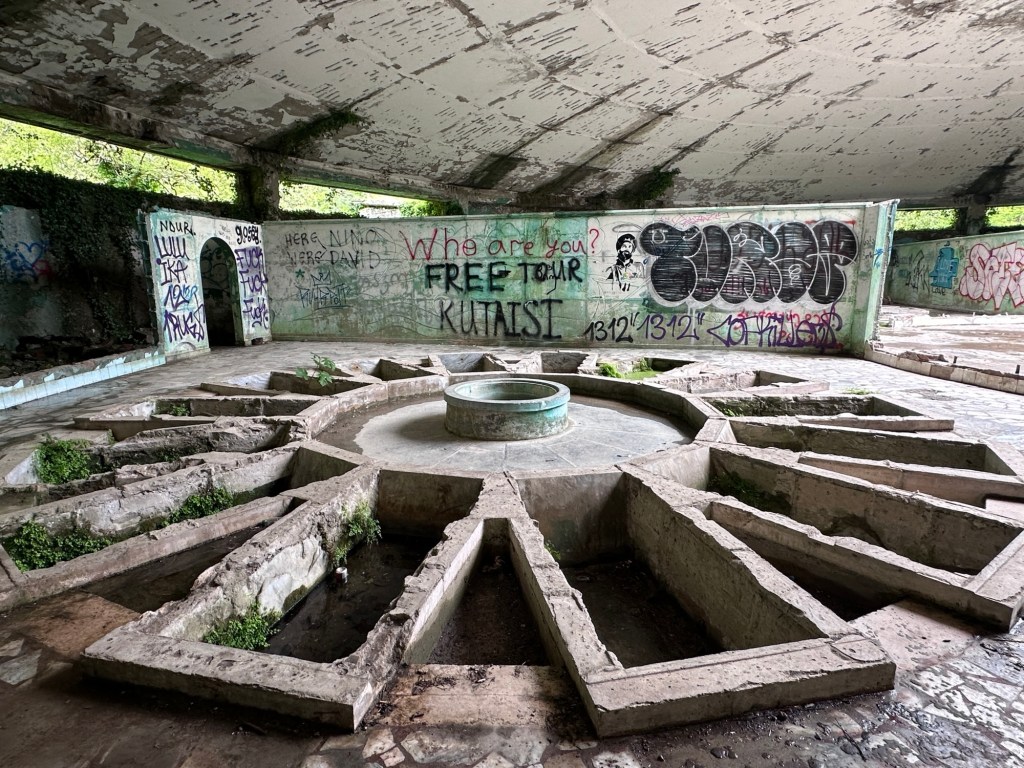
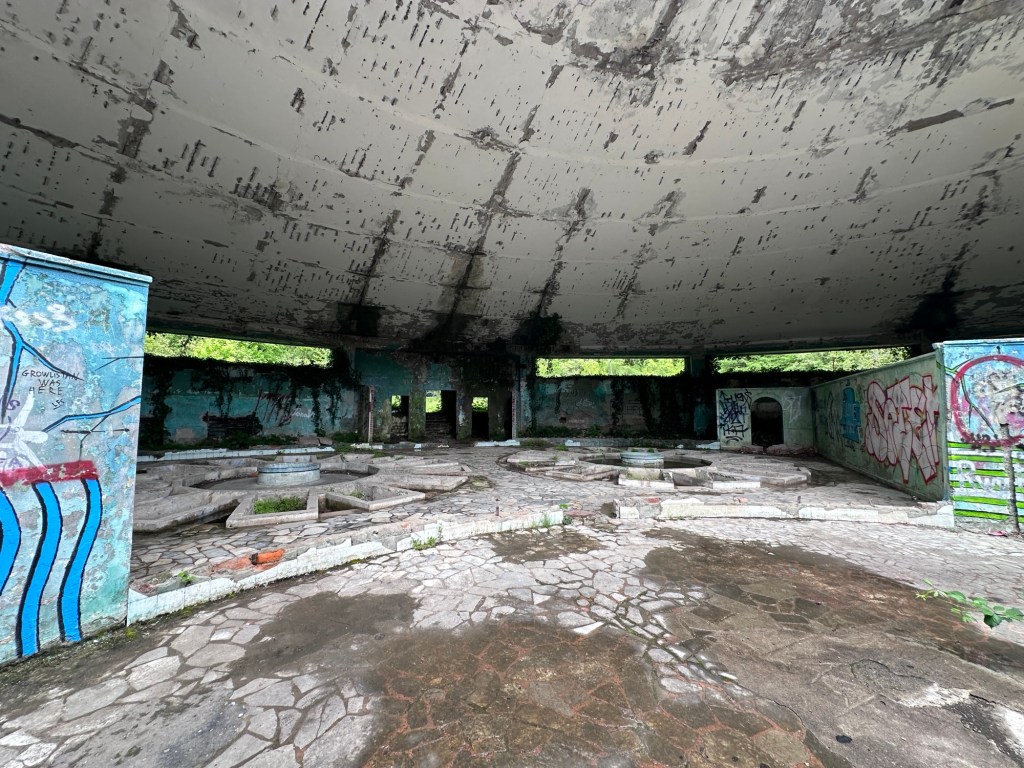
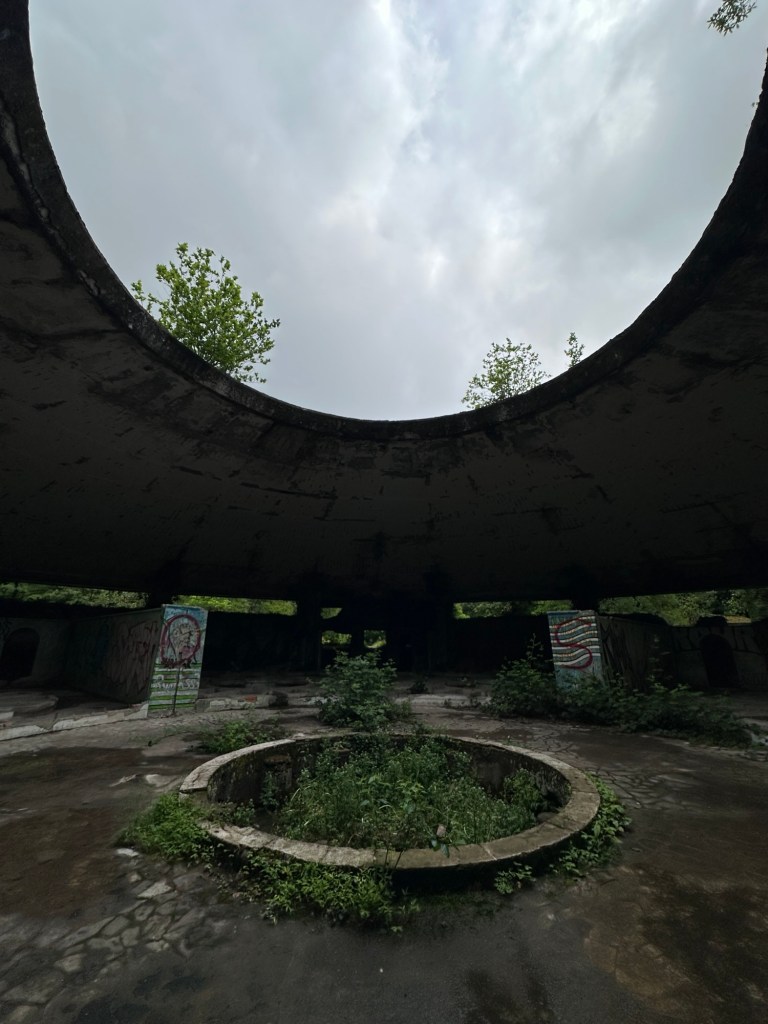
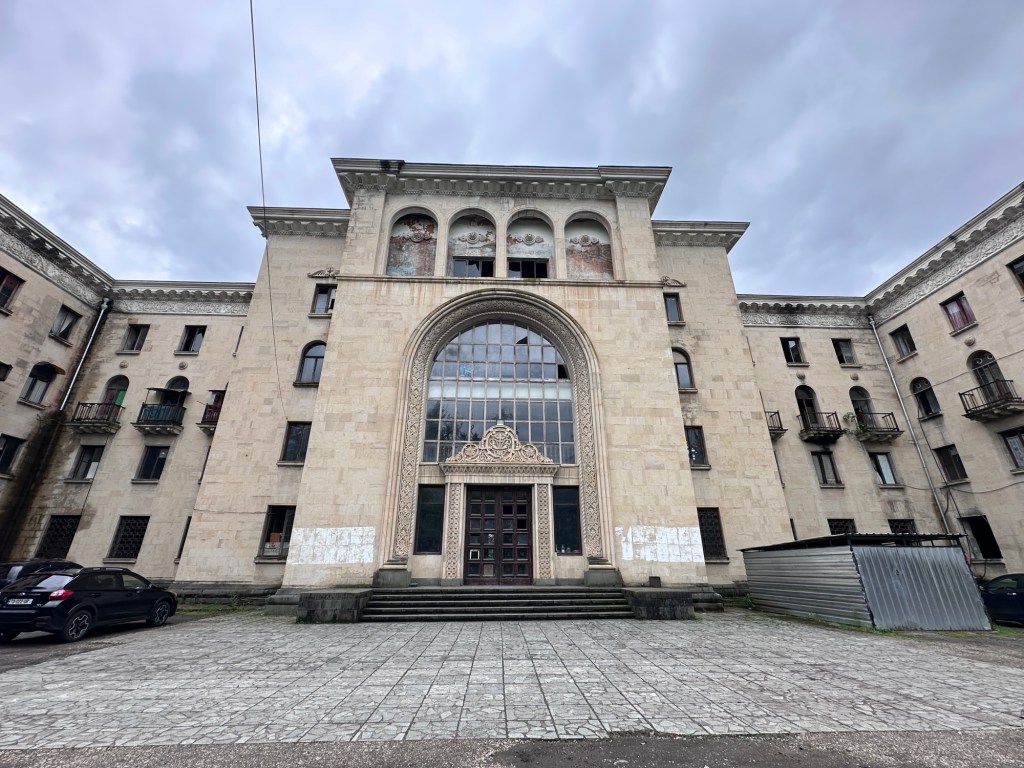
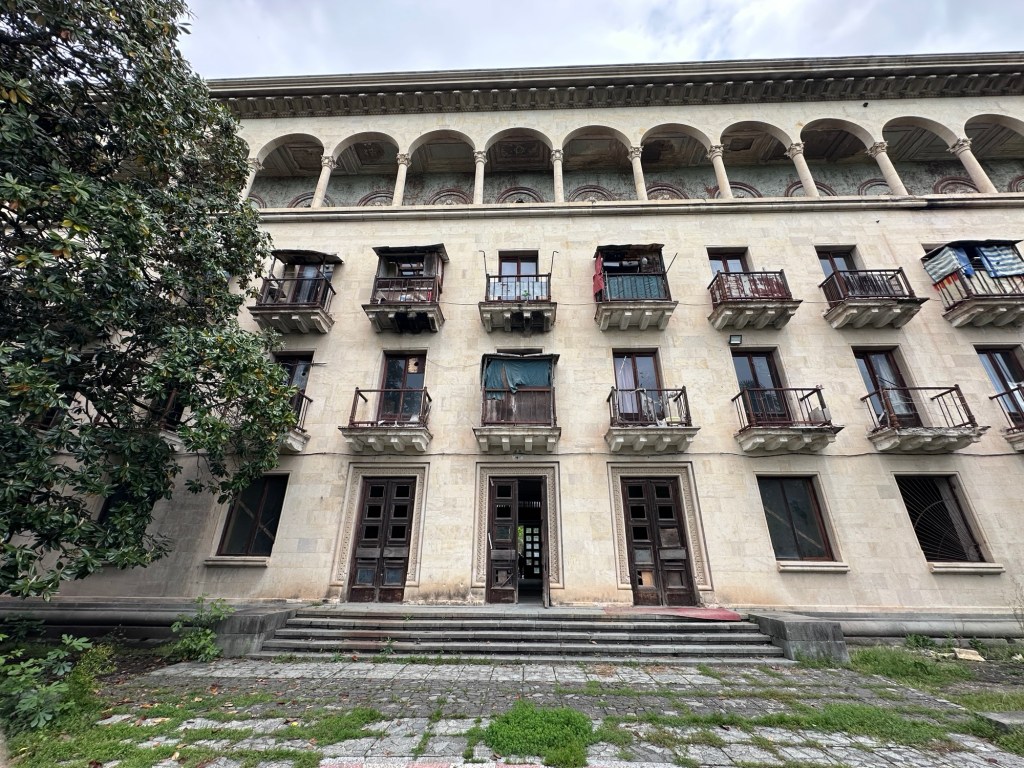
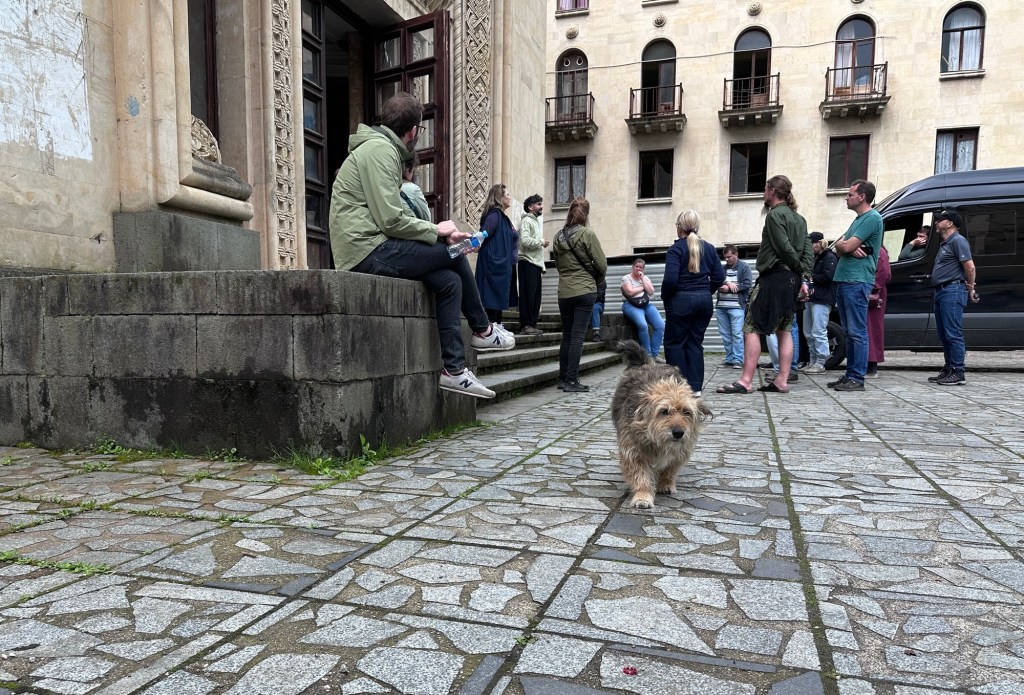
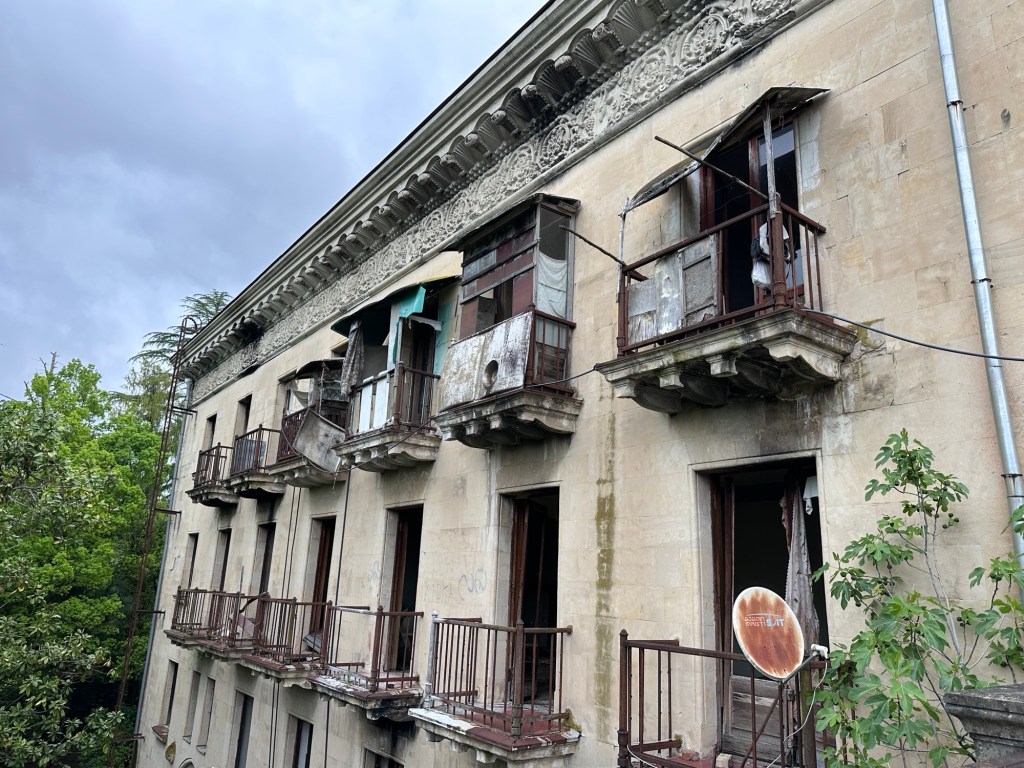
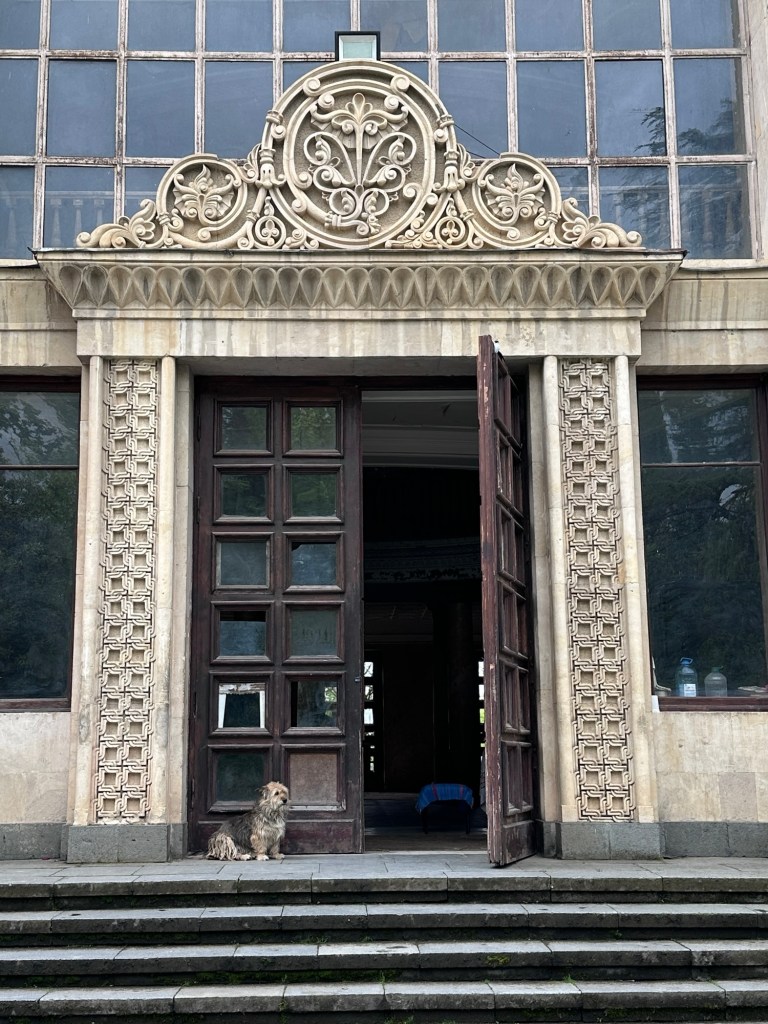
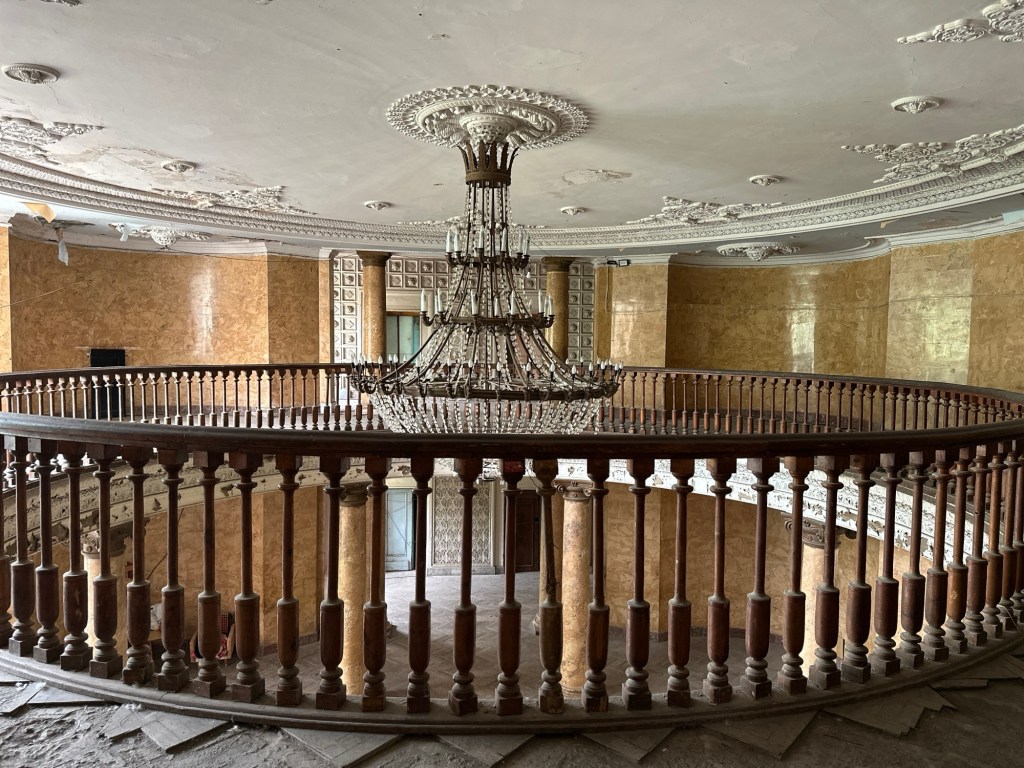
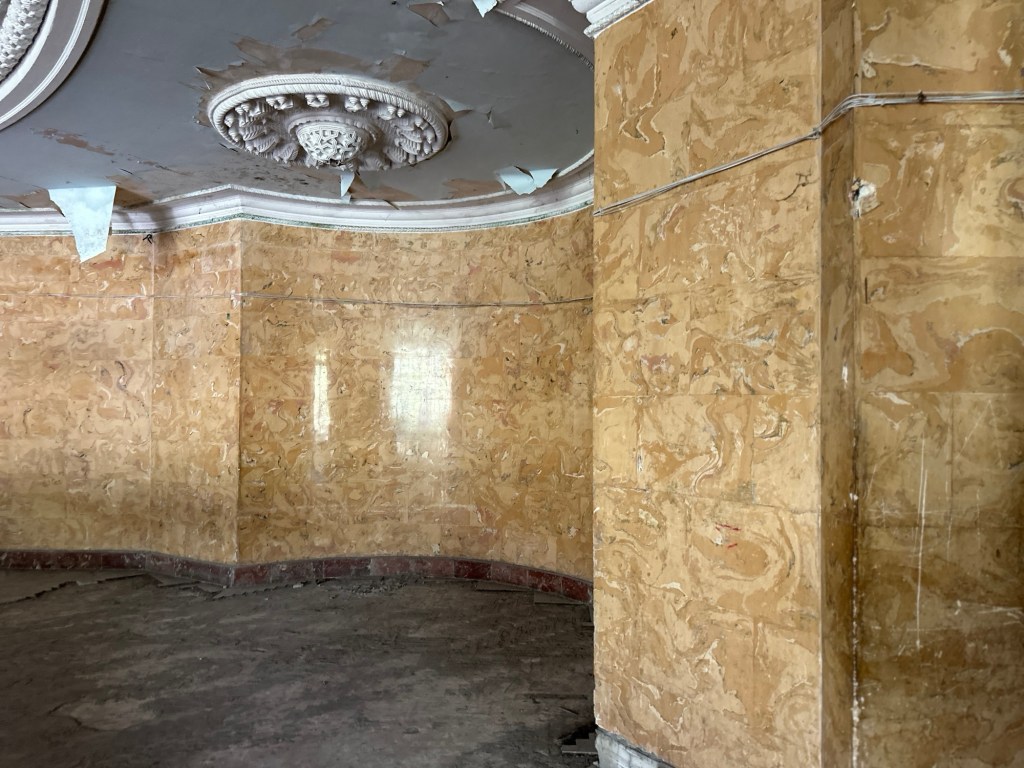
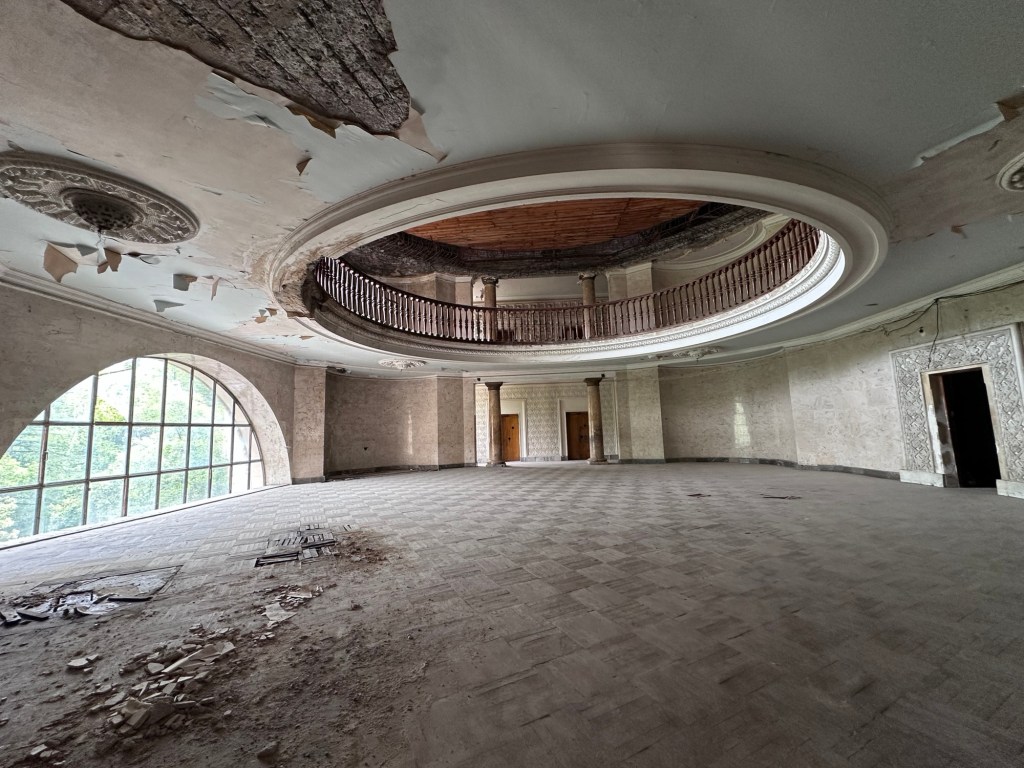
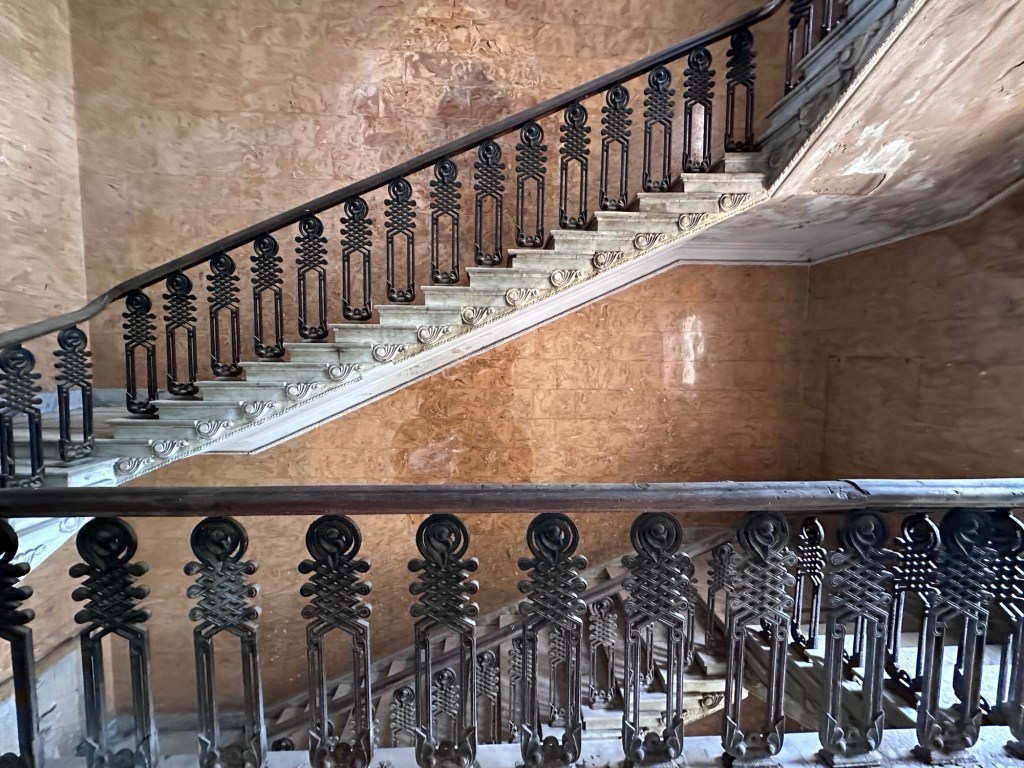
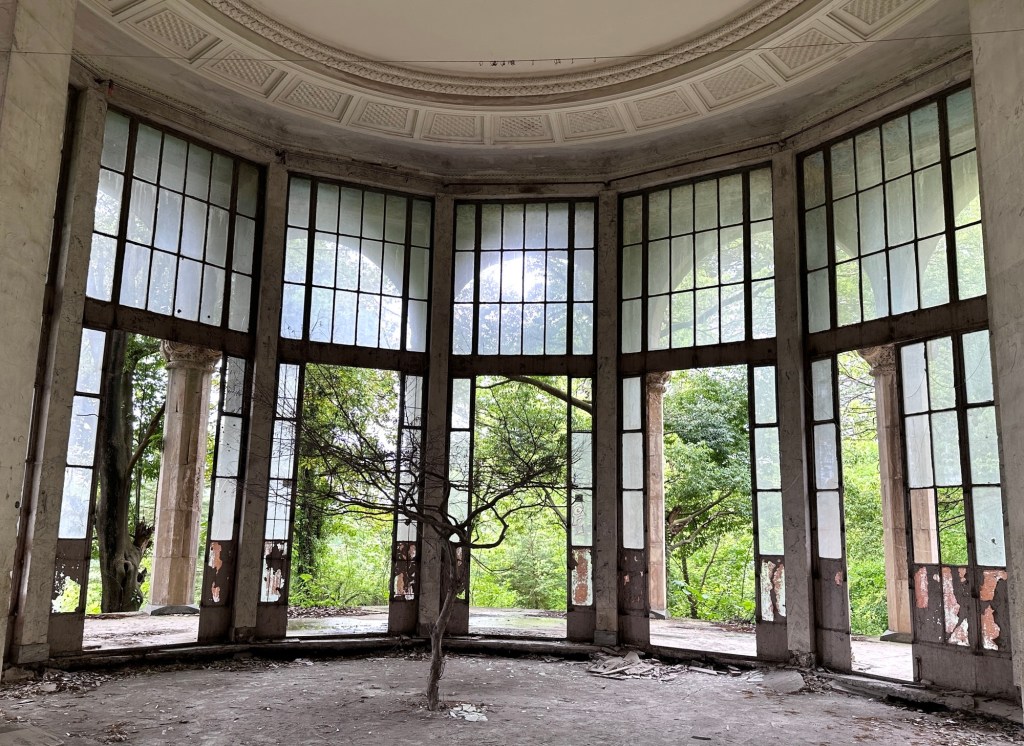
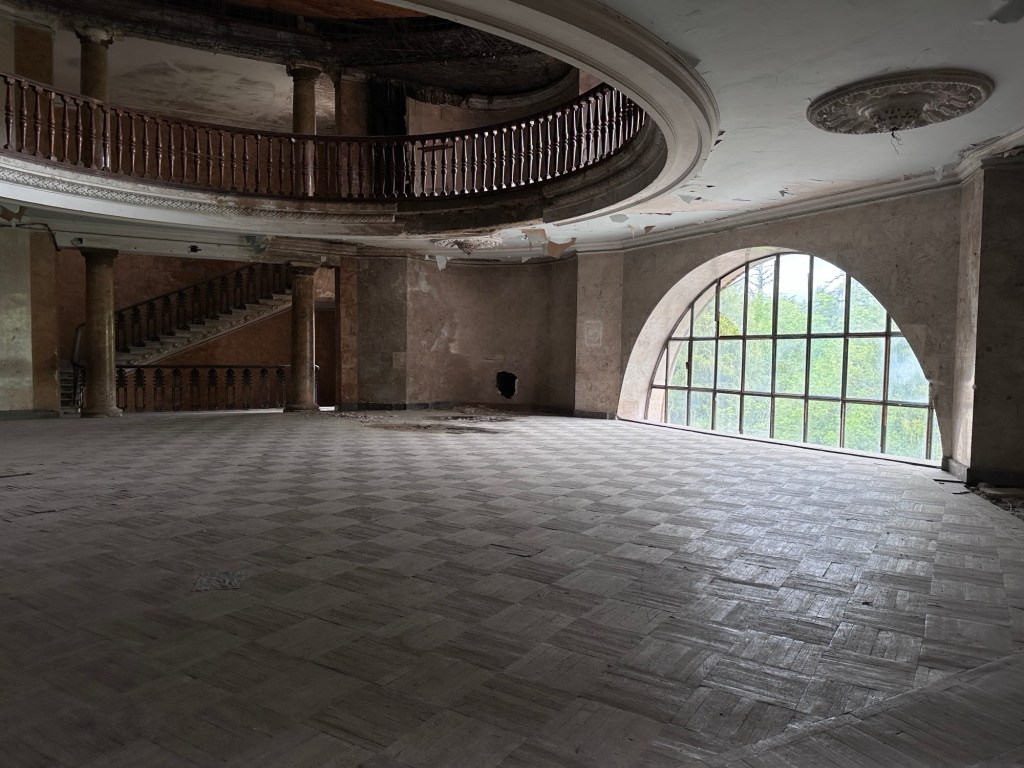
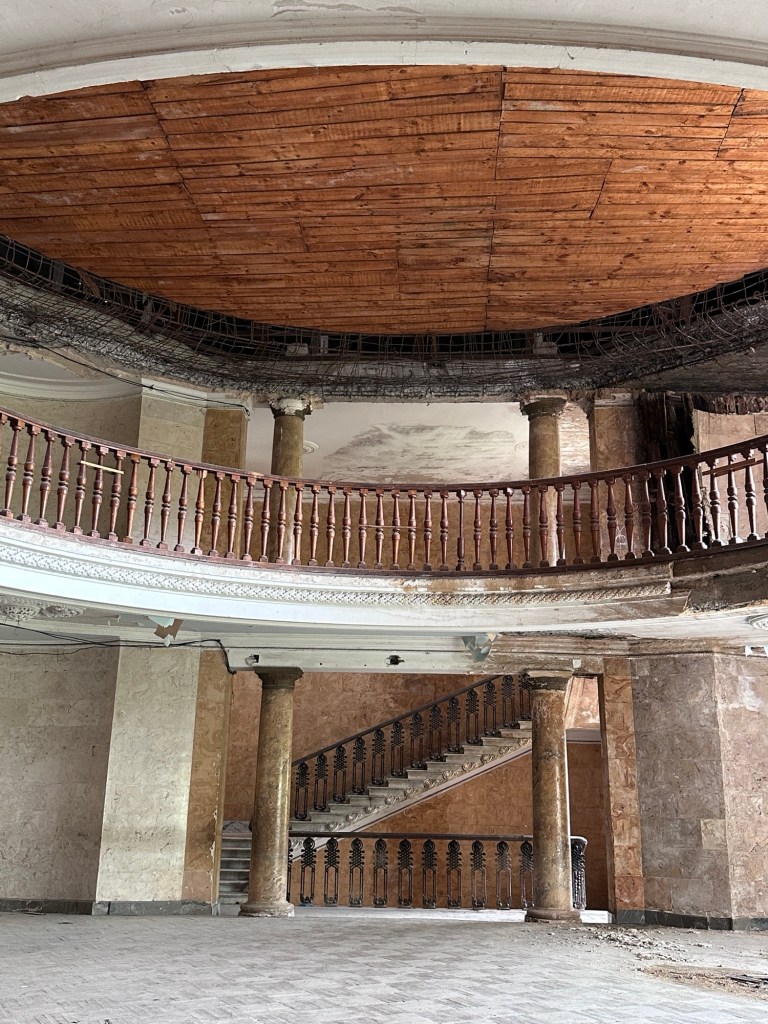
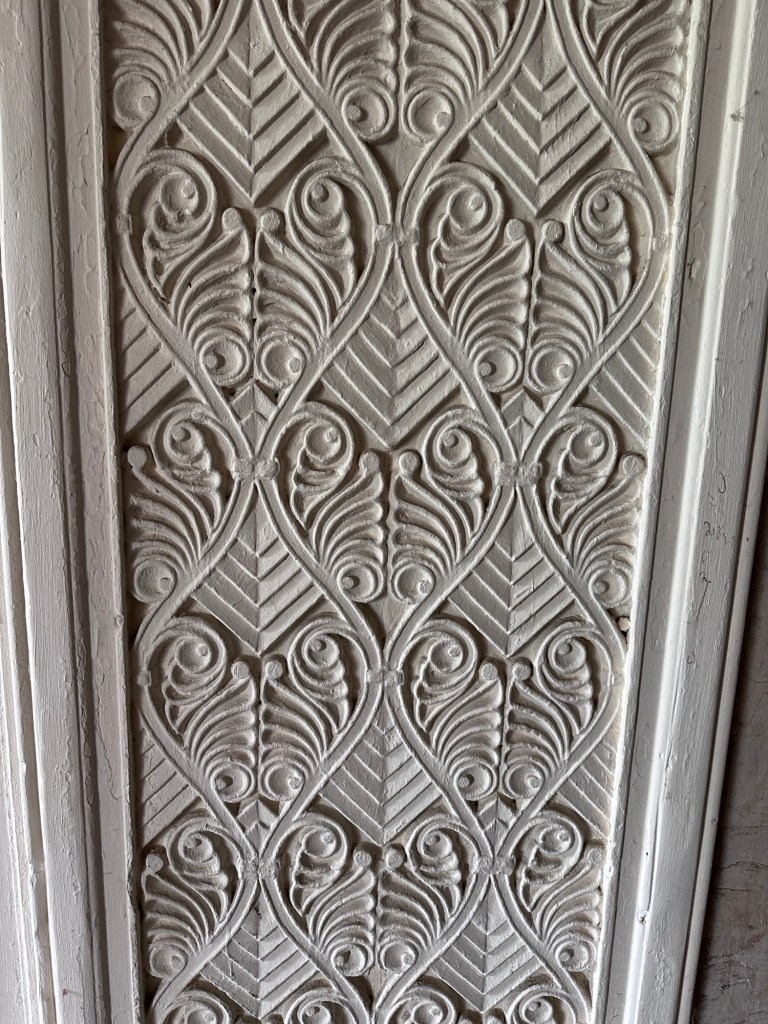
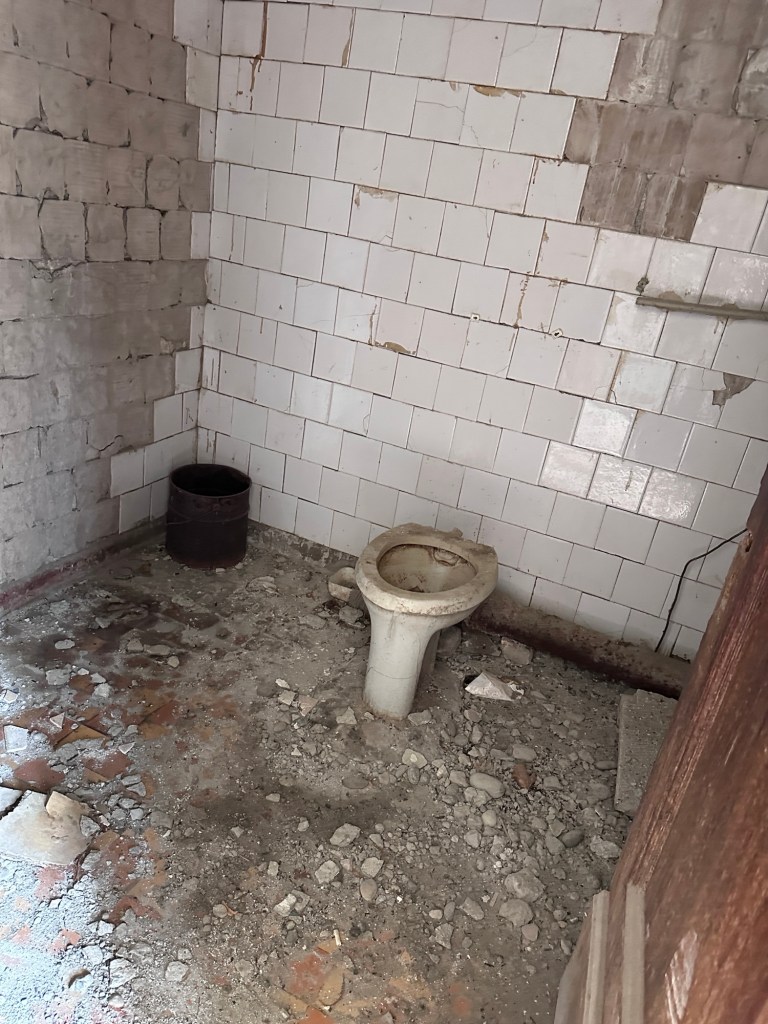
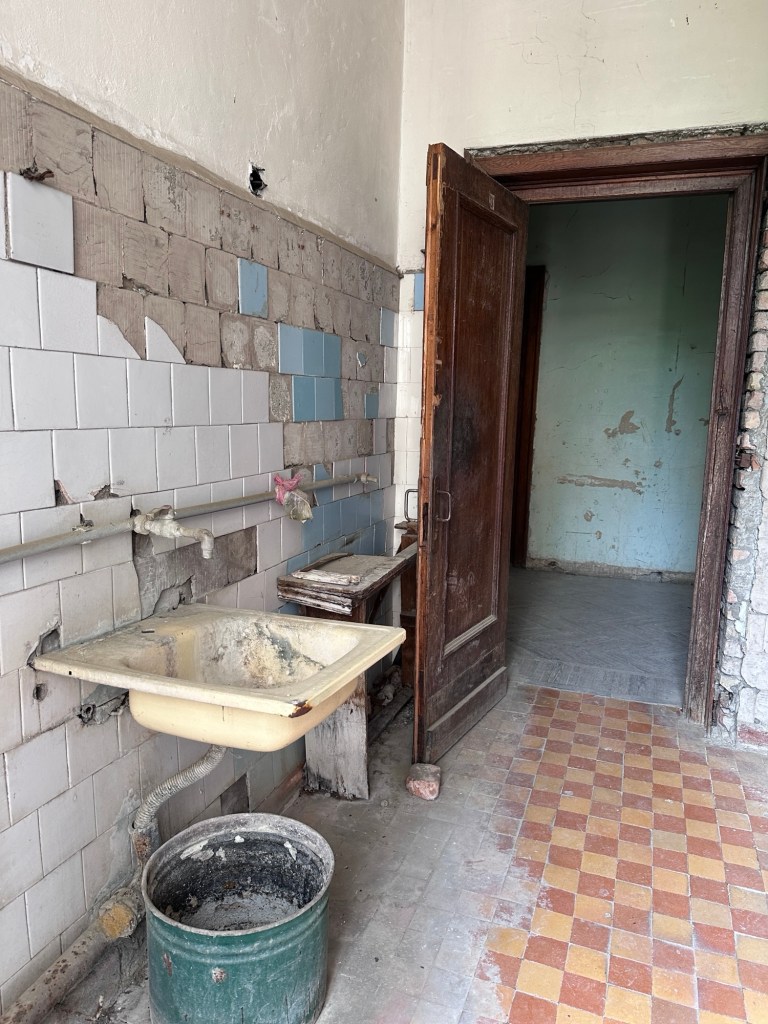
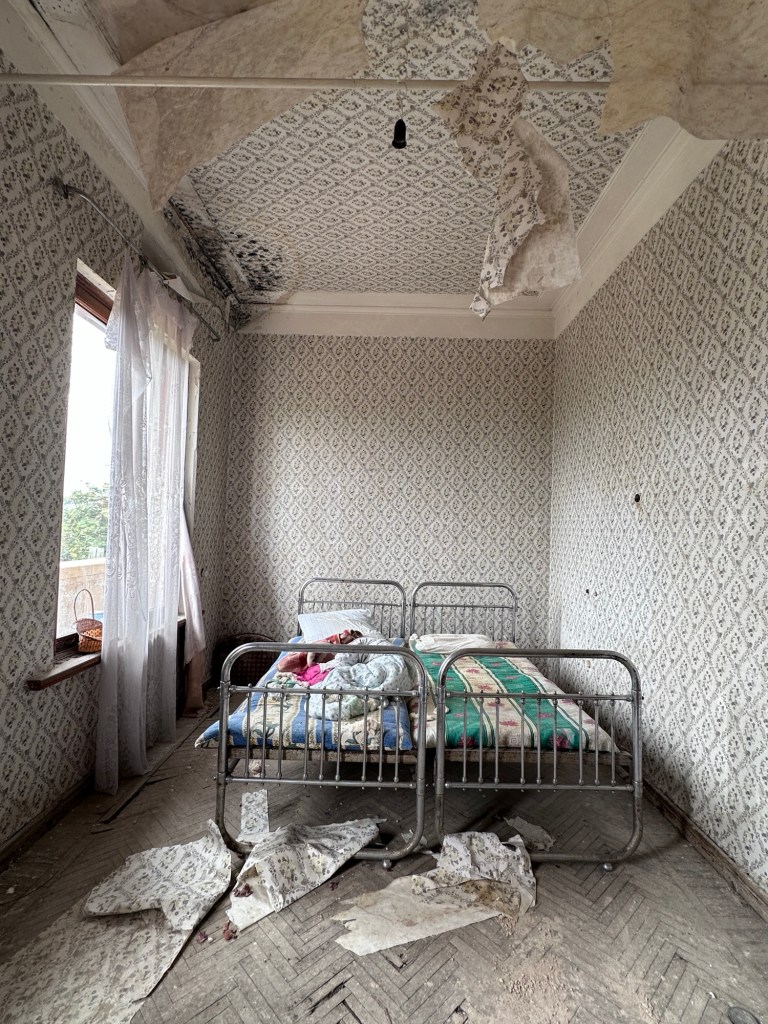
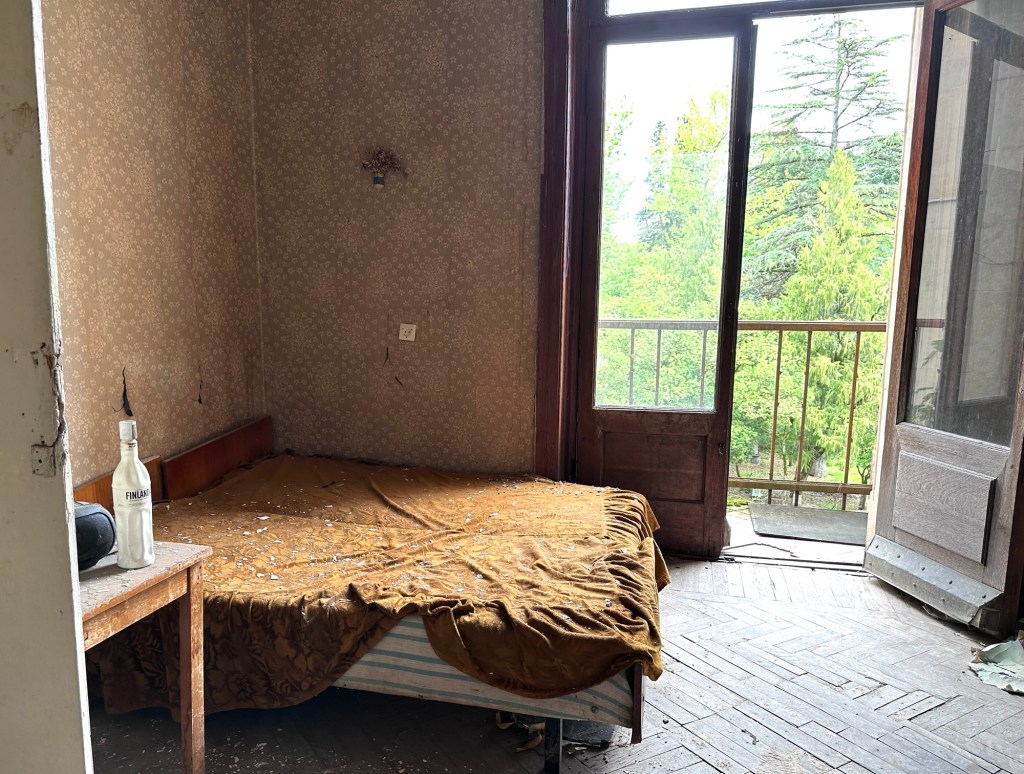
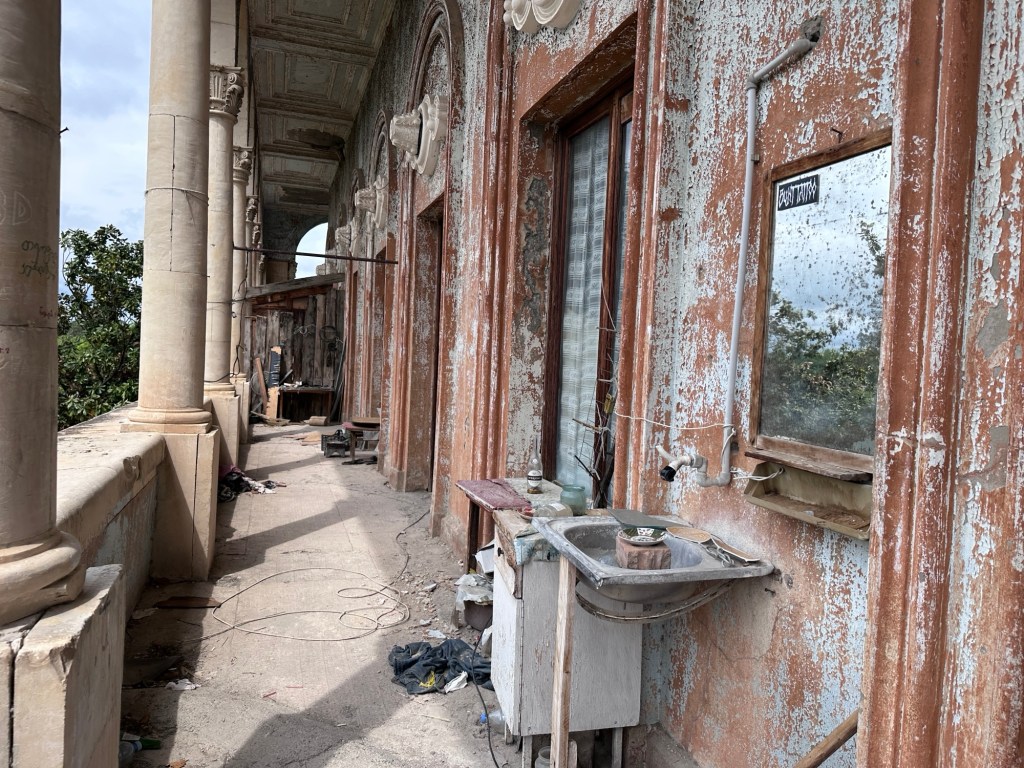
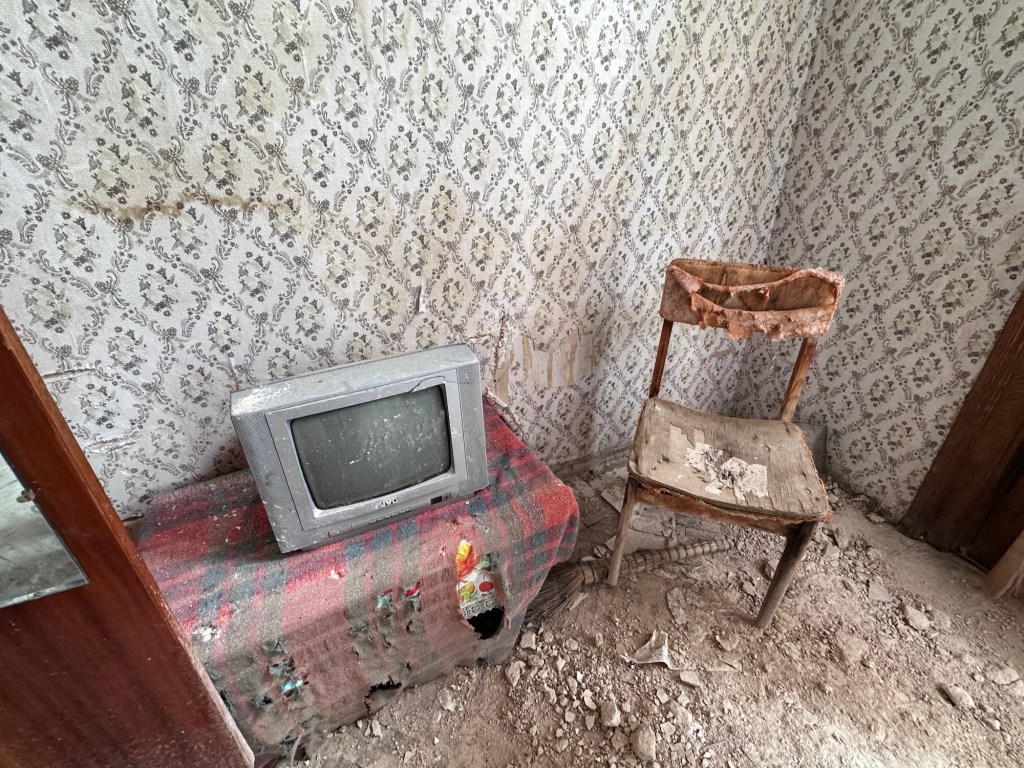
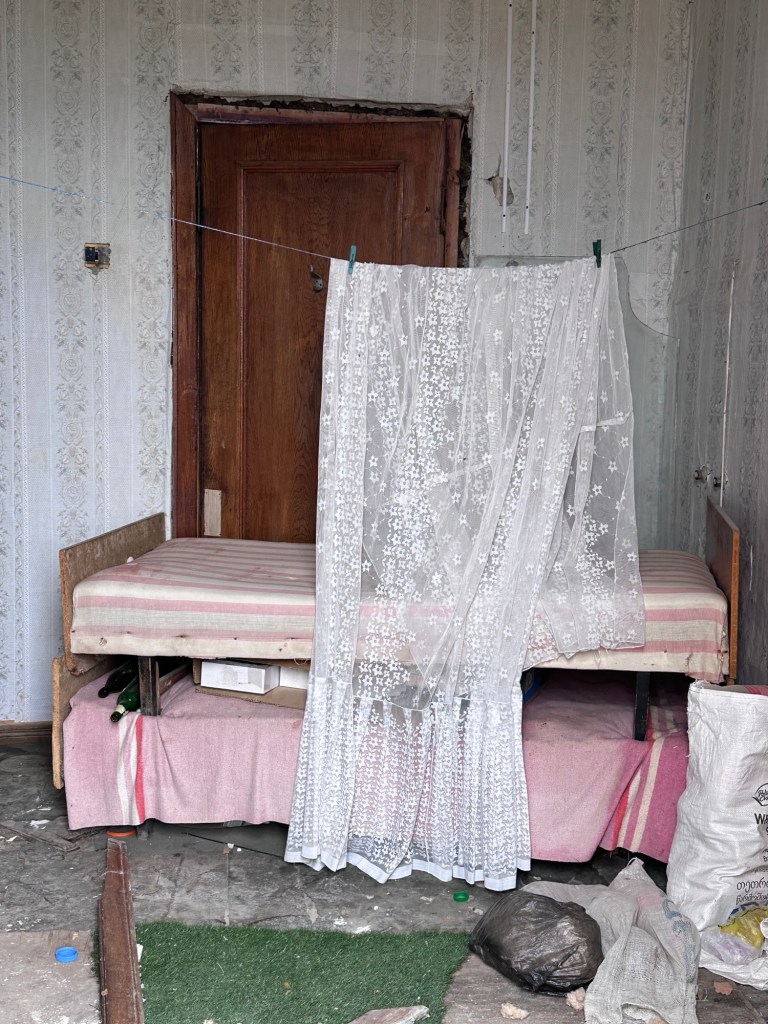
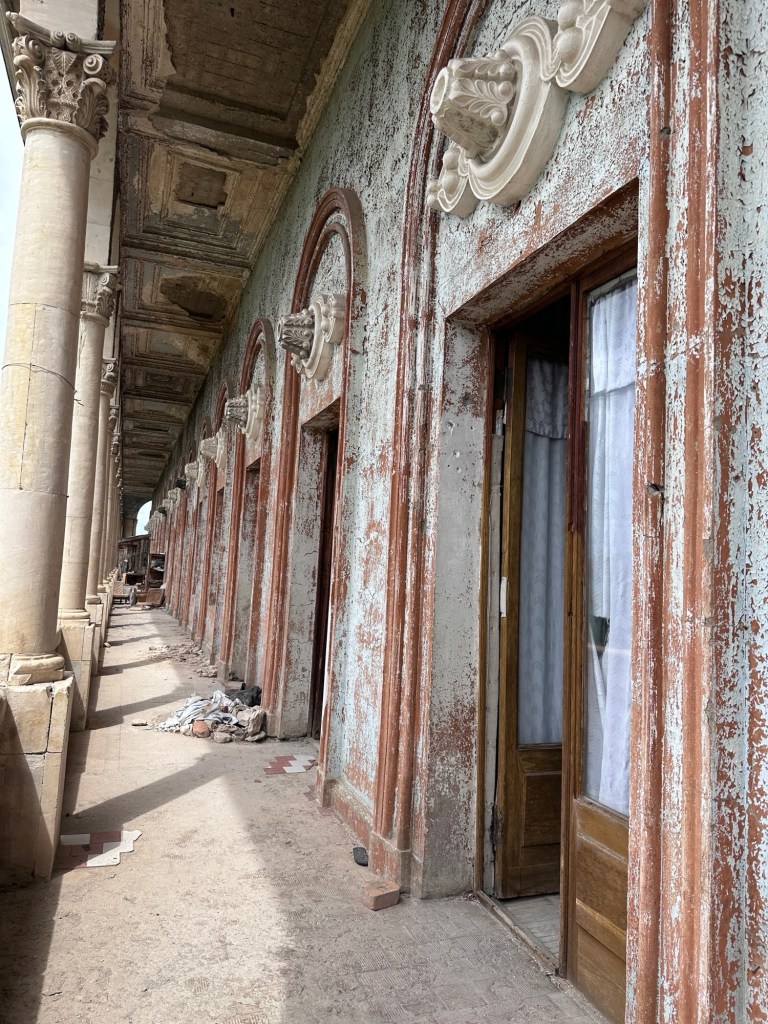
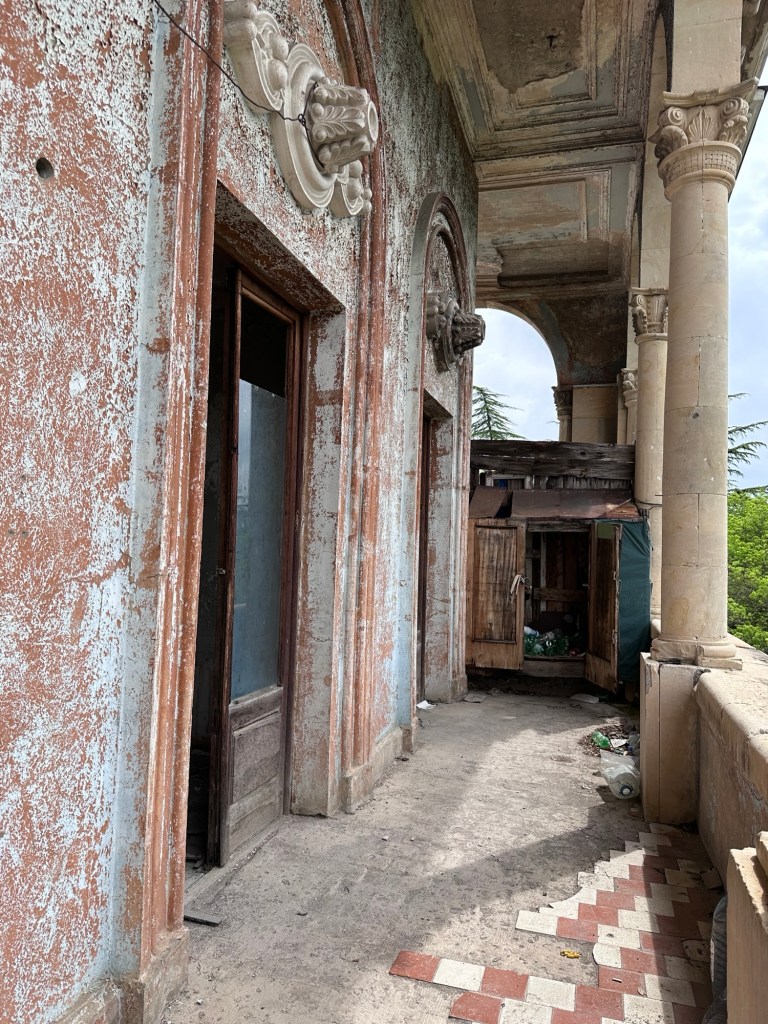
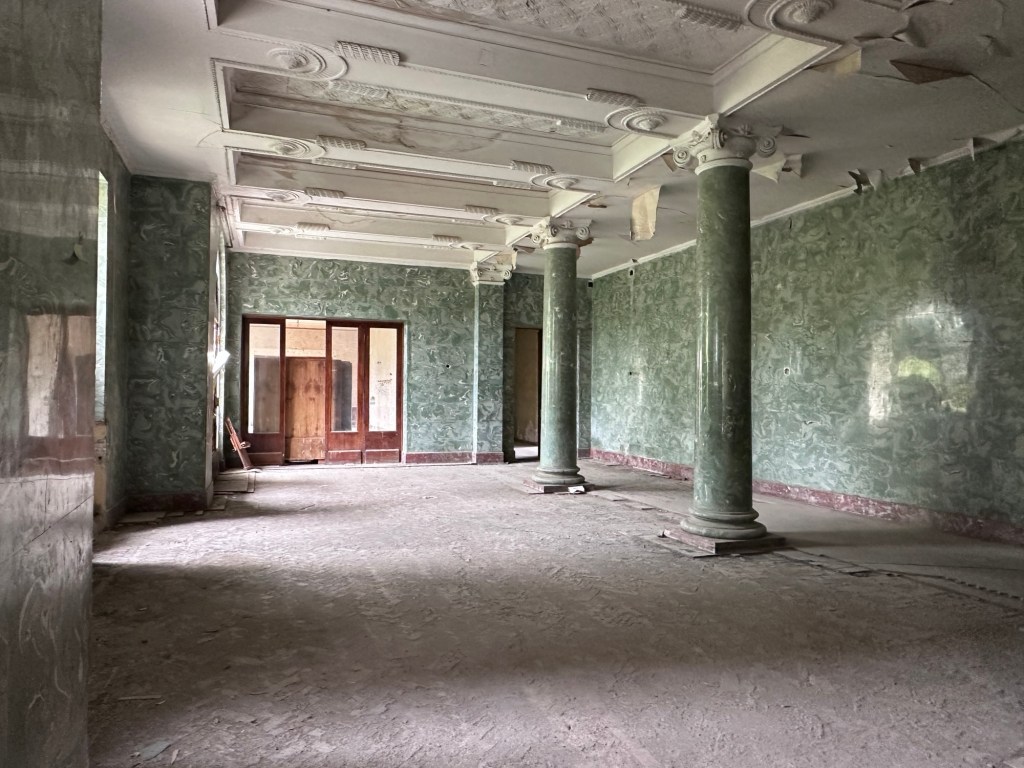
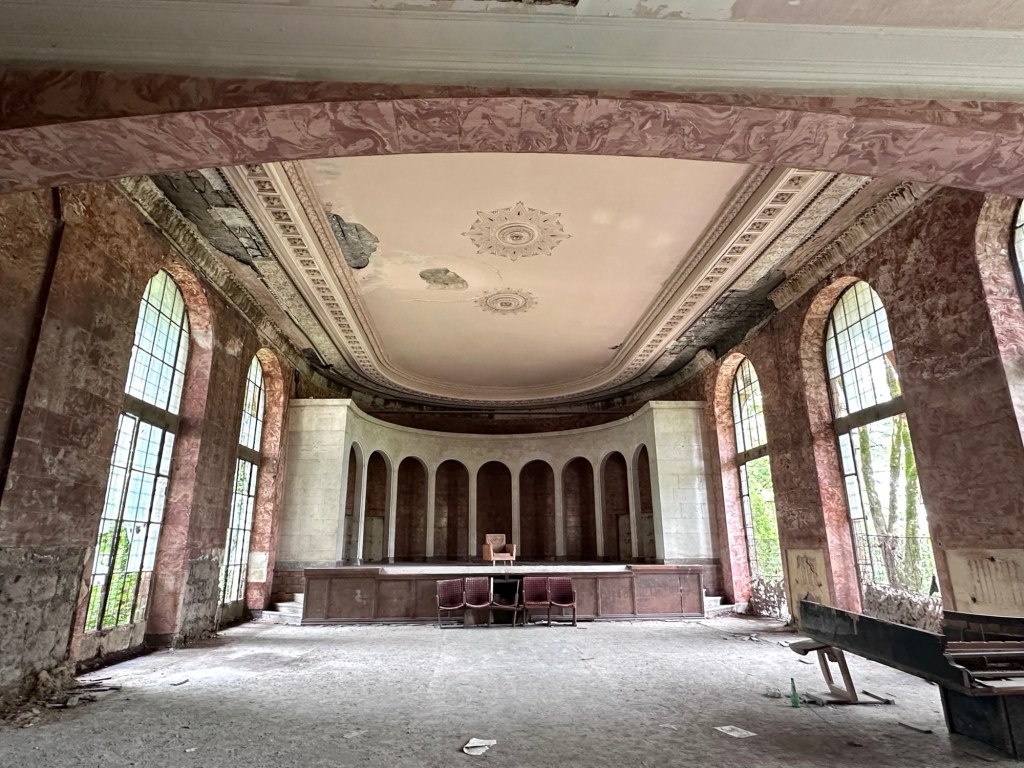
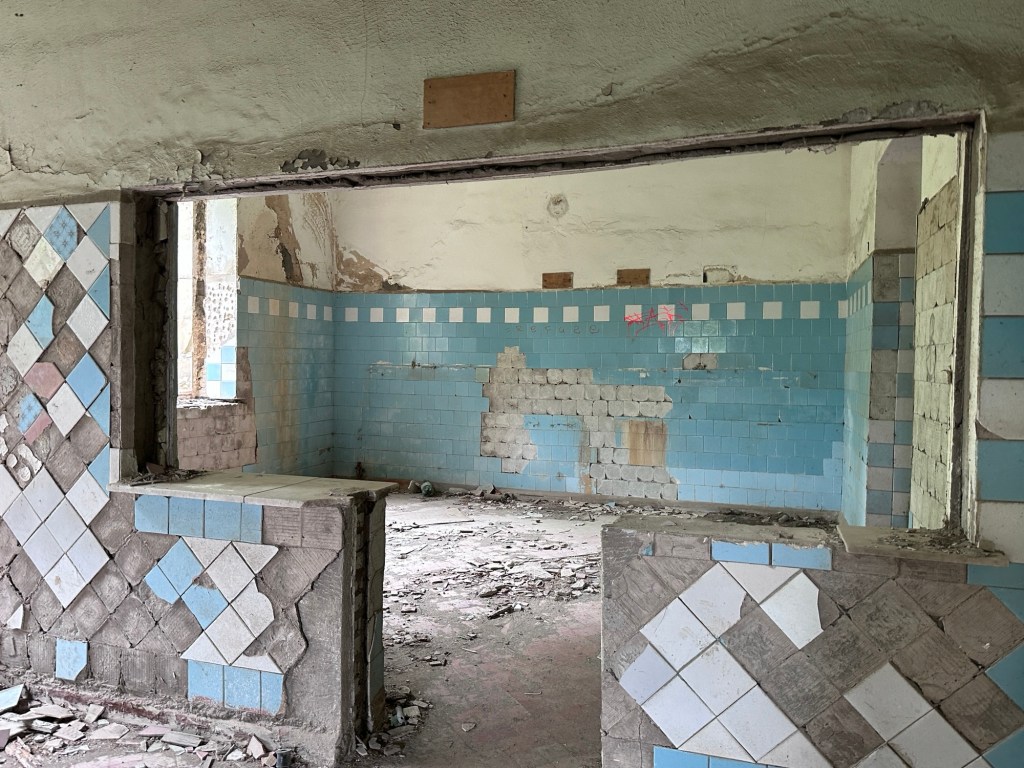
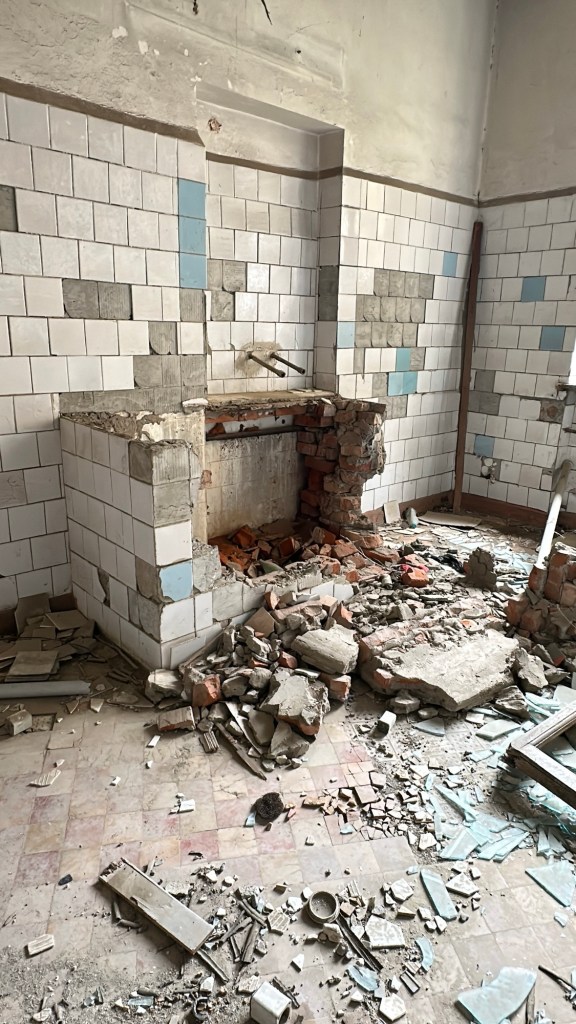
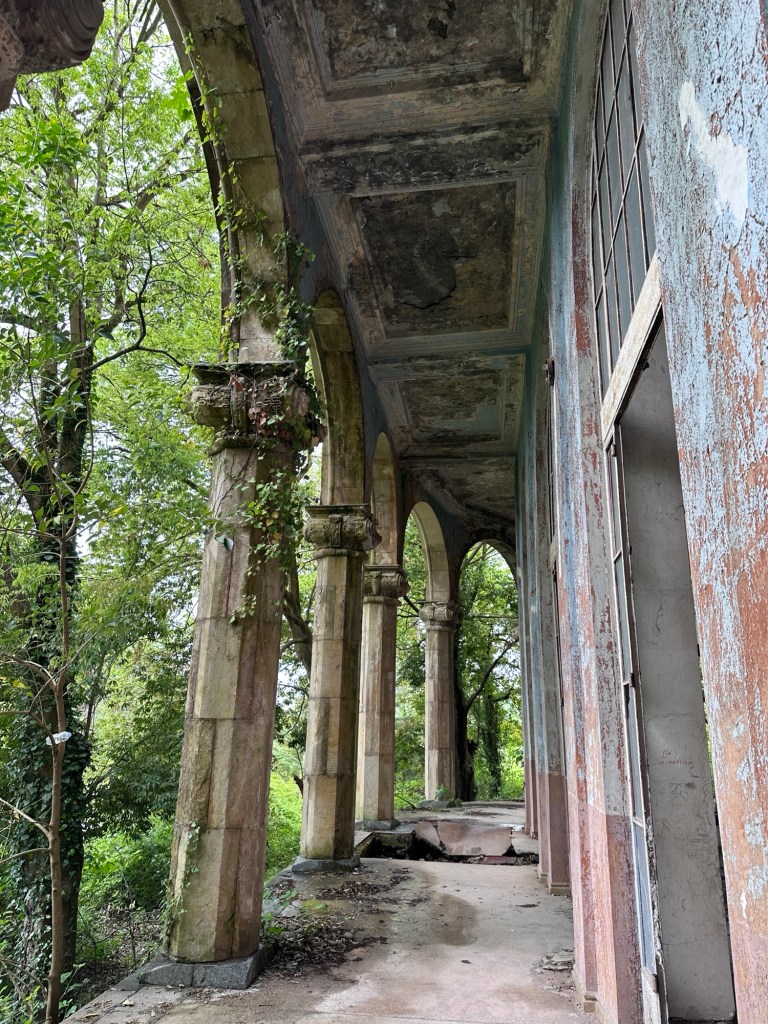
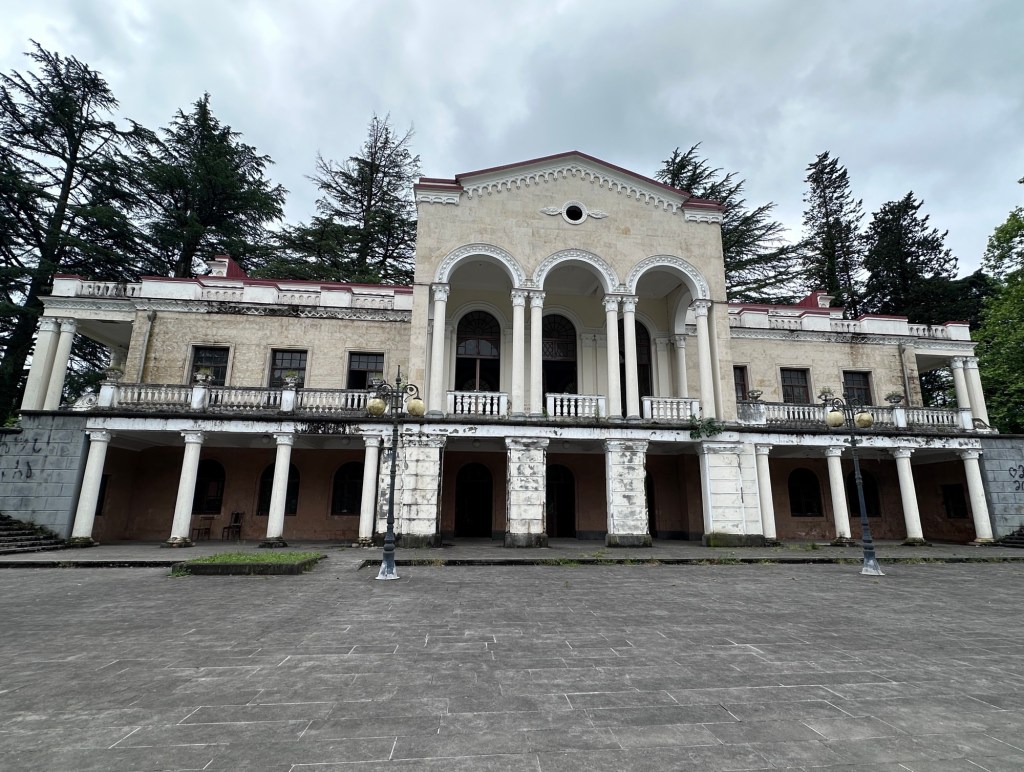
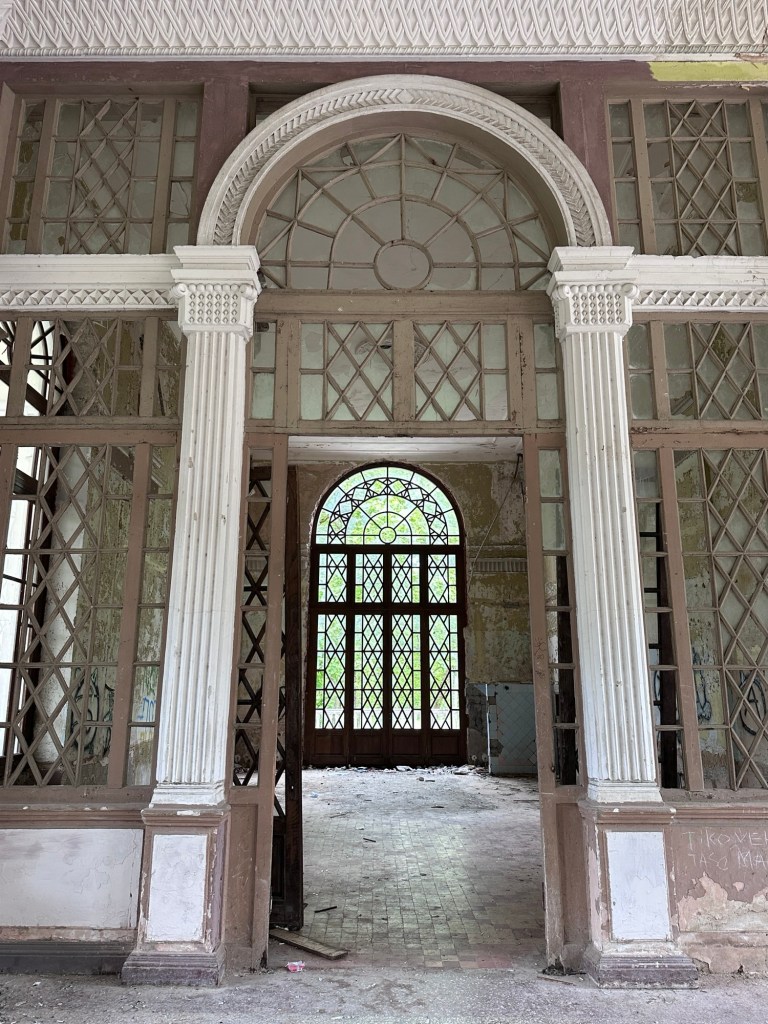
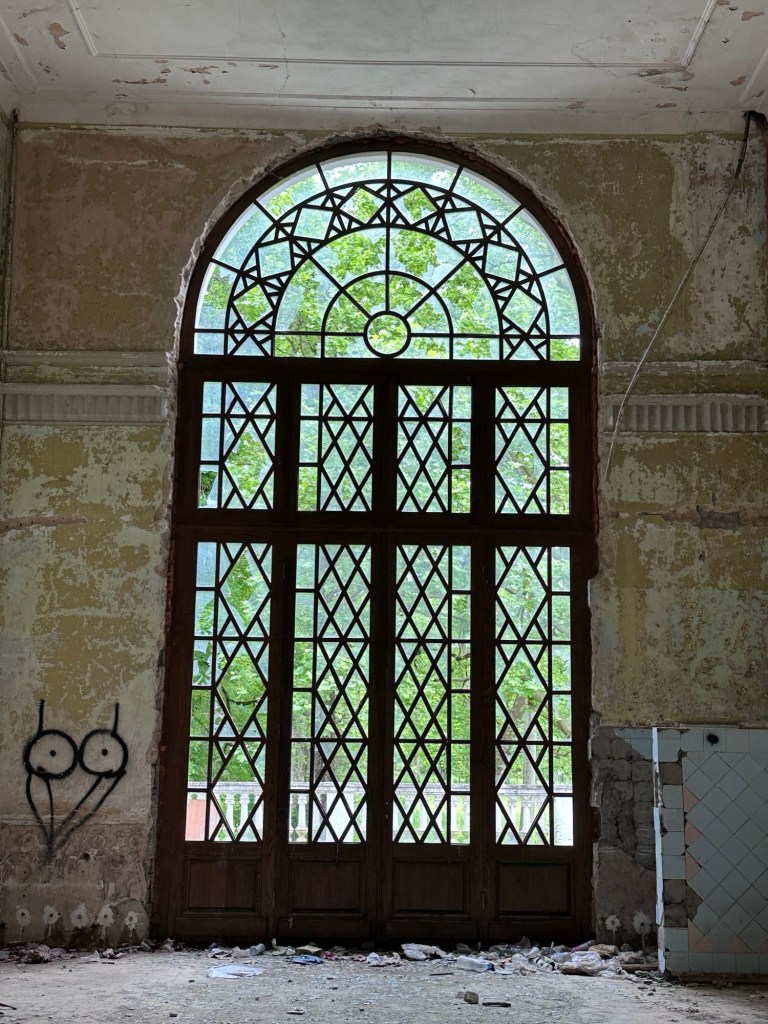
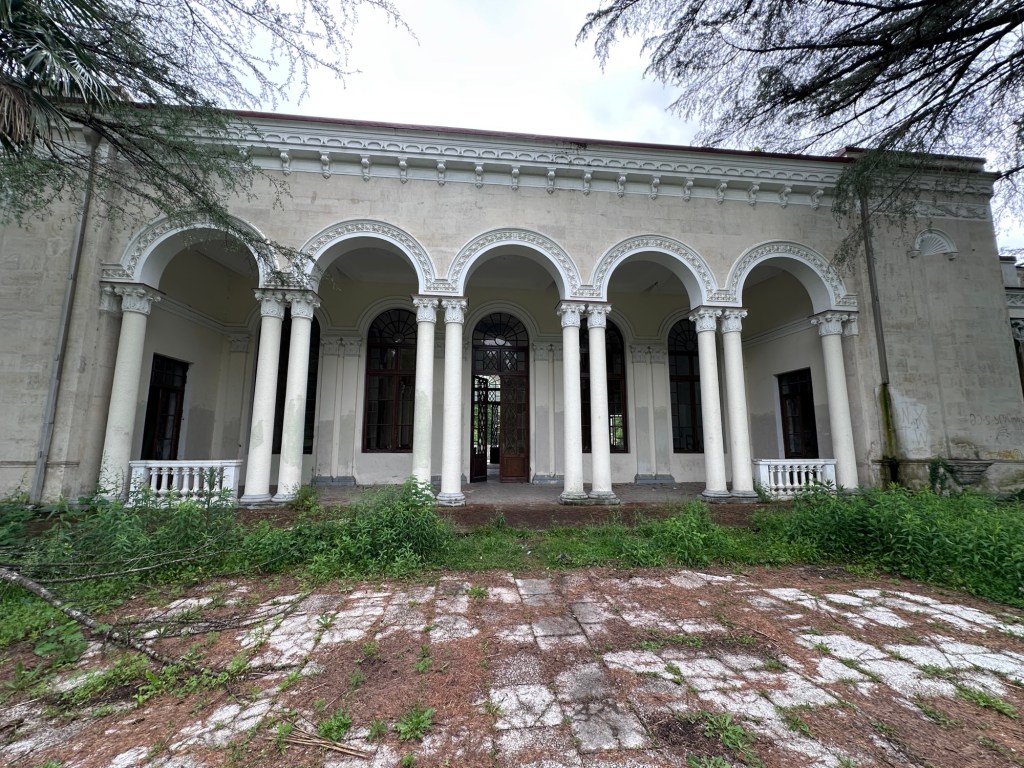
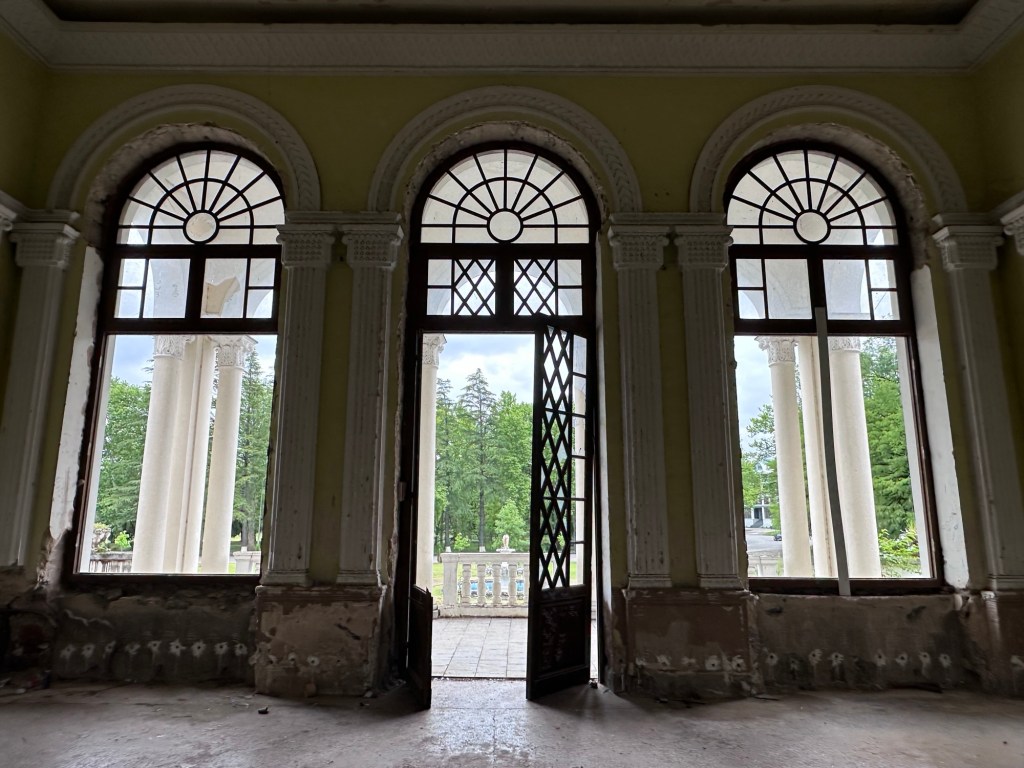
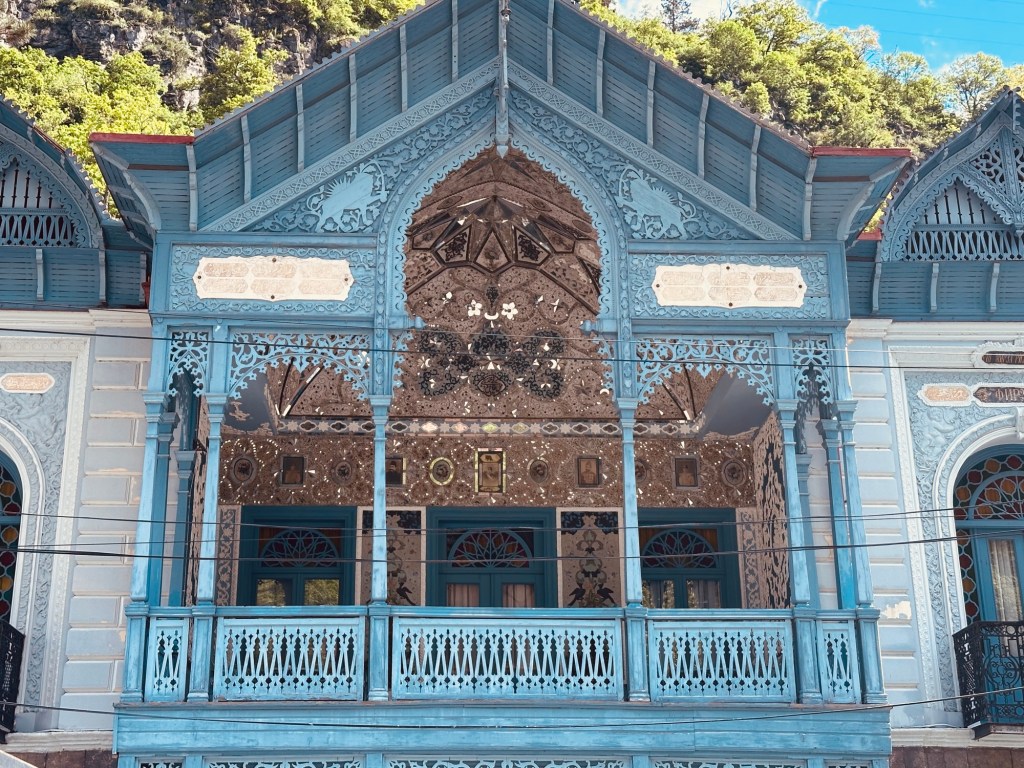
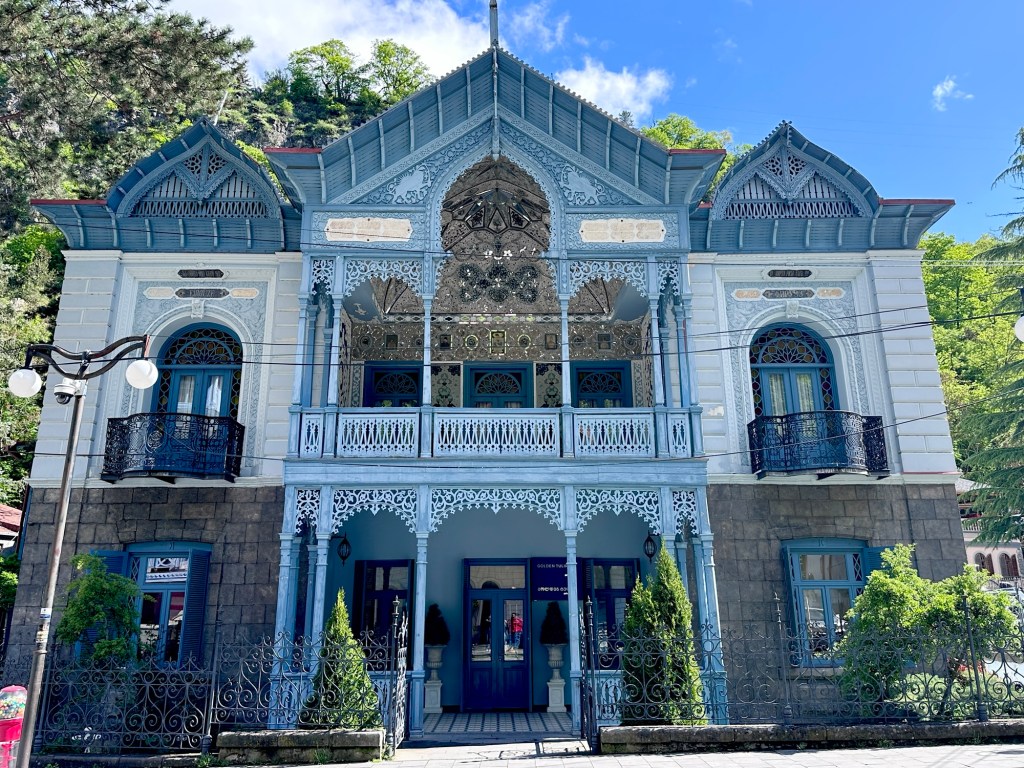
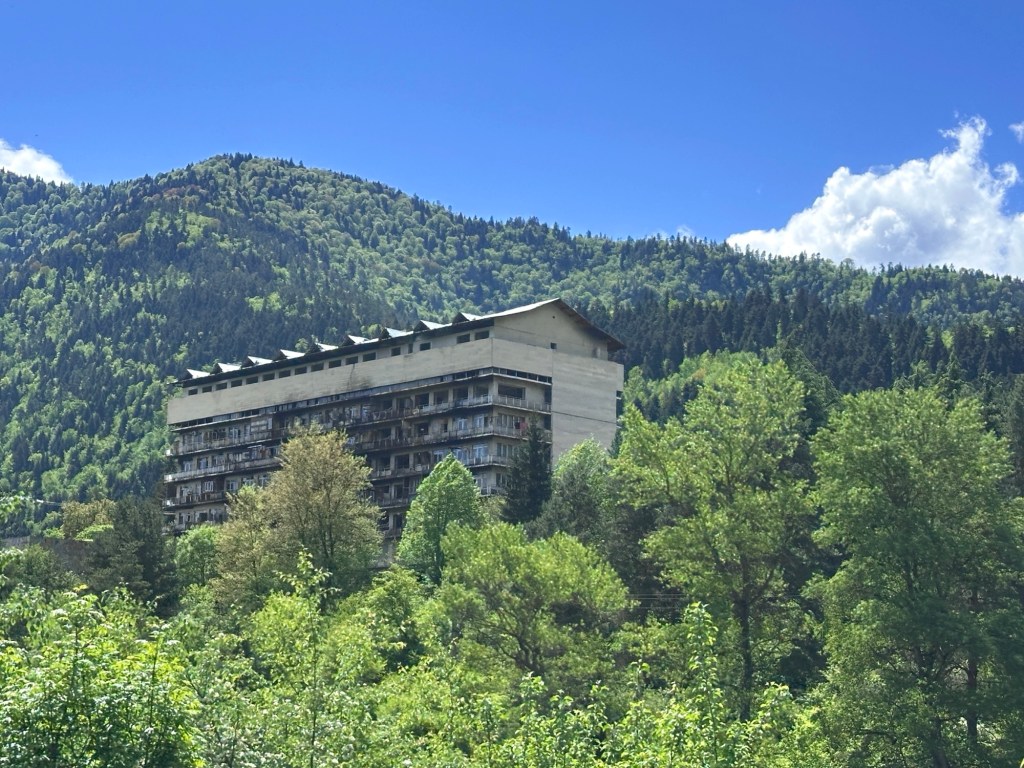
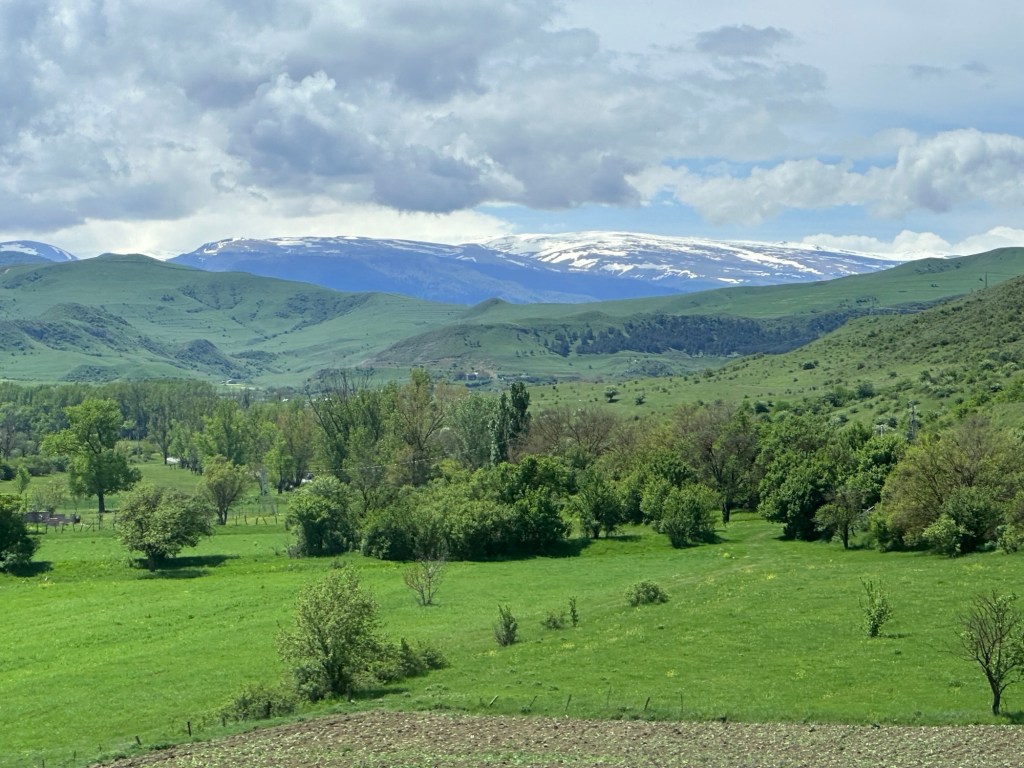
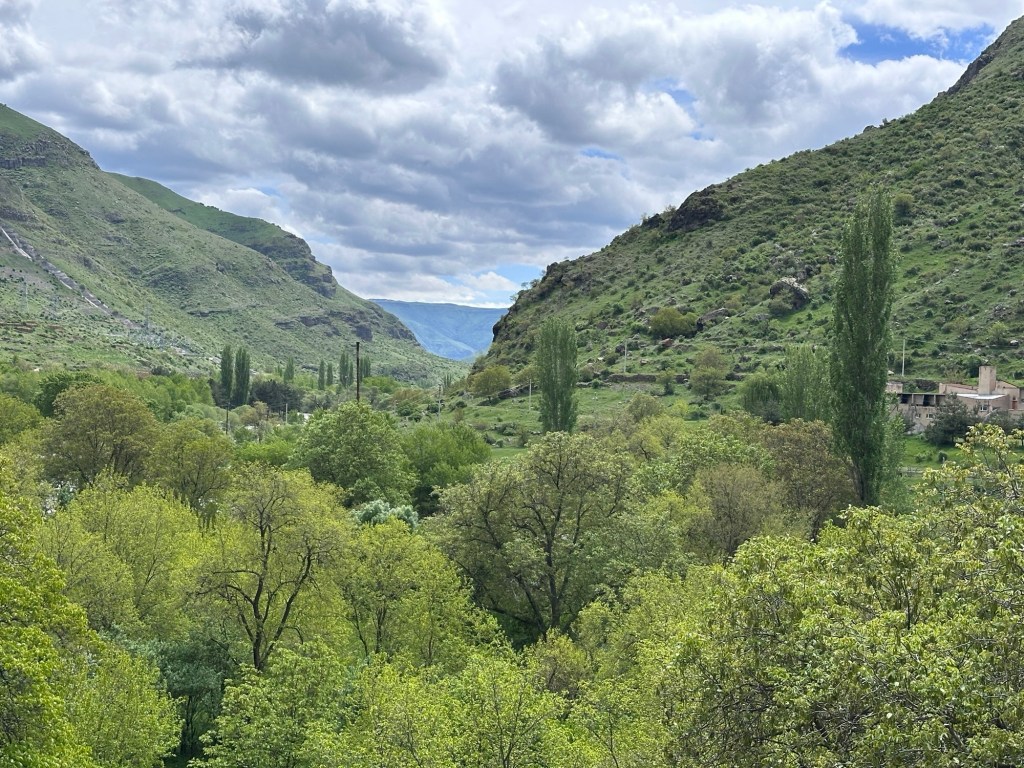
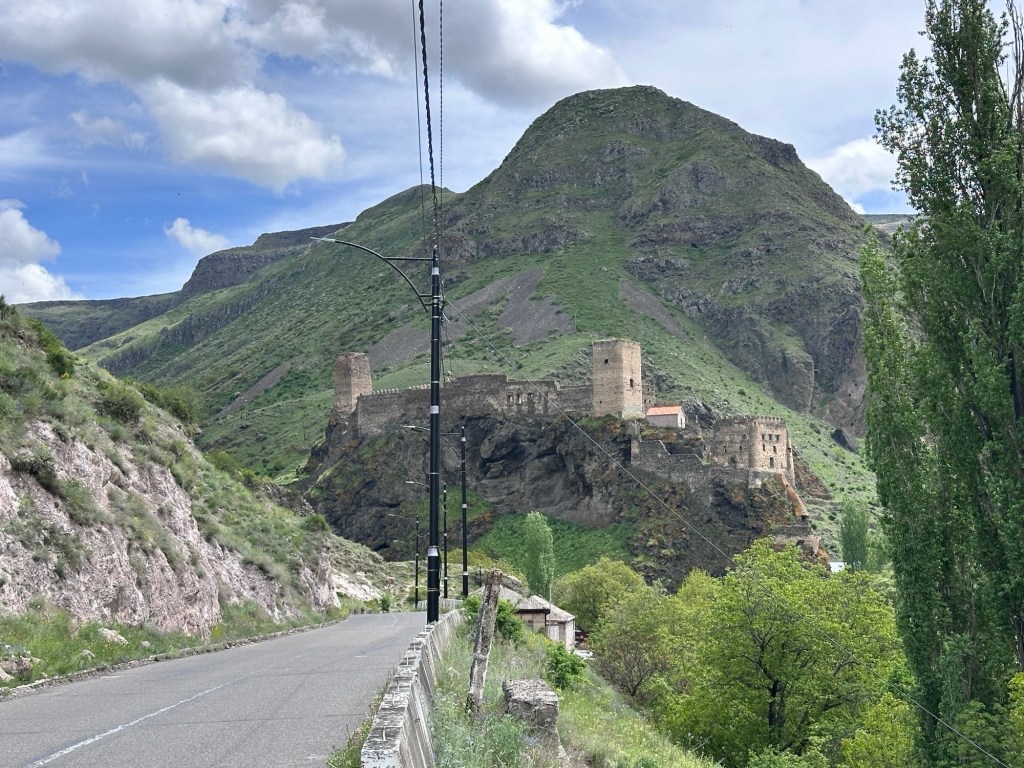
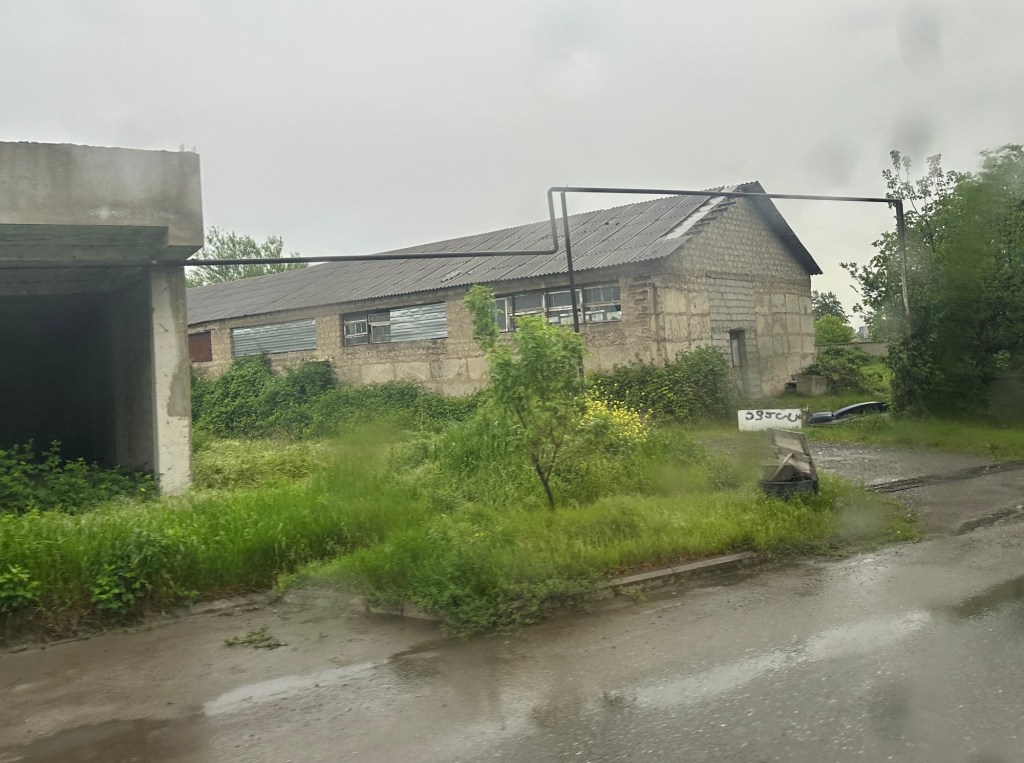
During the Soviet Occupation after WWII, Georgia, a soviet territory at the time became a popular spot for healing sanatoriums due to the sulphur springs that occur naturally here. In Tskaltubo, the town near Kutaisi, many of these sanatoriums were built and used as a healing destination. At the end of the Cold War, the majority of these buildings were abandoned. Many are decaying quickly and some become makeshift apartment buildings for unhoused people. While there are a couple that are privately owned and restored, most just exist these days for exploring by people who are fascinated by crumbling architecture. We visit a few of these buildings with a tour guide. The guide takes us to some of the “safer” buildings but we still have to explore with caution since there is broken glass everywhere, the non-existance of railings and roofs that look like they may collapse at any moment. We enjoy imagining the abandoned buildings in their former glory.
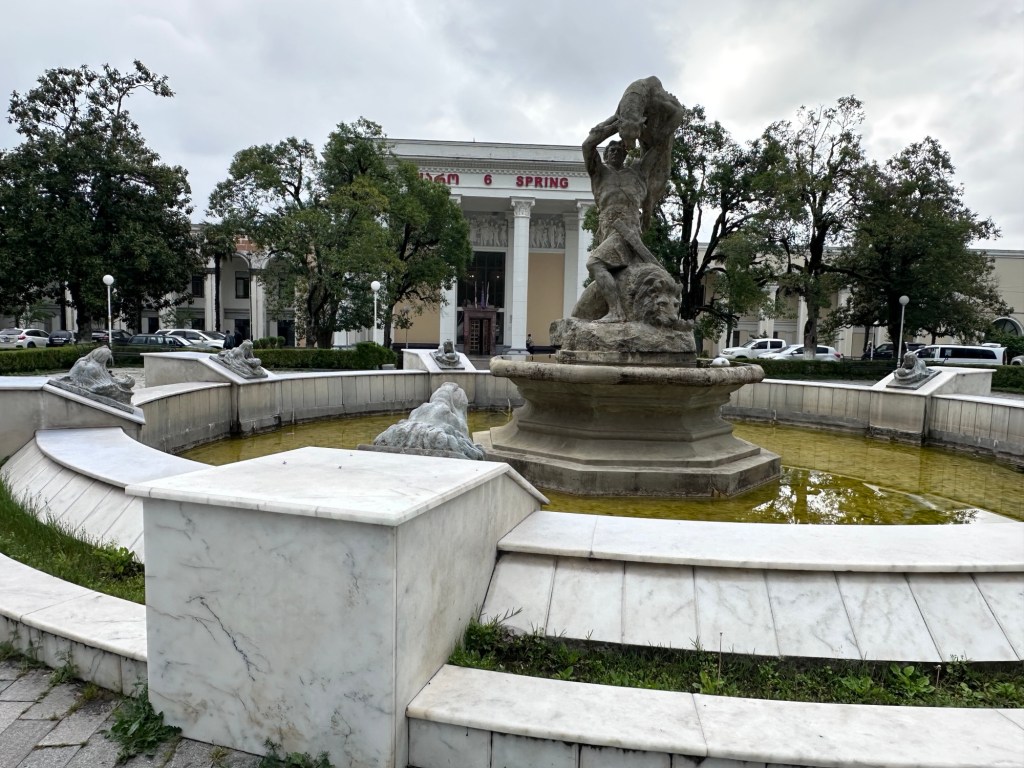
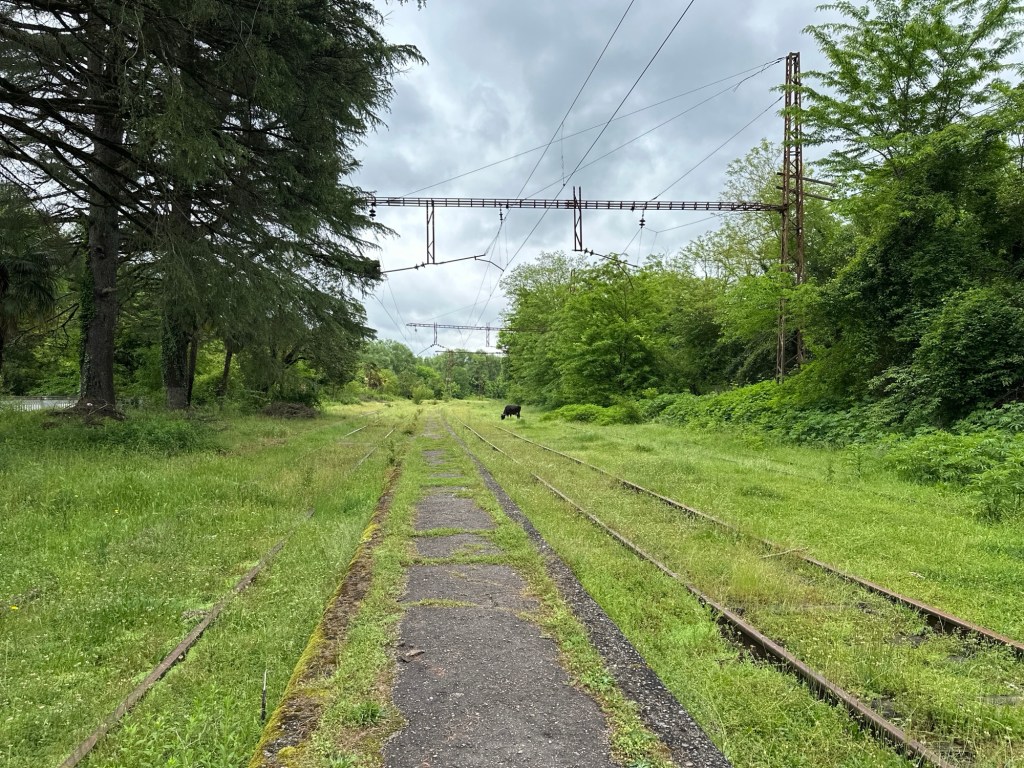
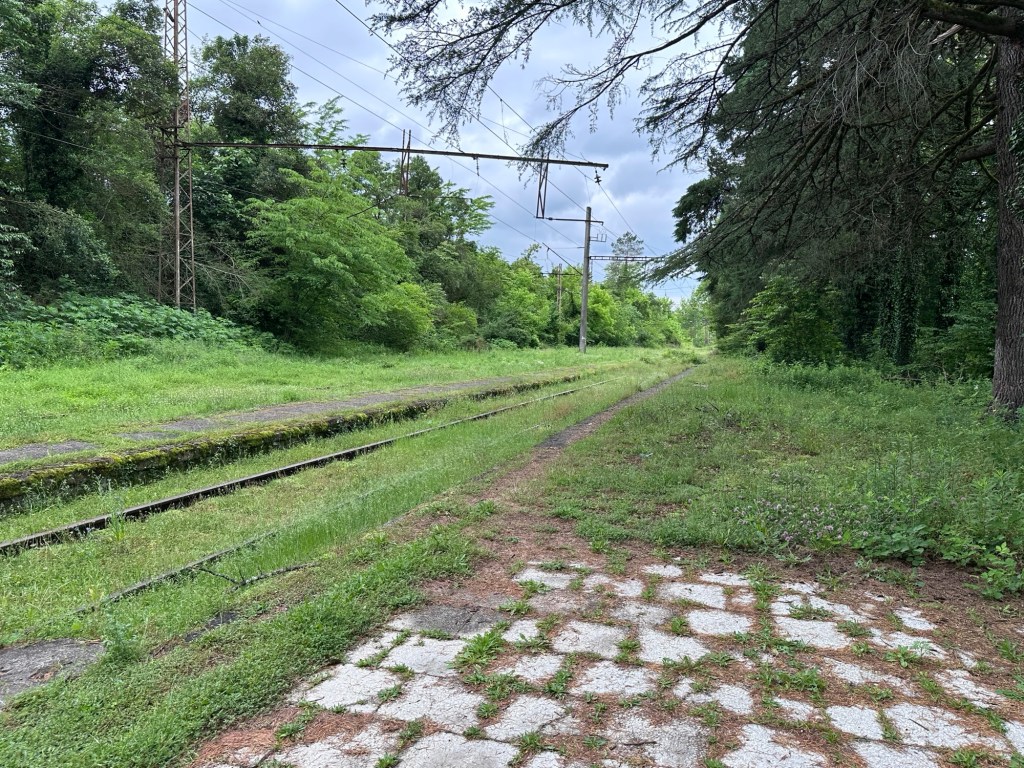
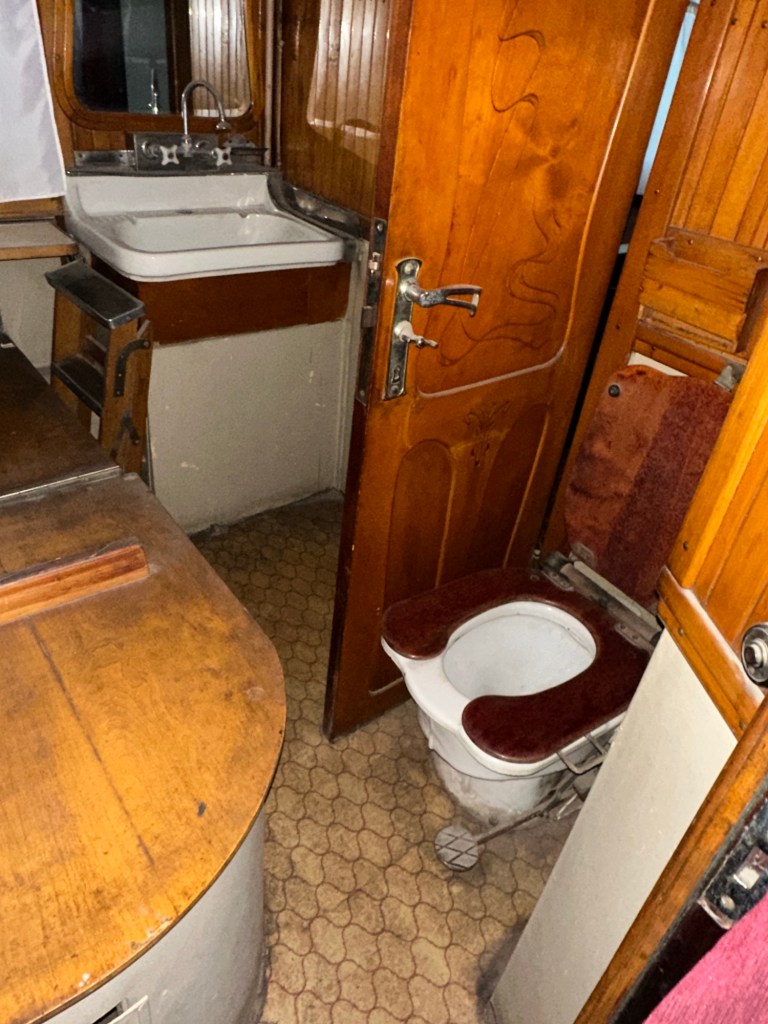
Our last stop is at a now abandoned Tskaltubo train station.
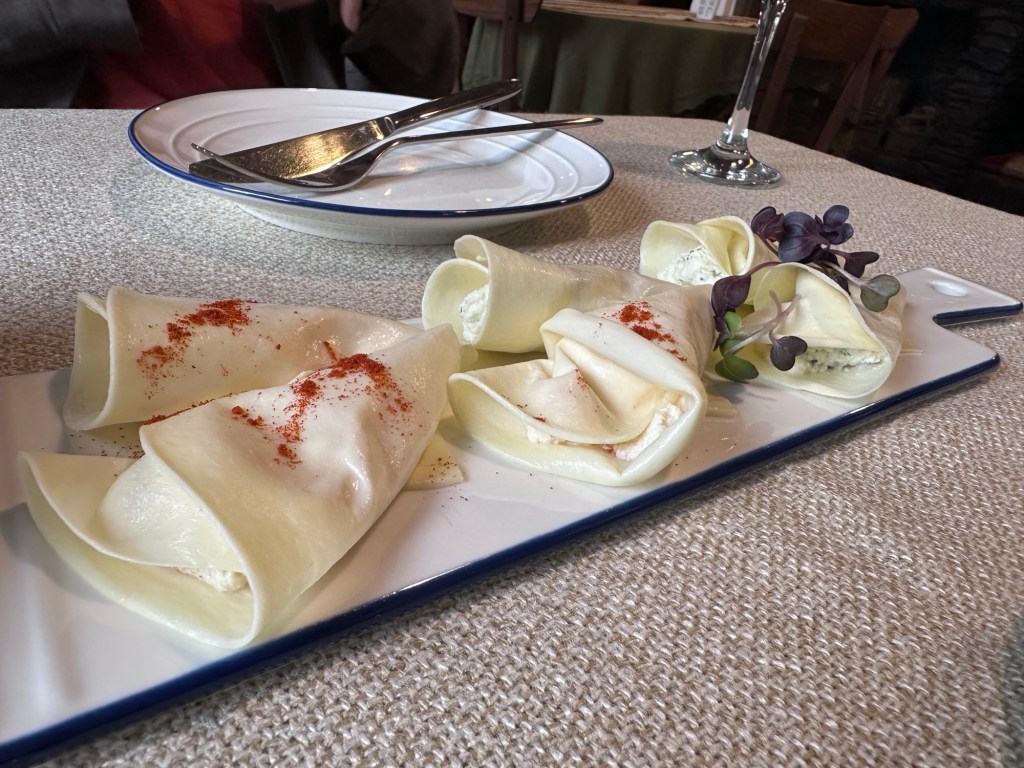
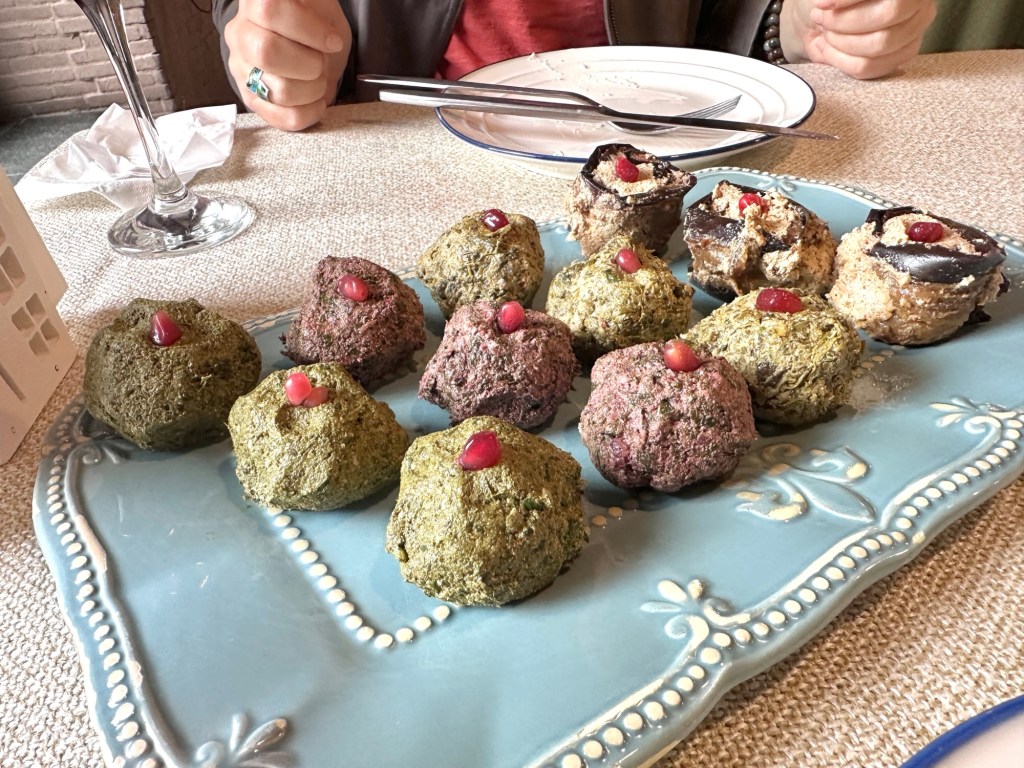
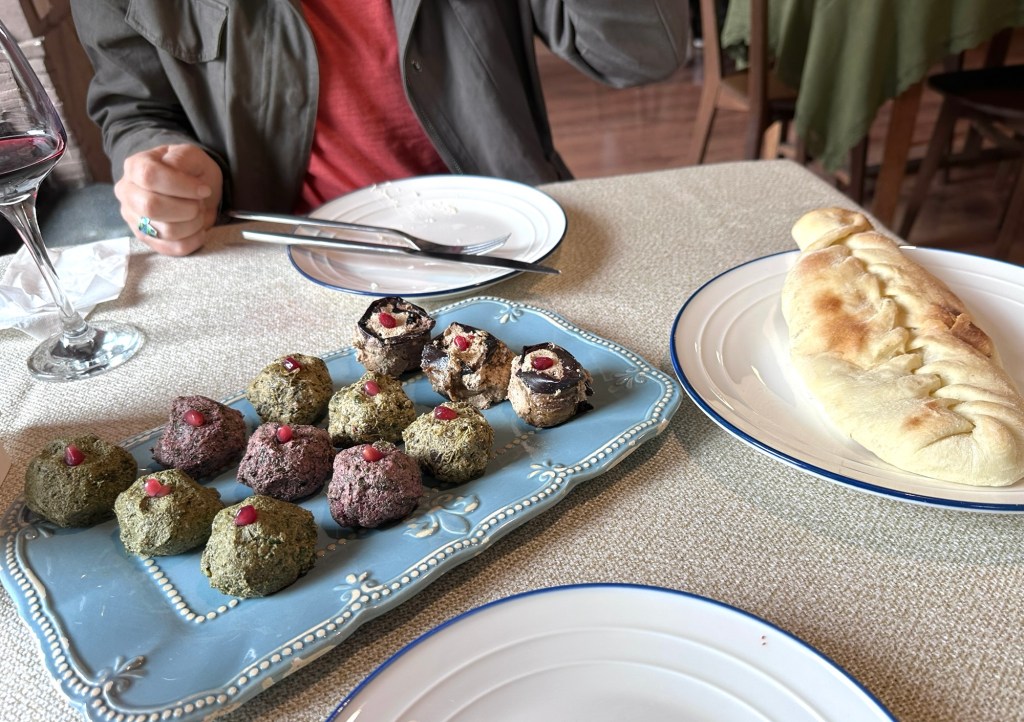
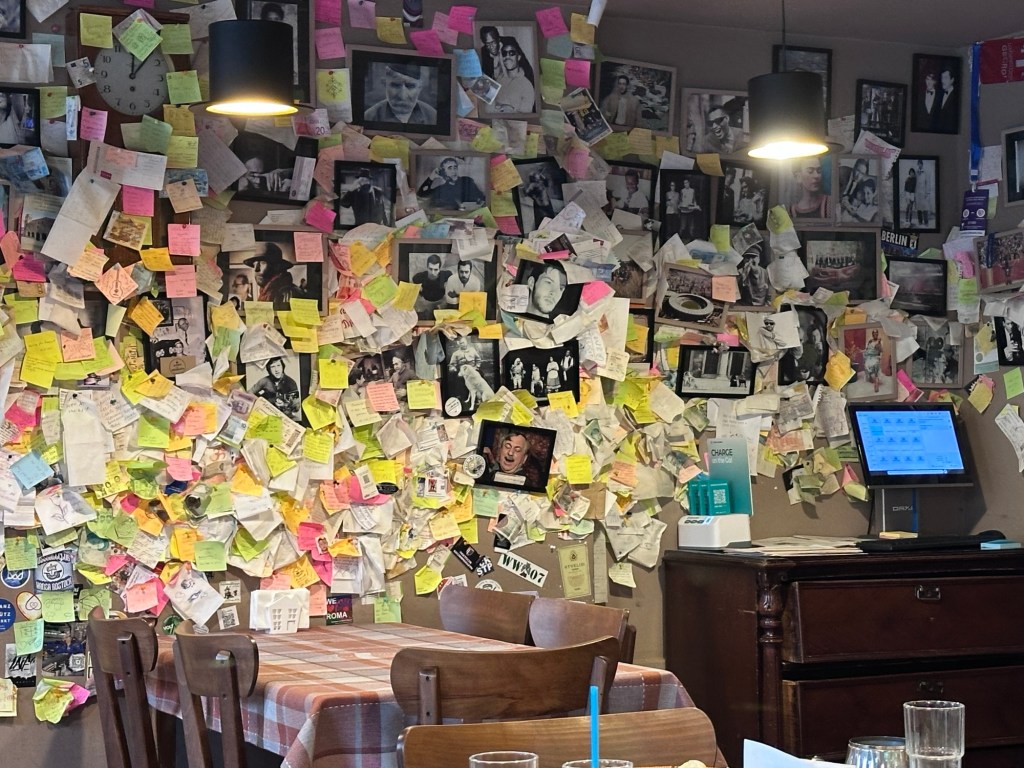
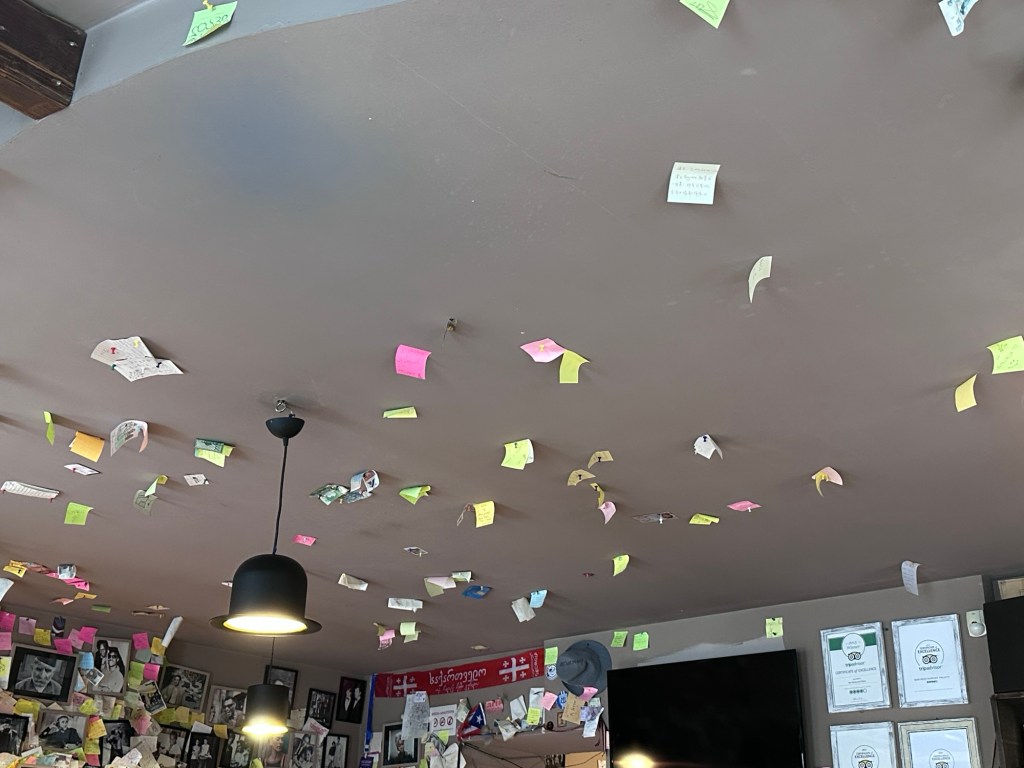
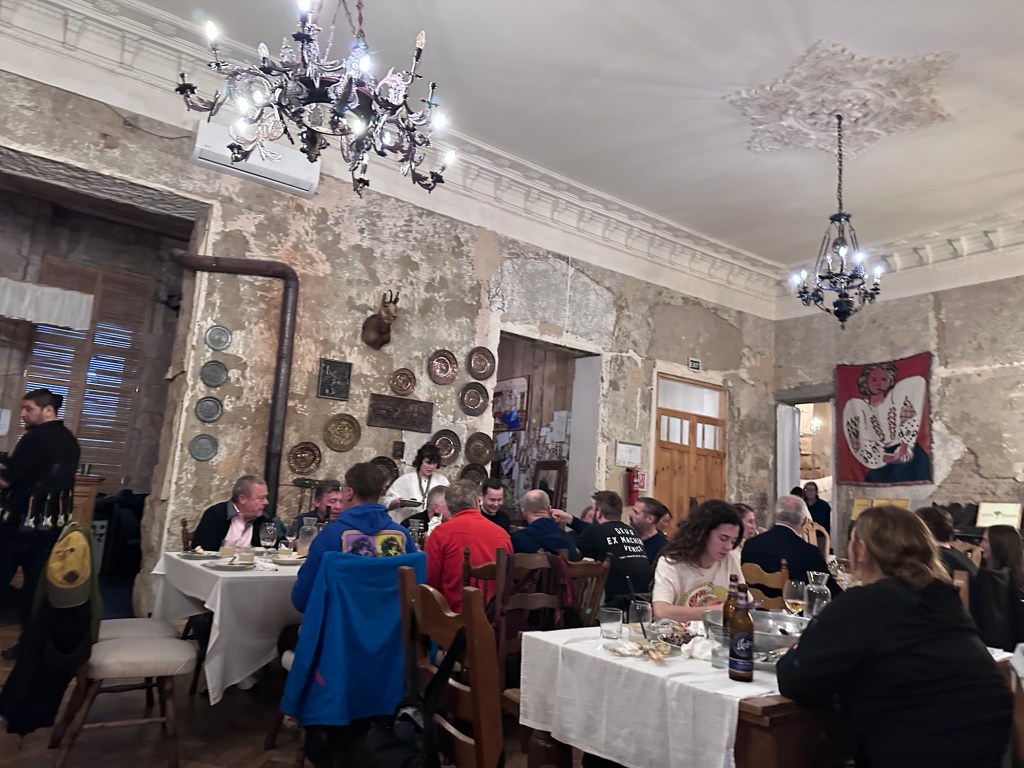
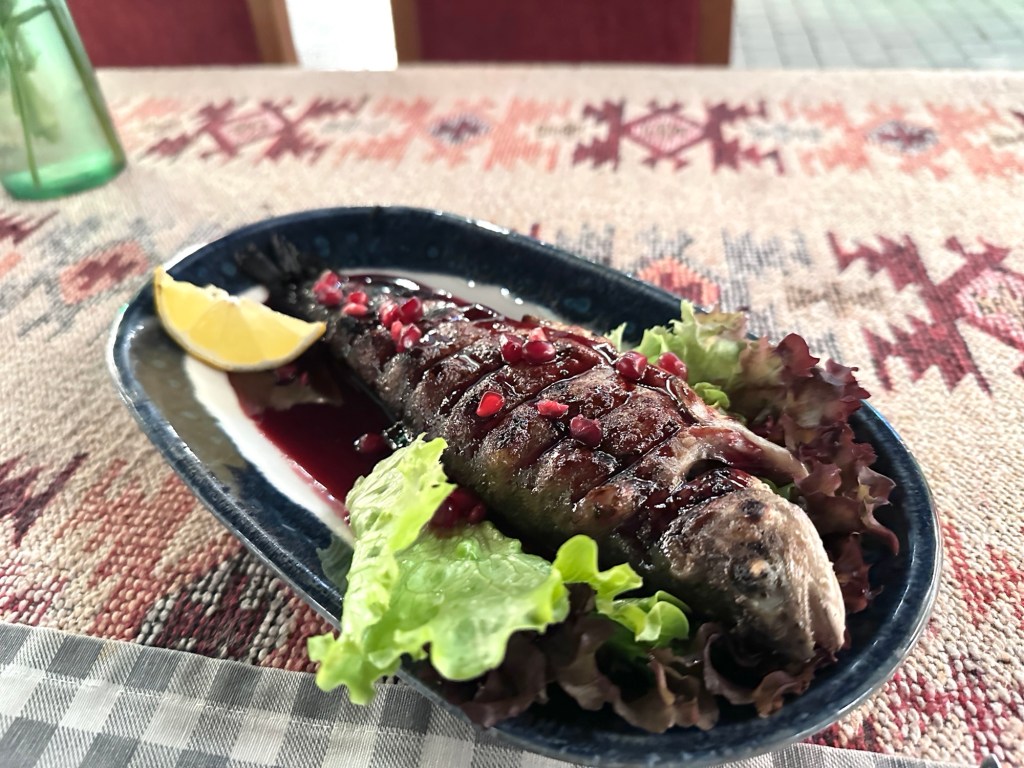
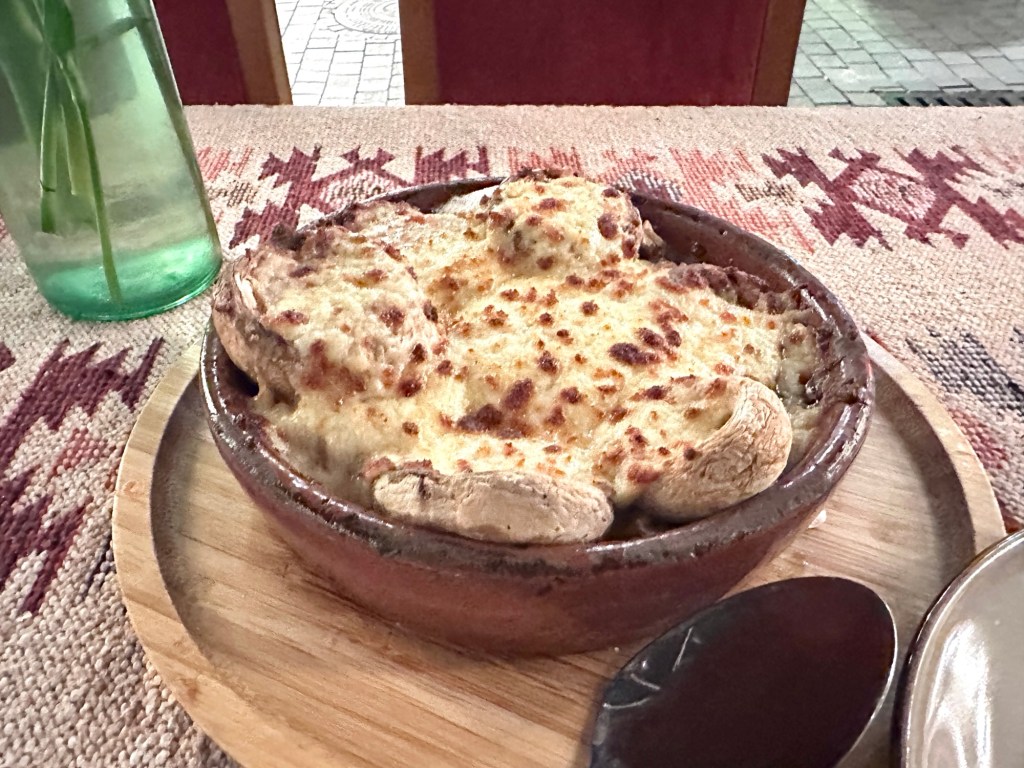
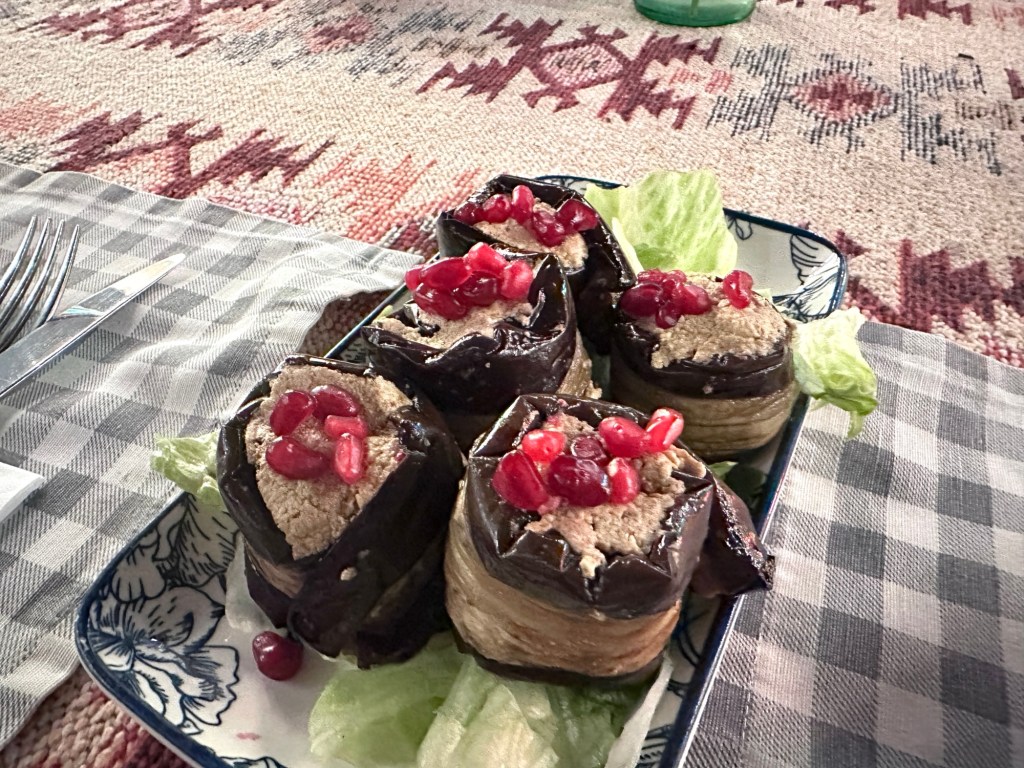
After the short tour we return to town and have a nice lunch at Palaty, a restaurant recommended by our guide.
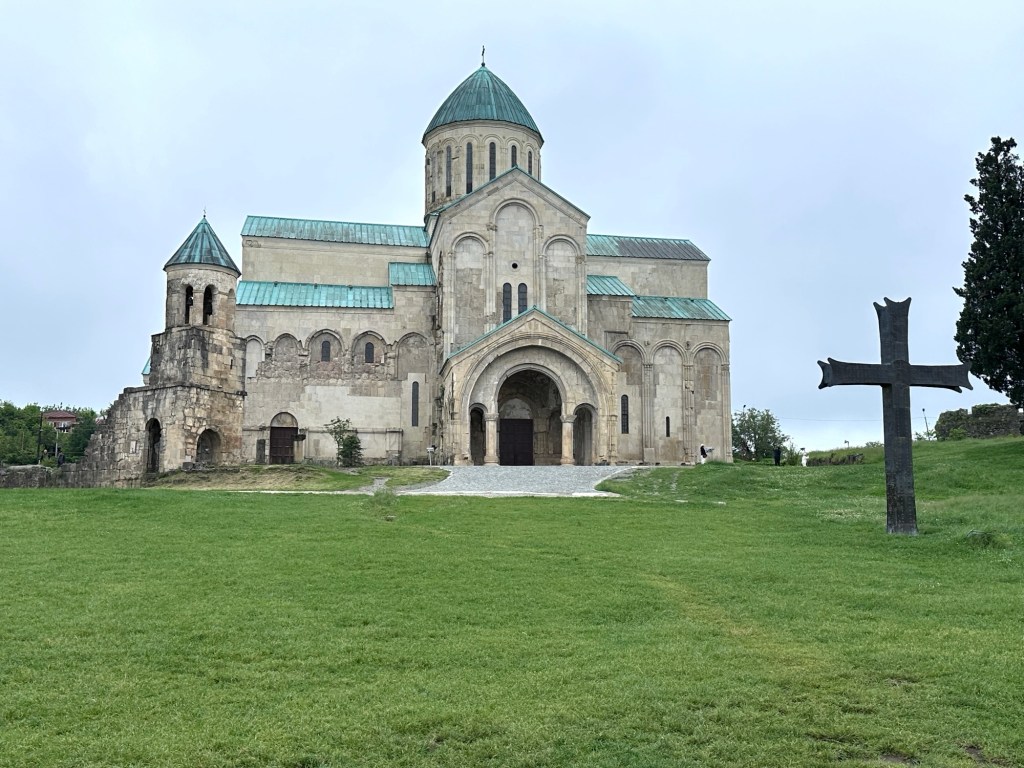
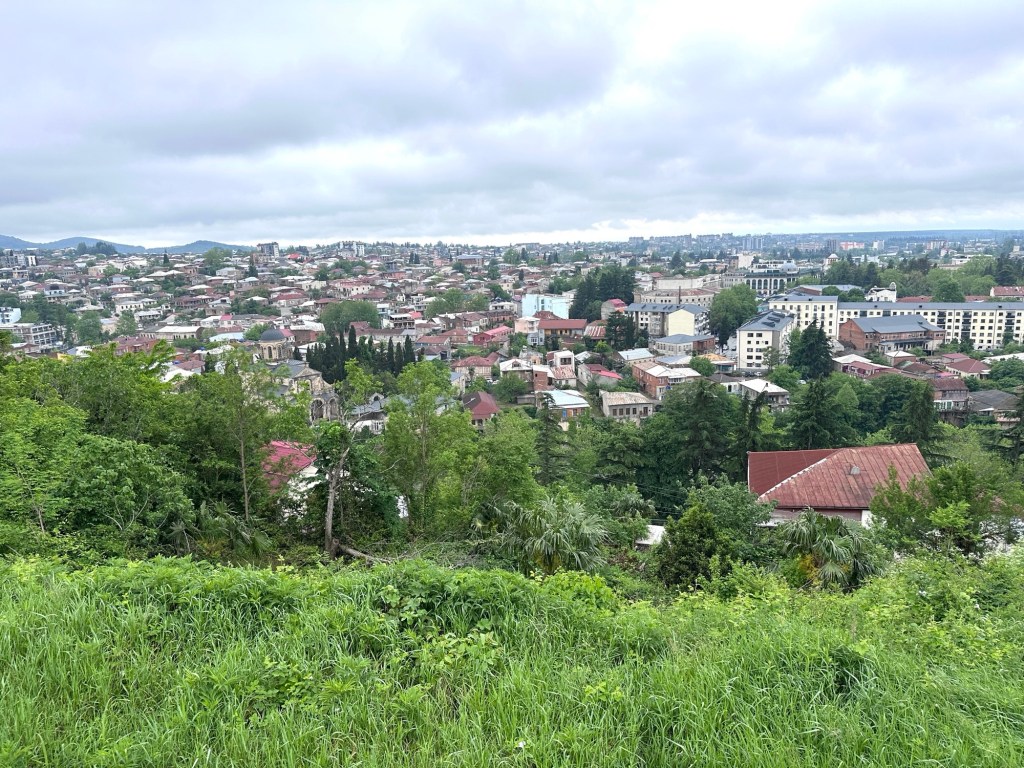
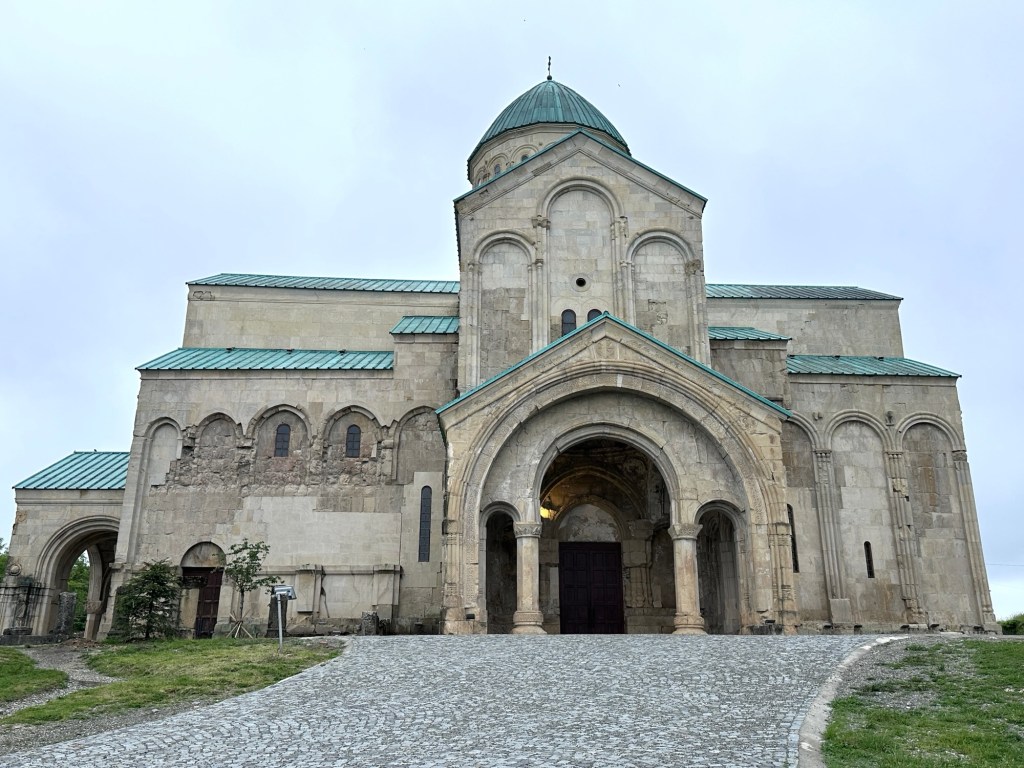
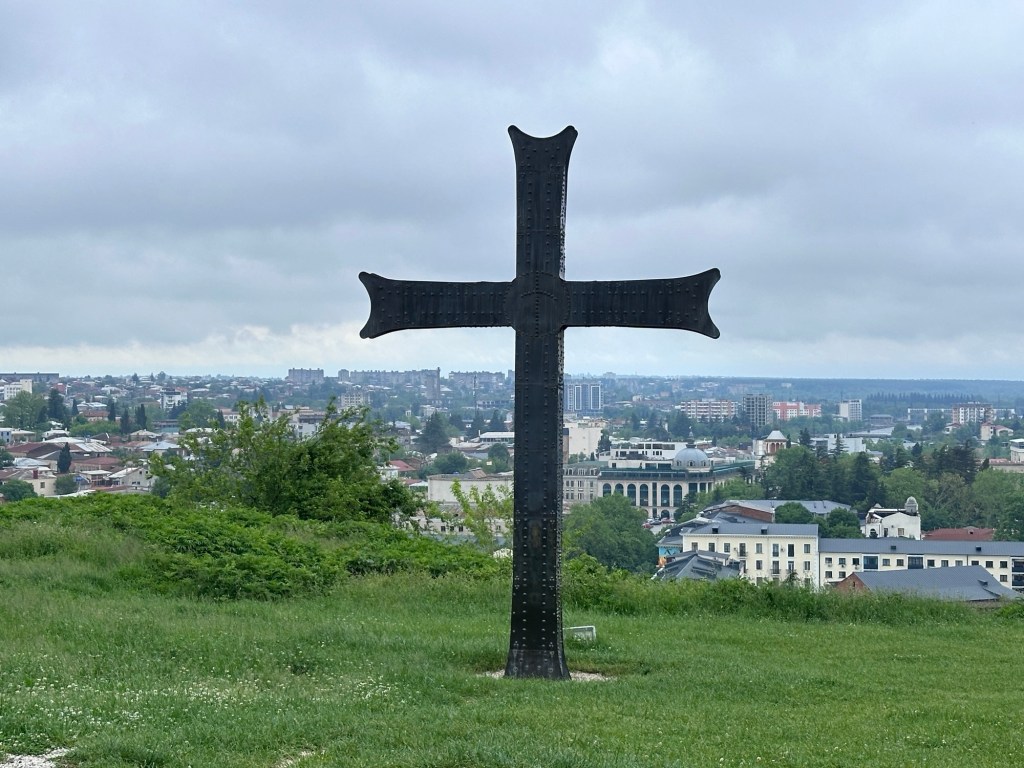
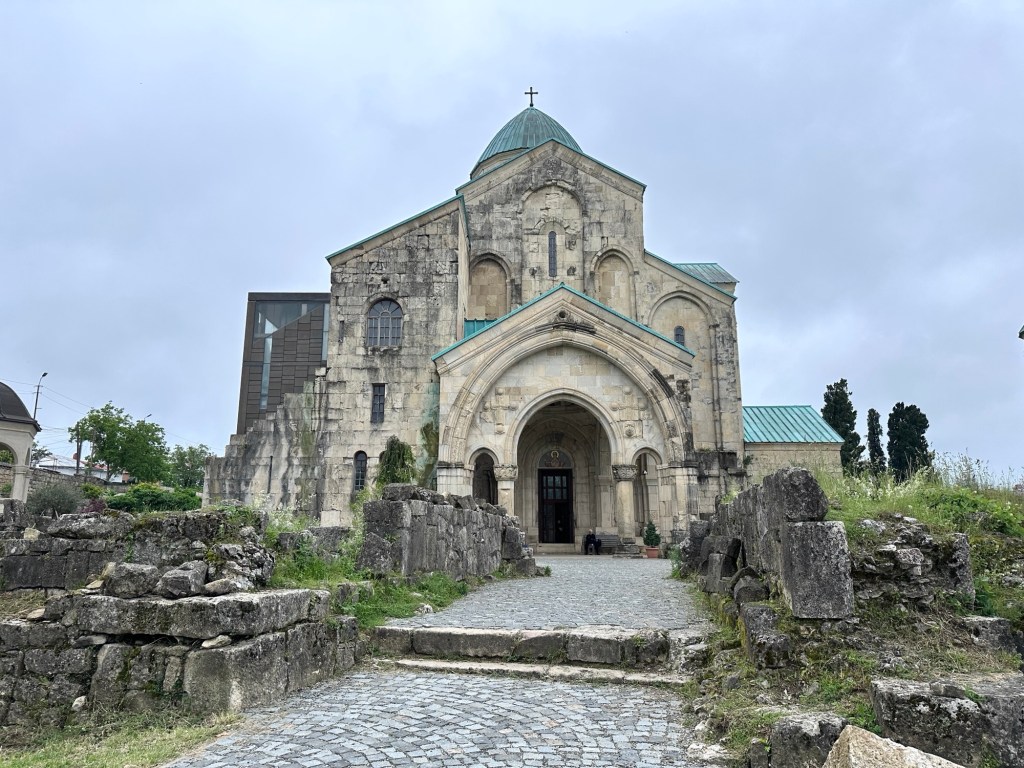
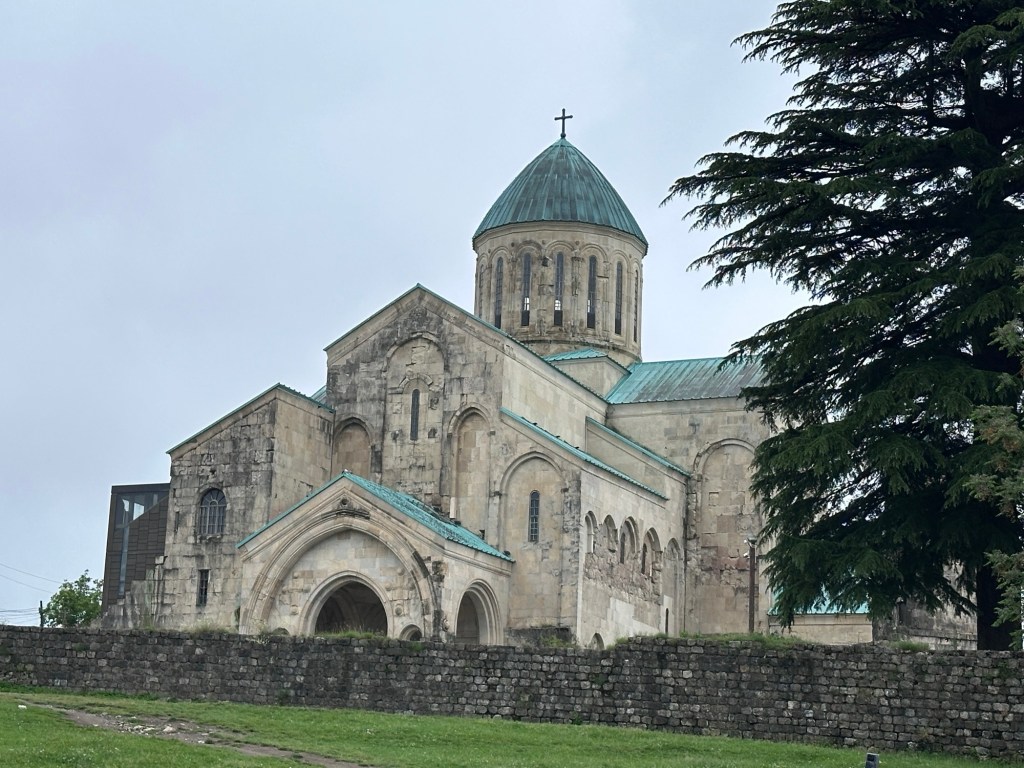
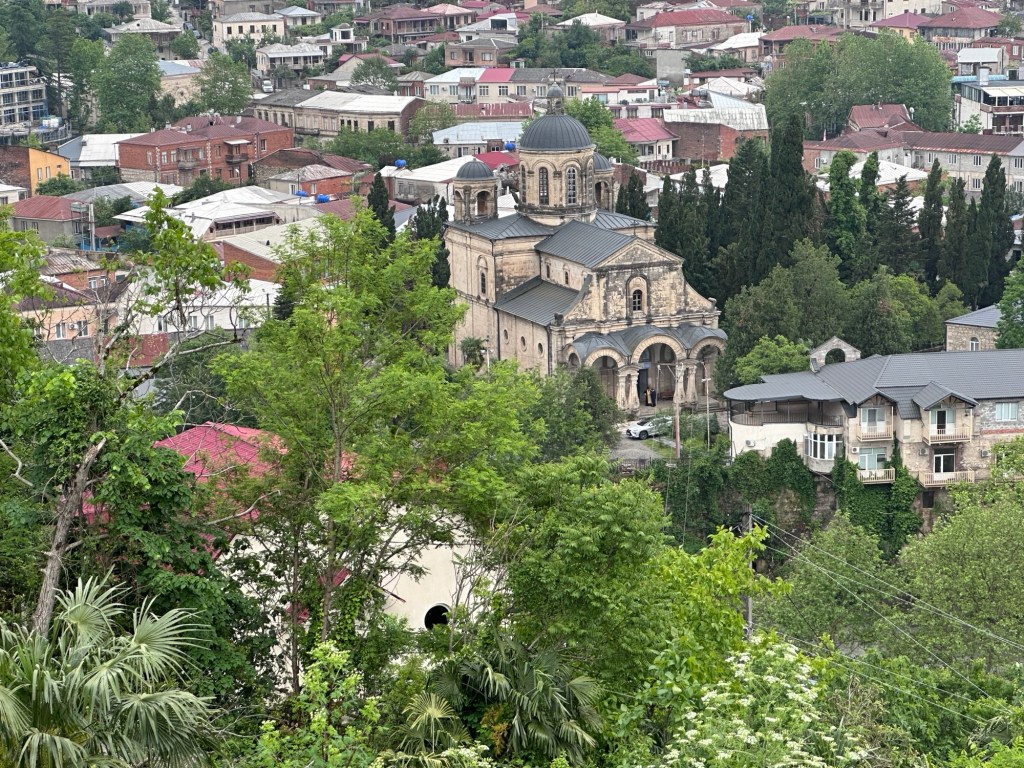
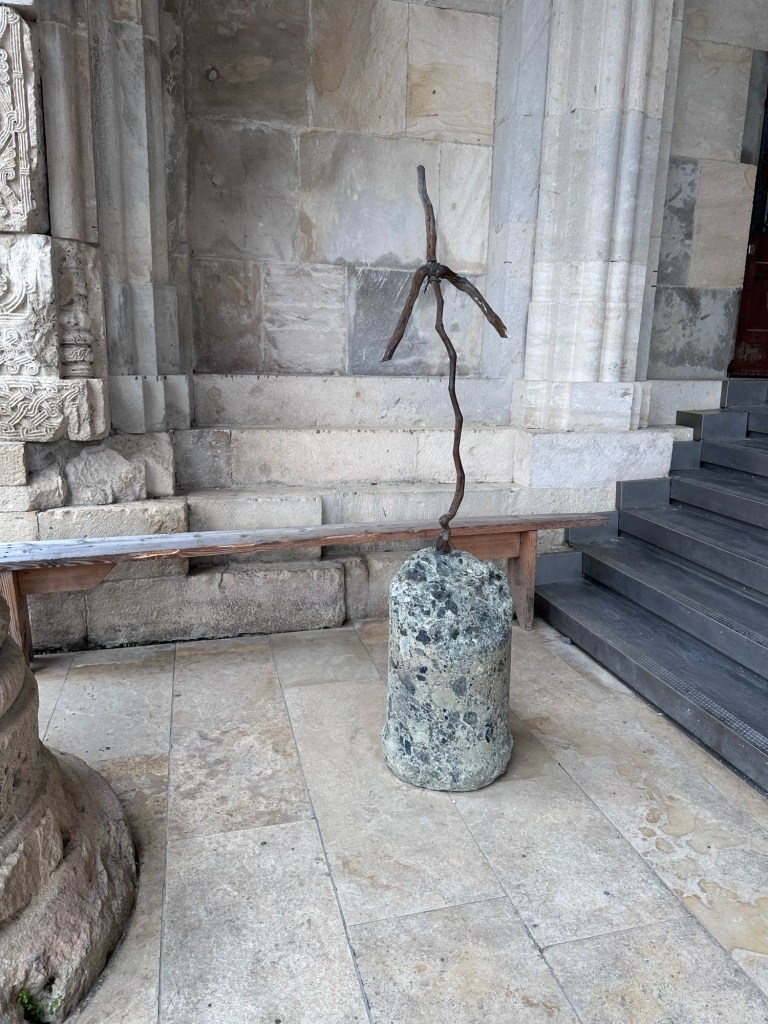
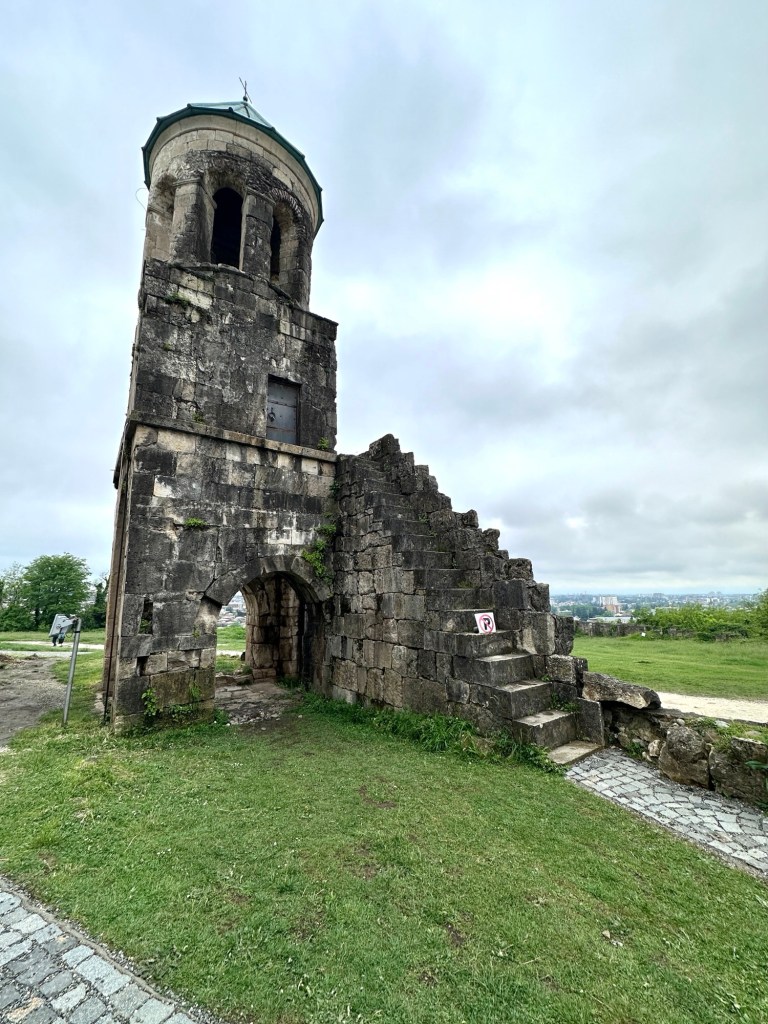
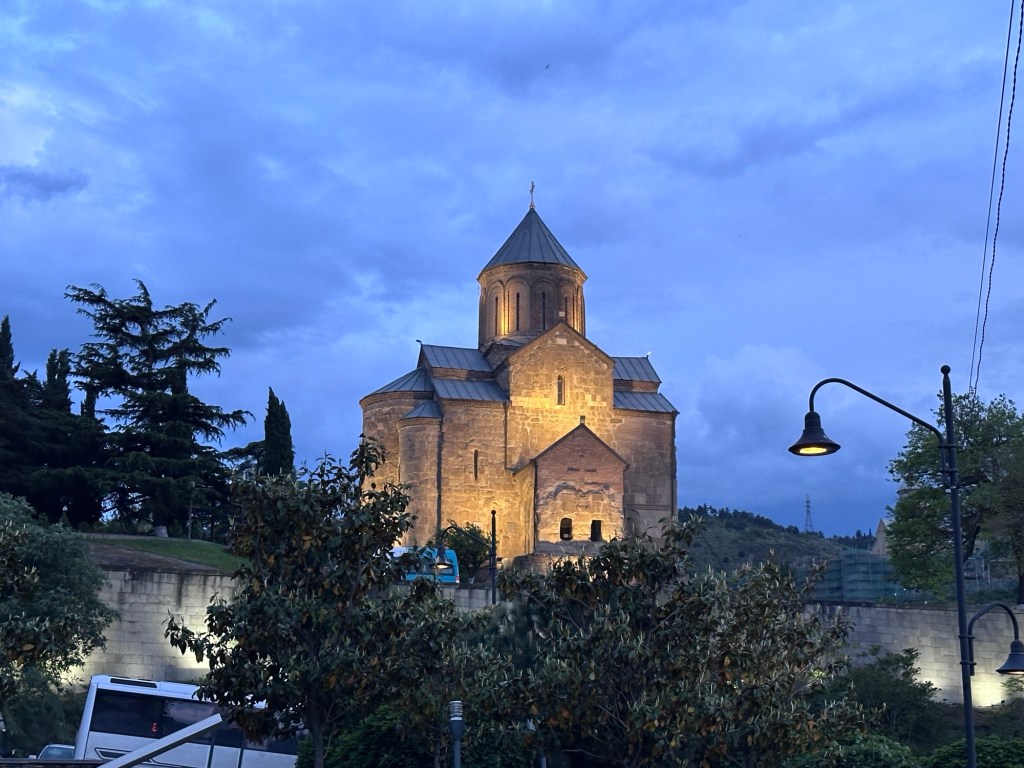
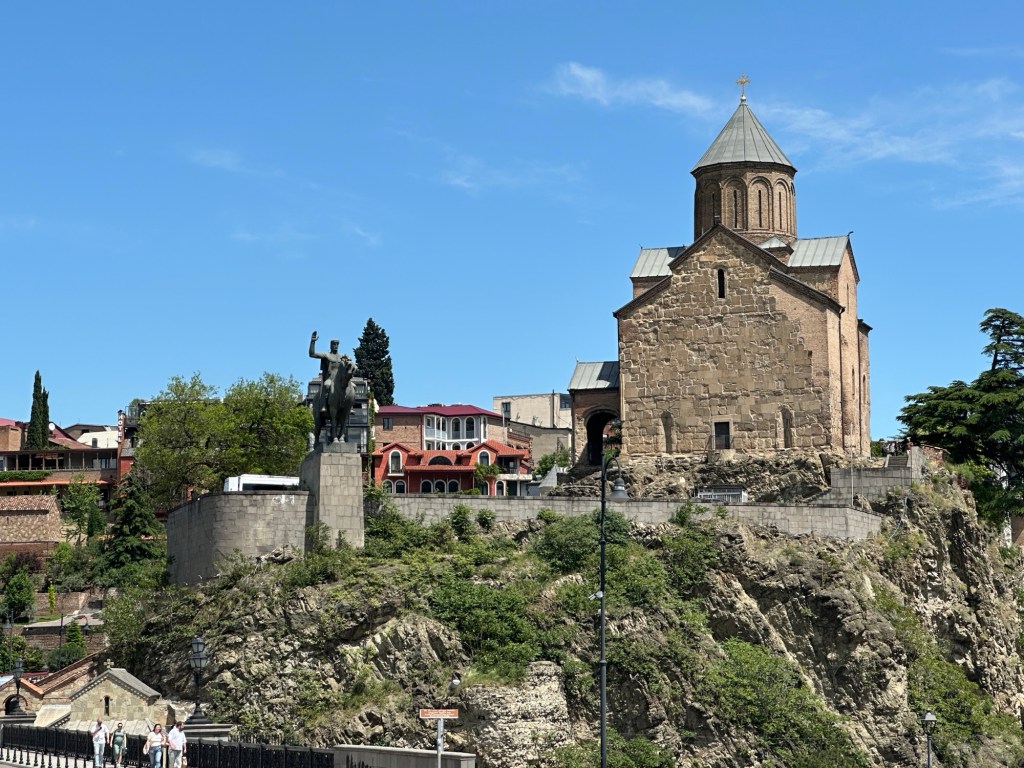
We spend the rest of our time in Kutaisi visiting the hilltop church and exploring town.
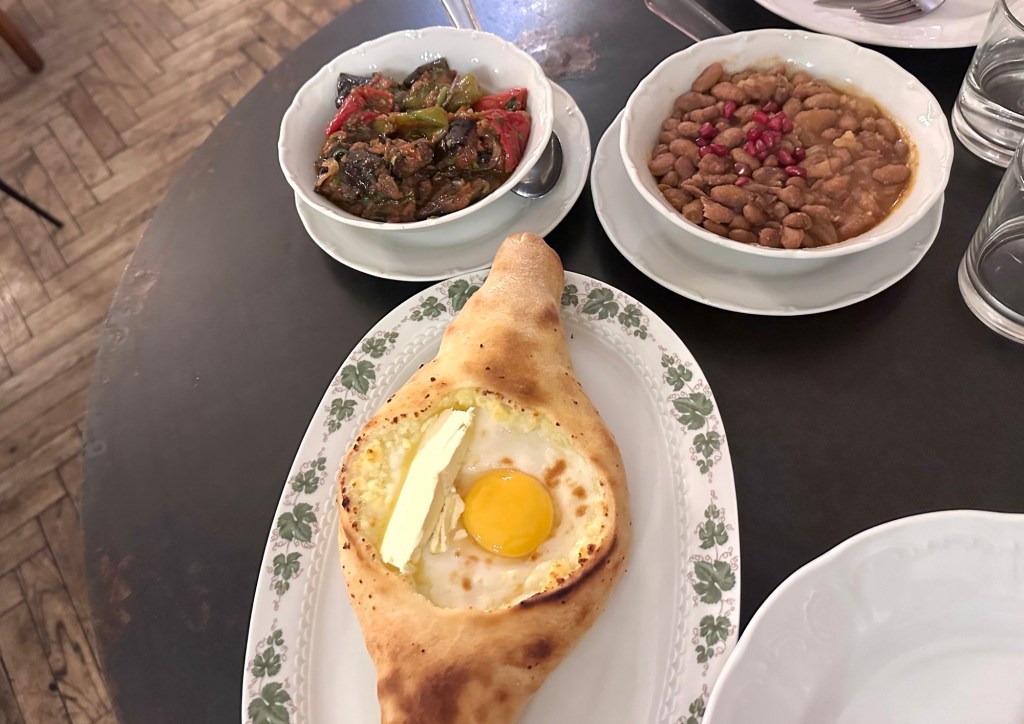
Final dinner in Kutaisi
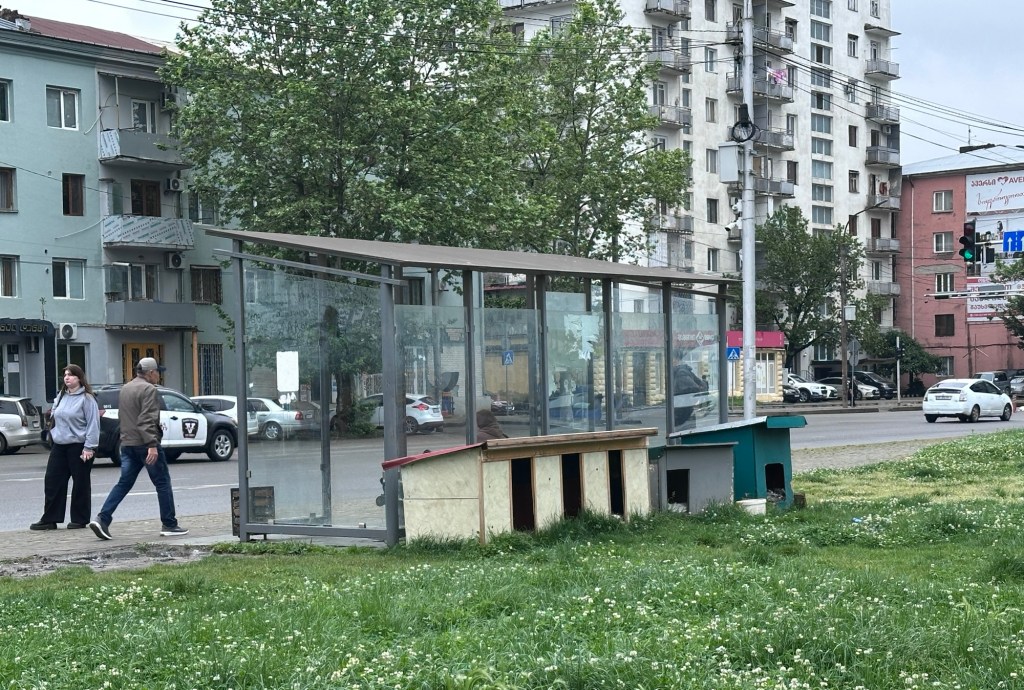
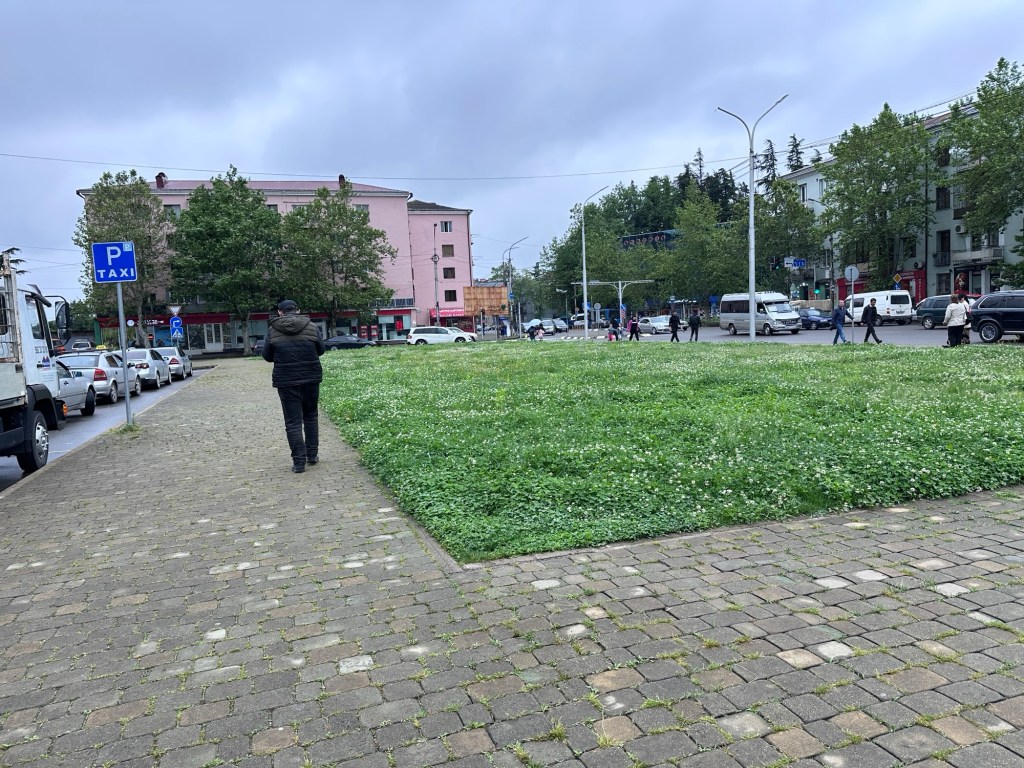
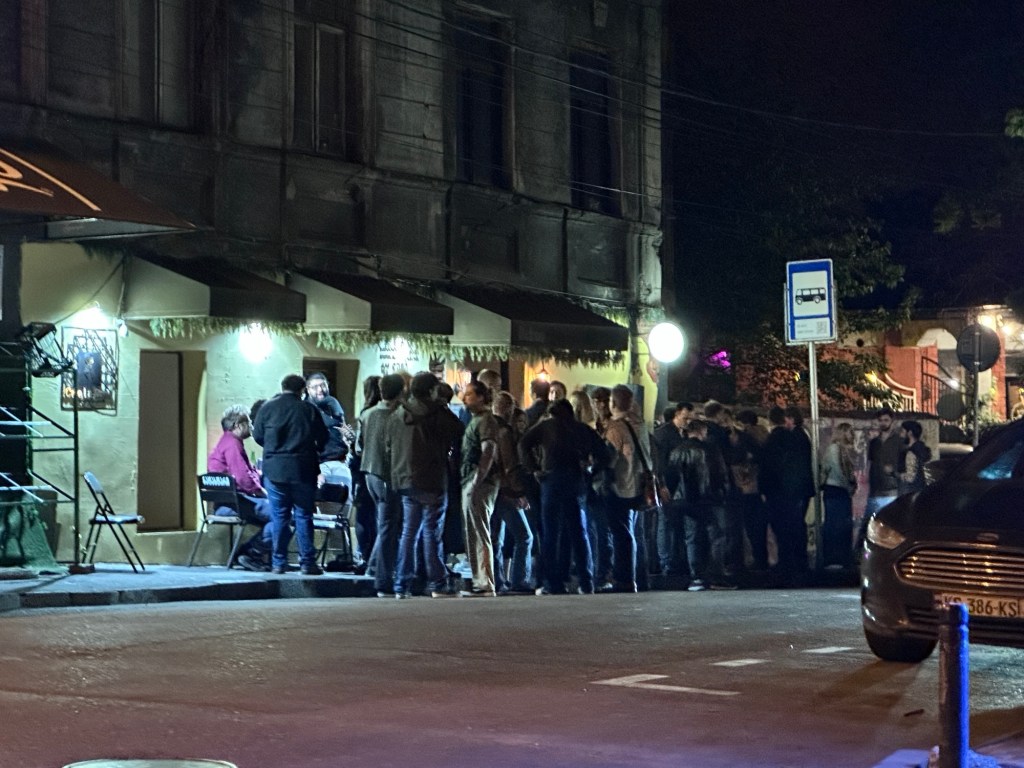
We get notice at 8 PM that our day tour and transfer to Tbilisi is cancelled due to bad weather. We are very disappointed because not only do we miss visiting the canyons, we are left with no ride to Tbilisi last minute. We scramble to find alternative transportation. There are some very cheap options like the small Marshrutka vans that we still have not used during our travels but settle on the citybus that we used to first arrive in Kutaisi. It is disappointing that our day tour is cancelled but at least we now plan to arrive in Tblisi much earlier. The bus ride is fine except it is late and it is not entirely clear where the actual bus stop is. We gather at this green square and it is raining on and off and wait. There are no signs to tell you that the city bus will actually stop here. We start talking to other’s who are also confused but waiting for the same bus. Taxi drivers in the area confirm we are in the correct place but with no sign we are still apprehensive. Eventually the bus does arrive and we make it back to Tblisi.
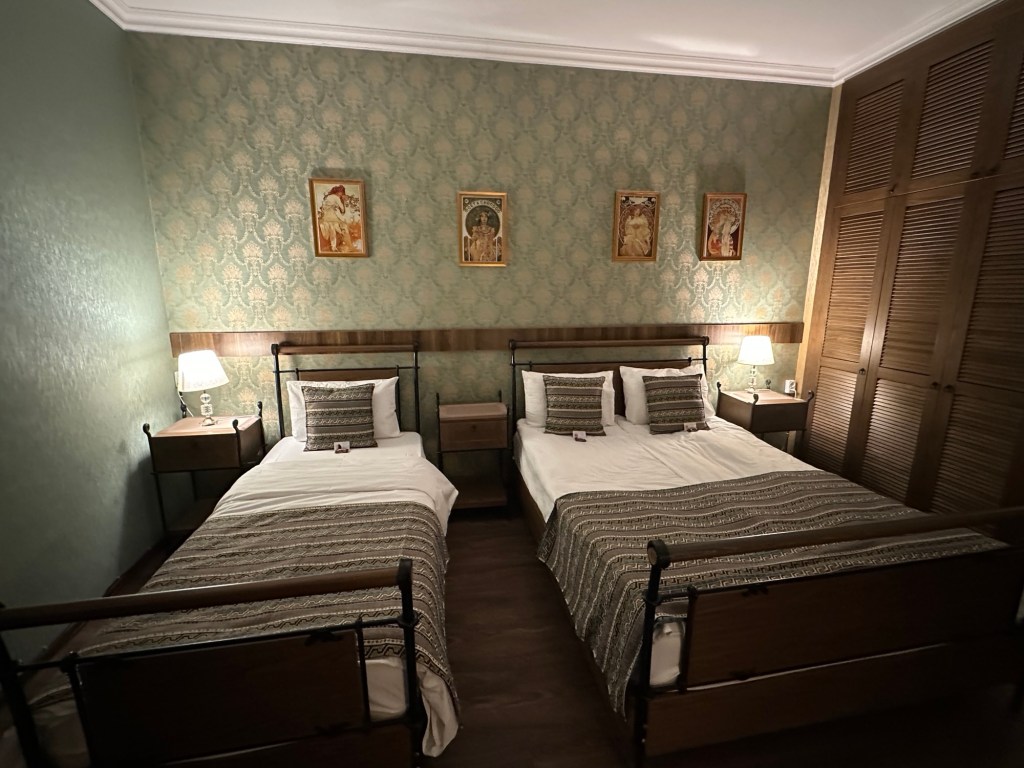
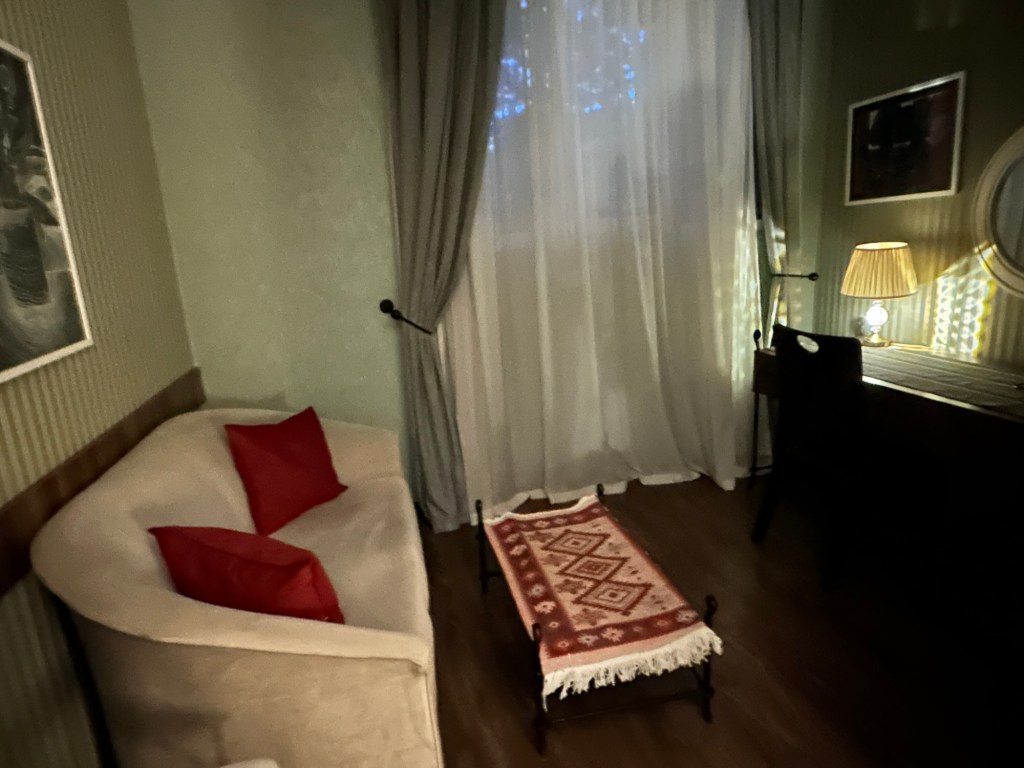
Luckily the next hotel in Tbilisi is more modern. I was getting tired of walking up five flights of stairs multiple times a day to a not as nice apartment.
Another day in Kutaisi but today we have a road trip to see some popular sites outside of Kutaisi. Luckily the weather gods are in our favor this beautiful morning. We meet our guide for the day and discover we are the only two in our group. Our tour guide Lasha is friendly and very knowledgeable of Georgian history.
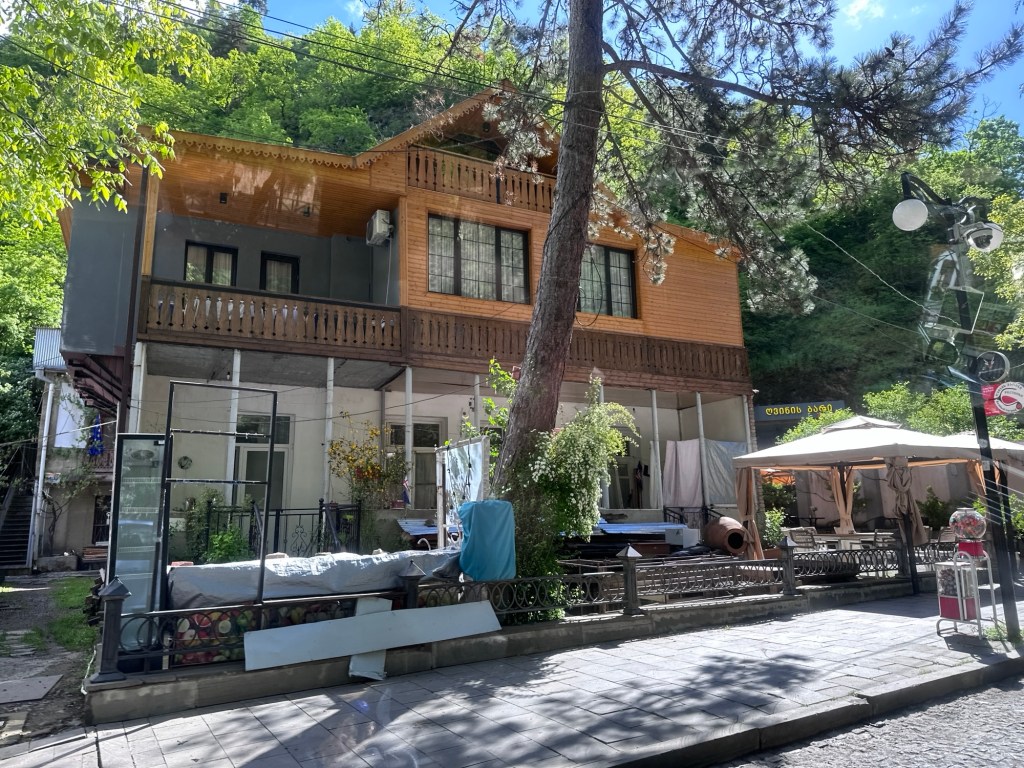
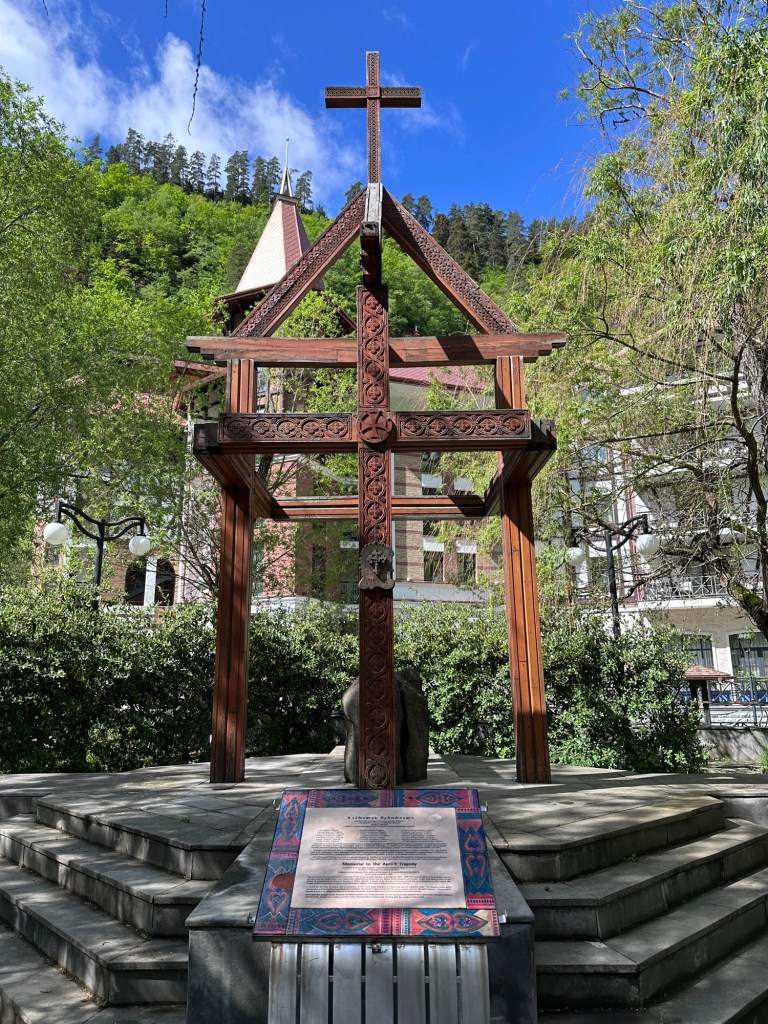
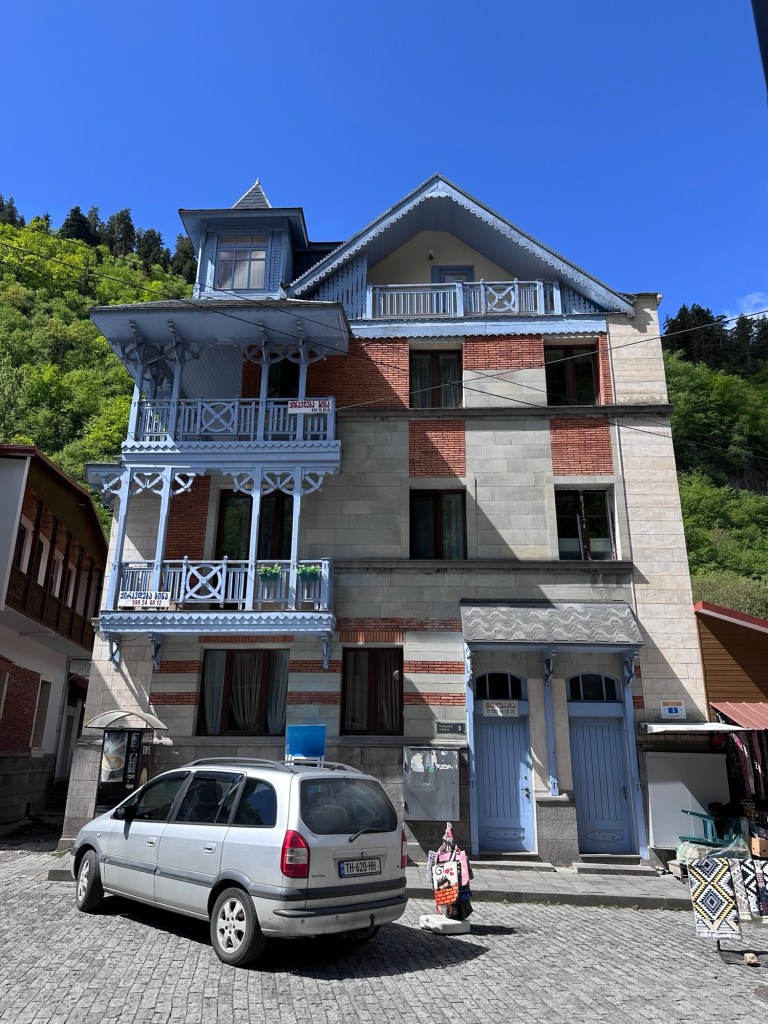
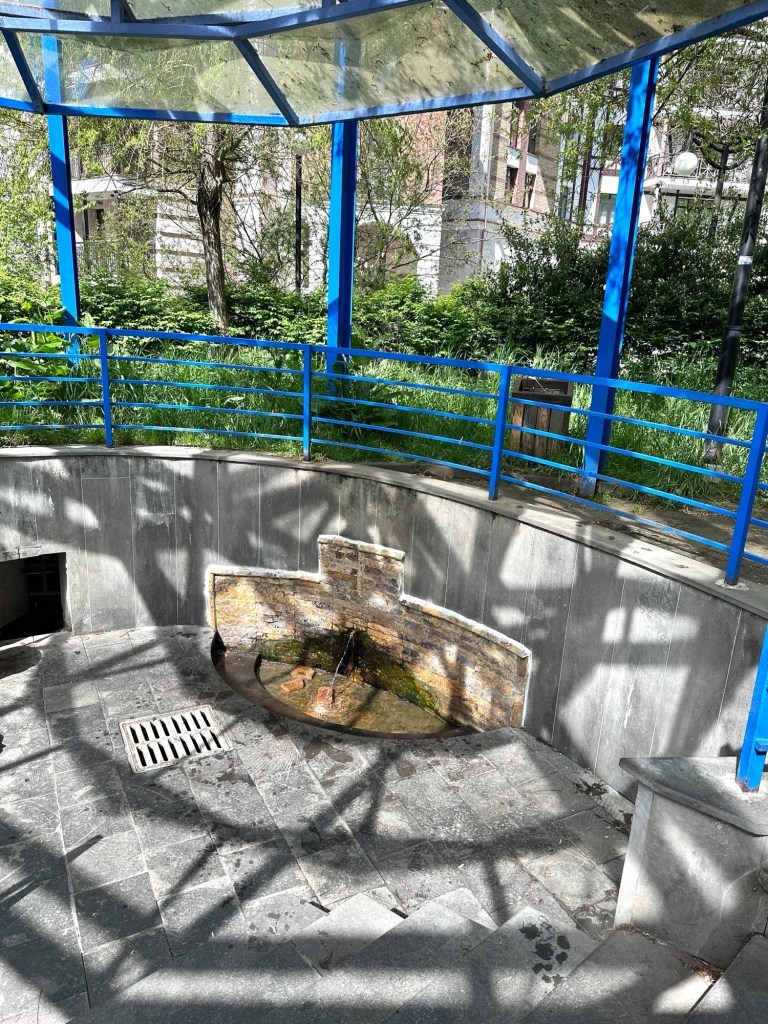
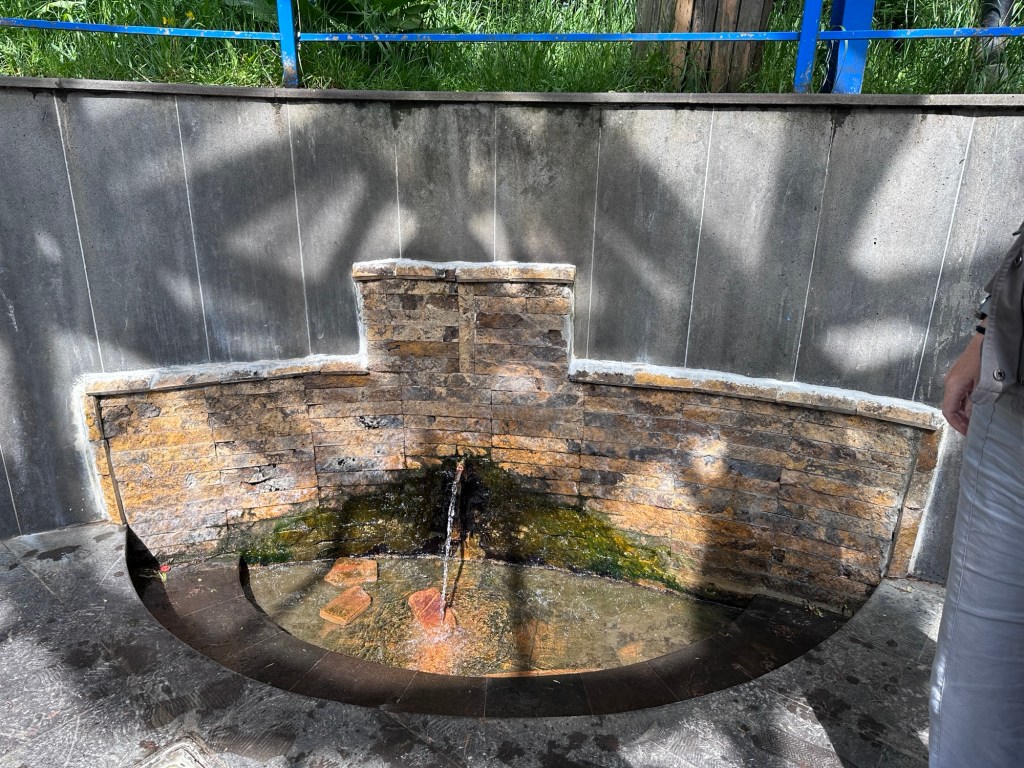
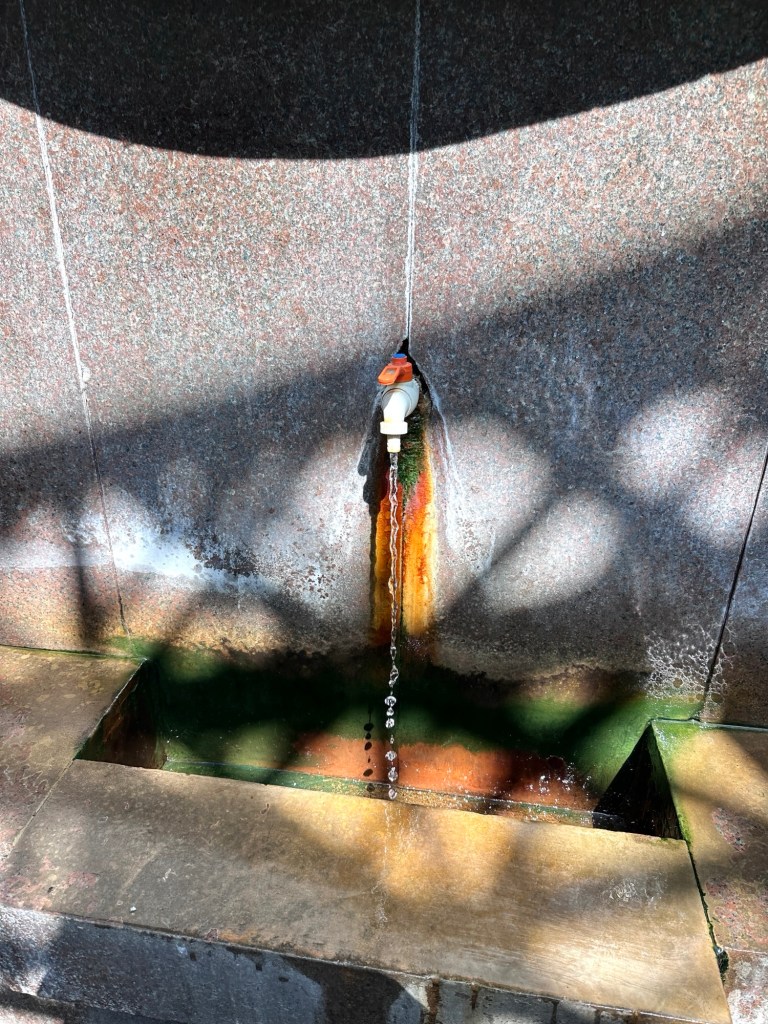
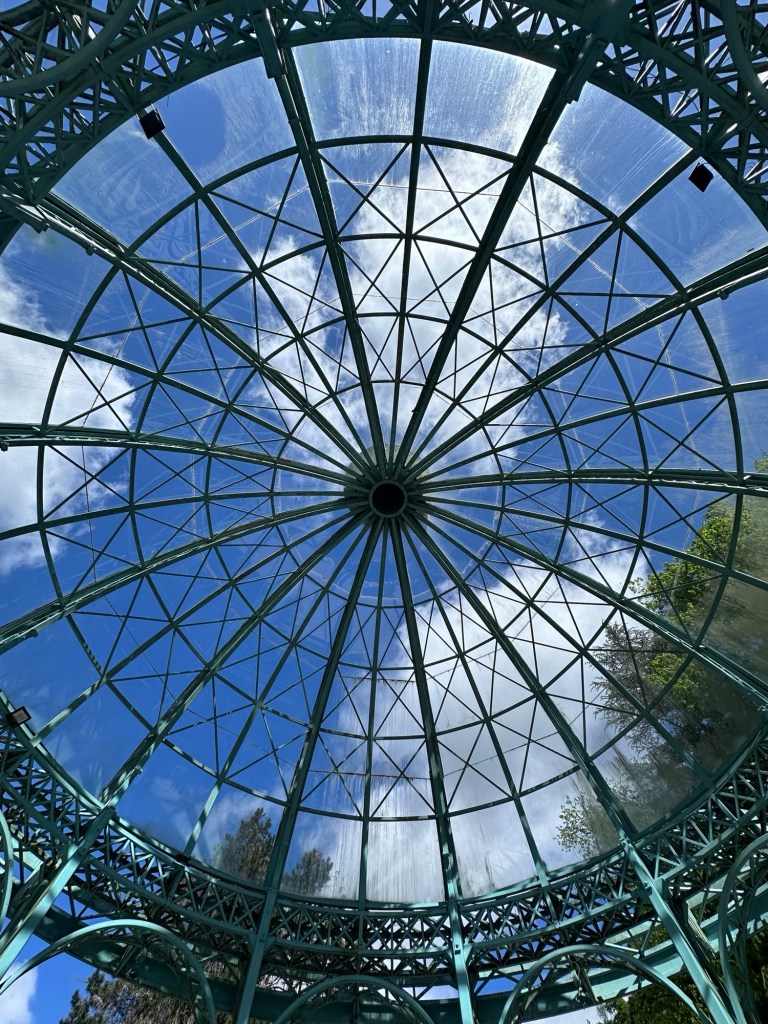
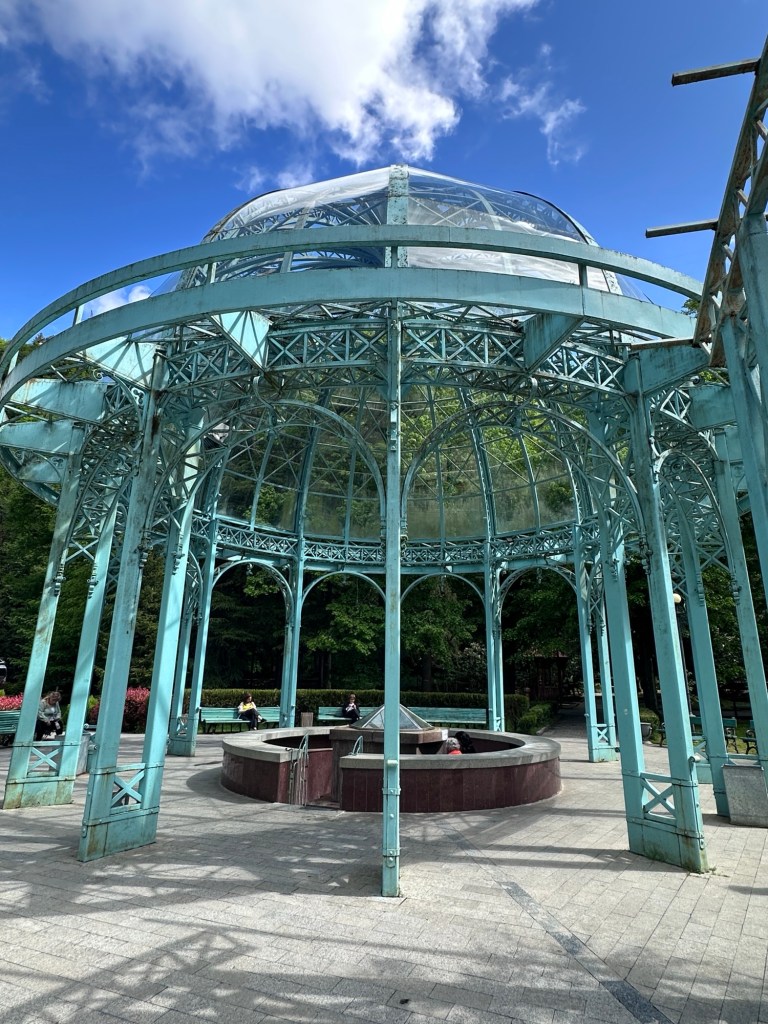
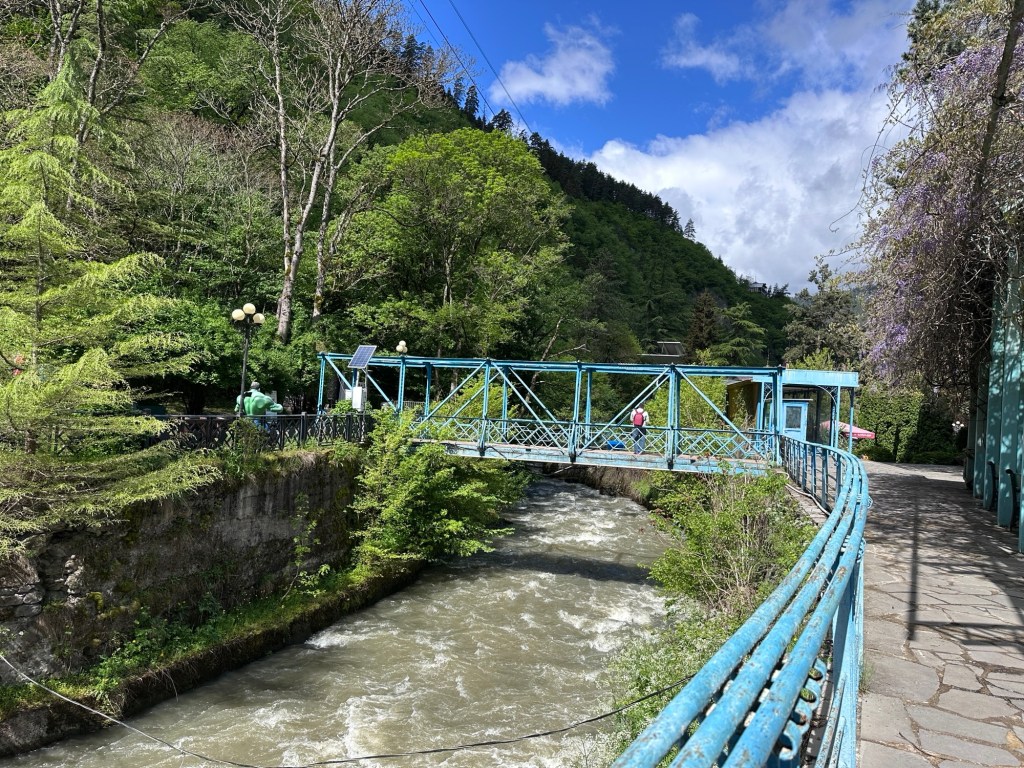
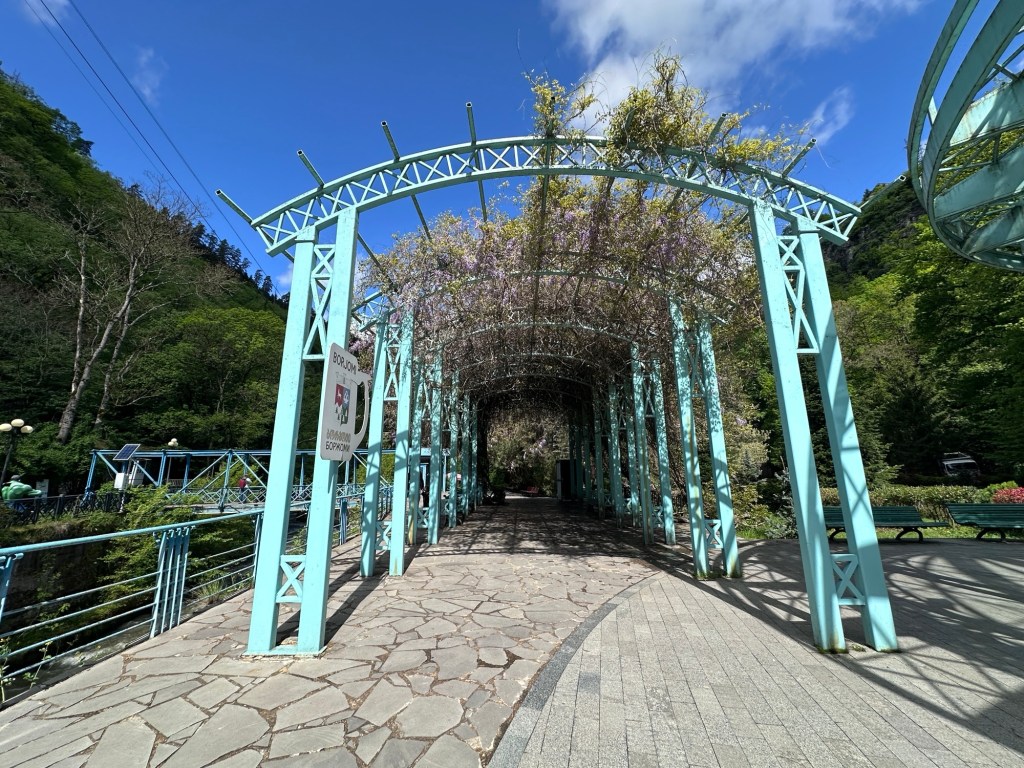
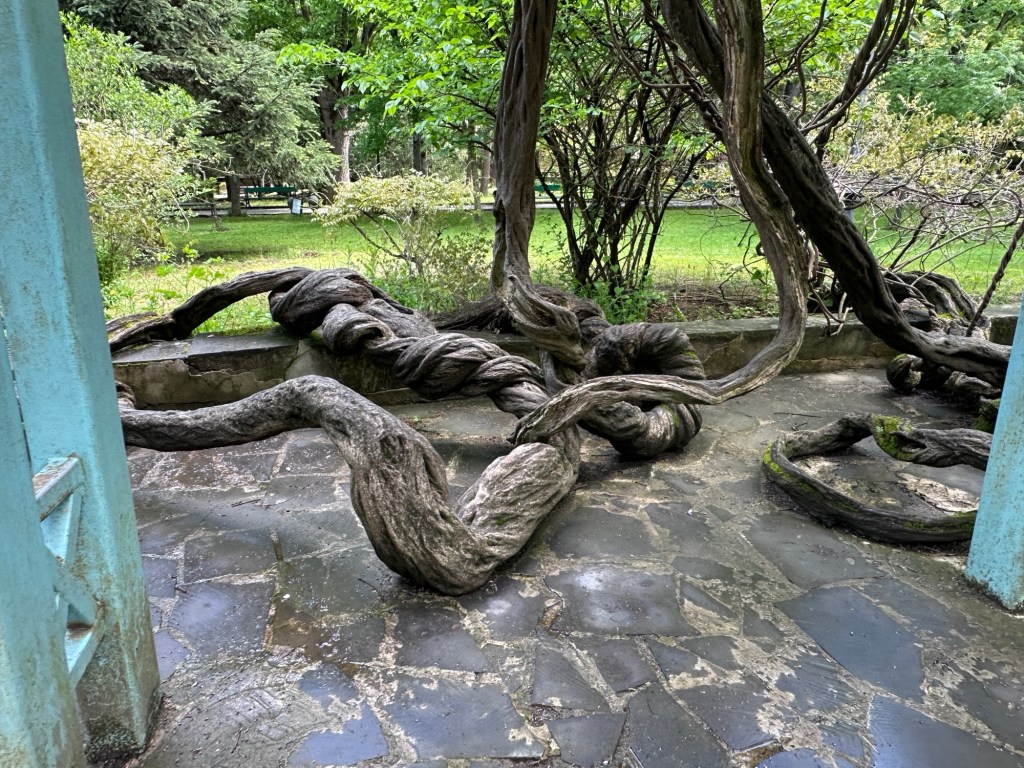
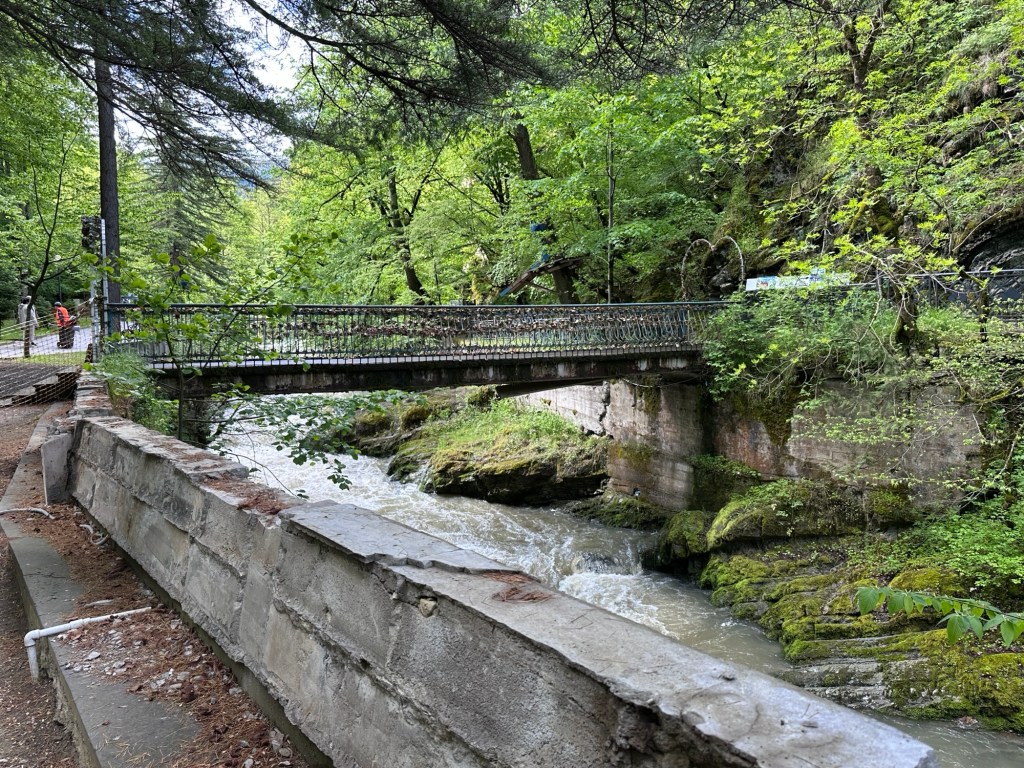
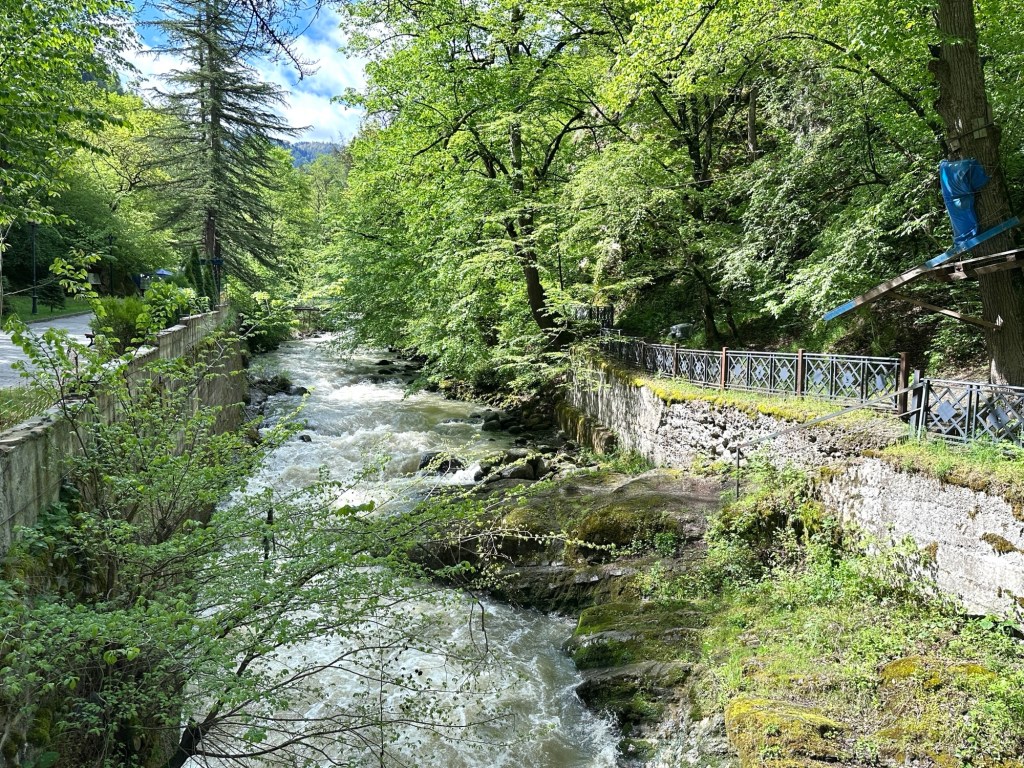
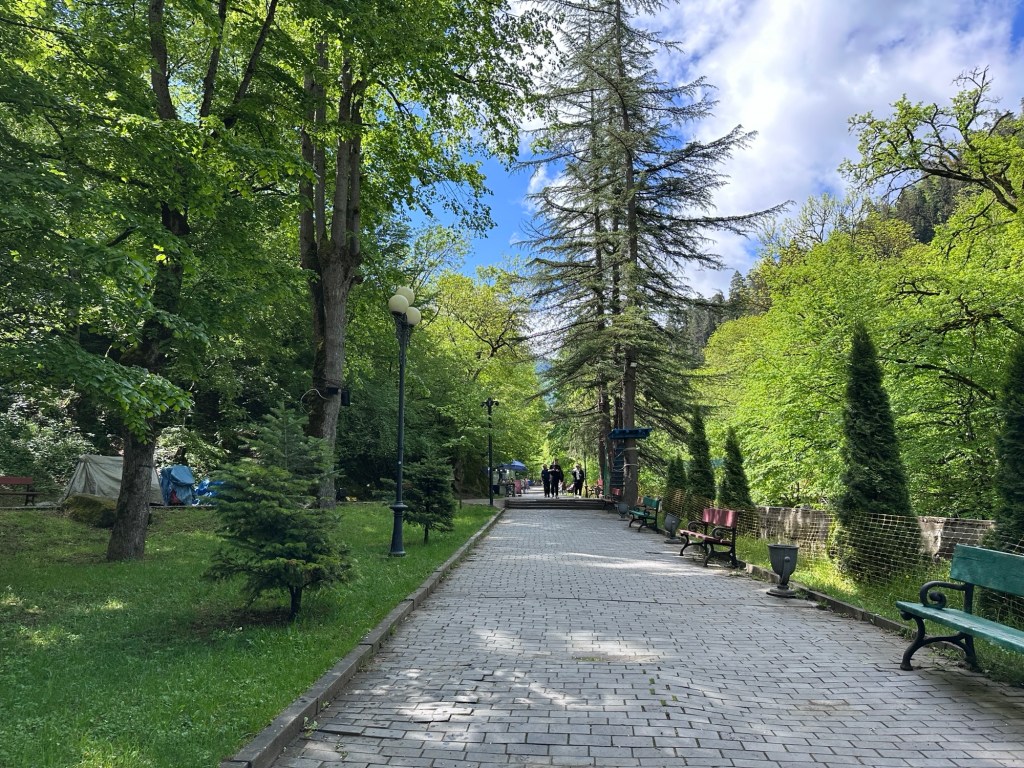
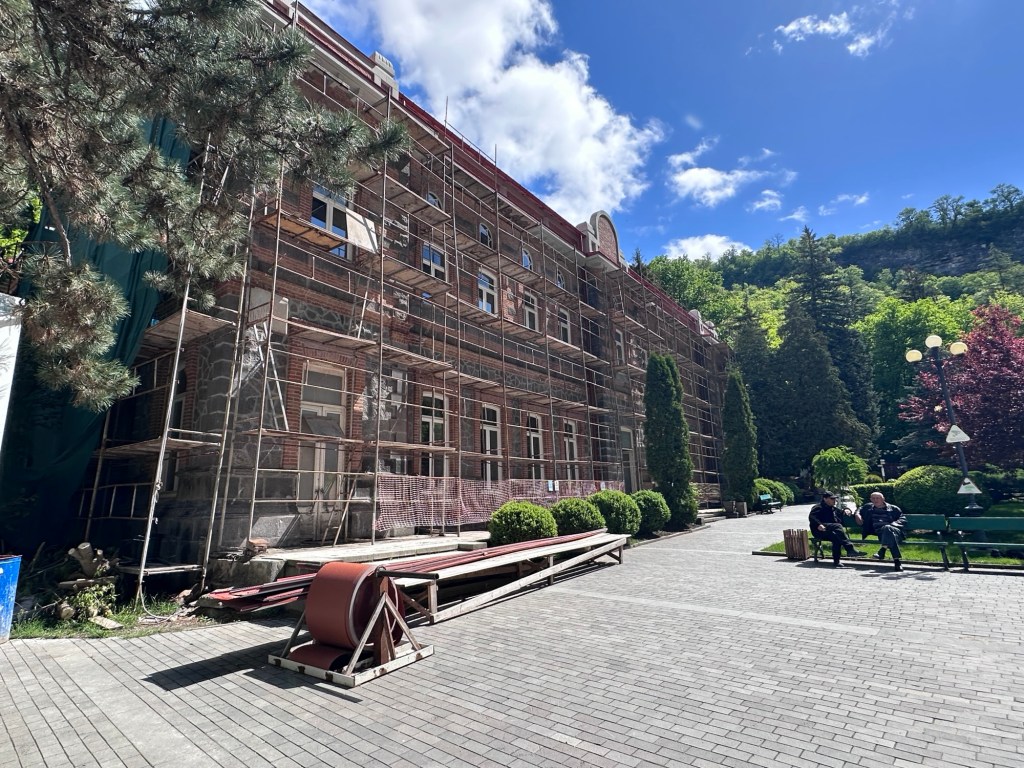
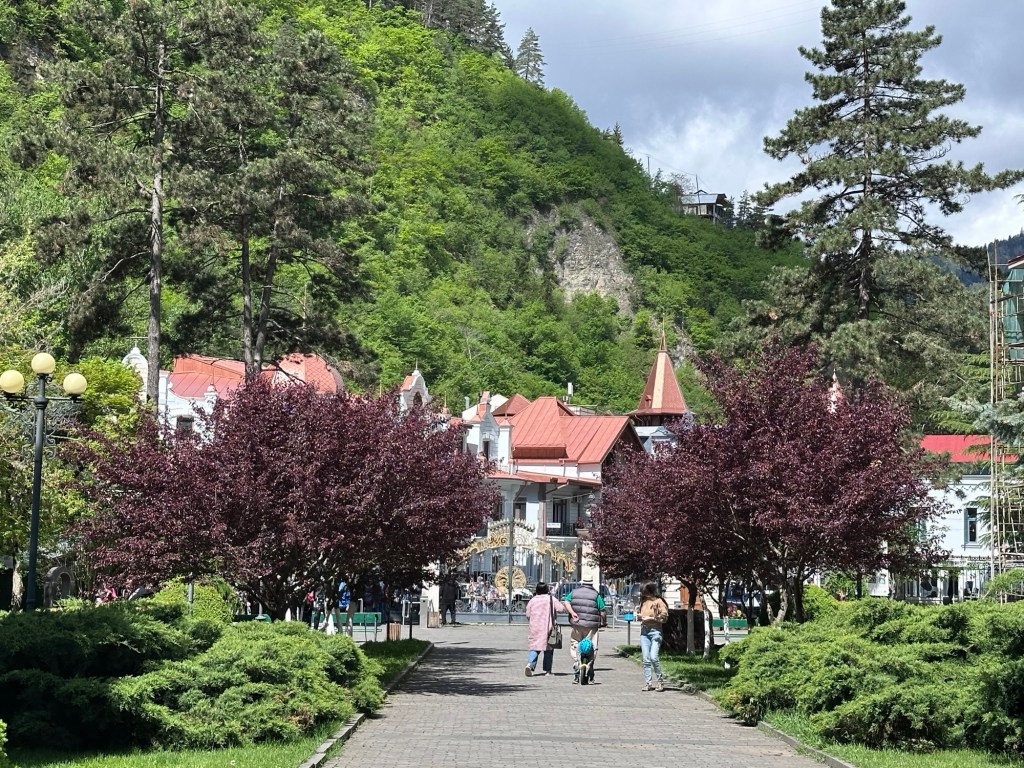
Our first stop is at Borjomi, the sight of a natural suplhur spring that contains healing waters, and also the birthplace of the popular bottled Borjormi Sparkling water that is sold internationally. We try it once at one smaller spring while it is cold and it is drinkable but slightly sulphuric but when we try the spring warm in another location it is has a strong sulphur and rust taste. It is supposed to be healing so hopefully it fixes my stomach that has not been cooperative lately. The springs are in a peaceful park along a river with bridge crossings and depending on where we are in the park we hear either the chirp of birds or the sound of loud music from a tourist vendor. The historic borjomi building is currently under construction and will be reopened as a museum.
Borjormi buiding
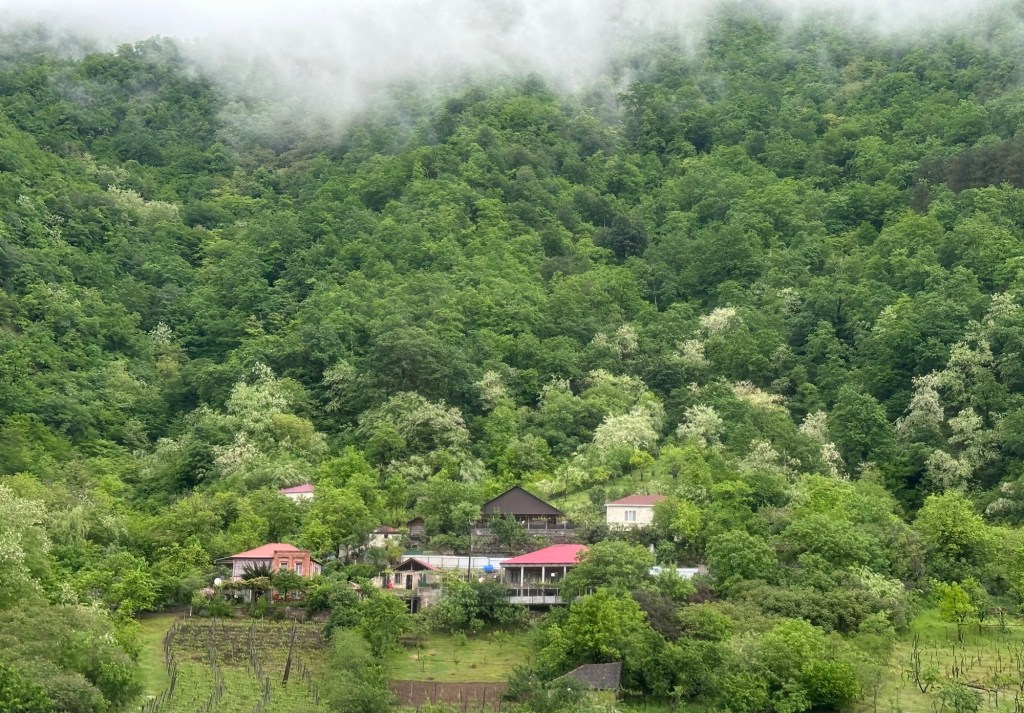
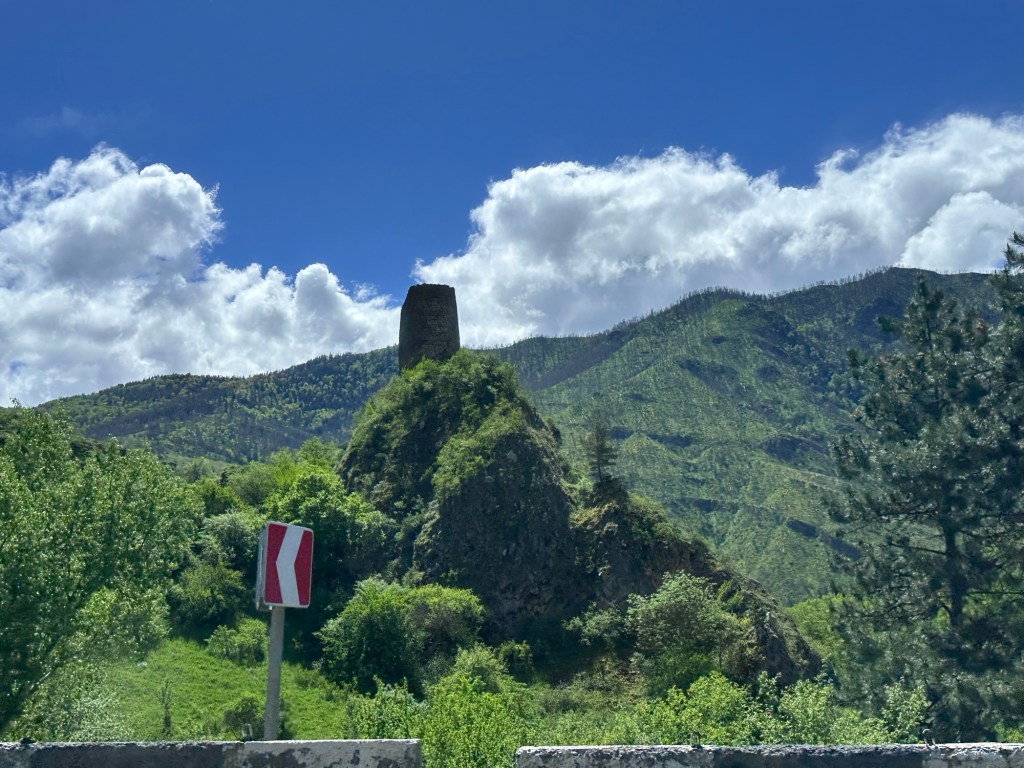
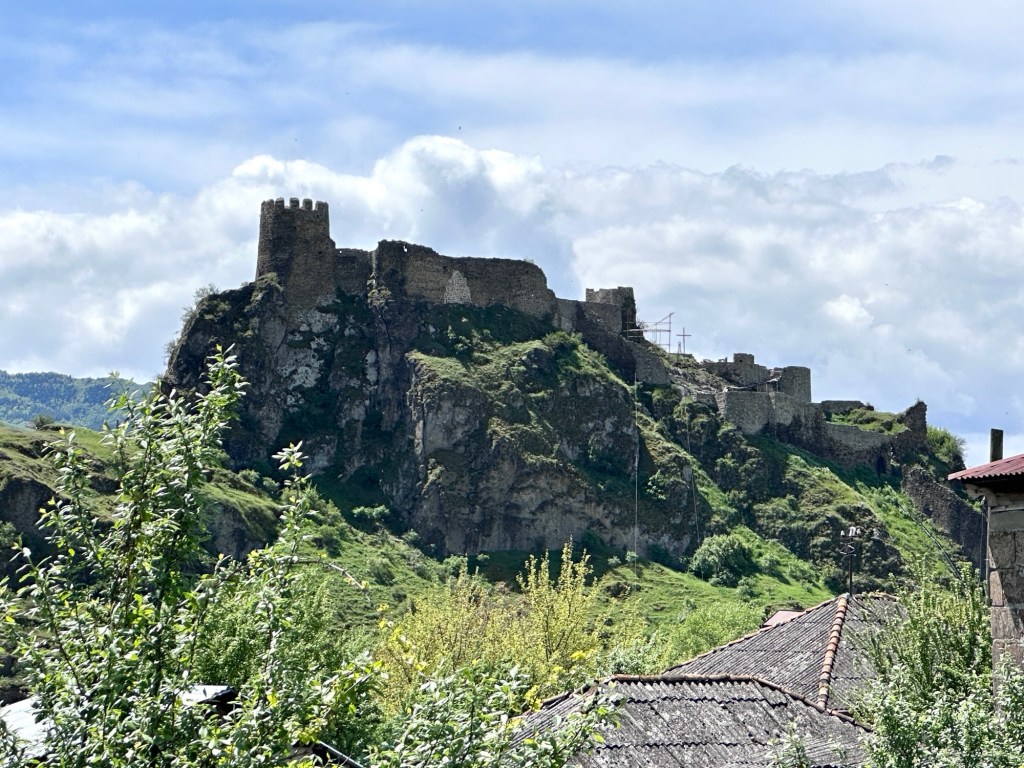
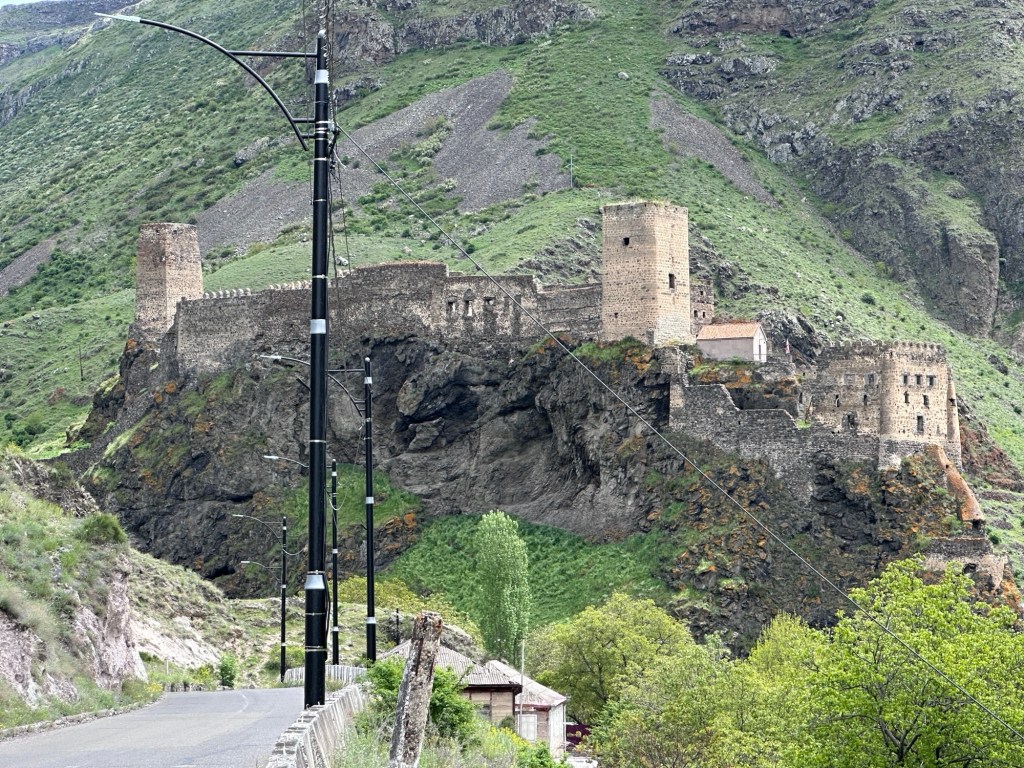
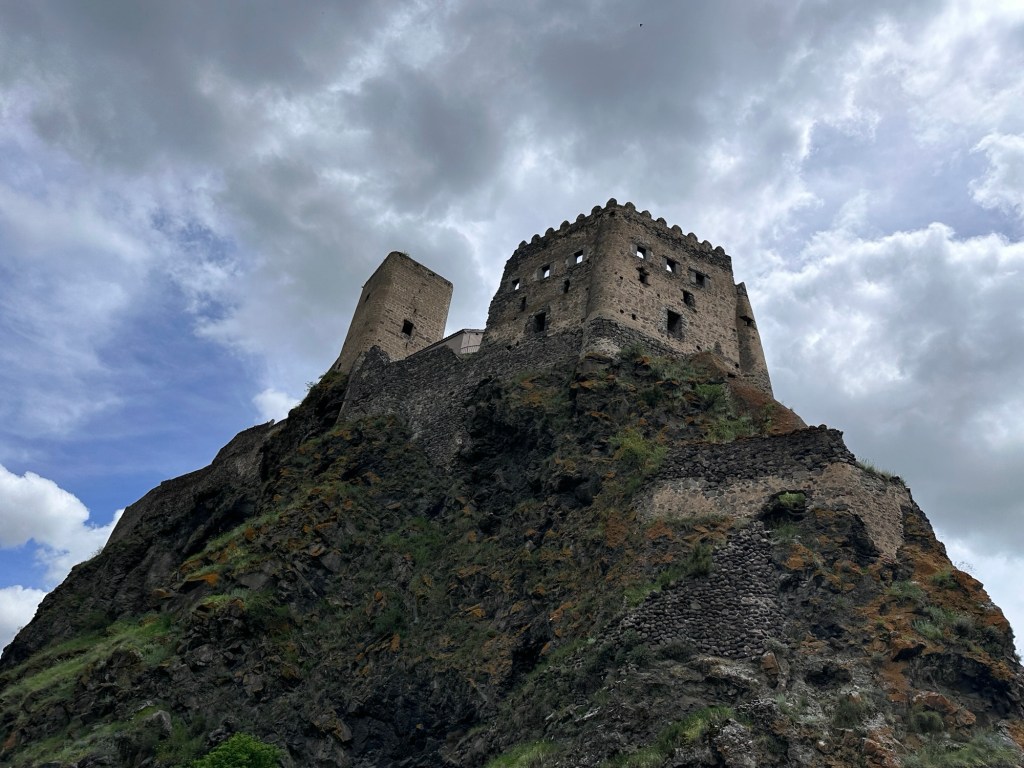
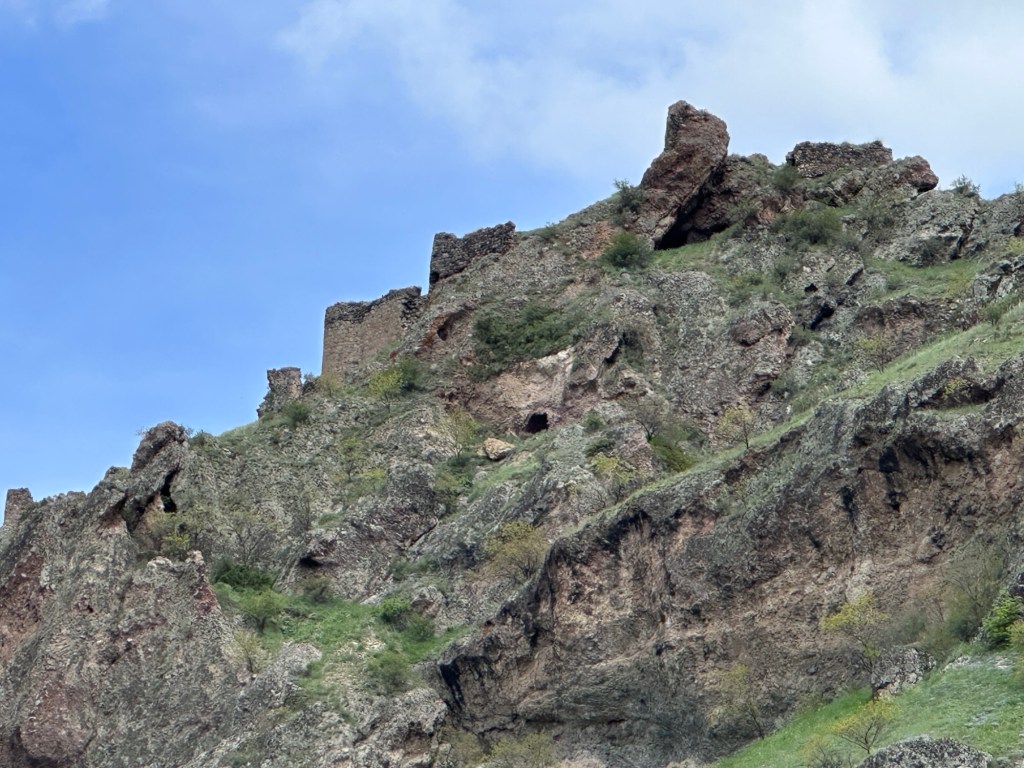
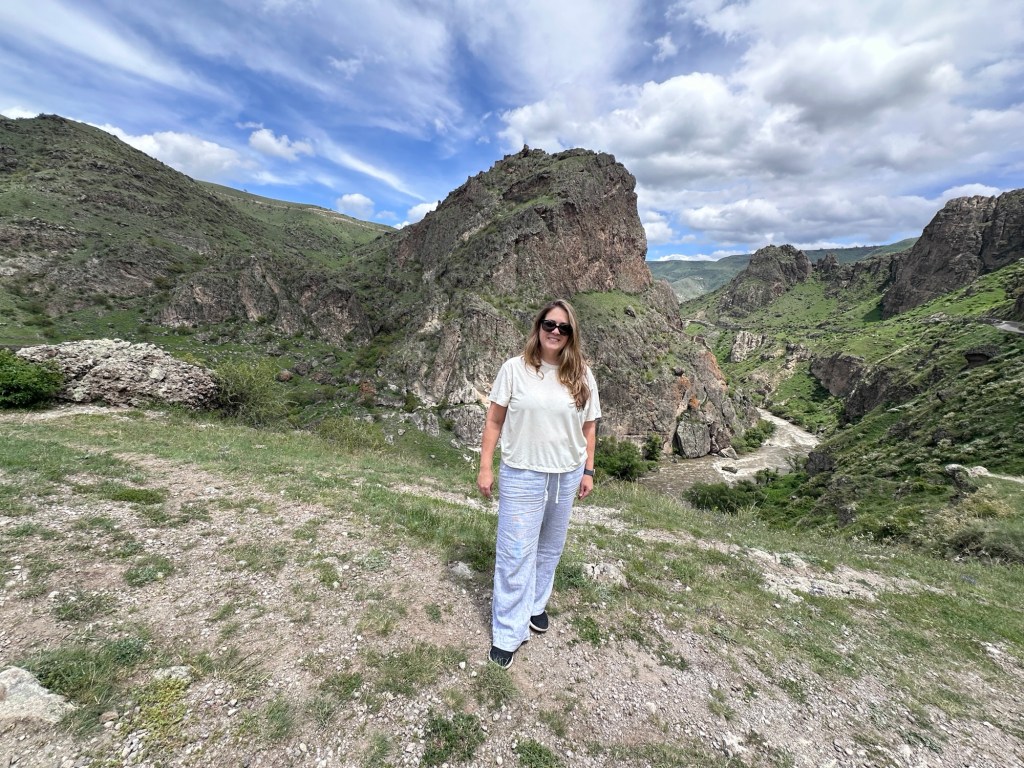
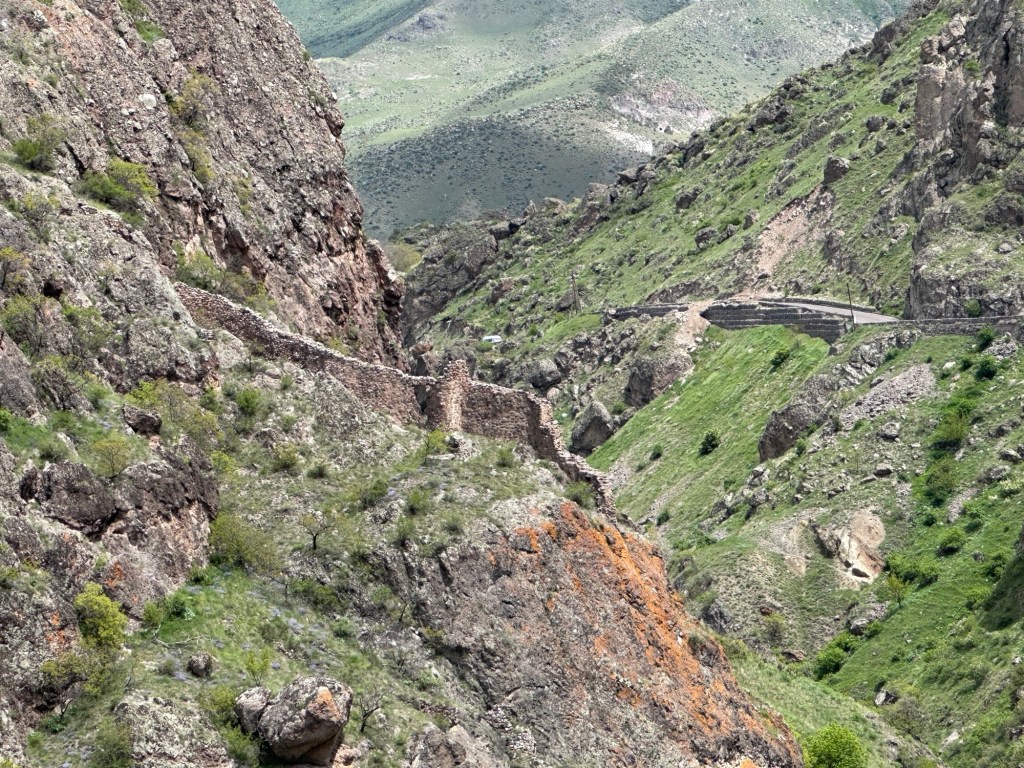
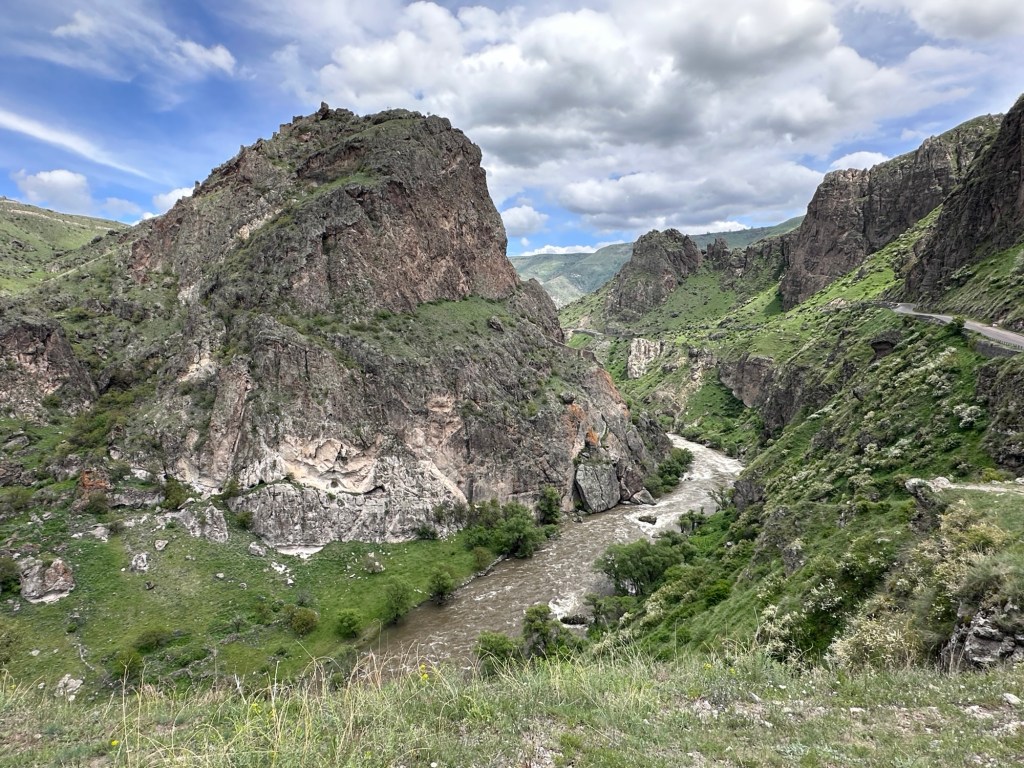
We have a long drive that gets broken up with some road side views including some old fortresses and beautiful views of the river and mountain side.
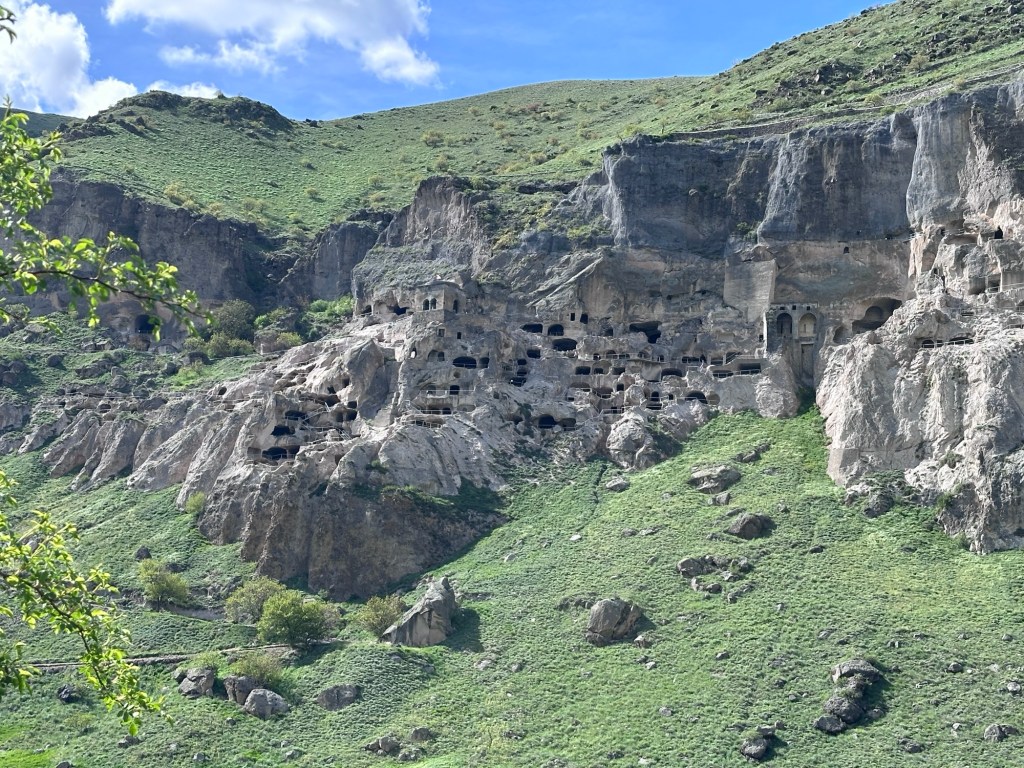
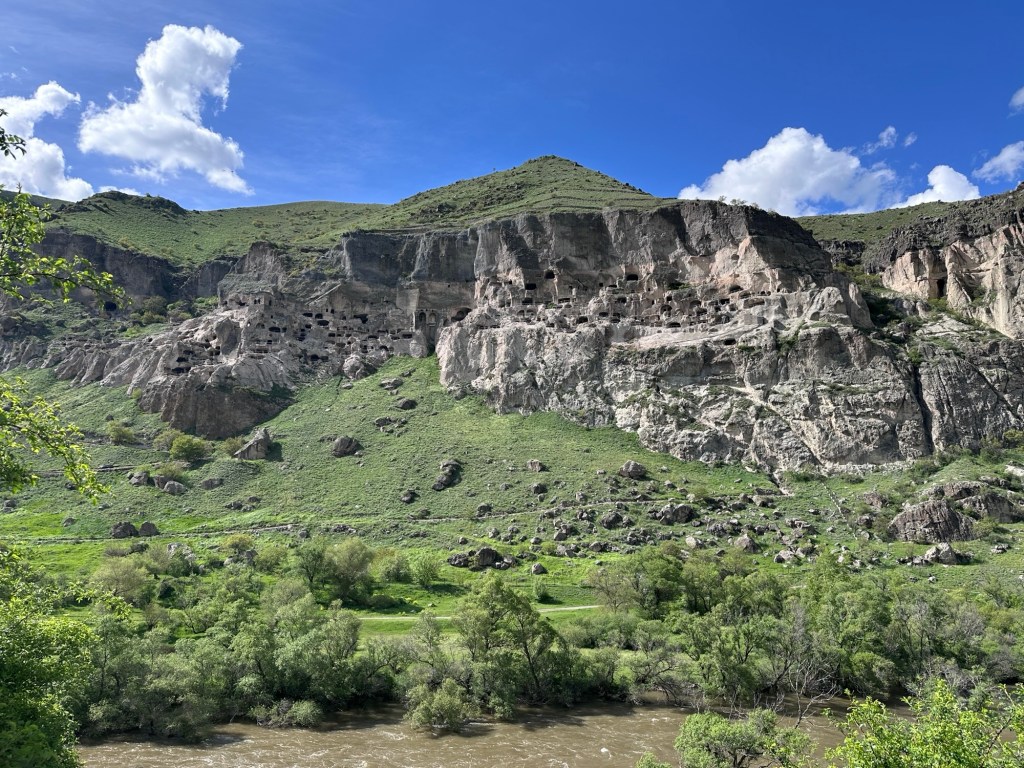
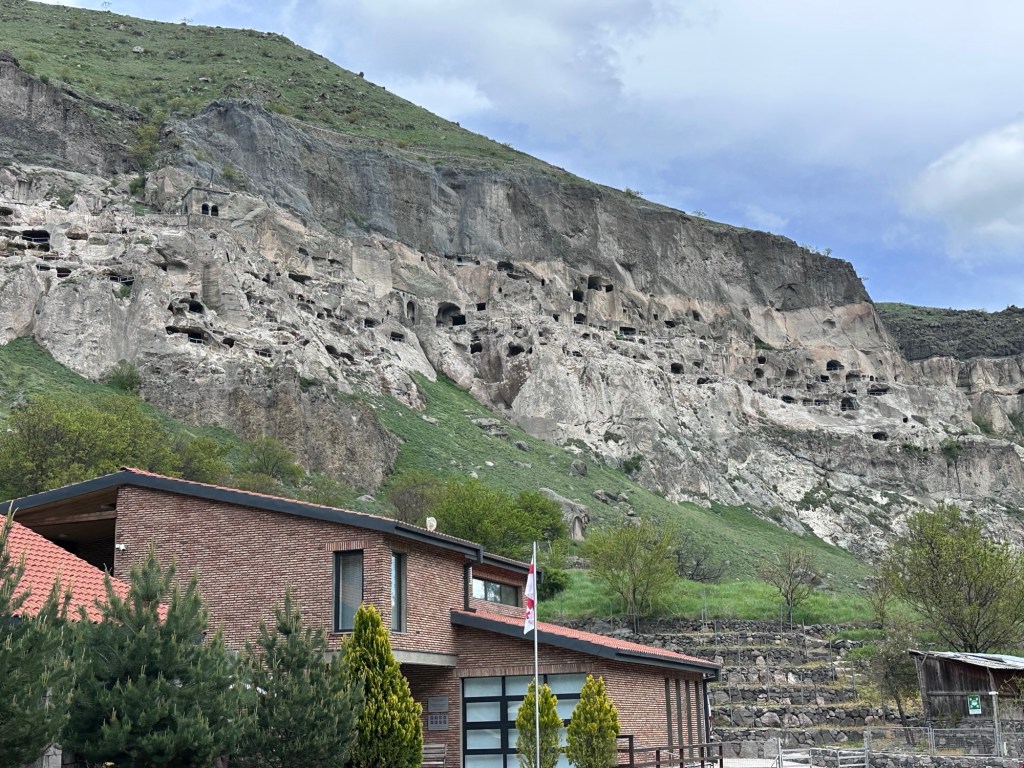
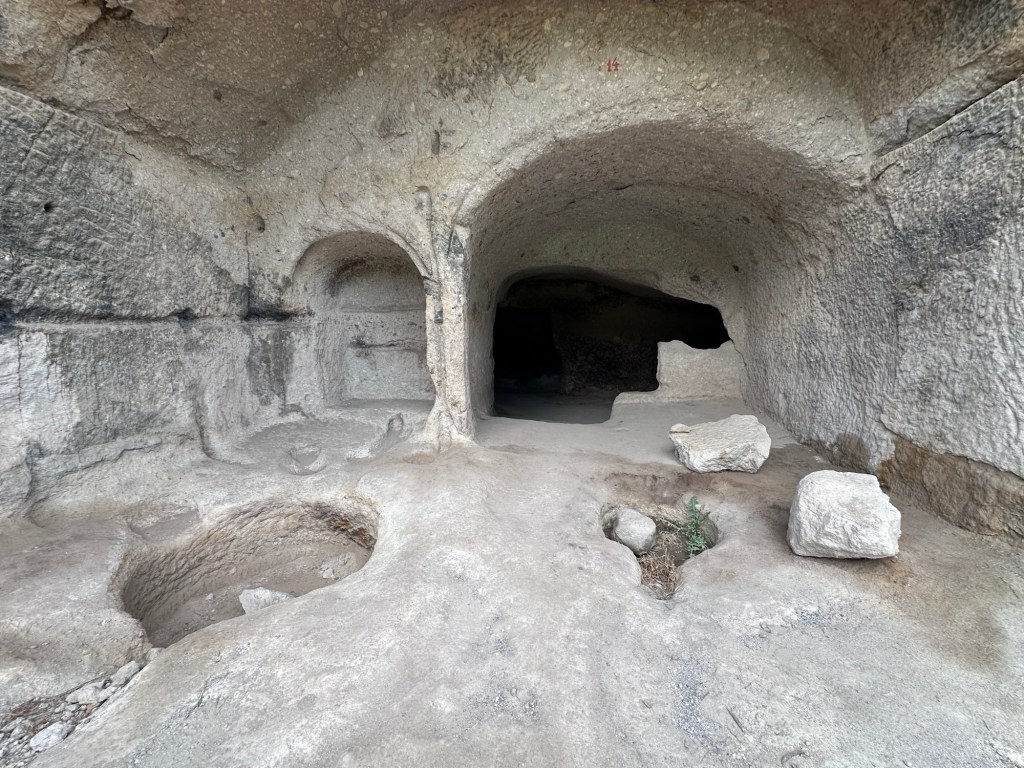
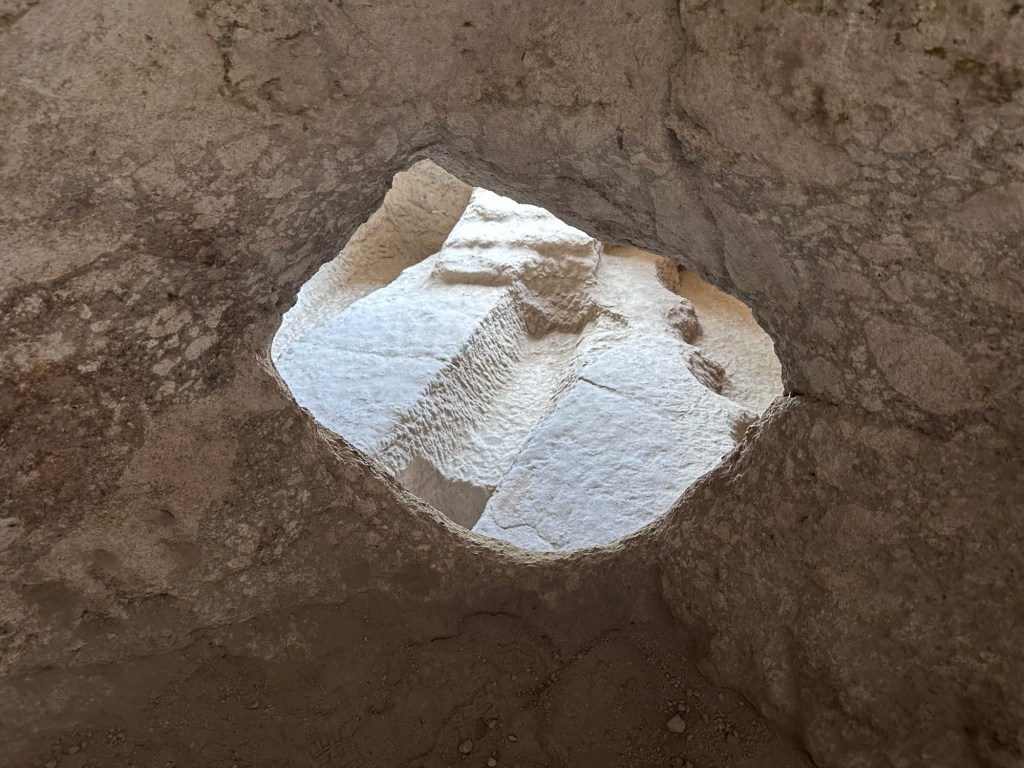
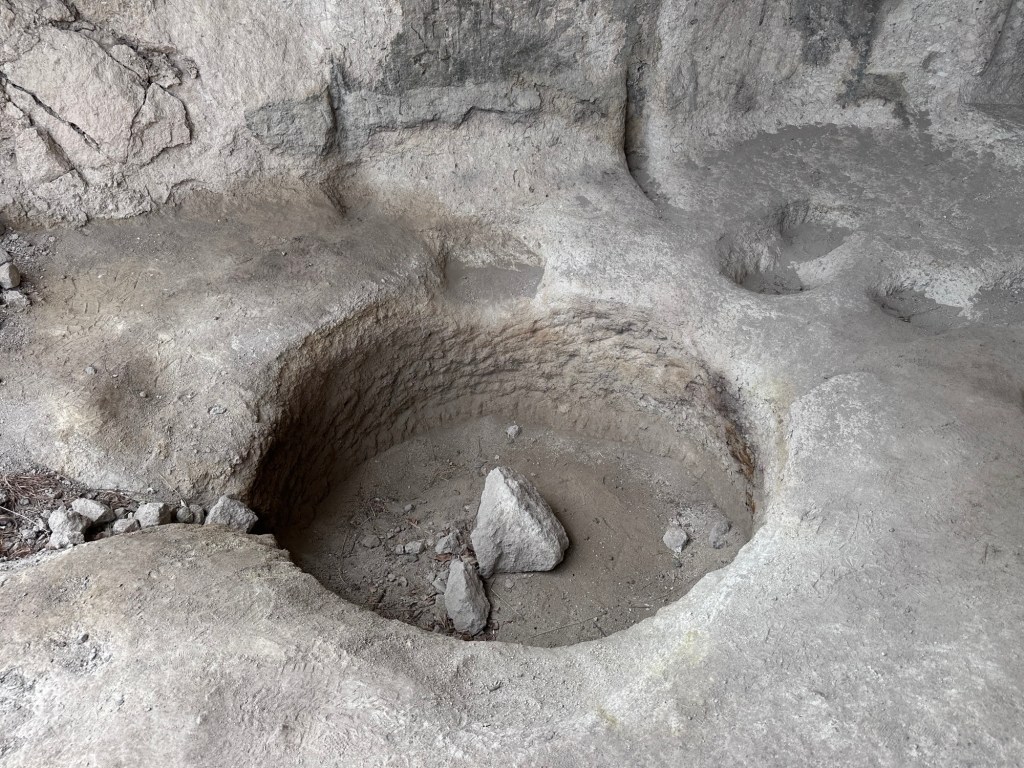
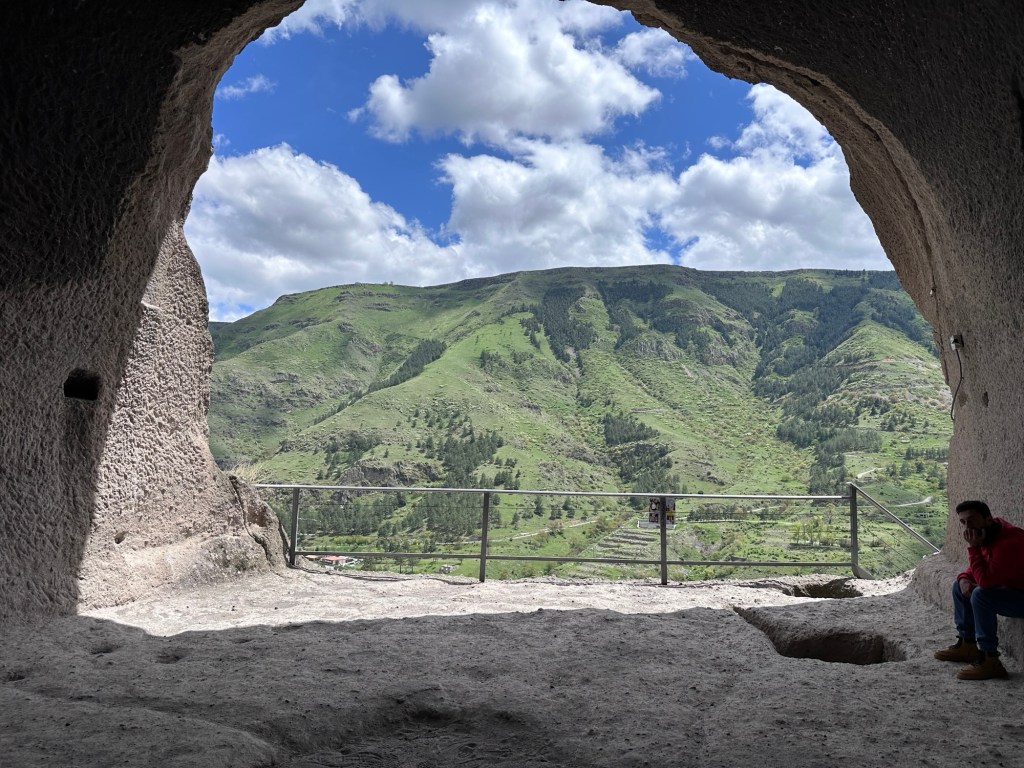
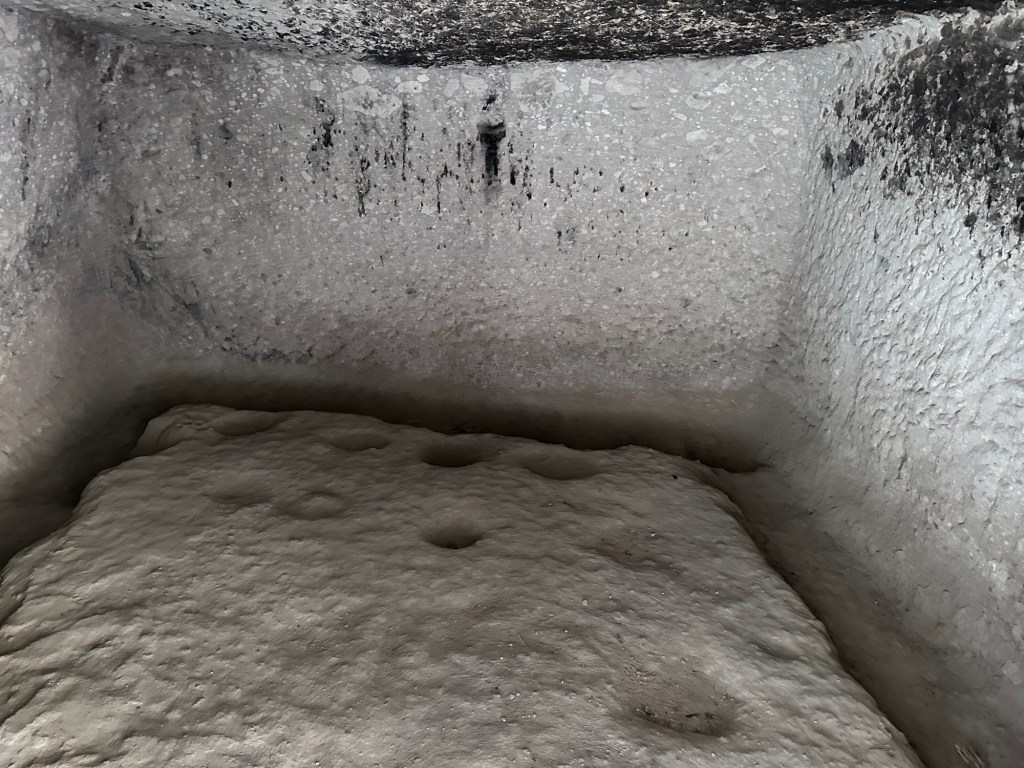
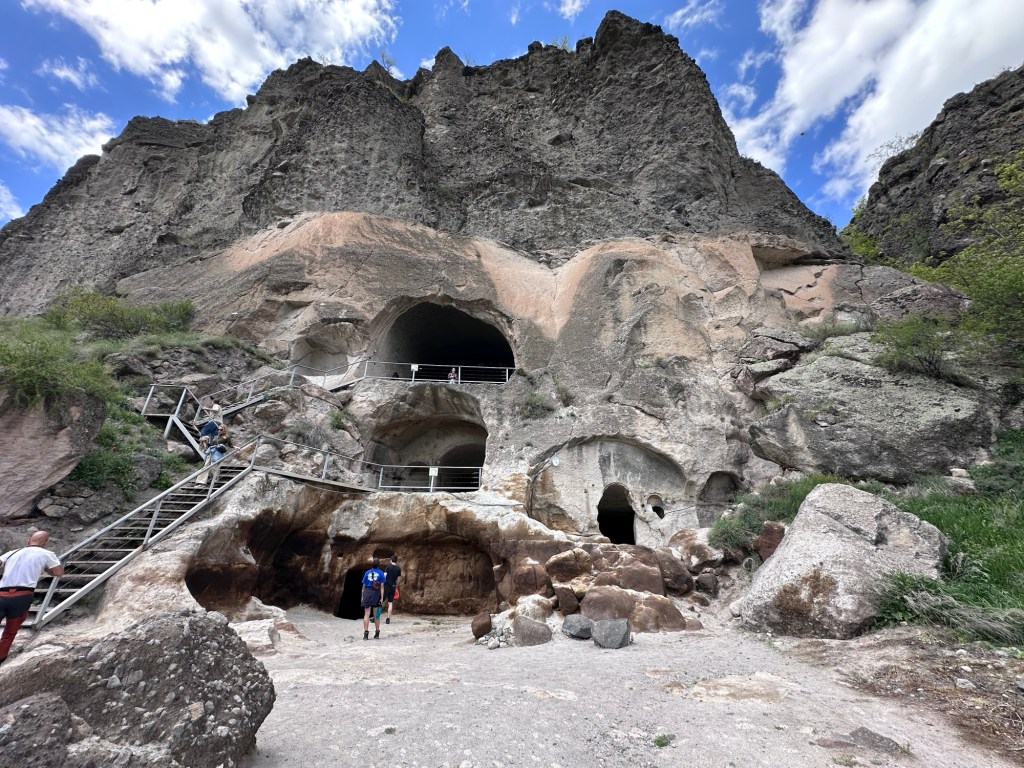
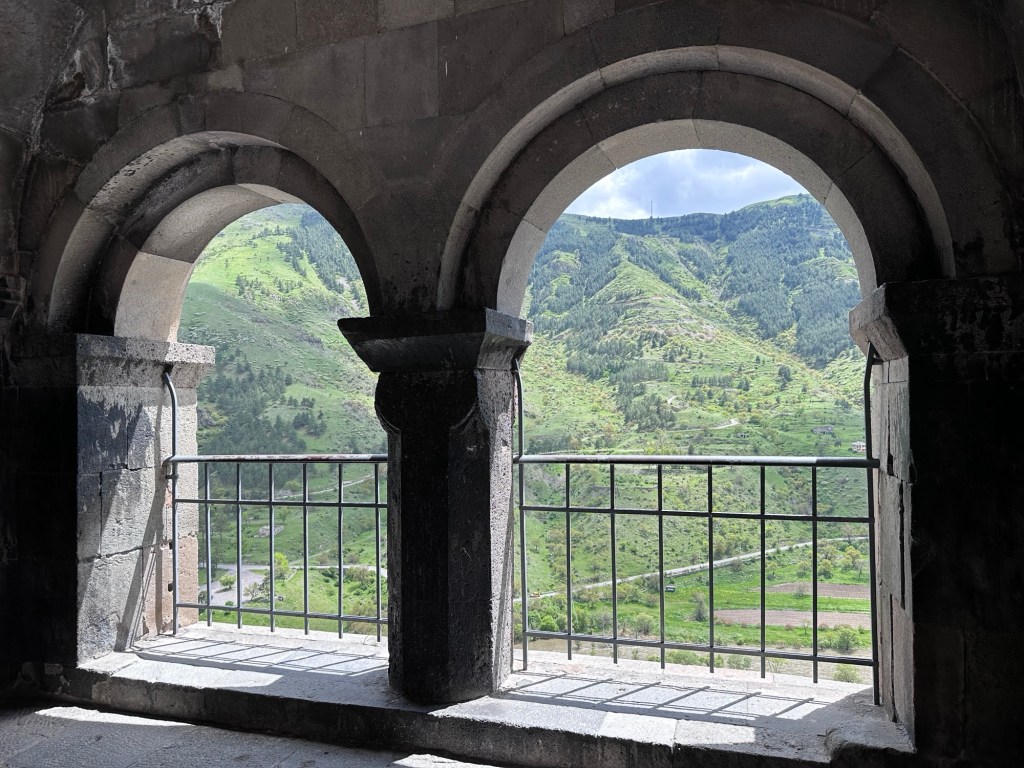
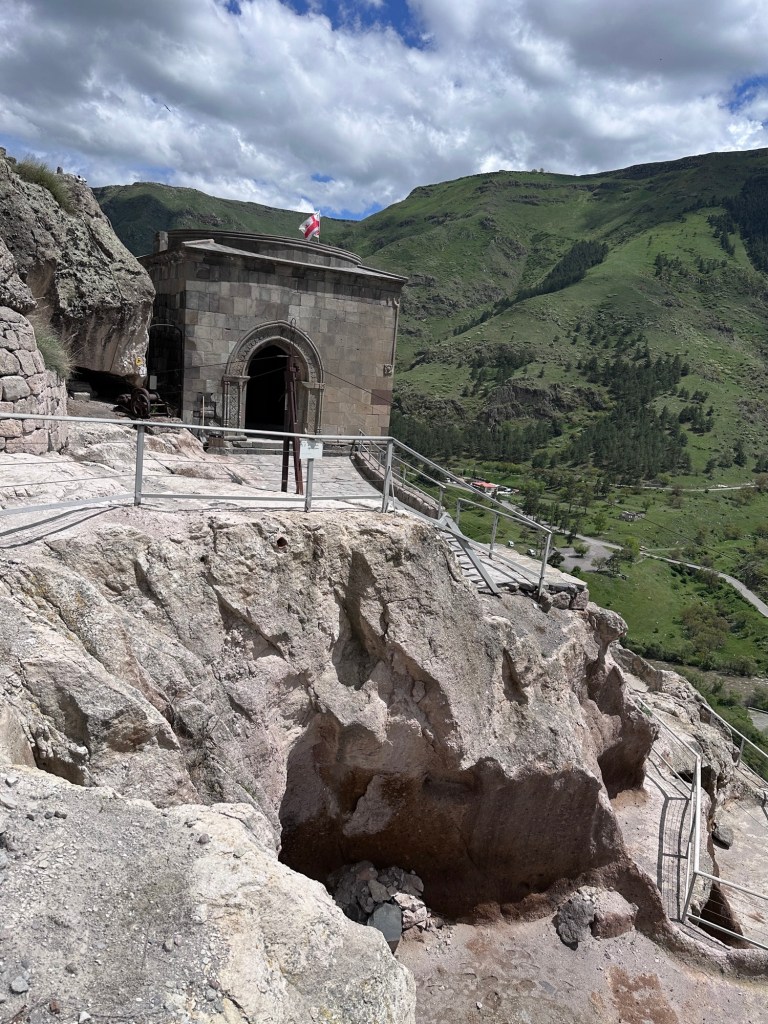
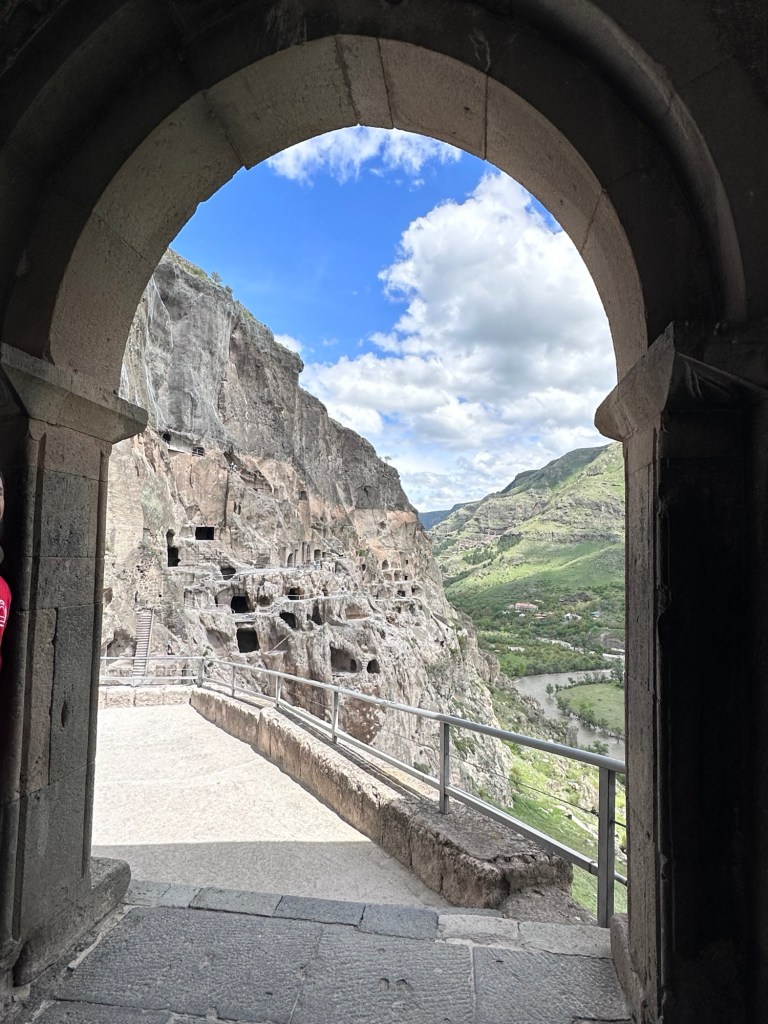
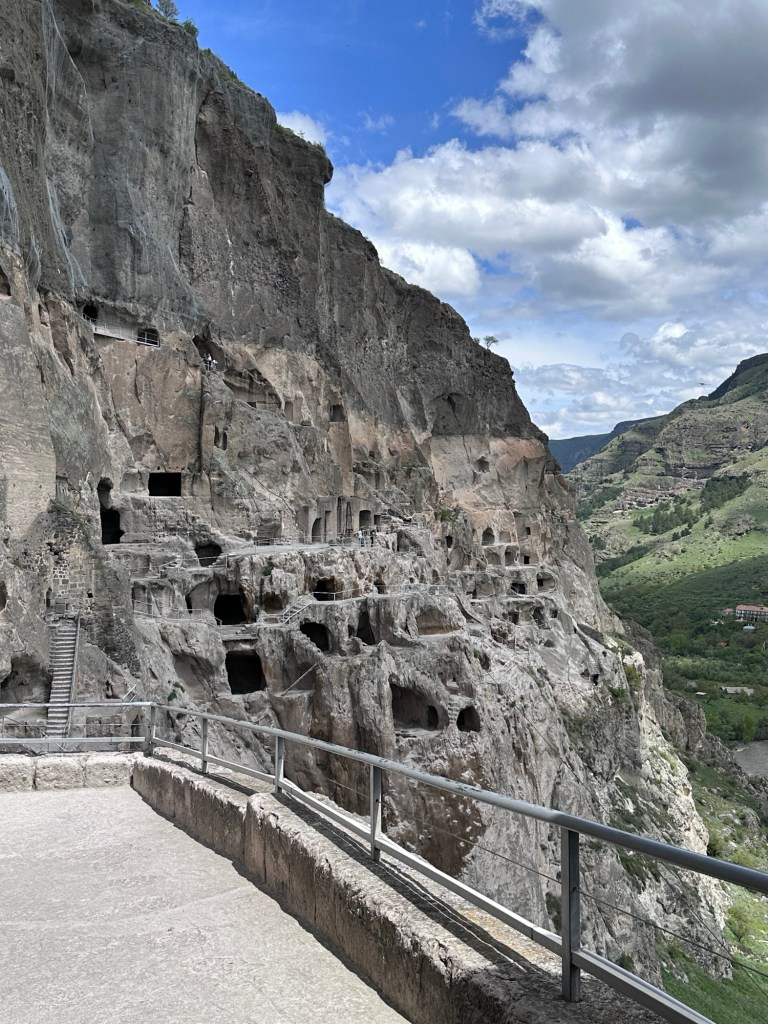
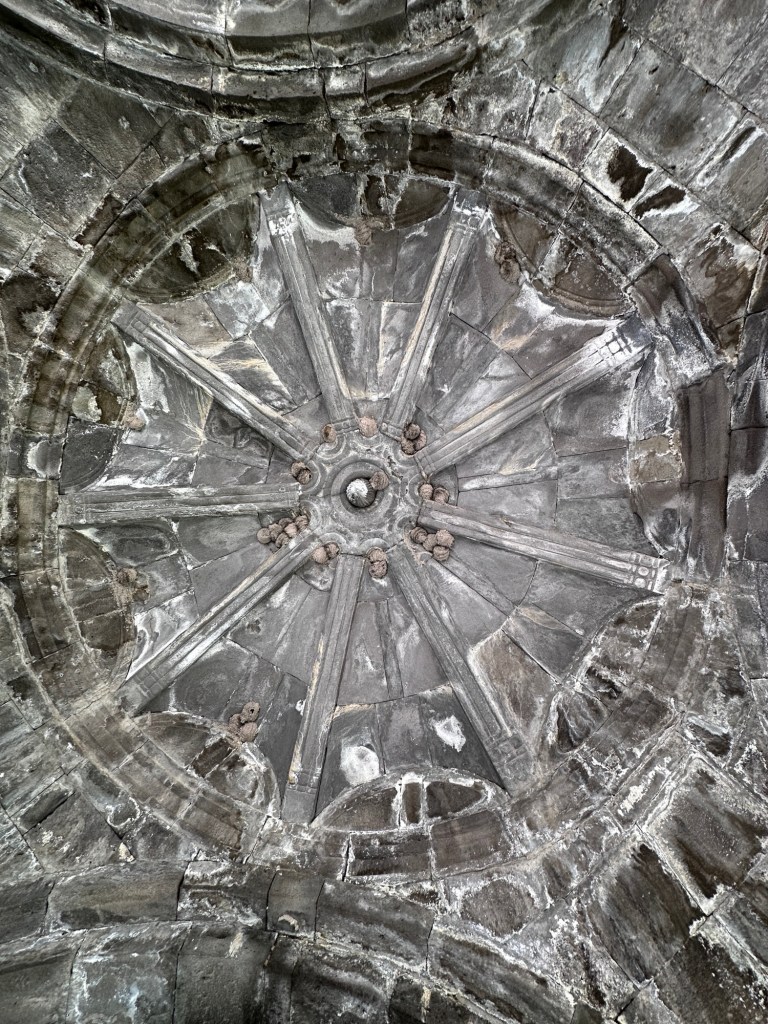
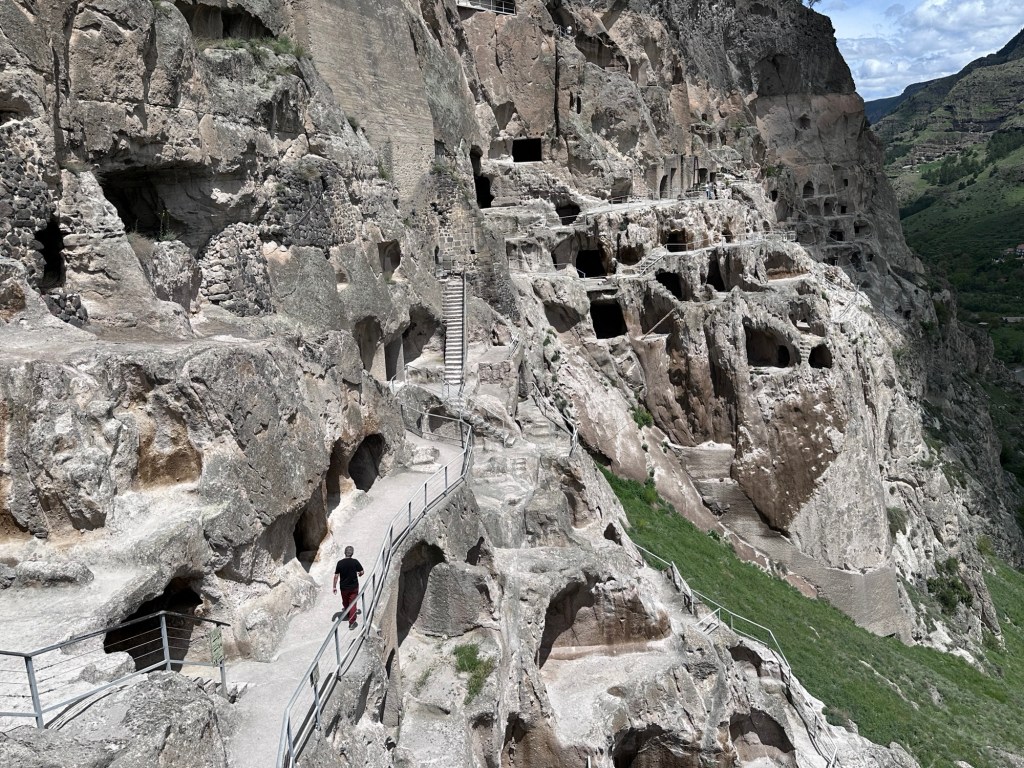
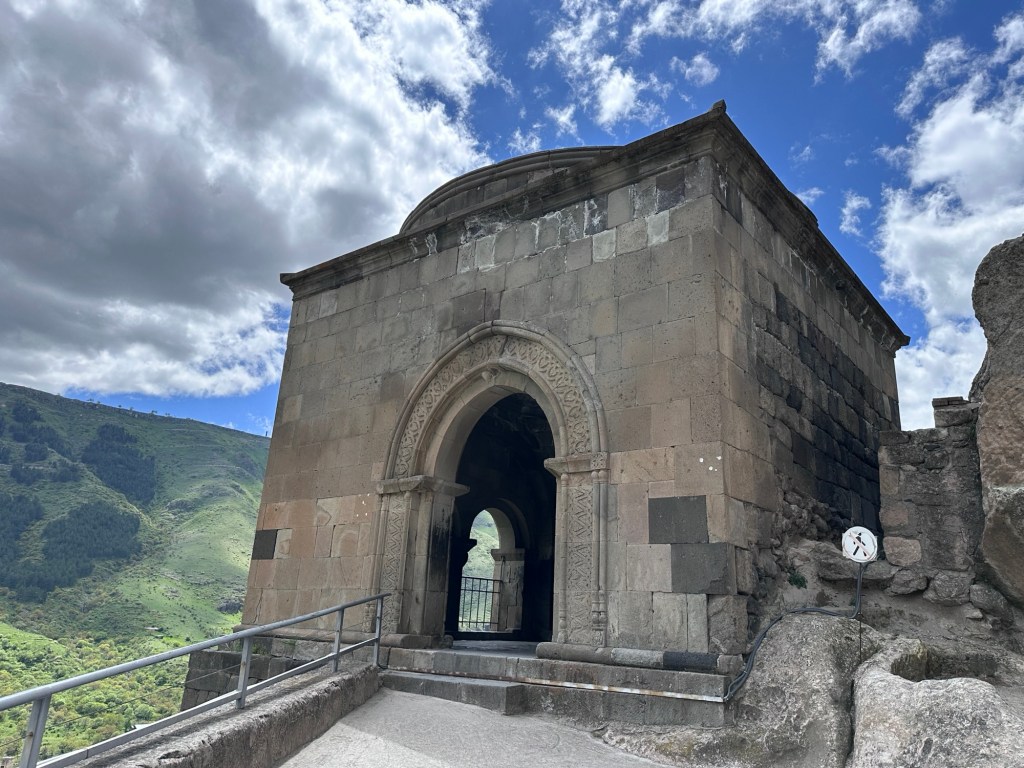
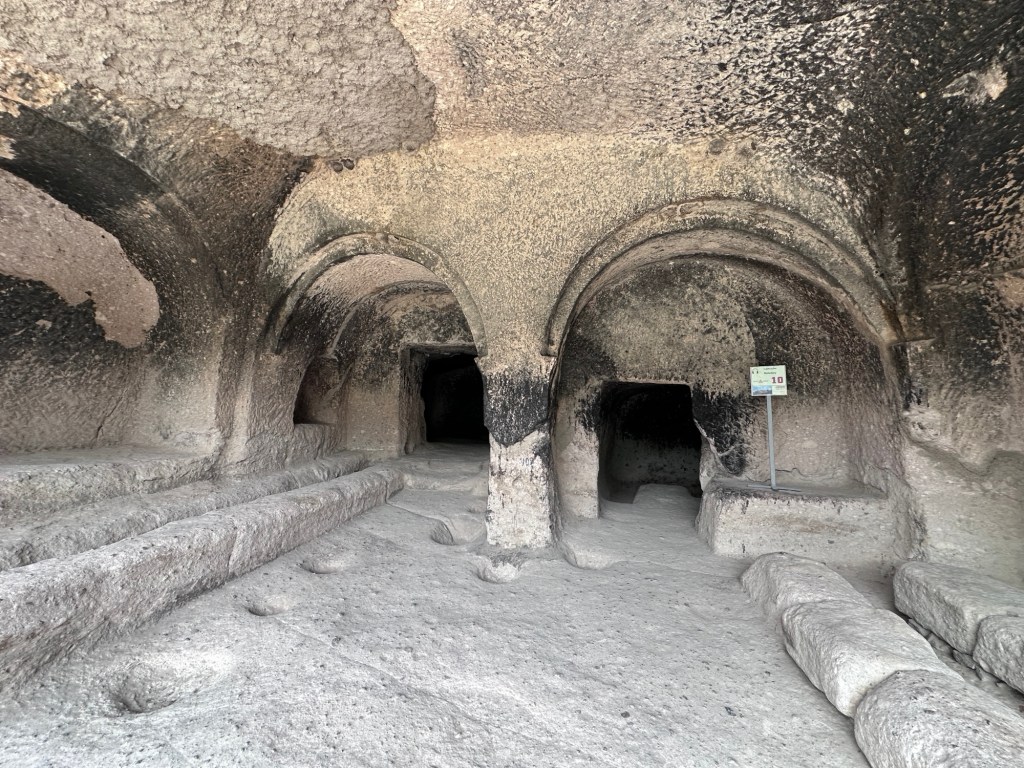
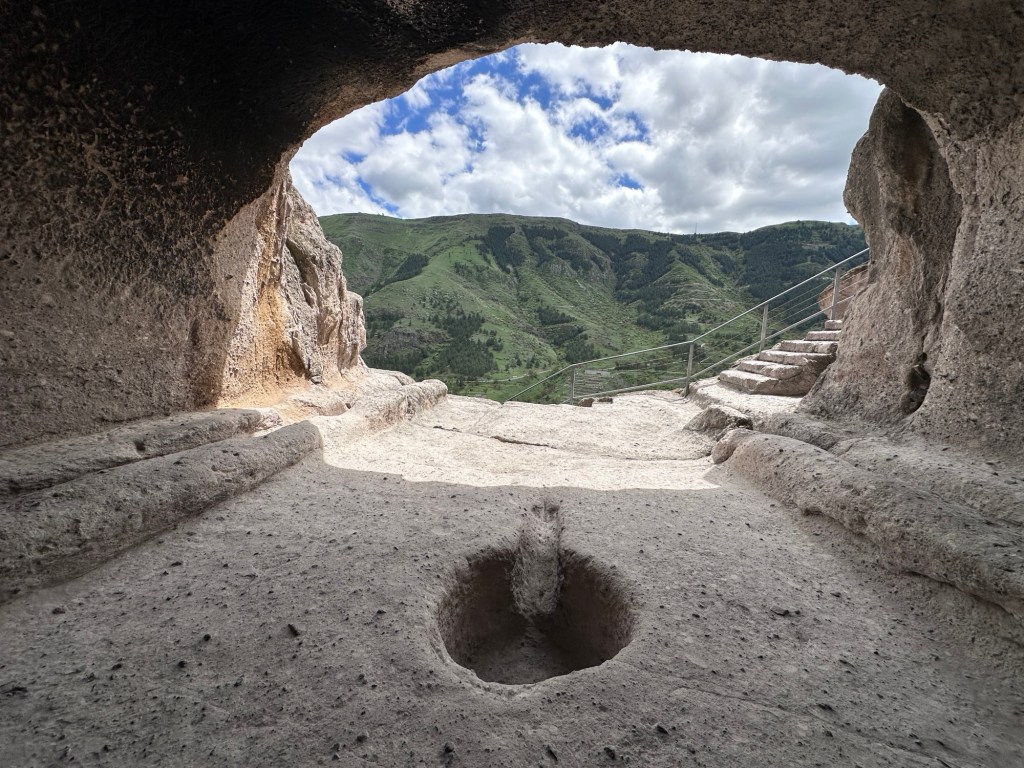
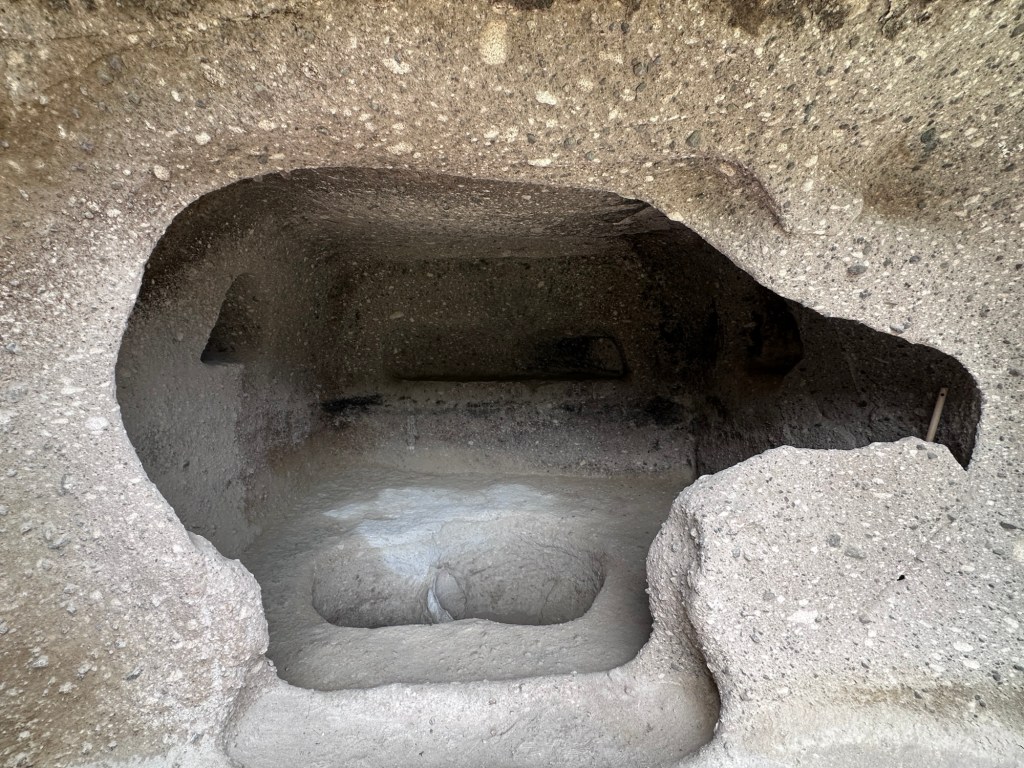
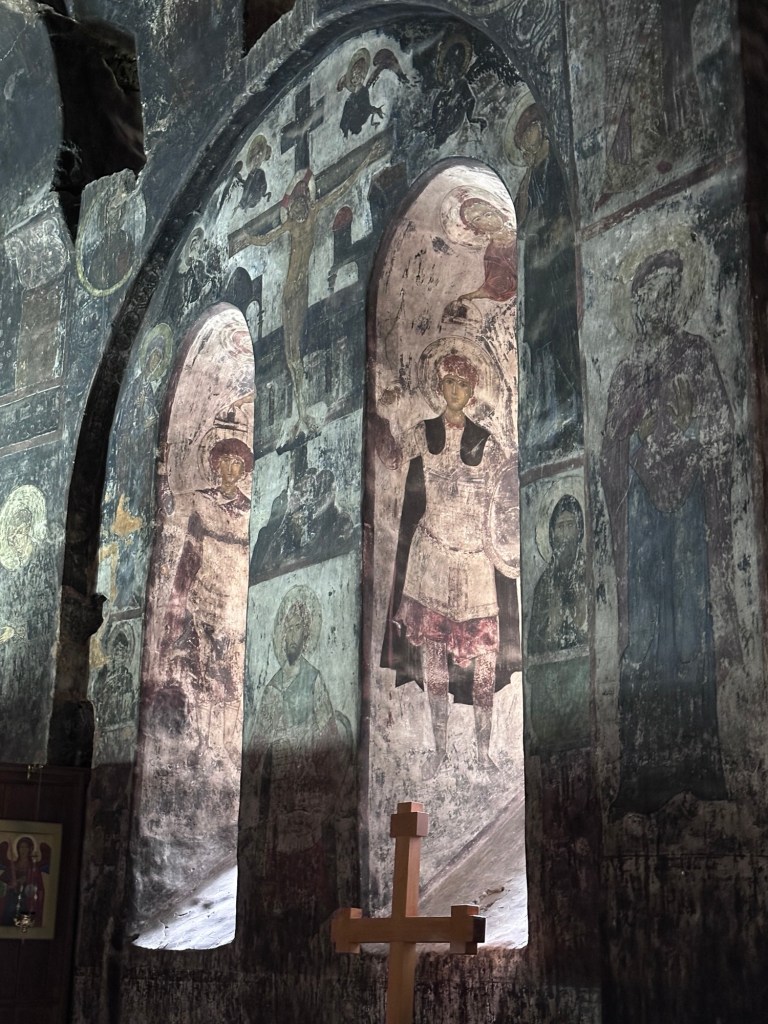
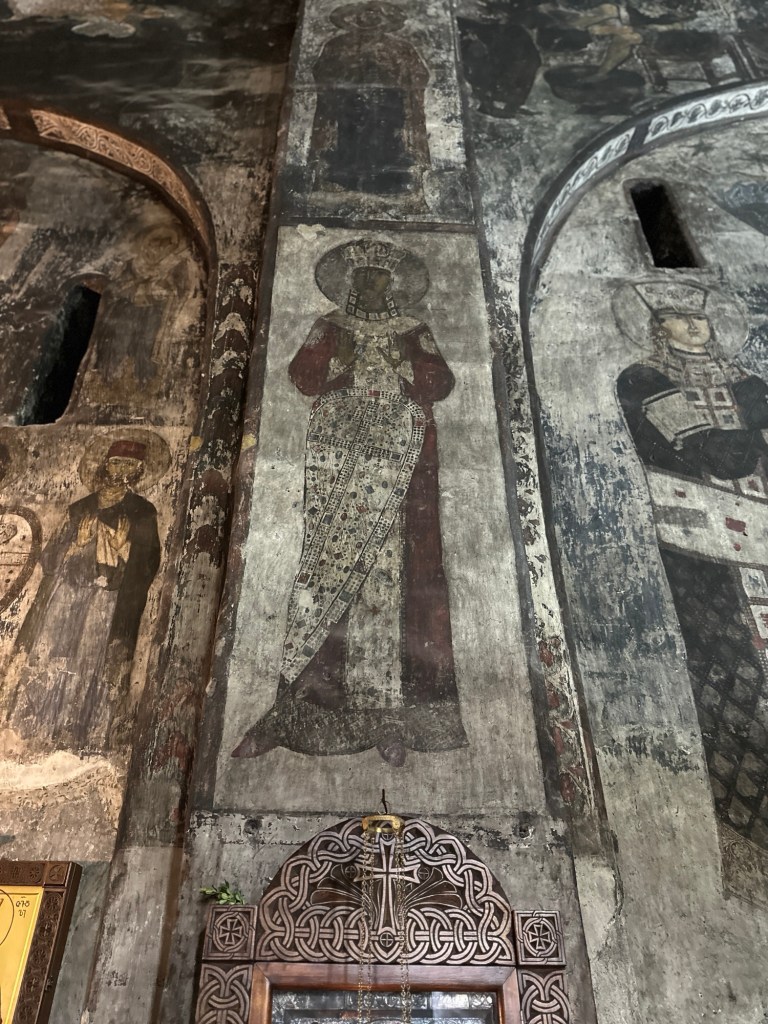
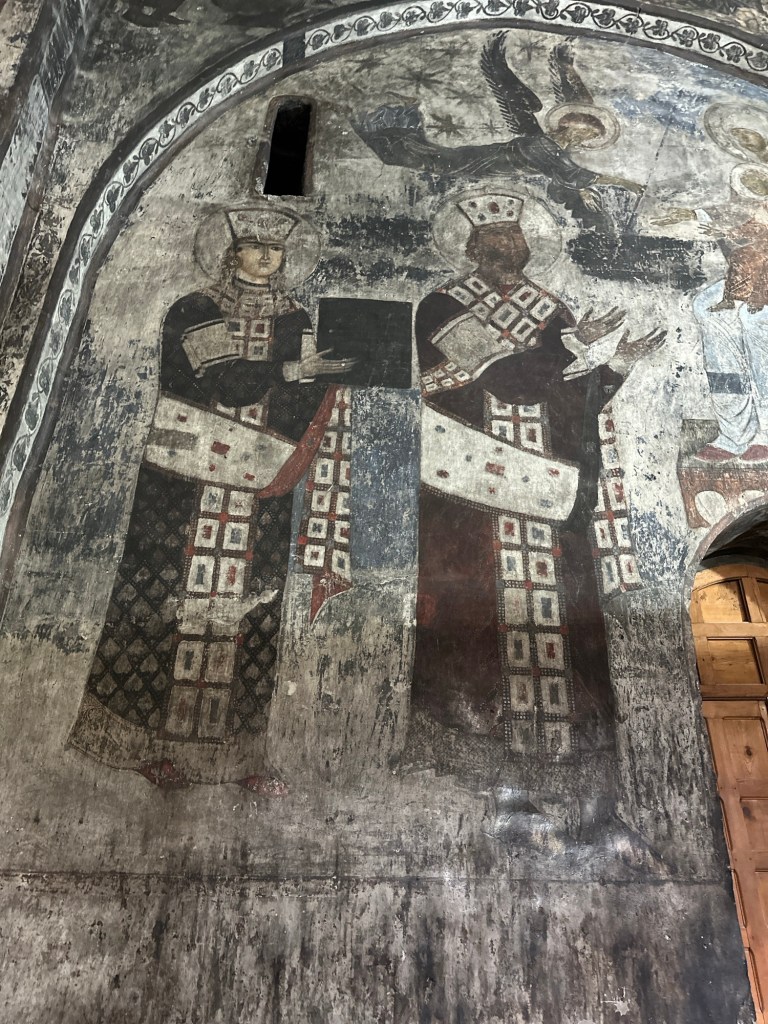
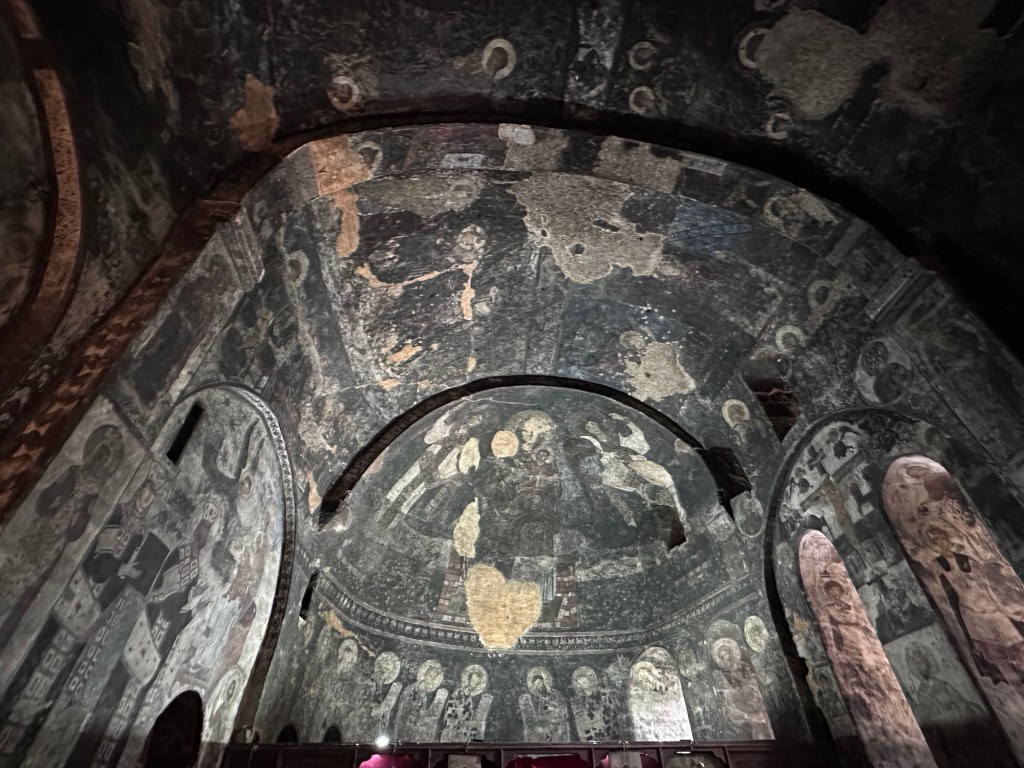
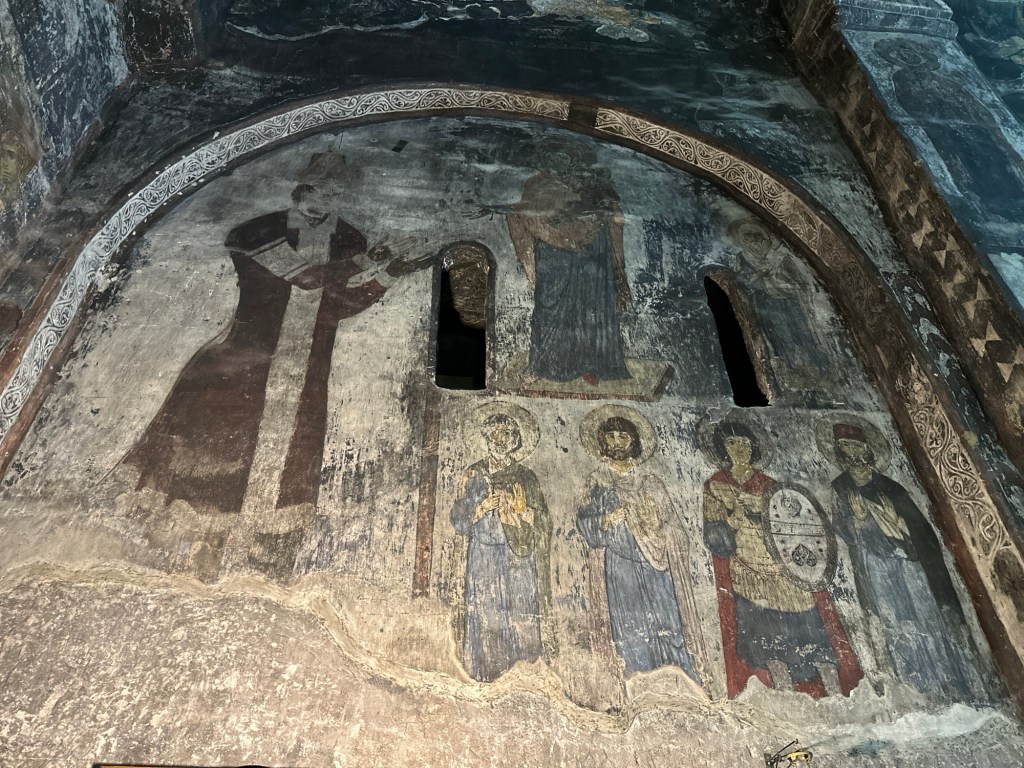
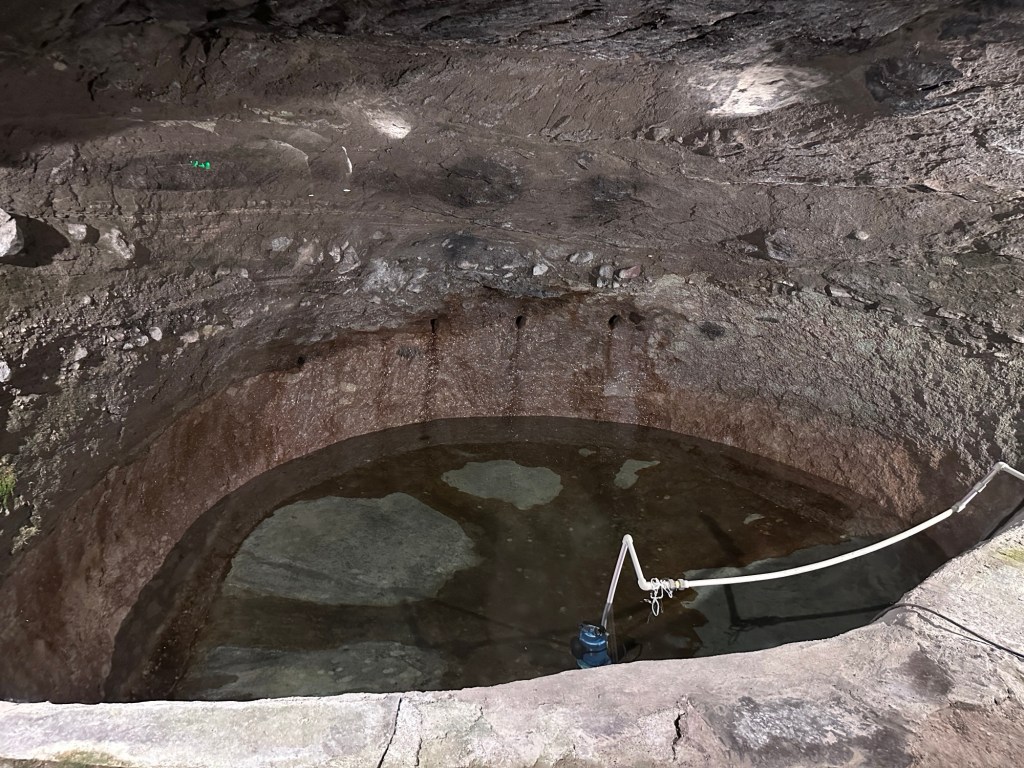
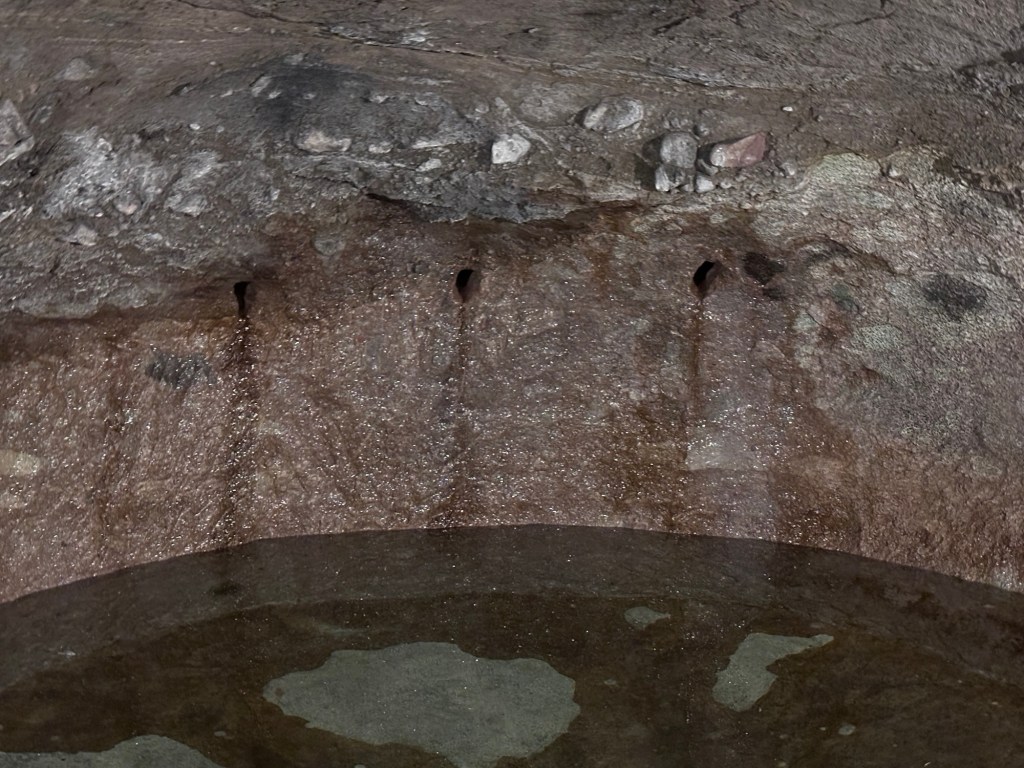
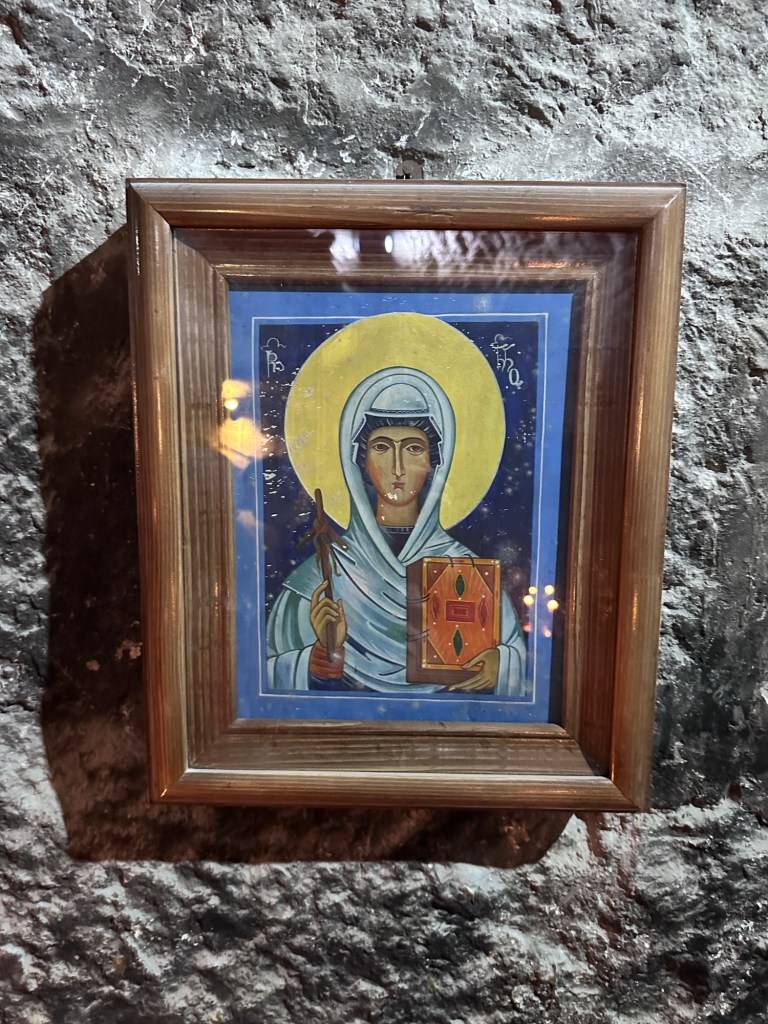
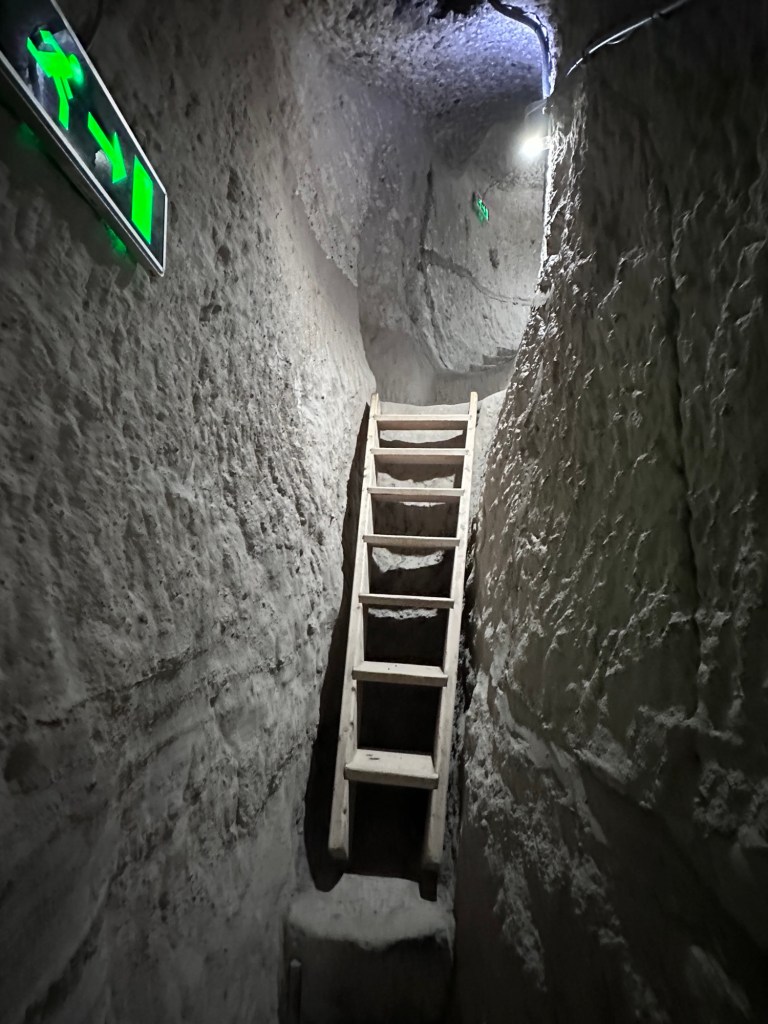
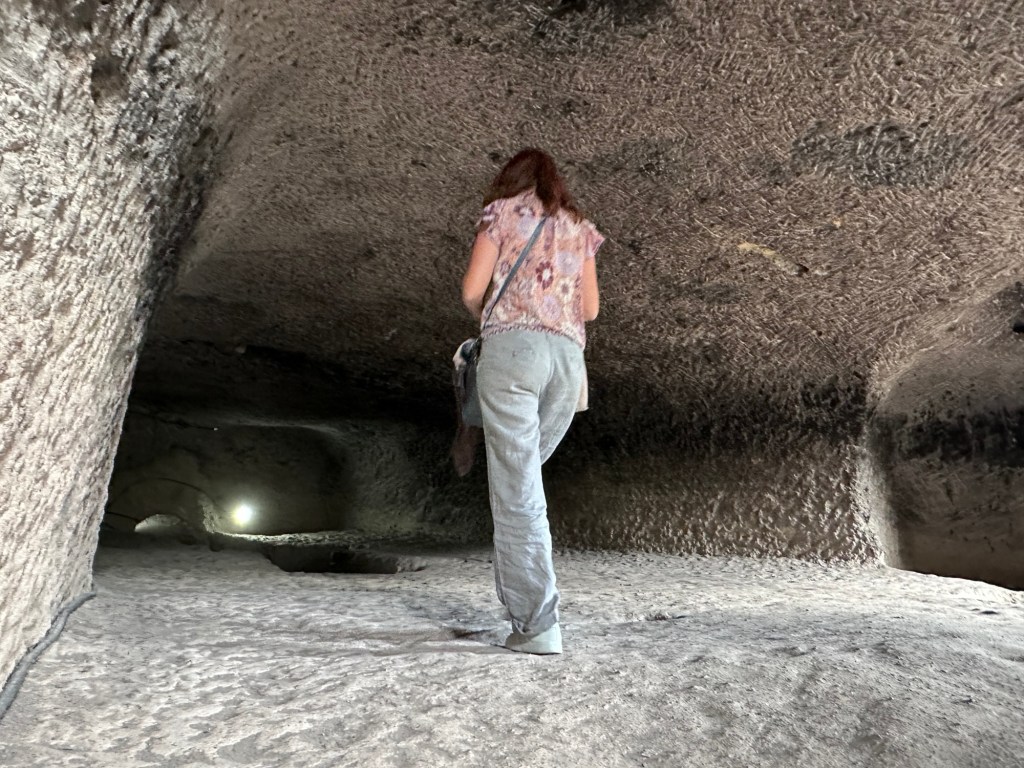
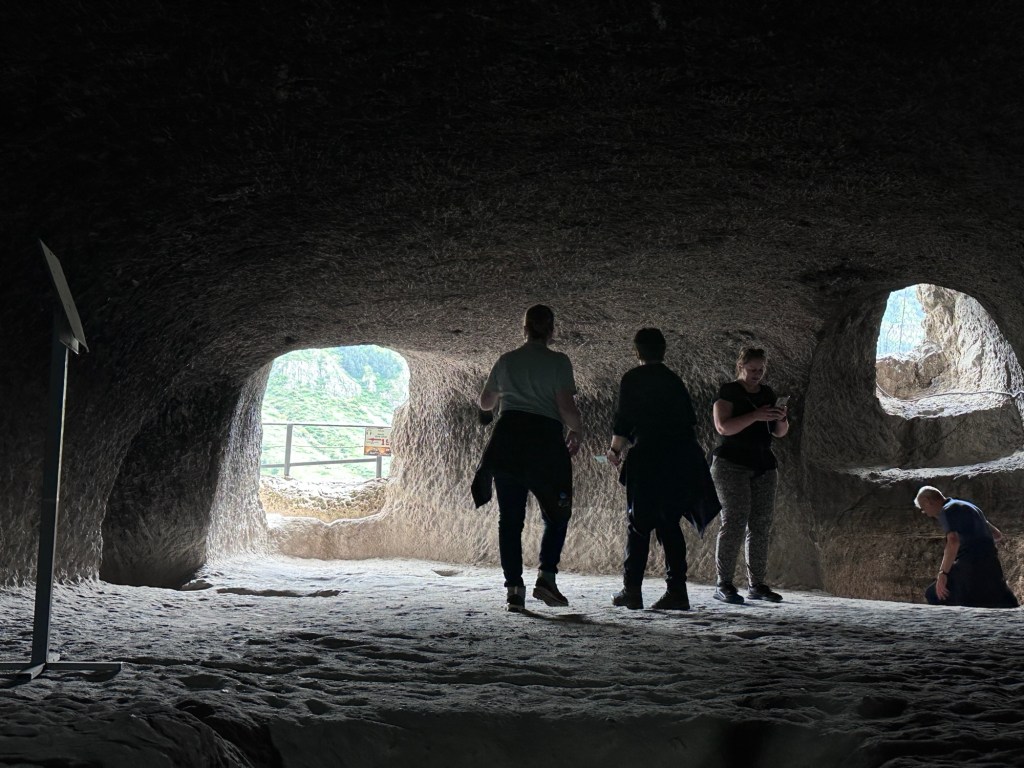
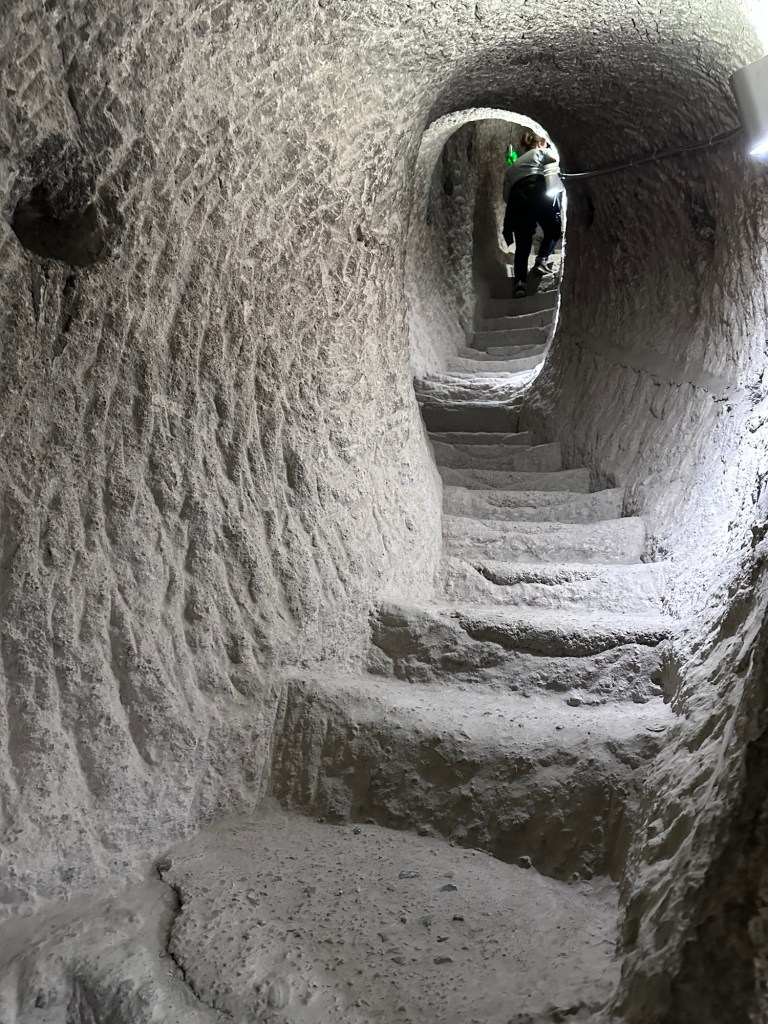
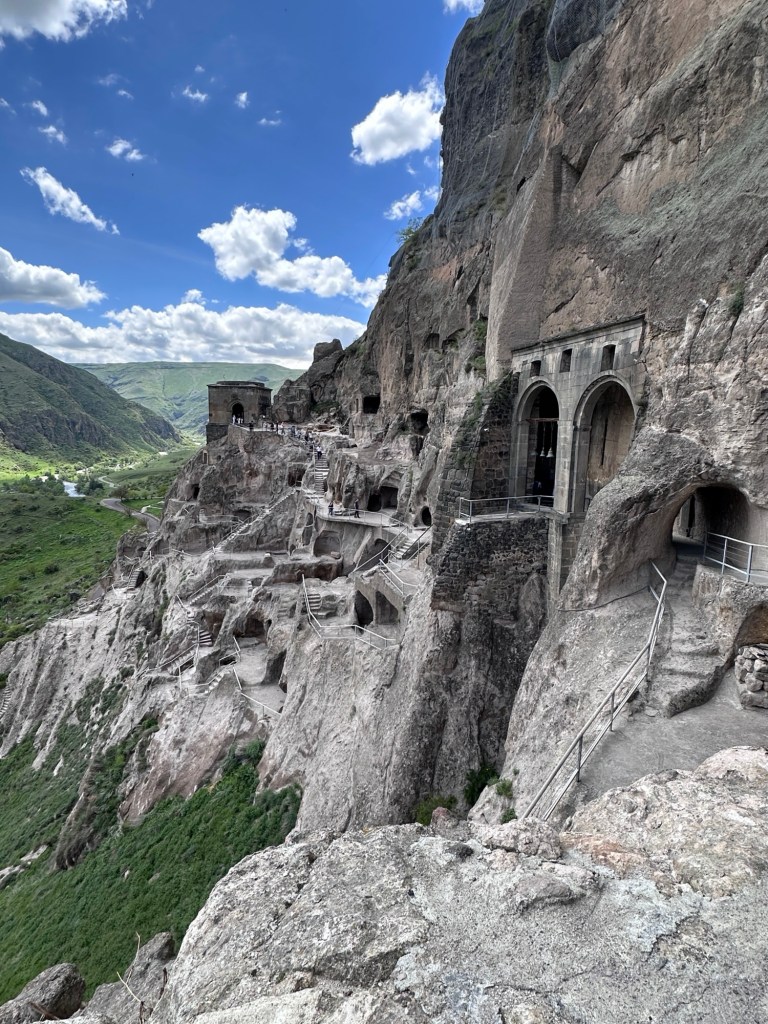
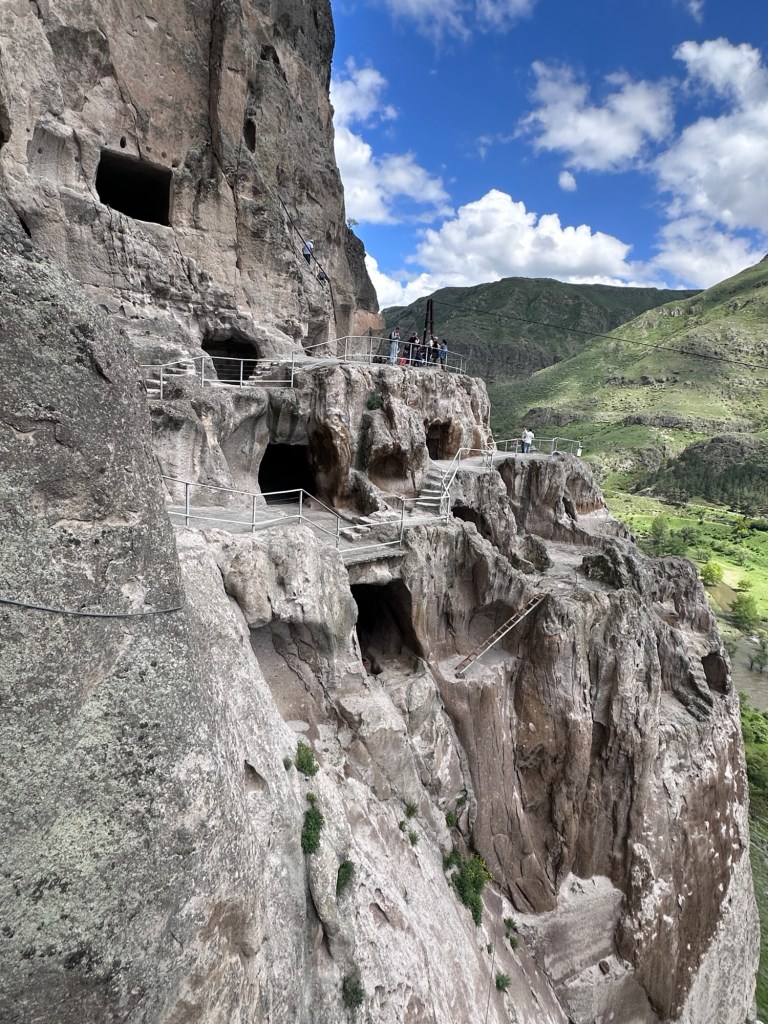
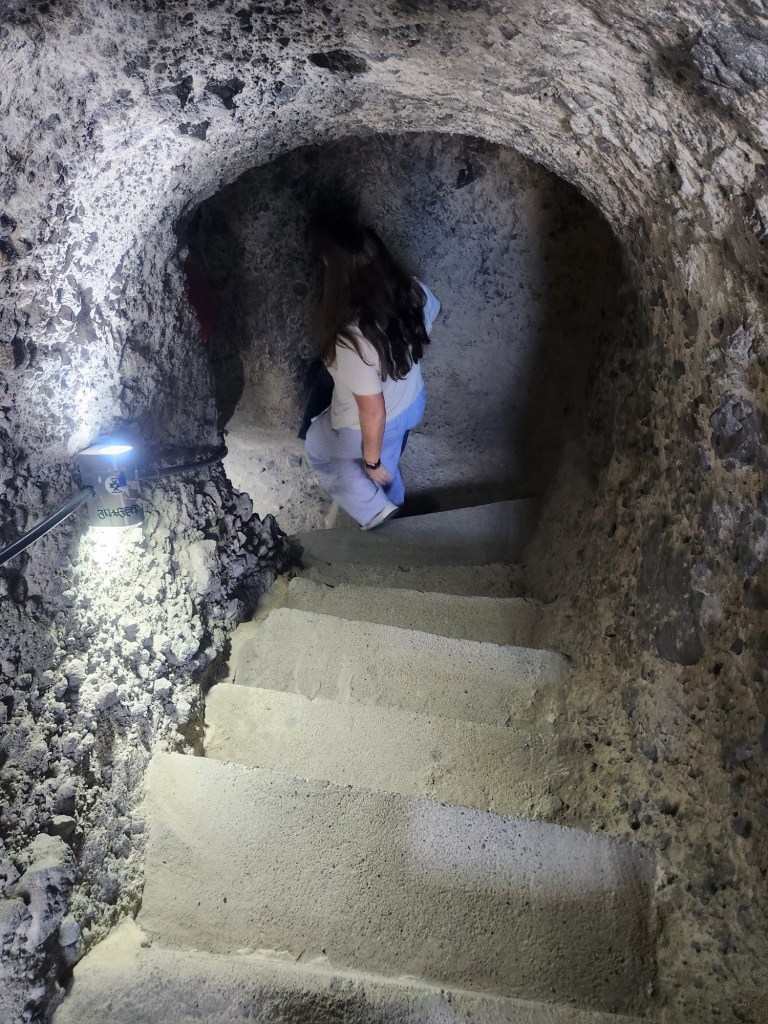
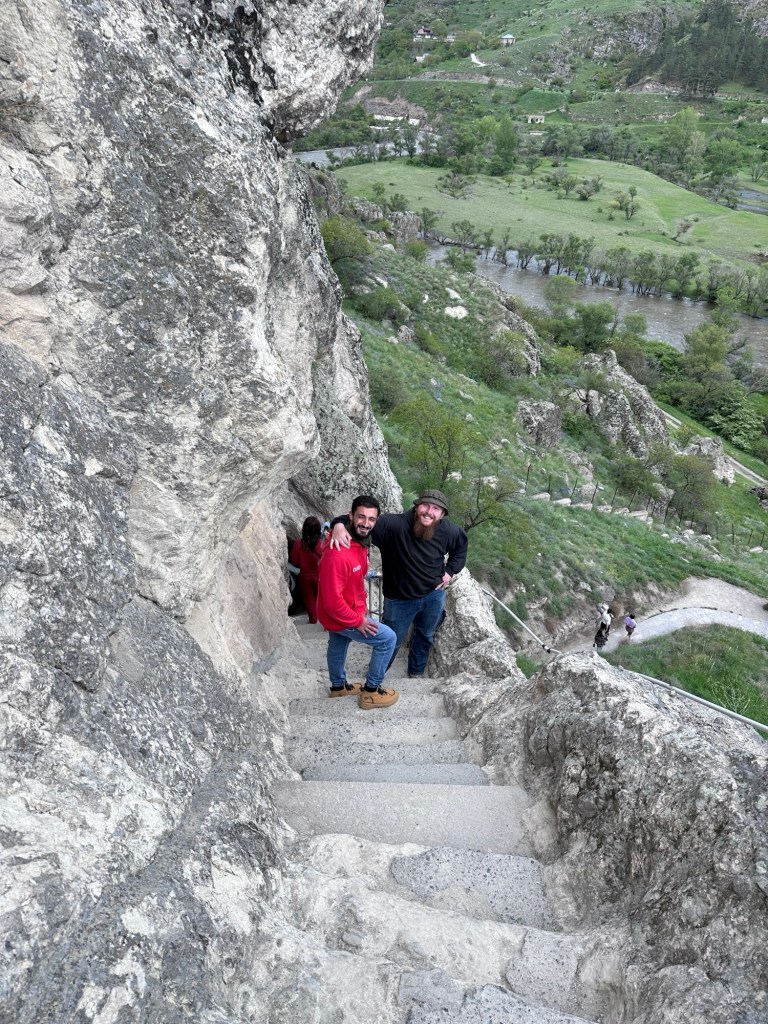
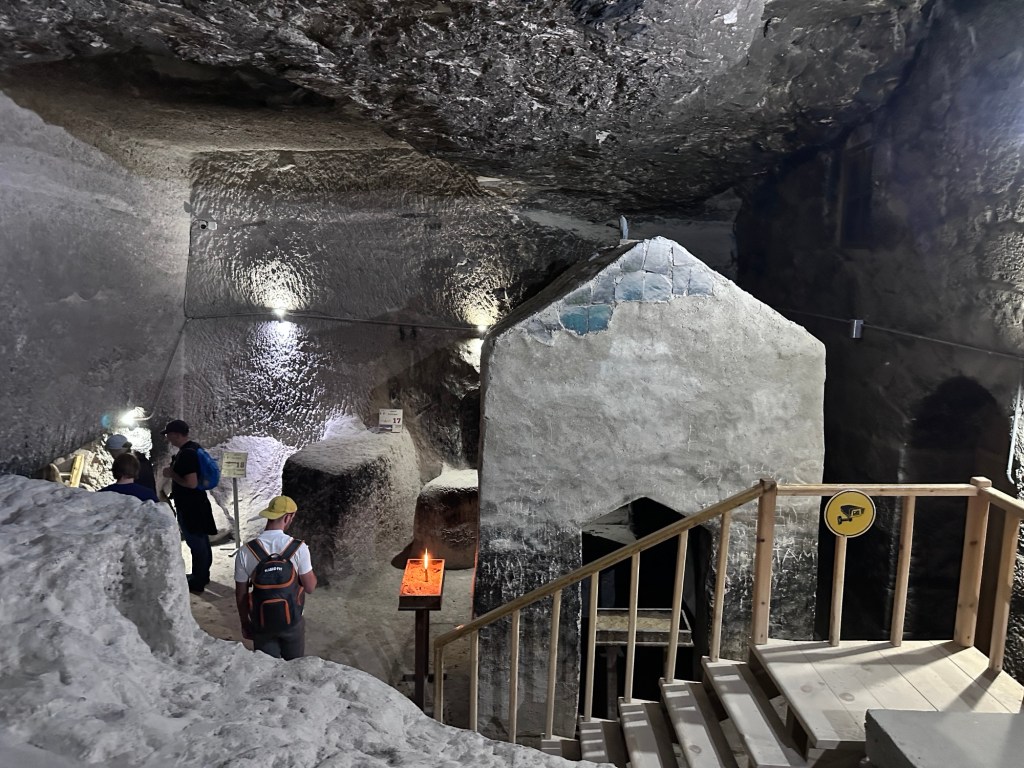
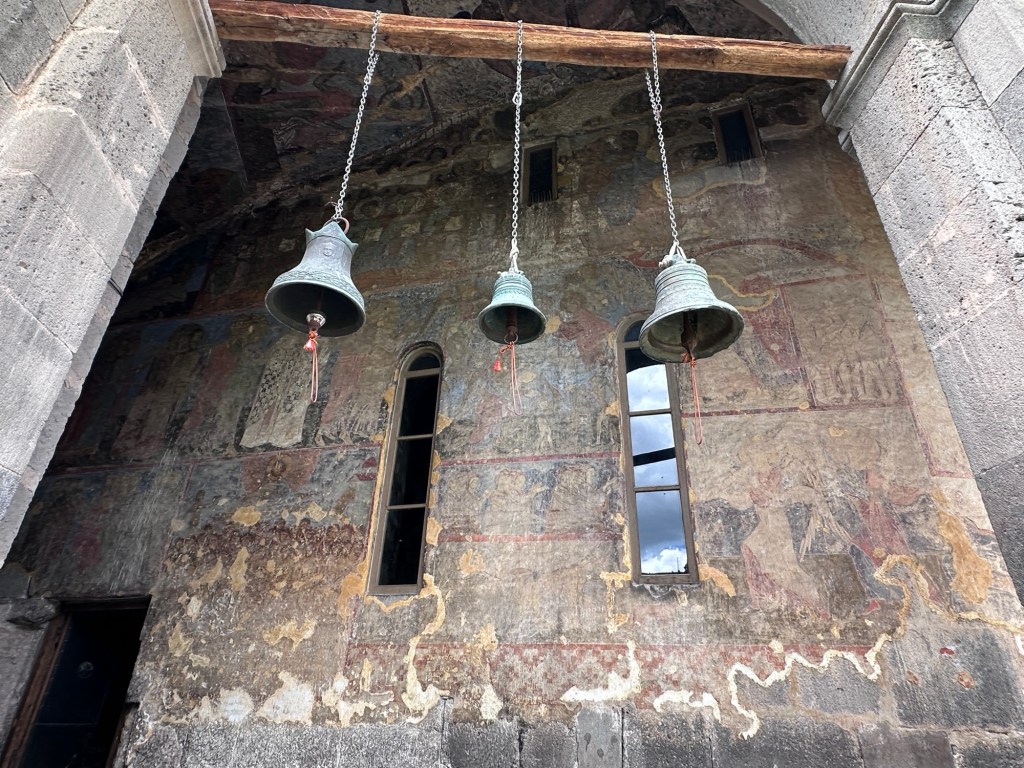
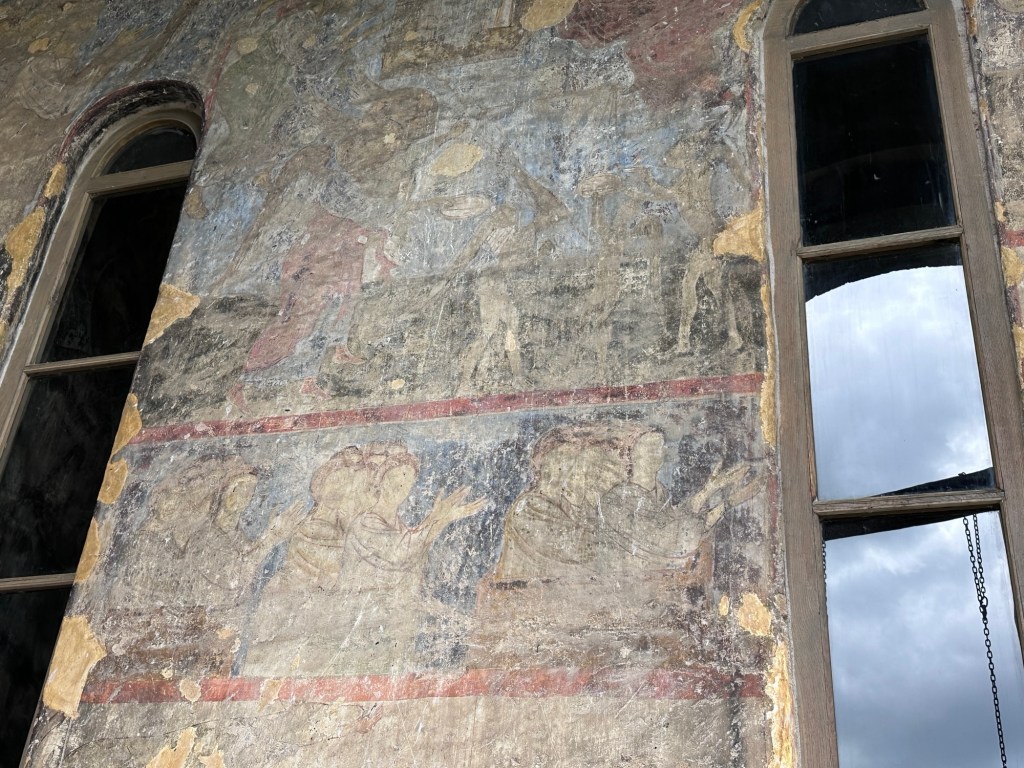
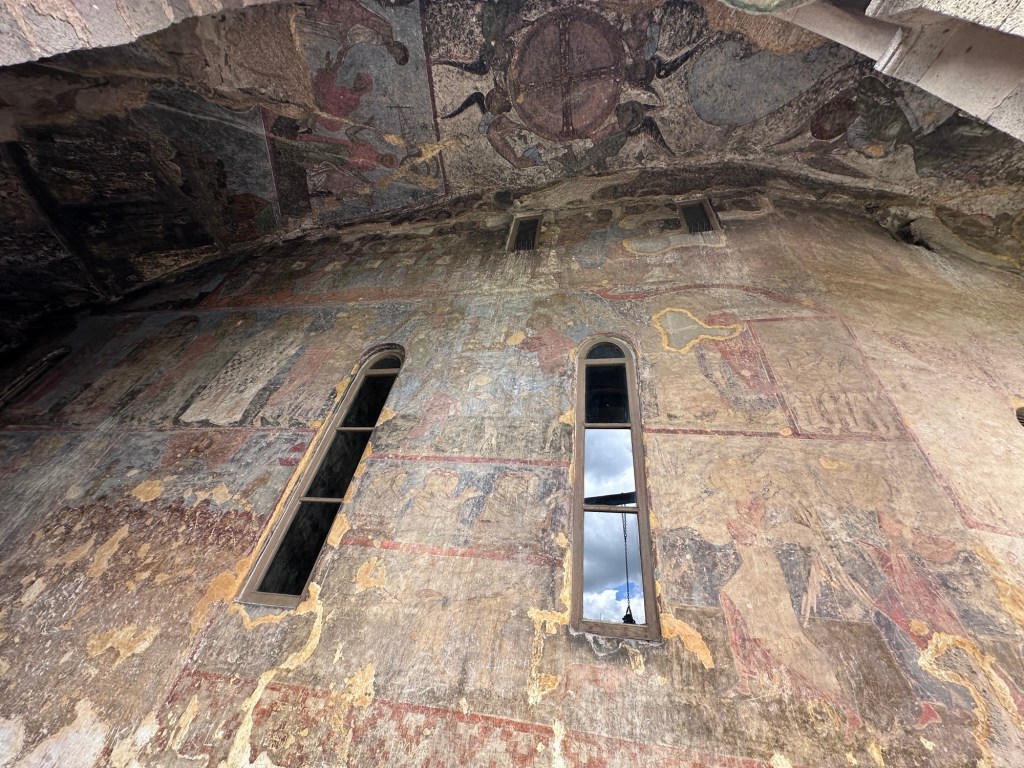
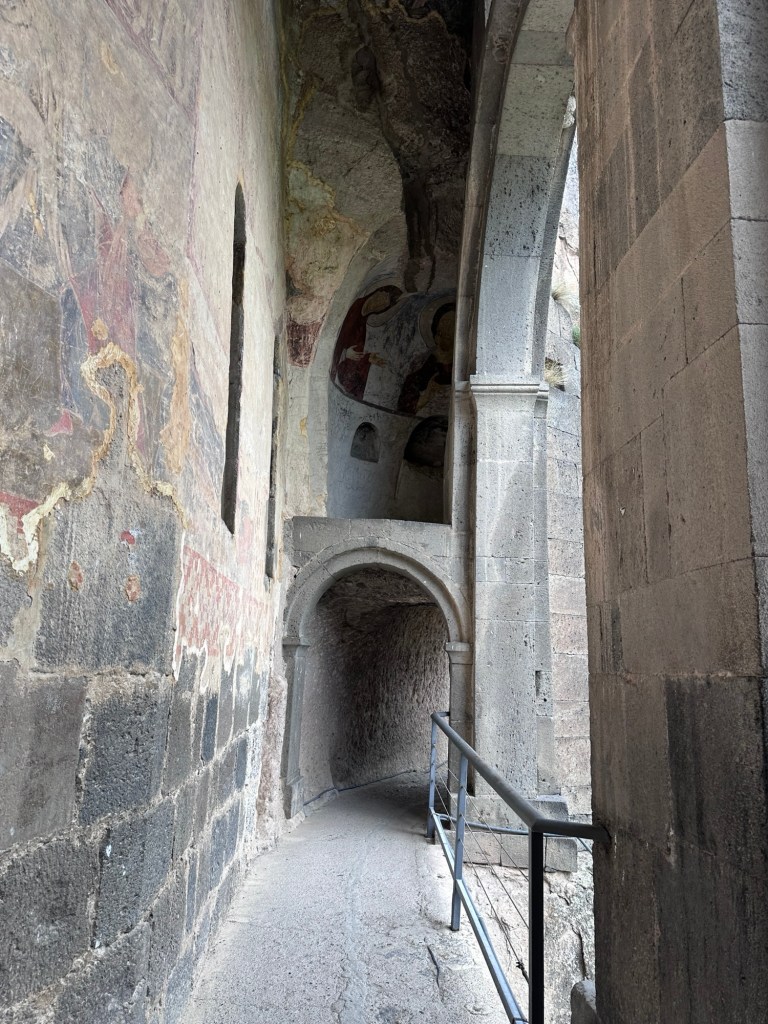
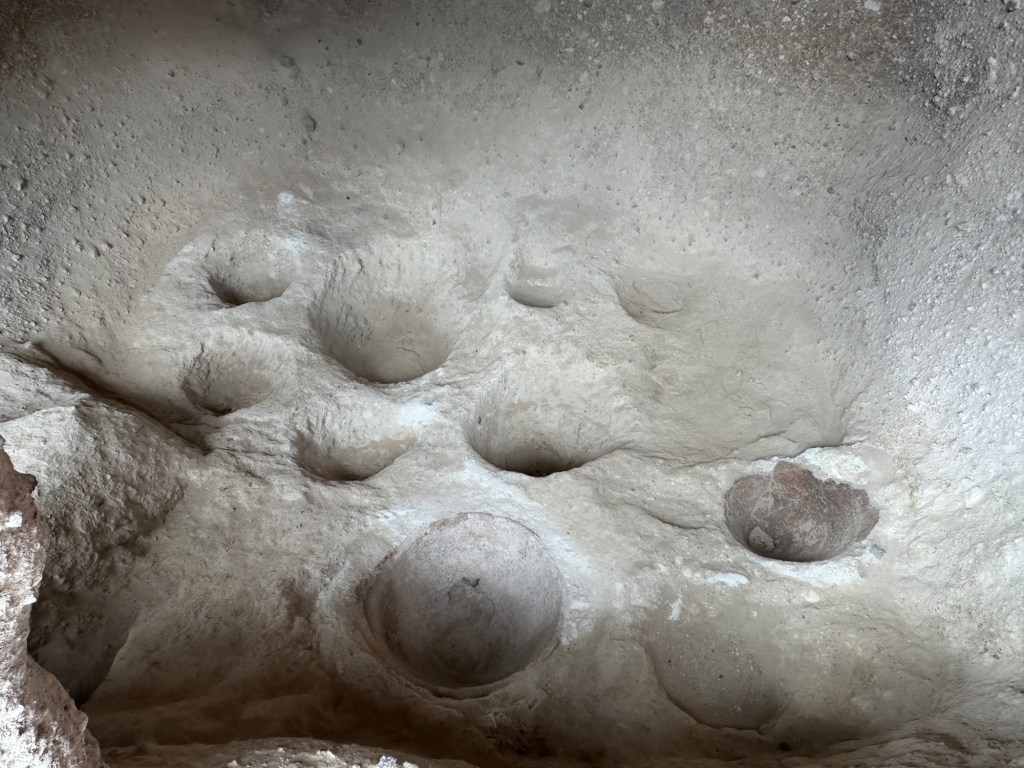
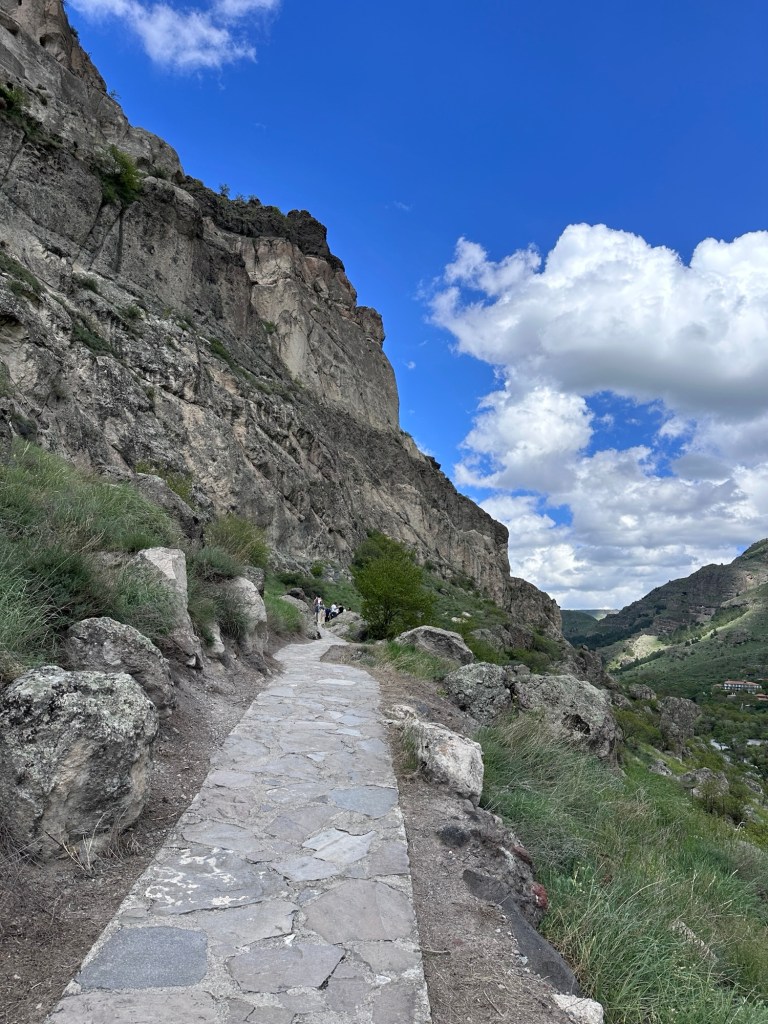
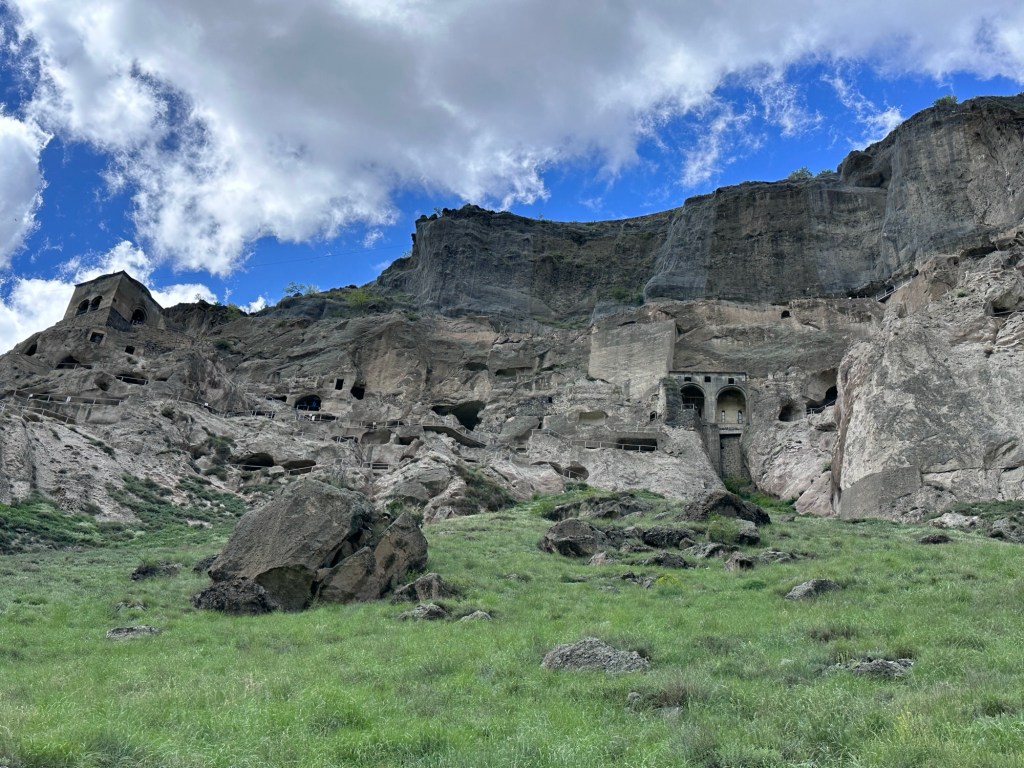
We stop at the 12th century mountain cave site of Vardzia. This elaborate system of caves built to be a monastery was destroyed greatly from an earthquake in 1283. Despite the earthquake it was still used until the country was invaded by the Ottoman Empire. Prior to the earthquake the caves provided good protection from invaders and the cave system provided comfortable temperatures year round as well as a natural water supply.
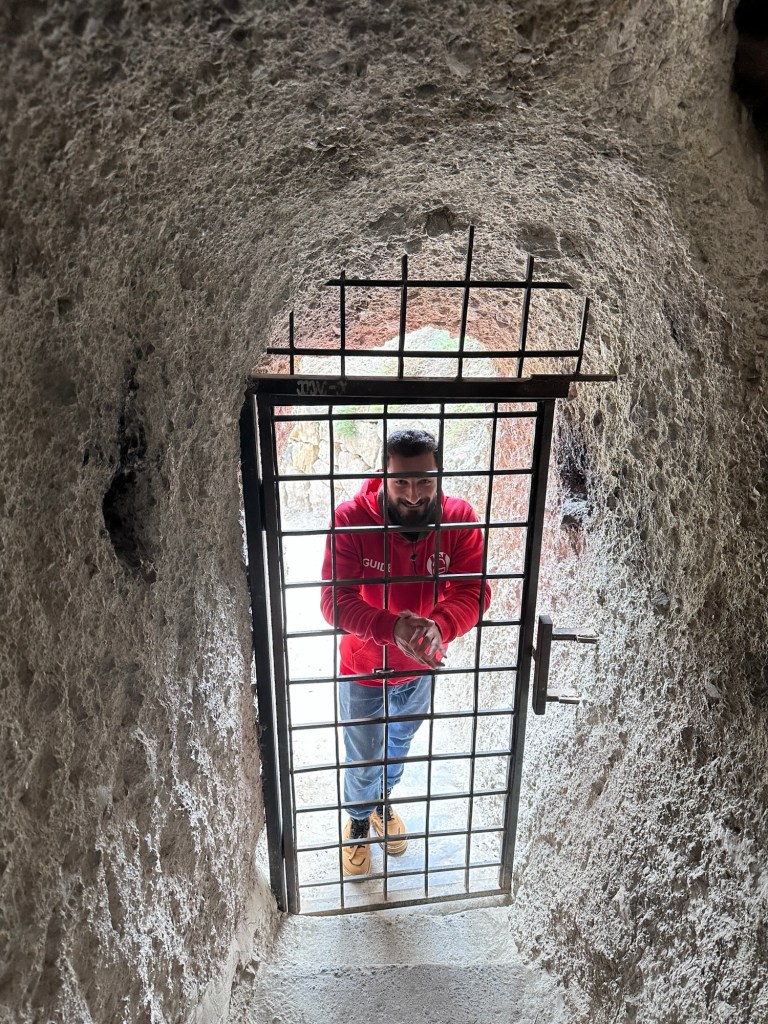
Fresh water is supplied via condensation and stored in reservoirs. Tour guides
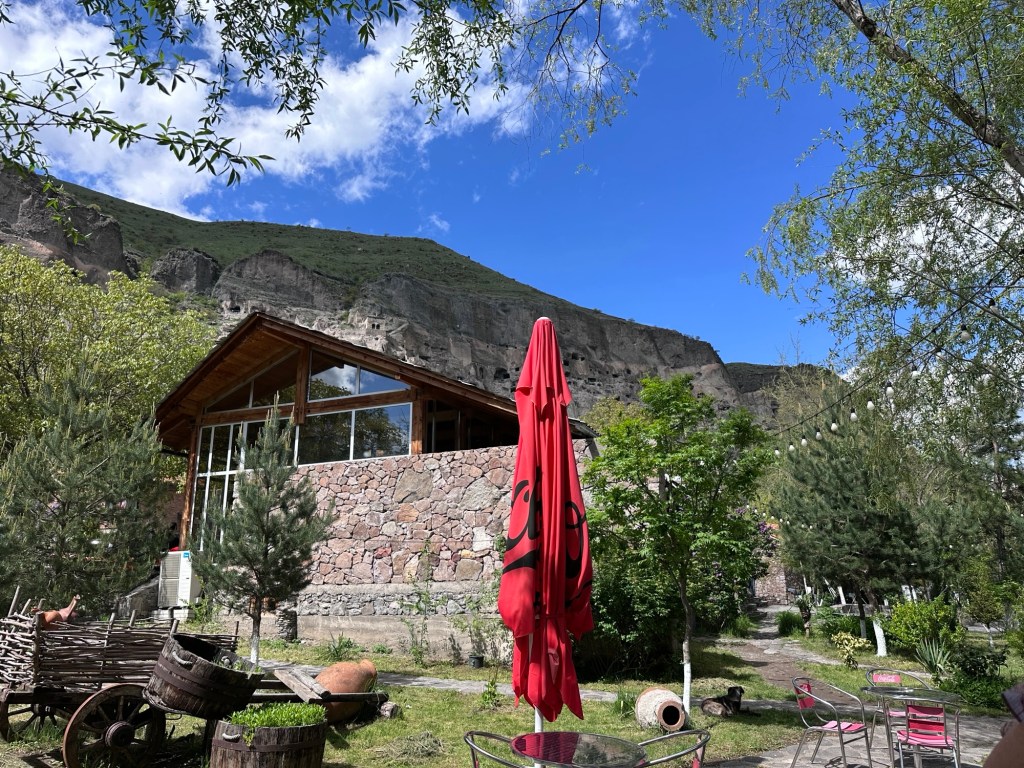
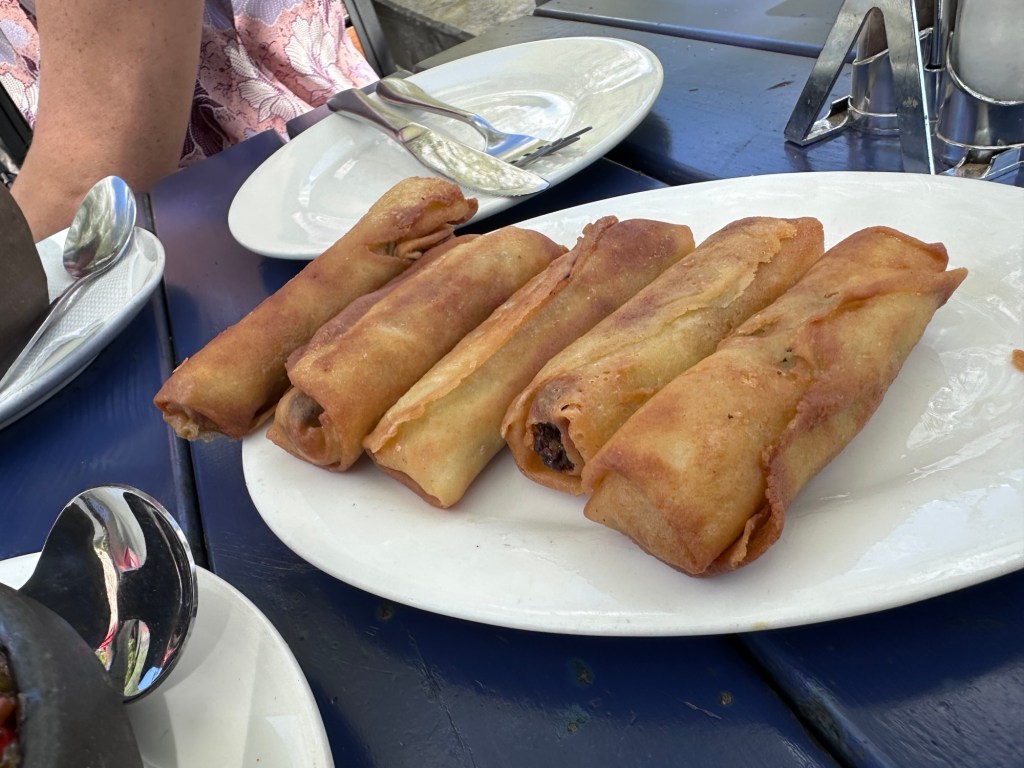
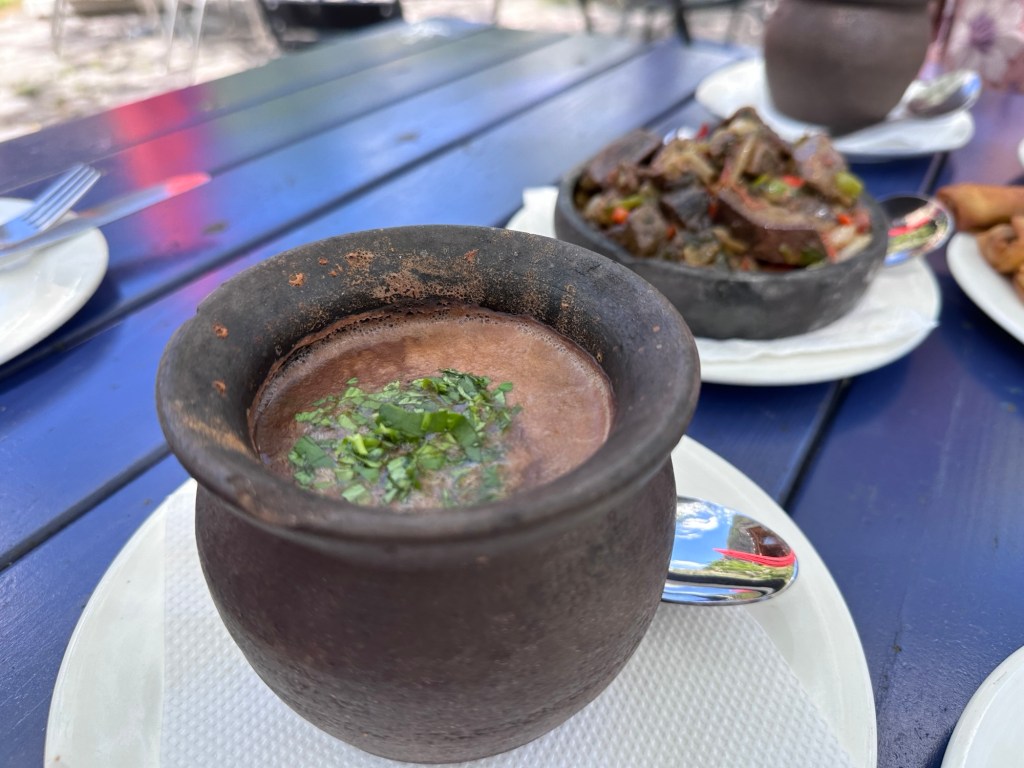
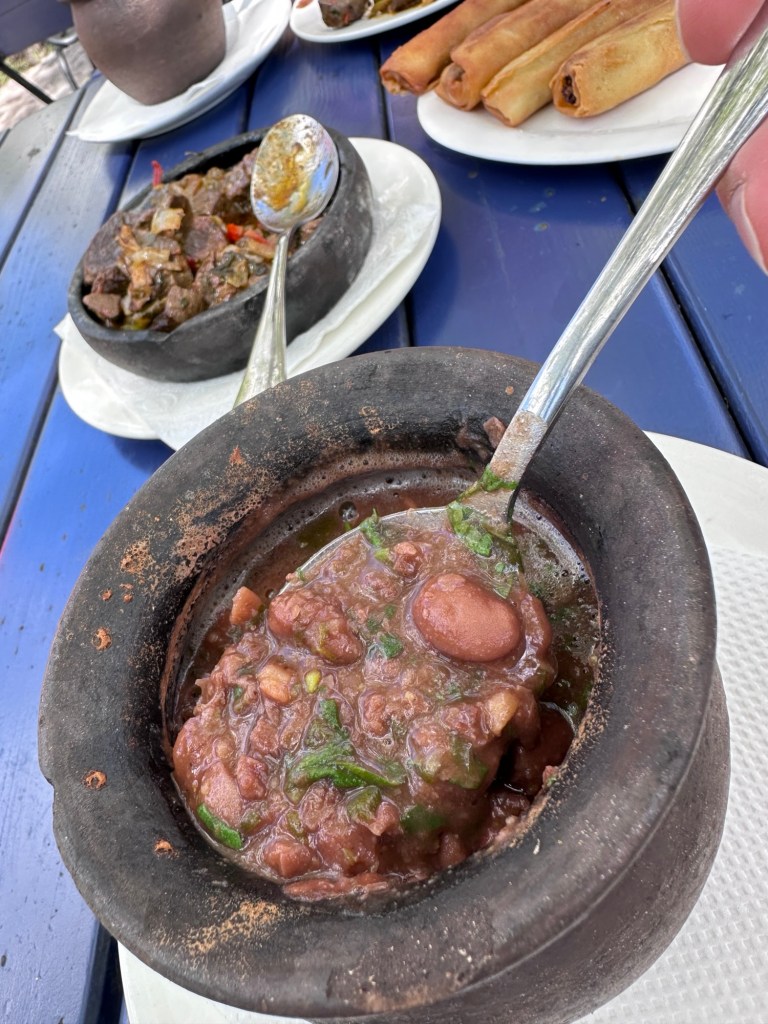
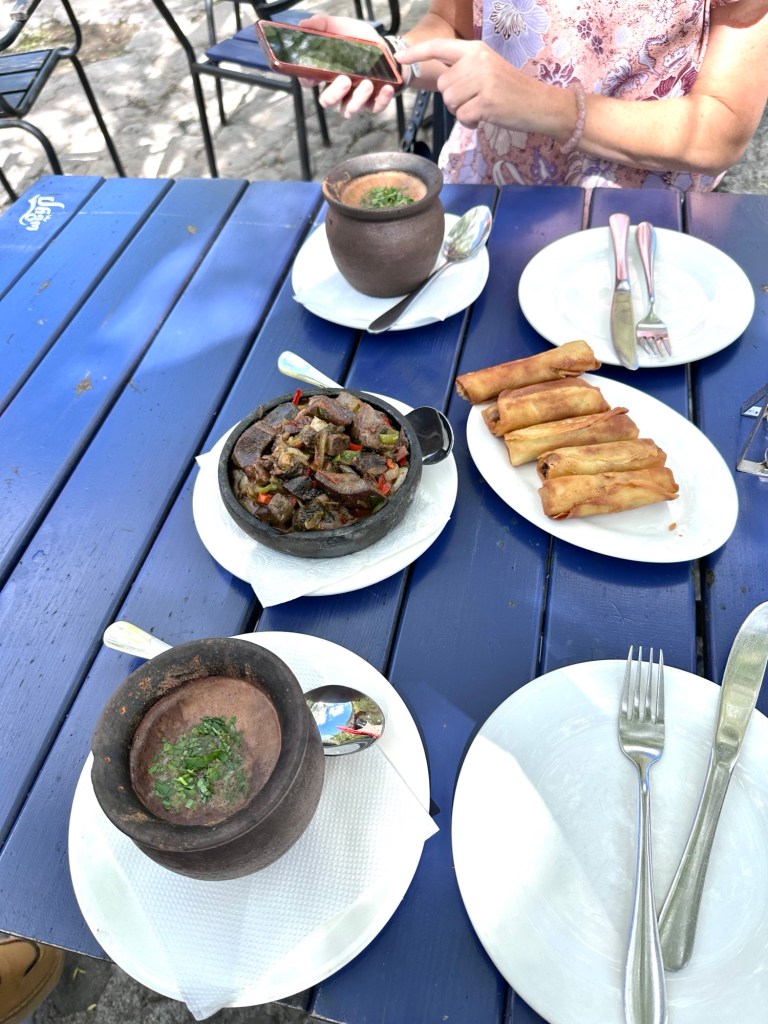
We stop for a charming lunch by the fast flowing river. We try the most amazing red beans (Lobio).
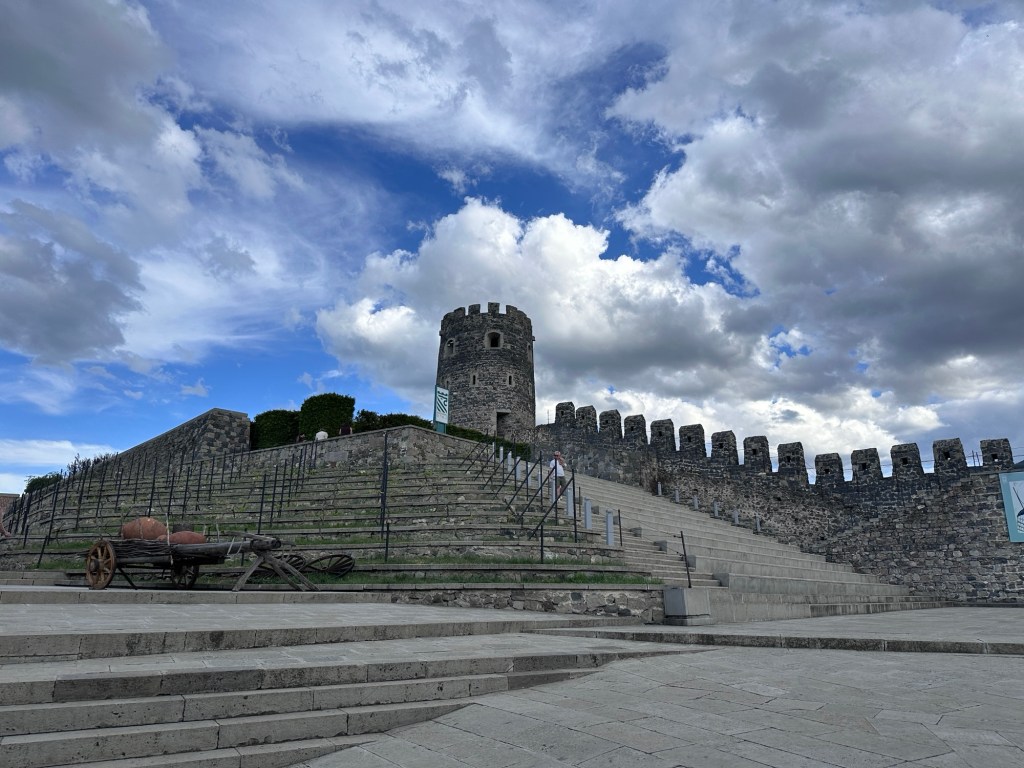
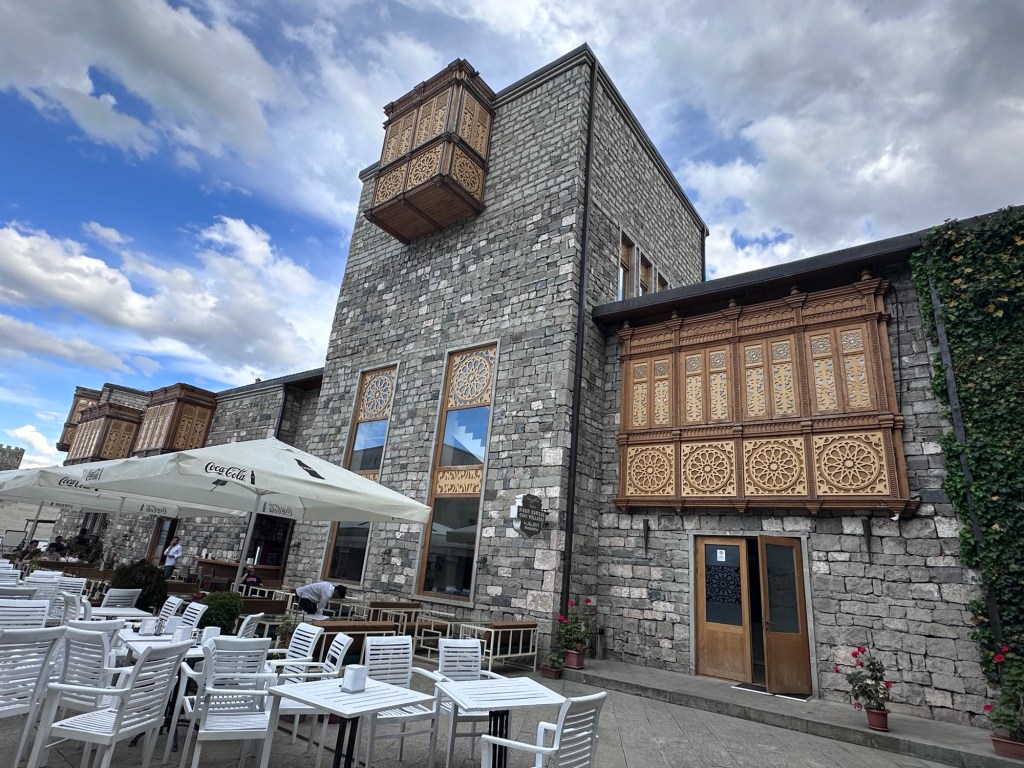
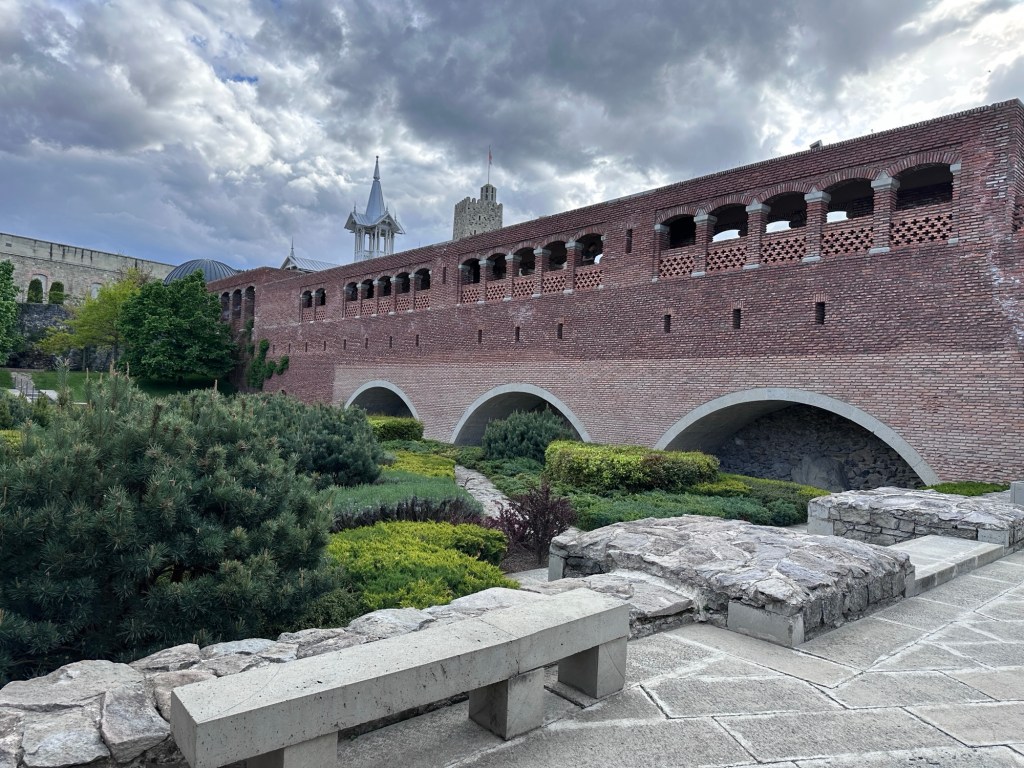
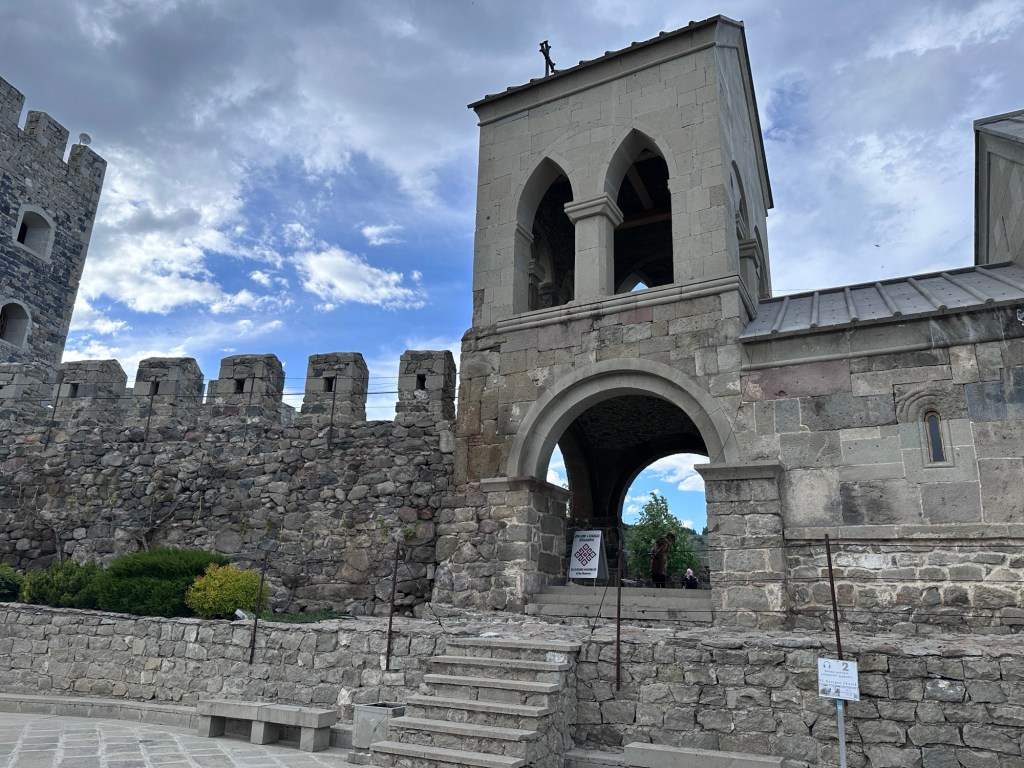
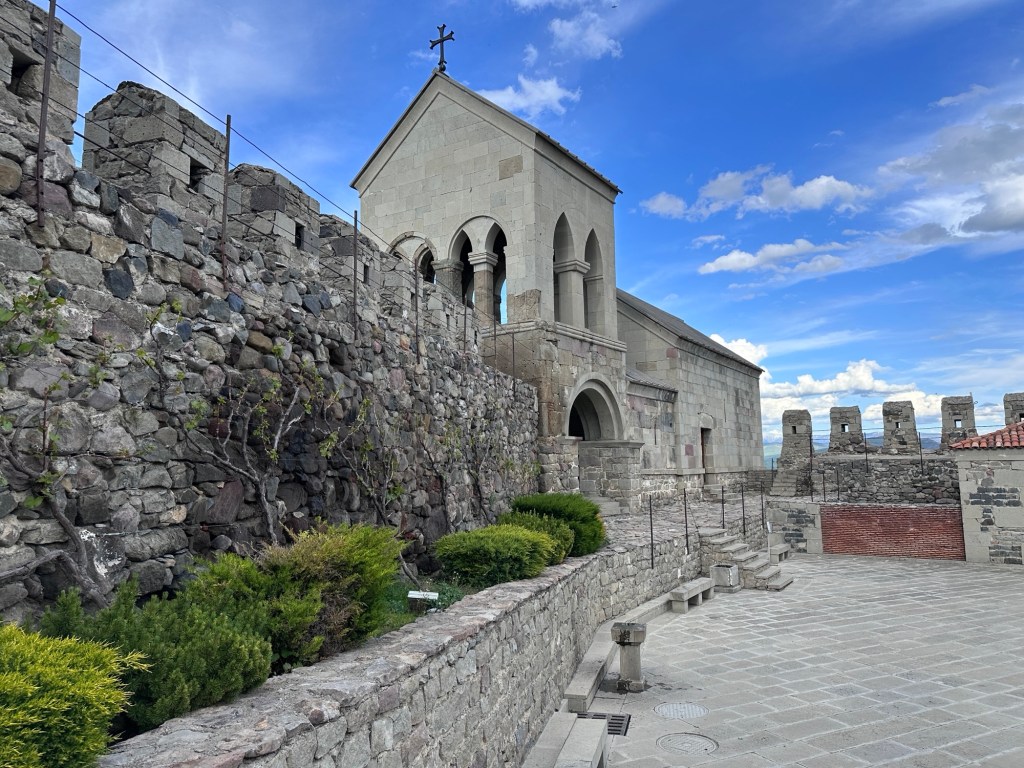
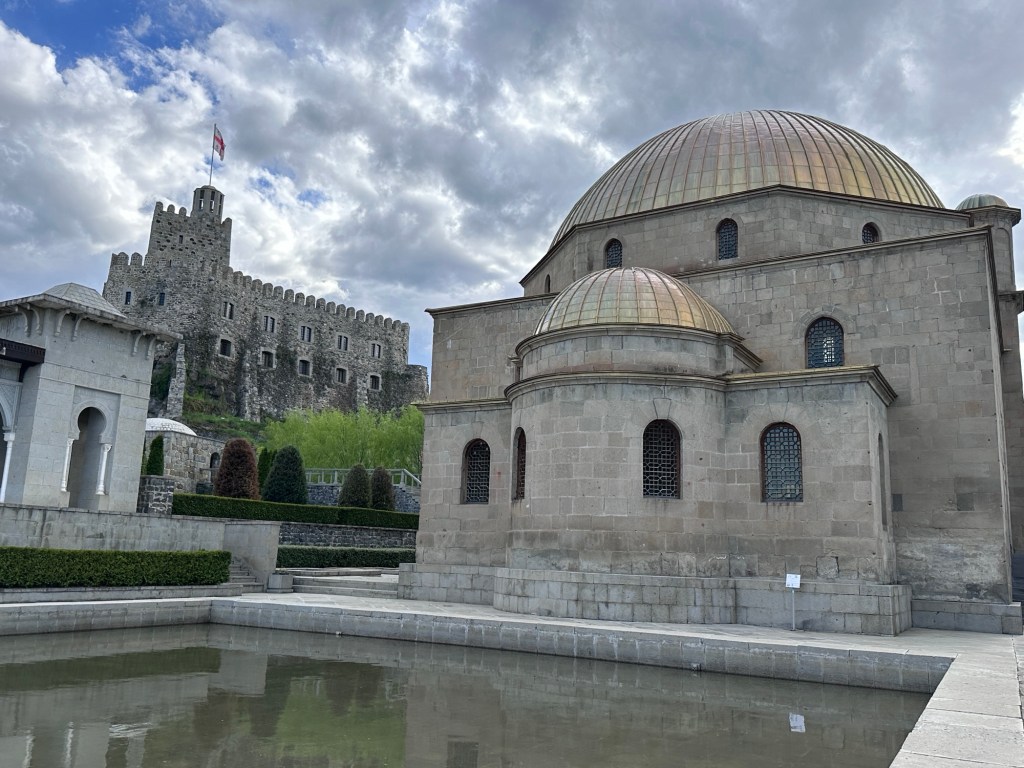
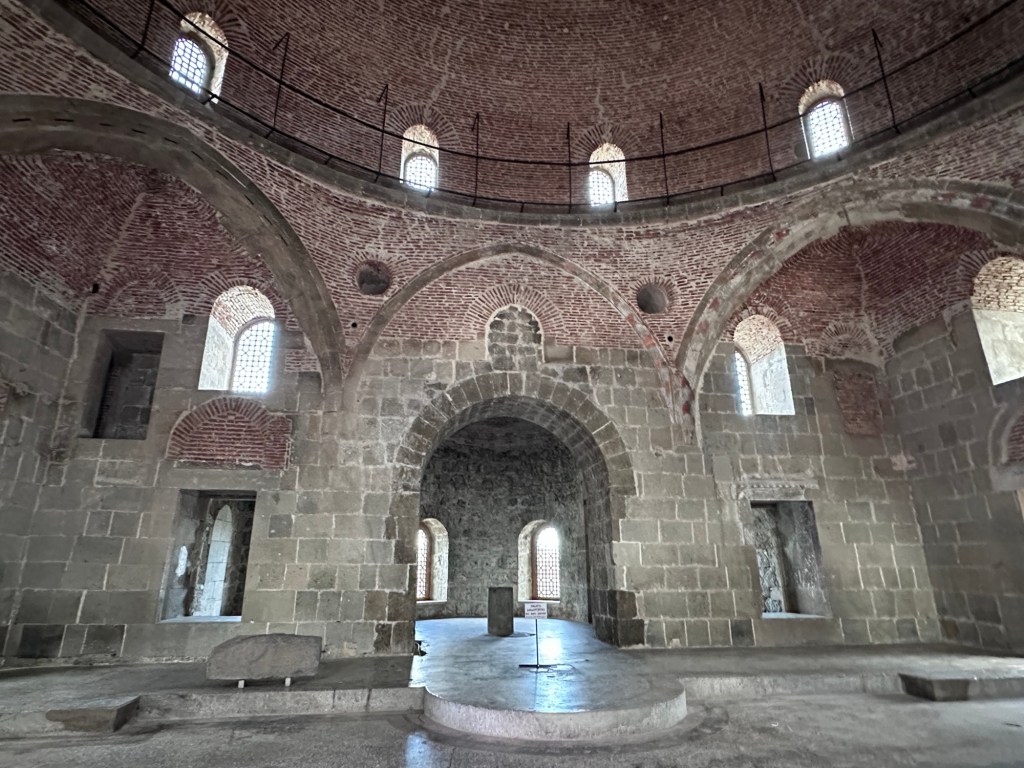
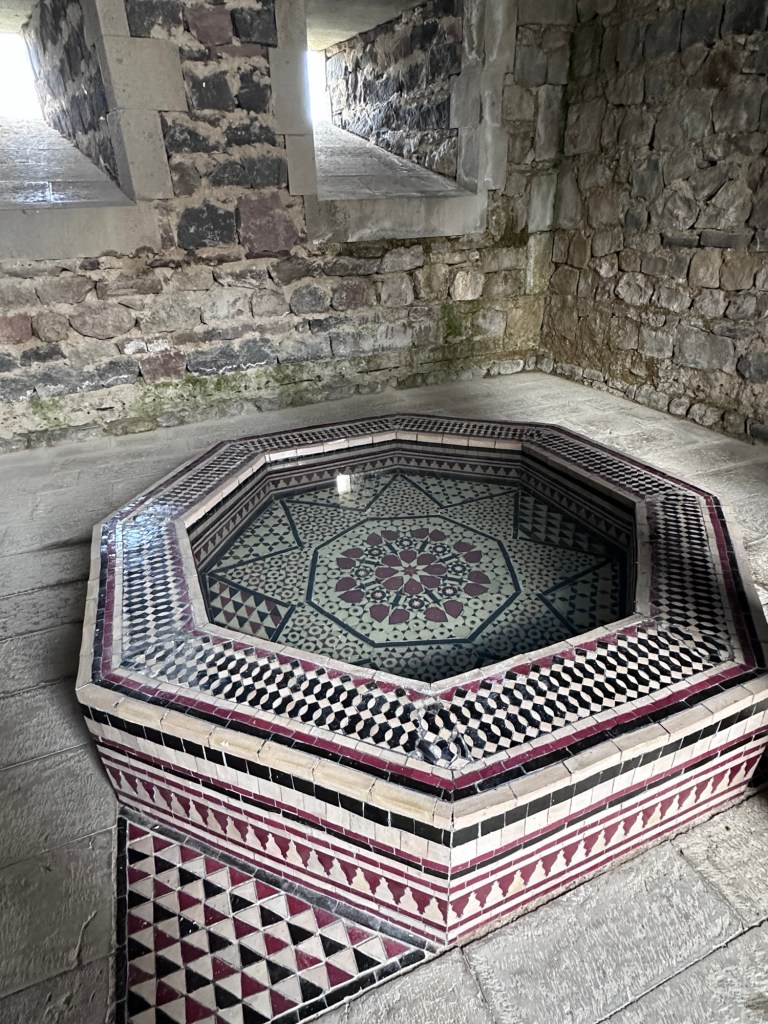
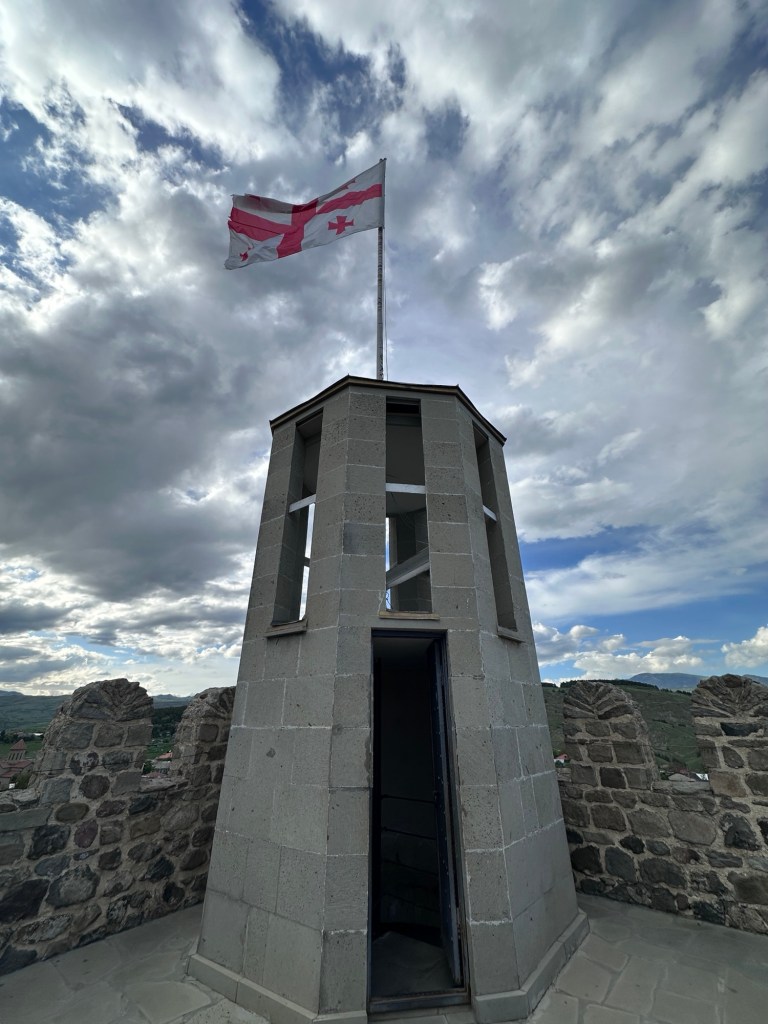
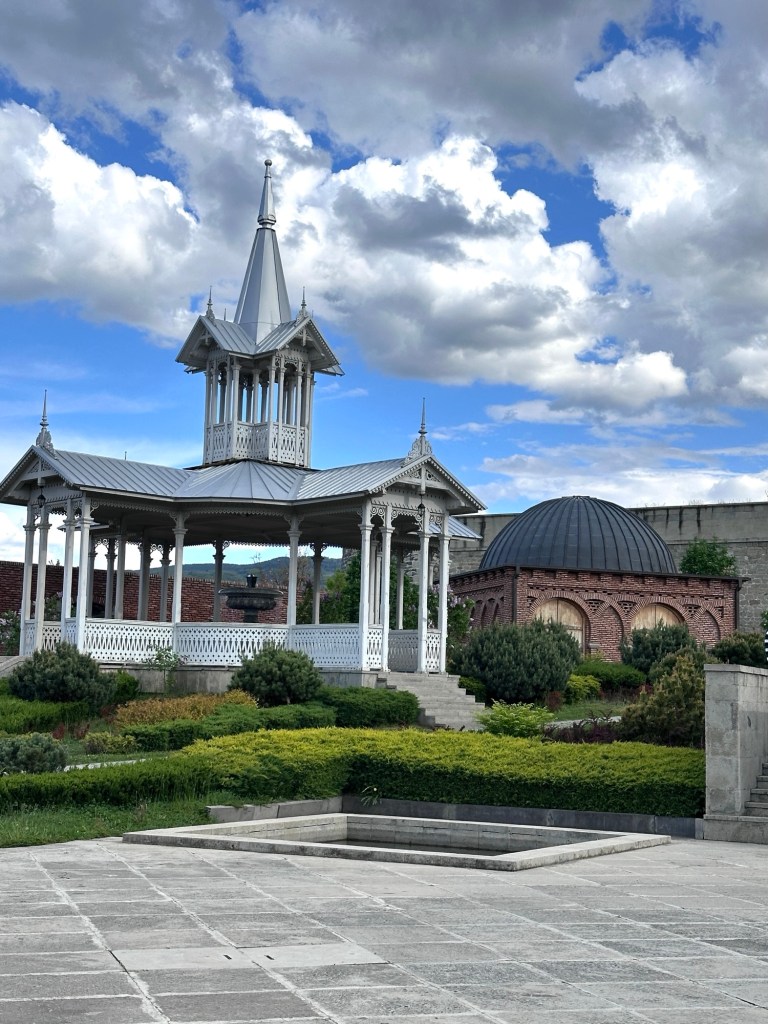
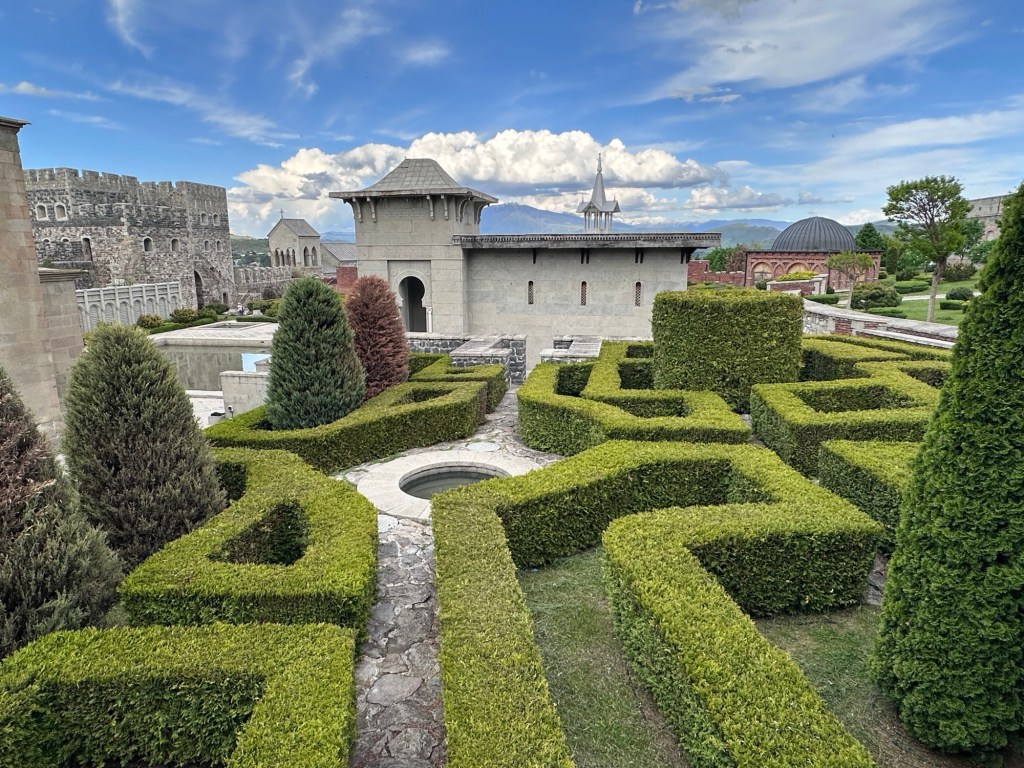
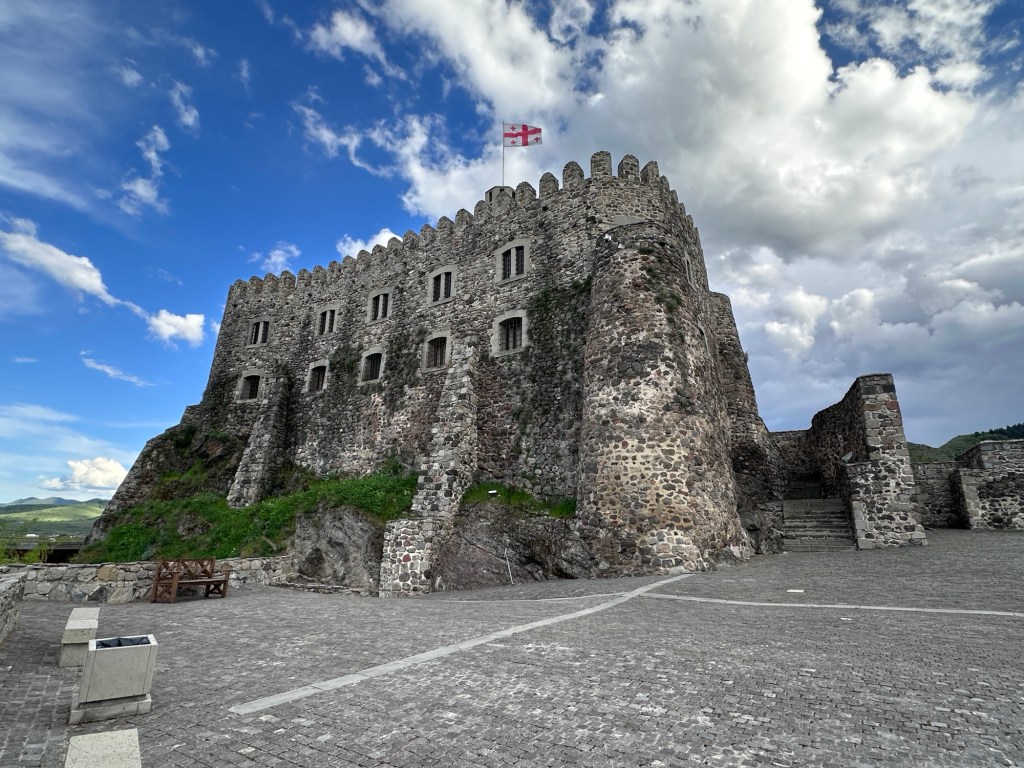
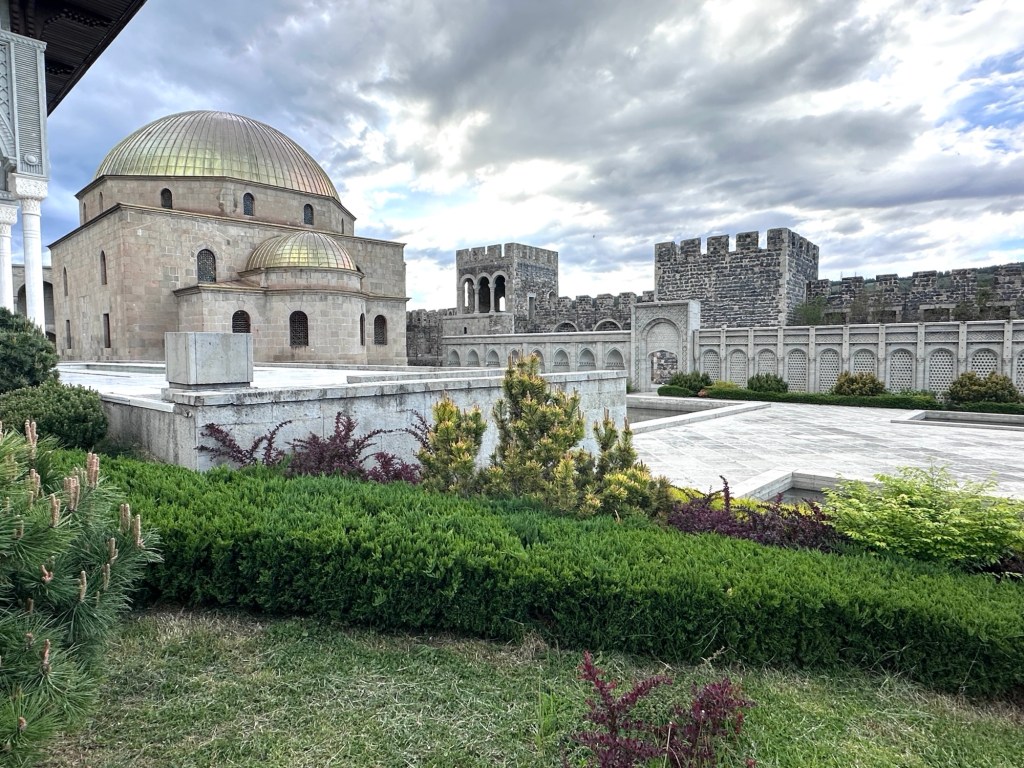
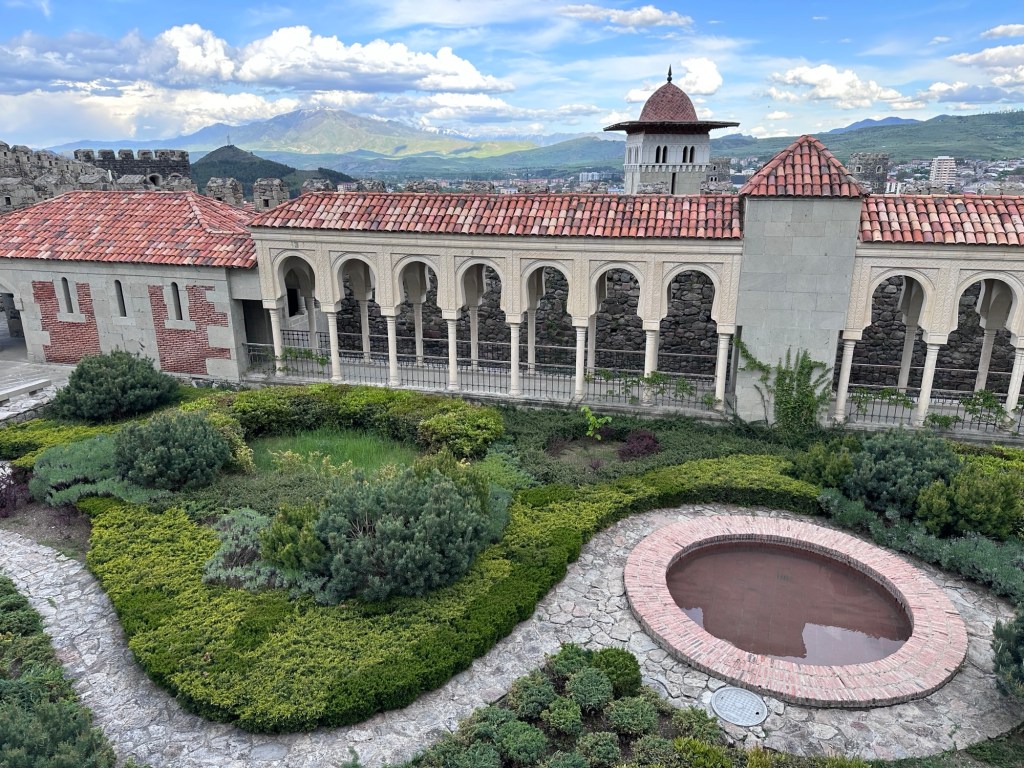
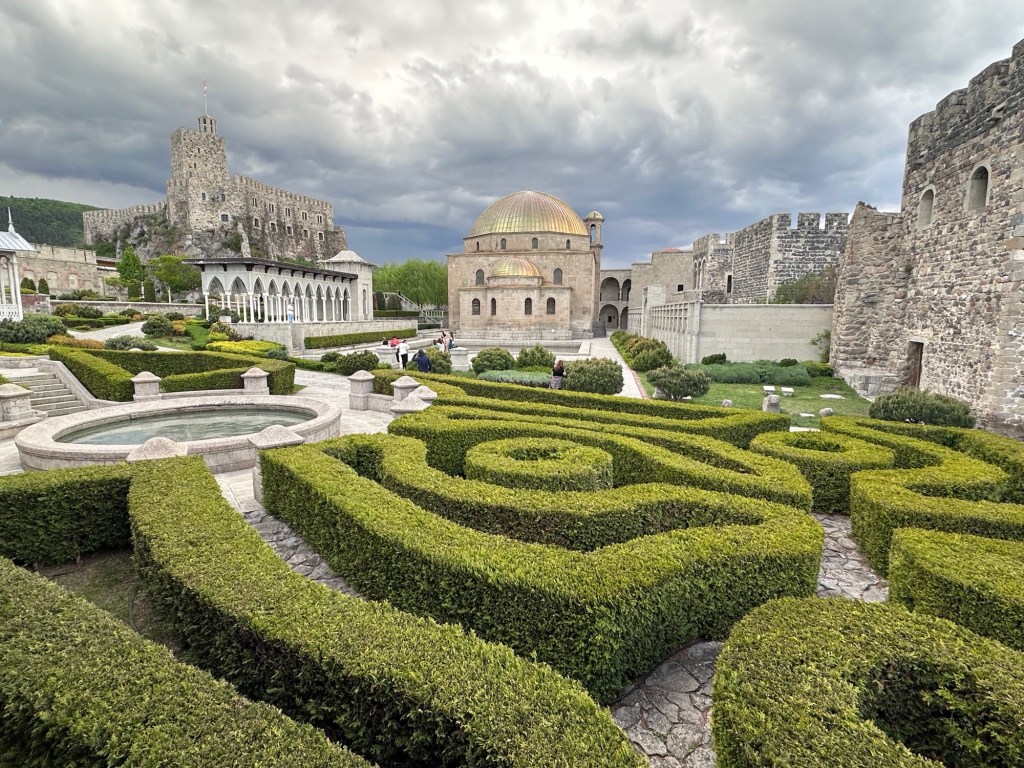
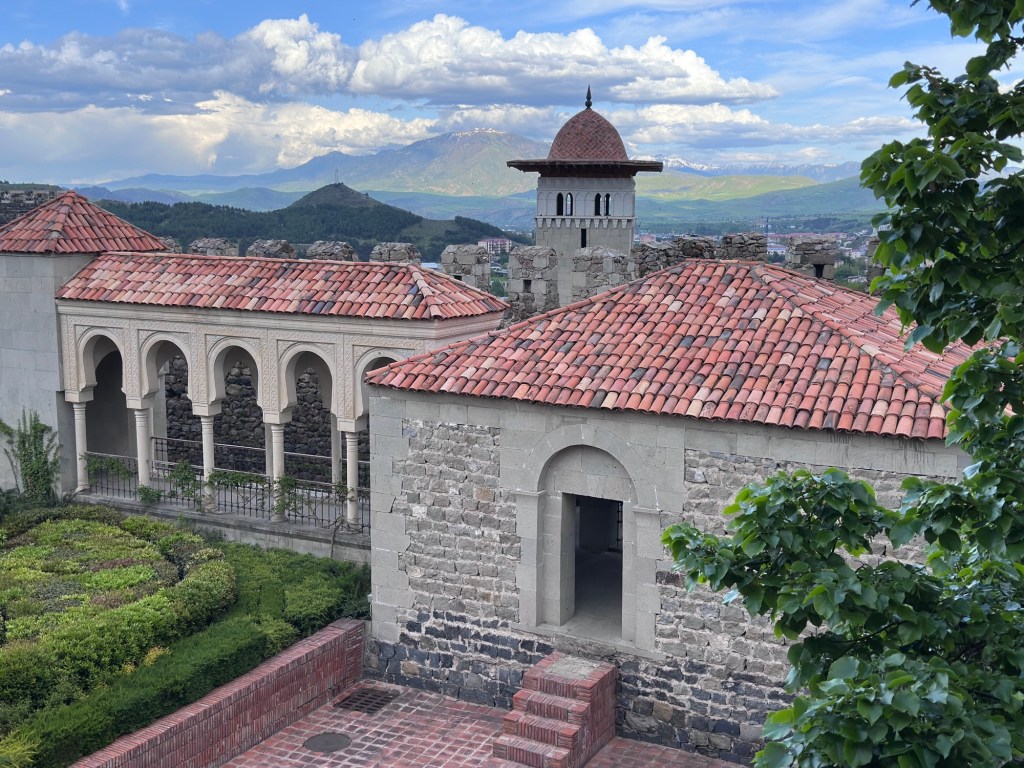
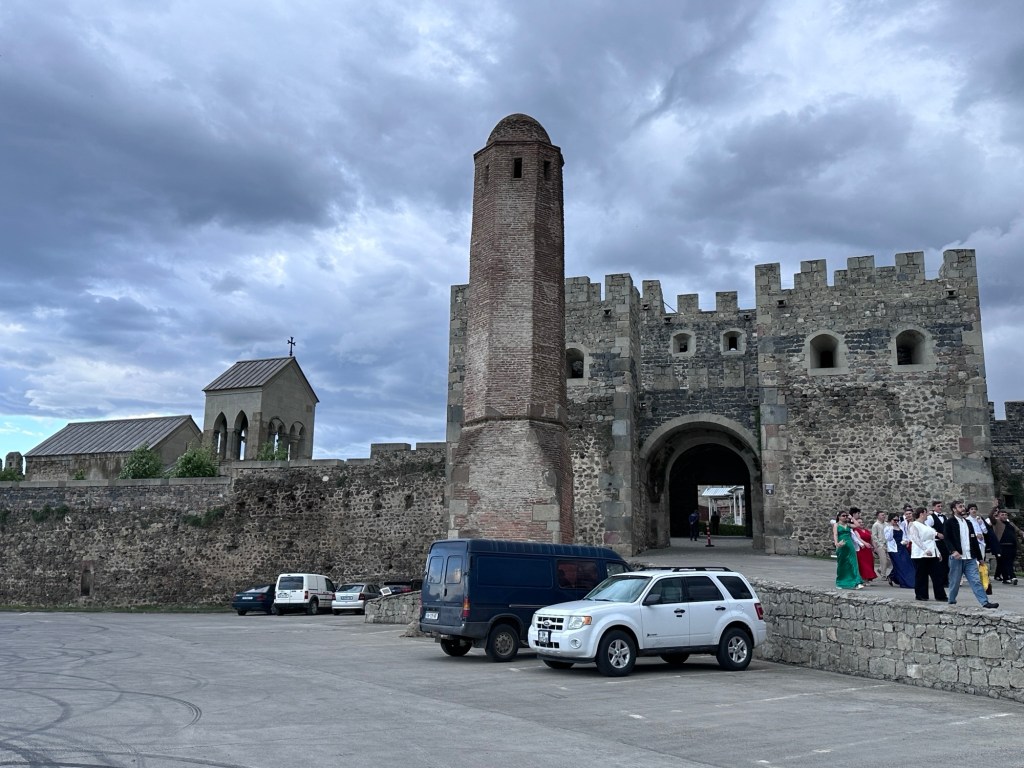
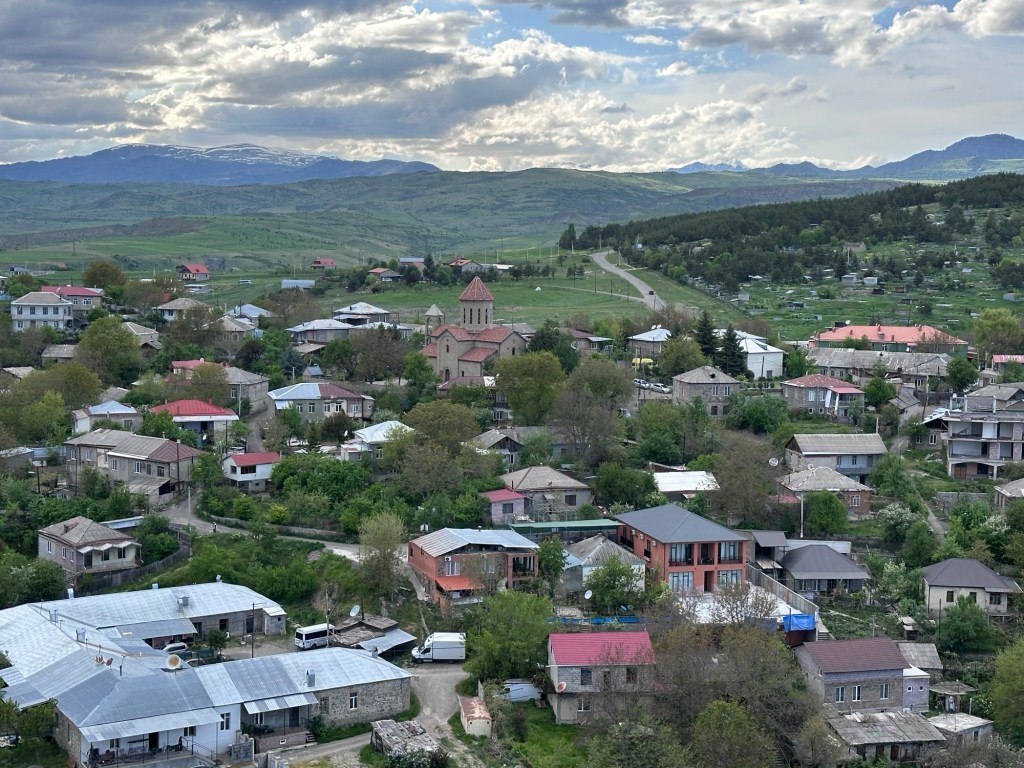
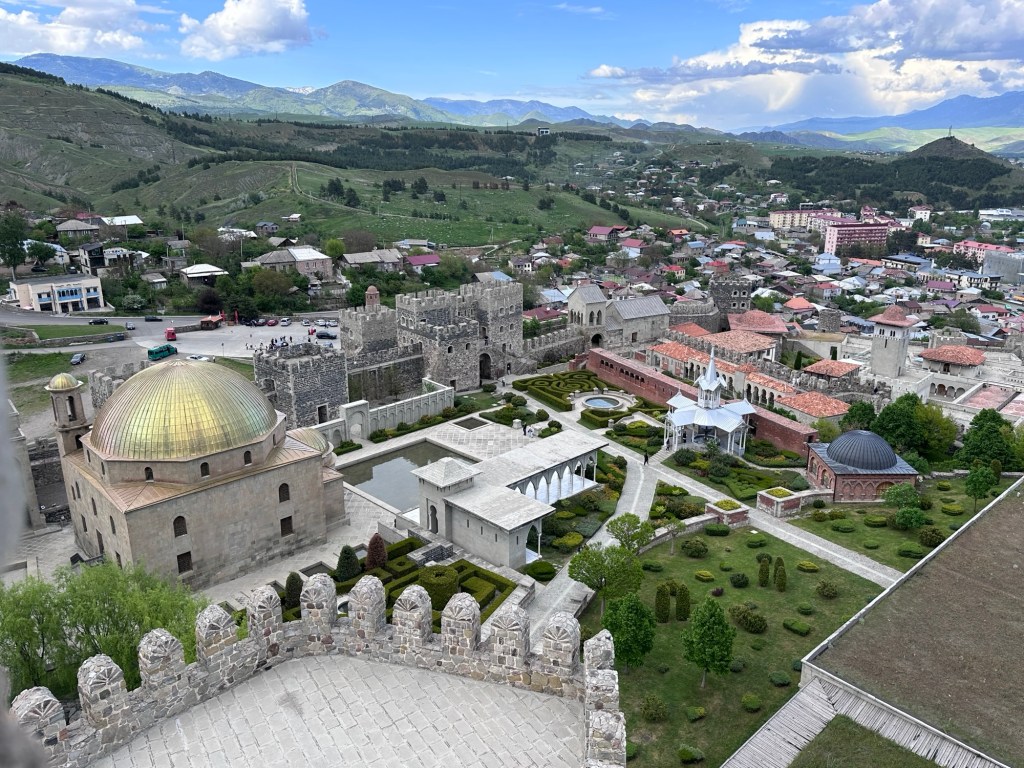
Our final stop is Rabati Castle (Akhaltsikhe Castle), or beautiful castle complex initially built in the 9th century with very little important history and pales in comparison to what we have just seen today.
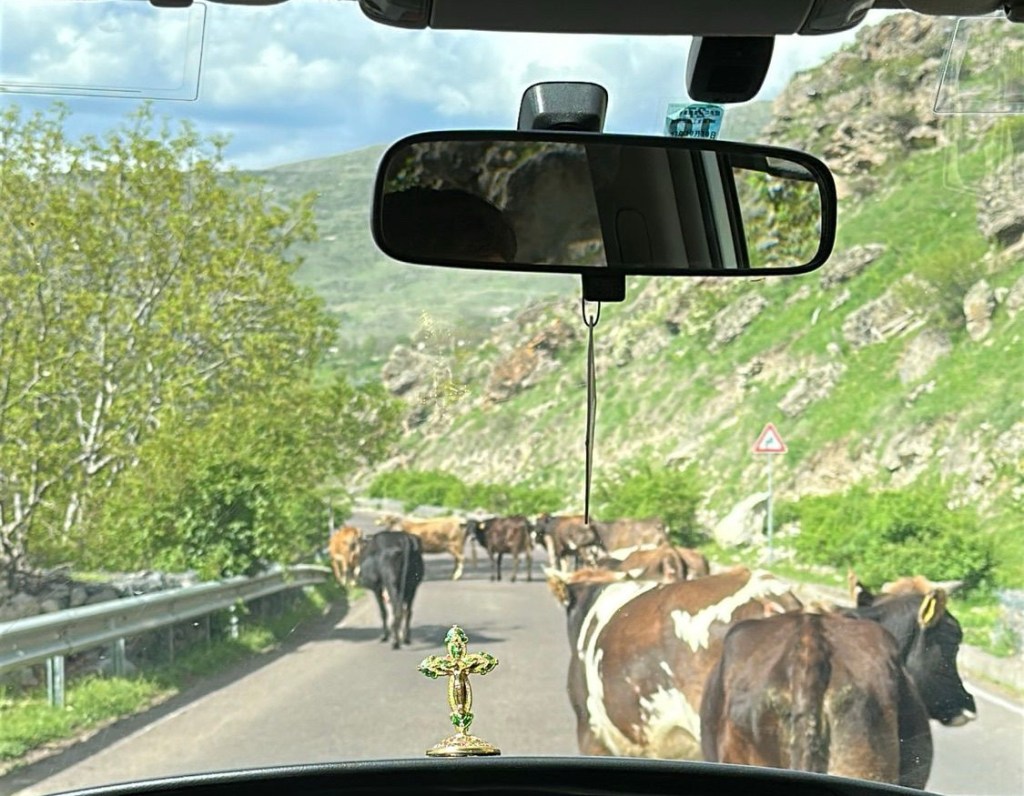
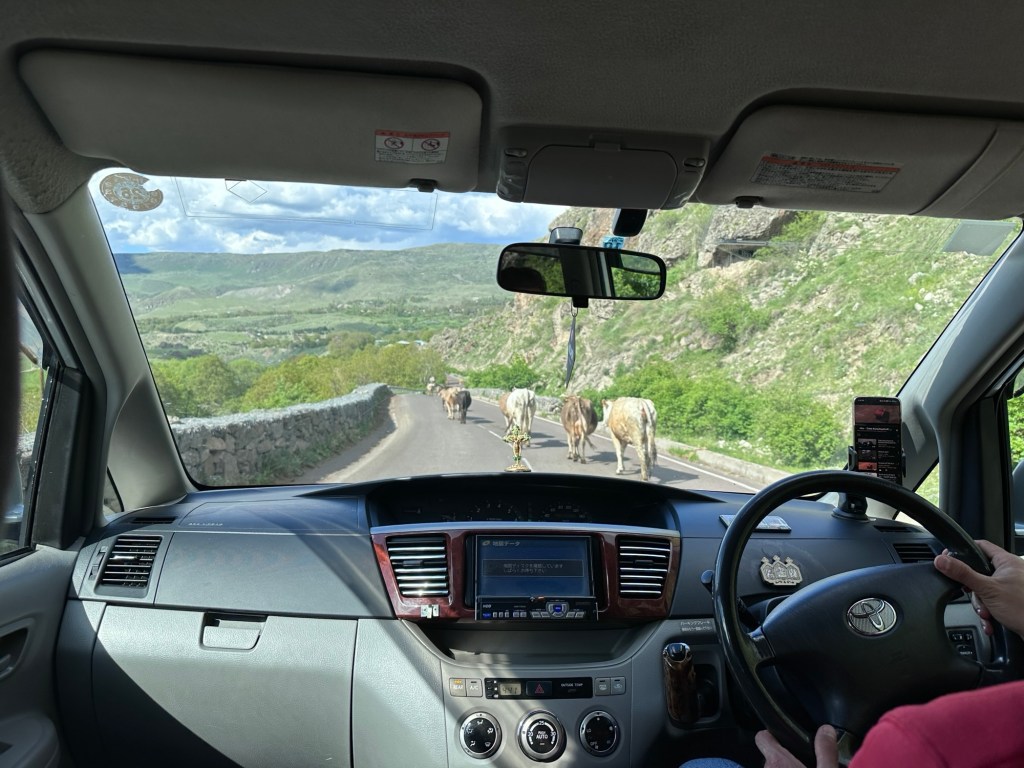
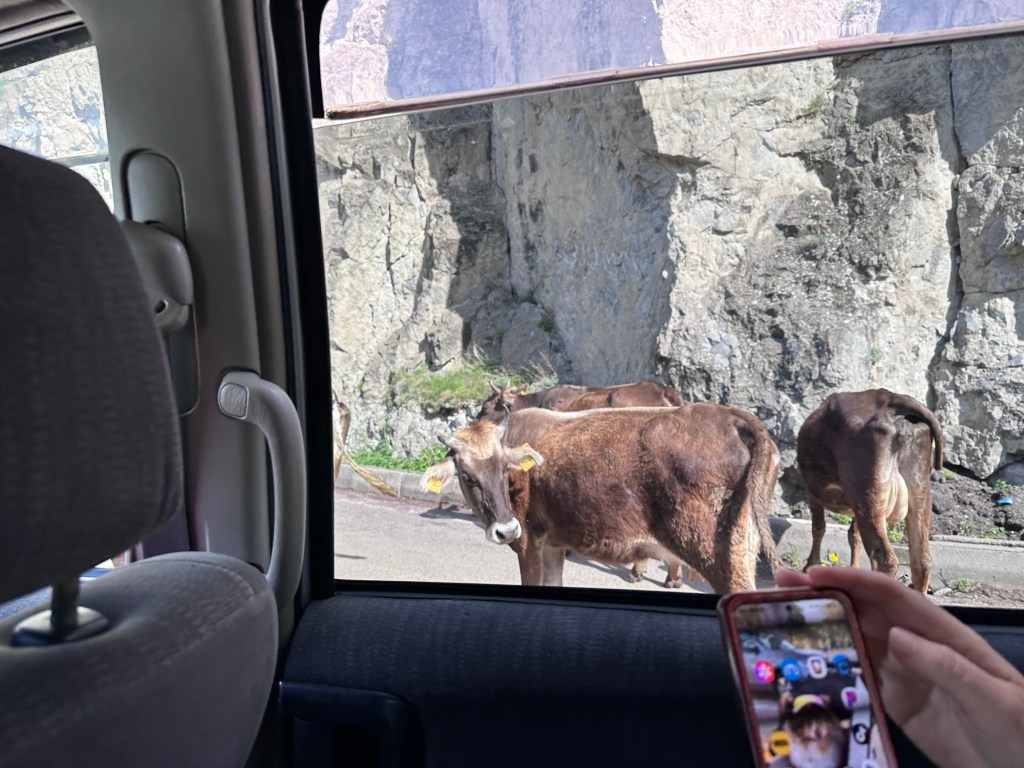
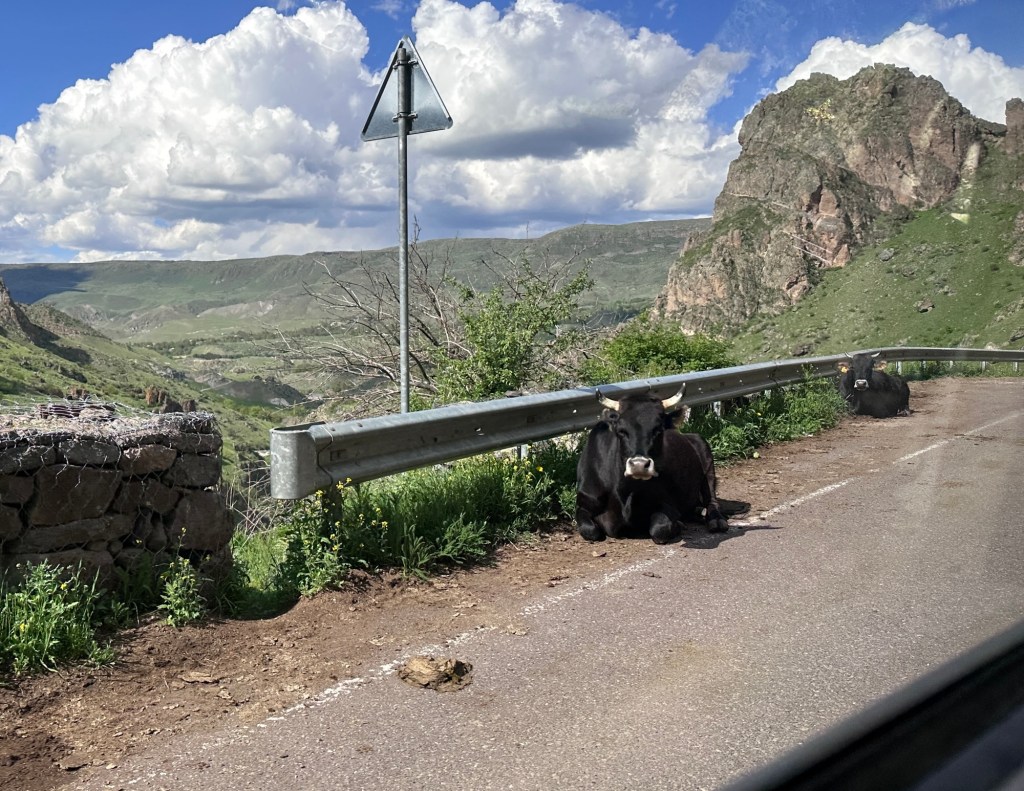
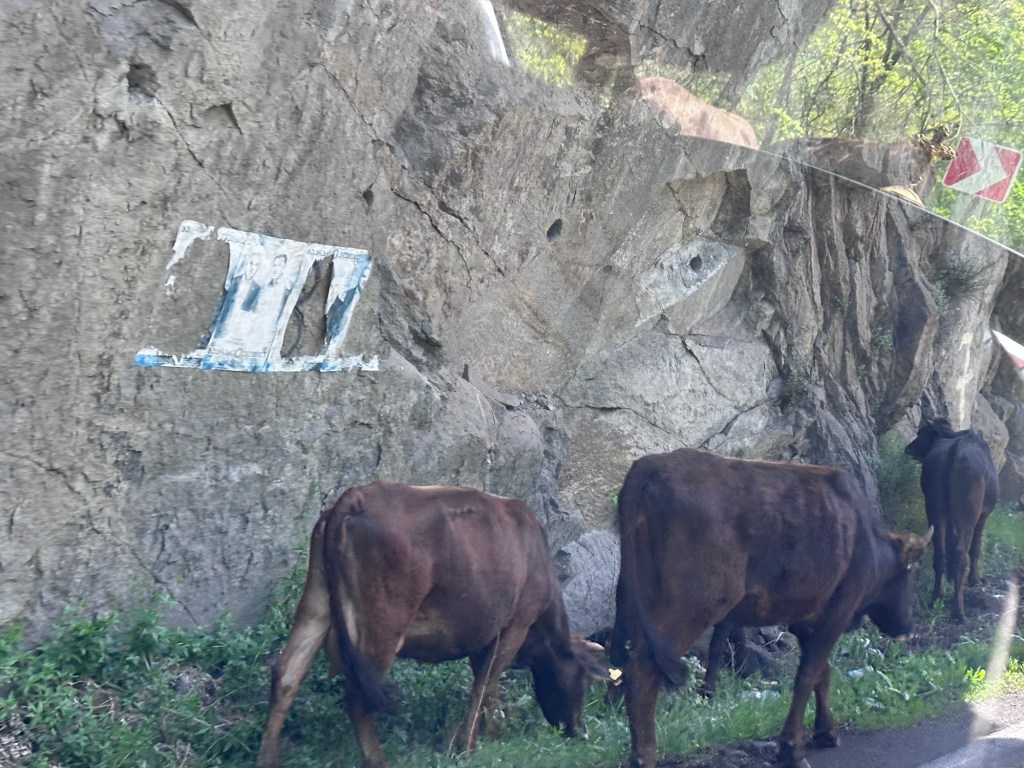
Today is a long day of driving between the three locations but a common theme is road cows; cows, cows, everywhere. Cows roam the nearby pastures daily and commute home, sometimes blocking the roads.
We arrive back late so we rest up for tomorrow, our last full day in Kutaisi. We plan to tour old sanitoriums, more on the
Today we have a long bus tour scheduled to Armenia. I normally do not participate in the whole visit-a-country-in-a-day thing but I am curious about Armenia and want to see if it warrants a longer visit another time. I love the introduction to the country but it is a painfully long day, especially when my stomach doesn’t feel the best.
We mistakenly arrive at the wrong meeting spot after seeing other’s waiting for another tour. We ask another guide if our tour meets here erand he says “I think they meet here, probably”. We wait for a while longer and get nervous that no one else is here for our tour yet. We double check the meeting spot and find out we are in the wrong meeting spot. We quickly rush over to the correct spot; we aren’t the last two to arrive as two others have been delayed due to street closures caused by an impromptu holiday (the patriarch has recently died in Georgia). Unfortunately the only seats left on the bus together are in the very back where we have a poor view out the window for the long drive.
To travel to Armenia from Georgia we have two border crossings stops that require us to get out of the van: one to leave Georgia and one to enter Armenia. We use the toliet facilities at the Georgian crossing and they are some of the worst toliets we have seen in the country thus far. Our border check seems to take longer than normal because there are three girls in our group with a special visa situation that delays us a bit.
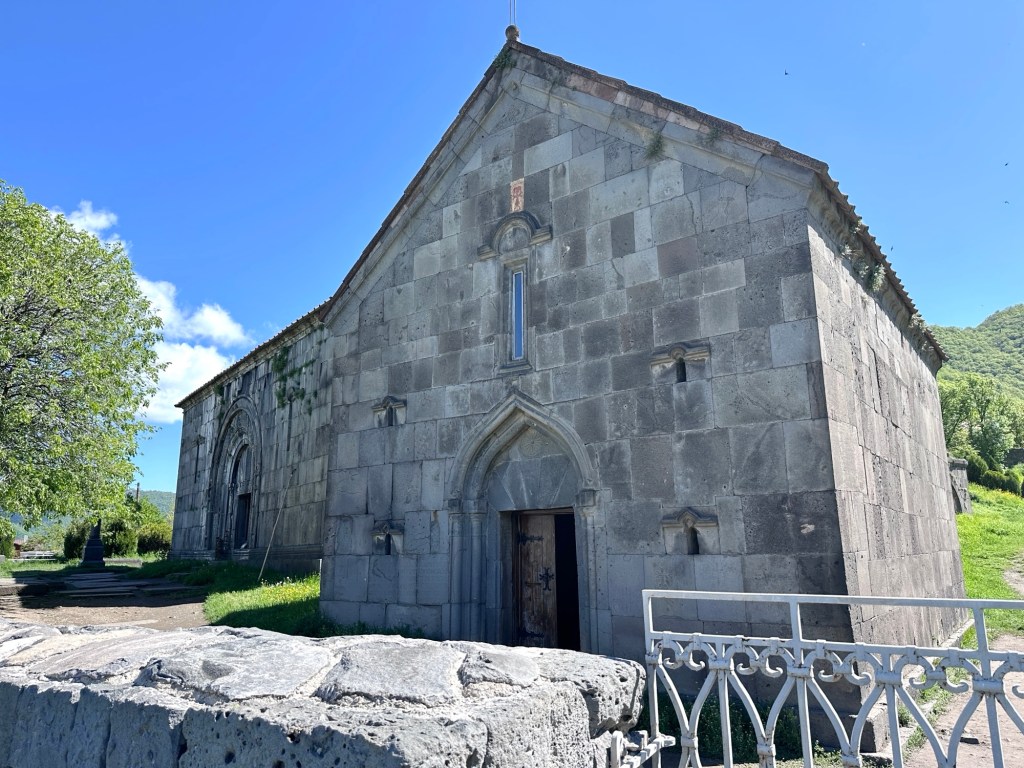
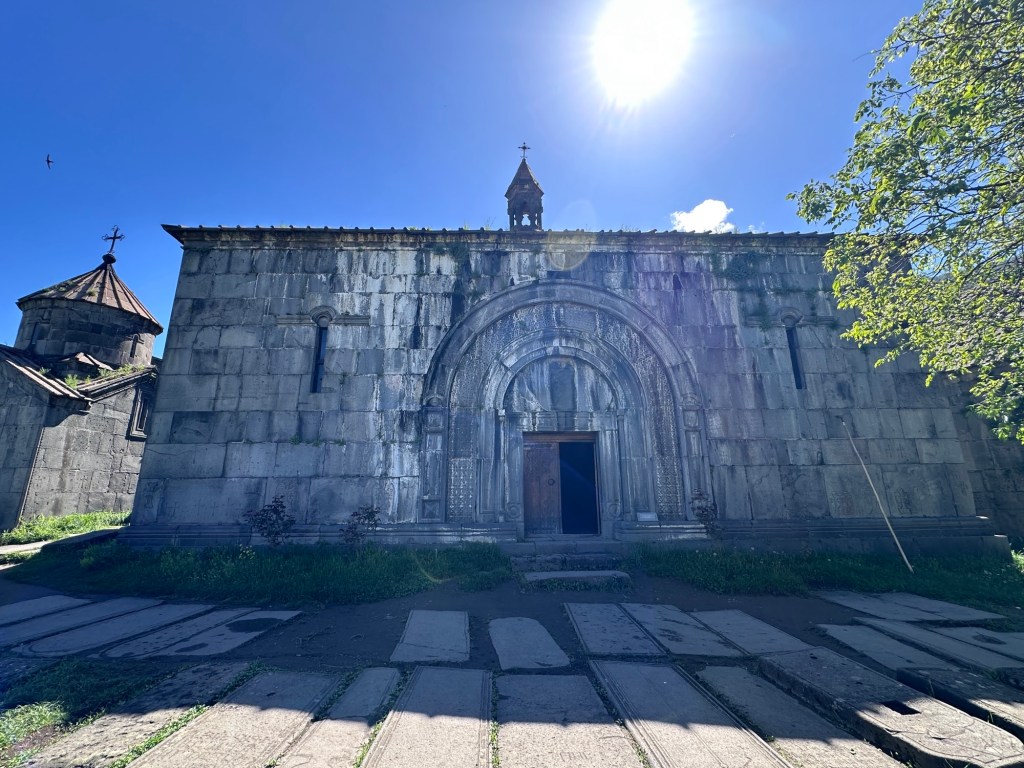
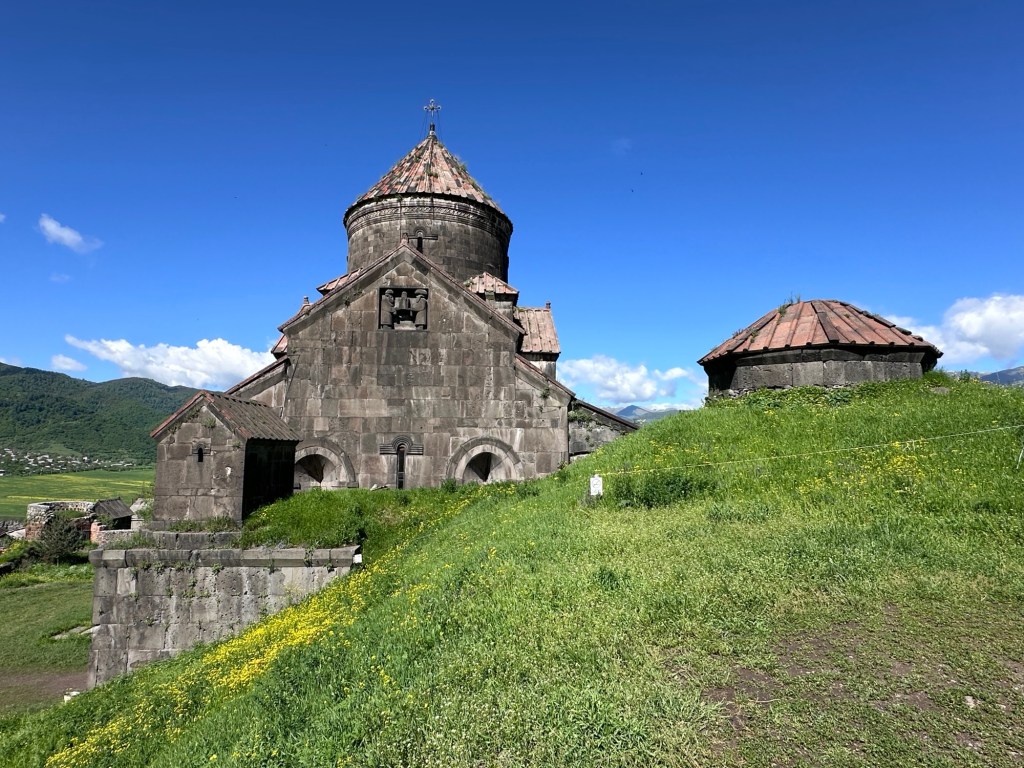
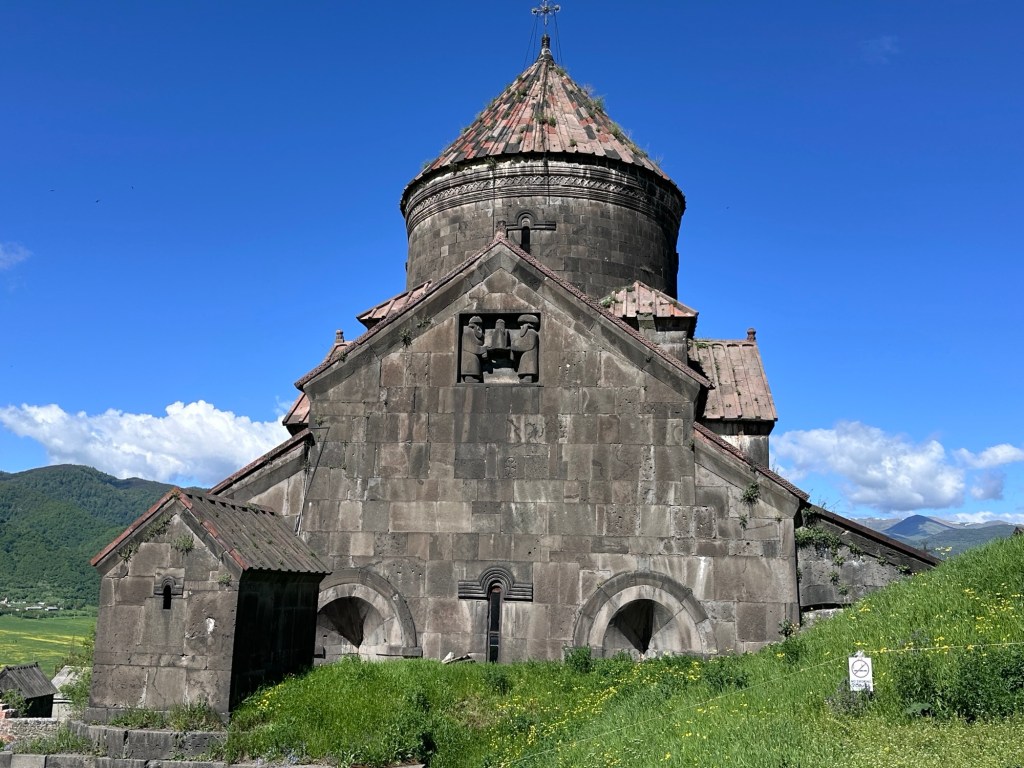
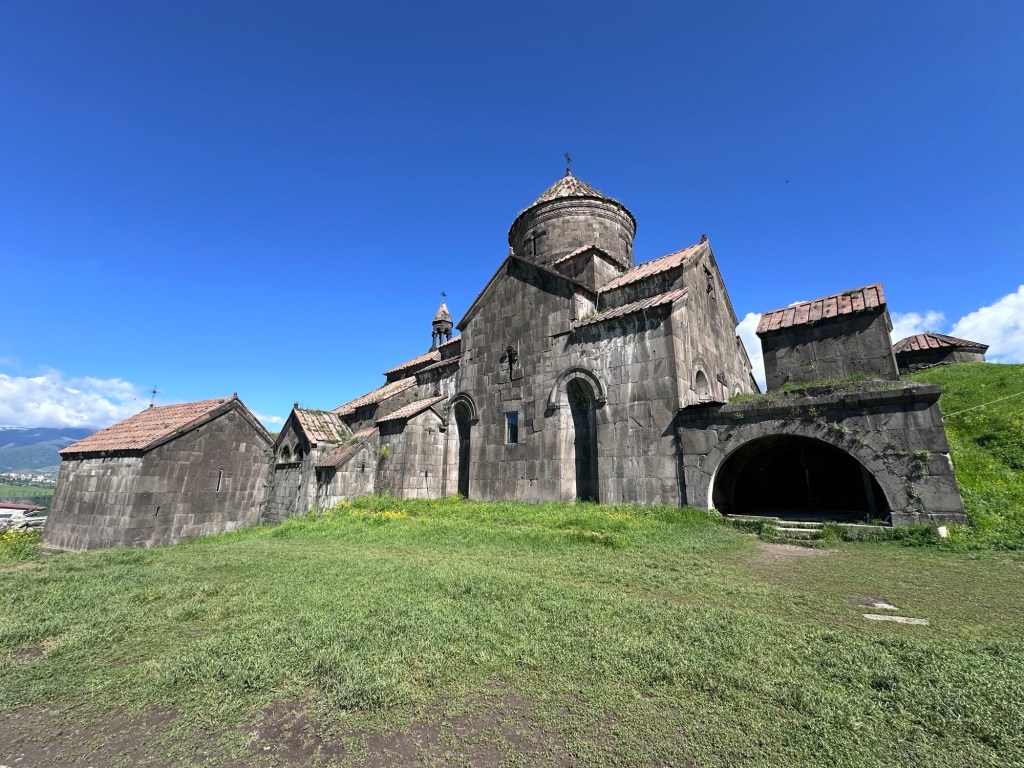
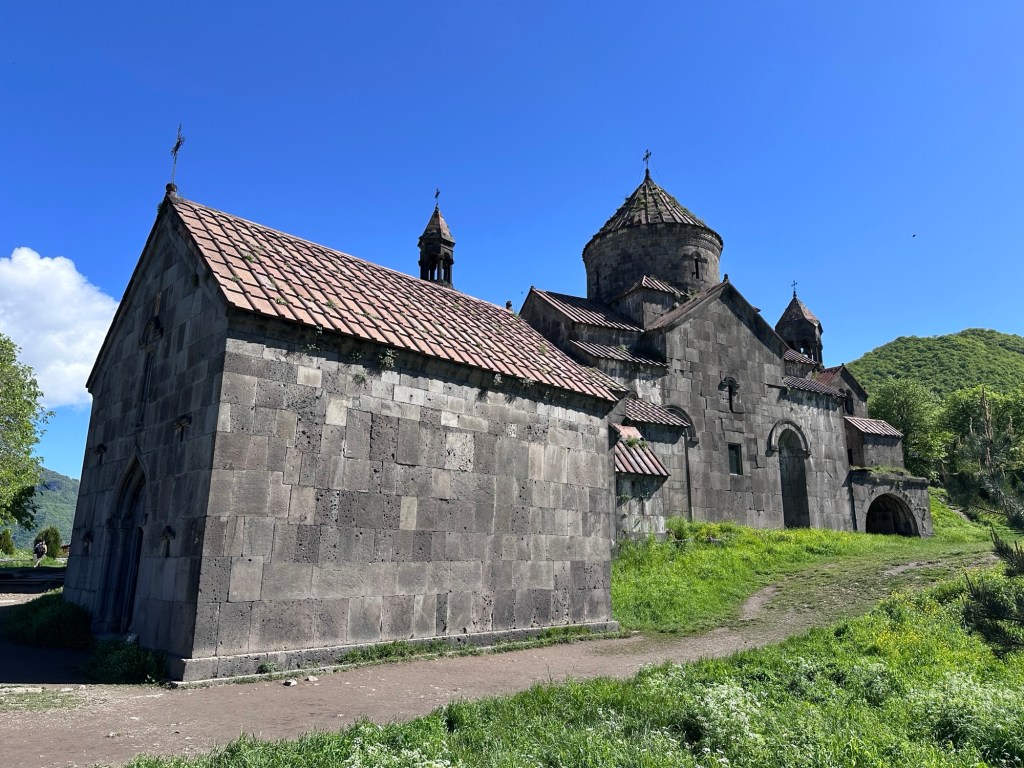
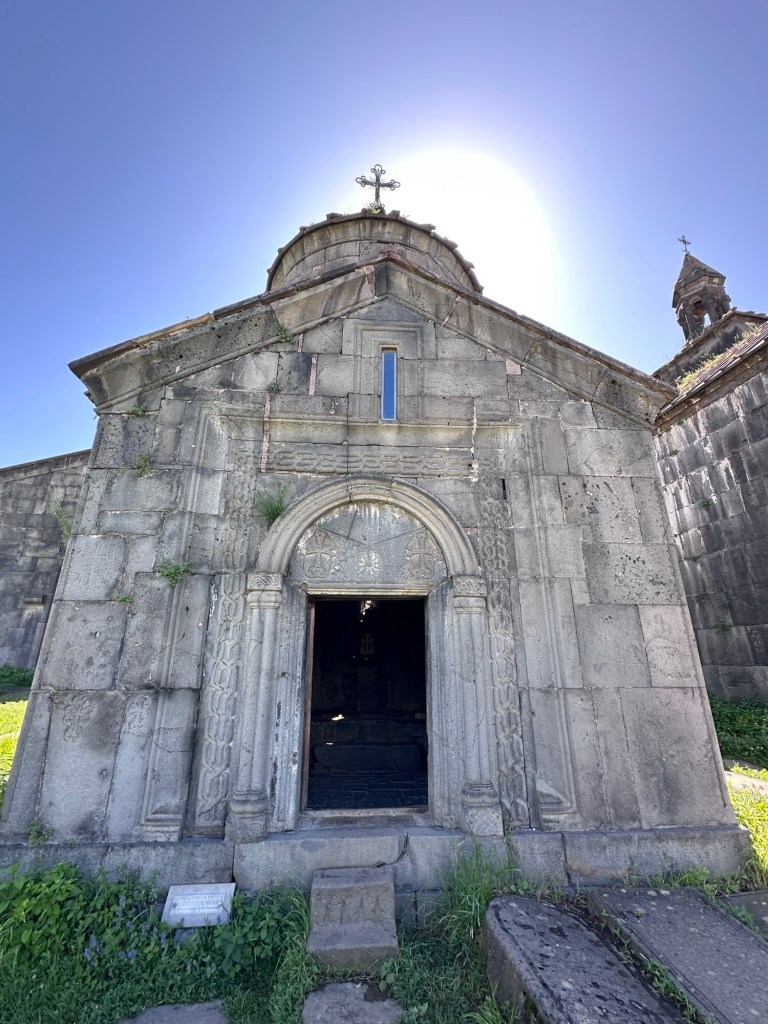
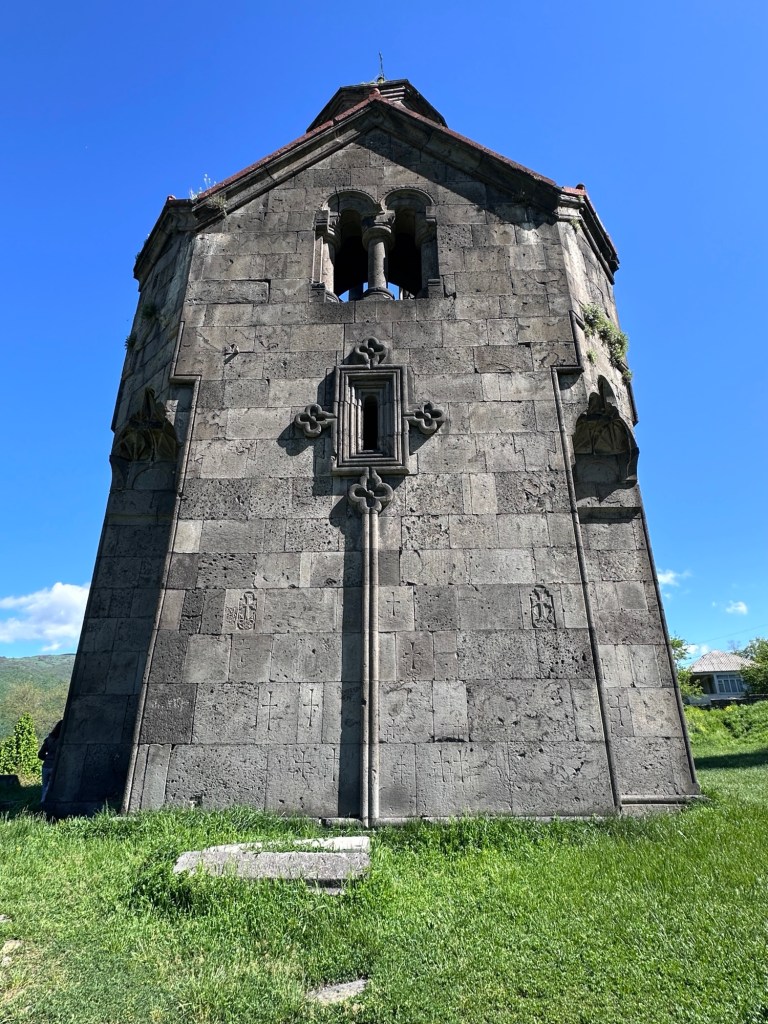
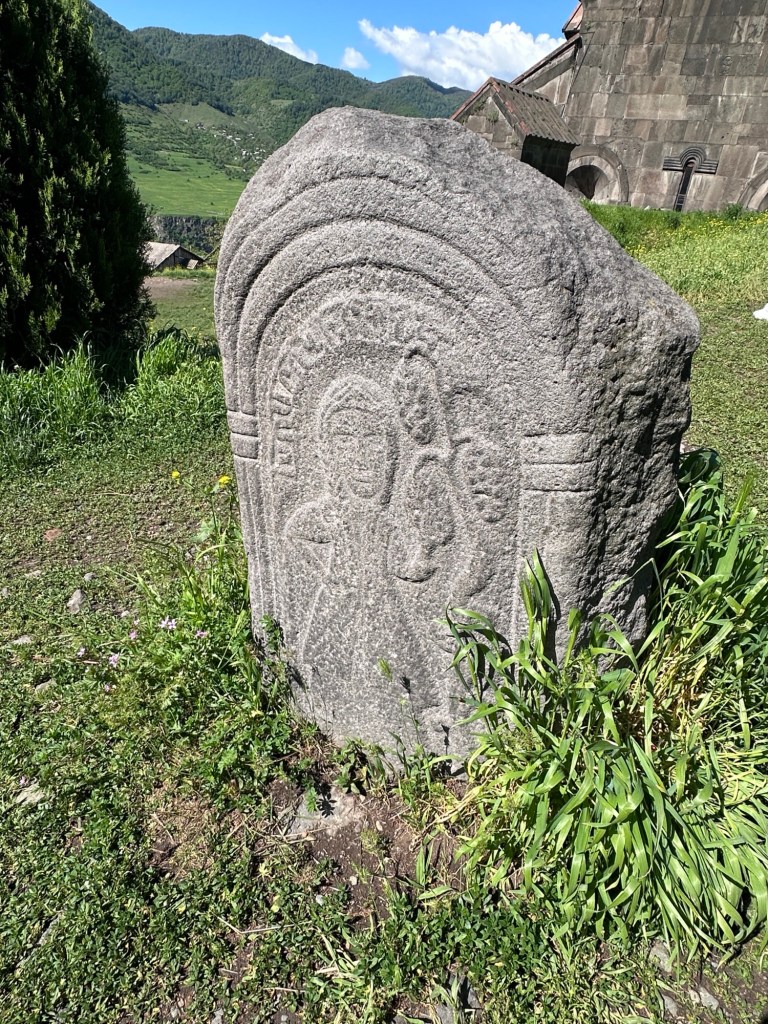
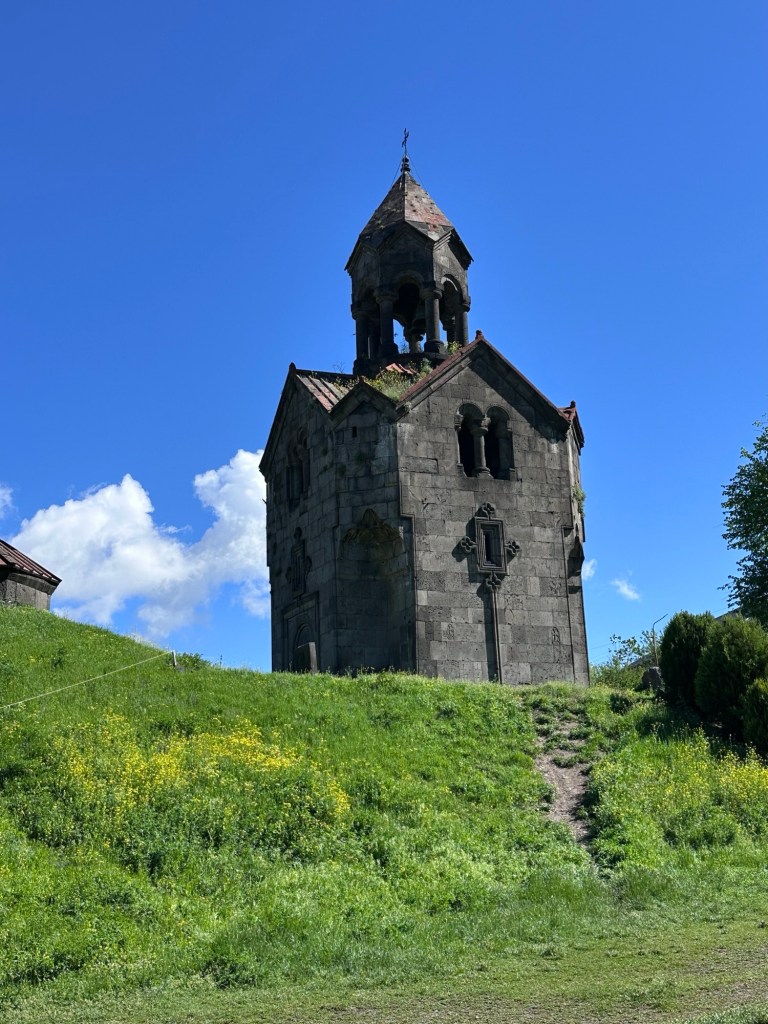
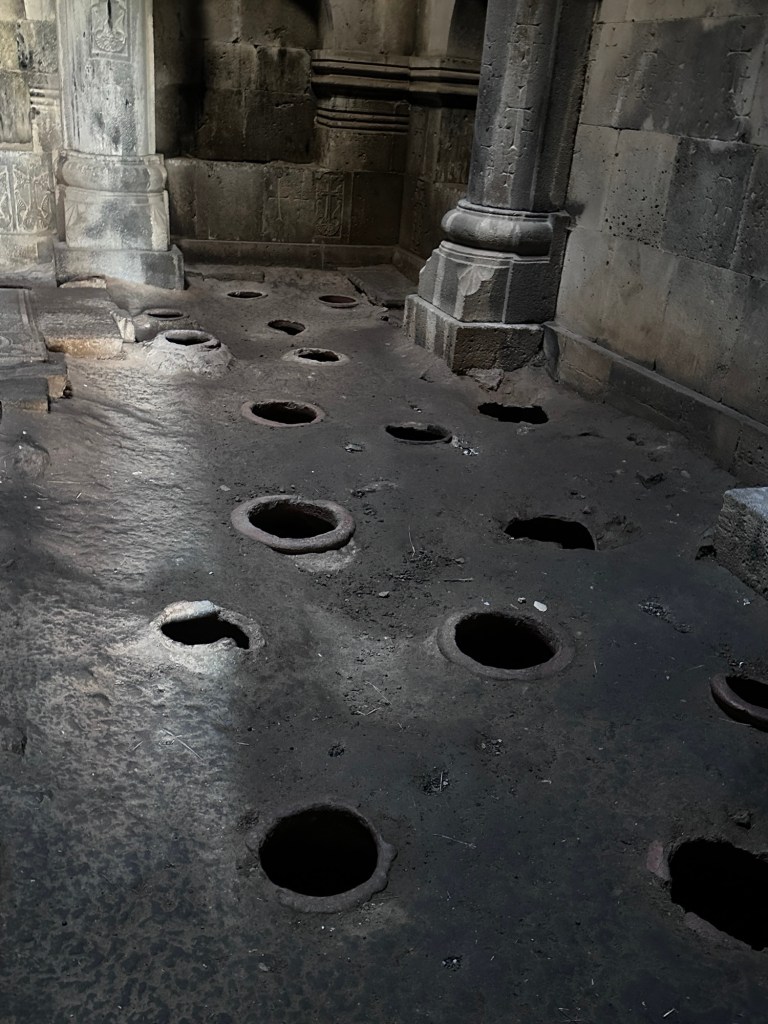
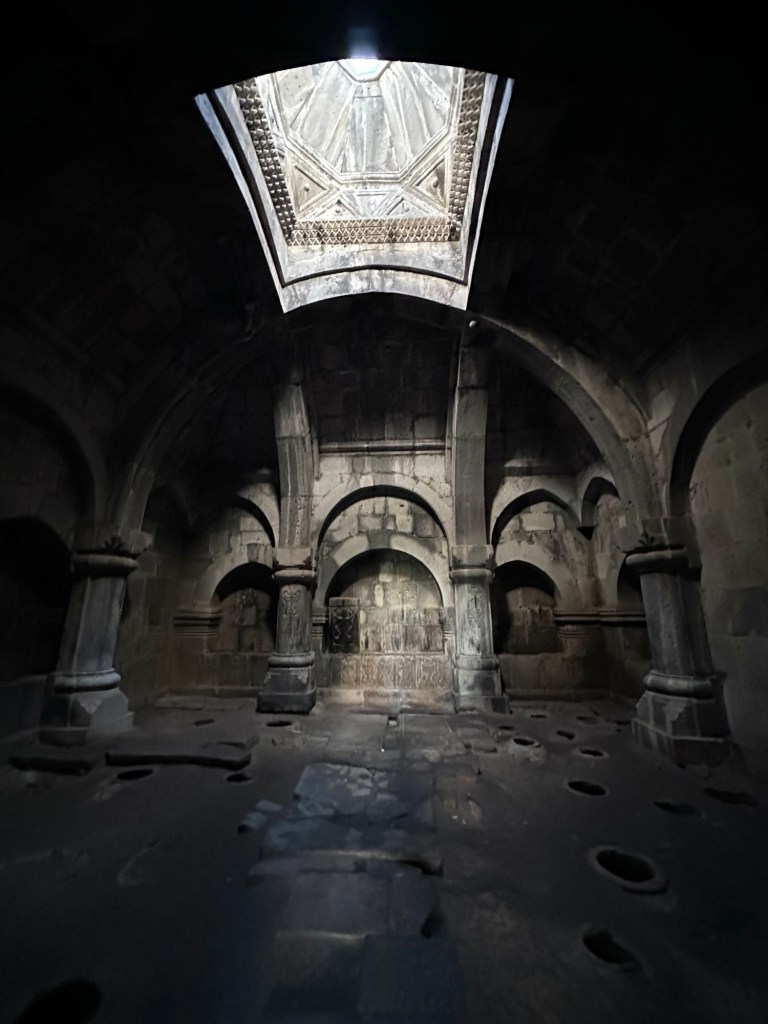
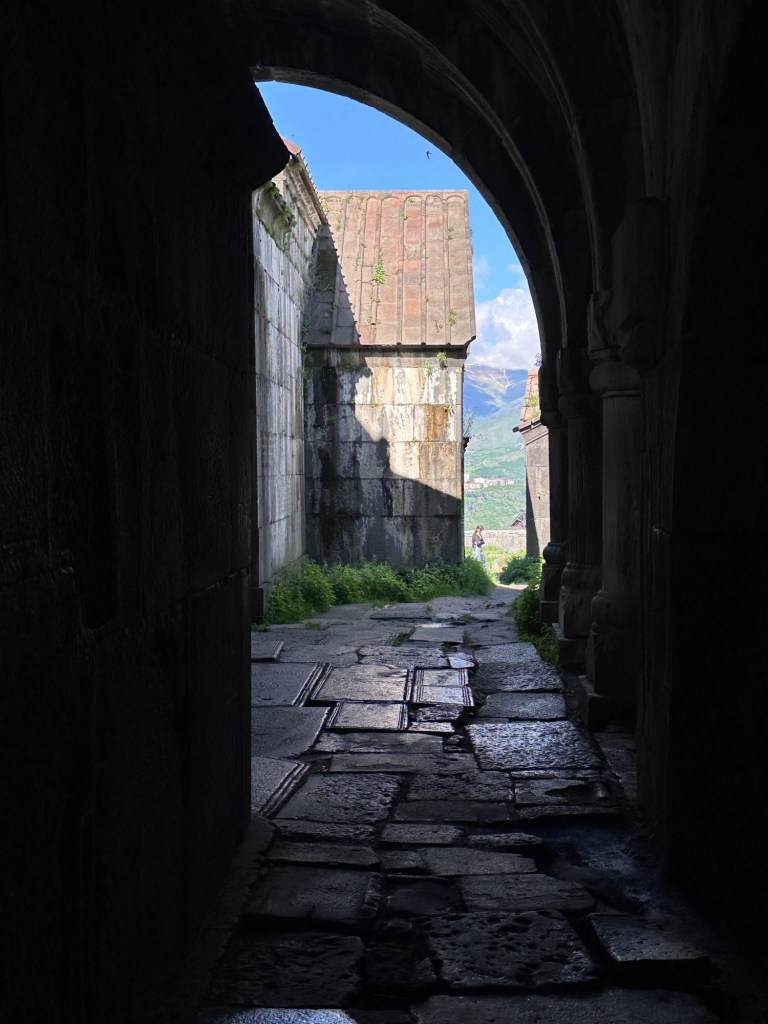
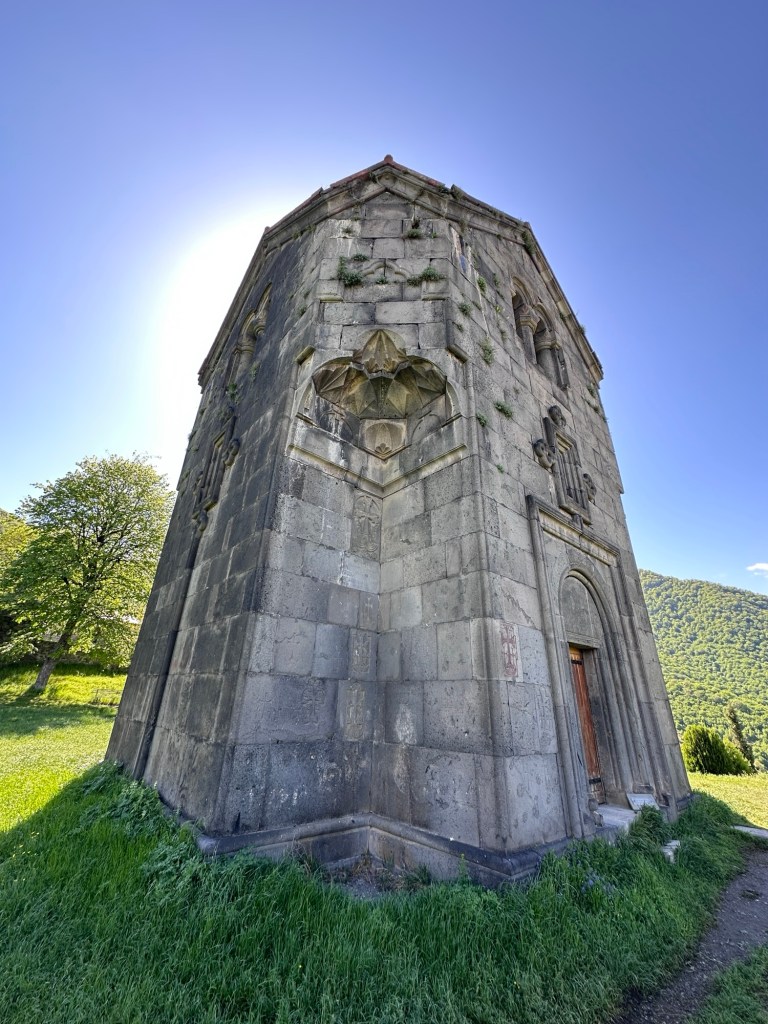
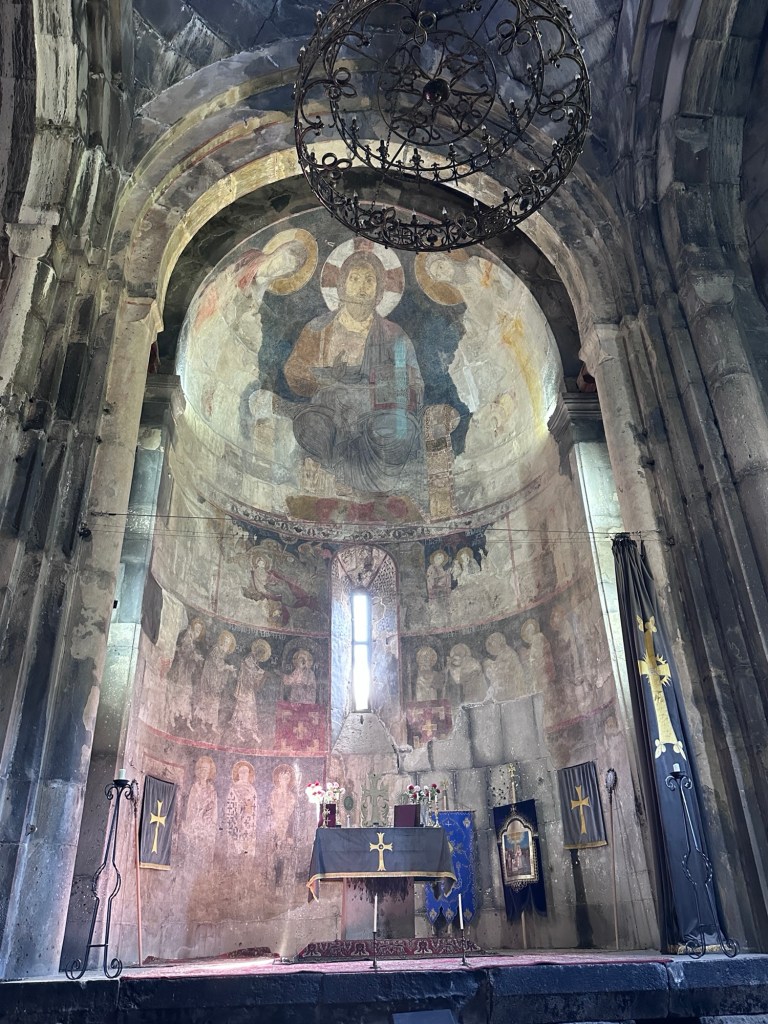
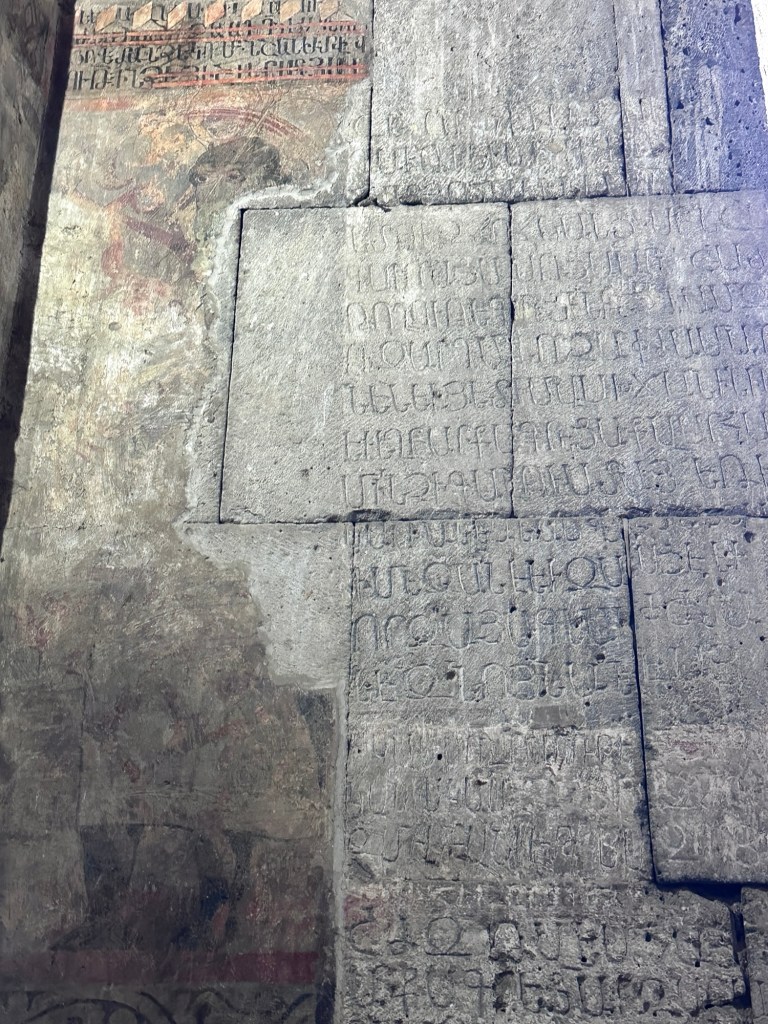
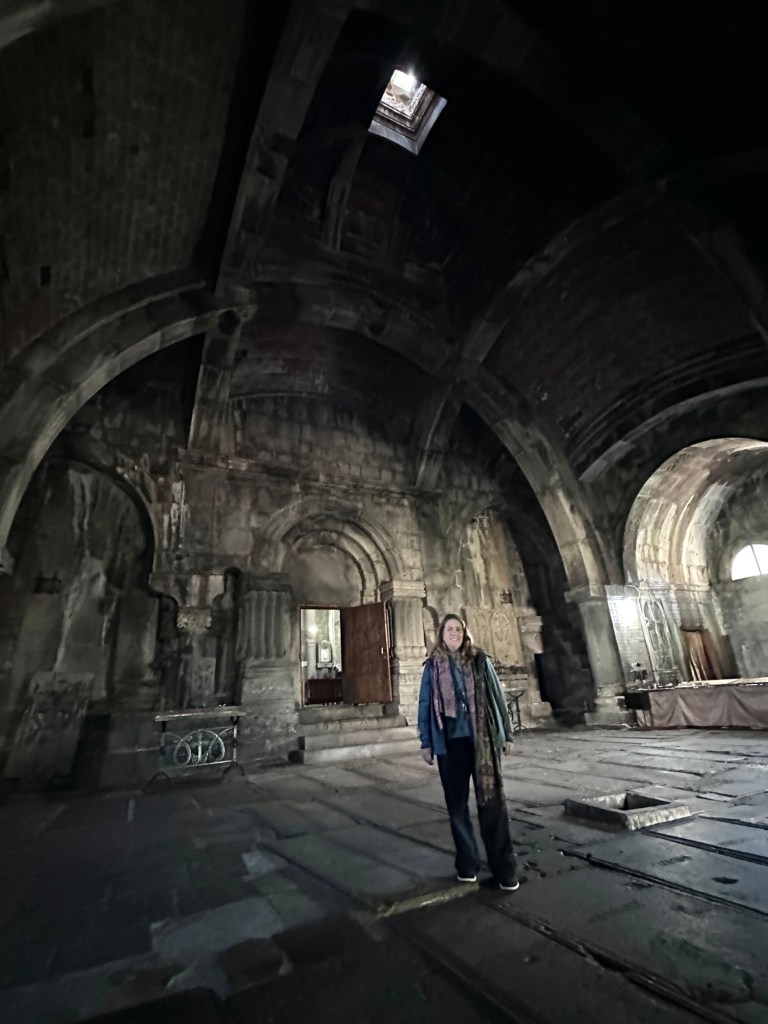
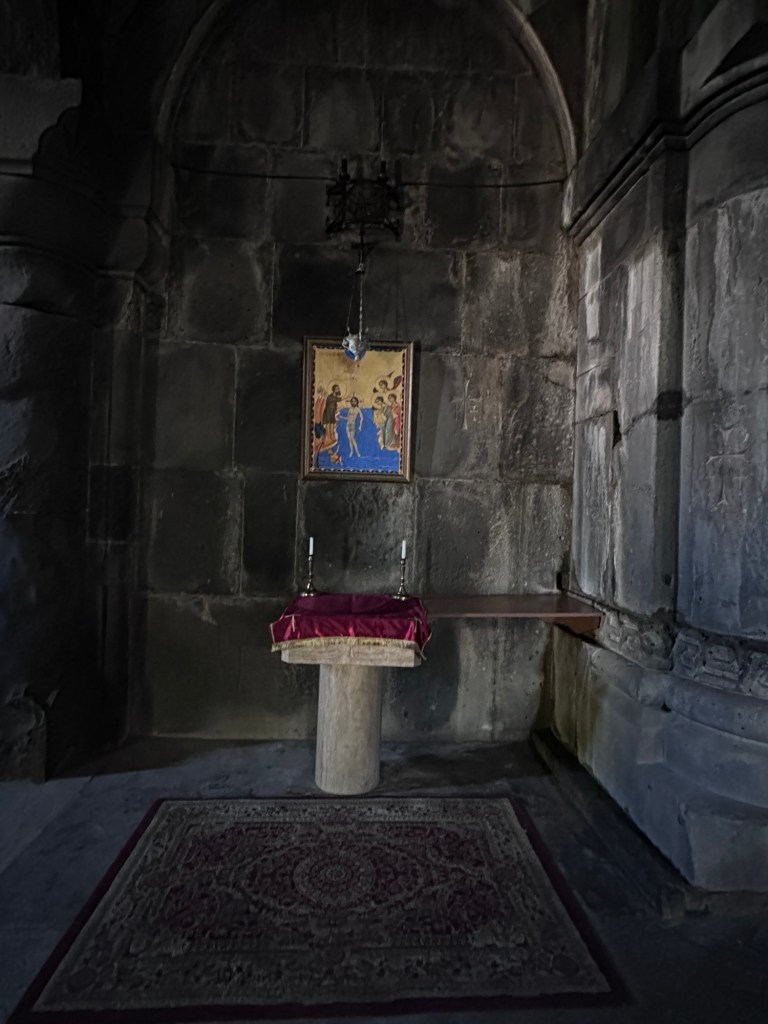
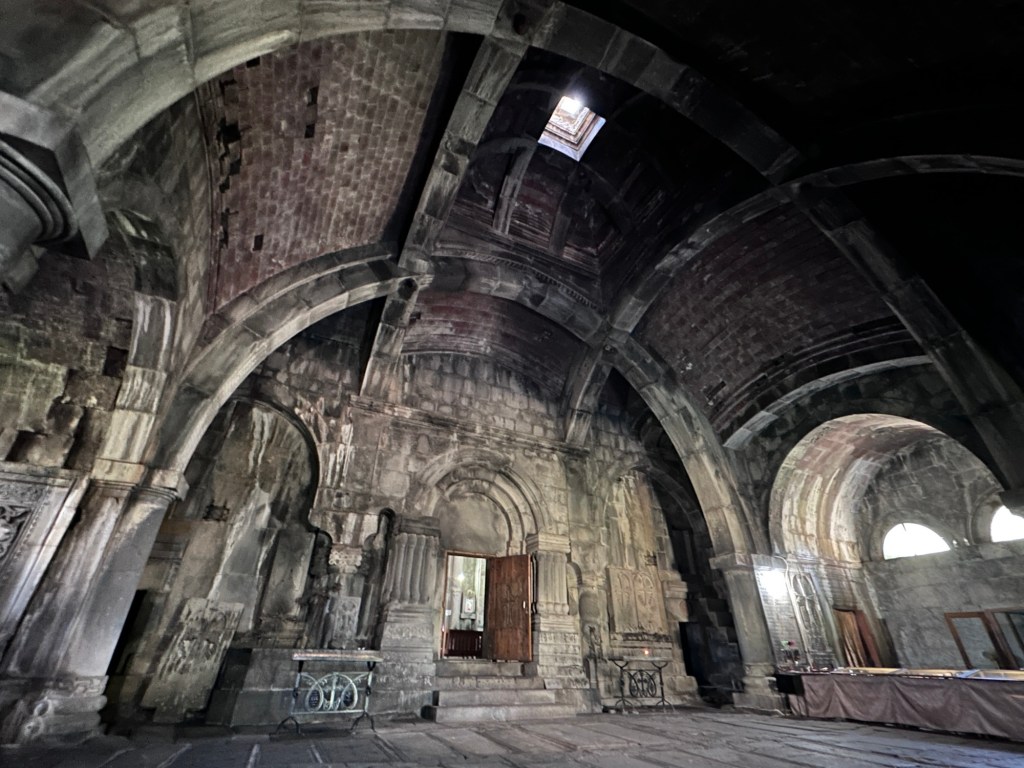
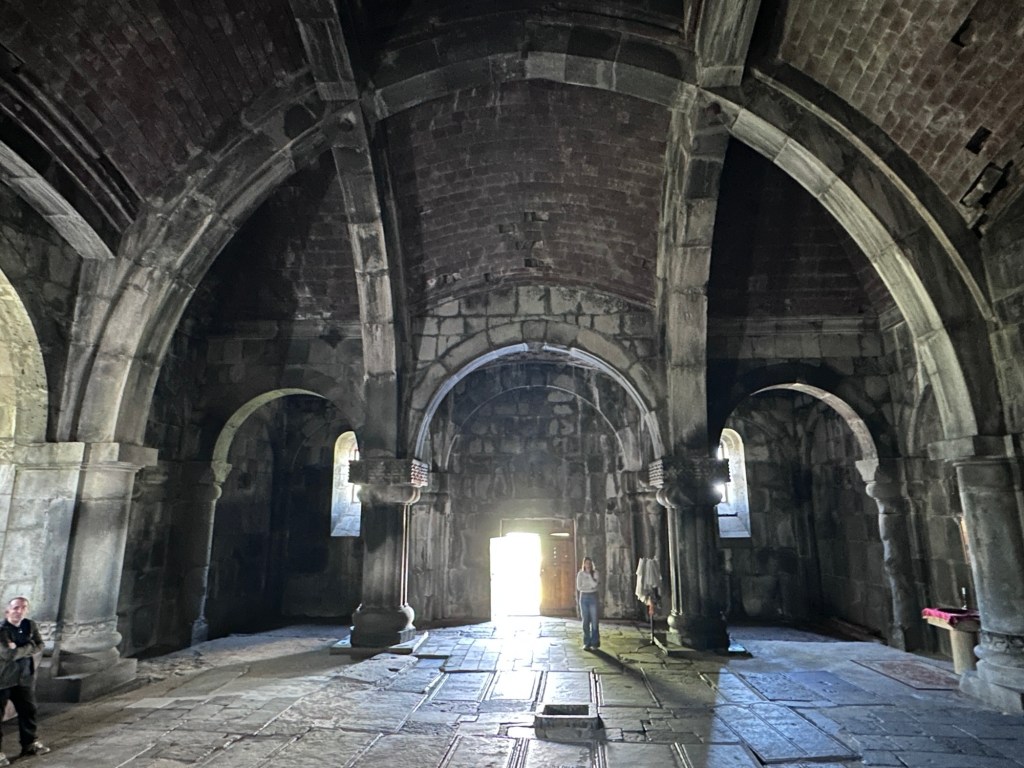
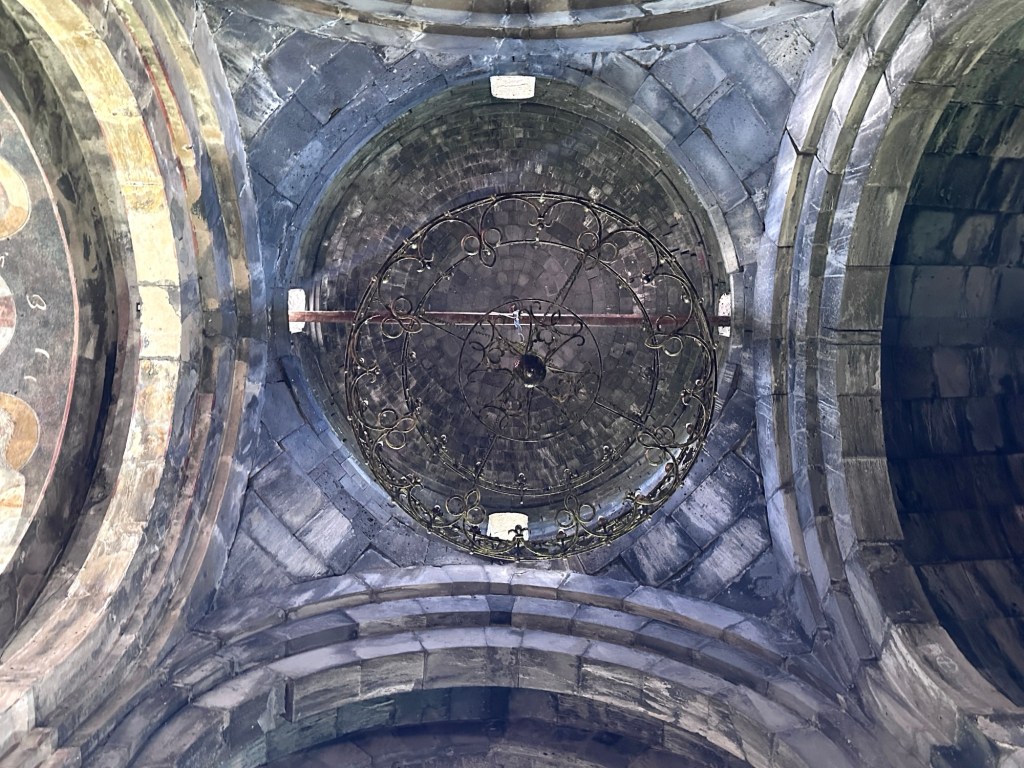
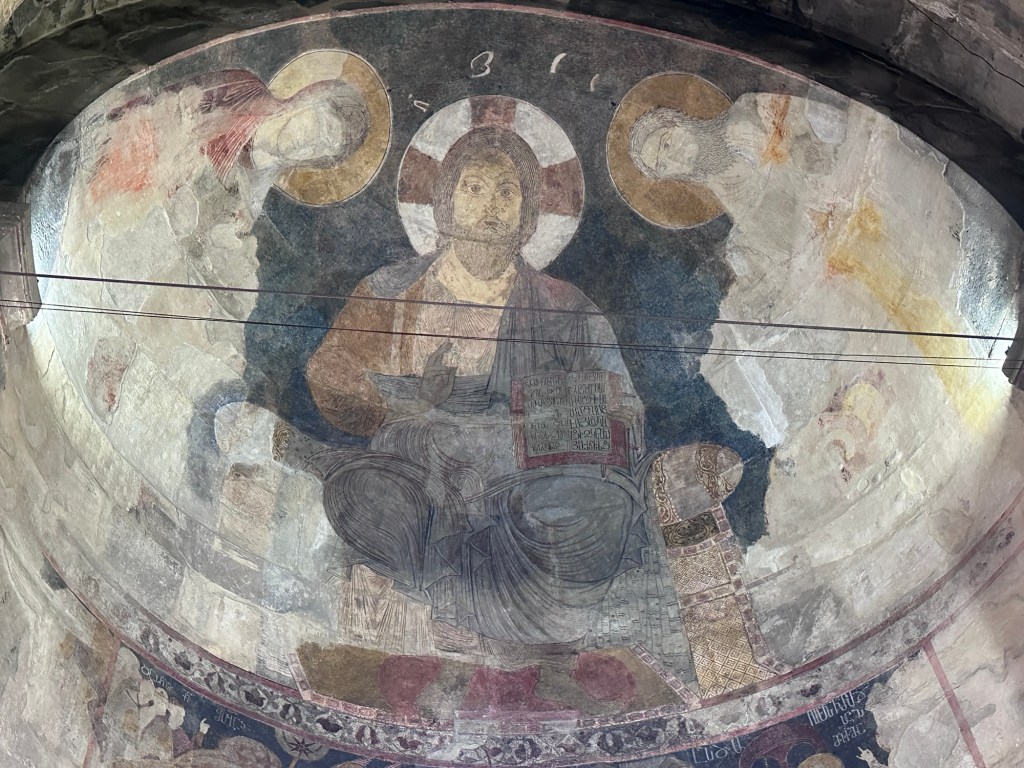
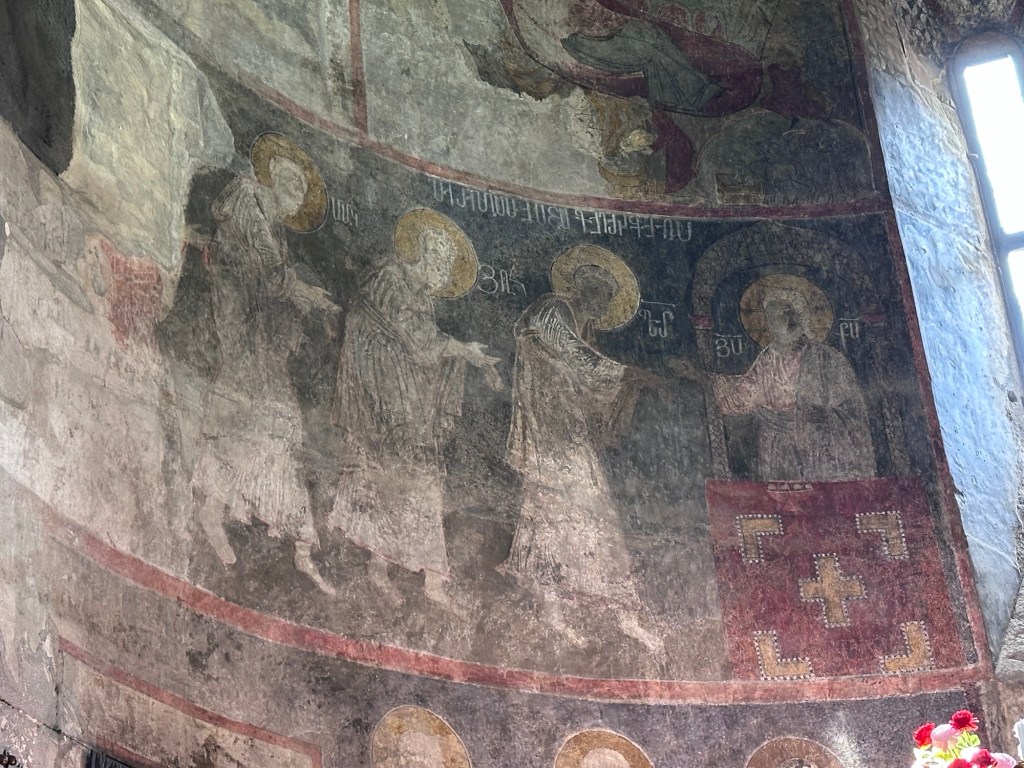
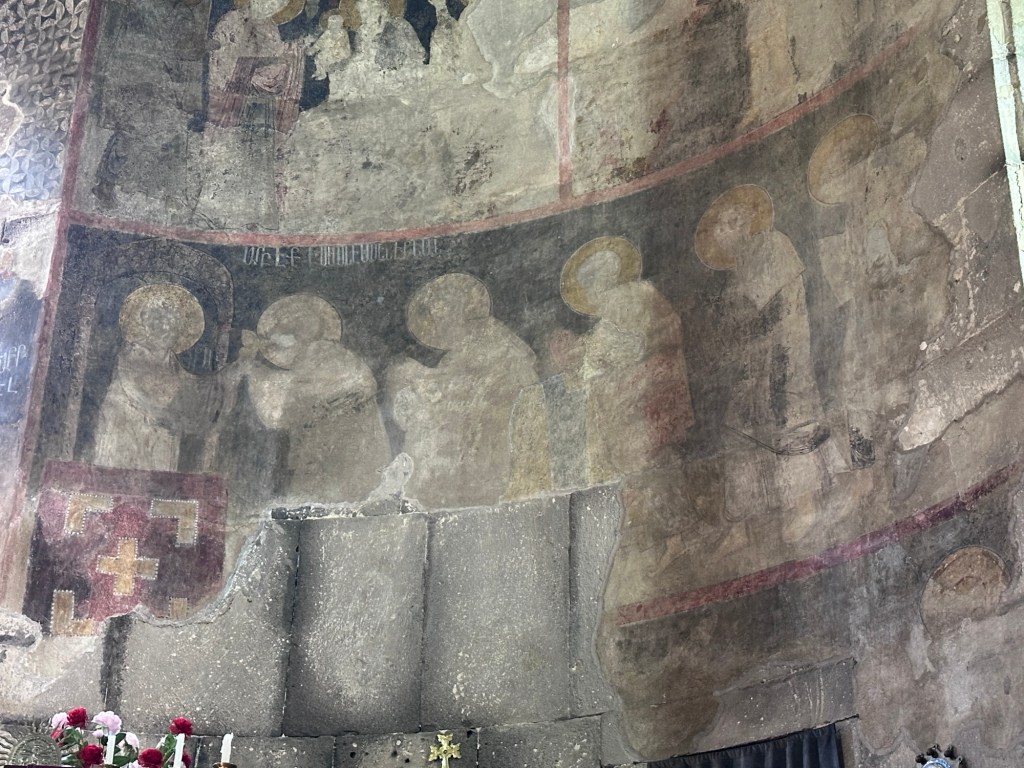
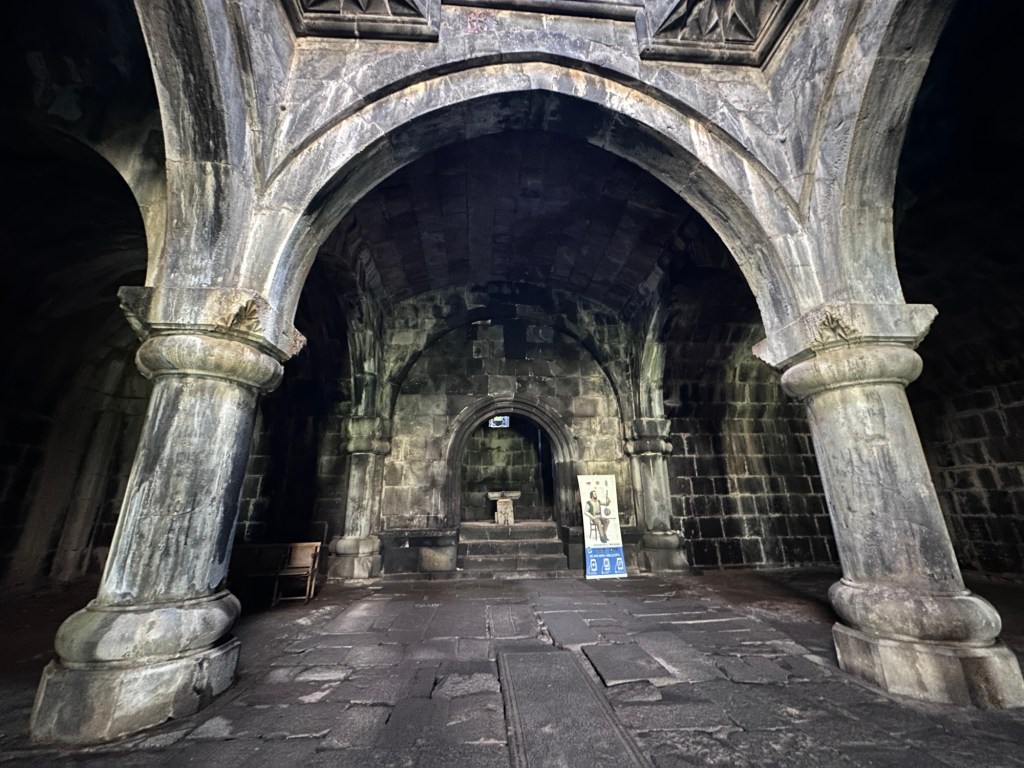
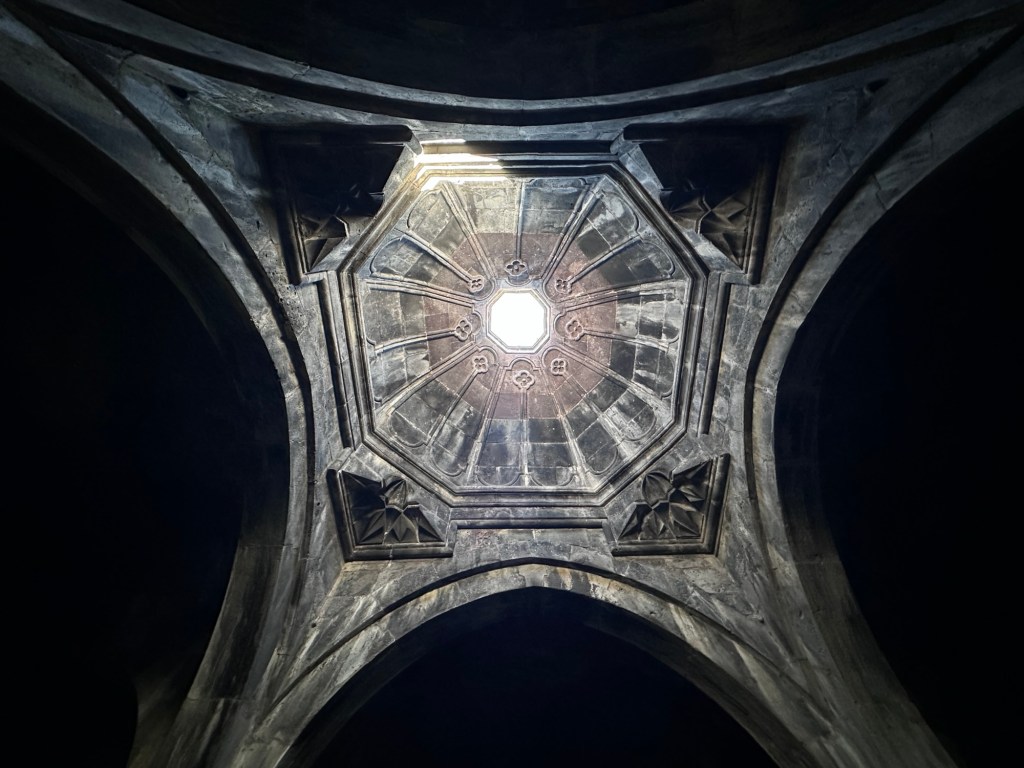
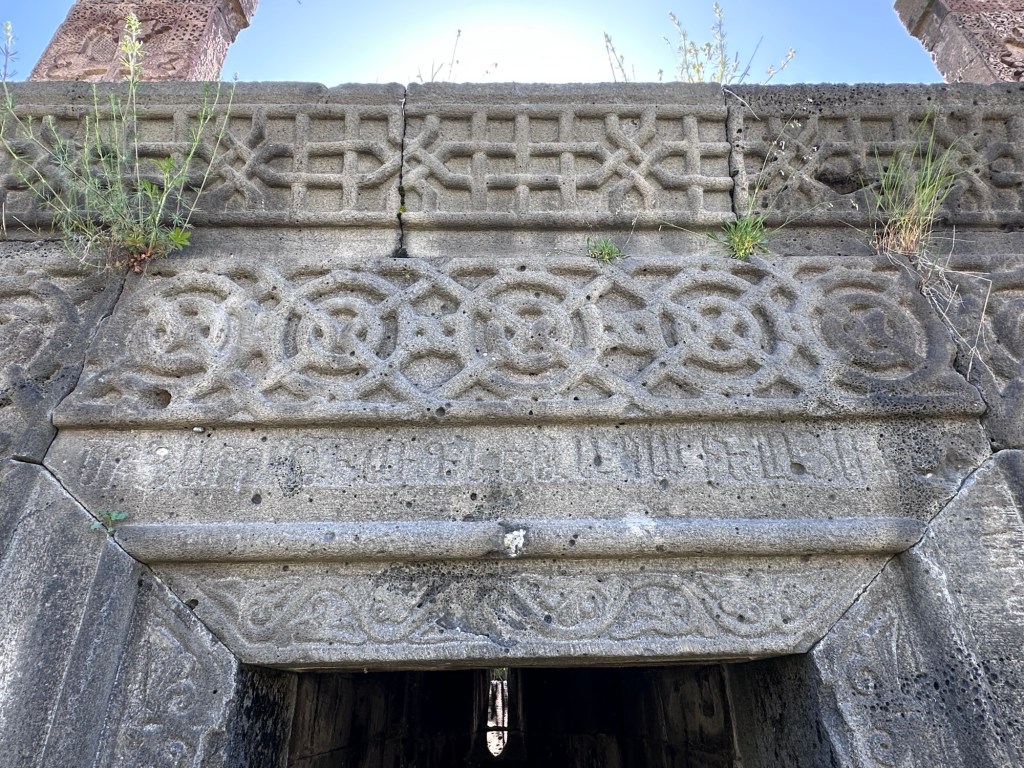
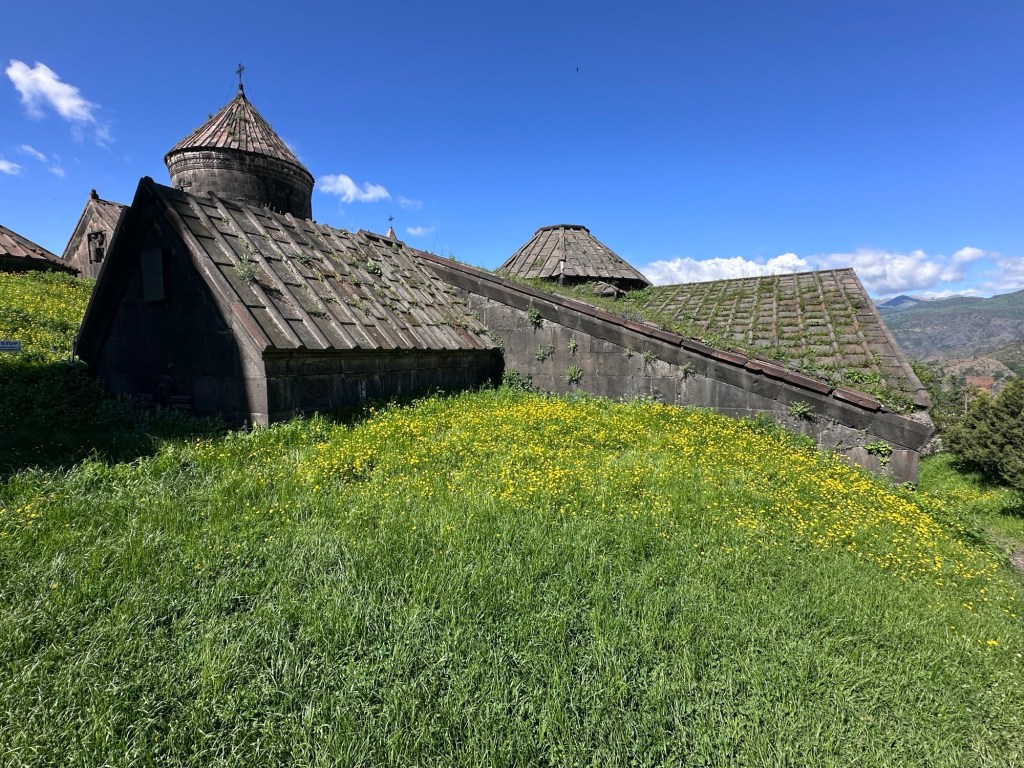
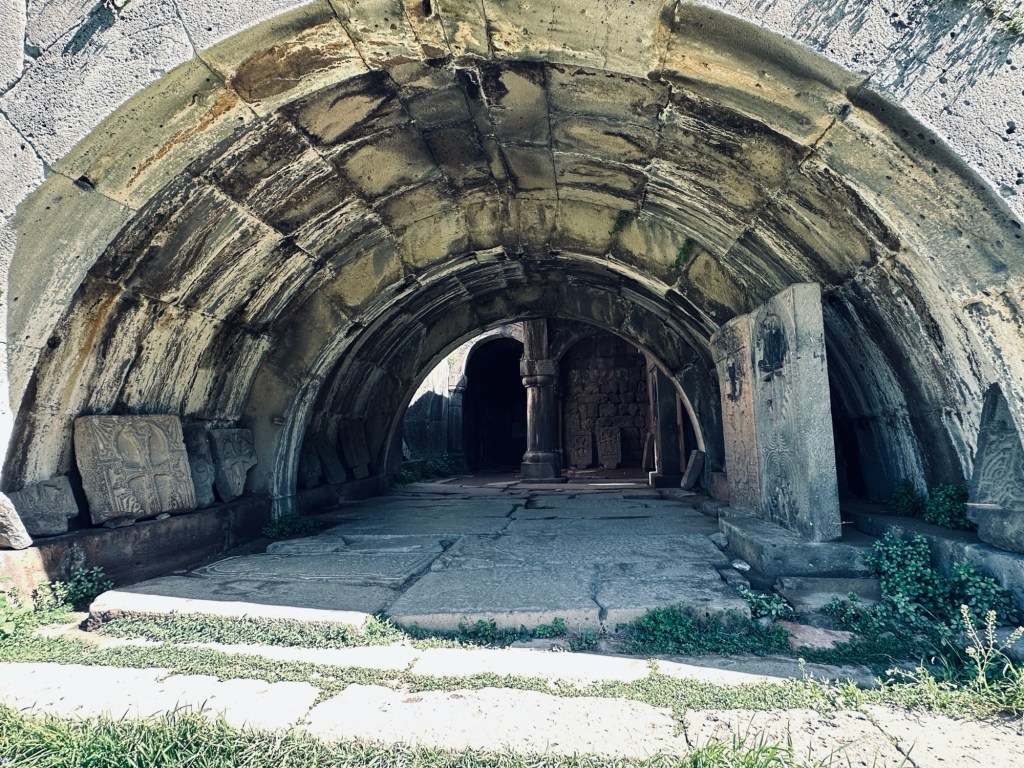
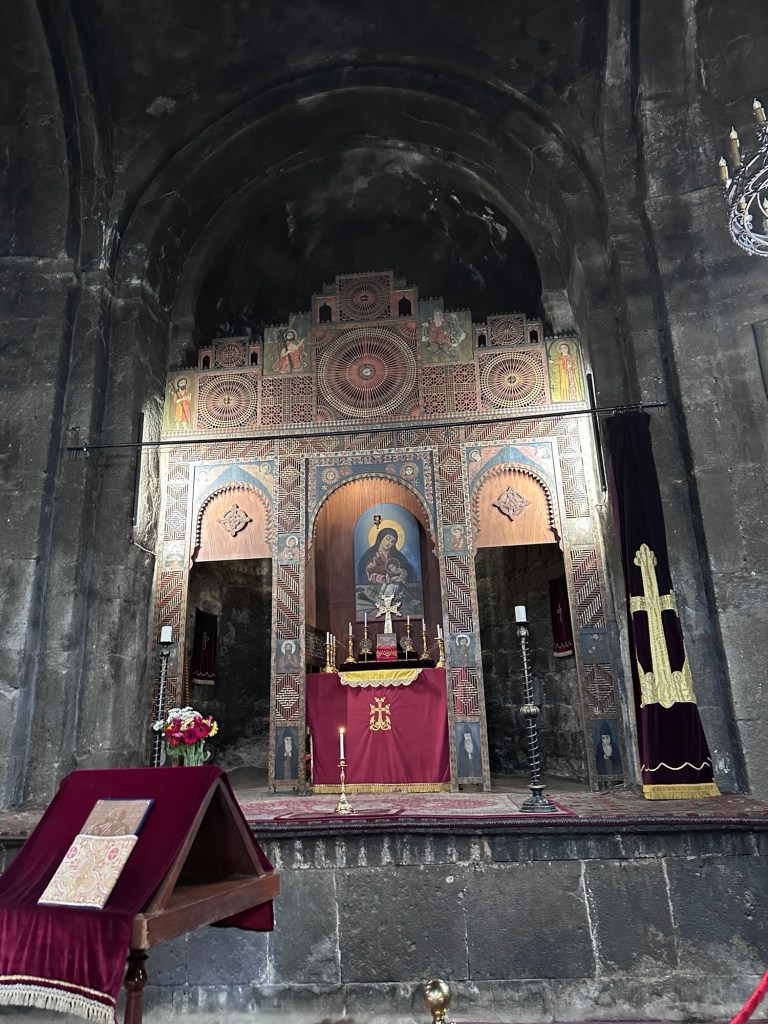
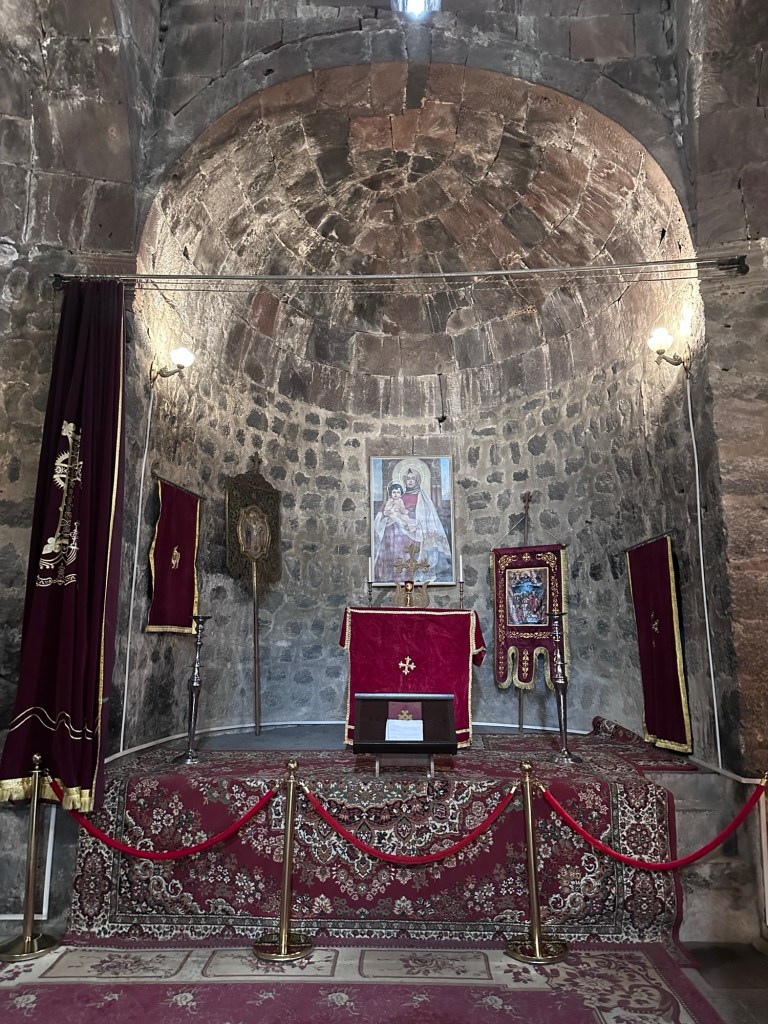
Our first stop is at Haghpat Monastery, a medieval Monastery. I admire the property and interesting arches inside. There is a man that lives nearby and takes care of the monastery grounds. He is very friendly and offers to show me how to take good pictures of the structure inside. He tells me how his friend made one of the altars currently inside the church.
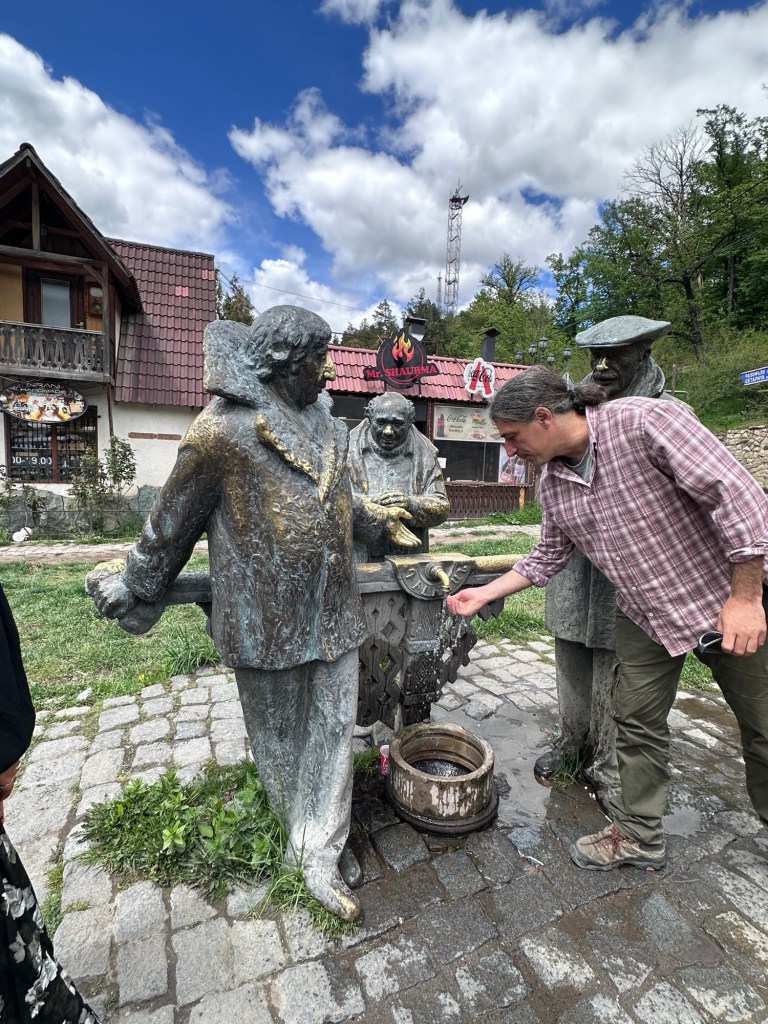
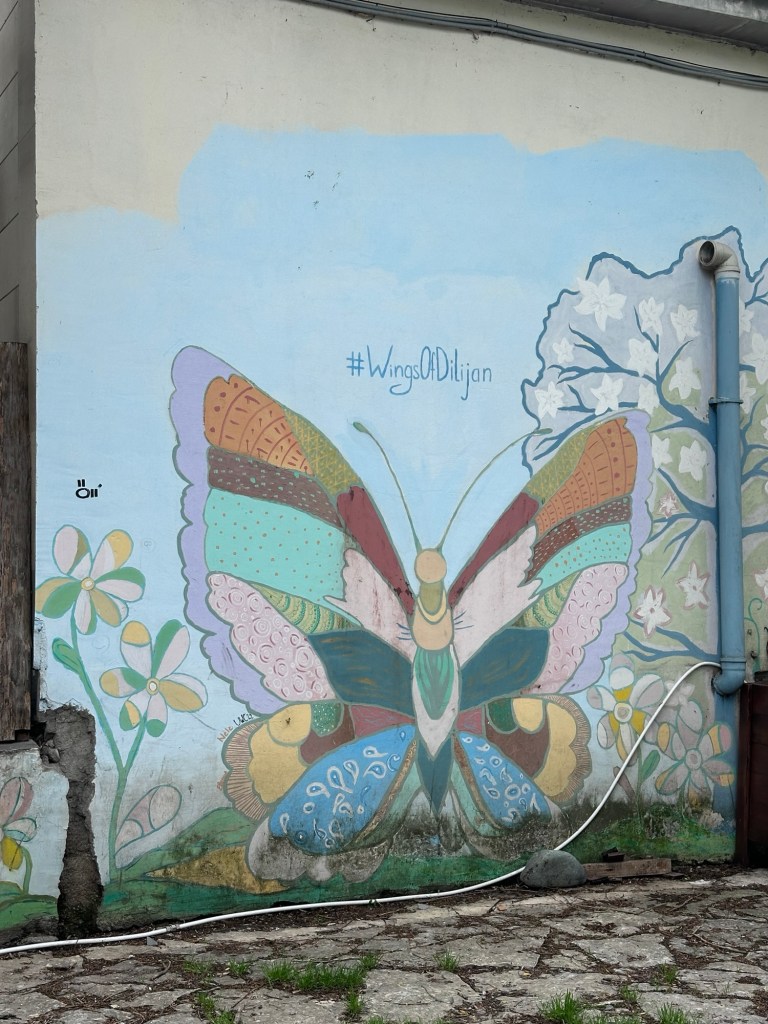
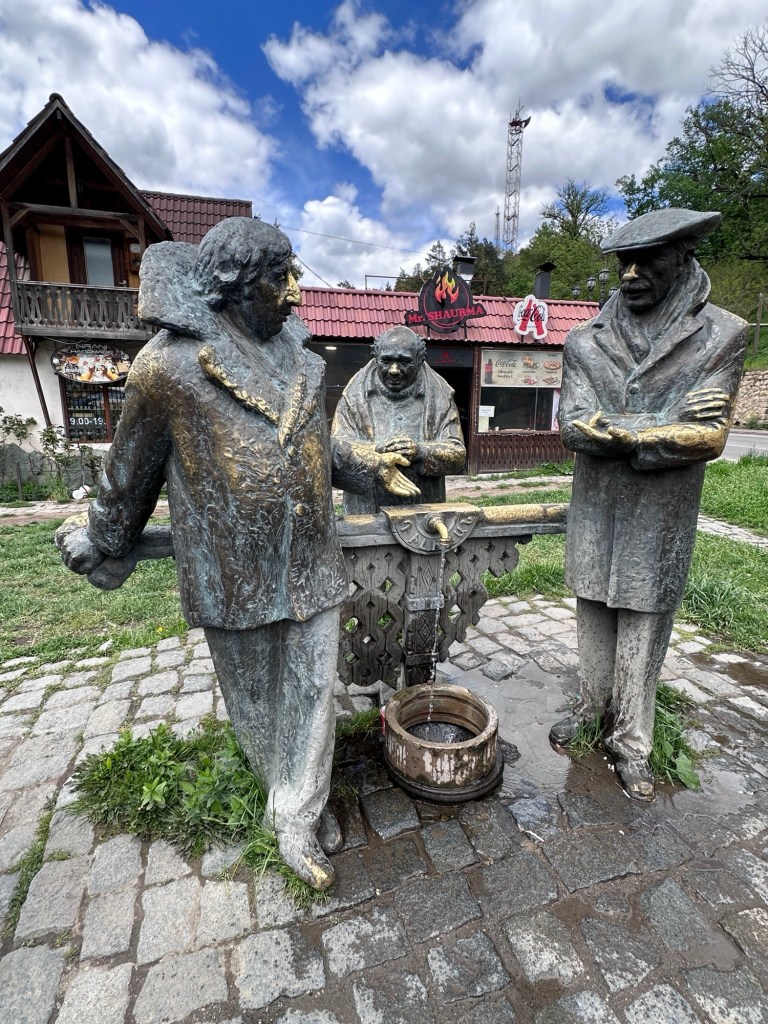
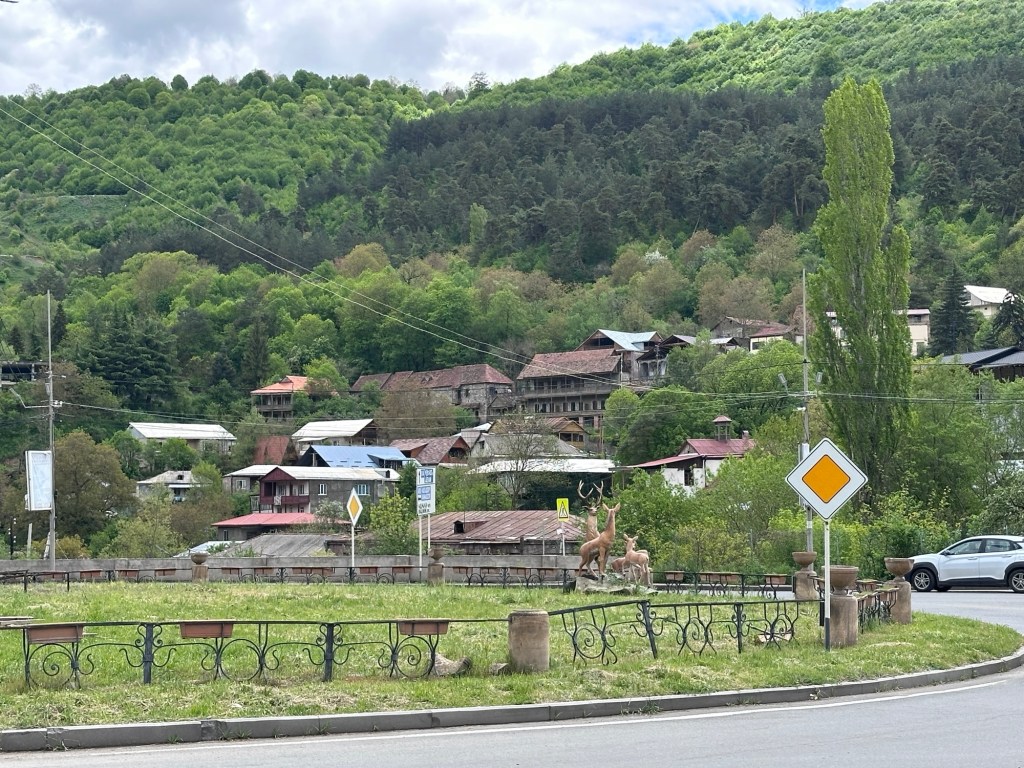
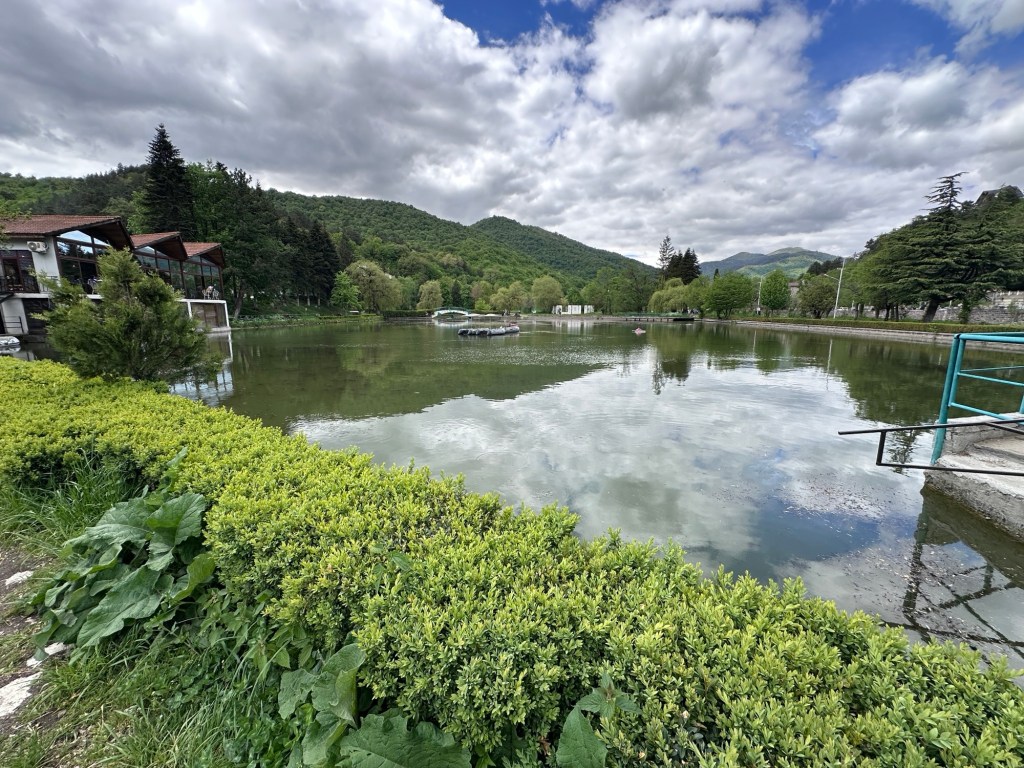
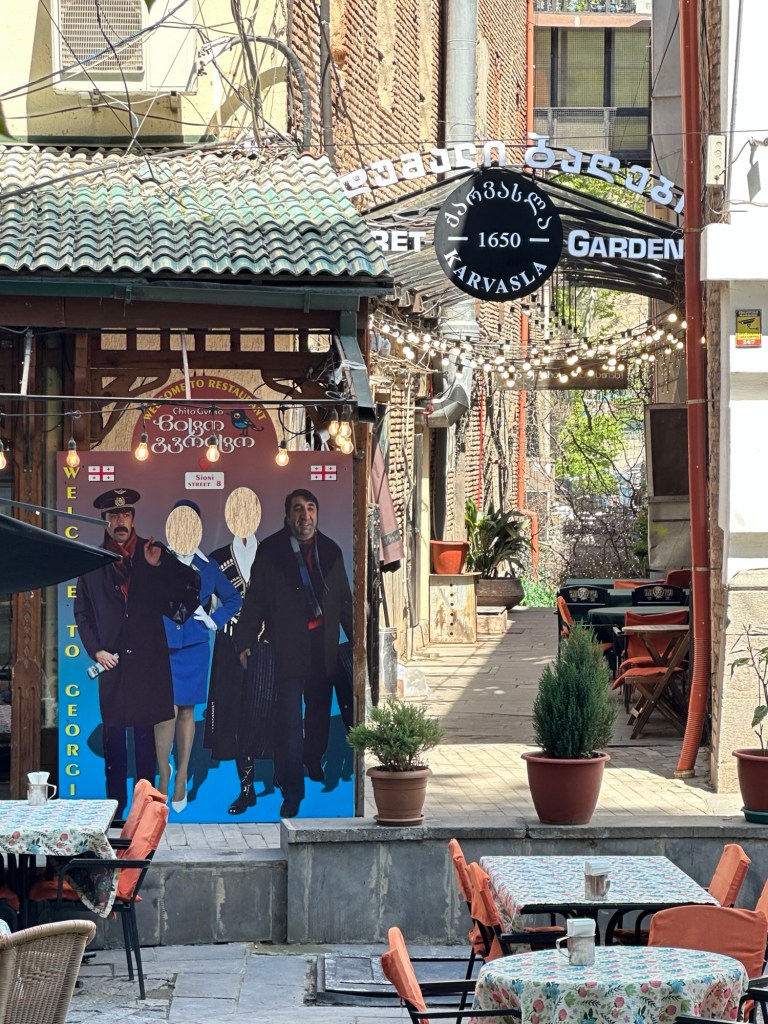
We stop briefly at the Dilijan, the Switzerland of Armenia; called that because its houses are similar to those in the Swiss alps. We view a lake and statue based on a famous movie that contains a Russian man, a Georgian man, and an Armenia man.
We stop at a fancy rest stop for lunch.
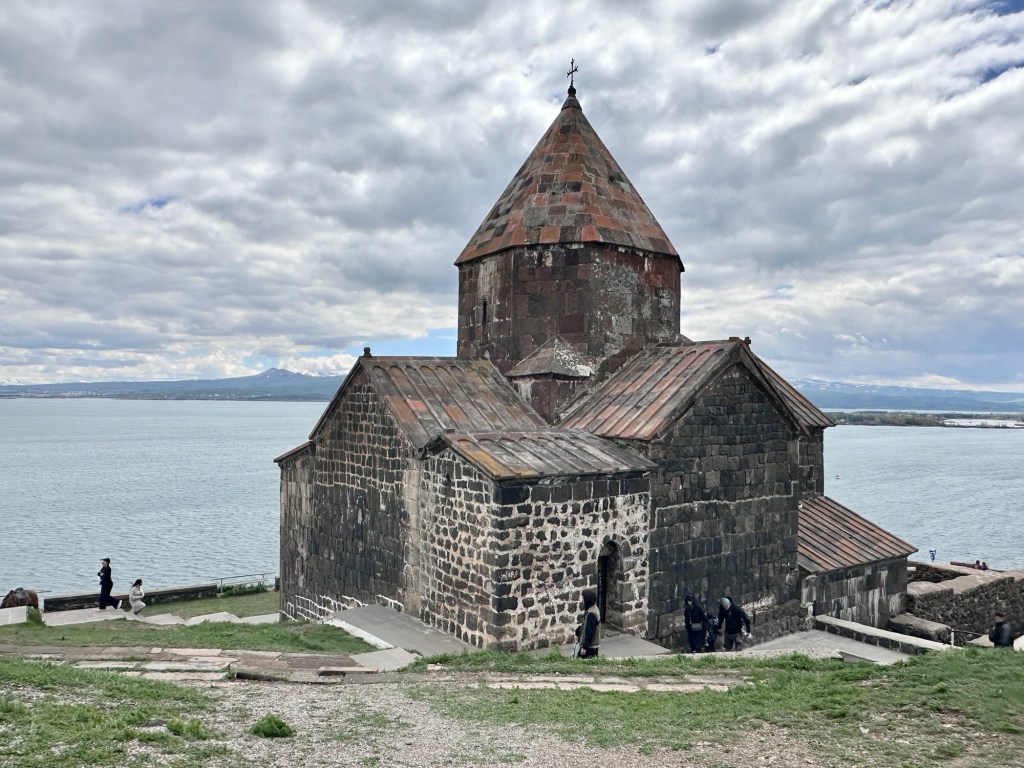
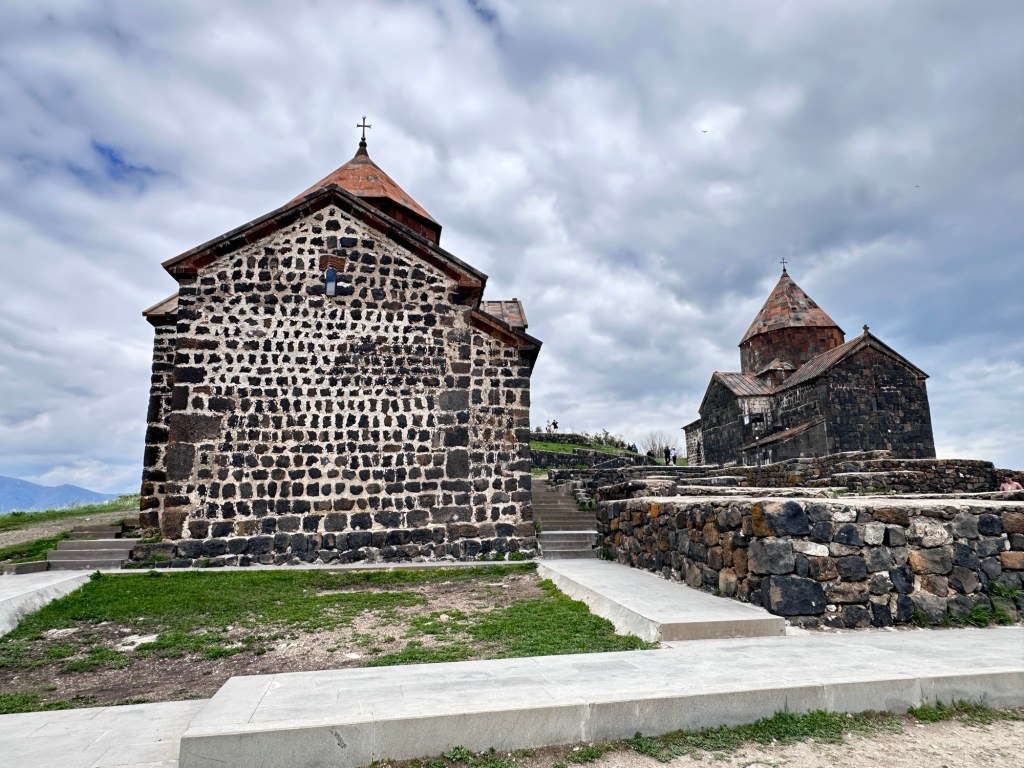
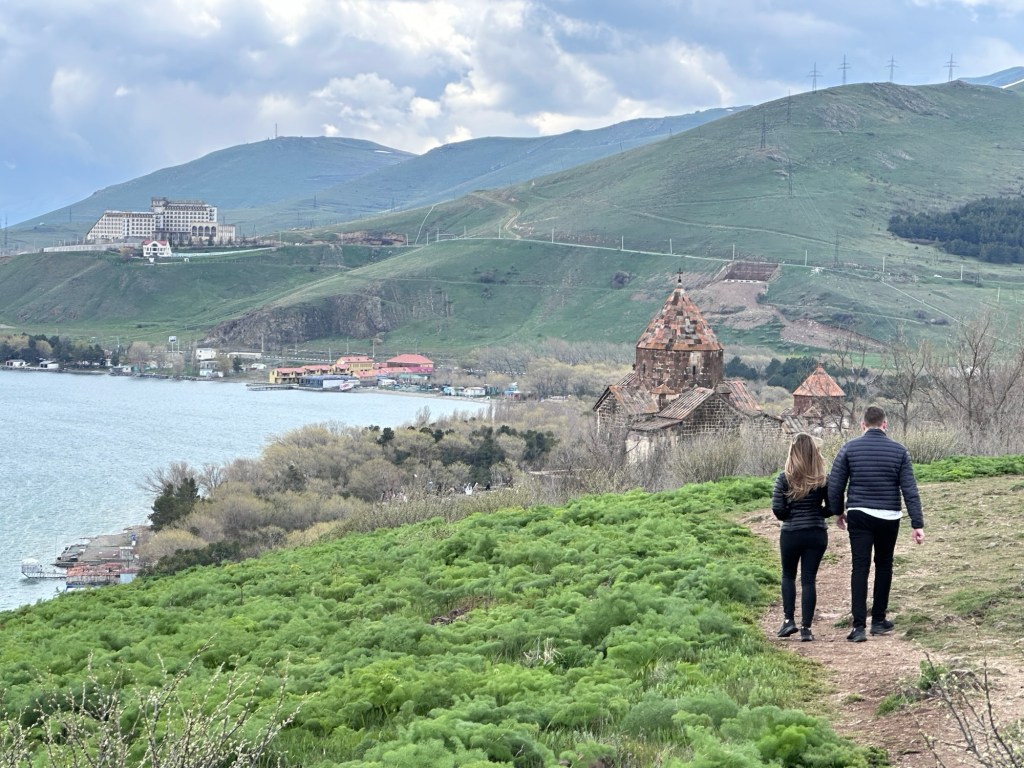
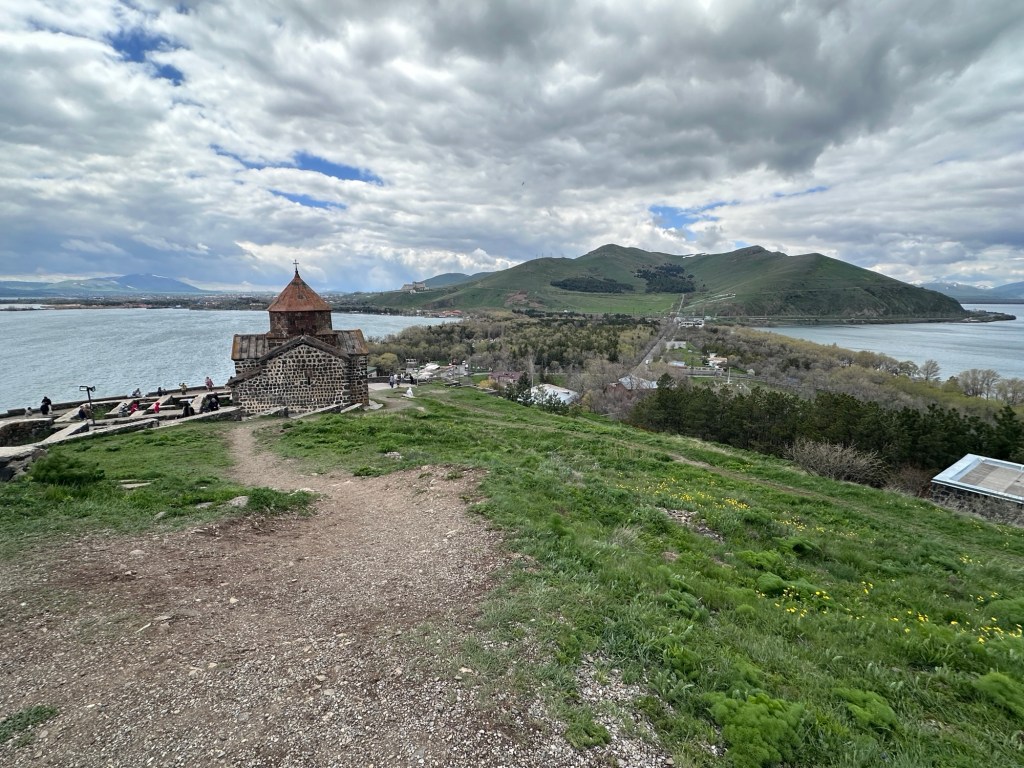
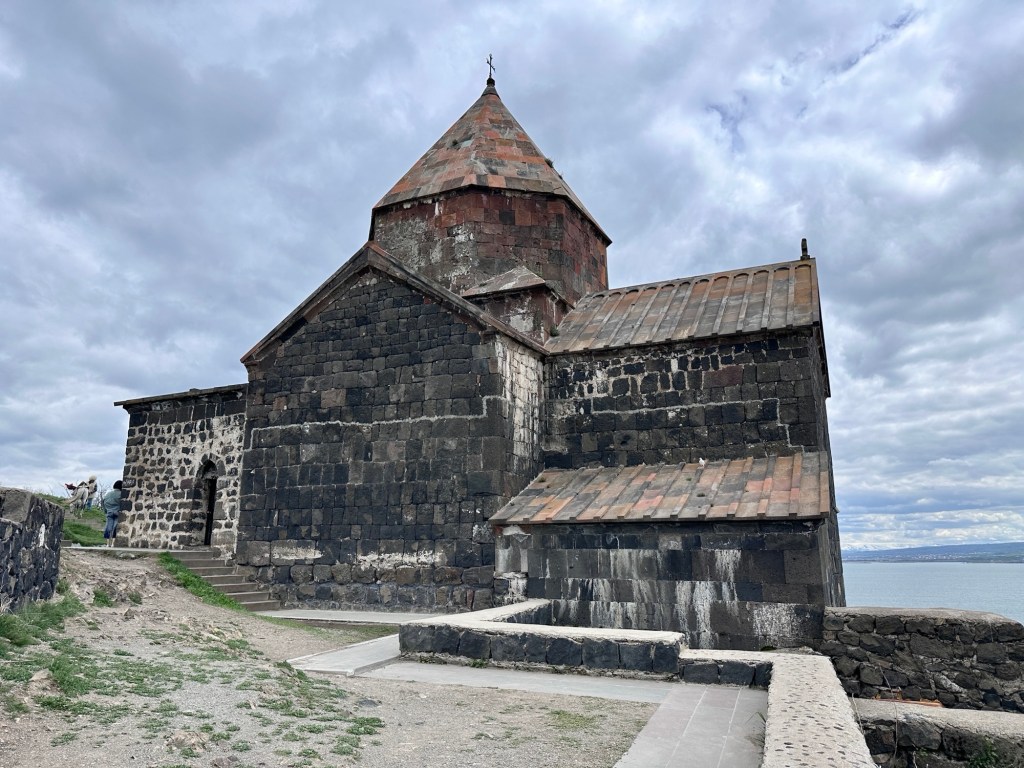
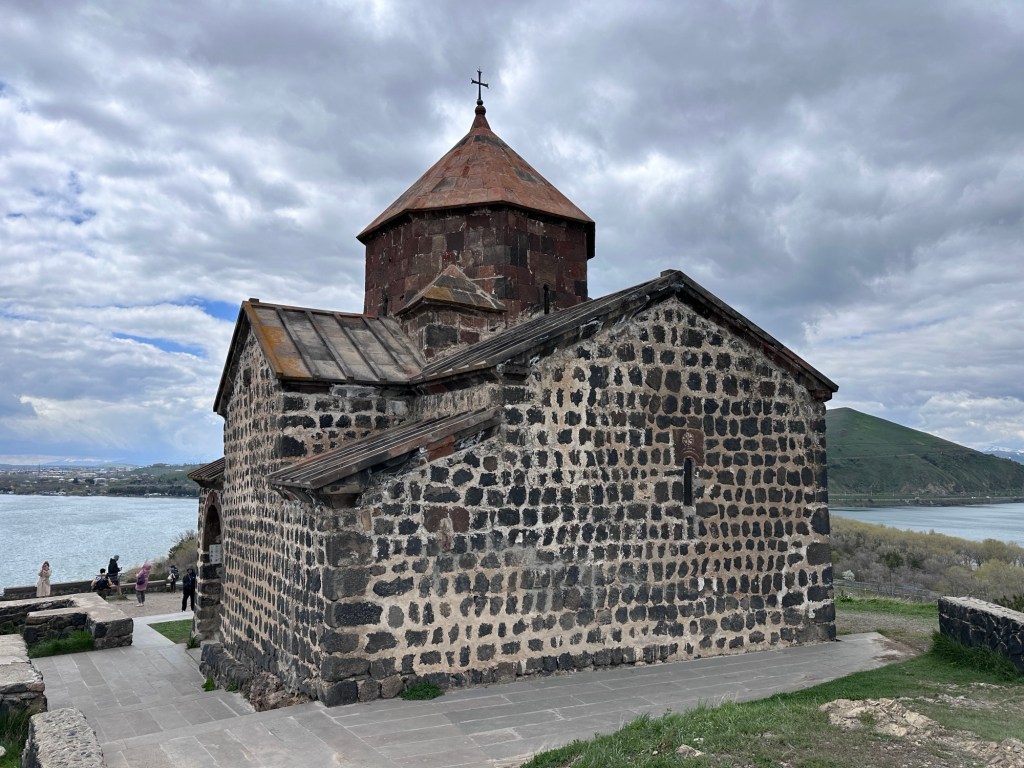
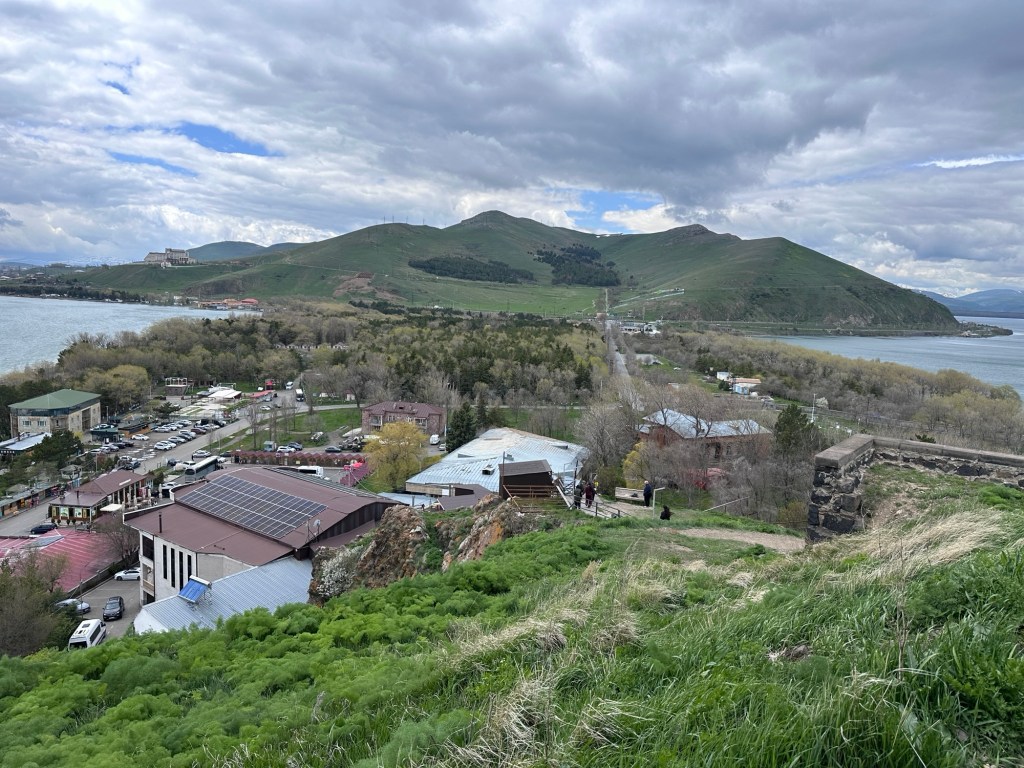
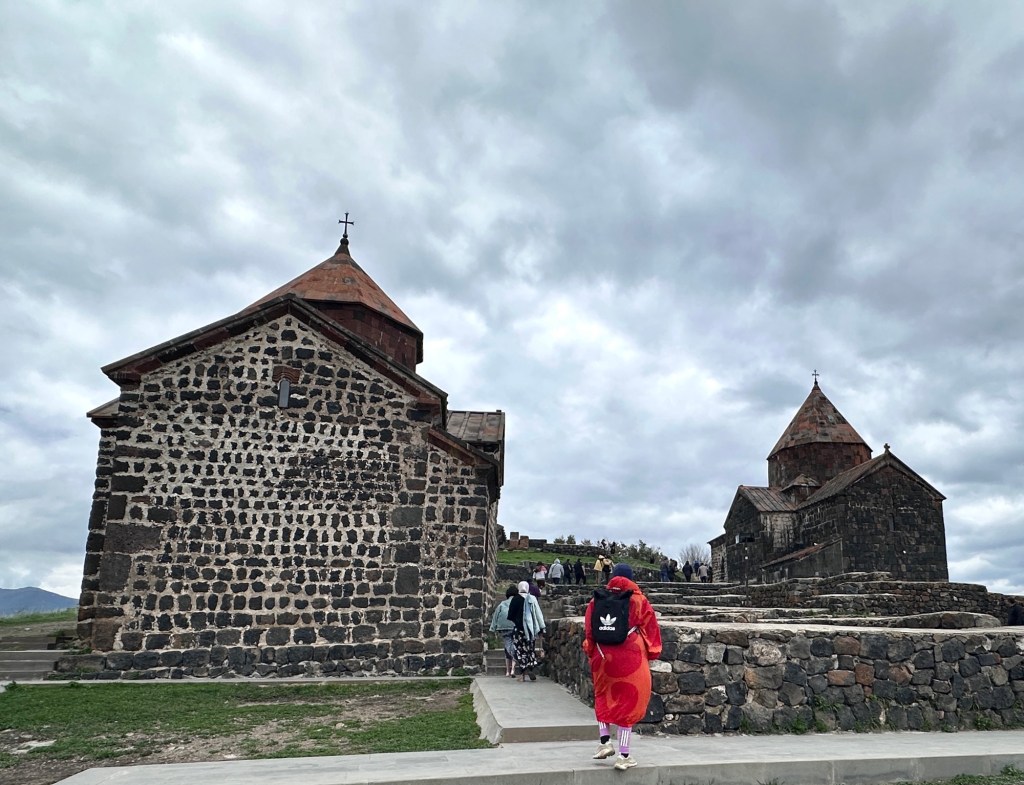
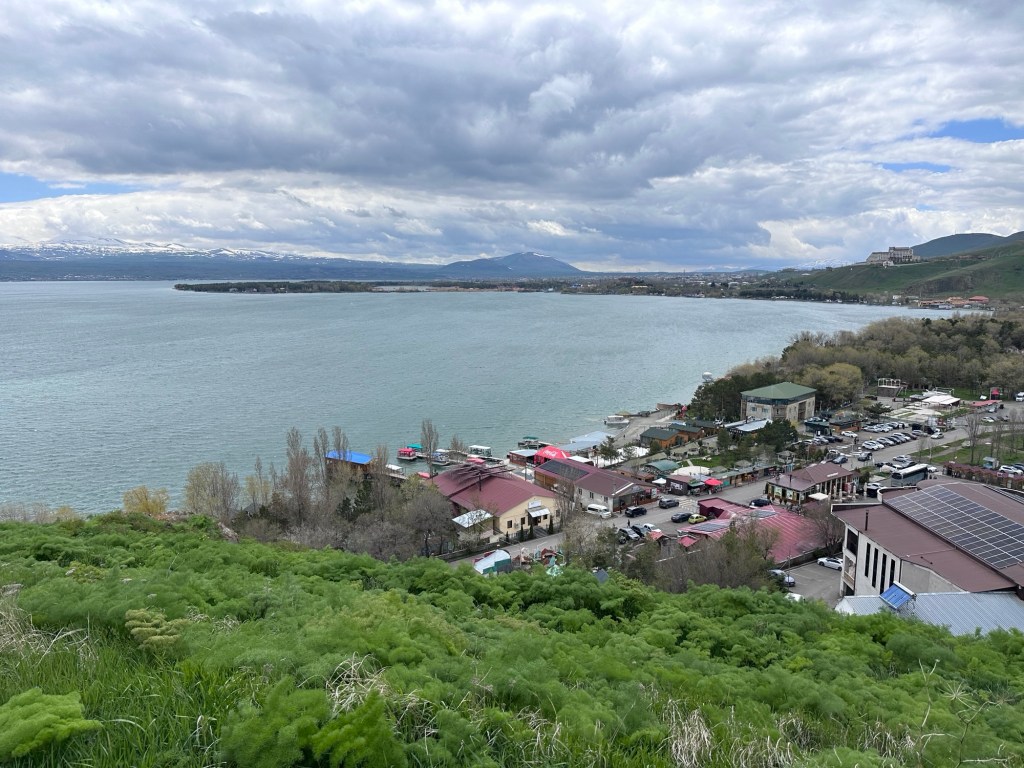
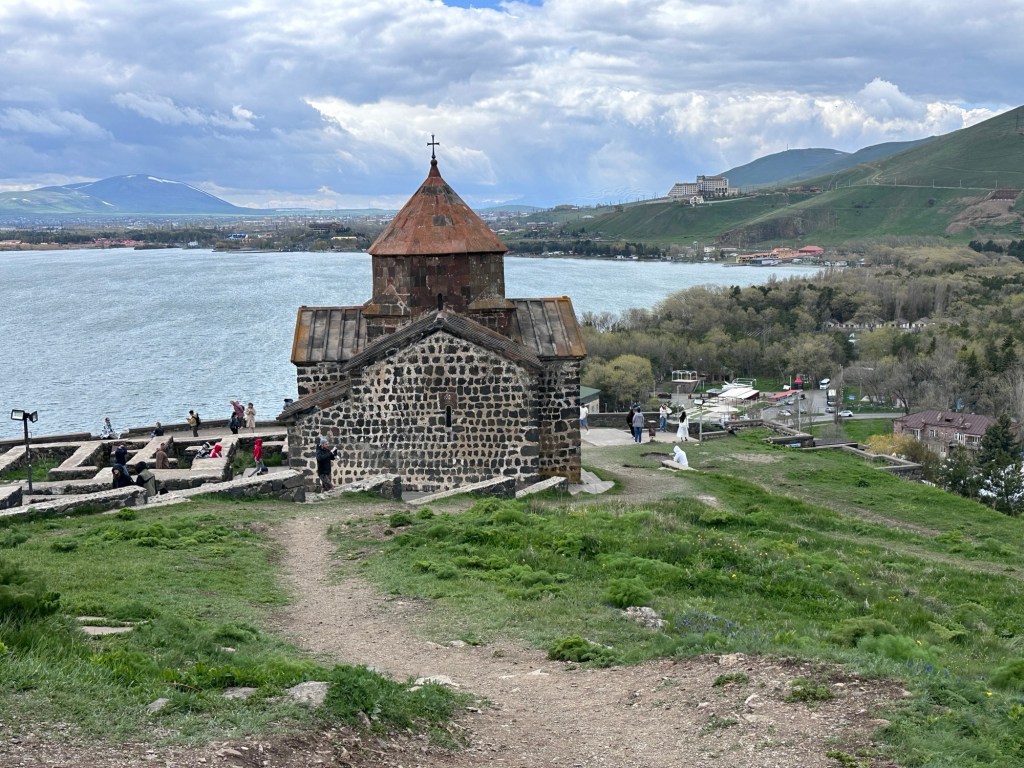
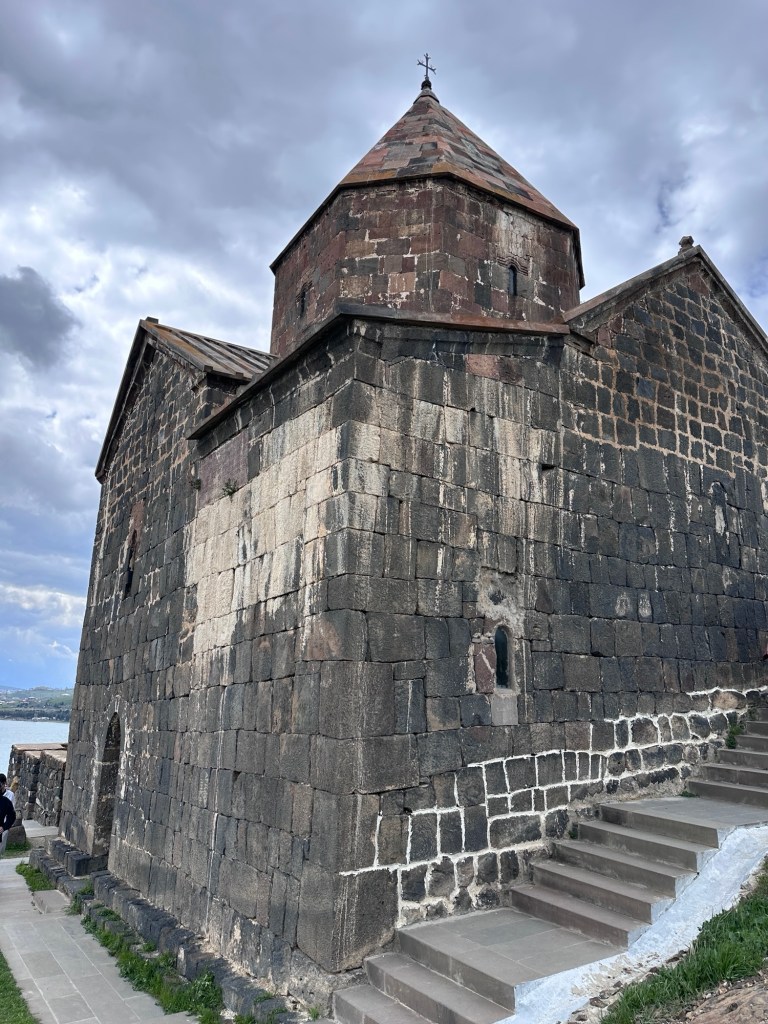
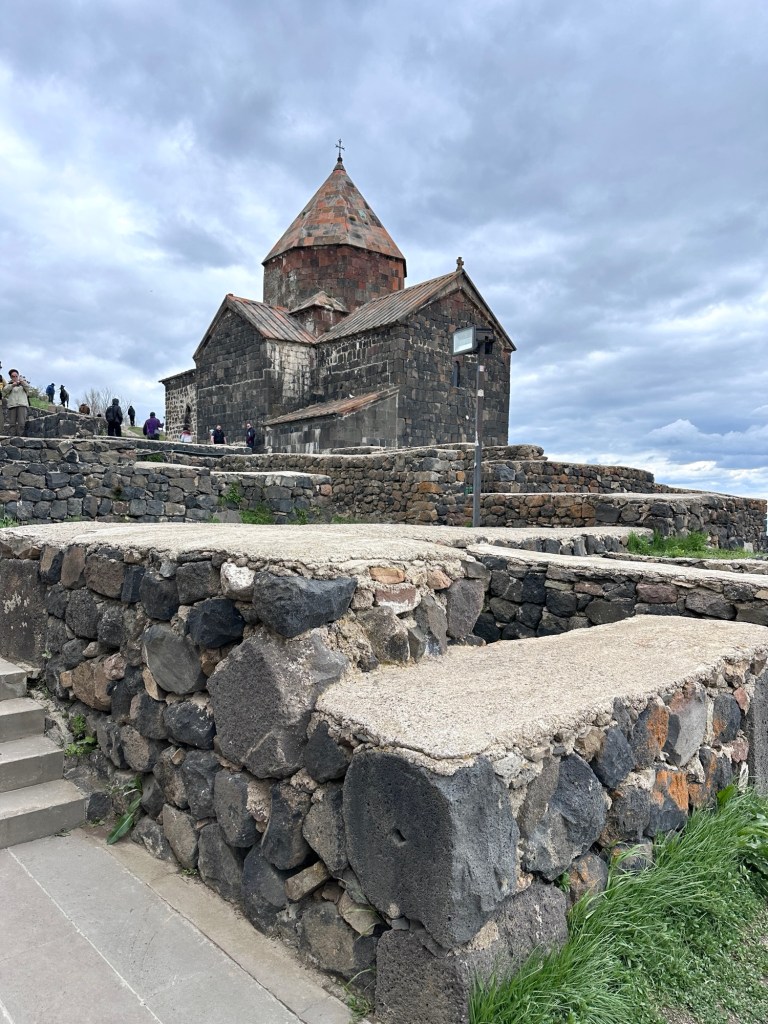
The temperature gets colder and the wind is biting on our journey up the stairs in up to Sevanavank, the charming church that overlooks the large Lake Sevan, the largest lake in Armenia.
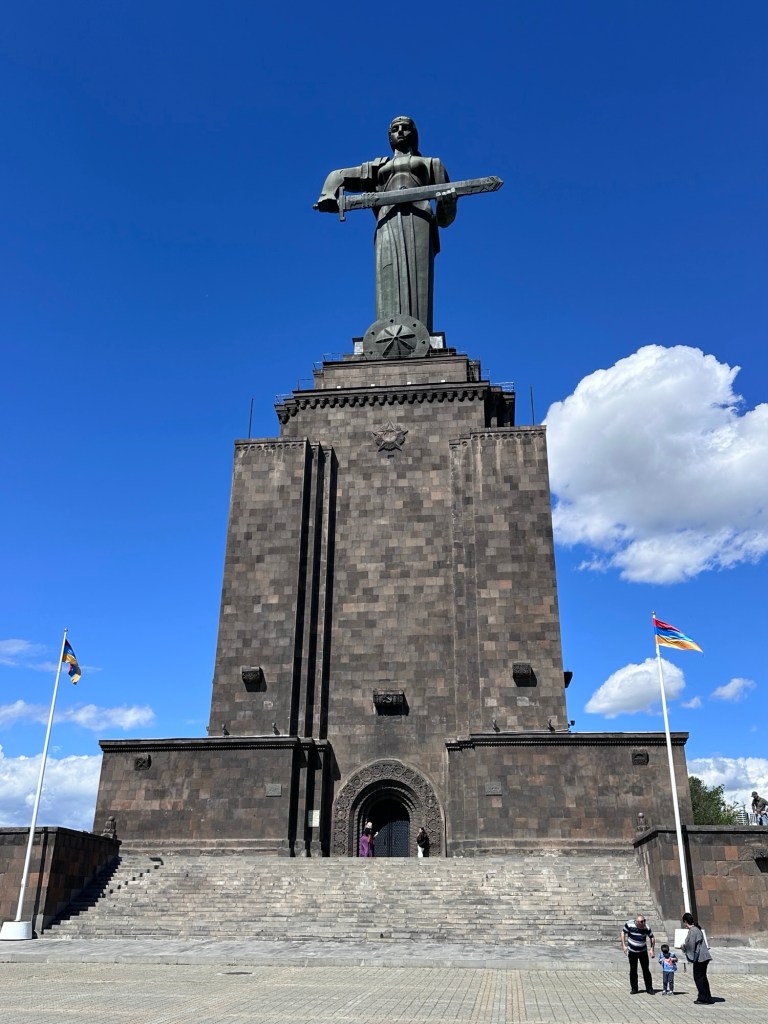
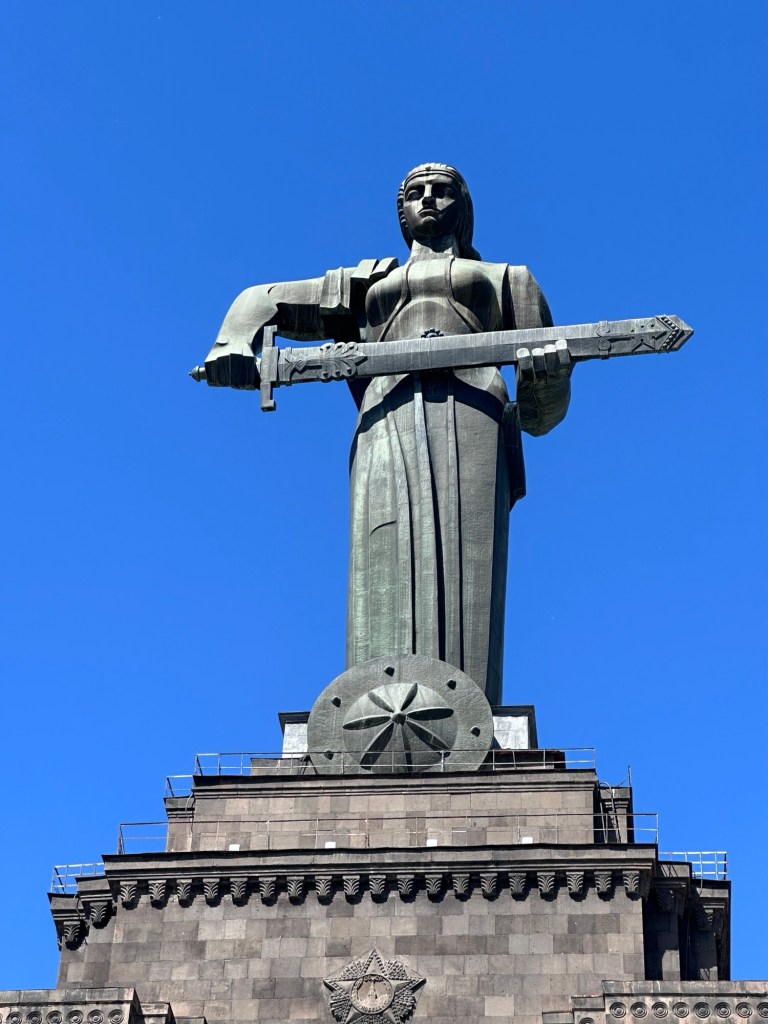
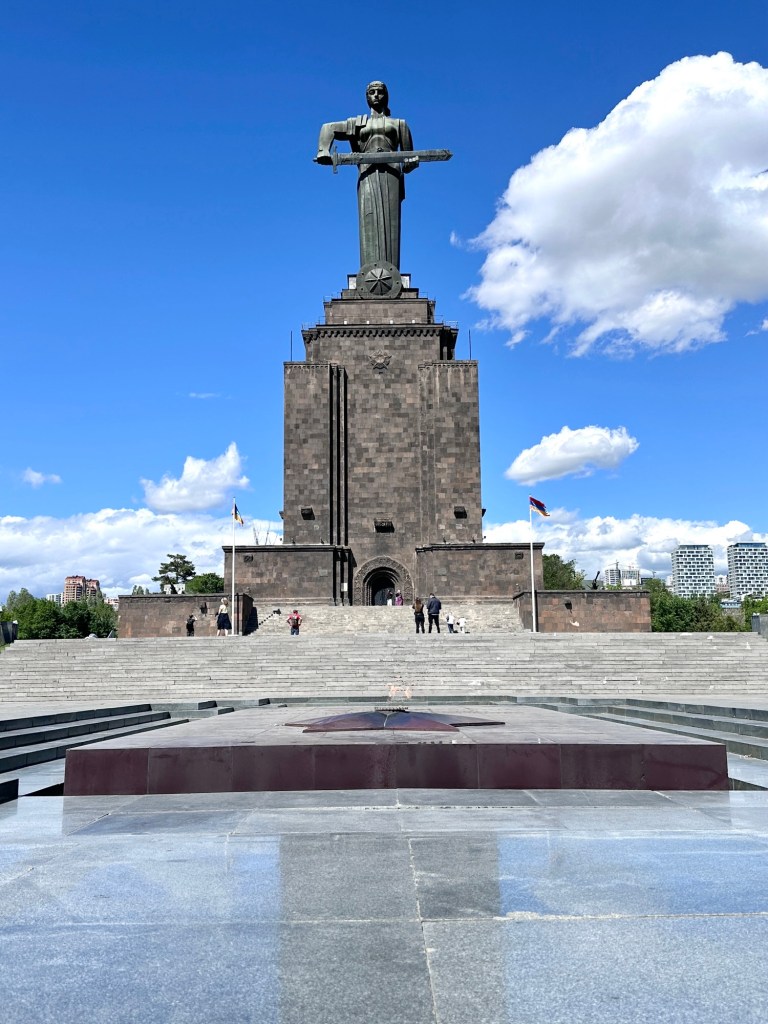
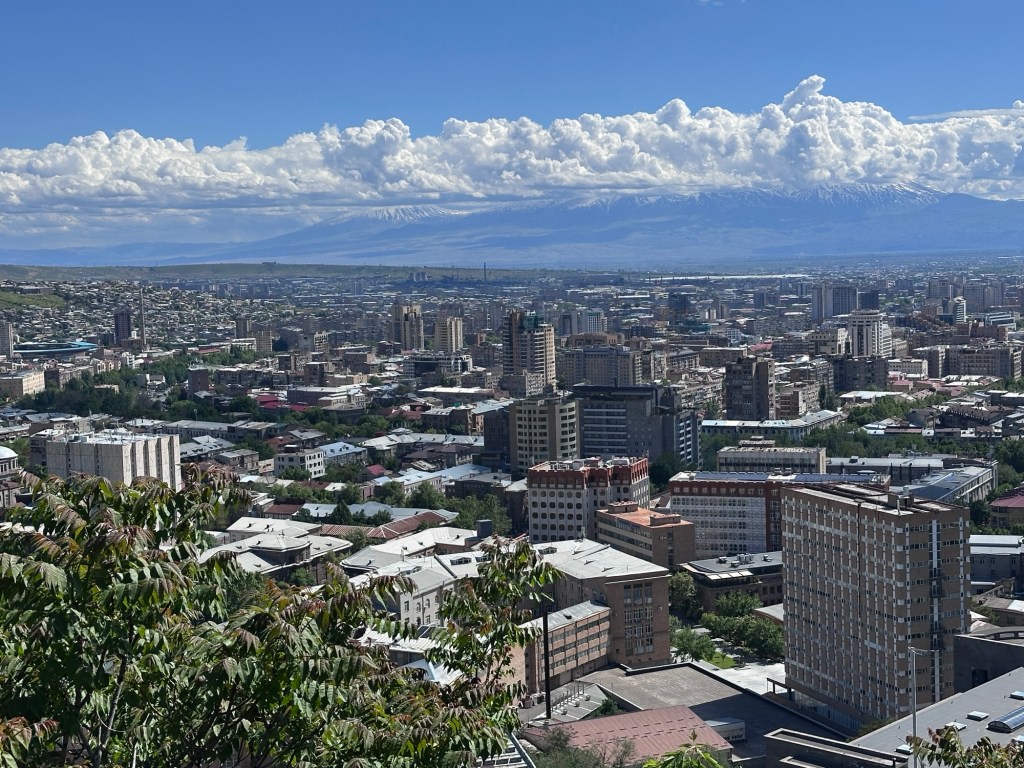
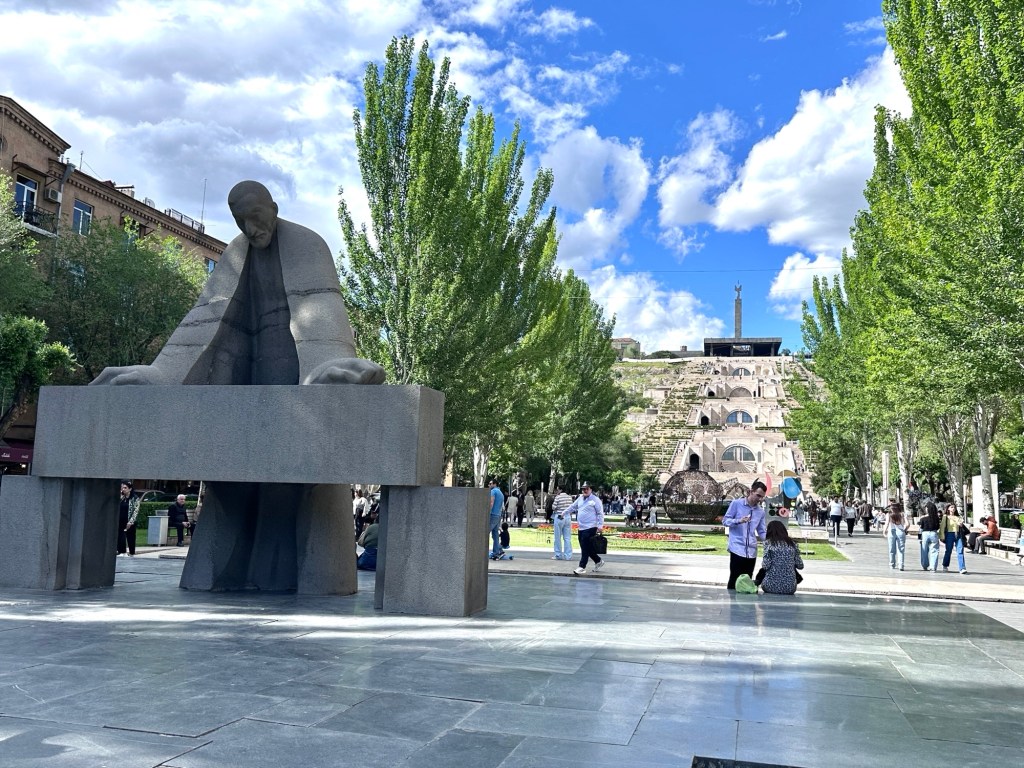
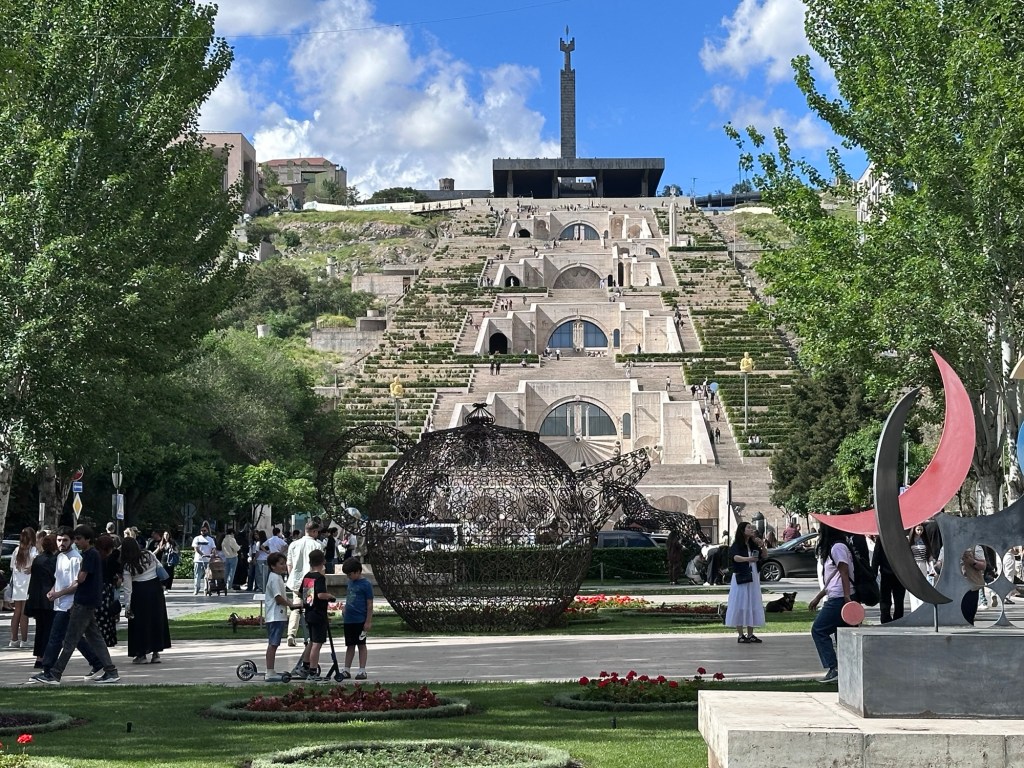
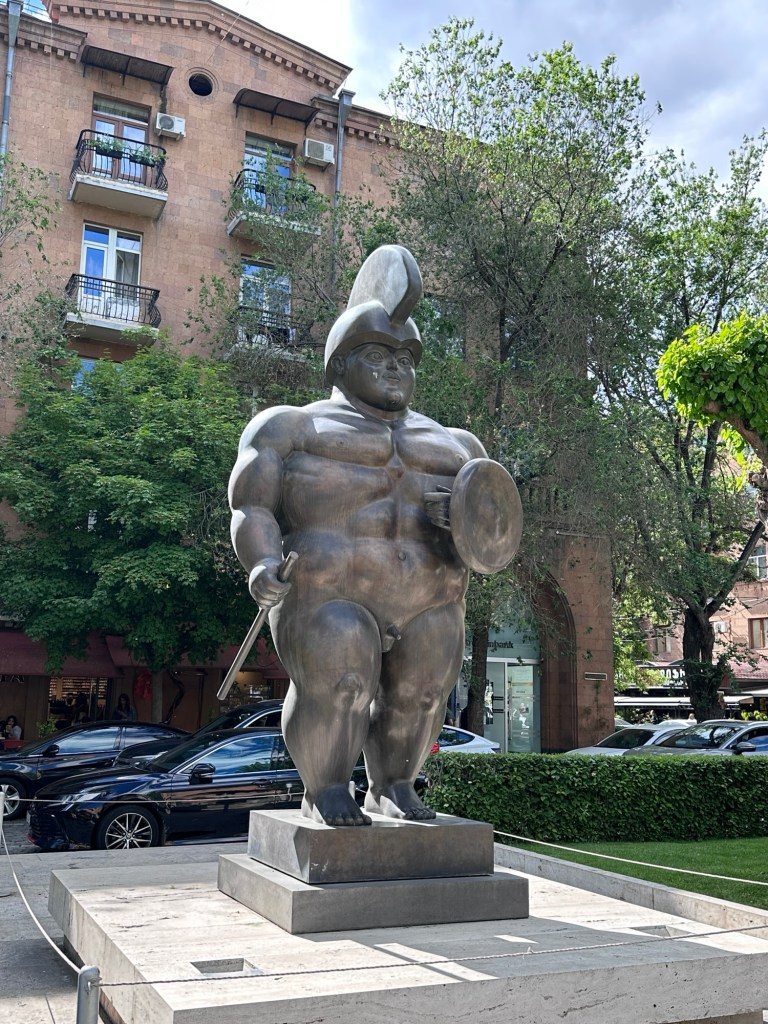
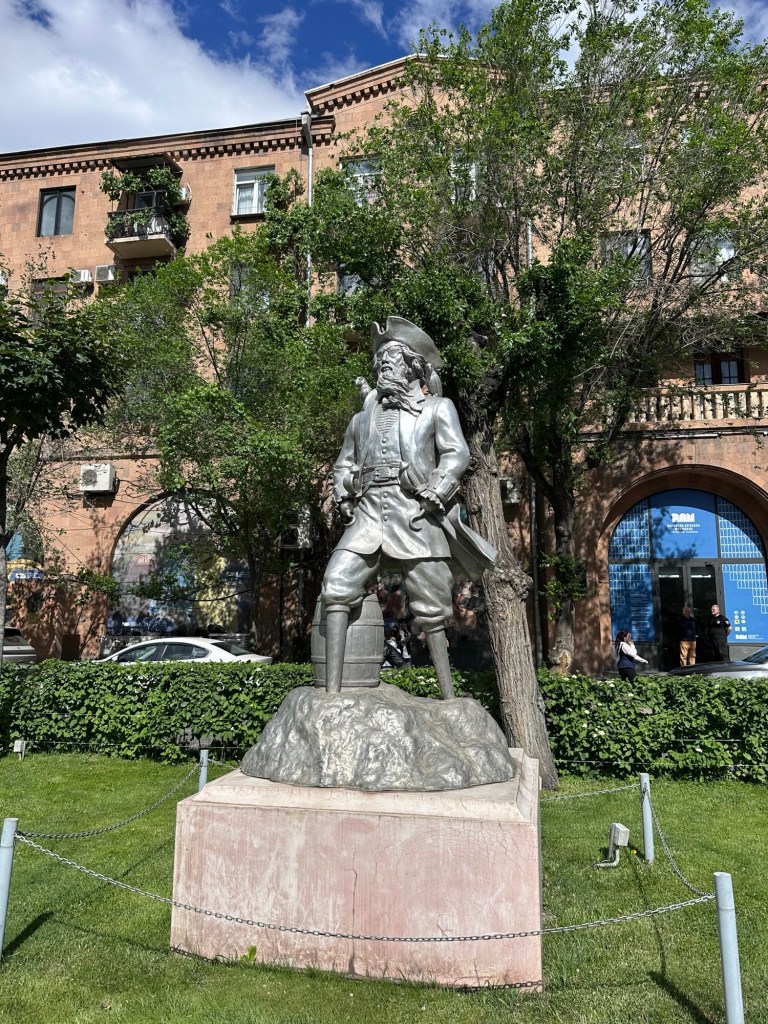
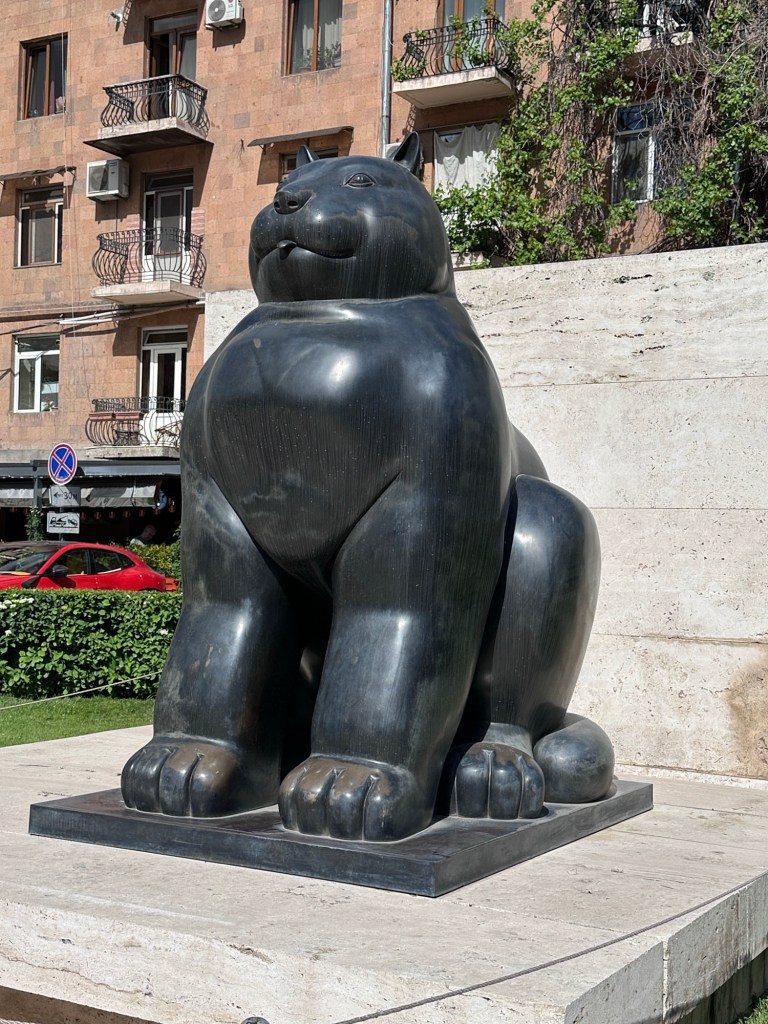
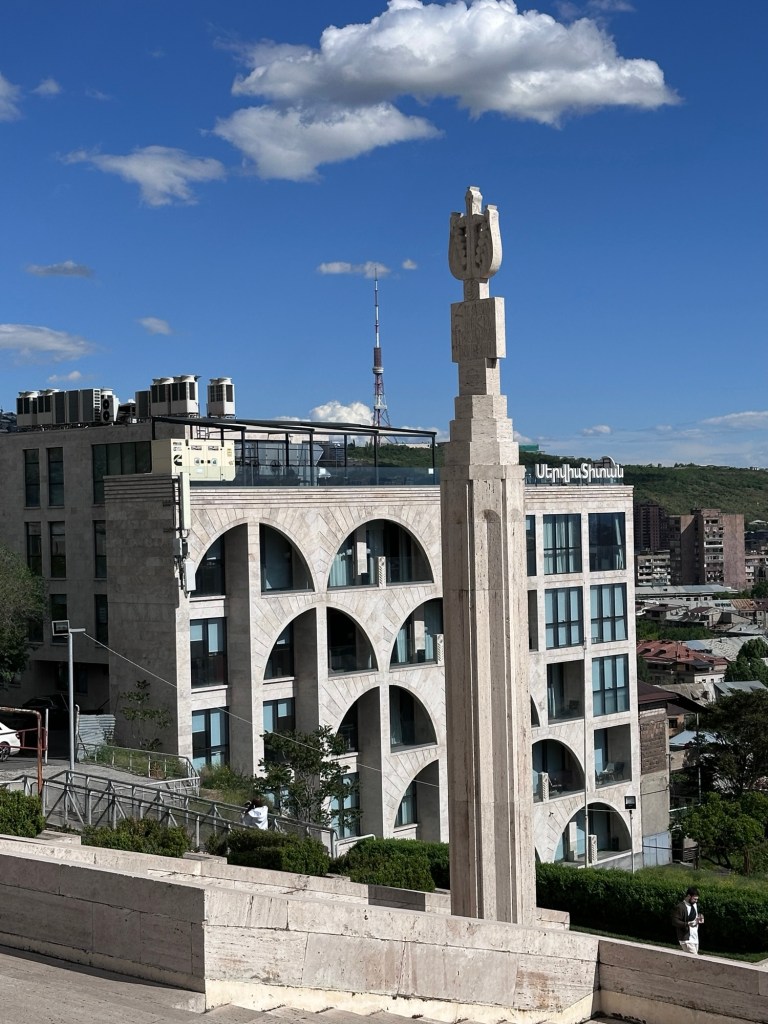
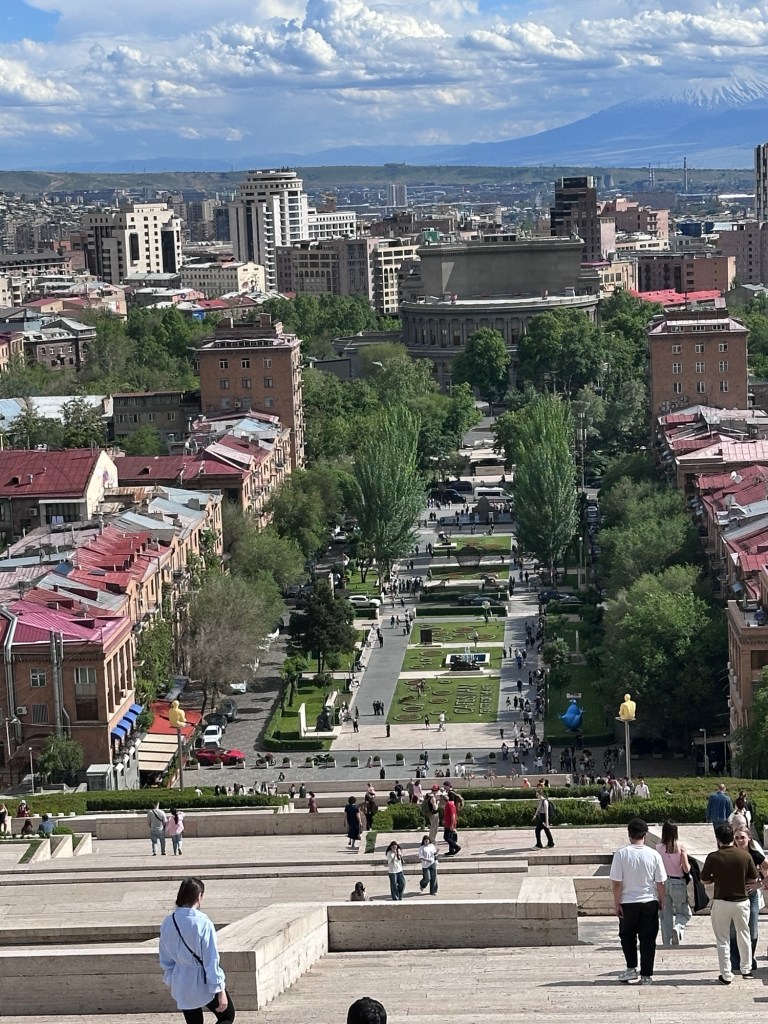
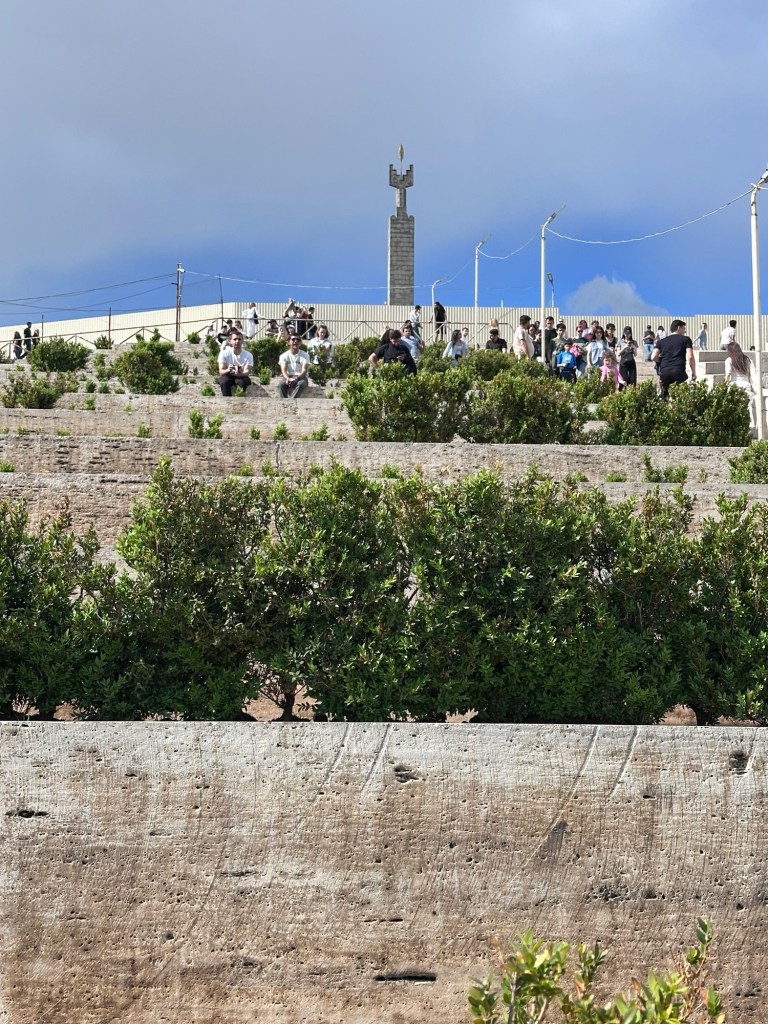
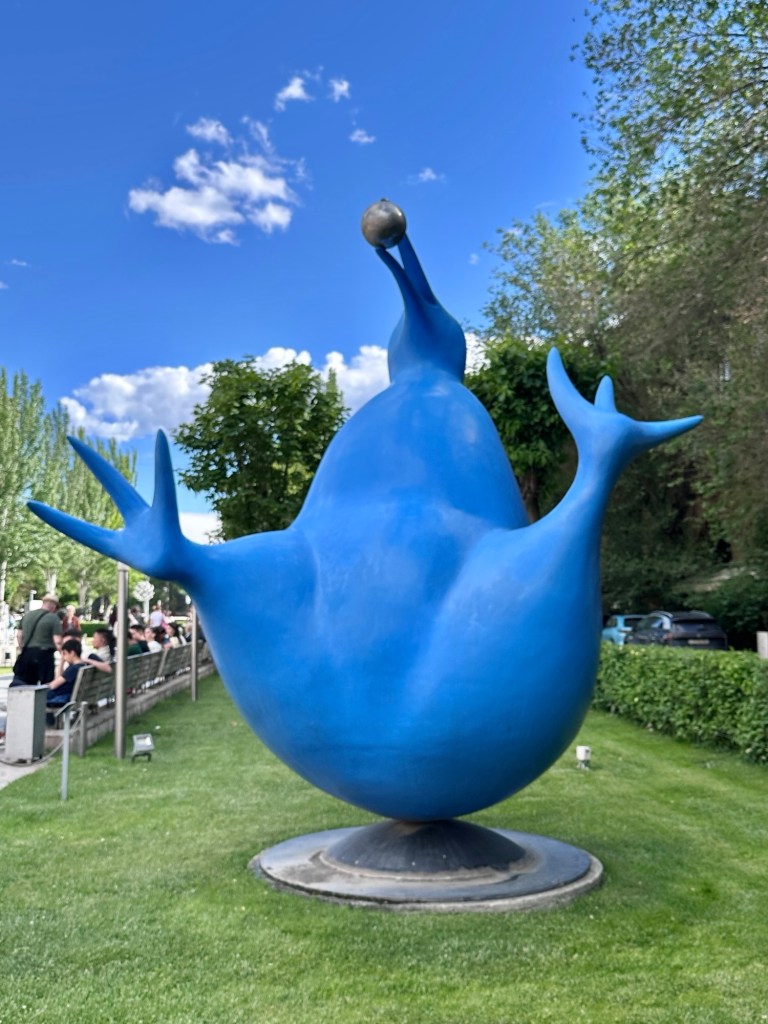
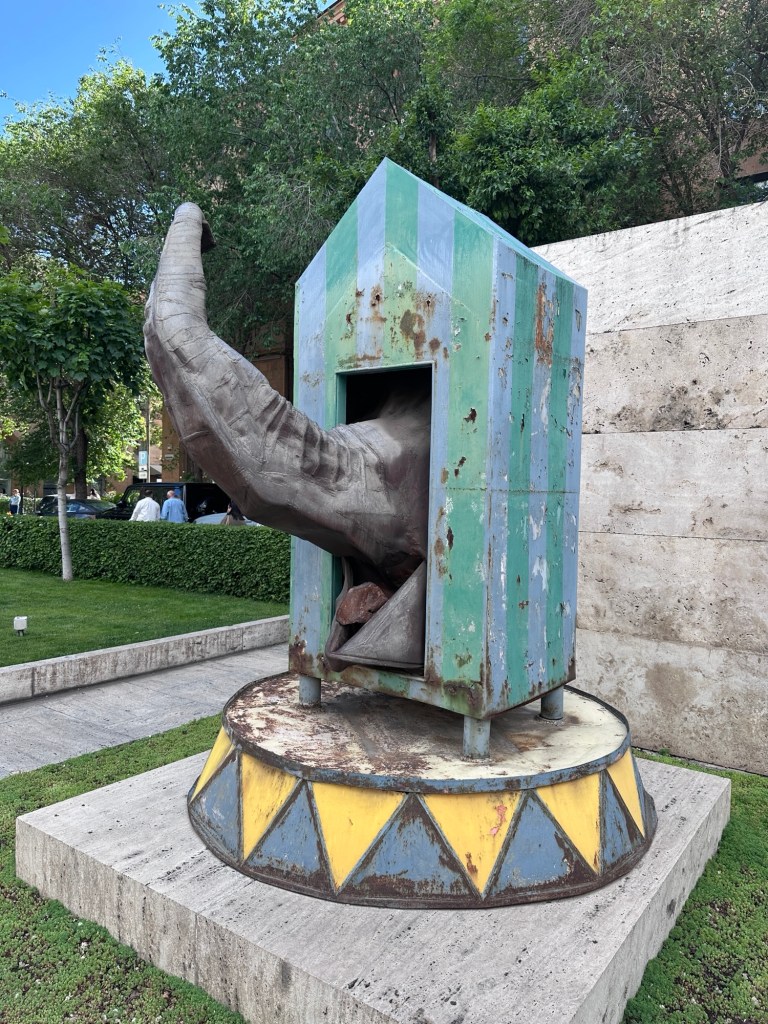
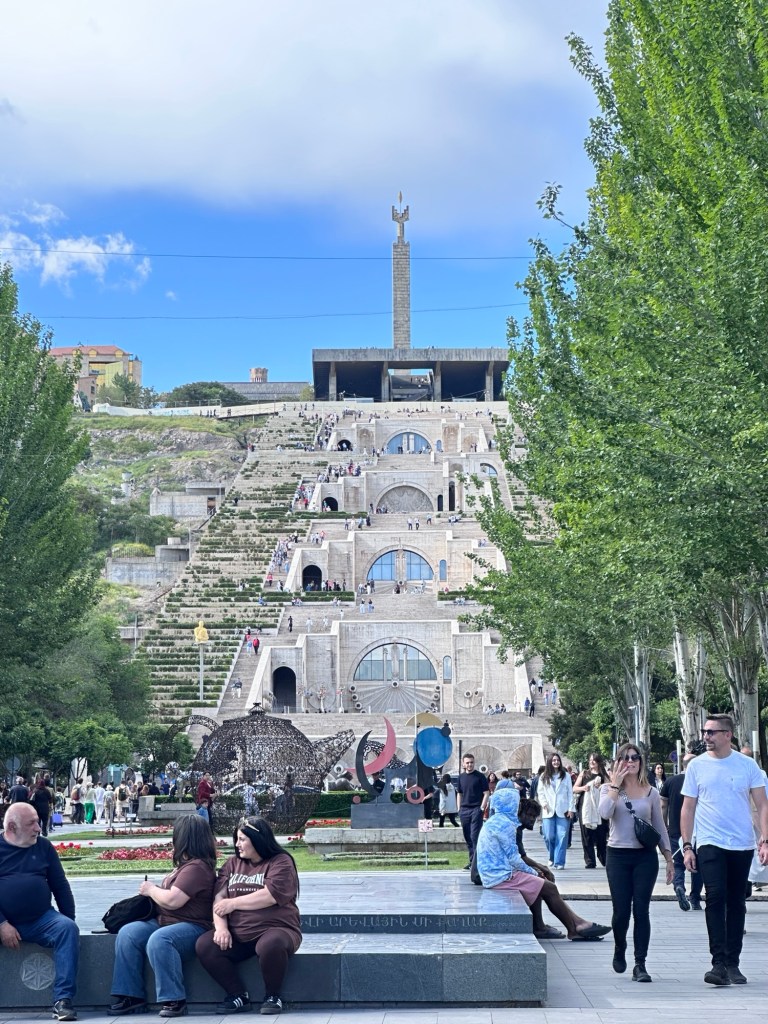
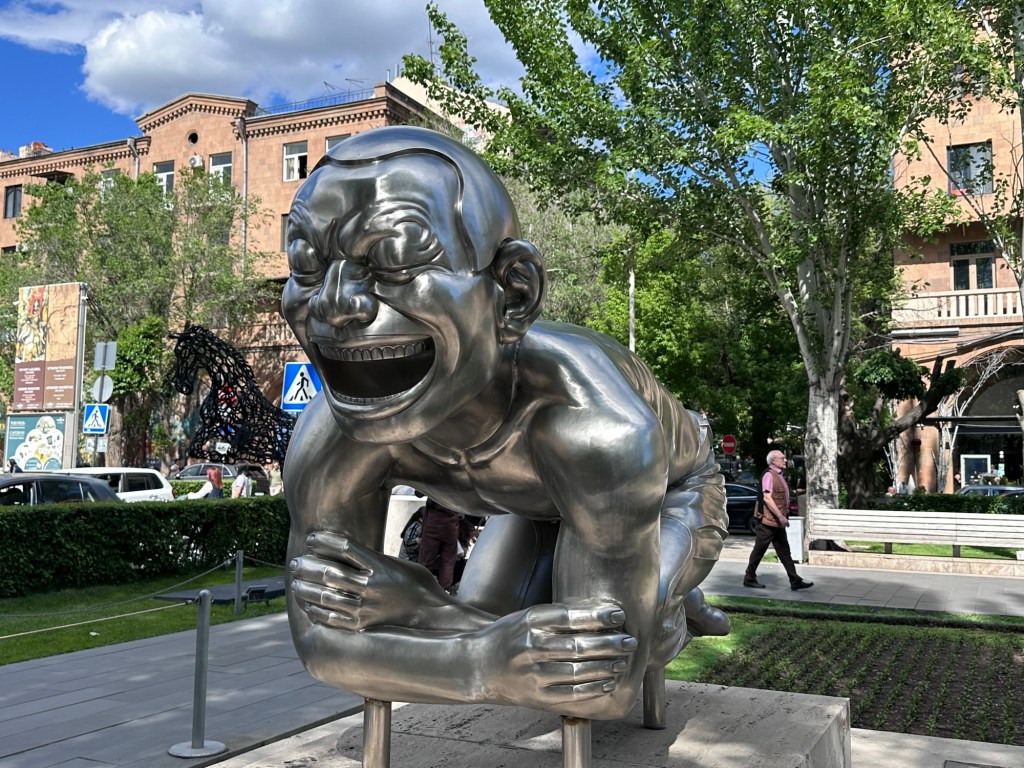
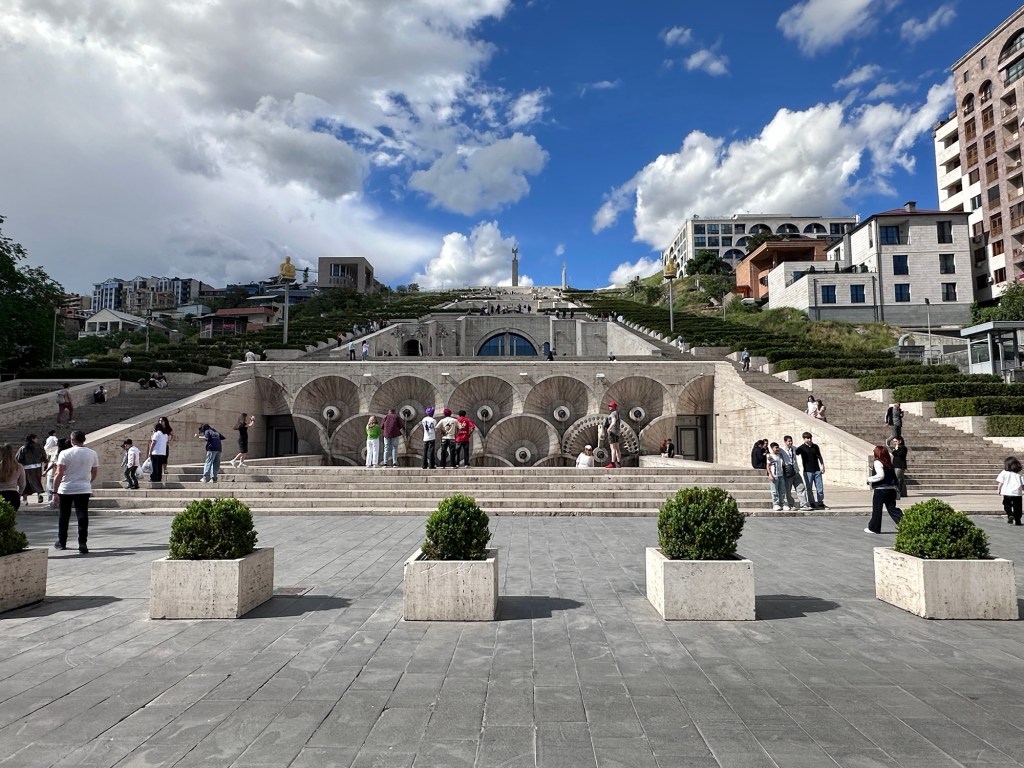
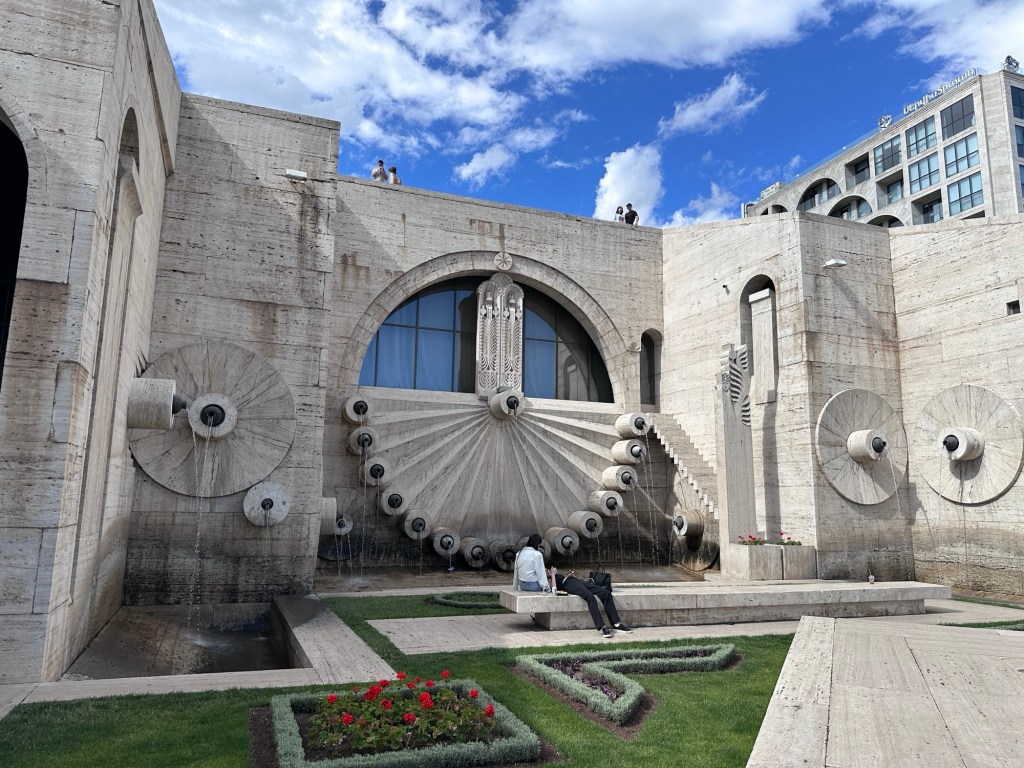
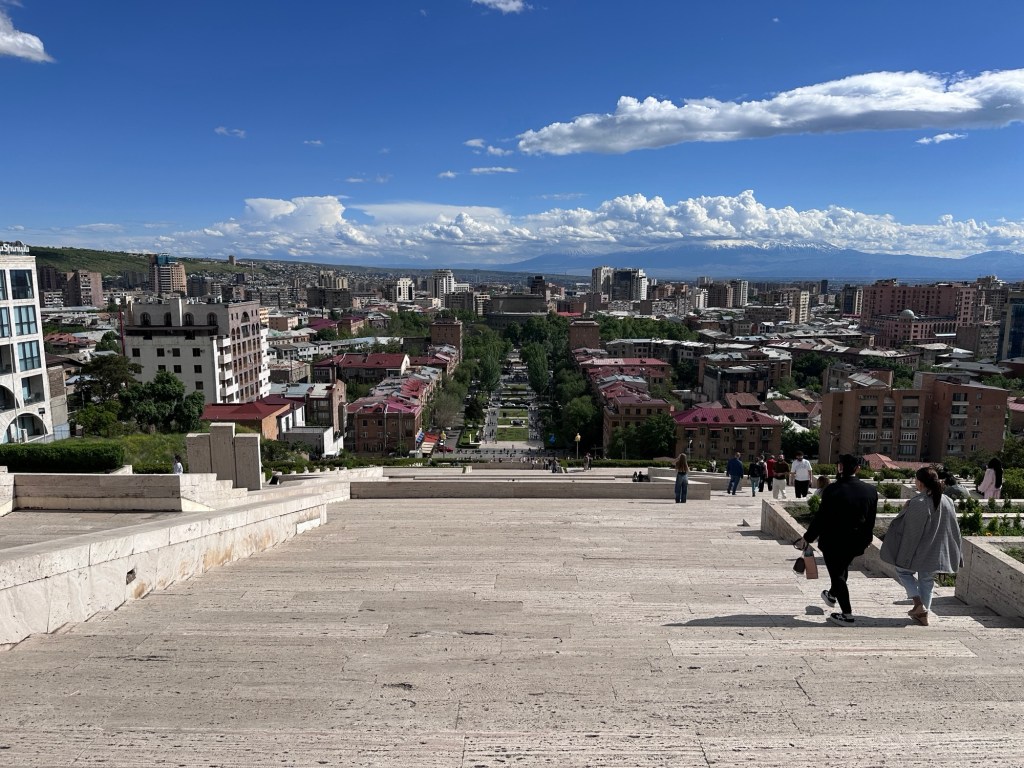
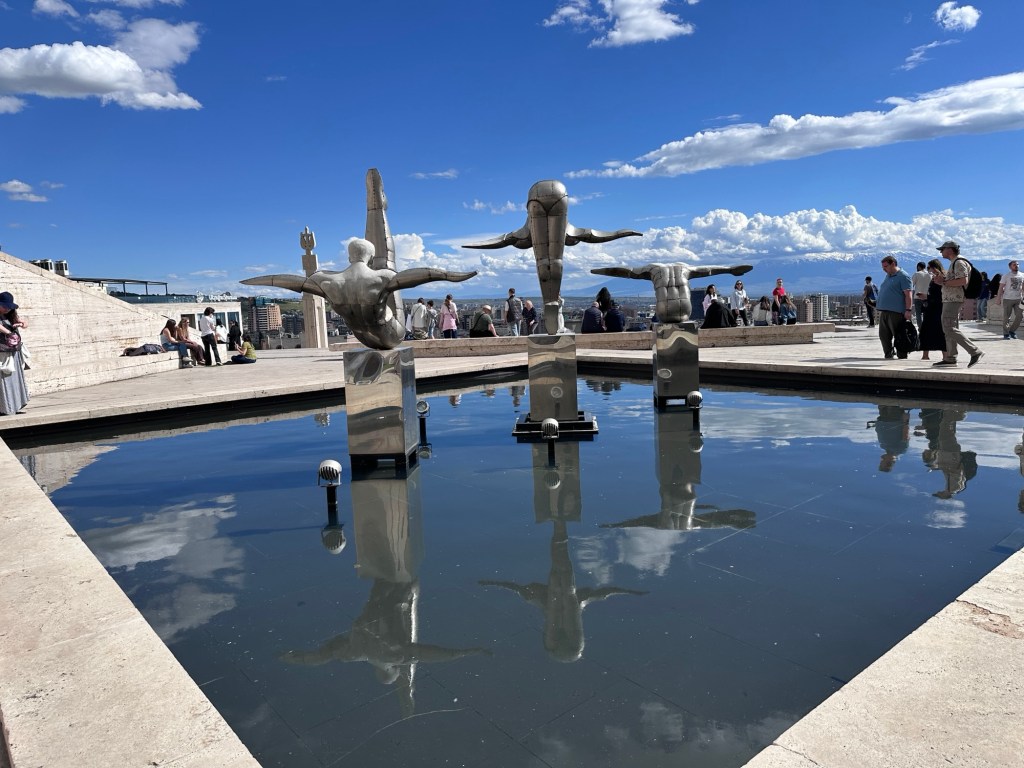
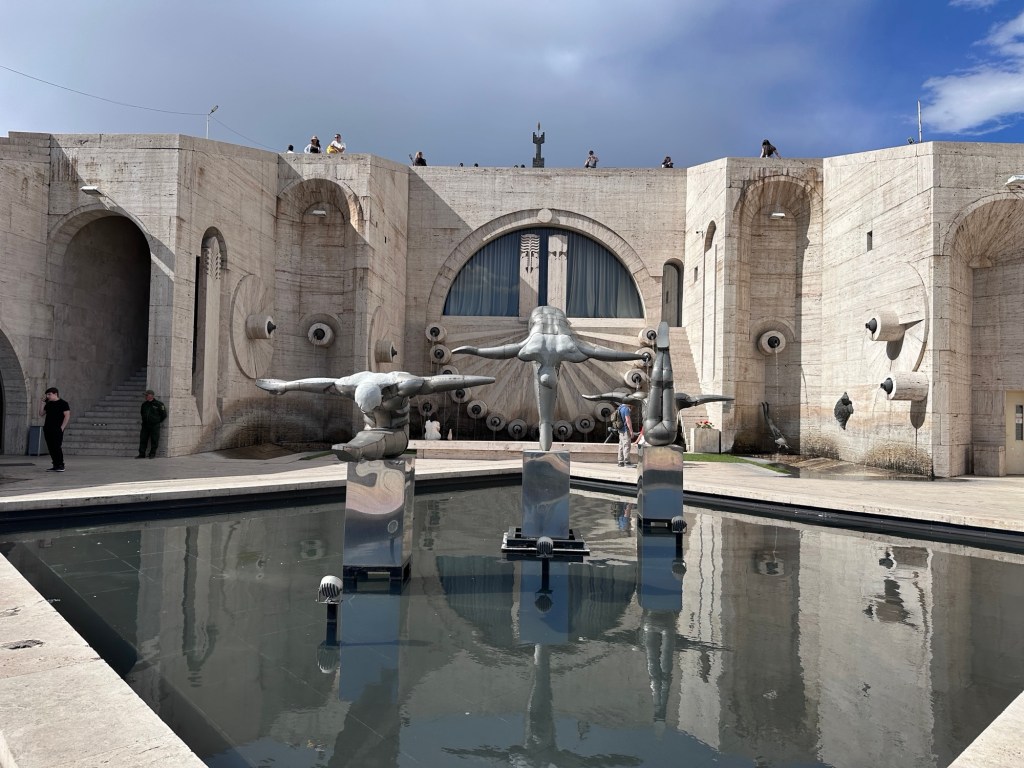
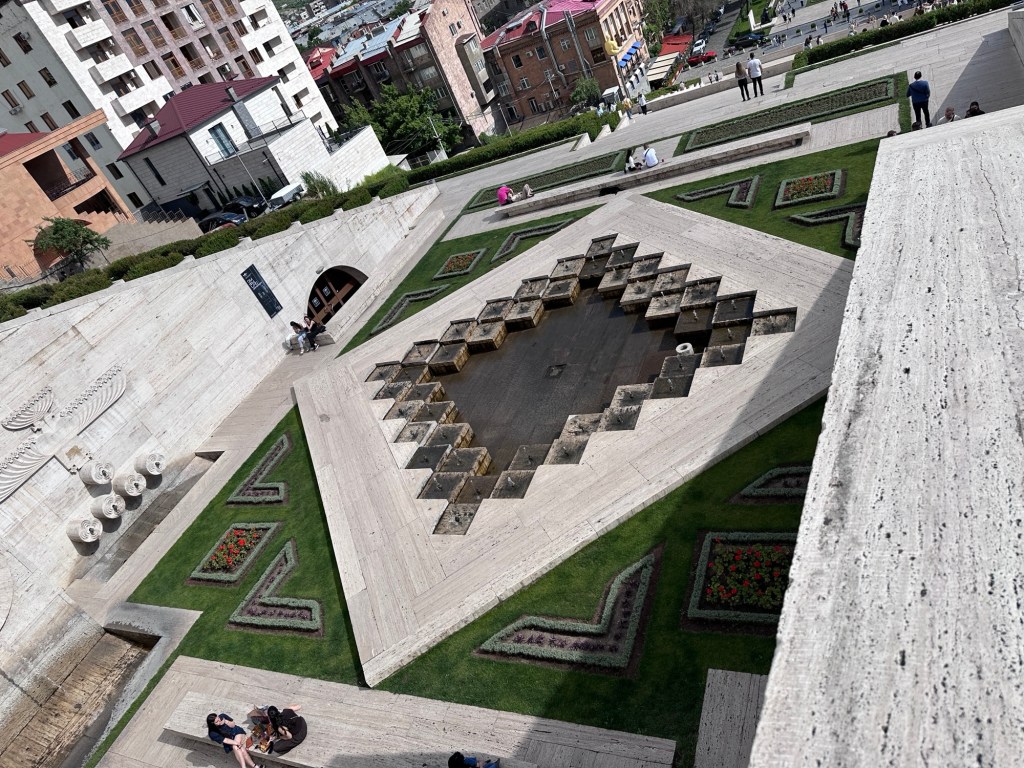
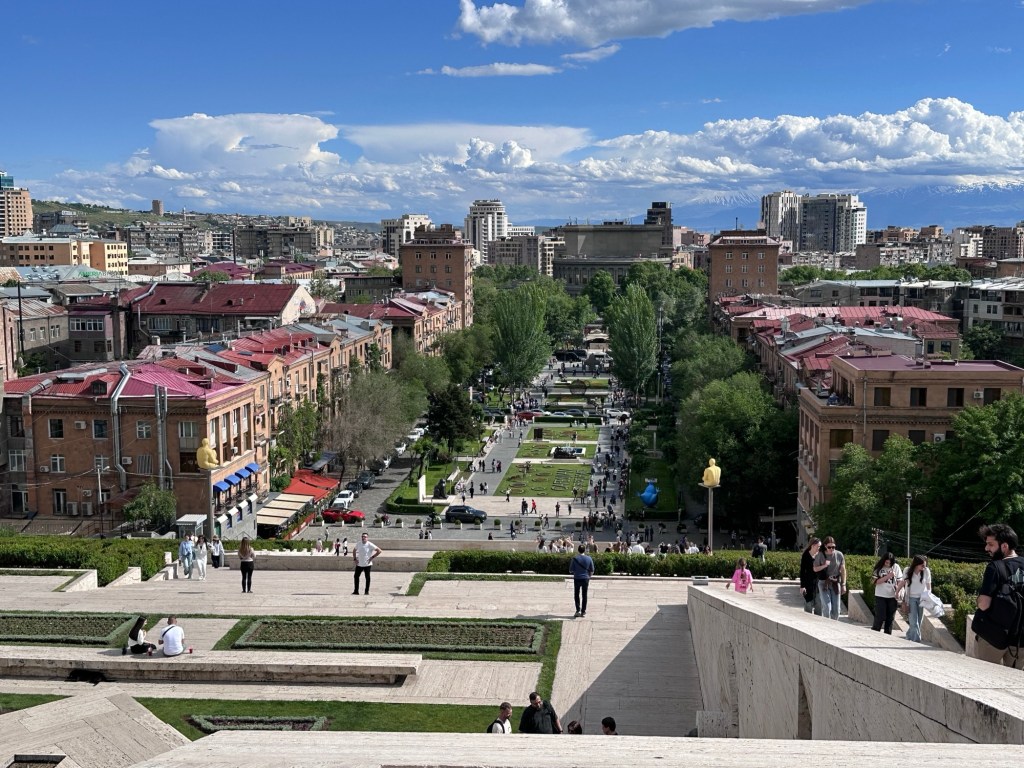
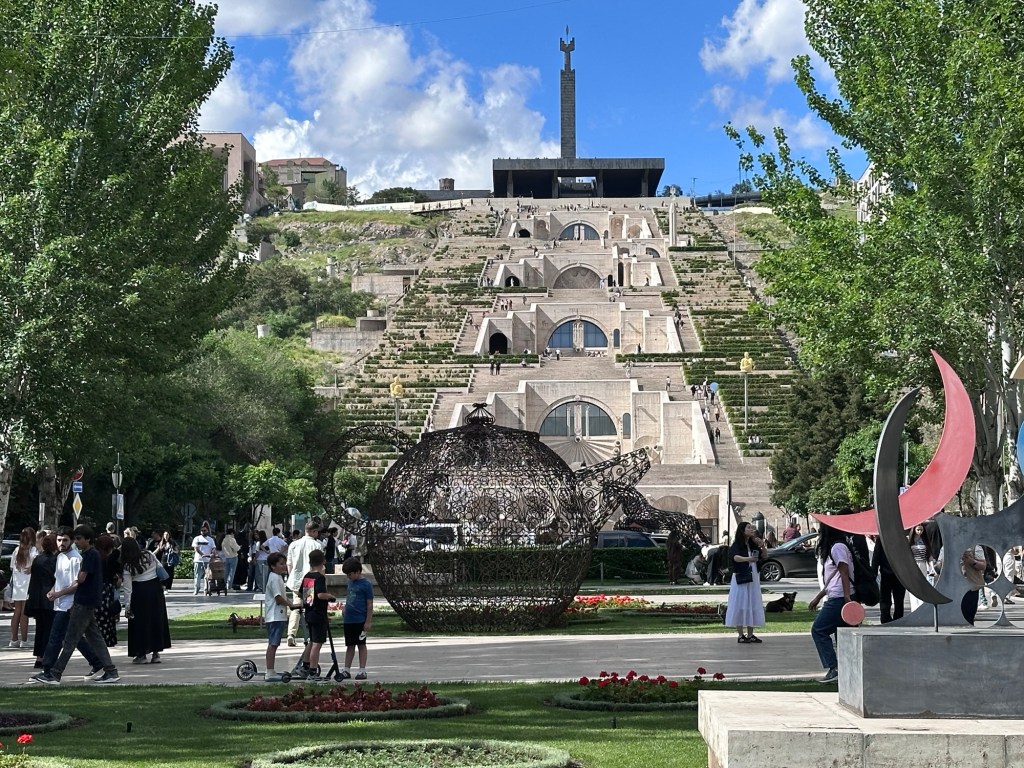
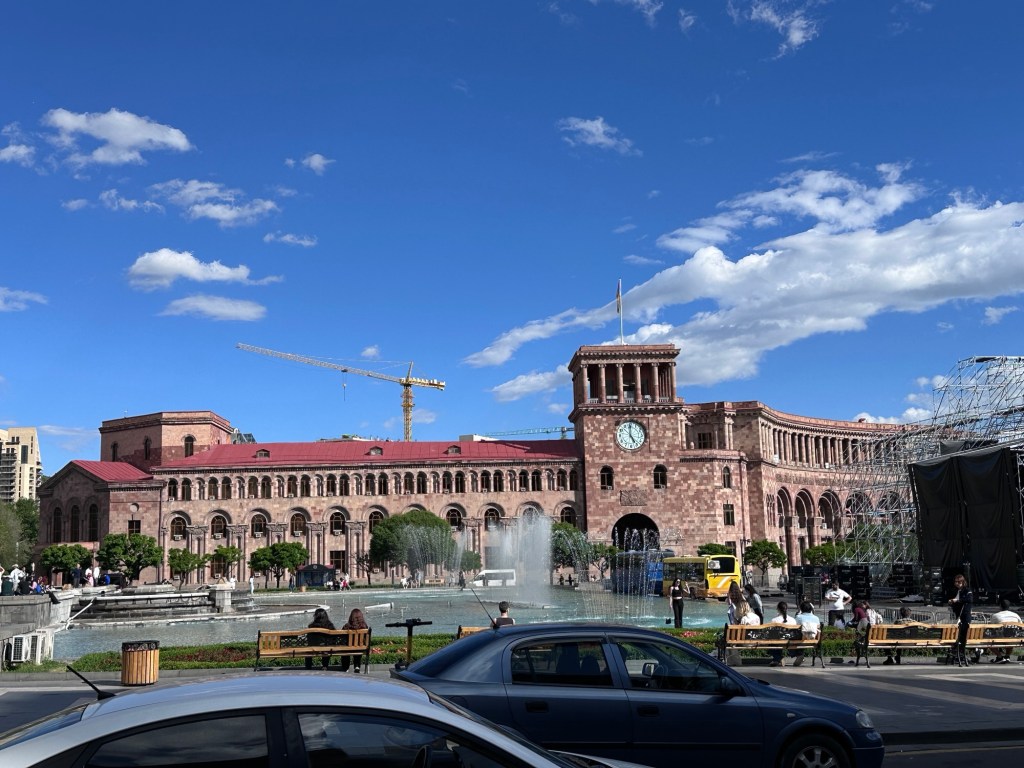
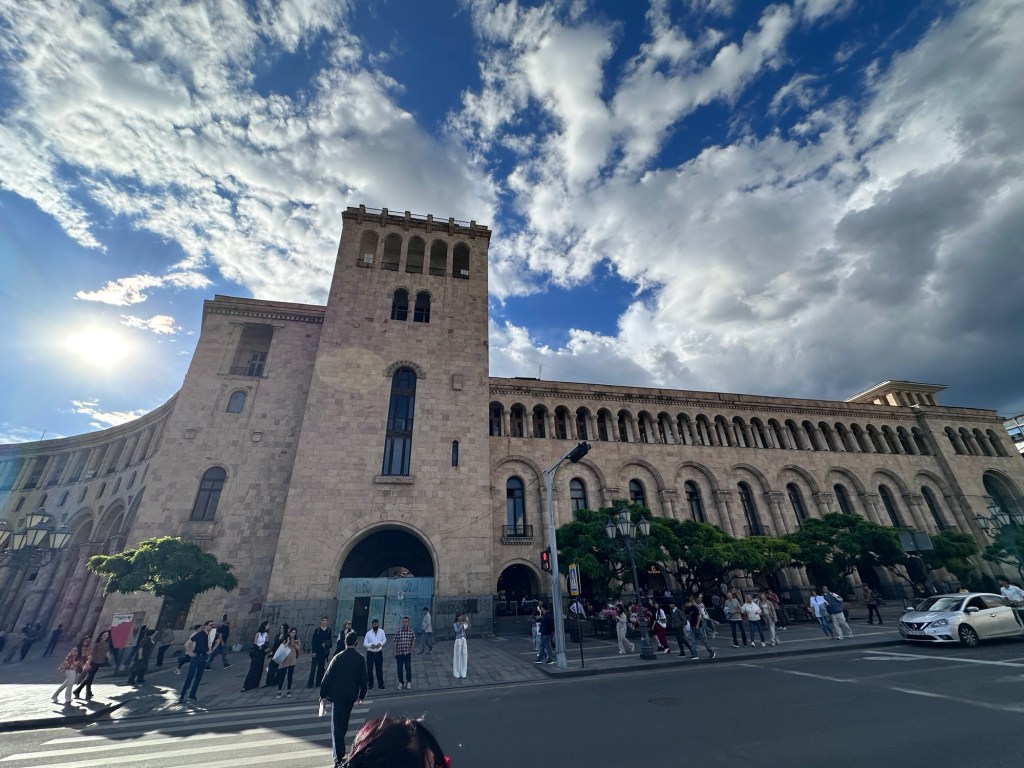
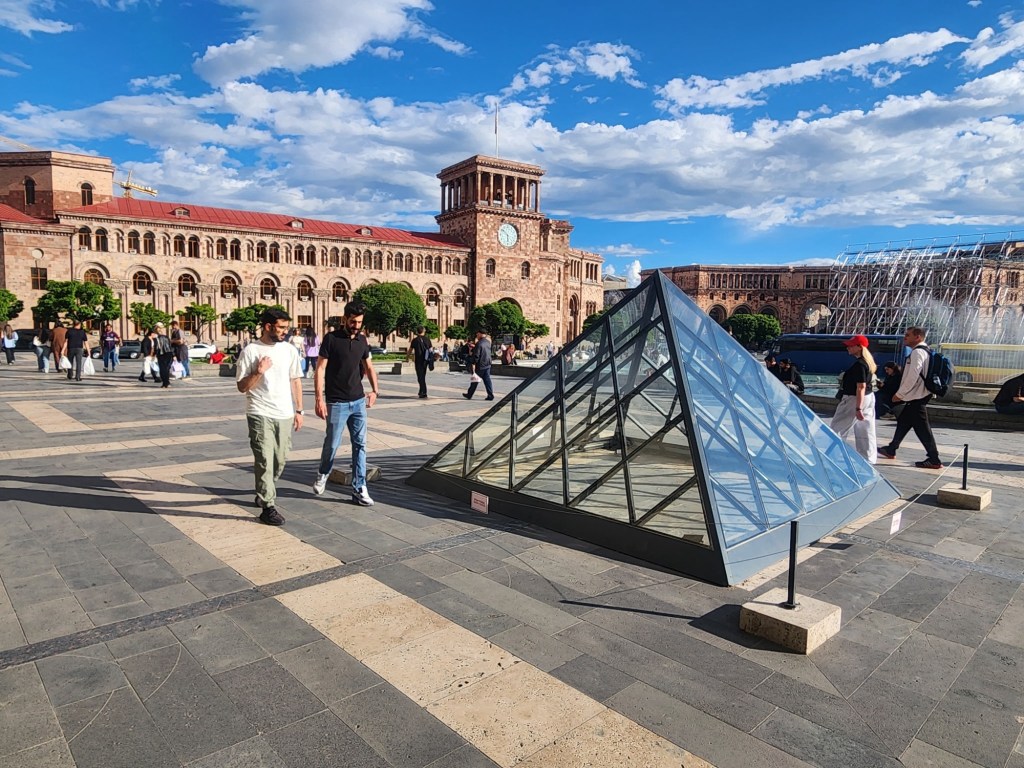
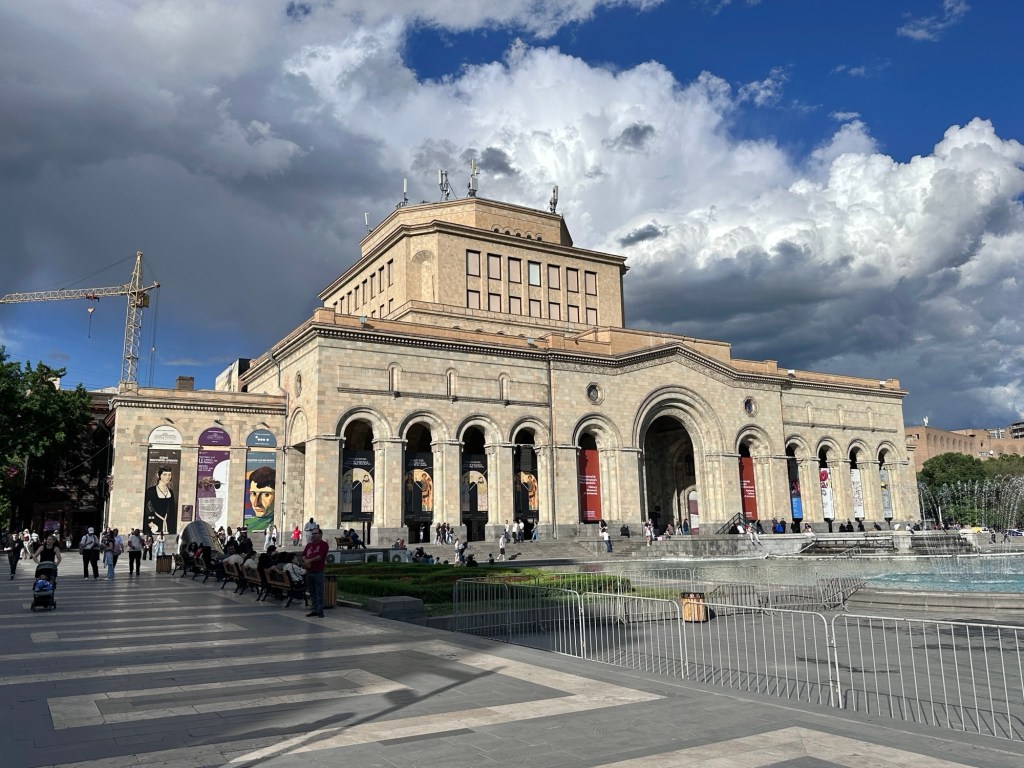
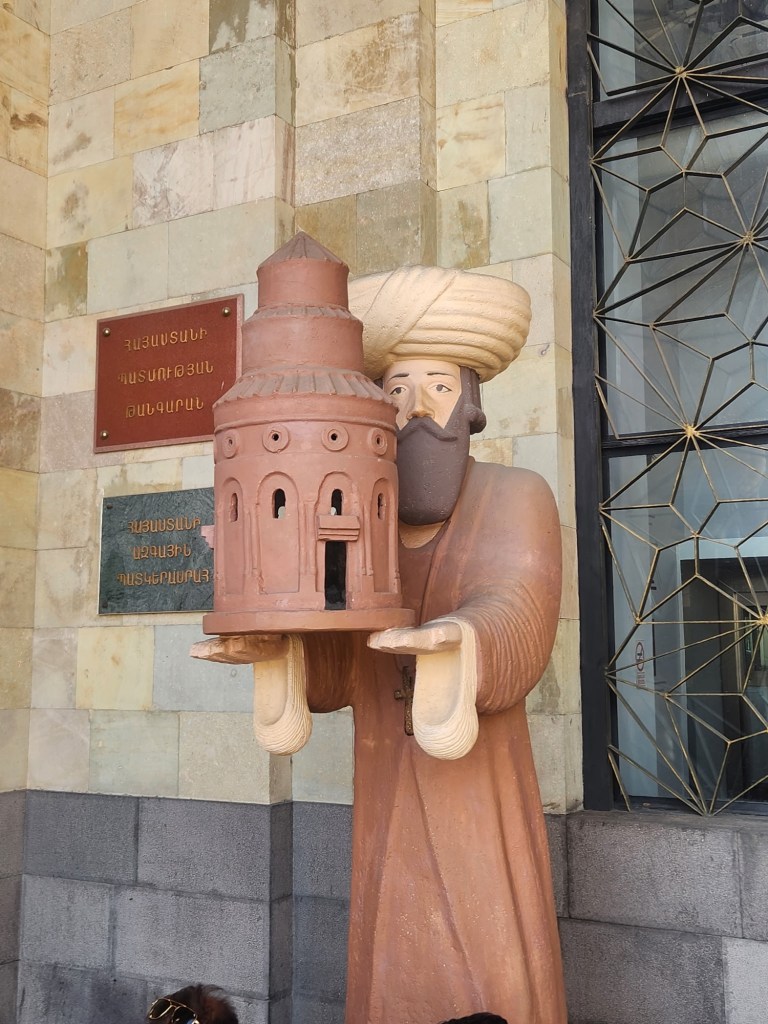
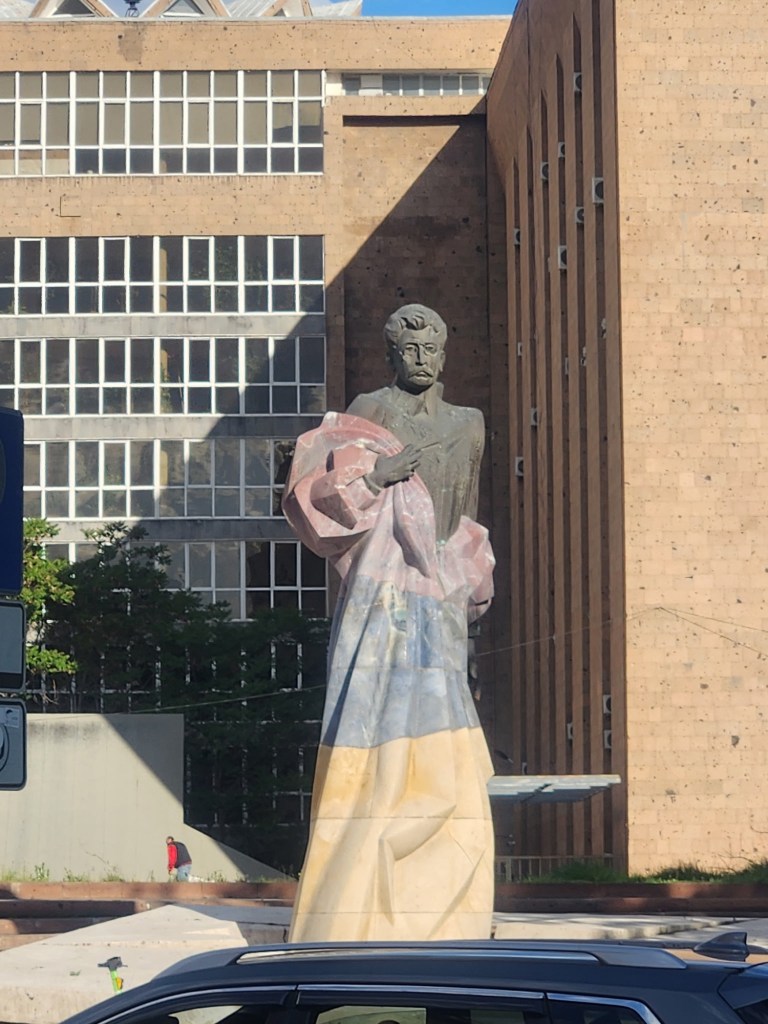
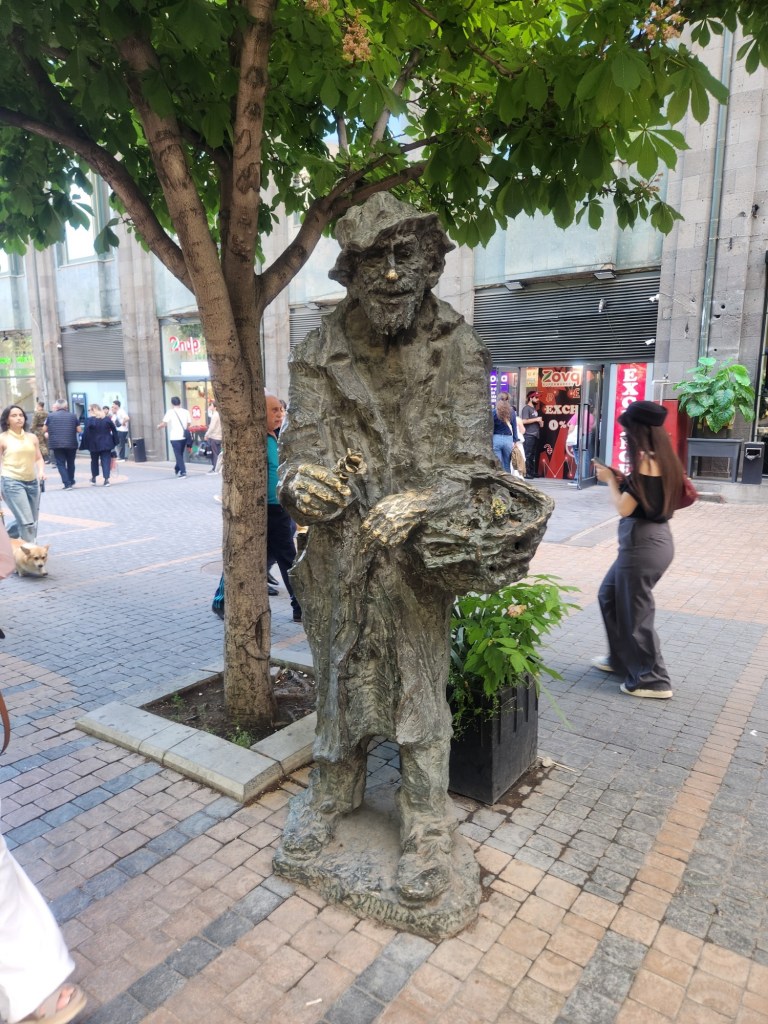
We drive for a while further and we arrive in the city of Yerevan, the capital of Armenia. What we see is pretty but we have too short of time to really enjoy the city. We visit the mother of Armenia monument and the famous steps in the city center. The steps are at the end of a park adorned with art sculptures (I spy a Botero or two in there). Many in our group climbs the steps up but I choose the escalator option due to my uneasy stomach. From the top there are beautiful views of the city.
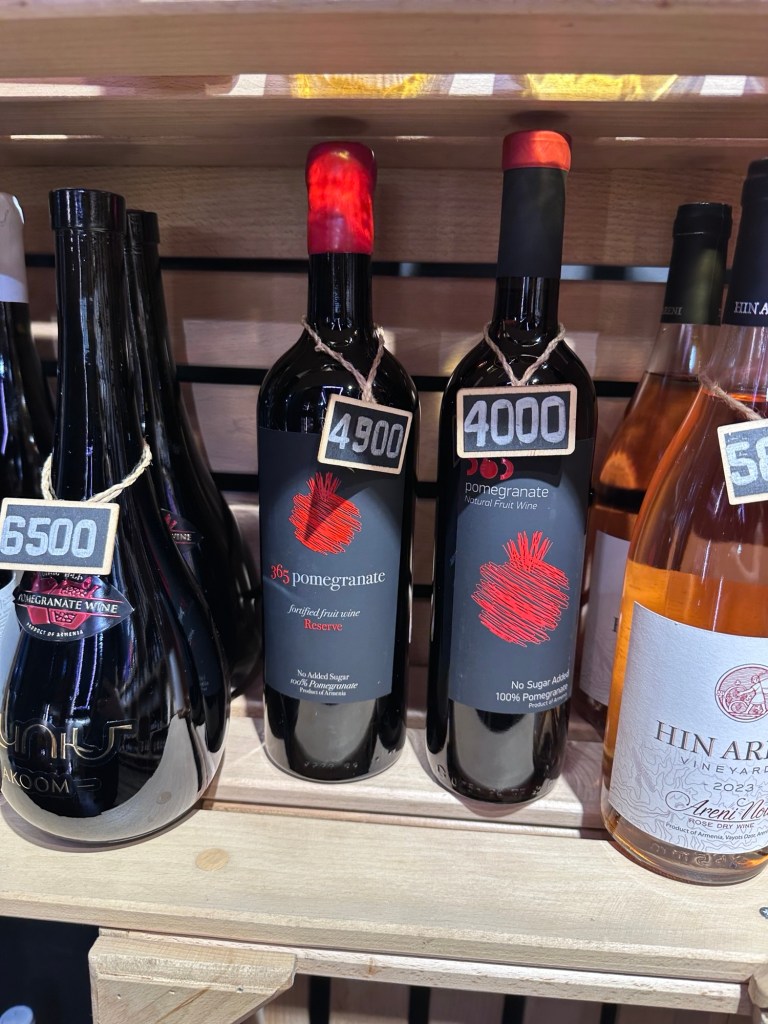
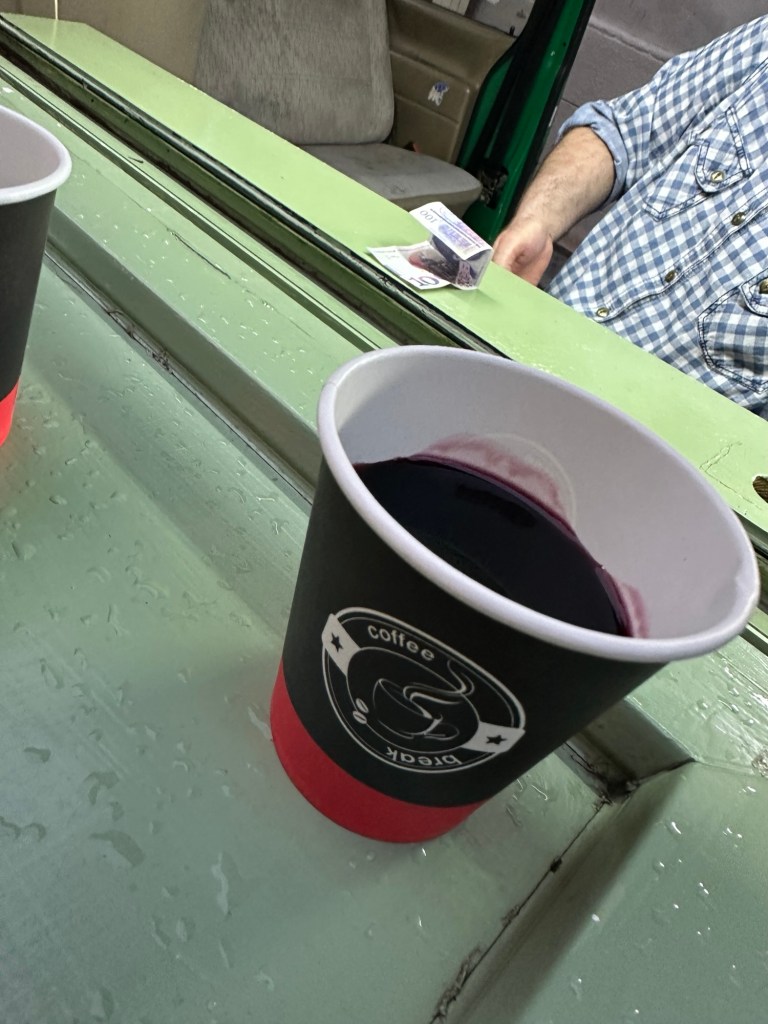
Gross pomegranate wine
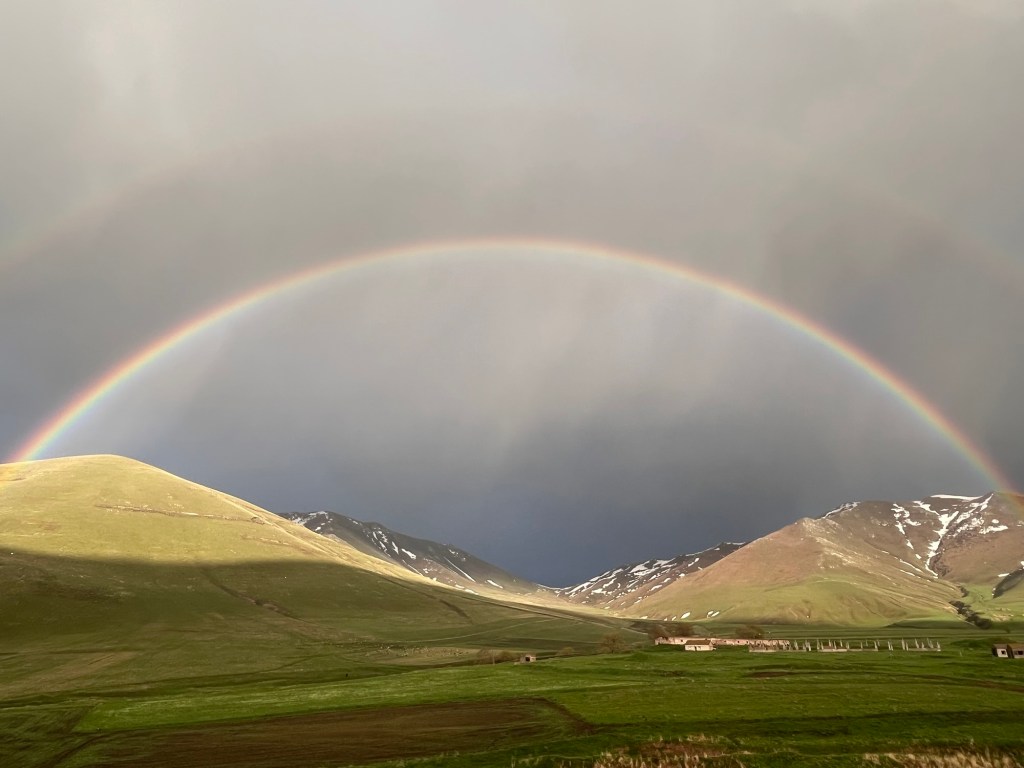
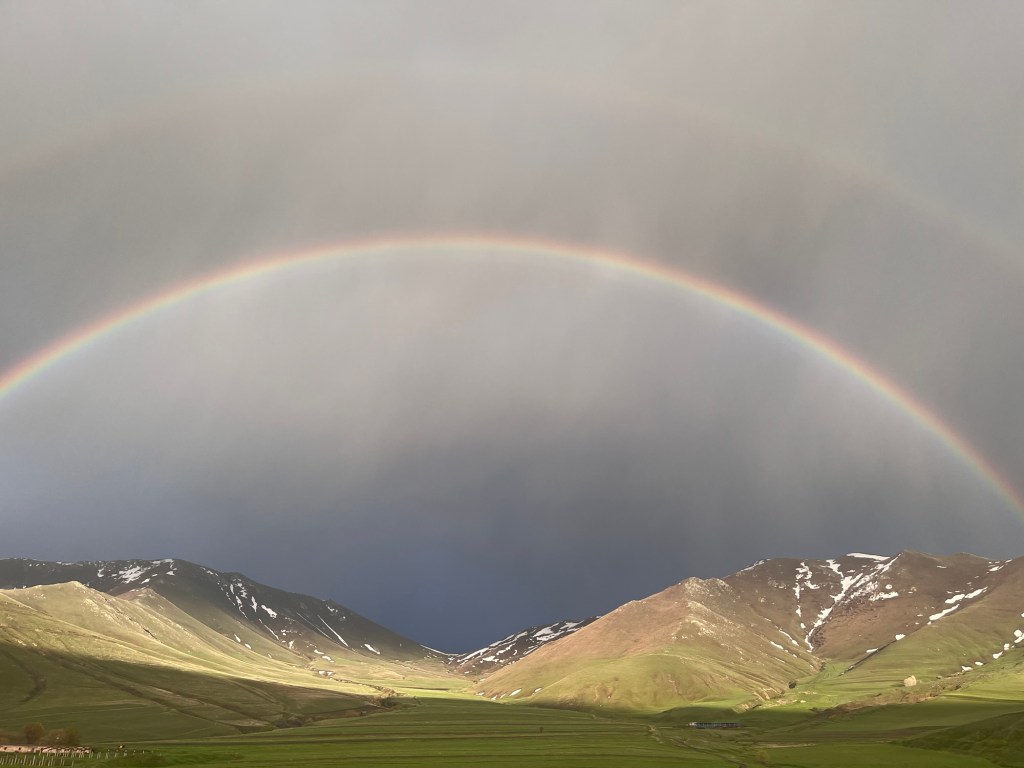
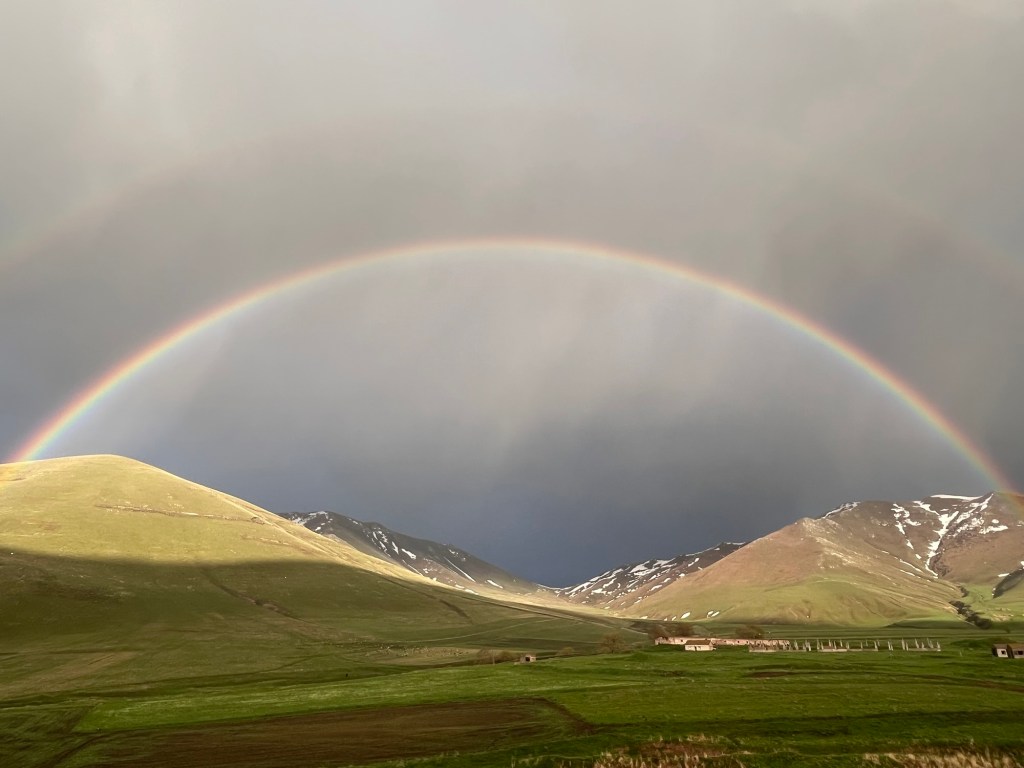
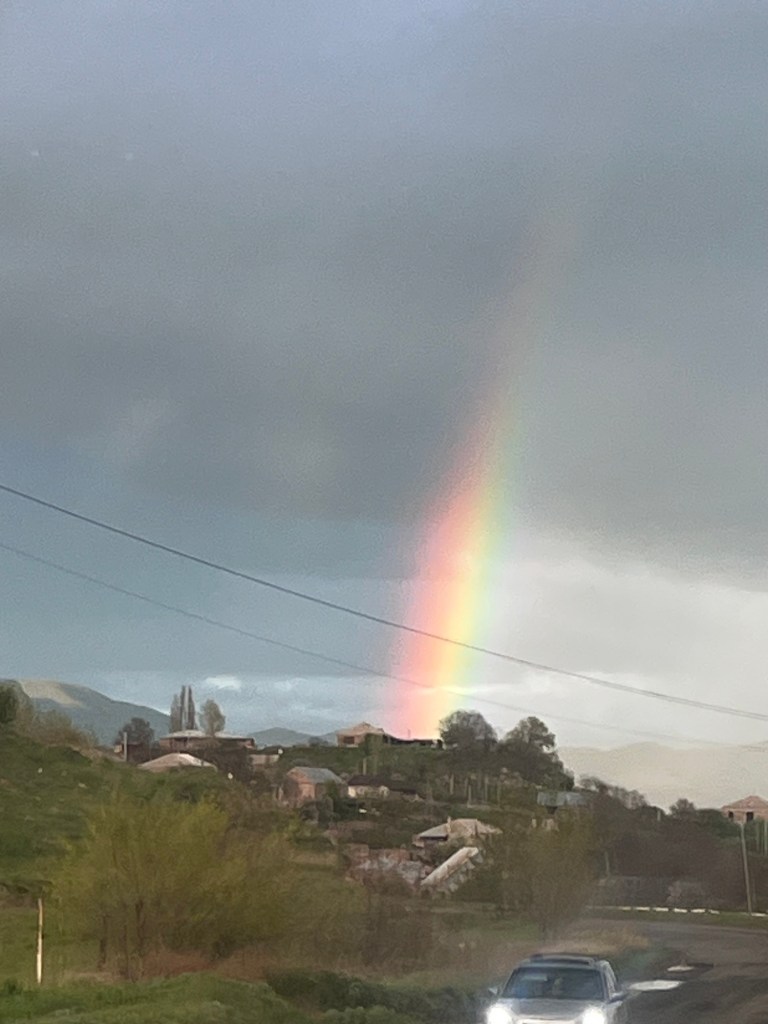
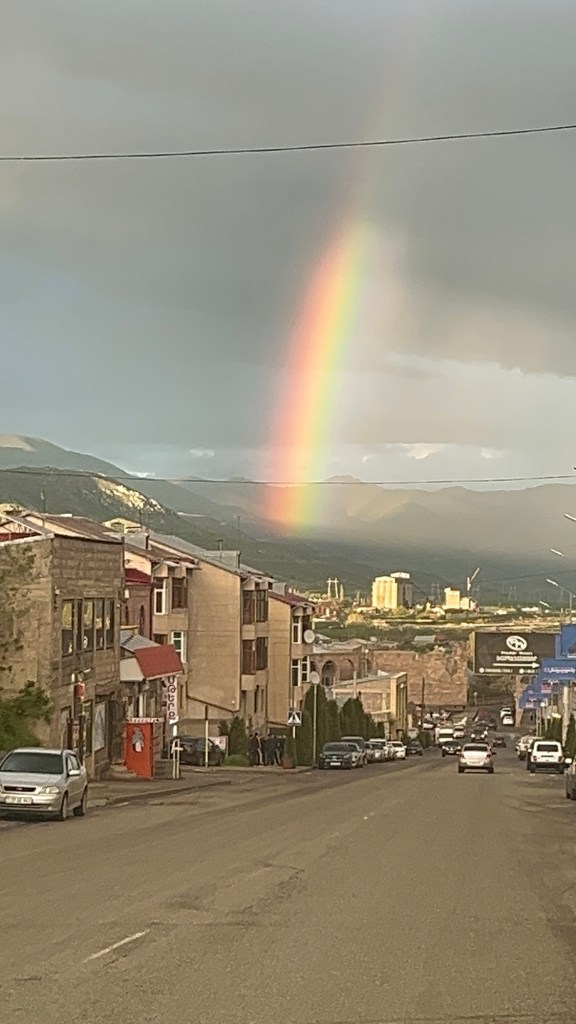
We then undergo a very long ride back to Georgia, border crossings and all. We don’t arrive back until almost midnight. The tour guide’s assistant takes some spectacular photos of the rainbows we see on the way. A fun thing the guide does during the drive is have each person play a song from their country for the van. It is a fun icebreaker but would have been useful at the beginning of the day to get to know the group better. I learn that the American rock band System of the Down is mostly Armenian. When it is our turn we choose Cher and the song Believe. The overachiever in me is glad I choose someone who is both American and Armenian.
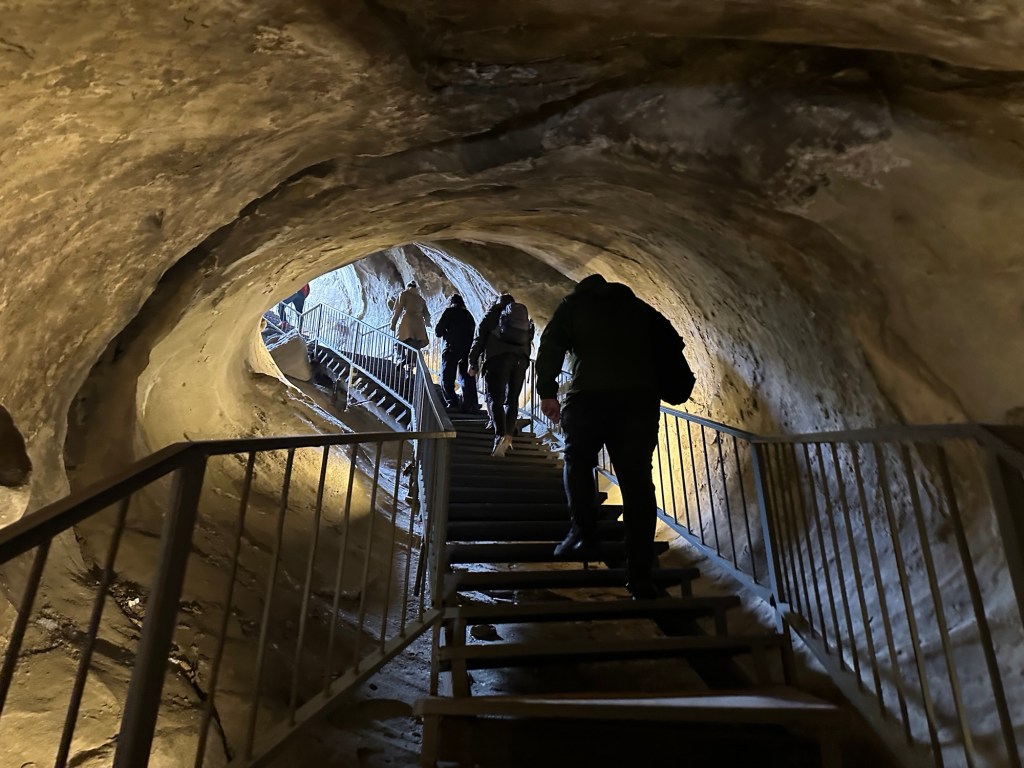
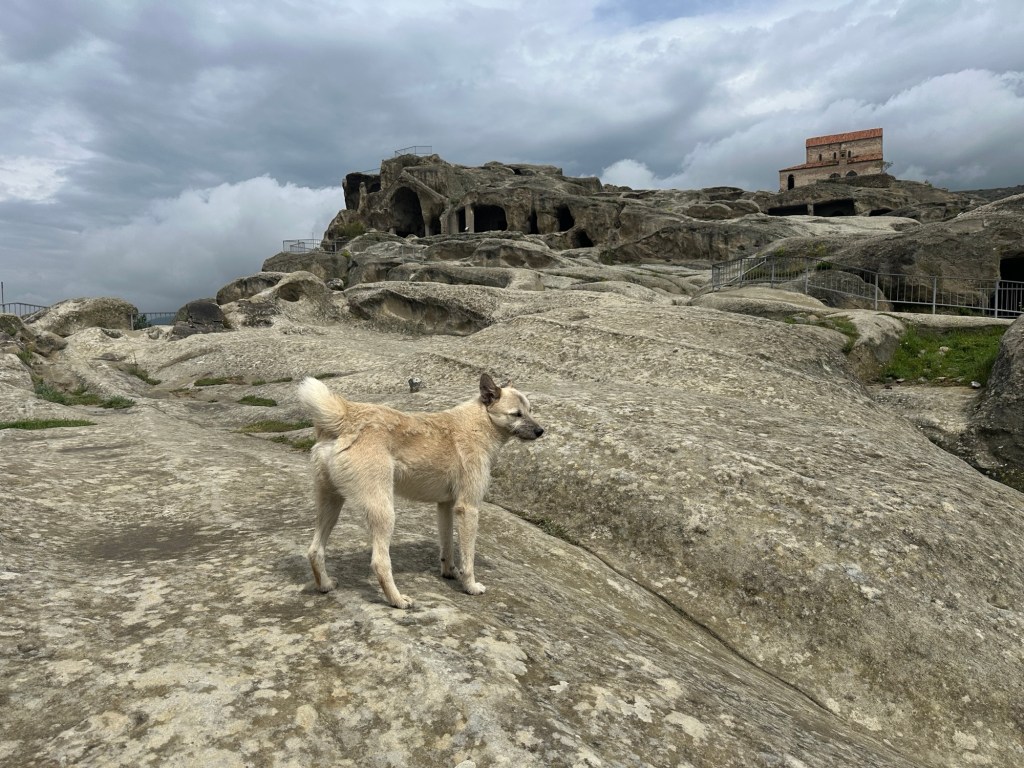
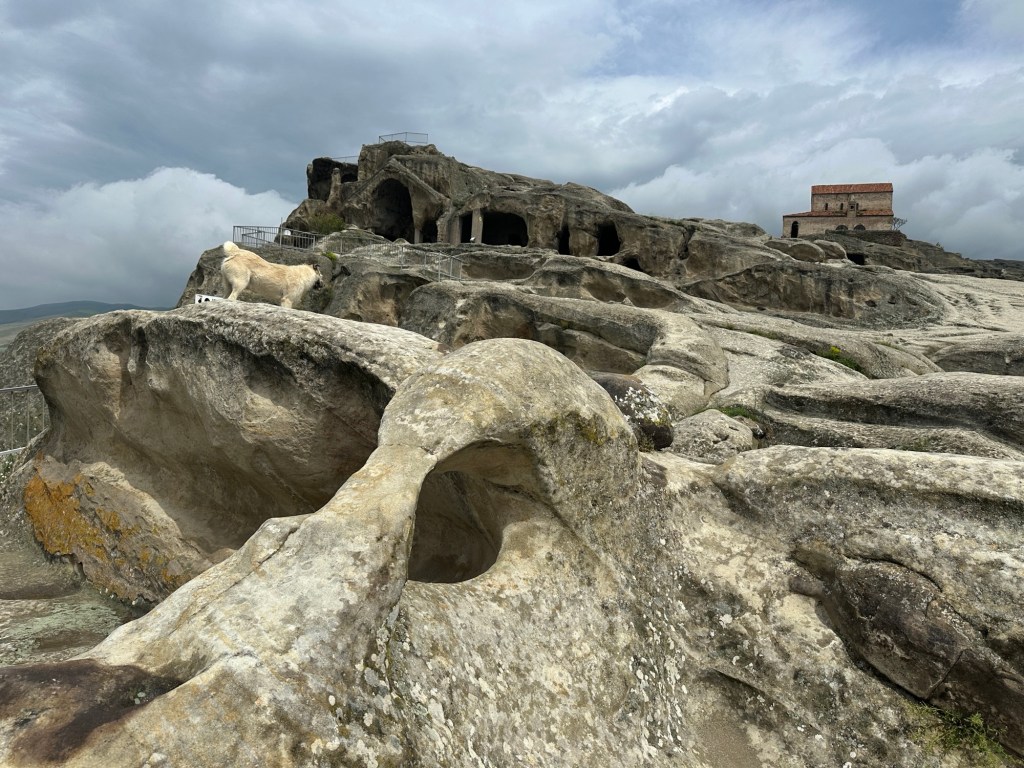
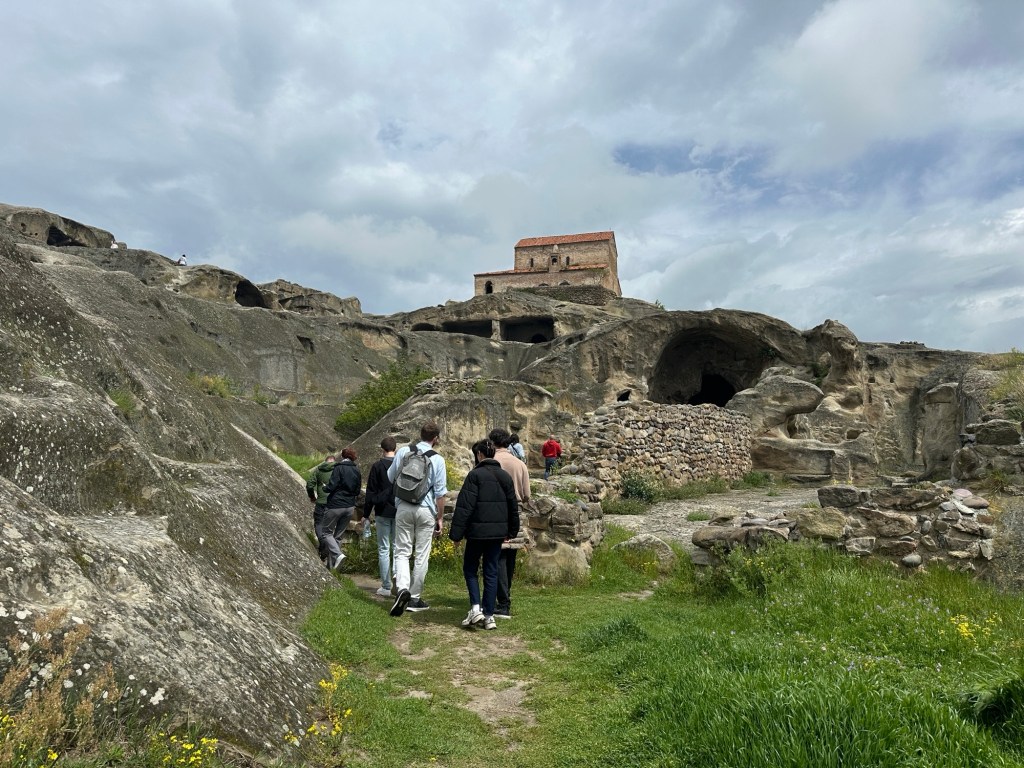
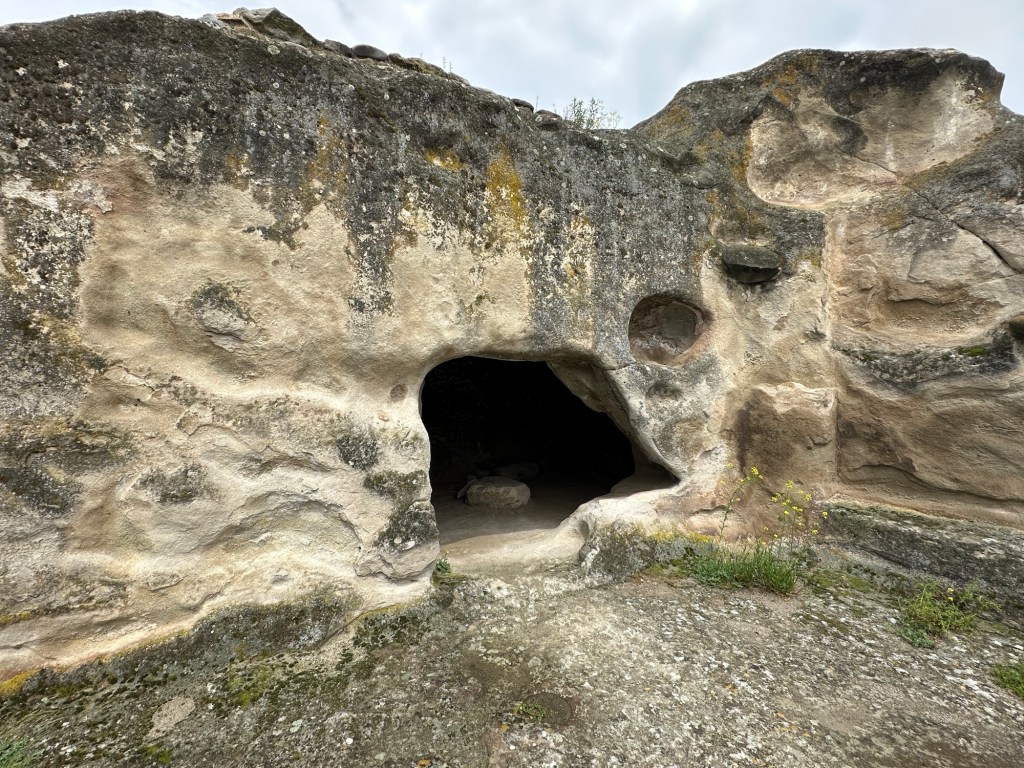
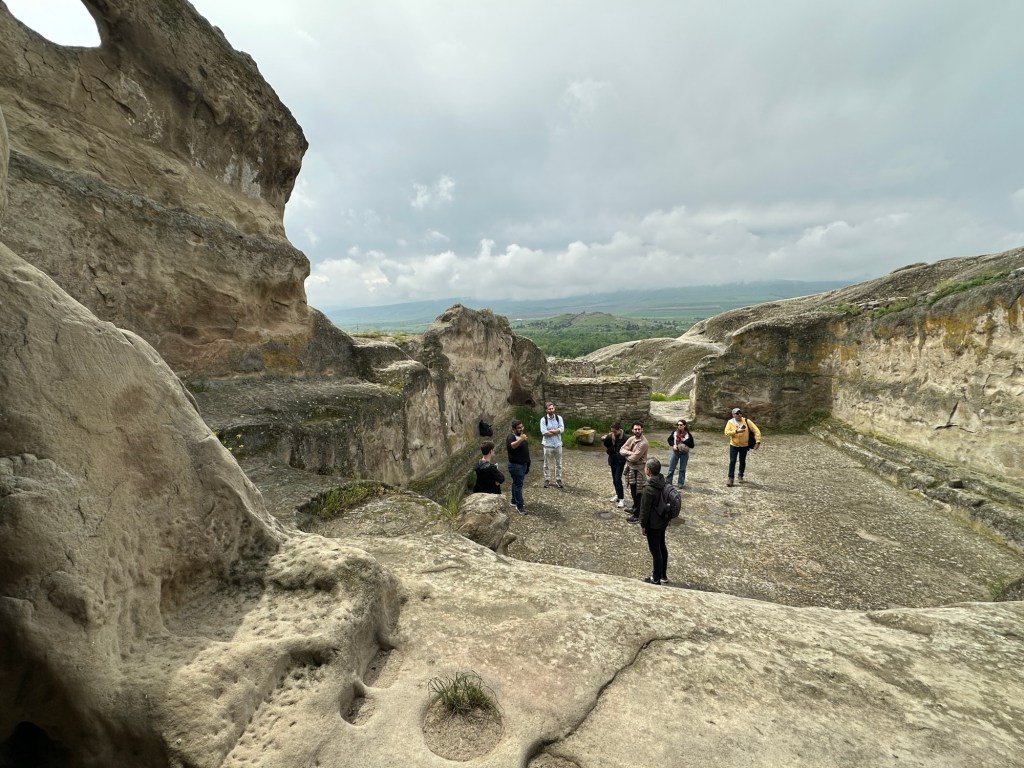
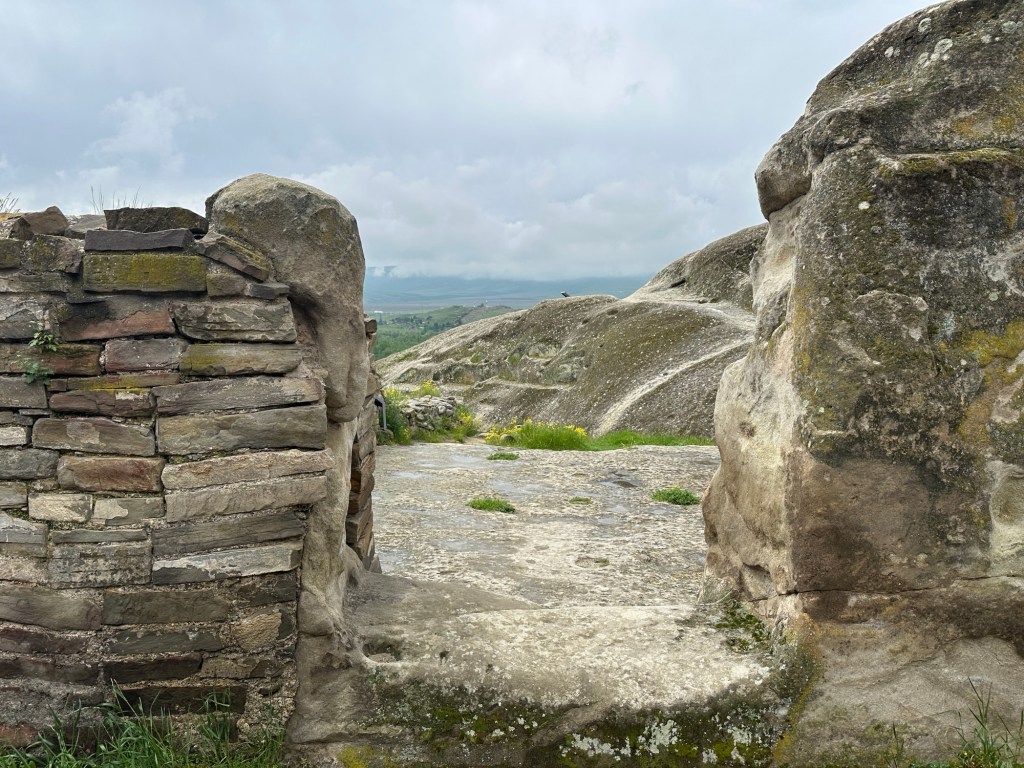
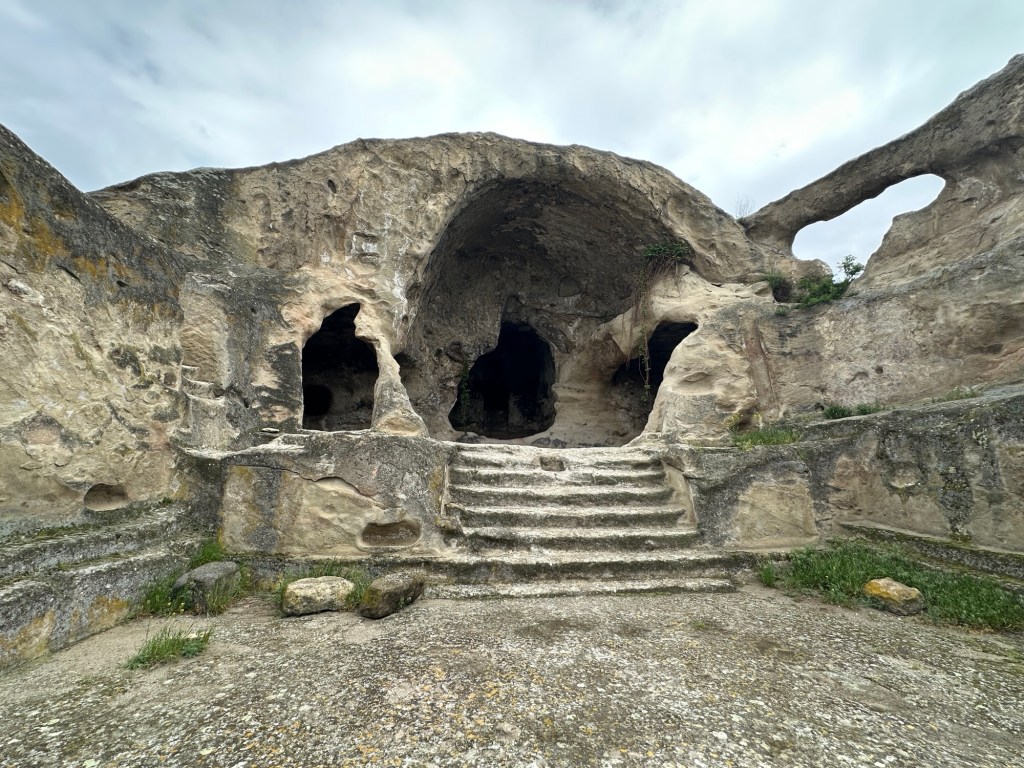
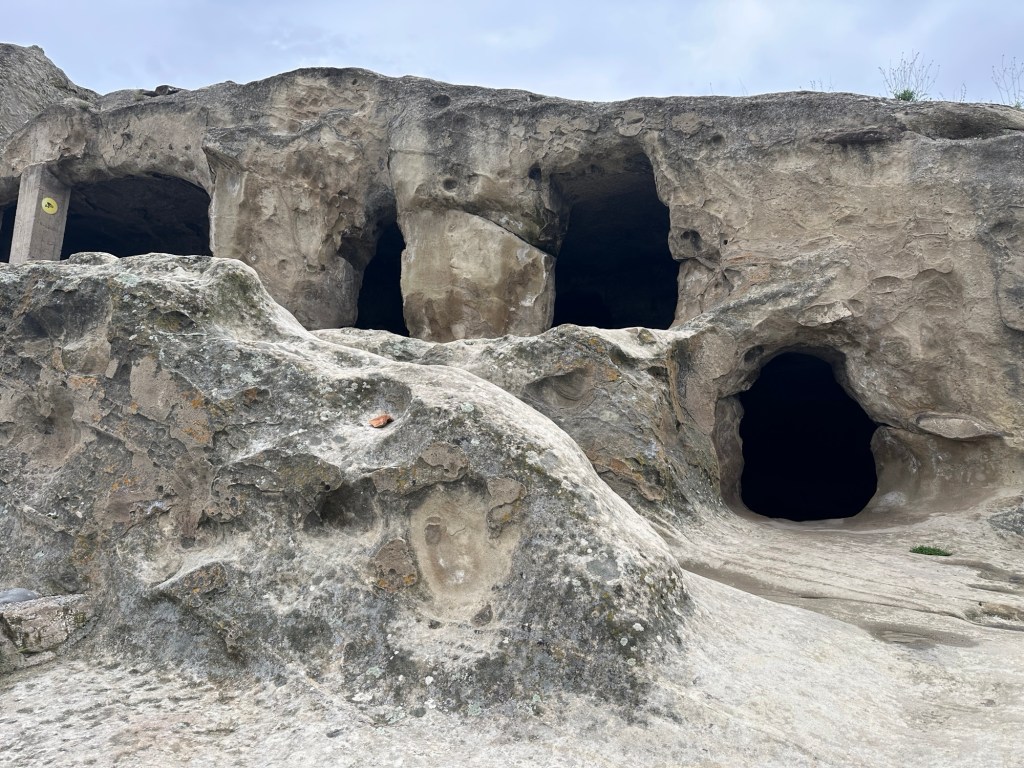
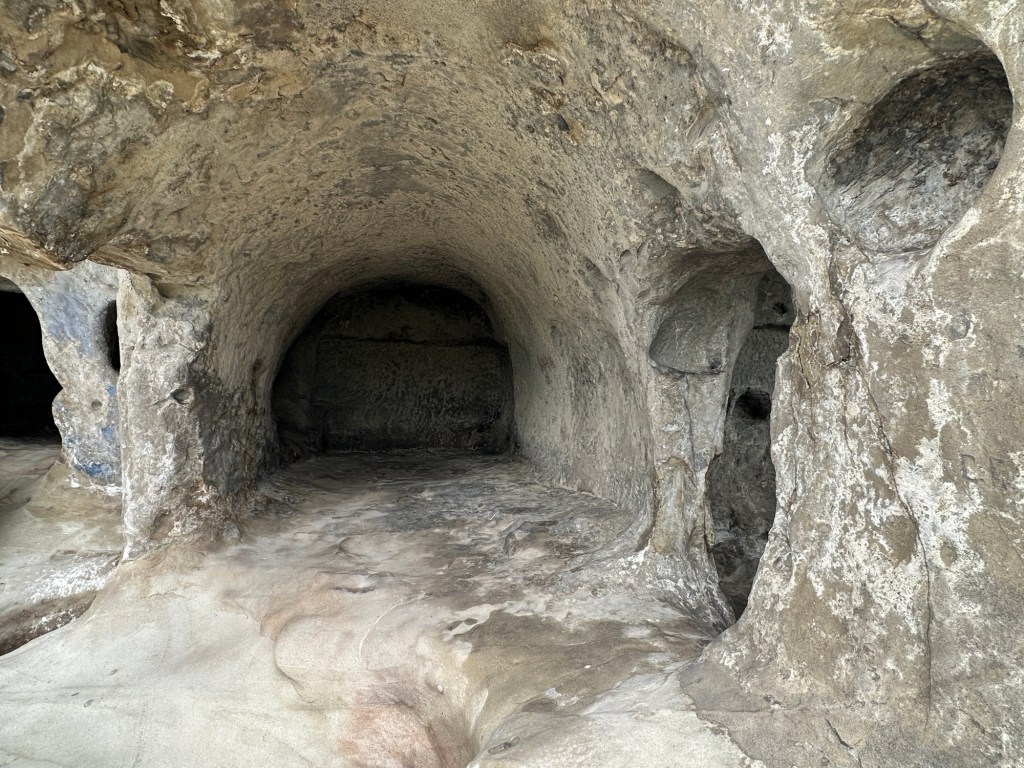
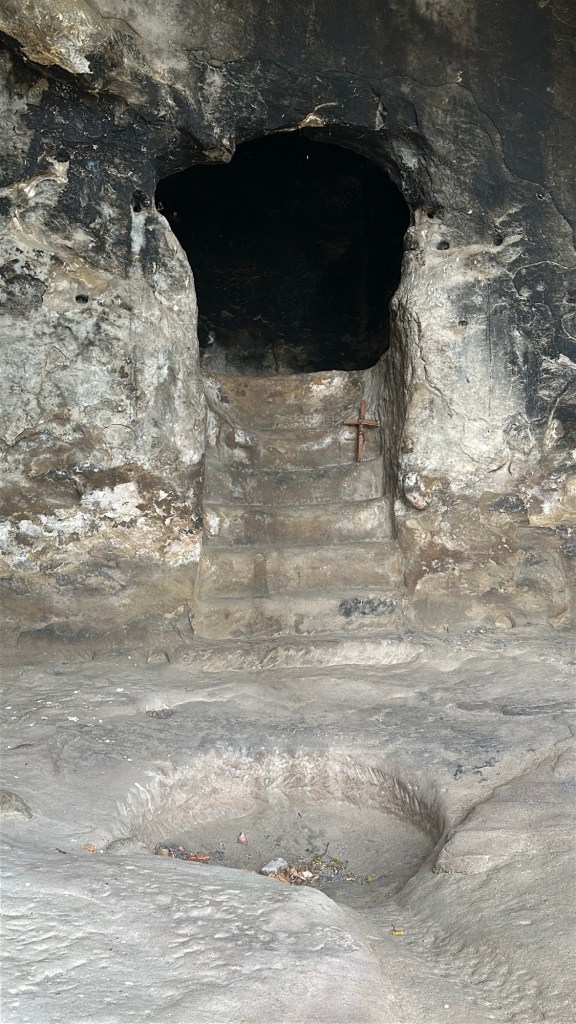
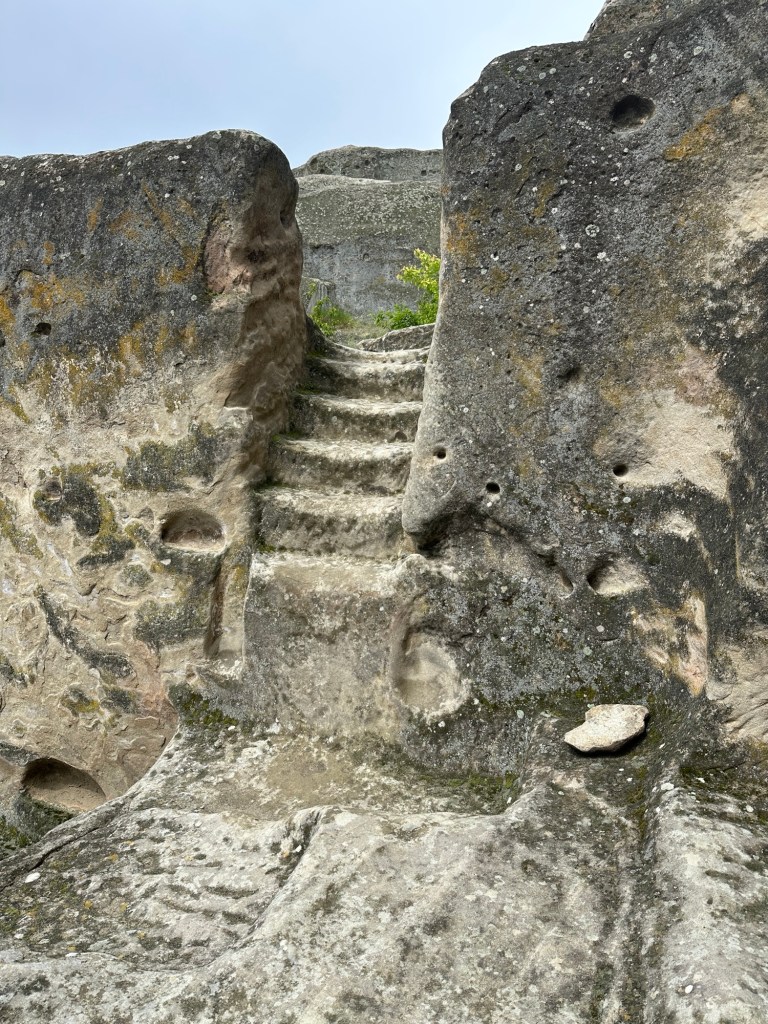
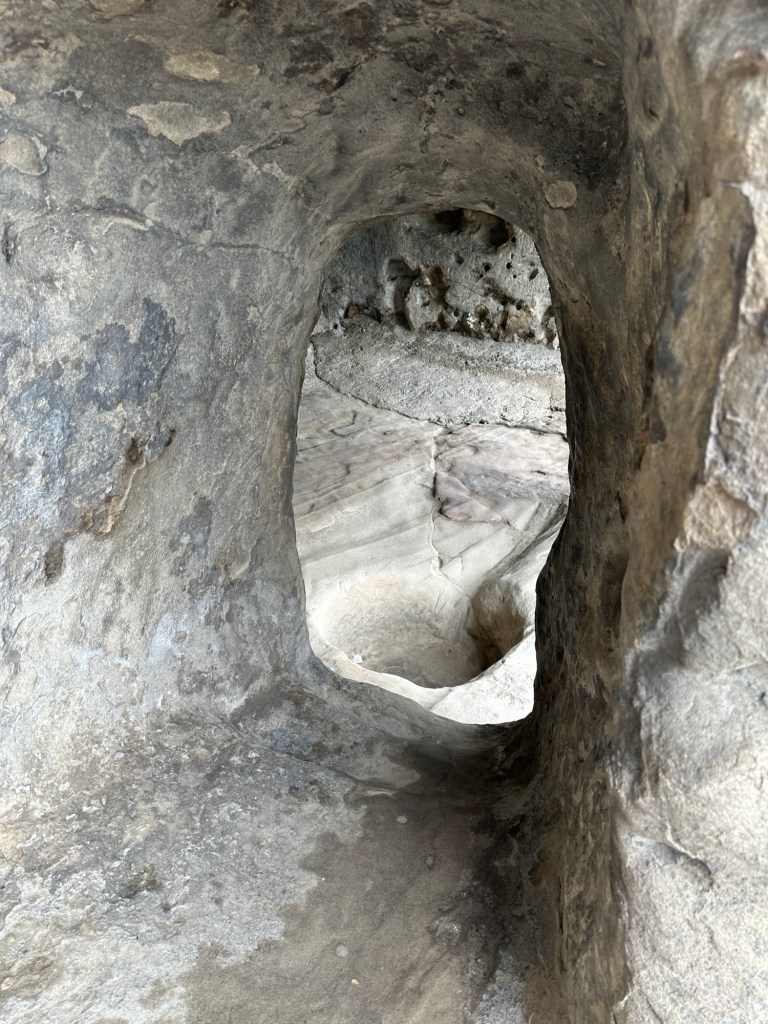
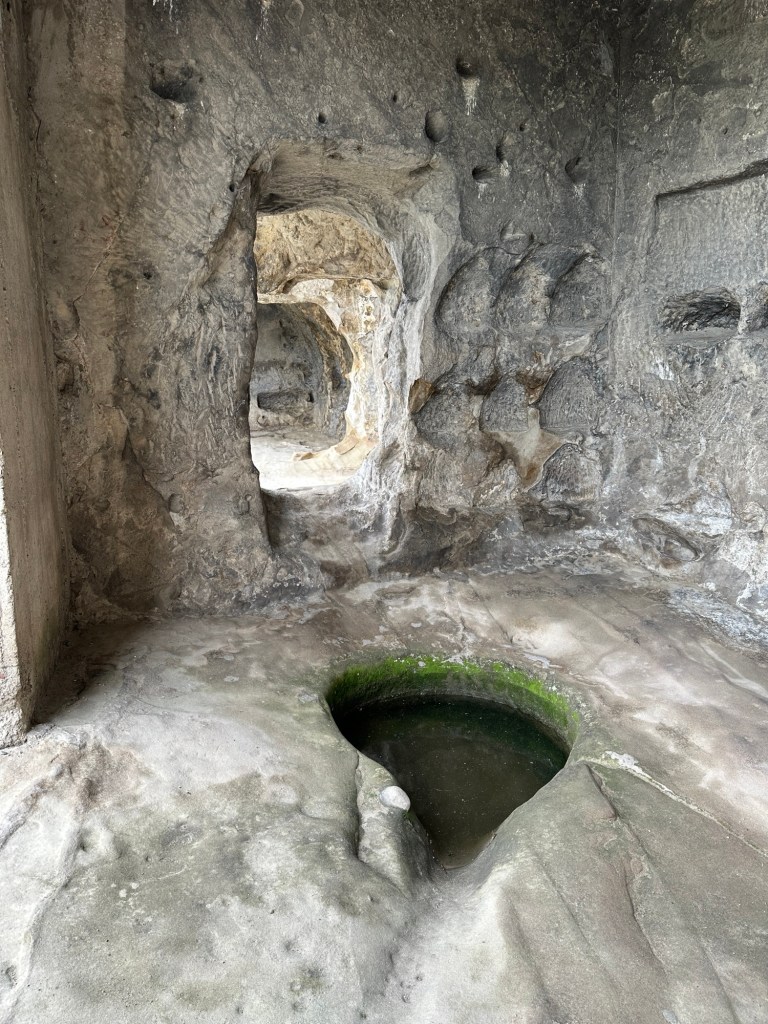
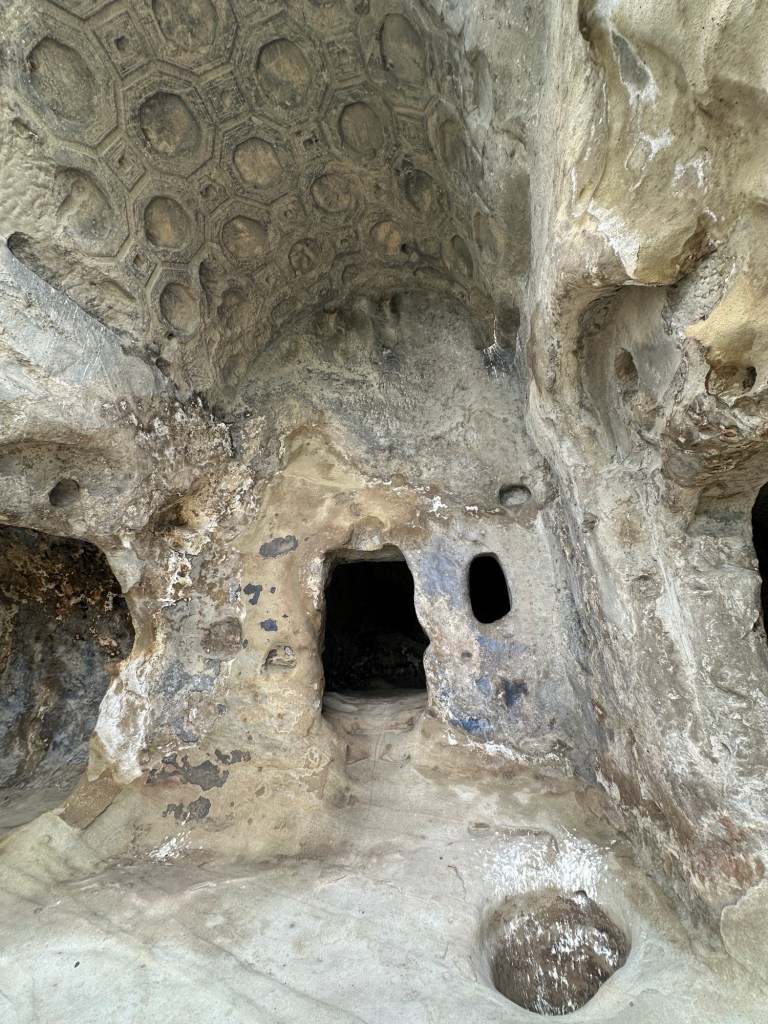
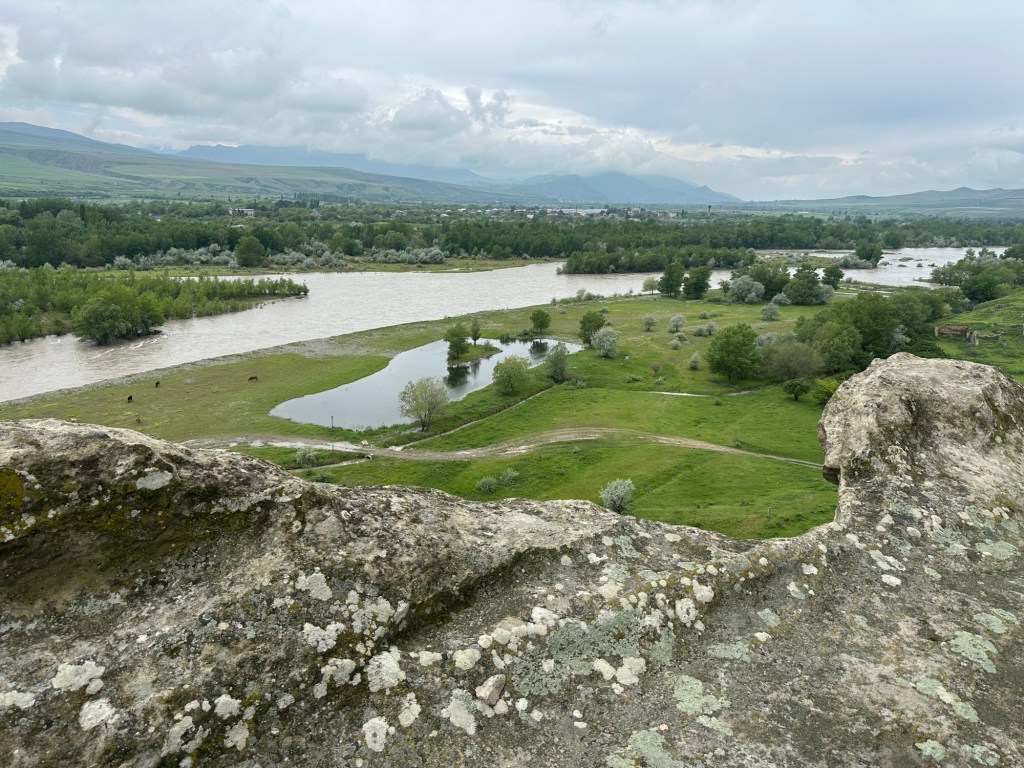
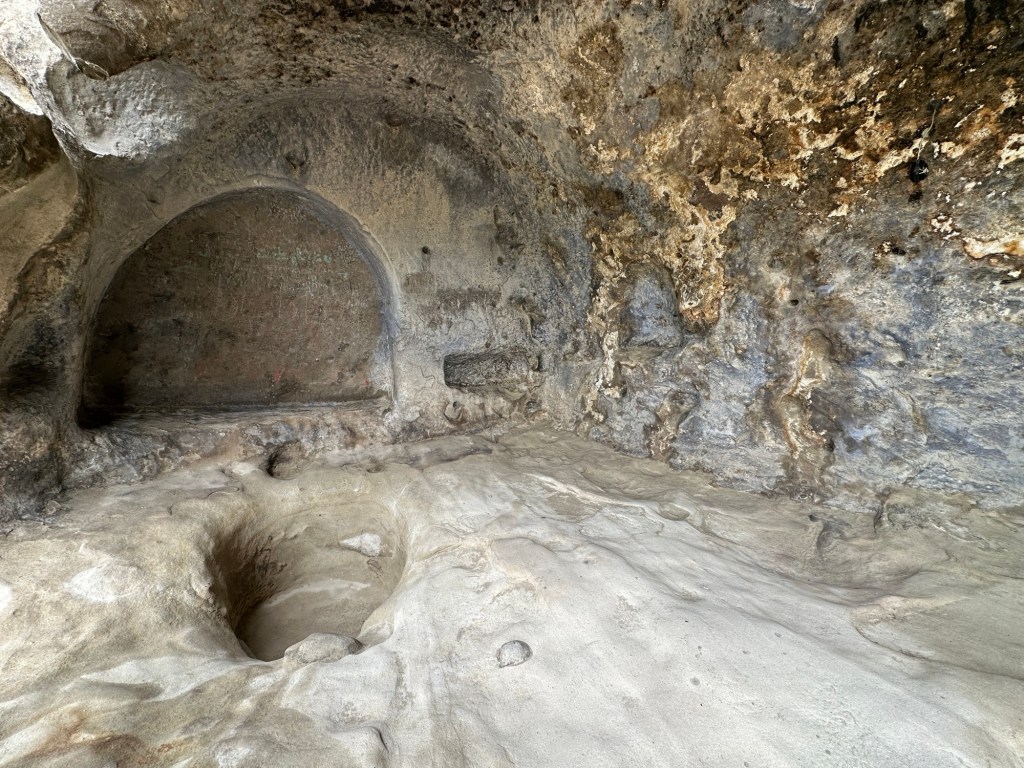
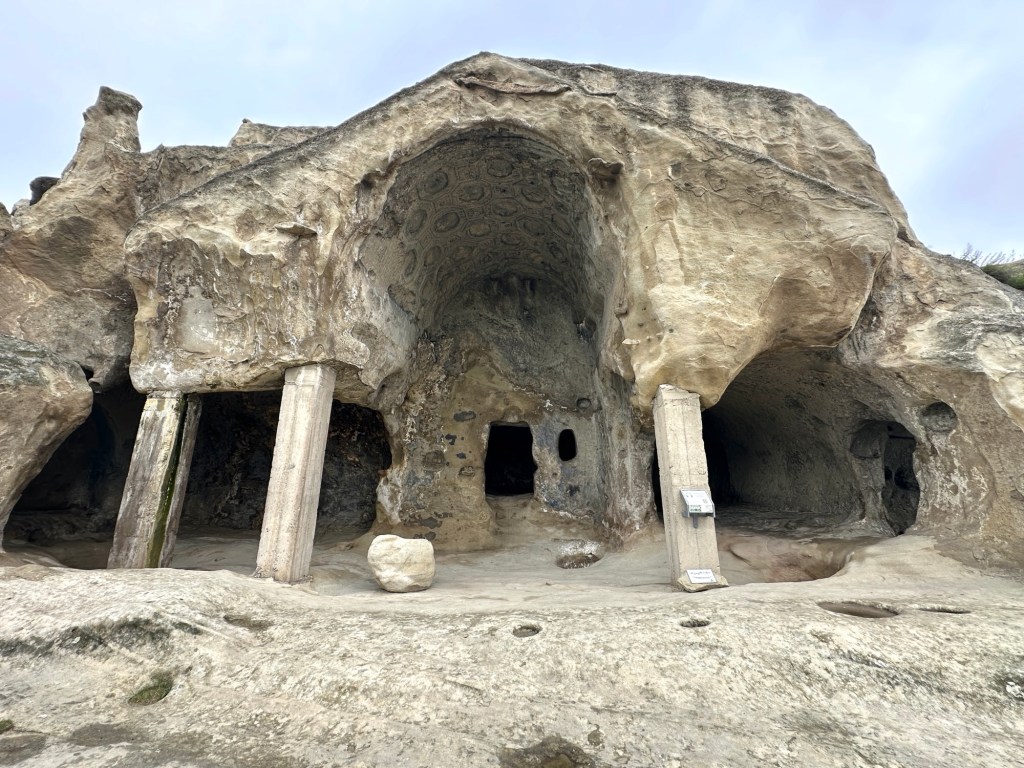
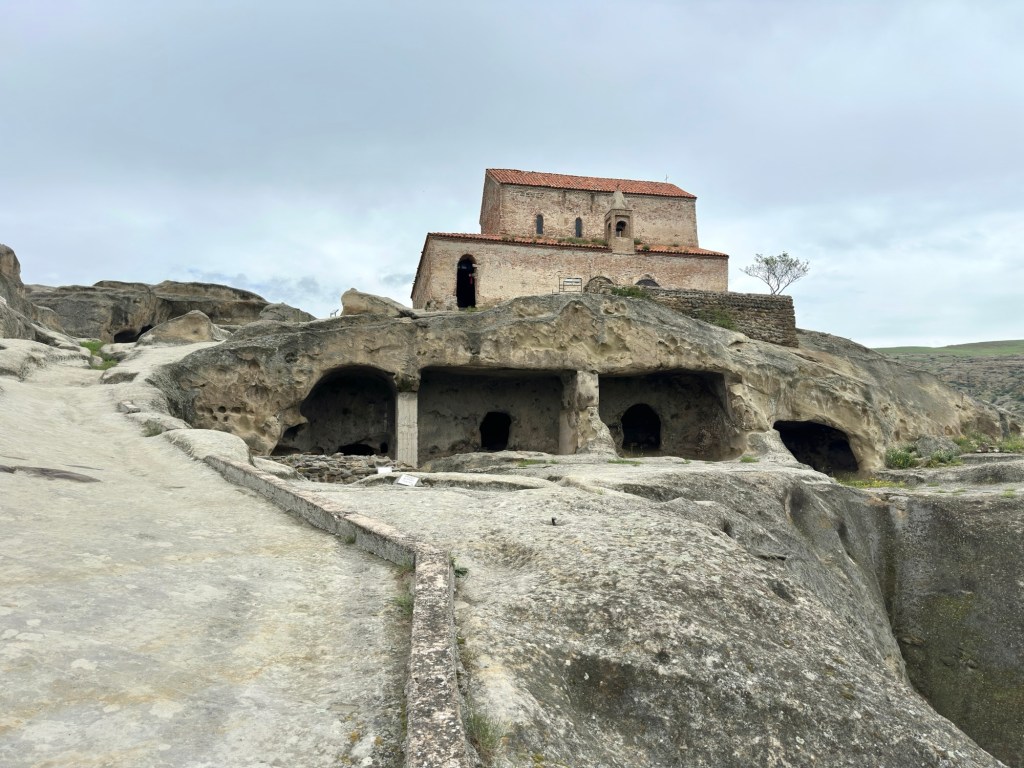
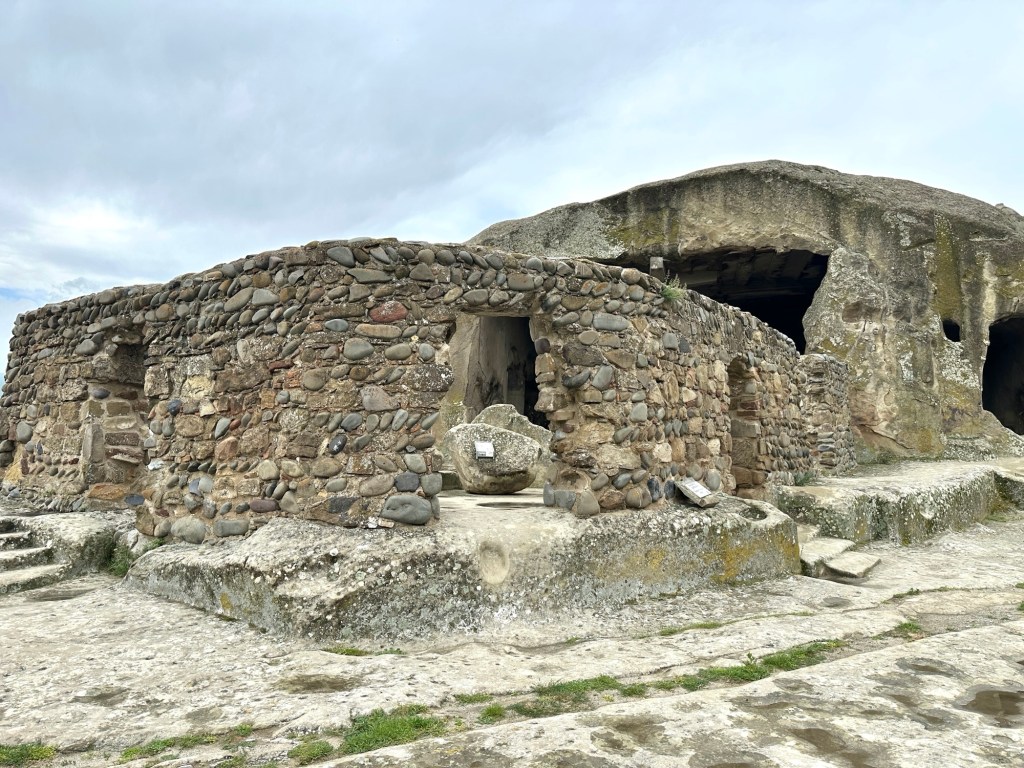
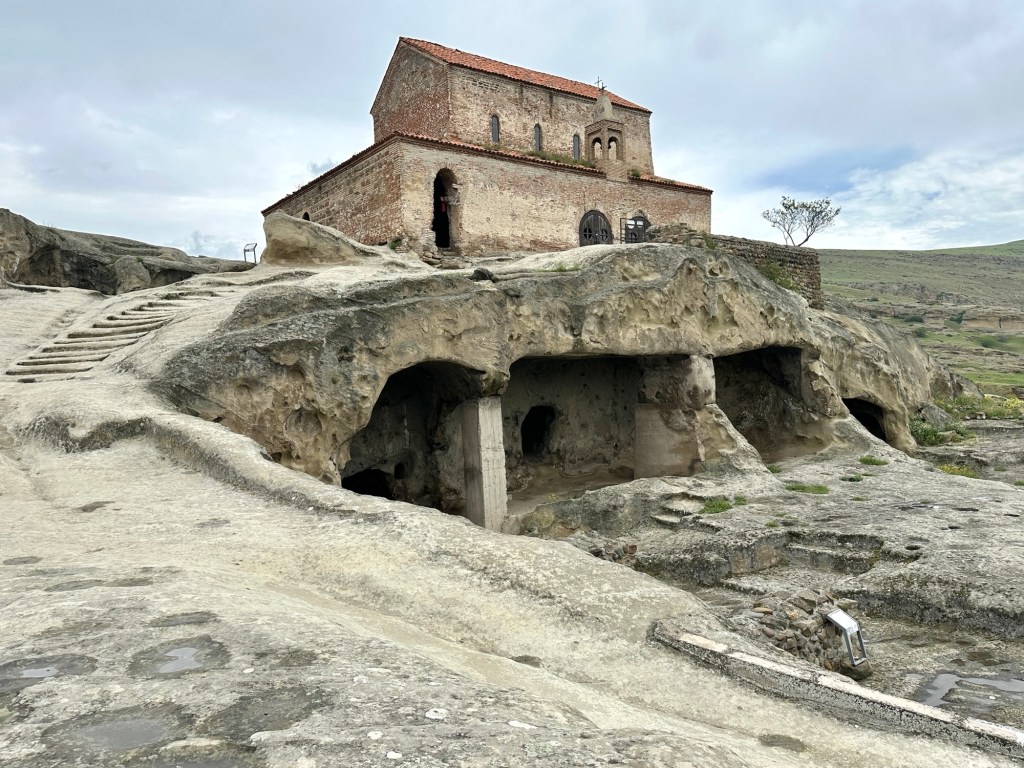
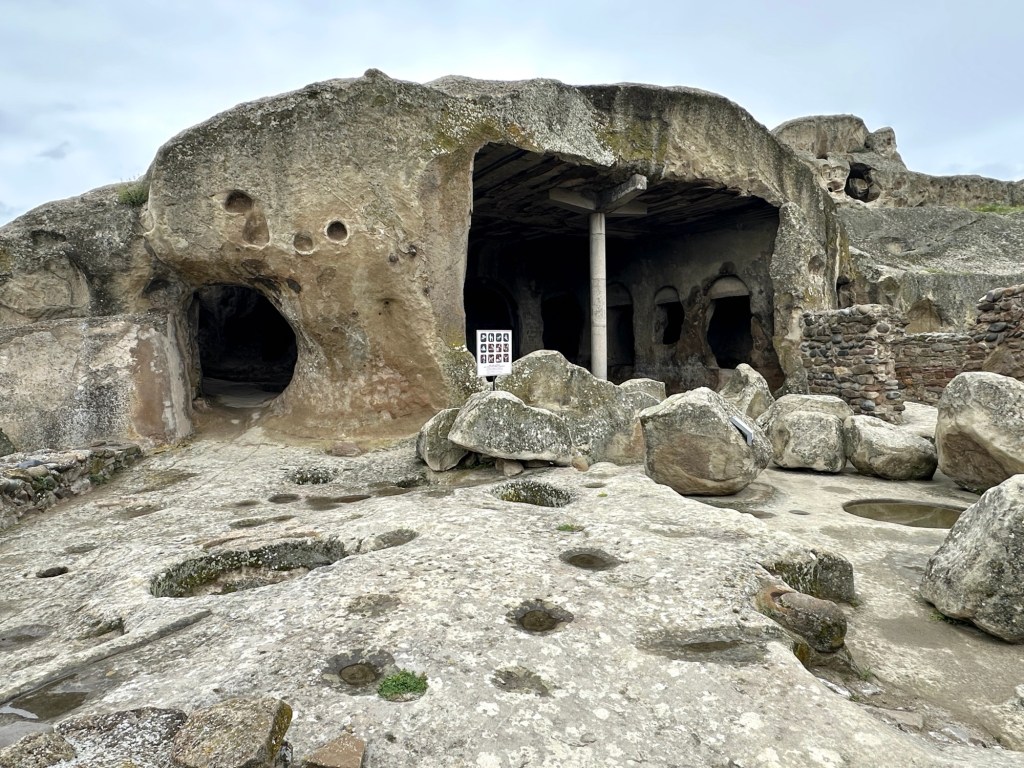
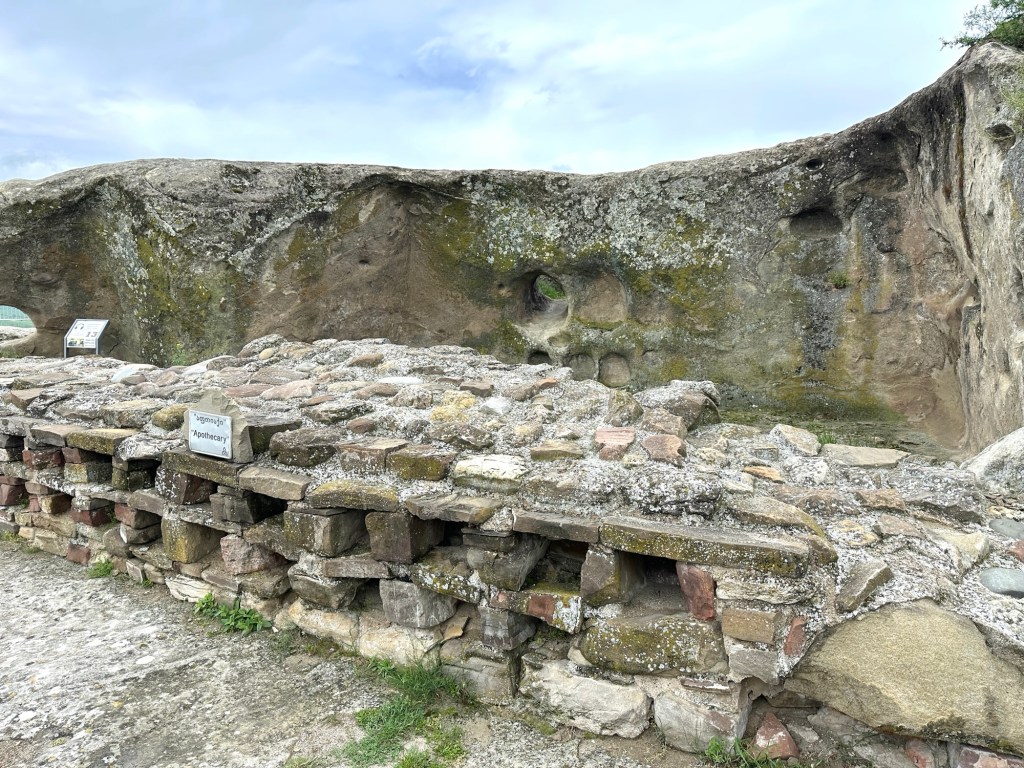
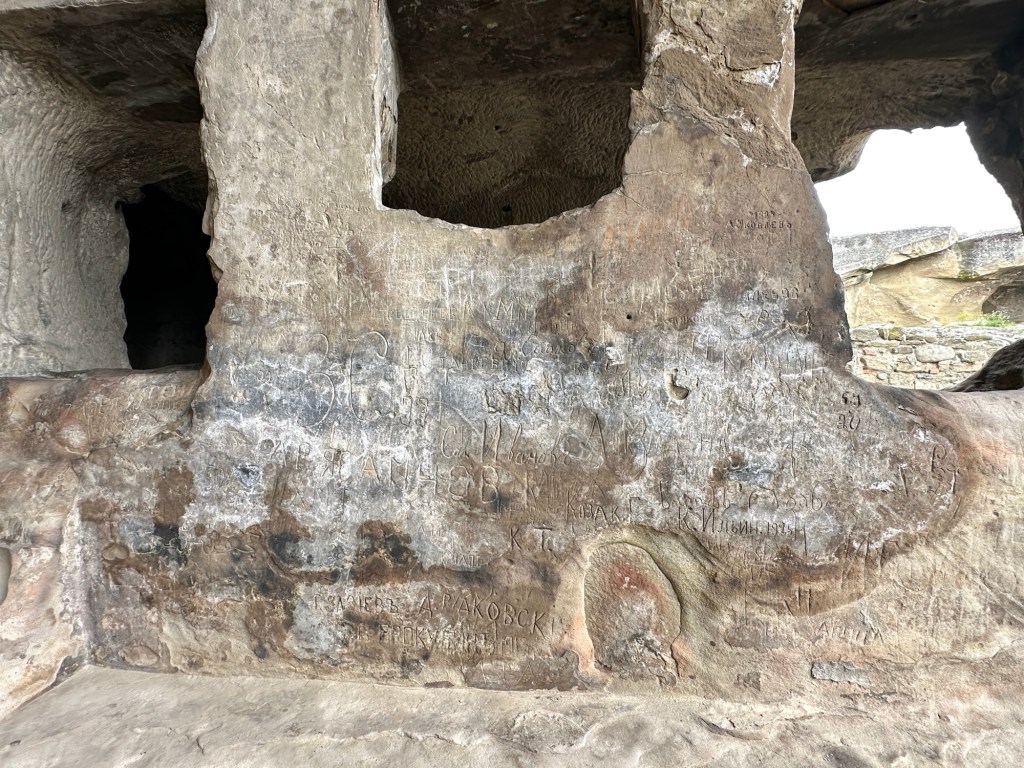
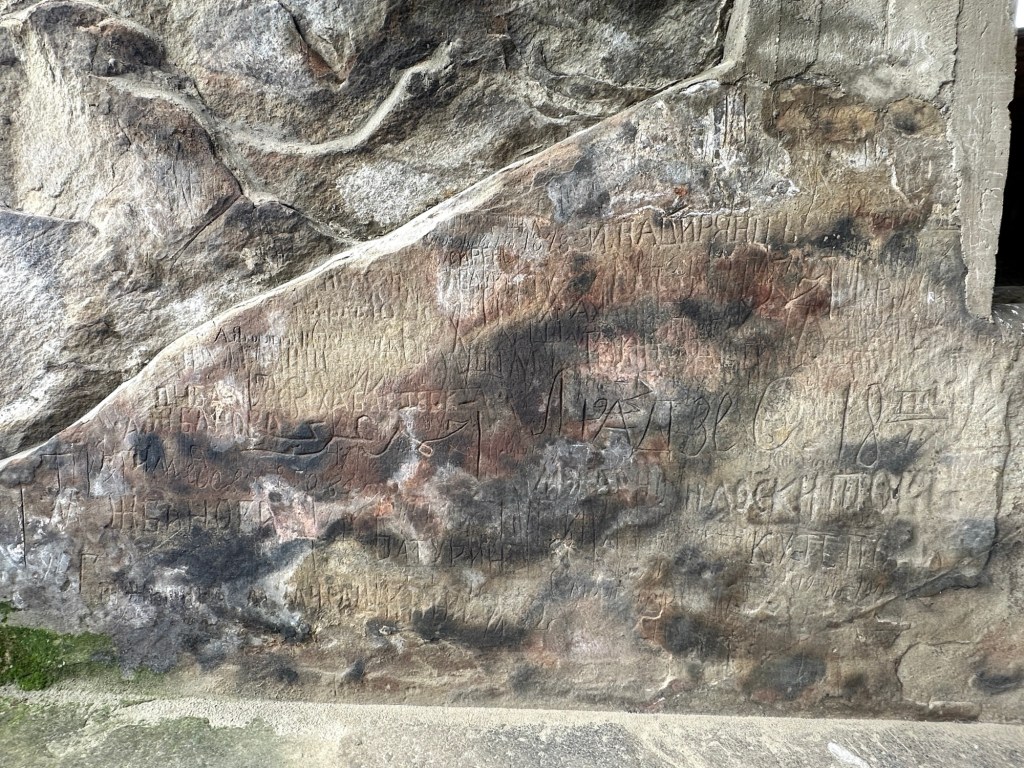
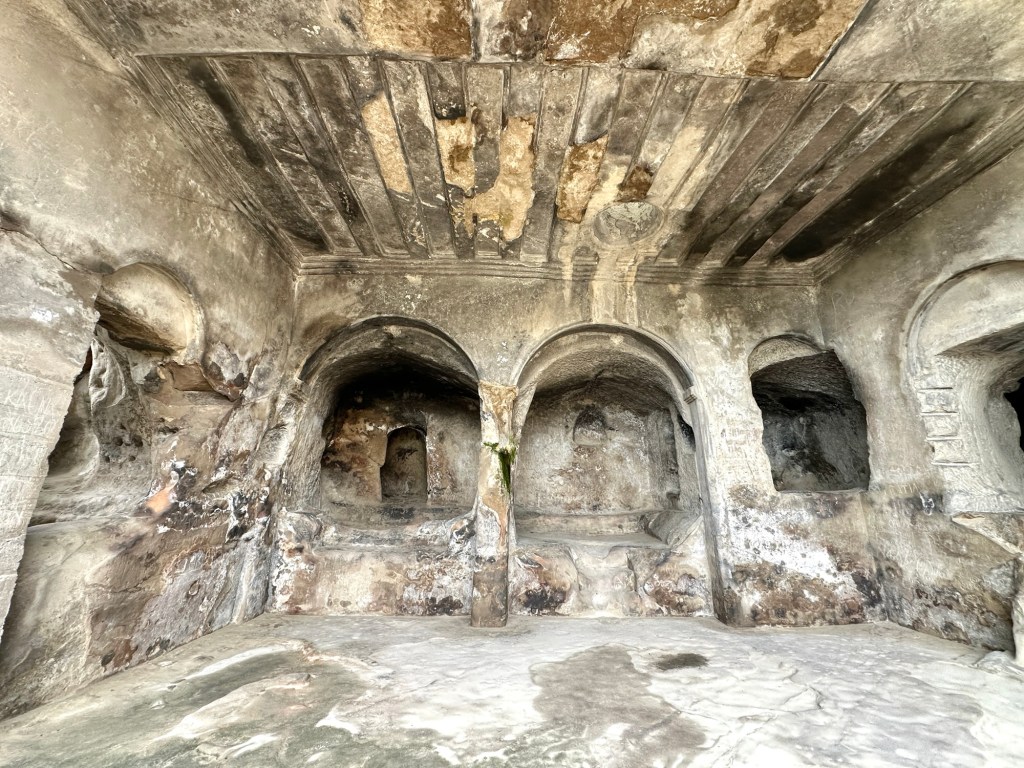
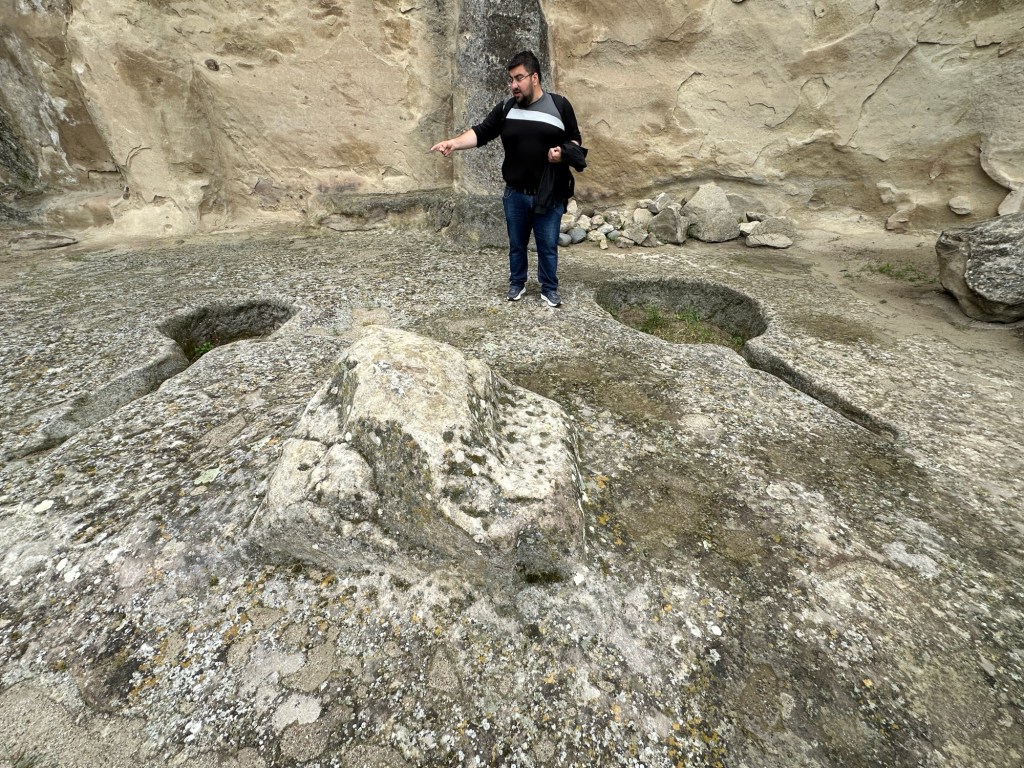
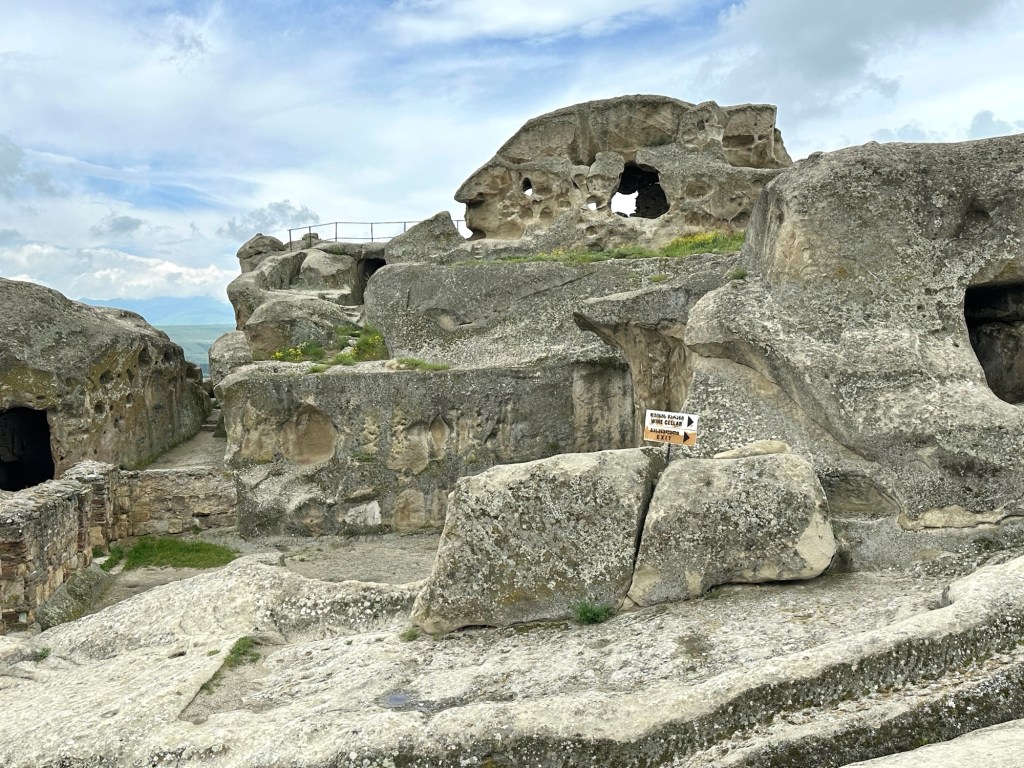
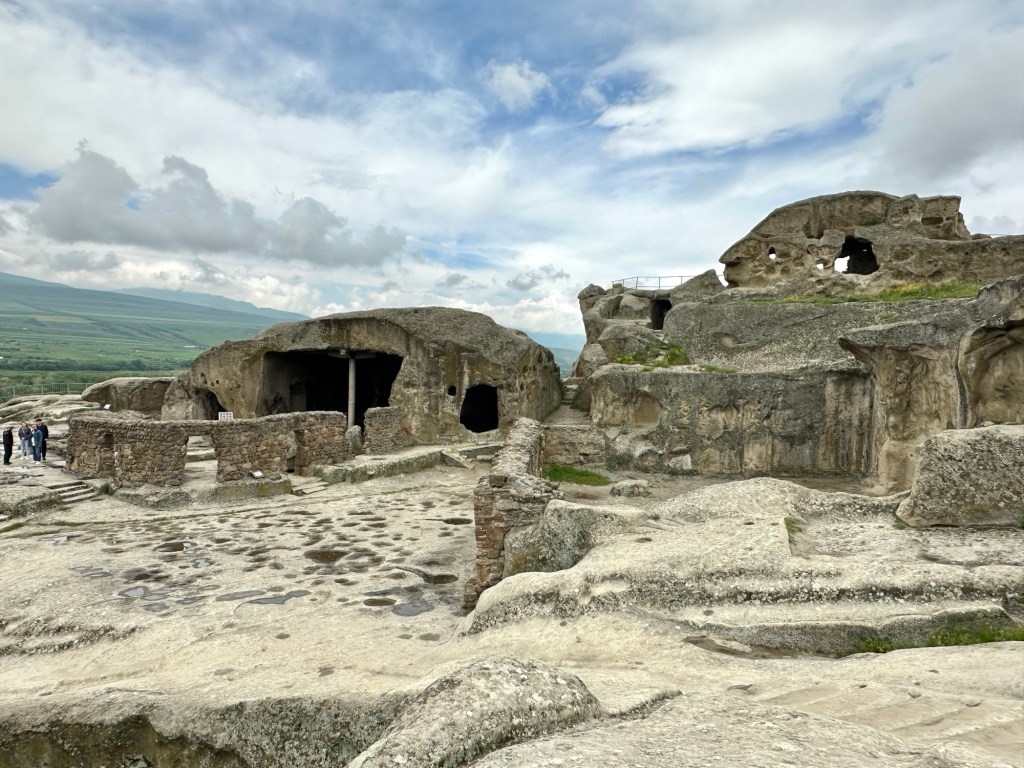
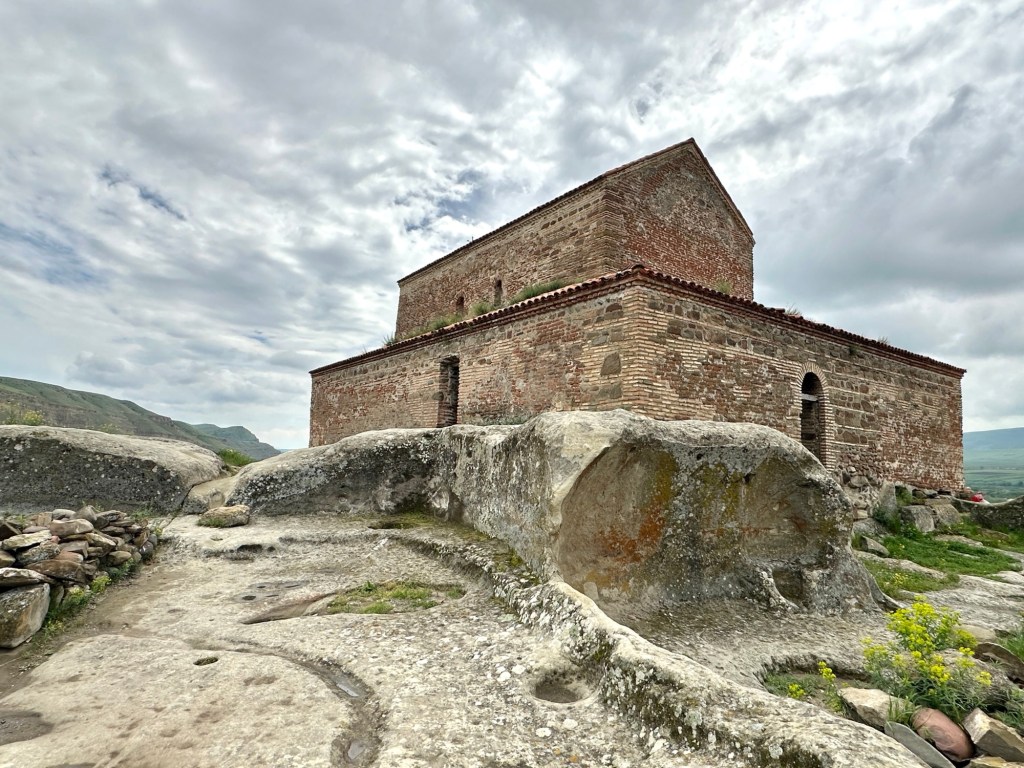
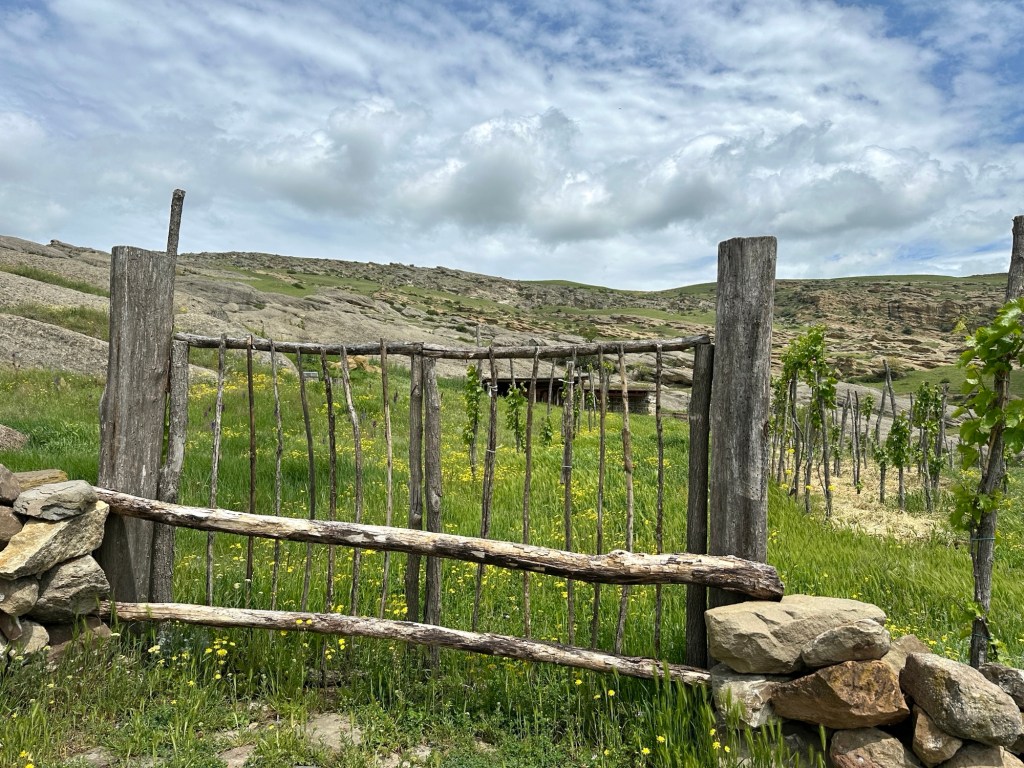
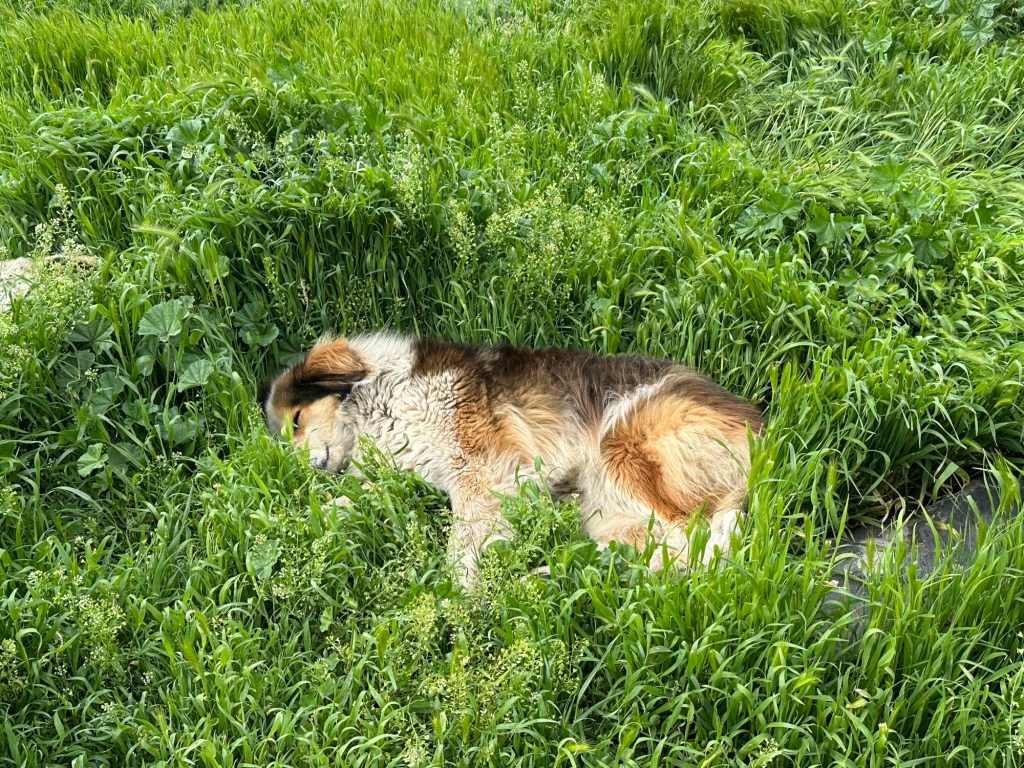
It is raining and gloomy in Tblisi this morning but luckily the bad weather doesn’t follow us to the cave city of Uplistsikhe. We walk along stone paths through this settlement which is thought to be the oldest in Georgia and imagine how life must have been living in the ancient kingdom of Kartli. Dogs follow us along during parts of our tour. This cave town was abandoned and hidden and was re-discovered many years later.
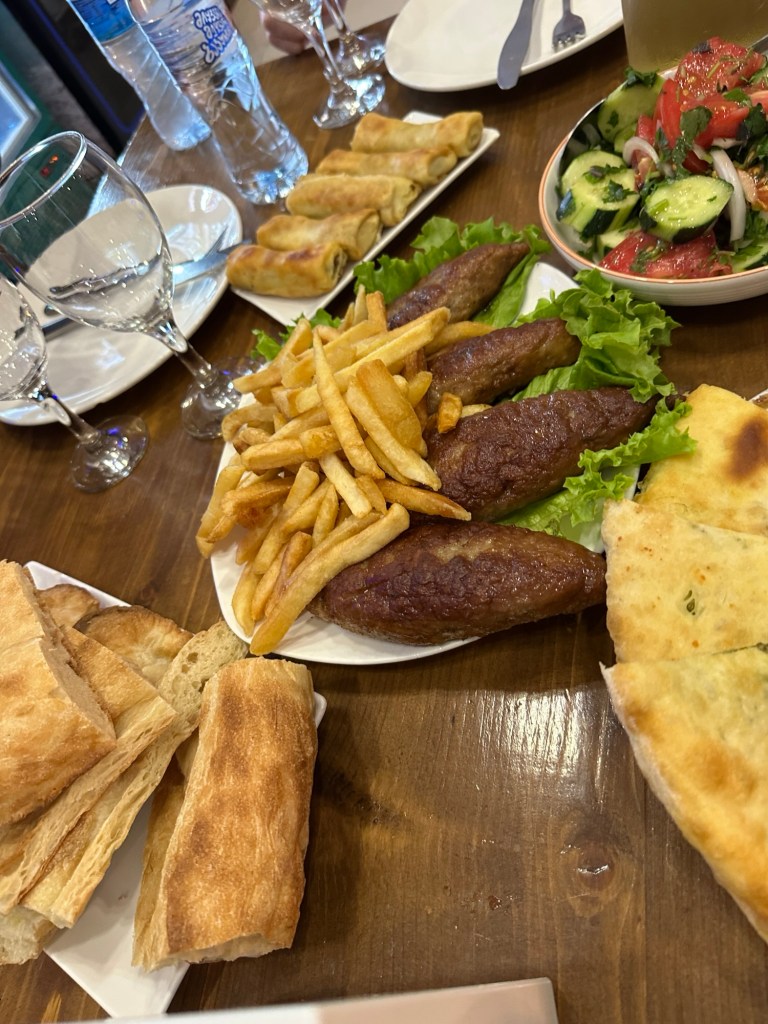
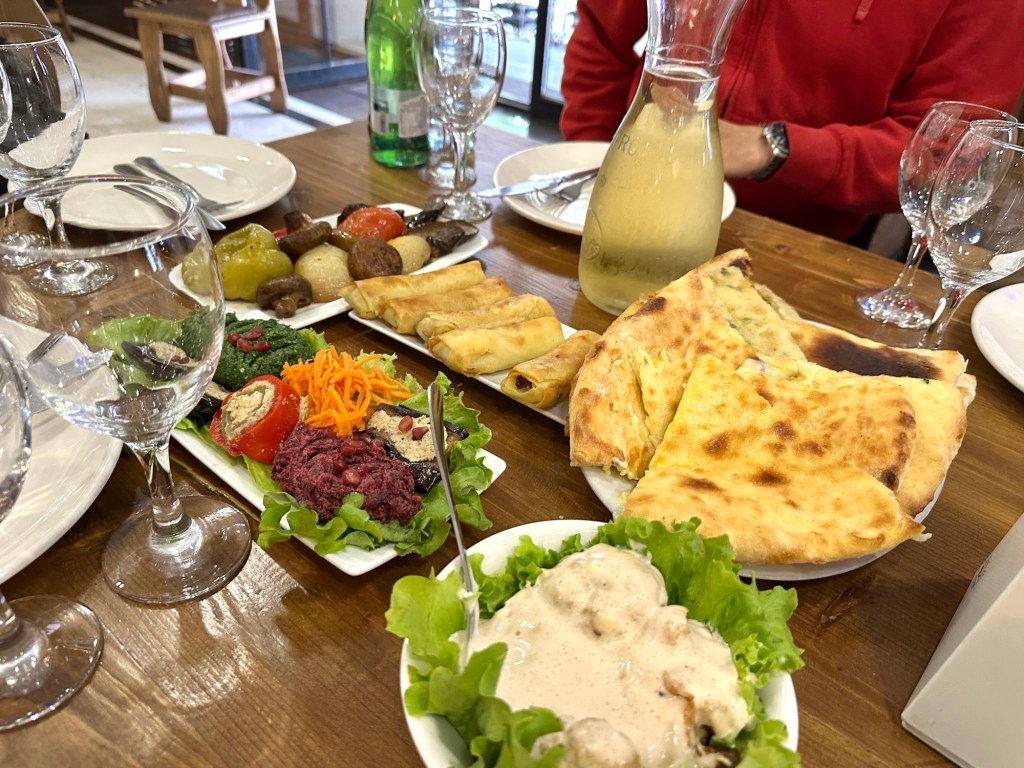
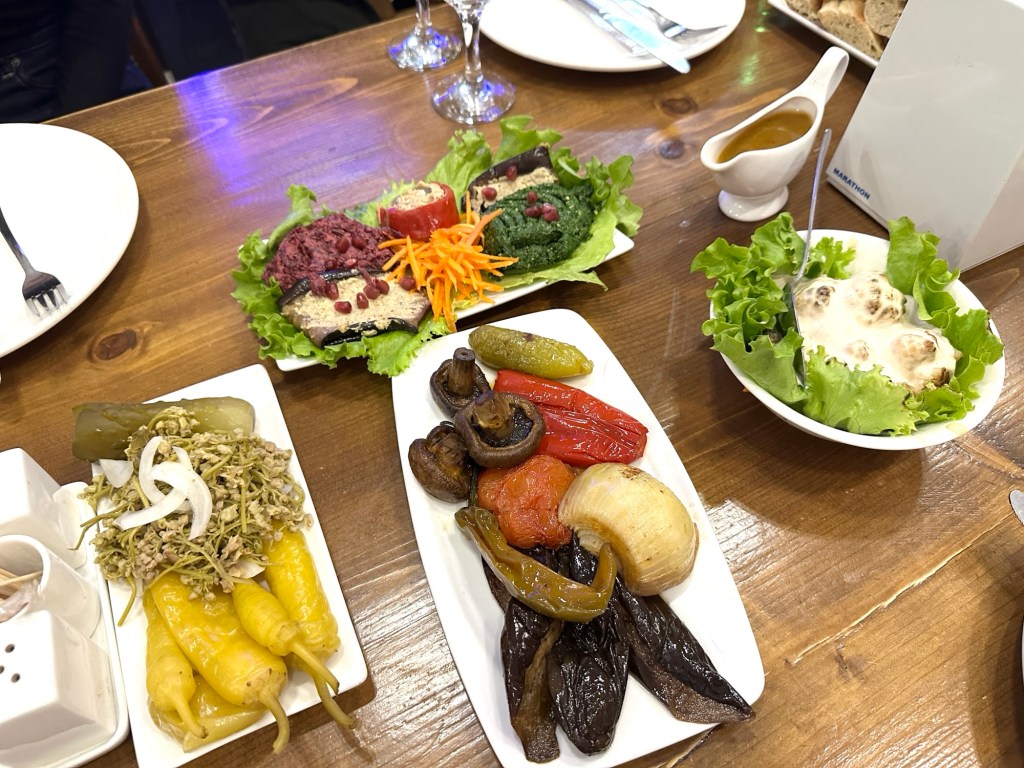
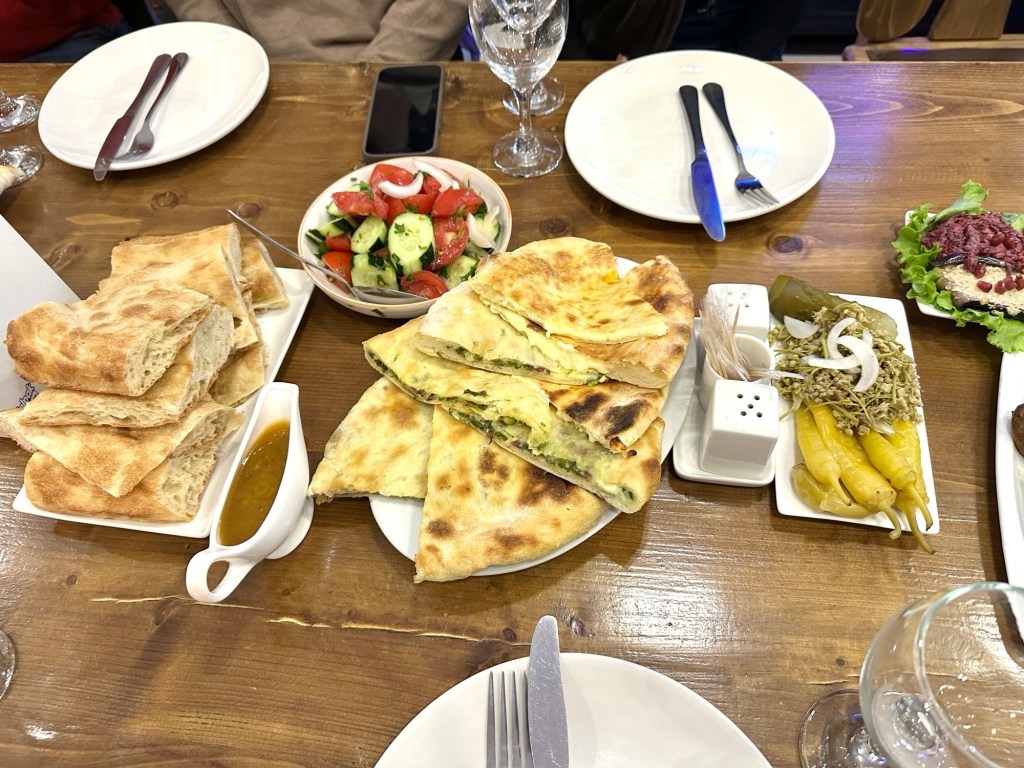
We are touring today with a larger group consisting of tourists from various different countries – including two other people from USA which I am finding rare when I travel to Eastern Europe. Because we are a larger group I enjoy an amazing spread of Georgian food at lunch time. Group meals such as these are ideal since I always find it challenging to getting a sample of local foods.
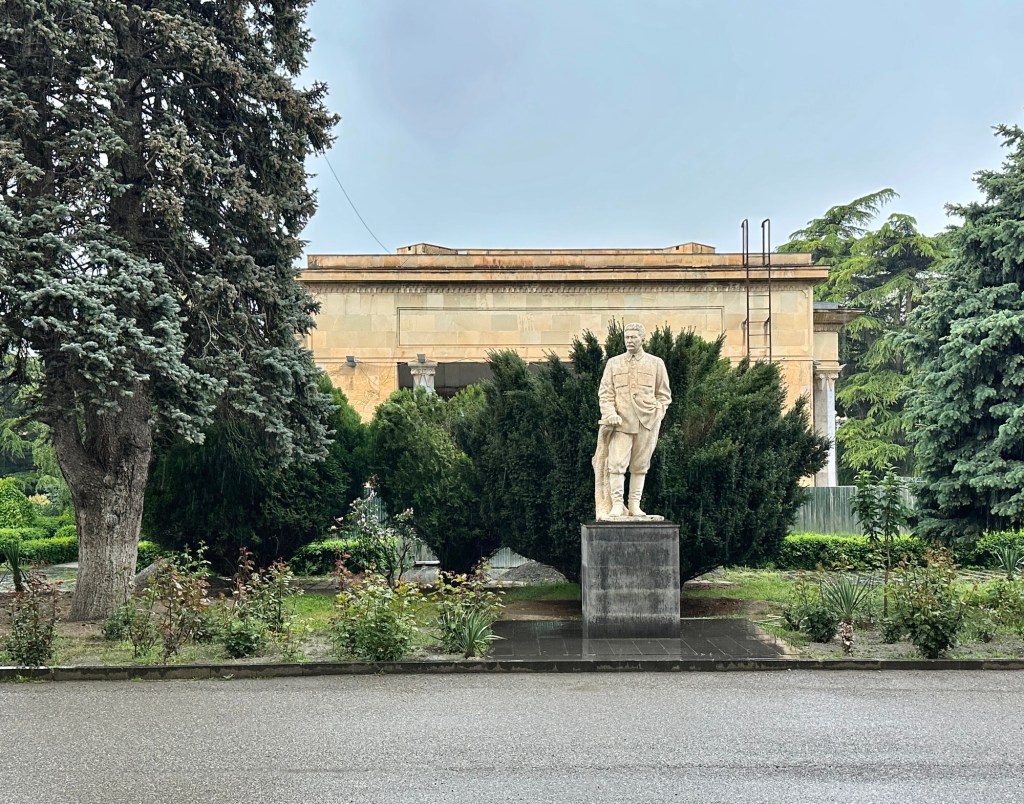
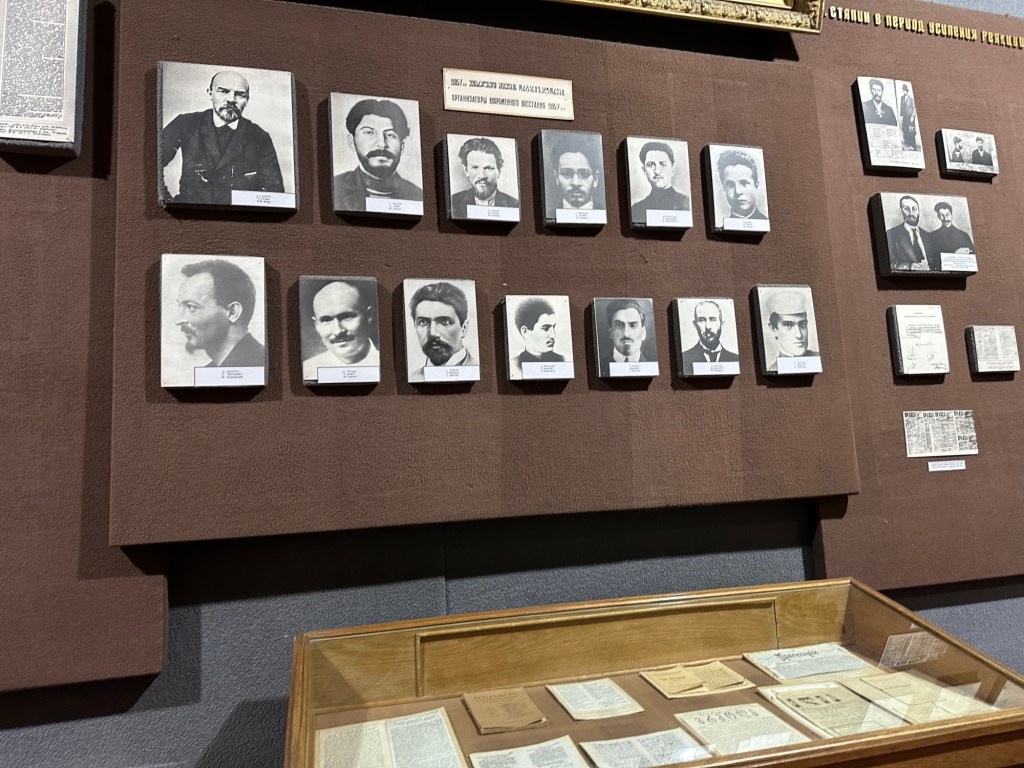
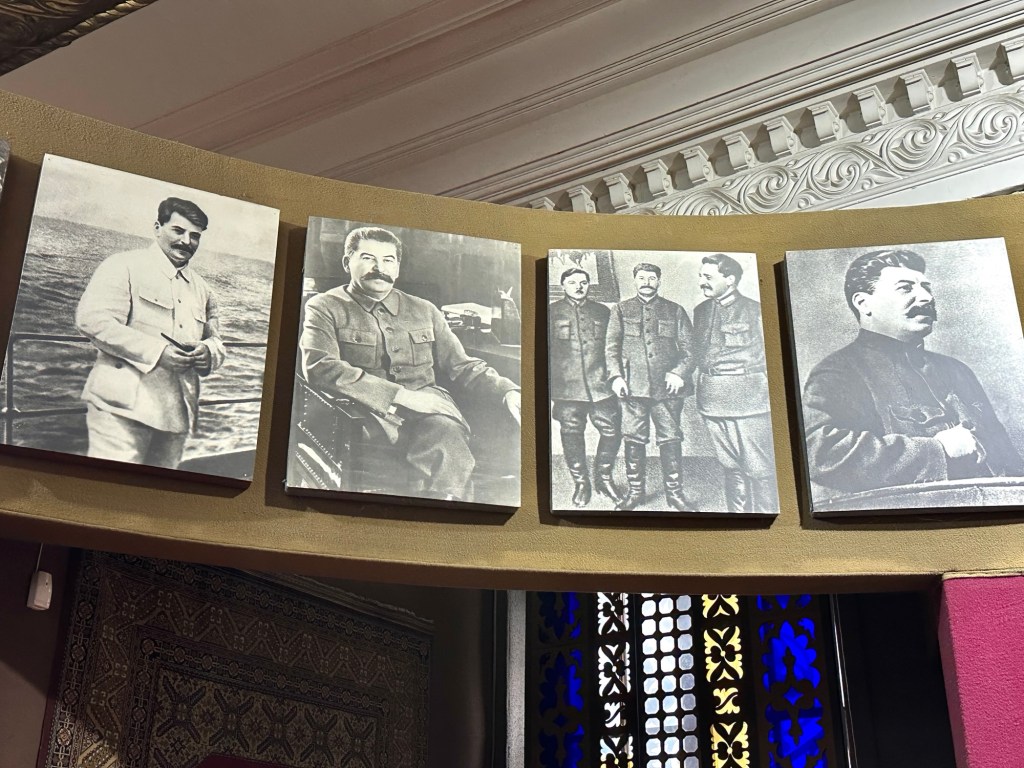
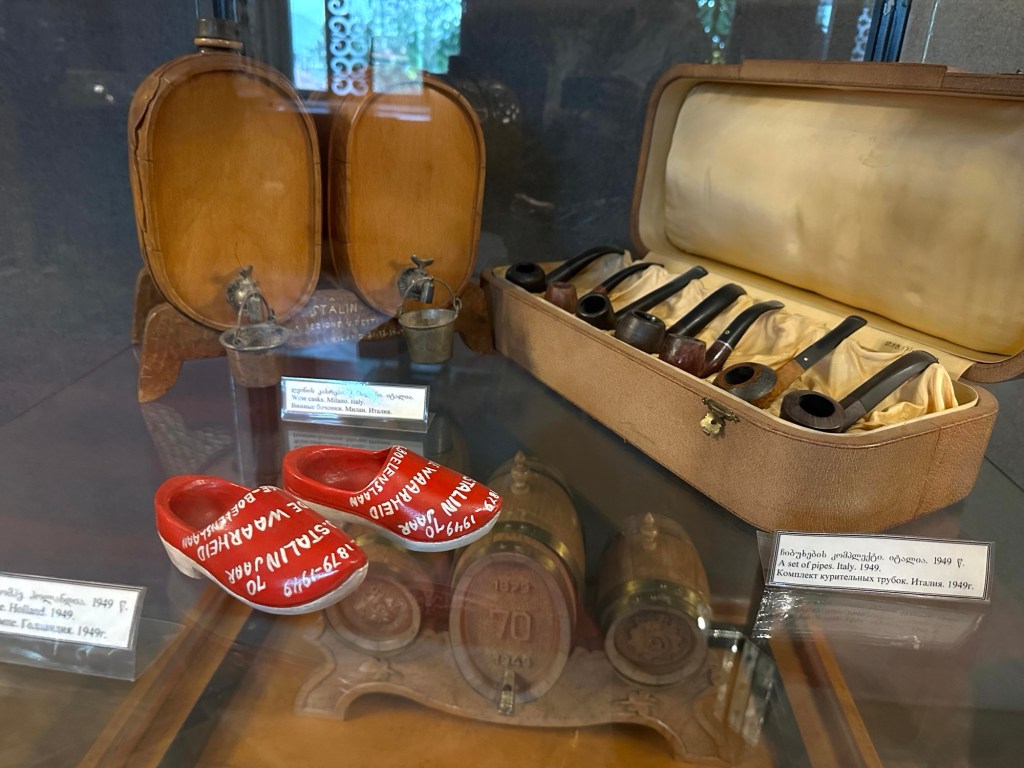
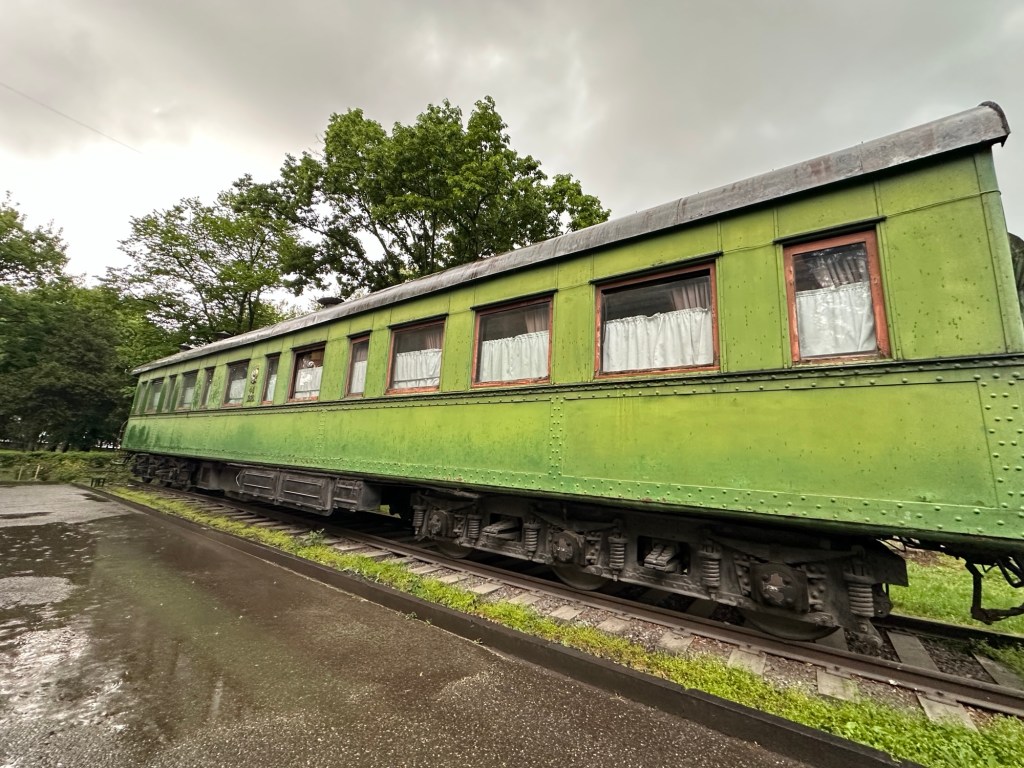
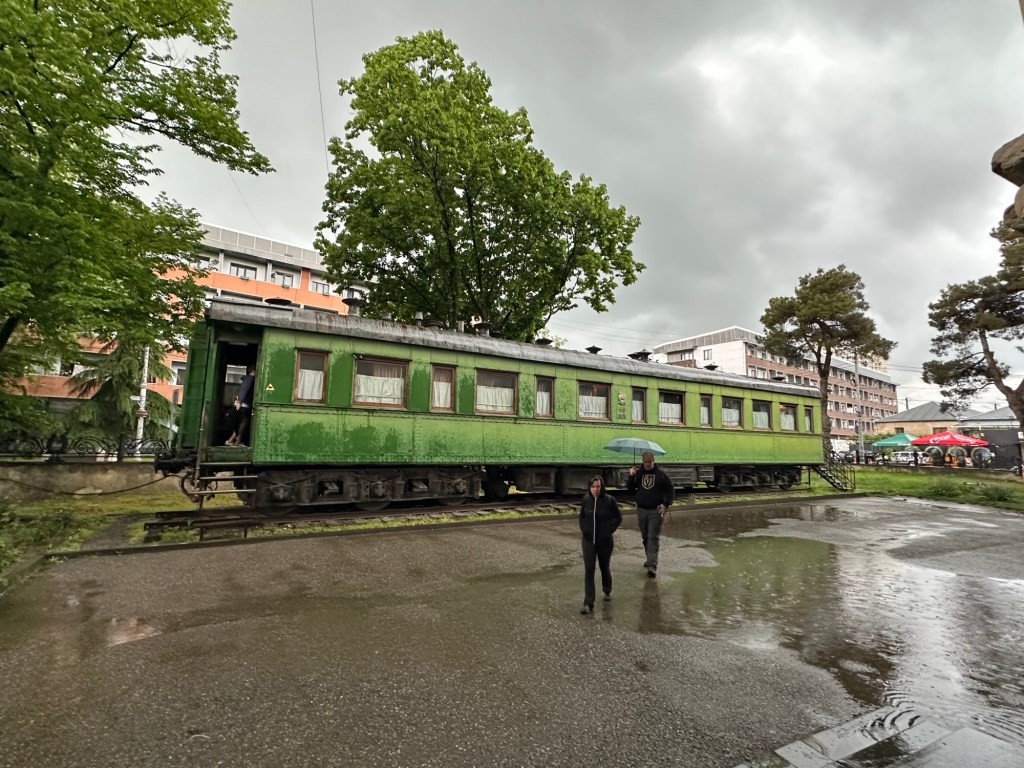
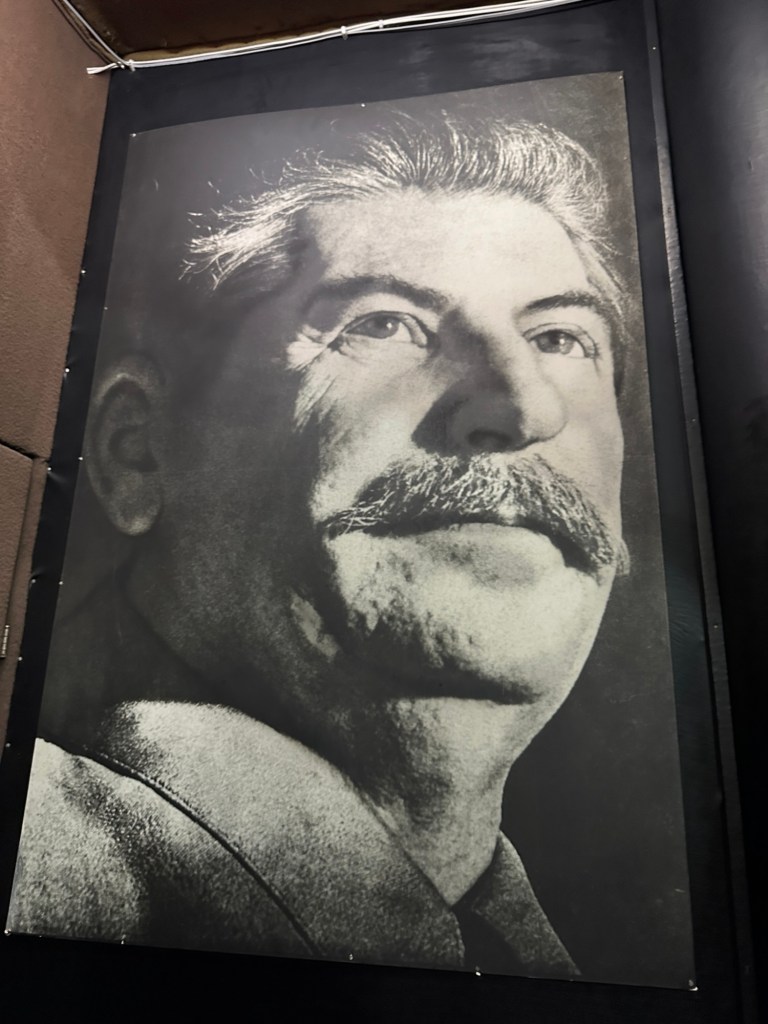
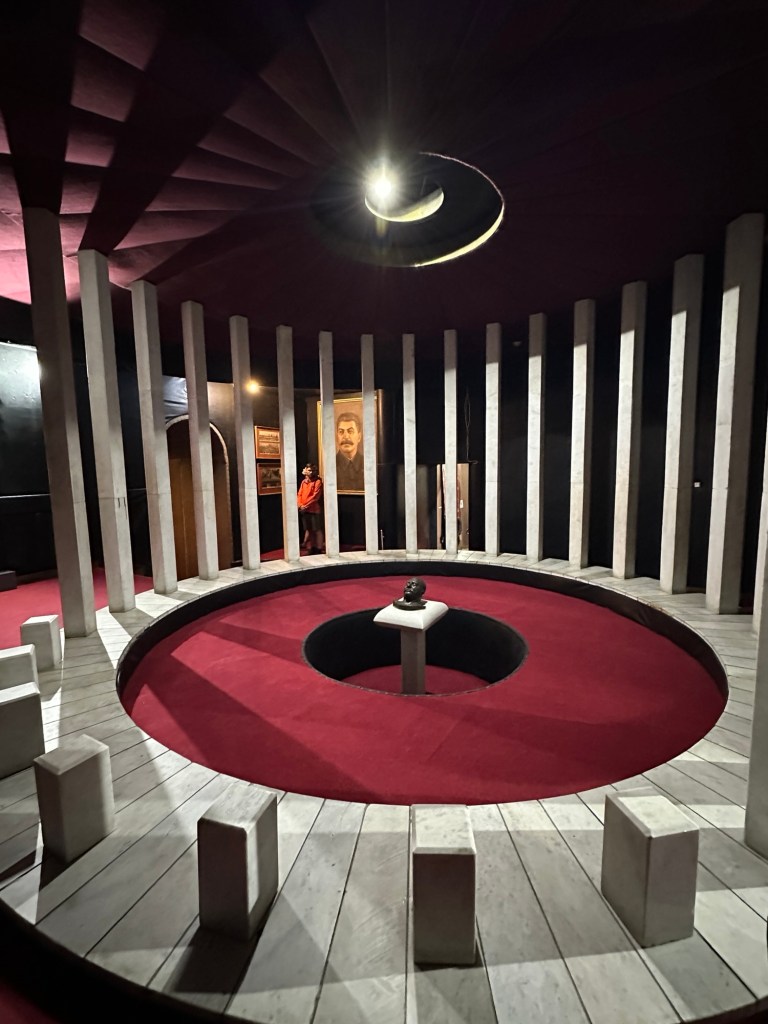
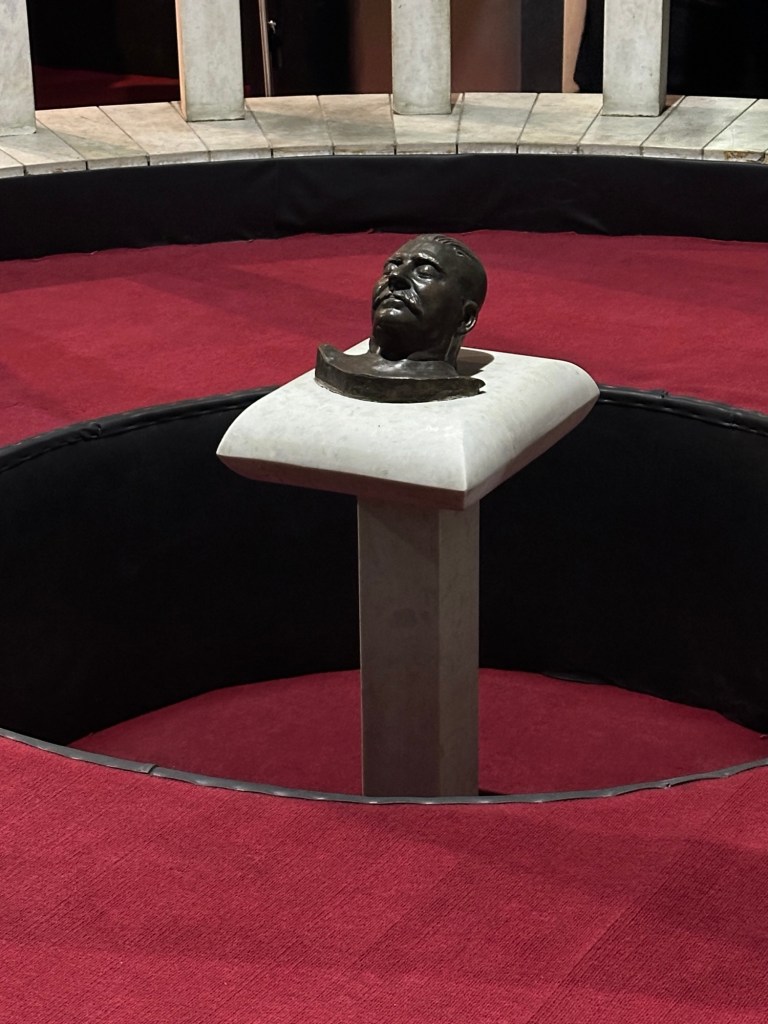
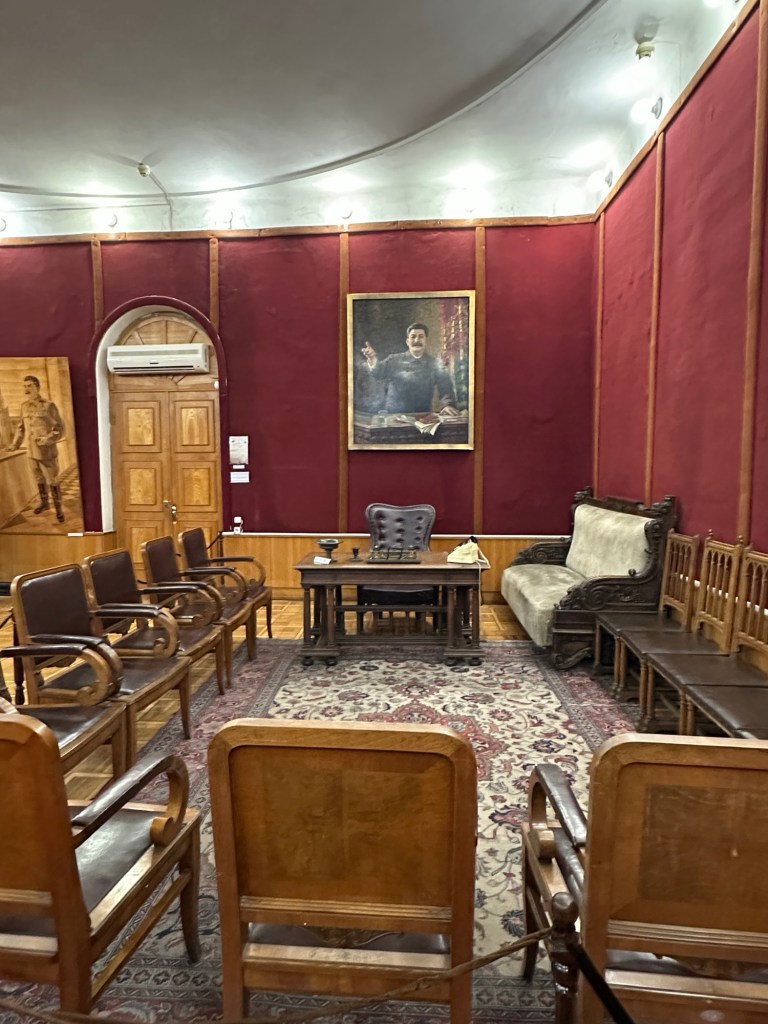
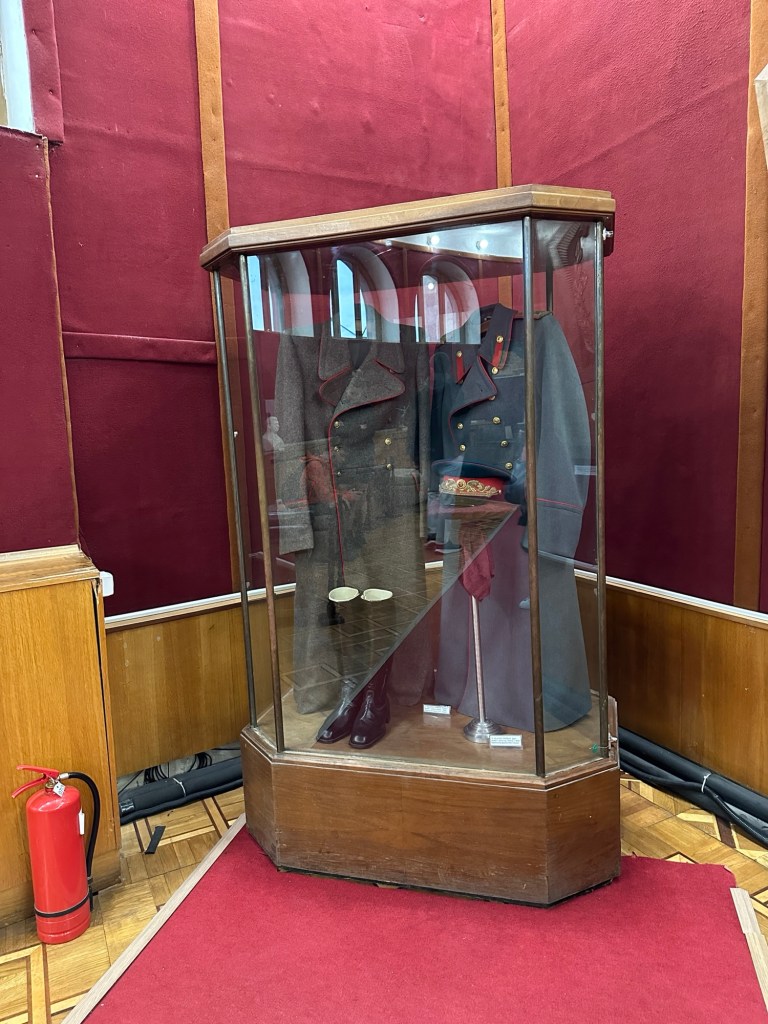
Our next stop is Gori and the Stalin museum. I was looking forward to this stop because I have been really interested in history lately but it turns out to be more of a memorial to the guy. Luckily our guide is able to fill in all the details that are left out of the museum.
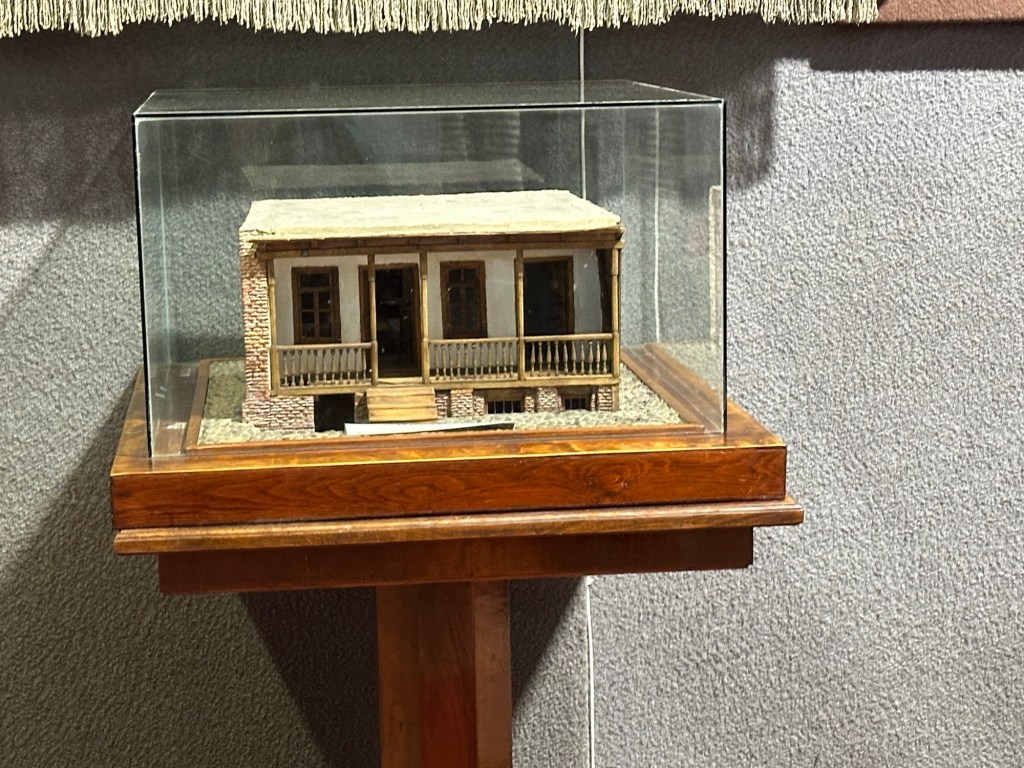
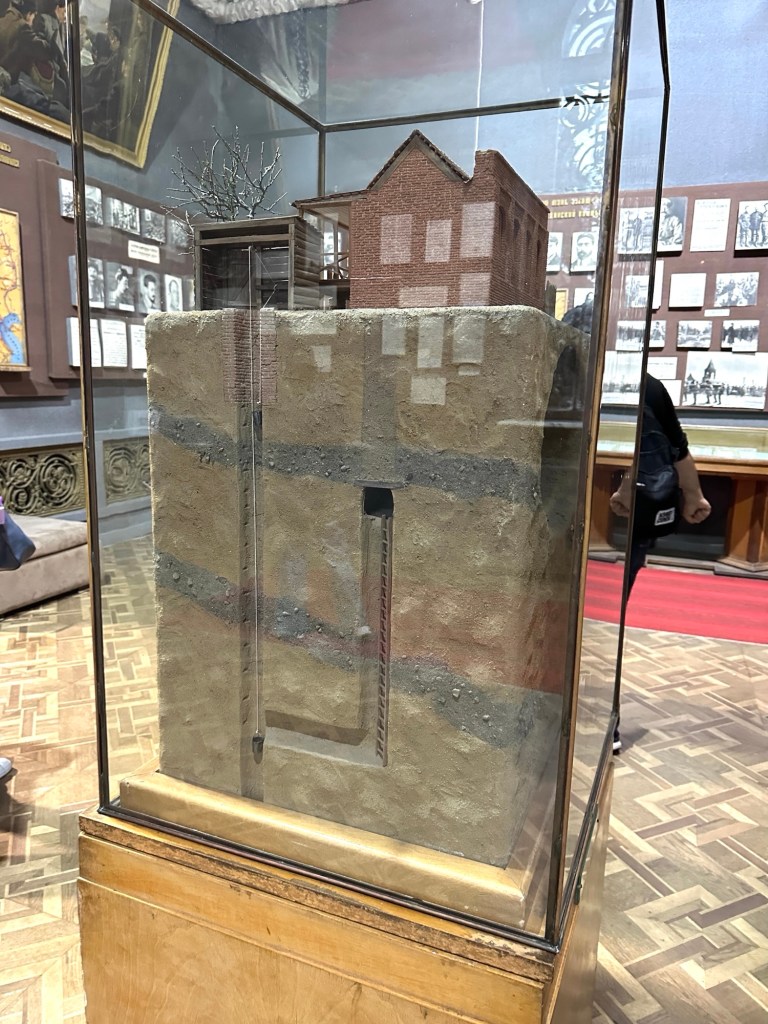
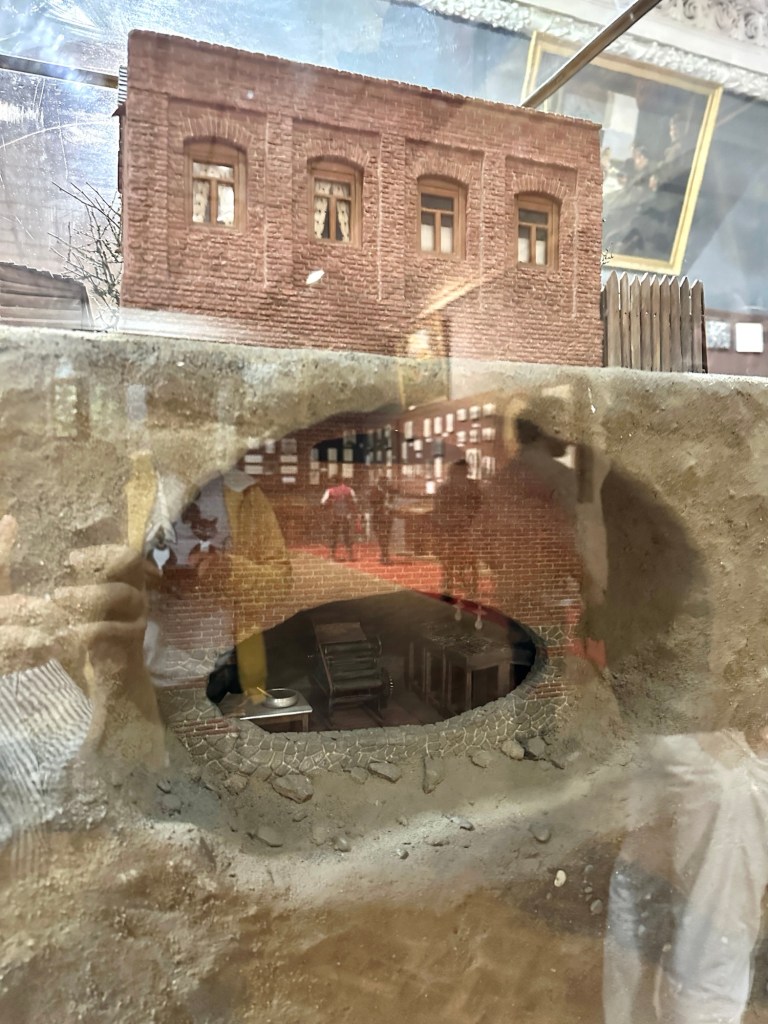
Joseph Stalin is from Georgia but later went on to be the leader of the Soviet Union after Lenin died. Like I said the museum was mostly missing many of of the horrific details of his life but you do get a slice of information of how his early life was. There is a model of the house he lived in where tunnels where dug below to hold a secret area for political dissidents to meet and distribute communist propaganda.
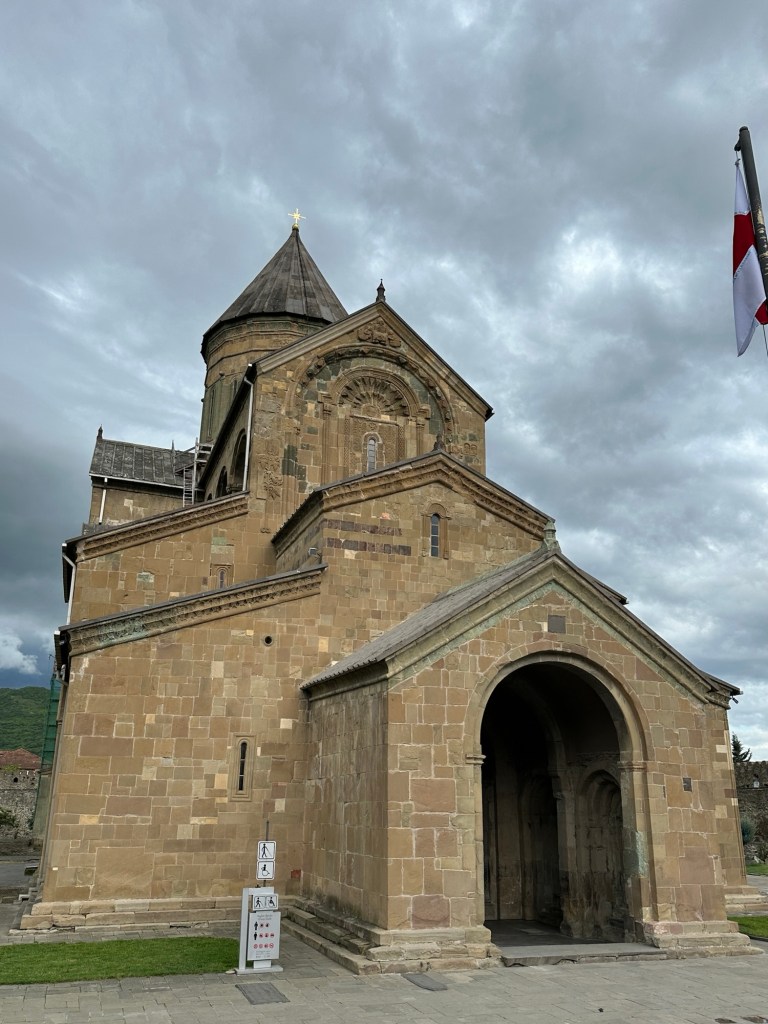
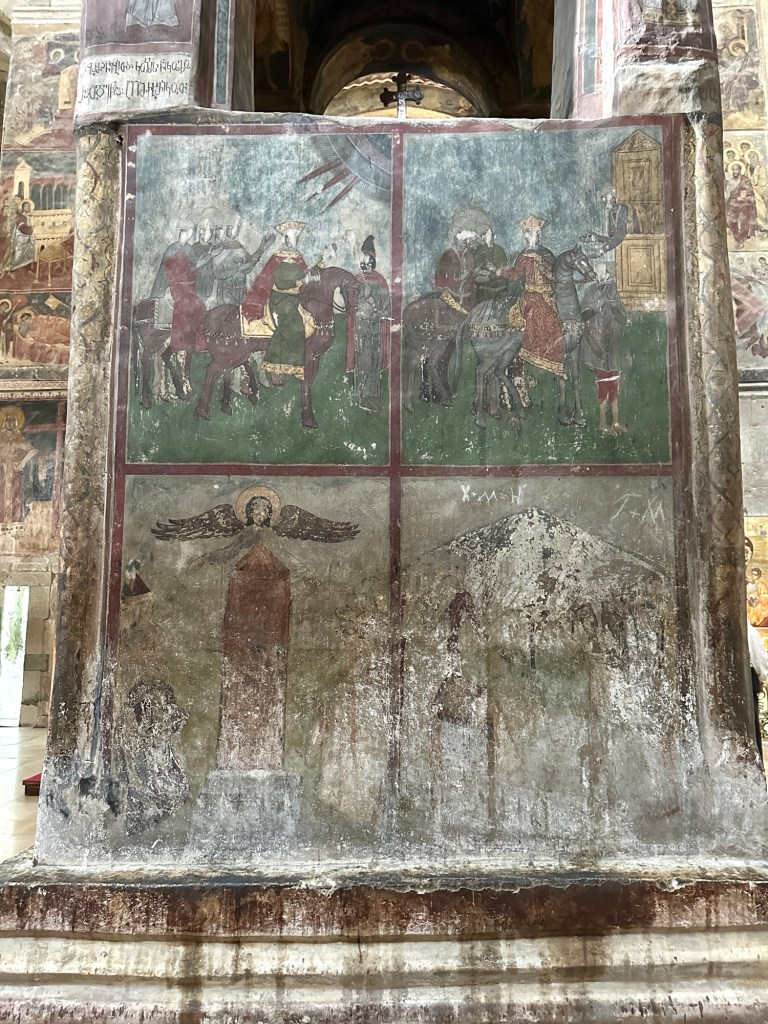
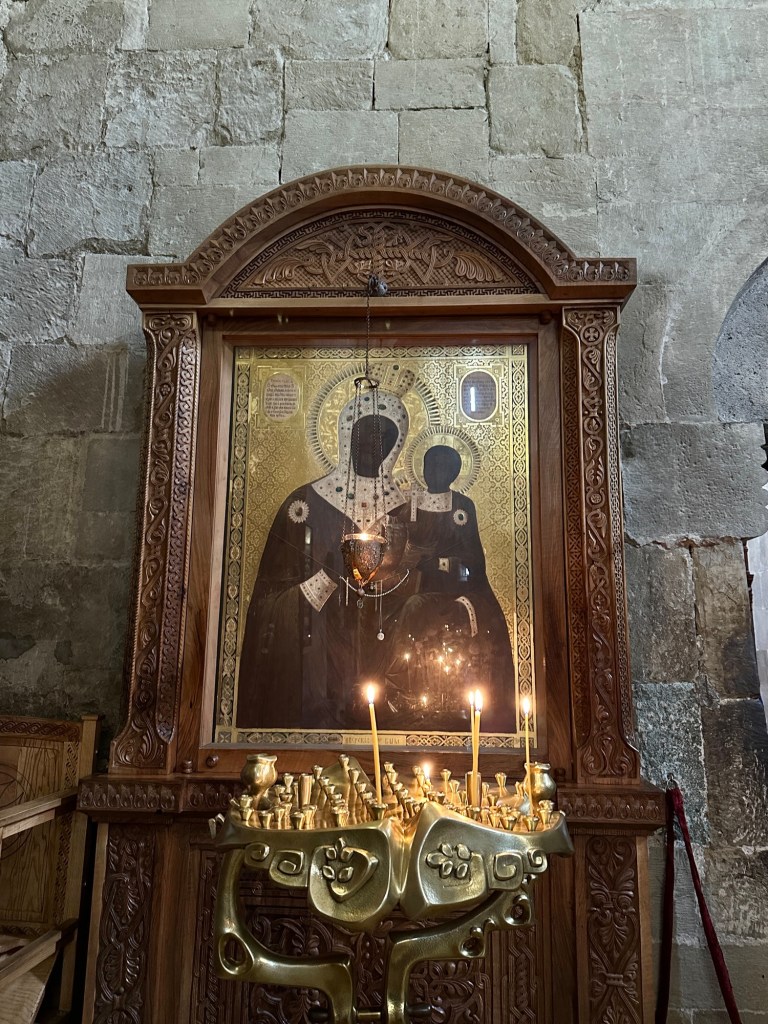
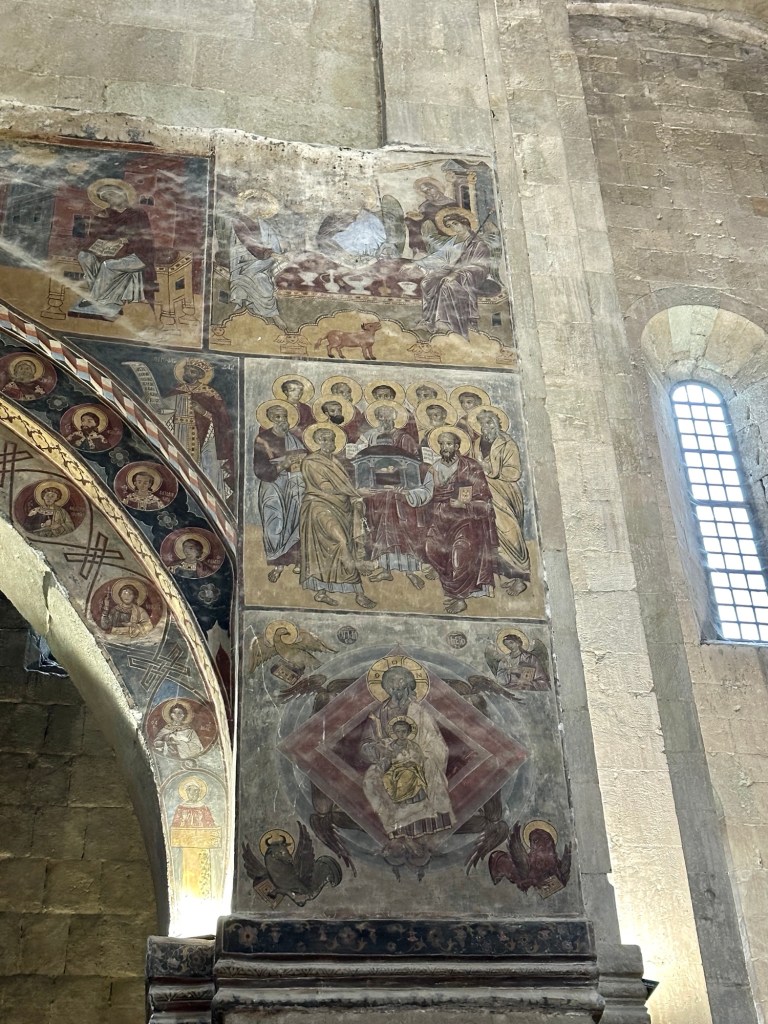
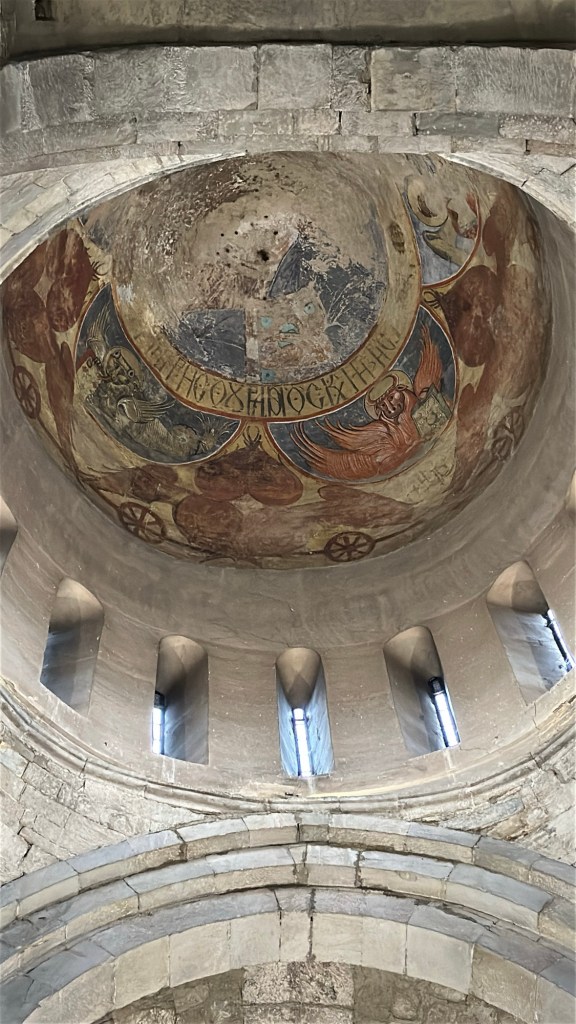
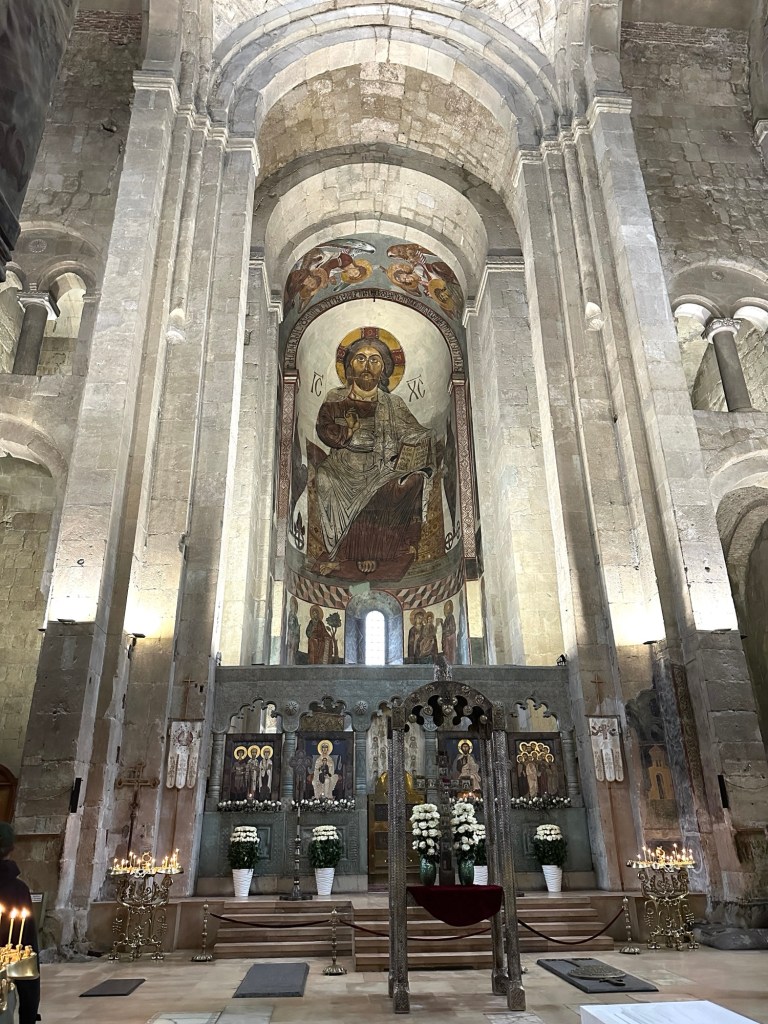
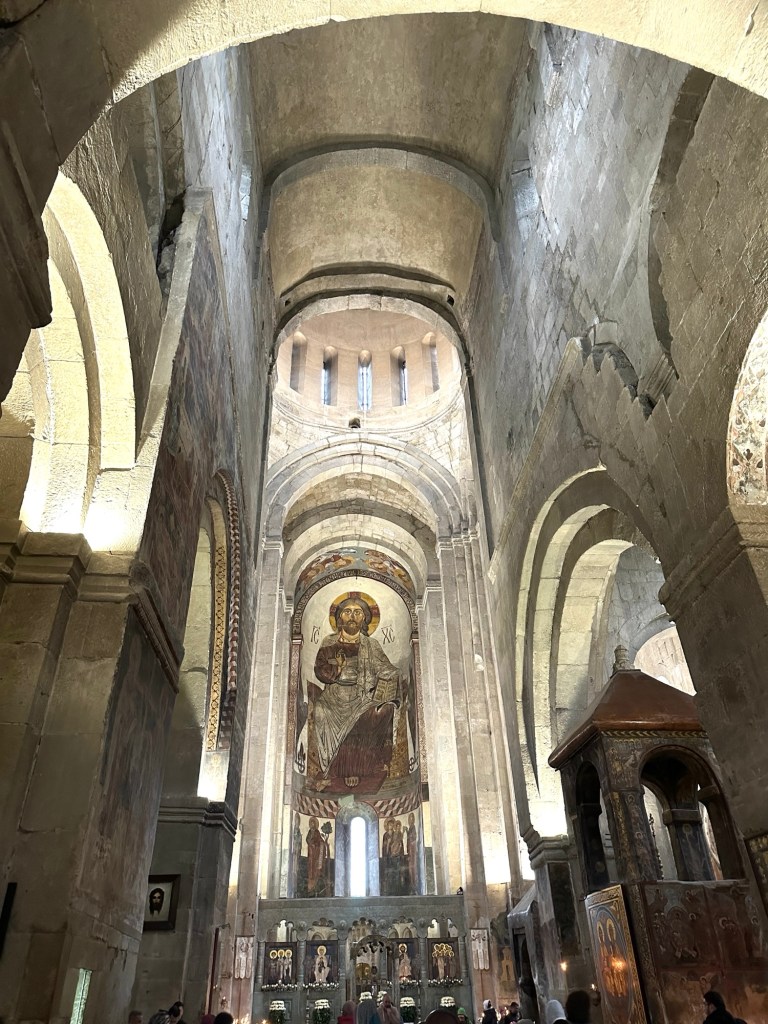
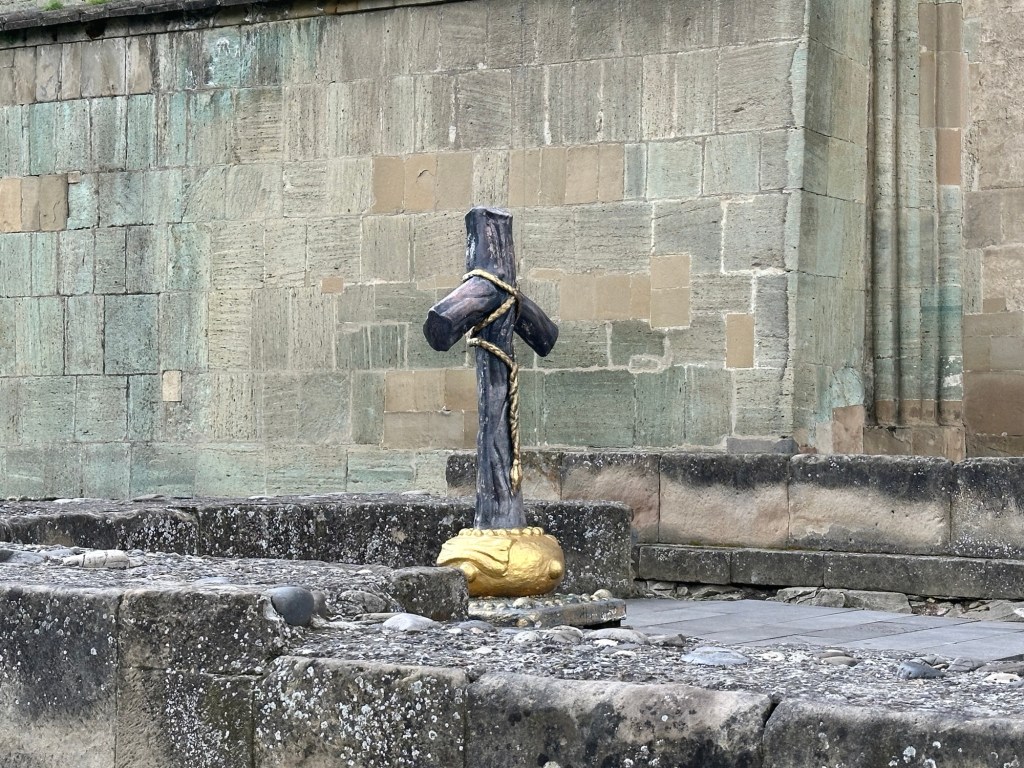
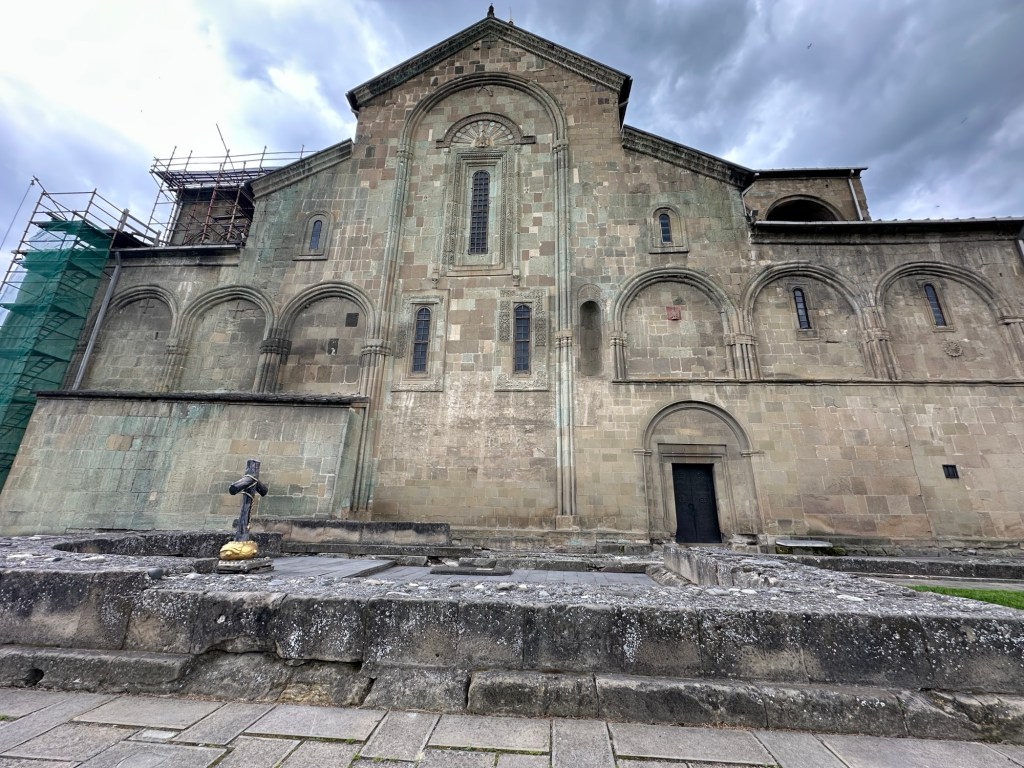
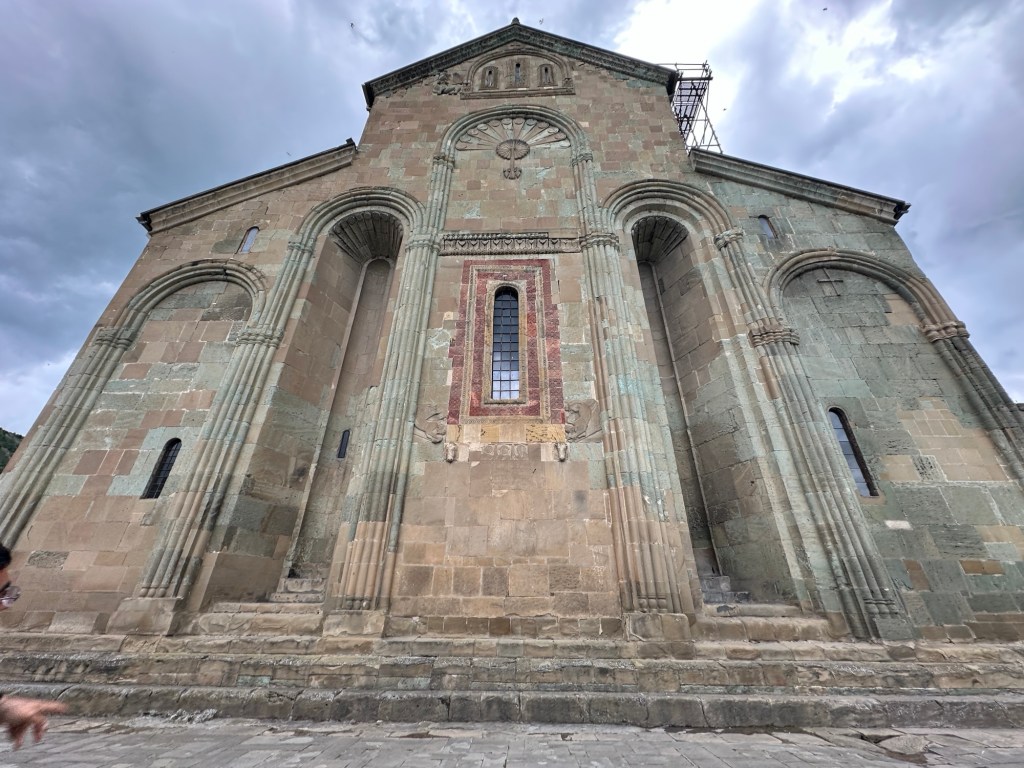
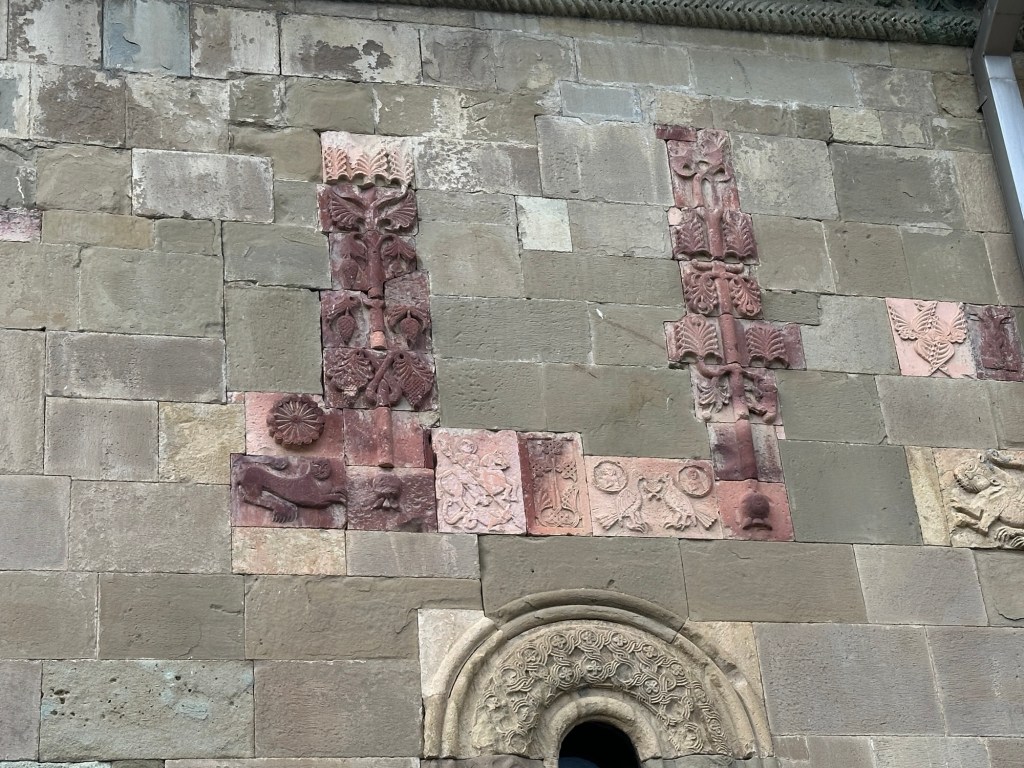
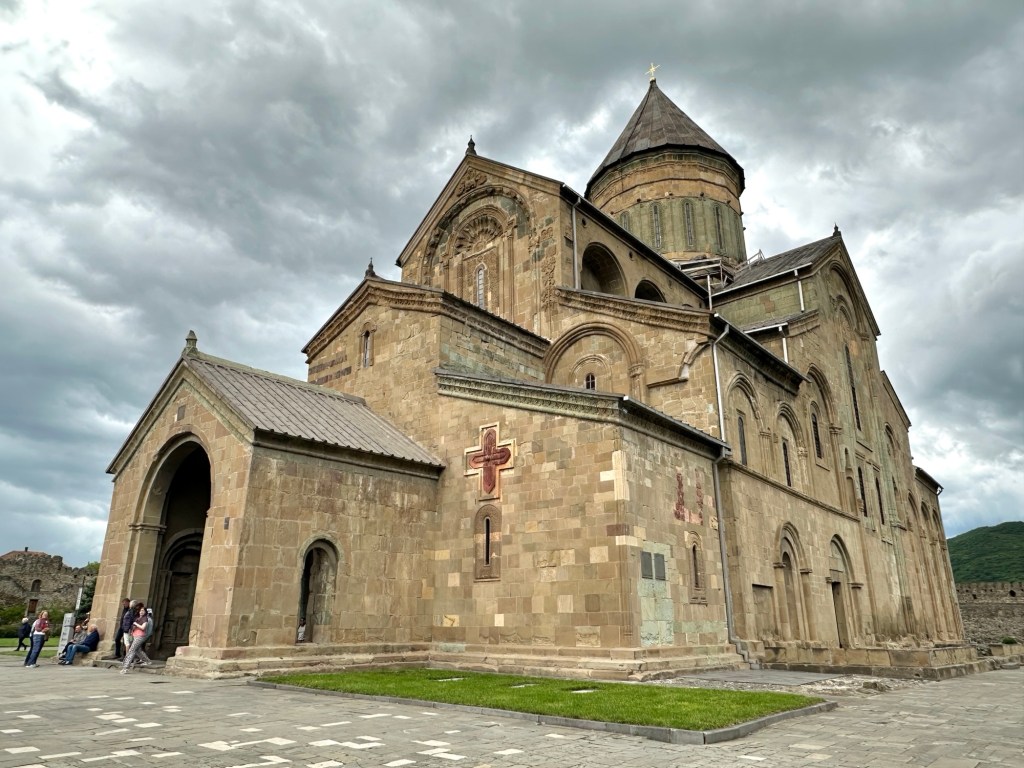
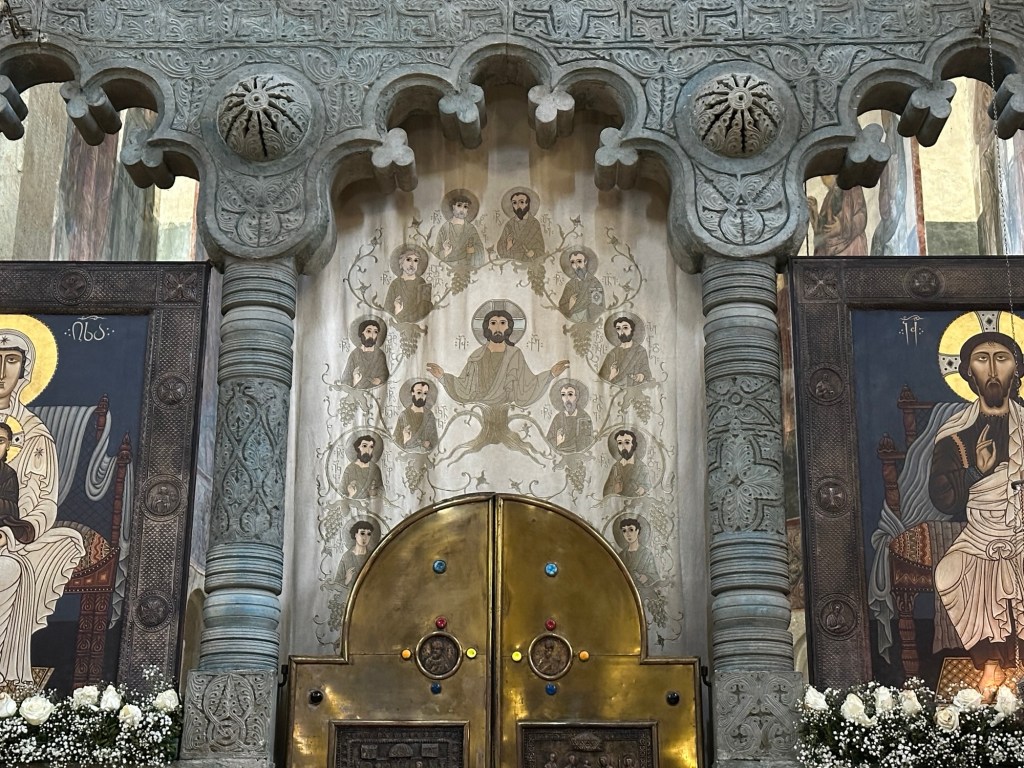
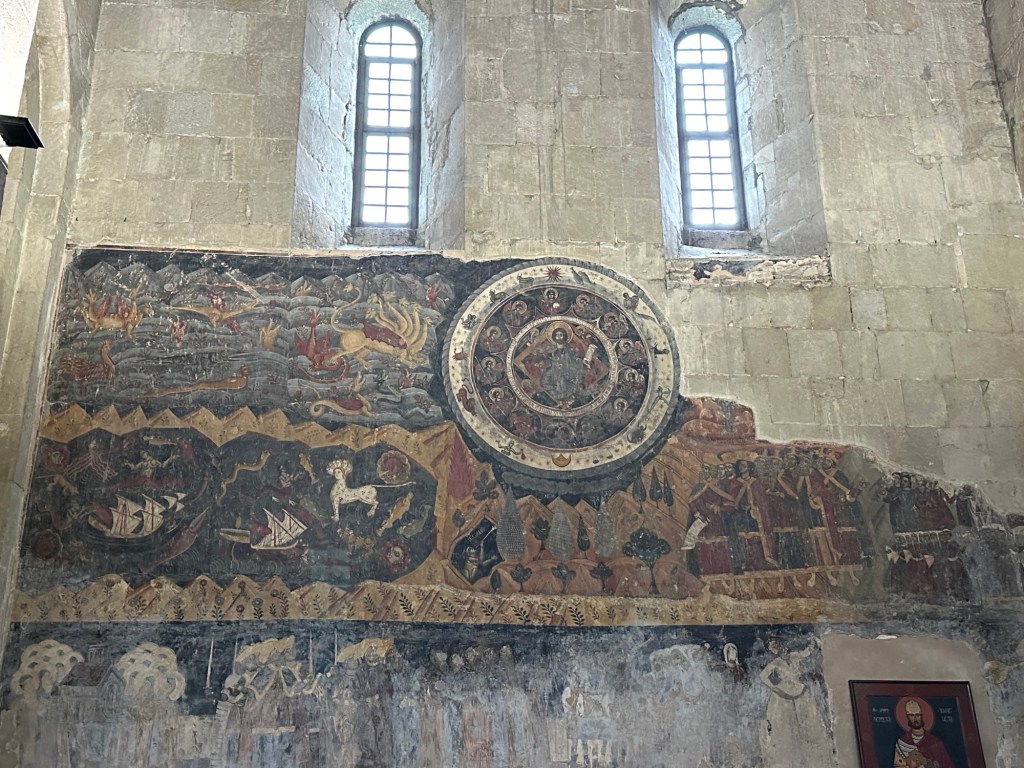
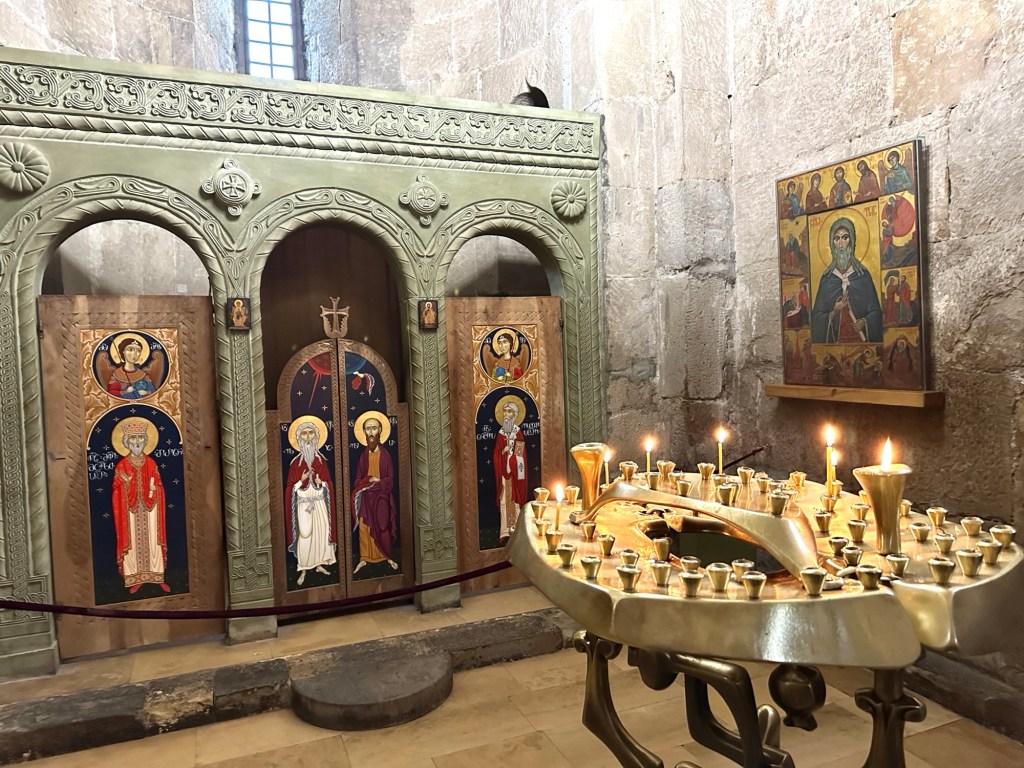
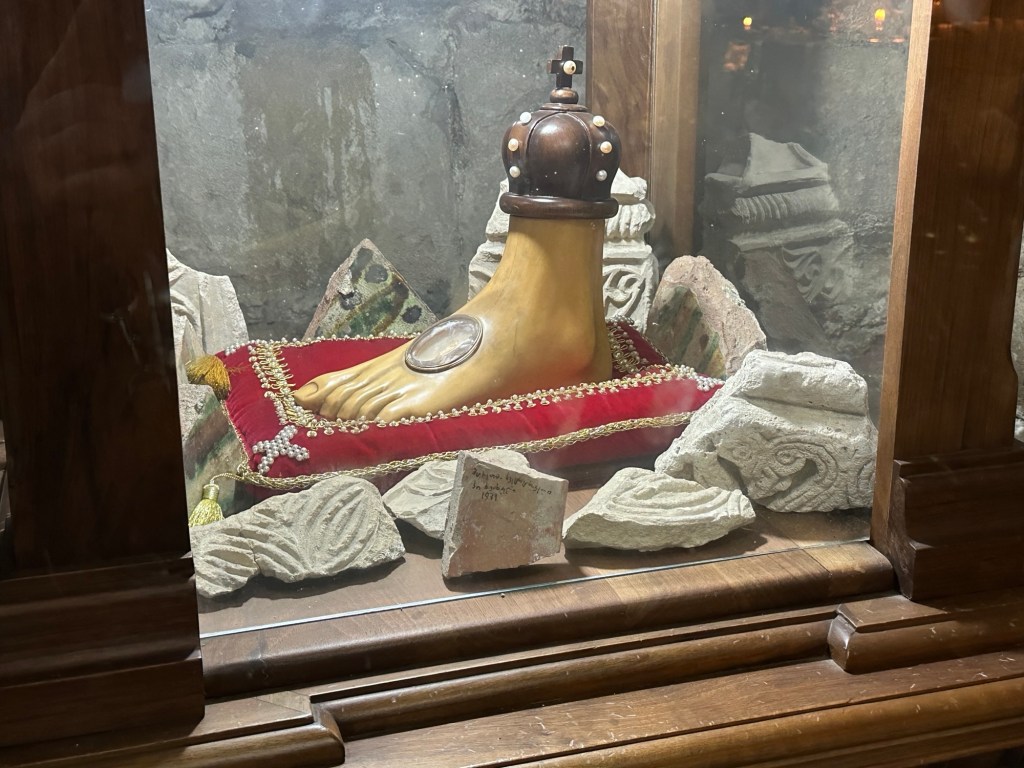
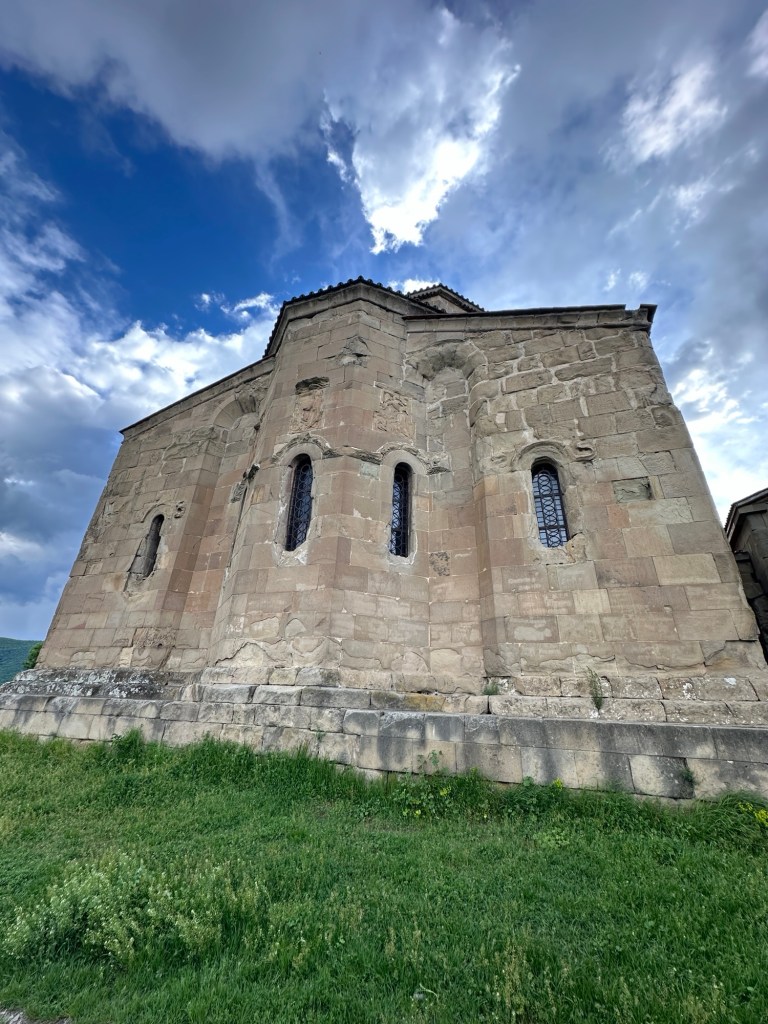
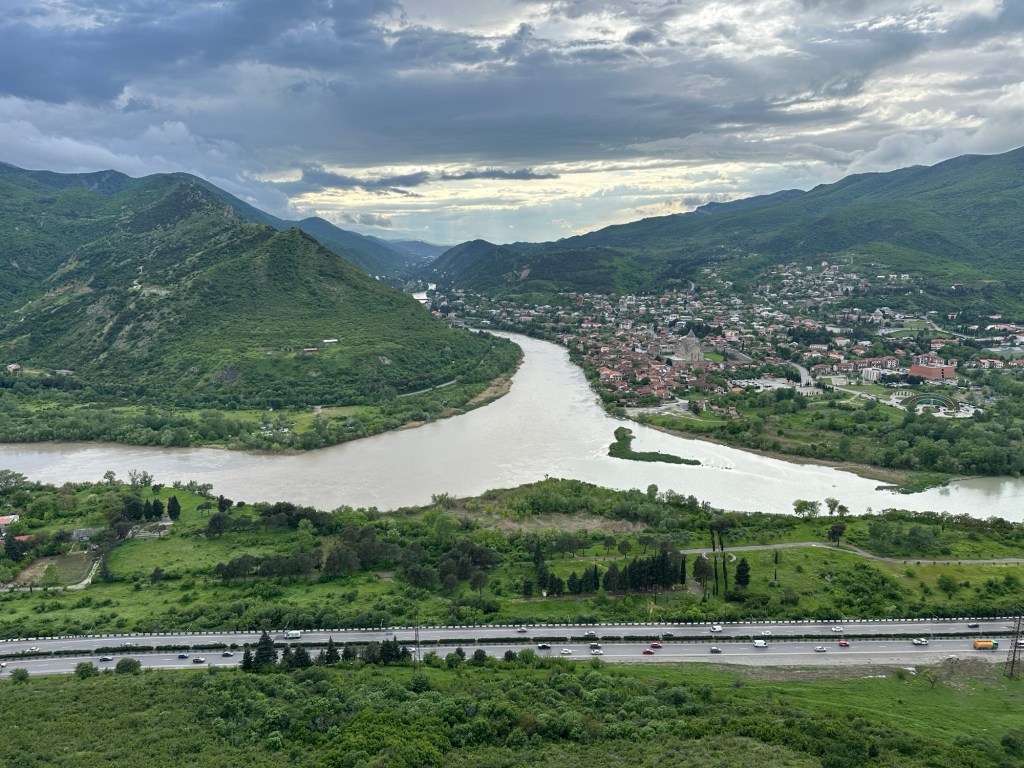
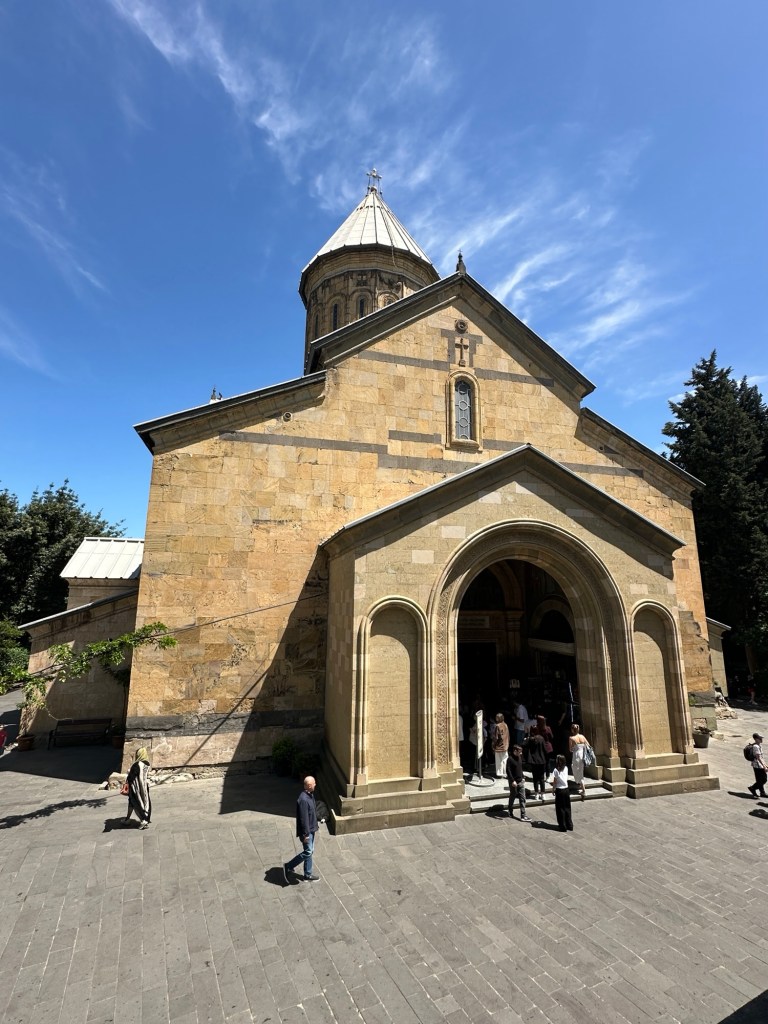
We stop at Mtskheta and visit both the Svetitskhoveli Cathedral and Jvari monastery. Svetitskhoveli Cathedral is an UNESCO site where the original church was built on the site in the 4th century. Its claim to fame is that it has a piece of Jesus’s robe buried with a woman here. There’s a whole lore about it.
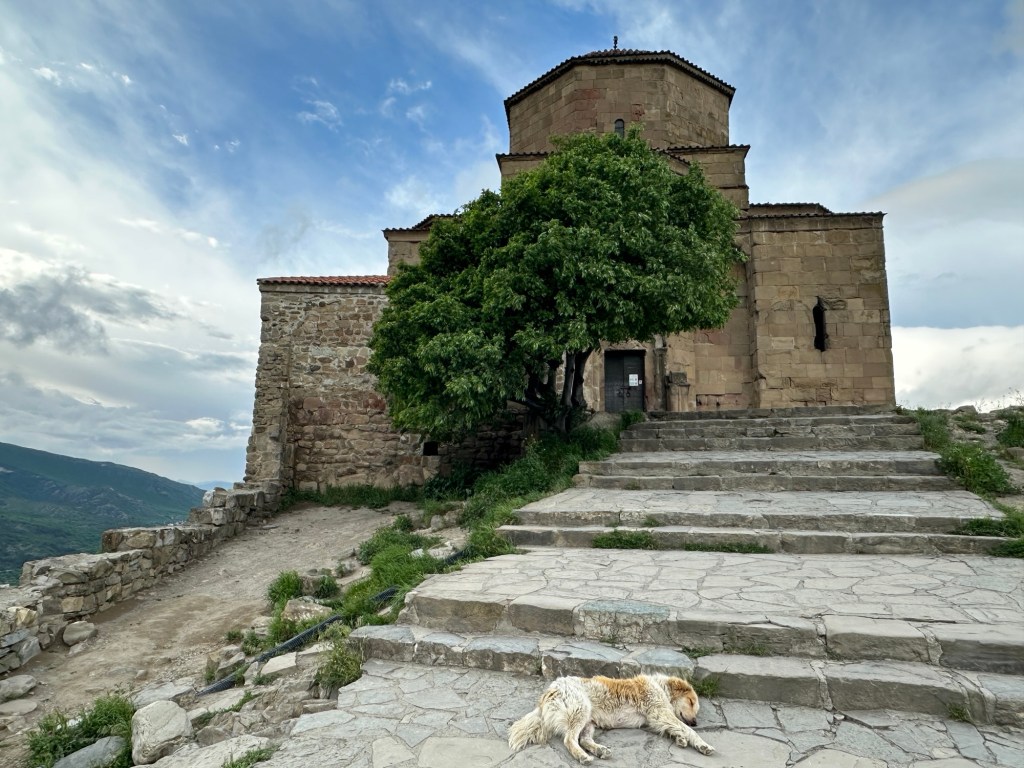
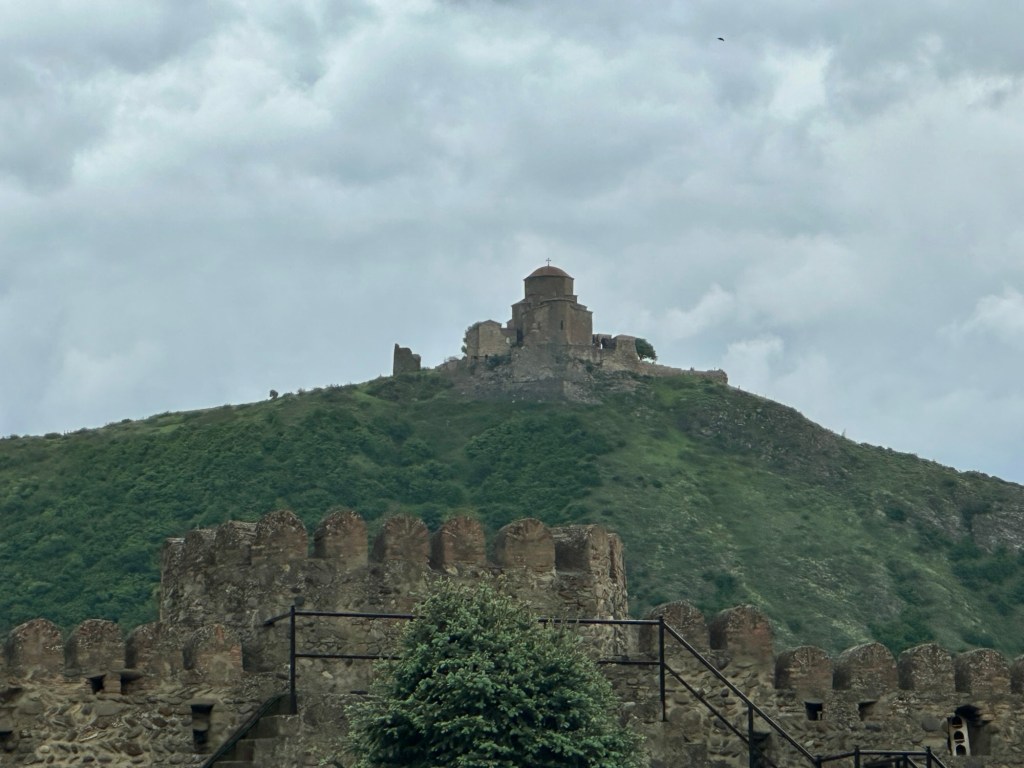
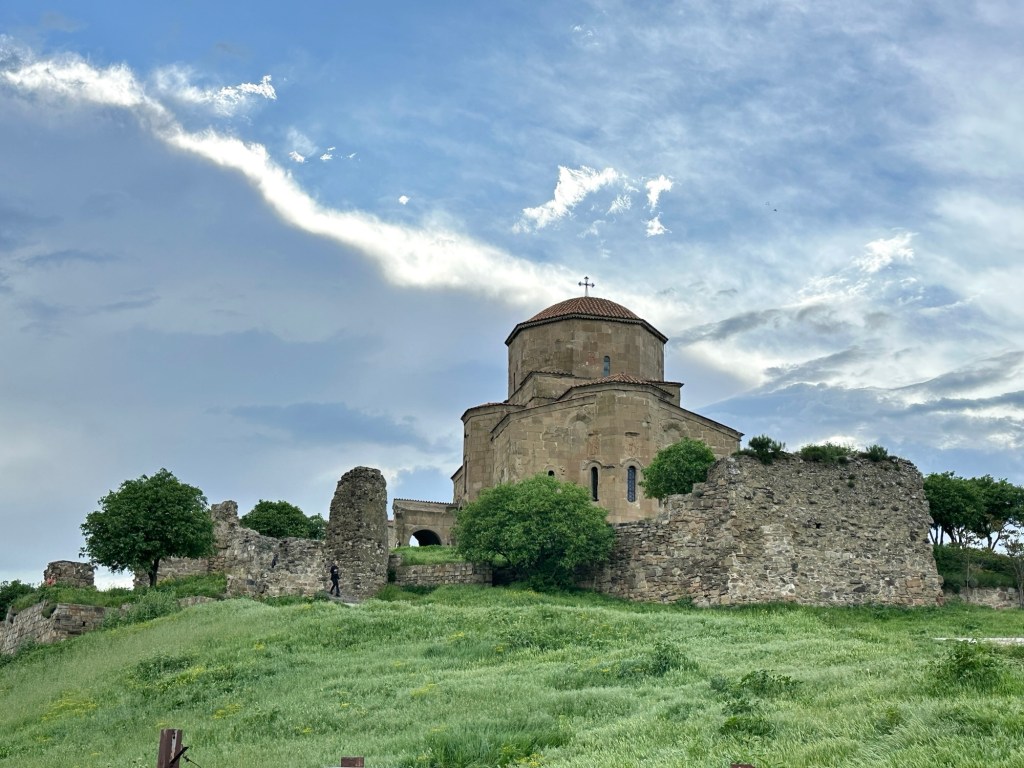
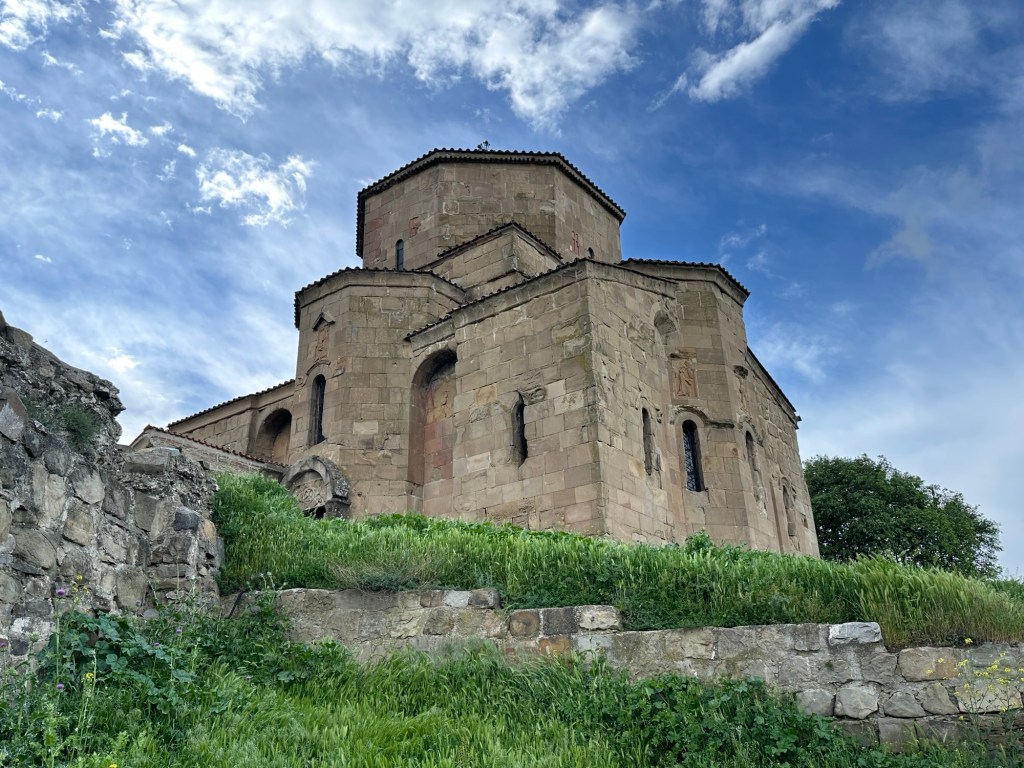
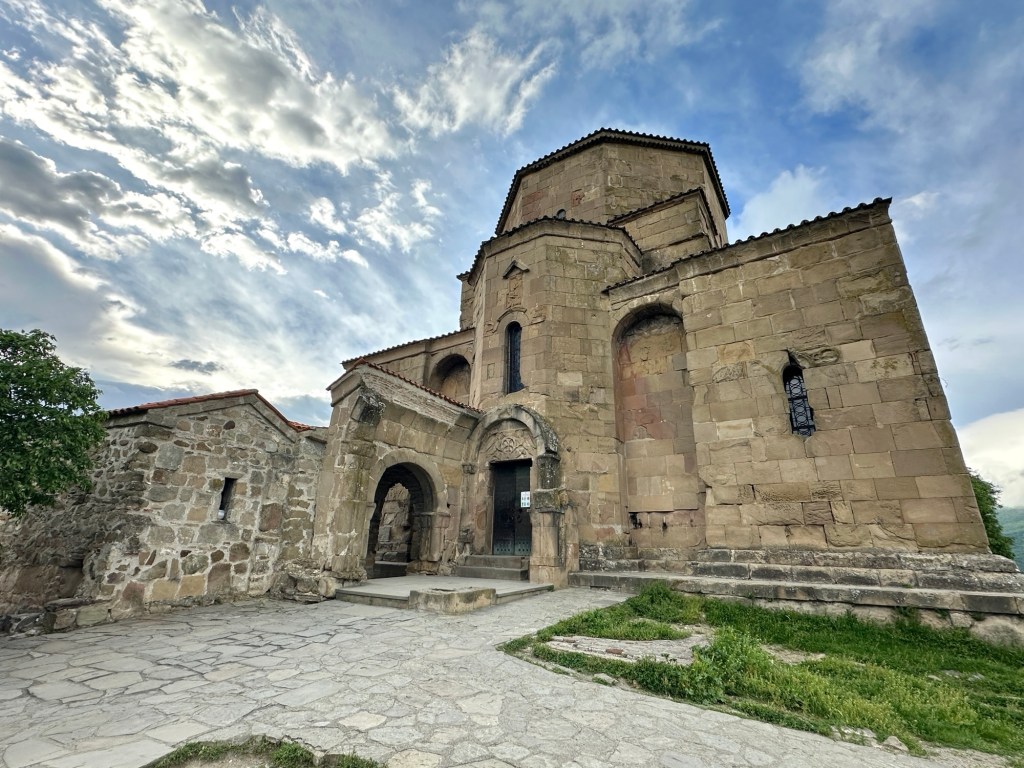
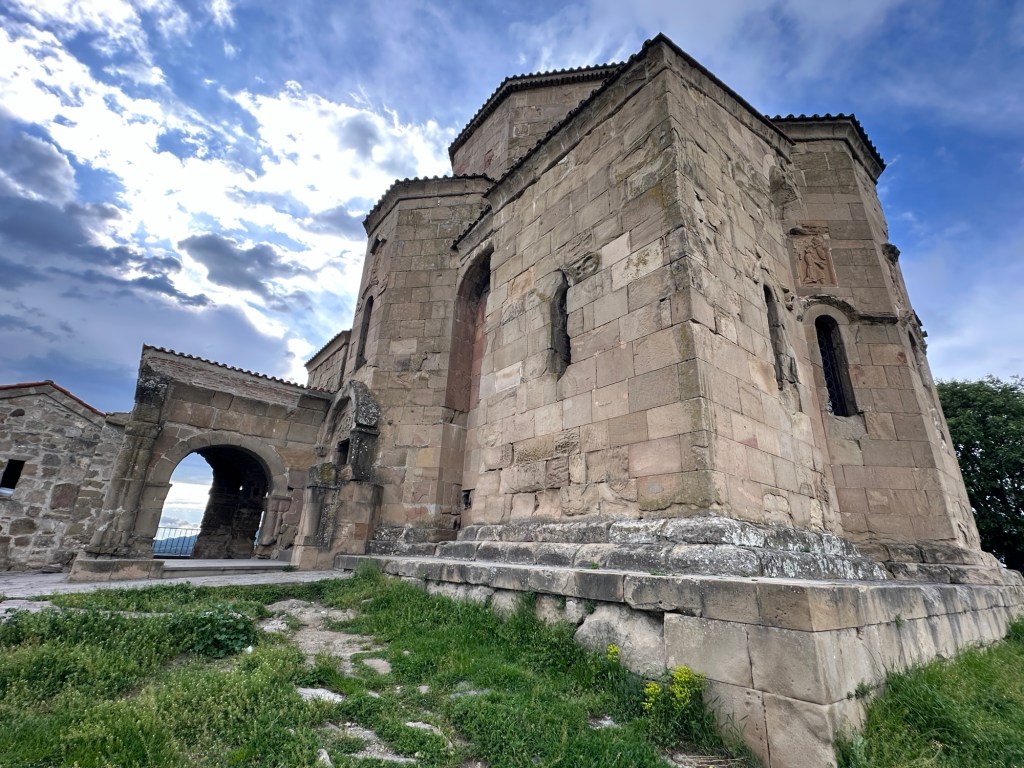
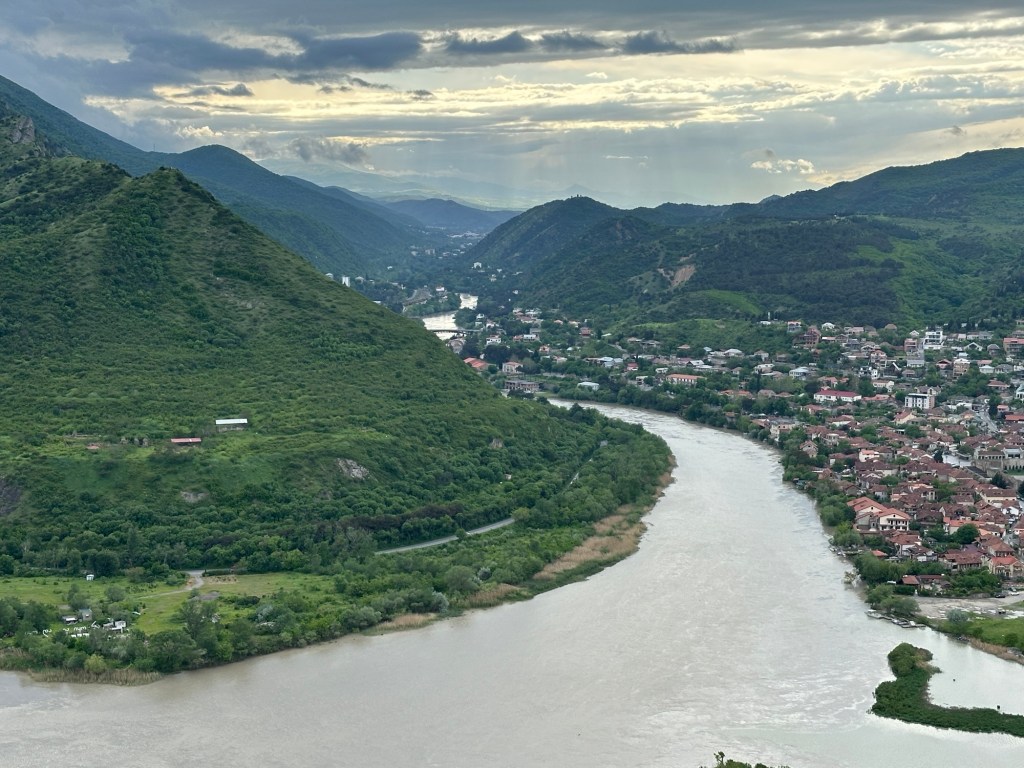
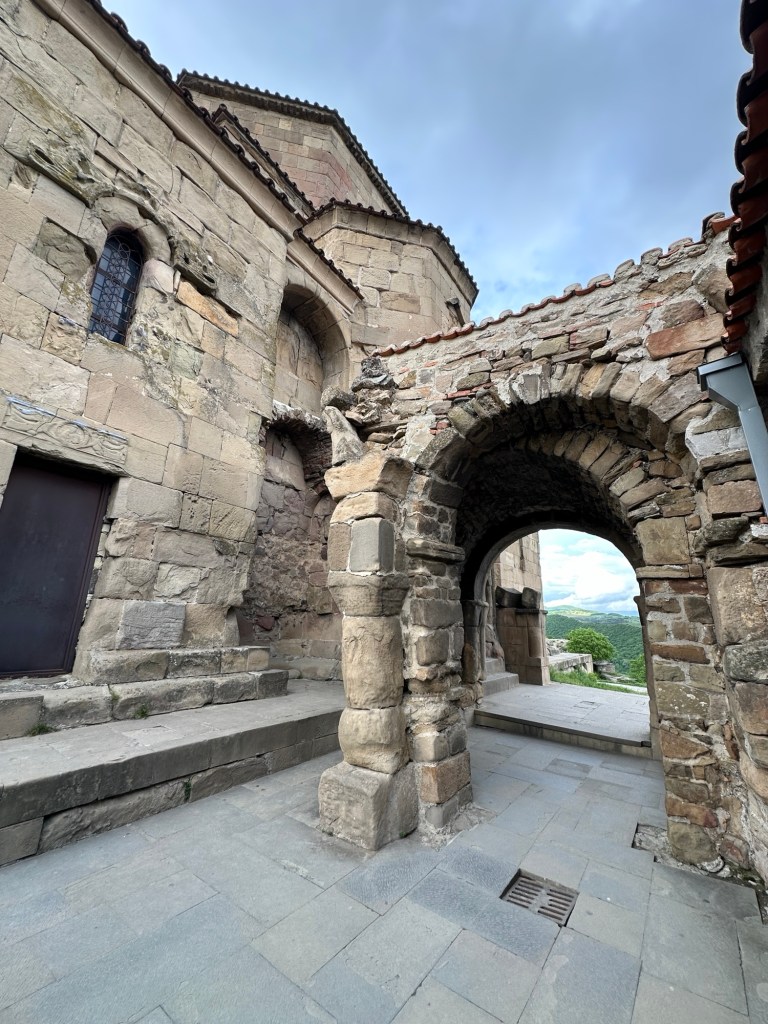
Our last stop is Jvari Monastery, a 6th century medieval church, with its breathtaking views of the rivers below. This UNESCO church designated a style of church development, Jvari style. We have missed the opening hours of the church but we are told there is not much to see inside anyway.
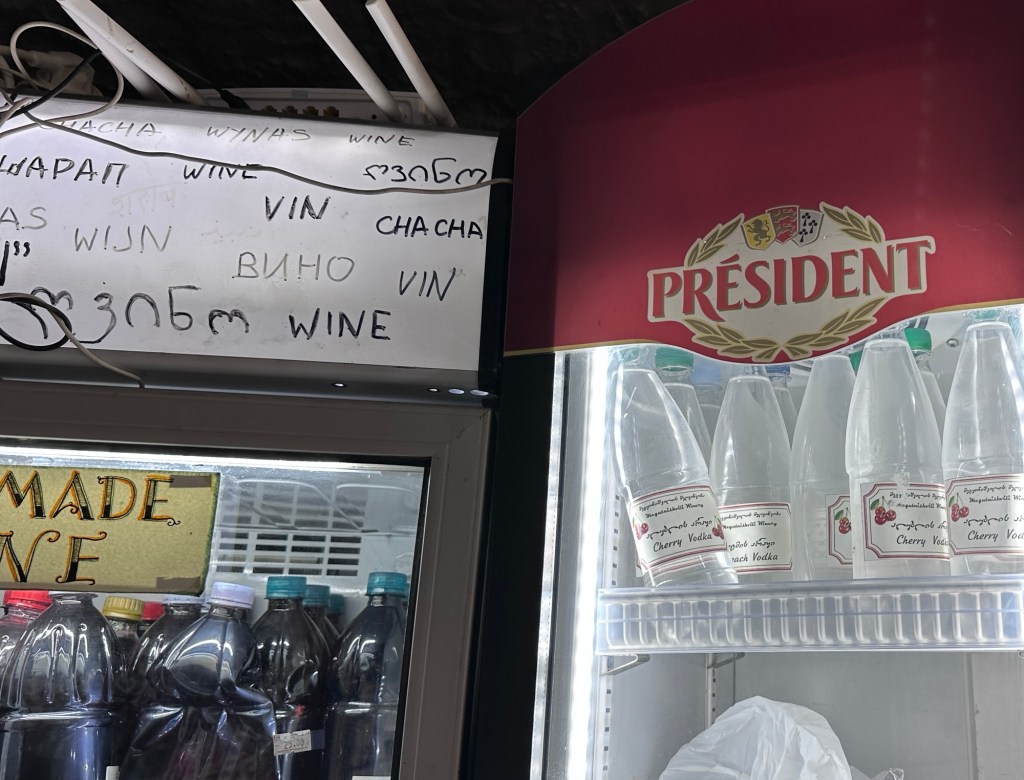
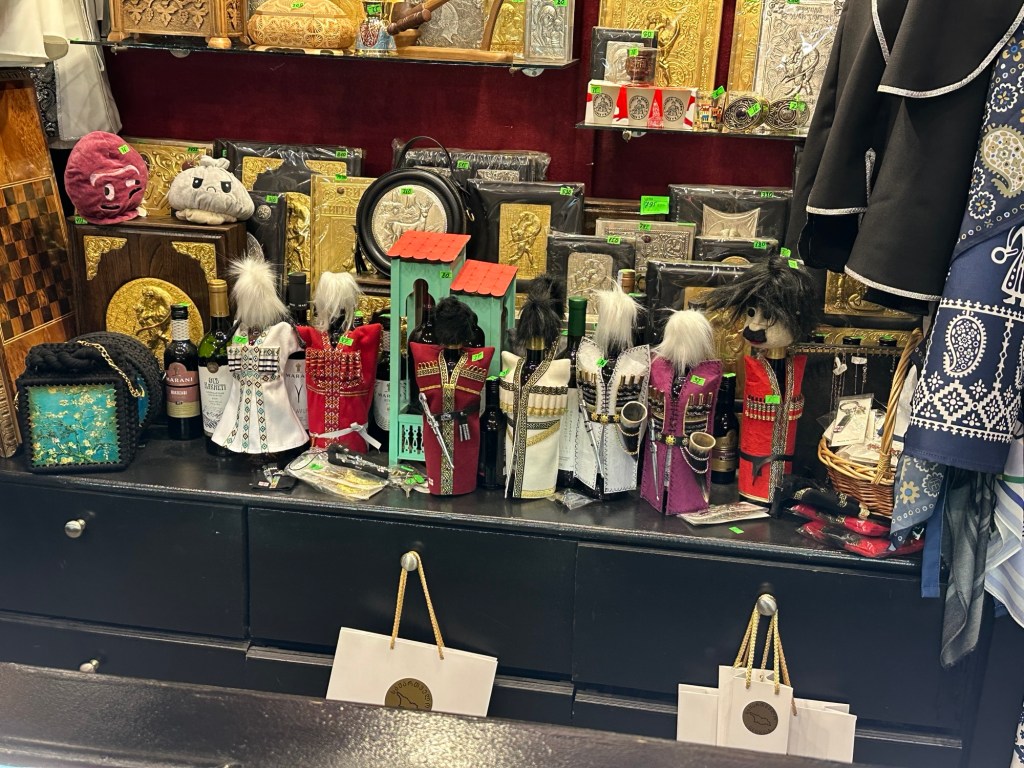
After our tour guide drops us off in Tbilisi we look for places nearby for dinner and end up stopping in shops on the way. After getting yelled at for taking pictures at a place I am about to sample wines from I get invited by the lady who runs the shop next door to sample her wines. This family owned store had homemade wines, fruit and grape, and chacha. The angry shop owner adjacent probably really boosts their neighbor’s sales. We sample wines and buy souvenirs plus wines to drink later.
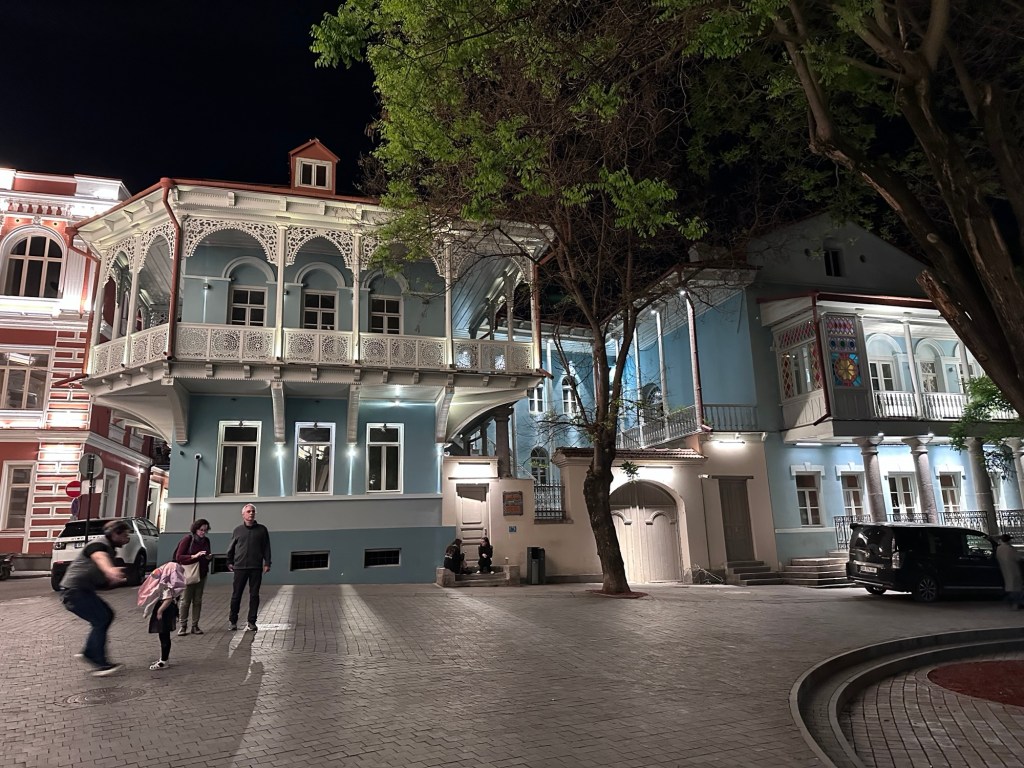
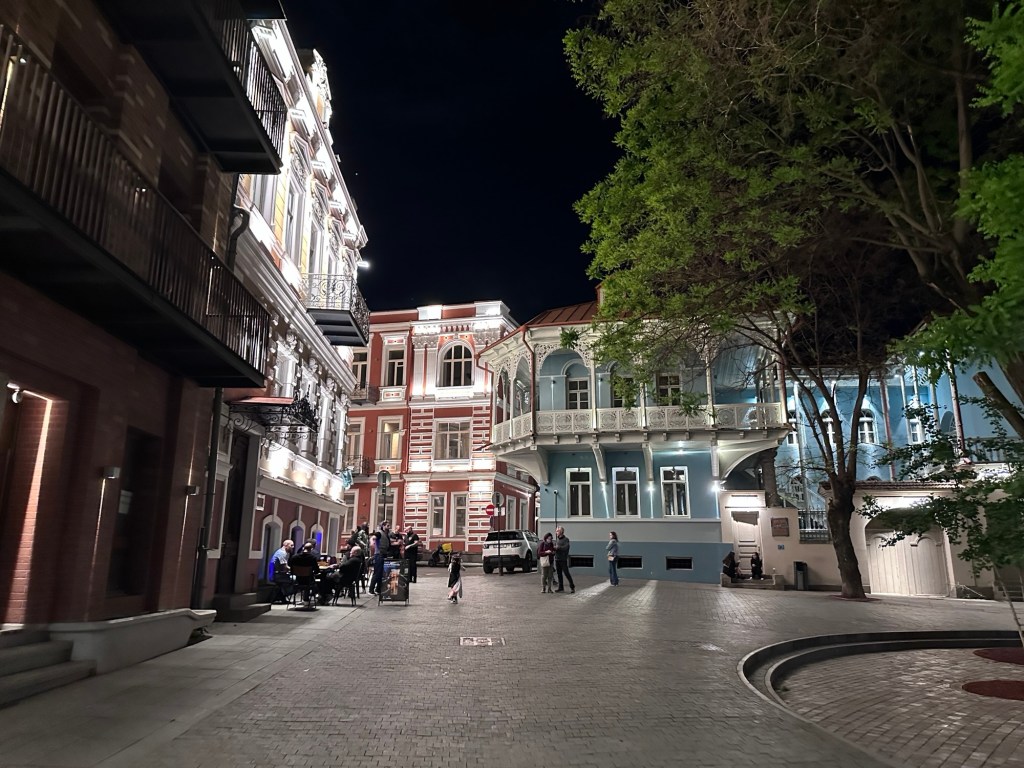
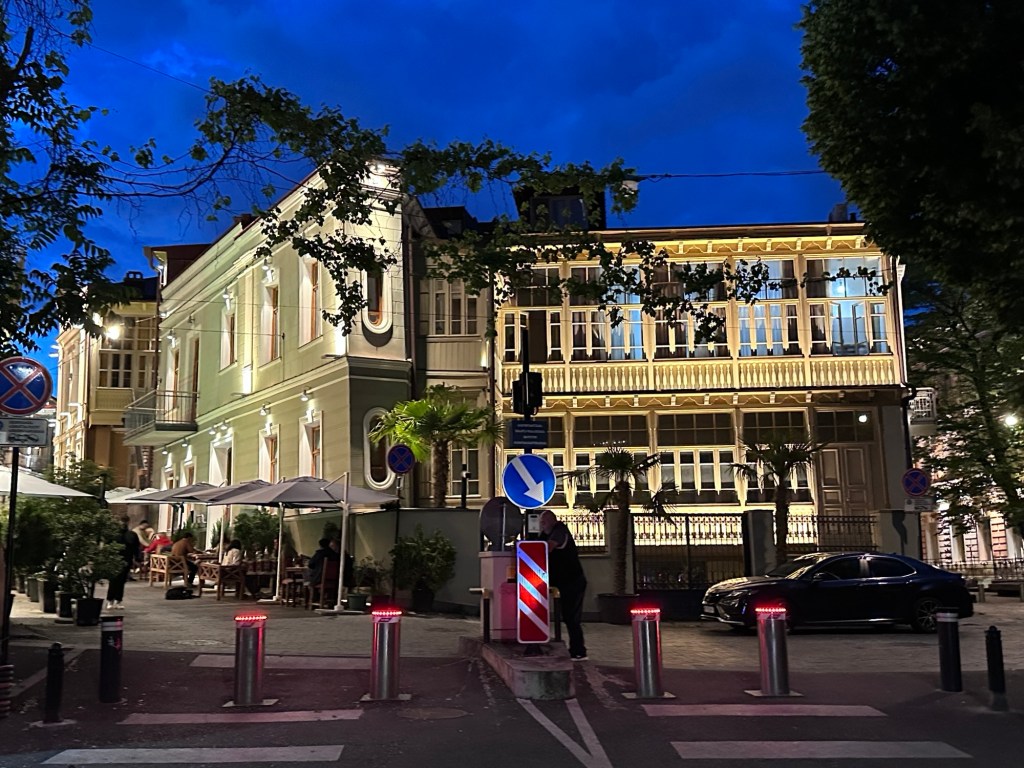
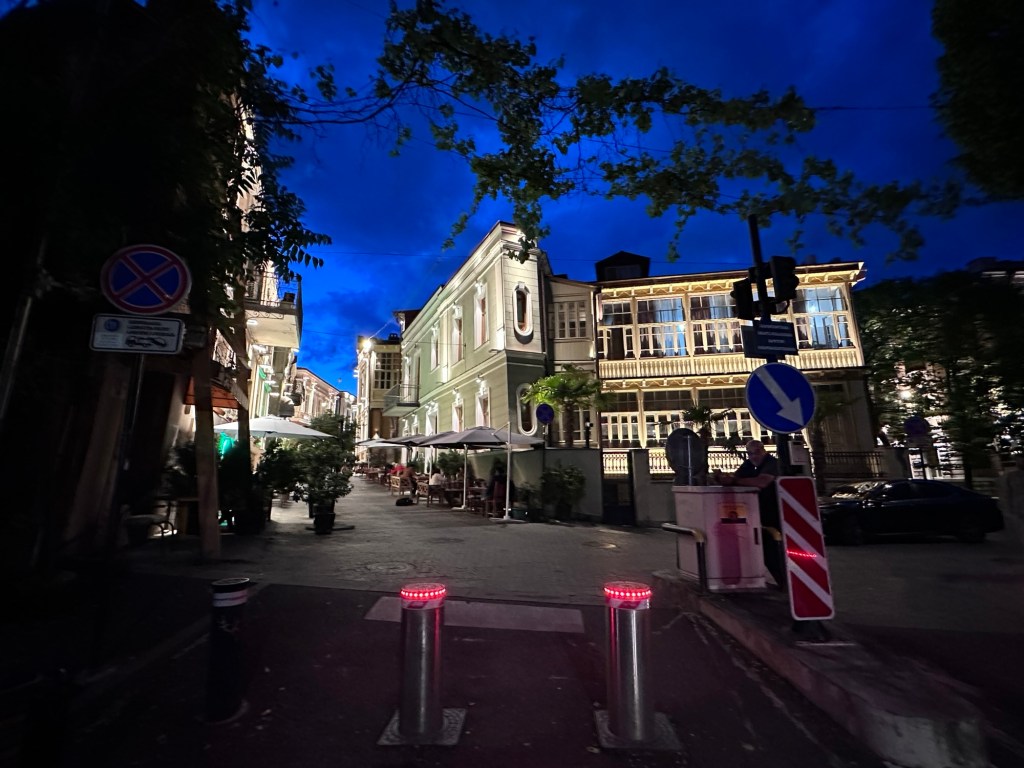
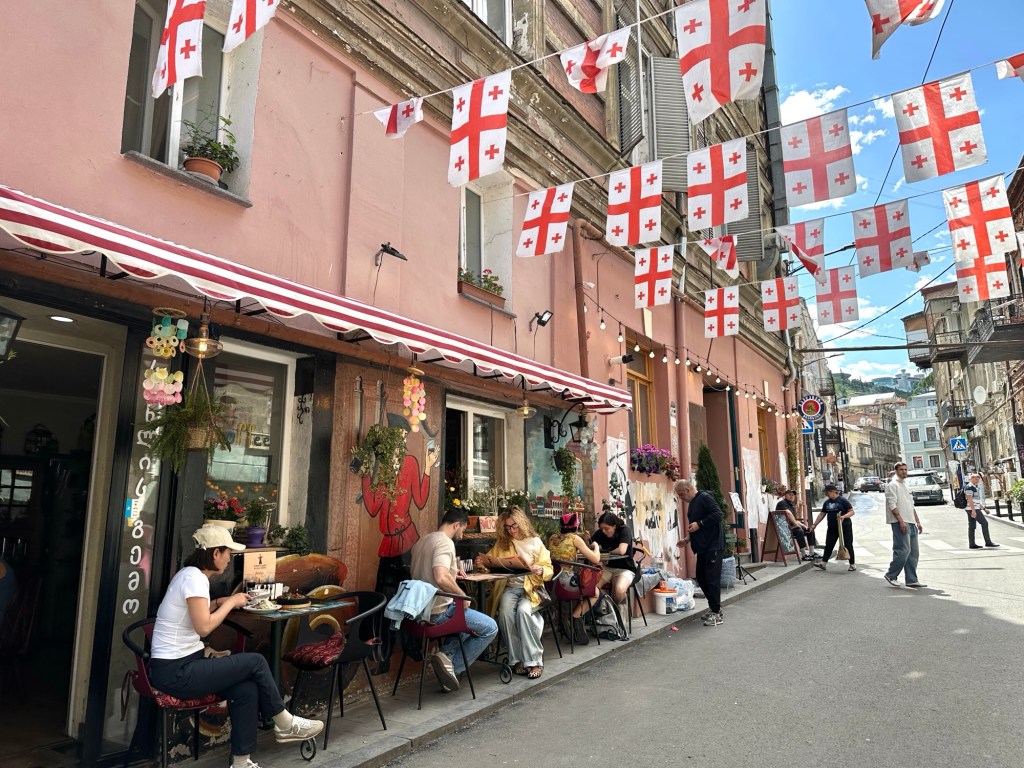
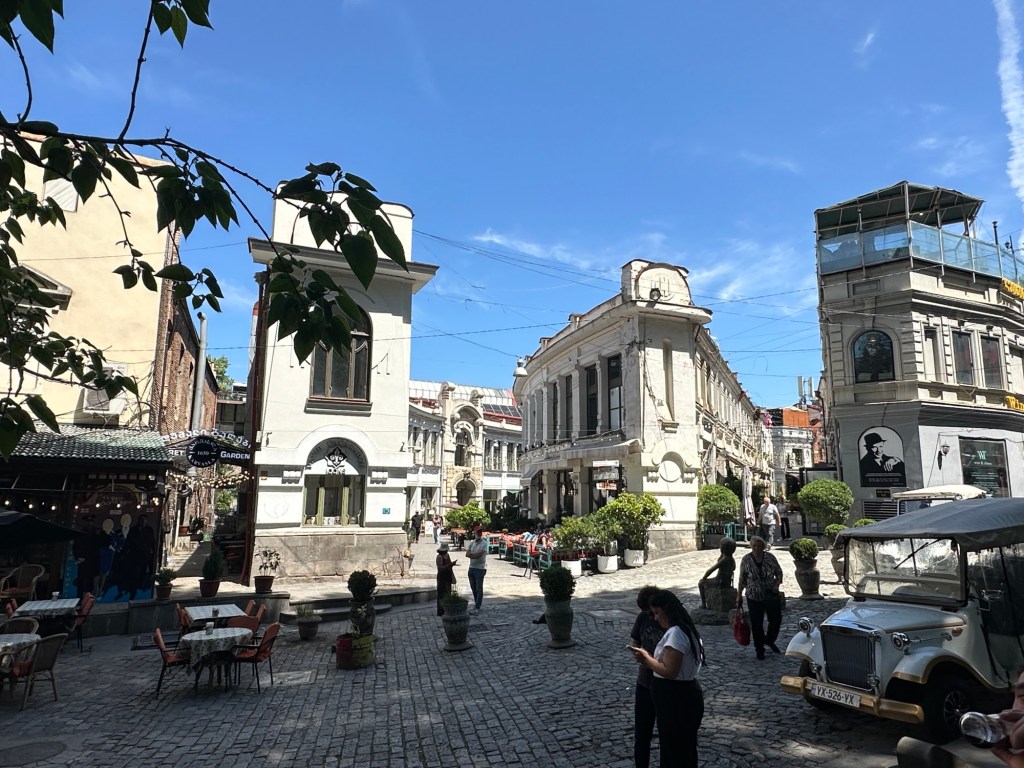
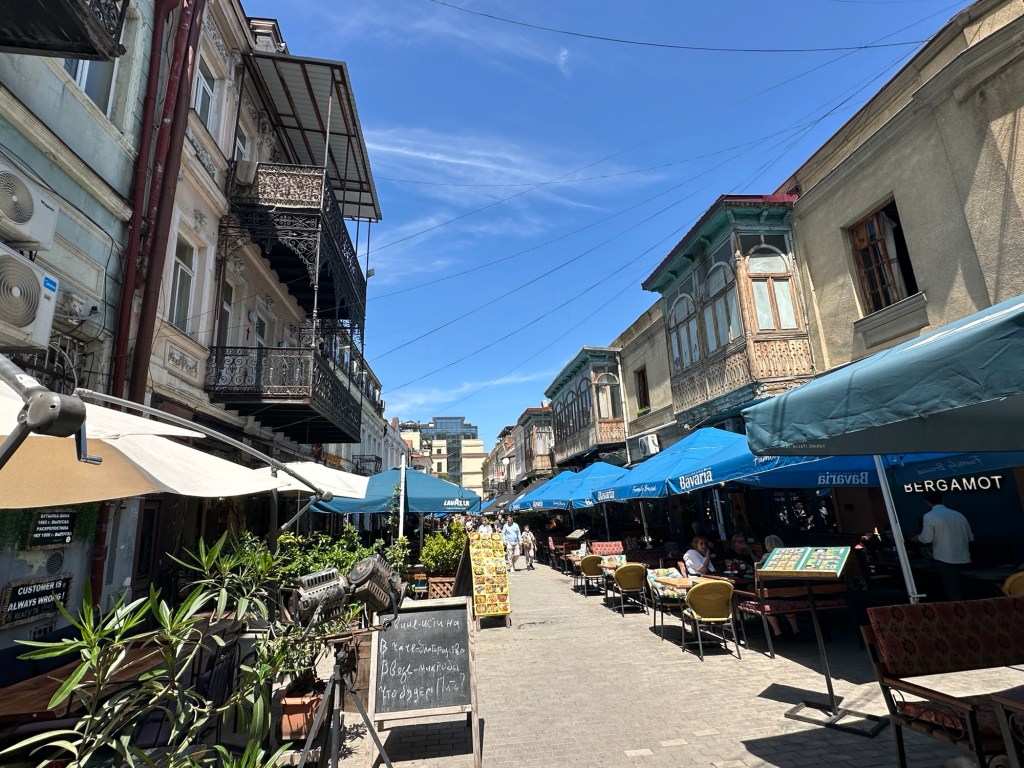
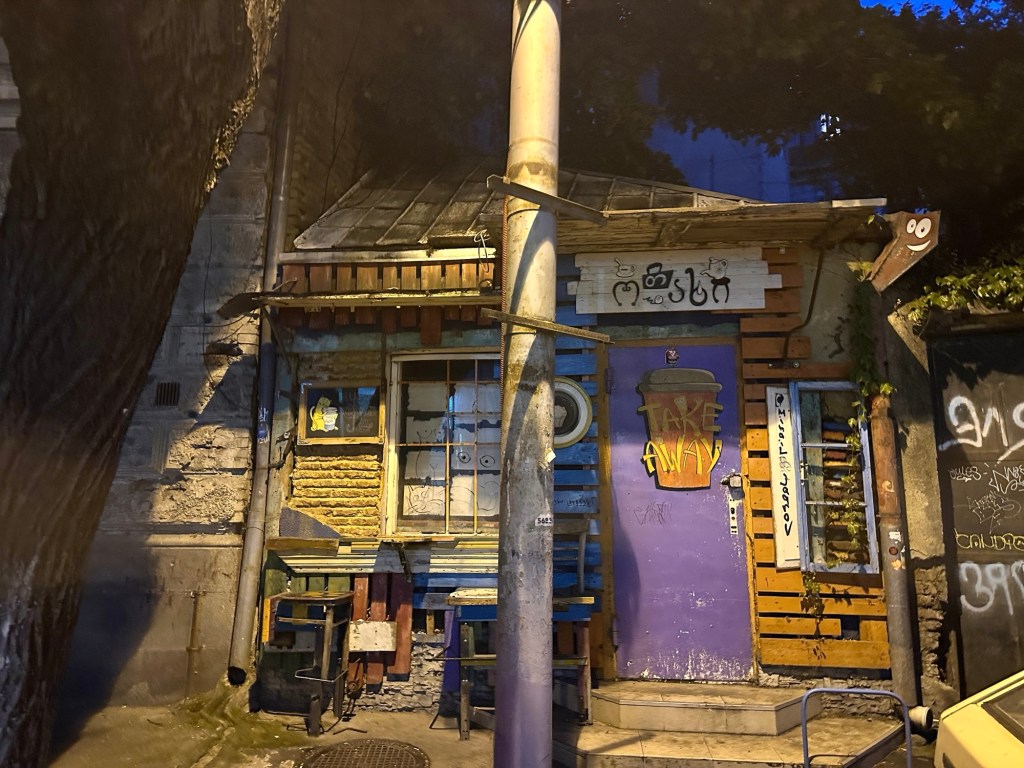
Walking closer to our hotel we find a beautiful street filled with restaurants with outdoor seating. We have a nice meal to finish our day of sightseeing.
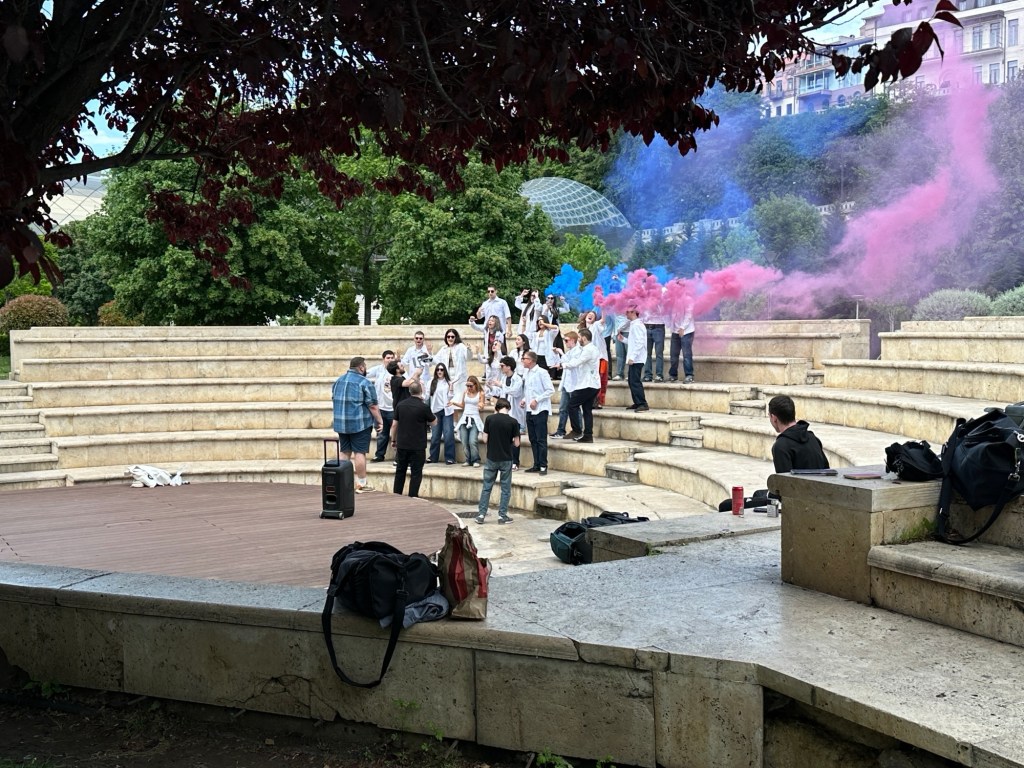
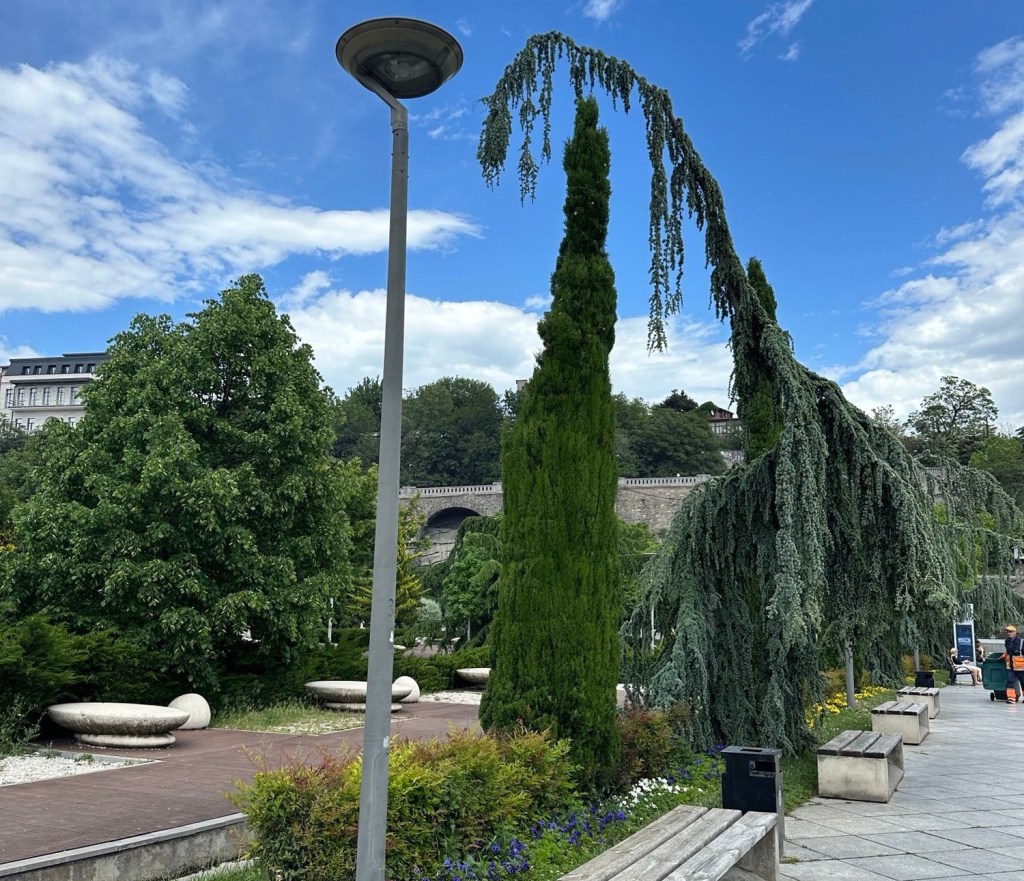
We detour to a nearby park during our walk back to our hotel. We hear a 90’s cover band doing a sound check for the evening. We pop in for drink or two, singing along until we can’t stay awake anymore.
Much of our travel this trip is staying in two cities for a good number of days and scheduling day tours to things not easily reached. It seems like a good idea but leads to long exhausting days of travel. Today’s tour of Mtskheta, Jvari, Gori and Uplistsikhe isn’t too bad though, we get back into town at a decent hour. Our next day tour is not so lucky. Tomorrow we have a free day in Tbilisi. I hope the weather holds out.
I consider myself a well-traveled person but the list of places I still want to visit is quite long. When planning my next overseas trip I came across a tour in the country of Georgia. Not knowing much about the country I started reading about the country that was once part of the Soviet Union. This particular tour is an all women group I am part of online; I have been intrigued with joining one of their tours for a few years now. I quickly booked the tour last fall, putting a deposit down on a single room – I don’t mind touring with strangers but sharing a room with someone I don’t know is just not what I am willing to do anymore (with the exception of a dorm thing that might be required on some hikes). The tour is short and concentrates only in a small part of the country so my intent is to tour other cities on my own. I start a list of all the other places I am interested in visiting and gathering logistic information. Originally I set off on planning a road trip for the solo portion of my trip. Meanwhile a friend inquires on joining me on part of my trip. She’ll travel with me before my scheduled tour.
I continue building the itinerary, filling in more details but it seems like the activities I have planned at best will leave us very exhausted. We devise a new plan to limit our stays to two cities and use day trips to visit locations outside the cities. In this plan we no longer need a car rental. Our new plan works out well for the most part with a couple exceptions that I’ll describe later.
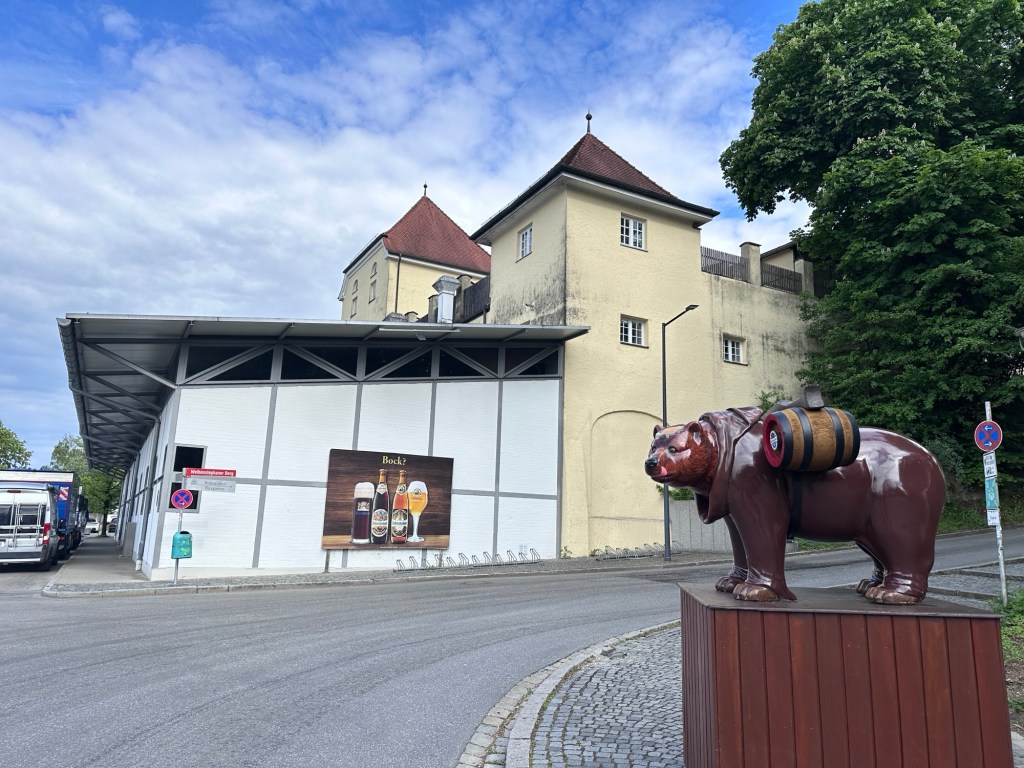
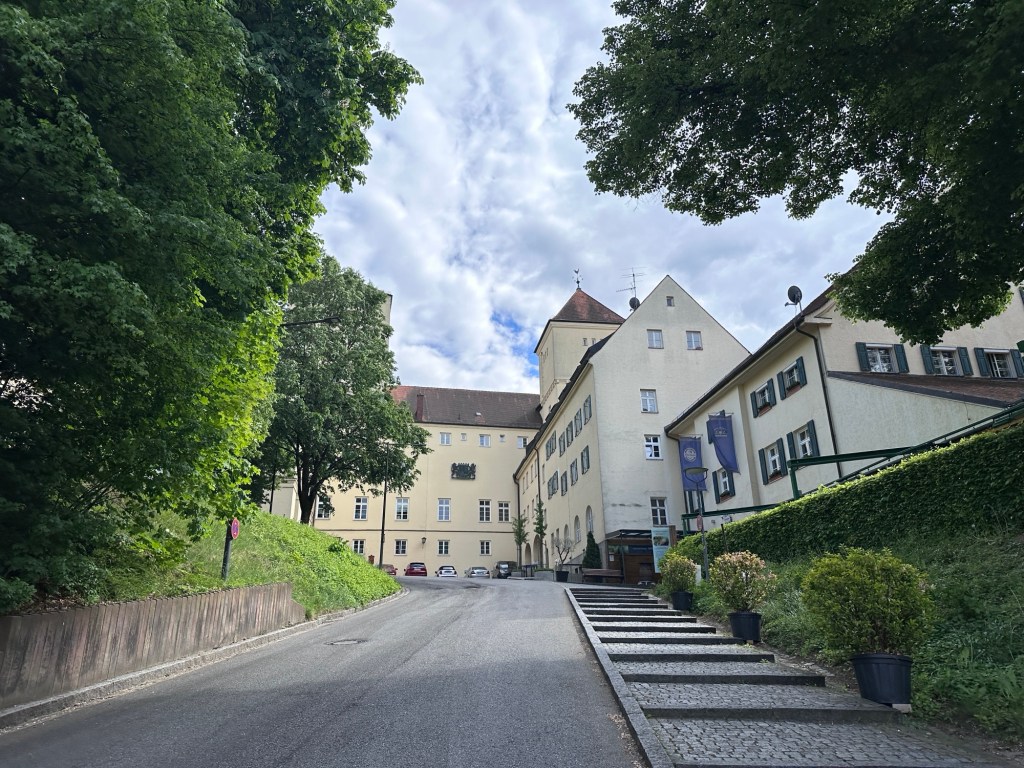
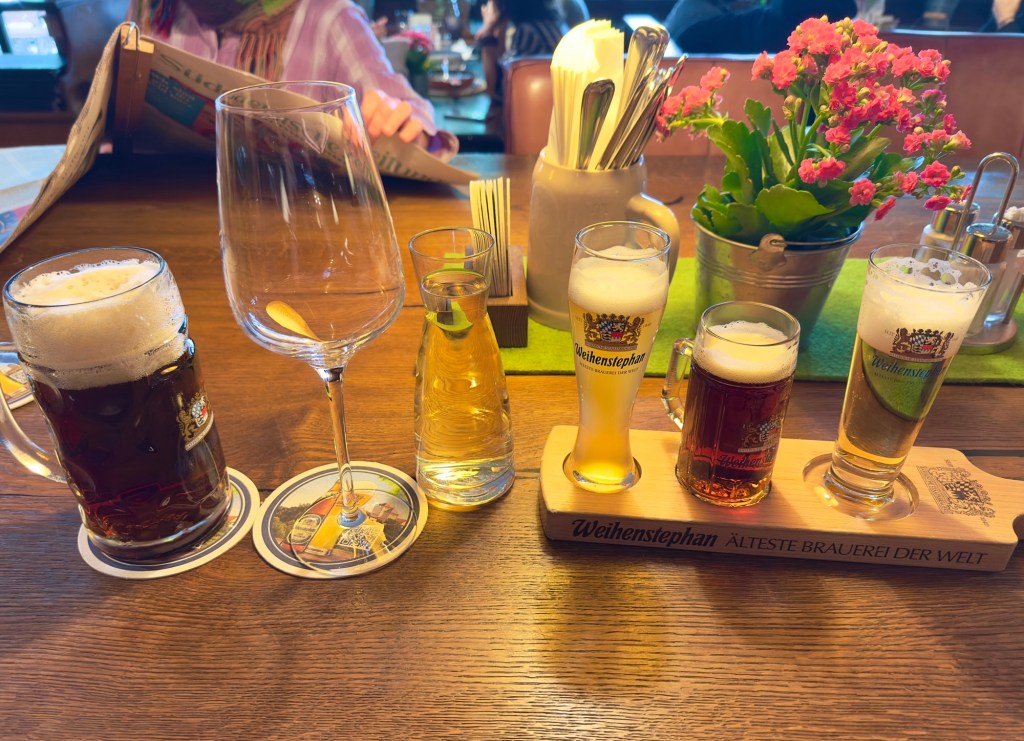
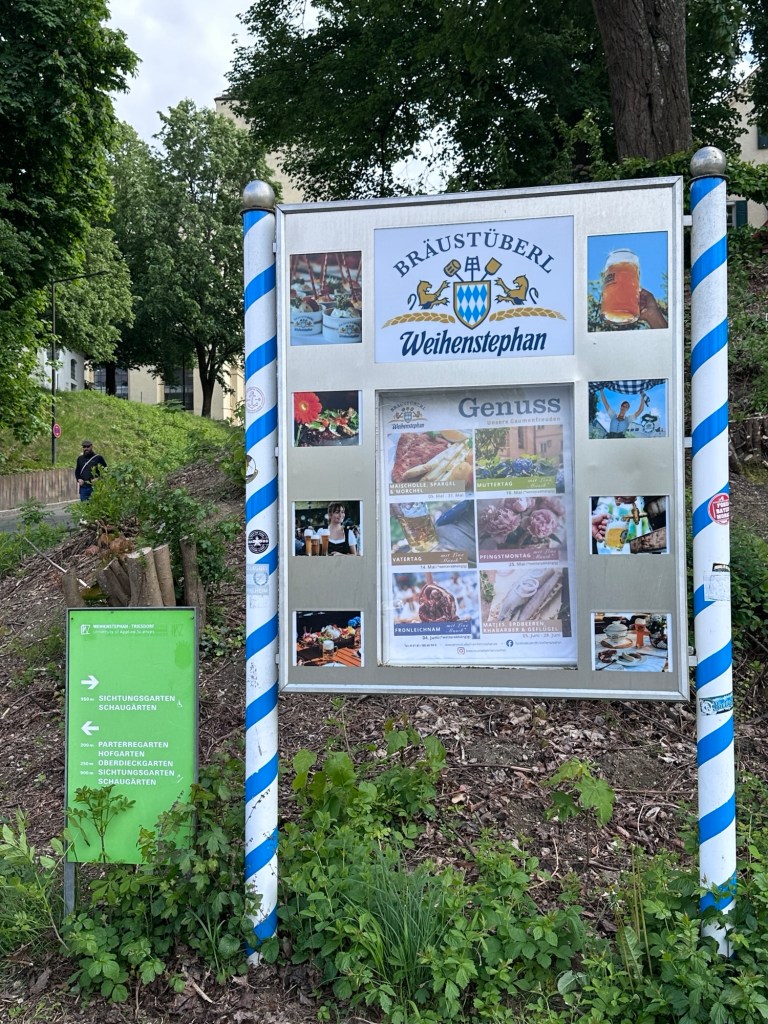
There are two flights to get to Georgia and that includes an eight hour layover in Munich. Both of us have been to Munich before but eight hours seems to long to lounge at the airport. We make a plan to travel into Munich for our long break. The airport has other plans for us, everything we estimated takes twice as long. We wait for over an hour to pass through passport control in order to be able to exit the airport. They have us wait in a long line for the machines to complete our first steps and then are told to move to a “faster” line on a different floor but that line ends up being even longer. By the time we get past passport control it only makes sense go with our backup plan – take a bus to the even closer Bräustüberl Weihenstephan in the town of Freising. Weihenstephan is the oldest brewery in the world. Even though I don’t drink beer anymore I order a flight to sample some of them but eventually switch to a good riesling, I do miss the dry German rieslings. We don’t have too much time left to waste so we return to the bus station for our return trip to the airport. We pick up our checked bags and go find our gate for the next leg of our trip, Tiblisi.
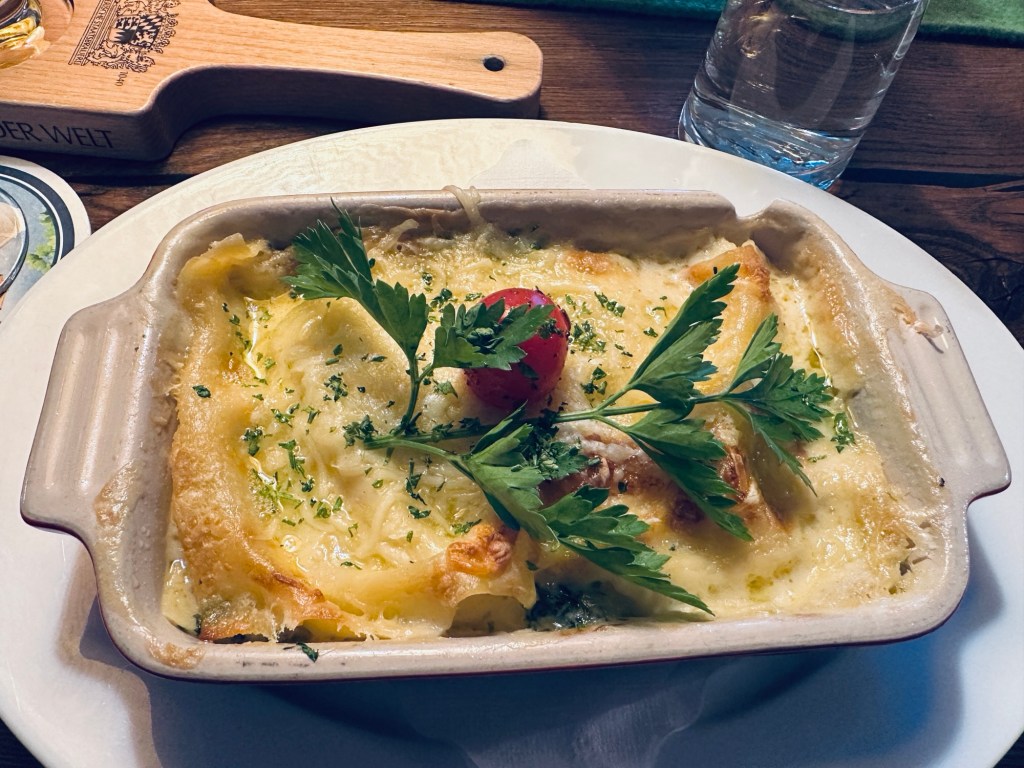
Asparagus lasangna
We arrive at our hotel around at 5:30 am. Luckily we book the room for the previous evening so the key is waiting for us when we arrive. We shower and take a long nap; neither one of us slept much on our flights. Our alarm is set for ten in the morning. We will still be sleep deprived but we are determined to get on a normal schedule – we have a walking tour scheduled at noon. I wake up but I am having a hard time getting ready for the day. We are very jet lagged.
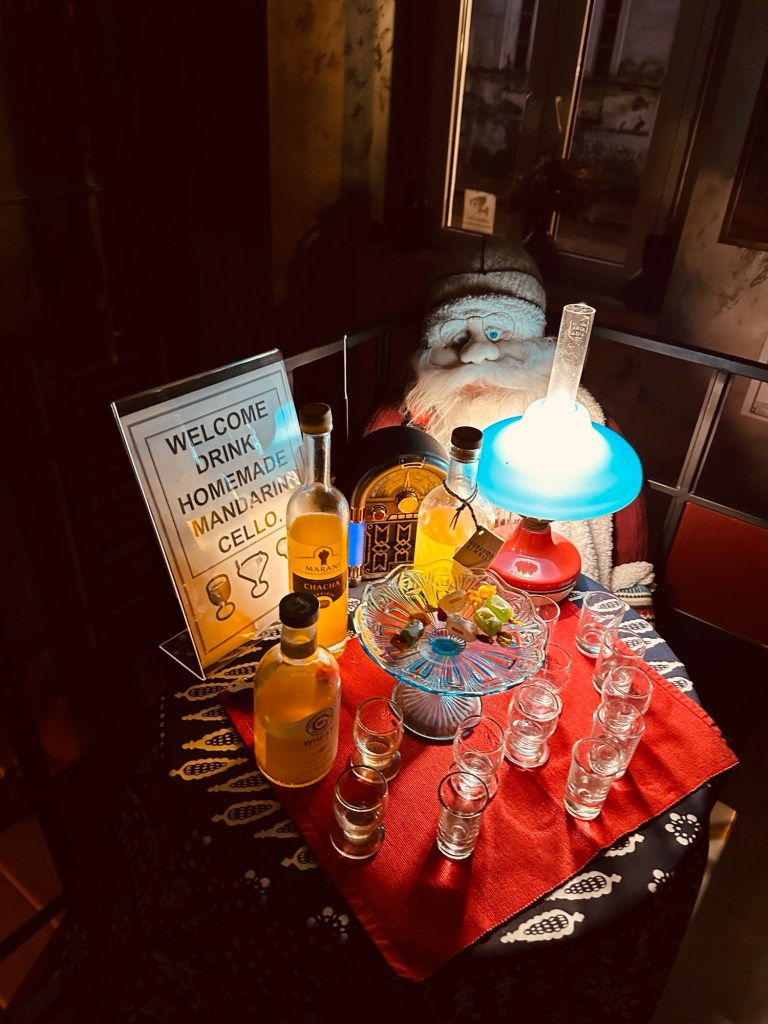
We are not ready for a welcome drink at 5:30am
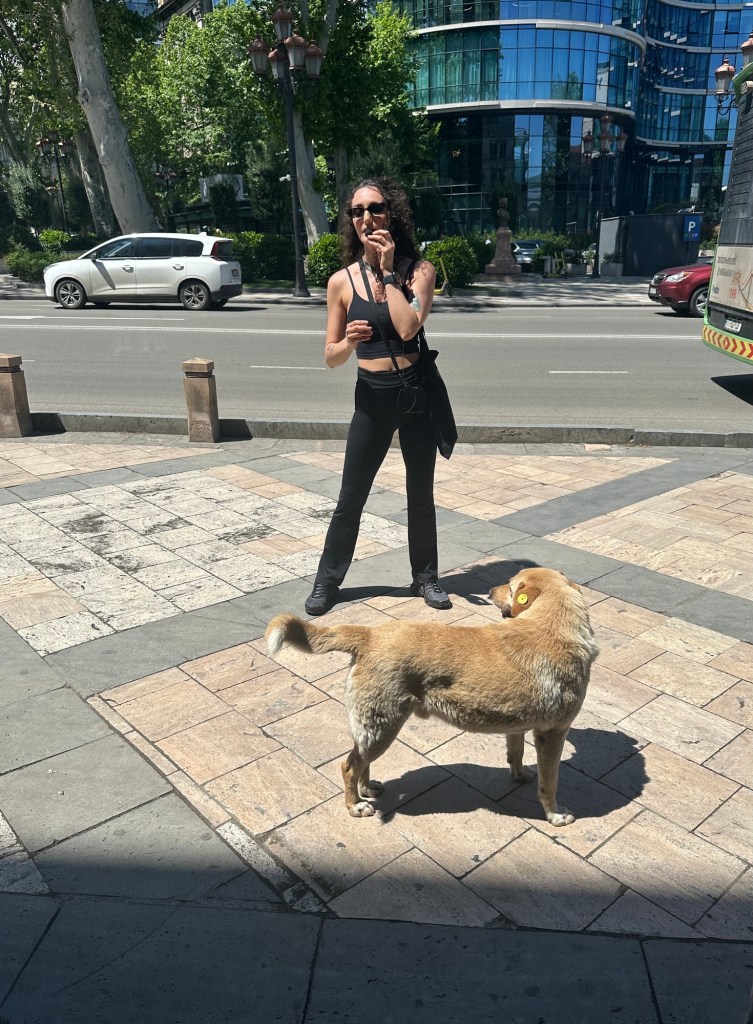
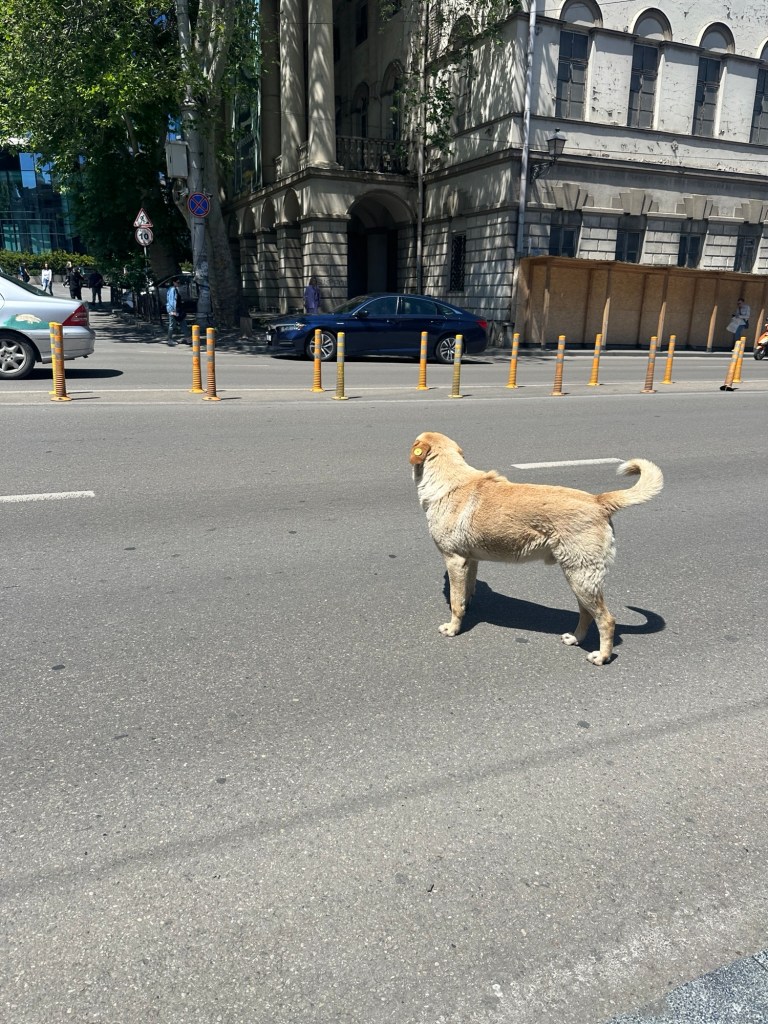
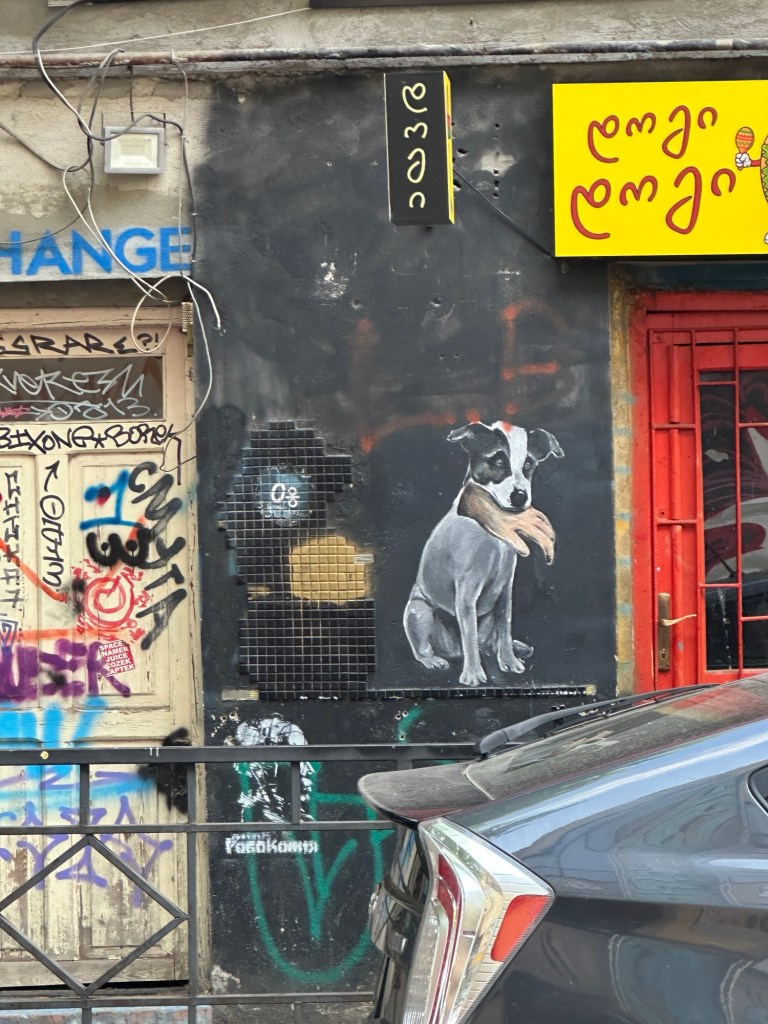
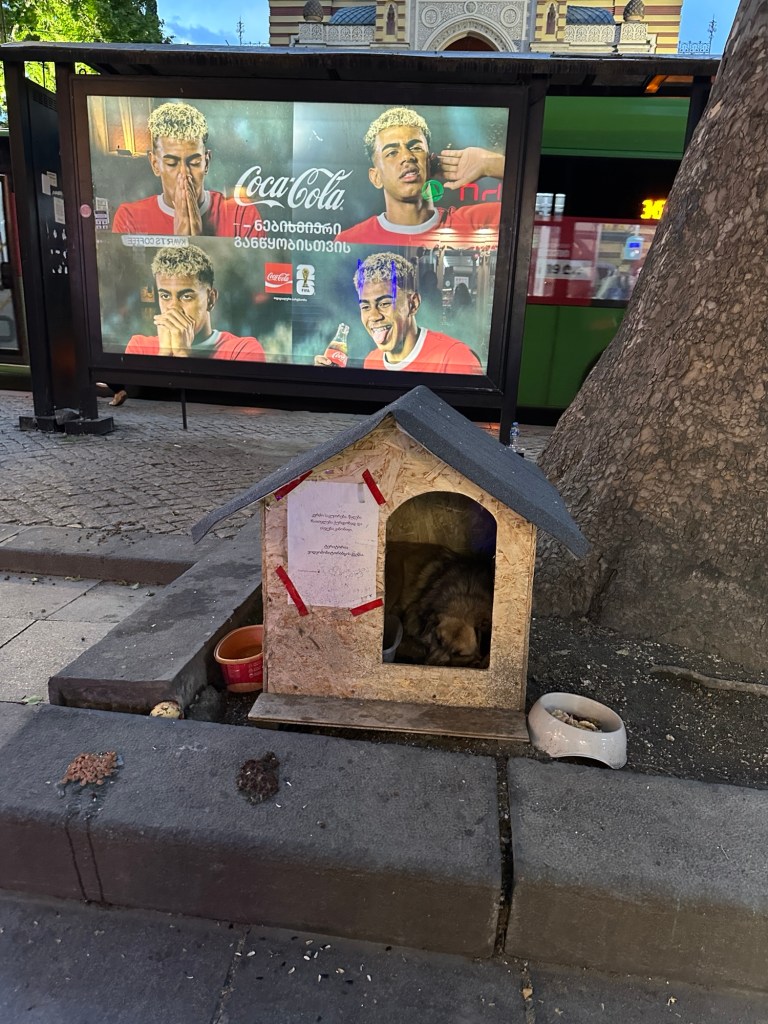
We meet up at Freedom Square and a local guide starts our walking tour around the city. During introductions a dog joins us and makes his presence known by barking and approaching everyone in the group. He is one of many Tbilisi street dogs, the large group of unhoused dogs that roam the streets. The dogs are homeless but are vaccinated and somehow well cared for, at least most are. He protects us periodically running into the streets and barking at suspicious cars on the road. He stays with us a little while but eventually wanders off and we are joined by other dogs in our tour. It seems to be a common theme in Georgia.
We are told about the history of the city that has historically been on the Silk Road trading route. The land here has been sought after or fought for by Russia (and Soviet Union) but also the Ottoman Empire, Persians, Greeks and other invaders. Even after many different occupations they still maintain their unique language and culture. Their language is formed using a 33 character alphabet with unique sounds only heard here. The language has three different versions and to simplify it they can be referred to as the old version, the religious text version, and the current version. There is no gender in the language but there are words to describe people and some seem to be reversed to what is normal in Latin languages – mama means dad, and dada means mom. They also claim to have some of the oldest bread due to types of wheat that only exist here.
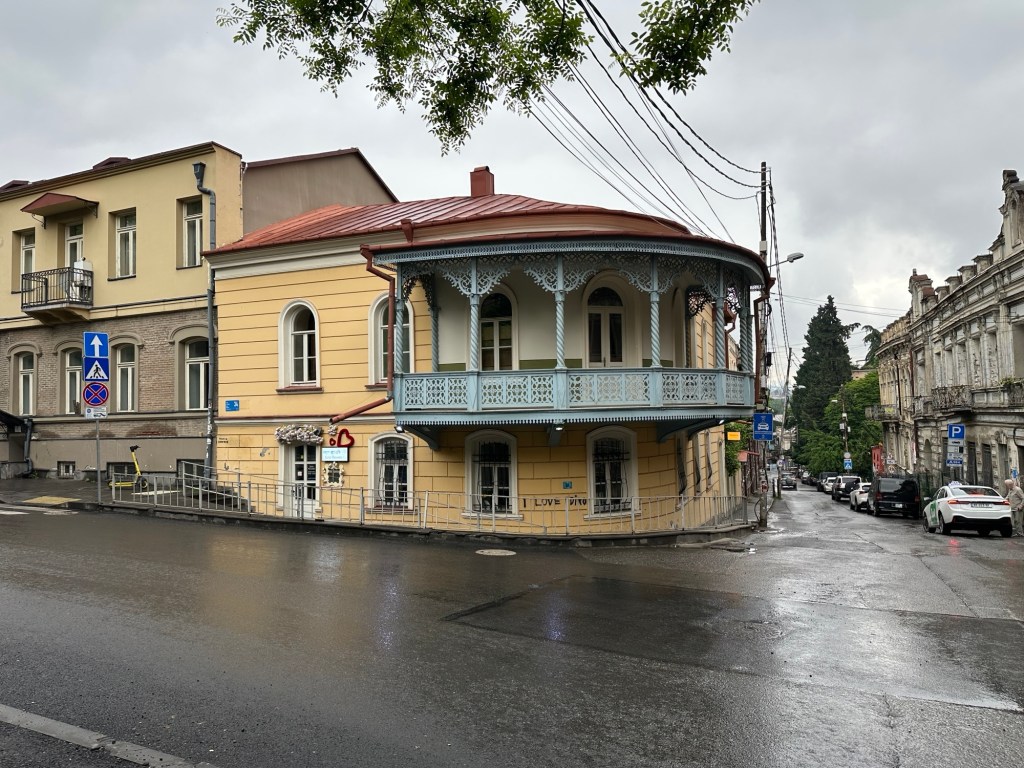
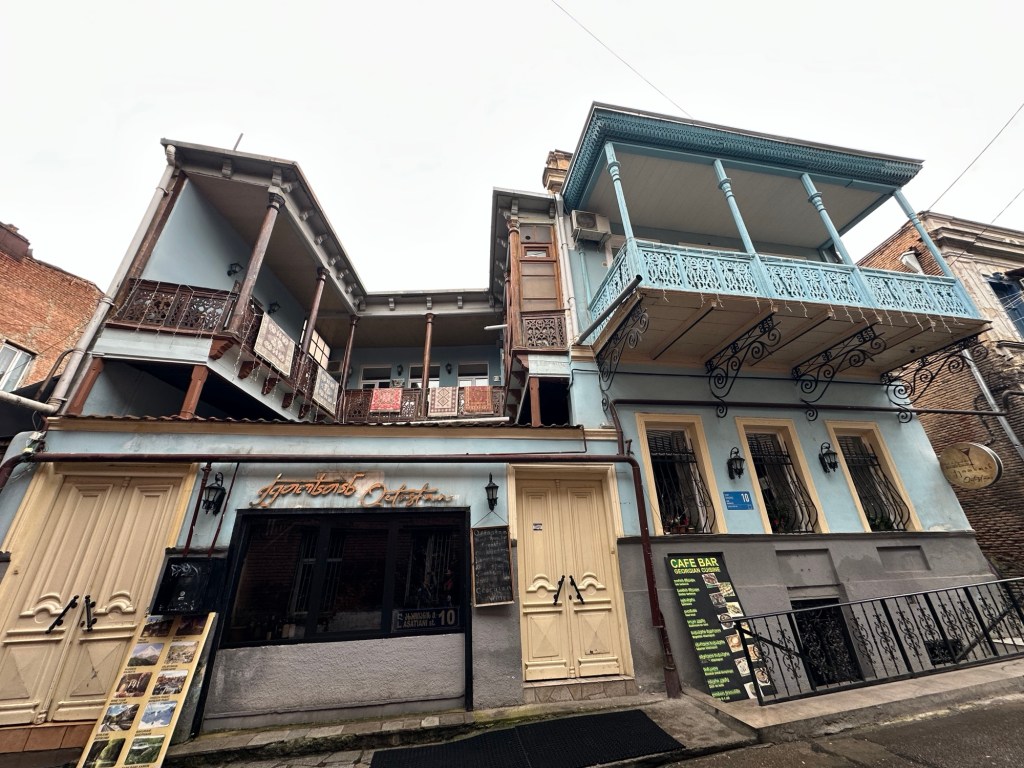
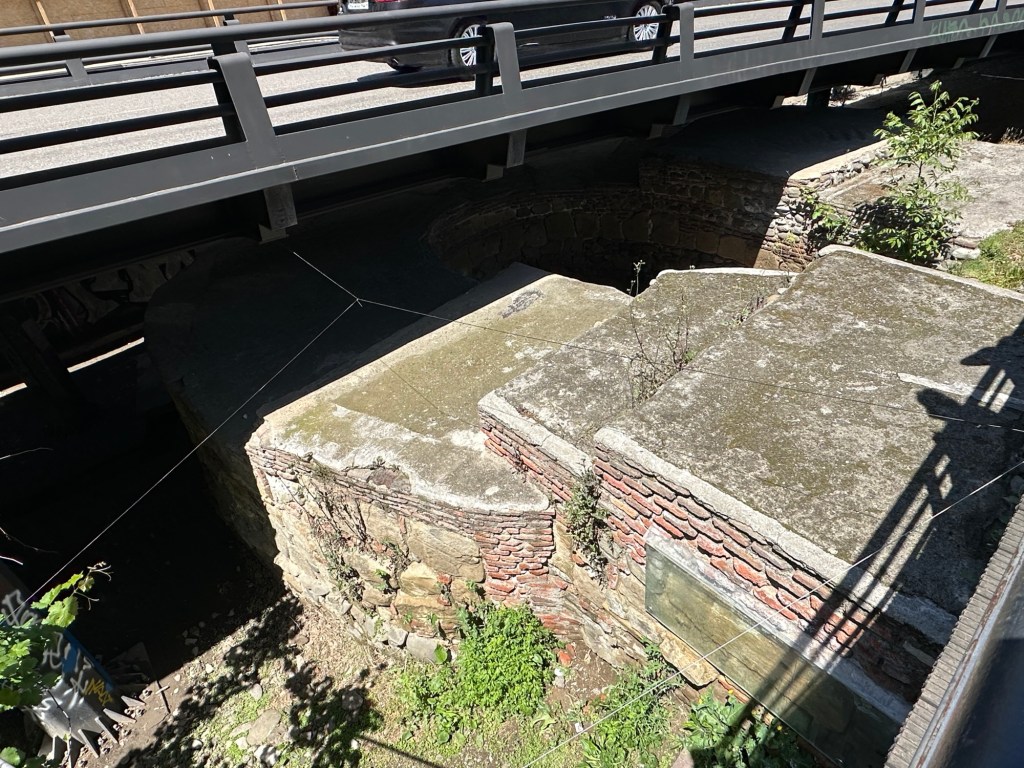
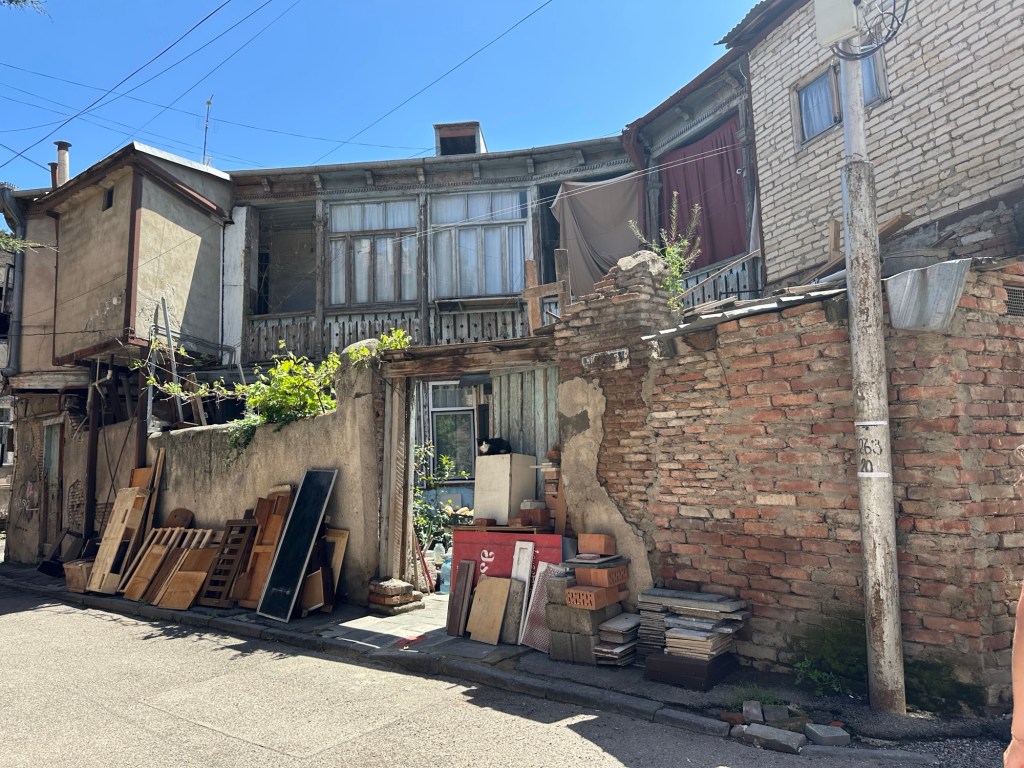
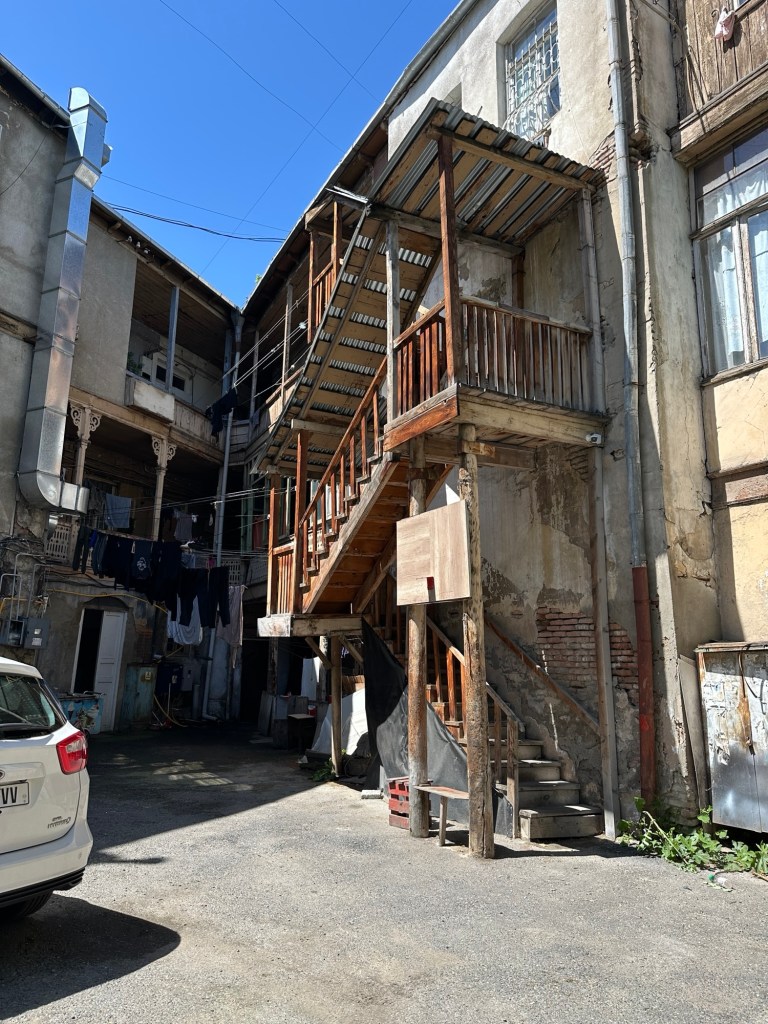
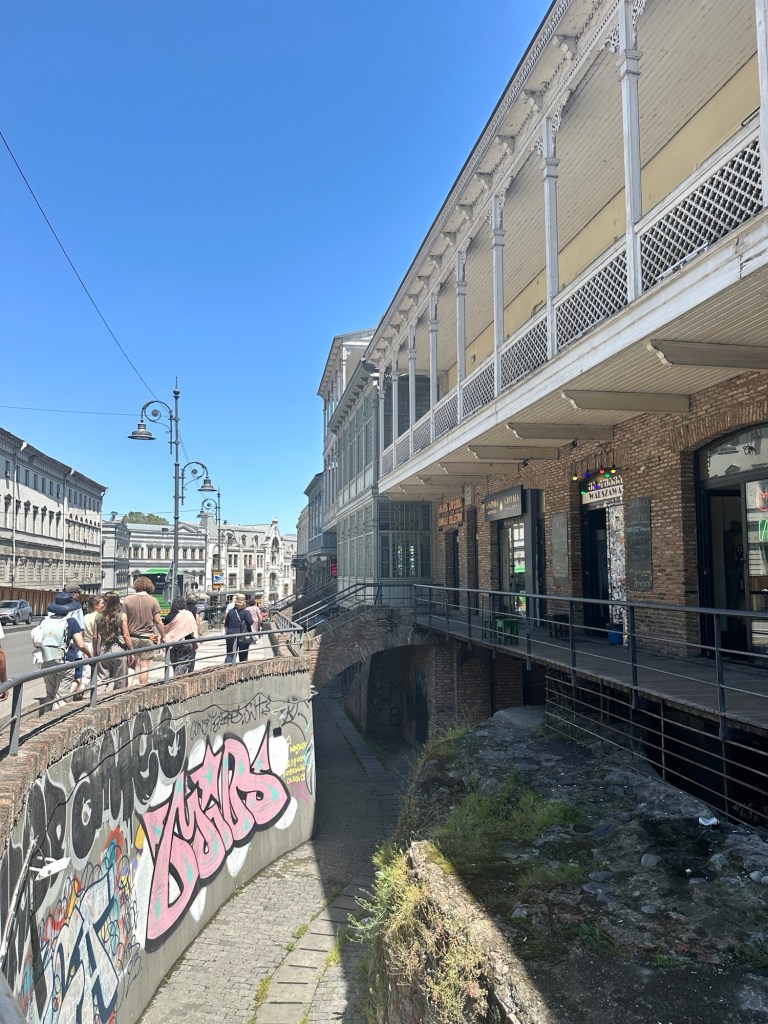
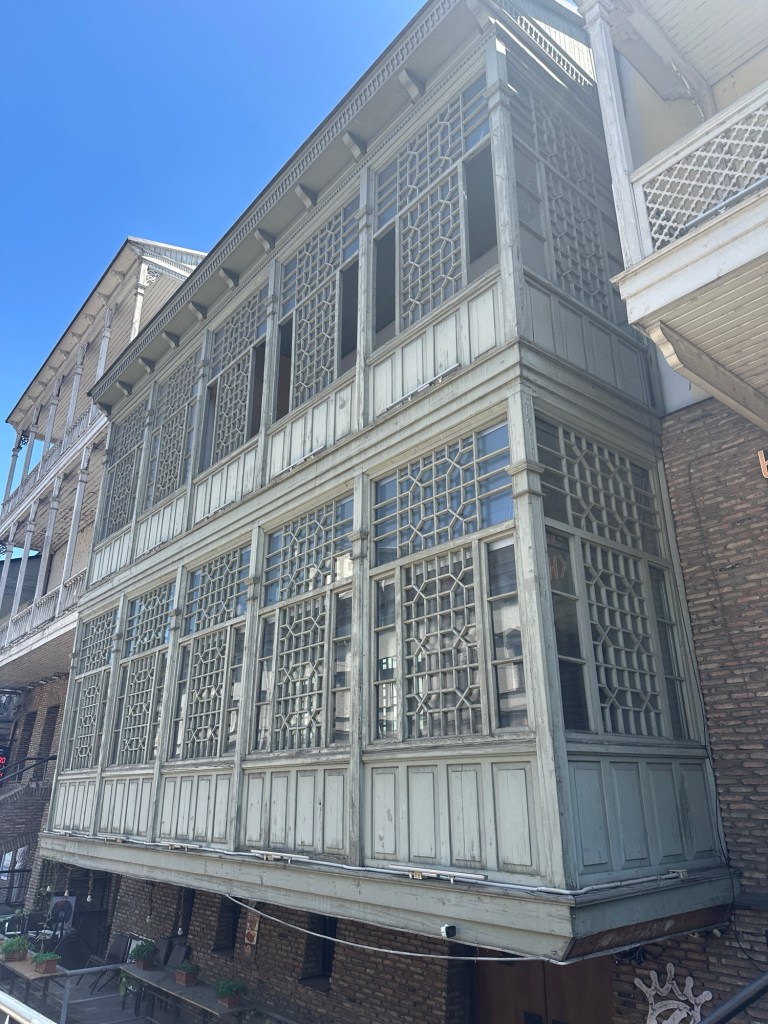
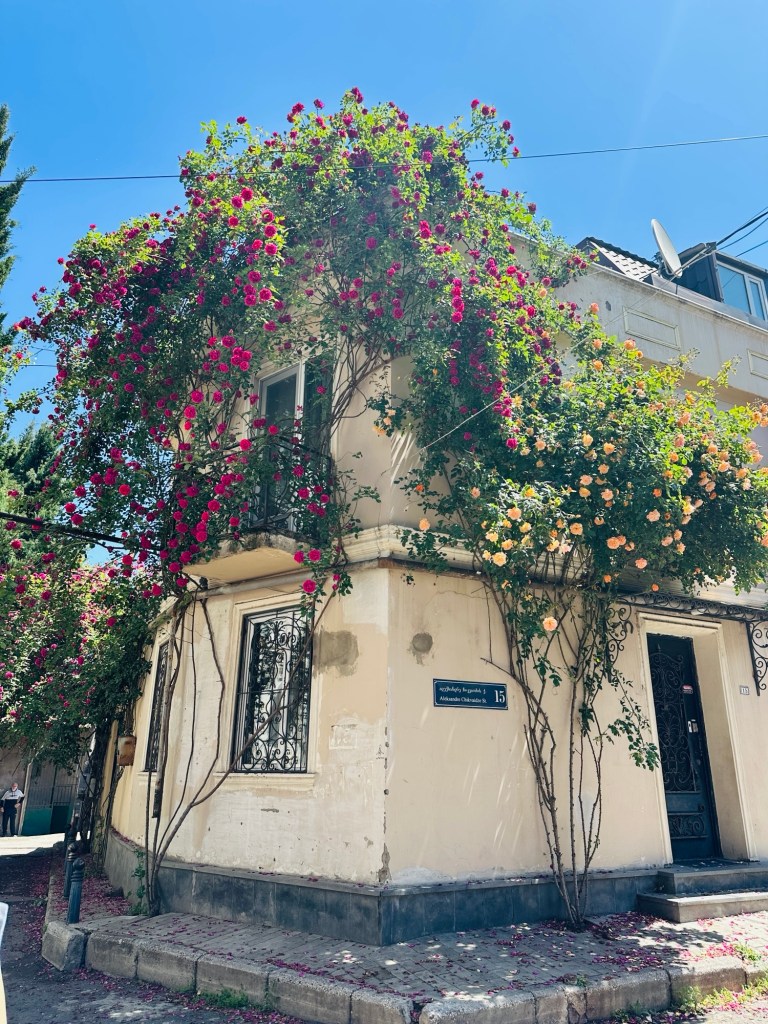
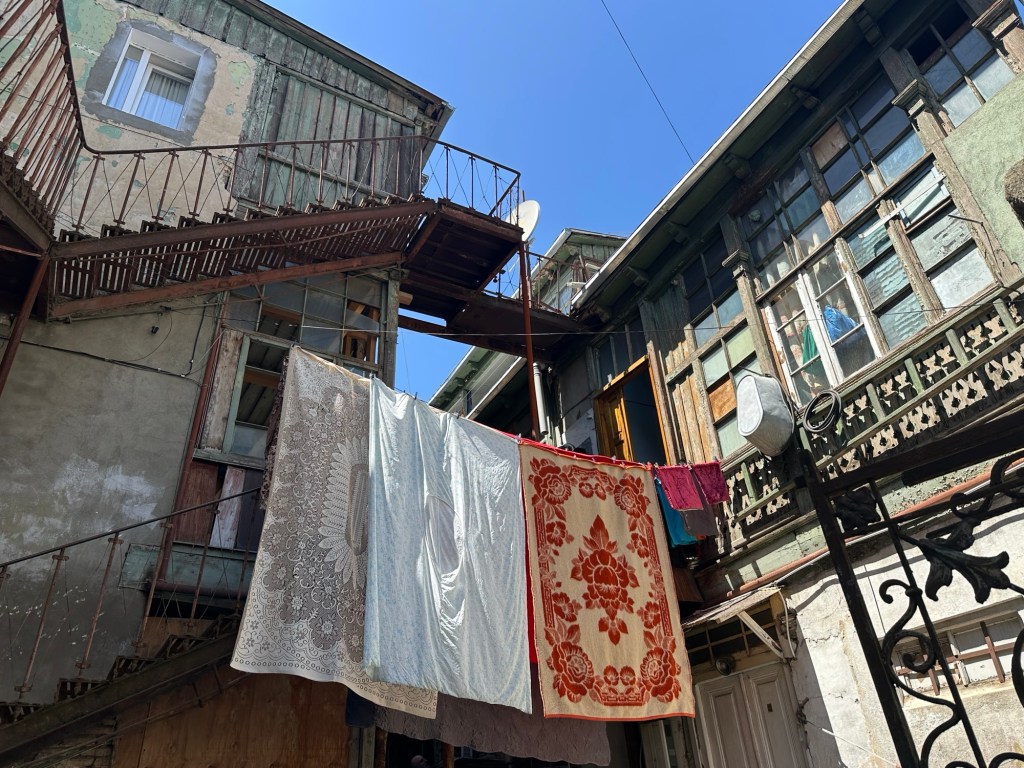
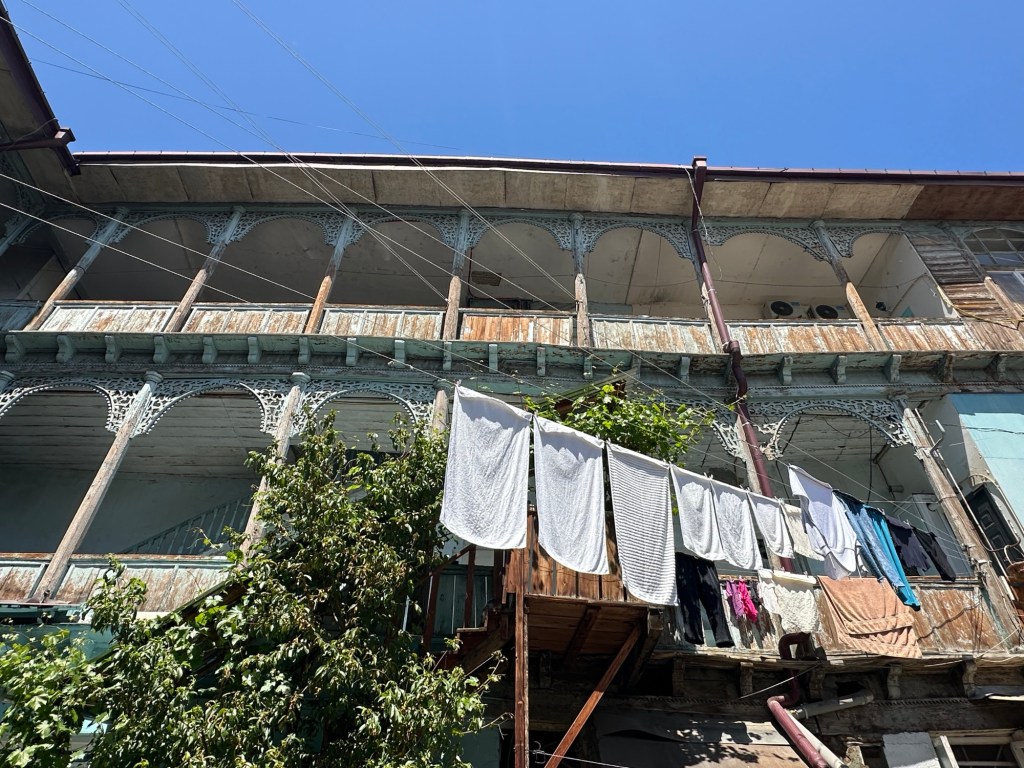
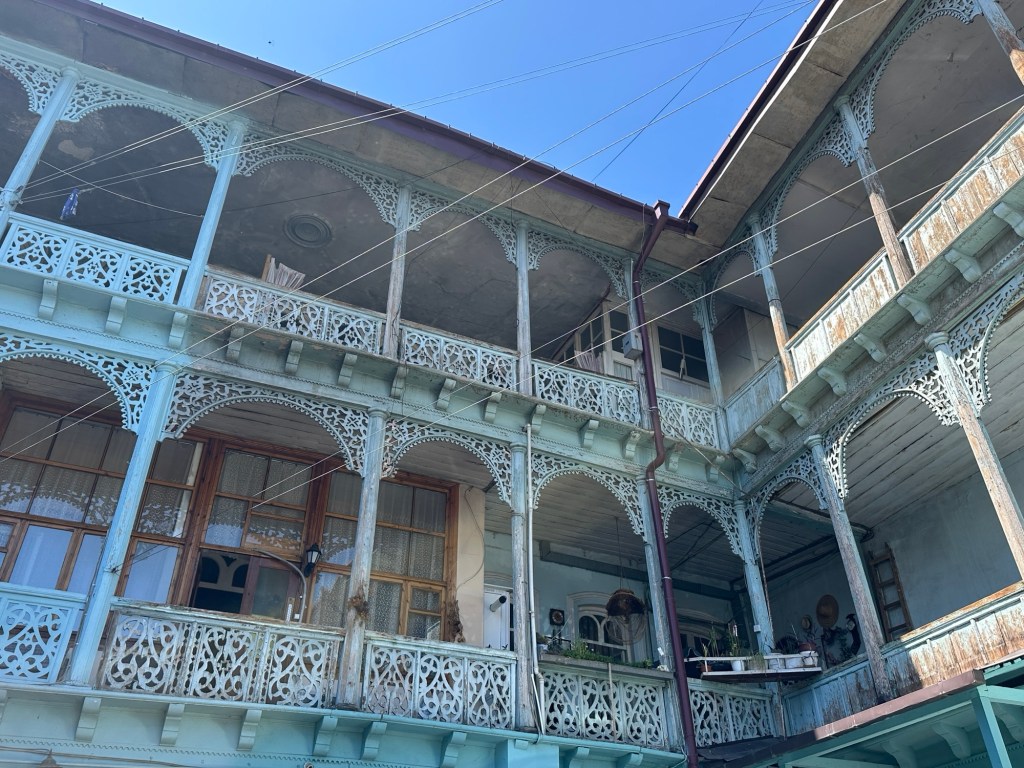
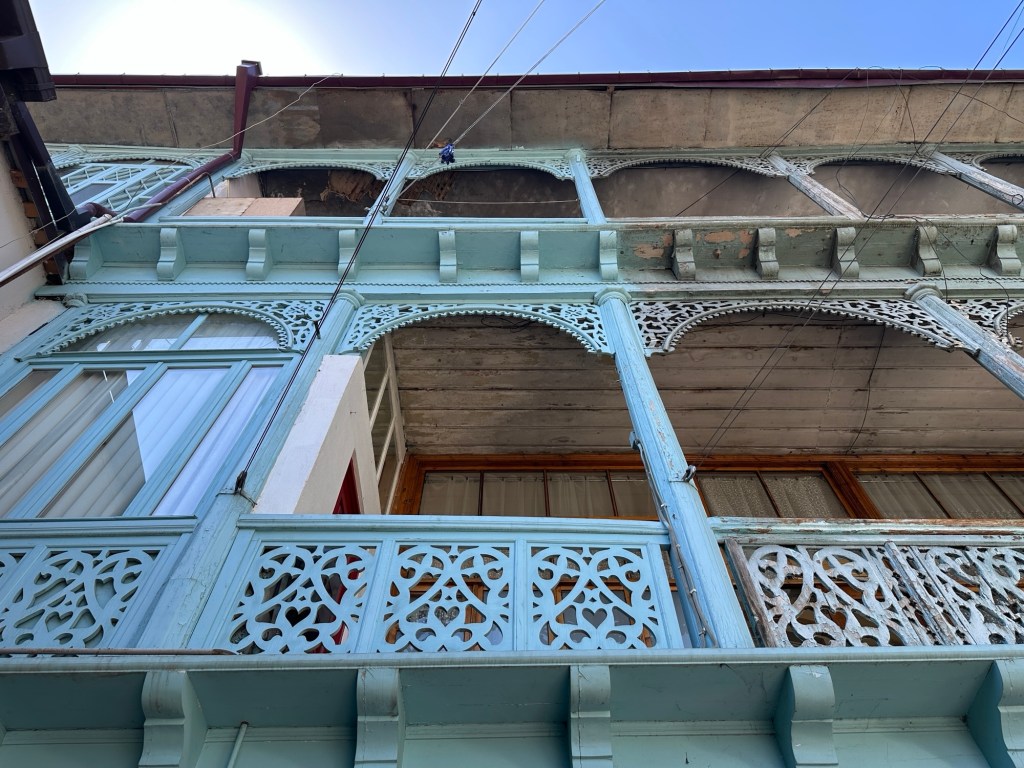
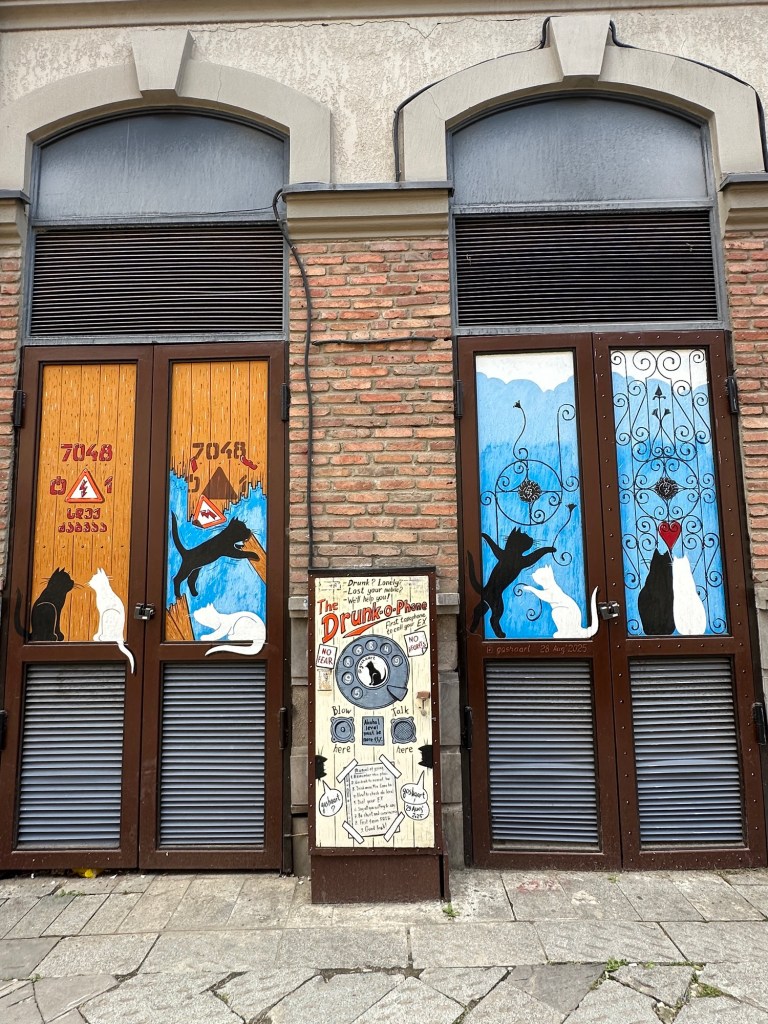
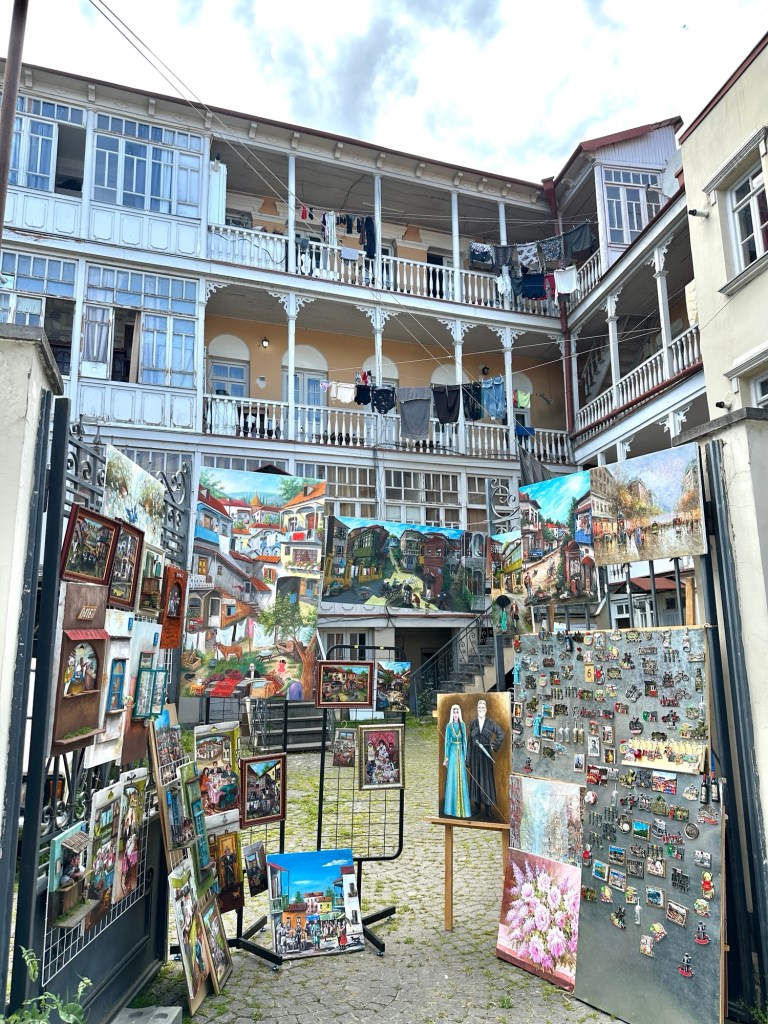
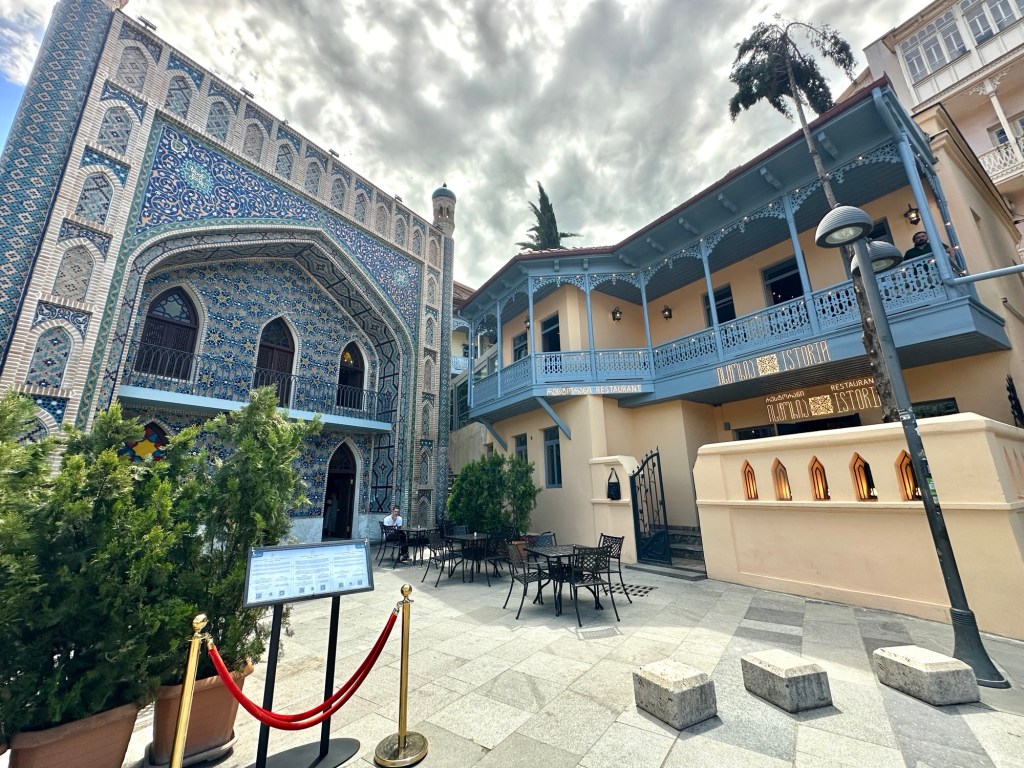
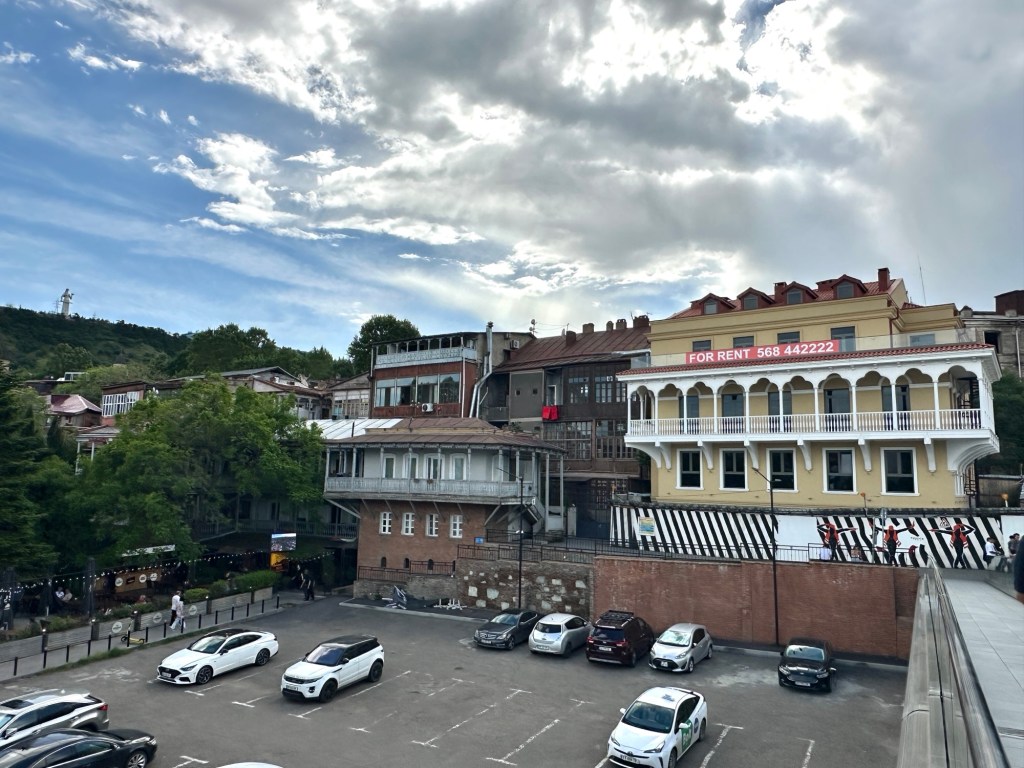
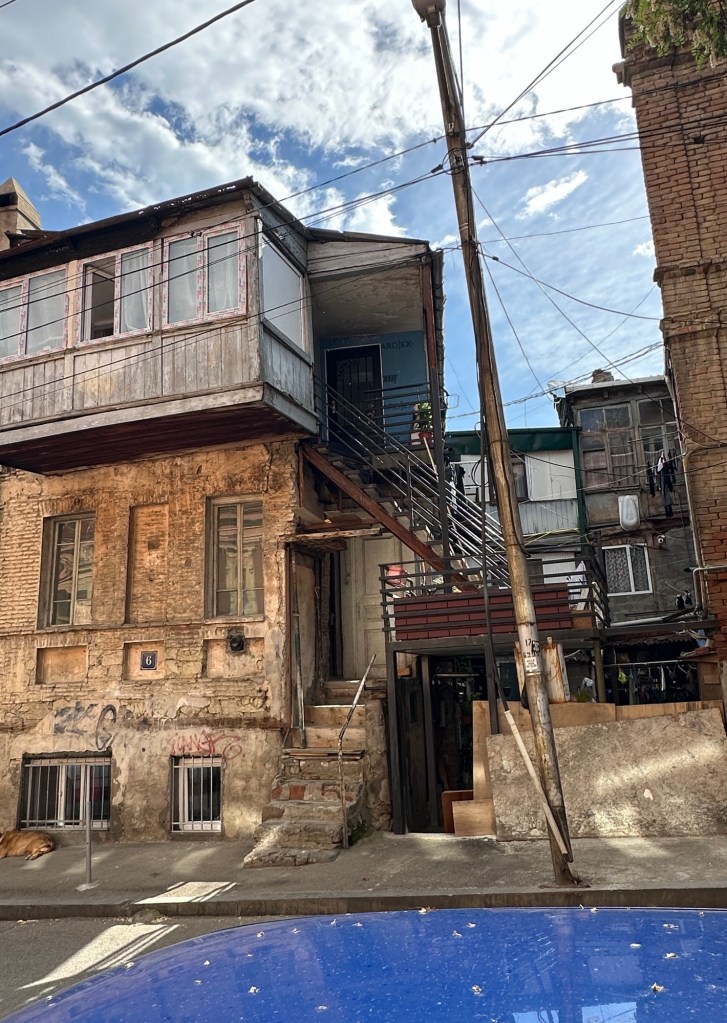
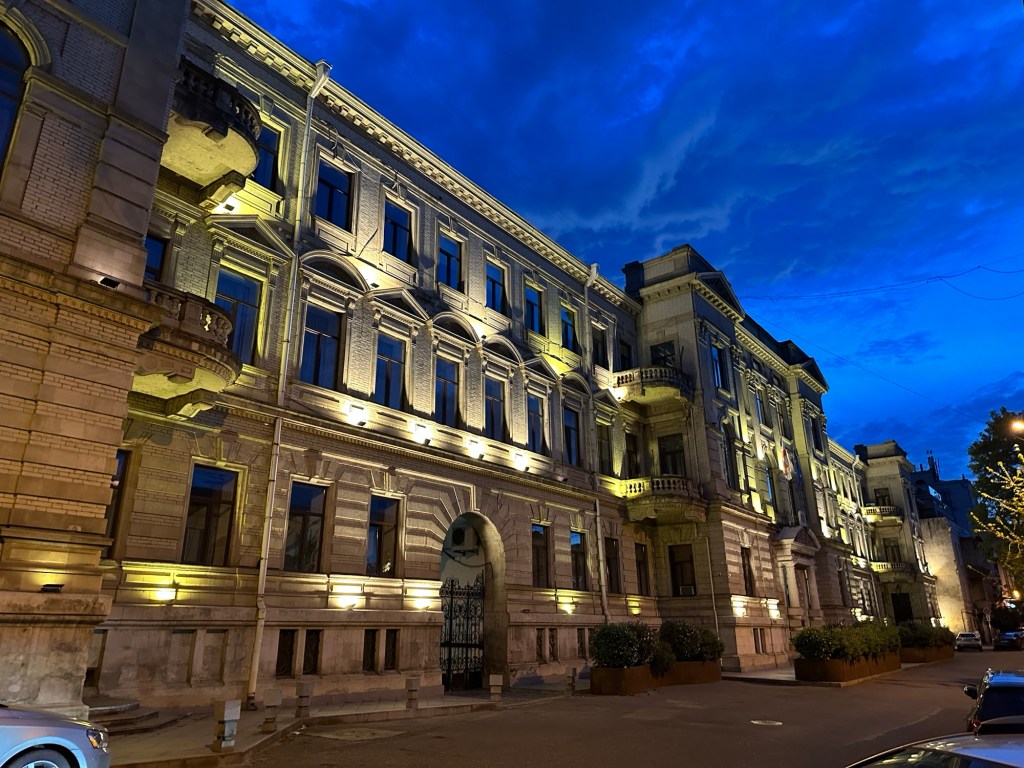
We see the remnants of the old city wall and we walk through old town and learn about the courtyard life. Many of these houses with the distinct courtyards used to be single family homes but now are often divided into different aparments or set up as a hotel for tourism.
Old walls
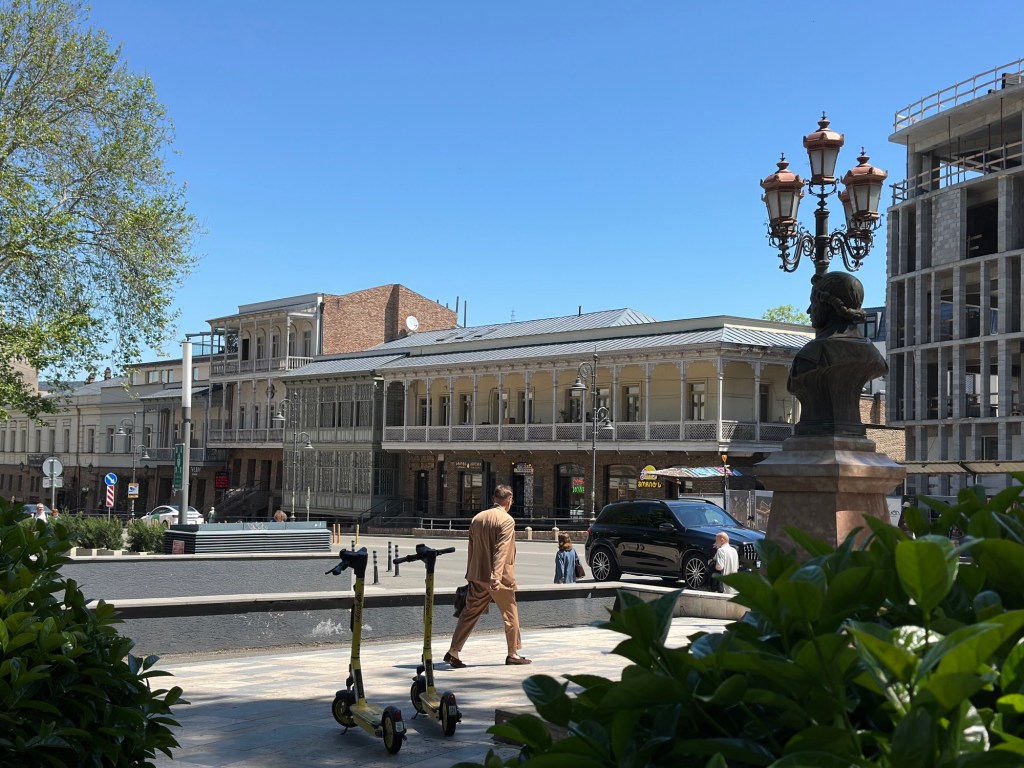
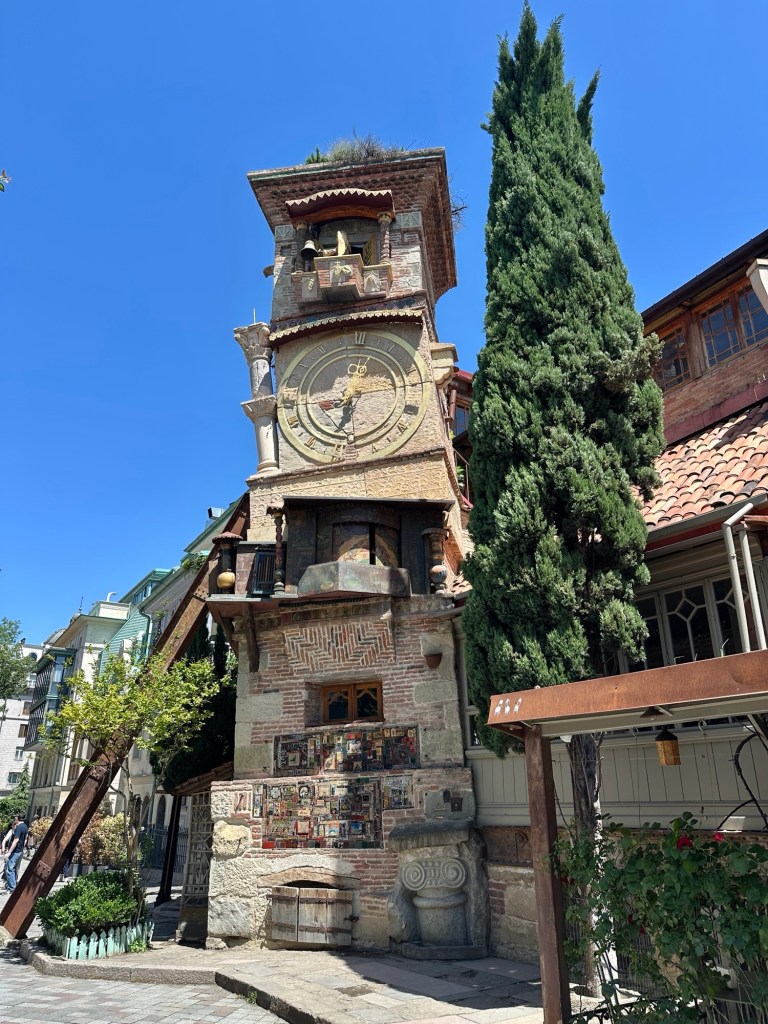
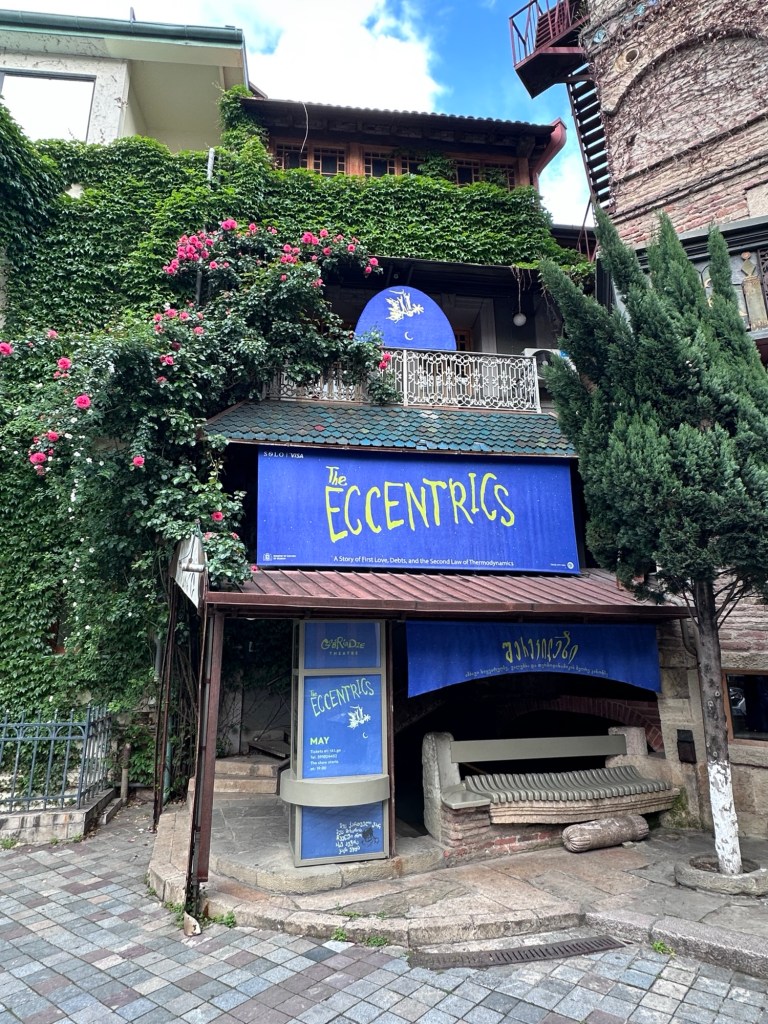
We walk through old town and see the clock but it is not operational today due to a power outage. Luckily we are in town for multiple days so we have more opportunities to see the clock perform. It is right next door to a popular puppet theater. Unfortunately it is one of those tickets that have to be booked in advance so we probably won’t see a show during our stay in Tbilisi.
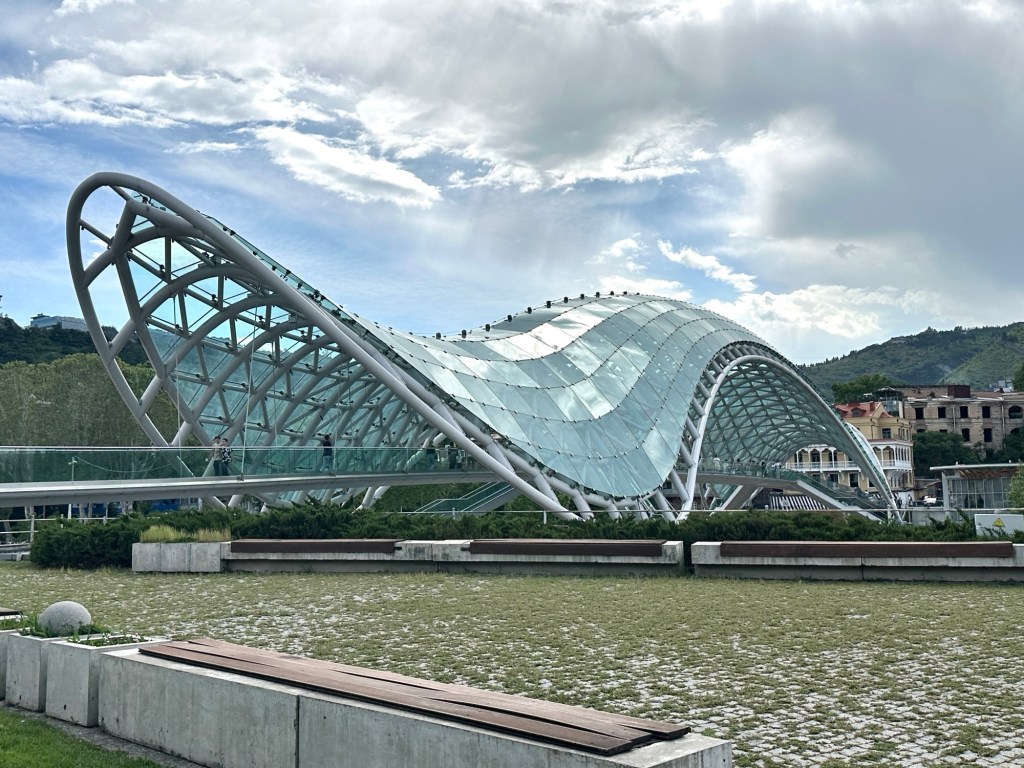
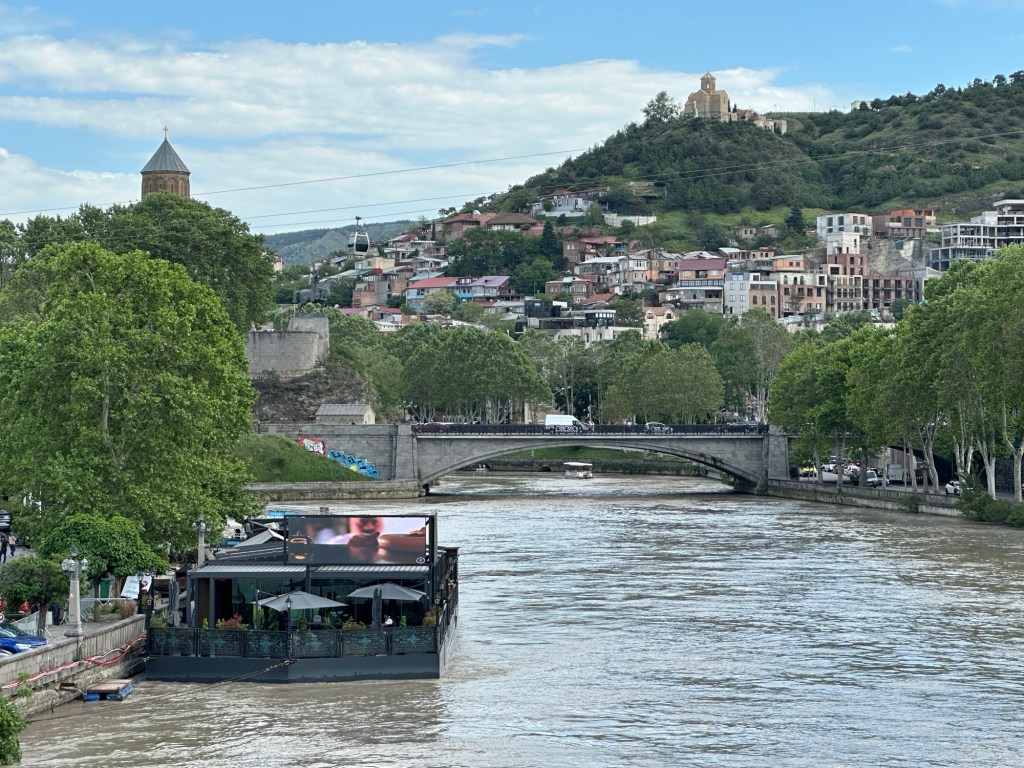
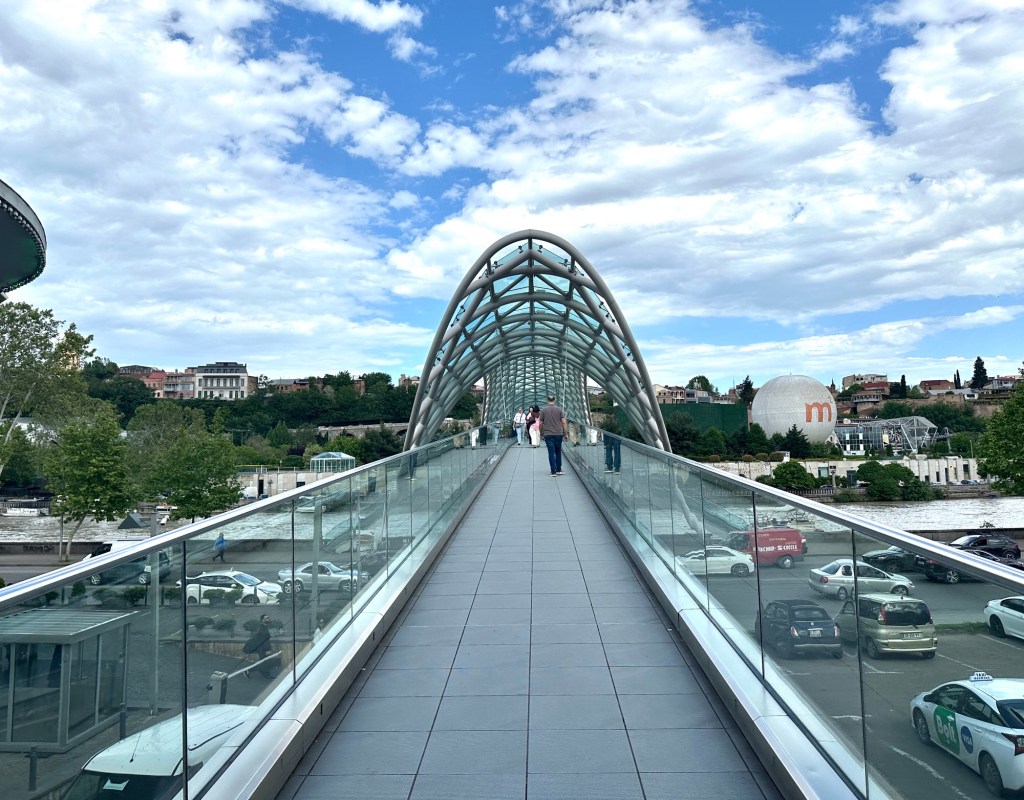
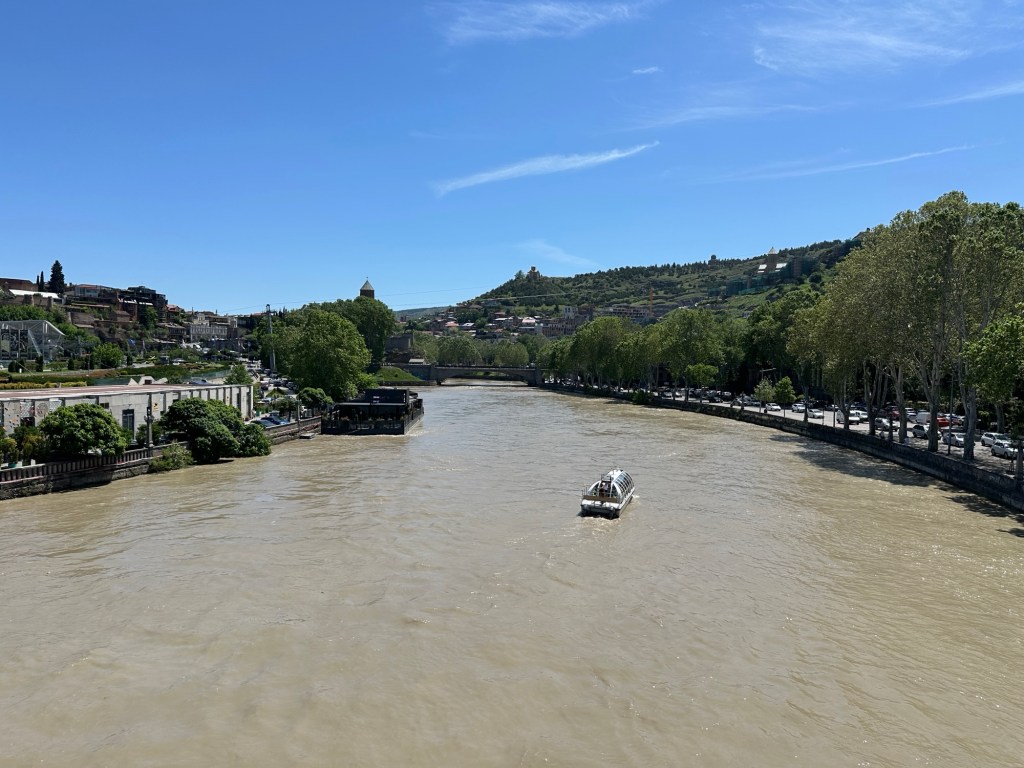
We walk over to the bridge of peace, the bridge that connects old Tblisi with the new.
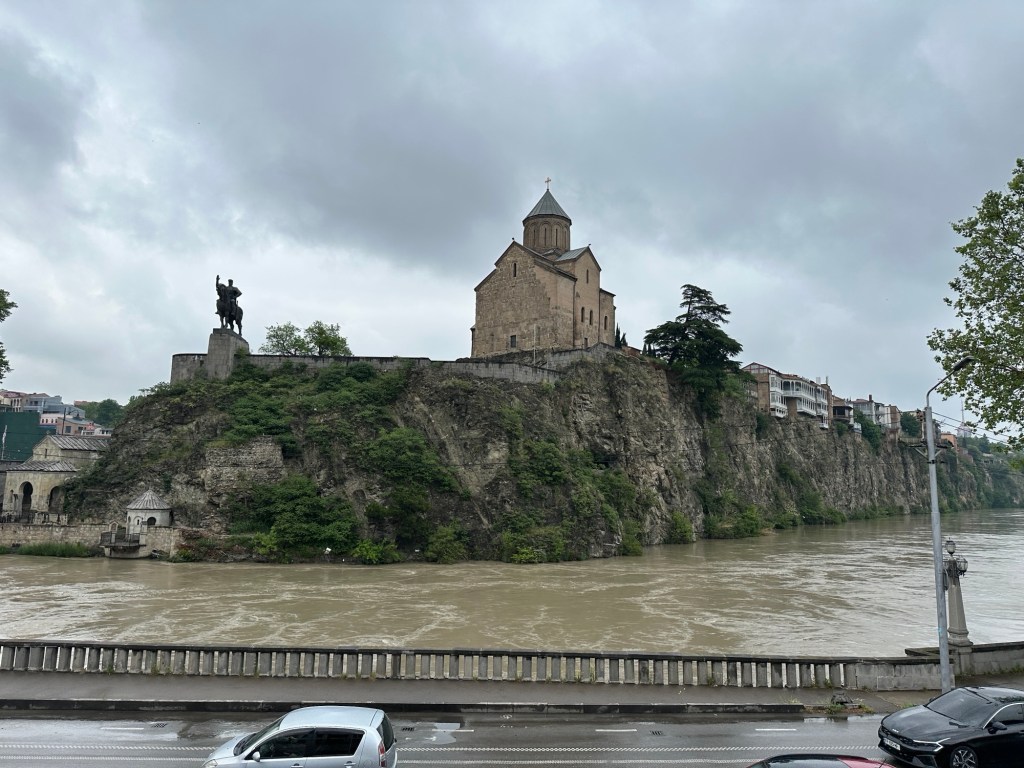
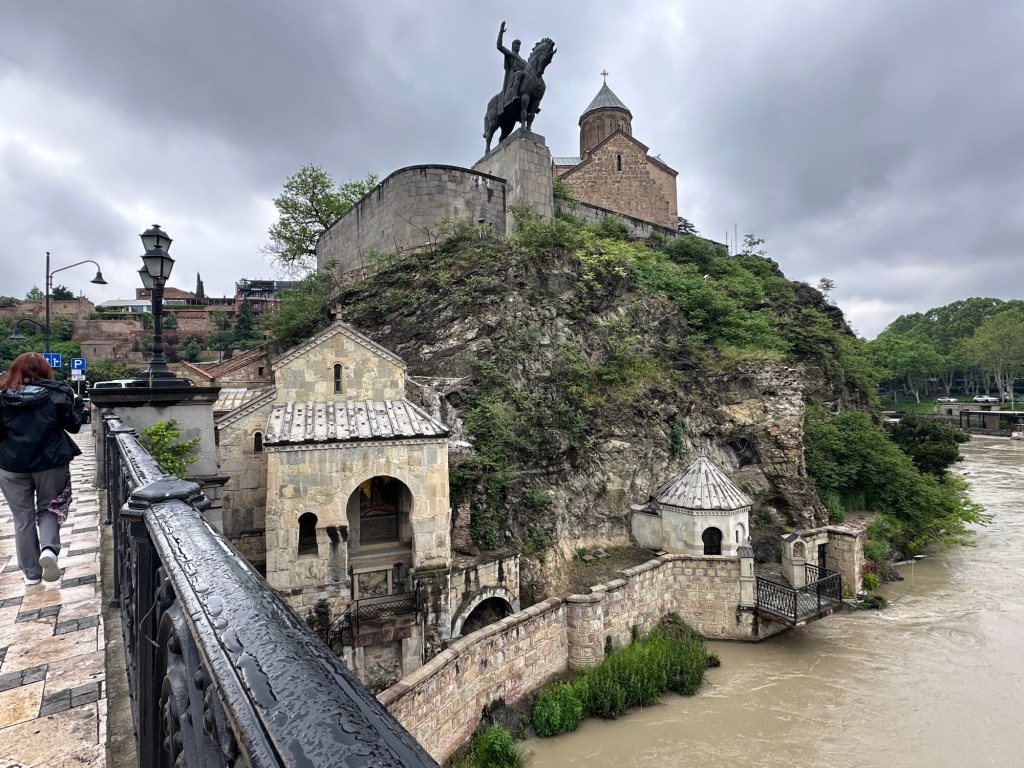
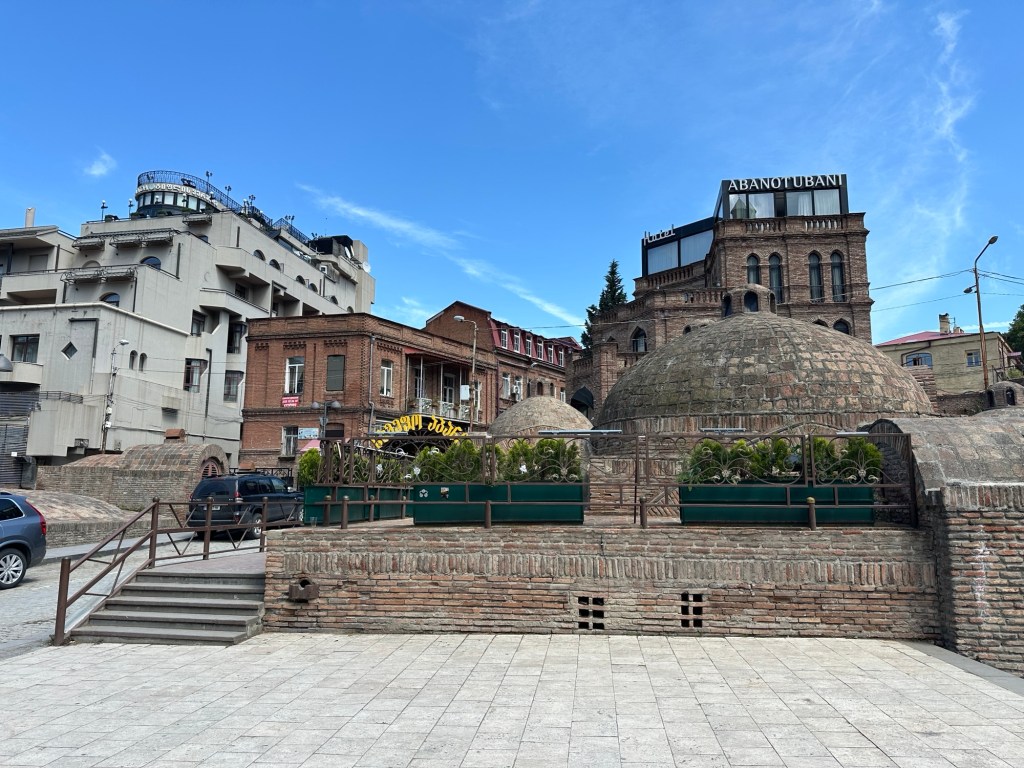
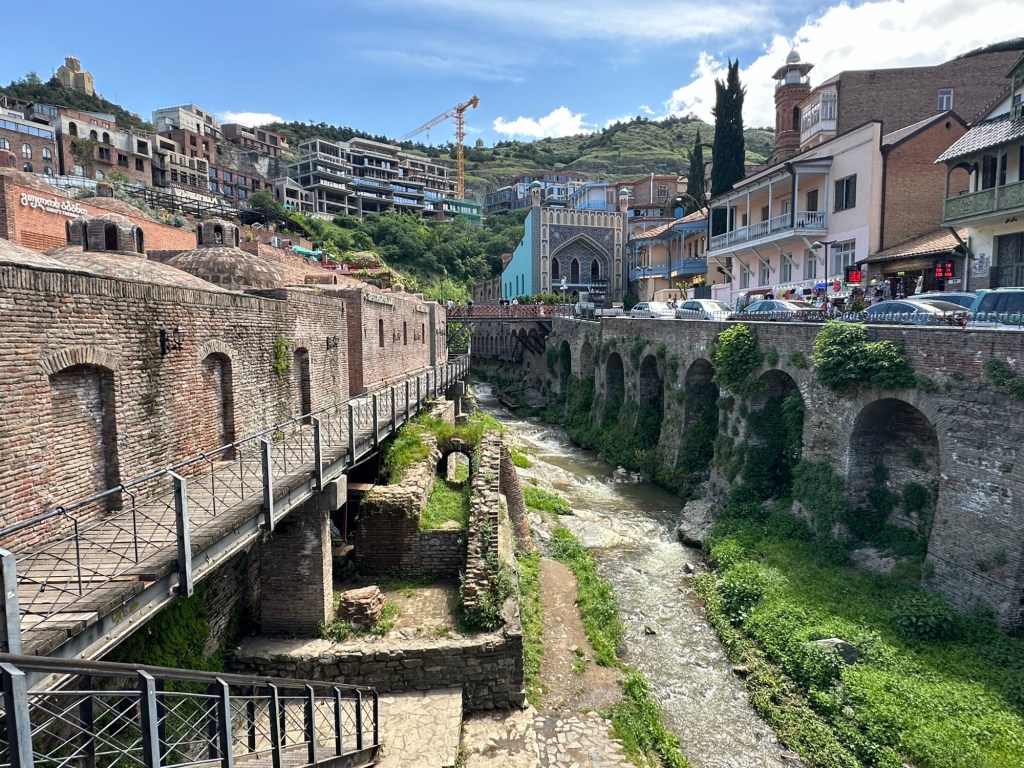
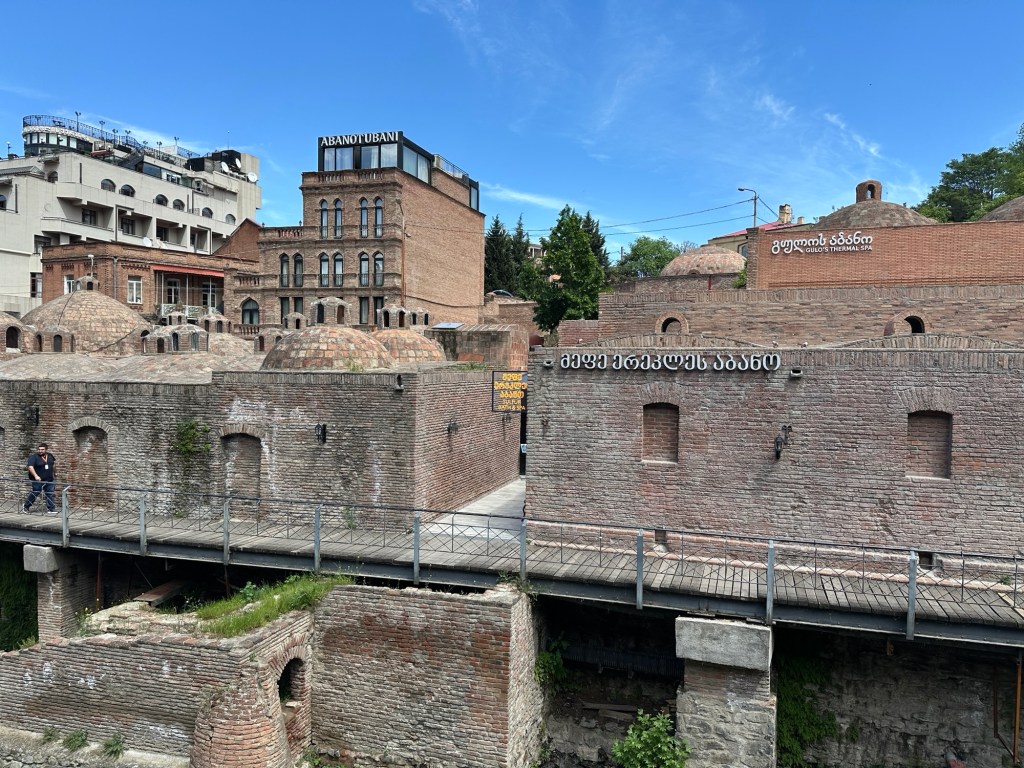
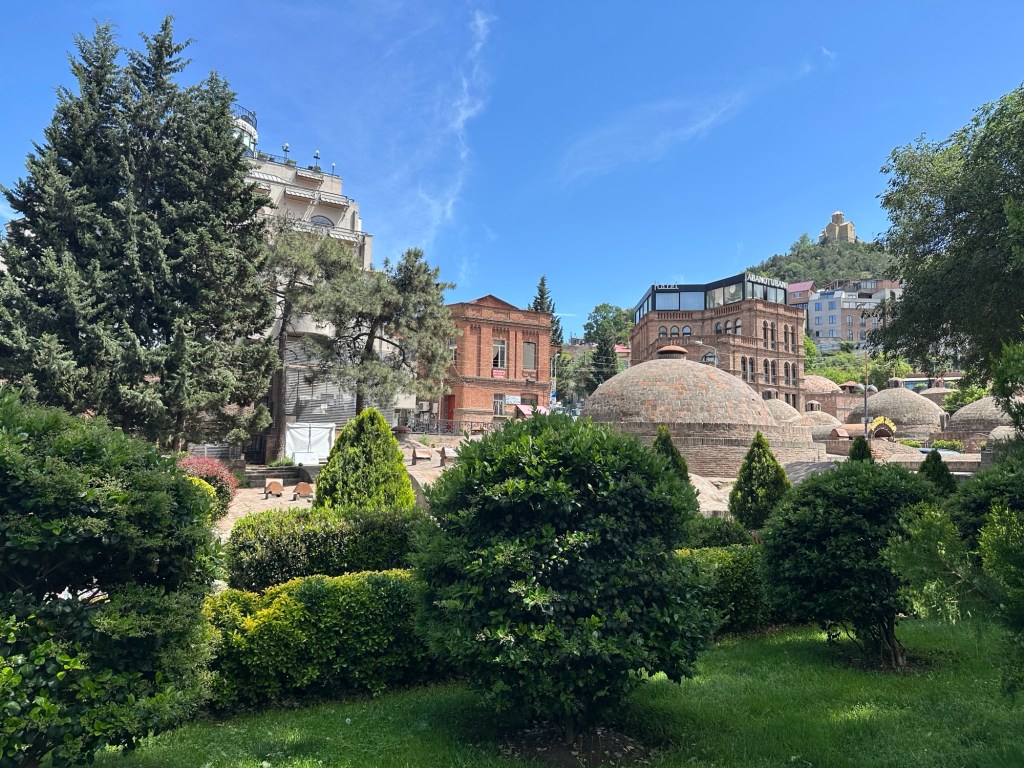
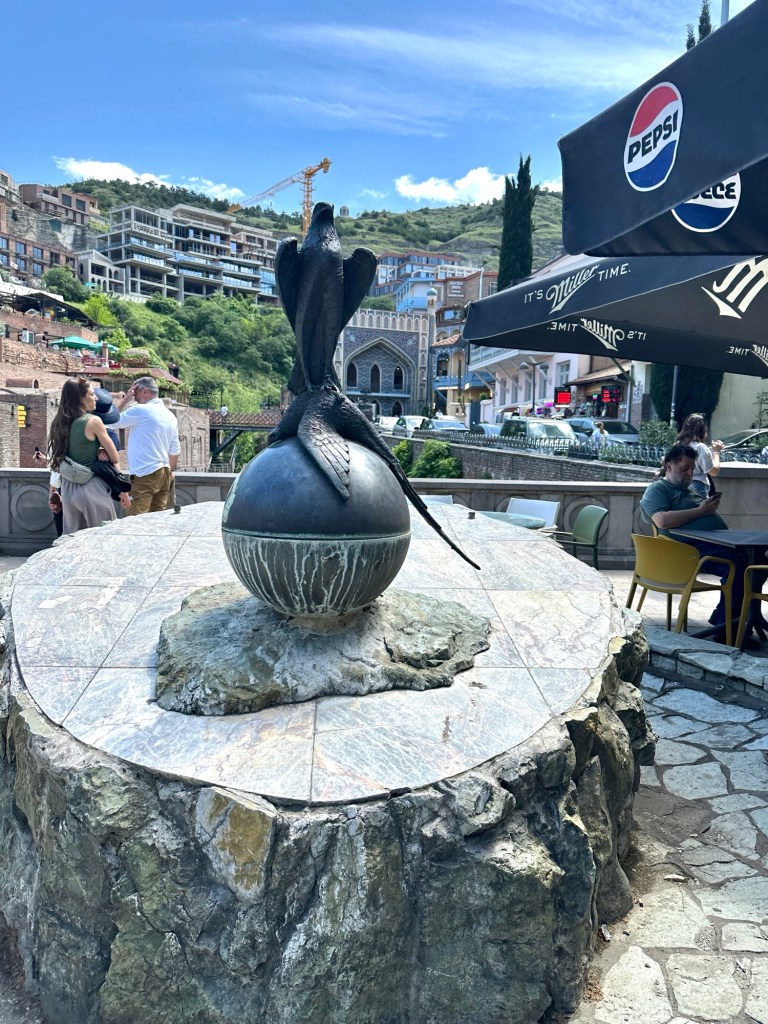
We wander around a few other areas in old town then end up by the sulphur baths. The city was literally founded because of the sulphur spring. King Vakhtang I Gorgasali hunted in the area with a falcon and the story is the falcon is lost and later found dead in the sulphur spring. The king decided to create a town and name it after springs. If we have time we may come back for a massage or time in the spa rooms. I’ve heard it is a unique spa experience.
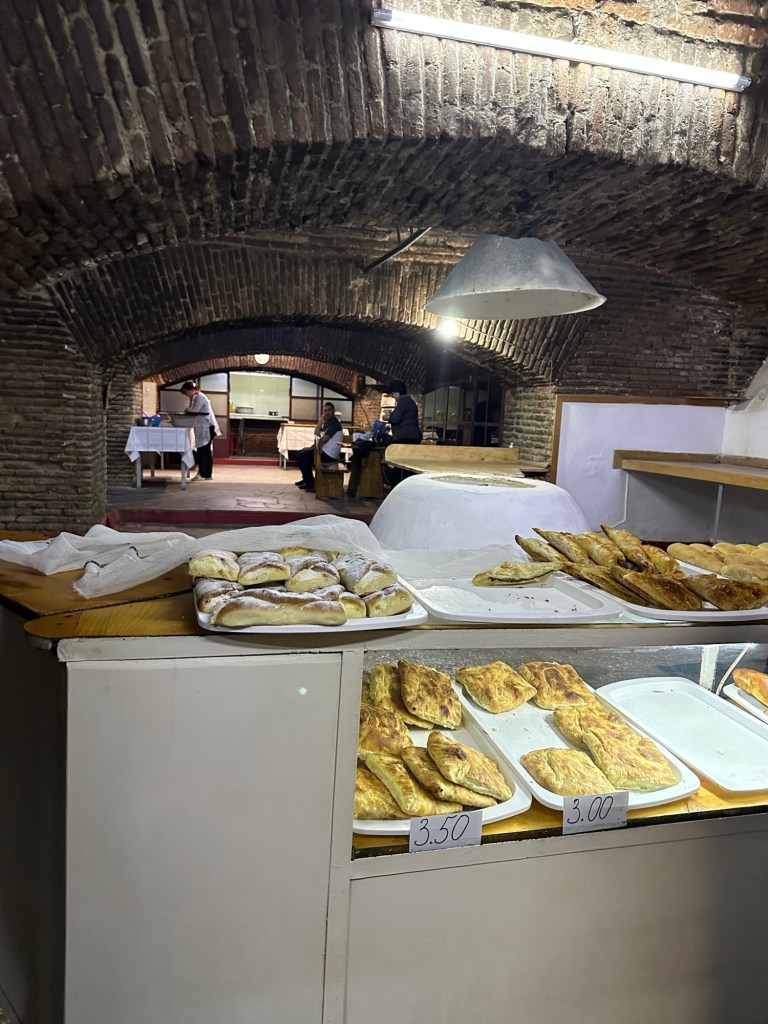
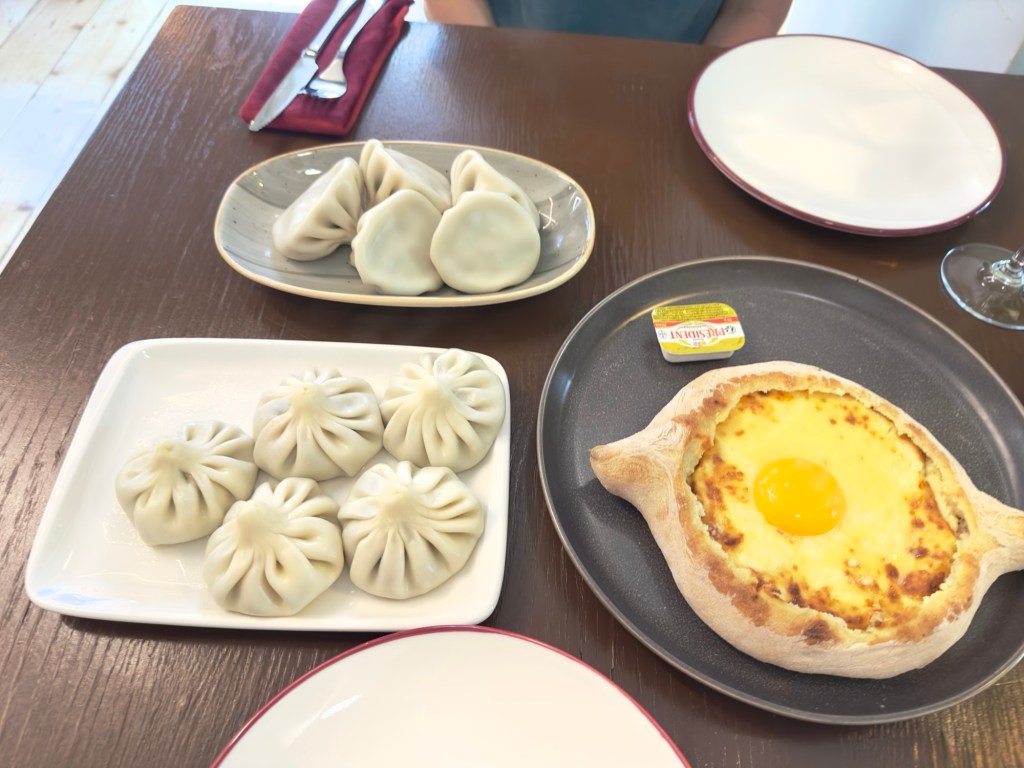
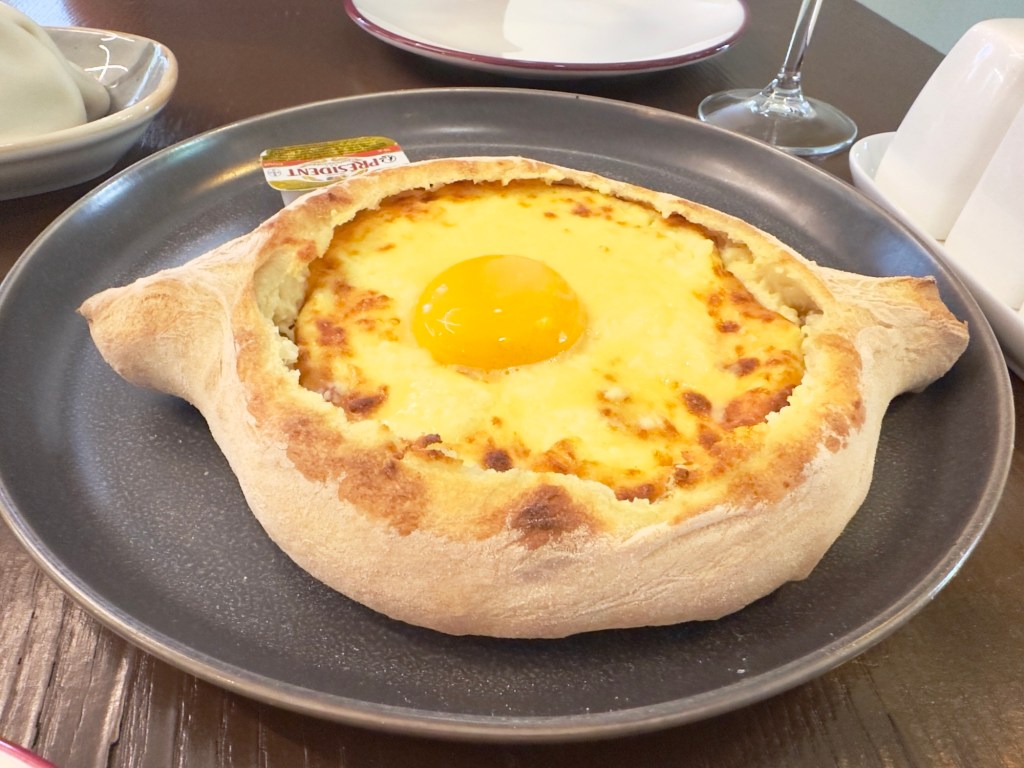
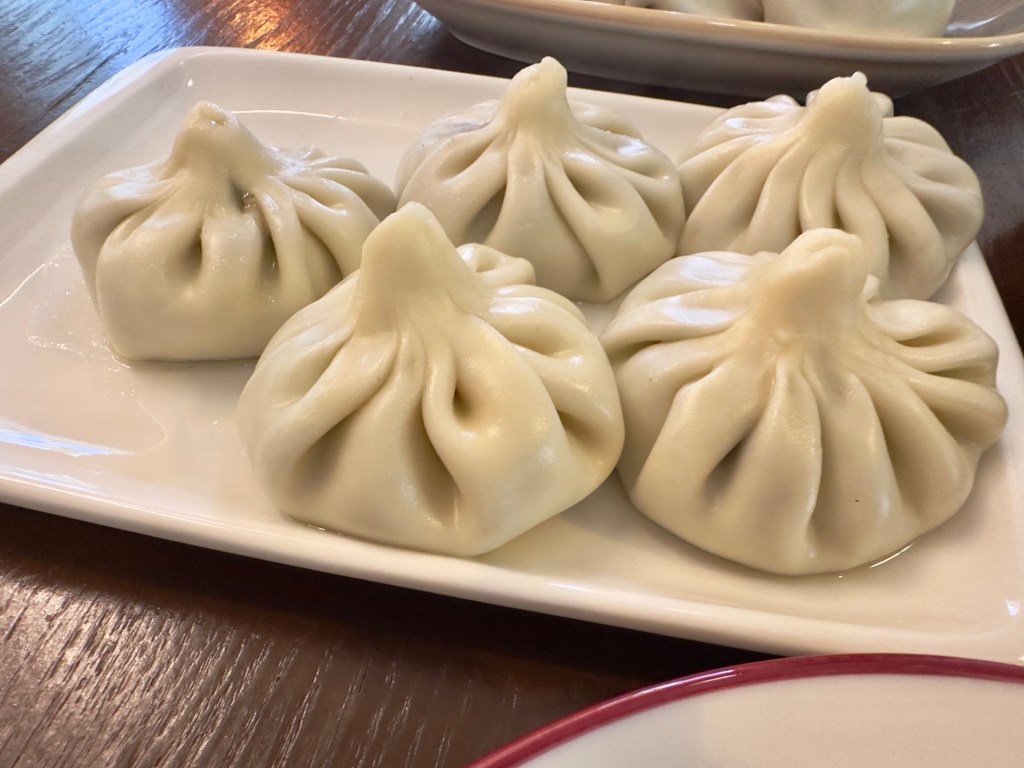
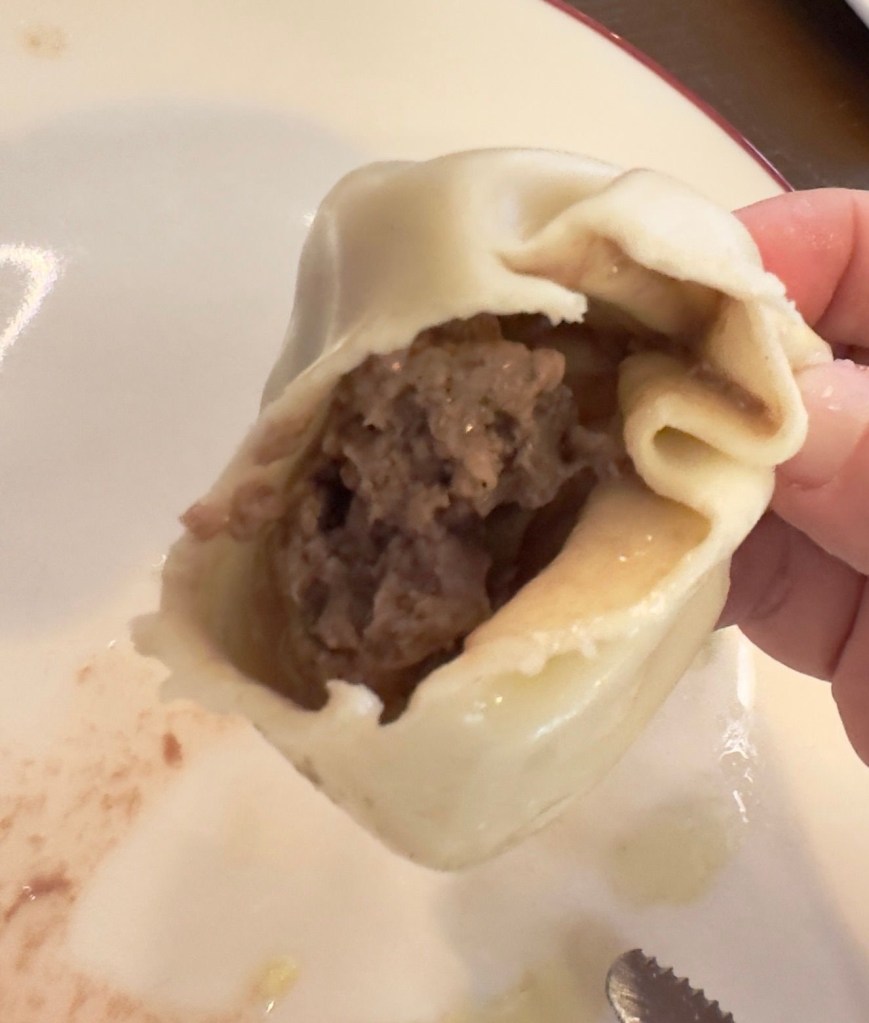
We leave the tour group and eat at a khinkali restaurant recommended by our guide. Khinkali is a similar to a soup dumpling, it’s usually filled with beef, beef and pork, mushroom, cheese or potatoes. Some have juice or a soup like liquid inside. We try two different khinkalis, one meat and one mushroom. I would have like to try more types but each order is a minimum of five and khinkali are already very filling. We also order one khachapuri and the waiter warns us it is very small and only enough for one person. Not sure how much he thinks we can eat but is more than enough food for the two of us. This is not my first khachapuri, my first experience is at a restaurant in Brooklyn, New York. There are different variations of this dish but my favorite is when it is shaped like a boat filled with melted cheese. A raw egg is put on top. You are to mix in the egg right away with the hot cheese to give a rich cheesy bread dip.
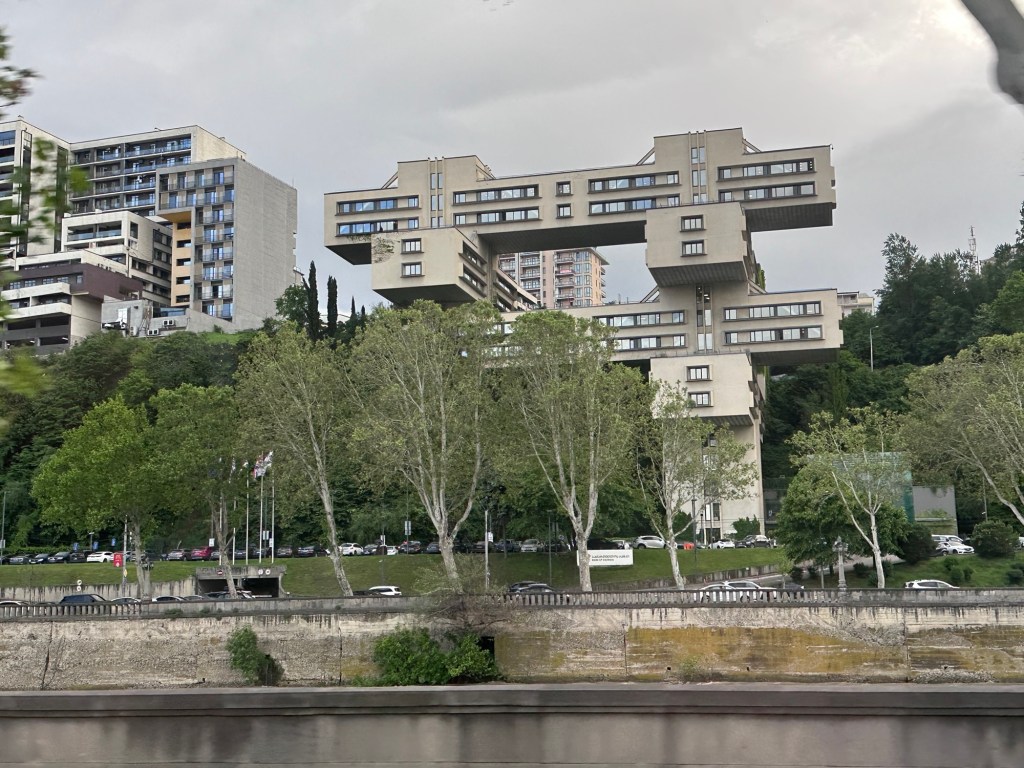
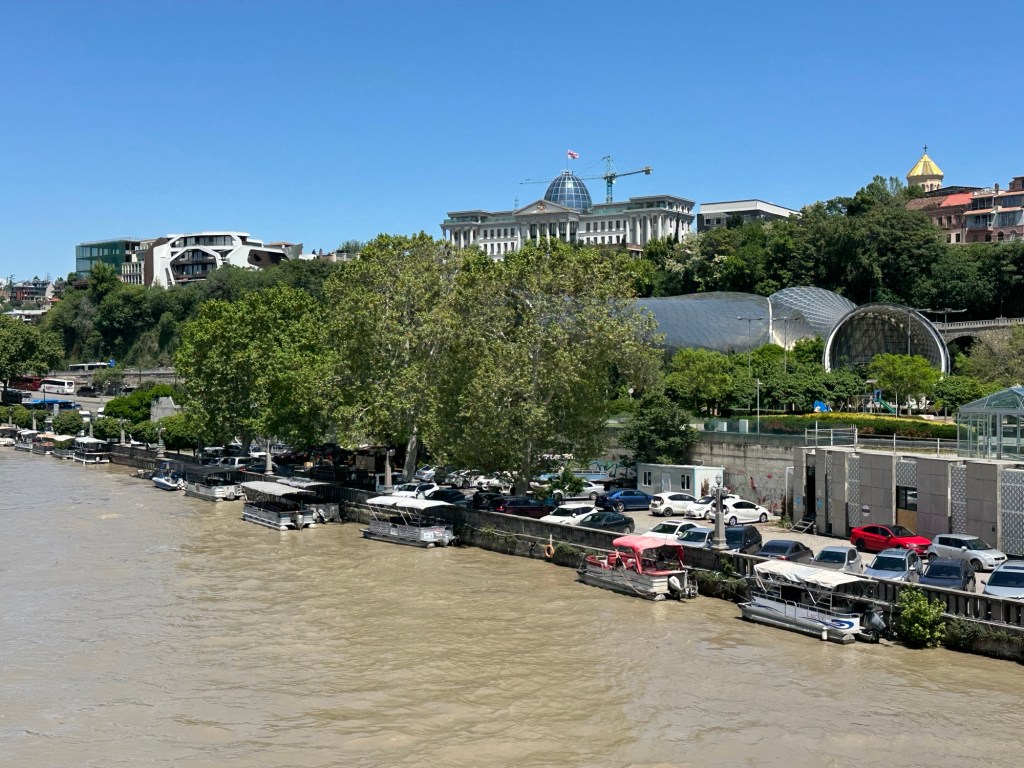
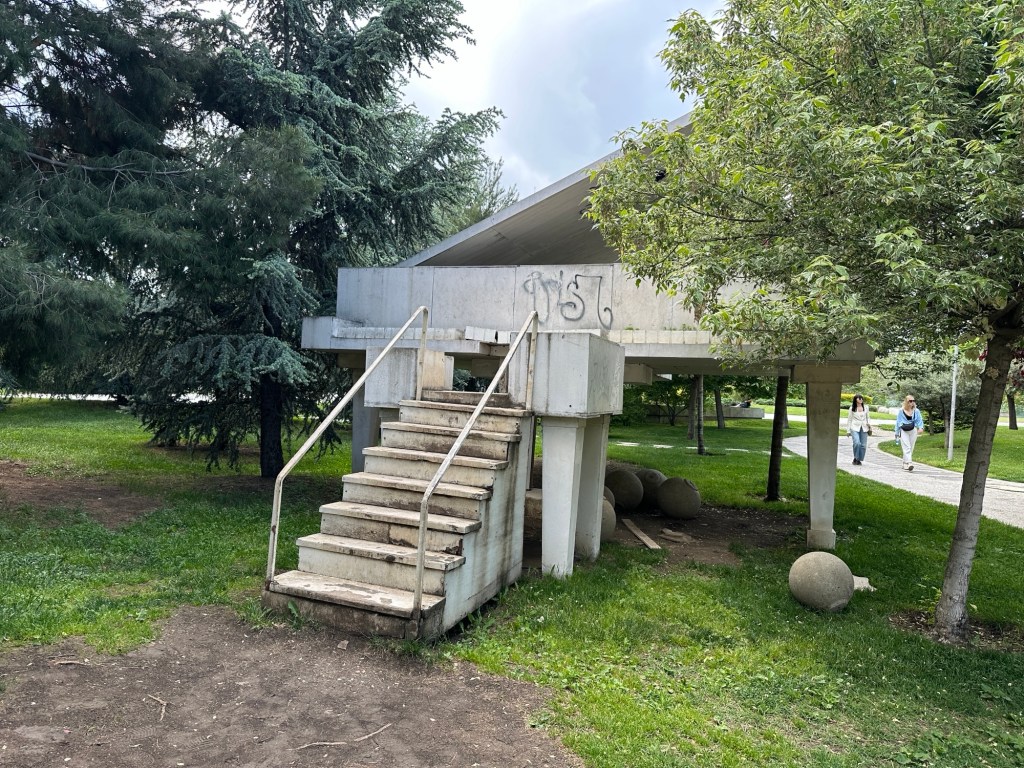
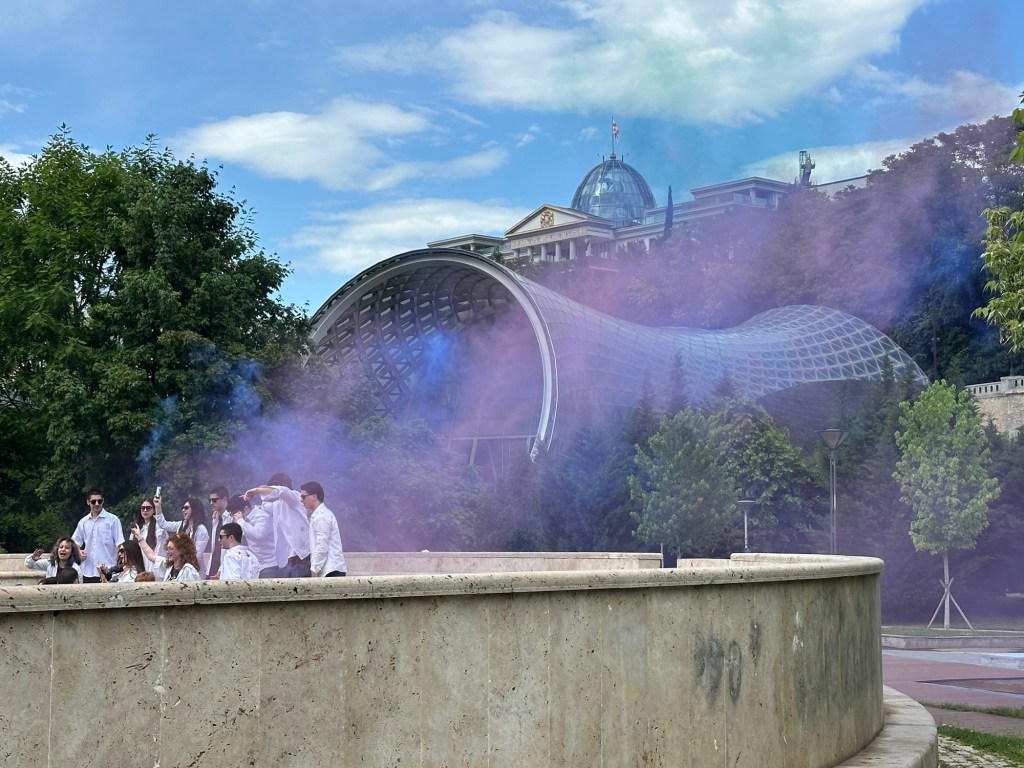
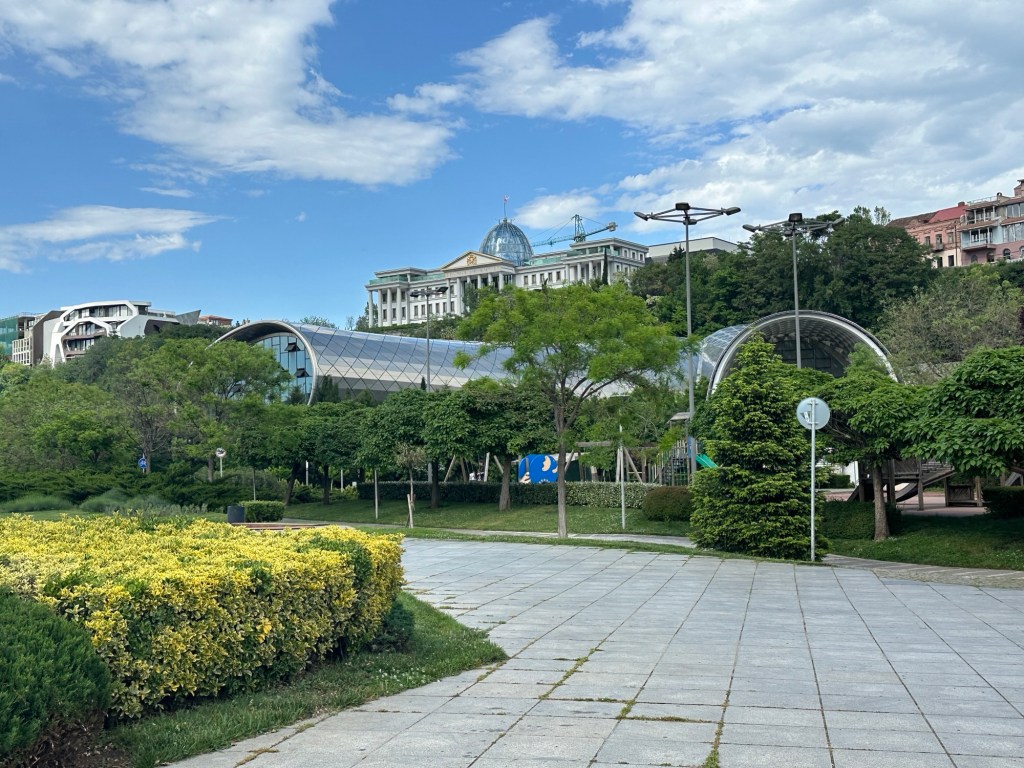
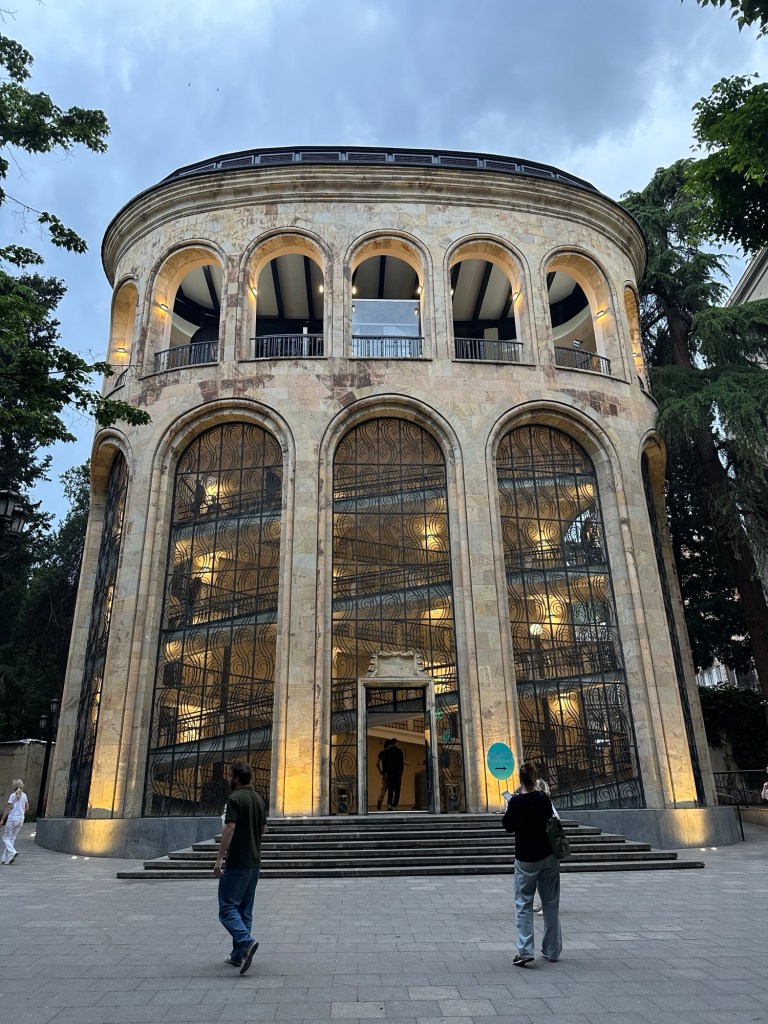
We are very tired and jet lagged but we decide it is best to keep going so we adjust to the time change. We pick a destination on the other side of the river to resume our sightseeing. We once again cross the peace bridge and spend a moment at Rike park on the way. We view a Ronald Reagan memorial statue, a group making a TikTok video, the now unused futuristic music theater, and some other interesting architecture on the way.
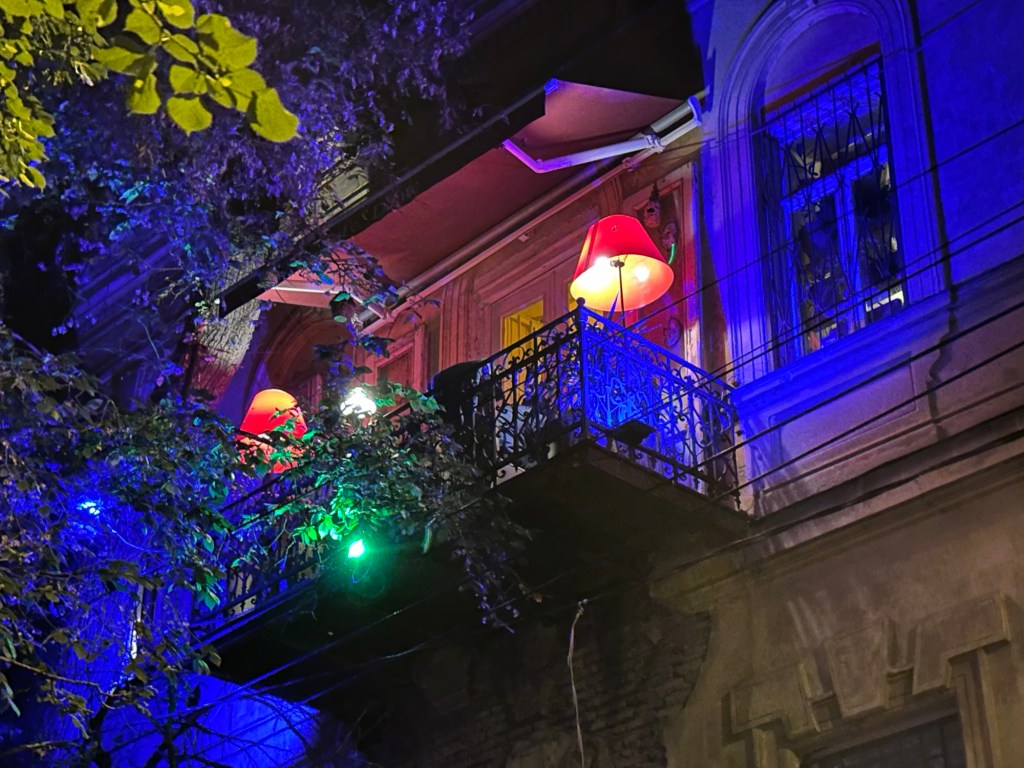
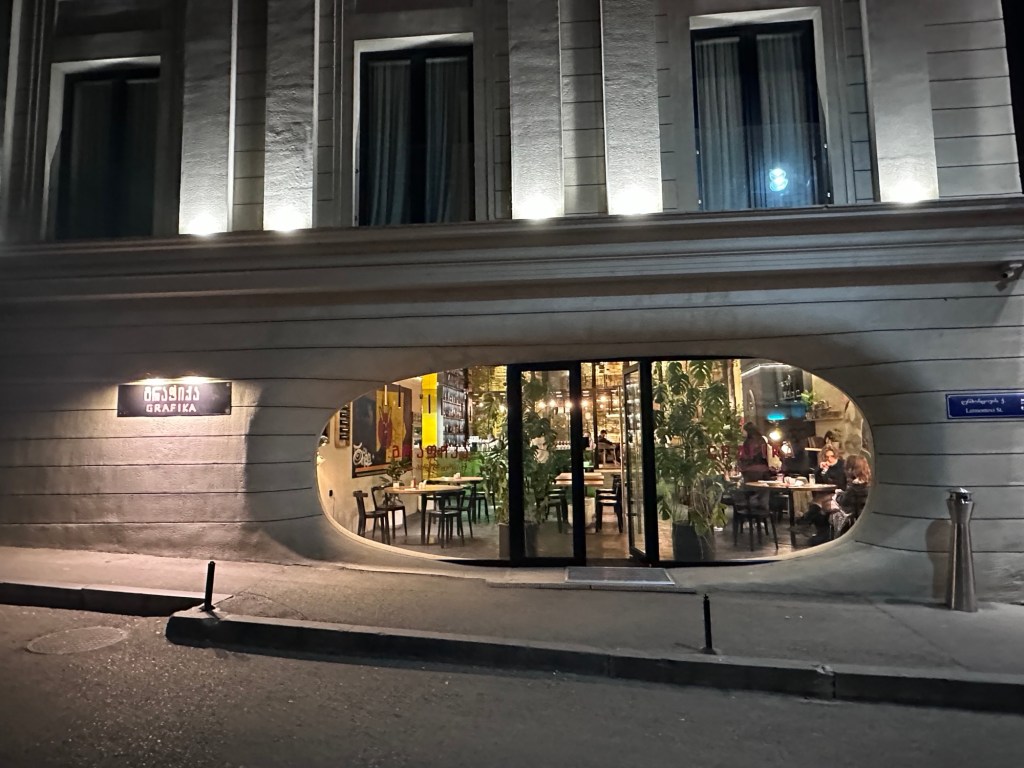
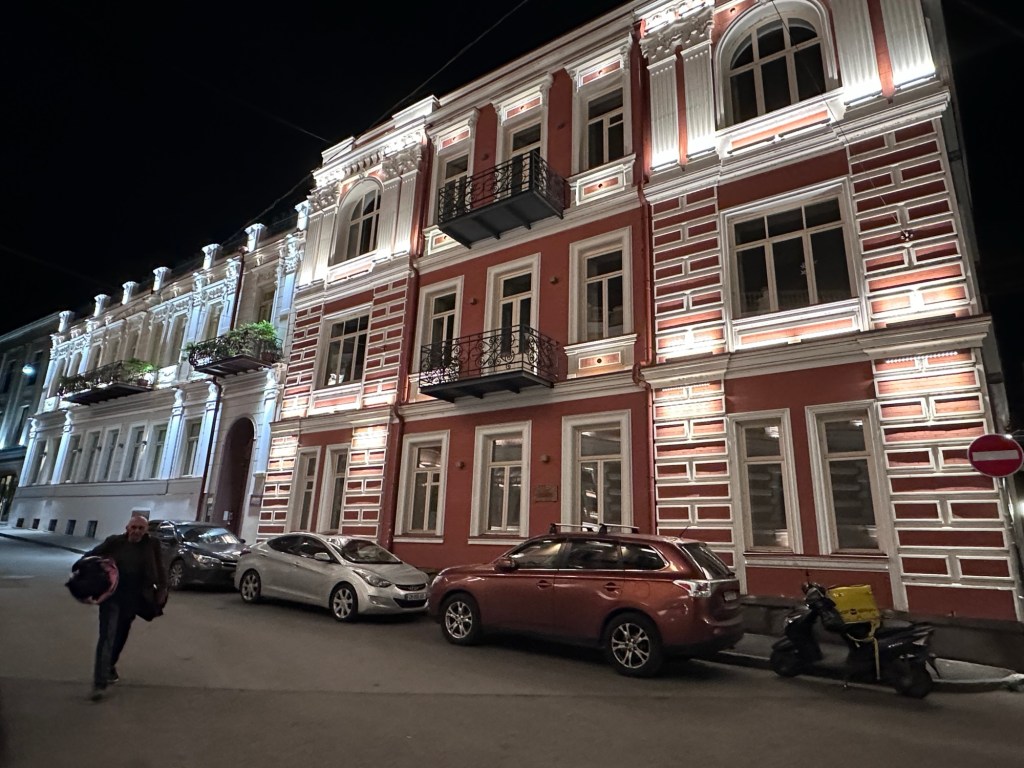
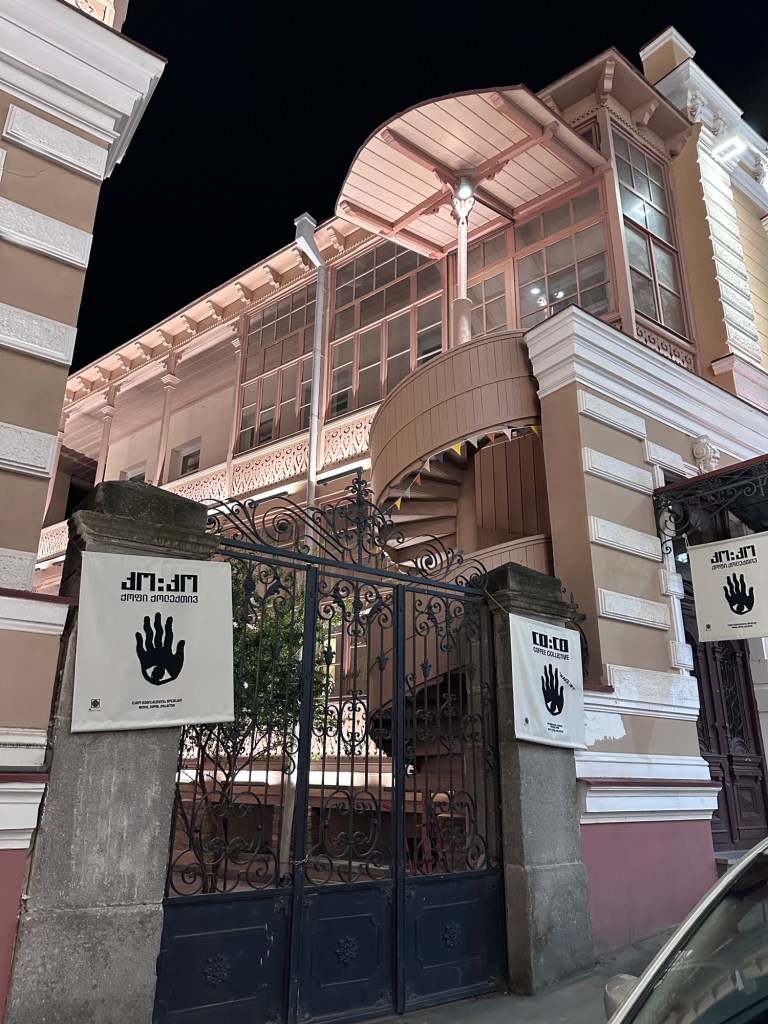
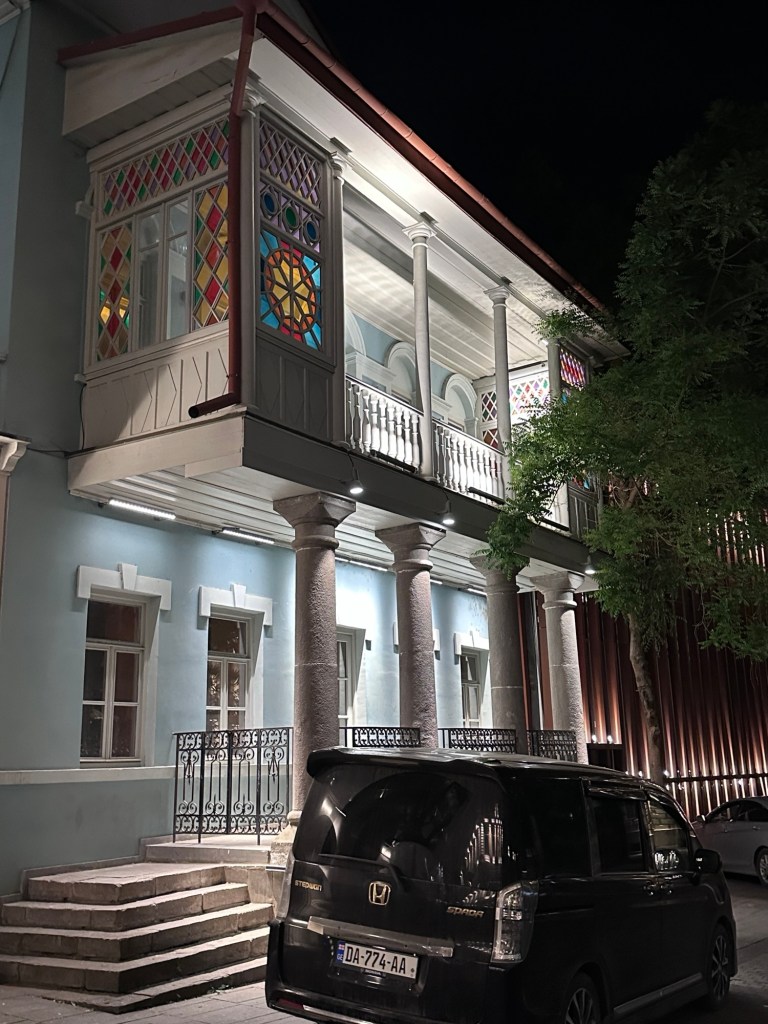
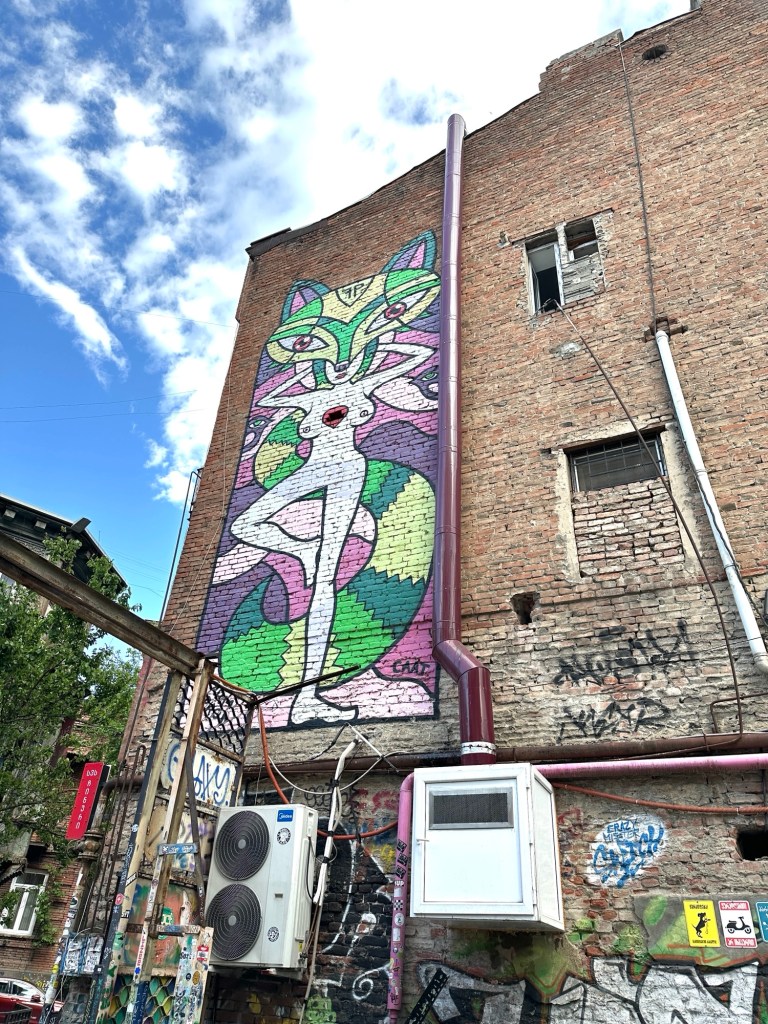
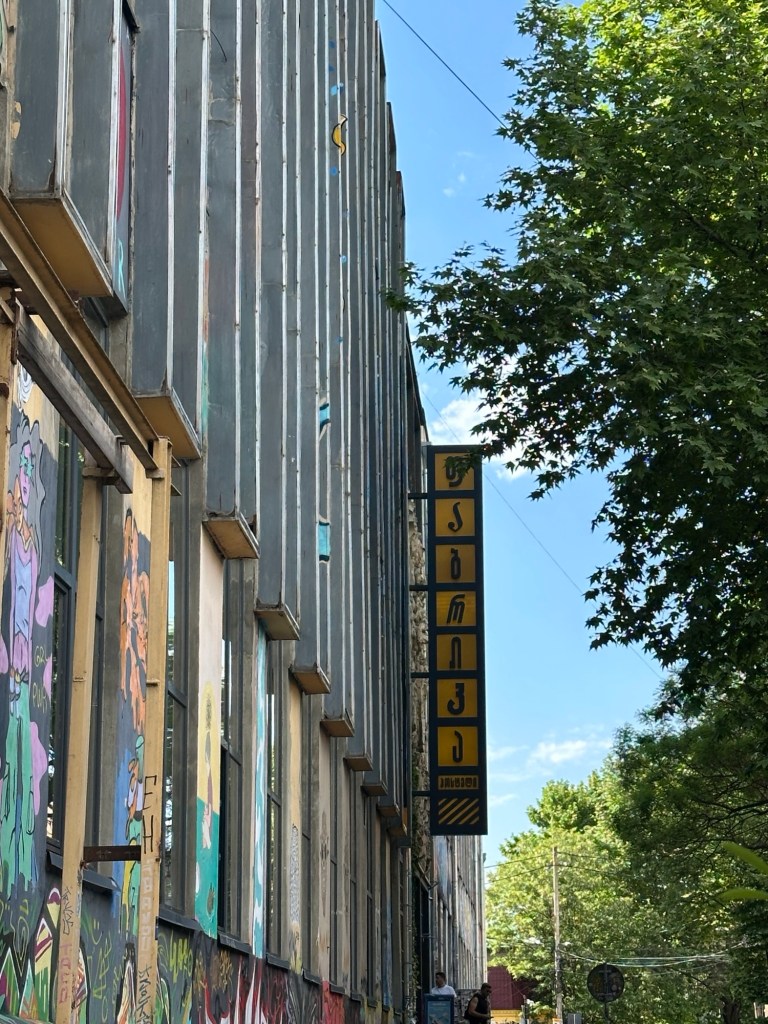
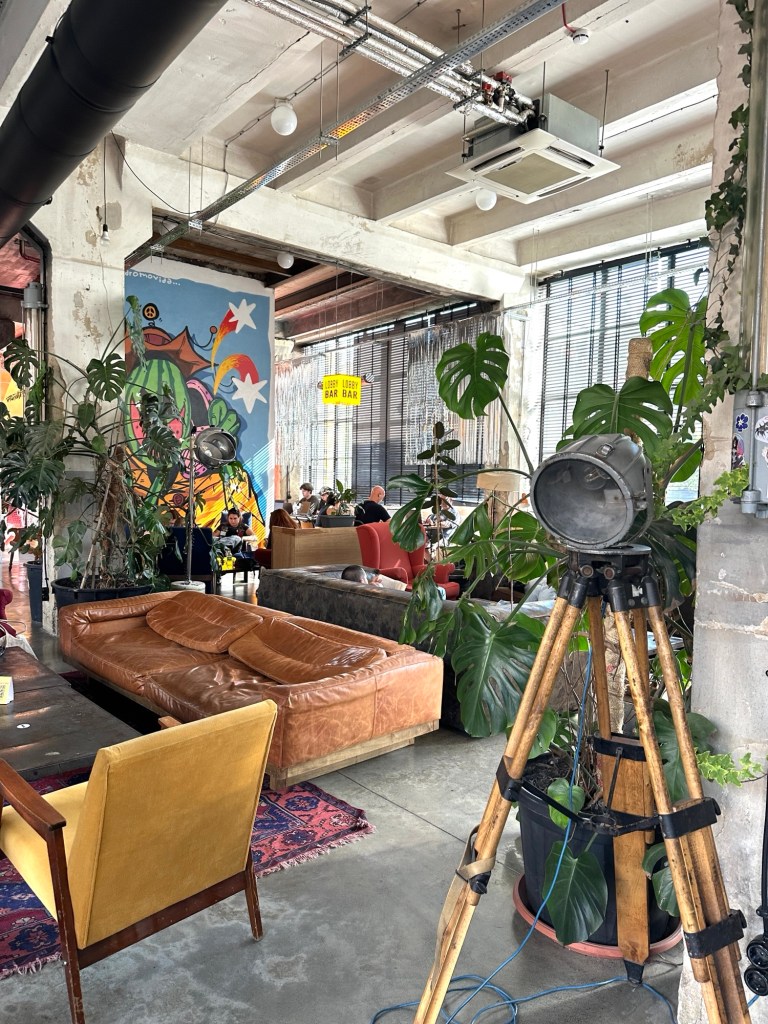
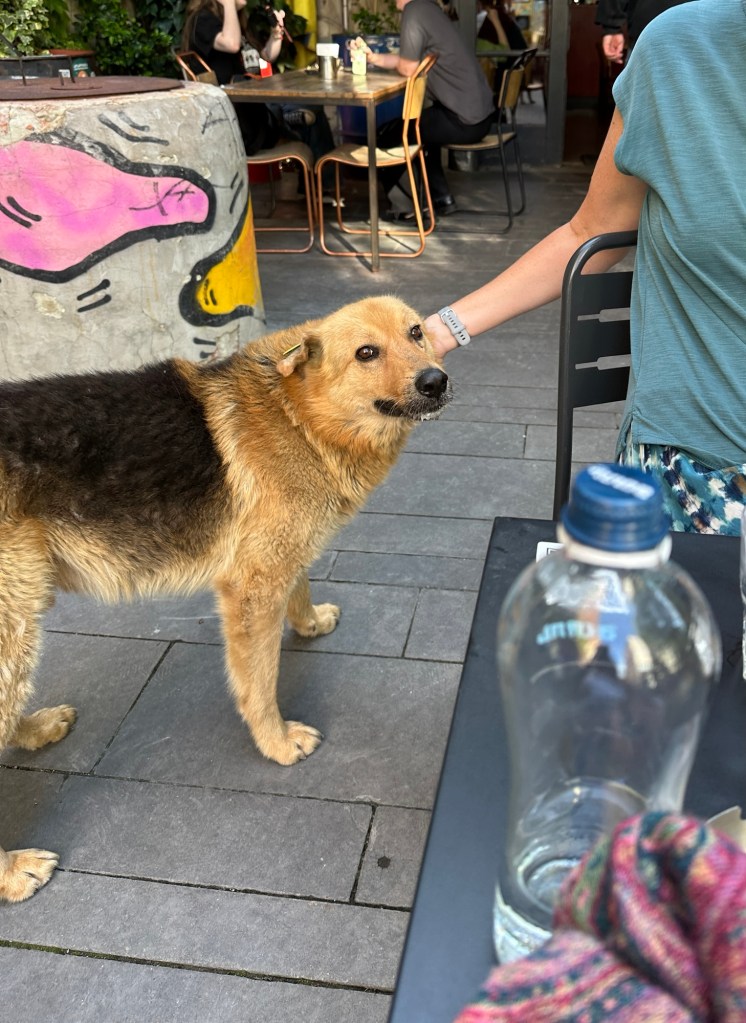
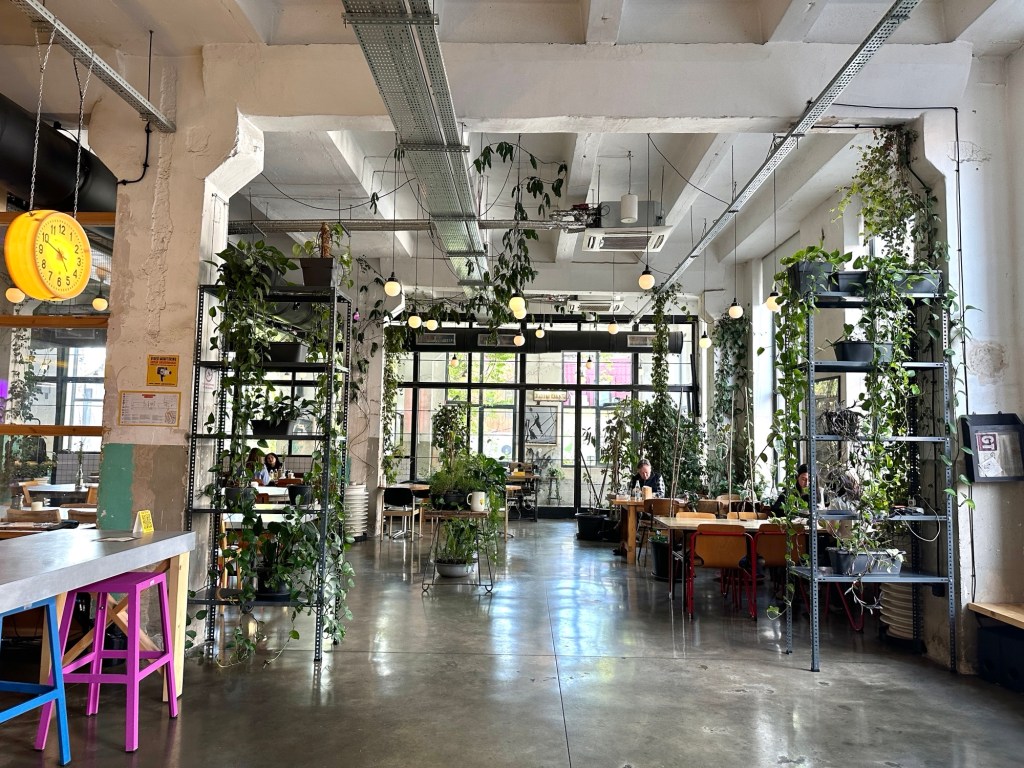
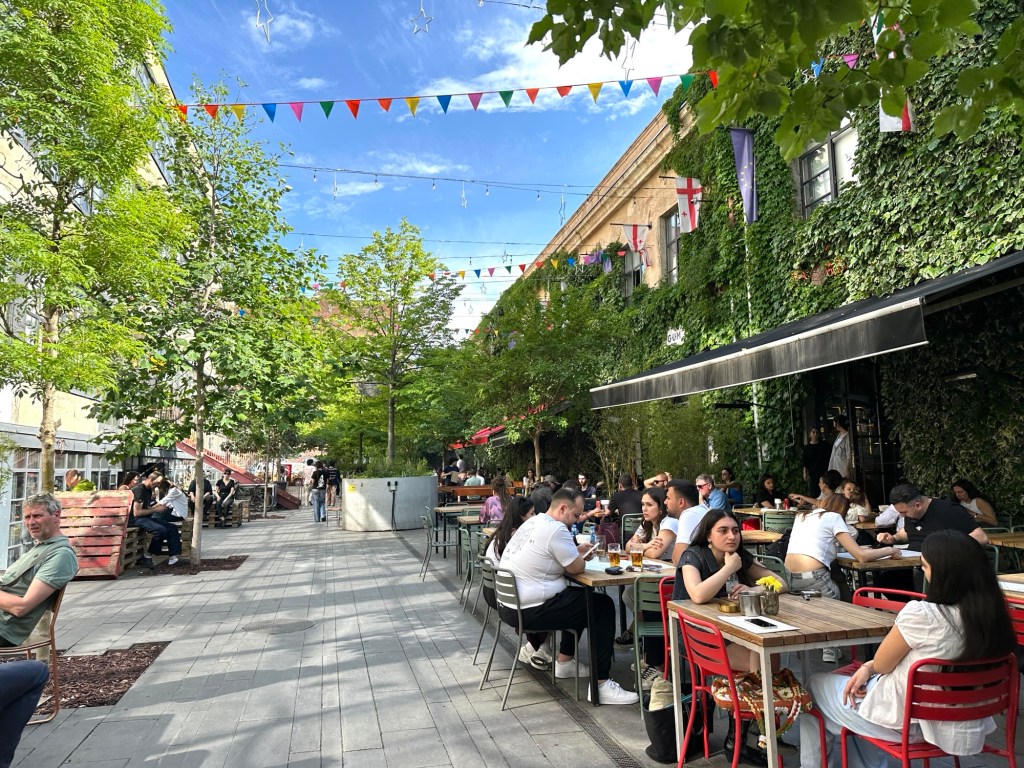
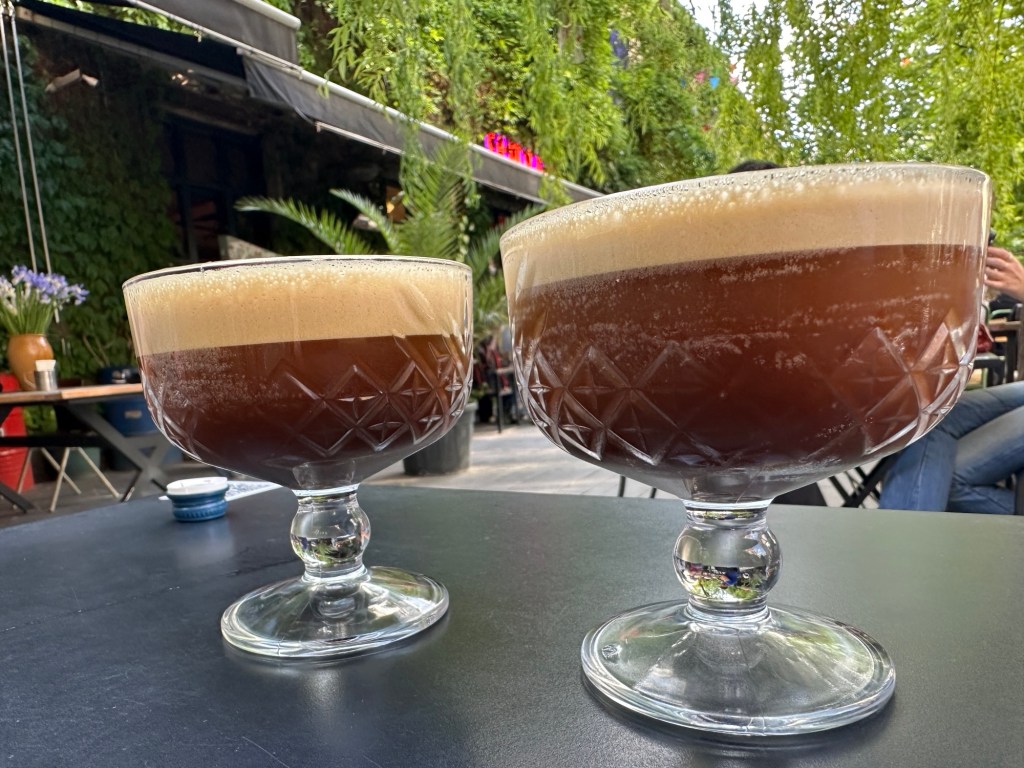
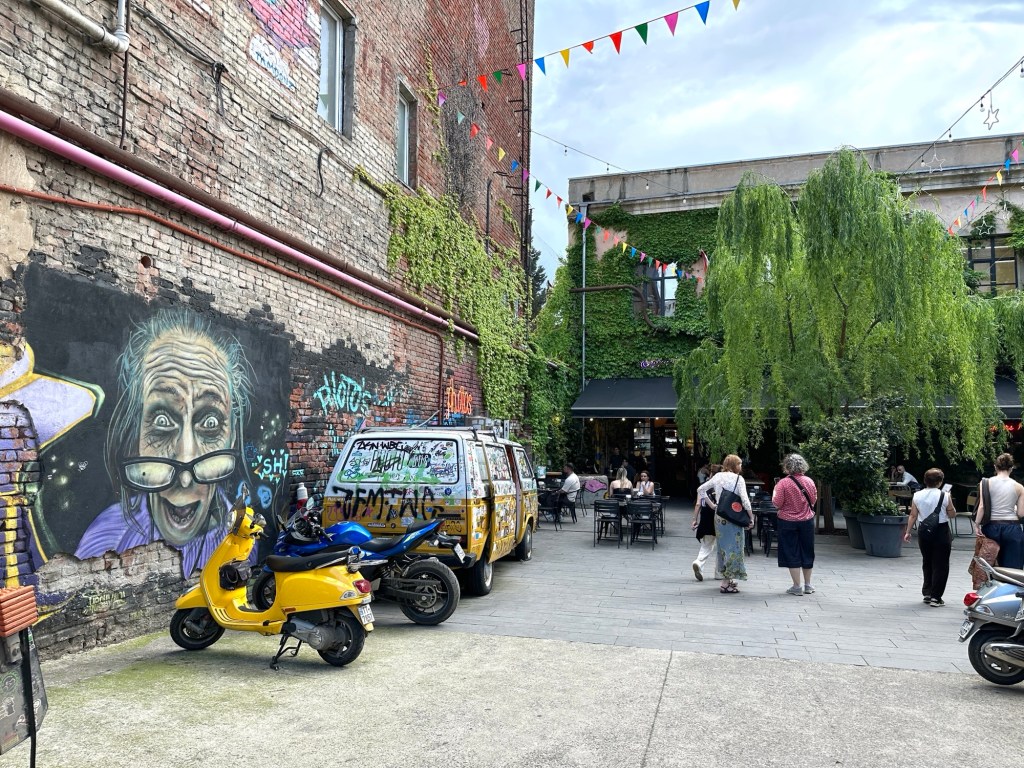
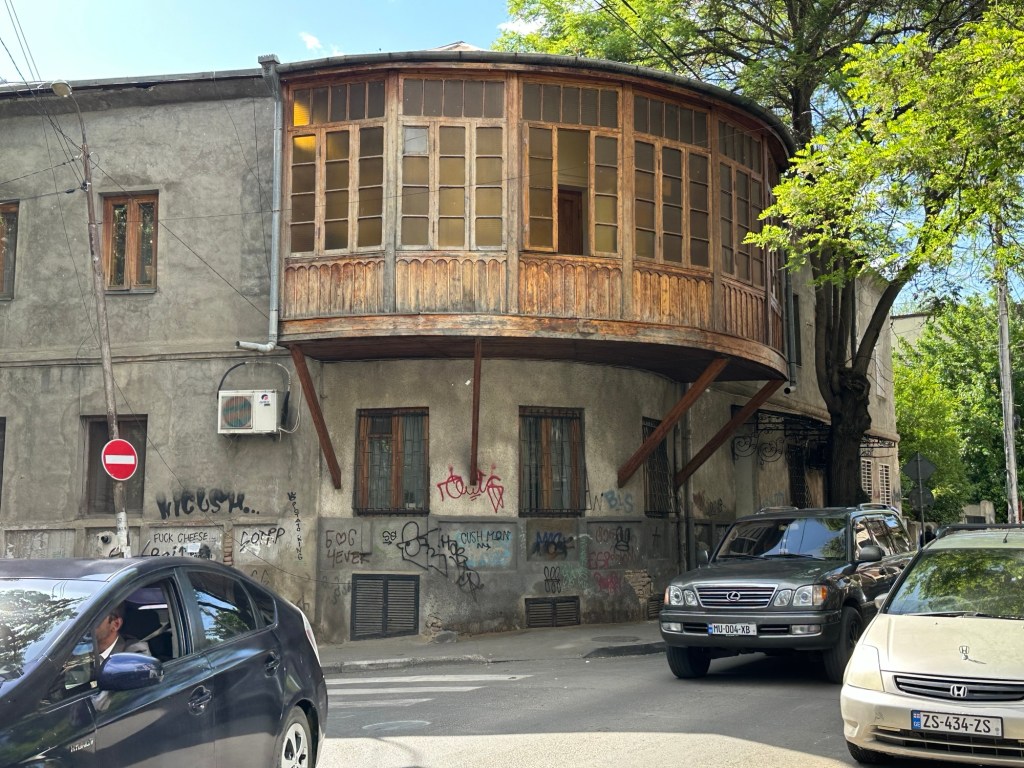
We arrive at Fabrika Tbilisi, a repurposed former clothing factory that is now a hip hotel and hangout area. There are clothing stores and hip cafes around. Seems like a good time to stop for a rest and a pick me up drink. Espresso martinis are a great idea right now. We spend some time enjoying the mild temperatures, people watching and observing the behavior of the street dogs that have seemed to make themselves comfortable in this district. This part of town also has the interesting courtyard and balcony architecture.
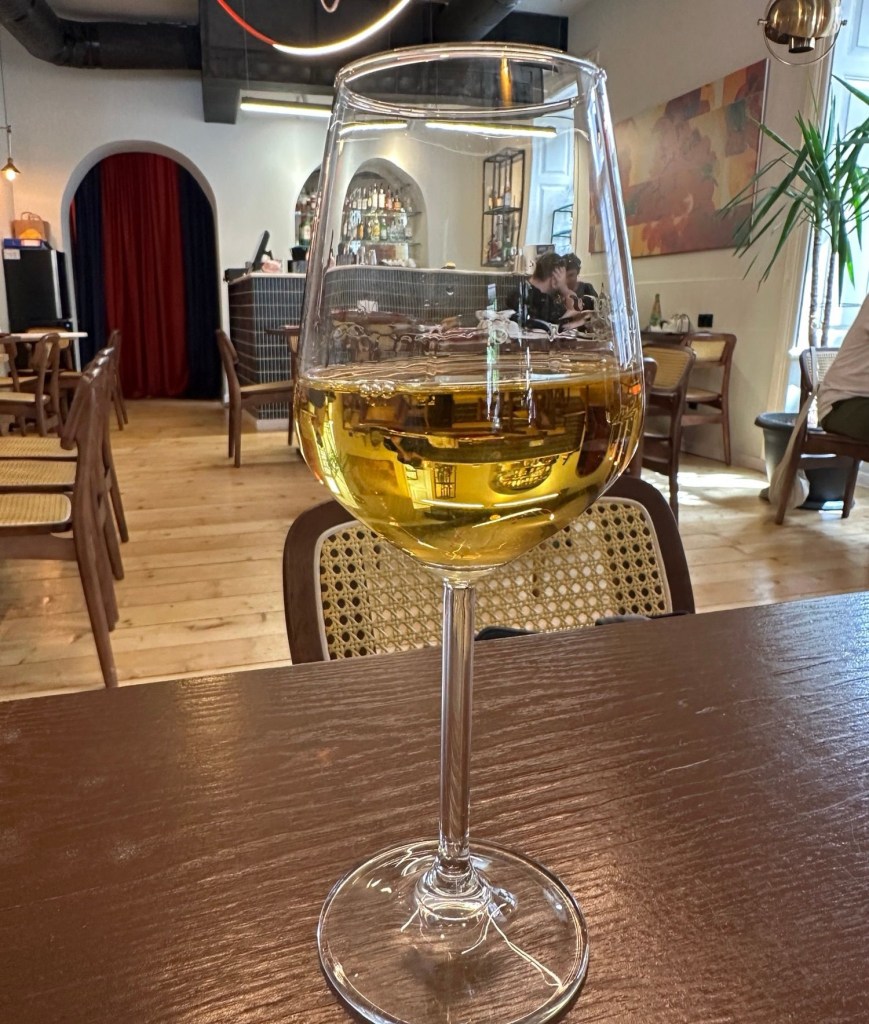
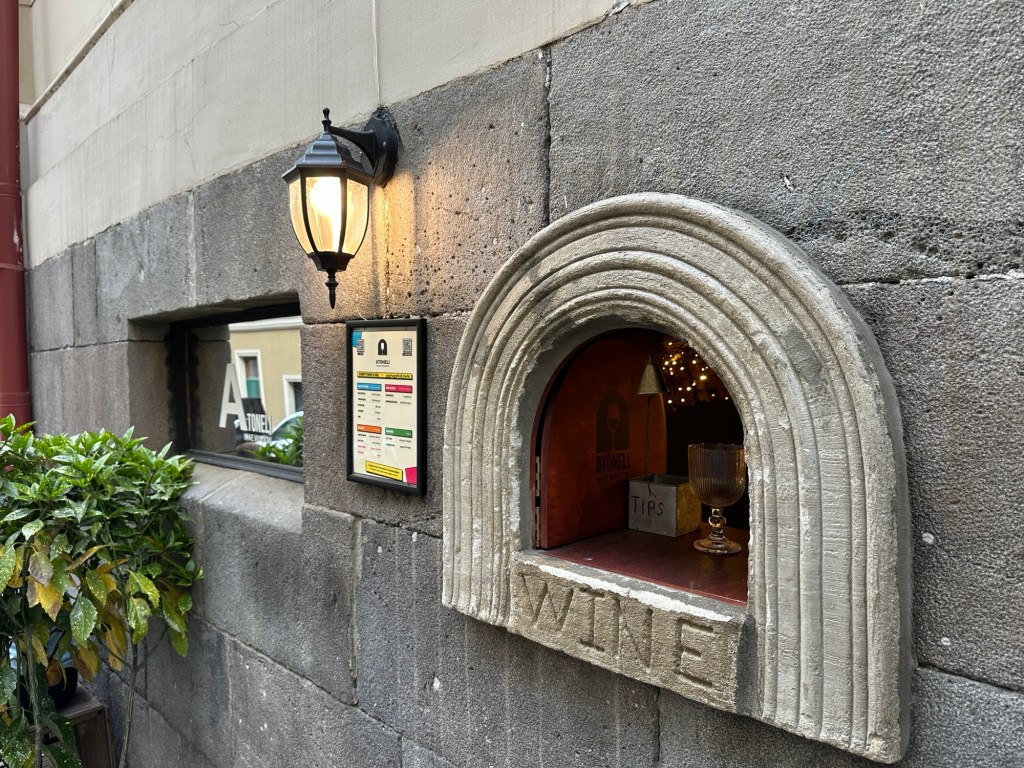
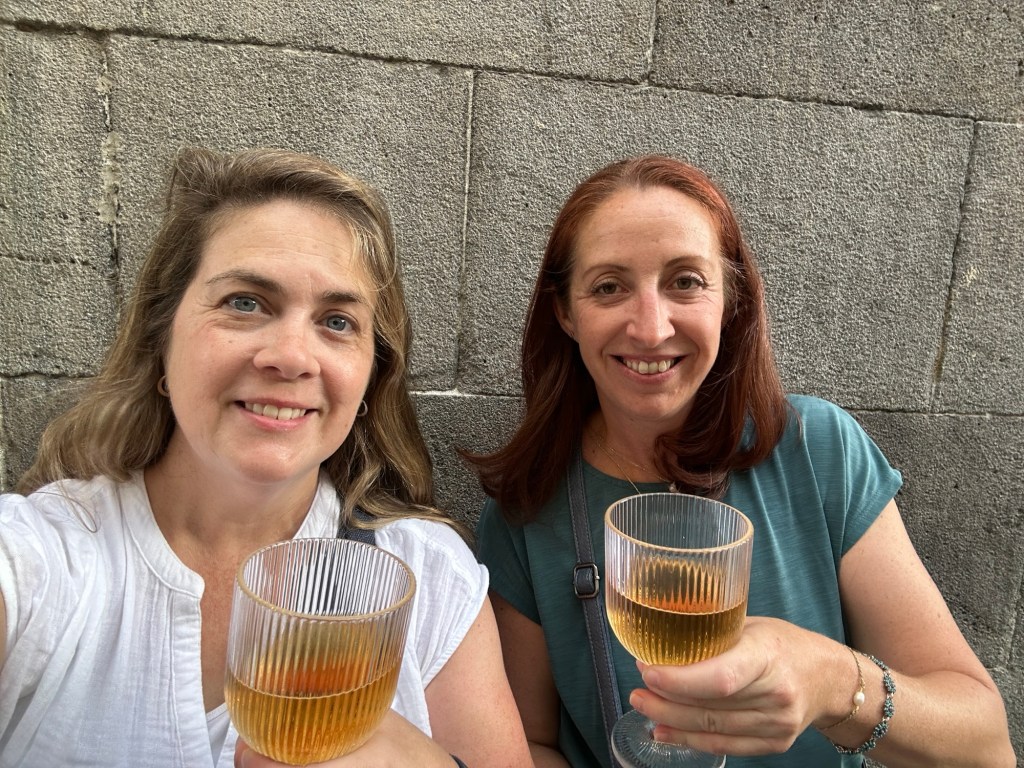
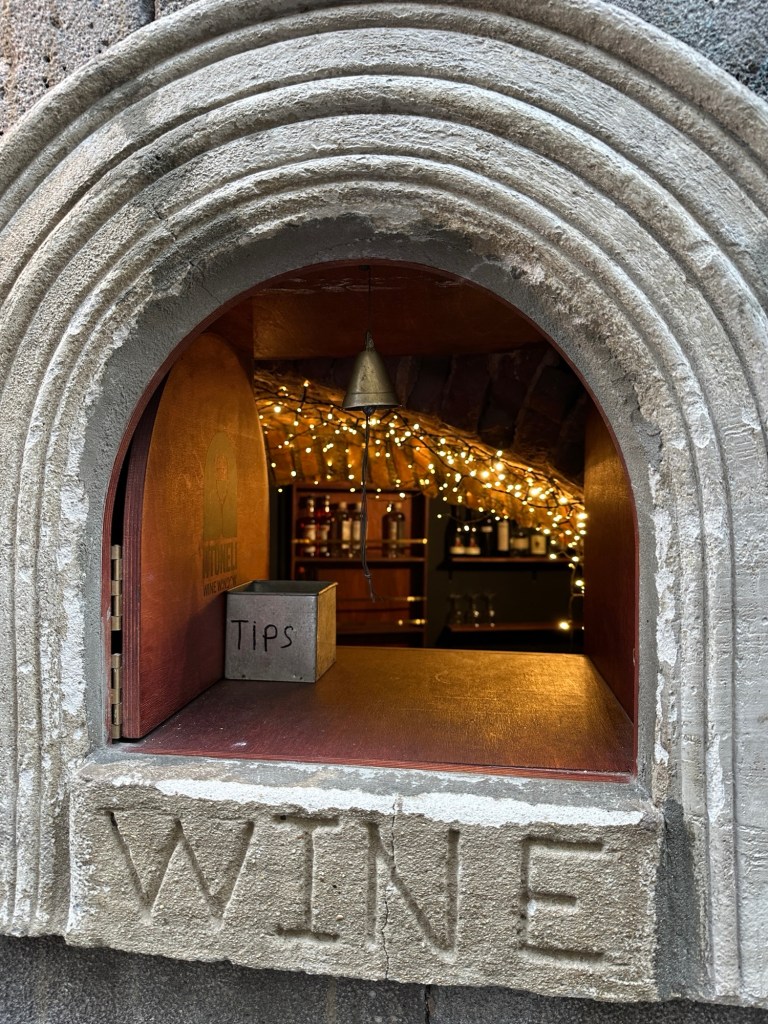
We cross the dry bridge and glance at the dry bridge market, vowing to come back to this area on our full free day. We now are aiming for the Atoneli WineWindow, a window that has a man waiting at the lower level for you to ring a bell to request a glass of wine for purchase. The first wine we order is tossed away for being inadequate after the host smells the wine poured and declares it bad. Not sure we would know the difference not being wine experts but we are impressed that he cared to make sure he was serving us quality wine. We drink our newly poured wine on the street outside and return our glasses back to the window.
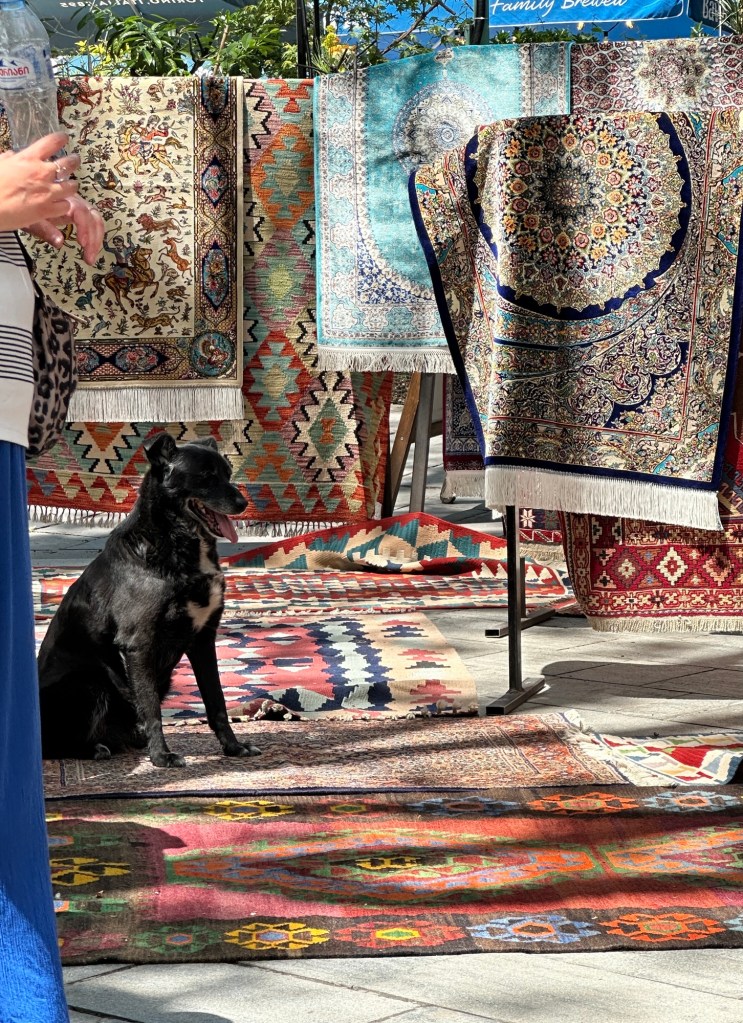
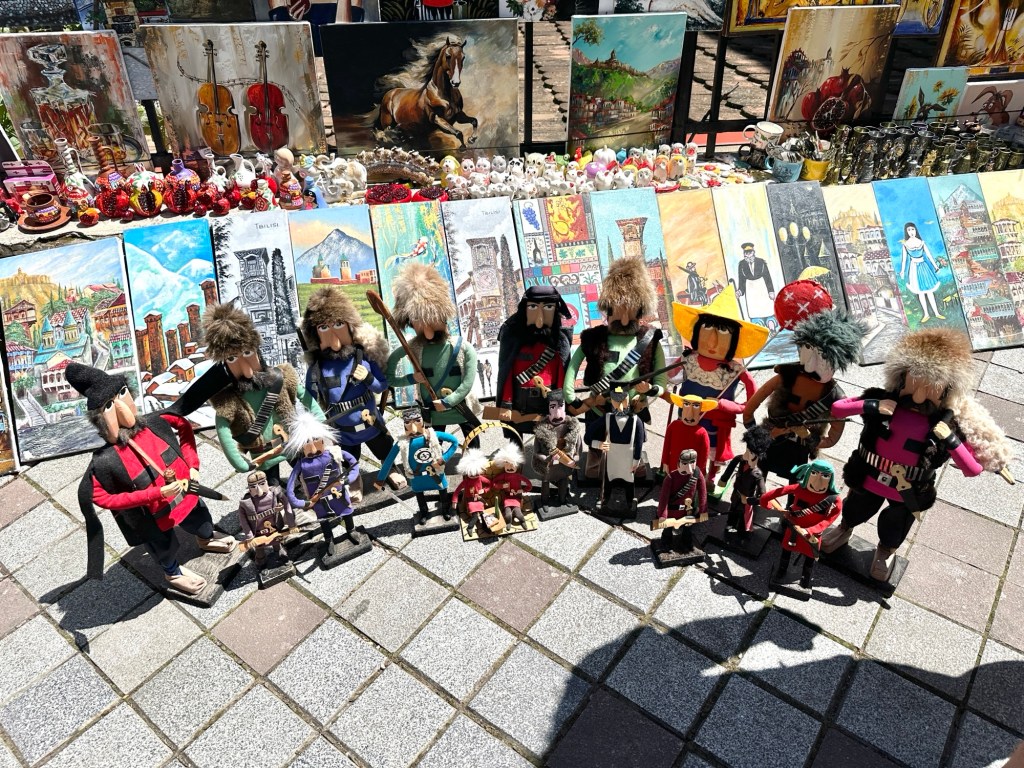
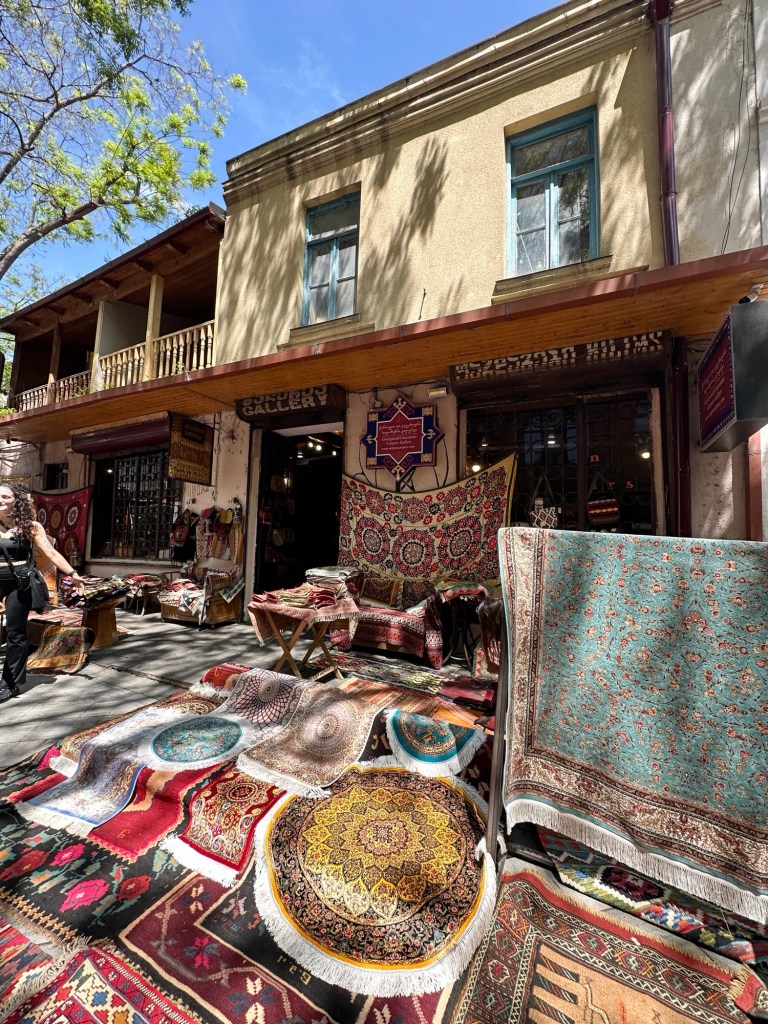
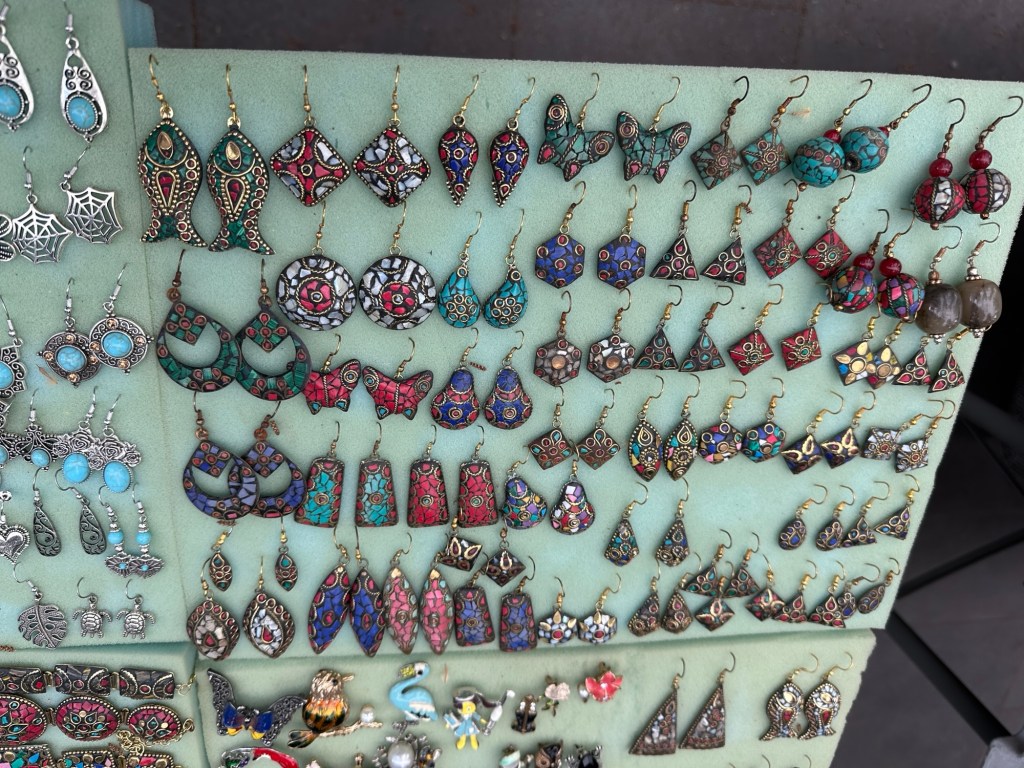
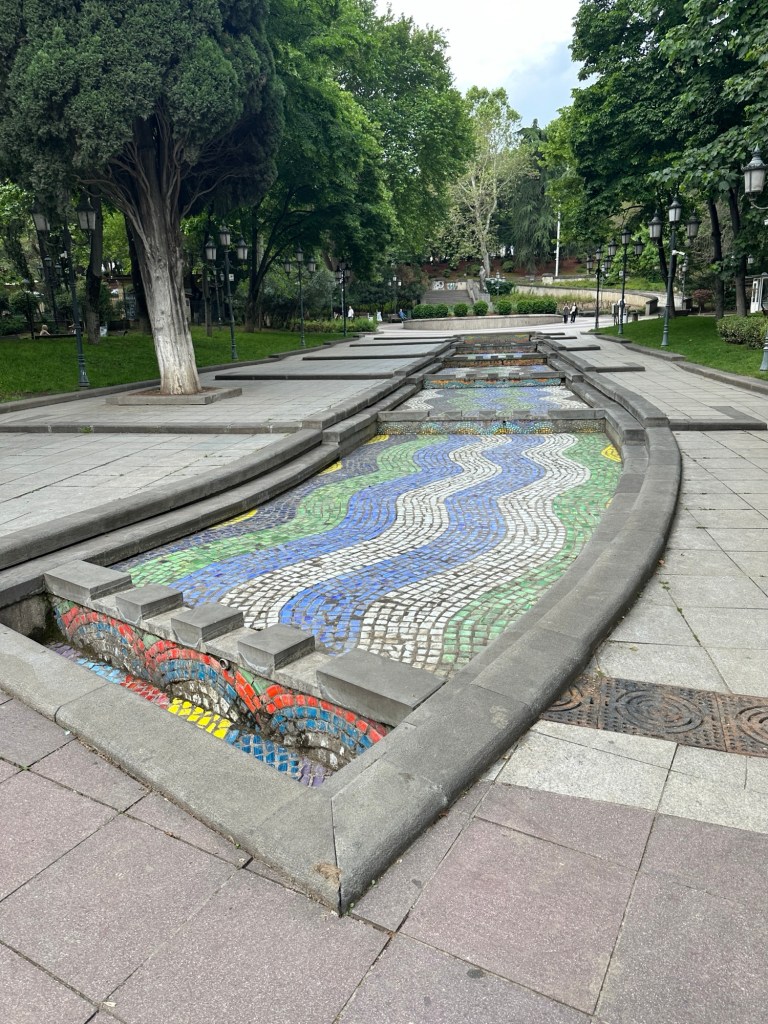
Dry Bridge MarketGiorgi Leonidze Park
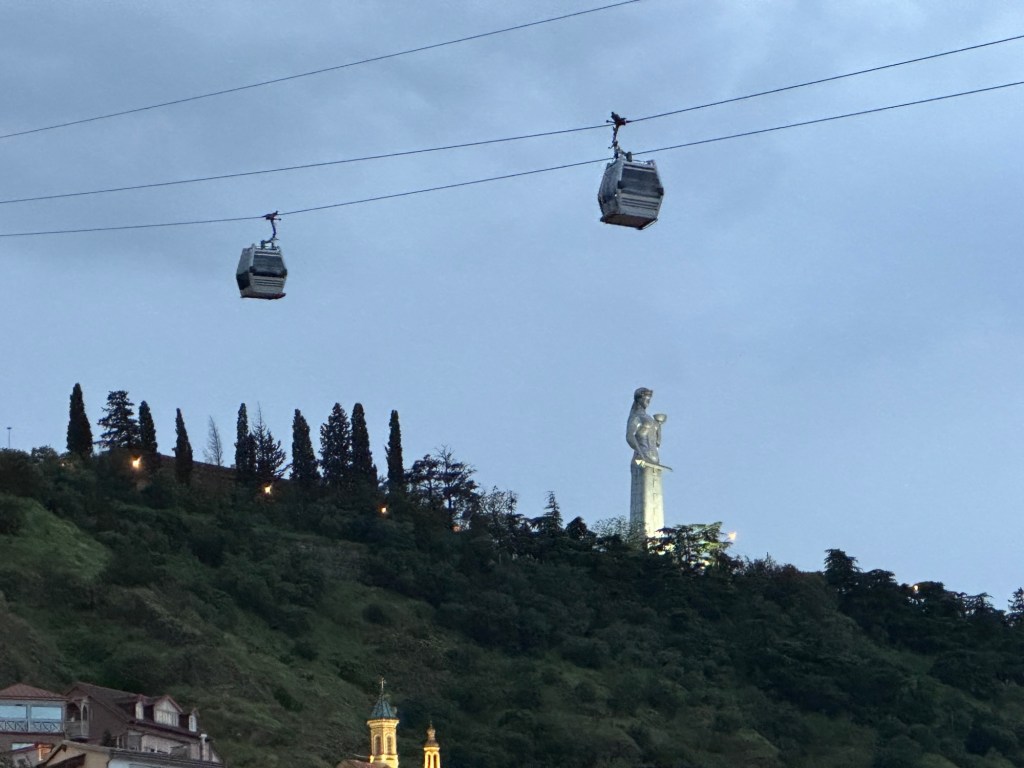
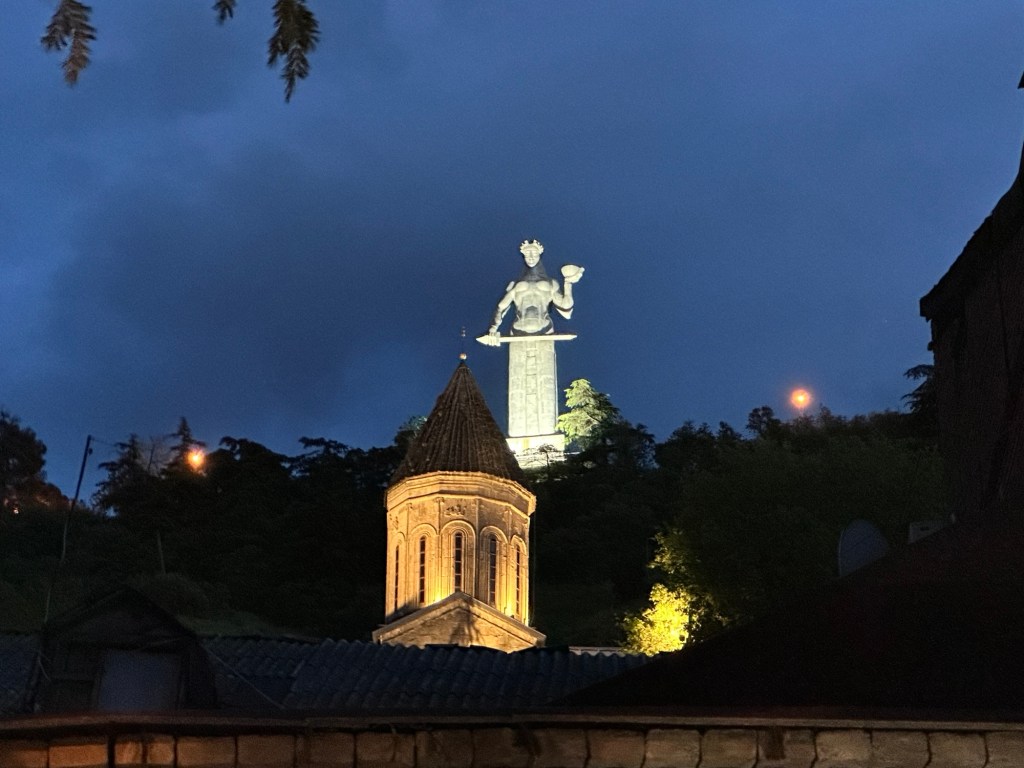
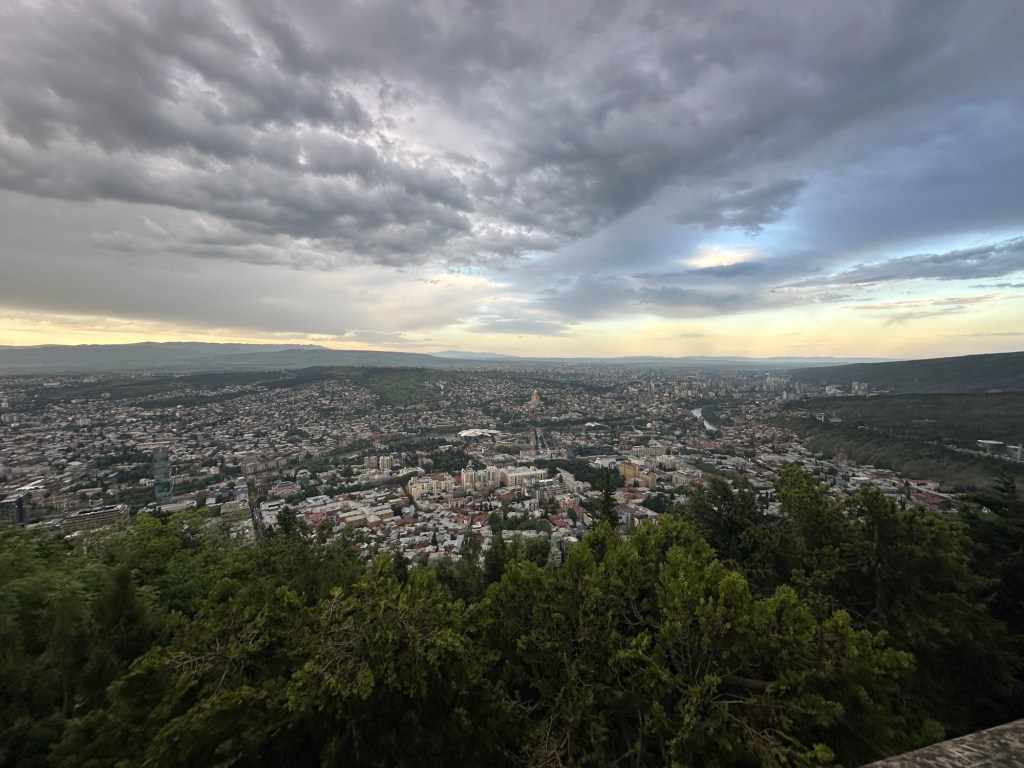
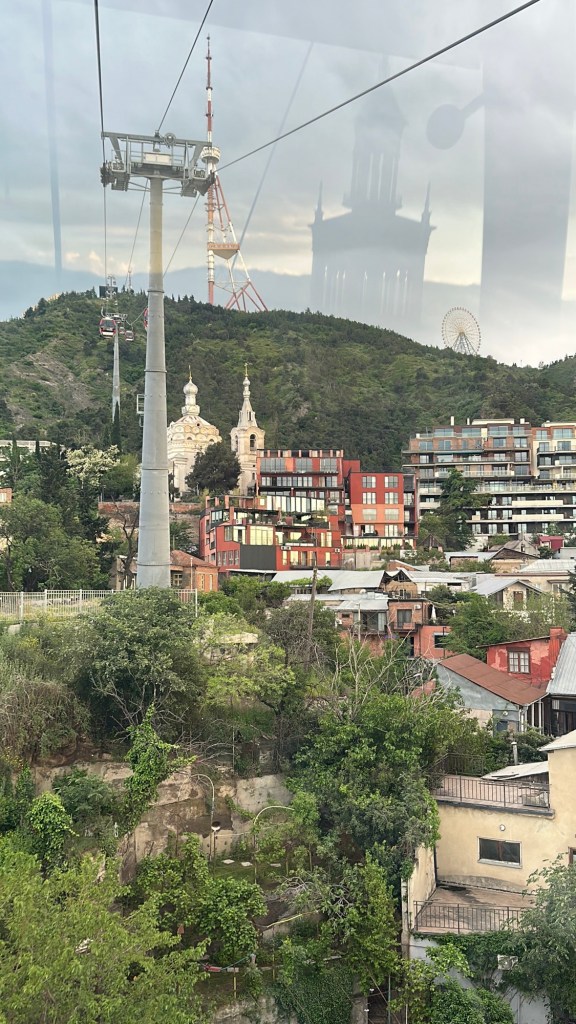
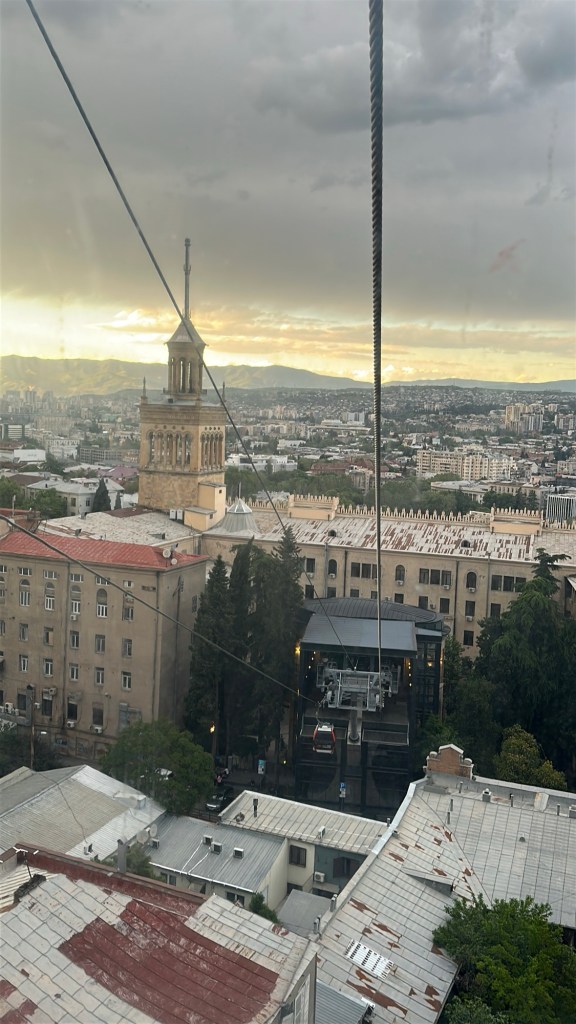
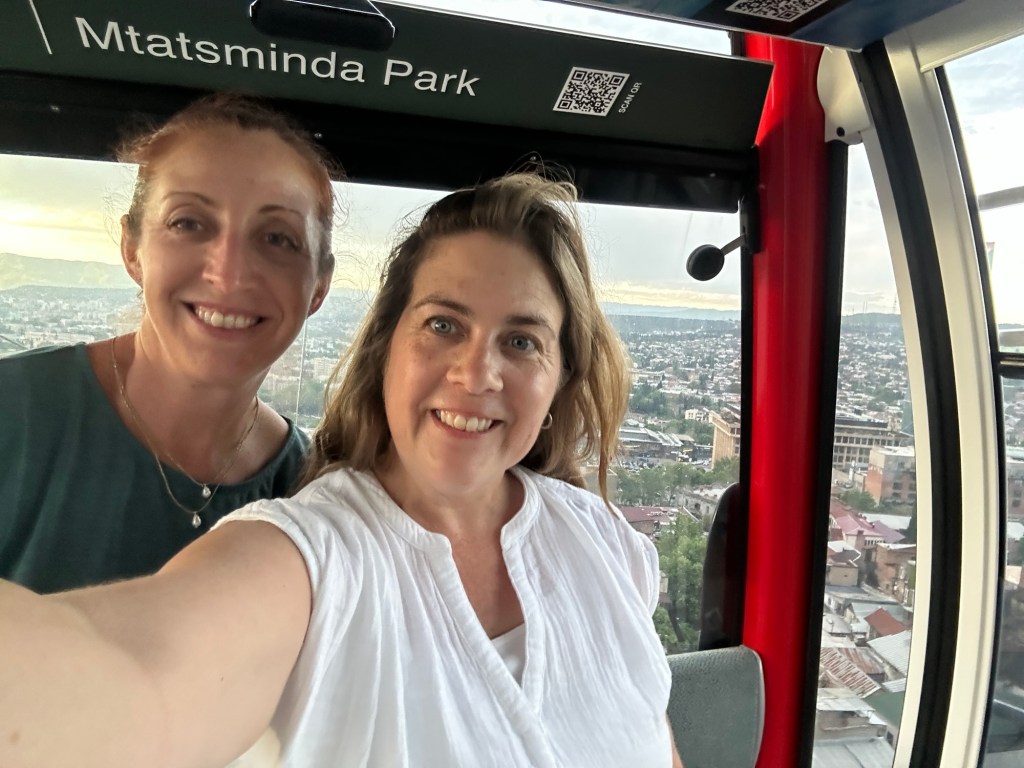
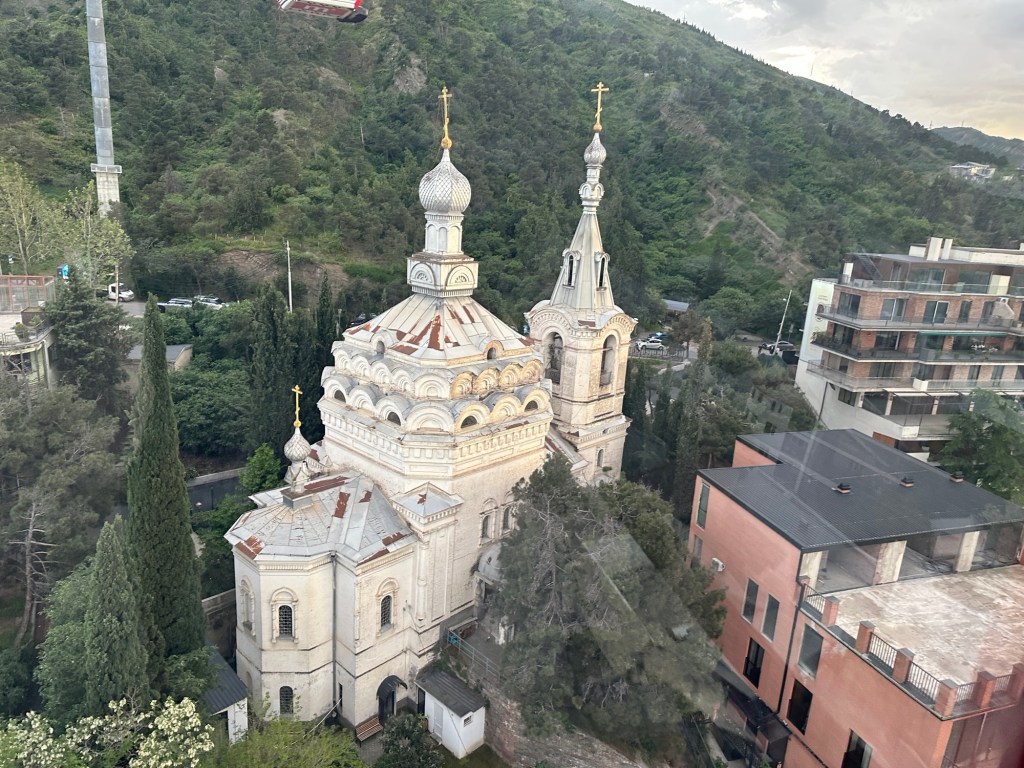
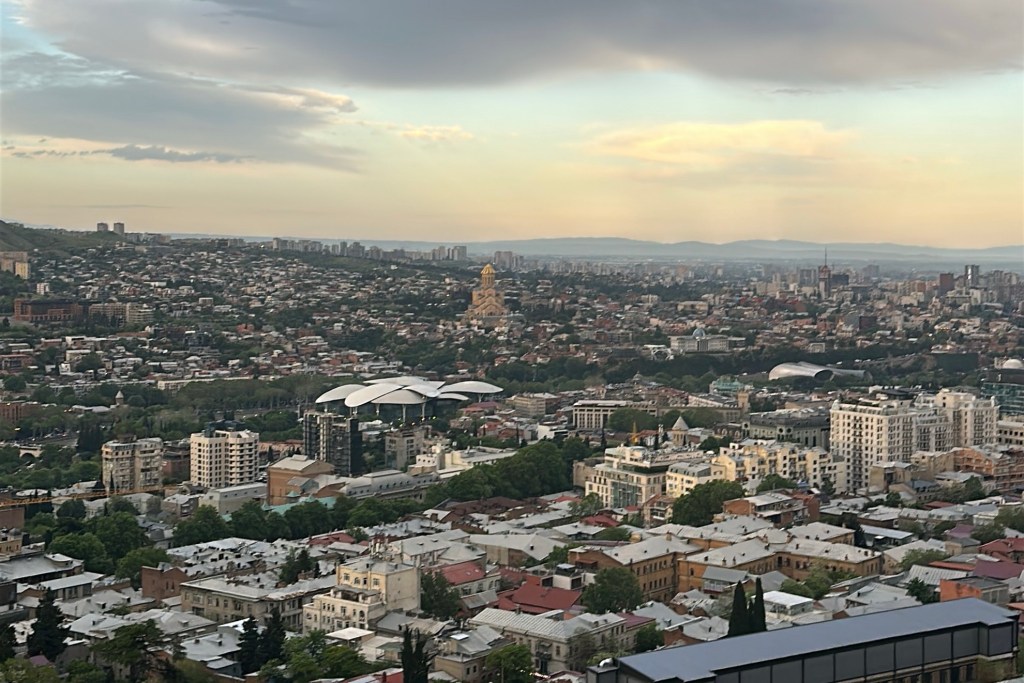
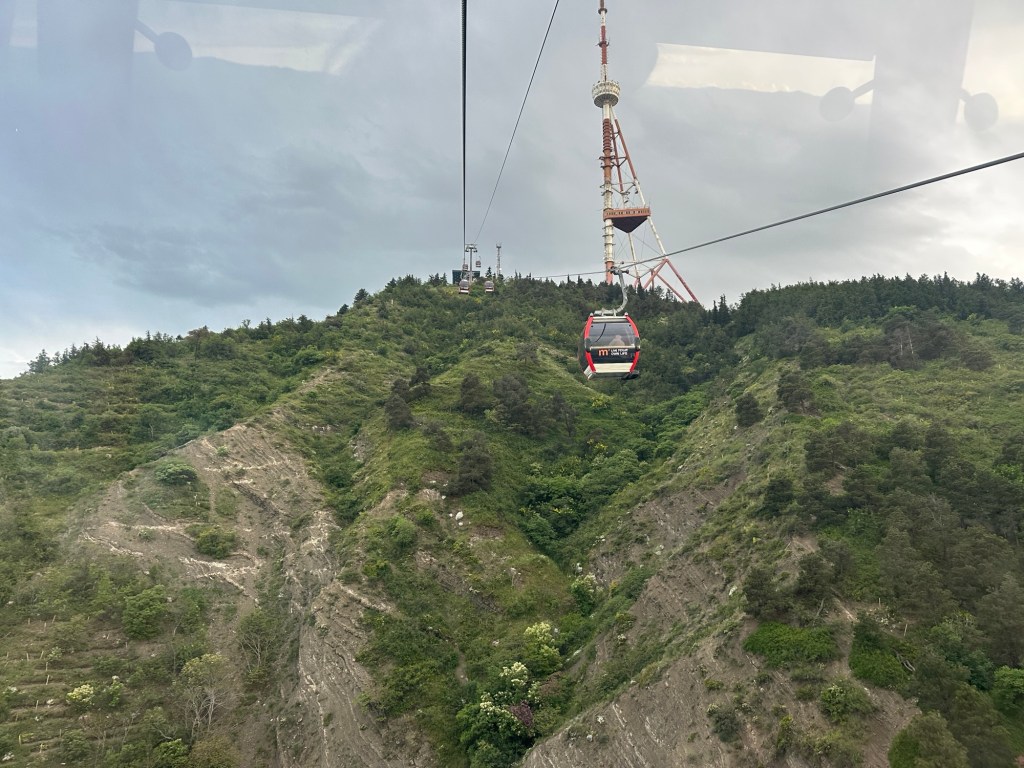
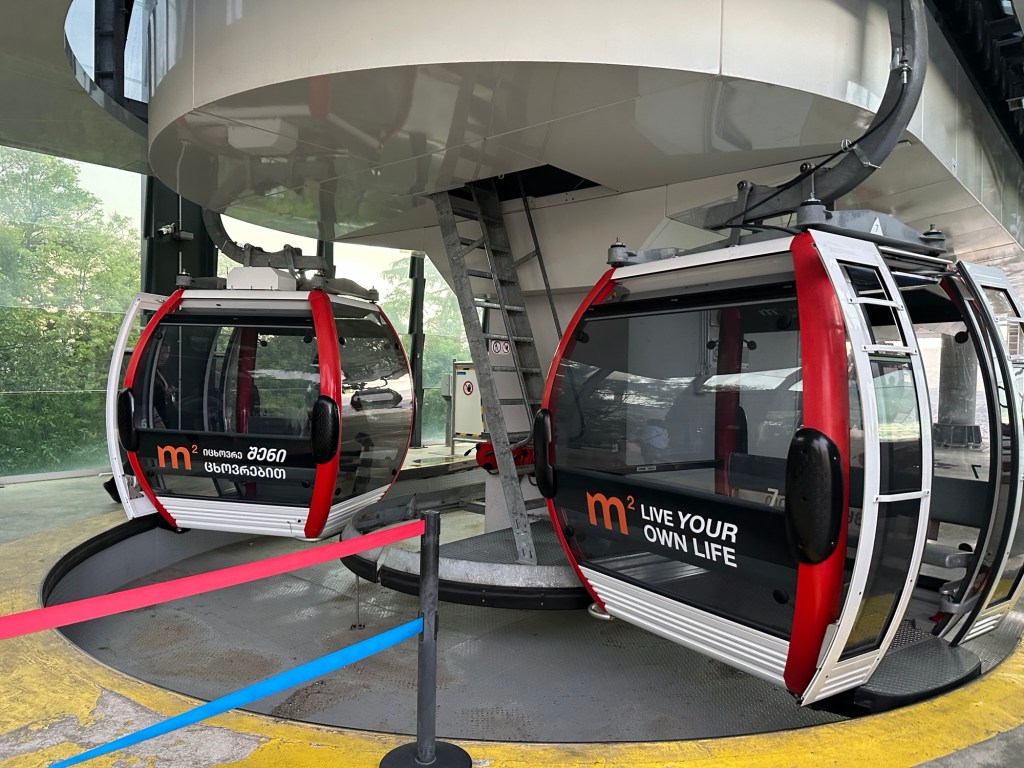
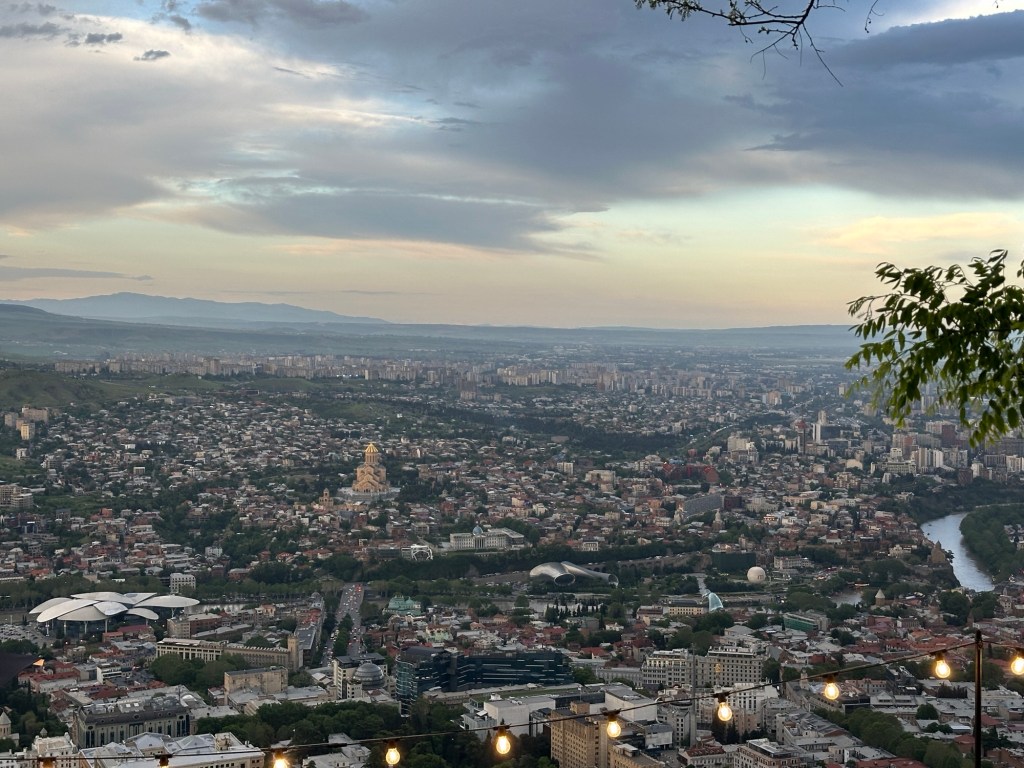
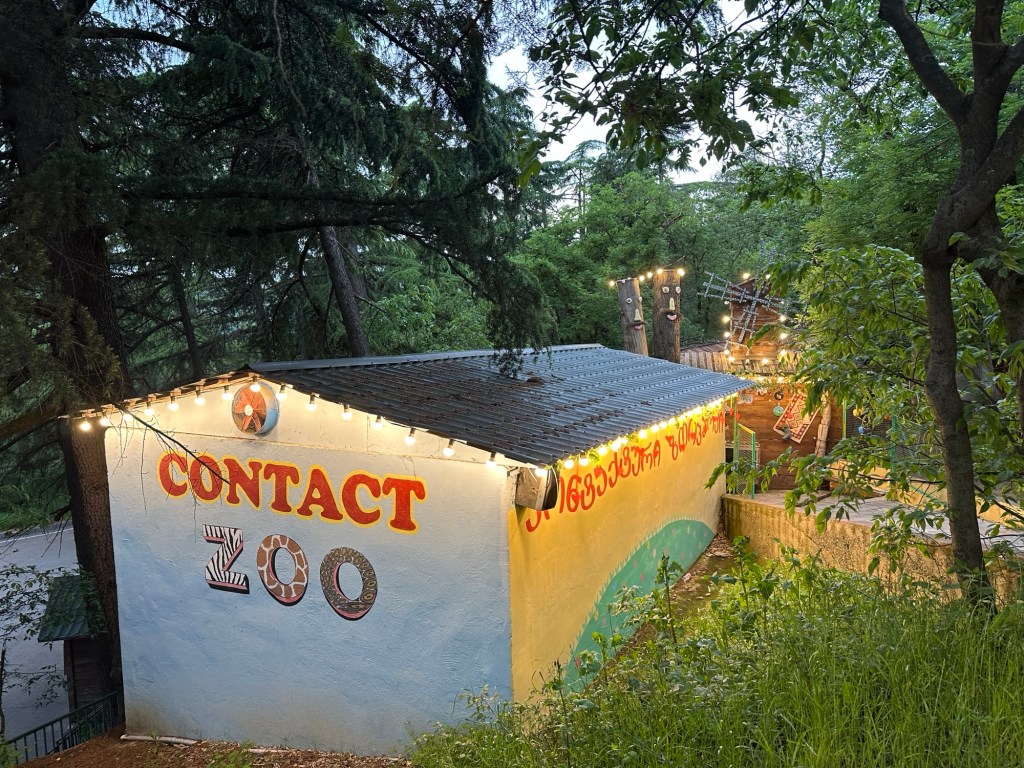
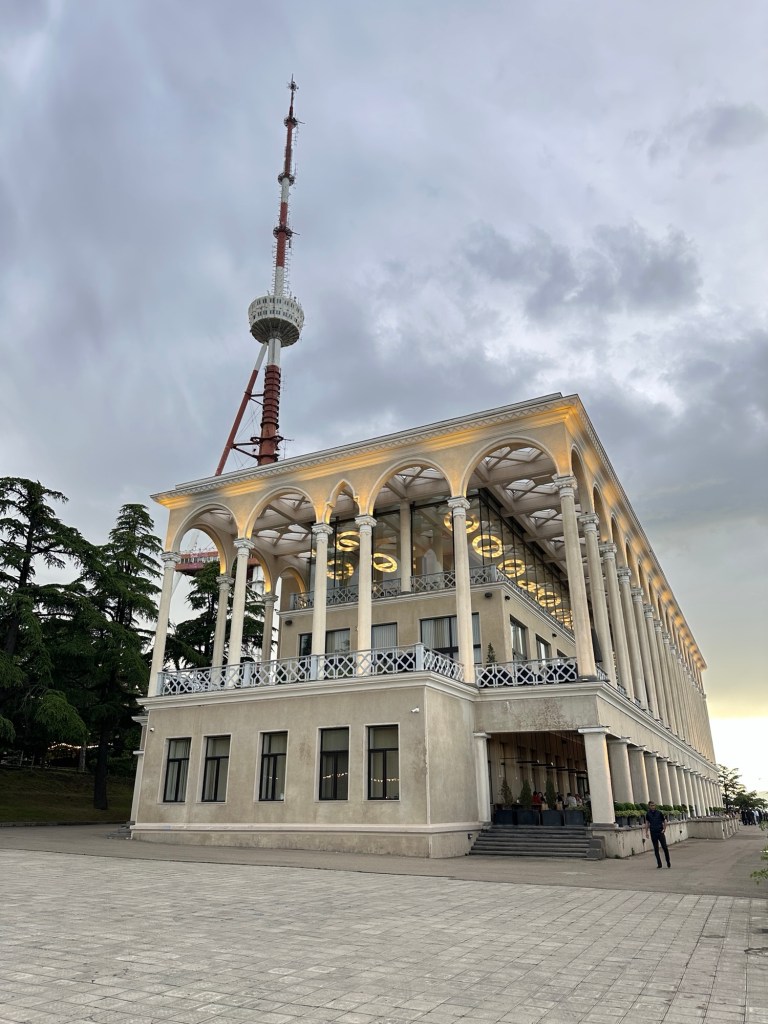
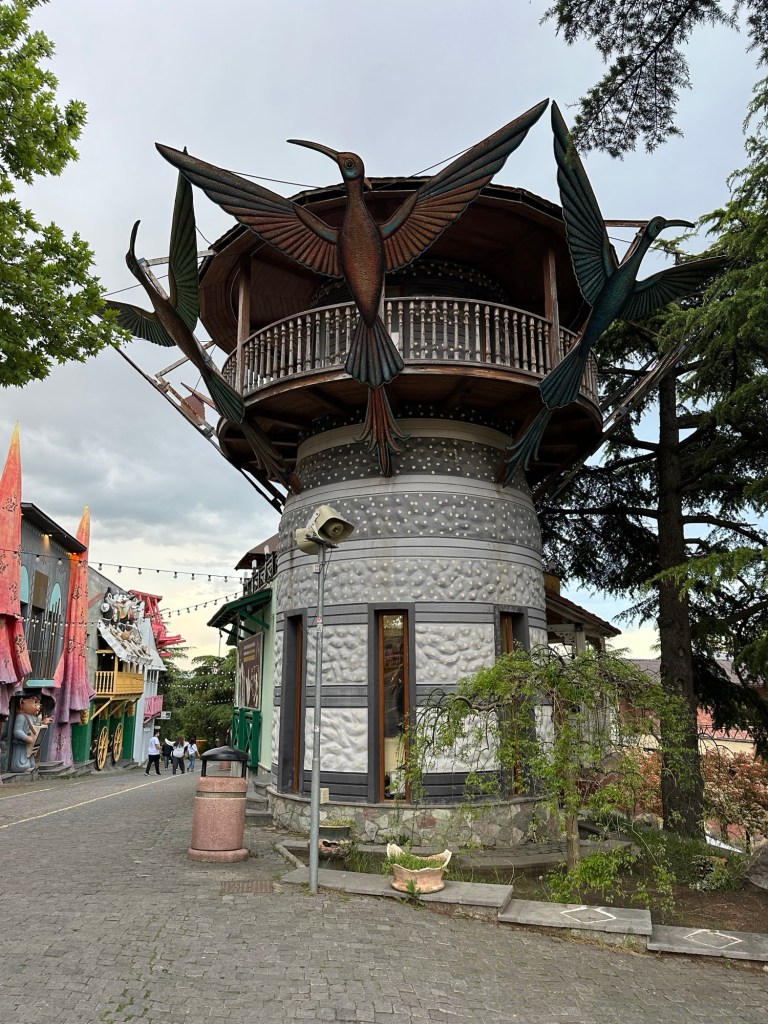
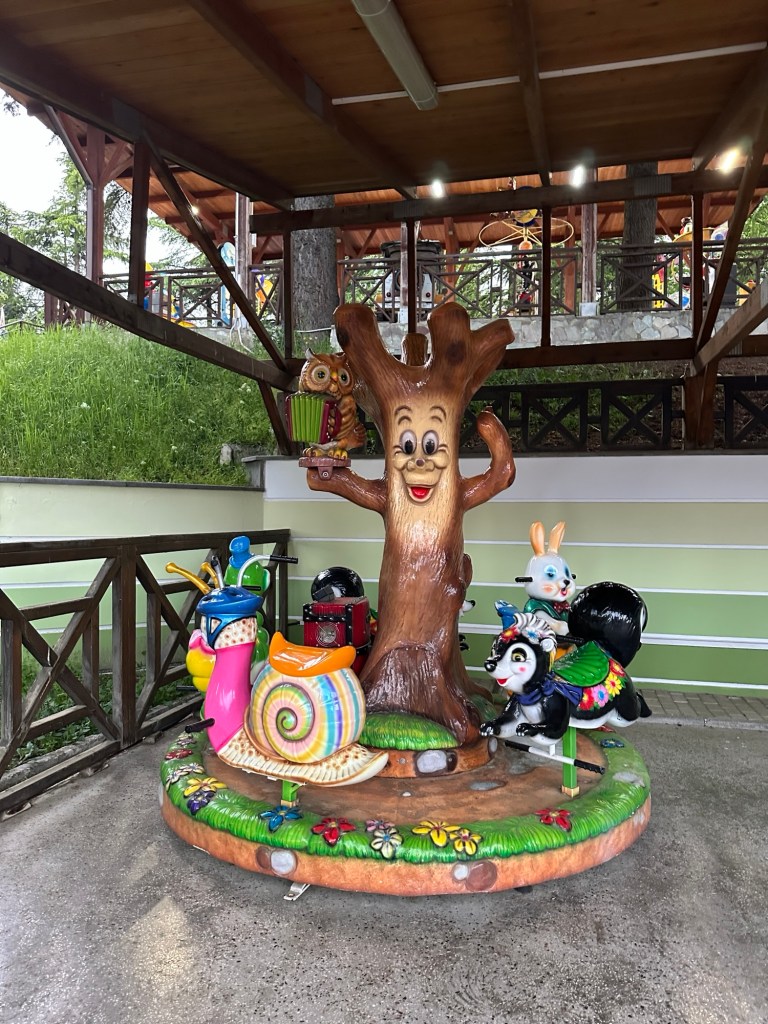
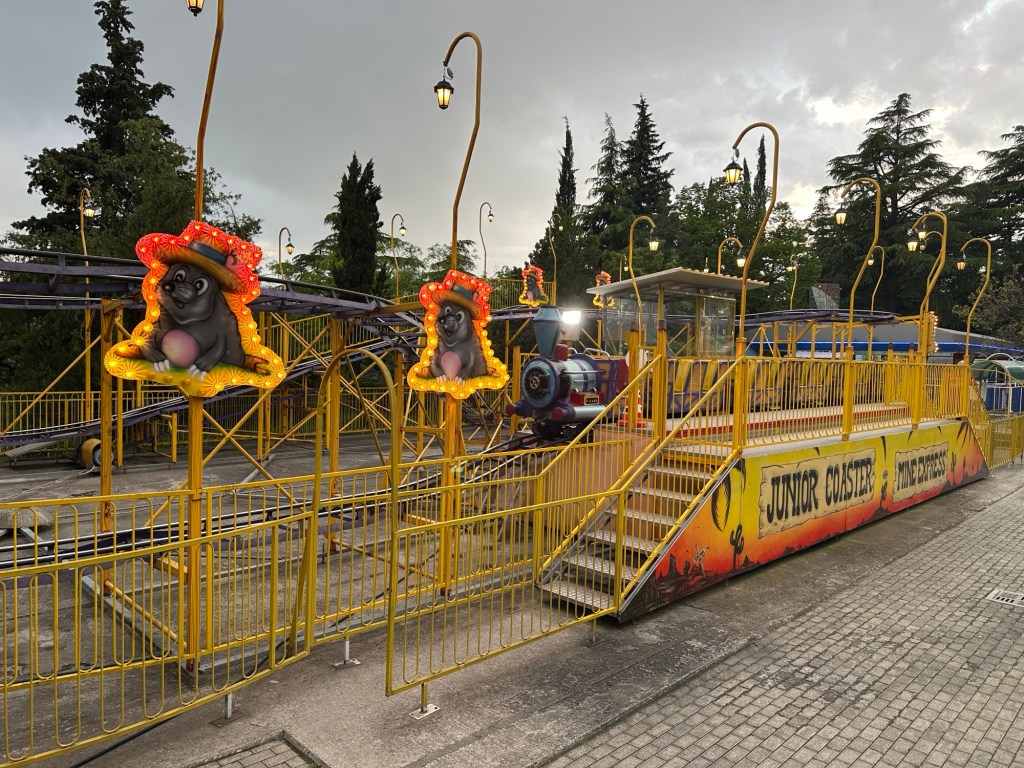
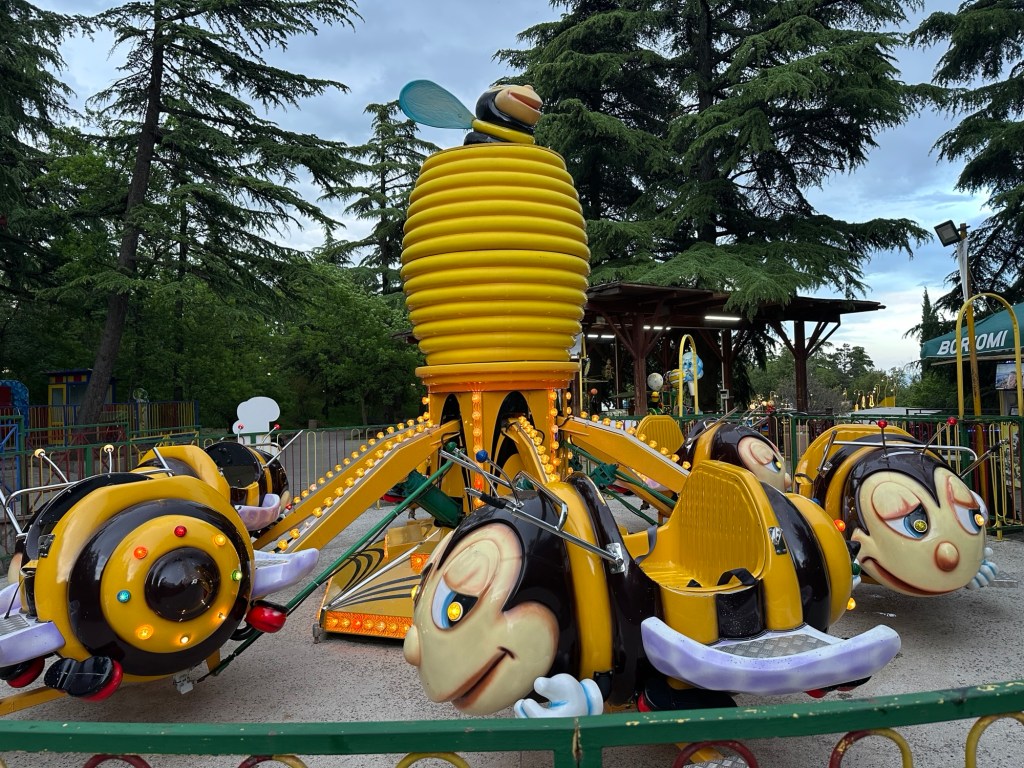
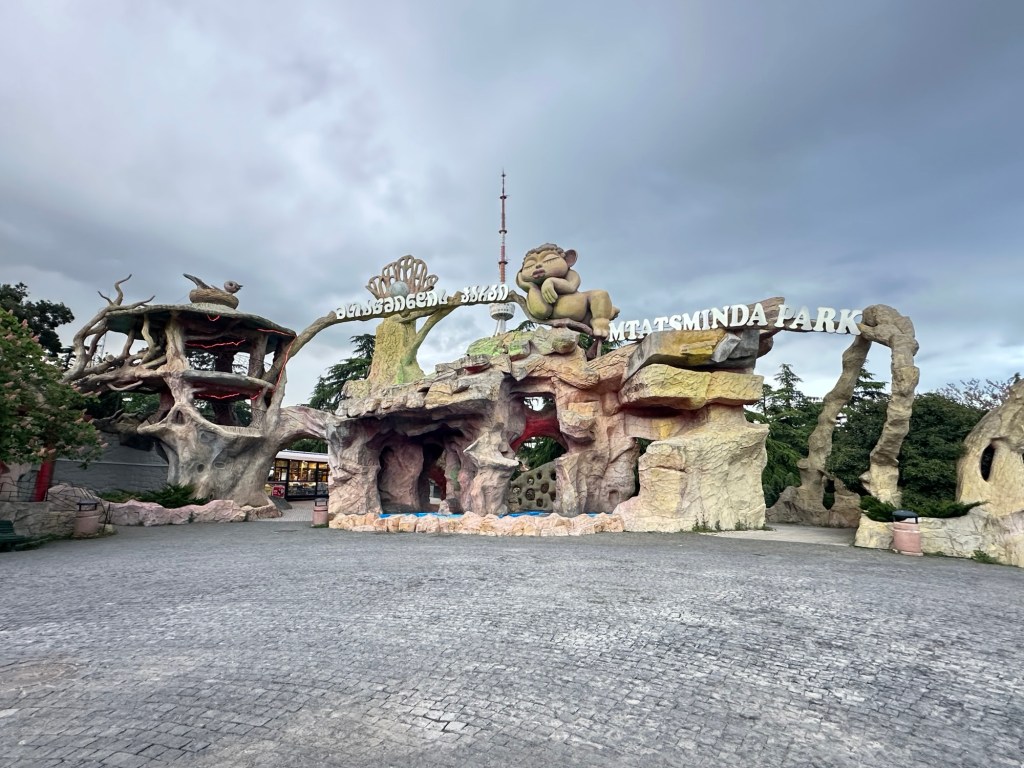
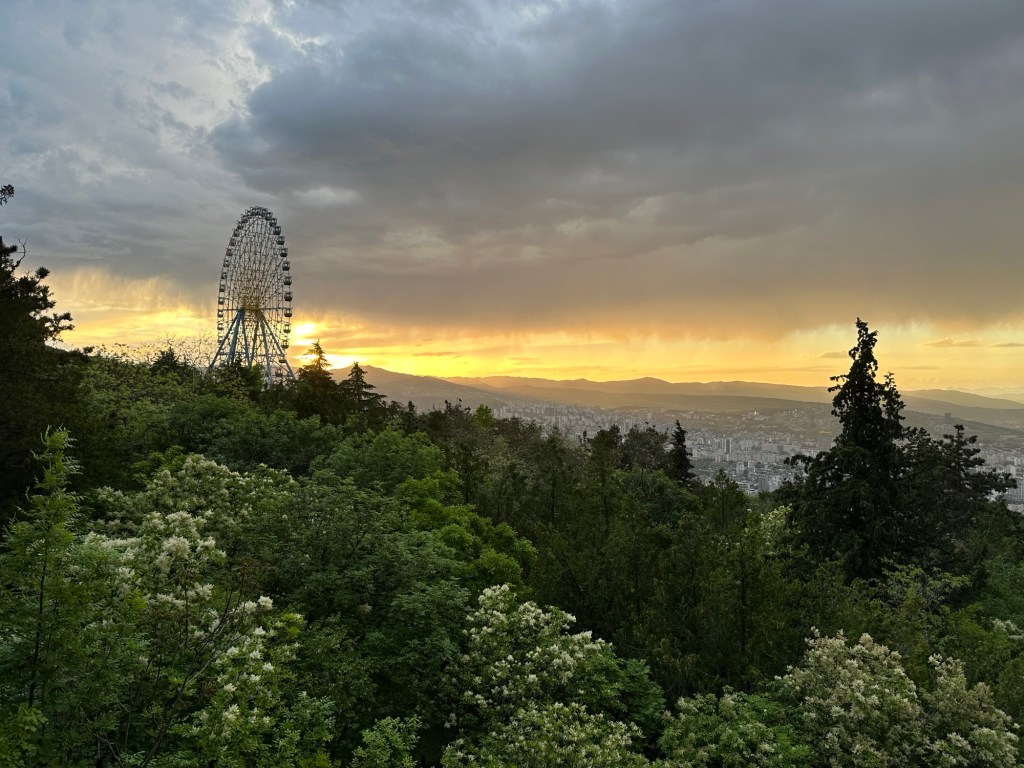
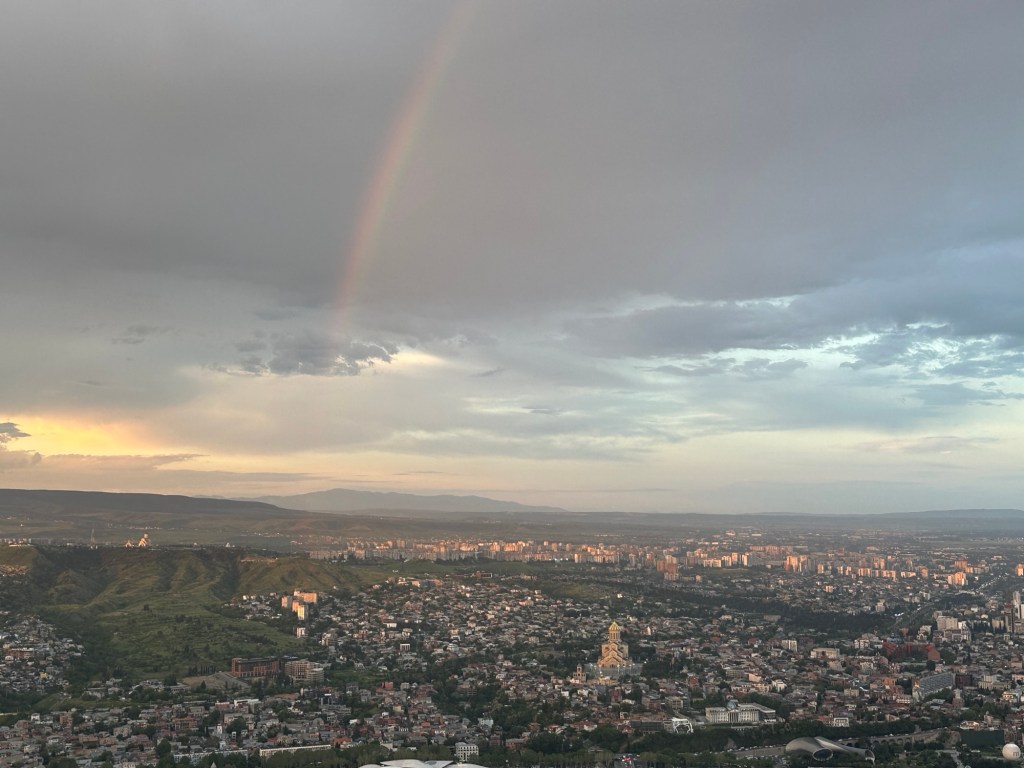
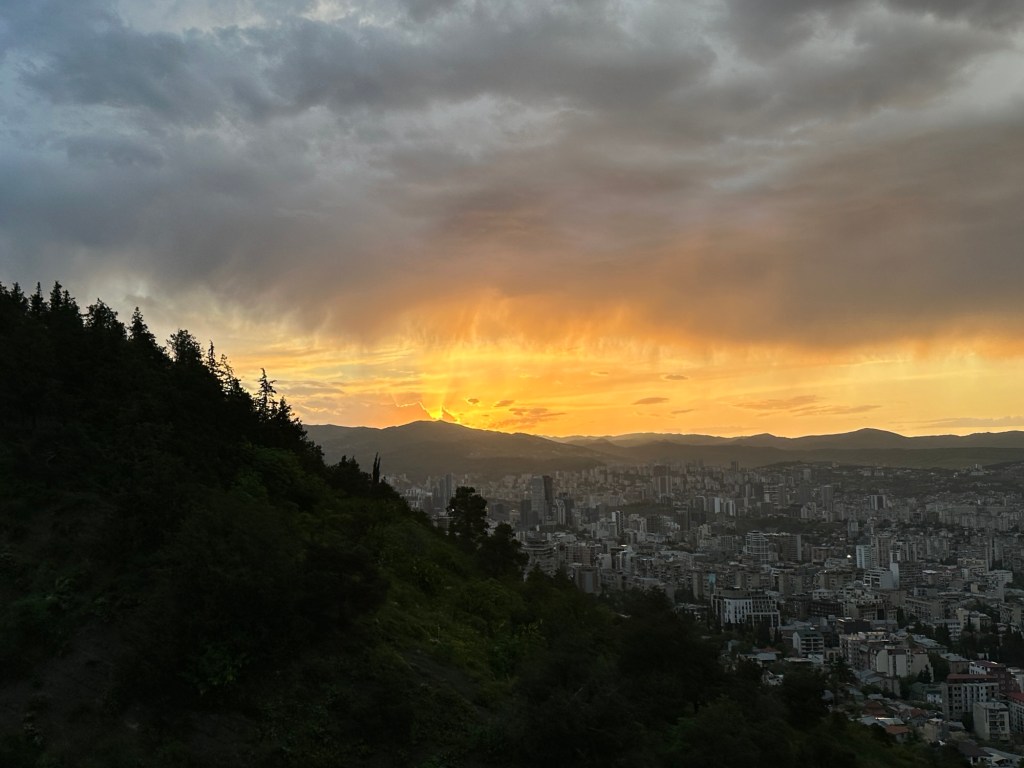
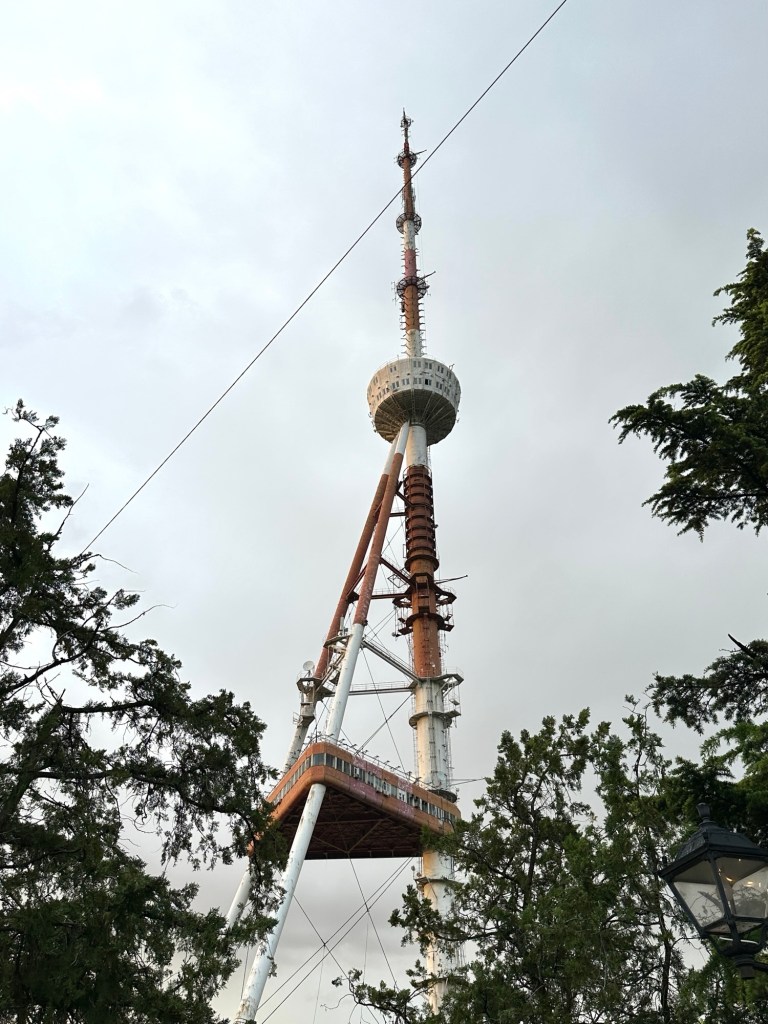
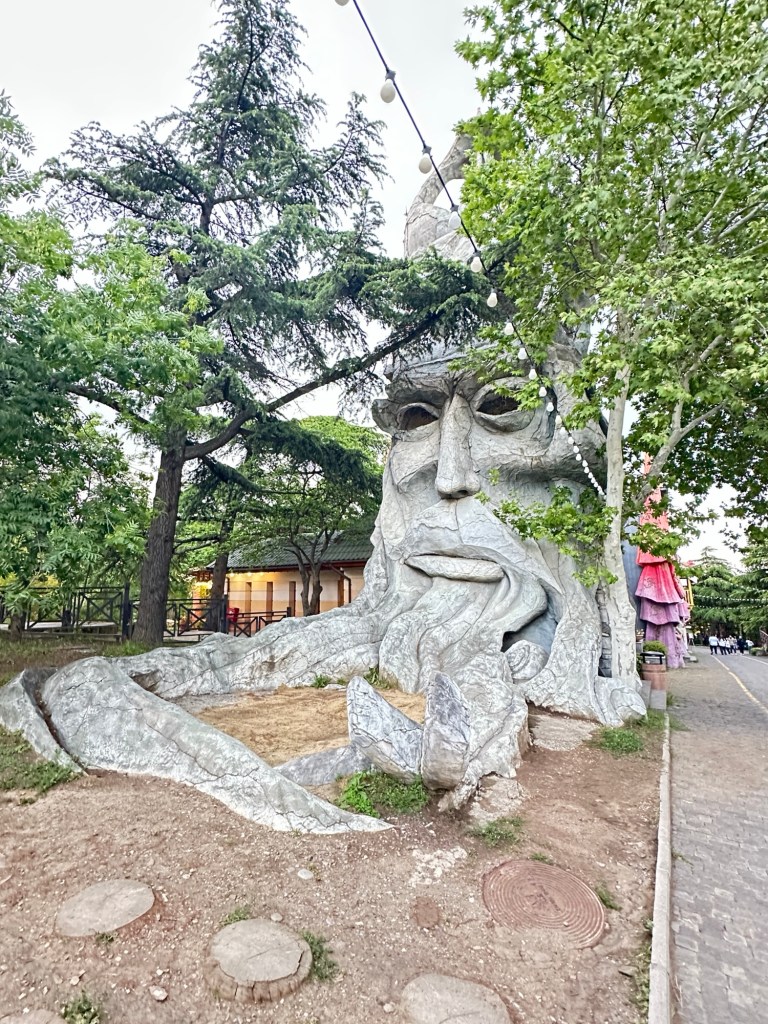
Our next plan is to take the cable car up to to see Mother of Georgia, the large statute, up close but we navigate to the wrong cable car and end up by a large amusement park at the top called Mtatsminda Park. After watching the sunset from above we tour the lit up amusement park by foot, hoping to find a path to Mother of Georgia from here. We are unsuccessful so we admire the views some more and then take the cable car back down for our return trip.
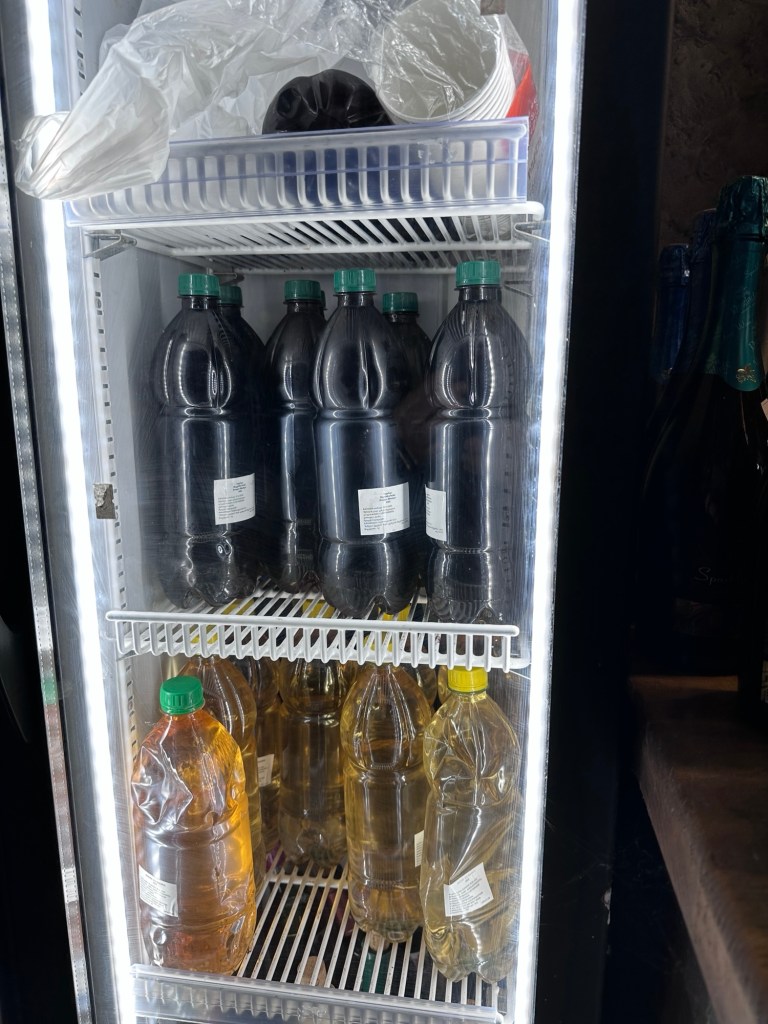
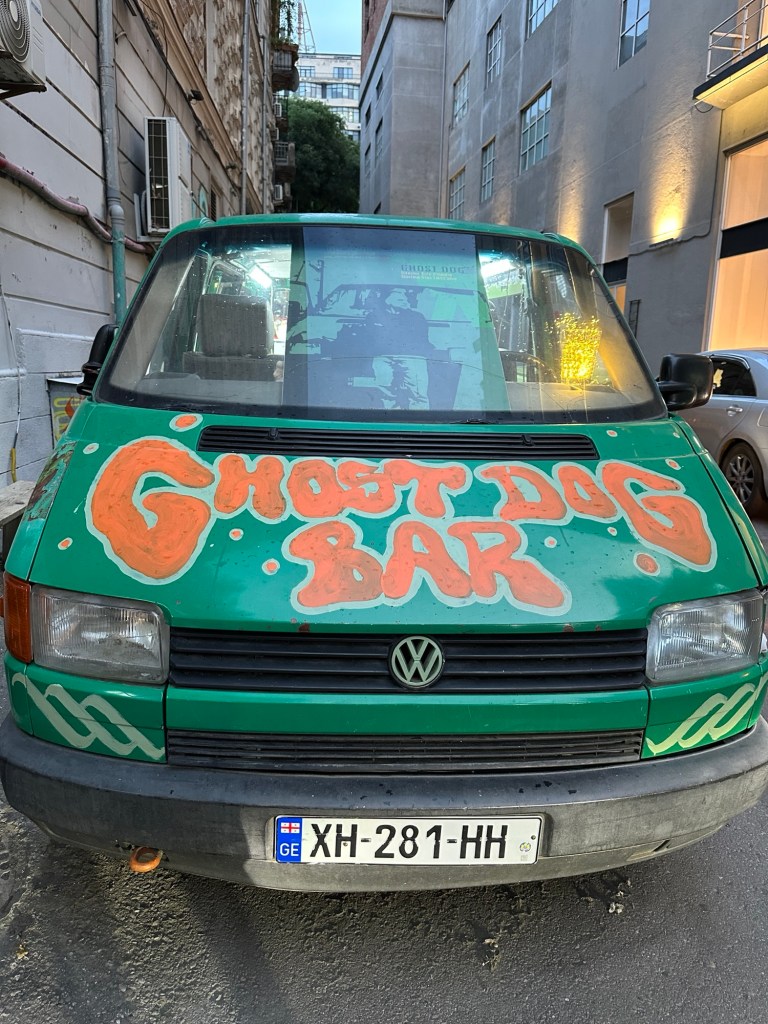
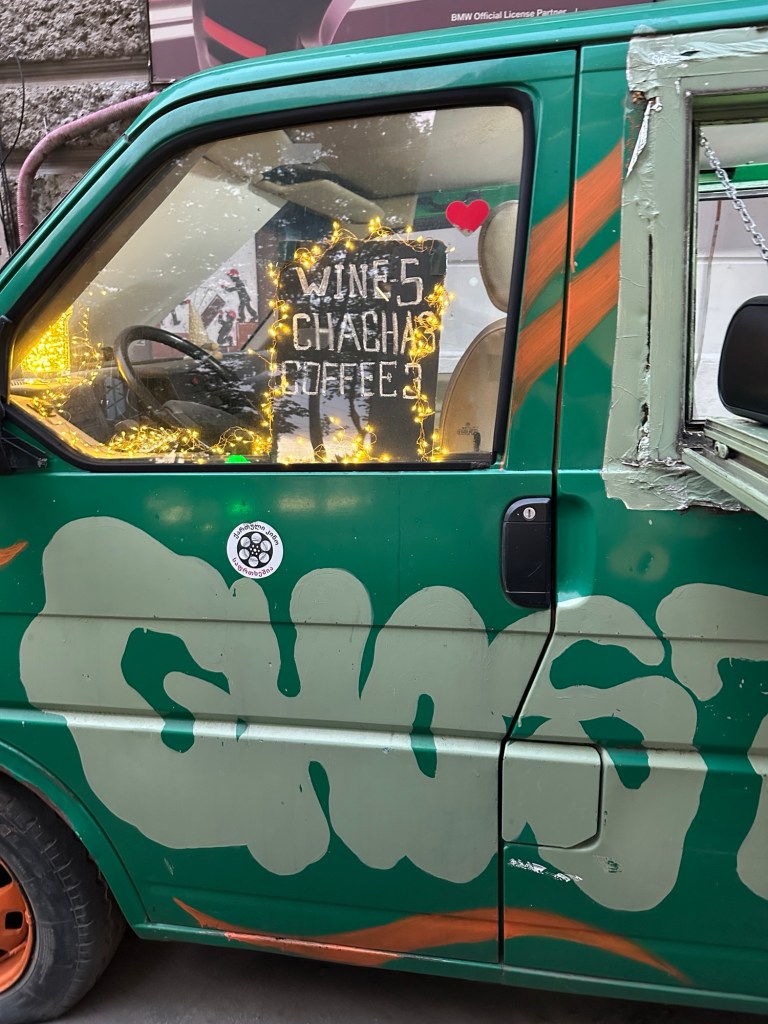
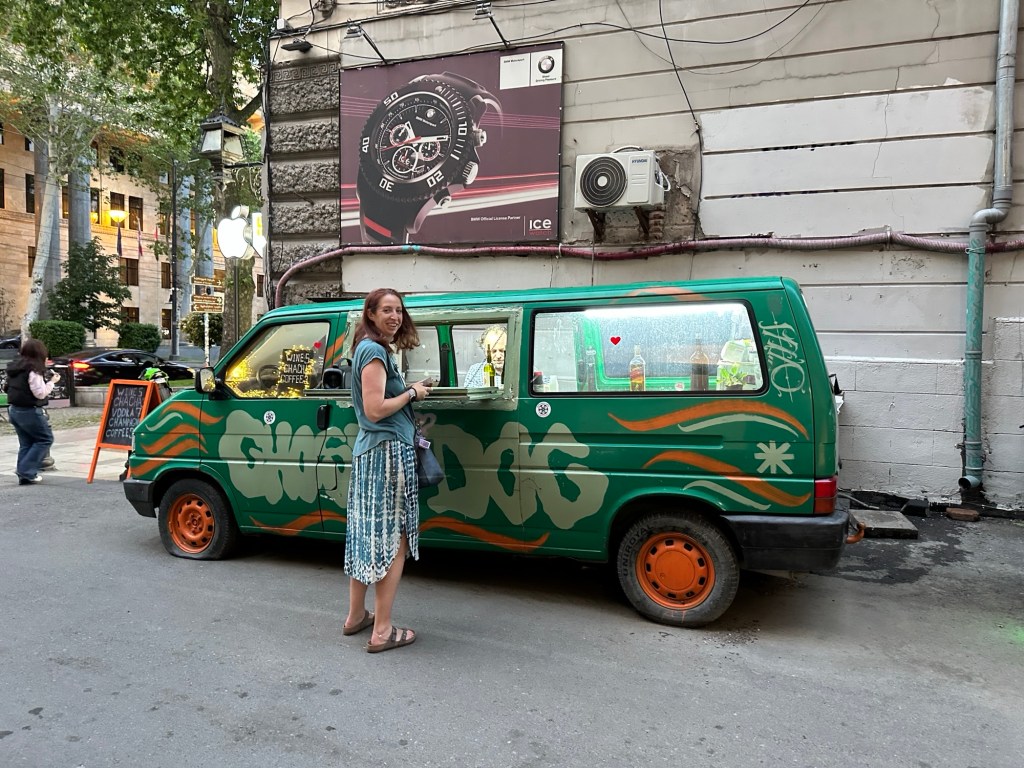
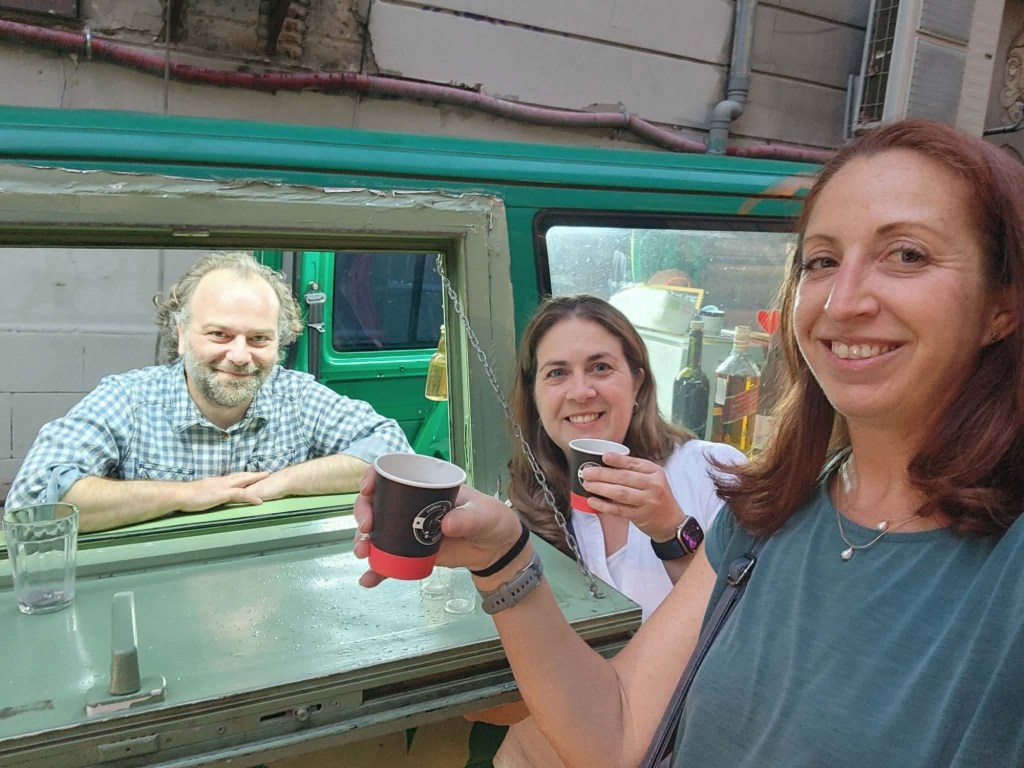
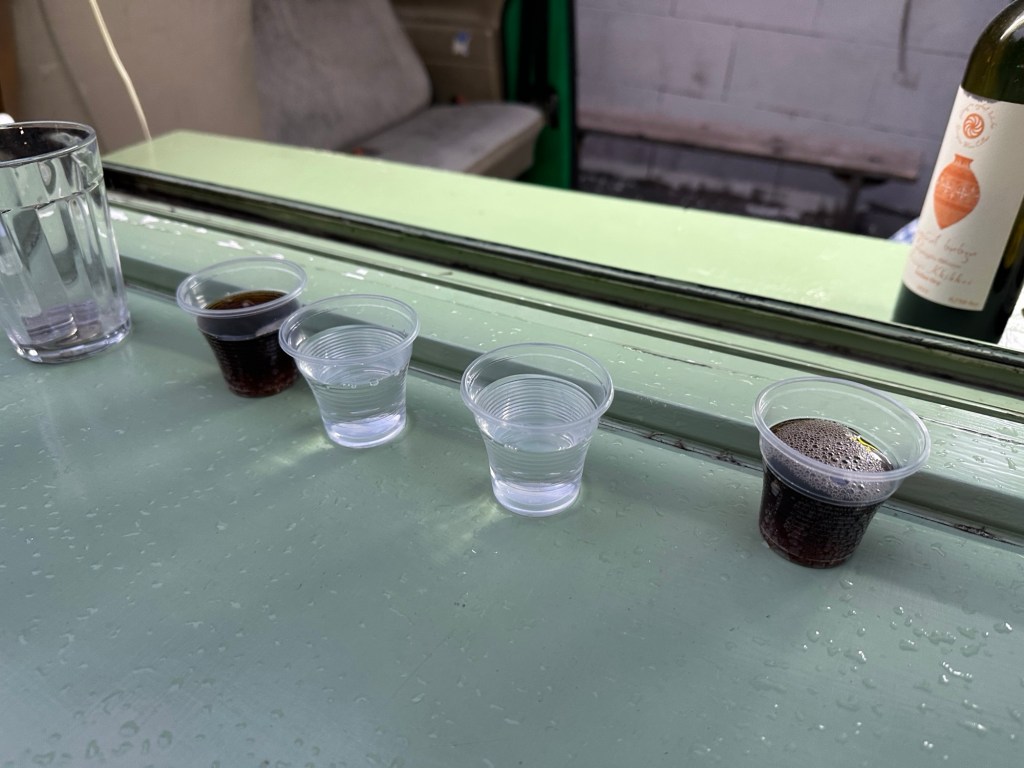
We walk back towards our hotel which seems to be a long walk from here but we make a shopping detour as well and buy some chacha (Georgian homemade vodka) and homemade wine from a van on the street served out of reused plastic bottles. We are aiming for the authentic experience here.
We have a morning tour booked tomorrow so no late night adventures for us tonight.