Gdaล„sk: Solidarnoล›ฤ‡

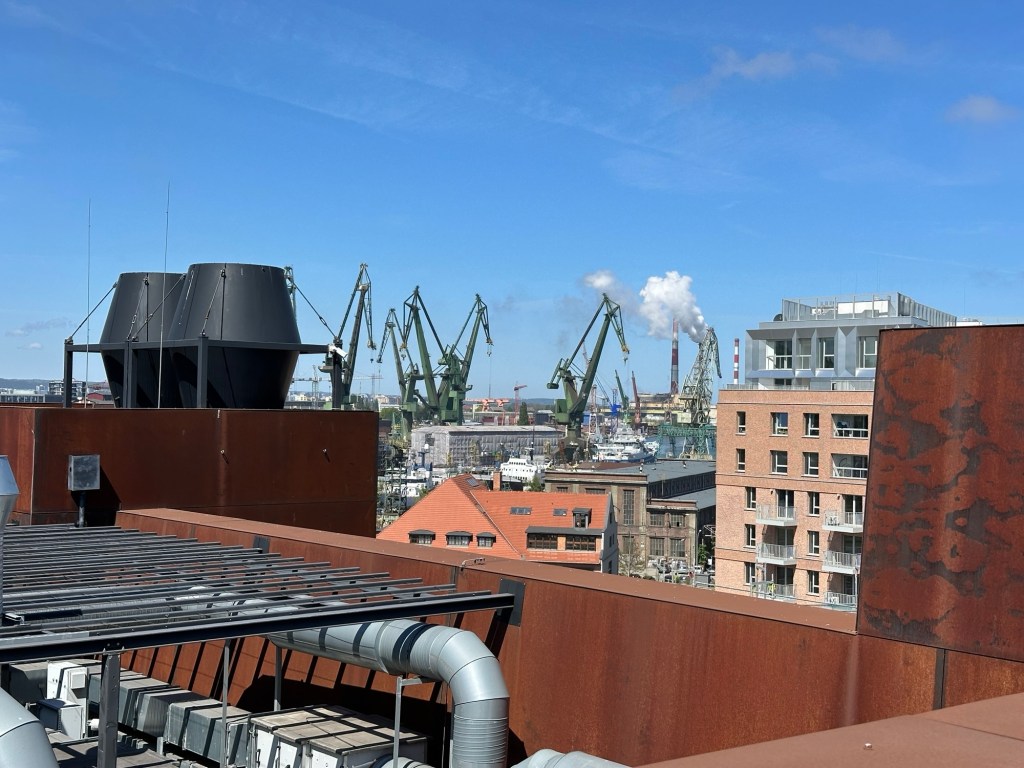
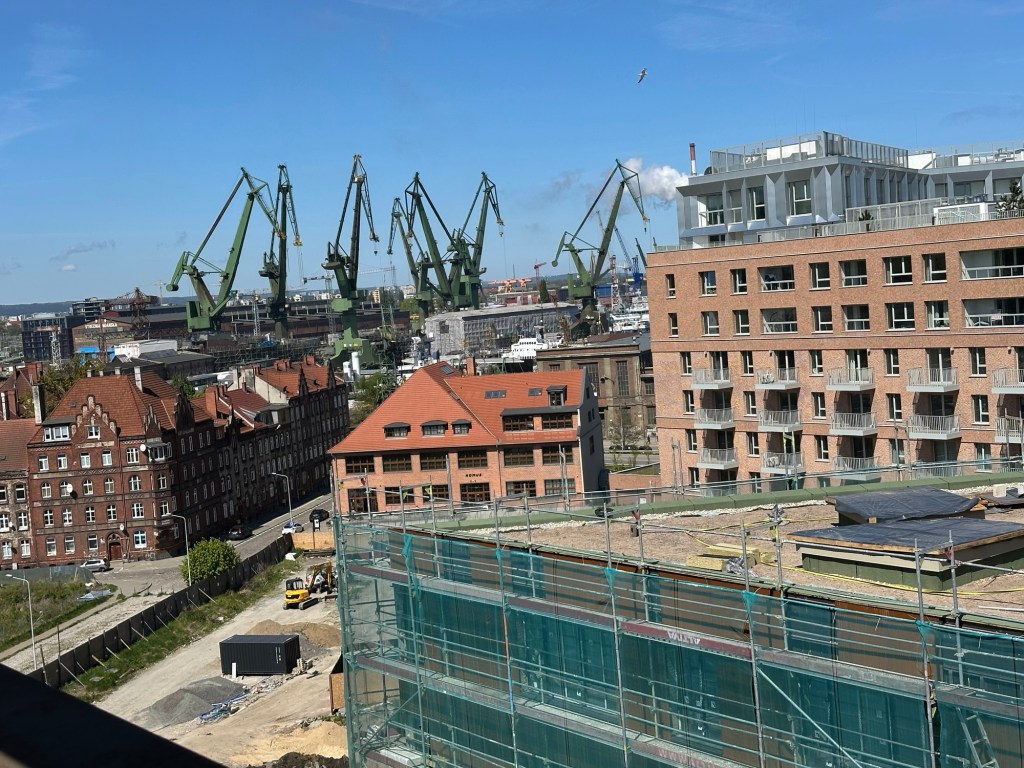
Gdaล„sk Shipyard entrance

Today I visit the European Solidarity Centre, better known as the Solidarity museum. Solidarity is the movement that one could argue started the end of communism in Eastern Europe. In Gdansk, Poland it all started with a strike of workers wanting to unionize.

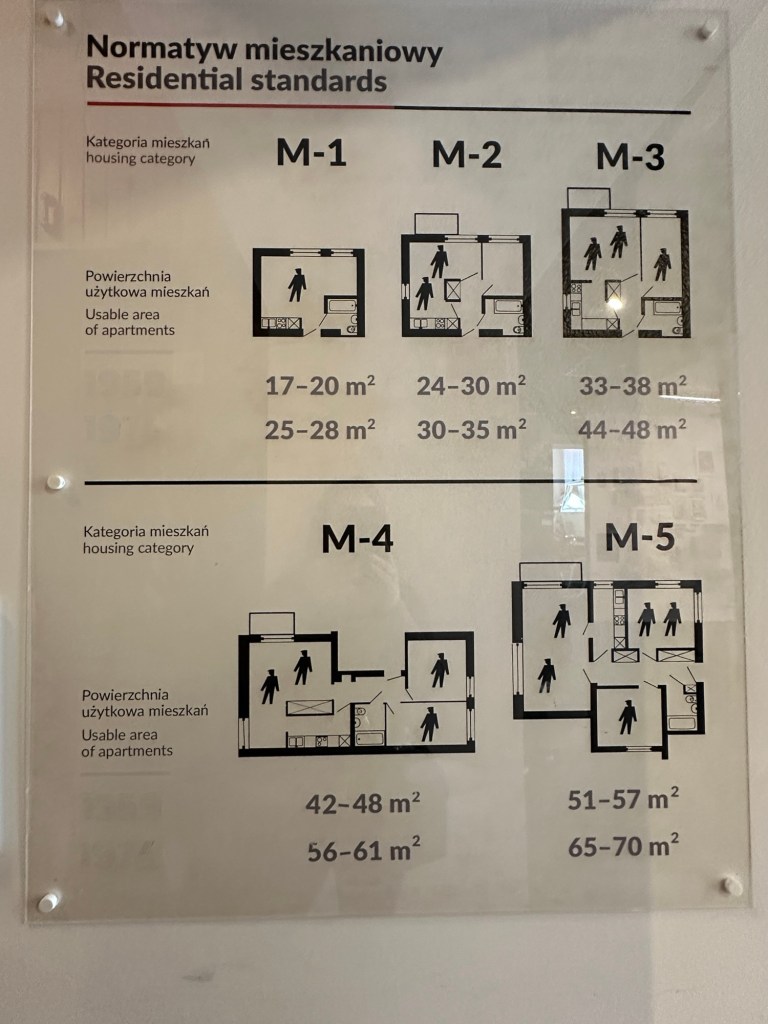
Conditions in Poland during communism are not great. Citizens are jailed for speaking out or individuality. There are food shortages and shortages on just about everything else. The communist government tries to create housing to help with shortage but they are state assigned and hard to get. Information access is controlled; there is radio free Europe broadcasted from Munich but the government eventually jams the signal of that. In fact it was against the law to listen to radio free Europe.

The solidarity museum centers on the 1980 shipyard strike from which catapulted a movement.

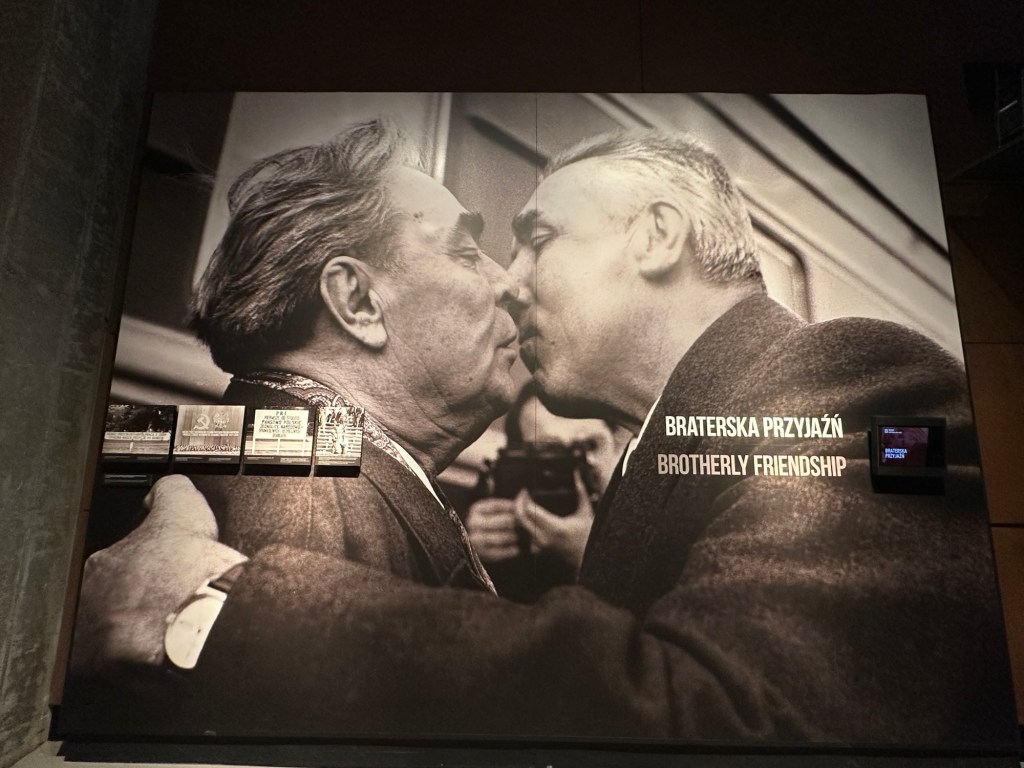
Photo of two leaders being affectionate. It is to show how Poland is subservient to Soviet Union (USSR).
Soviet map, iron curtain.

The United polish workers party was the only party that existed at the time and there were elections but they were mostly for show. They used cruel interrogations to try to keep people under control.

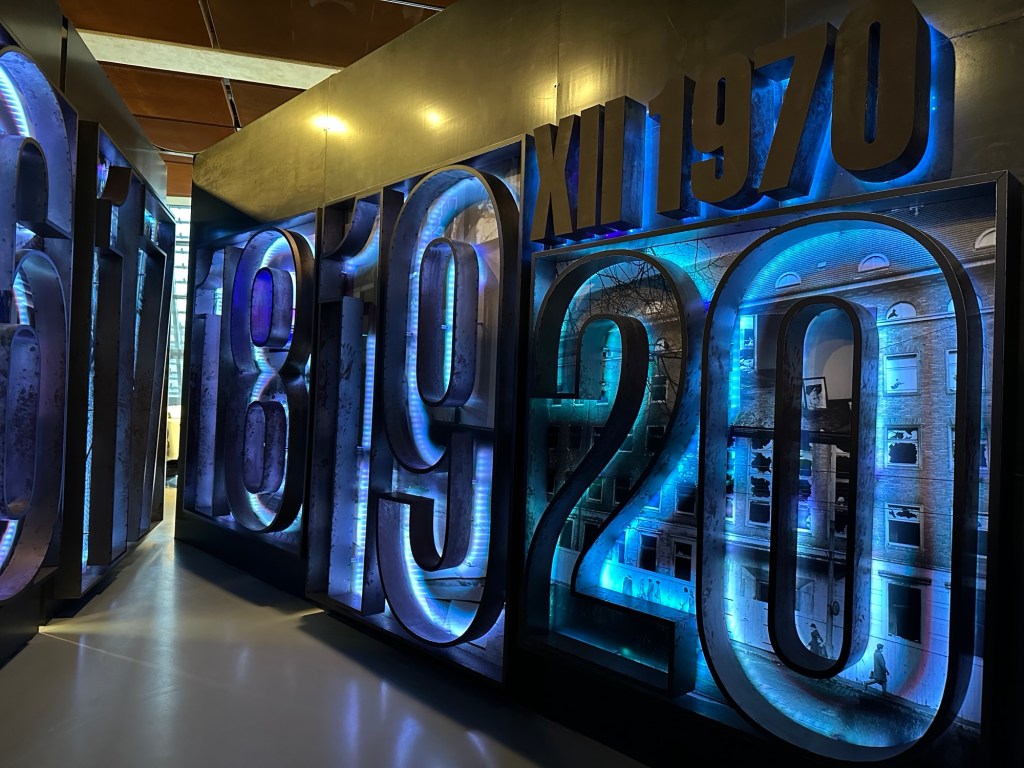
On December 17 1970 there are demonstrations and protests about high prices and more. There is a massacre on Baltic coast (multiple cities) where 45 people lost lives.
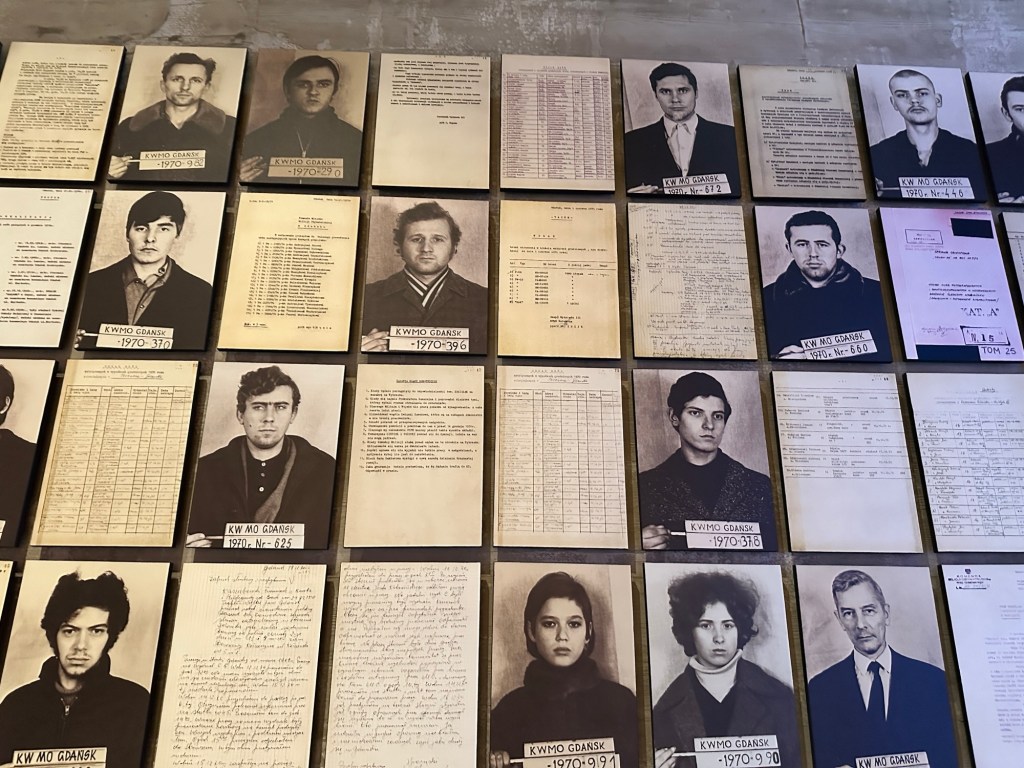
People arrested

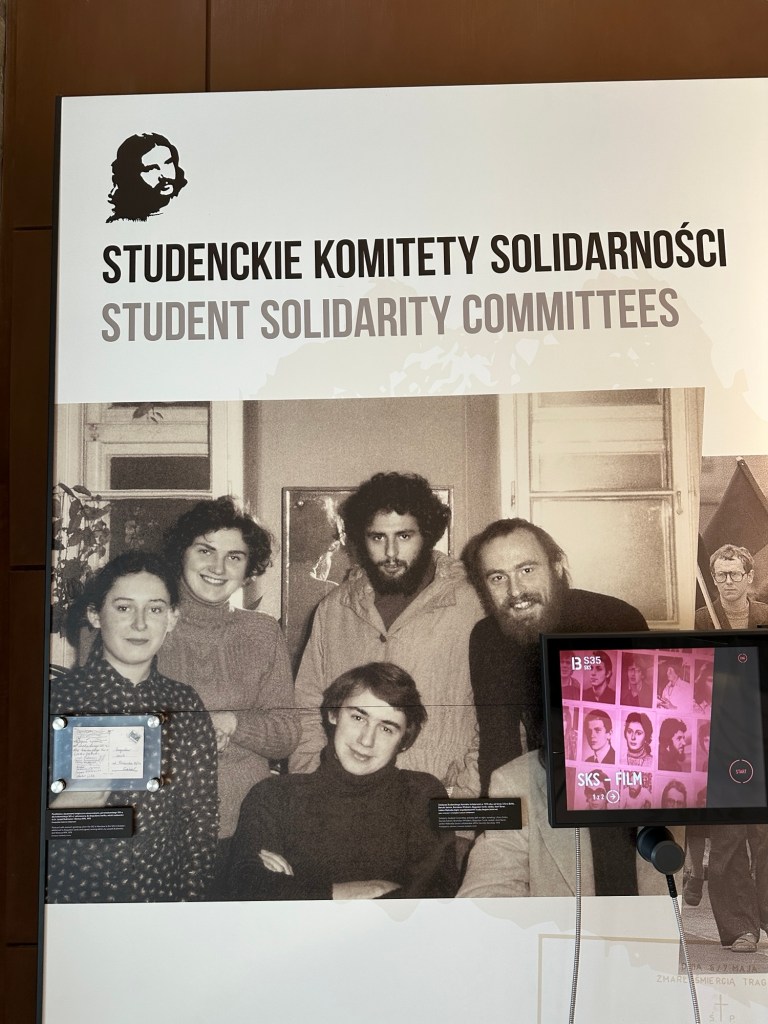
Kor (workers defense committee) formed 1976 as well as other groups.
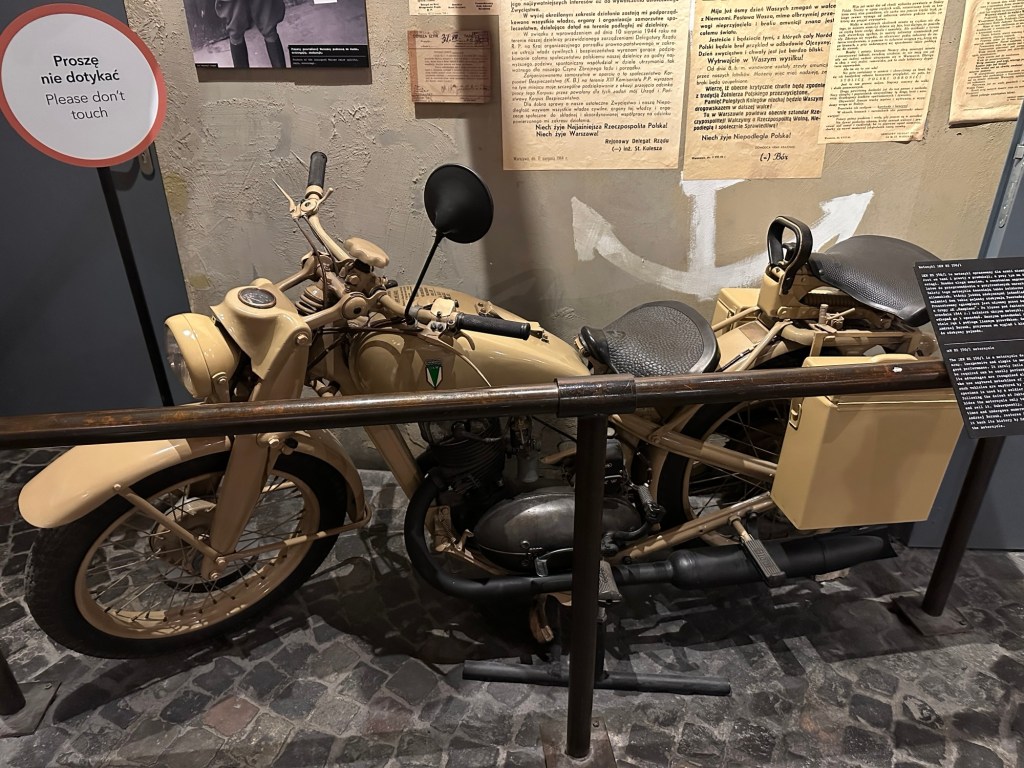
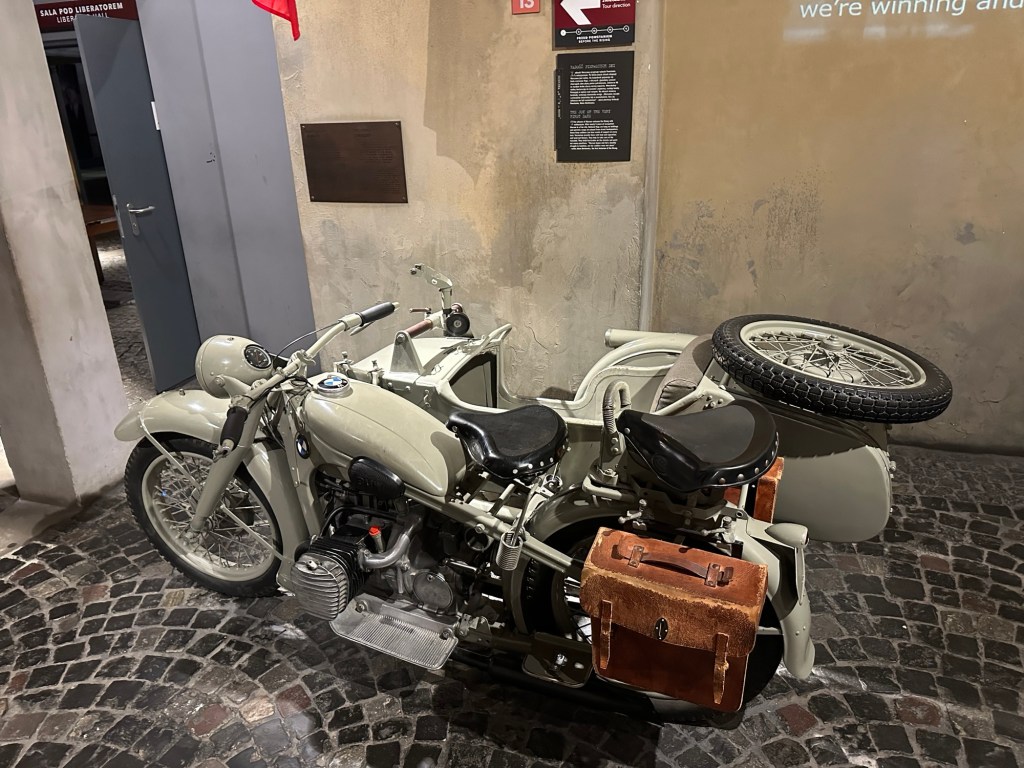
Polish Pope John Paul II comes to visit for the first time in 1979. There is a pope mobile in the museum.
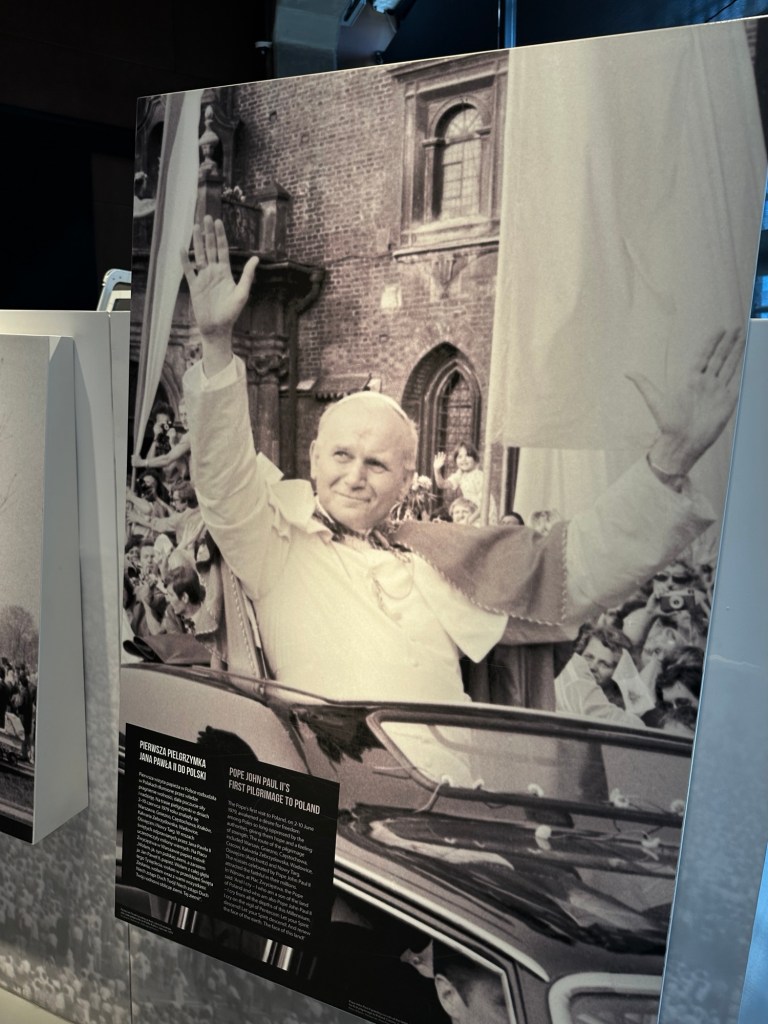
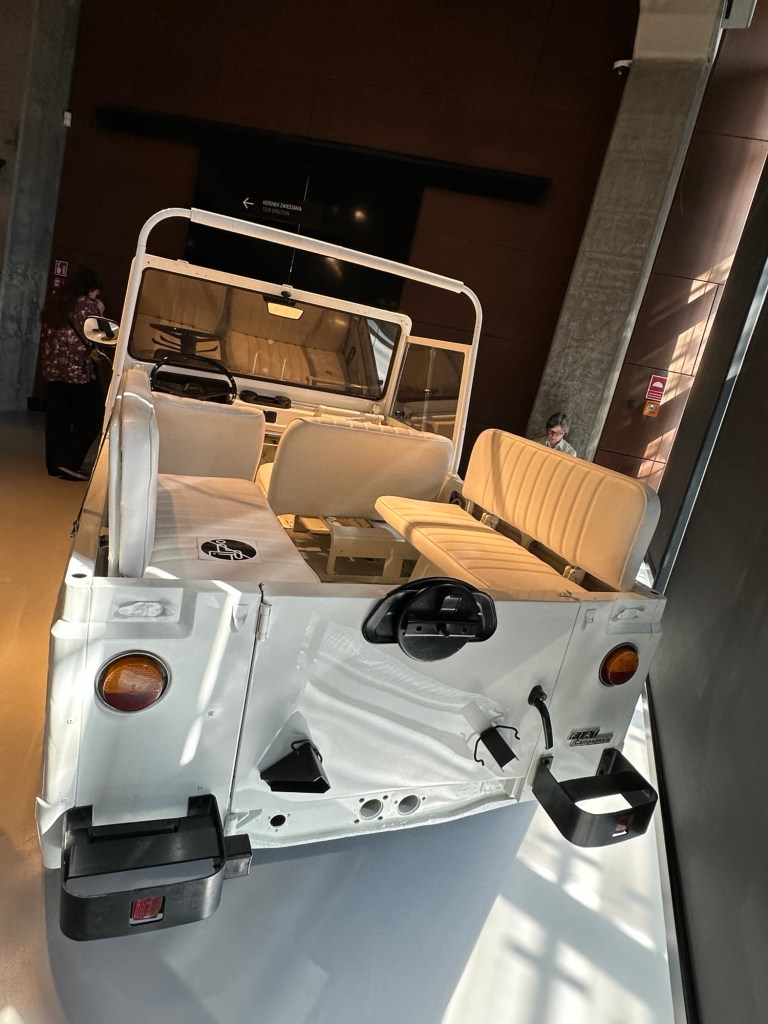
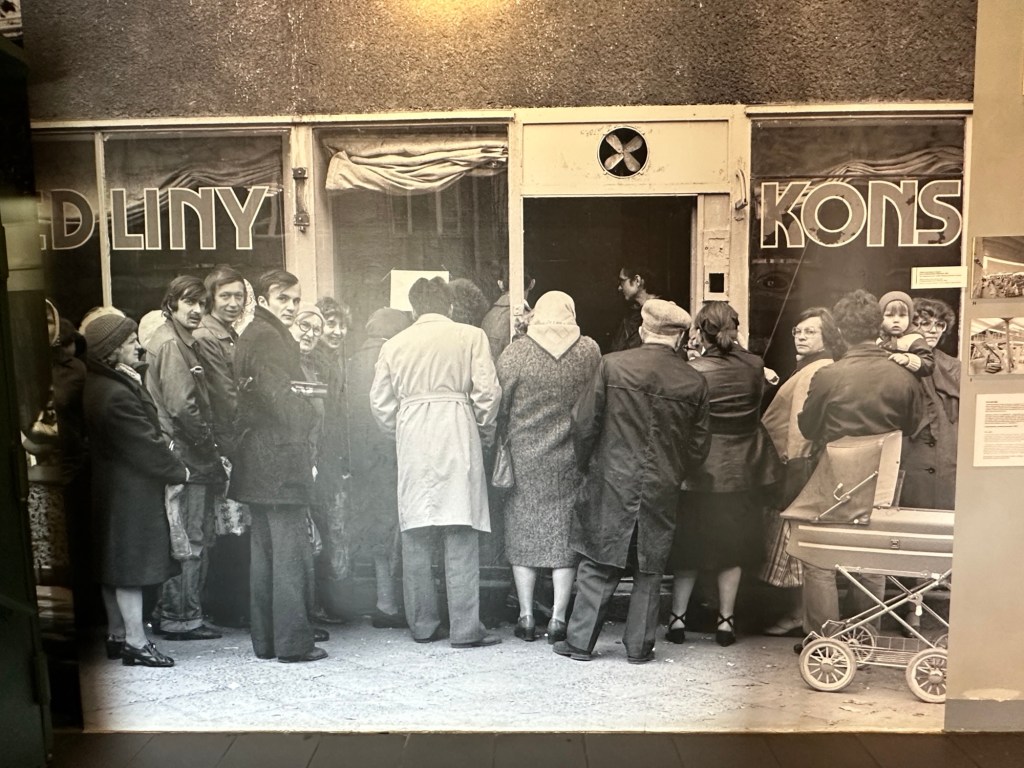
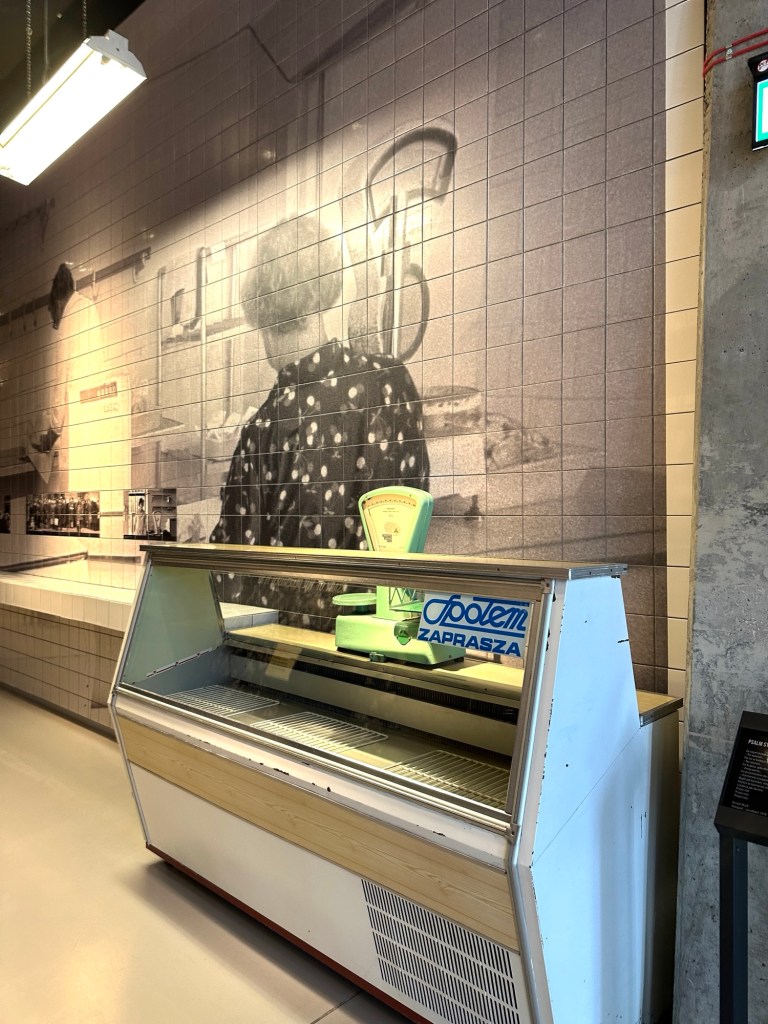
The pope visiting gives the Polish people hope but there are also empty shop shelves and long queues as a result of failed communist policies.
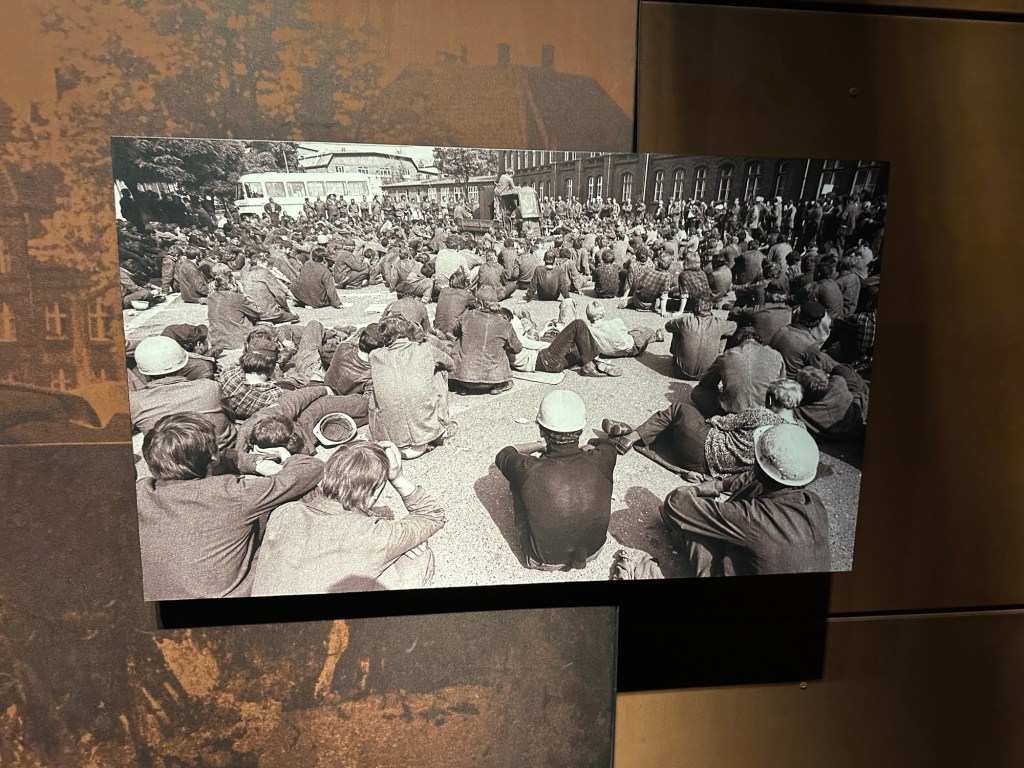
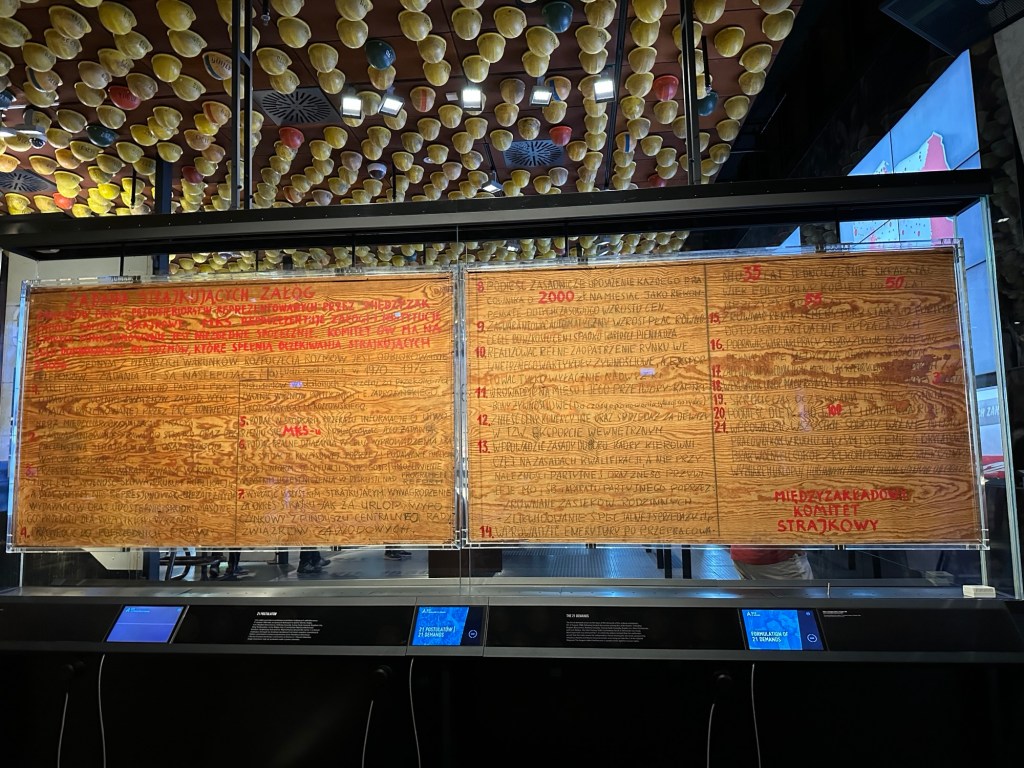
There are Lublin strikes in 1980 and later in Gdaล„sk shipyard over a worker fired and other working conditions. They created a list of demands. These demands are in the UNESCO registry. The demands establish free trade unions and the right to strike. They avoid radicalism and aggressive language.
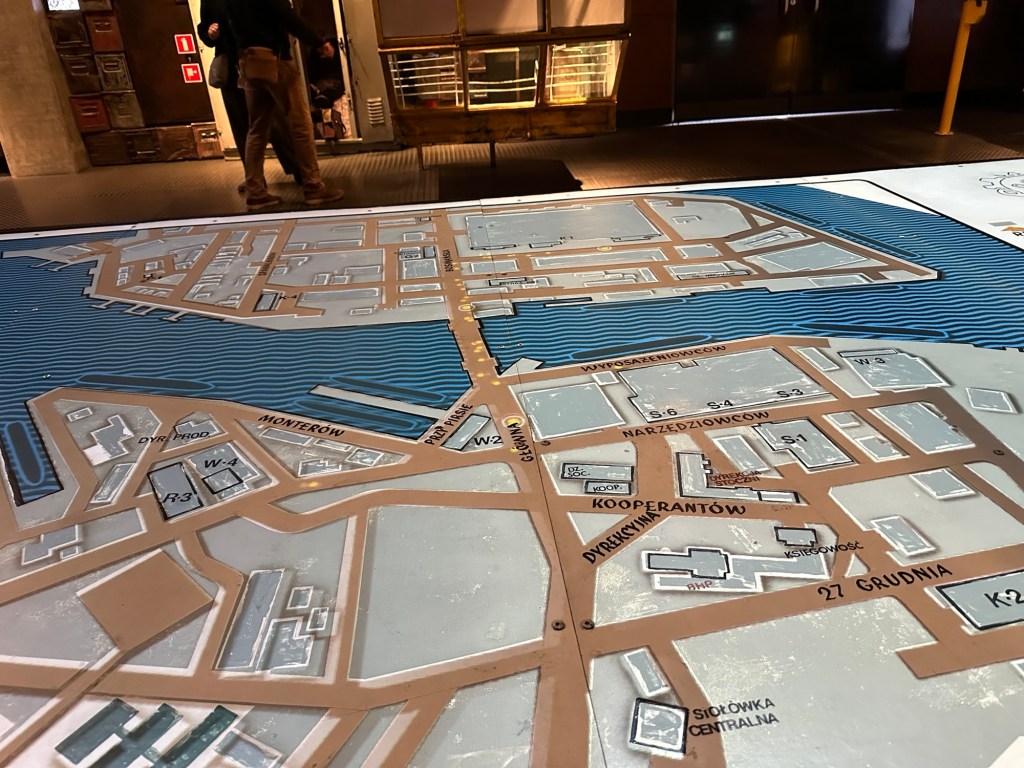
The main movement starts in Gdaล„sk but spreads south as many other work places go on strike.

Solidarity is now a slogan.
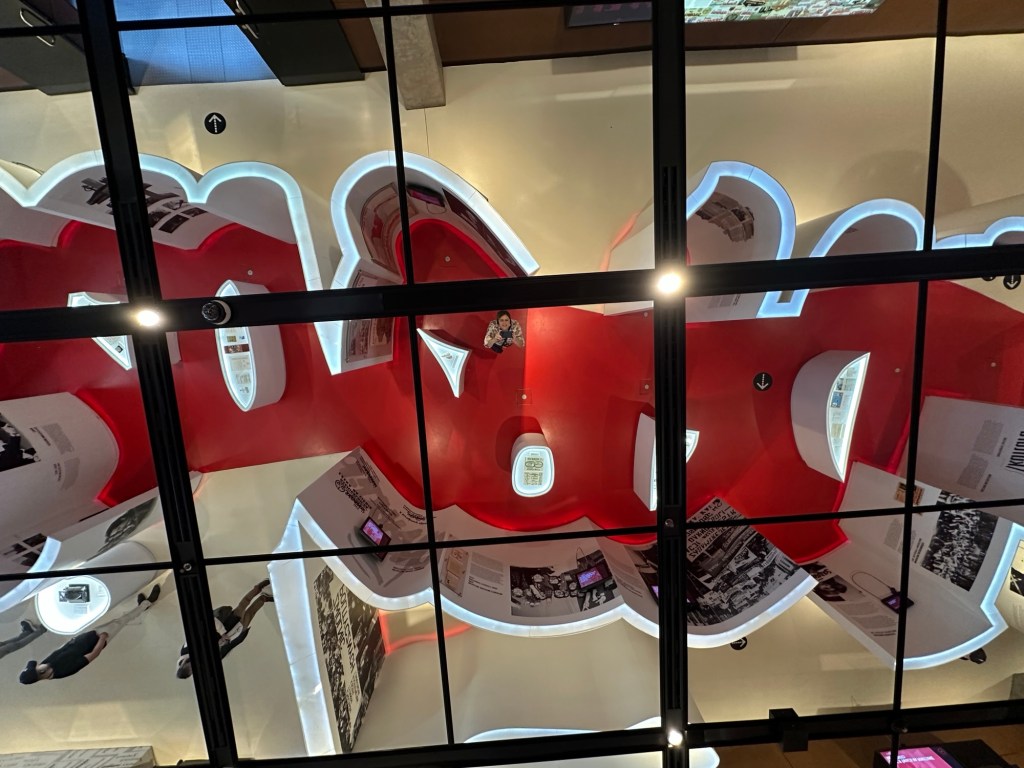
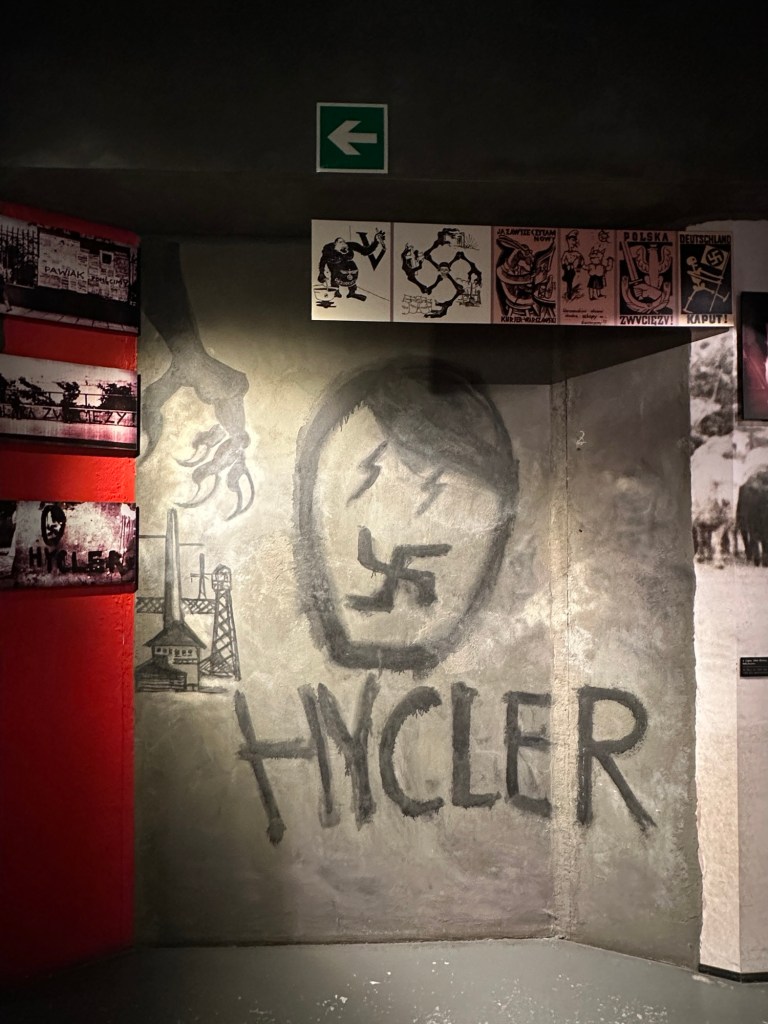
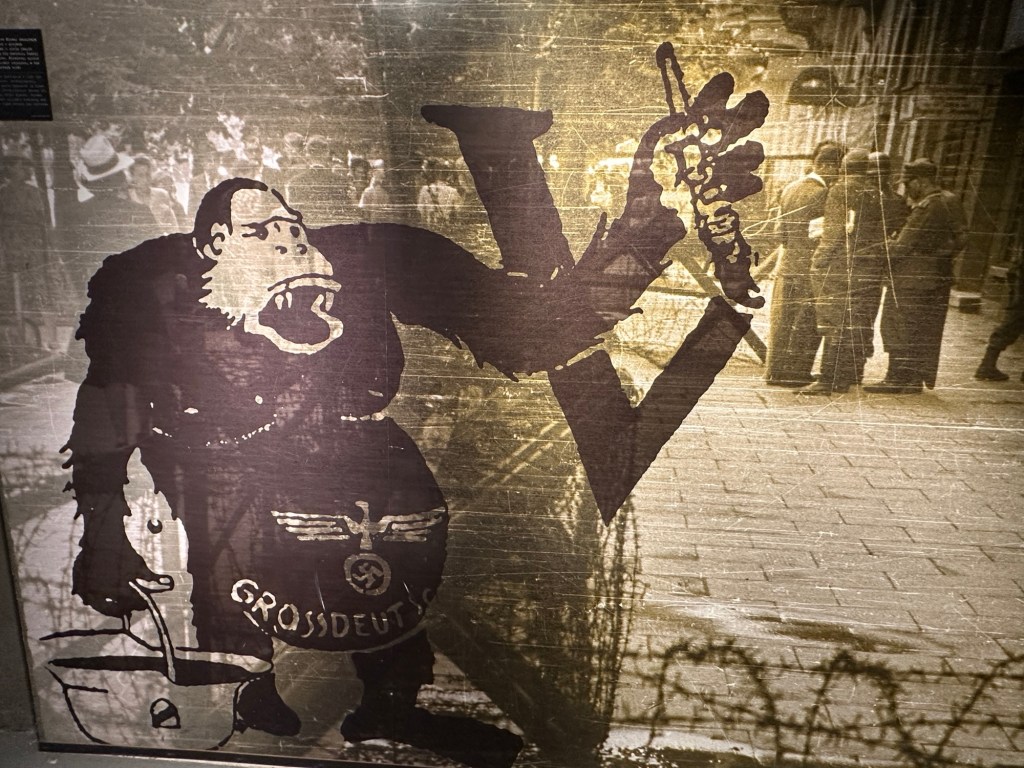
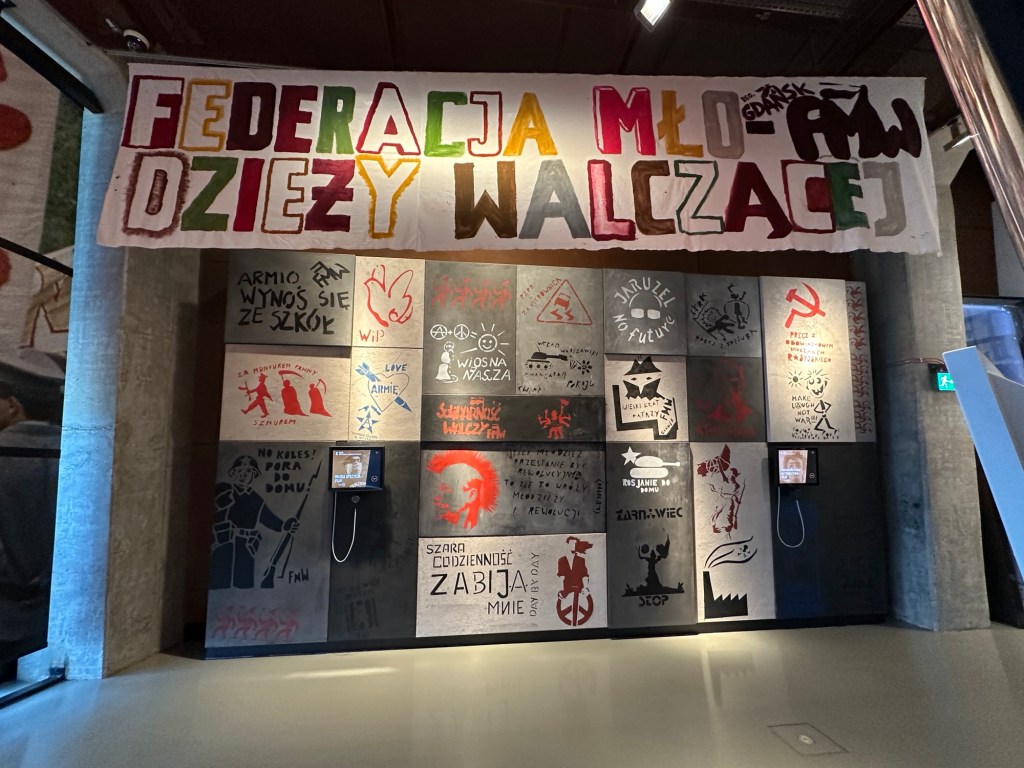
Visual representation of Solidarity in the museum

They meet first on wages and then press for unions. Unions and the arts take off after solidarity is introduced.
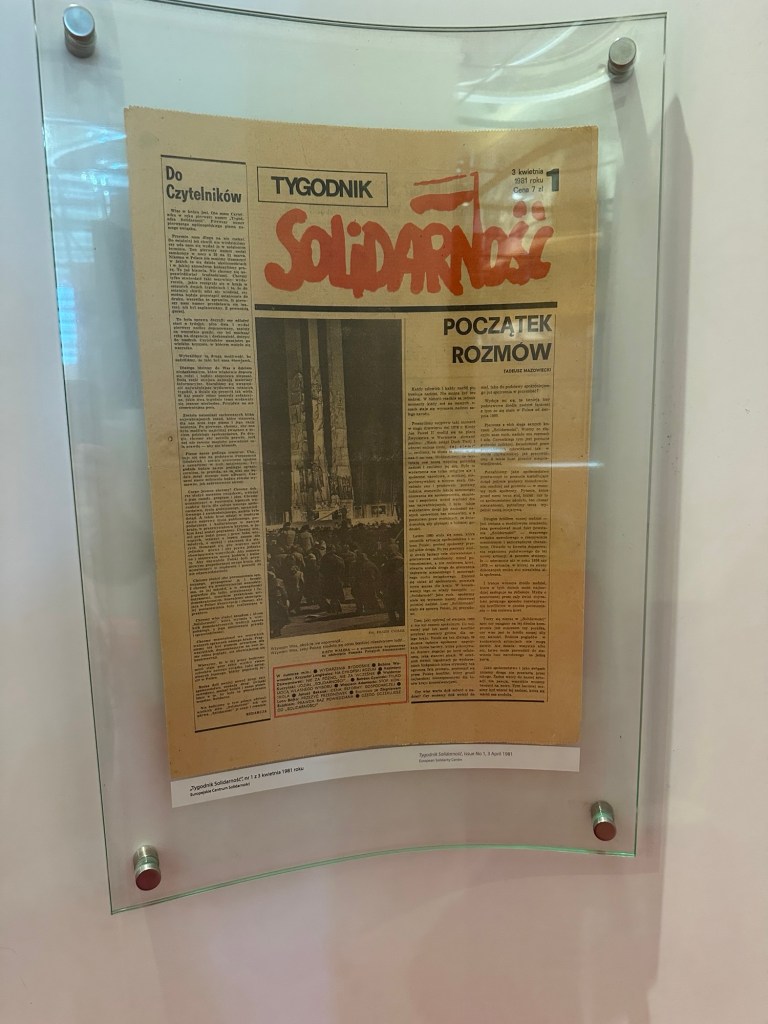
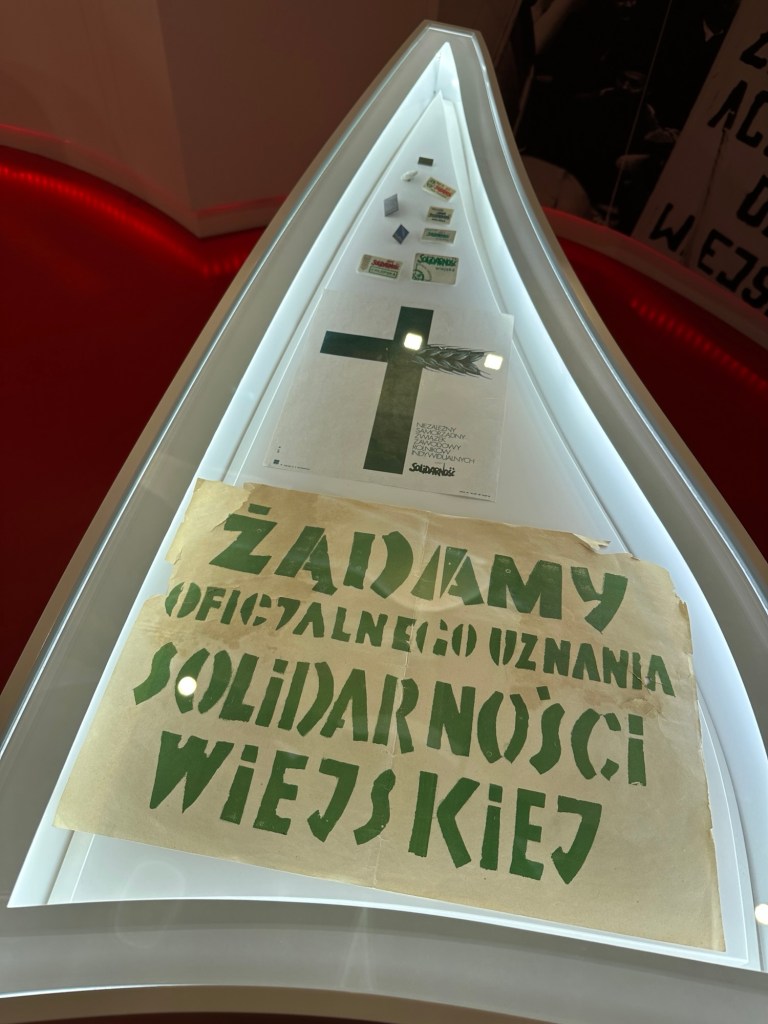
Solidarity becomes more popular and leads to more free elections. This encouraged other eastern bloc countries to form unions and democratic elections. The United polish workers party saw solidarity as a growing threat.

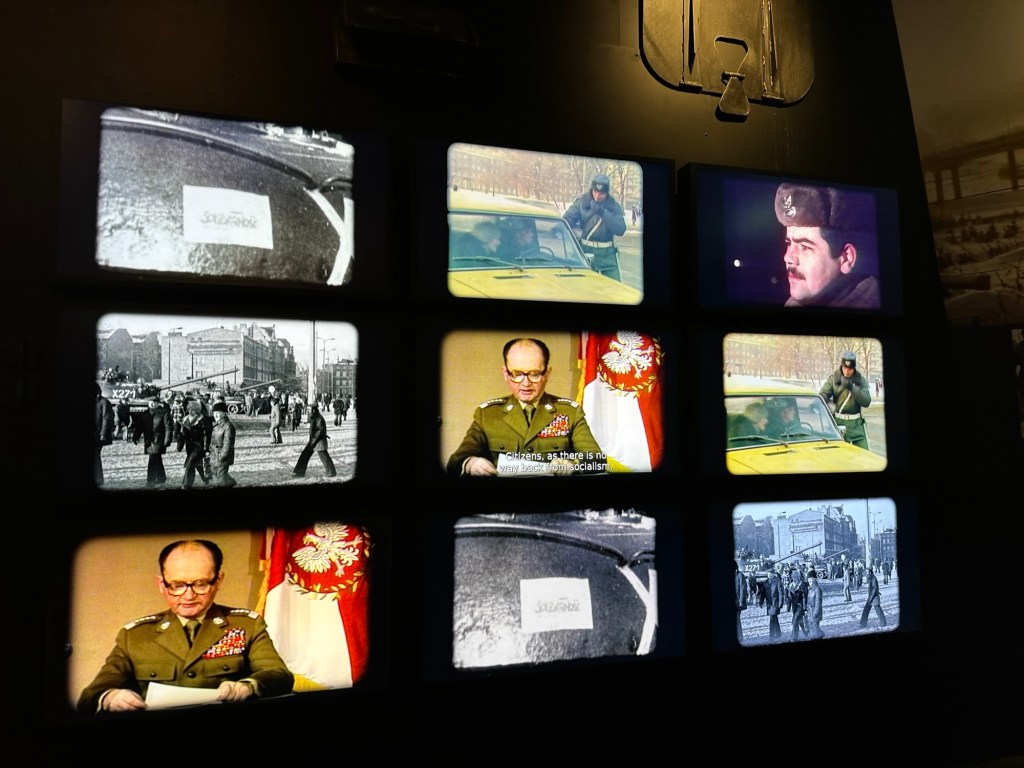
December 1981 martial law is implemented by the communist government. They blame solidarity for bad conditions and say itโ€™s a coup dโ€™tat. Martial law photos ends up in American newspapers and as a result USA puts sanctions on Poland and the USSR.
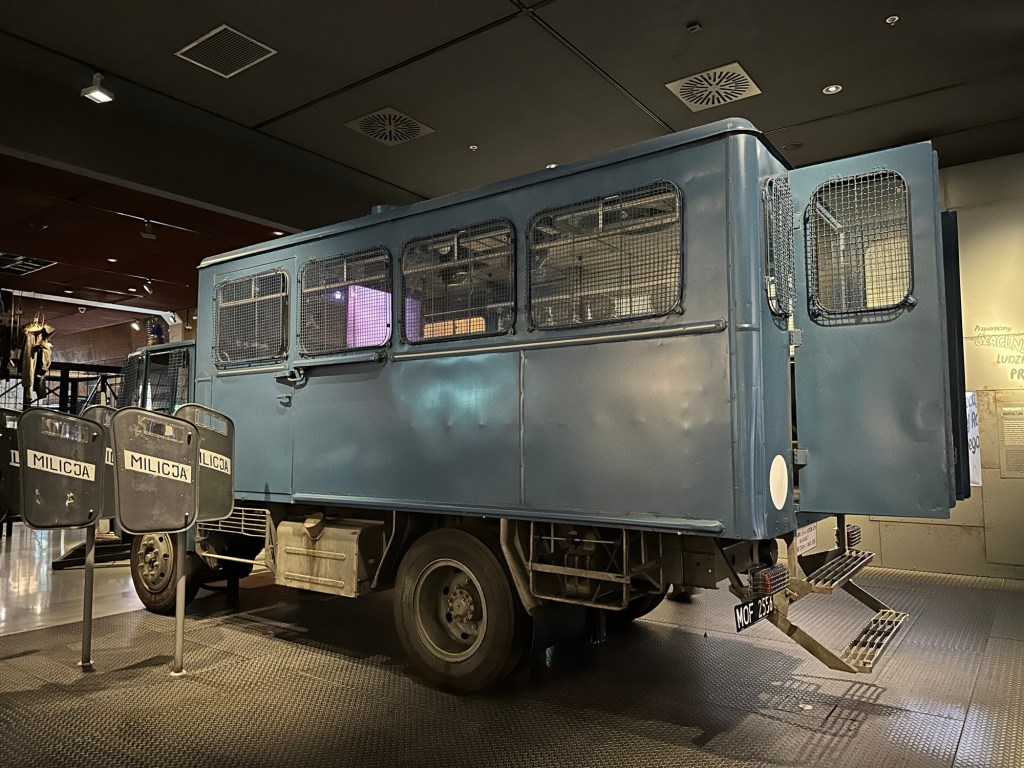
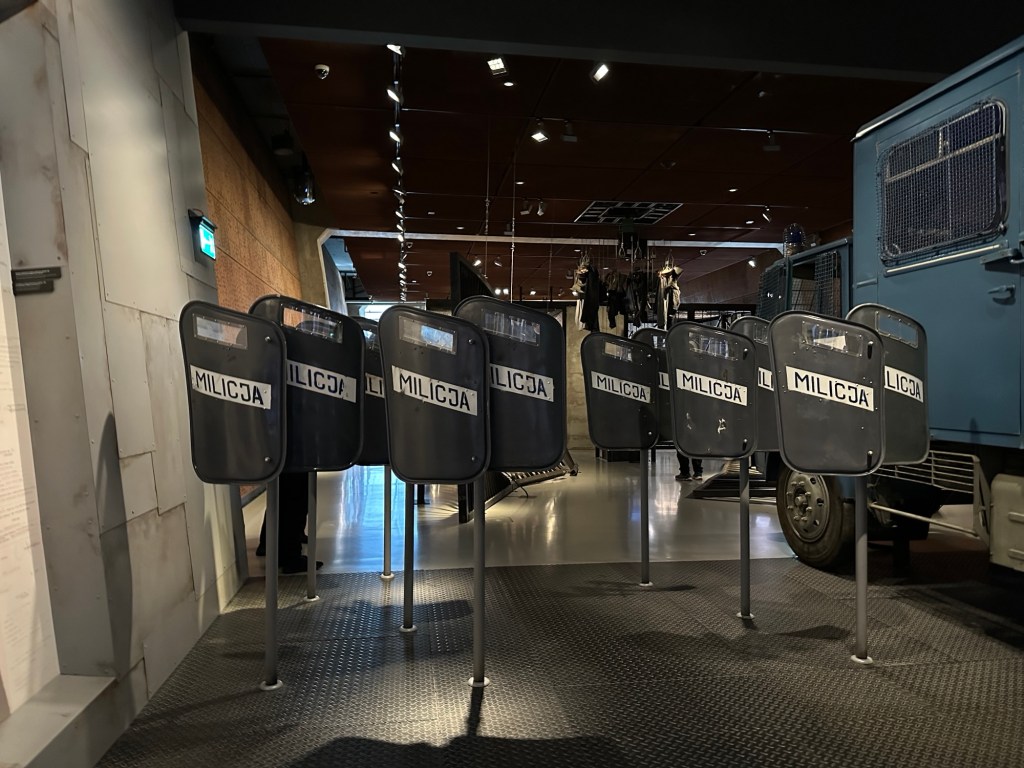
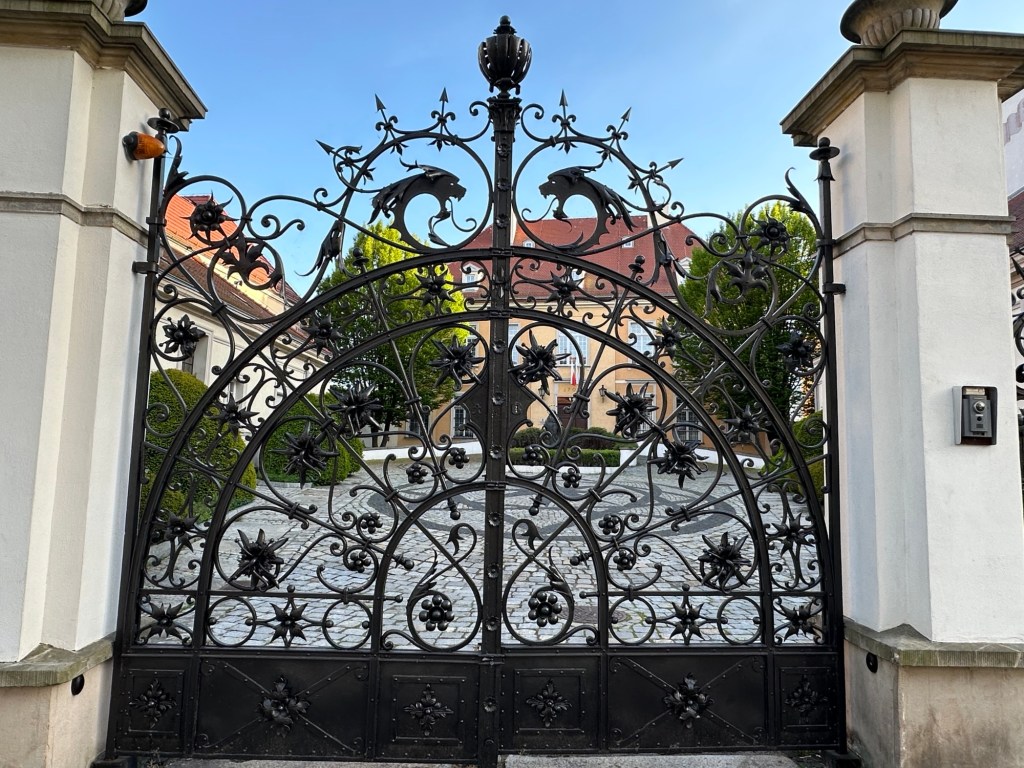
A gate at shipyard was destroyed by vehicle in 1982

The pope returns in 1983 and revitalizes the resistance movement. Resistors are worn as a symbol of the movement.
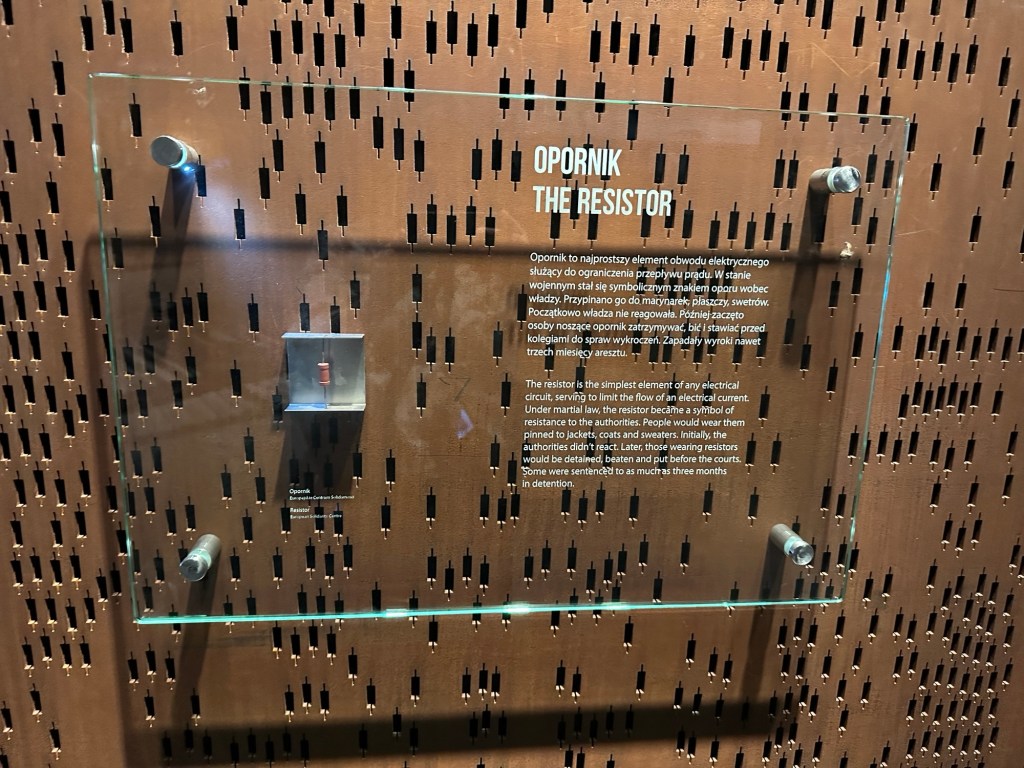
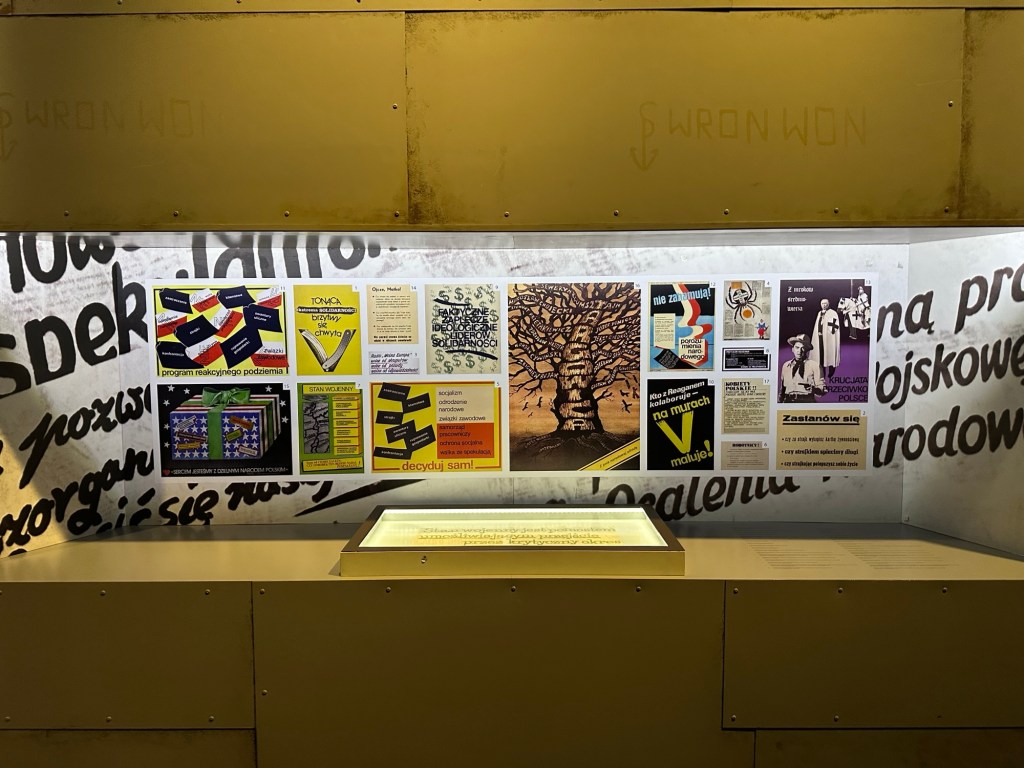
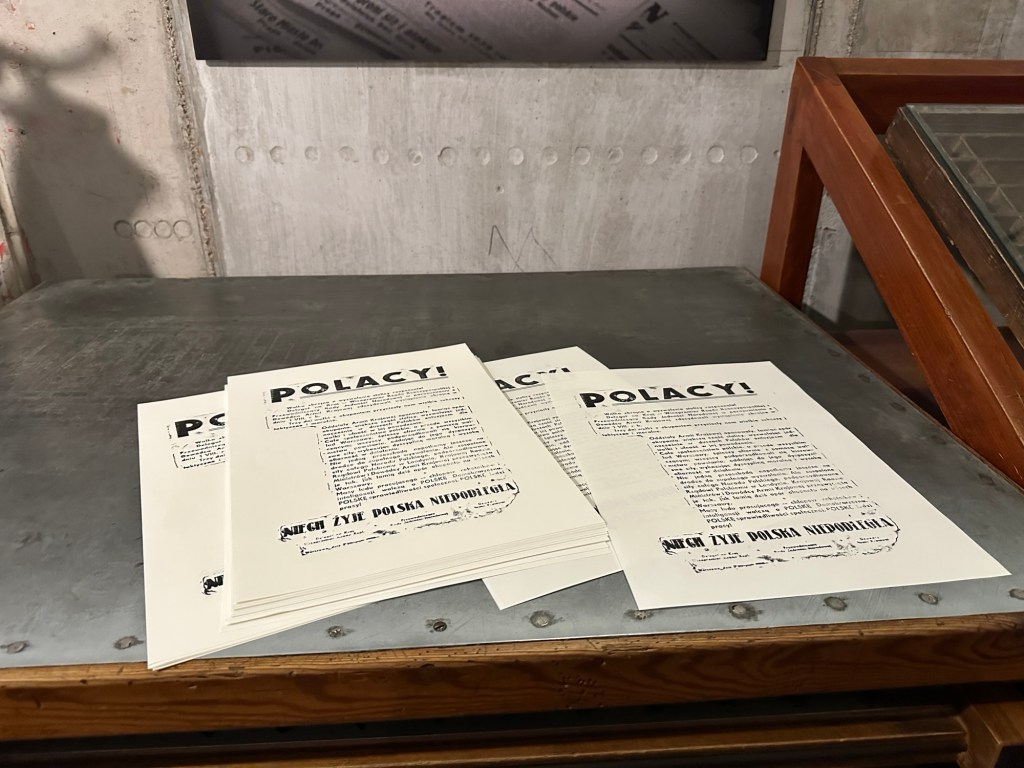
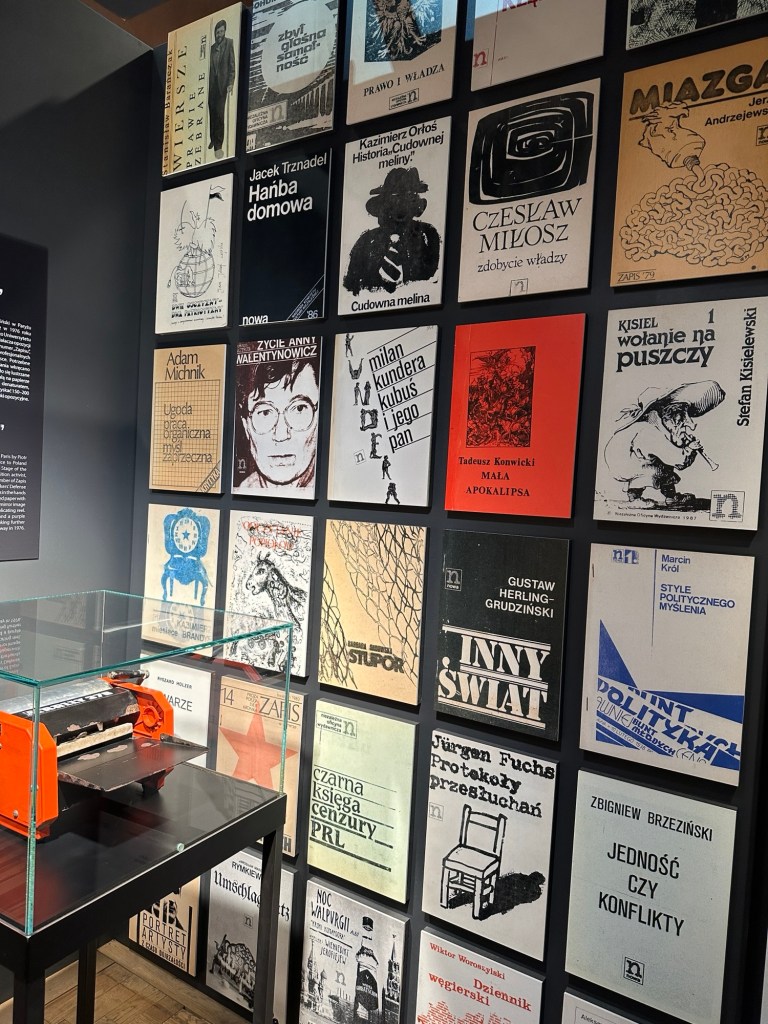
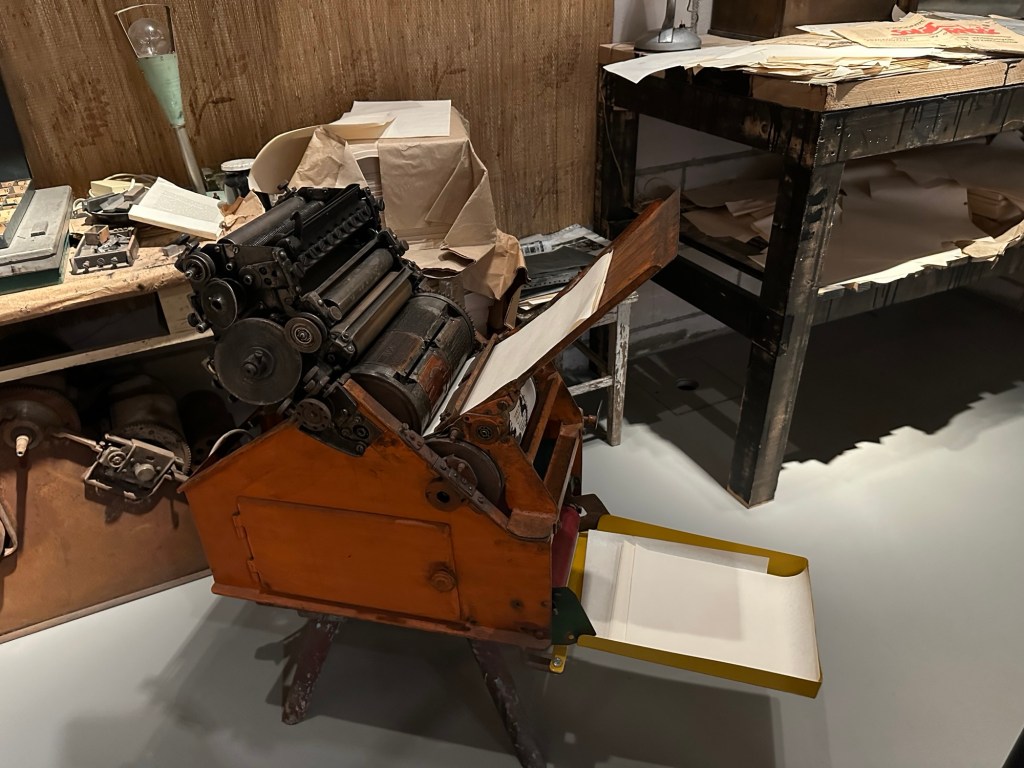
Underground publishing increases.

There is support from across the world, even USA.
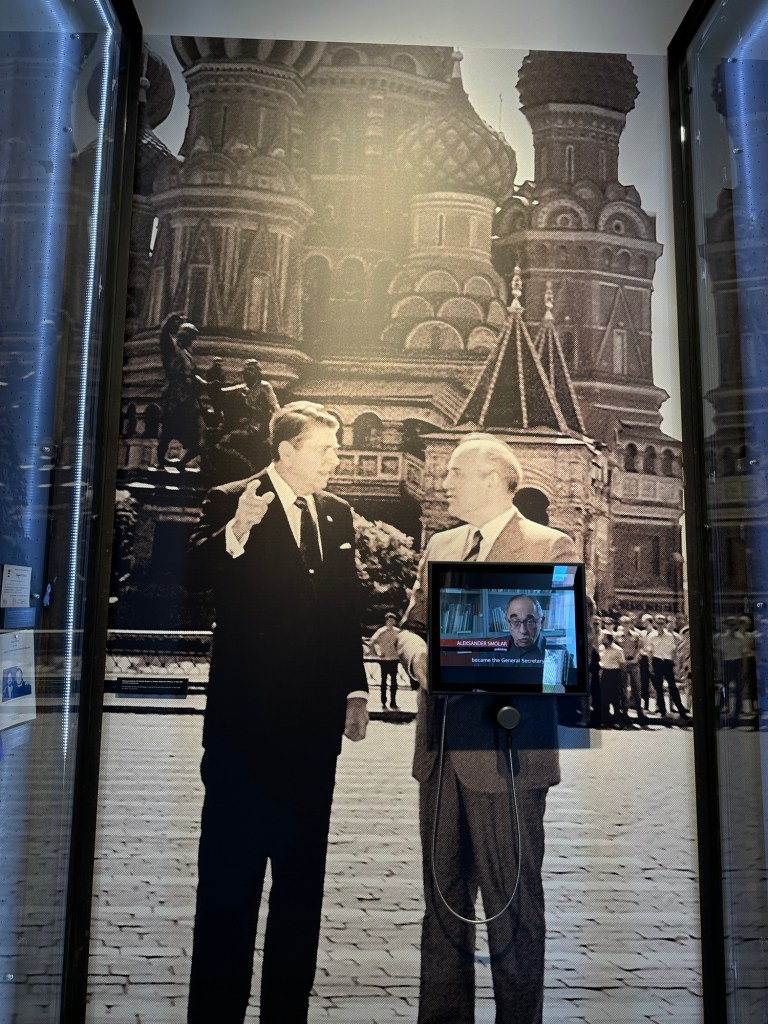
In 1987 the pope visits again
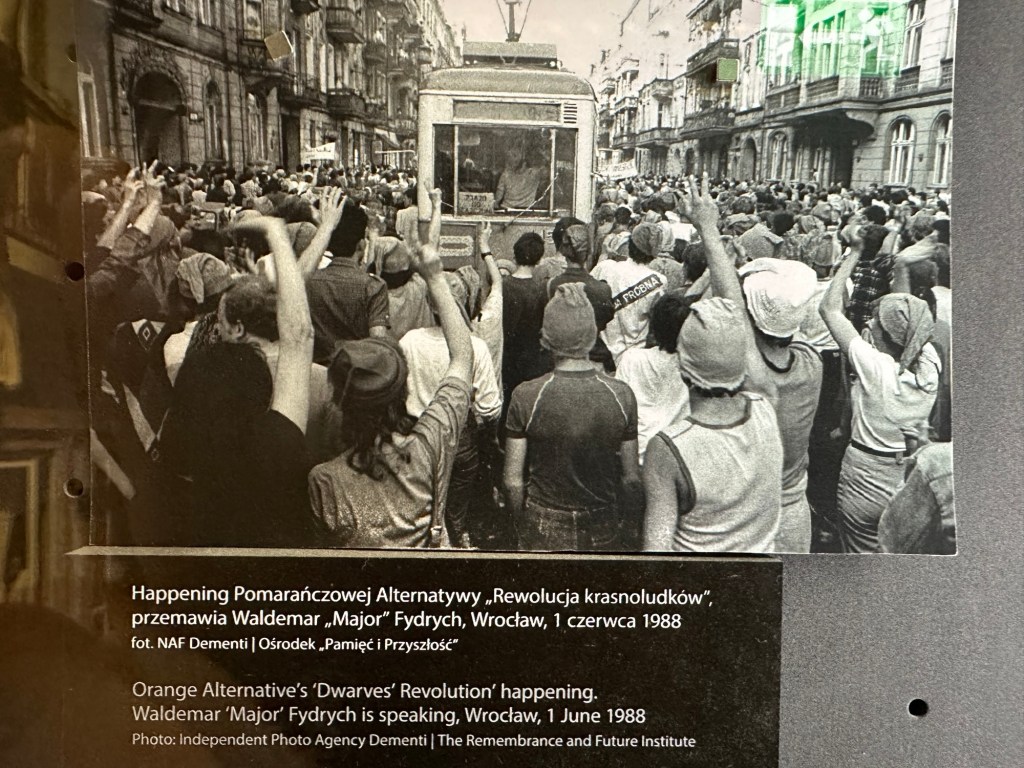
Dwarves in Wrocล‚aw

It is reported internationally what is happening behind the iron curtain. There are protests in the USA on the matter.

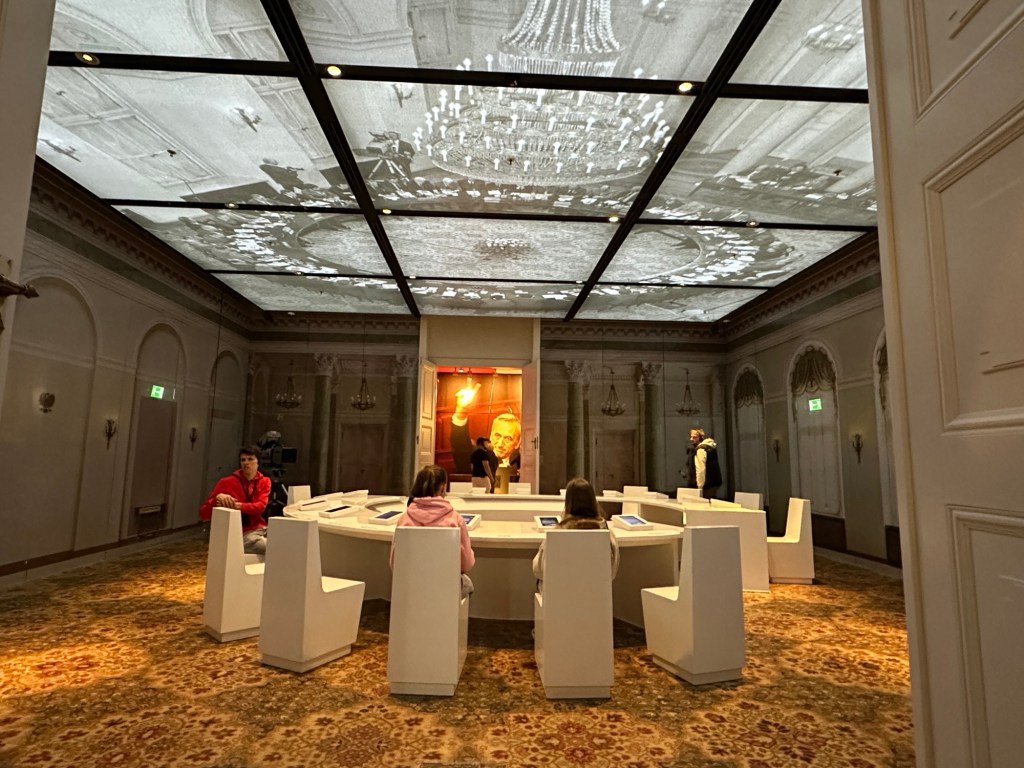
Finally there are highly publicized round table talks February 6 1989. There is an immersive exhibit that lets you feel you are part of the talks.
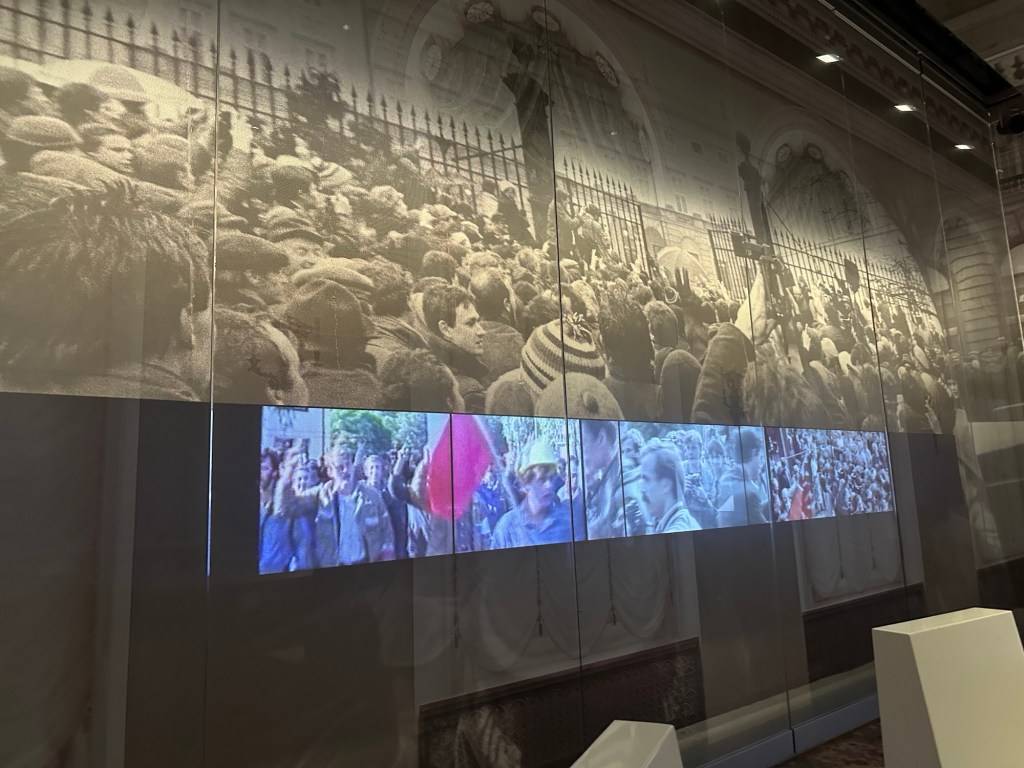
These meetings are a step toward democracy. Permission is granted for daily newspapers and censorship is softened. Independent judges are implemented in the courts.

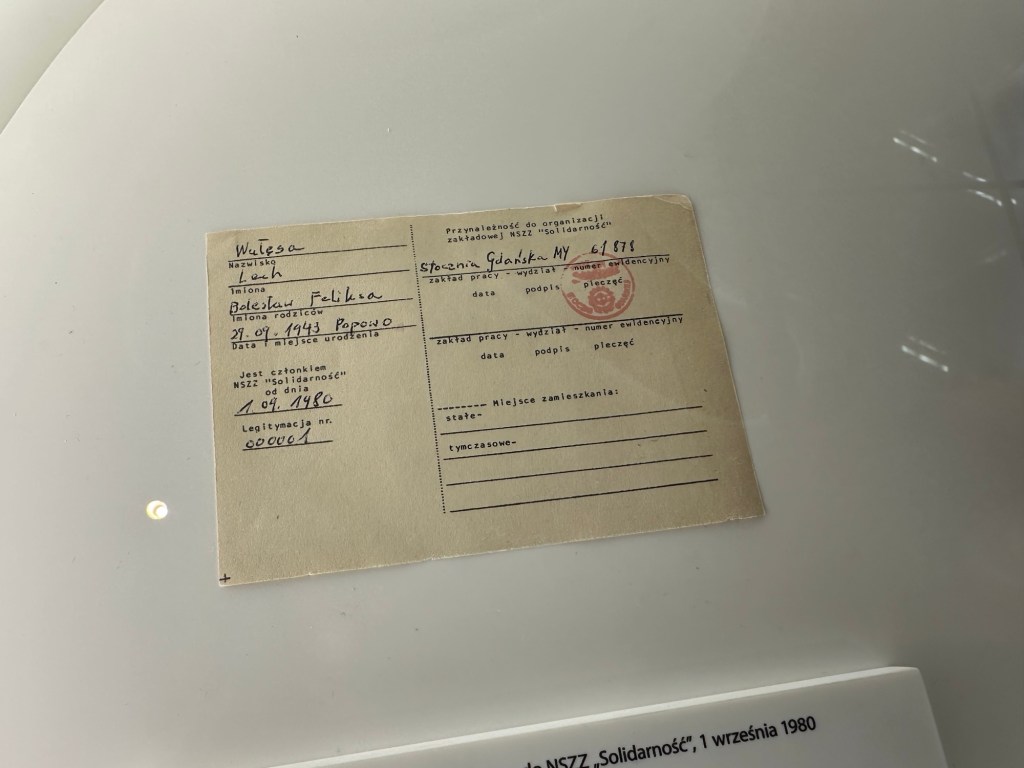
Lech Waล‚ฤ™sa, one of the founders of the solidarity movement gets the Nobel peace prize and eventually serves as president of free Poland.

The collapse of communism is 1989 in Poland and around the same time communism collapses in surrounding countries.

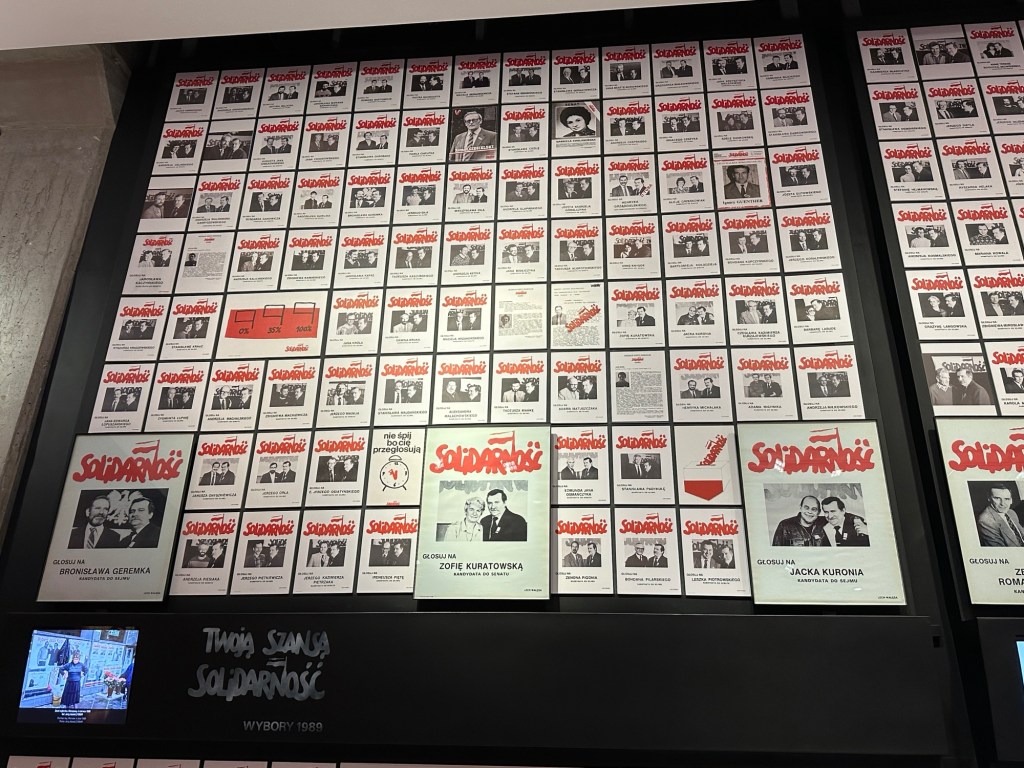
Poland is the only country in the region with democratic transformation through peaceful revolution. The Solidarity movement endorsed many candidates in a free election. They used pop culture in the marketing of some of the candidates.

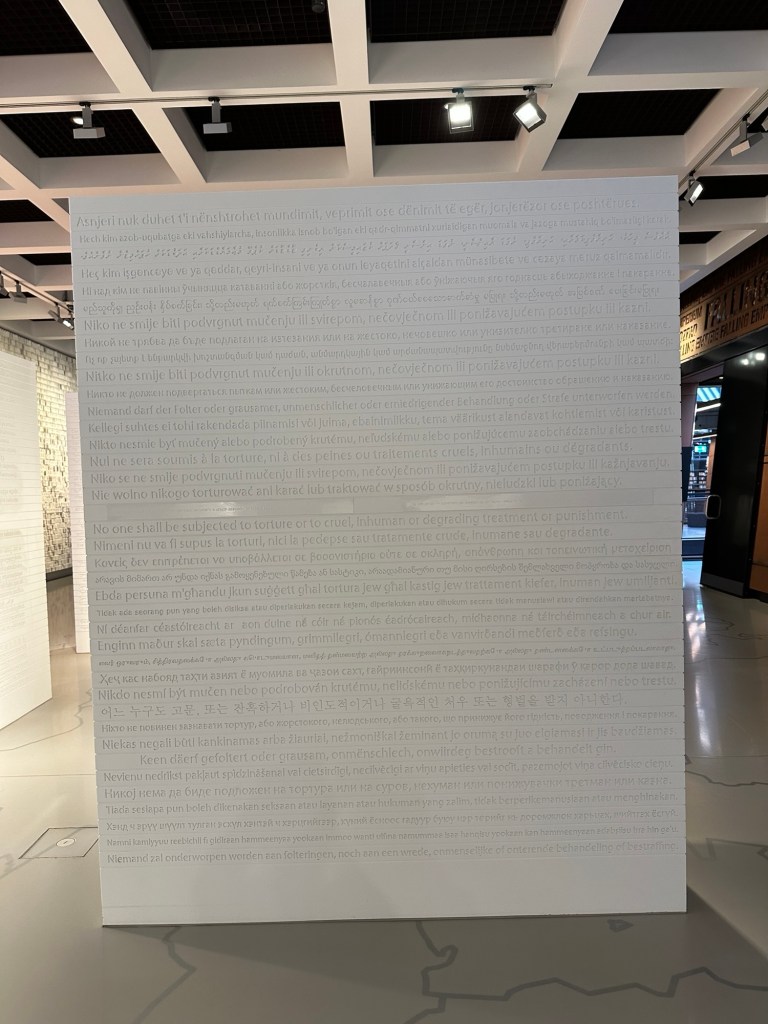
The museum ends with a list of basic rights on white walls. You can also leave your thoughts as part as a living exhibit.

The museum gave me a new perspective on the end of communism in Eastern Europe.
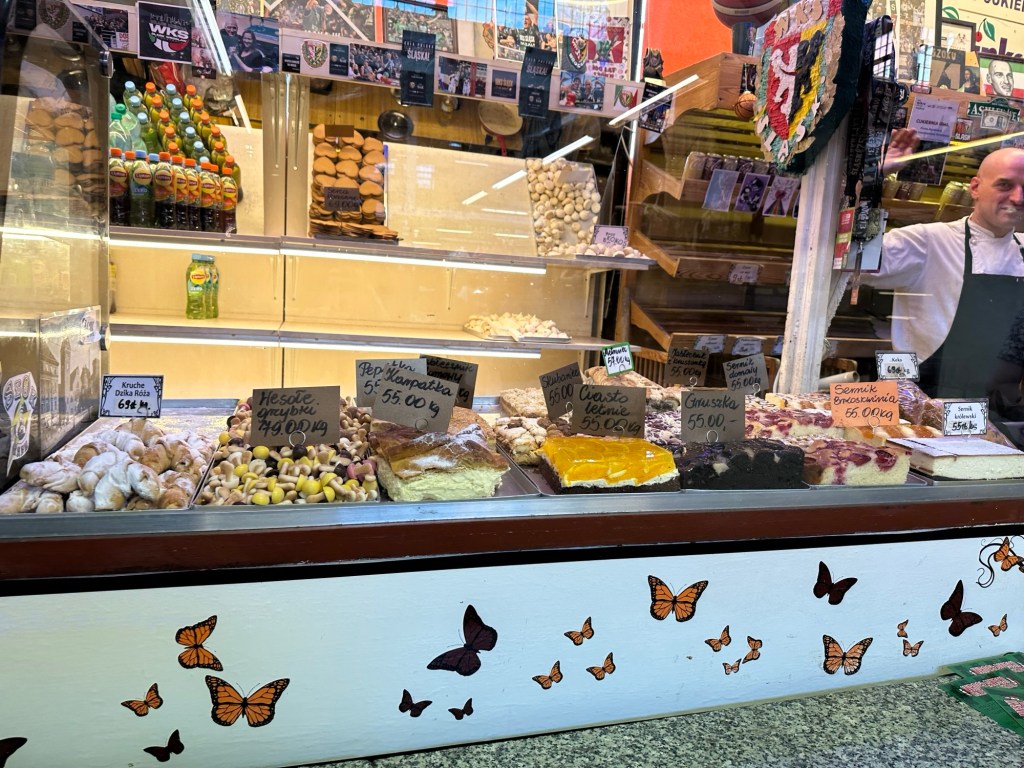
After the visit to the Solidarity museum I visit the Montownia food court nearby where I eat lunch. There are a mix of international stalls located there.

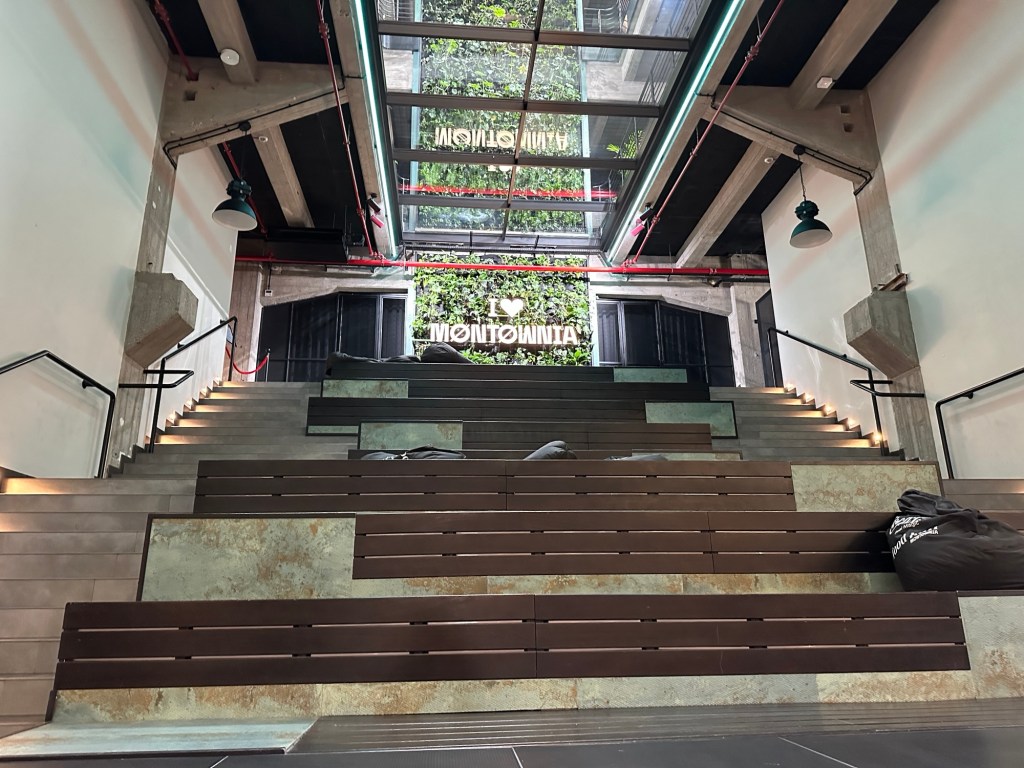
My day isnโ€™t over yet. More on other sightseeing later.

Warsaw: Big museum day

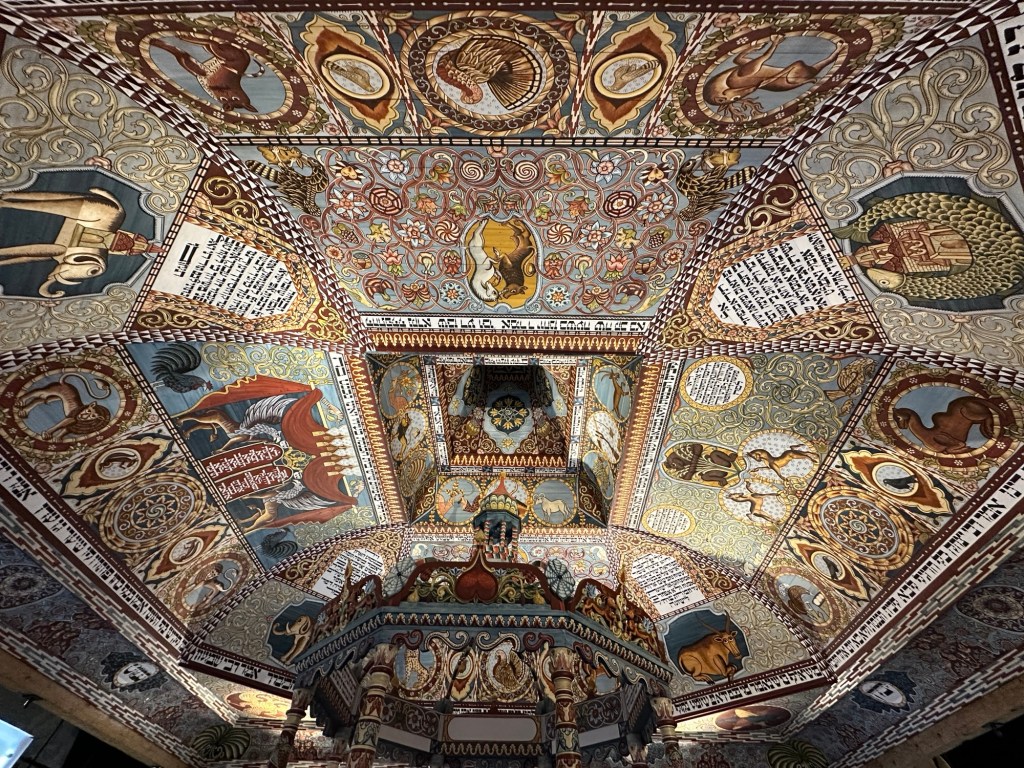
Lithuanian synagogue reproduction

There are no shortage of museums in Warsaw and I plan to see at least 3 of them today.

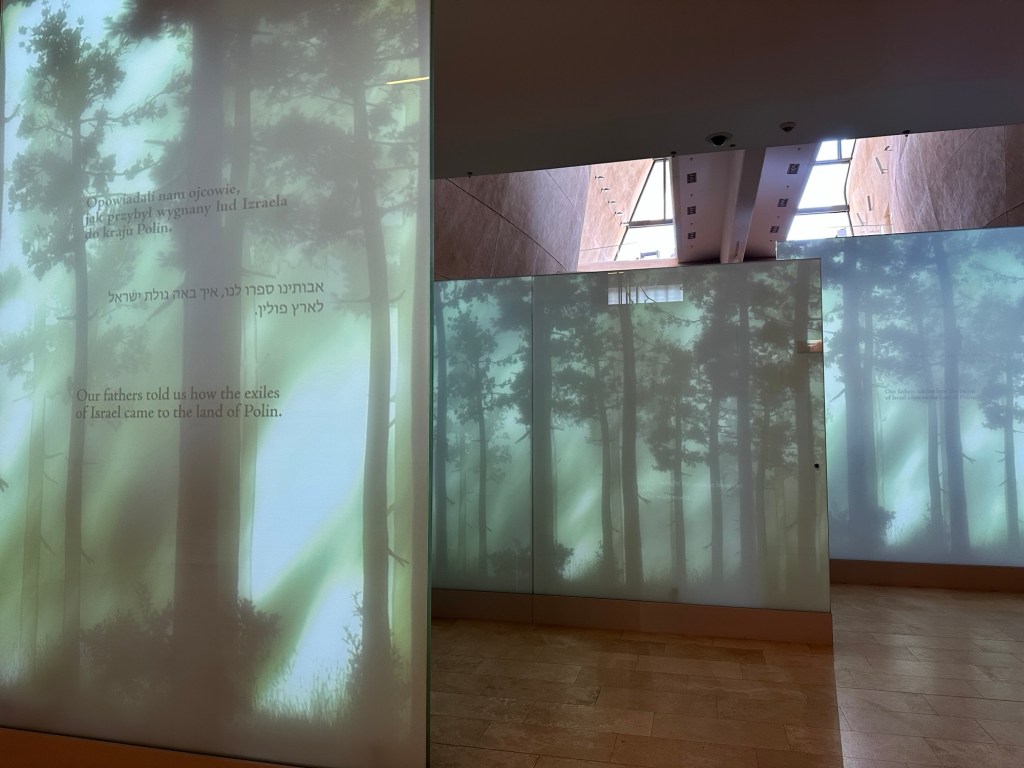
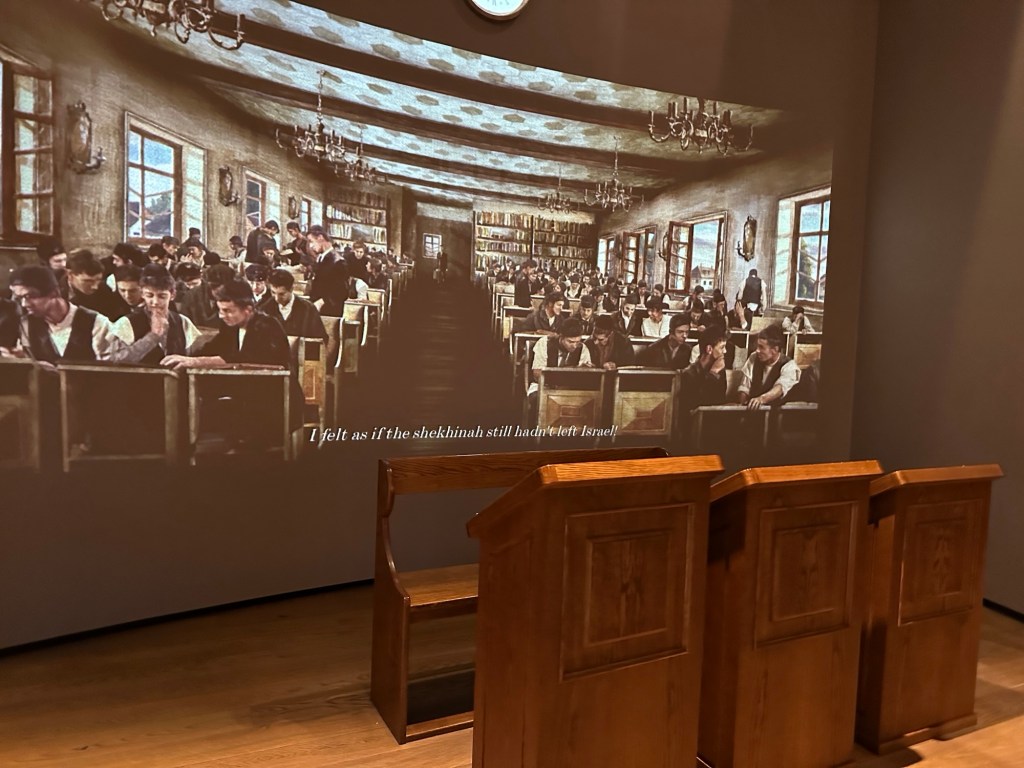
First stop is at POLIN, the museum of Jewish history. This museum takes you through the history of the Jewish people in Poland from the beginning. What is different about this museum is even though the holocaust is talked about in detail, it isnโ€™t the sole focus .

Polin in Hebrew means Poland and rest here.

Poland was primarily a pagan land until the Duke Mieszko married a wife that made him switch to Christianity in the 900โ€™s. Now Christianity is the prominent religion.

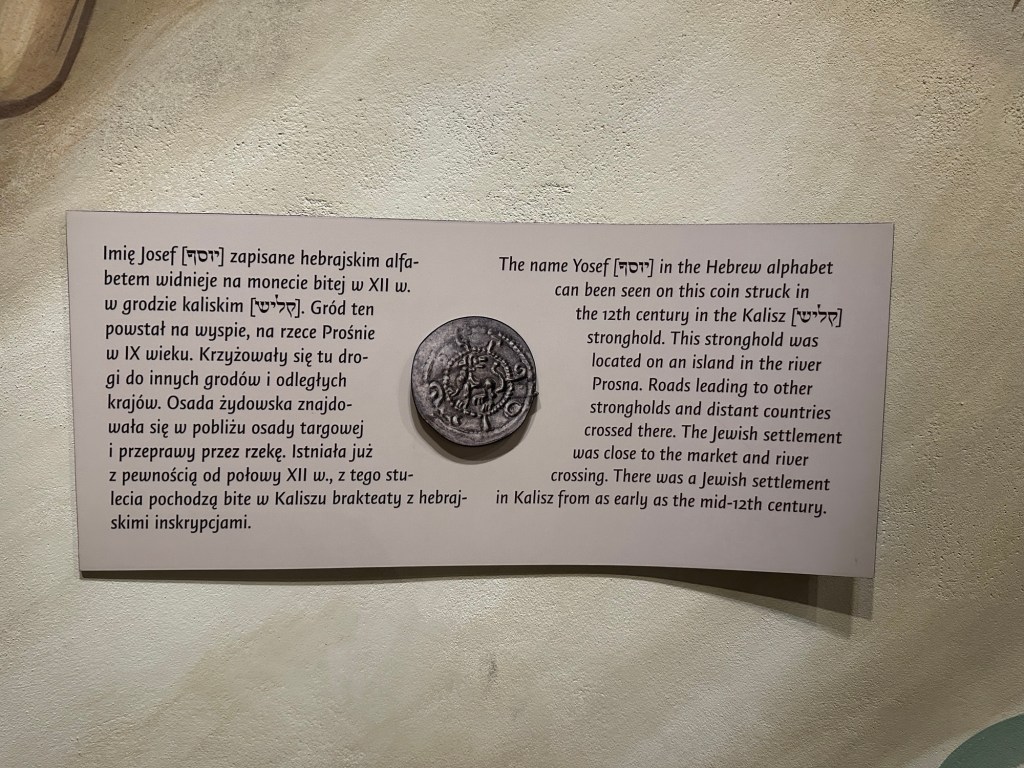
There were Jewish settlers in Poland as early as 13th century according to coins made by Jewish settlers. According to medieval Christian churches usury was forbidden (lending money) so money lending tended to come from the Jewish communities. This is the early origins of associating Jewish people with banking or money.

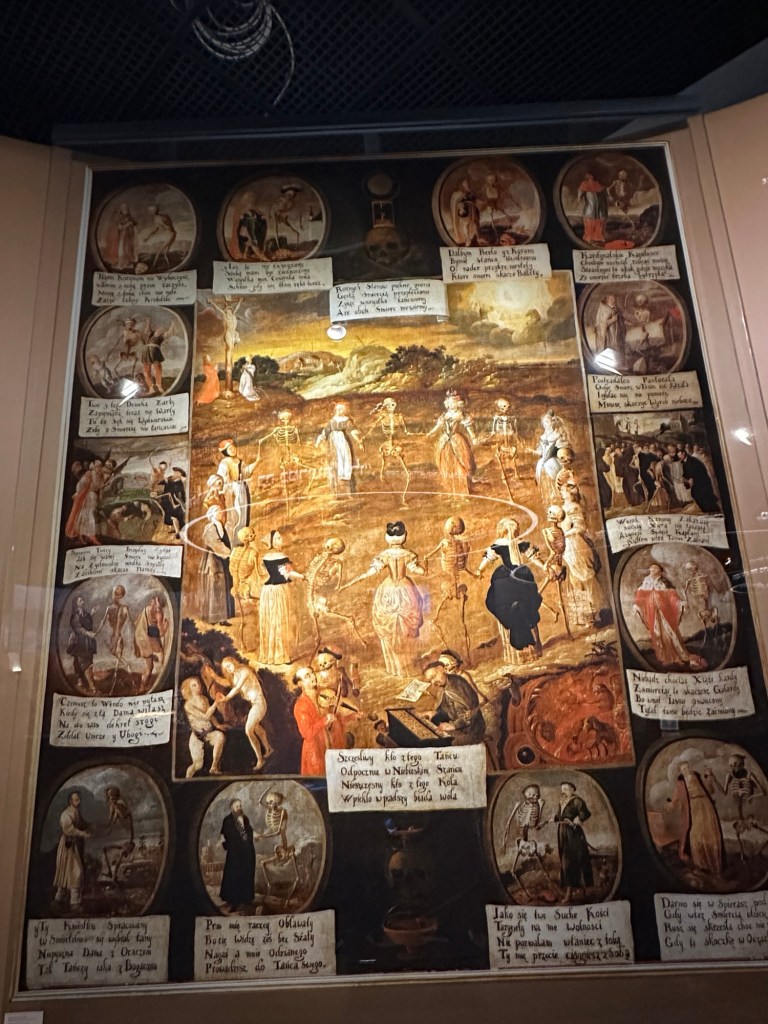
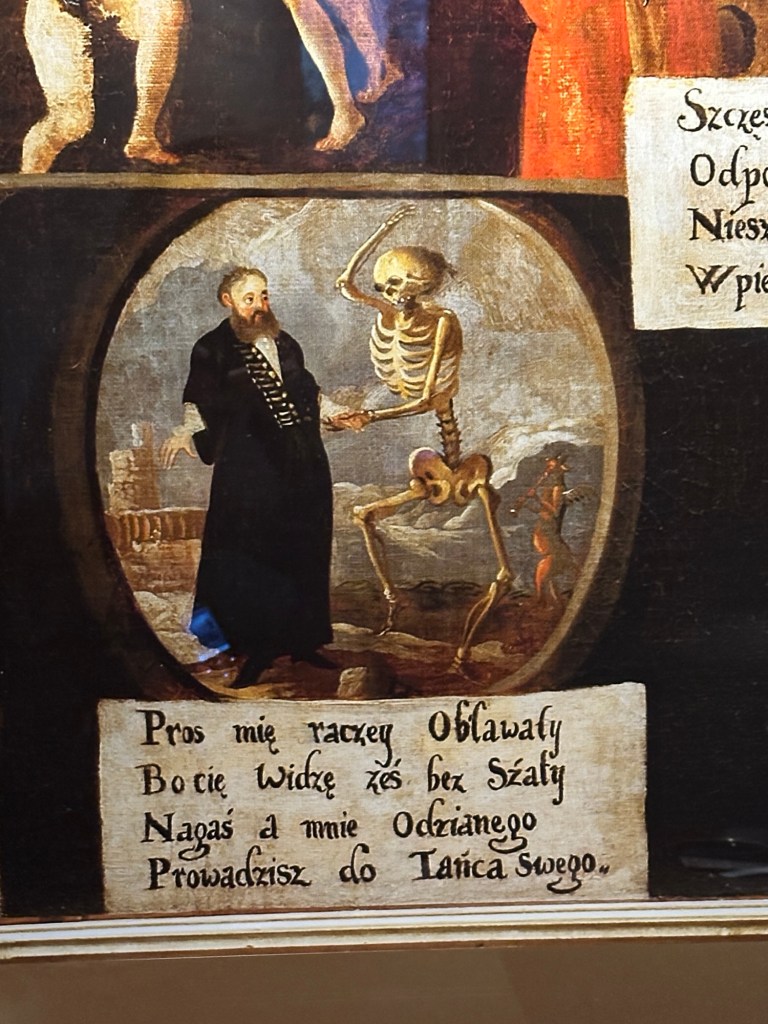
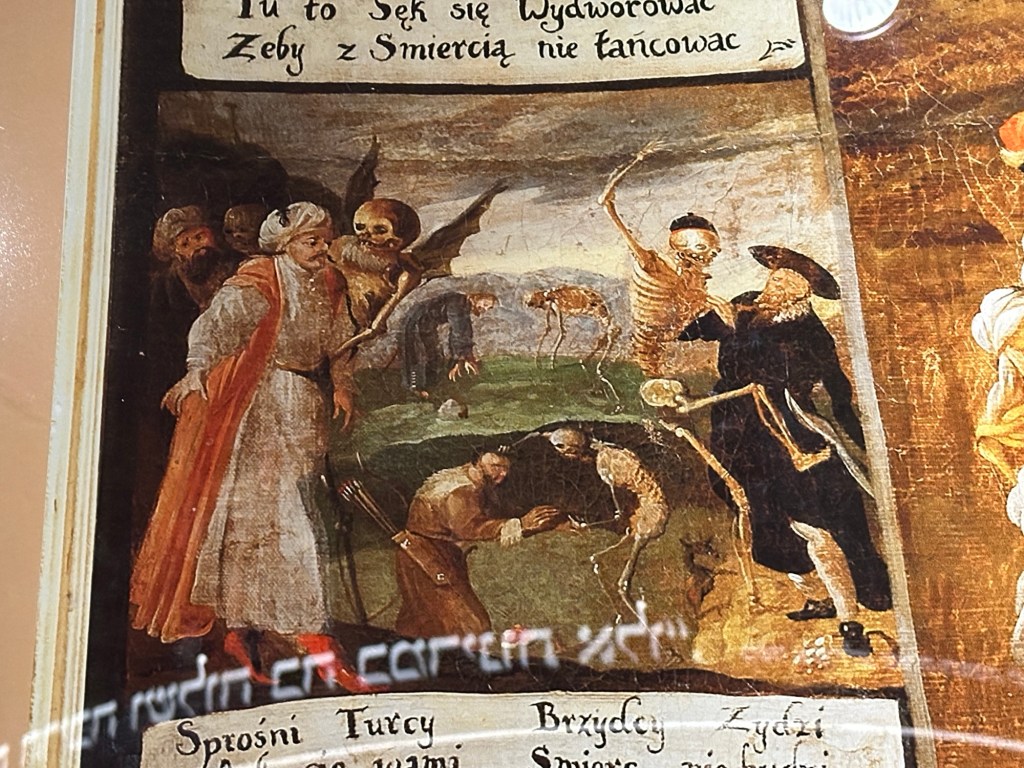
I am fascinated by the Danse Macabre (dancing with death) painting. It is all about how death is the equalizer of us all. It is a middle-age allegory.

Early in Polish history Poland was part of the Polish-Lithuanian Commonwealth for a long time. During this time there was a battle that led to a large amount of atrocities against Polish, Jewish people and Roman Catholics. The Cossacks uprising in Ukraine was the first large scale violence in the region.

During the 17th century taverns in Poland were prominently run by the Jewish. There are many reasons but one of which is the assumption that they were not drinkers, thus a logical choice to run these establishments.

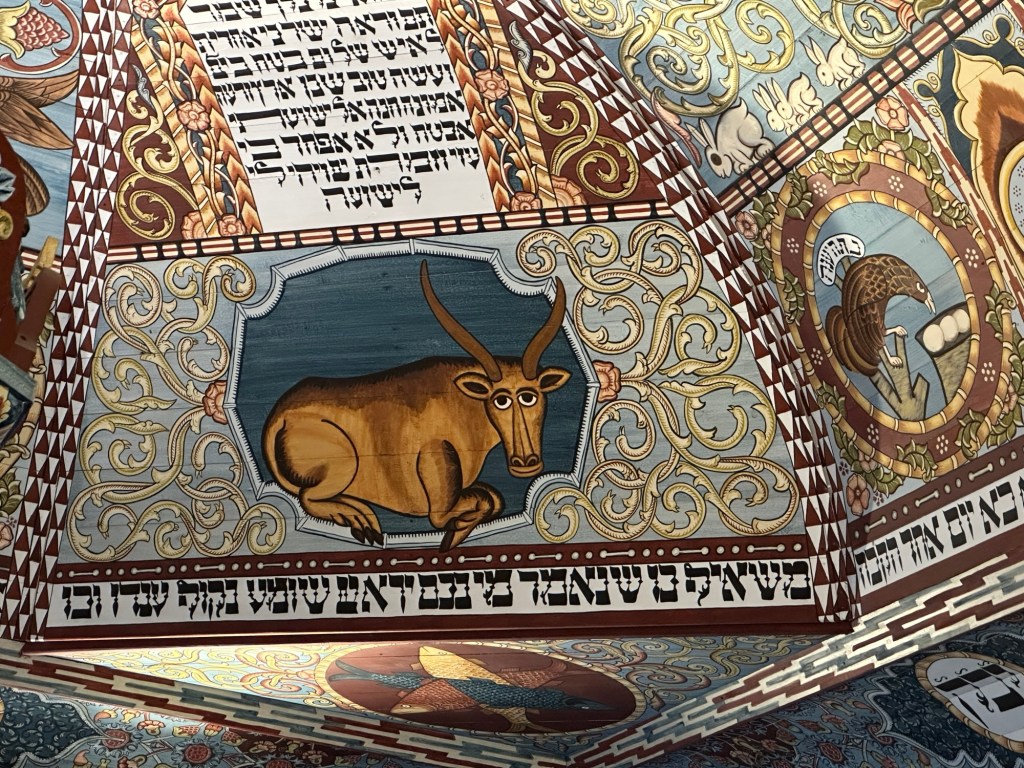
There is a very beautiful Lithuanian synagogue reproduction. In the middle is an example of a bema or a platform.

I read many examples of Jewish persecution and stereotypes. At some point they say that Jewish people did human sacrifices in order to justify the prejudice.

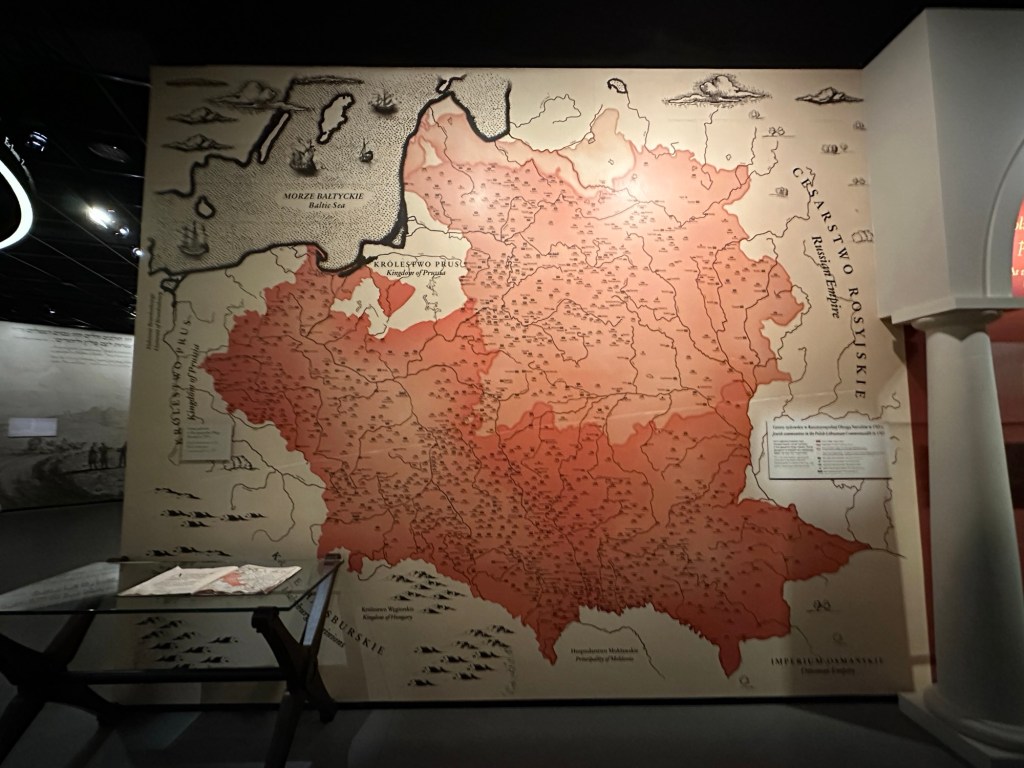
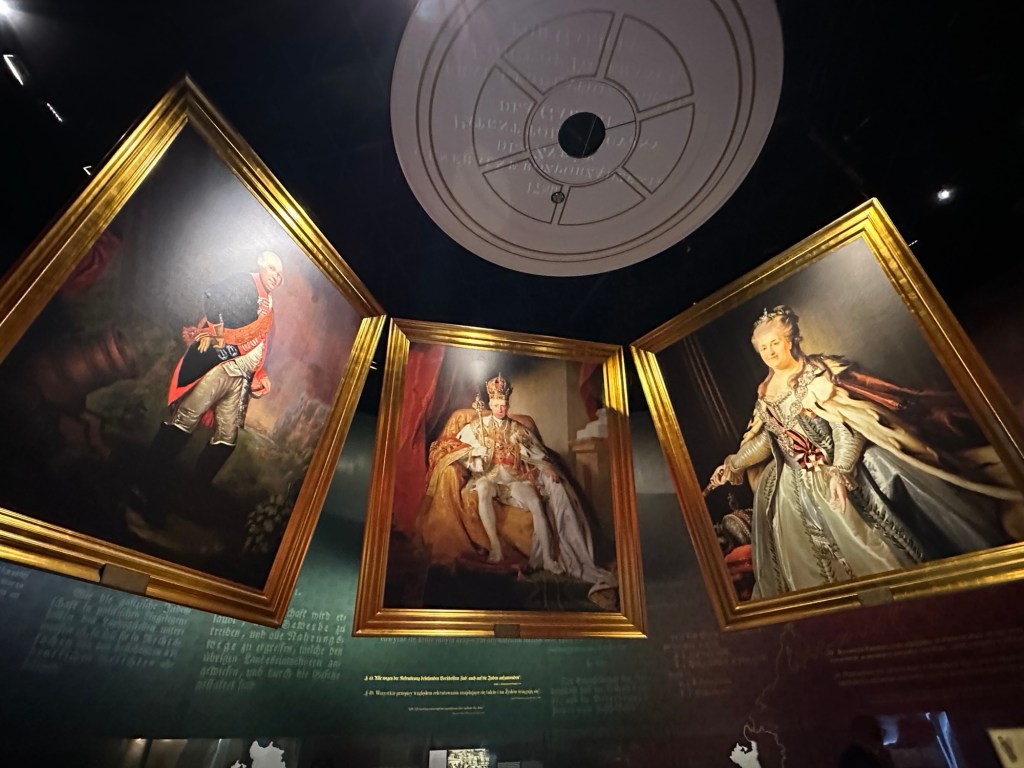
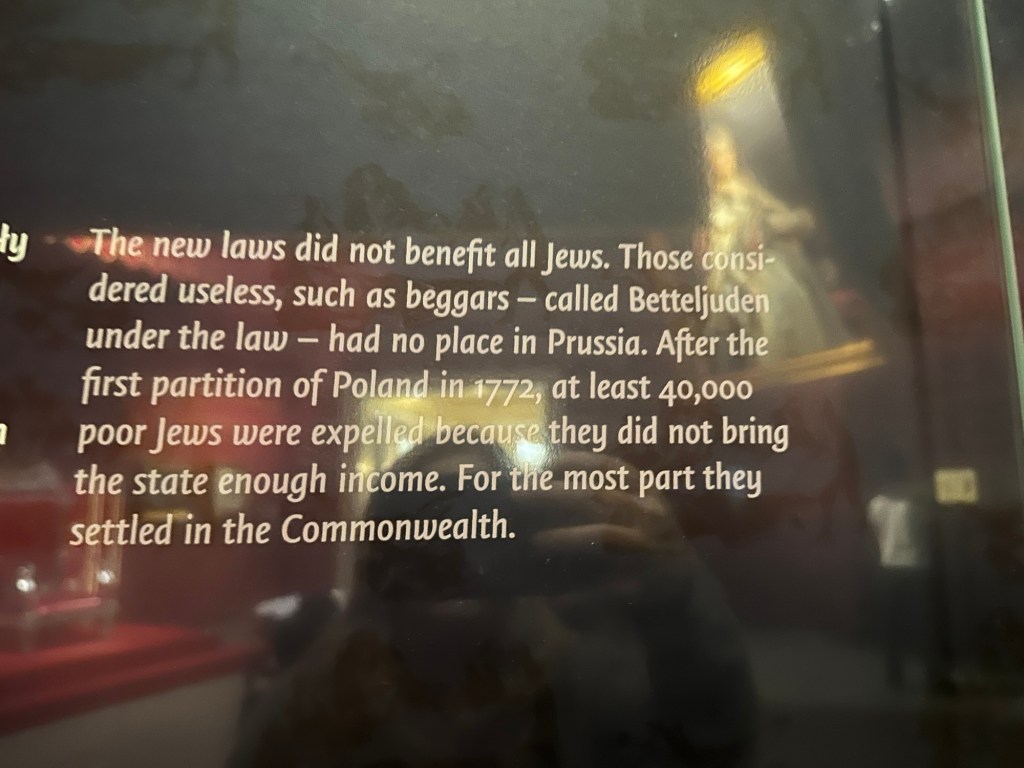
Three rulers partitioned Poland and the Polish-Lithuanian commonwealth ceased to exist in the late 1700โ€™s. Under Habsburg, Prussia, and Russian rule polish Jews lost their privileges and freedoms.

Iโ€™m reading some additional wall items and the name Betteljuden catches my eye. Betteljuden is a derogatory cartoon caricature of Jewish beggars in the 1700โ€™s. The name and character likeness is very similar to the popular Beetlejuice character. It is almost like the movie character has anti-Semitic undertones. I will never see that movie in the same way again.

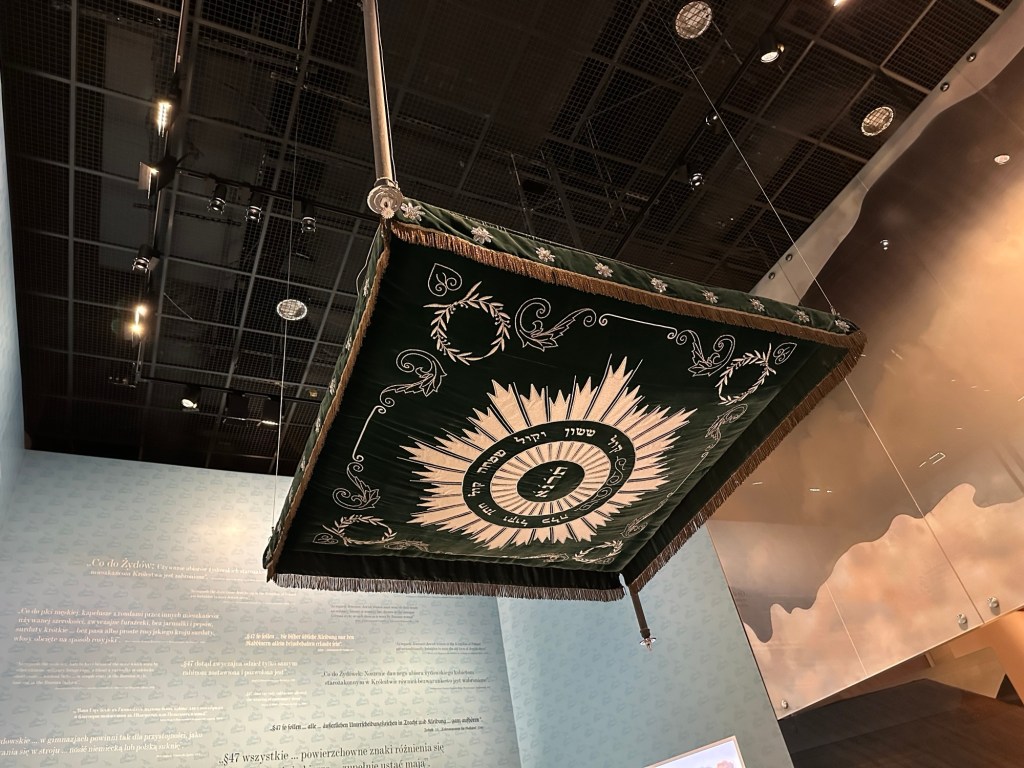
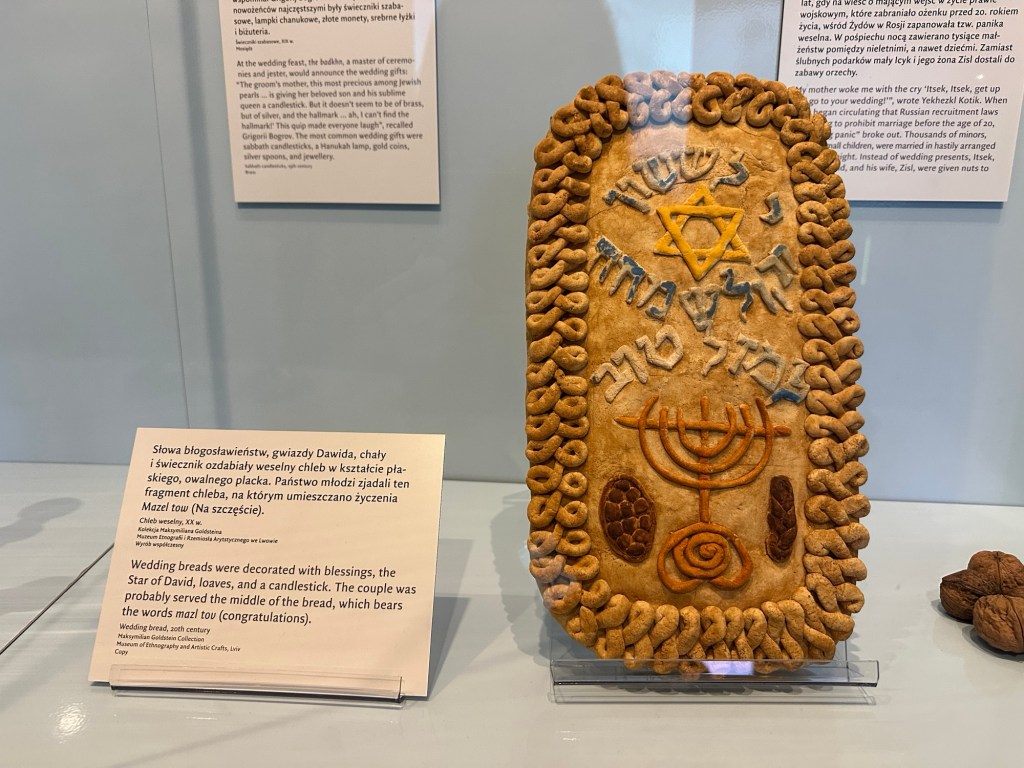
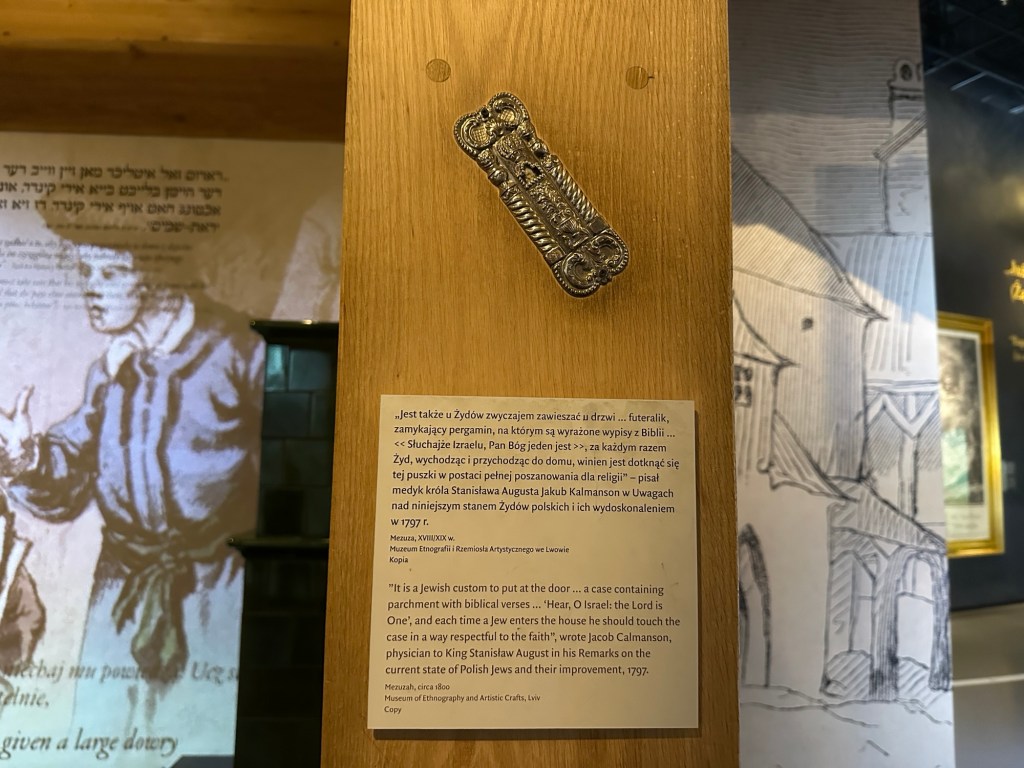
I learn about more religious items in the museum.

Chuppah, wedding canopy

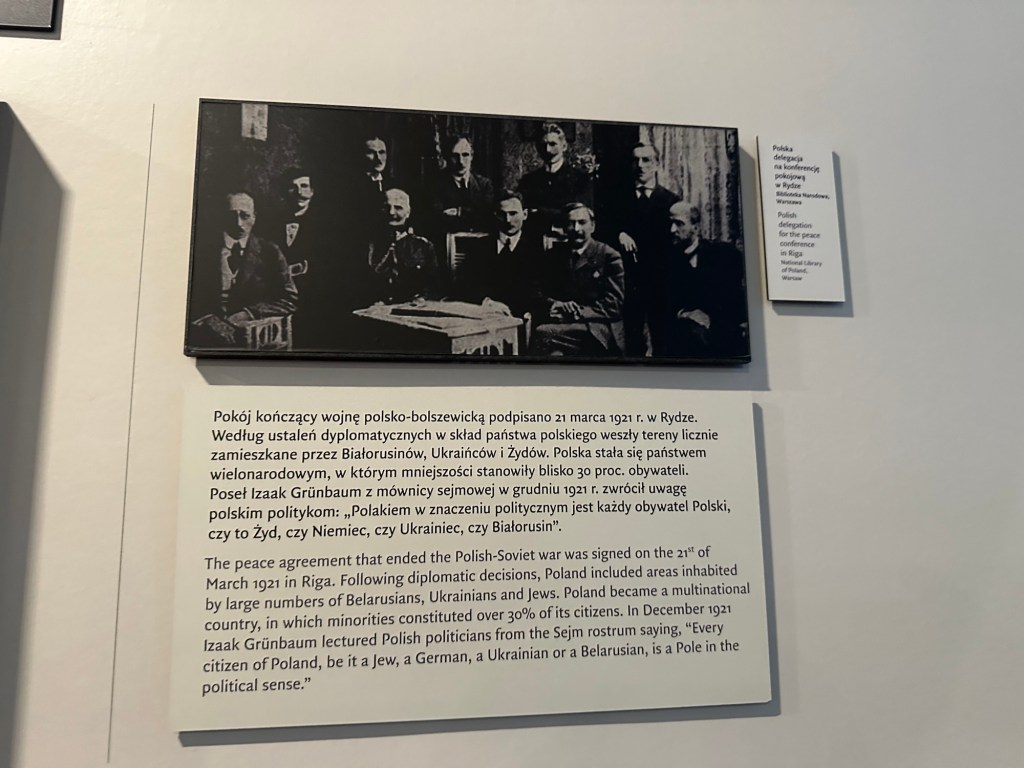
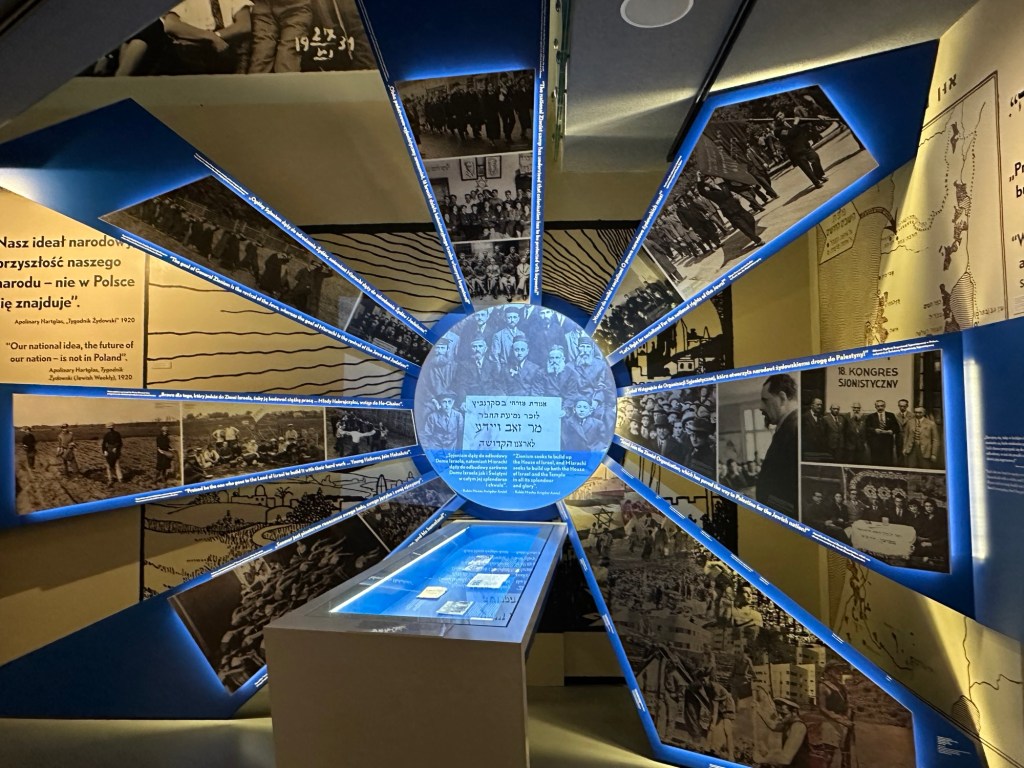
After war of 1918 Poland was reformed. Also during this time Zionist movement solidified and polish Jews moved to Palestine in 1920-1930. The Bund Jews (Jewish socialist party, mostly secular) opposed Zionism and supported cultural autonomy in Poland, fighting antisemitism at home. I also hear about the origins of Hasidic Judaism.

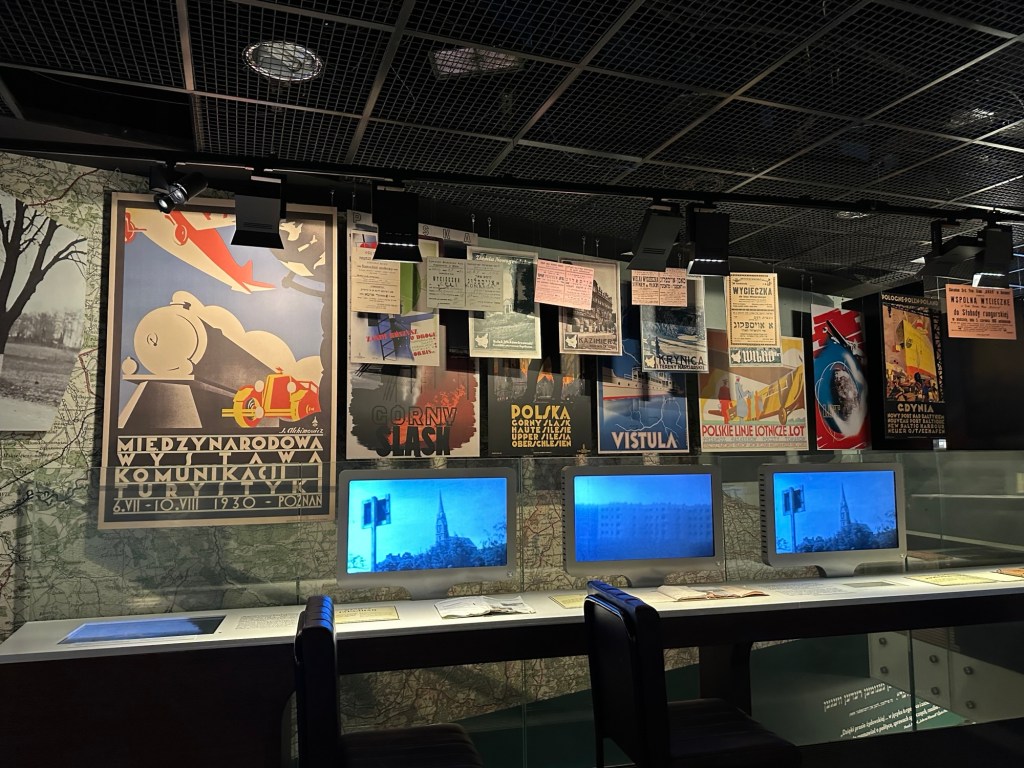
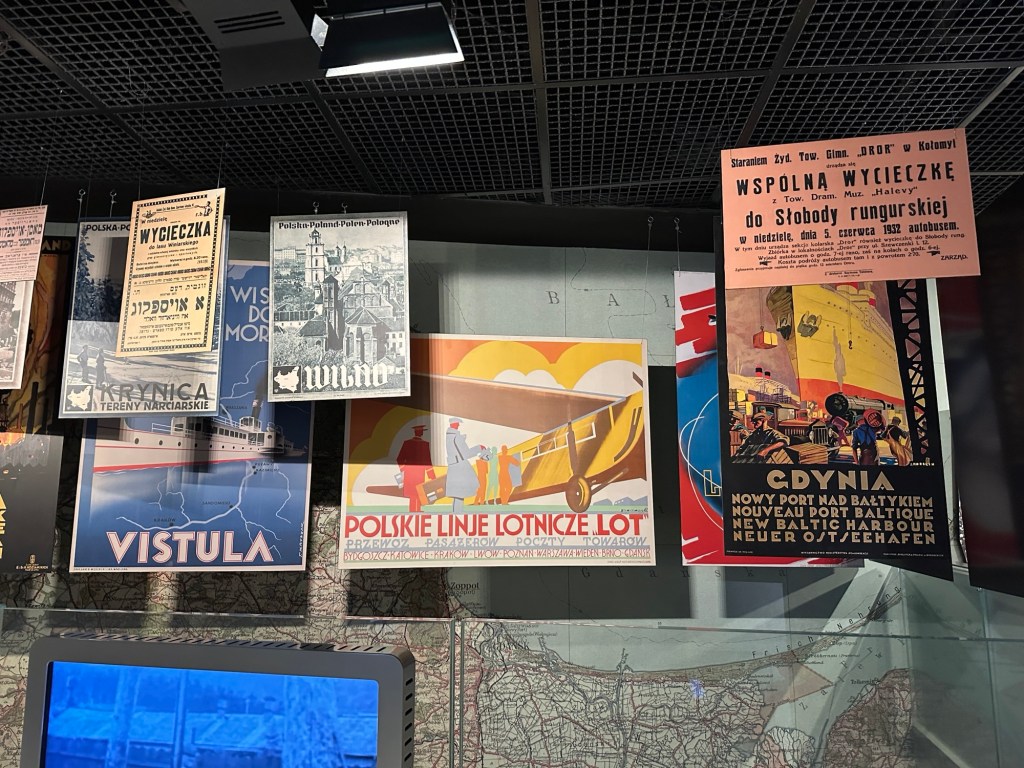
Between wars there was an explosion of Jewish tourism.

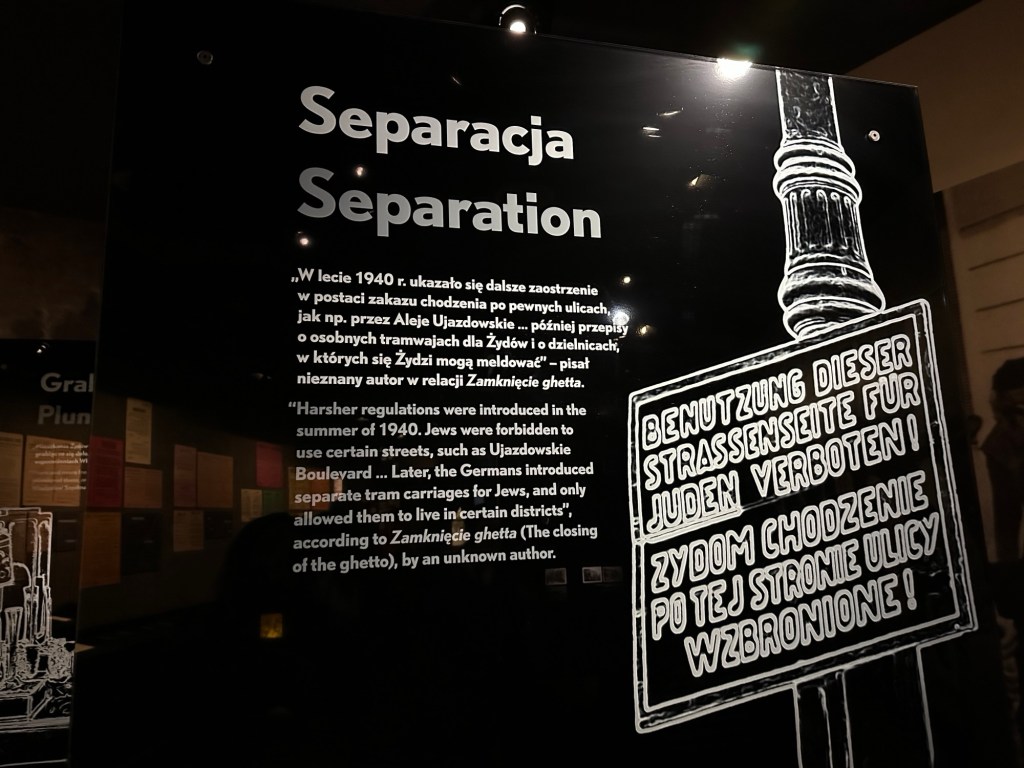
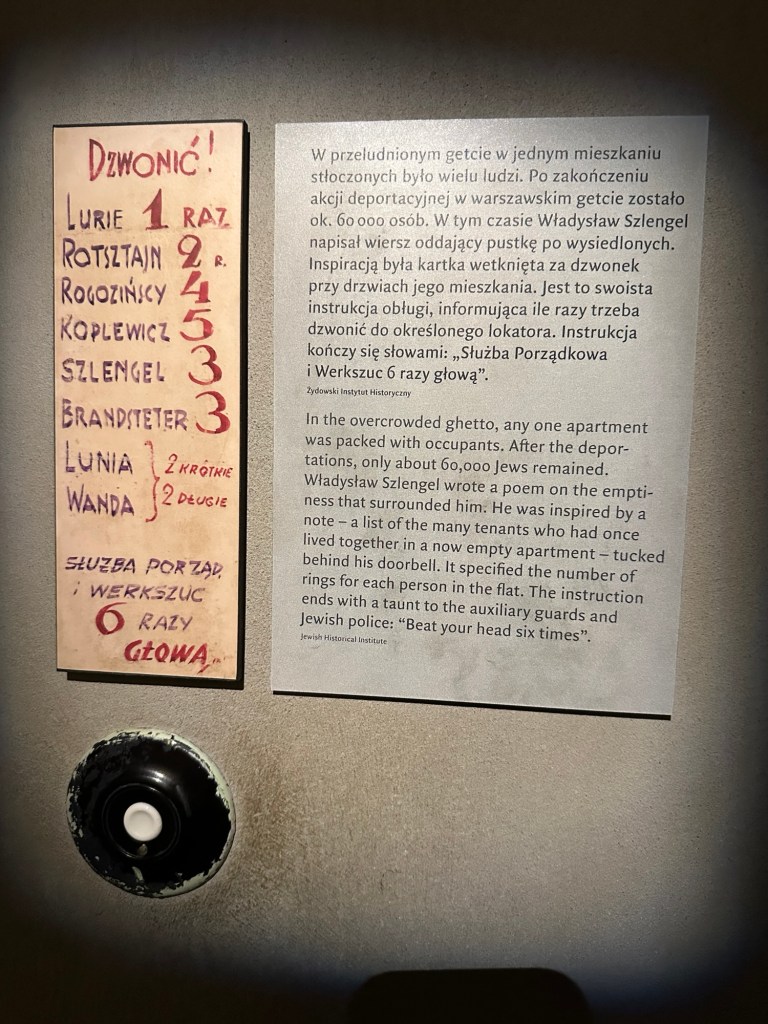
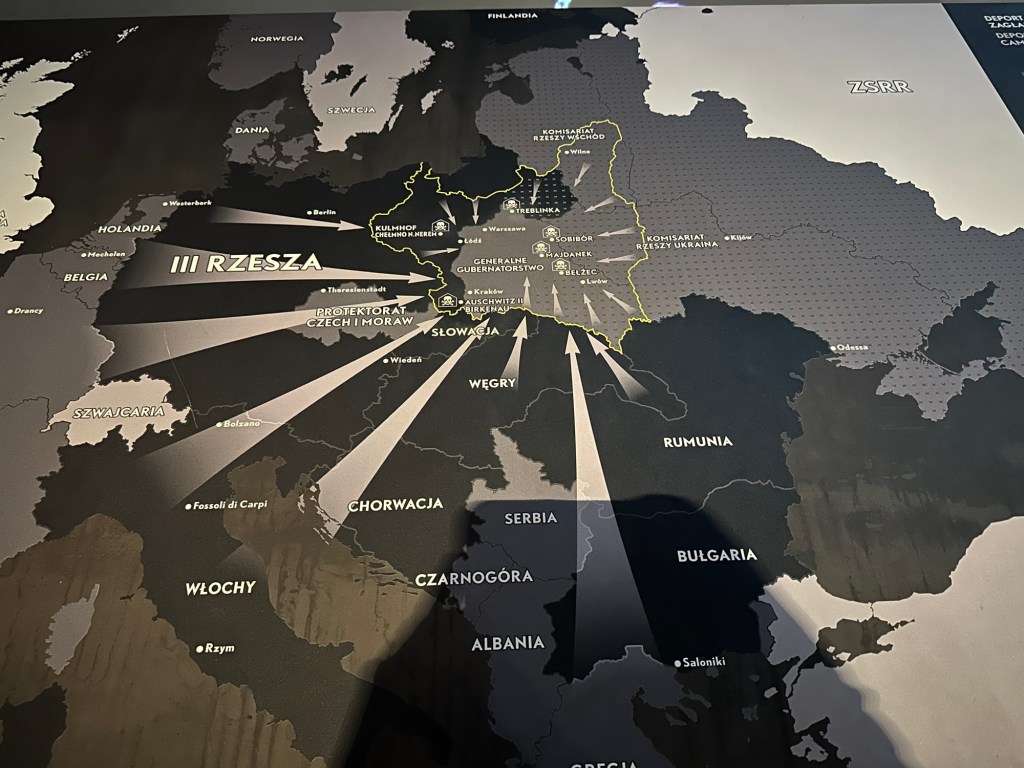
The Last exhibits are on world war two and the holocaust. There is a warning at this section on the sensitive nature in case you want to skip. Warsaw ghetto was the largest of the ghettos of WW2. This museum is in area where the ghetto once was. During the war hundreds of thousand of Jewish residents of Warsaw were sent to a death camp in Treblinka.

I learn a little about the ghetto uprising and the non-response internationally about what was happening in this part of the world around ww2.

There were a few waves of immigration to Palestine. Post war pogrom causes mass exodus to Palestine. Israel formed was 1948 as a result of a desired for a Jewish homeland, the holocaust and other reasons.

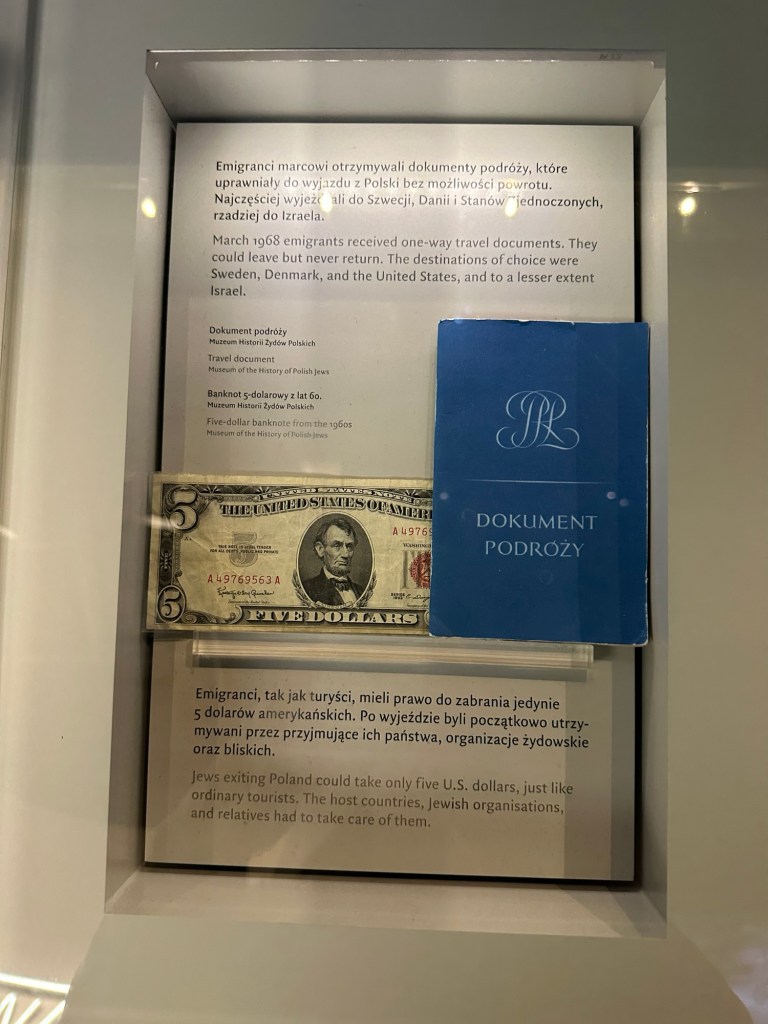
There was another Mass immigration out again in 1960. Now the population of Jewish people still remaining in Poland is relatively low.

The museum is vast and took me about three hours but I could have stayed even longer. The audio guide is excellent and I recommend a visit.

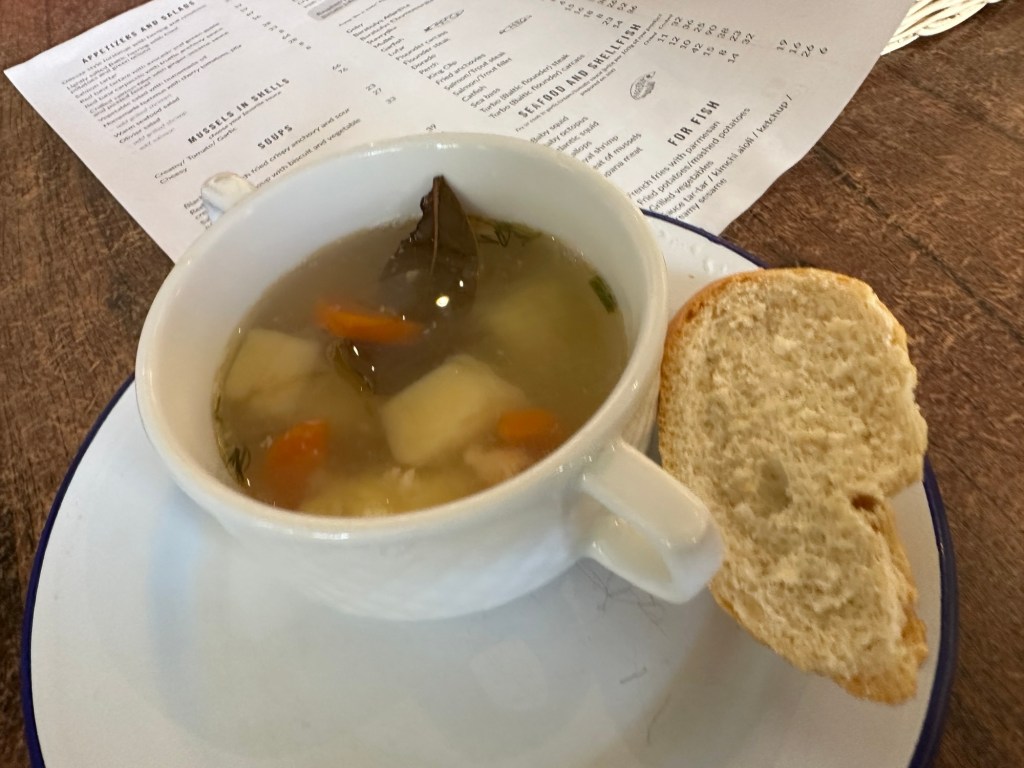
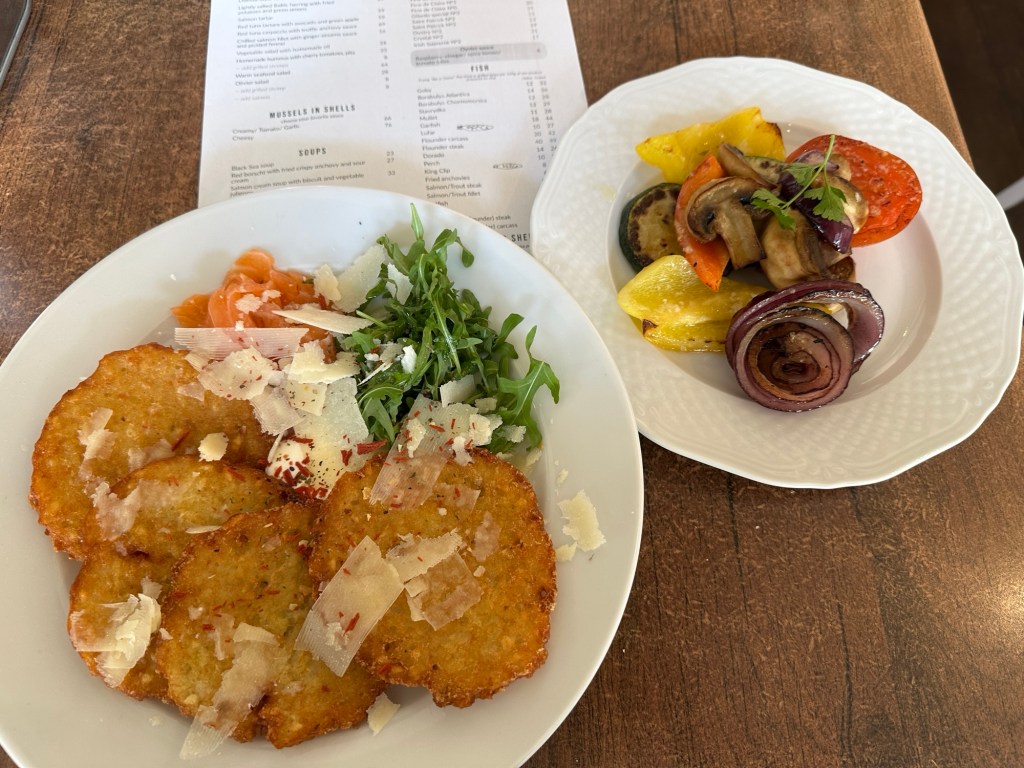
For lunch I want to visit a milk bar but everything seems too heavy so I end up at a seafood restaurant where I finally try some potato pancakes with salmon and a side of grilled vegetables. Why do grilled vegetables taste better in other countries???? We make veggies tasteless in the US.

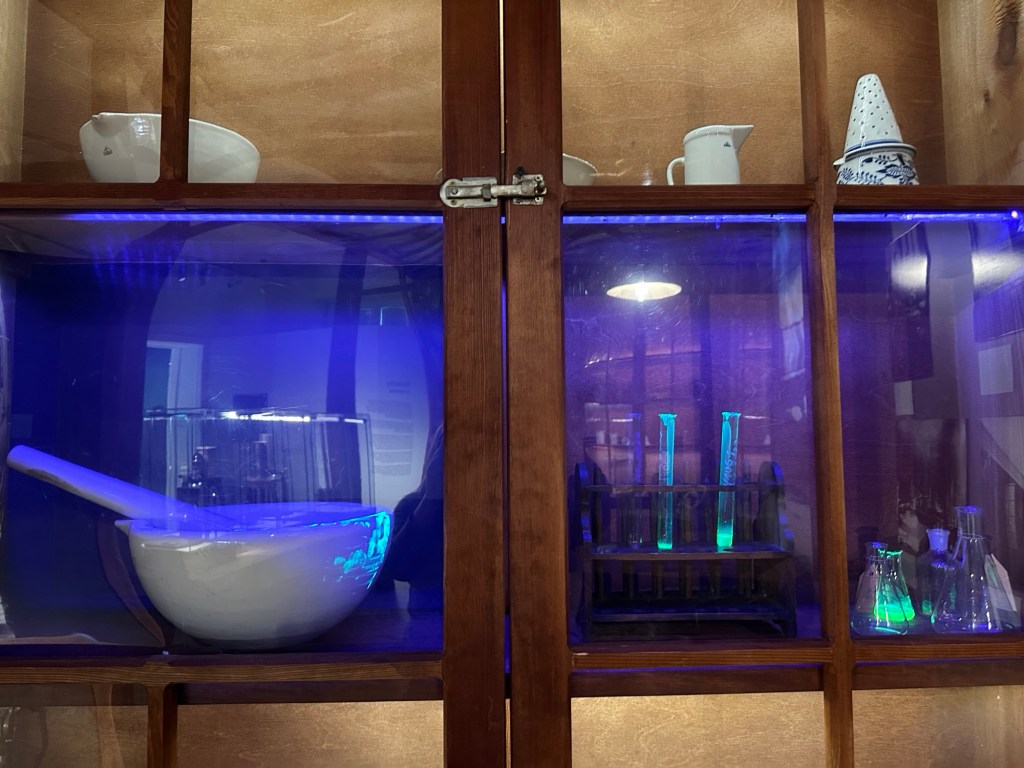
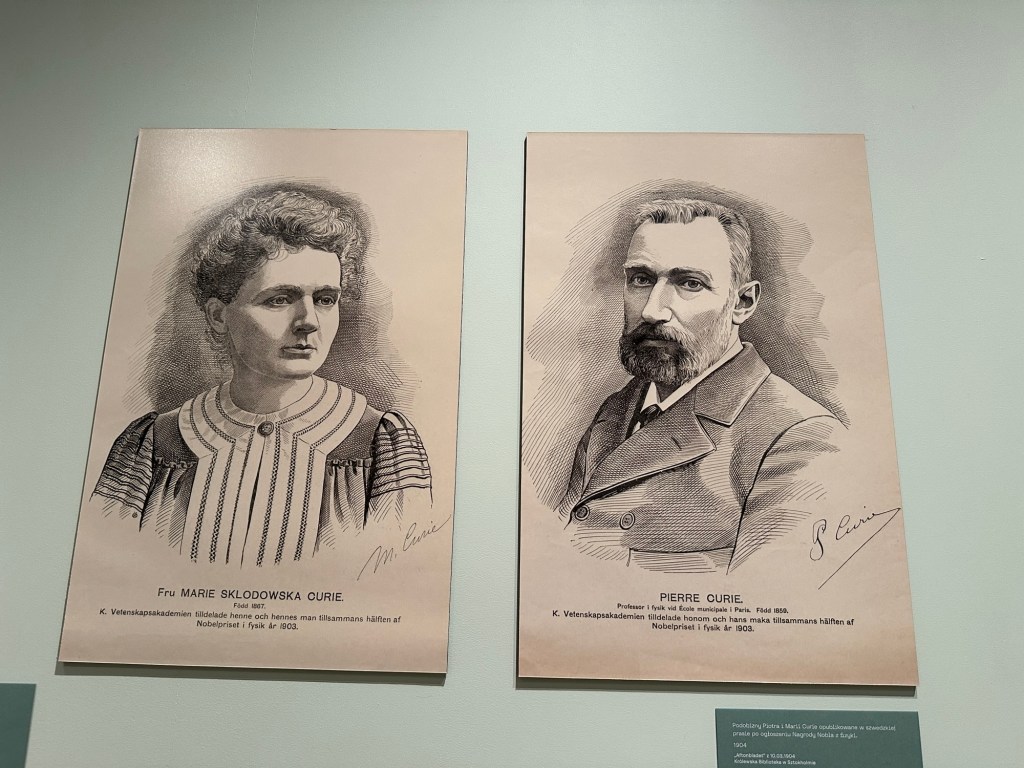
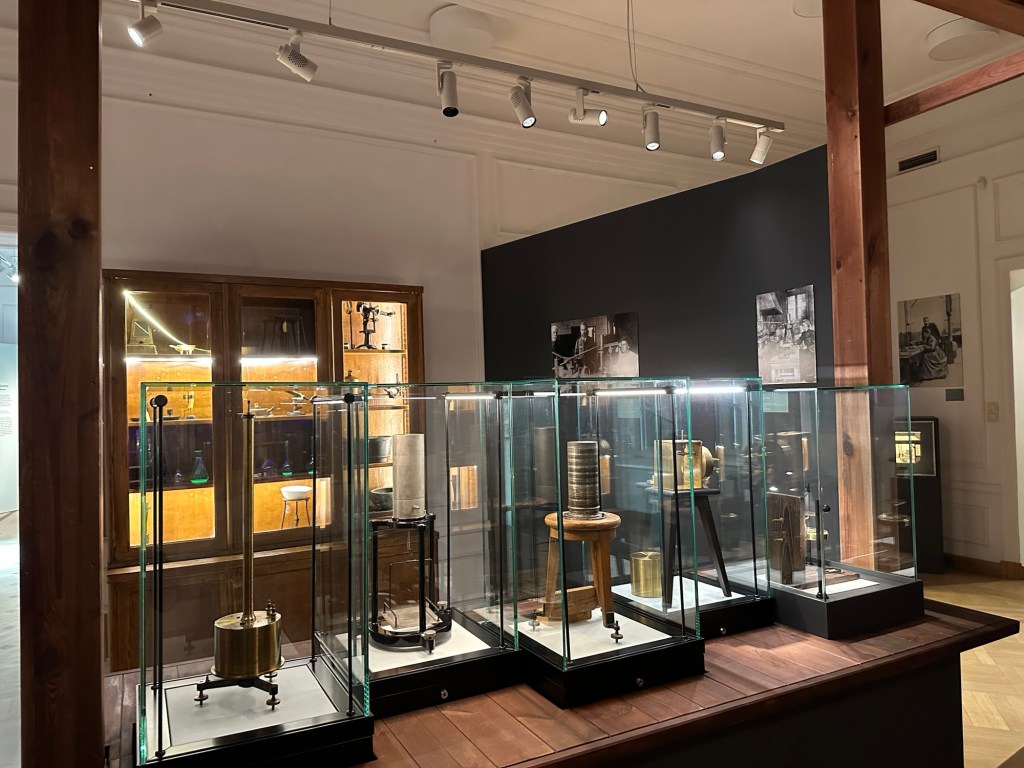
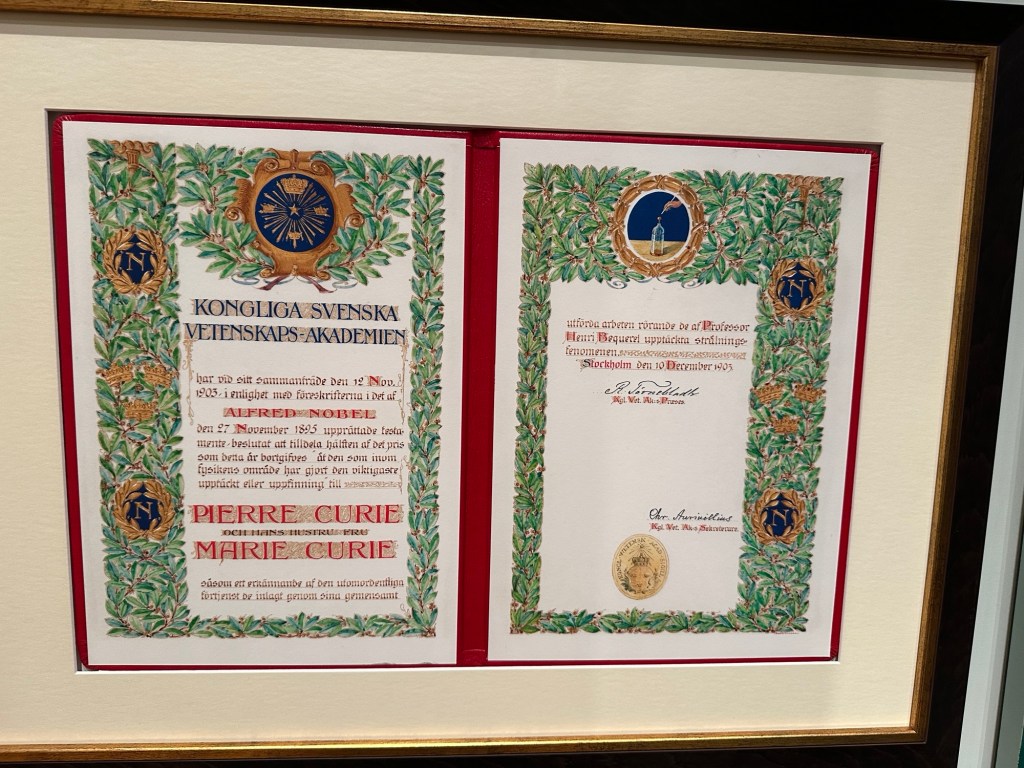
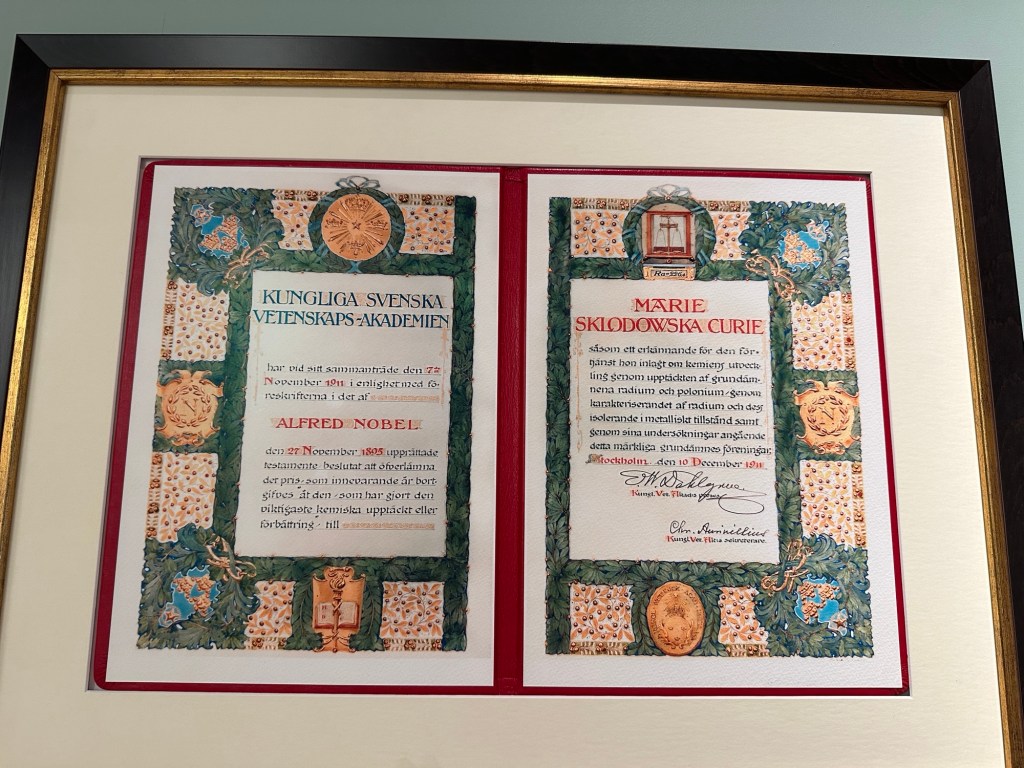
I finally make it to the Maria Skล‚odowska-Curie Museum. She may have a French sounding last name but she is 100% Polish being from Warsaw. She studied at the Sorbonne and met her husband Pierre Curie thus making her French by marriage. This two time Nobel prize winner discovered the elements radium and polonium (for Poland). Sheโ€™s also has a resume of much more accomplishments as does the rest of her family. I think their family has the most Nobel prizes of any family. Marieโ€™s husband died of an accident but she died from complications of extended radiation exposure – it was before it was determined how harmful radiation can be. Sheโ€™s actually buried in the Pantheon in Paris. The tomb is sealed with lead because of her radioactivity.

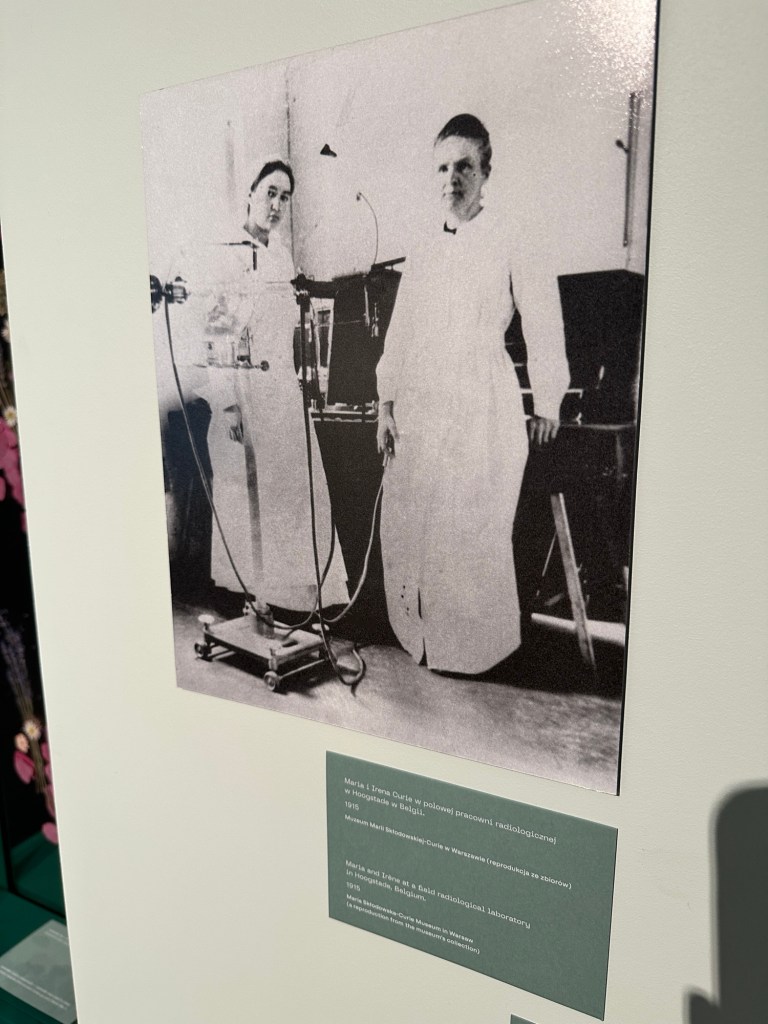
During WWI she and her daughter put together a mobile xray which cut down on war amputees considerably thus speeding recovery time for injured soldiers.

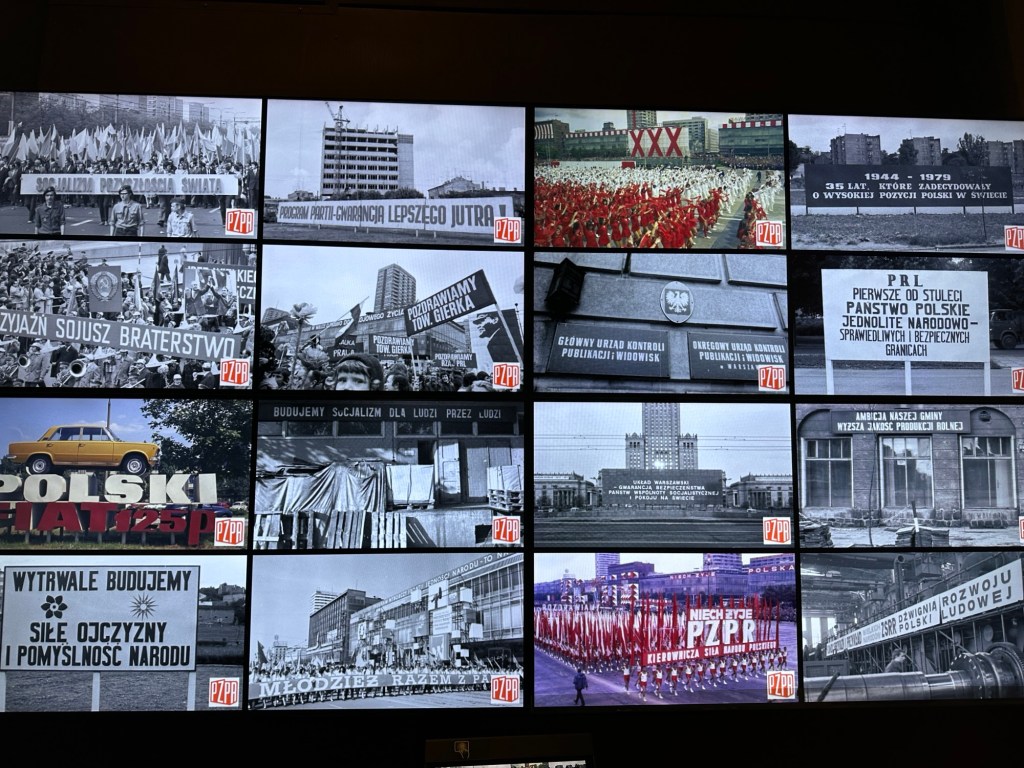
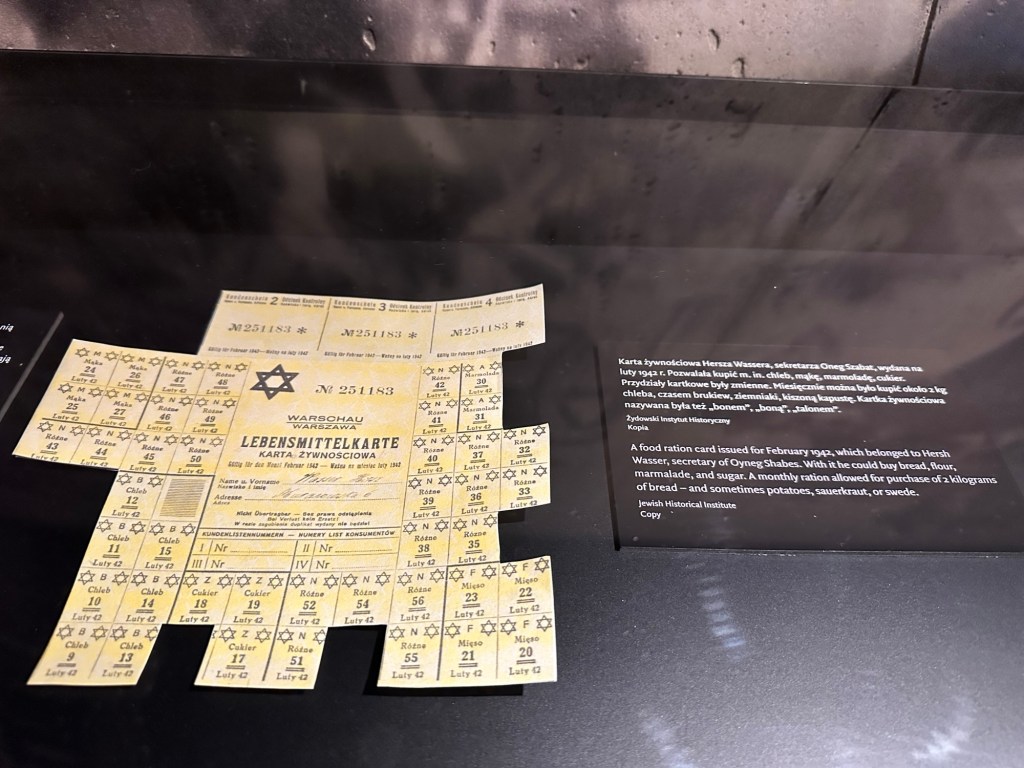
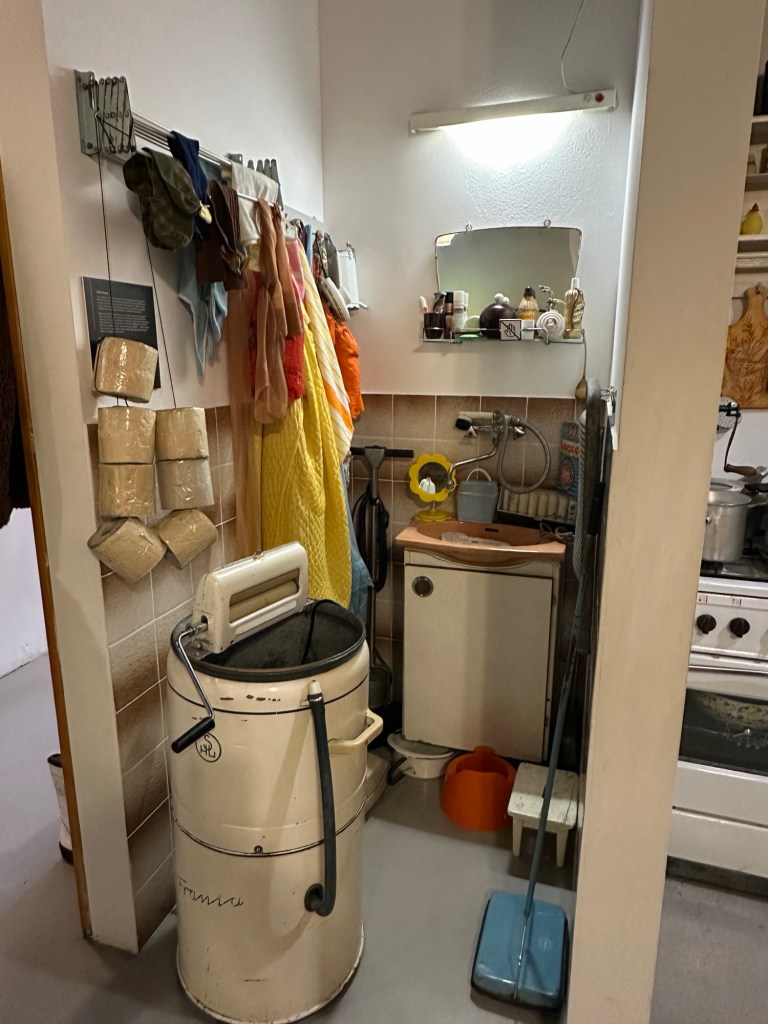
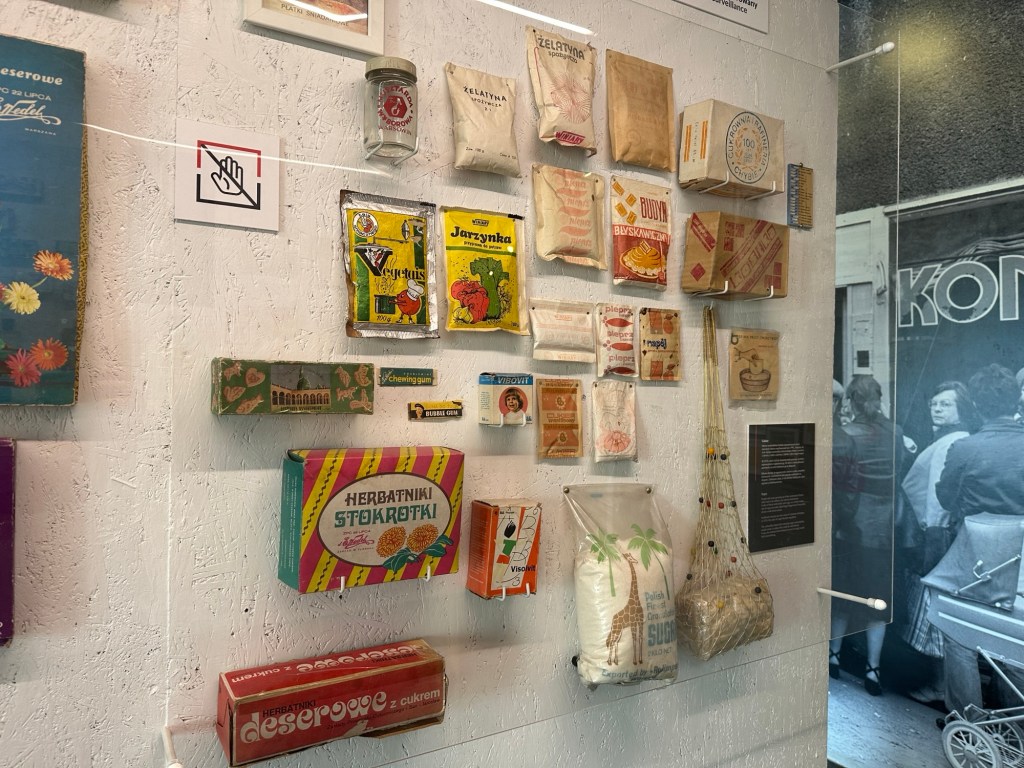
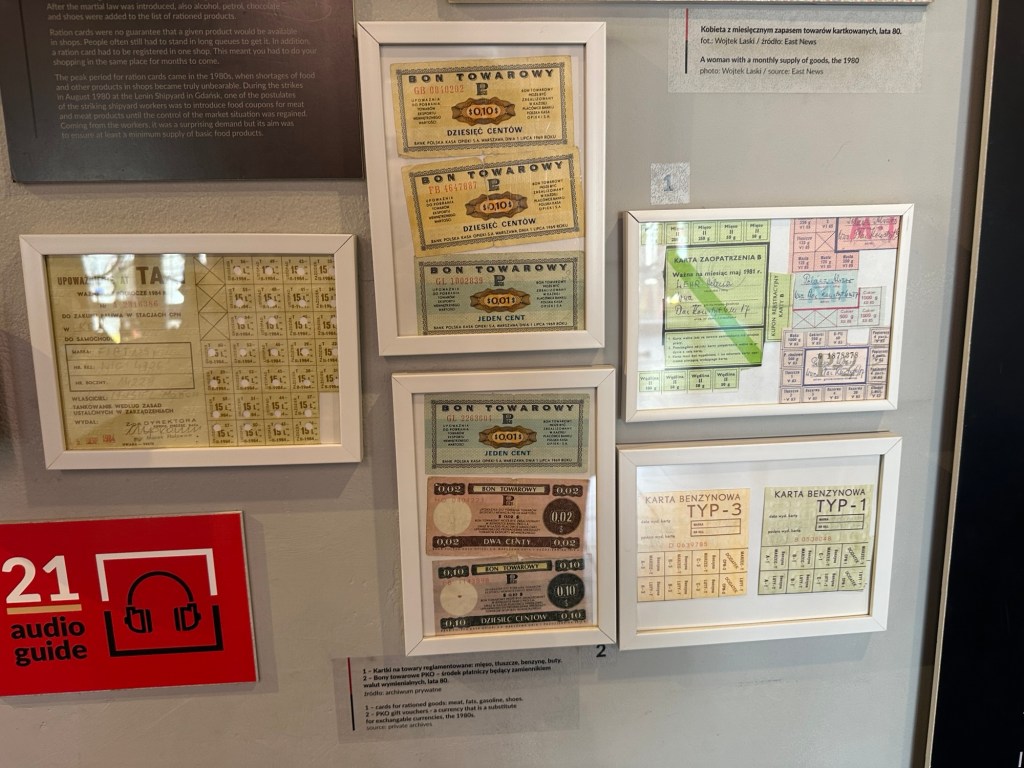
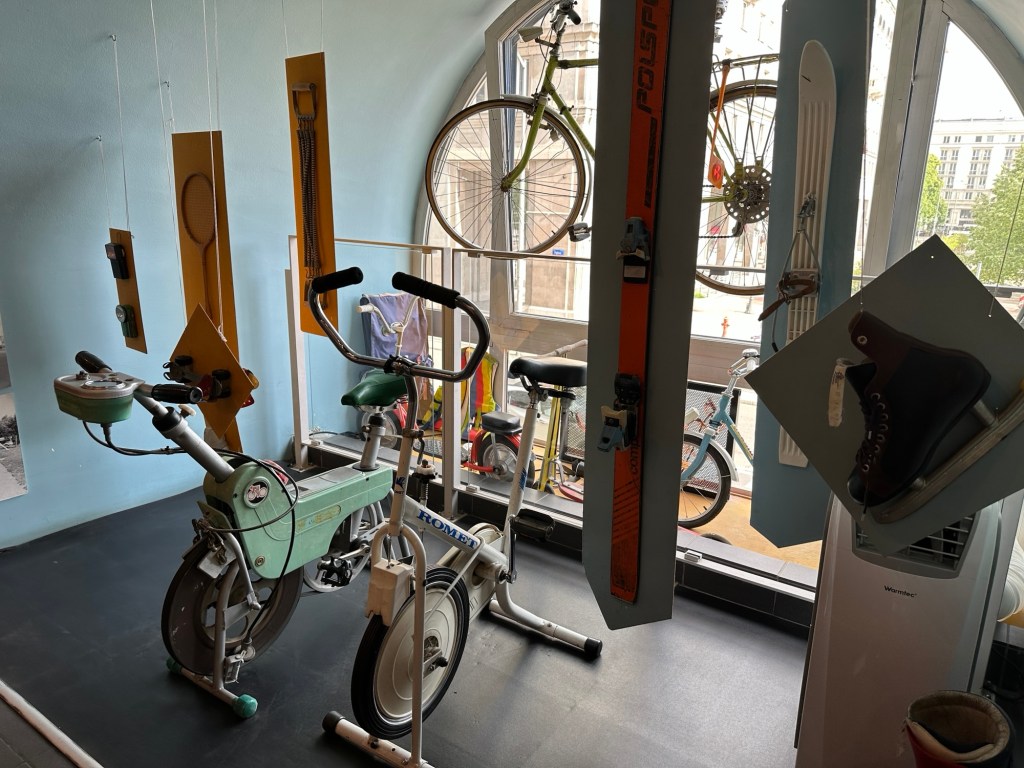
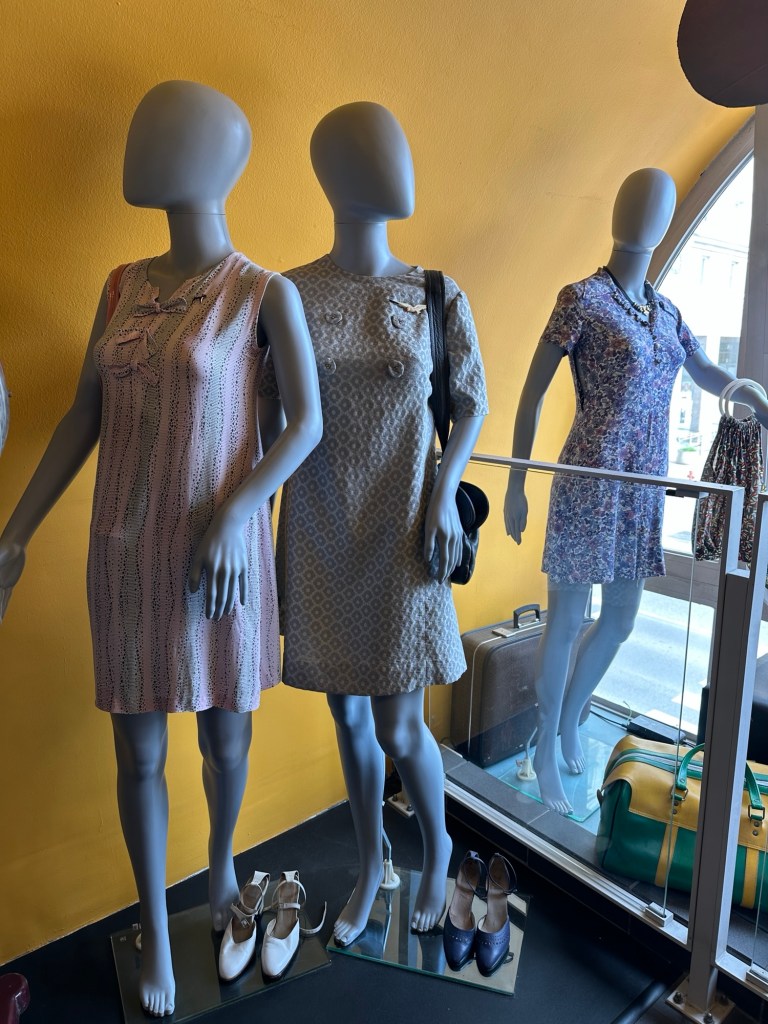
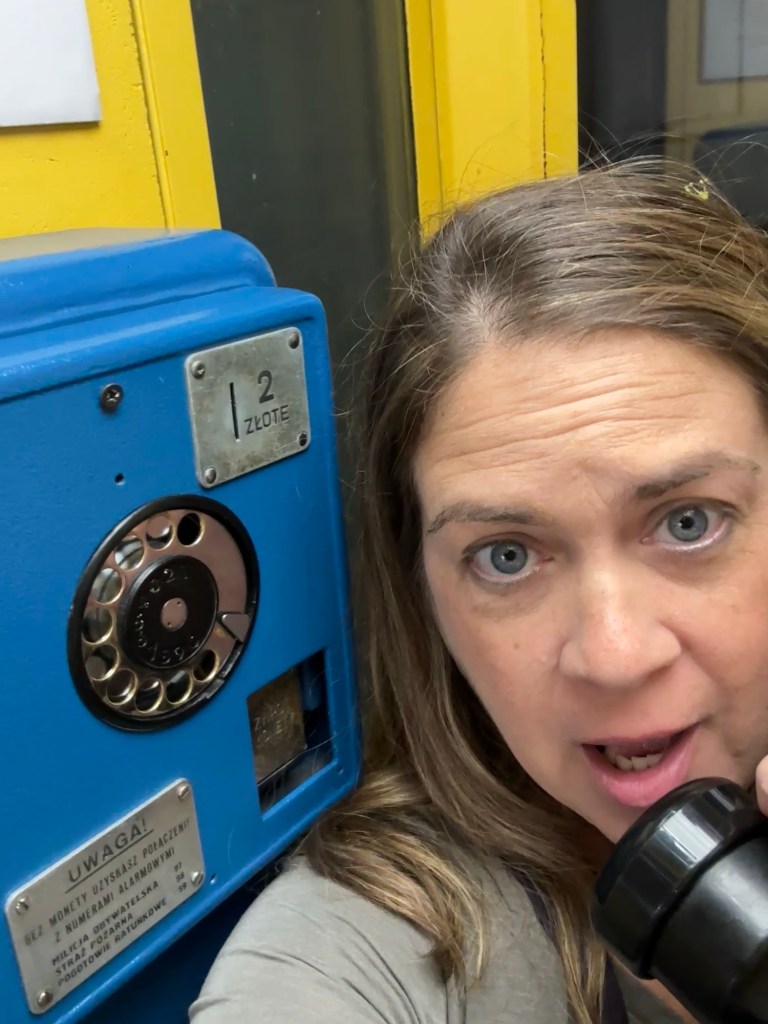
Finally I visit the Muzeum ลปycia w PRL. Itโ€™s a museum that tells about life under communism in Poland. PRL is translated to Polish Peopleโ€™s Republic. The idea of living under communism is so foreign to me so whenever I see a museum like this one I am drawn to it. Much of it is pop culture things at the time but it also talks about food rations and tickets and how difficult it is to get even simple things under communism.

My favorite part of the museum is watching the propaganda video on the Colorado beetle. I first learned about this beetle in Krakow at another communist era museum. Apparently the Polish puppet government would put out propaganda posters and videos vilifying the USA and one of them was accusing us of unleashing a beetle meant to destroy their potato crops.

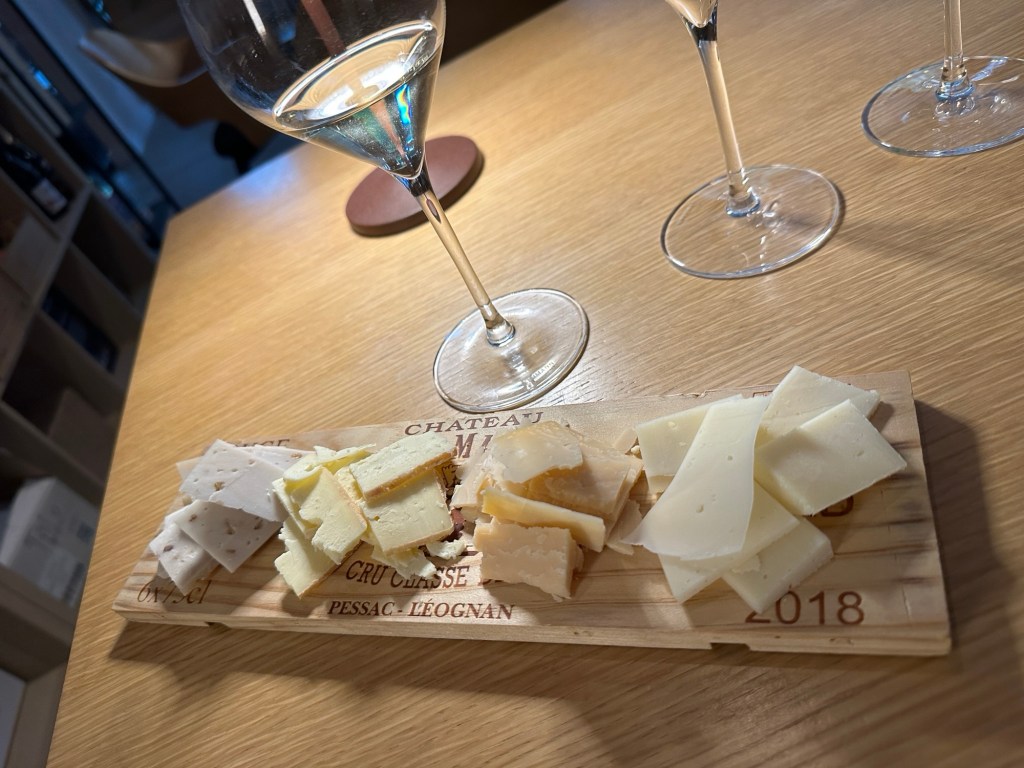
After the museum I get a light dinner nearby of wine and cheese.

Before I sign off for the day Iโ€™d like to point out the photo of the flying cotton like things that are constantly in the air. I am not 100% sure where they come from but they might be from dandelions.

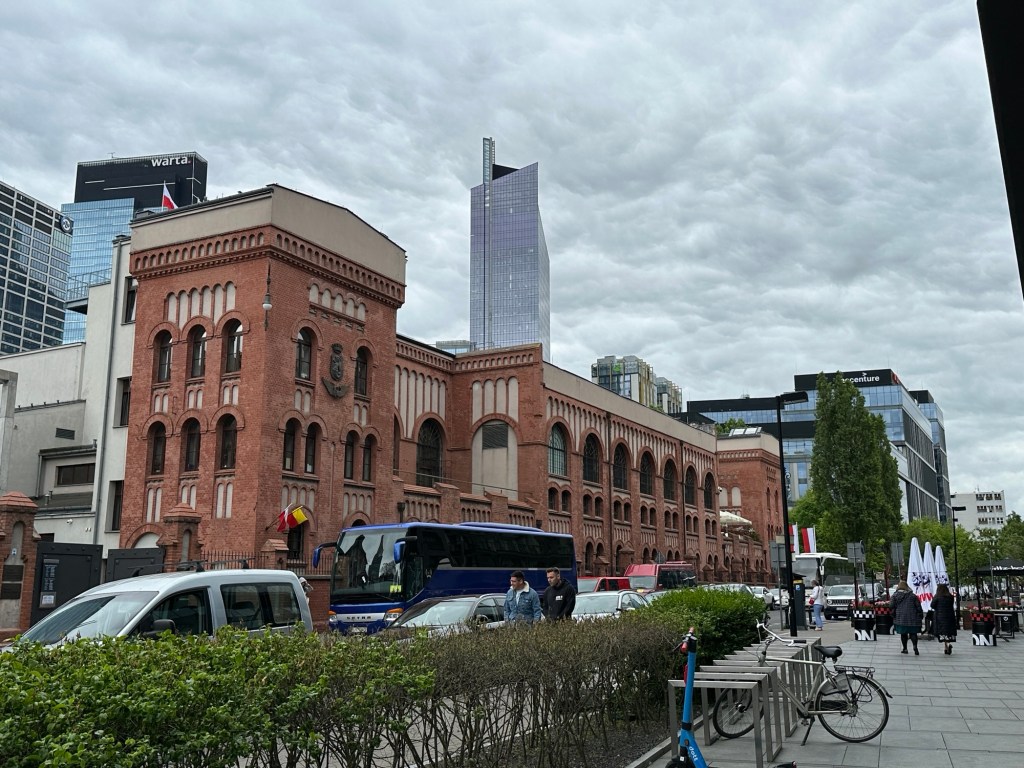
Interesting architecture in the neighborhood

Warsaw: Warsaw Uprising Museum and City Tour

Poland at the start of WWII

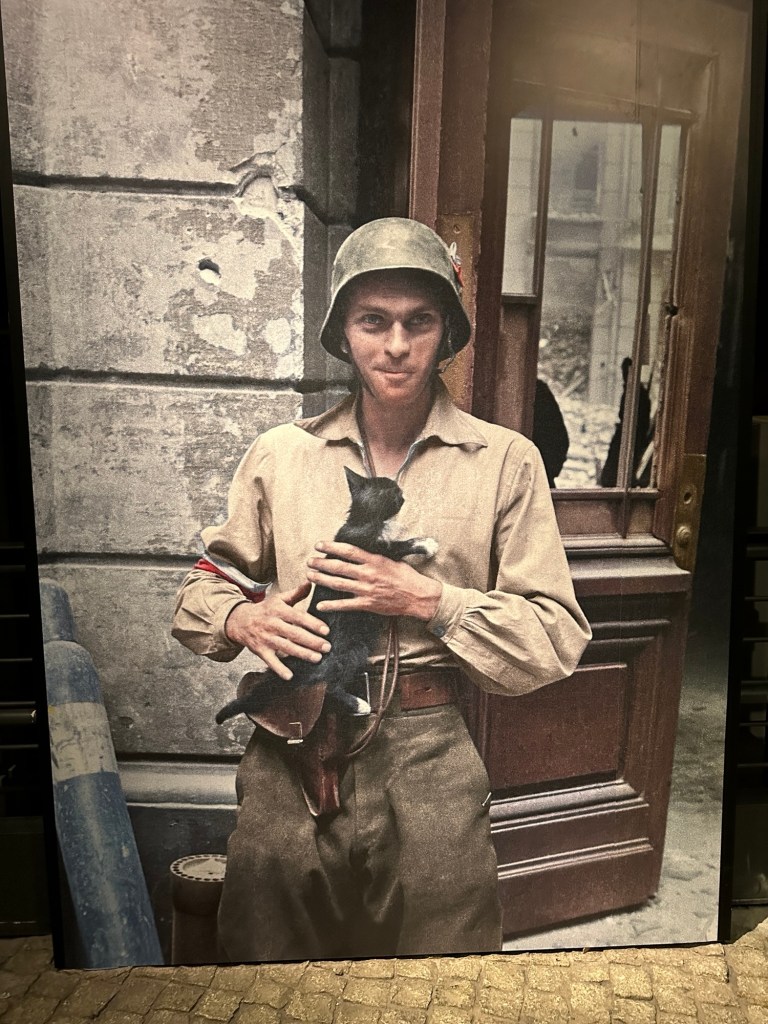
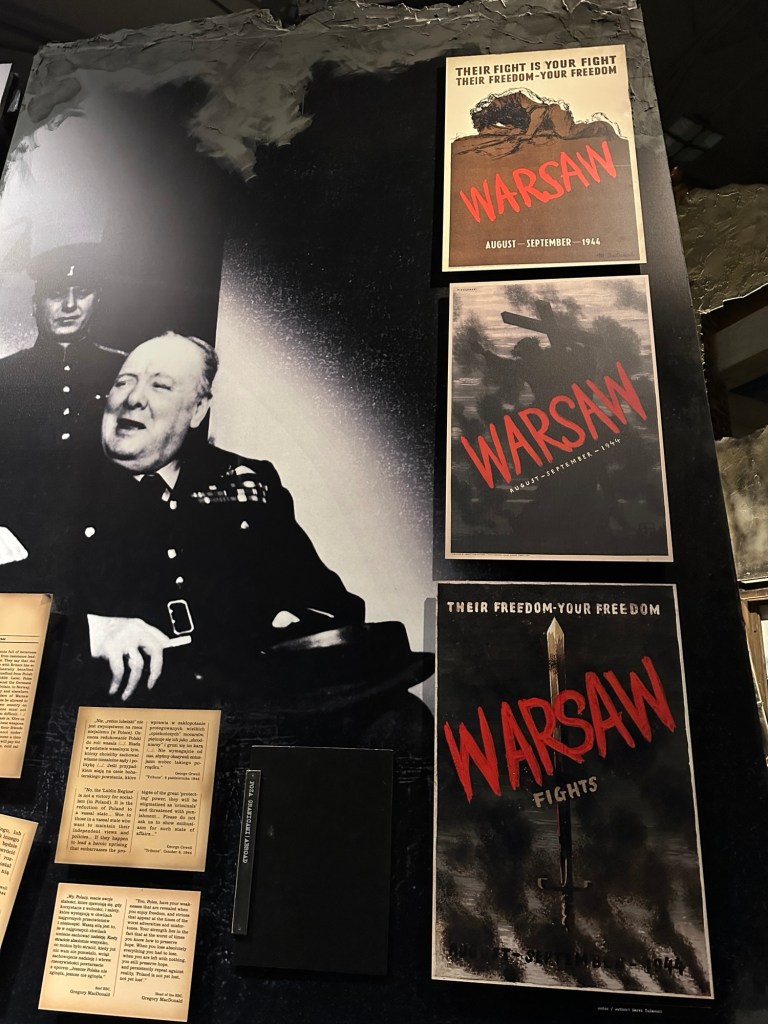
This morning I visit the Warsaw Uprising Museum. The uprising museum is about the uprising of the people of Poland against the Germans at the end of WWII. The beginning of the exhibit talks about the start of WWII and German occupation but the museum is mostly about how the Polish resistance organized and fought the Germans.

We learn in history that Germany invades Poland at the start of WWII. When they invade Warsaw the Polish do a pretty good job initially at holding them off. However the excessive bombing of residential areas by Germans lead the Polish to capitulate to the Germans pretty quickly to lessen the amount of death to civilians. I am not sure they had any idea how bad it could get after that.

I learn how the uprising comes to form and how they get in bed with the enemy, the red army (Soviet Union), in order to fight off the Germans. The red army had promised to help them remove the nazis from Warsaw but instead they leave them hanging until the last minute and then finally join the fight.

The people of Warsaw believed the red army was going to help them and continue on through to fight the Germans. But instead of letting Poland have its independence they disarm the polish underground soldiers, installed a puppet government and started communist rule of Poland for 40 years. They replaced one form of occupation with another.

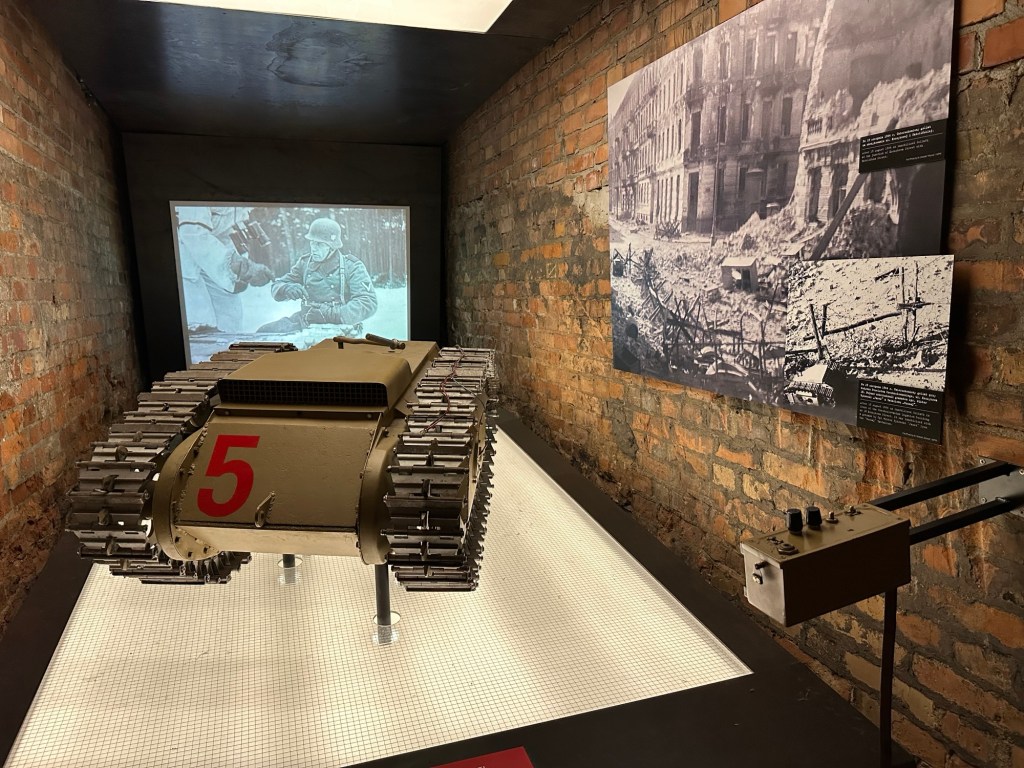
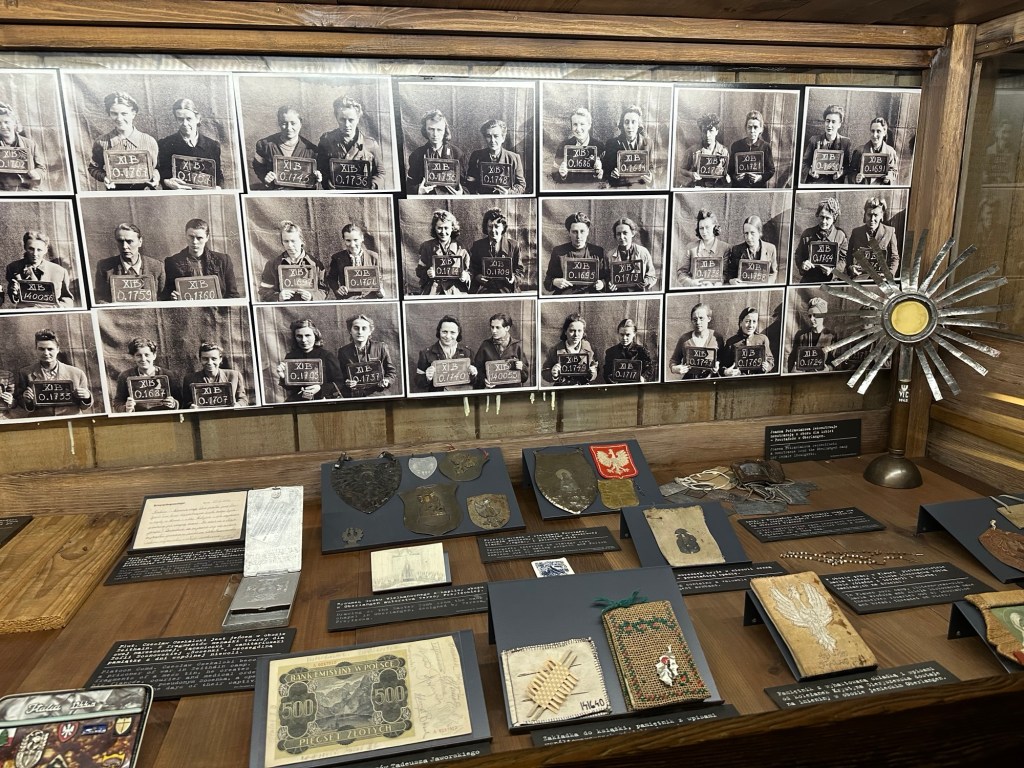
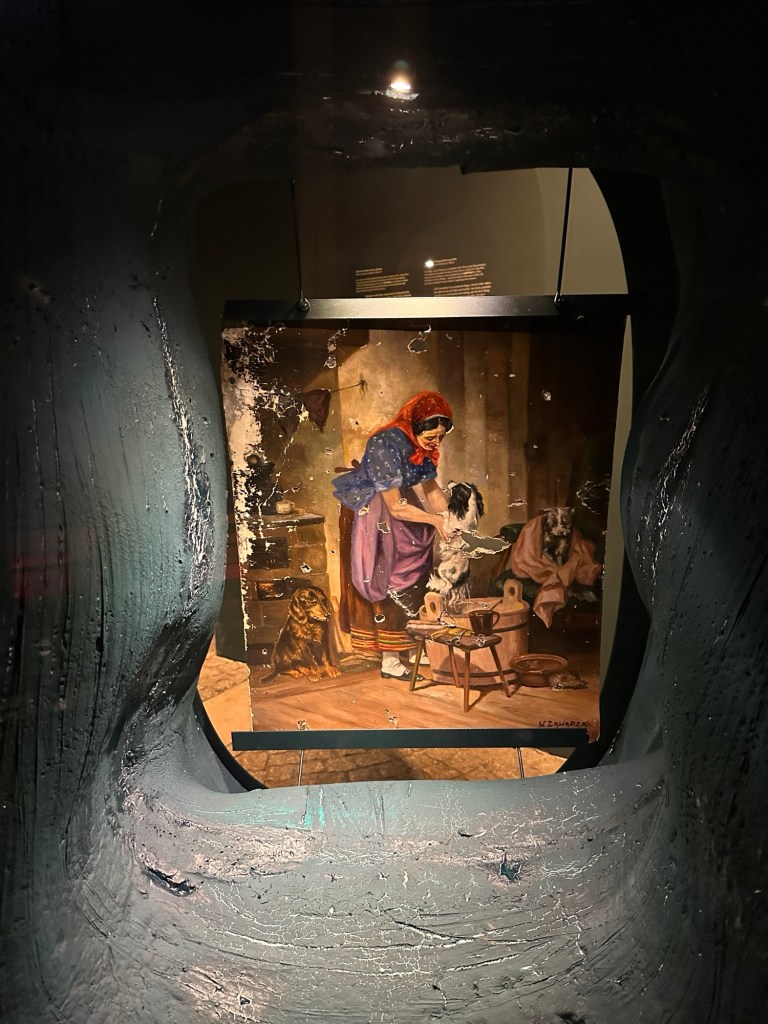
In the museum there are historical artifacts with explanations, documented footage of the time, and a powerful 3D movie to show an aerial view of how Warsaw was bombed to hell during this war. What wasnโ€™t destroyed at the beginning of WW2 was completely decimated during the end of WW2. It is said that before WW2 Warsaw had 1.3 million people but after the last uprising they were left with less than 300,000. Many were moved, killed, or sent to camps during the occupation. There was some information on the Warsaw Ghetto and how Germany made propaganda videos to show back home about how great life was in the ghetto so every day Germans would have no idea how bad like was for the Jewish people in Poland.

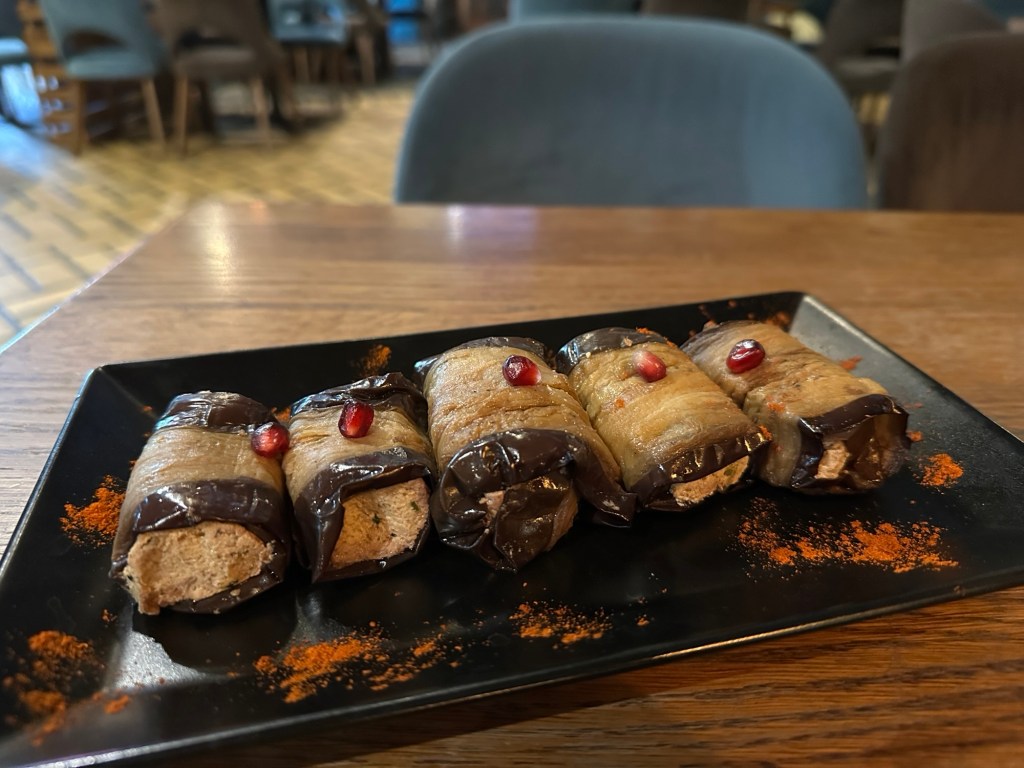
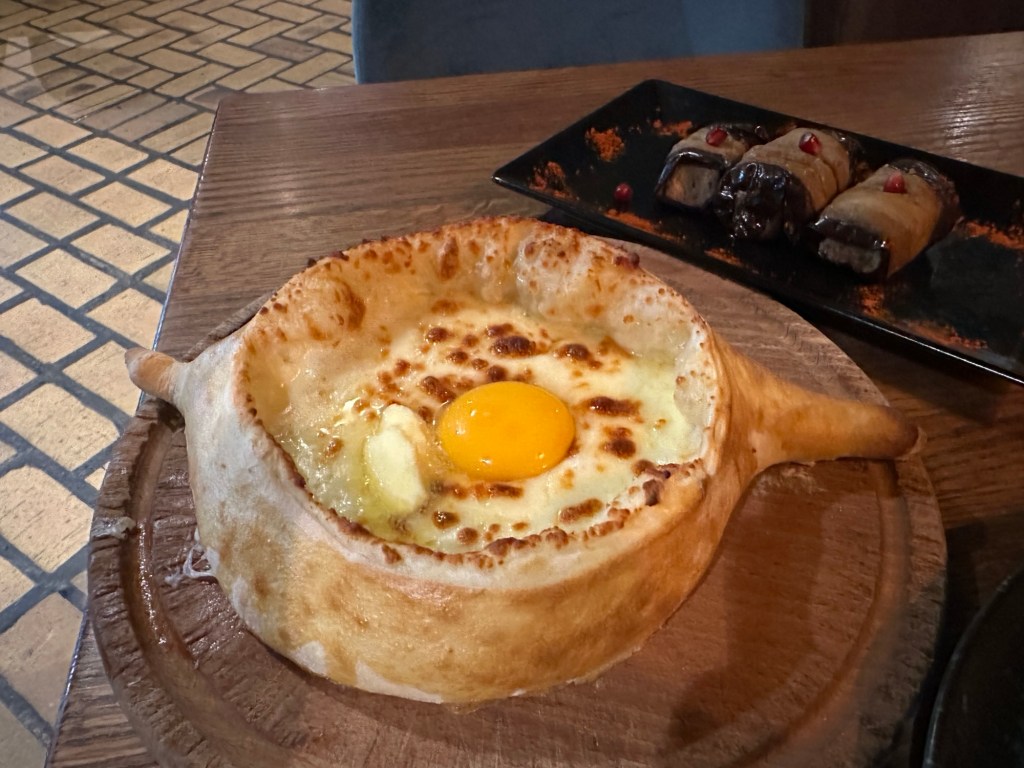
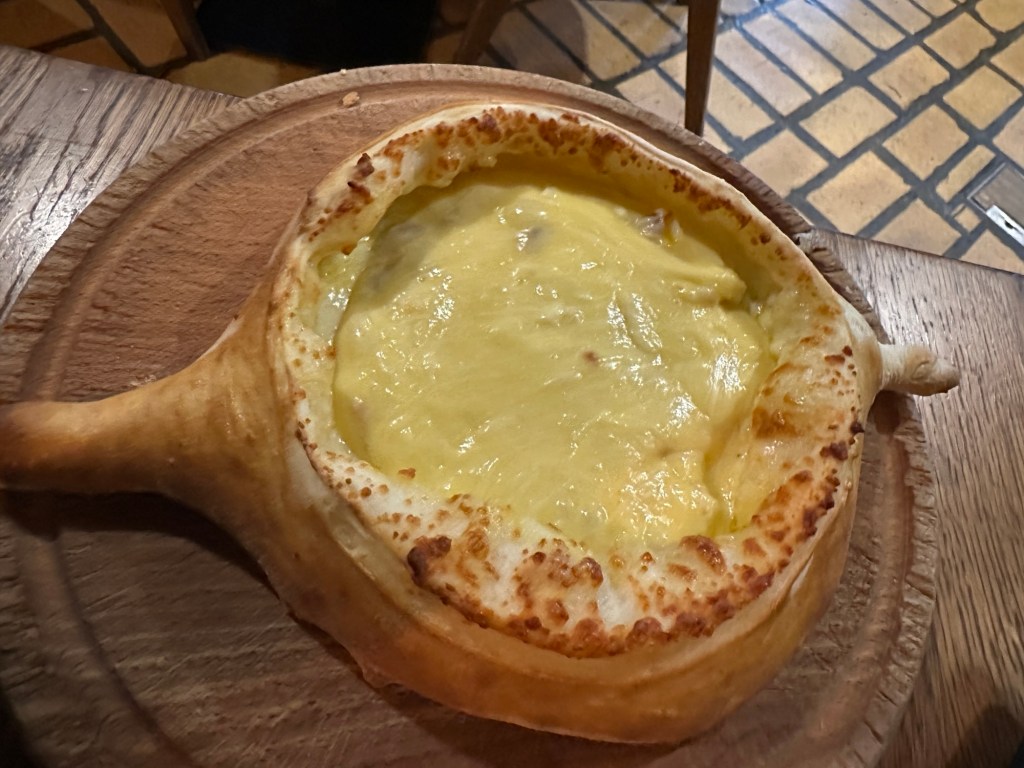
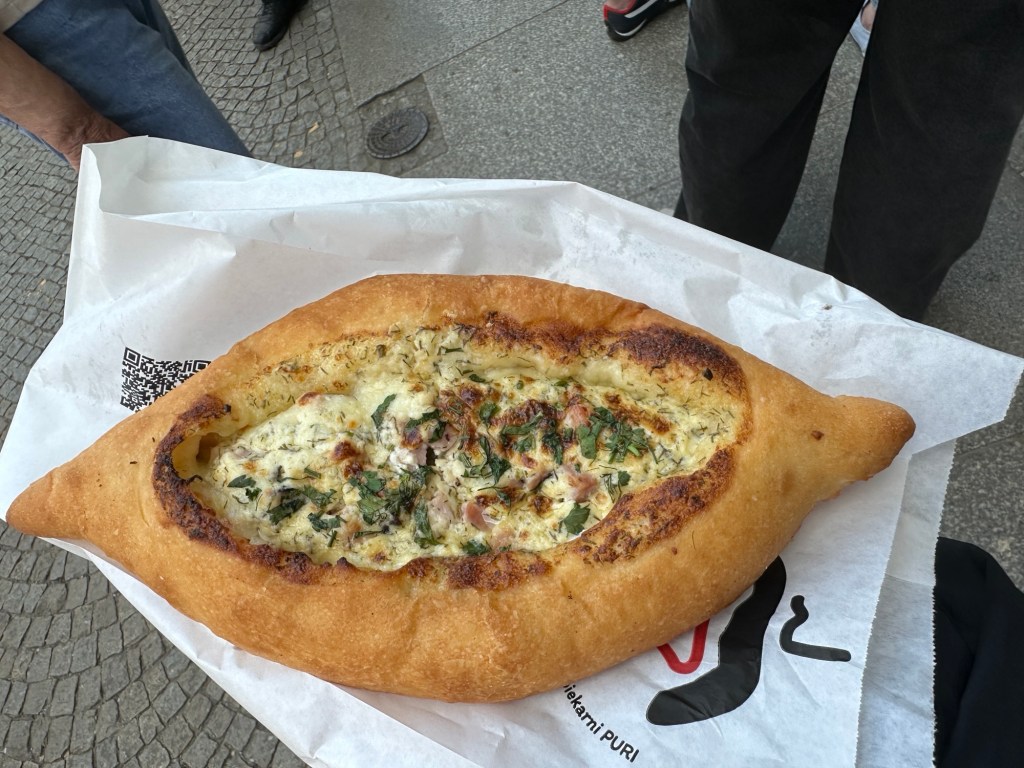
After the museum I want to grab a quick lunch before the old town tour I have scheduled this afternoon. While on the bus to Old town I pass a Georgian restaurant Iโ€™ve been thinking about trying. I hop off at the next stop and get a delicious Georgian meal. There are so many good things to order but I am only one person and this is already too much food. I order an appetizer of cold eggplant rolled over some sort of nut stuffing (I think cashews) and khachapuri with egg. Khachapuri is what we call in US a cheese boat. It is boat shaped bread filled with delicious cheese. There can be different toppings like a pizza but I order the traditional way with a raw egg on top. The egg is mixed in table-side where the egg โ€œcooksโ€ with the hot melty cheese. I think the egg gives it a more rich flavor, plus it adds protein (gotta get in my protein even if I am eating garbage). I am sure the cheese is going to mess up my stomach for the afternoon but I donโ€™t care. (Luckily it doesnโ€™t). Itโ€™s good I am walking for most of the afternoon because I am eating a days worth of calories here, or more.

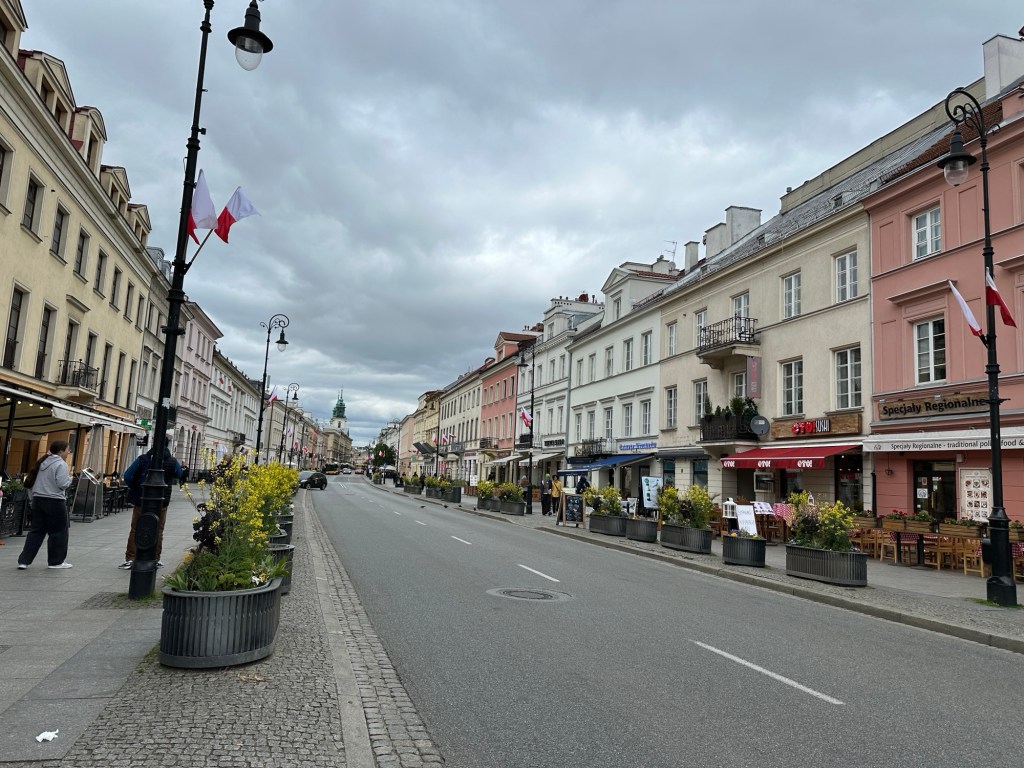
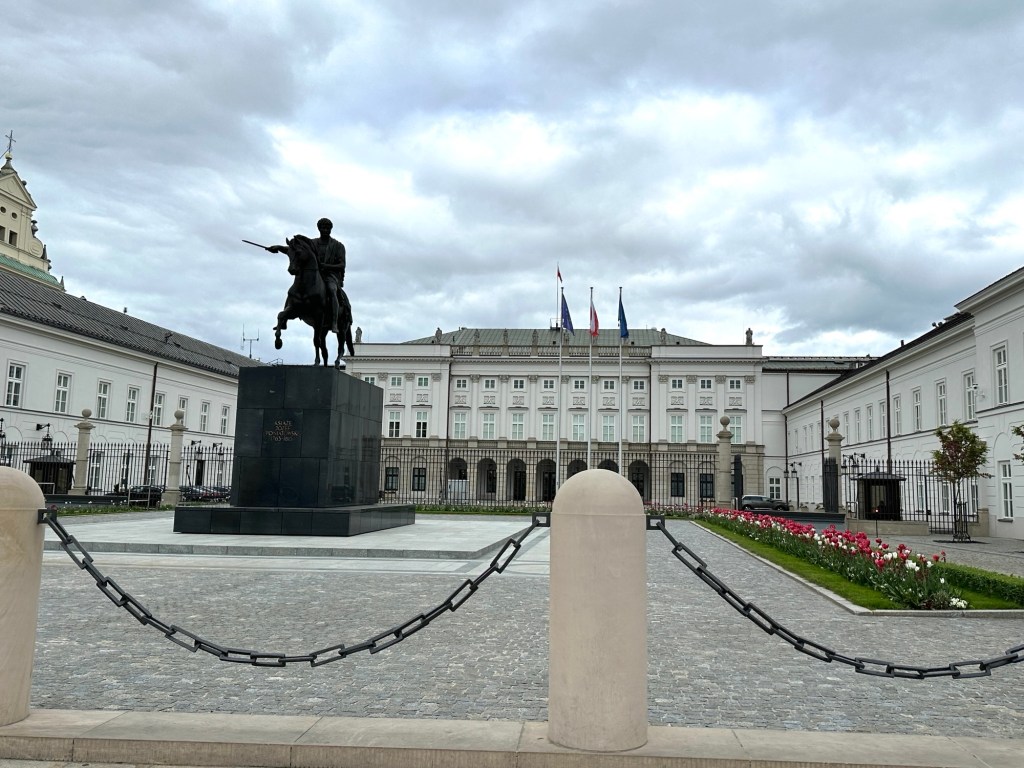
I arrive to the royal route early and explore. The royal route is the long road lined with restaurants and stores that leads down to the presidential palace and old town.

The Royal Route

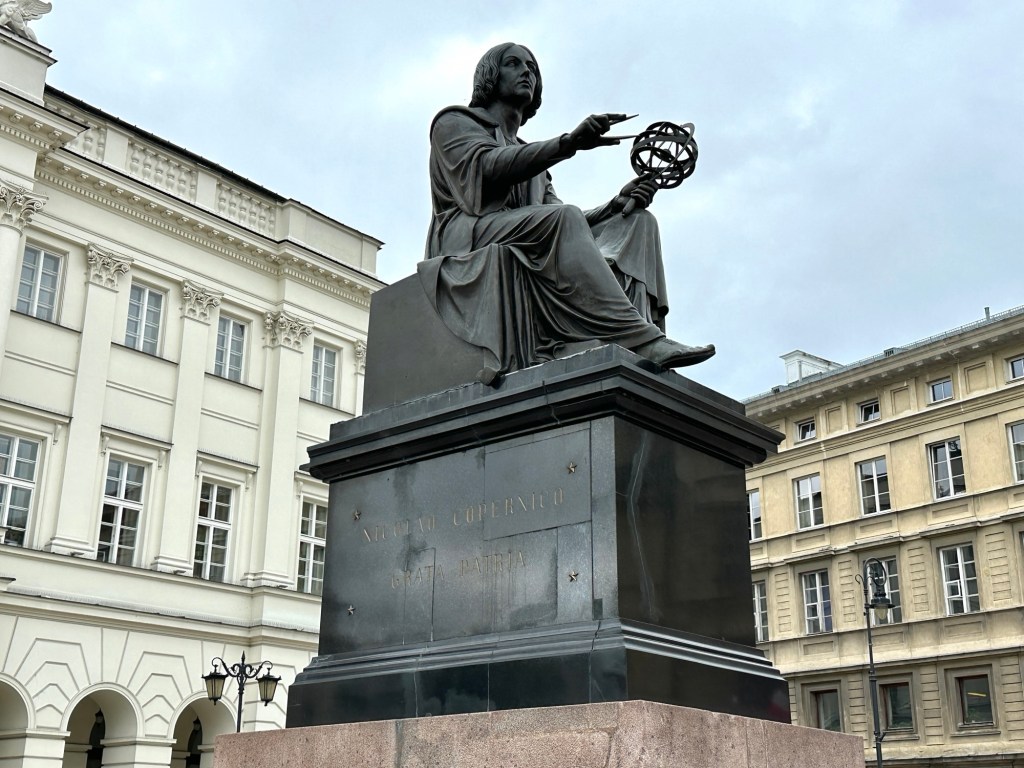
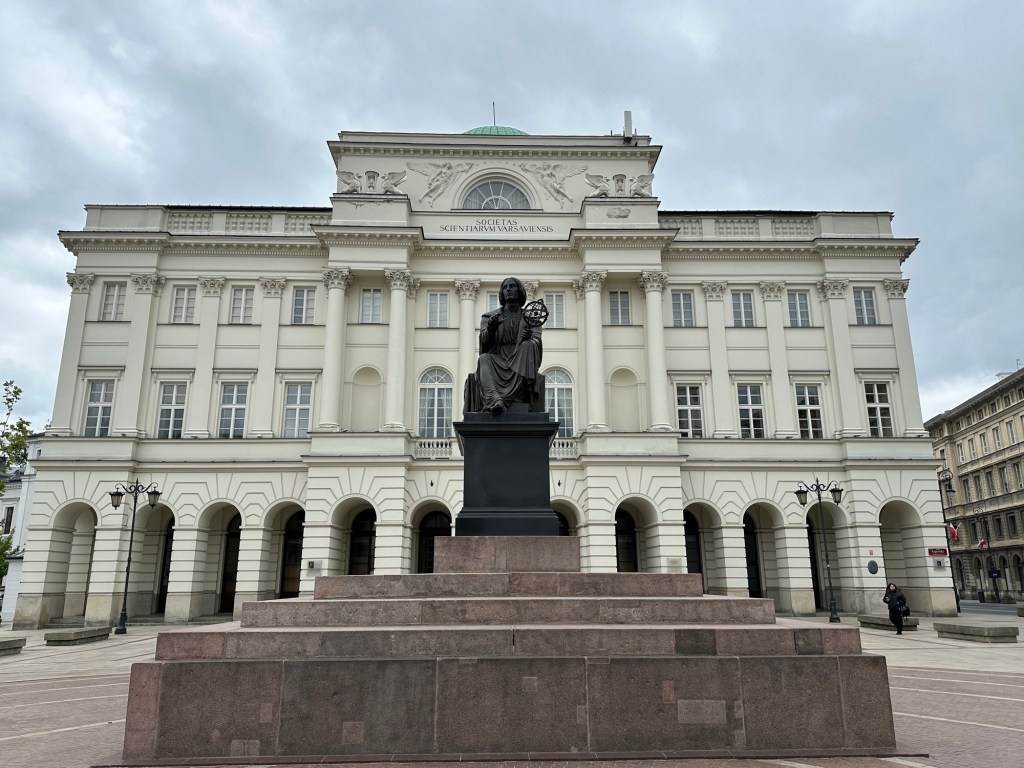
We meet at the Copernicus monument in front of the Polish Academy of Sciences. Copernicus is a famous Polish scientist who first modeled the Sun as being stationary and the planets orbiting it, among other things. He is commemorated all over the country.

Our guide, a spunky polish native, uses facts, humor and sarcasm to tell us all about old town. I love a good sarcasm banter.

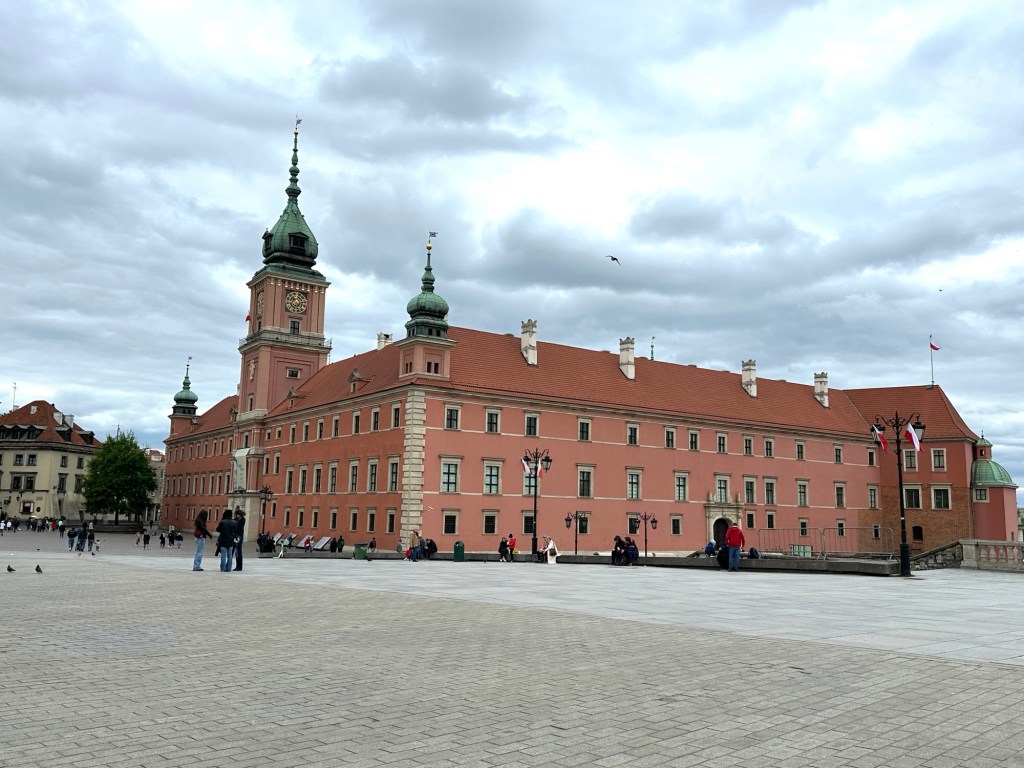
The most important thing to know that most of the old town has been completely rebuilt since WWII. It was bombed during the start of WW2 and bombed to hell when Poland tried to claim their independence during the Warsaw Uprising.

As terrible as the Soviets were to Poland, much of the old town was able to be rebuilt during the reign. Our guide tells is that many of the buildings are built from the original rubble of the original construction. And if they did not have enough material they tried to source the original.

We spend a large amount of time talking about the buildings all over the start of old town.

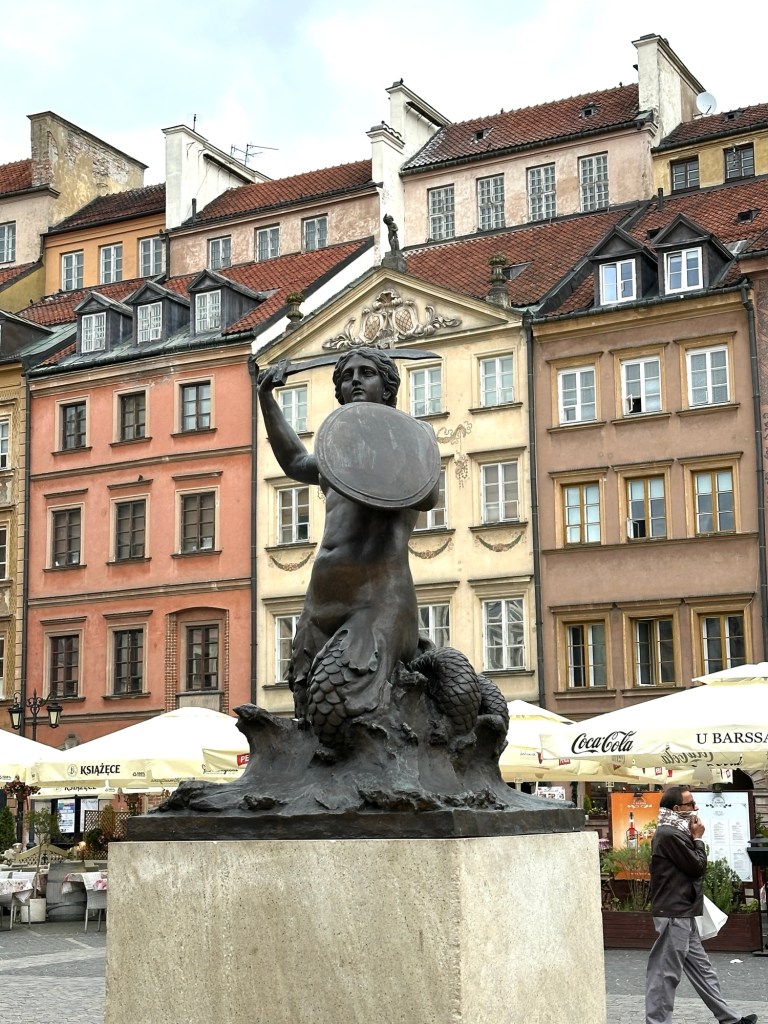
We visit the town square and learn all the lore behind the courtyard mermaid.

Our guide shows us important churches and notes places to visit around town. She points out parks on the must see list.

After the tour I go backwards and visit all the churches she mentions during the tour.

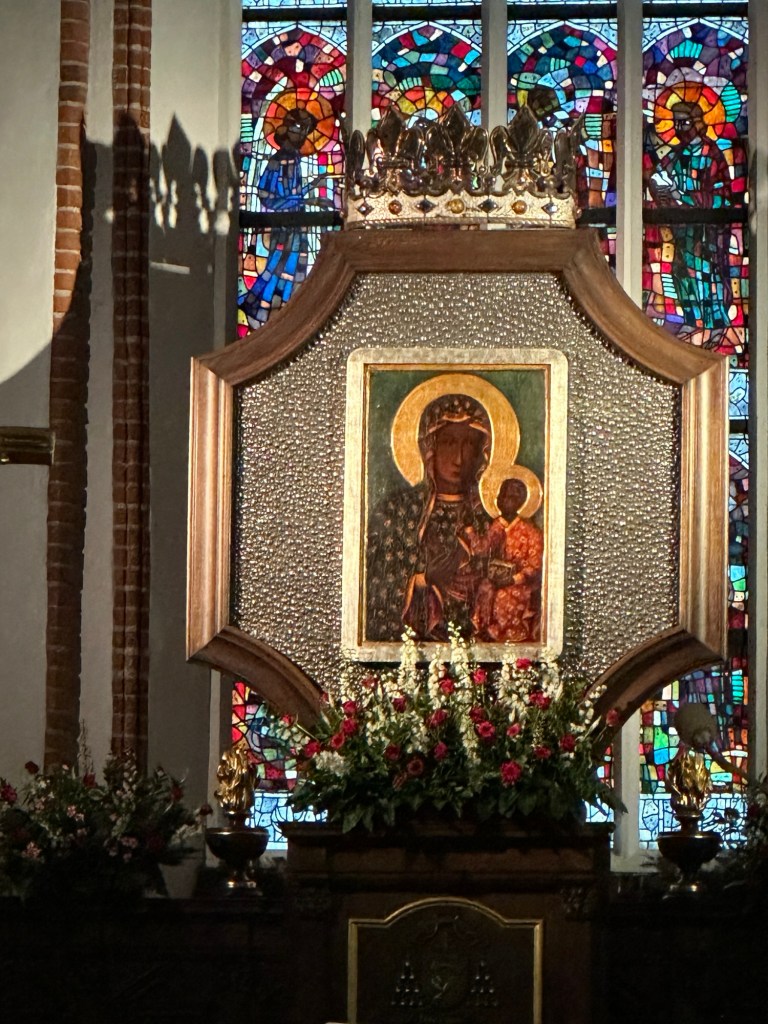
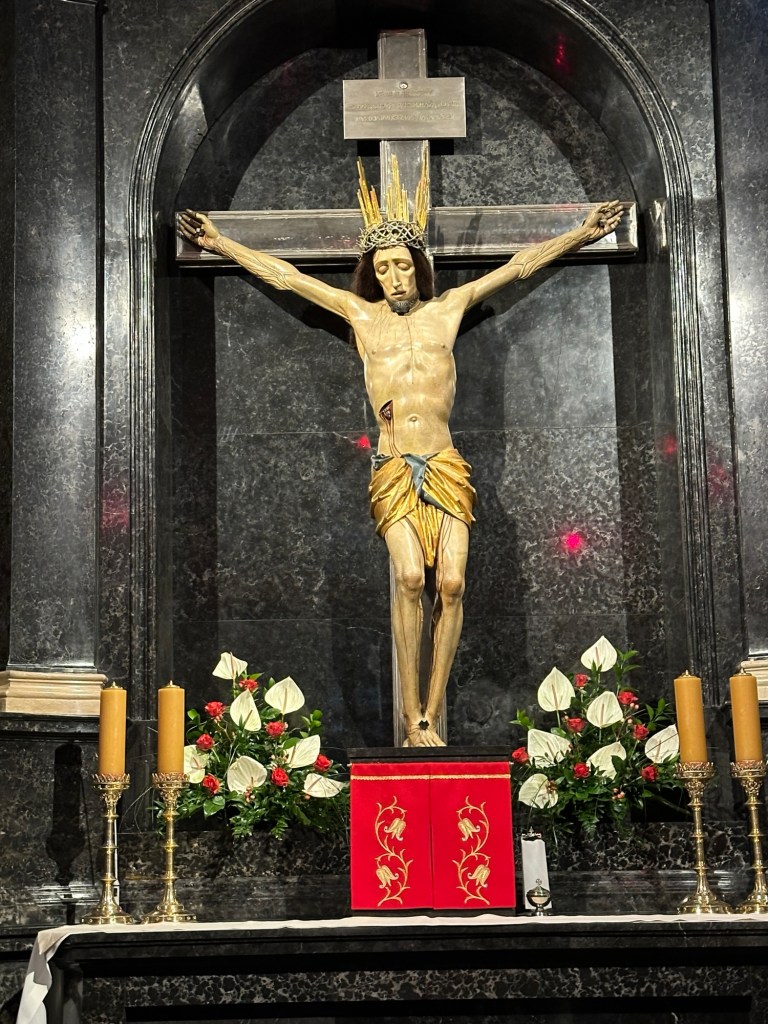
In Archcathedral Basilica of St. John the Baptist there is a reproduction of the famous Black Madonna painting like the famous one that exists in the Jasna Gora, a polish pilgrimage site. The church also has a Jesus statue that uses human hair as Jesusโ€™ hair. There is a story that it used to grow and required haircuts on a regular basis. There is a story to explain why it no longer grows, of course.

Jesus statue with human hair

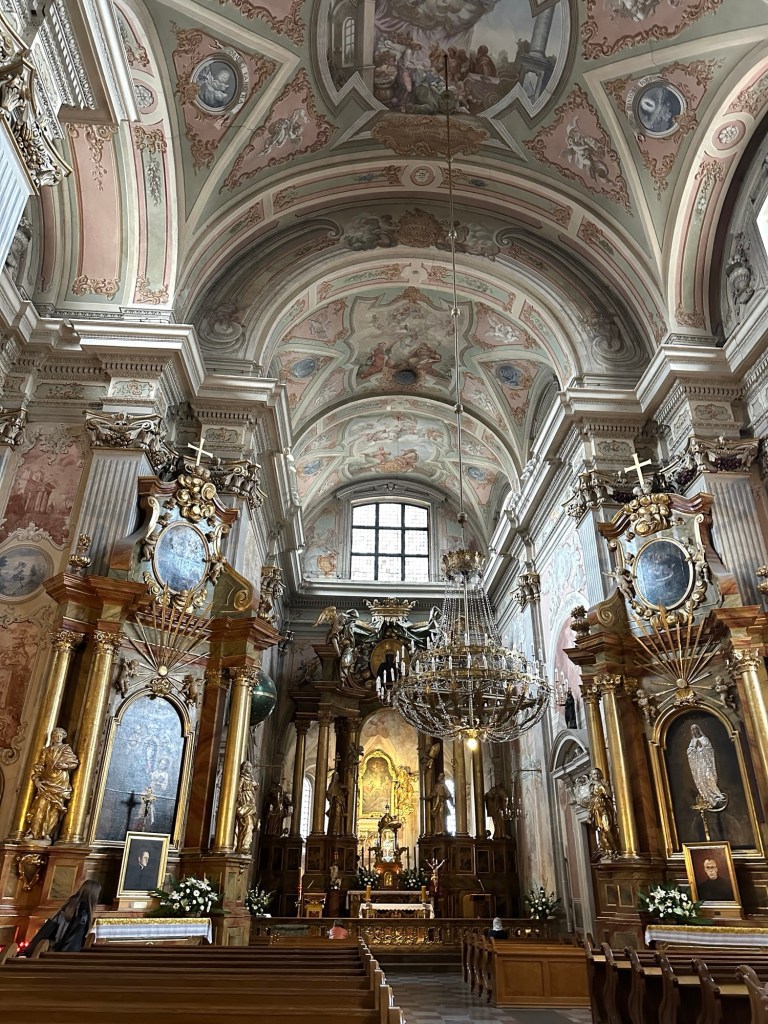
I visit St Annaโ€™s church which is a must see inside. 

She also fills us in with more detail of the history like how a king ends up on a big column in the beginning of old town.

In the Church of the Holy Cross you can visit a memorial to Chopin. Frรฉdรฉric Chopinโ€™s sister put his heart in brandy after his death to preserve it. There is a fantastic story about how she smuggles it under her dress to cross the border so his heart could be buried in Warsaw, in his home country.

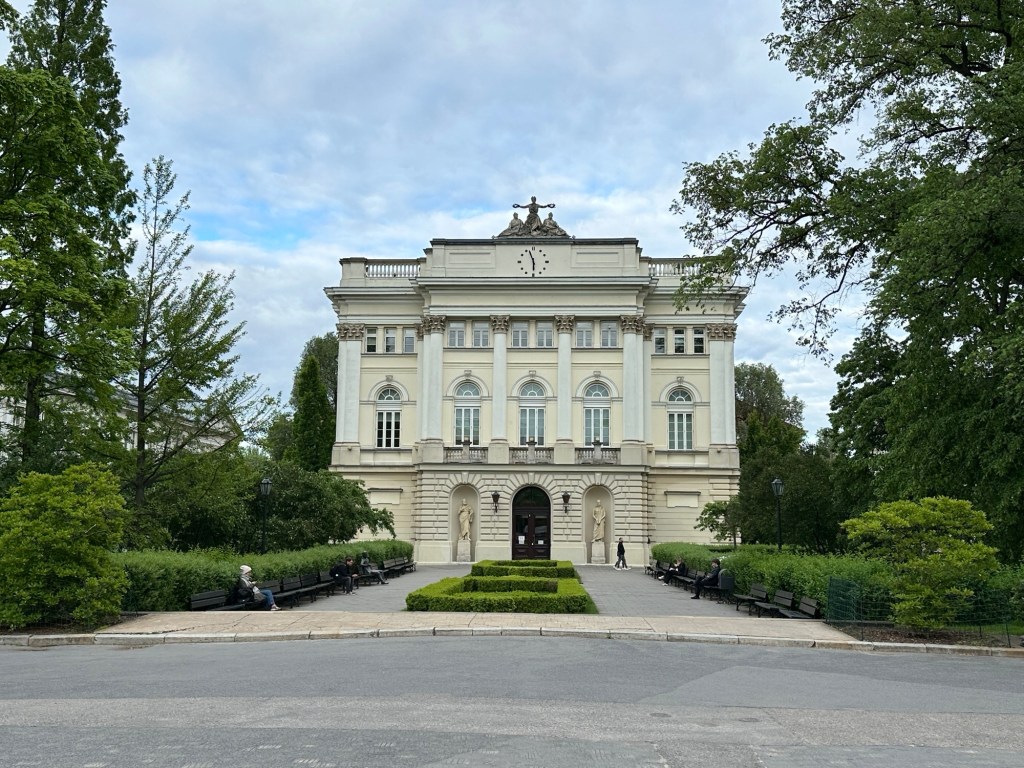
We stop by the University of Warsaw. We learn that all the public universities in Poland are free if you have the grades to be admitted. We see one building that made it through the war. It is supposed to be a beautiful campus, especially at night. I plan to return later.

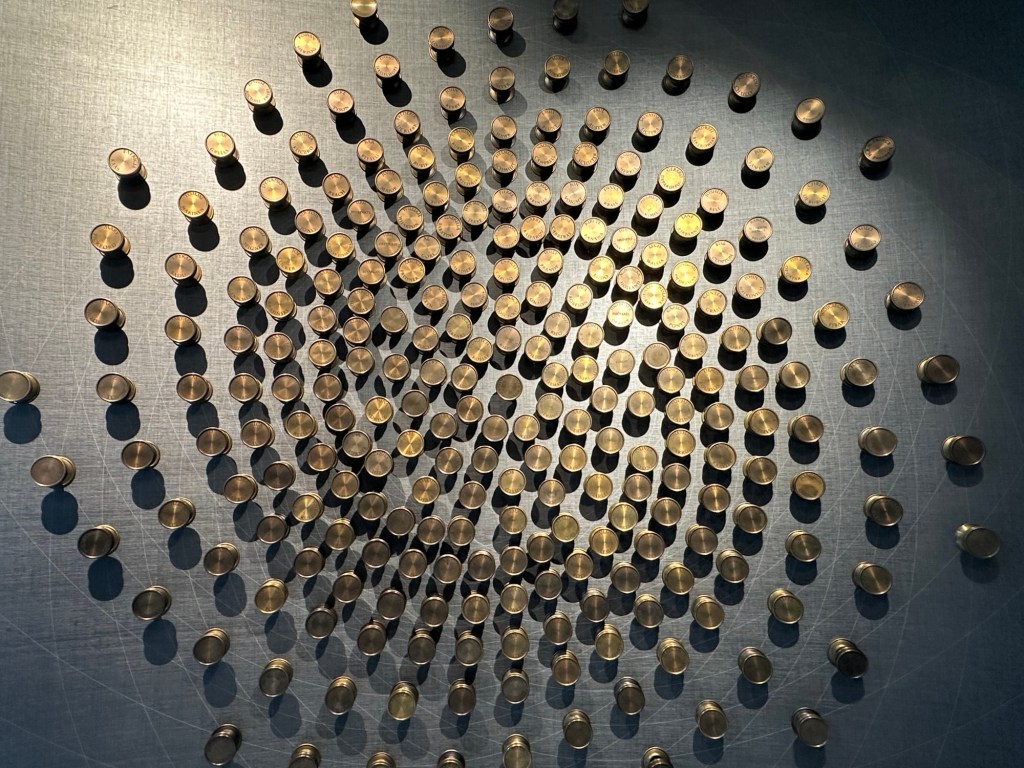
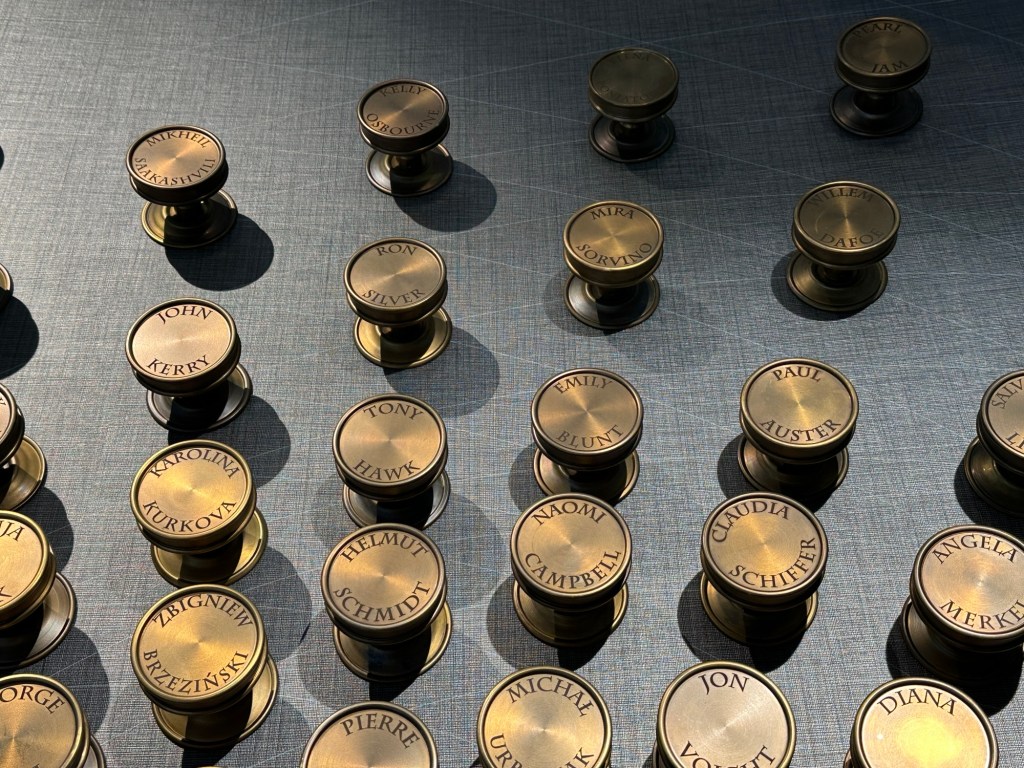
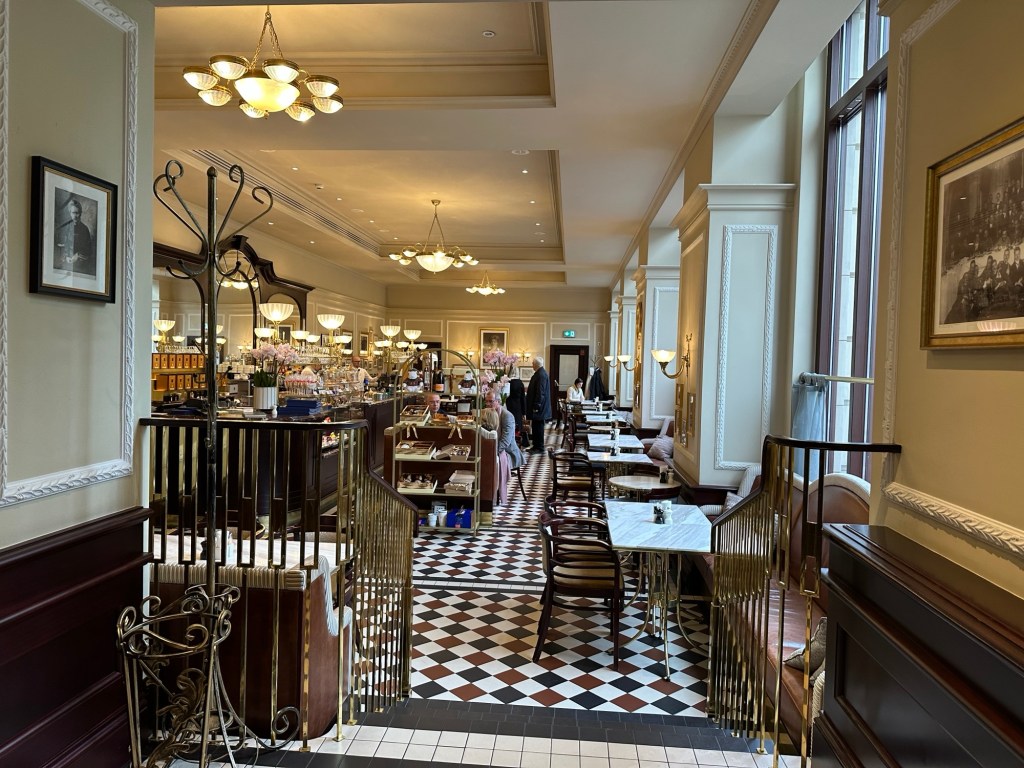
We stop by the beautiful Bristol hotel, a luxury hotel built in 1901. The Cafe Bristol is visited by many famous people over the years. There are little knobs on the wall that commemorate each famous visitor to the hotel.

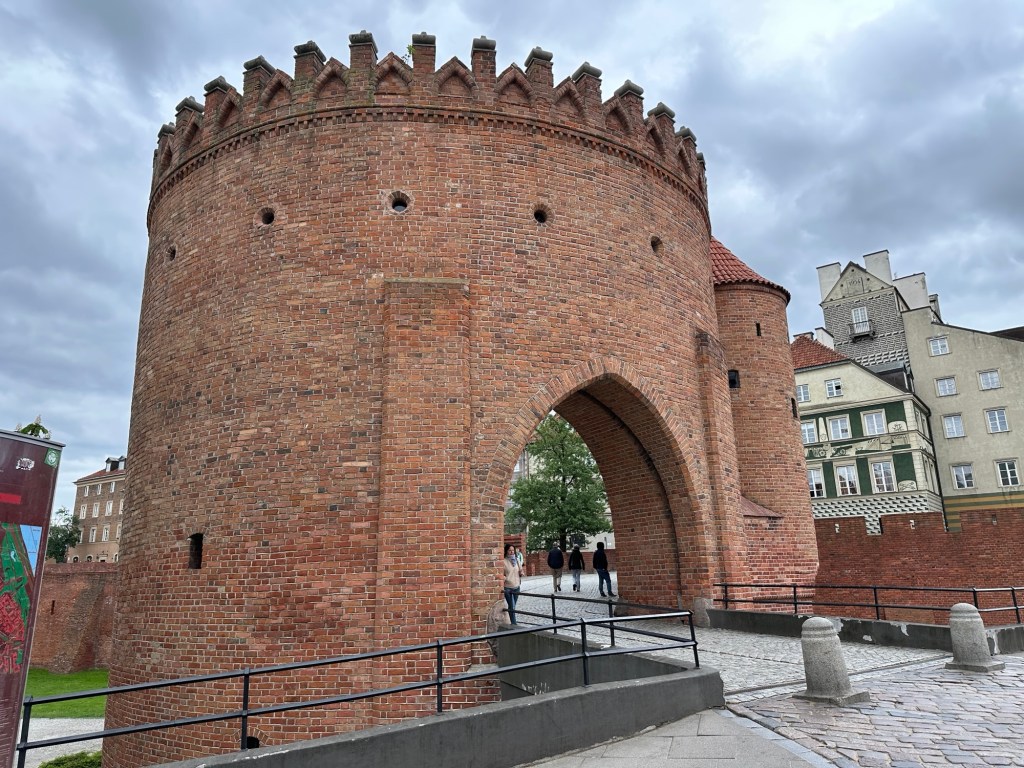
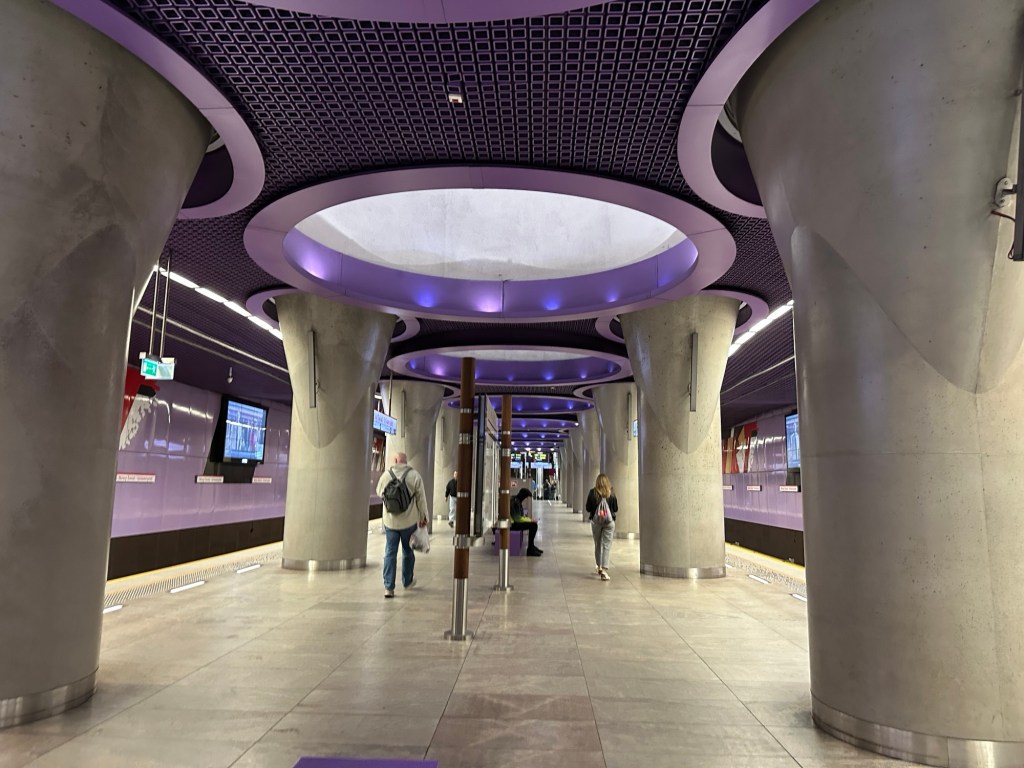
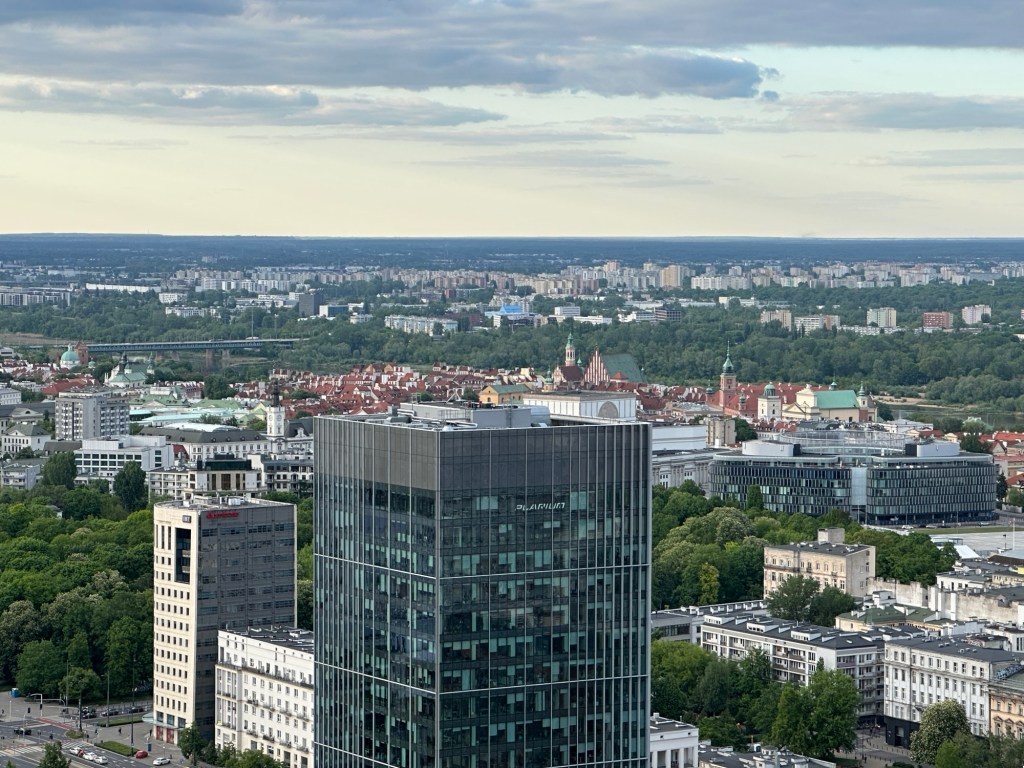
We finish the tour at the other side of old town at the Warsaw Barbican. After stopping by all the churches I missed I take the metro to down to the Palace of Culture and Science to have spectacular views of the city.

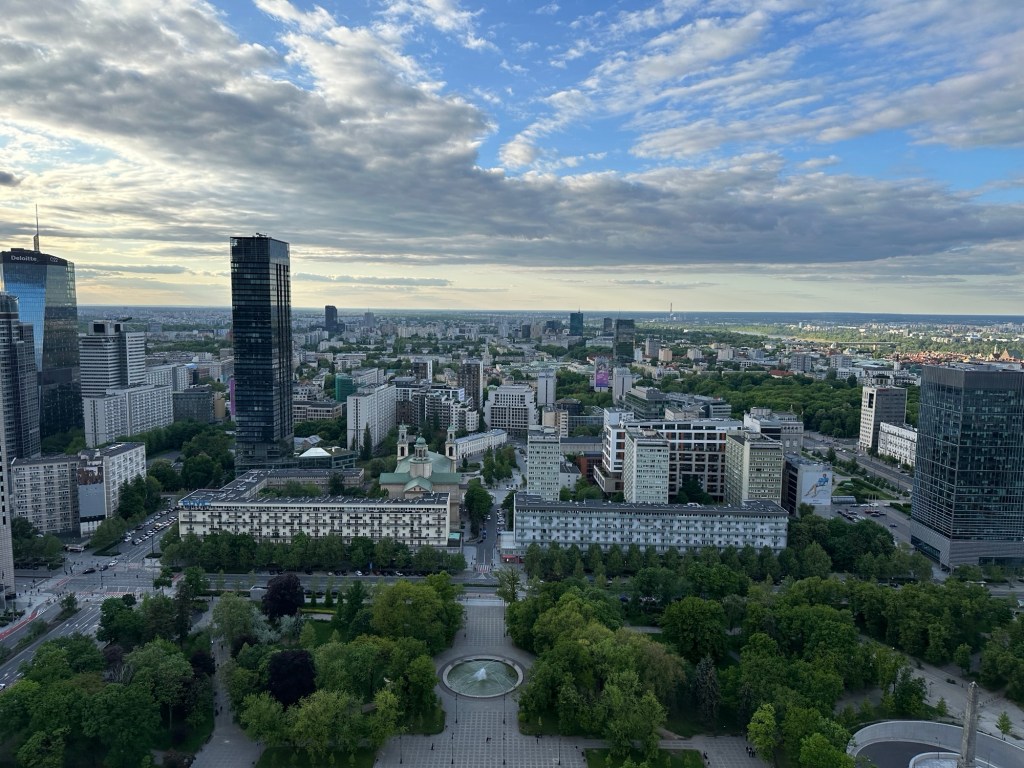
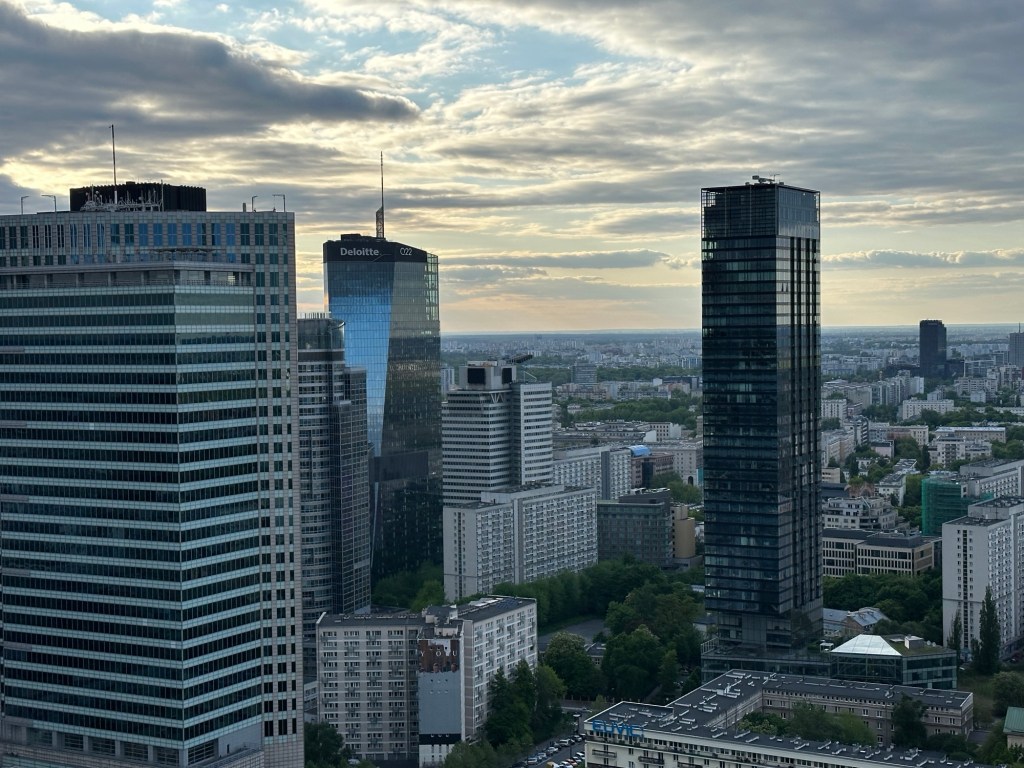
View from the Palace of Culture and Science

More museums tomorrowโ€ฆโ€ฆ

Wrocล‚aw fun

Since tomorrow is a holiday and many things will be closed there is a rush to do things today. I have an early morning at at University of Wrocล‚aw where they have a couple impressive things to see.

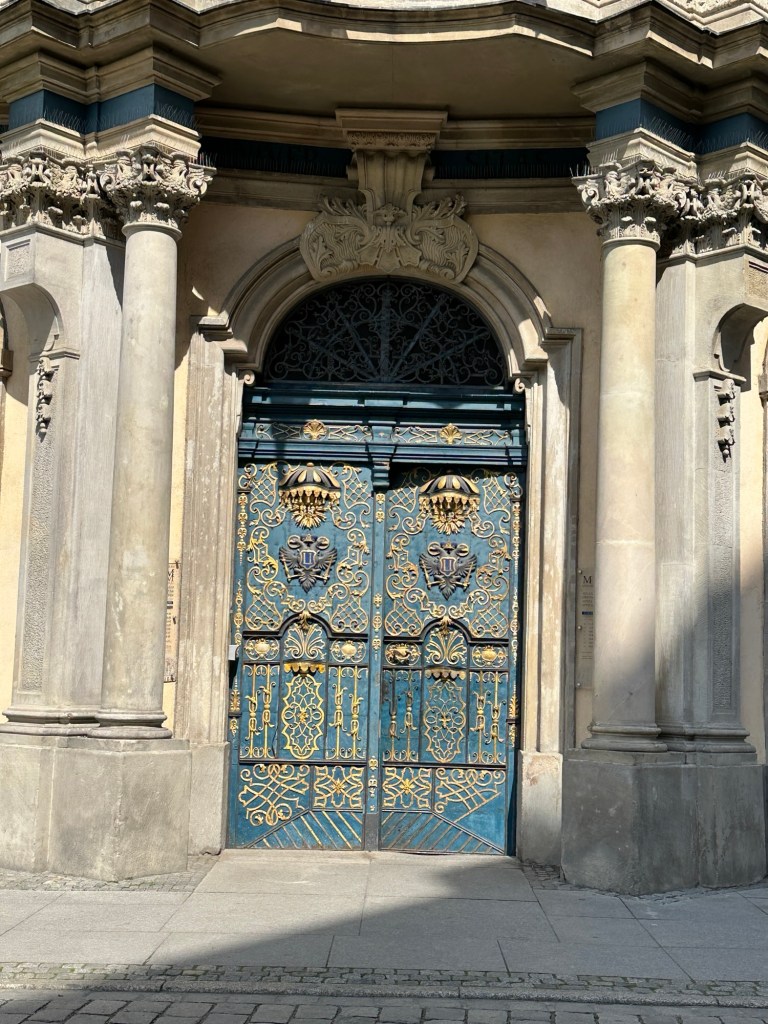
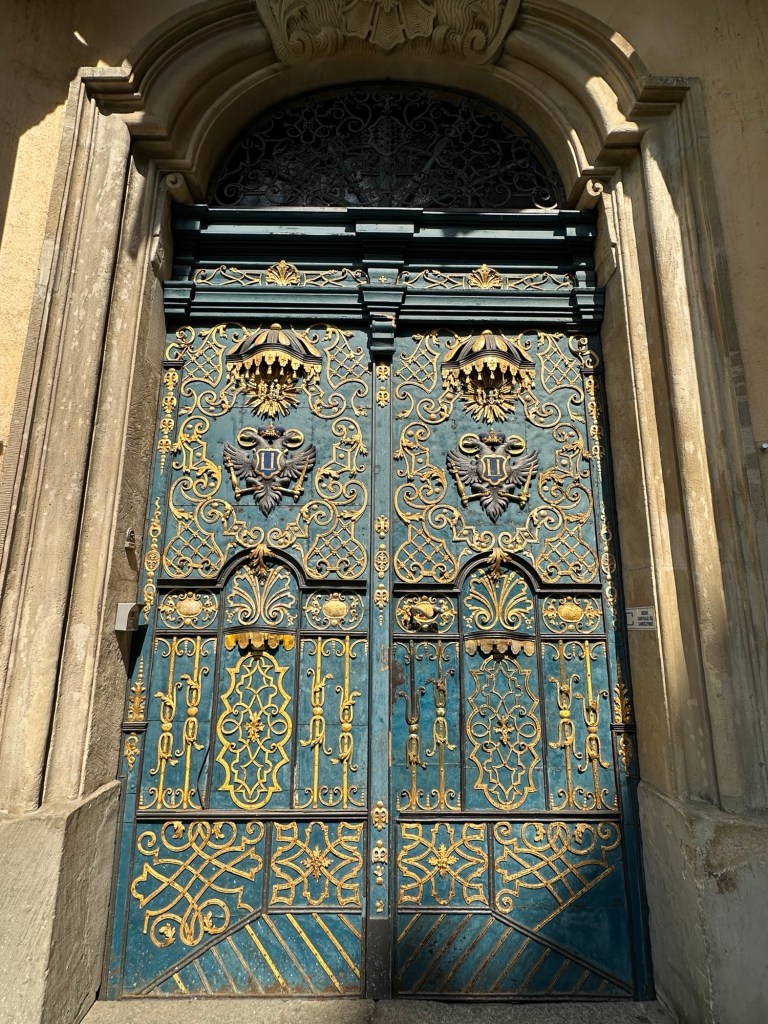
First is the beautiful doors of the college.

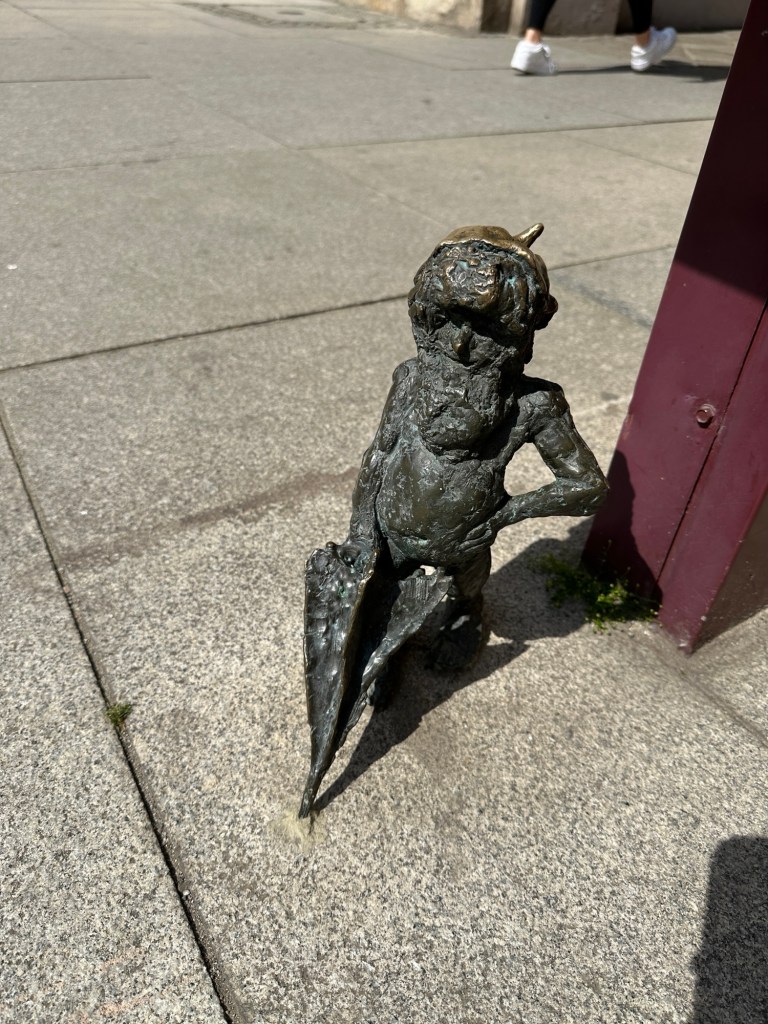
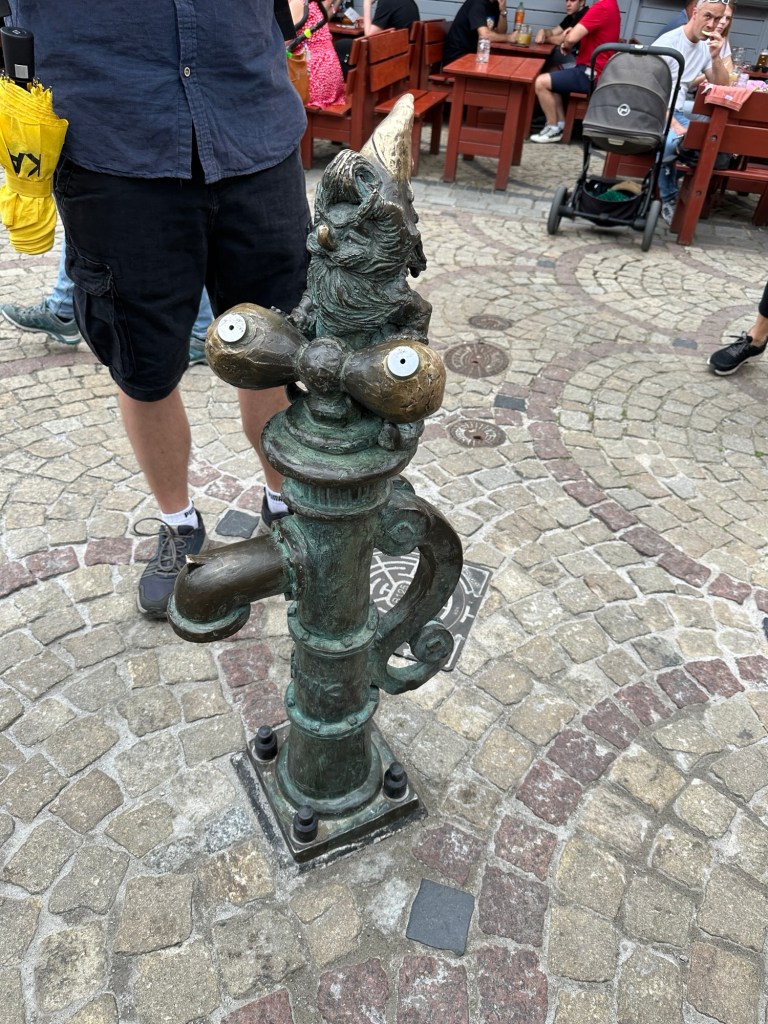
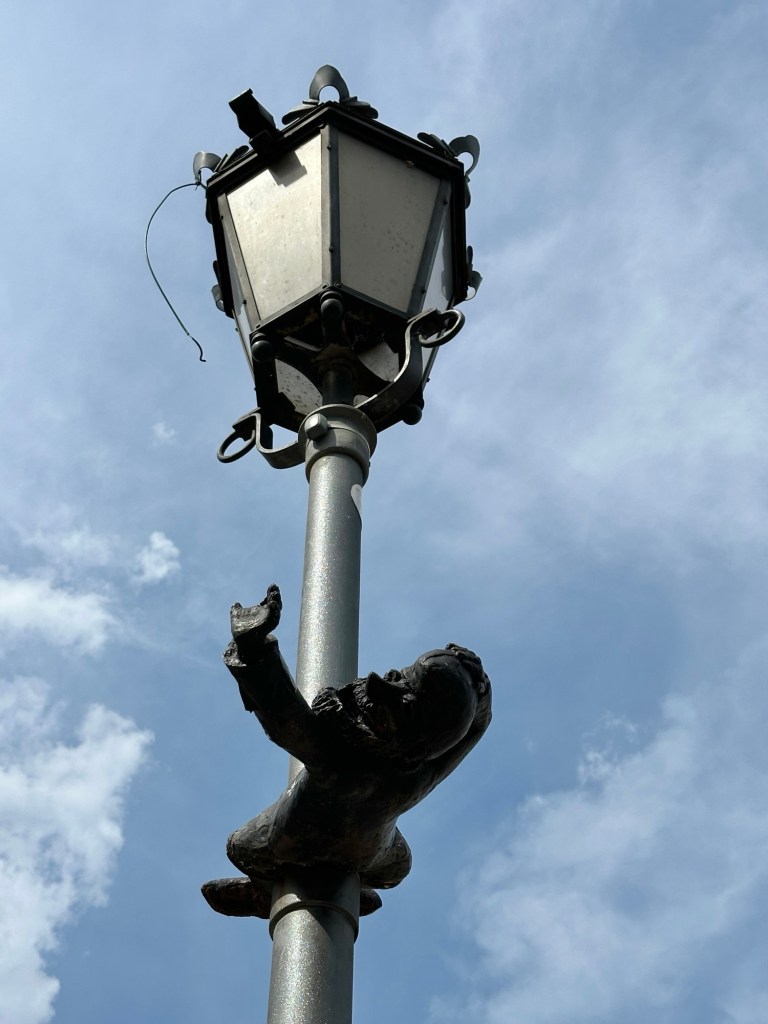
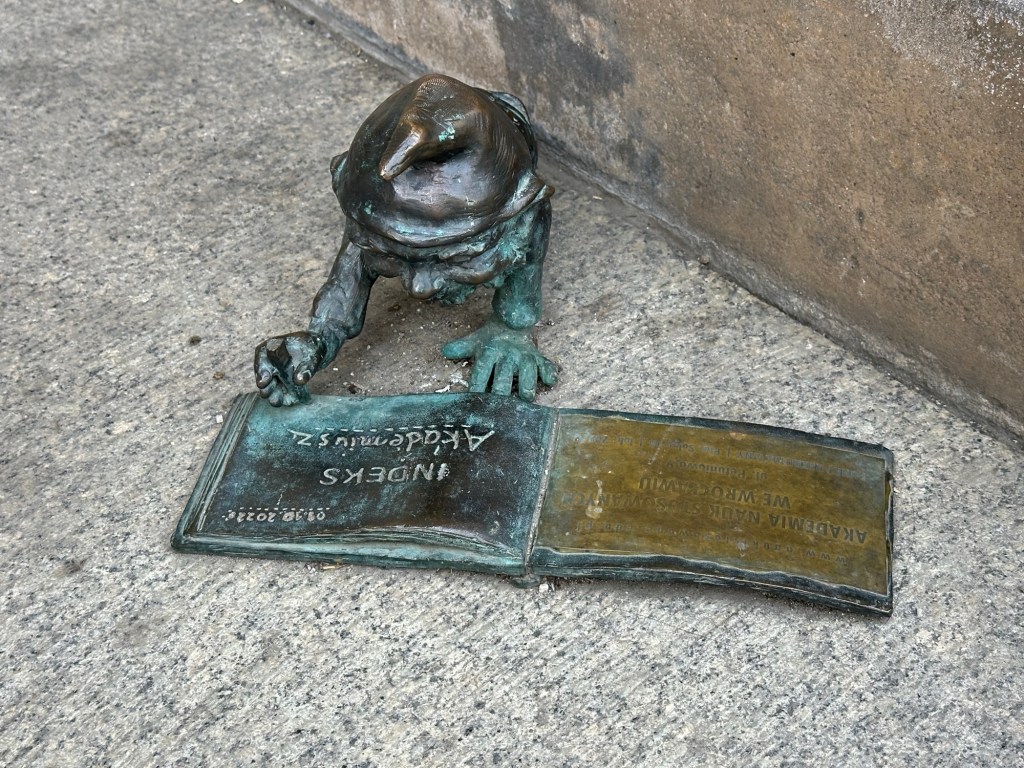
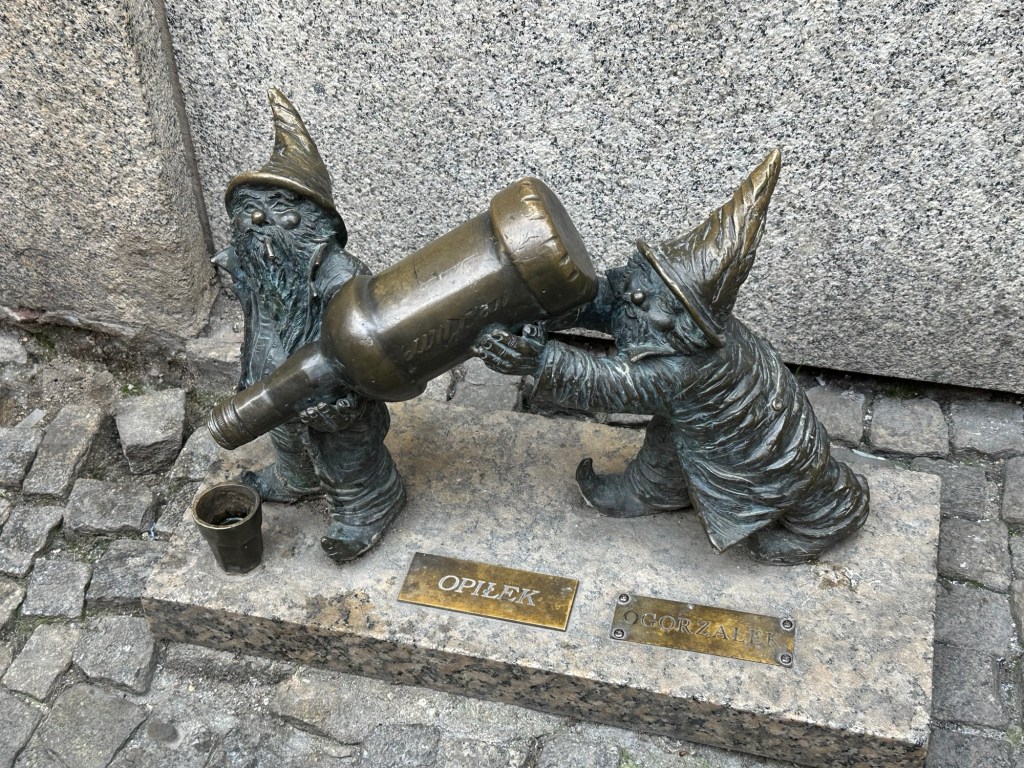
And the fun dwarves hanging out at the college.

At the University of Wrocล‚aw there are up to four museums to see and I buy a combo ticket that includes all four.

Stairs of the museum building
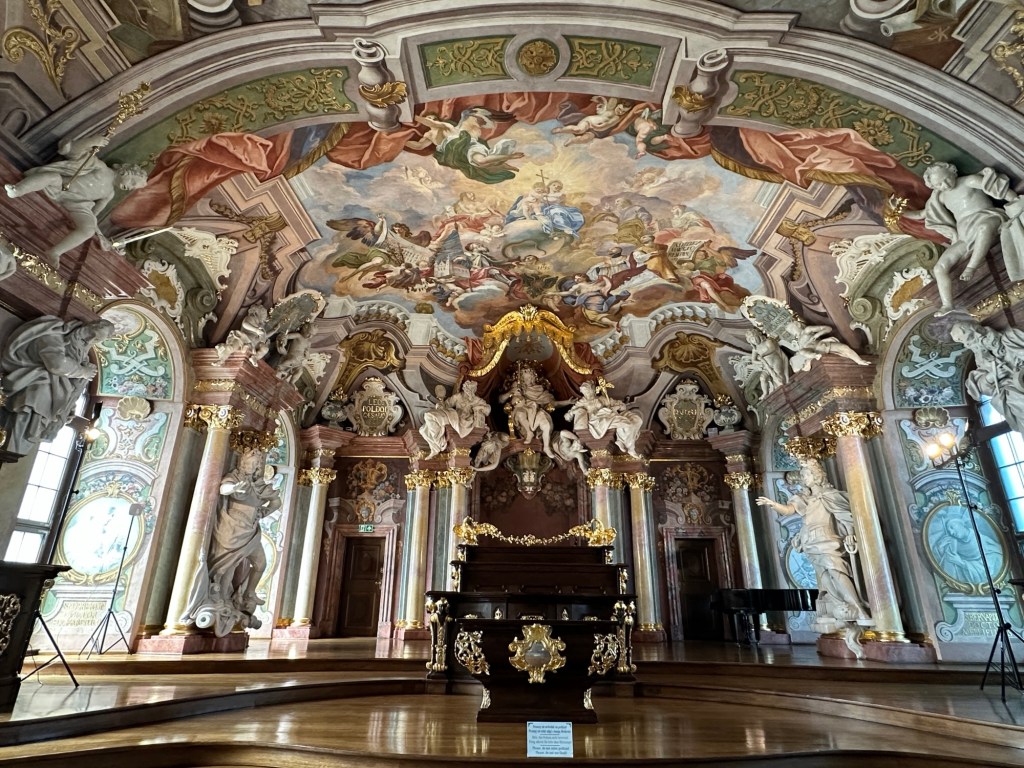
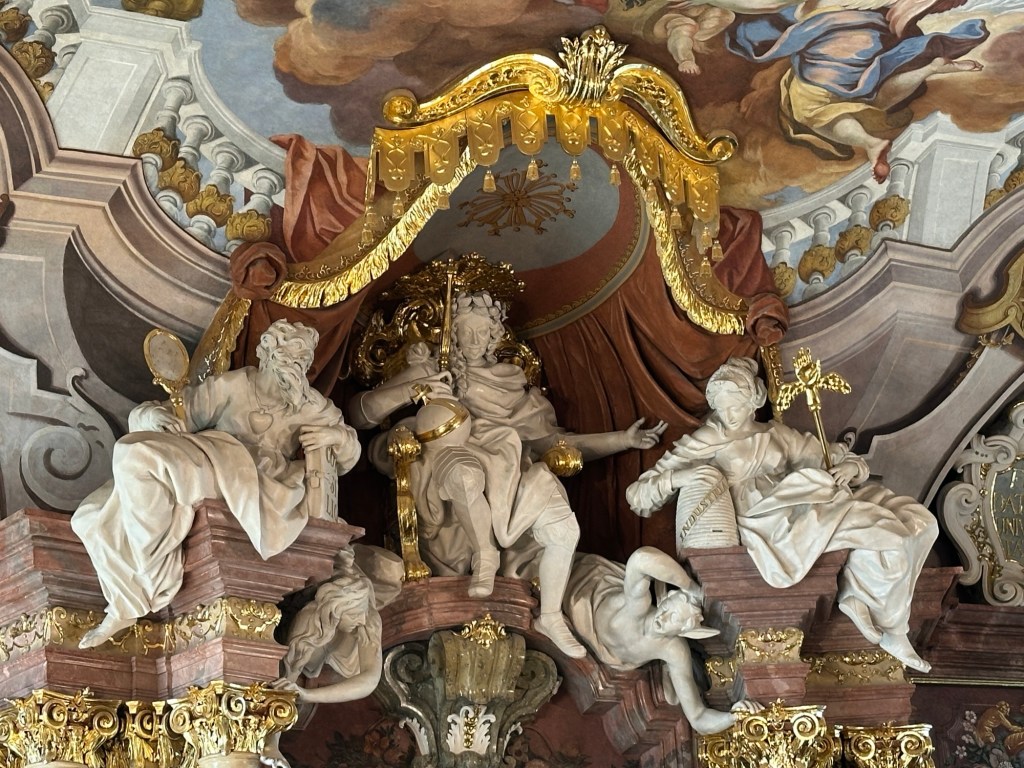
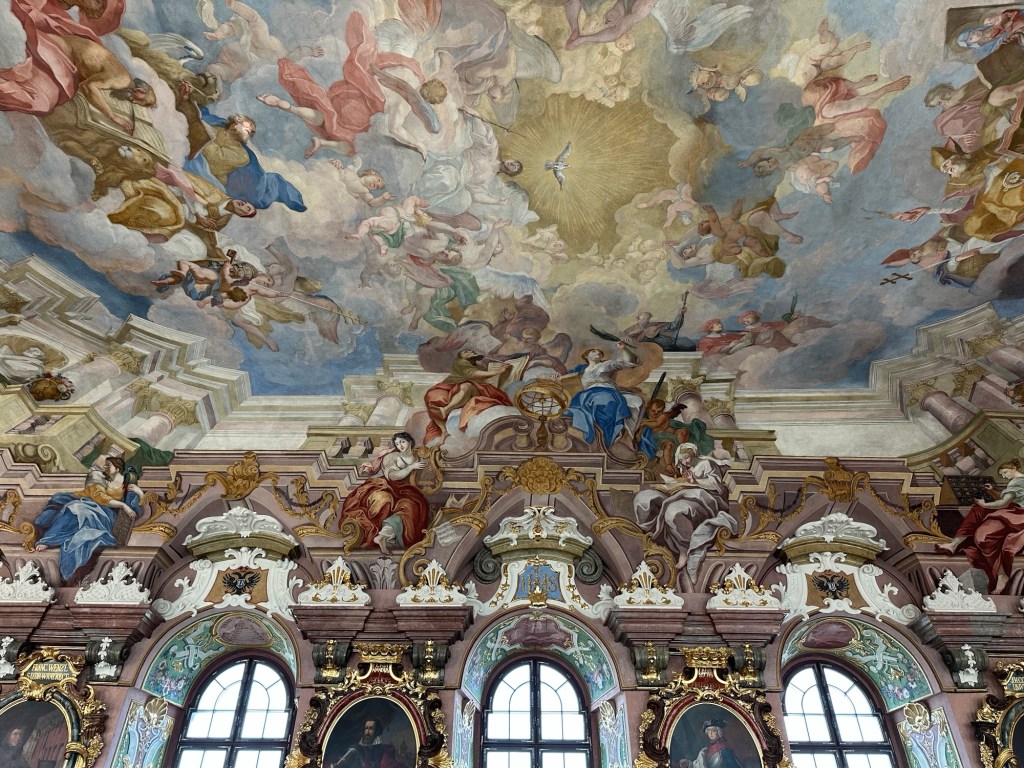
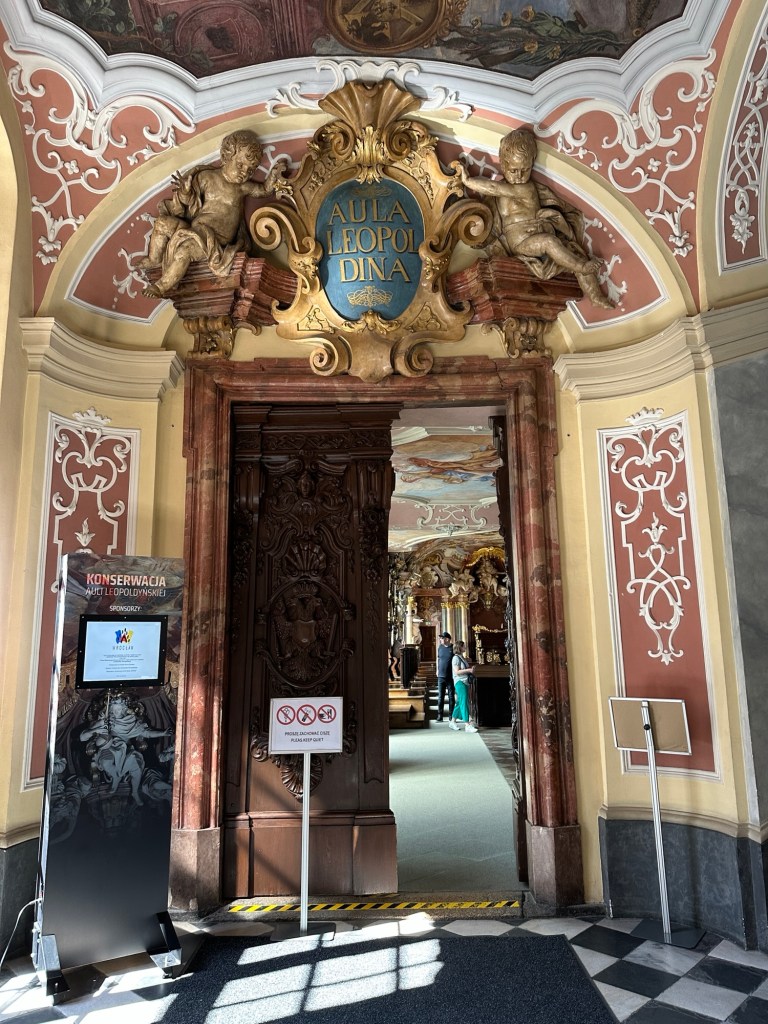
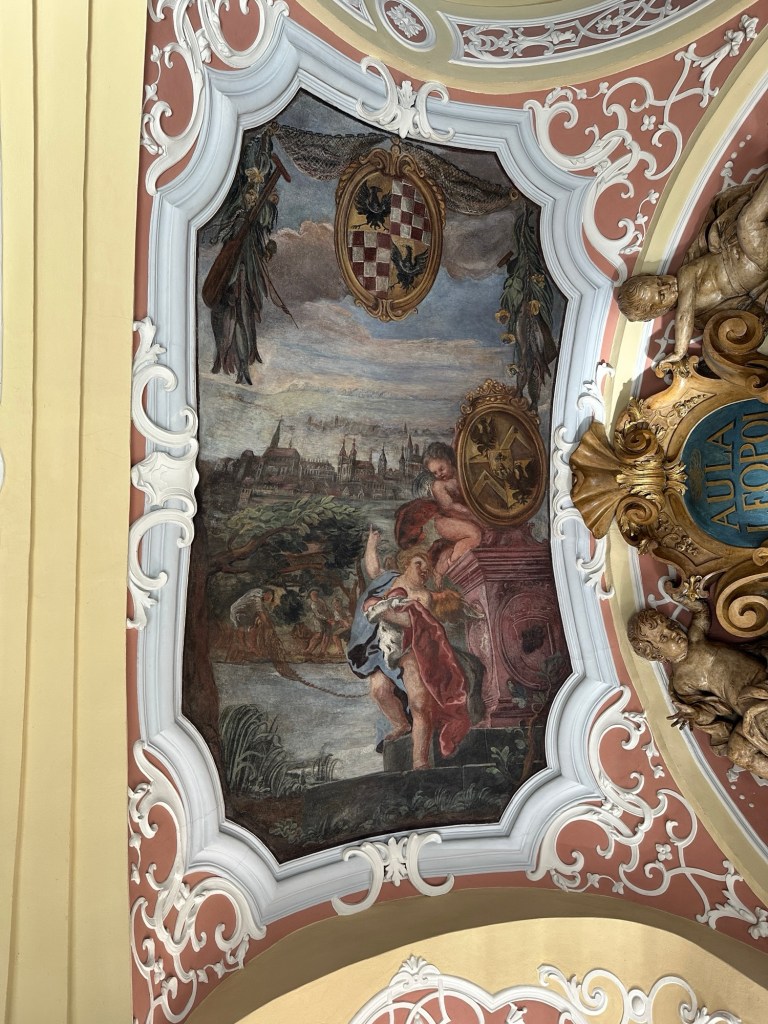
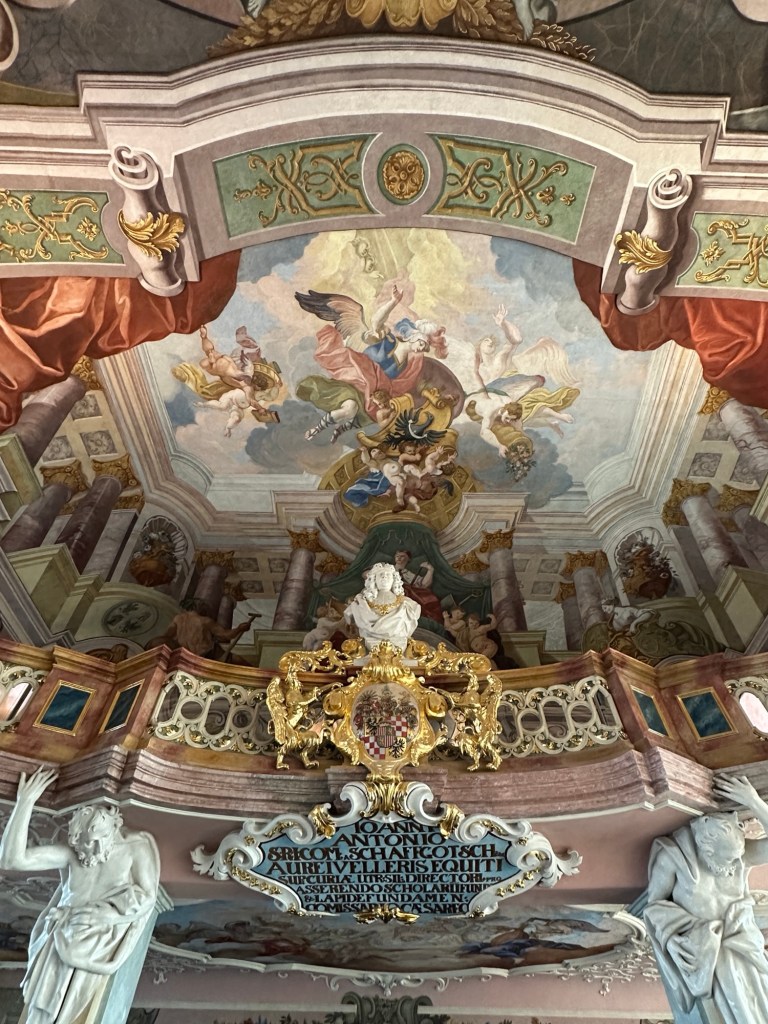
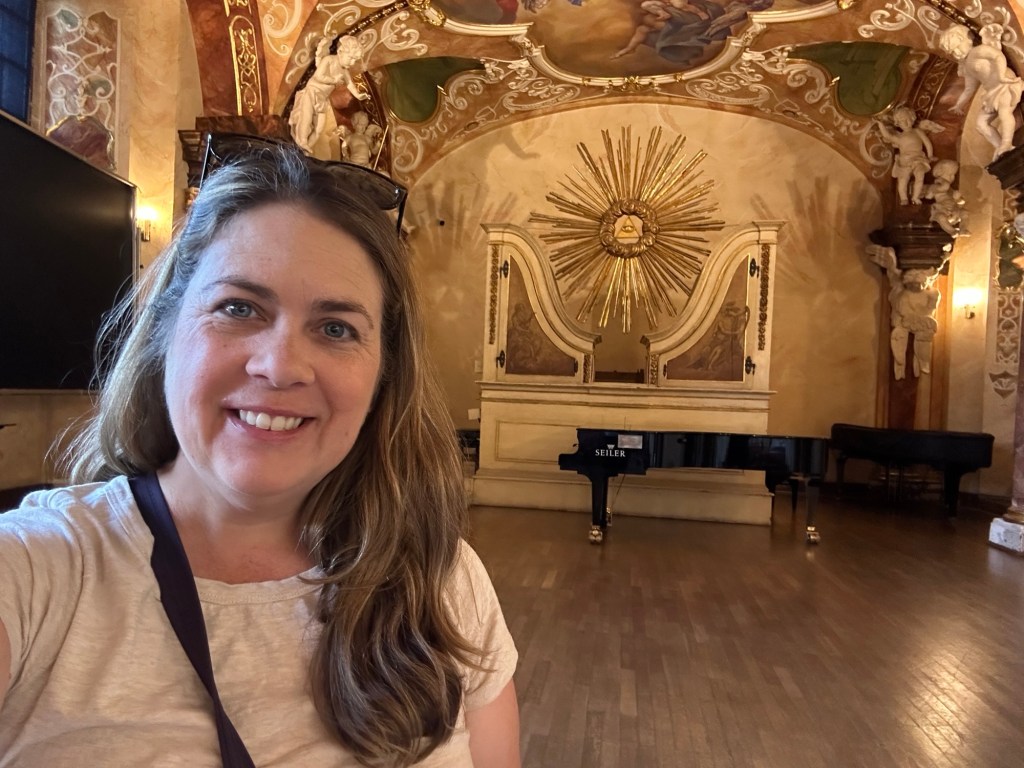
Aula Leopoldina

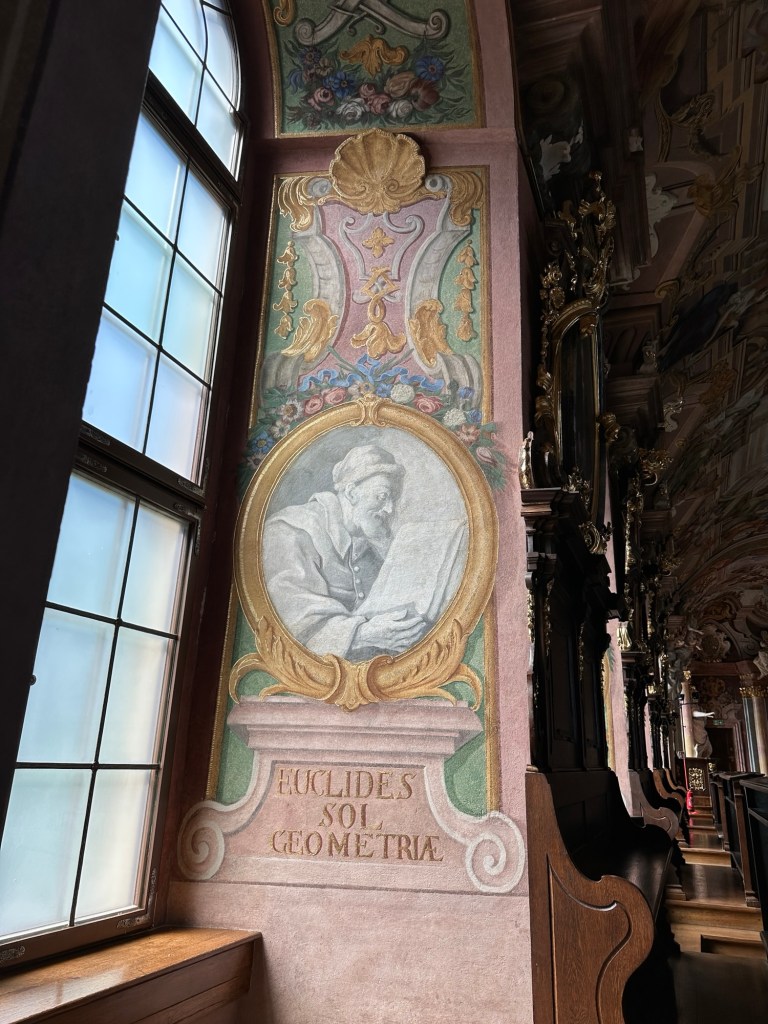
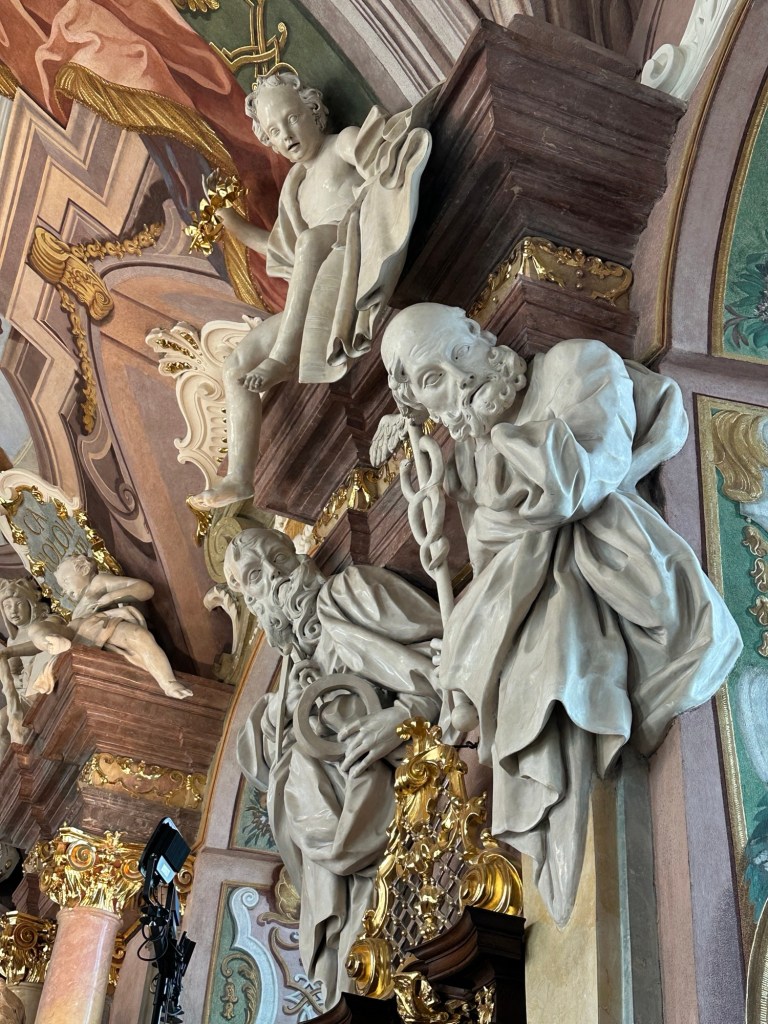
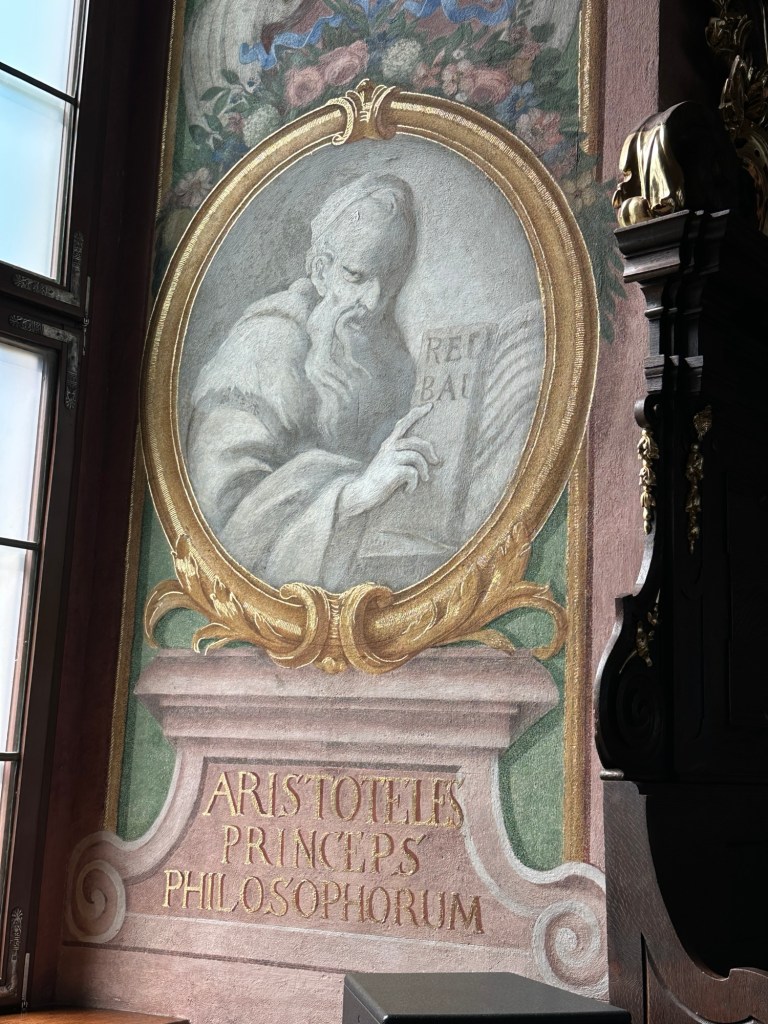
Aula Leopoldina is a late baroque hall that is adorned with many scholars by the windows. It is a very beautiful auditorium.

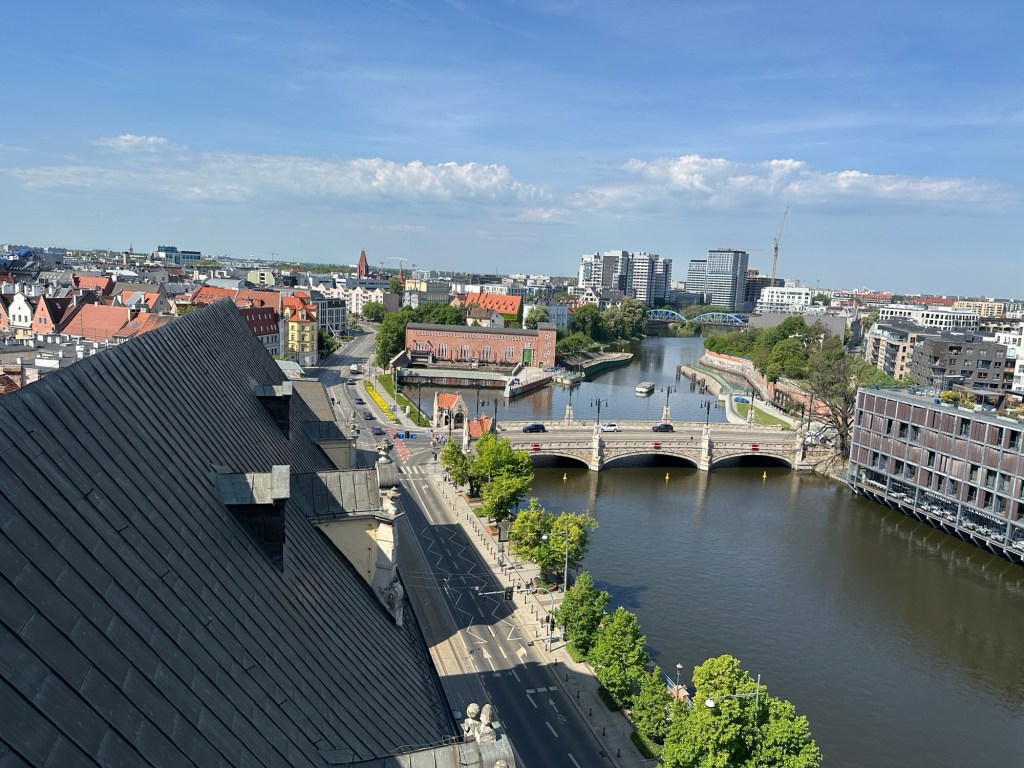
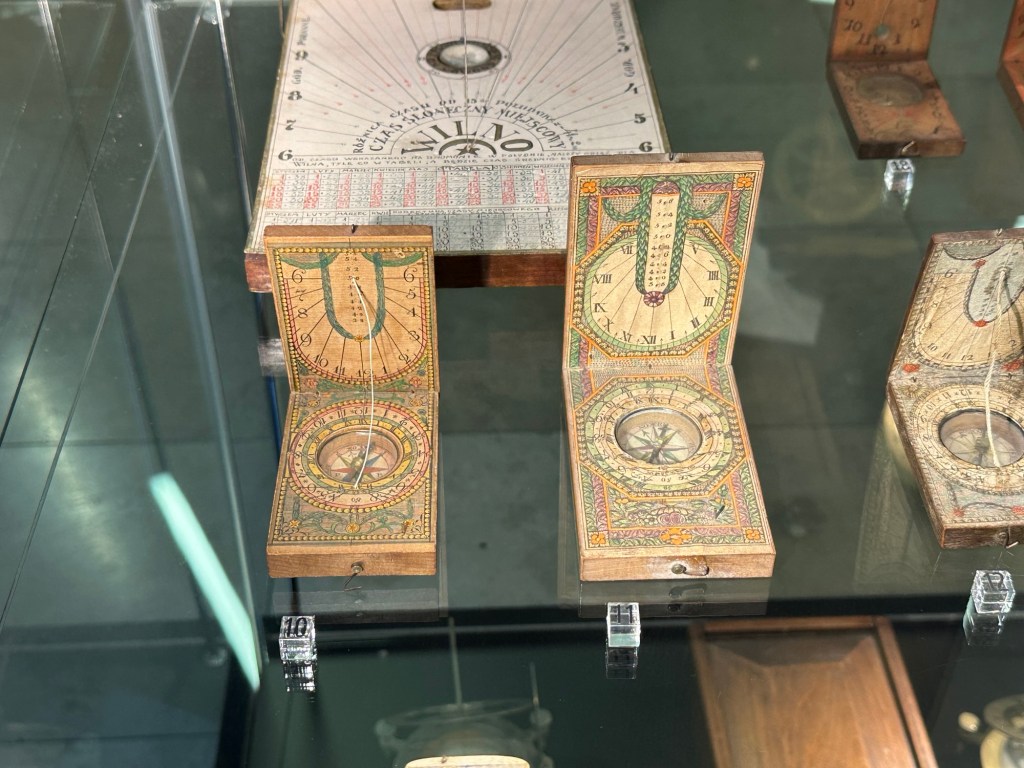
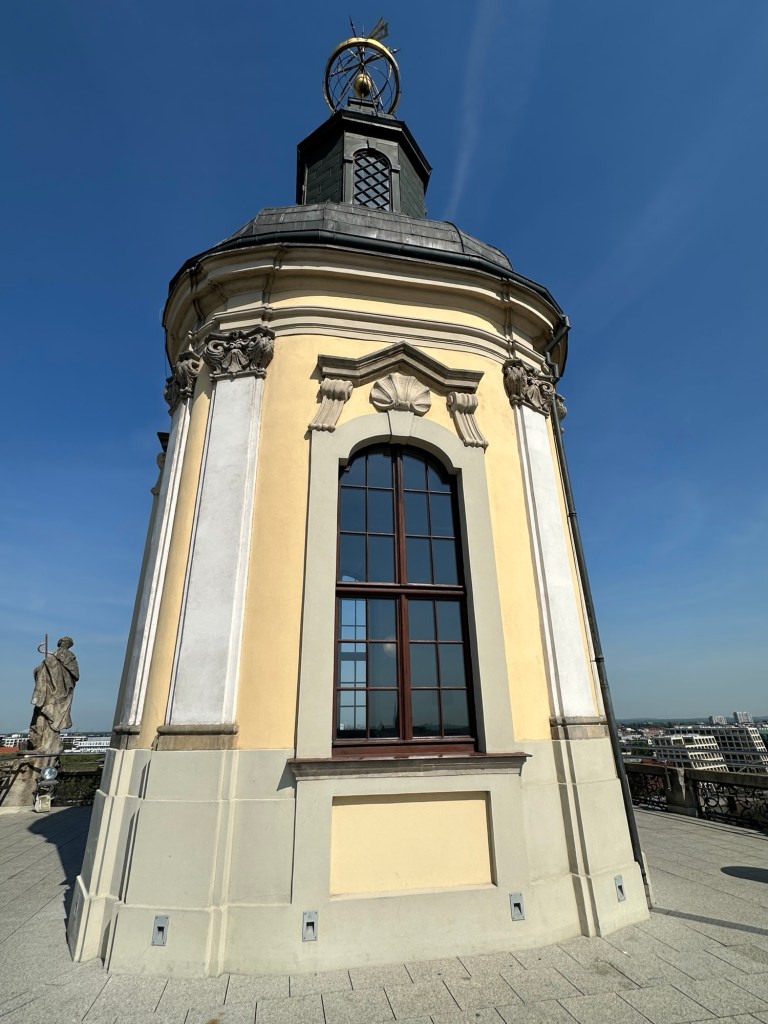
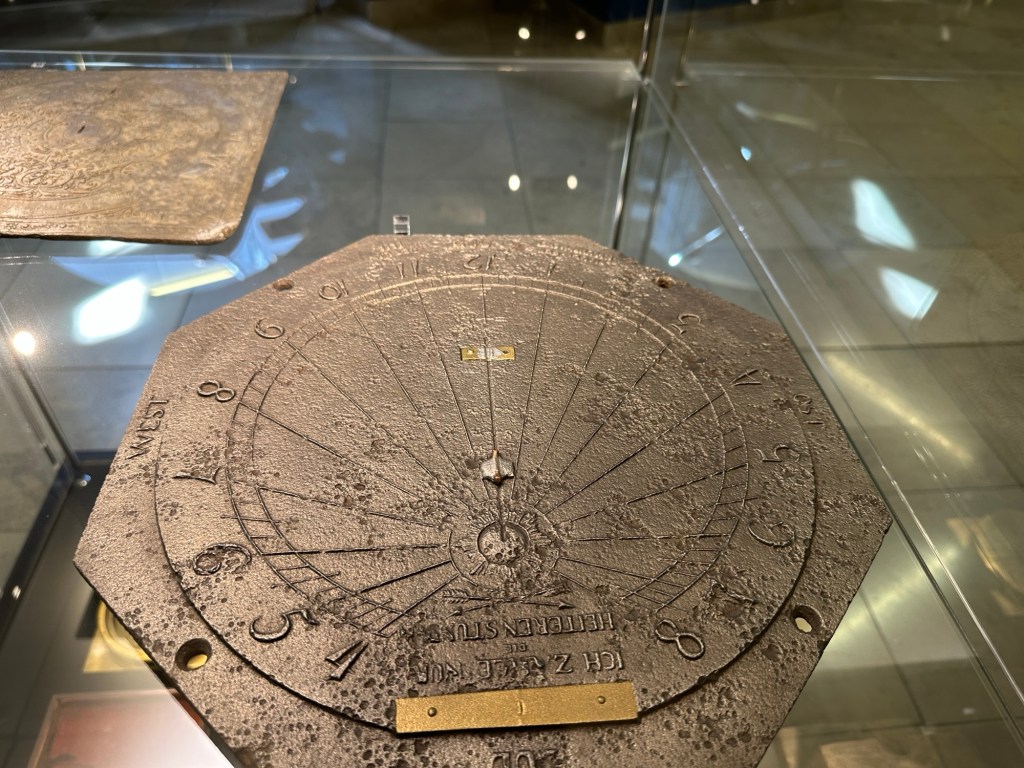
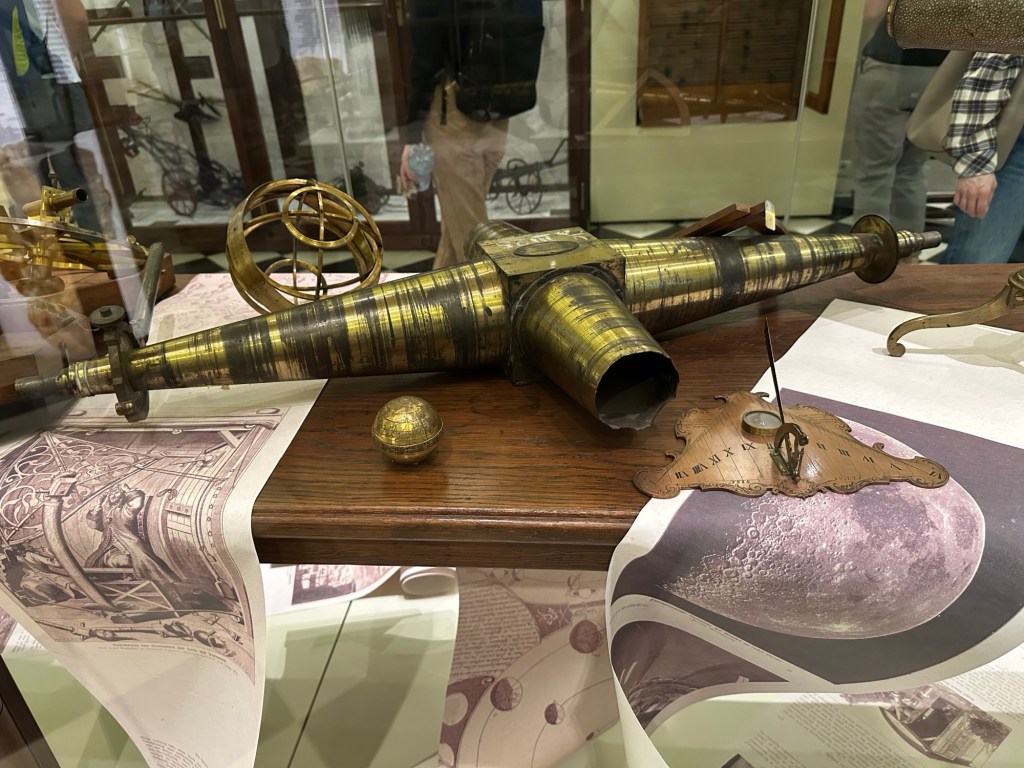
Next is the mathematical tower that houses many historic sundials and compasses and there is a tower that offers a view of the city.

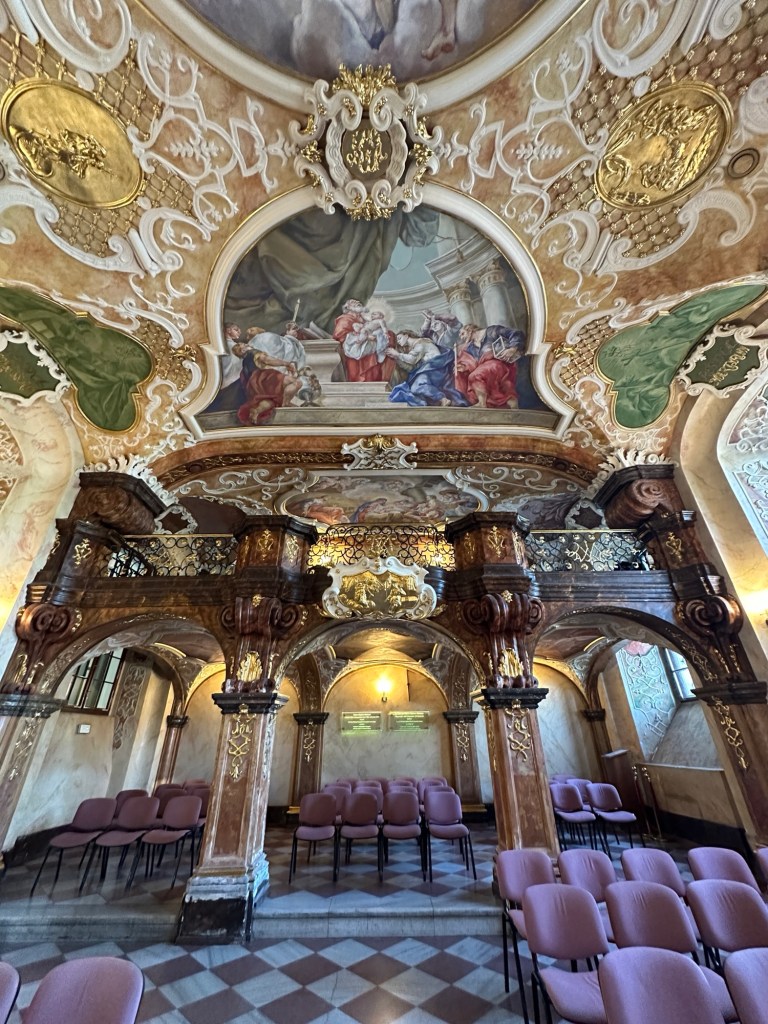
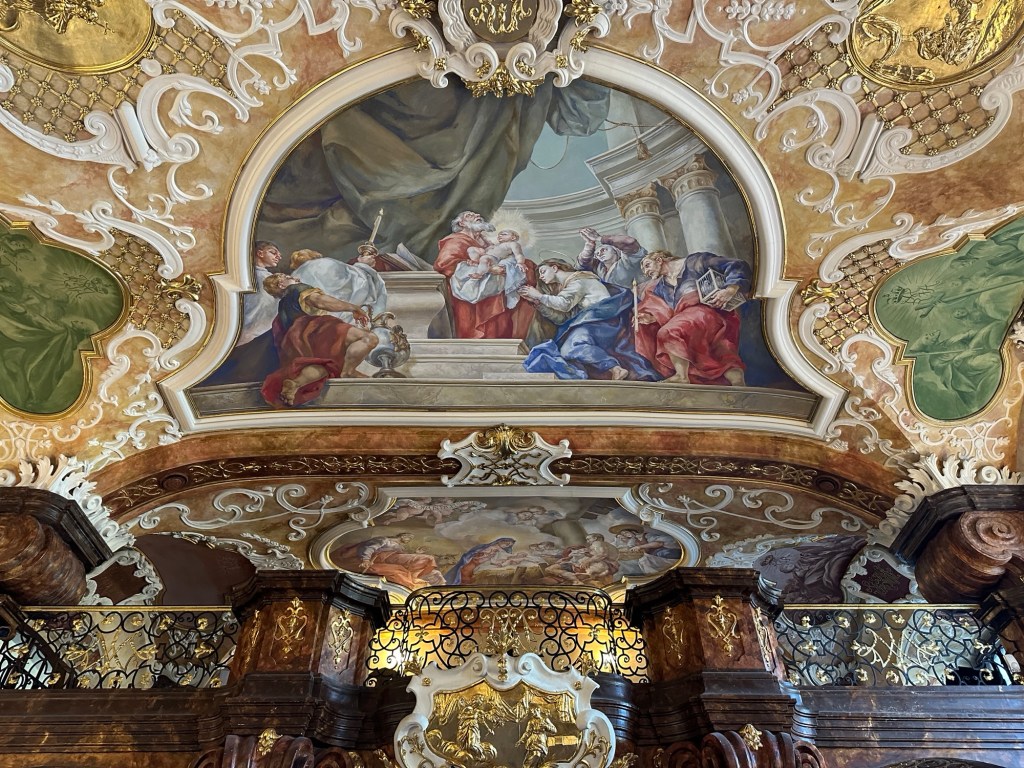
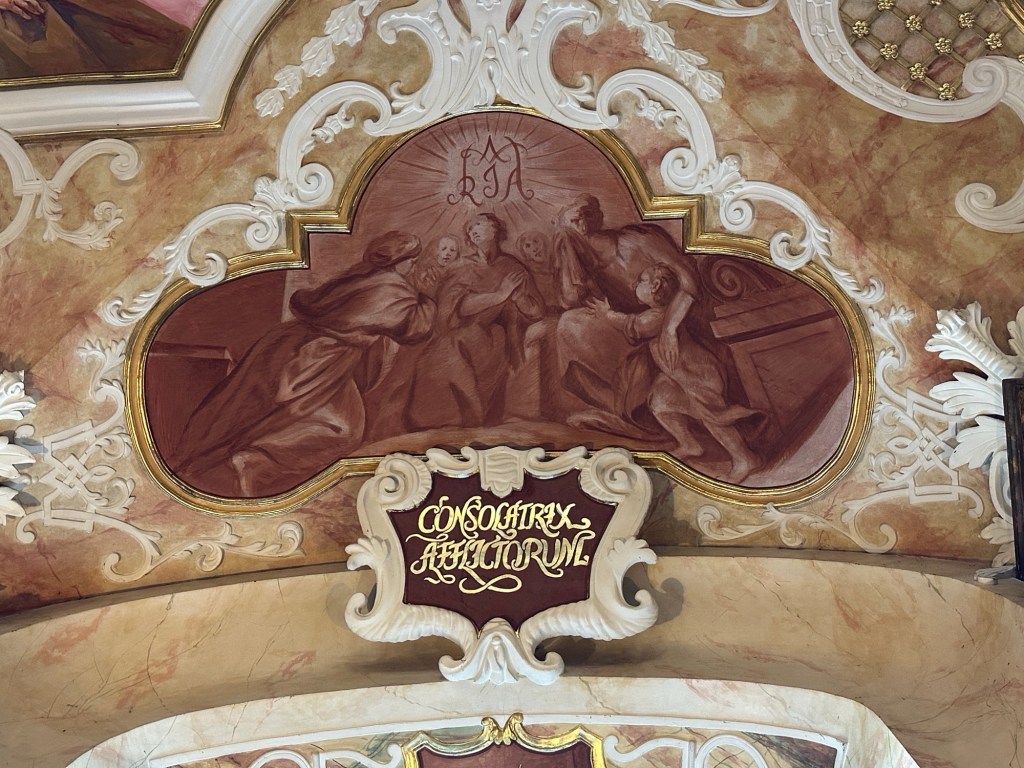
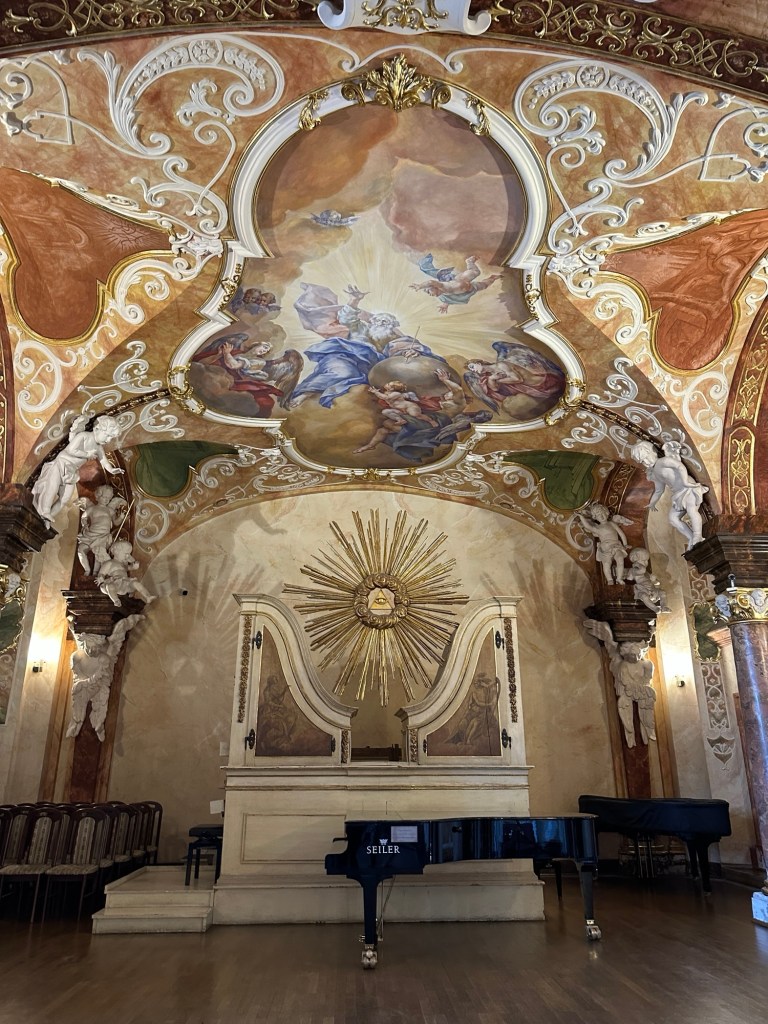
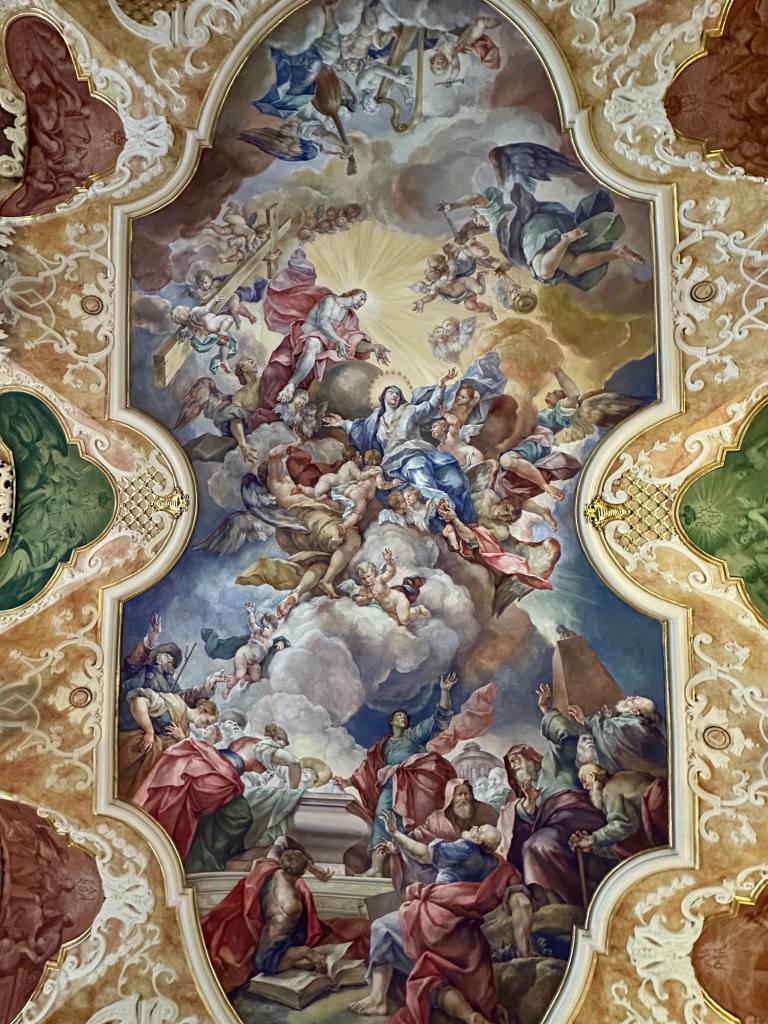
Next is the Oratorio Marianum another beautiful hall.

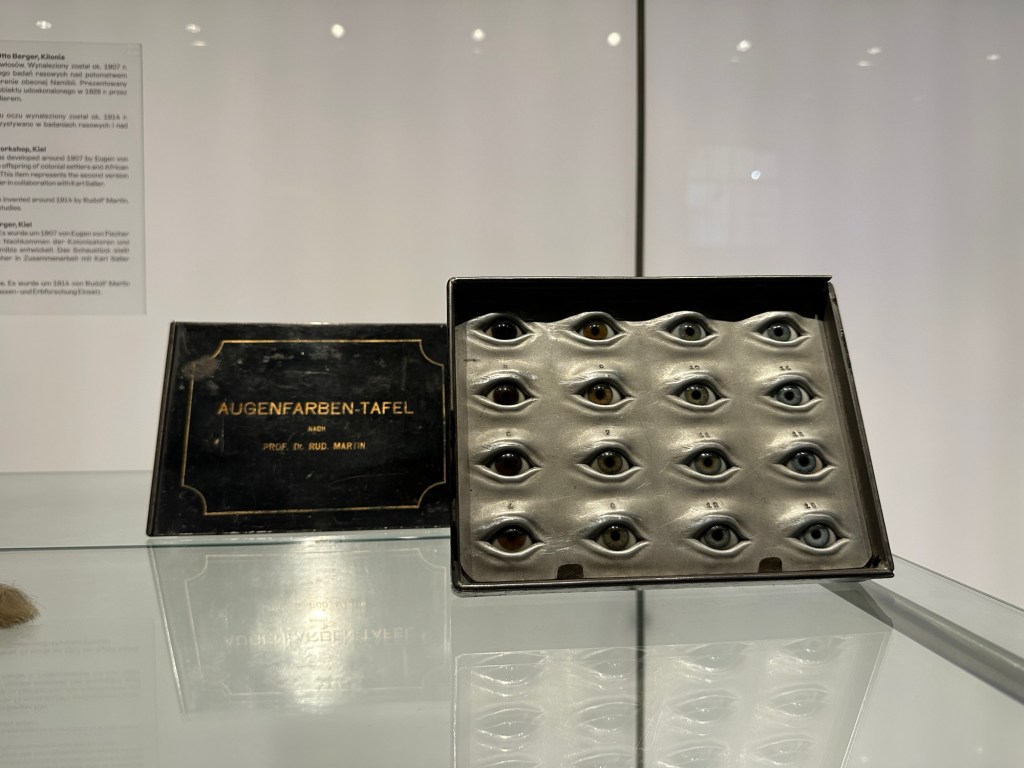
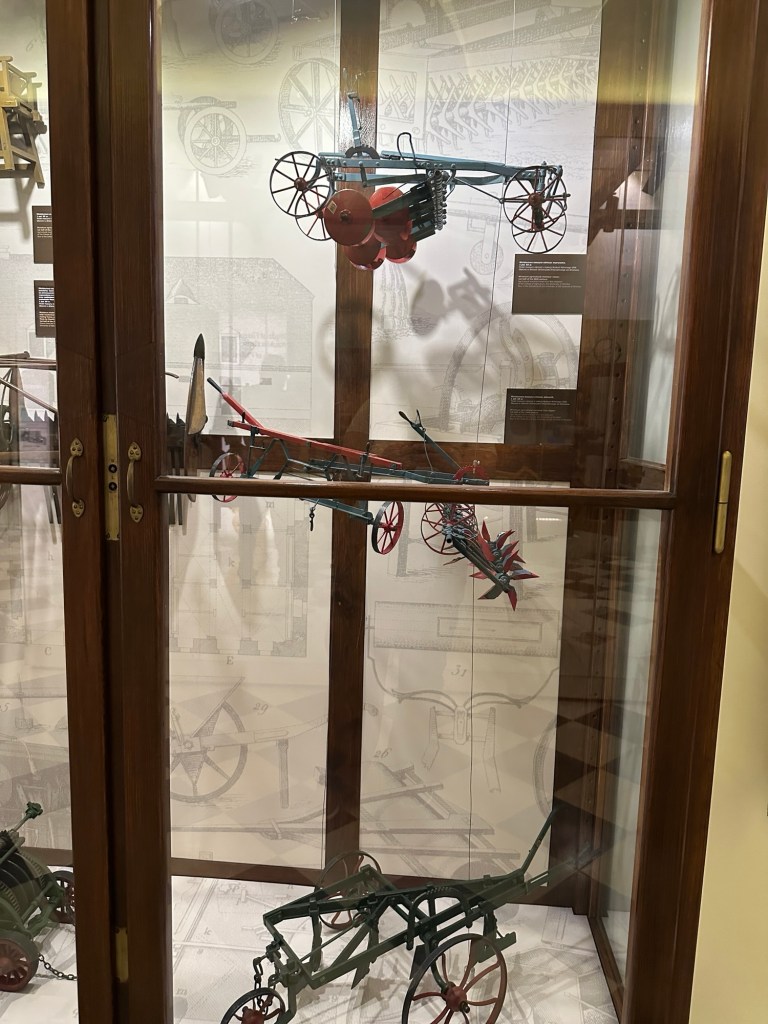
And finally a college museum that houses discoveries and studies.

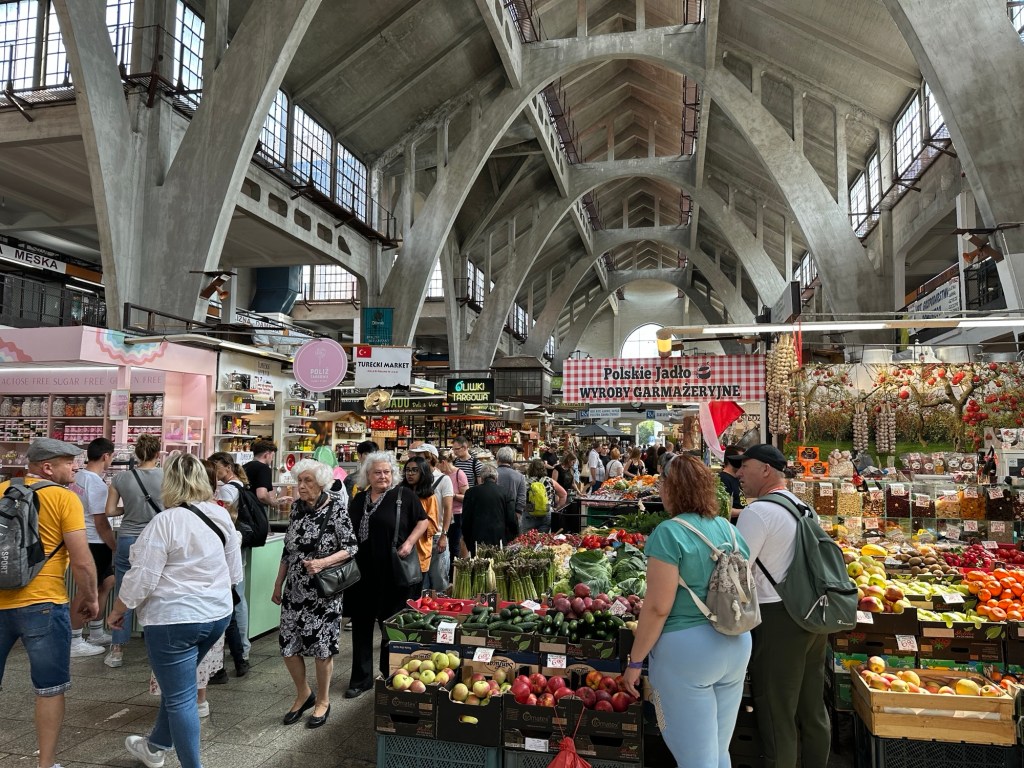
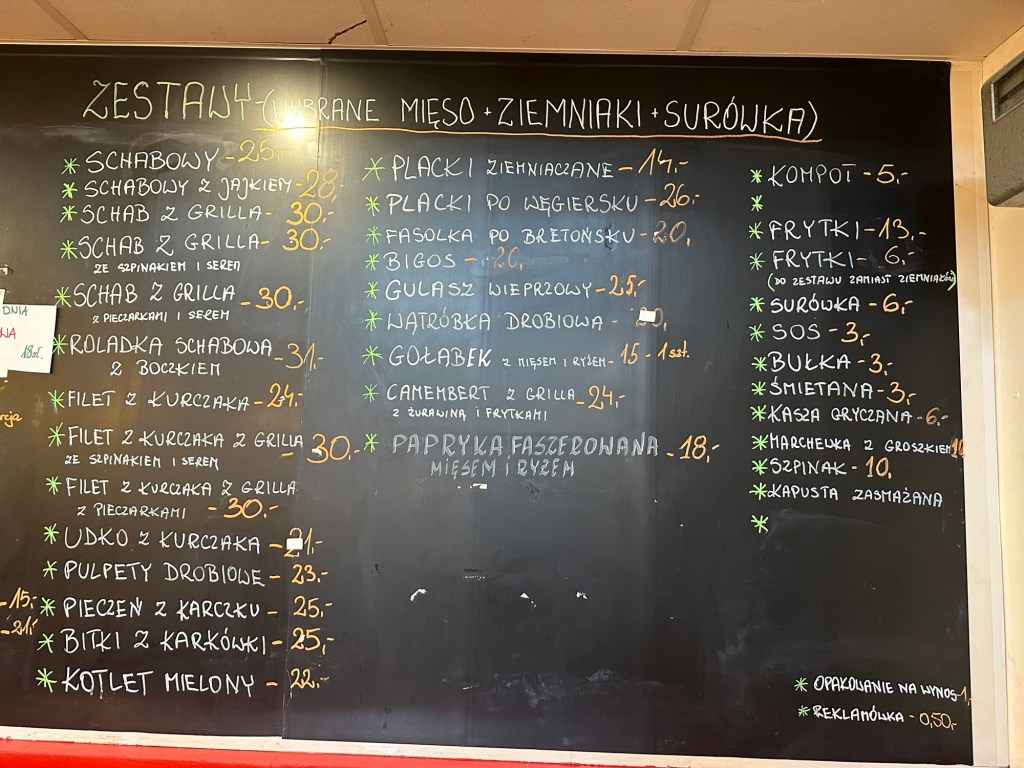
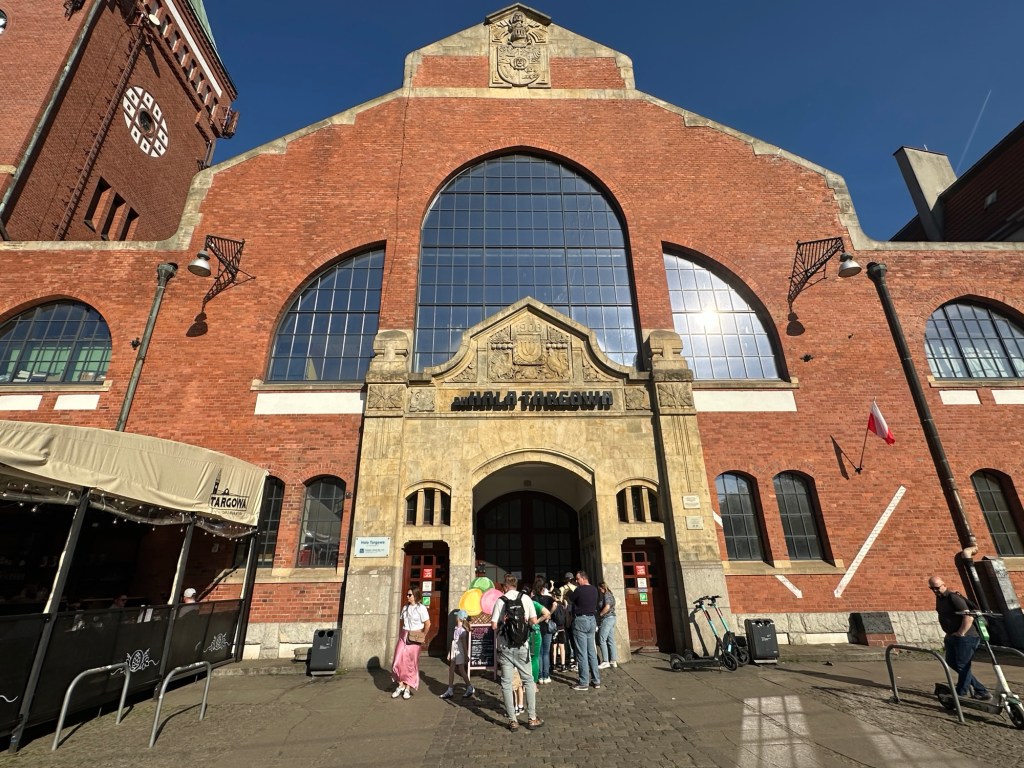
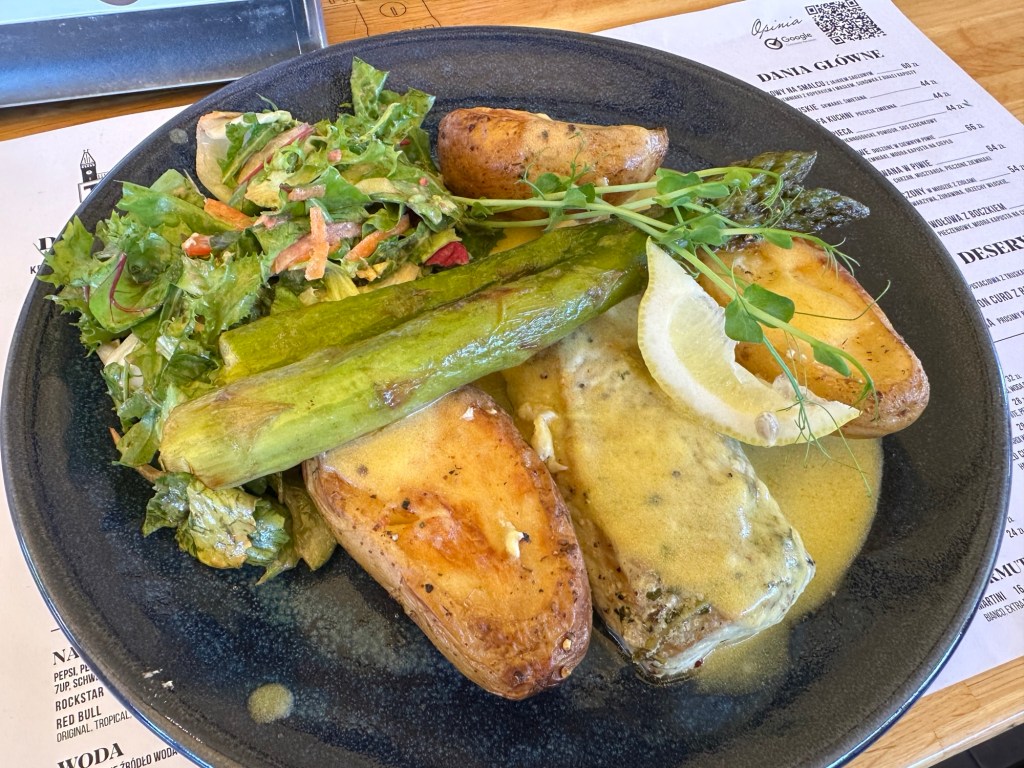
For lunch I planned to go Hala Targowa, a market, since it is the only day it is open while I am here (because my visit contains two holidays). I walk around the market and pick up some fruit for snacking but I actually end up eating at the restaurant outside the market. The meal I order there is just ok. I wanted some fish and vegetables. The vegetables hit the spot but the fish was not too exciting.

My lunch

Communism and Dwarves Tour

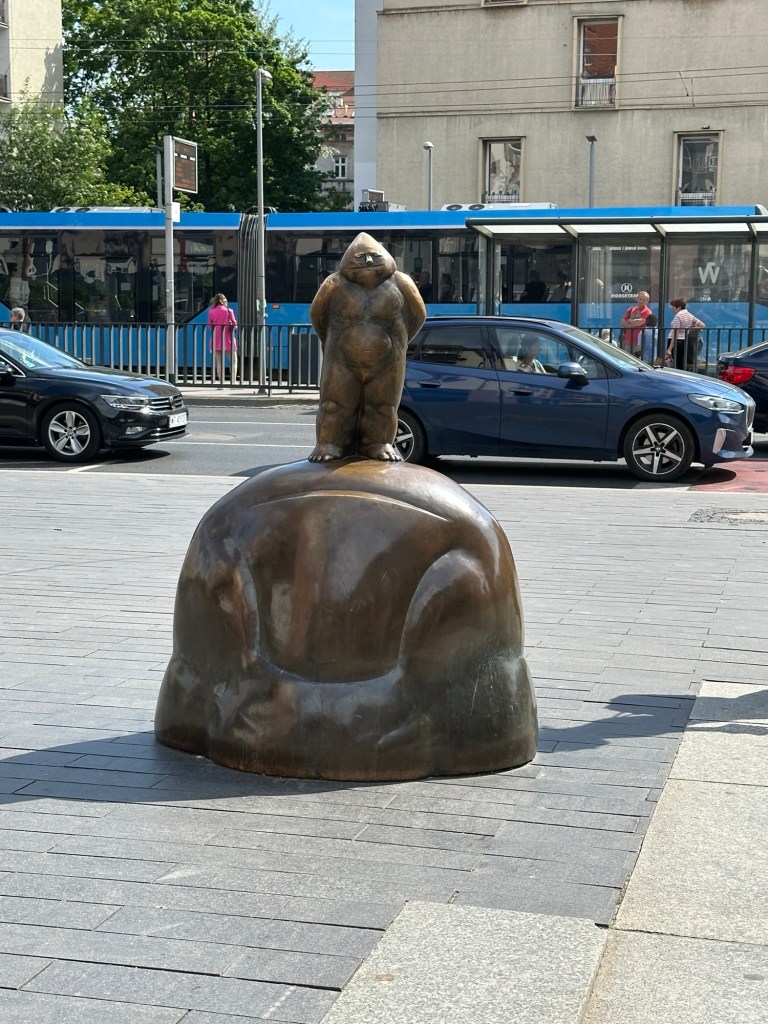
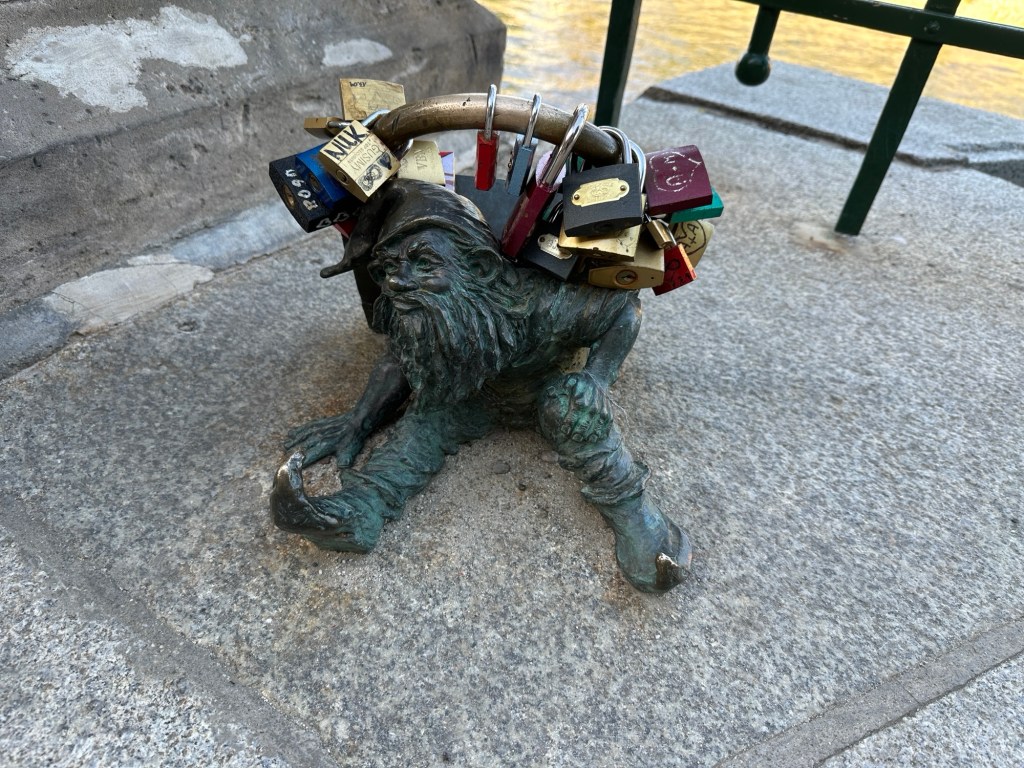
Back in the time of communism times dwarves began to appear on walls as a form of protest. Krasnale or dwarves in Polish sounds and looks like the color red in Russian – krasnyi. Red also represents the red army of the Soviet Union, the occupiers of Poland at the time. Eventually communism failed in Poland and it became an independent nation again but they lived under Soviet communist life almost 40 years after the end of world war 2.

Papa Smurf, represents a middle finger to communism

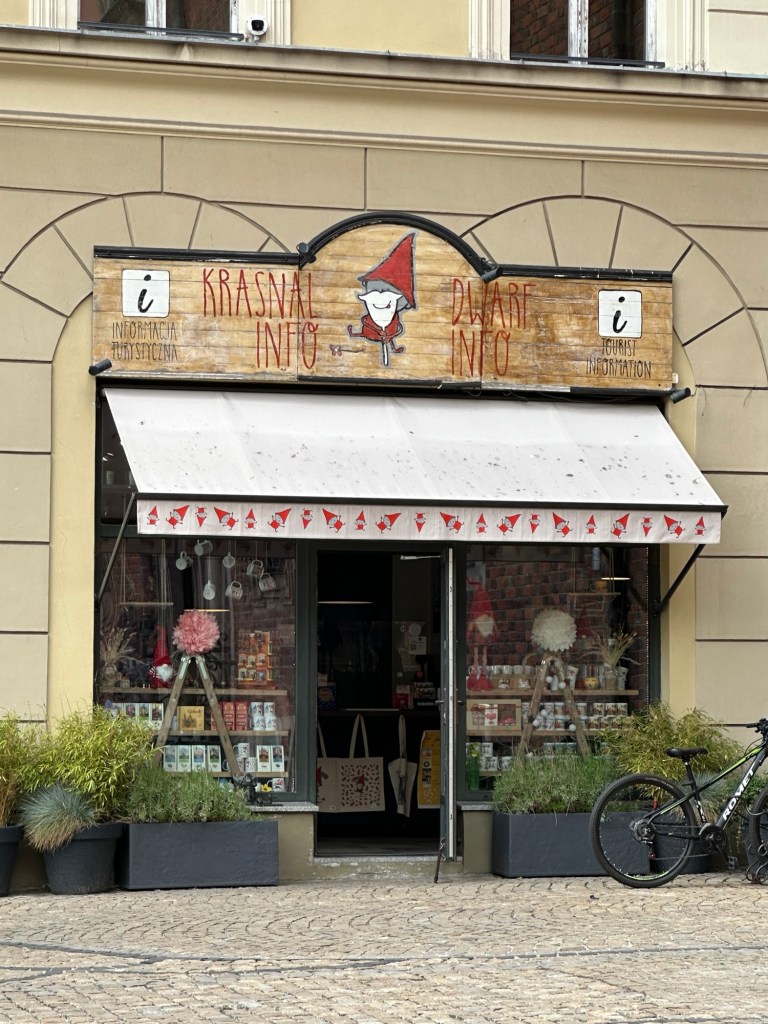
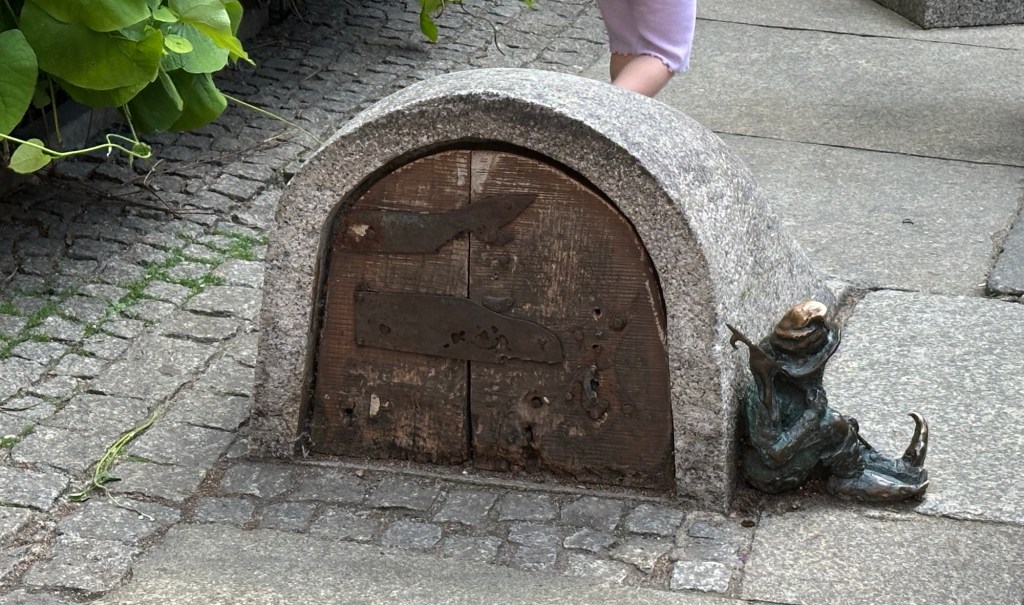
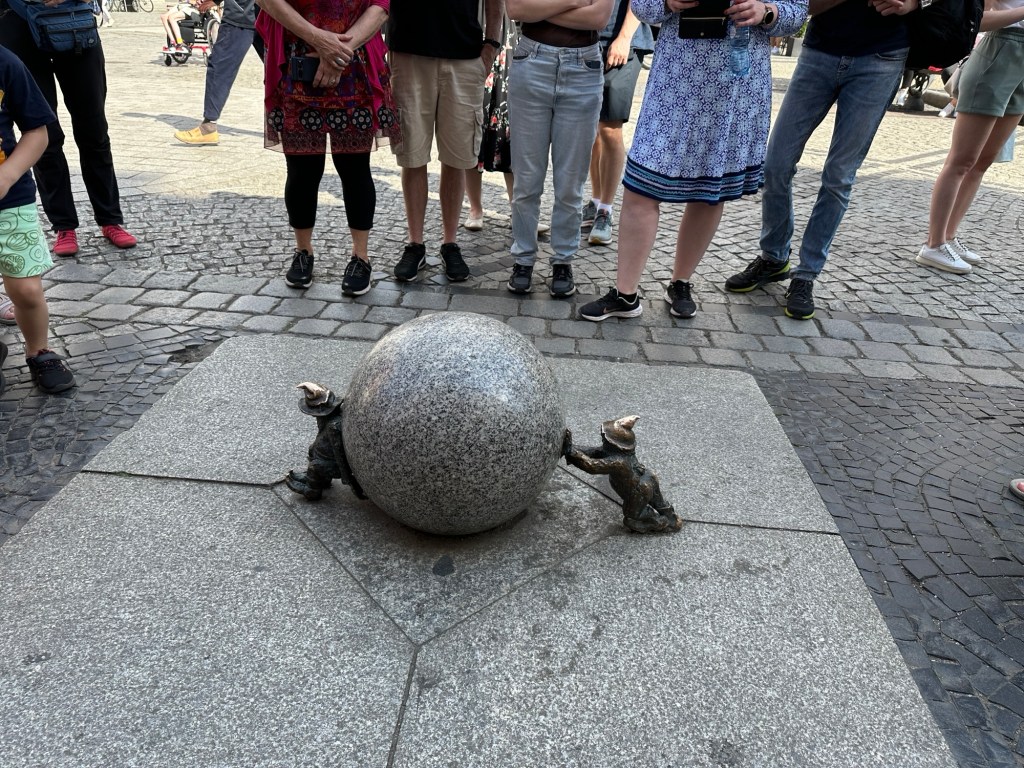
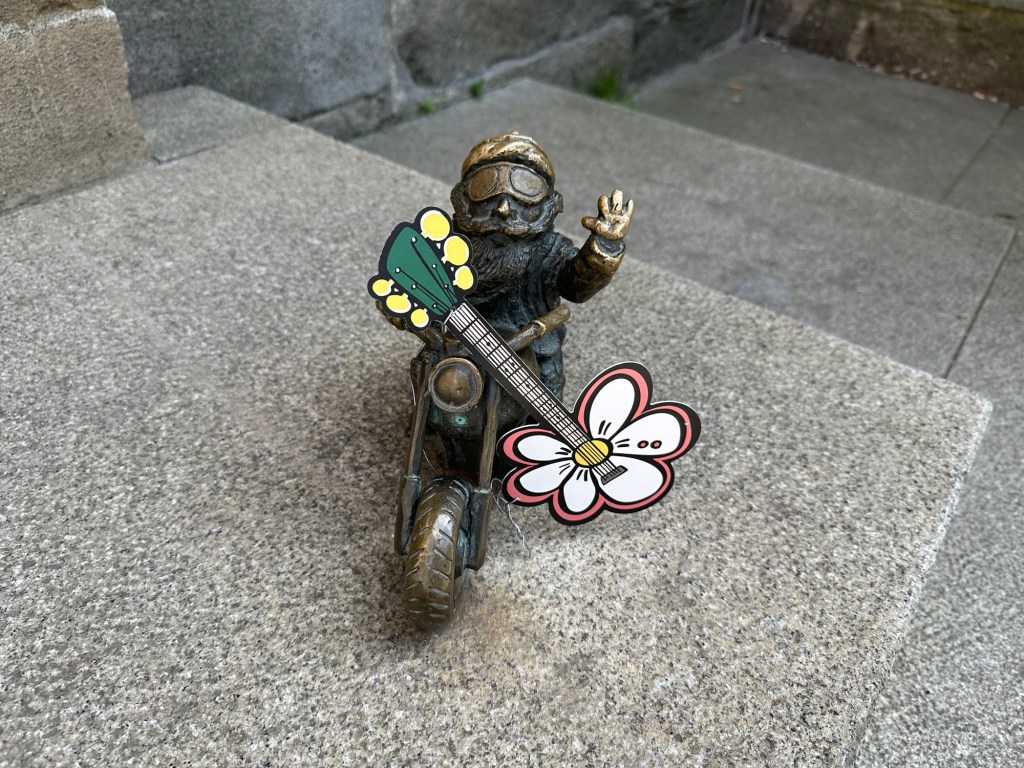
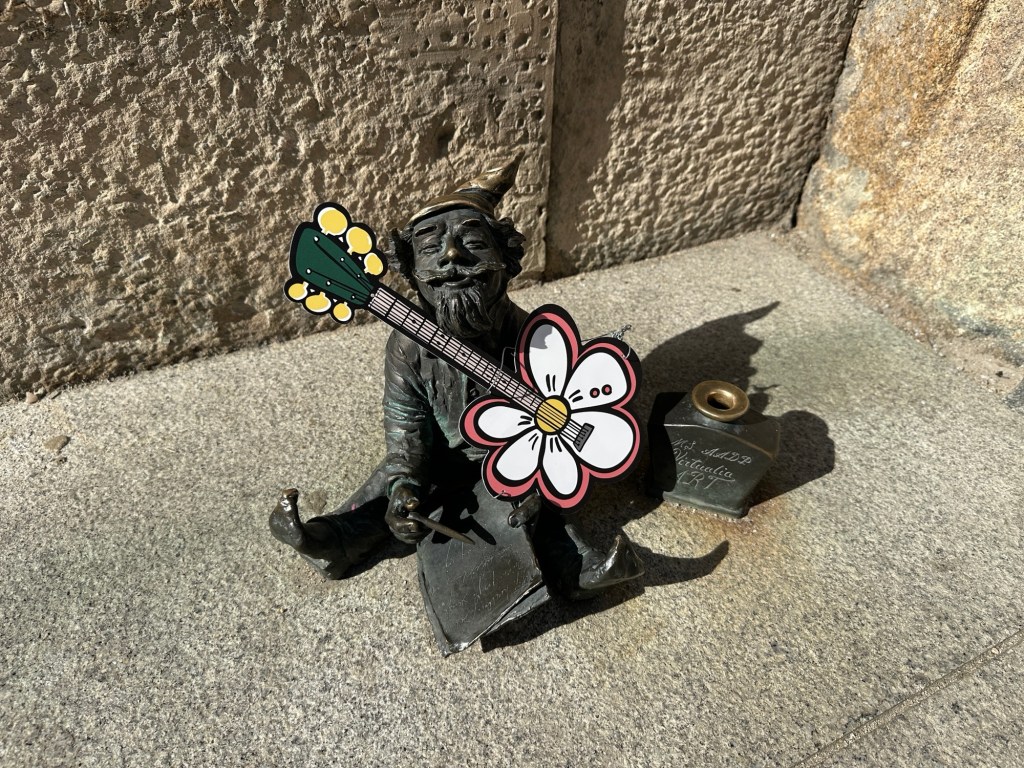
Dwarves became the official symbol of Wroclaw in 2005 (like dragon is symbol of Krakow). Now there are like over a thousand dwarves in town. Some are public purchase by the city and some are private by businesses. Some even have gps installed in case they are stolen. I feel like many of them are just advertisements for nearby businesses. They are charming though. A great activity to do with kids (or kids at heart) is to get a dwarf map and find them all. There is a place in the main square to get a map and play the game.

During our tour we hear lots of stories about the Orange Alternative, a student group protesting communism in a non-violent way. They come up with very clever ways to protest while simultaneously pretending they werenโ€™t protesting. The more I learn about Poland the more I learn how effective they were in protesting communism and union forming (later in Gdansk).

I meet a nice USA expat during my tour who is living in Germany but drove to Poland for the long weekend. I wish I wasnโ€™t in such a hurry to get to my evening plans since I rarely meet solo travelers in my age range. They are usually way younger than I or way older than I.

After my tour I take a few minutes to rest in my room before heading to Centennial Hall a couple miles away. Google is not giving me public transportation options but I remember there is a tram from down the street that is supposed to head there so I go hoping for the best. I see a tram 4 going to the zoo and I know the zoo is next door so I hop on. Luckily I am correct. I take this same tram back later in the evening.

Tram 4 to the rescue

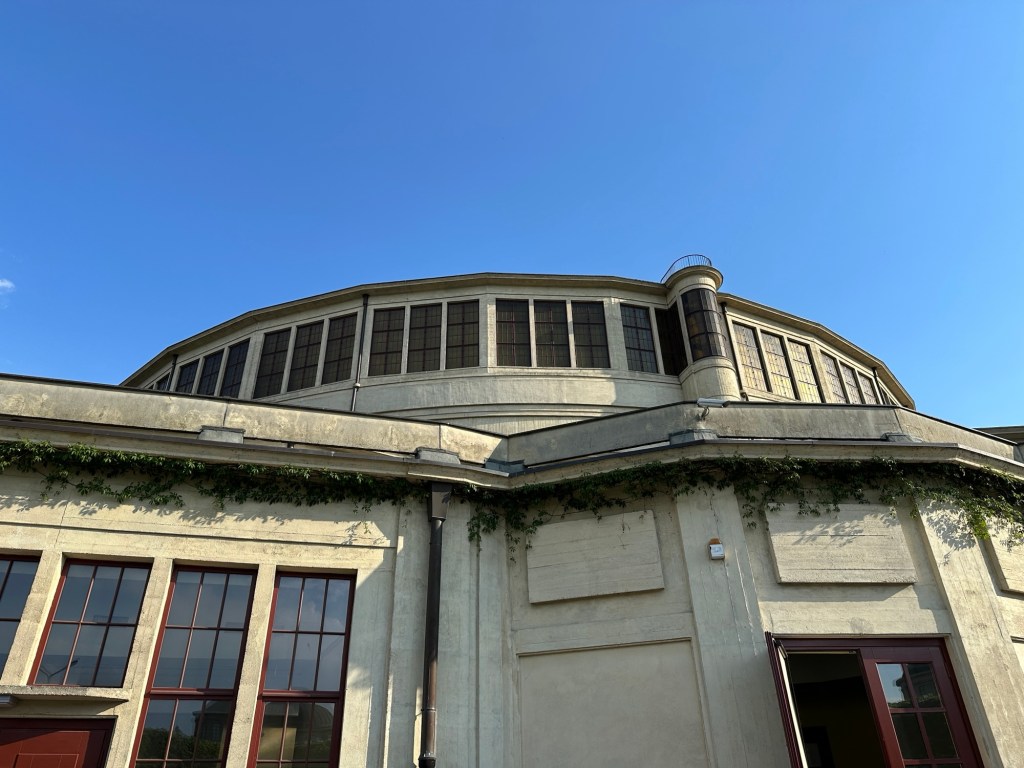
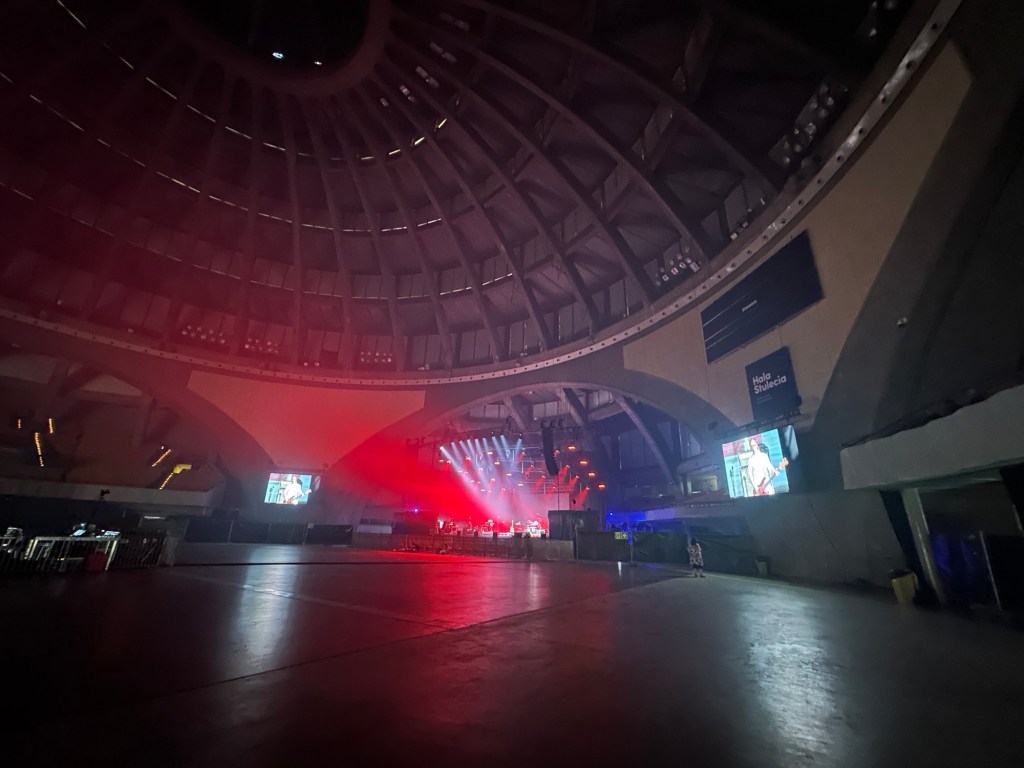
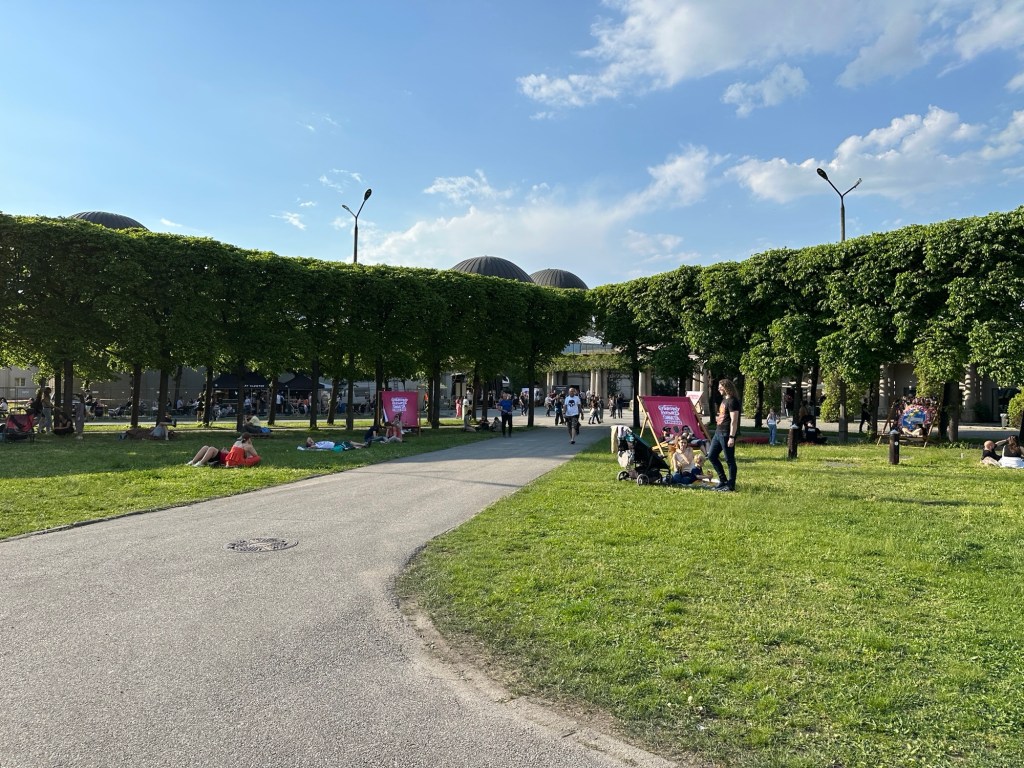
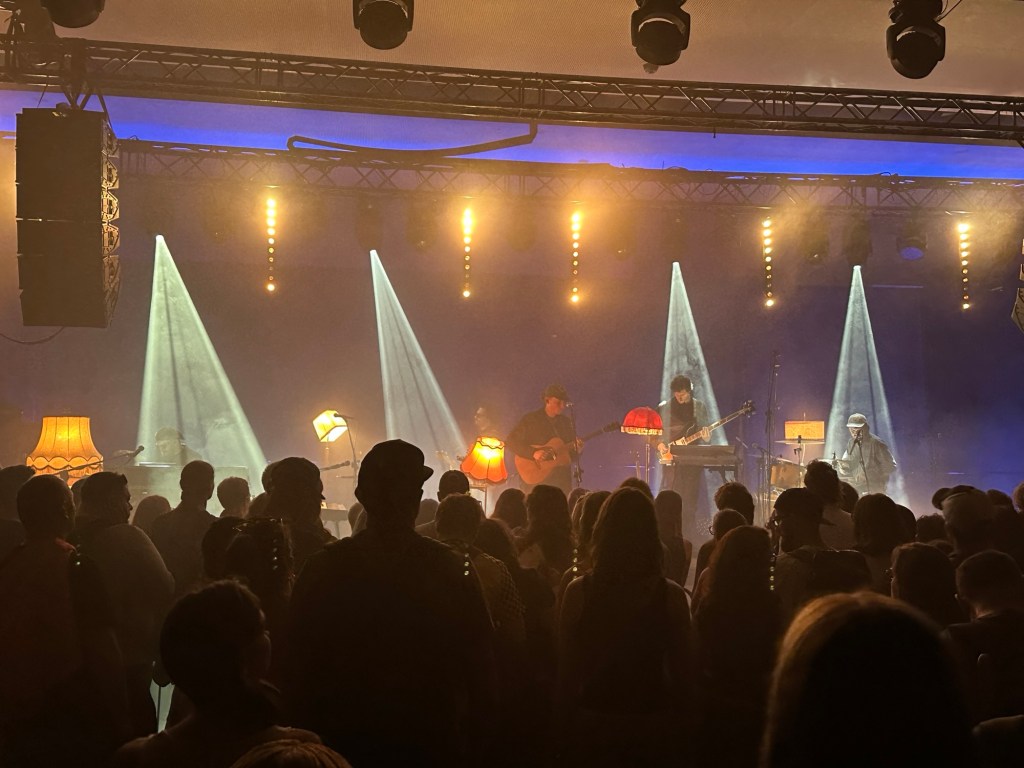
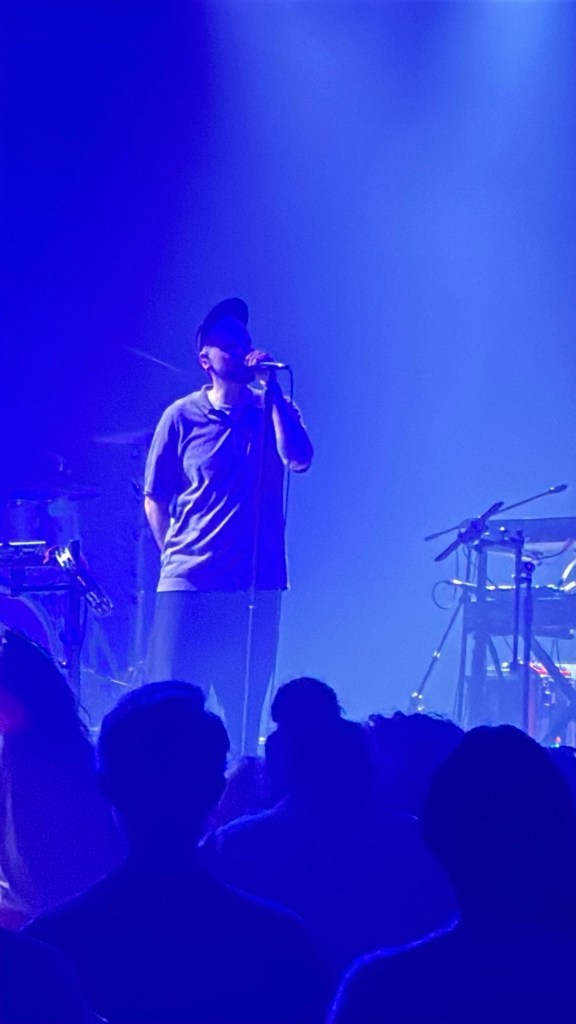
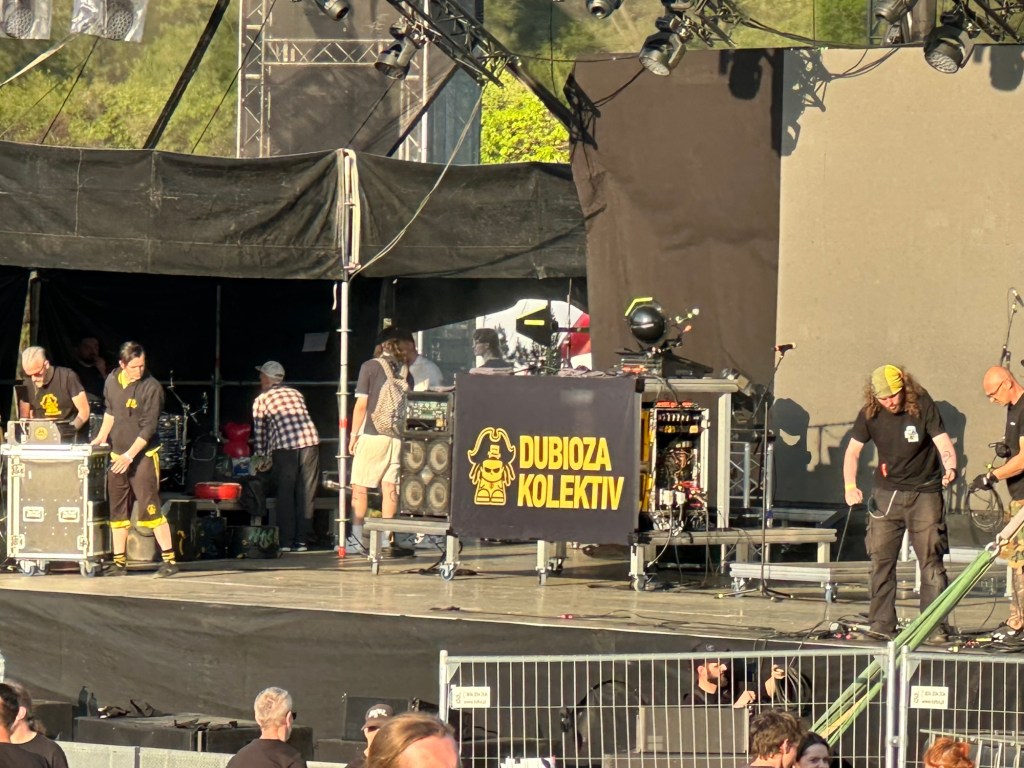
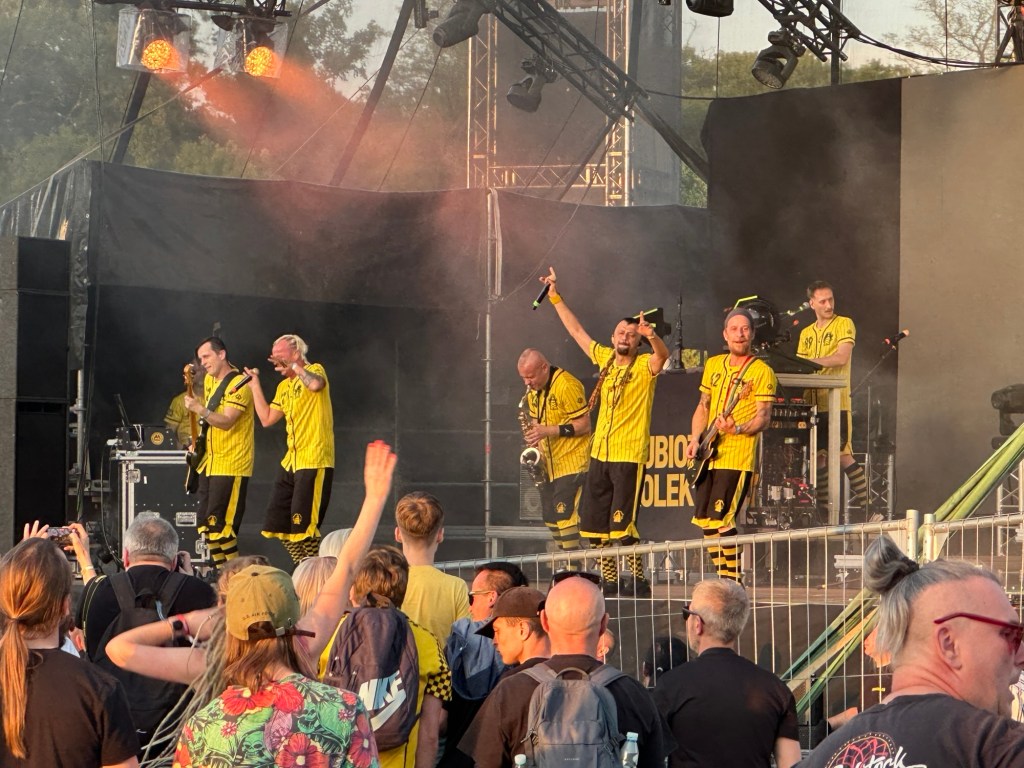
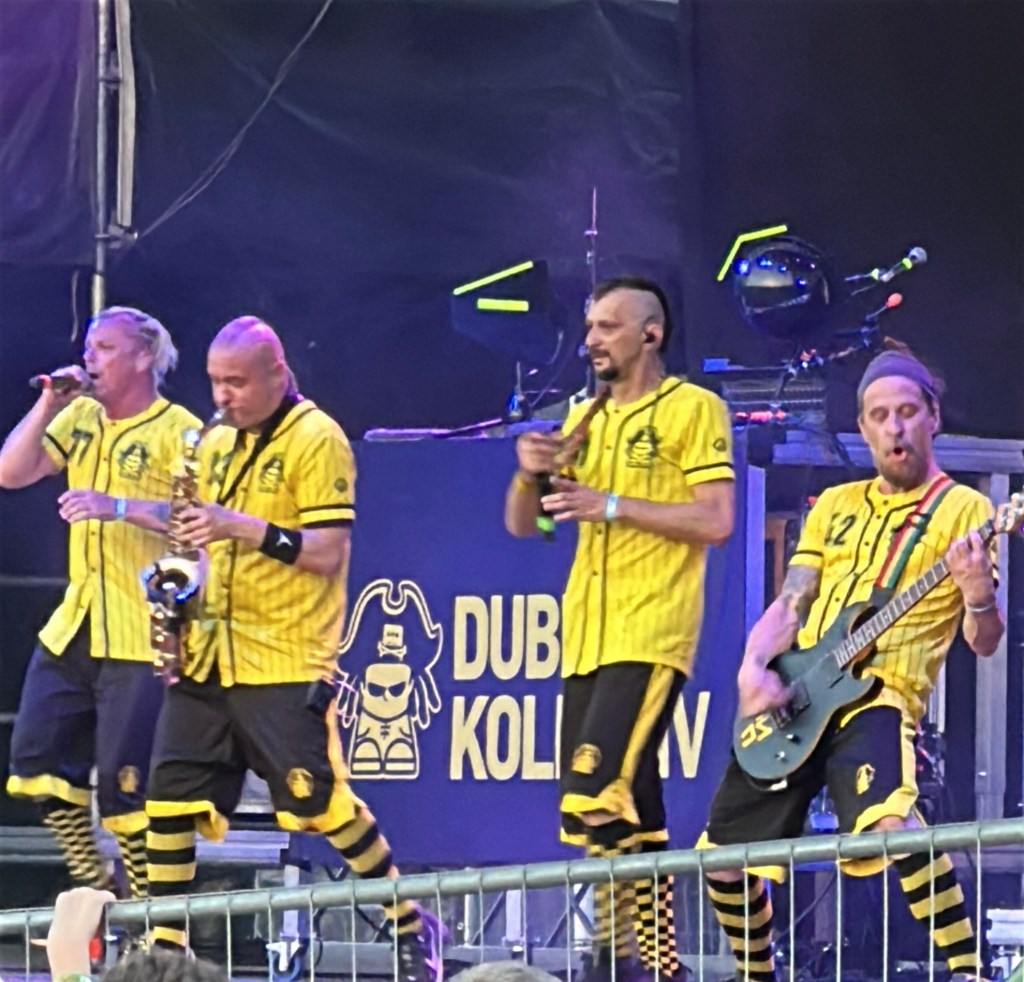
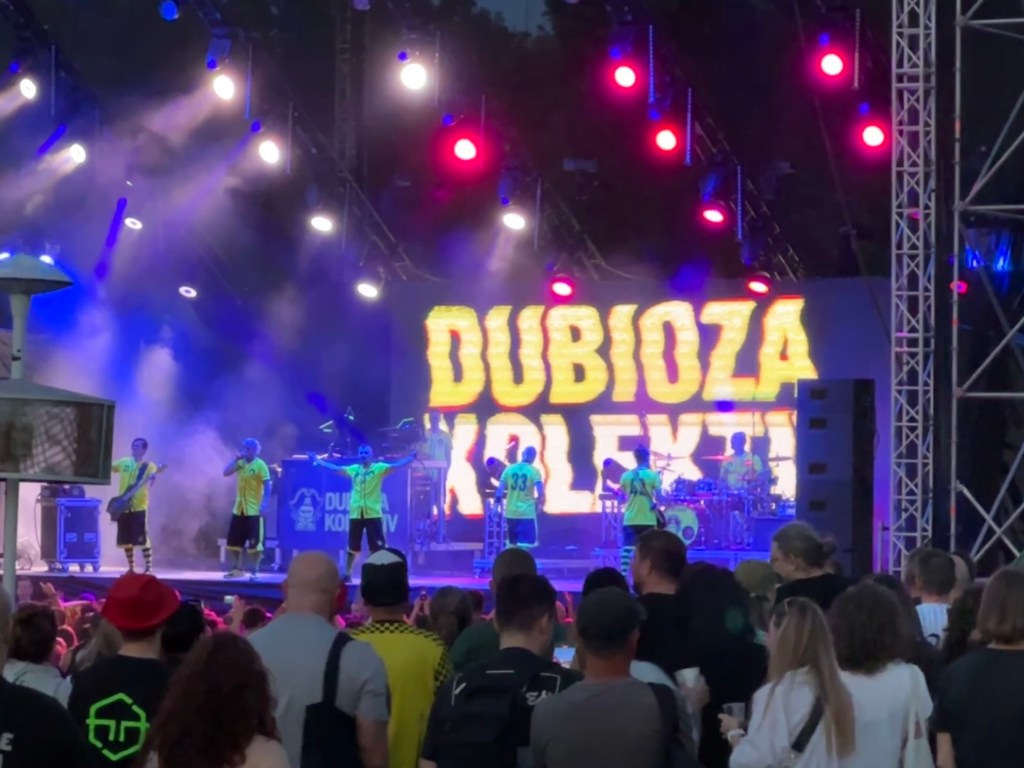
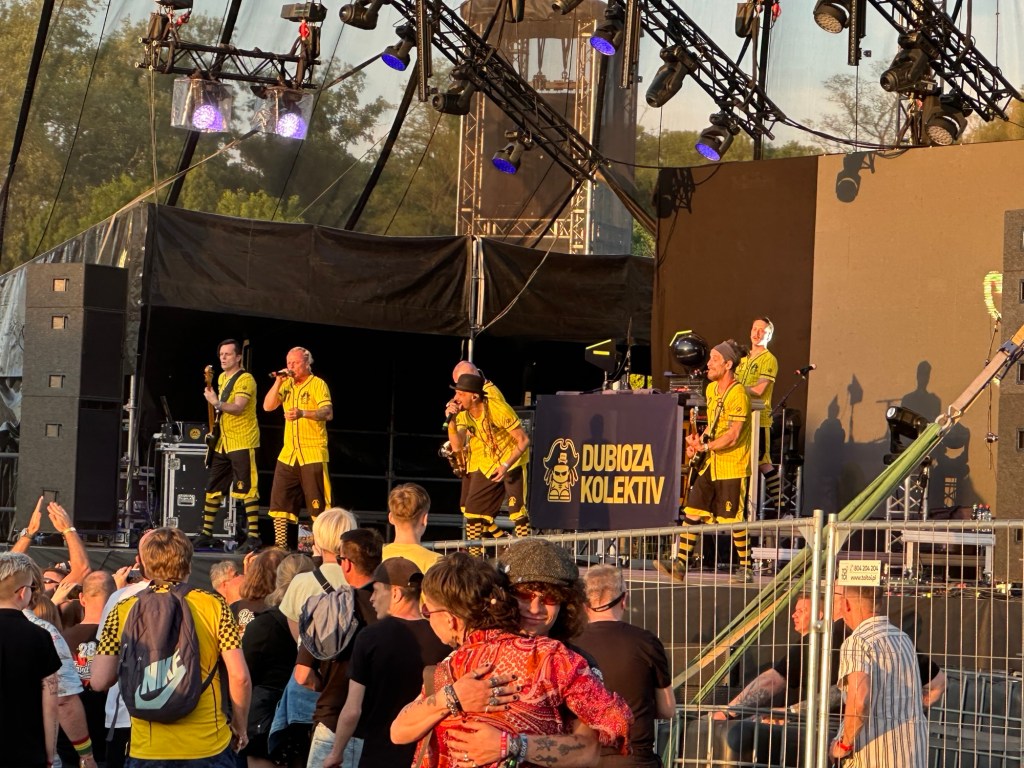
Centennial Hall is on my itinerary to see because it is on the UNESCO list but it is closed for viewing the whole time I am in town. But now I am actually here for a musical festival where I can see shows in the hall. The festival 3-Majรณwce is a three day music festival that happens every year around Constitution Day which is May 3. I learned about this festival when I was researching parades or street events that may be happening this weekend. I look at the list of performances and most of them are unfamiliar to me but one jumps out on the second day DUBIOZA KOLEKTIV. Dubioza Kolektiv is a Balkan ska band that I first learned about a couple years ago when I visited Bosnia and Herzegovina. I subsequently heard them mentioned in other Balkan countries when I was touring the region. Even though many of their songs have a political message they are fun to listen to and they make you want to dance. When I saw them on the schedule I knew I had to go – who knows if Iโ€™d ever have a chance again. I think theyโ€™ve only rarely played shows in the USA. I am very glad I made myself go. The band is incredibly fun and has so much energy. I am tired but I am determined to stay to the end of their show.

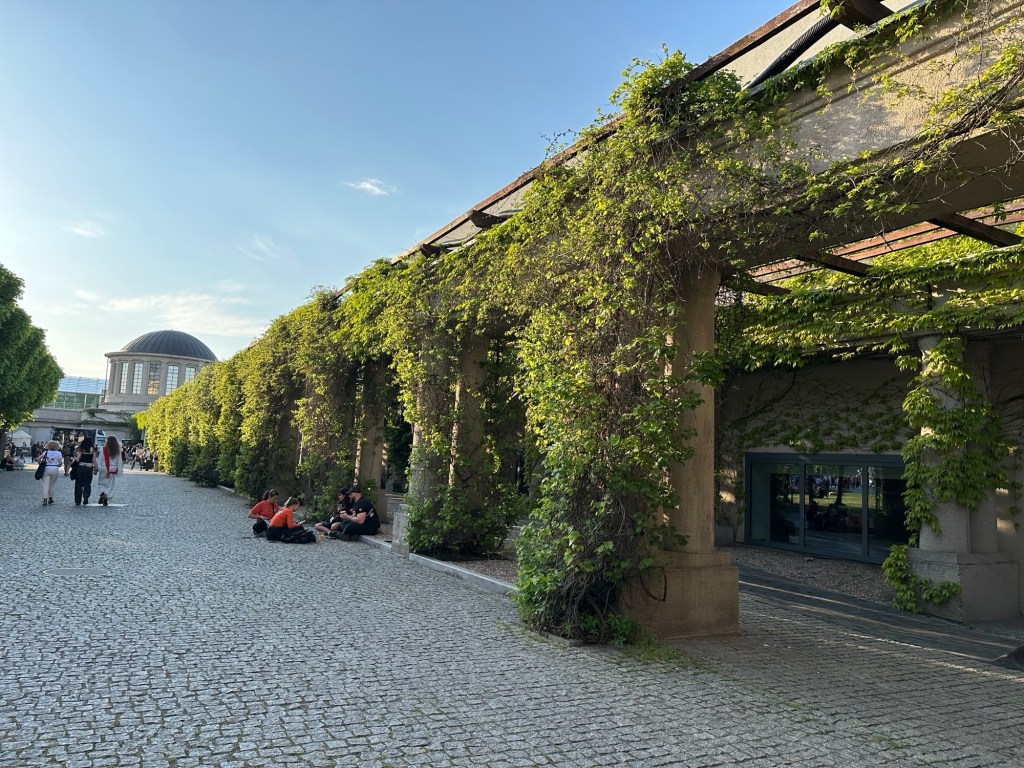
Centennial Hall, a unesco sight

I am in the festival without a wrist band like everyone else has. I had in advance purchased a ticket but I canโ€™t read polish so I missed a sign at the entrance I think. No one stopped me from entering, in fact I even had a bag check. Also no one kicks me out so I am not going to stress about it unless anyone approaches me.

Oh look that where I get my wrist band as I leave for the night.

I check out a couple of other bands while I am there but I missed most of the other headliners because I donโ€™t have it in me to stay for a late night. I do get to see the inside of the centennial hall but it is dark inside and all the windows at the top were covered so it isnโ€™t exactly the same as if I came as just a tourist. Itโ€™s still an interesting concert hall though.

The highlight for me is definitely Dubioza Kolektiv.

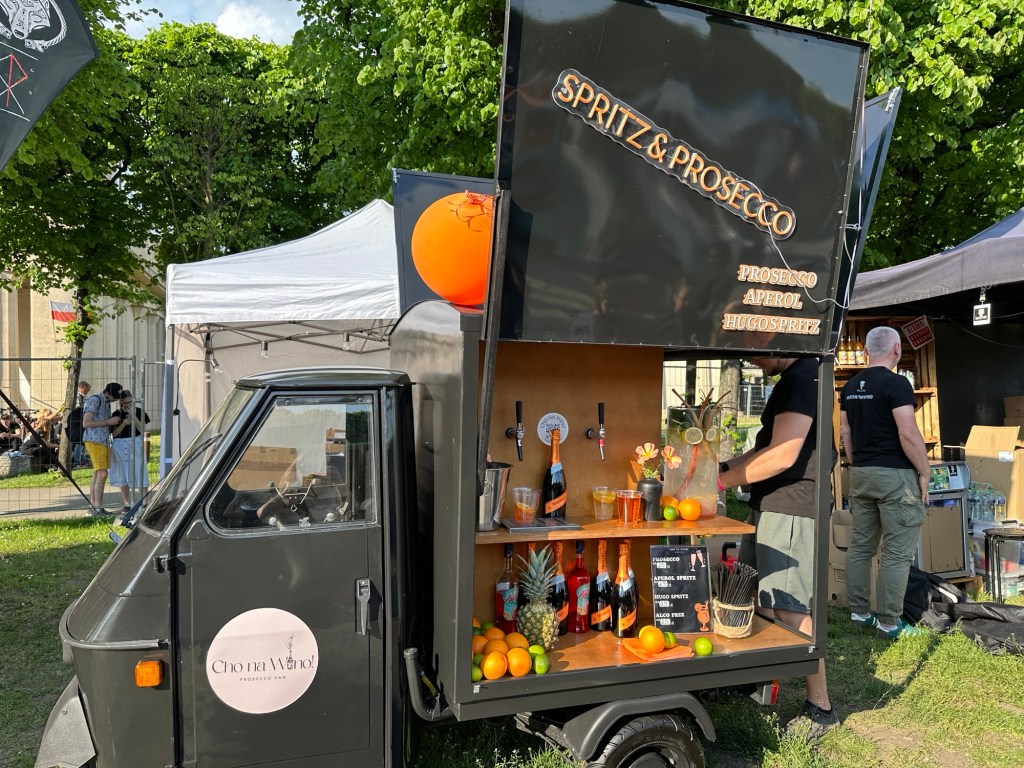
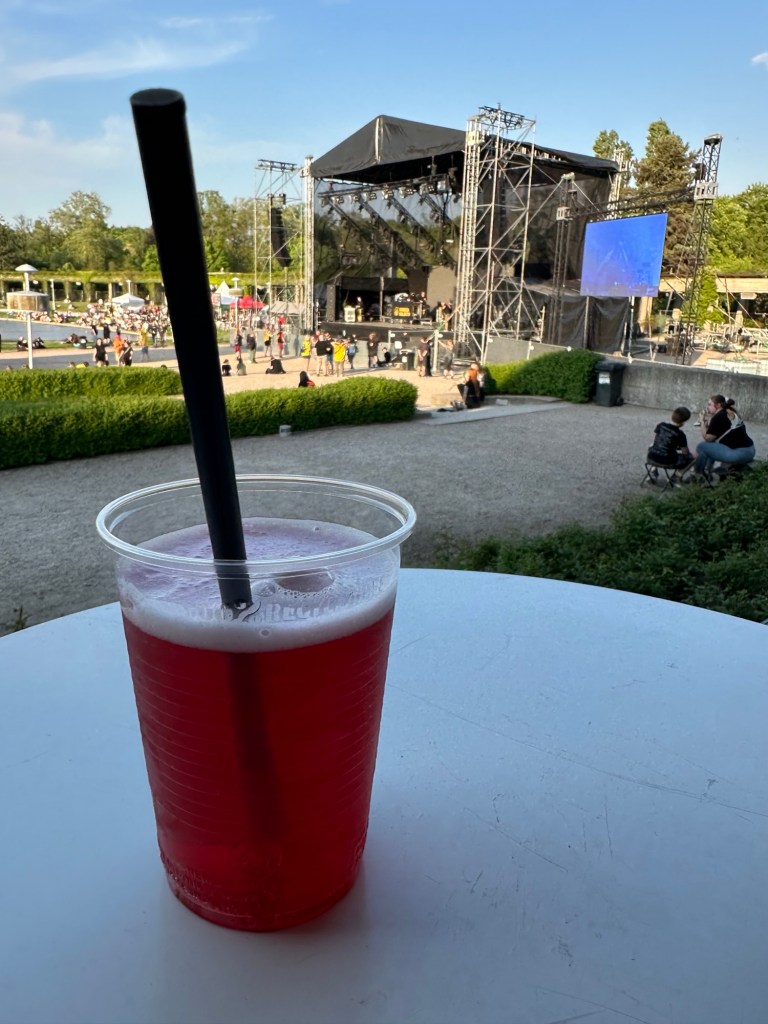
Itโ€™s a good night. I even try a raspberry syrup beer because it impossible to get anything else alcohol related unless you are in this one fenced in area. I am digging the syrup beer but I donโ€™t finish it because I am afraid it will make me sick. I am pressing my luck too much lately with these beers. My tram 4 takes me back to my hotel tonight and I sleep well after the fun day.

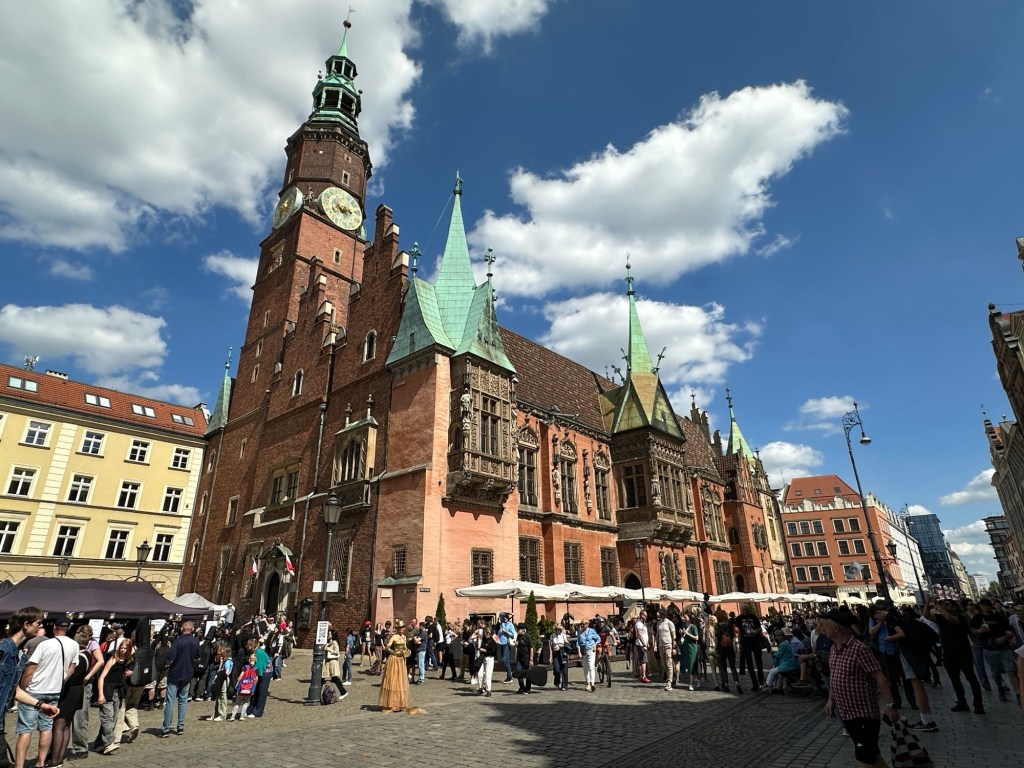
Wrocล‚aw

Witches Bridge

The train here is packed. I am glad I have a reserved seat in first class. As I walk to my hotel there are tour groups with rolling luggage and many people carrying guitar cases. I am confused at first then I remember there is a big punk festival this weekend for the holidays.

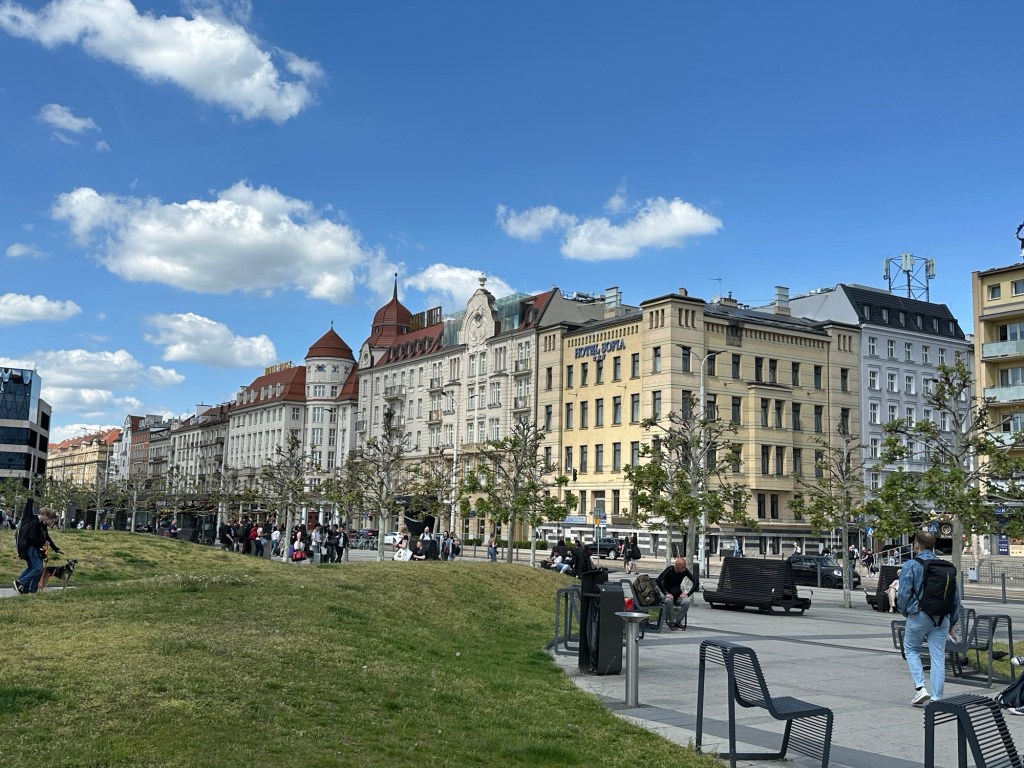
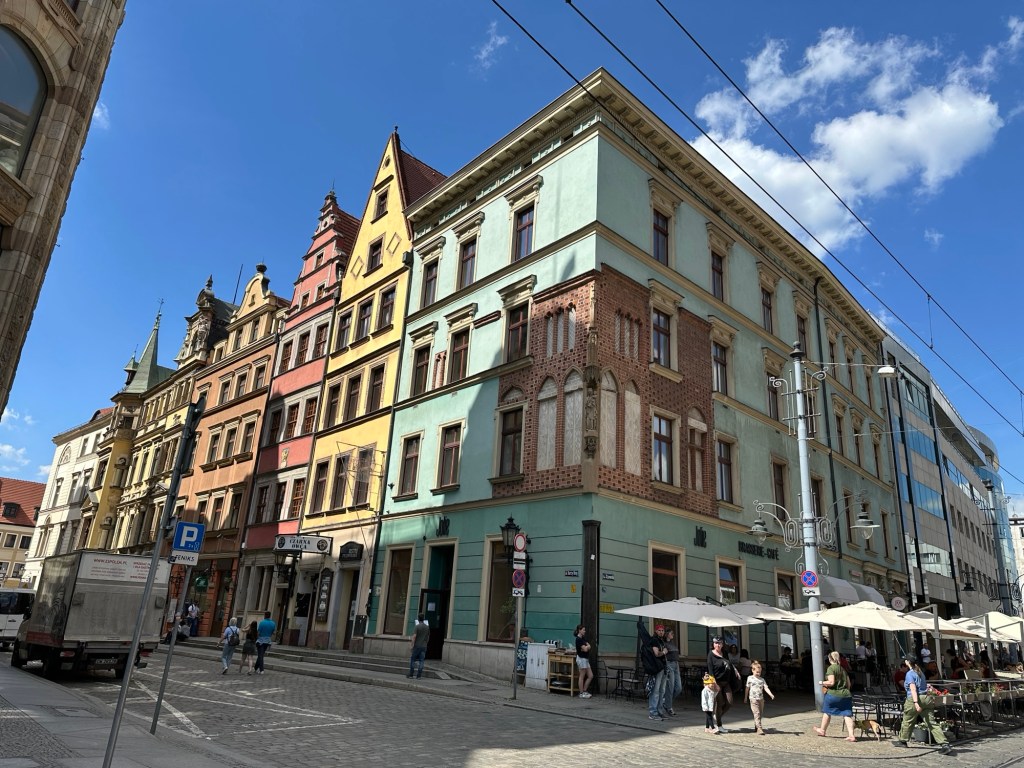
Wroclaw near train station

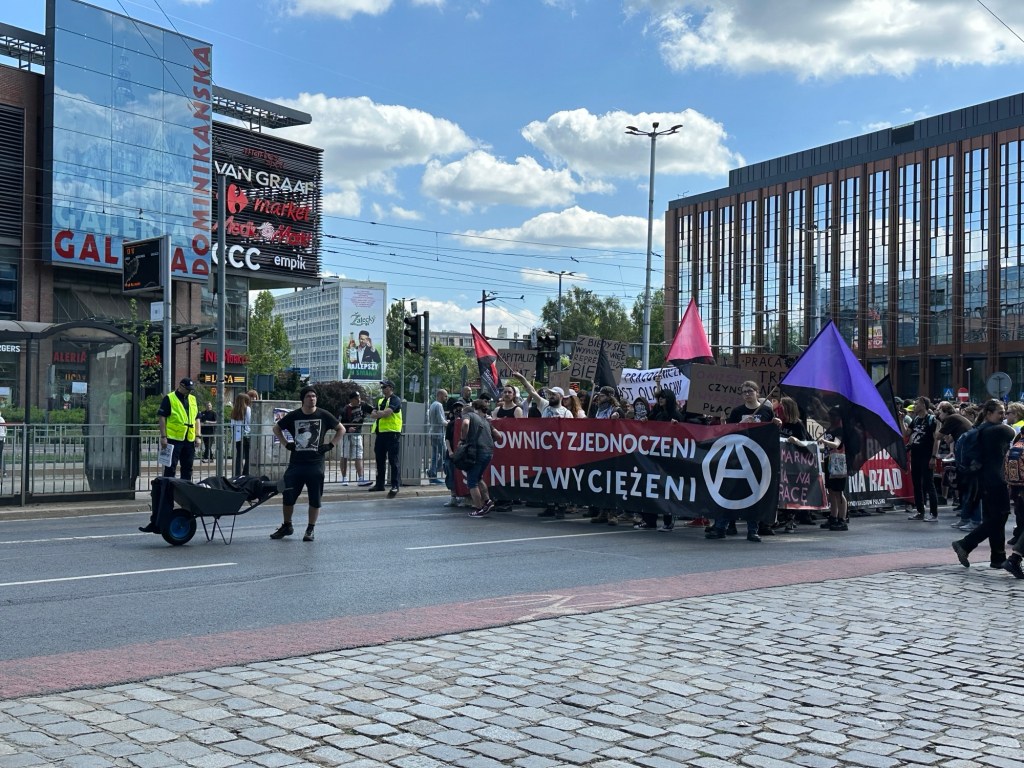
I catch a protest of some sort as I walk to my hotel. It is constitution day so it doesnโ€™t seem out of the ordinary. โ€œWorkers united are invincibleโ€ is on their sign. It appears to be a labor protest on constitution day.

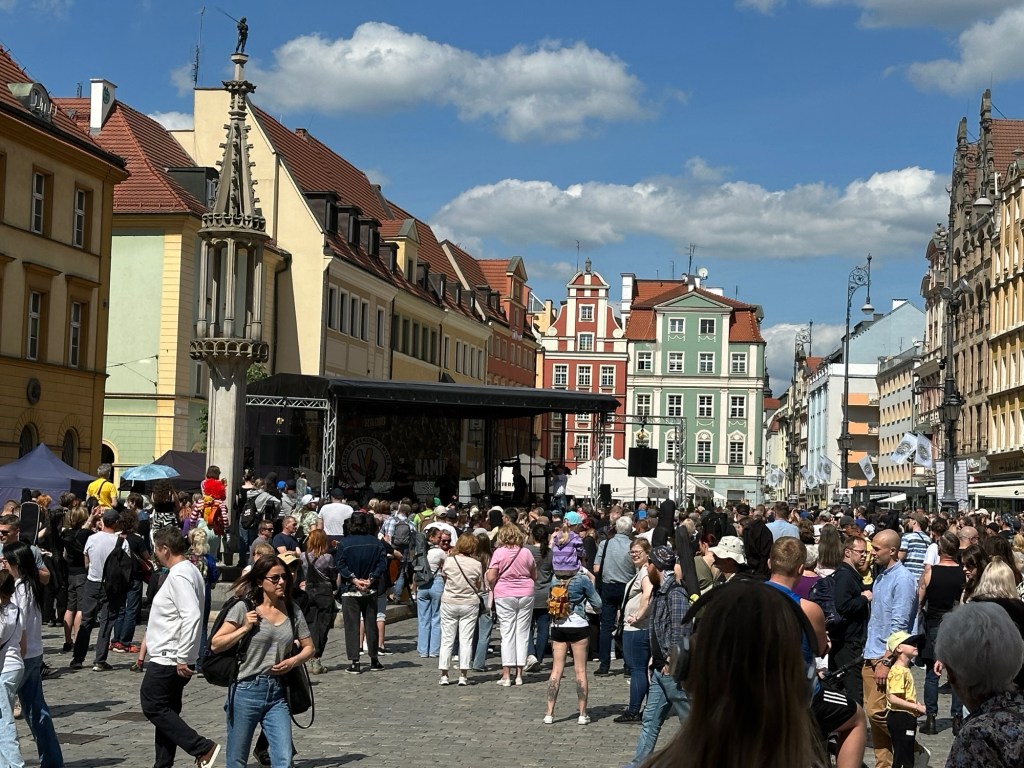
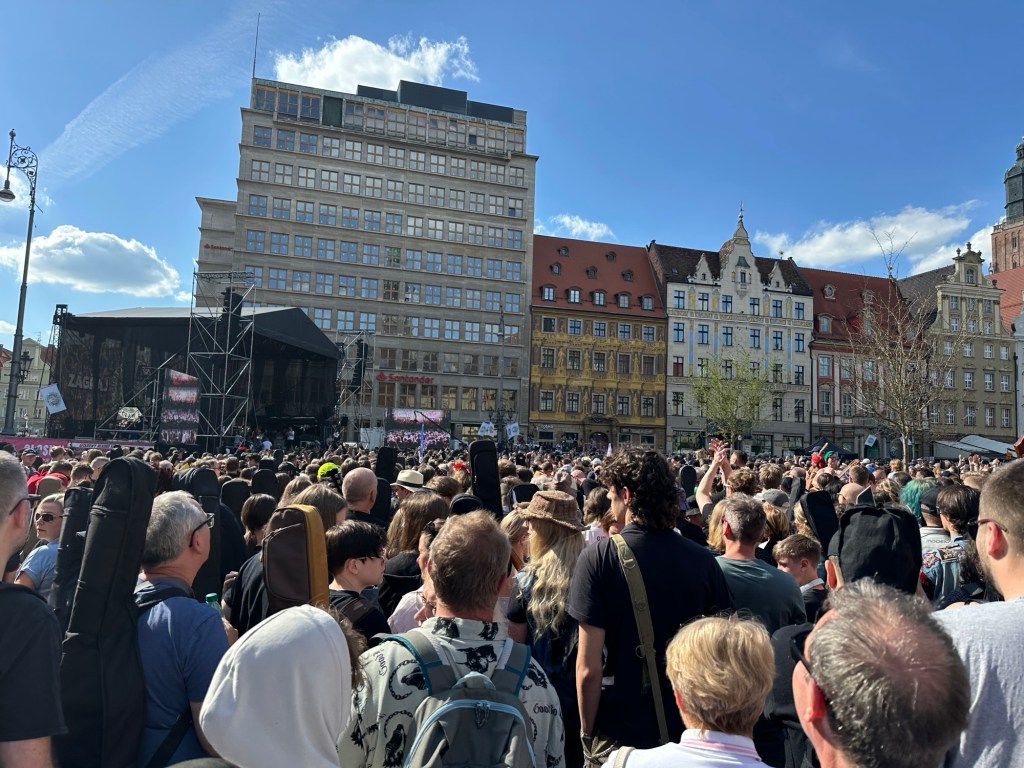
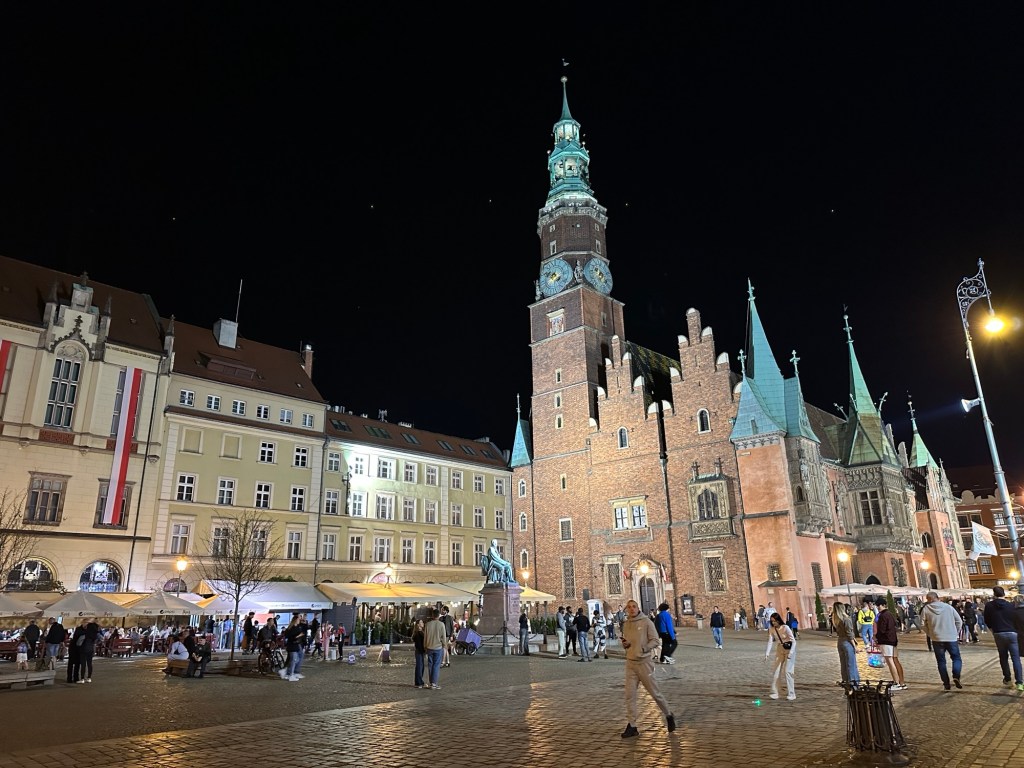
I walk into the city center there are more guitars and artsy people. I hear music playing at a stage near my hotel. My goal is to check in quickly and check out the music.

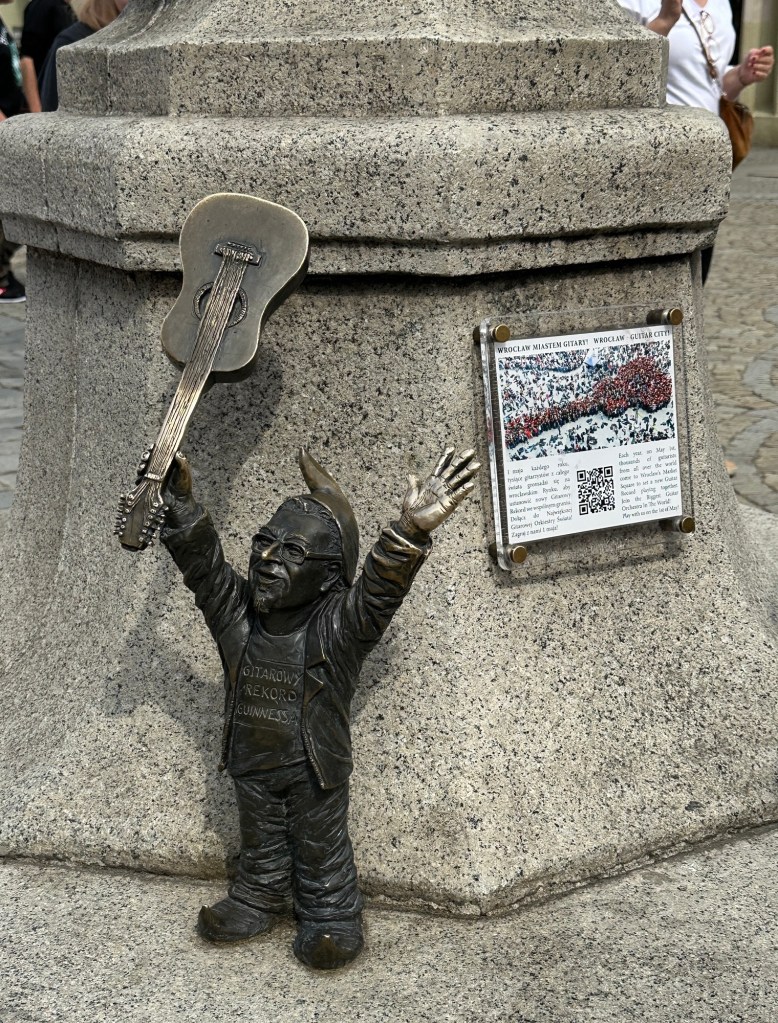
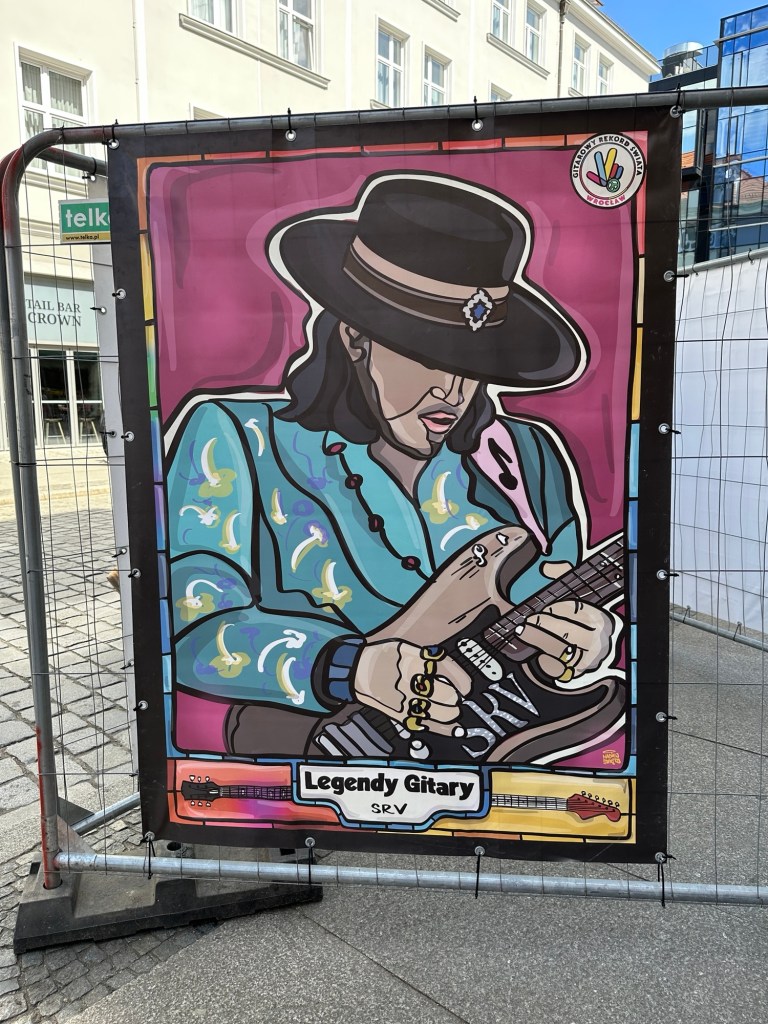
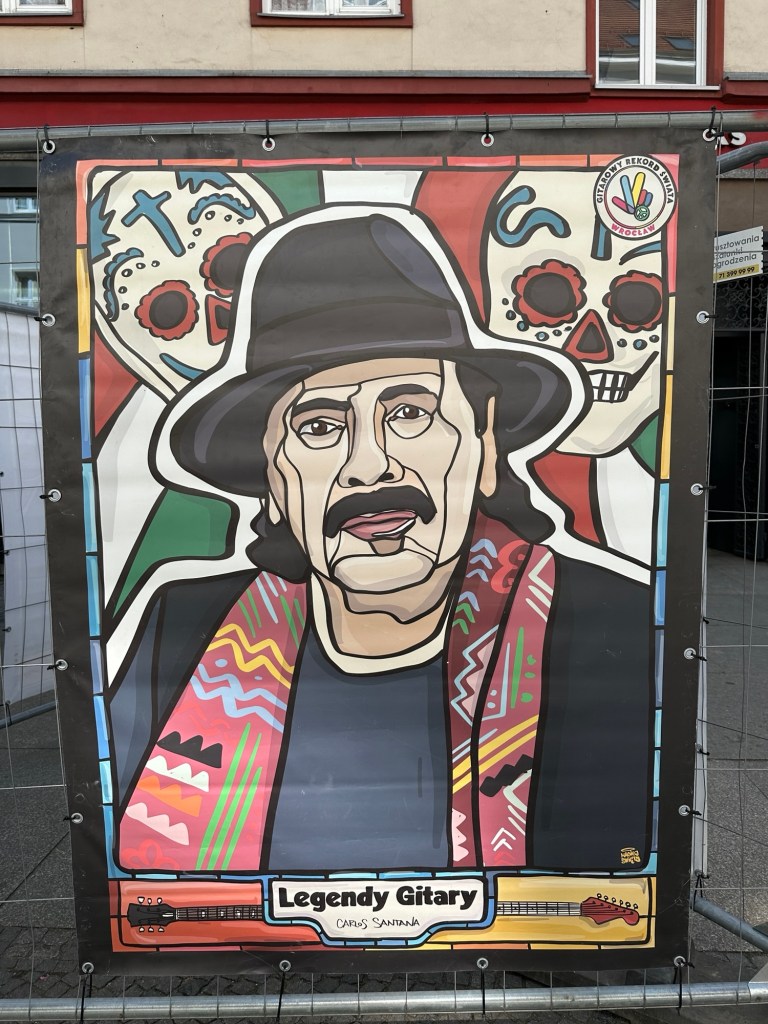
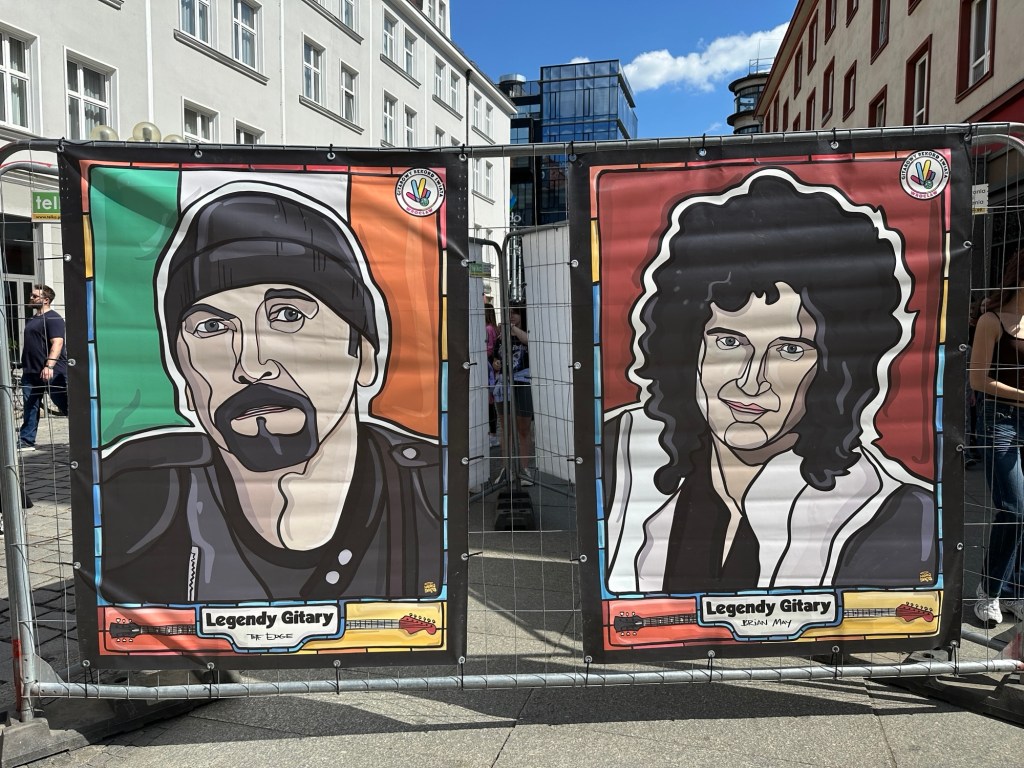
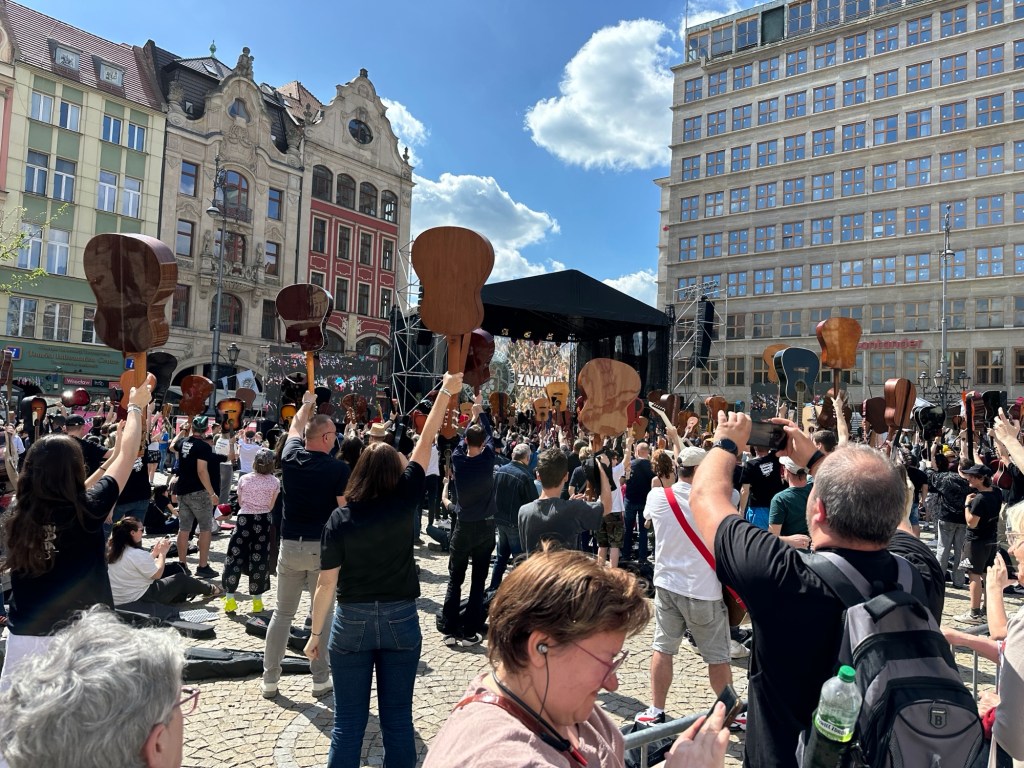
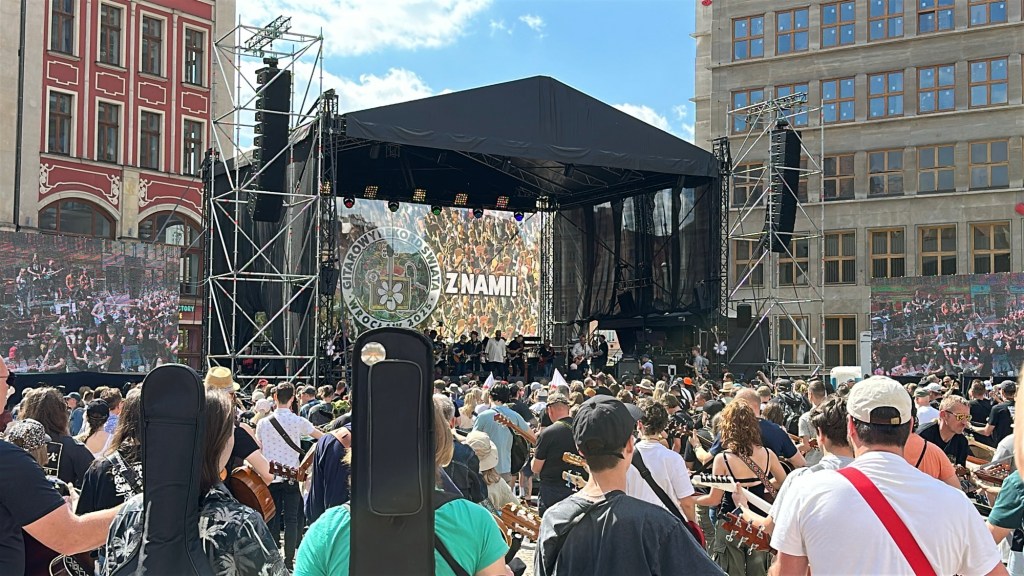
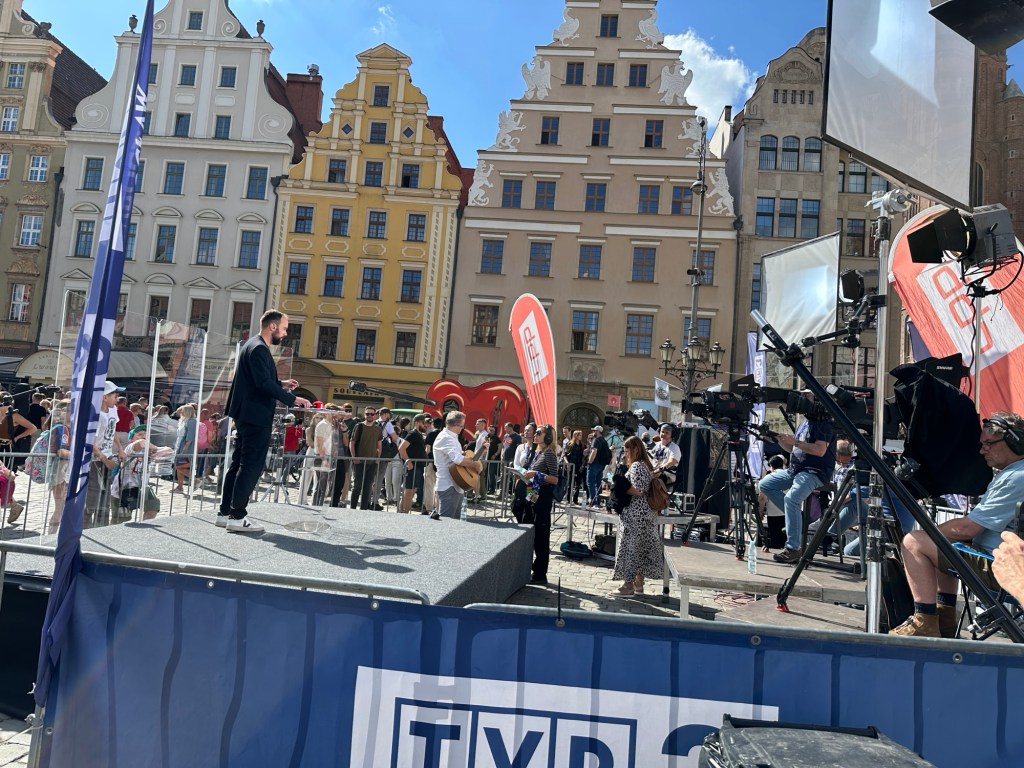
I drop my things off and turn the corner to find a band playing a cover of โ€œSweet child of mineโ€ it is busy in the courtyard but not as busy as it will be in a hour or so. The crowd slowly fills with people carrying guitars and bystanders like me. I am here in time for the annual Guitar World Record in Wrocล‚aw. People come from all over the world with their guitar to play โ€œHey Joeโ€ in unison to reach a world record. If I read the news correctly I think they beat the record this year.

About the holidays this weekend, I had only scheduled 2 1/2 days to enjoy Wrocล‚aw and I later discovered that two of these days are during national holidays: May 1 Labor Day and May 3 constitution day. Not everything is closed on these days but a good number of things are and if they arenโ€™t they close early. This means I wonโ€™t get to see all the things I want to see in town because I really only have one full day of sightseeing and part of that day is going to a festival to see some polish and international punk-ish bands (when in Rome).

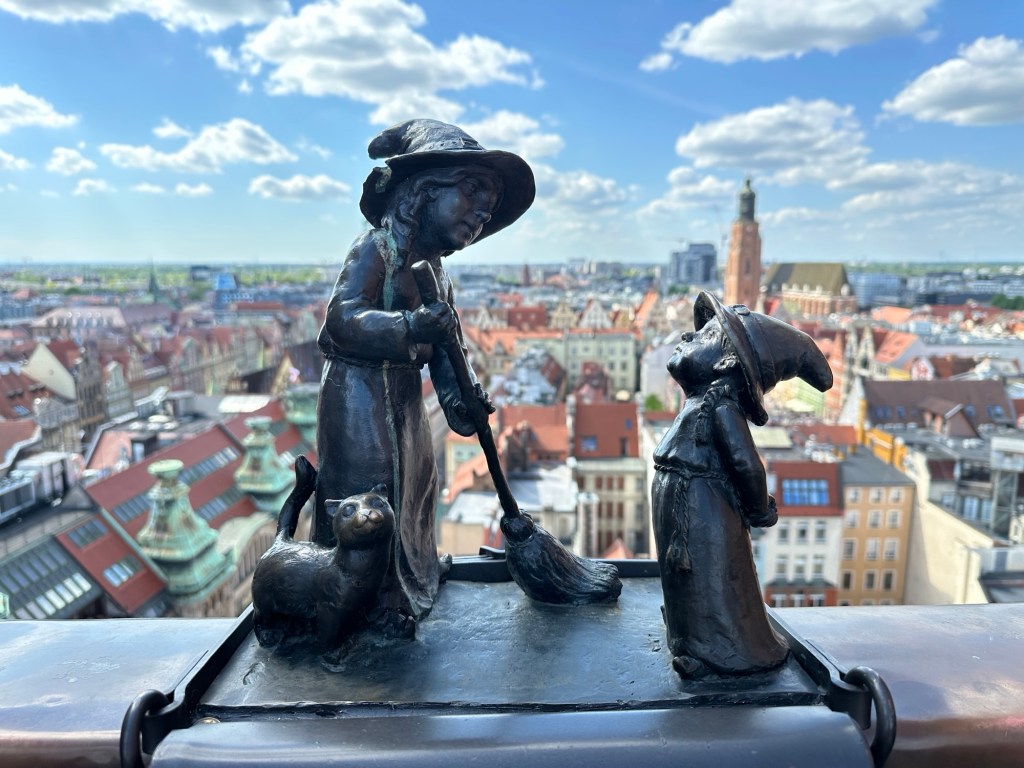
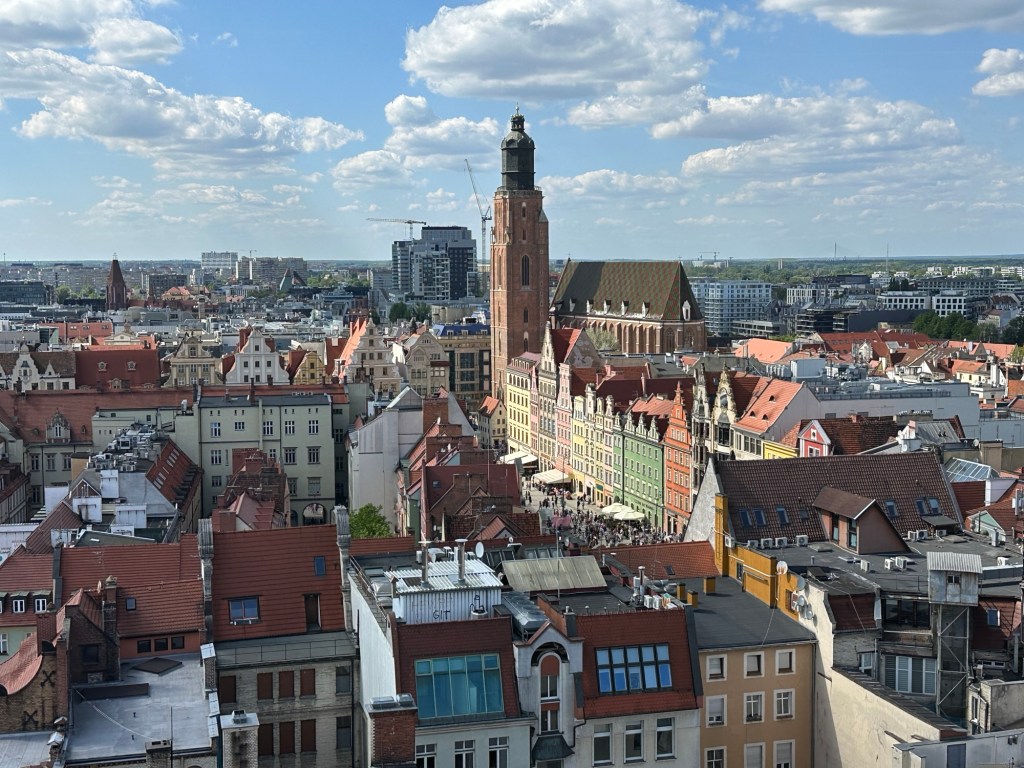
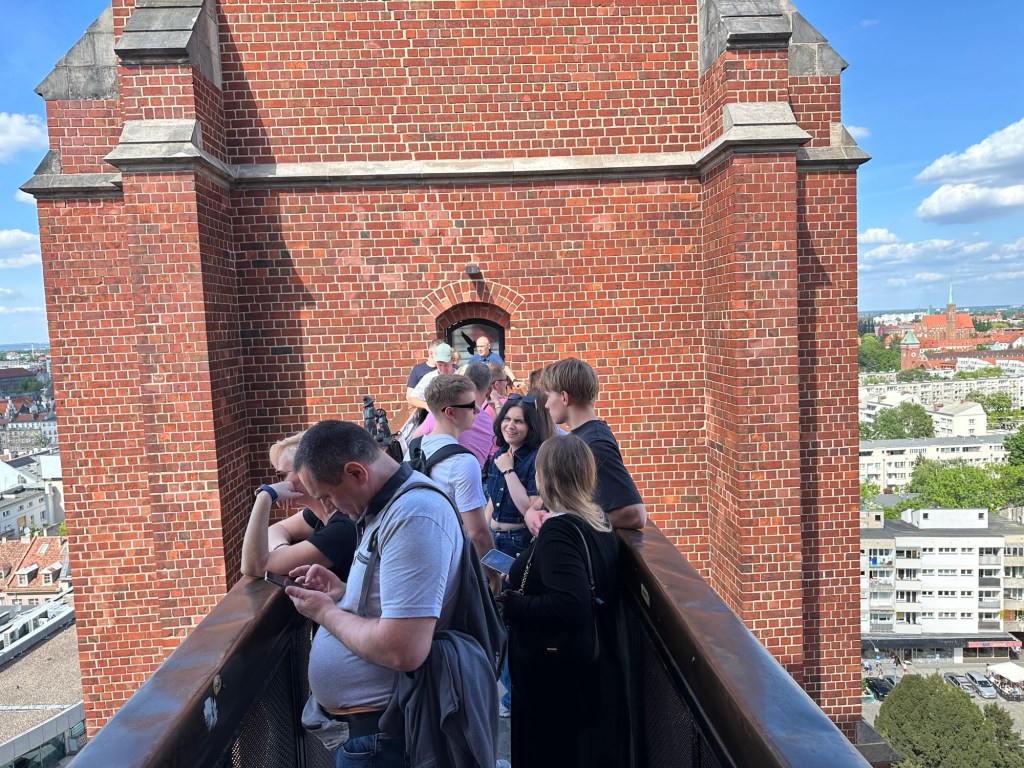
I escape from the crowd temporarily to get a snack and climb the tower to see Bridge of Penitents or Witches Bridge. This is famous for its little witch dwarves overlooking the town. The view is nice but there is way too many people on the bridge at one time so I donโ€™t stay up there too long. They really should do some crowd control at the top to make the experience better for everyone.

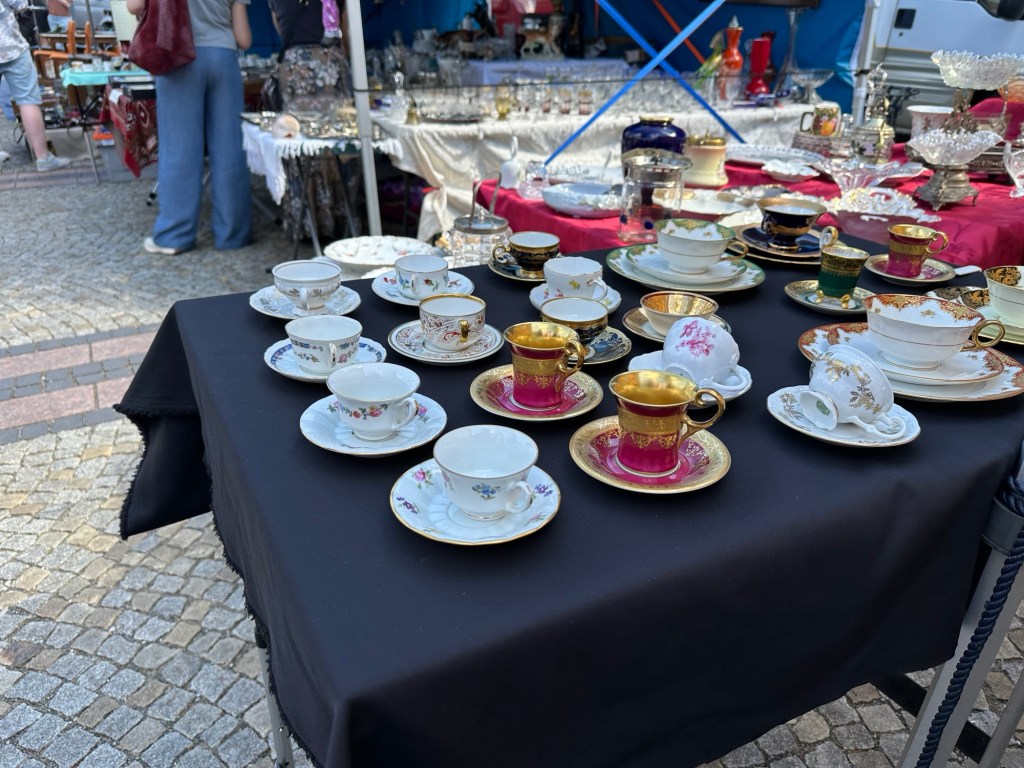
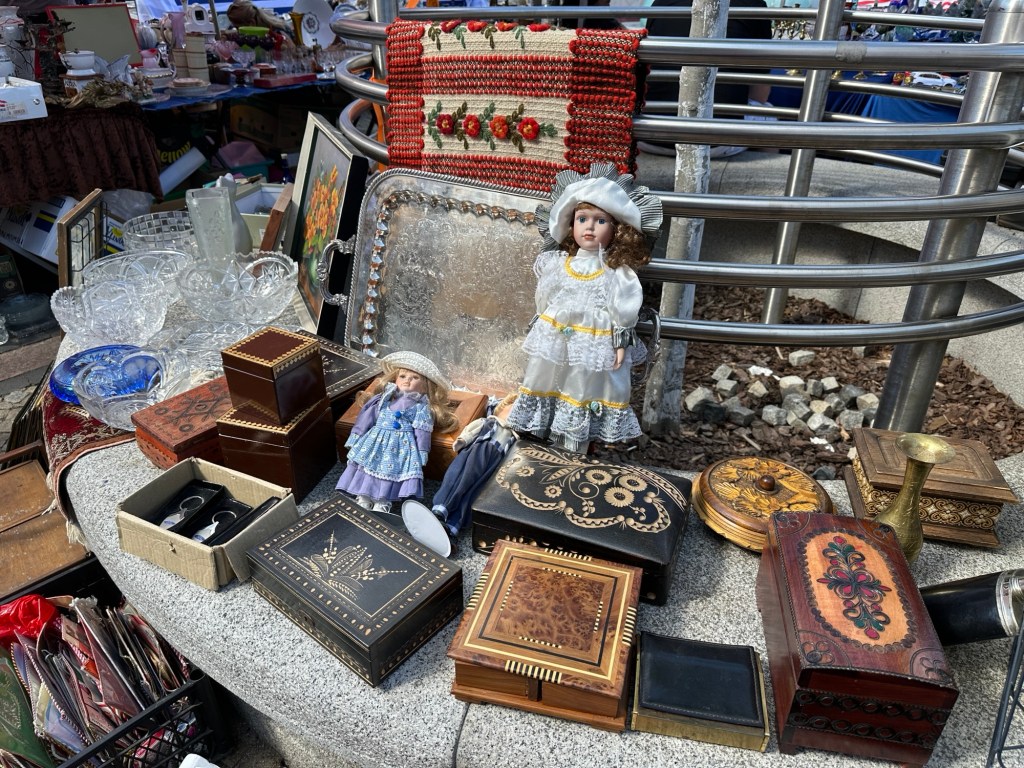
After the bridge I find an antique market I explore for a bit before I brave the guitar crowds once more.

While the crowd gathers a woman who used to perform with Michael Jackson is on stage. I canโ€™t get close enough at this point to take any pictures. The crowd is a sea of guitars getting ready to play.

Finally they play their โ€œHey Joeโ€ for the record recording. I walk out to beat the crowds but I hear the crowd cheering in the distance.

Some of the many dwarves in town playing little guitars for the day. Dwarves are important to Wroclaw but more on that later.
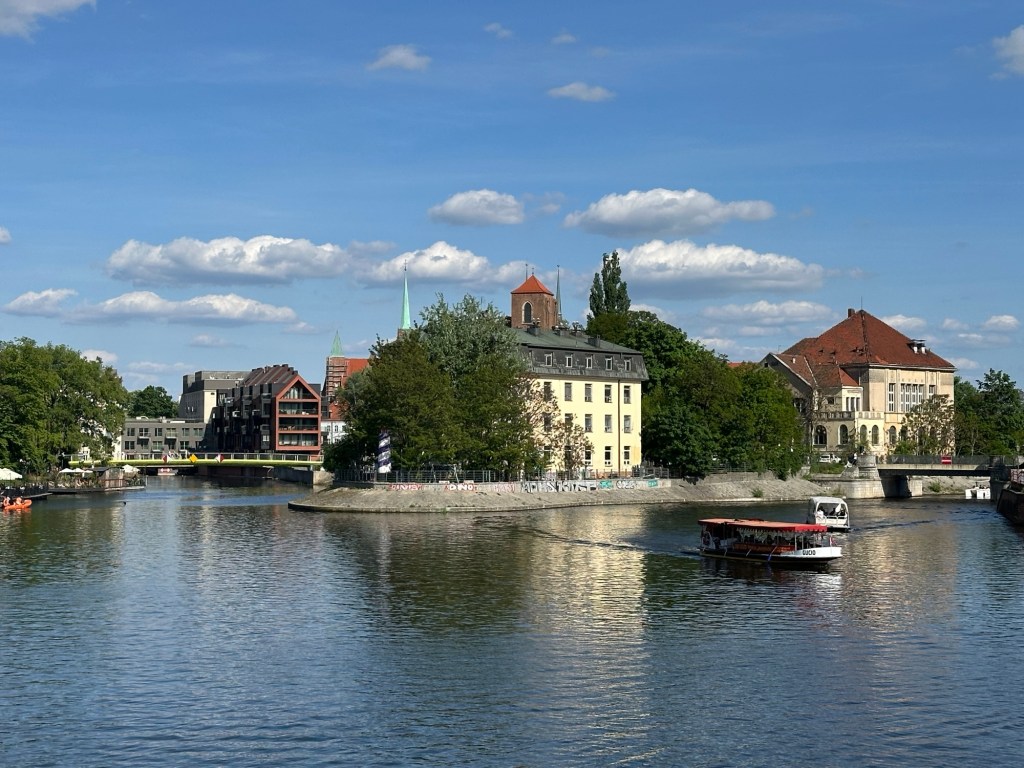
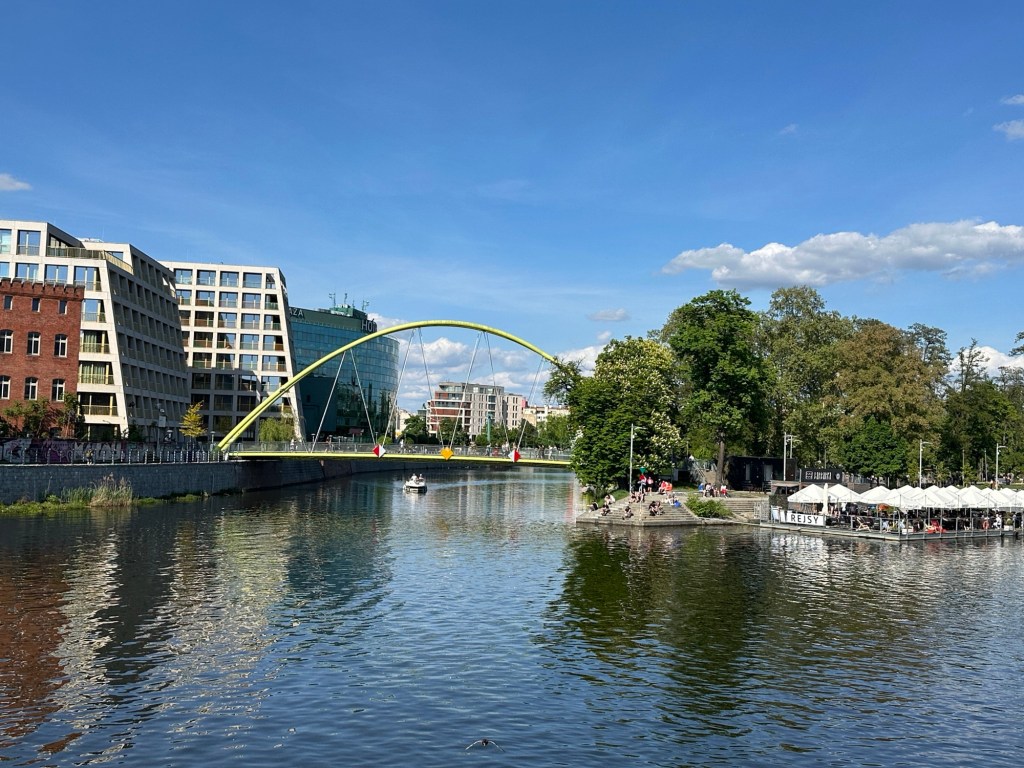
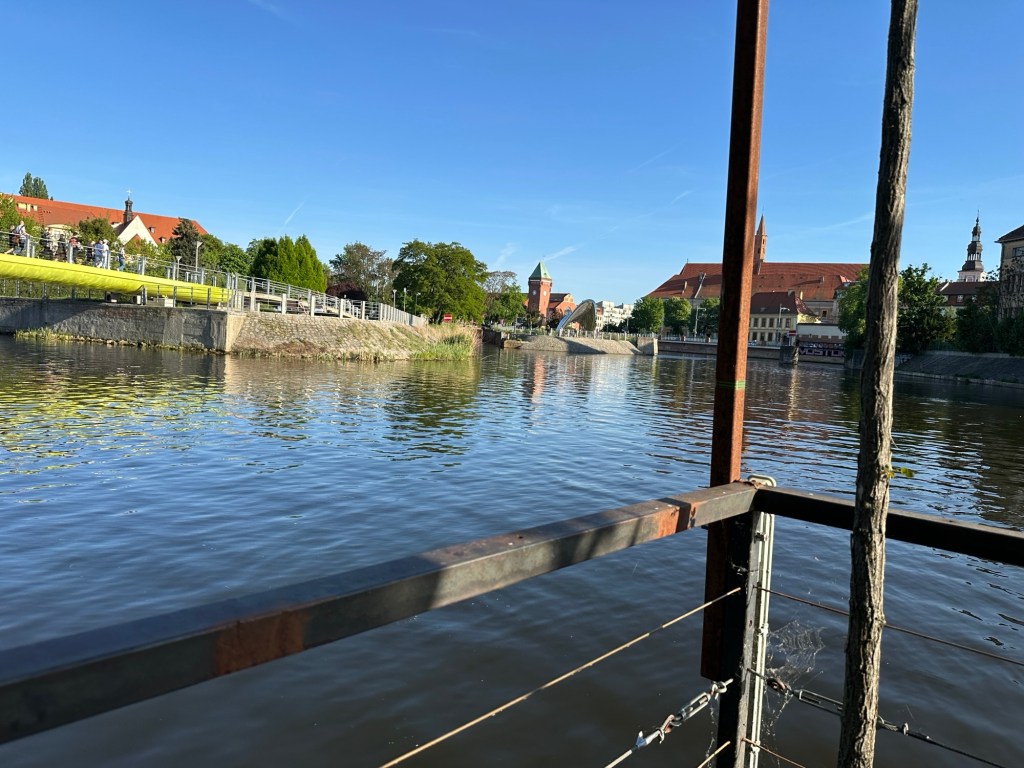
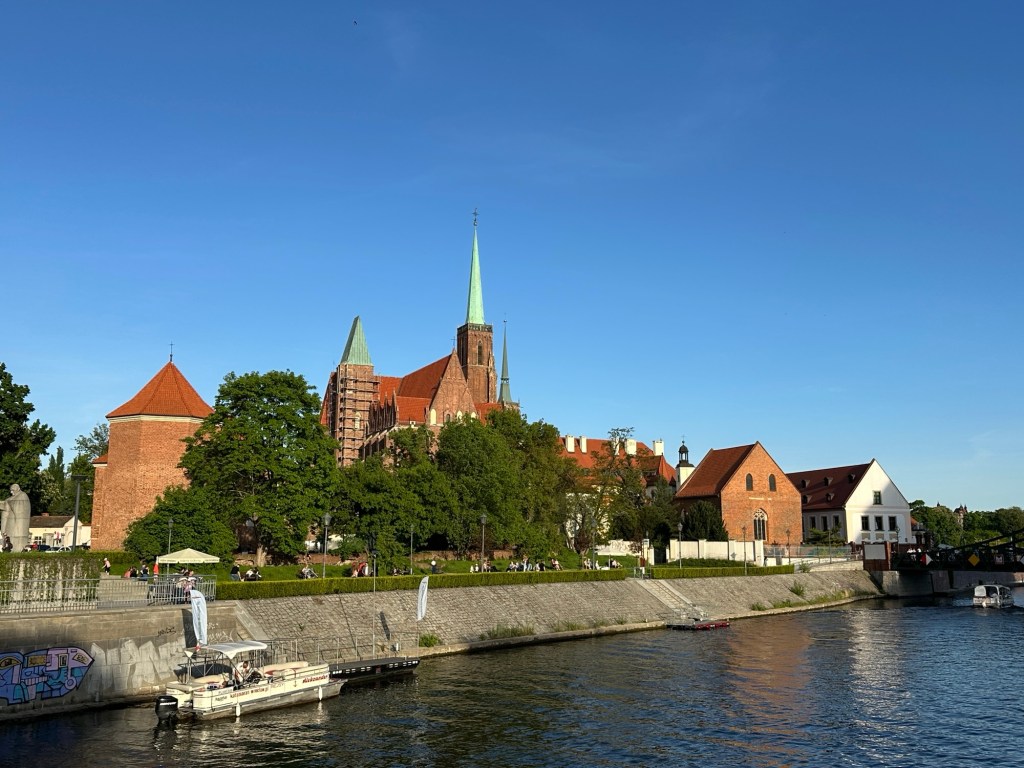
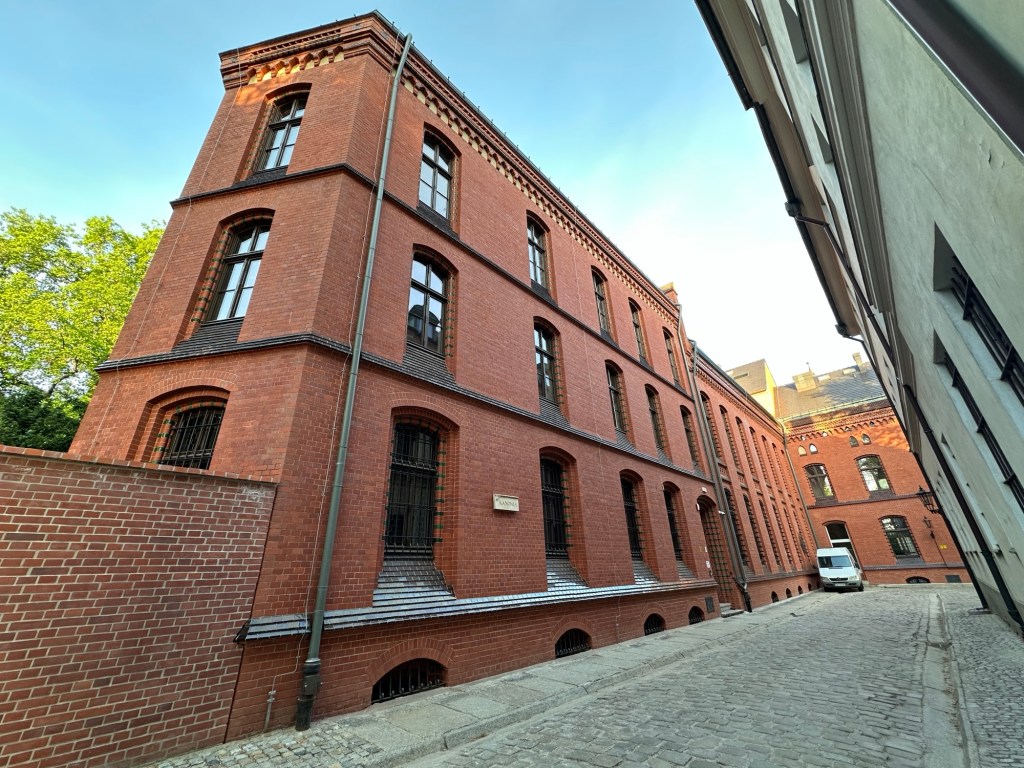
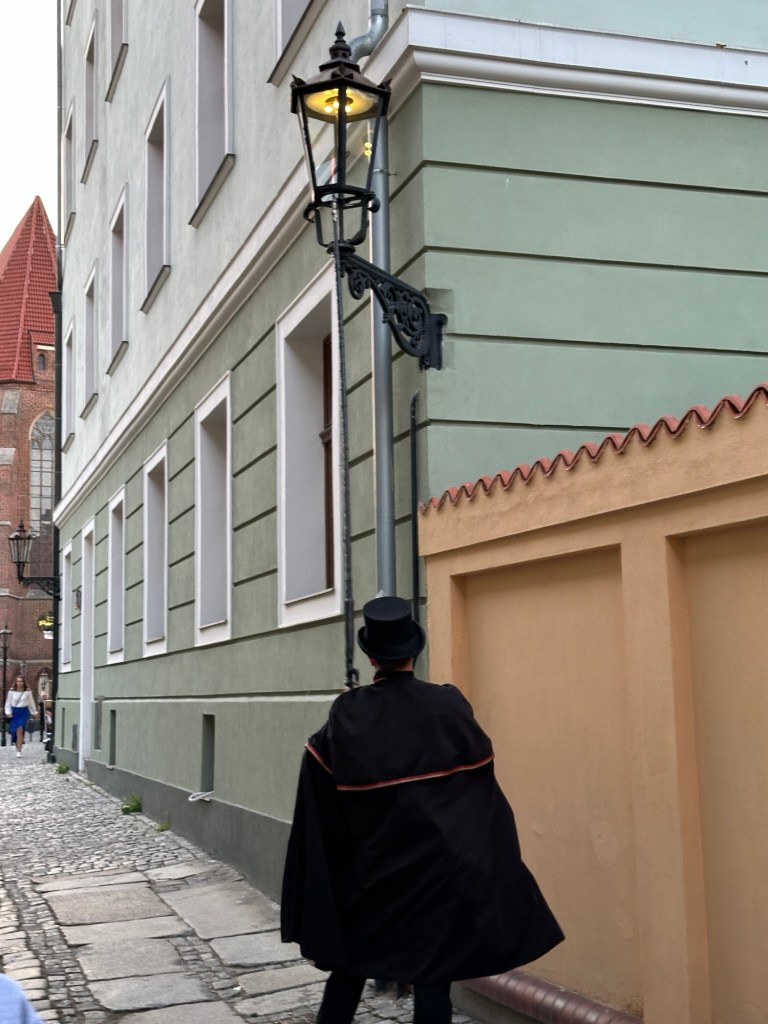
I walk down to one of the many โ€œislandsโ€ that are connected by pedestrian bridges. The goal this afternoon is to stalk the gas lamplighter on Cathedral Island but I am way too early for that so I explore other islands and surroundings.

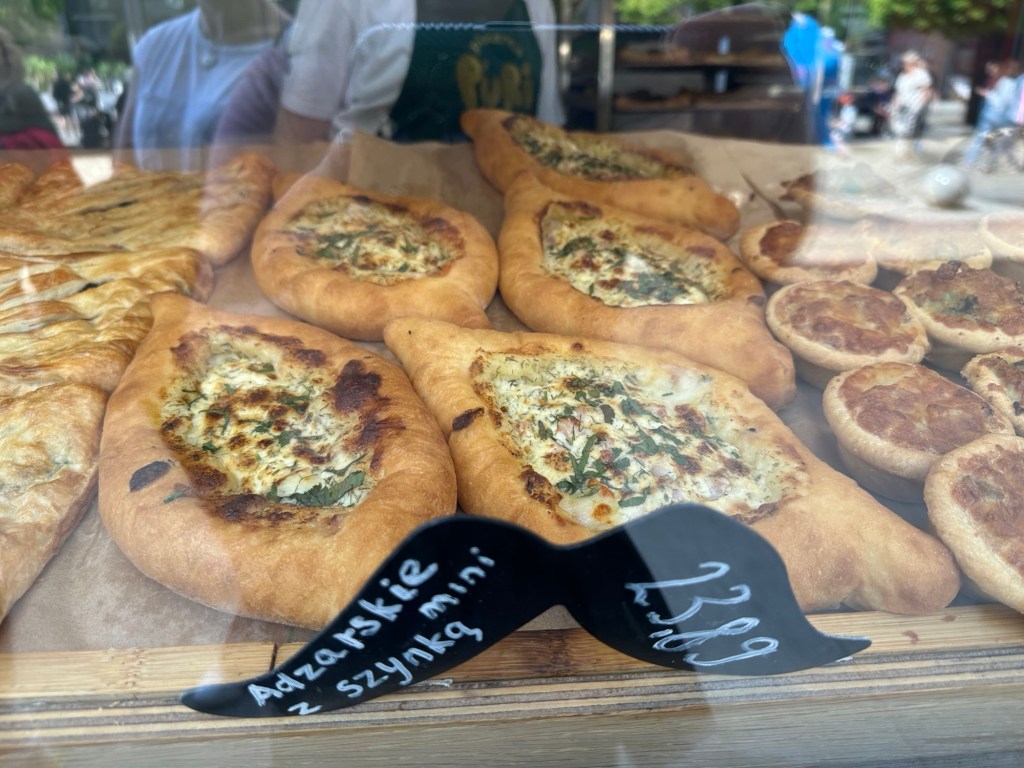
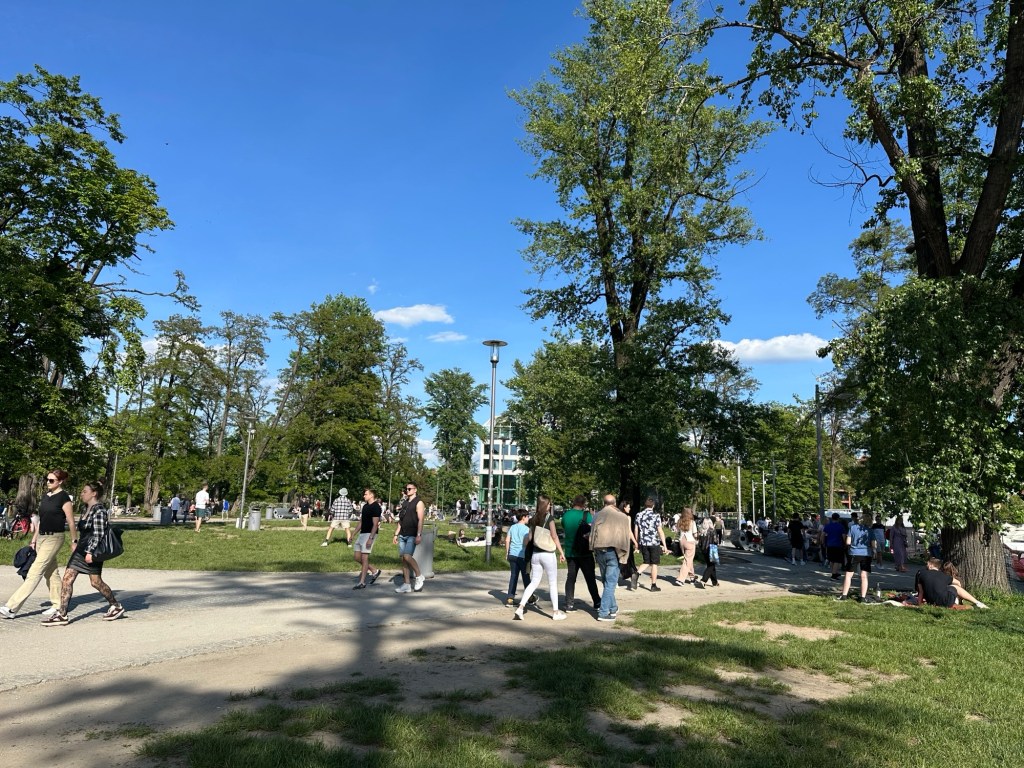
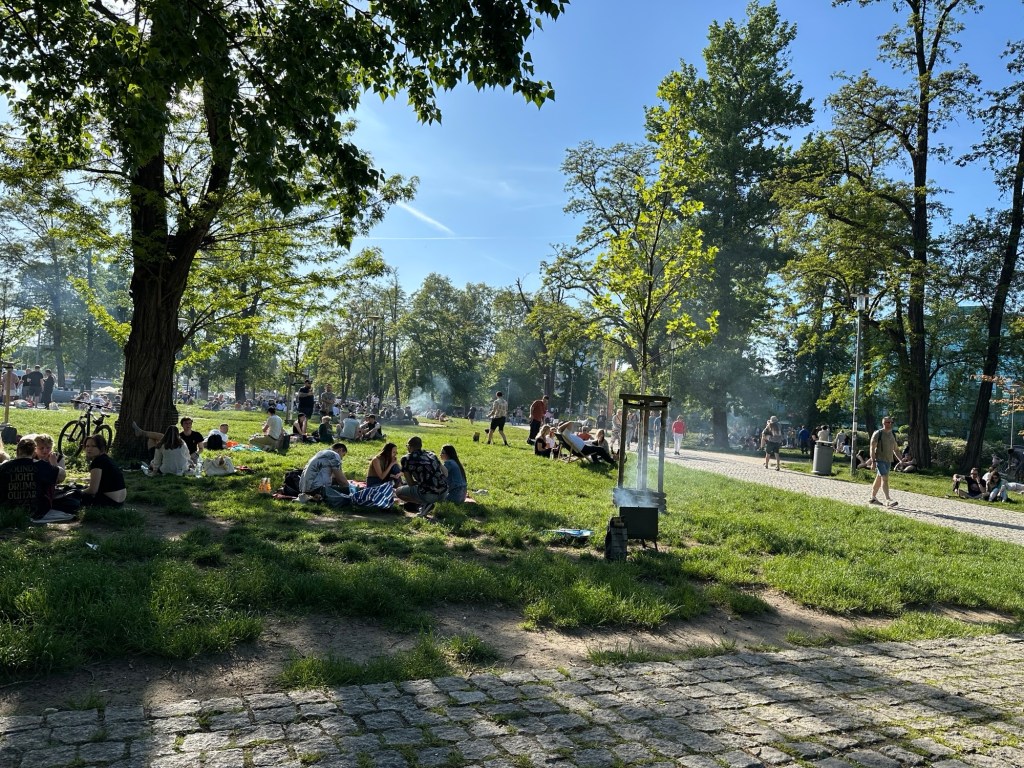
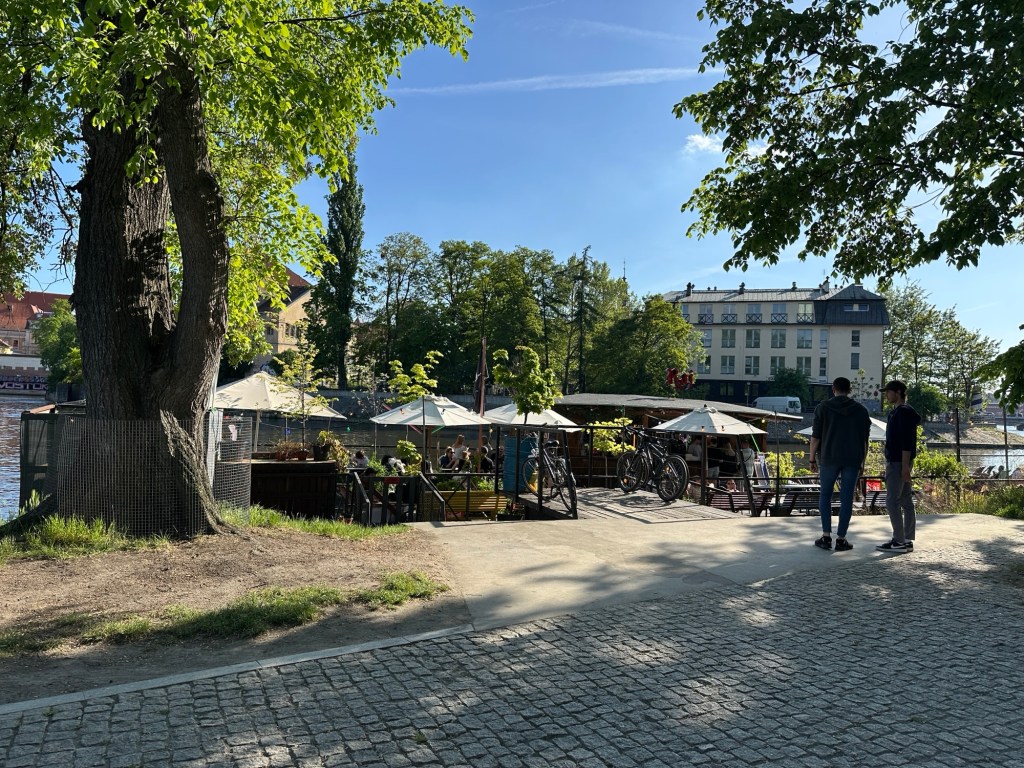
On one island there is a huge park with many groups picnicking, many with small foil pan metal grills. The smell of grilled sausages permeates the air and makes me really hungry. Iโ€™m waiting to eat until I get back closer to my hotel but does it smell good. I take a break to have a happy hour by the water. I watch the boats go by while I finally get a moment off my feet. Today has already been a long day.
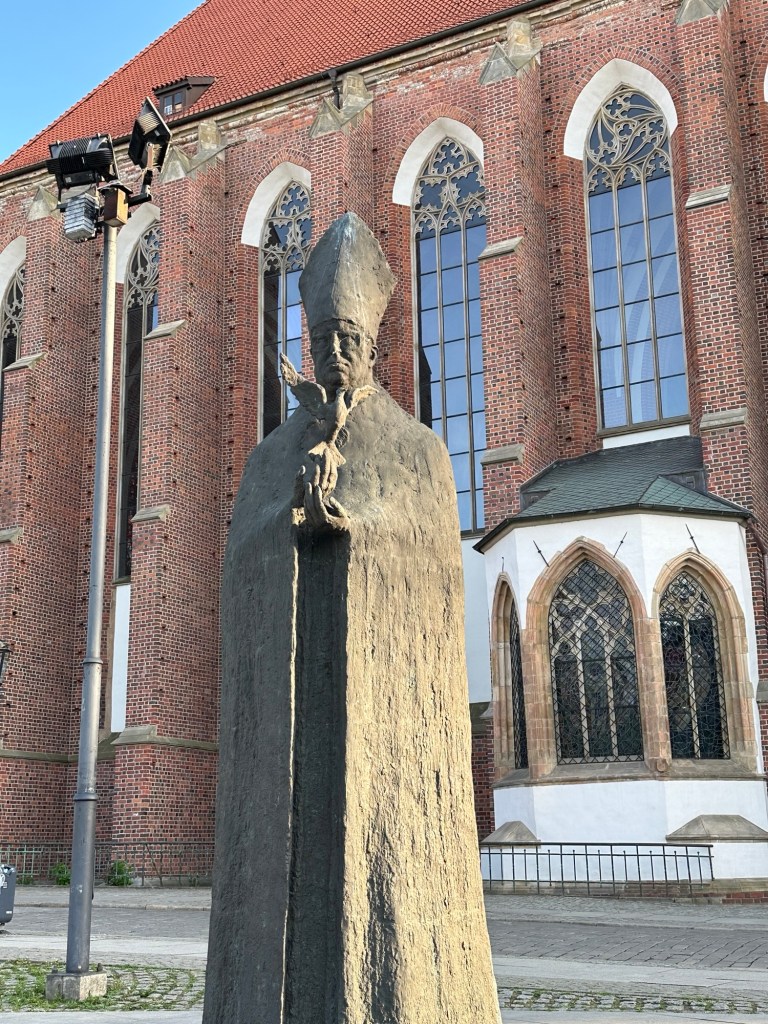
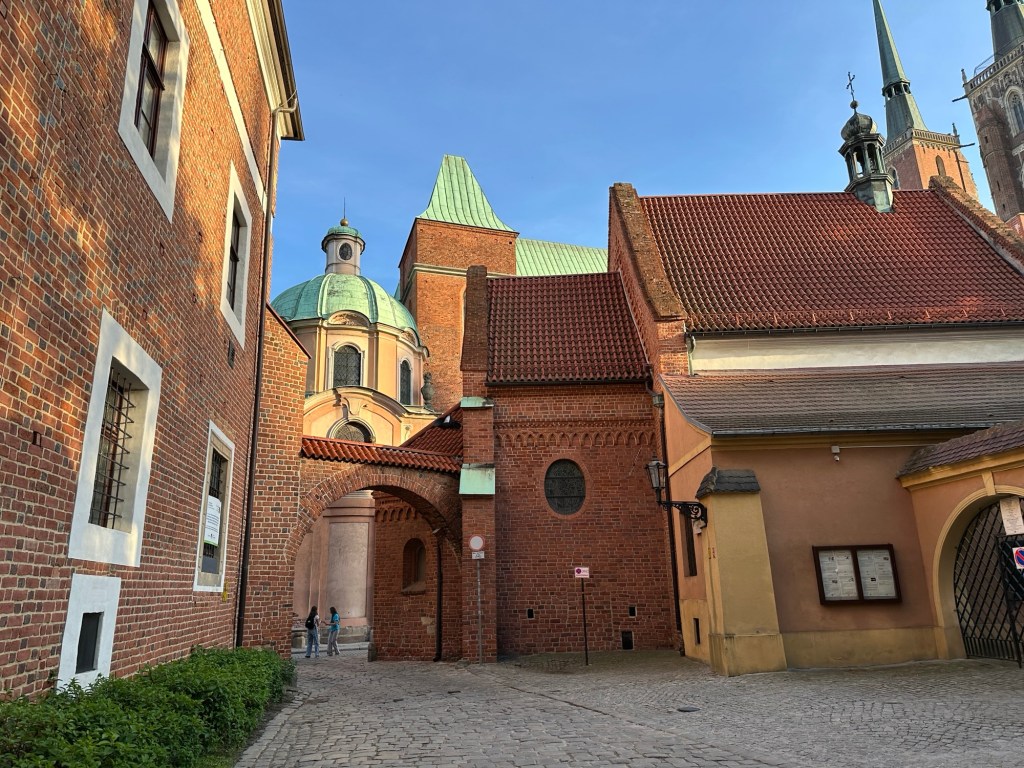
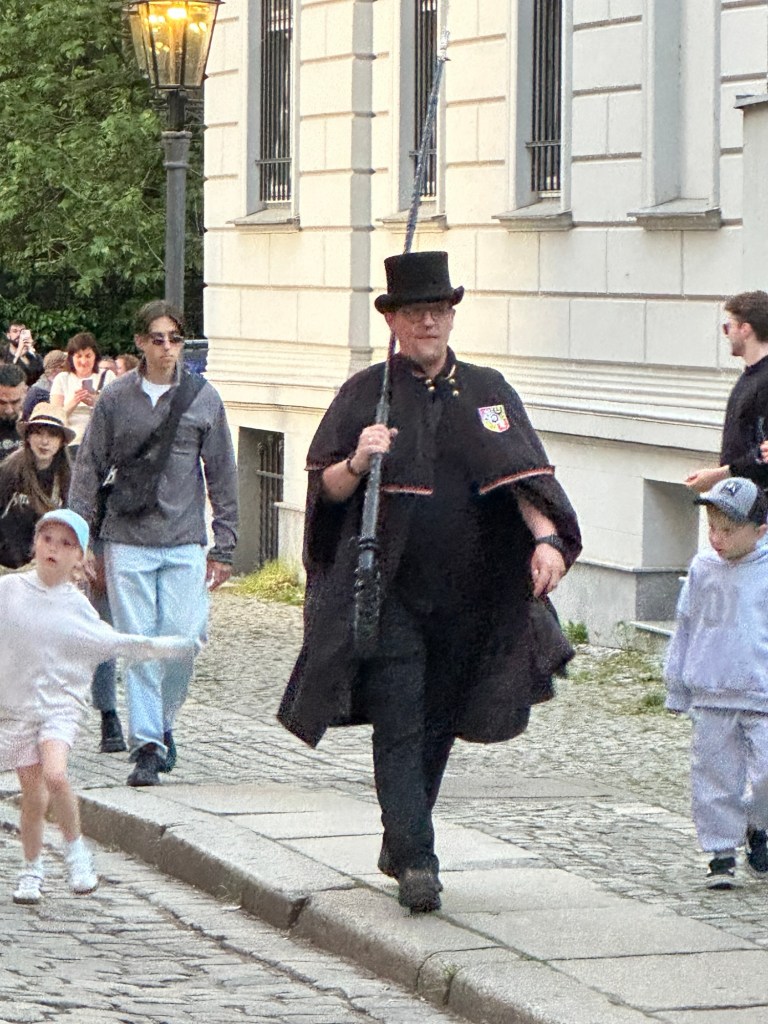
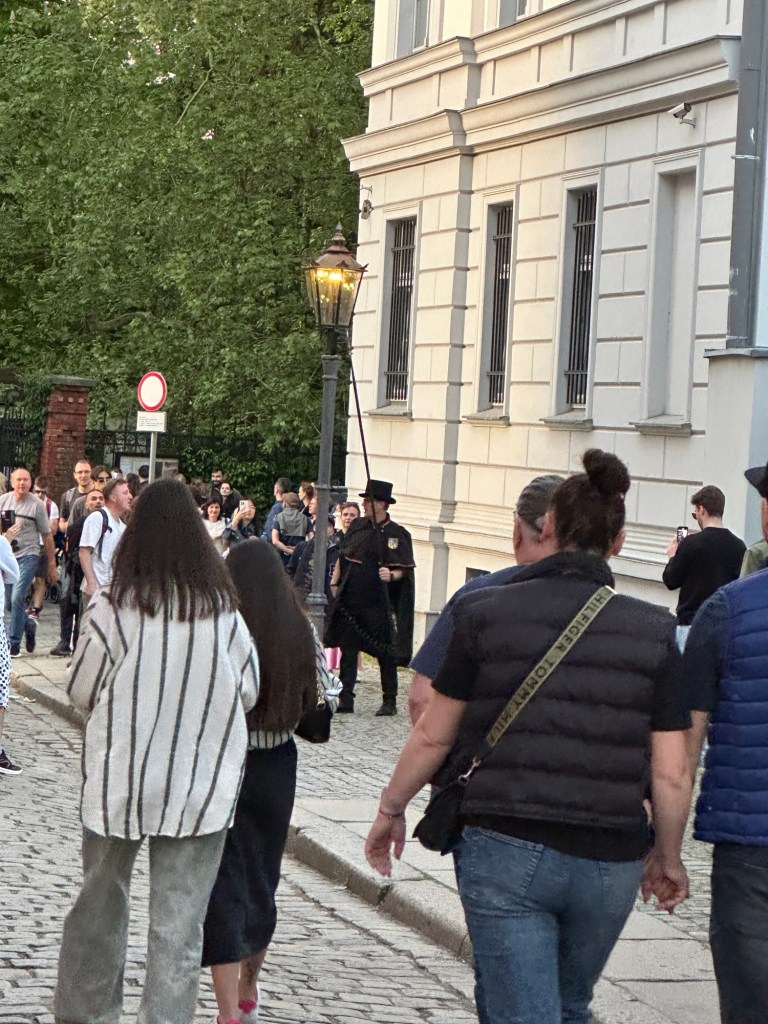
I get to cathedral island to explore and even though most things are closed except a few restaurants there are still many people strolling around. Lines are consistently outside the college botanical garden that should be closed right now so I am not sure what is going on over there. Finally I spot the lamplighter and he moves quickly. Heโ€™s got an entourage of kids following him. He is not an official tourist attraction heโ€™s just one of the few actually gas lamplighters left in the world. He (or someone else) lights at sundown and then they extinguish in the morning. I think I saw another in Zagreb, Croatia a couple years ago. This is not the only one but they are rare these days with electrical power.
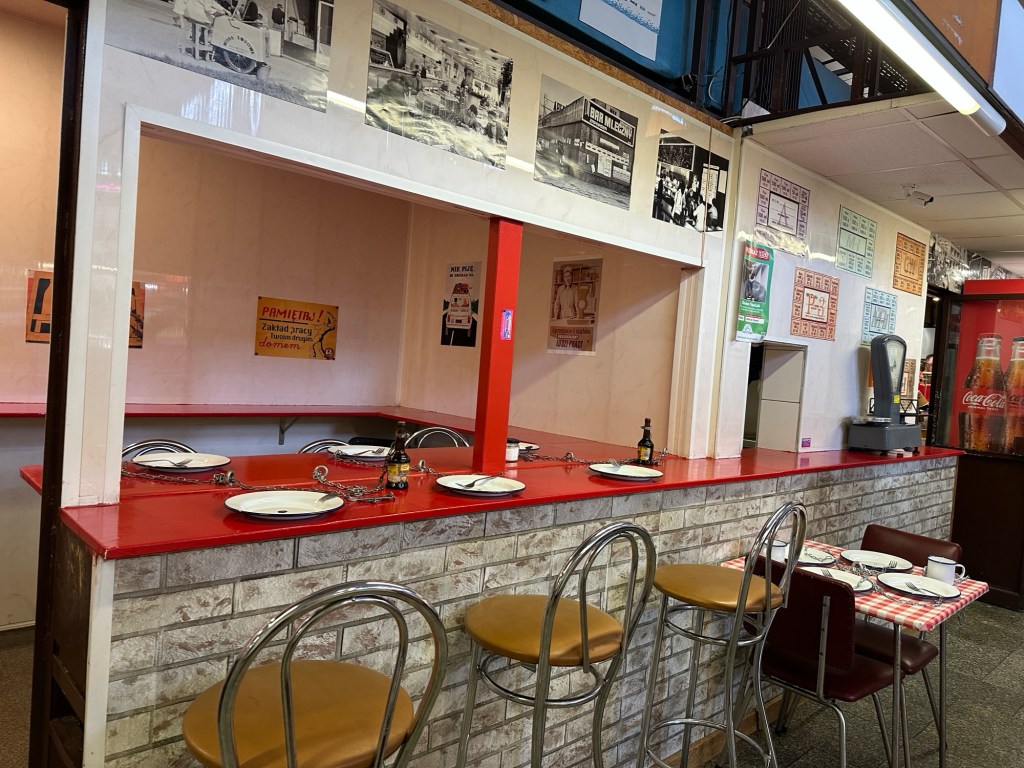
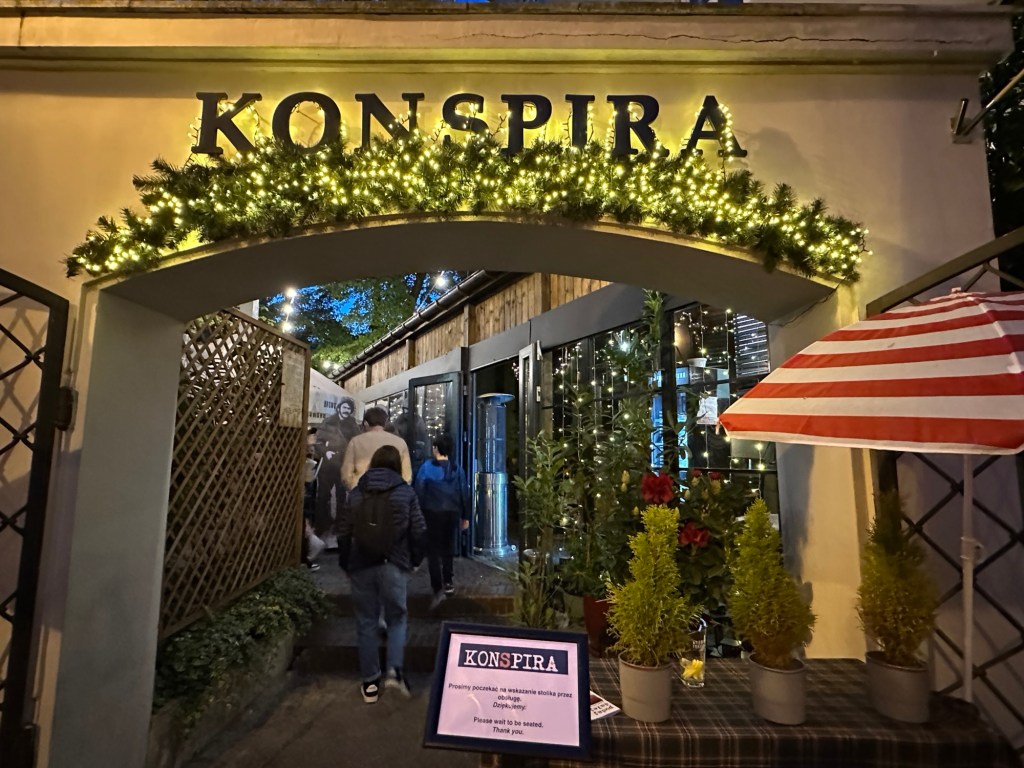
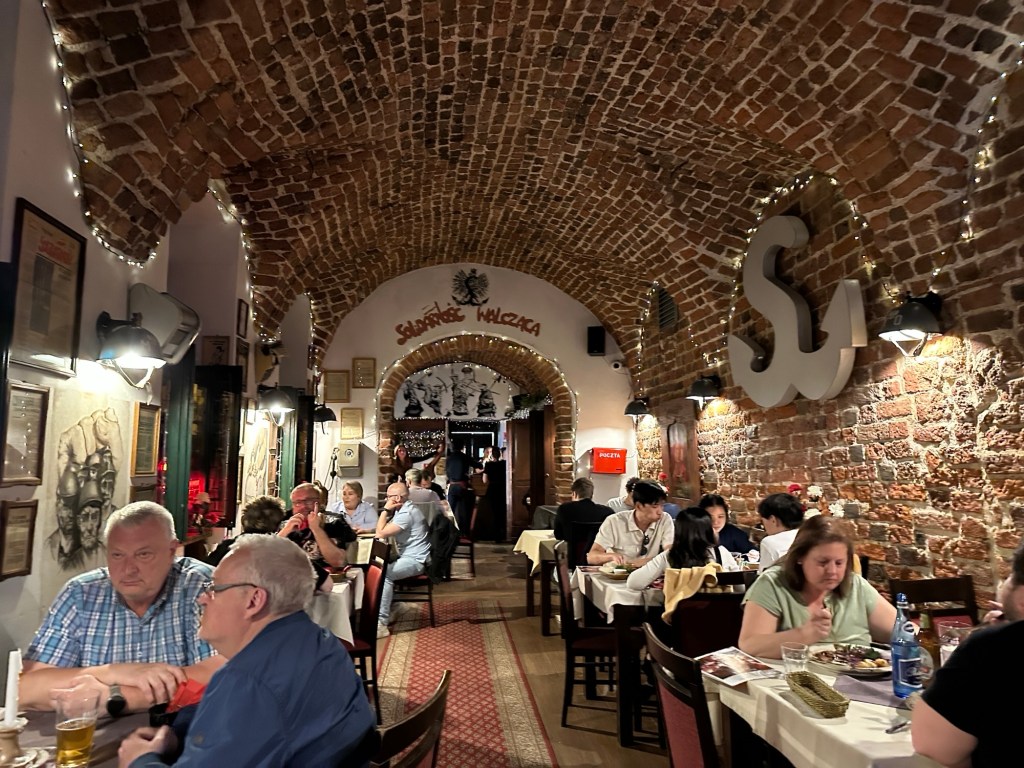
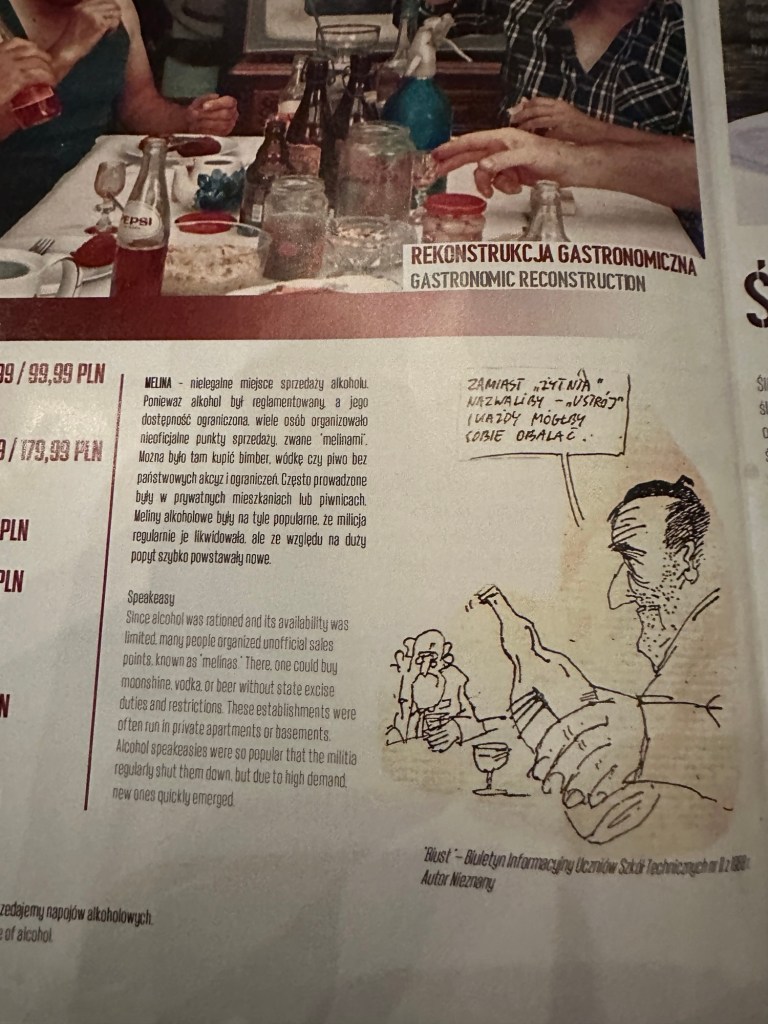
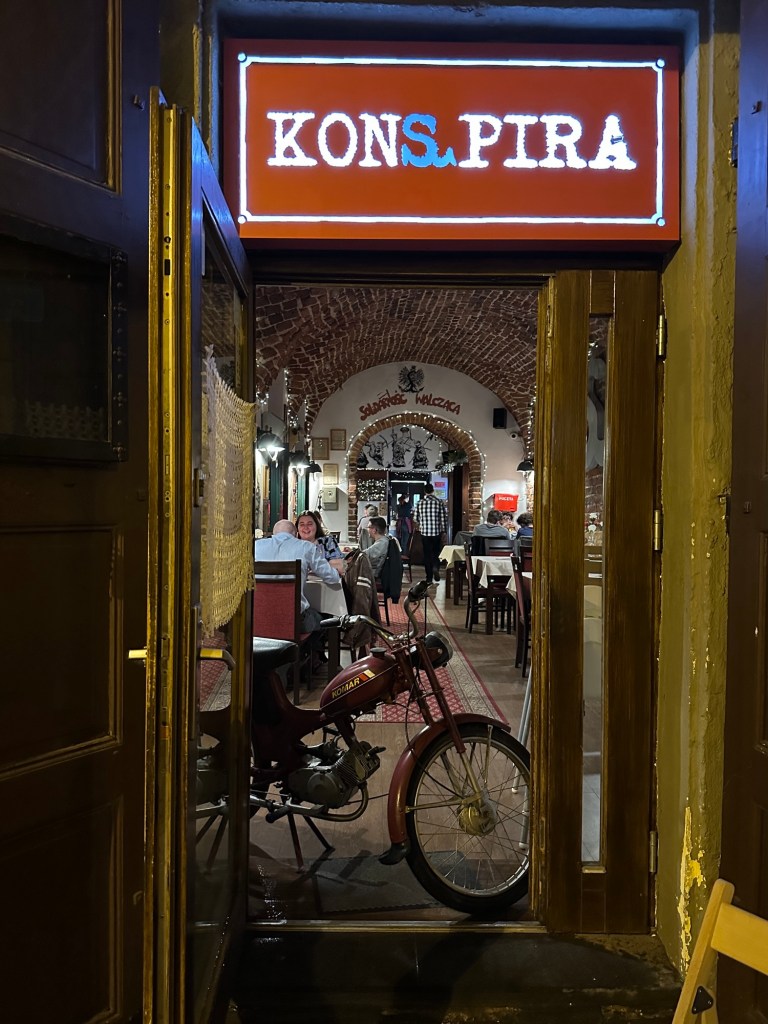
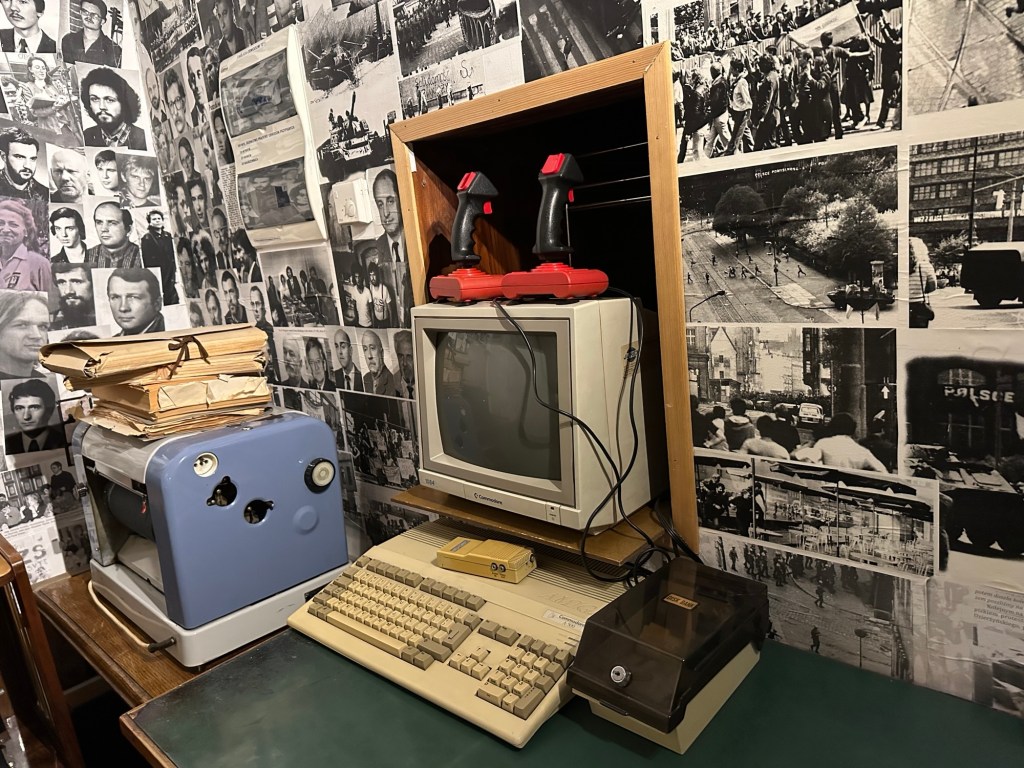
I walk back toward the main market square where I have my eye on a Soviet communism theme restaurant that has a private room (not so private tonight since it is being used for diners). There is a long wait for food and it is just ok but I love the theming of the place so I explore the secret room quickly before I head back to my room to sleep. Itโ€™s late and I am tired after this long day.
I need to rest for touring tomorrow.